

Yarrow can bring color and structure to a garden without asking for much water, but it still needs the right place to look at home.
I find it works best when its loose clusters have room to spread and sit alongside plants with contrasting shapes or textures.
Paths, low edging, and repeating groups can help keep a drought-tolerant bed from feeling scattered as it fills in over time.
The ideas that catch my eye are the ones that balance yarrow’s relaxed growth with a clear layout and easy access for care.
I’d start by testing a small planting near a path or sunny border, then adjust the spacing as the garden settles.
Use Yarrow Along a Garden Path
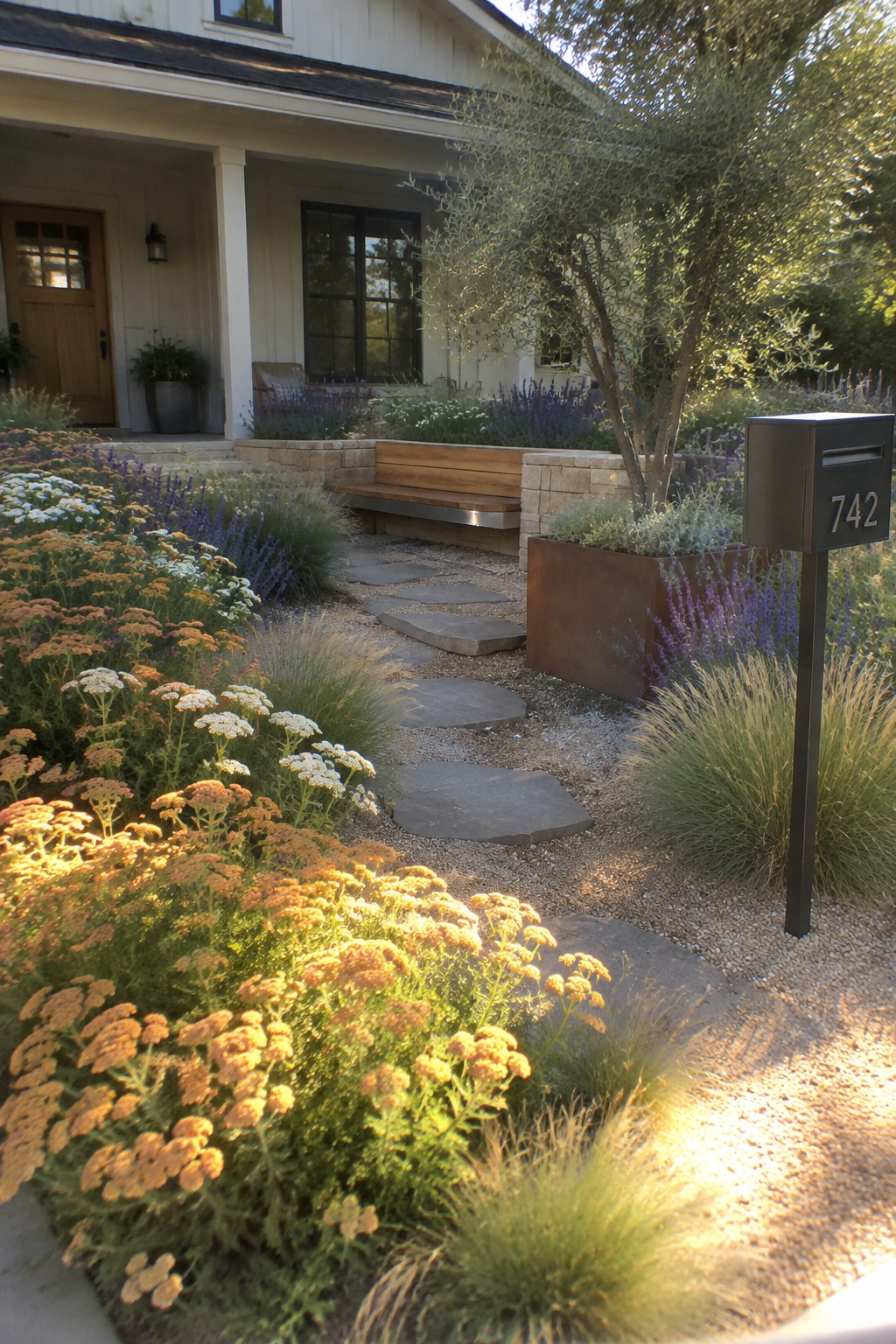
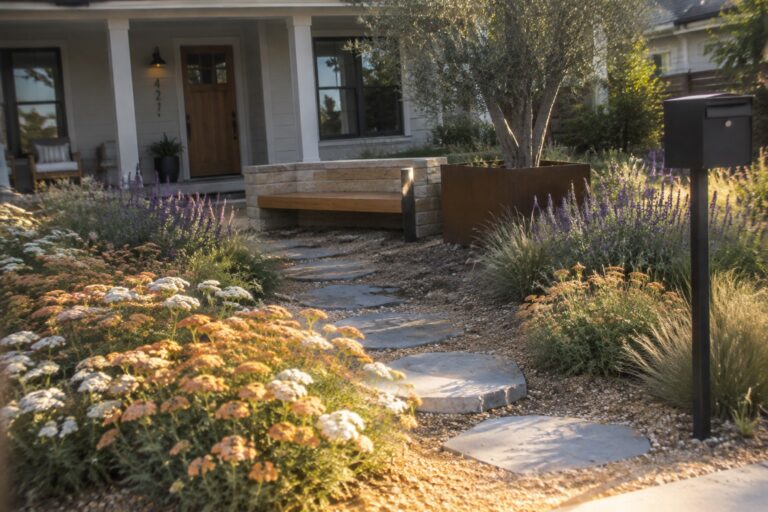
Yarrow works well in loose planting beds beside a simple stone path. Its flat flower clusters give the garden a steady rhythm, while the path keeps the planting easy to pass through and enjoy.
For a drought-tolerant garden, plant yarrow in a sunny spot with well-drained soil, and leave room for it to spread. It suits informal front gardens especially well; avoid rich, consistently wet soil, which can make plants floppy.
Use Yarrow Along a Gravel Garden Path

Yarrow works well in a drought-tolerant path planting because it fills the edges without needing a lush, thirsty border. Here, clusters of yellow and white yarrow grow among gravel and larger stones, giving the path a relaxed, natural feel.
Plant yarrow in loose groups beside a gravel or stone walkway, leaving enough room for people to pass and for the plants to spread. It suits sunny, well-drained spots, and a simple mix of flower colors can keep the planting interesting without making it fussy.
Use Yarrow Along Garden Paths
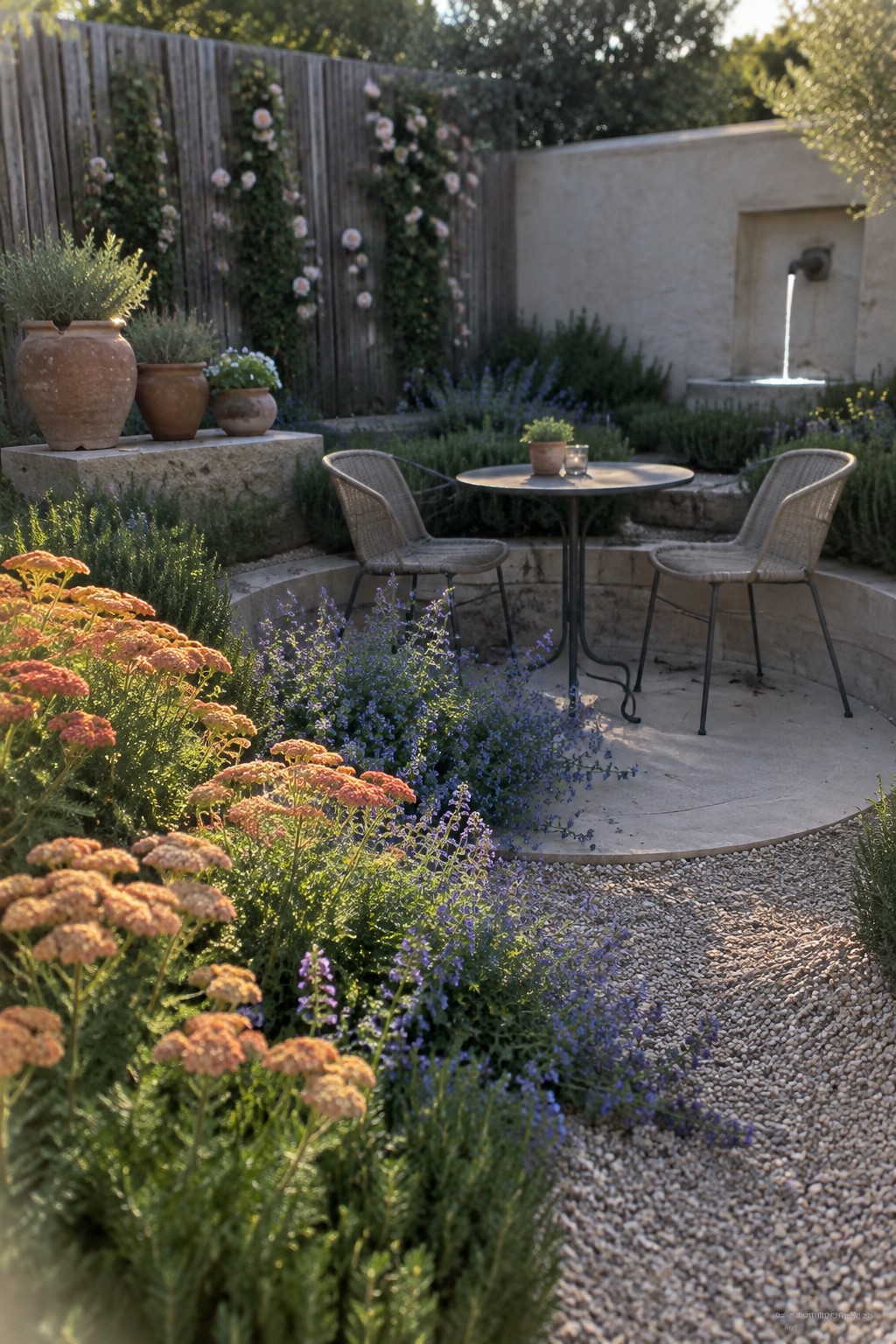
A loose border of yarrow can give a garden path color without asking for much water. Its flat flower clusters sit well among lower, airy plants, so the edge feels full but not overly formal.
Plant yarrow in a sunny spot with well-drained soil, and let it fill out naturally along gravel or stone. It suits a casual garden, but leave room for it to spread and trim spent flowers if you want to limit self-seeding.
Use Stone Steps to Shape a Yarrow Garden

Stone steps make a sloped garden easier to walk through and give the planting beds a clear structure. Yarrow works well along the edges because it tolerates dry conditions and its flat flower clusters add color without needing much care.
Use broad, stable stones and leave enough room beside the steps for plants to grow without spilling over the walking surface. This approach suits a sloping front yard, but keep the path comfortable to climb and make sure water can drain away from the steps.
Use Yarrow to Fill a Curved Garden Border
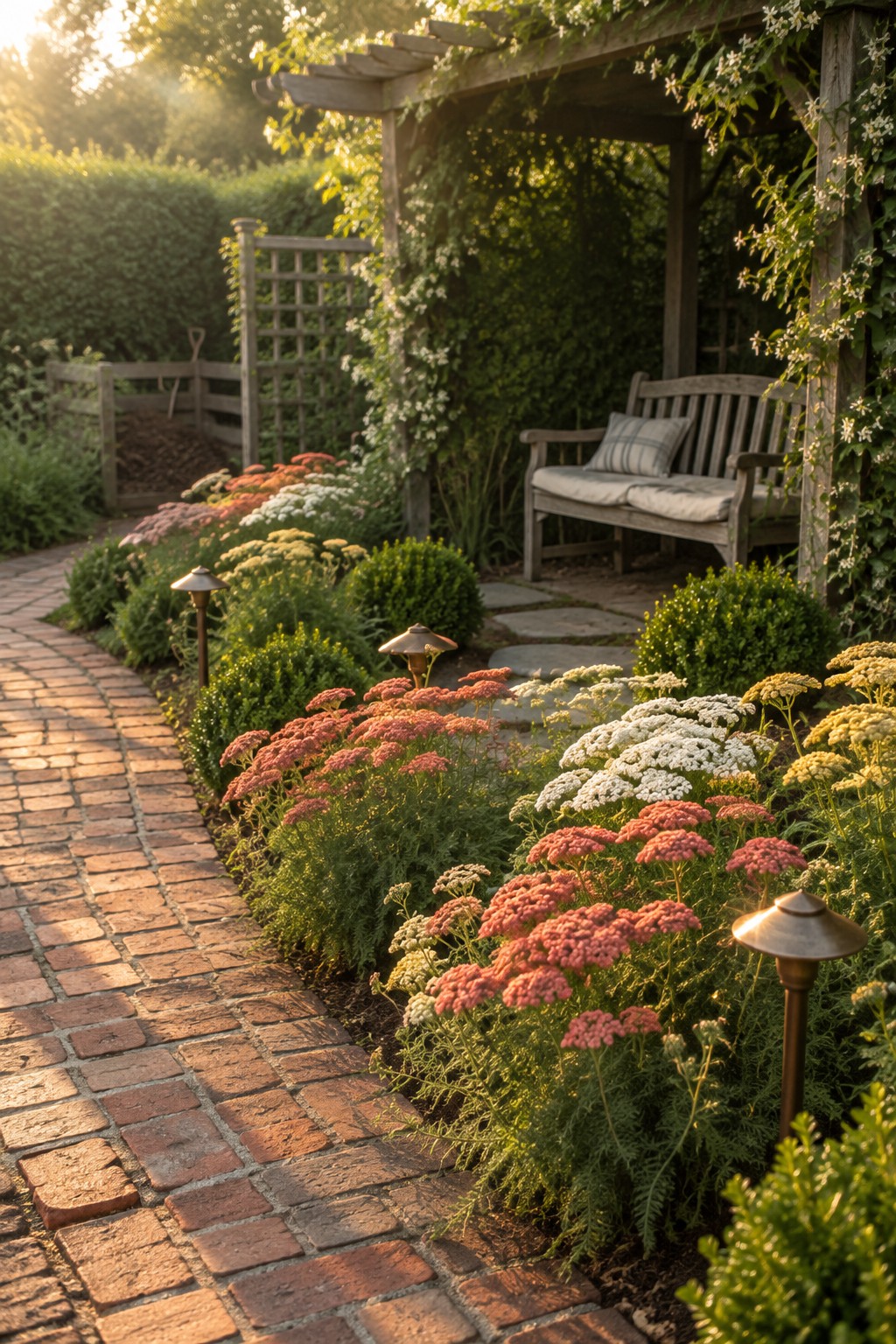
A generous planting border along a curving path gives yarrow room to spread and makes a garden feel full without needing a complicated layout. Yarrow’s flat clusters of flowers work especially well in broad sweeps, where their color can repeat along the edge.
Keep the border wide enough for plants to fill in, and leave clear space beside the path so it stays easy to walk. Yarrow suits sunny spots and handles dry conditions once established, so it can be a practical choice for a low-water garden.
Use Gravel Beds to Organize Yarrow Plantings

A narrow gravel bed gives yarrow a clear place to grow and helps keep a front garden looking tidy. The small flowering clumps add color without needing a large, water-hungry lawn.
Use this approach along a walkway or beside a home, with gravel around the plants to cover open soil. Leave enough room between clumps for mature growth, and choose a well-drained spot so yarrow does not sit in wet ground.
Plant Yarrow in a Layered Coastal Garden

Yarrow fits naturally into a layered garden, where its flat flower clusters rise above lower, spreading plants. This approach gives a planting bed variety without relying on thirsty lawn or fussy annuals.
Use yarrow in sunny, well-drained beds near a path or house, and leave enough room for neighboring plants to spread. The purple flowers and silvery foliage shown here offer a useful contrast, but keep the planting loose rather than packing every gap.
Create a Mulched Path Through Yarrow Plantings
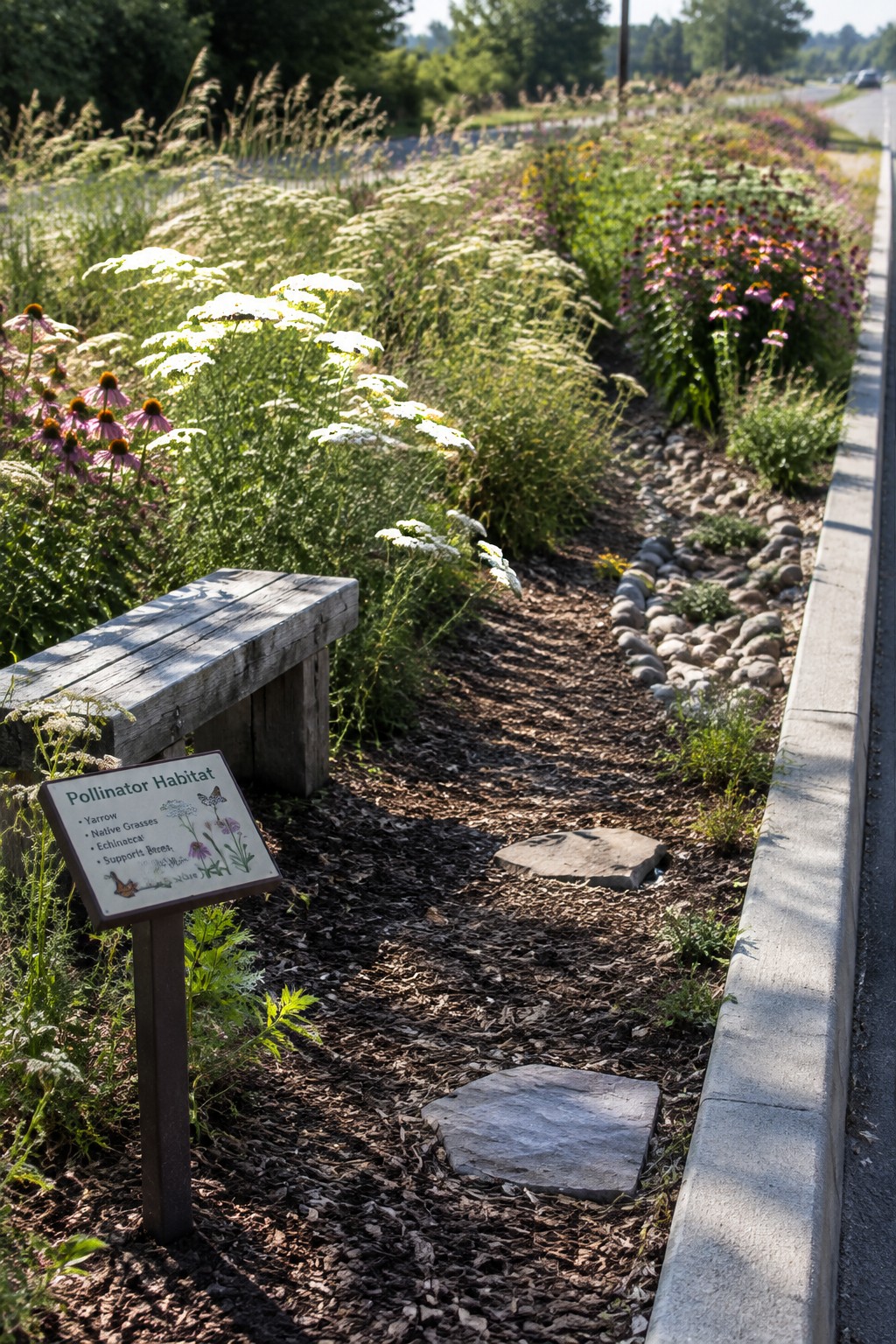
A simple path can make a drought-tolerant flower bed easier to enjoy and maintain. Mulch gives the route a clear shape while letting yarrow and other pollinator-friendly plants fill in around it.
Keep the path wide enough to walk through comfortably, and leave room to reach plants for trimming or weeding. This works well in an informal garden where you want access without paving over much of the planting area.
Grow Yarrow in Patio Planters

Yarrow can bring easy-care color to a small patio without needing a full garden bed. Its clusters of flowers suit a large planter, where they can spill into a seating area and make a plain corner feel more planted.
Choose a pot with good drainage and give yarrow plenty of sun. It handles dry spells once established, but avoid keeping the soil soggy. A roomy container like the one filled with pink and white flowers here gives the roots space to grow.
Use Yarrow to Add Color Along a Gravel Walk

Yarrow is a useful choice for bringing color to a gravel garden without making the path feel crowded. Its upright stems and flat flower clusters stand above lower plants, so the planting has interest while the walkway stays easy to use.
Plant it in loose groups along one edge of a gravel path, leaving enough room for the clumps to spread. Yellow yarrow suits the sunny, informal look here, and magenta varieties can add contrast nearby. Give it well-drained soil and avoid overwatering.
Use Raised Planters to Add Height to a Yarrow Garden
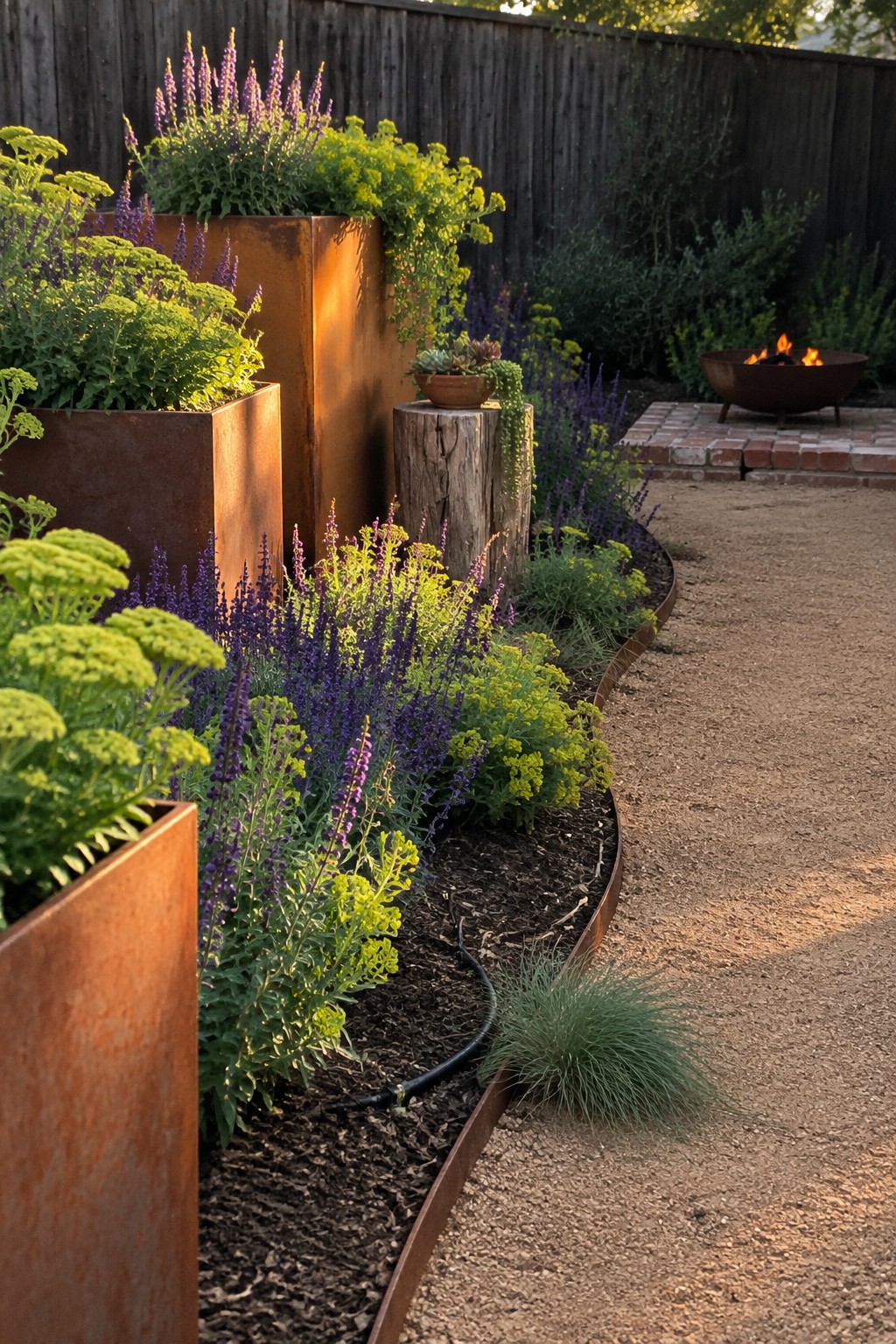
Raised metal planters give a drought-tolerant garden another level without taking up much ground space. They also make a long planting bed feel more varied, especially when yarrow and other flowering plants spill around their bases.
Use a few planters at different heights along a border or near a path, and keep the plants inside them suited to the same sun and water needs as the surrounding bed. Rusted metal has a natural look, but make sure the planters drain well so roots do not sit in water.
Use Stone Steps to Connect a Sloped Garden
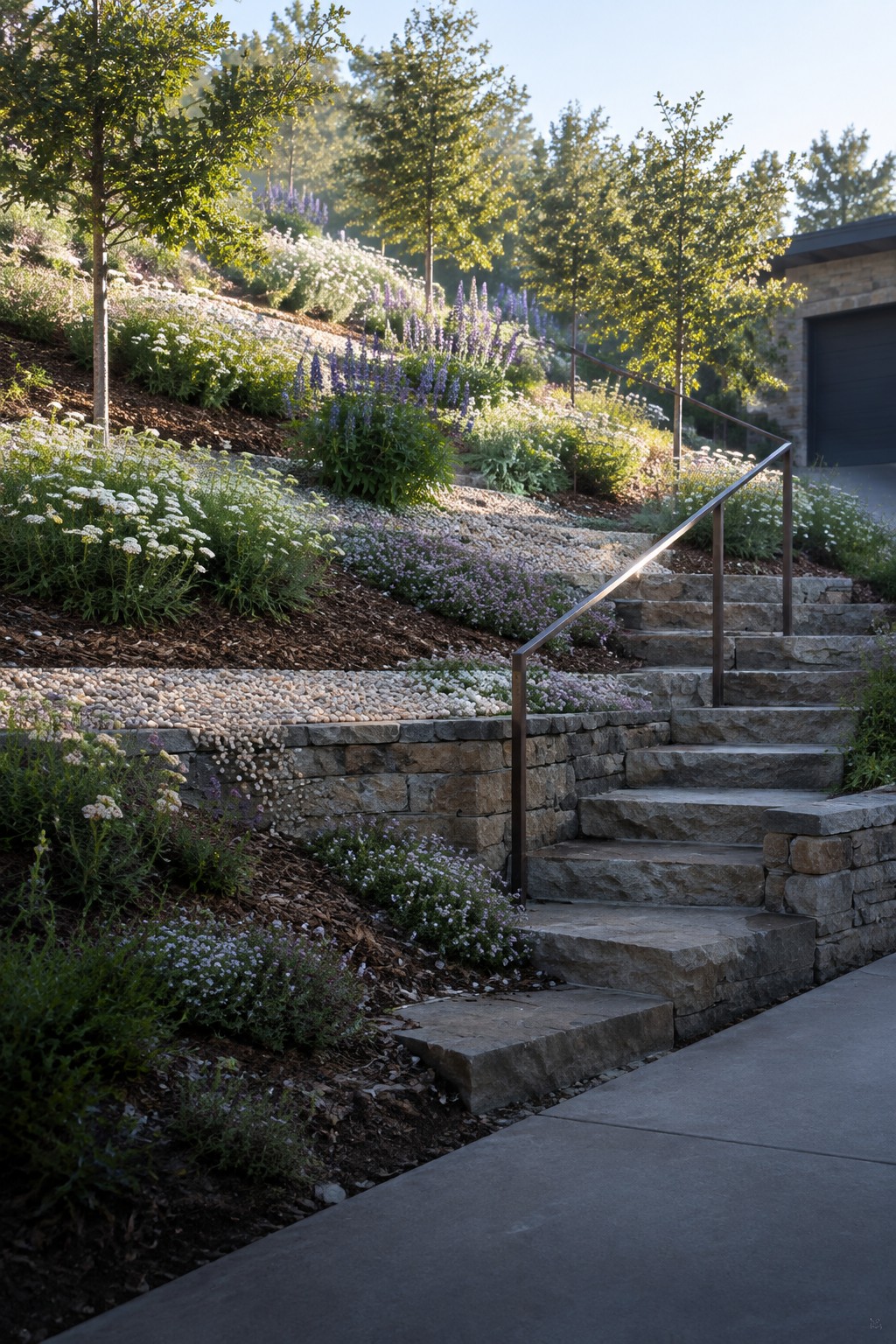
Stone steps make a steep planting area easier to move through and give the garden a clear route. Here, the steps sit among planted beds and gravel, so the path feels like part of the landscape rather than a separate walkway.
For a similar garden, use sturdy stone treads and plant yarrow along the edges or in nearby beds. Keep the walking surface clear, and choose plants that can handle the site’s sun and dry conditions.
Use Yarrow Along a Poolside Border
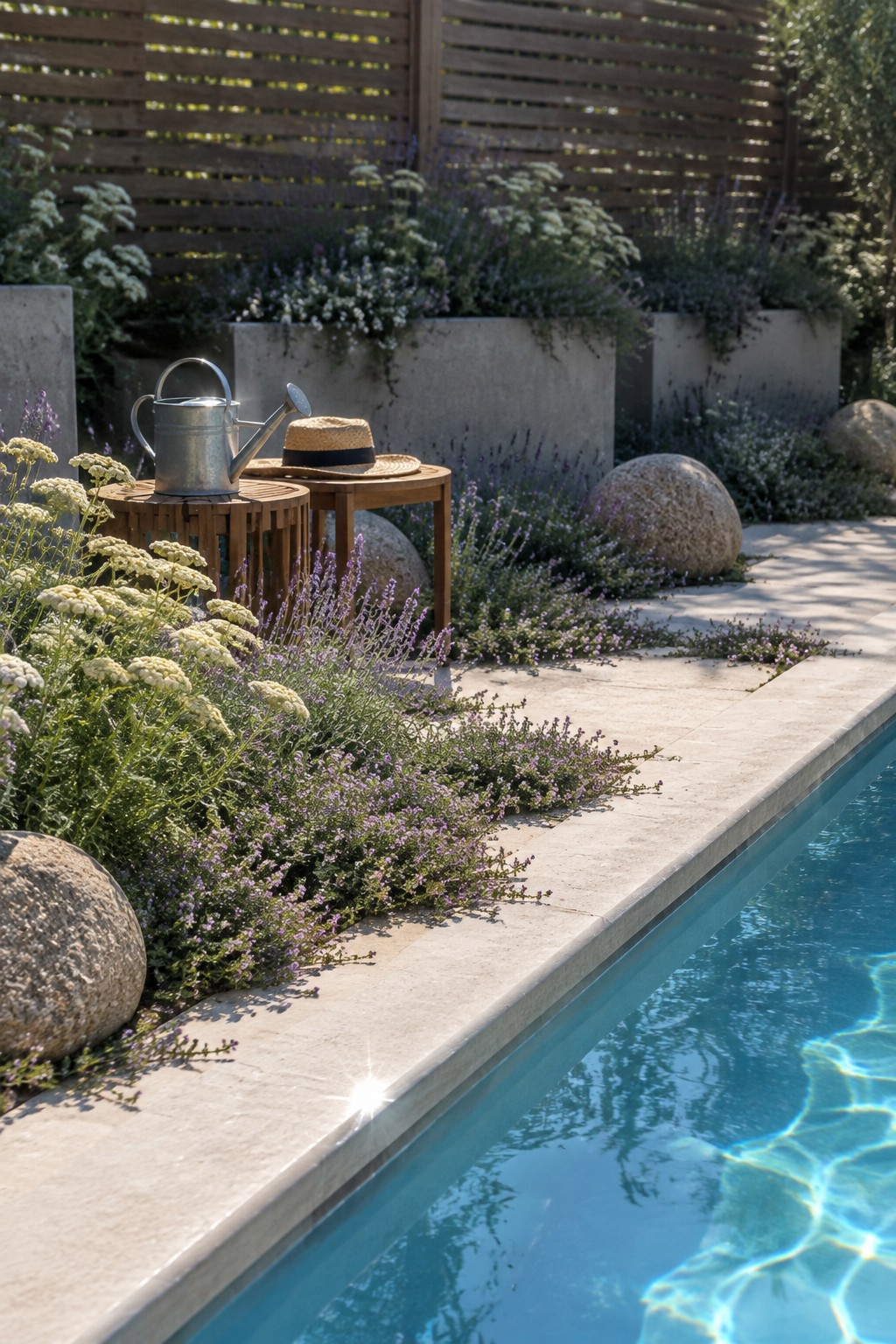
Yarrow can help a poolside planting bed feel full without needing a lot of water. Tuck it among low-growing flowers along the edge of the paving, where its blooms can spill slightly toward the stone.
Leave enough room between the plants and the pool for easy walking and maintenance. This kind of border suits sunny yards, but choose varieties that fit the space so they do not crowd the path.
Grow Yarrow in Raised Garden Beds

Raised beds give yarrow a clear place in a small garden and make it easier to group flowers with herbs. The defined edges keep plantings organized, while yarrow brings dependable color without needing especially rich soil.
Use this approach along a narrow walkway or in a compact backyard where space is limited. Leave room for plants to spread, and choose a sunny spot with soil that drains well.
Use Yarrow in Low-Water Gravel Beds
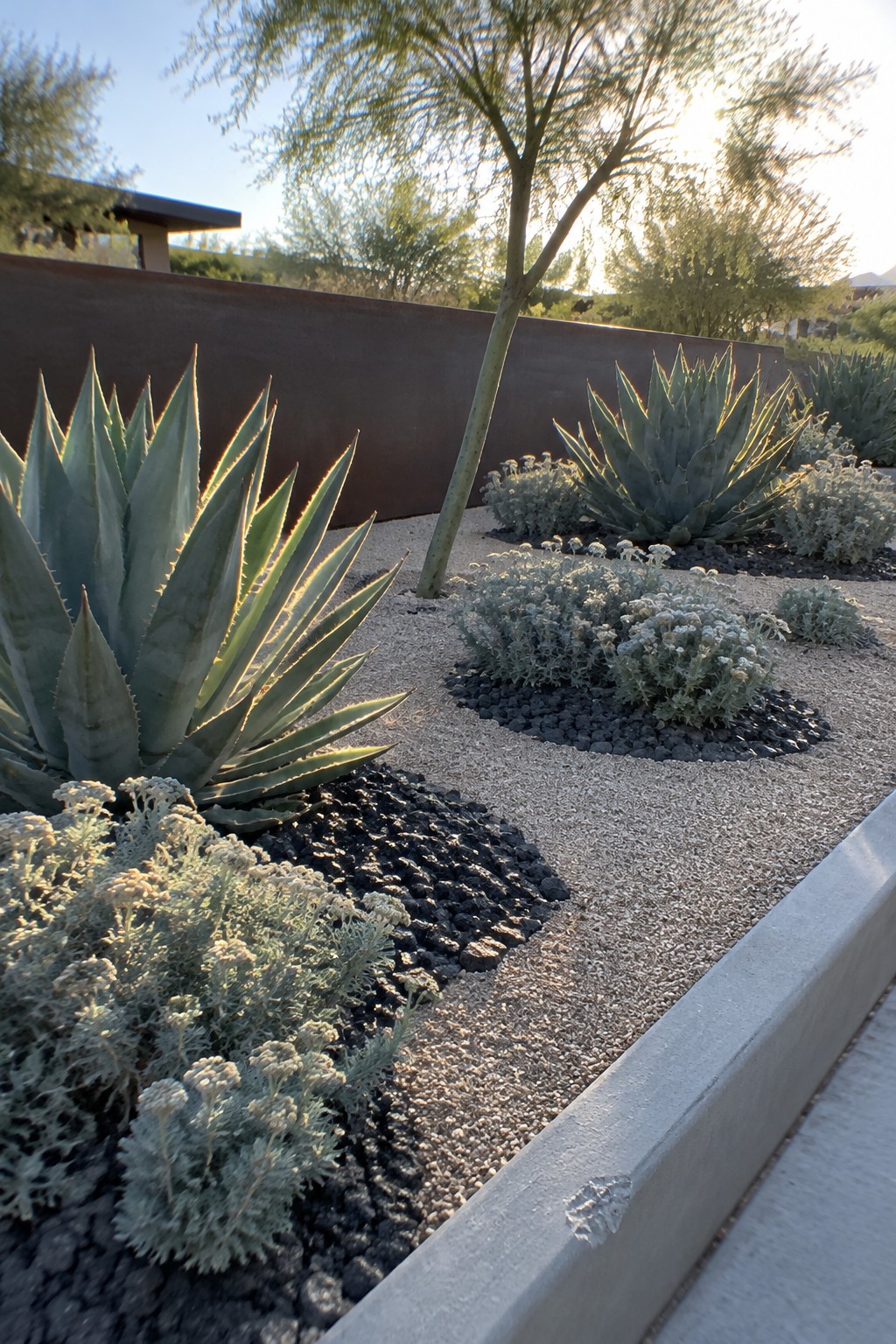
Gravel beds make a practical base for a drought-tolerant garden, and yarrow can bring softer texture to the planting. The contrast between pale gravel and dark stone mulch also helps each group of plants stand out without needing a lawn or thirsty groundcover.
Use yarrow in loose clusters between larger plants such as agave, leaving enough room for mature growth. This approach suits sunny, dry areas, but choose a variety that can handle your climate and avoid keeping the soil too wet.
Use a Fountain to Center a Formal Yarrow Garden
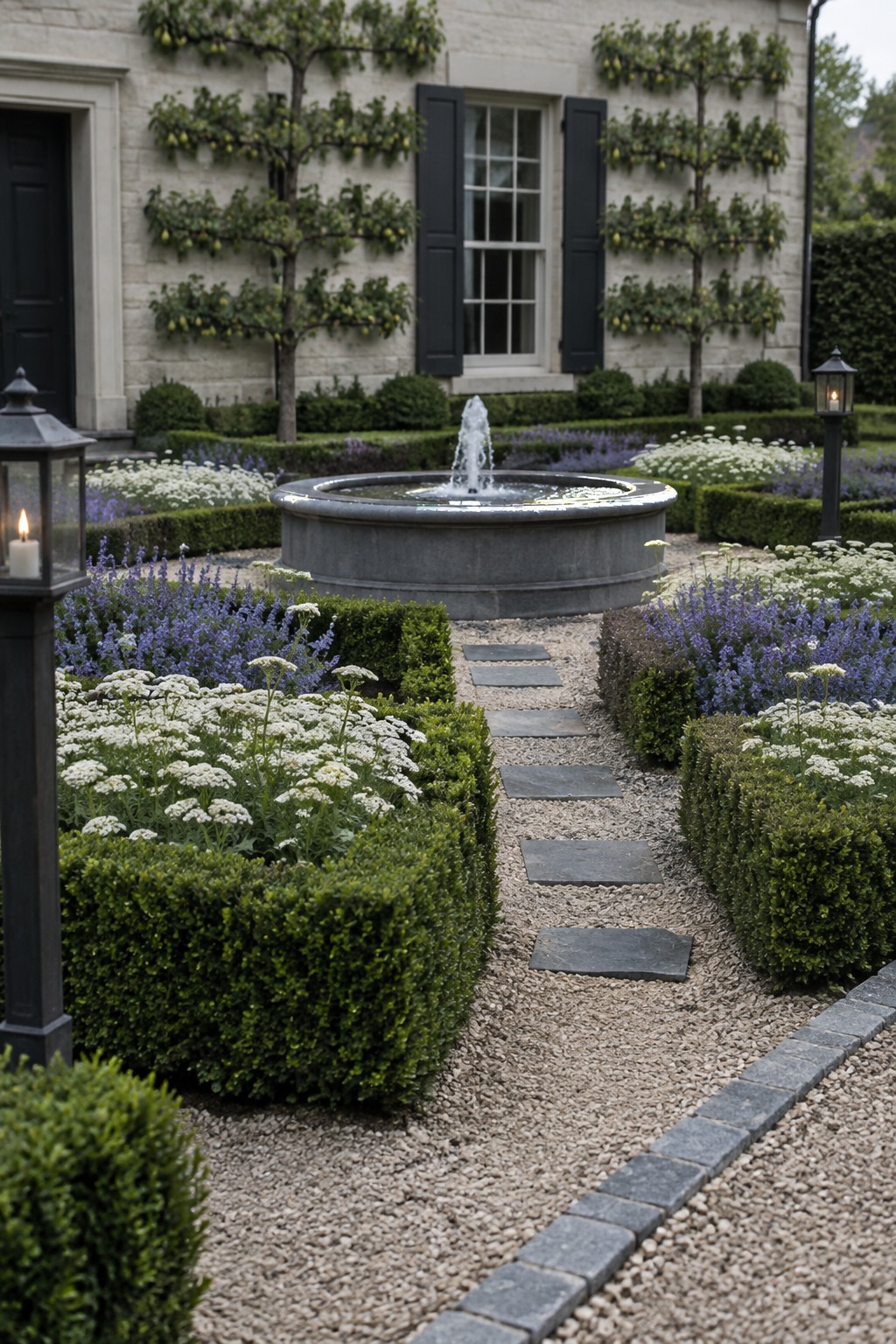
A central fountain can give a flower garden a clear focal point and make the surrounding beds feel more organized. Yarrow suits this kind of layout because its upright blooms can fill the beds without hiding the garden’s structure.
Use clipped low hedges or gravel paths to define the planting areas, then let yarrow grow in broad, repeated patches around the fountain. Choose a sunny spot with well-drained soil, and leave enough room for plants to spread without crowding the path.
Grow Yarrow in Patio Planters

Large patio planters make it easy to enjoy yarrow without planting a full garden bed. Its flat clusters of flowers bring color and structure to a seating area, while the containers keep the planting neat and easy to manage.
Choose wide pots with drainage holes, and use a free-draining potting mix so the roots do not stay wet. Yarrow is comfortable in sunny, dry spots, which makes it a practical choice for a warm patio. Pair it with other plants only if they have similar water needs.
Let a Garden Path Wind Through Yarrow Beds
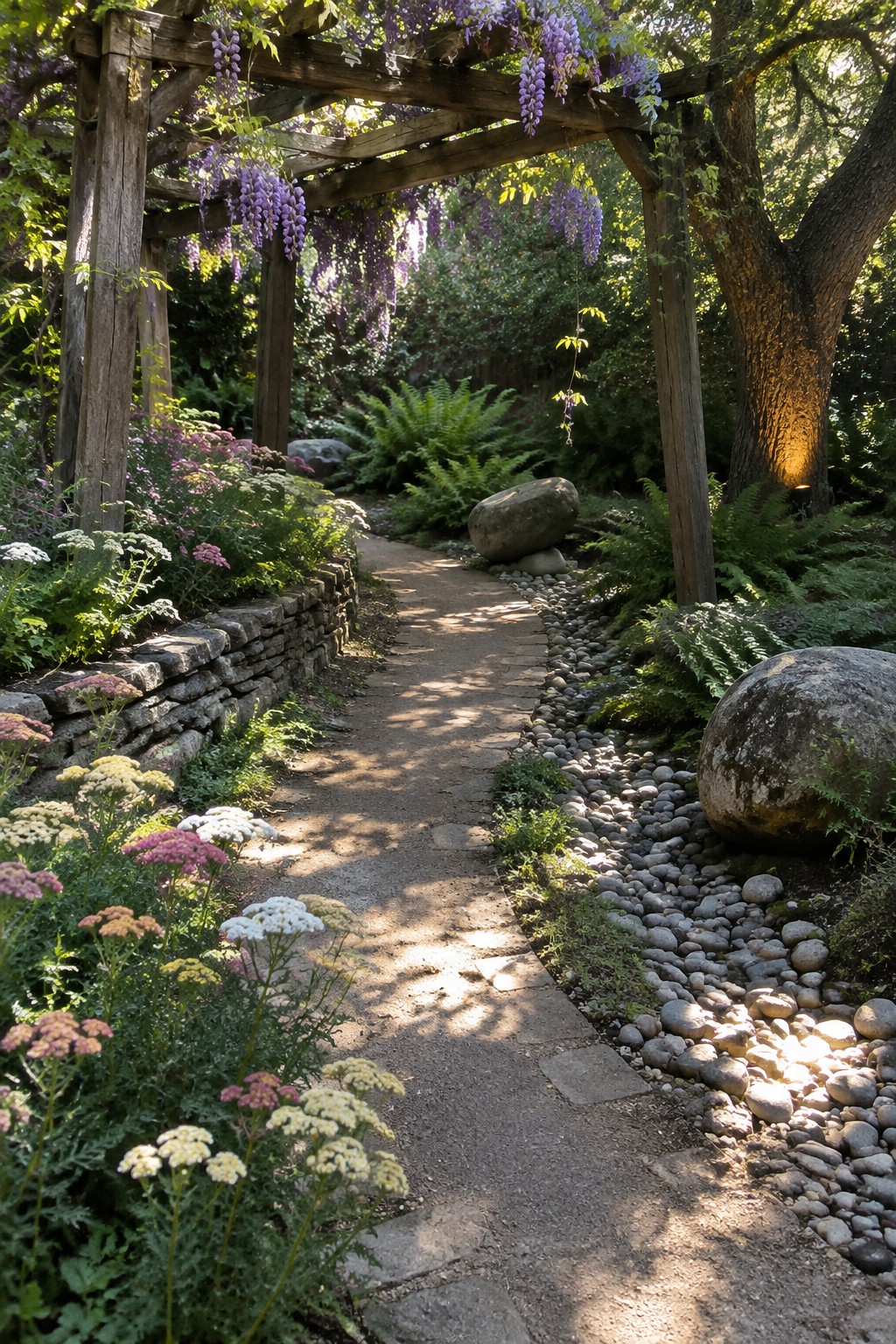
A gently curving path gives a yarrow garden a clear route without making the planting feel too formal. Yarrow’s long bloom season and tolerance for dry conditions make it a useful choice along the edges, where it can fill in around the walkway.
Use gravel or compacted stone for a path that drains well, and leave enough room for plants to spread without spilling across it. A low stone edge can keep the border tidy, but avoid crowding the path with plants that need frequent watering.
Shape Yarrow Beds Around a Garden Path
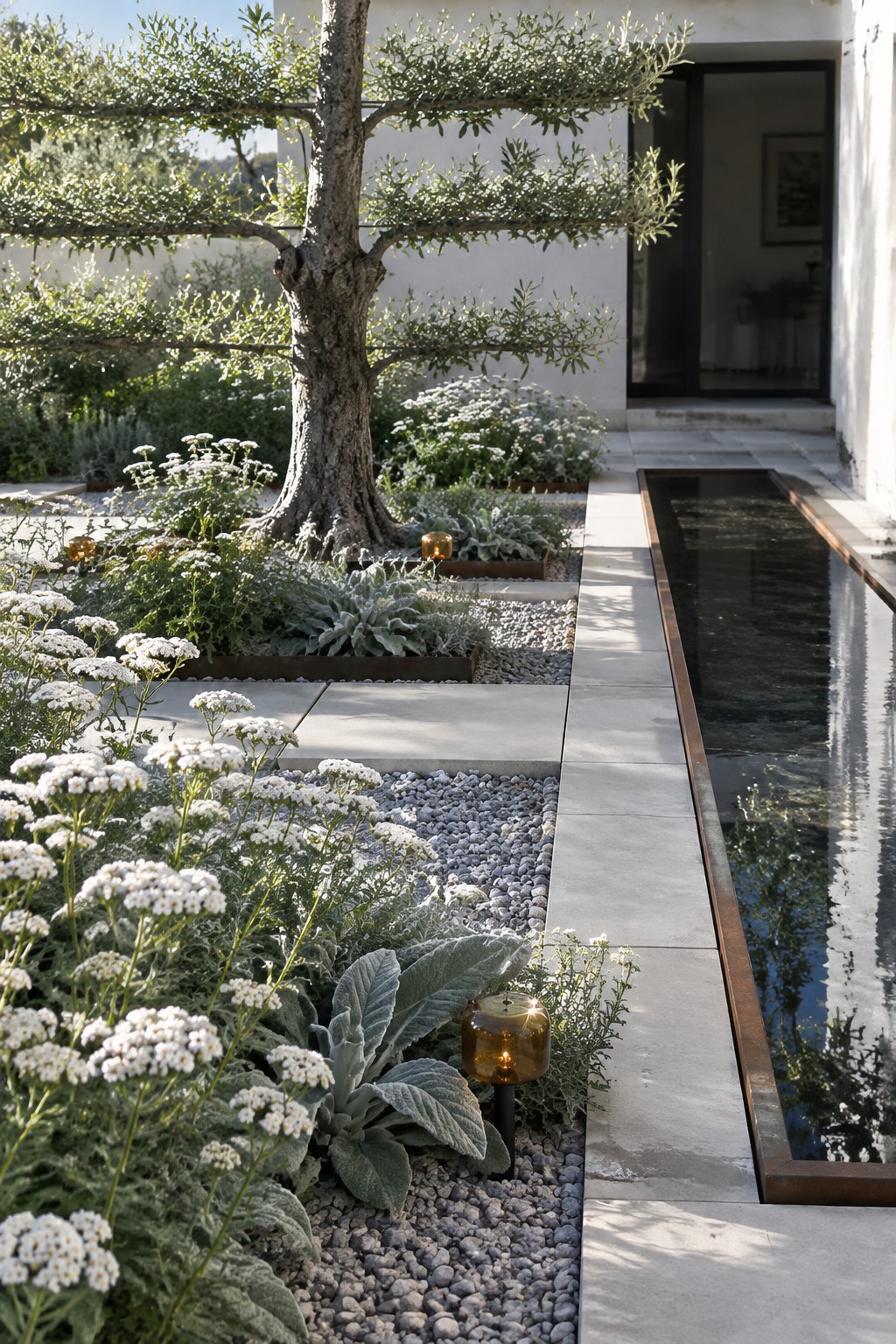
A clear path can give a drought-tolerant garden a useful structure. Here, the straight stone walkway runs beside gravel planting beds, making it easy to move through the garden without stepping among the plants.
Use this layout where you want a tidy route through a relaxed planting. Yarrow works well along the bed edges, where its flowers can spill toward the path, but leave enough room for it to spread without narrowing the walkway.
Use Yarrow Along a Stone Drainage Path
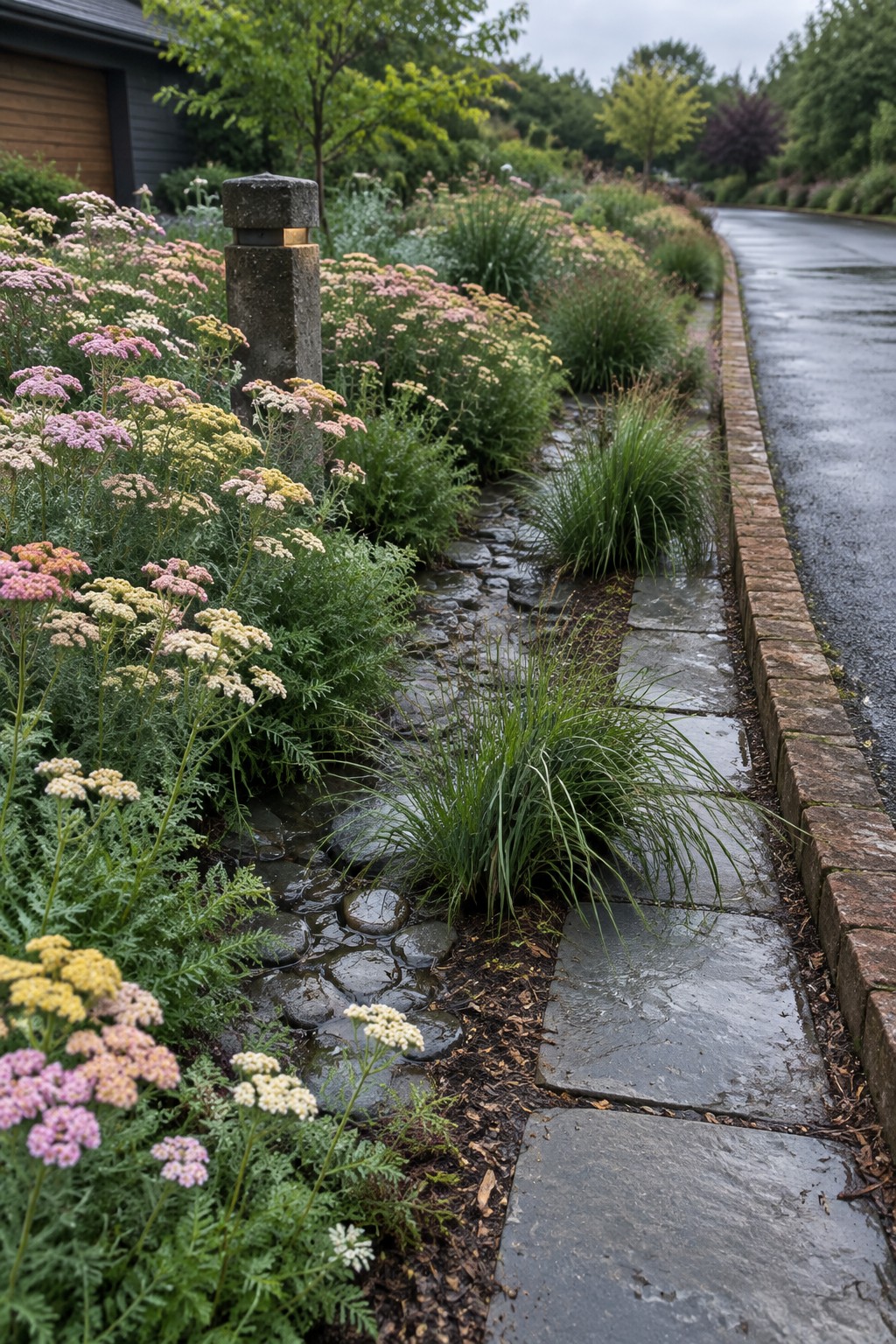
A narrow stone path can guide rainwater through a garden while giving yarrow a clear place to grow alongside it. The flowers spill toward the stones, but the route stays easy to follow and the planting feels less like a row of separate plants.
This approach suits a sloped or narrow side yard where water needs somewhere to go. Set the stones so water can pass between them, and leave enough room for yarrow to spread without covering the walking surface.
Frequently Asked Questions
Q: Does yarrow need watering after it’s established?
A: It can handle dry spells, but a deep drink during a long stretch of heat will keep it looking fresher. Let the soil dry between waterings, since soggy roots can cause trouble.
Q: Will yarrow spread across my garden?
A: It can slowly spread by seed and underground stems, especially in sunny, open spots. Trim spent flowers before they set seed, or divide the clumps when they start crowding nearby plants.
Q: Can I grow yarrow in a pot?
A: Yes, as long as the pot has drainage holes and the mix doesn’t stay wet. Choose a compact variety if you want to keep the plant from flopping over the edges.
Q: Should I cut yarrow back after it blooms?
A: Snip off faded flower heads to tidy the plant and encourage another flush of blooms. Leave the foliage in place until it yellows or dies back.
