

Tulips can bring an early burst of color to a front yard, but their placement matters as much as the blooms themselves.
I find they look most at home when their shapes and colors work with the path, lawn edges, and existing shrubs rather than competing with them.
A curved bed can soften a straight walkway, while neat rows near the entry can make the approach feel more ordered.
It also helps to think ahead, since tulips fade after flowering and the surrounding plants need to keep the garden looking cared for through the rest of spring.
I’d save ideas that suit the shape of your yard and feel easy to adapt as the planting fills in over time.
Use a Curved Tulip Bed Along the Path

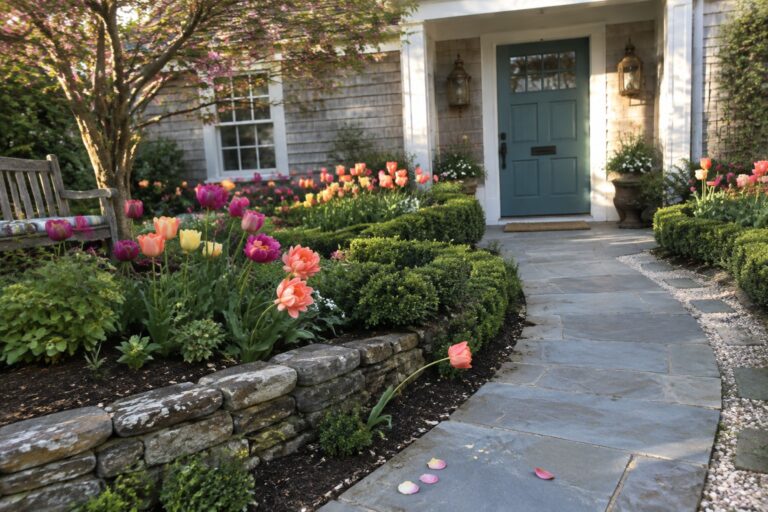
A curved flower bed can make a front walkway feel like part of the garden, rather than just a route to the door. Here, tulips sit in a raised stone border, so their color follows the bend of the path.
Try this layout along a walkway with enough room for a wide bed. Plant tulips in loose groups for a fuller look, and leave space for low shrubs or other plants to fill in after the blooms fade.
Plant Tulips Along a Straight Entry Path
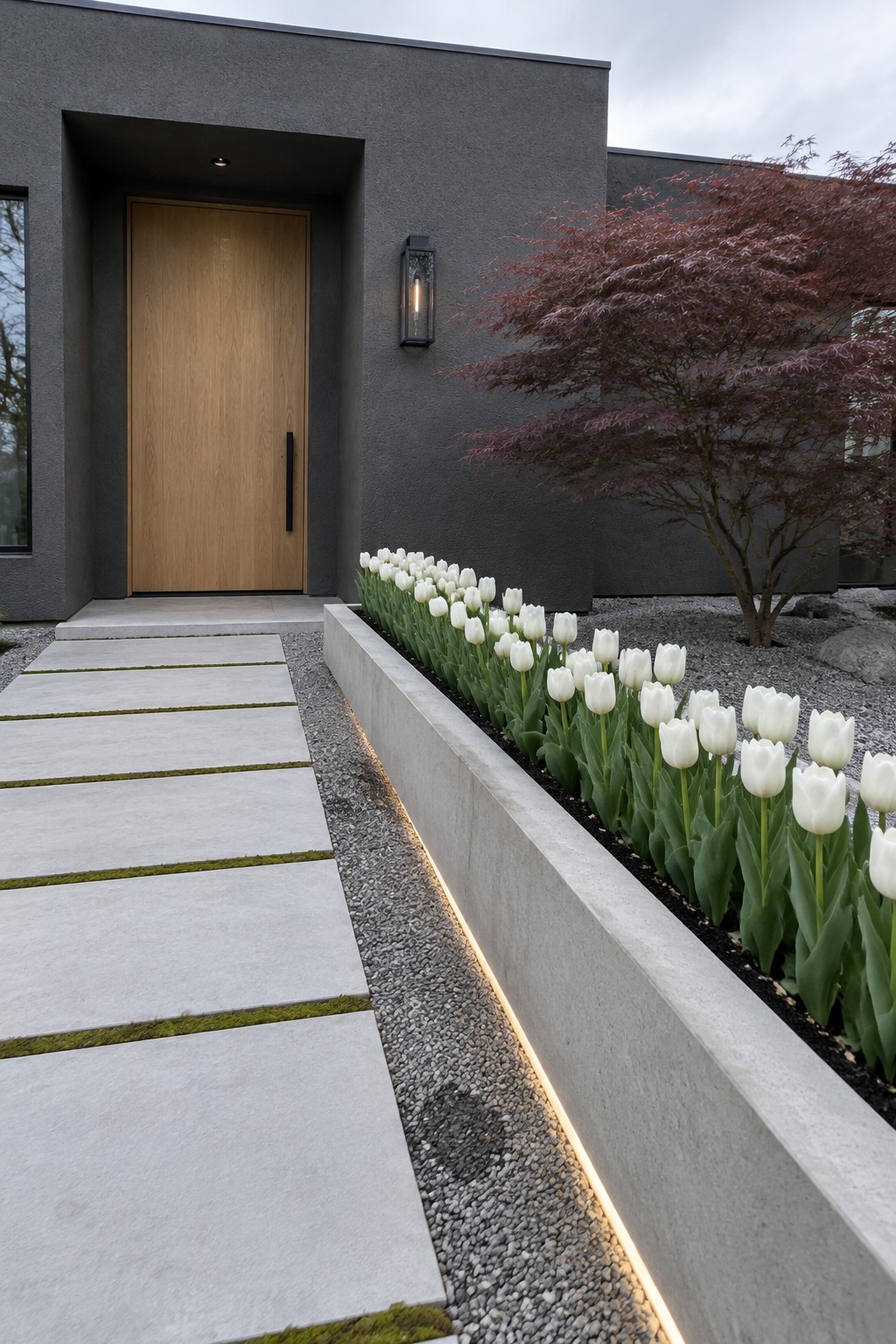
A narrow tulip bed beside the front walk is an easy way to bring spring color right up to the entrance. Repeating white tulips in a simple line gives the planting a tidy look and suits a modern home.
Use a low raised bed along one side of a path, leaving enough room for people to walk comfortably. White tulips work well here, but a single color that complements the house can keep the layout just as orderly.
Use a Tulip Planter to Mark the Front Entry
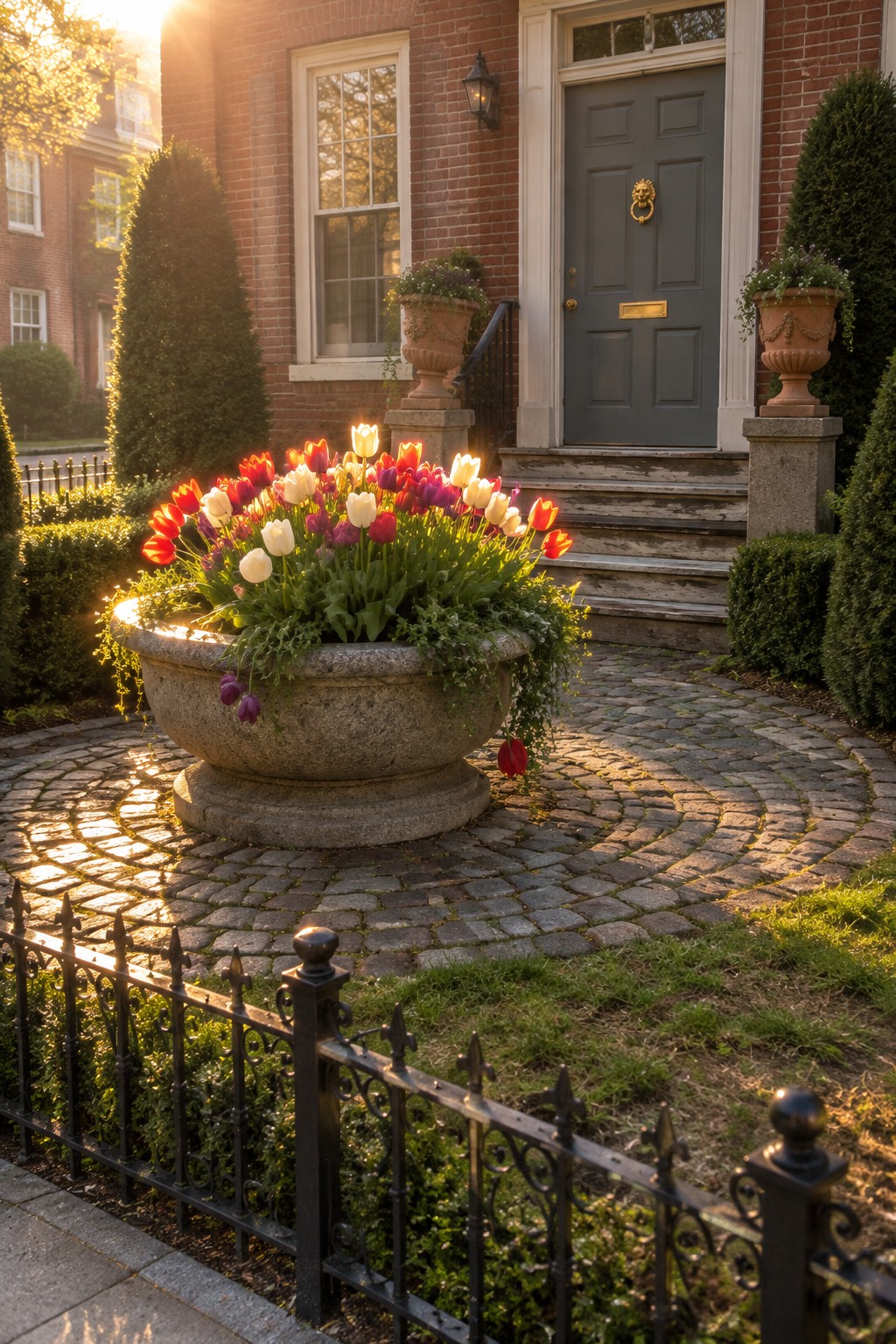
A large planter filled with tulips makes a front walk feel cared for without changing the garden beds. The mix of red, white, and yellow blooms gives the entry a clear spring focal point.
Choose a sturdy urn or bowl that suits the scale of the steps, and plant tulips close enough to make a full display. This works well beside a front door or along a short path; make sure the container has drainage so the bulbs don’t sit in water.
Use Tulips Along A Curved Garden Edge
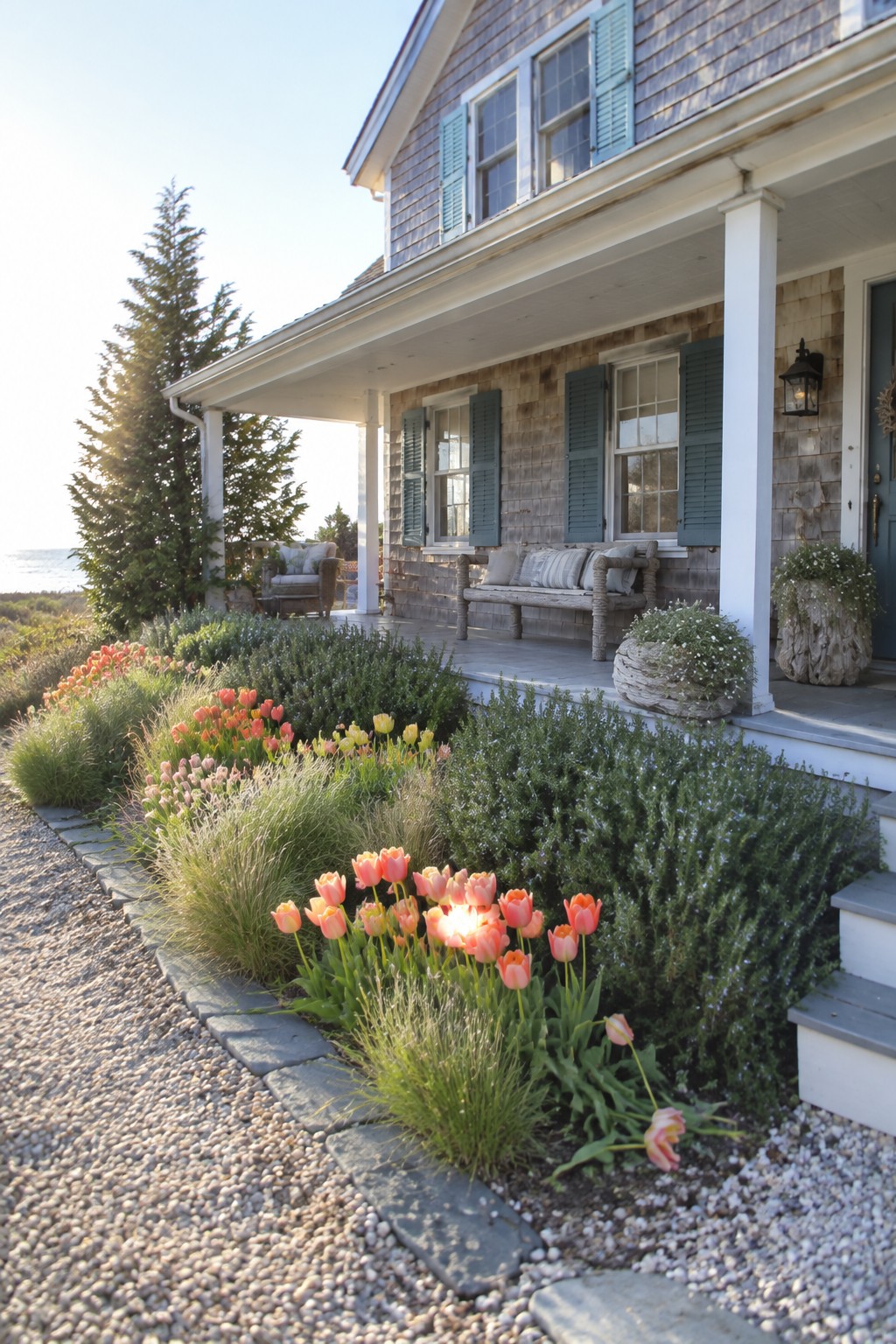
A curved bed gives tulips room to make a clear sweep of color instead of looking like a straight row. Here, coral blooms sit along the edge of a pebble path, while low evergreen plants fill the space behind them.
This layout works well beside a porch or along a front walk, especially where a path already bends through the yard. Plant tulips in loose clusters along the curve, and leave enough room for the foliage to mature after the flowers fade.
Use Large Tulip Planters to Mark the Front Entry
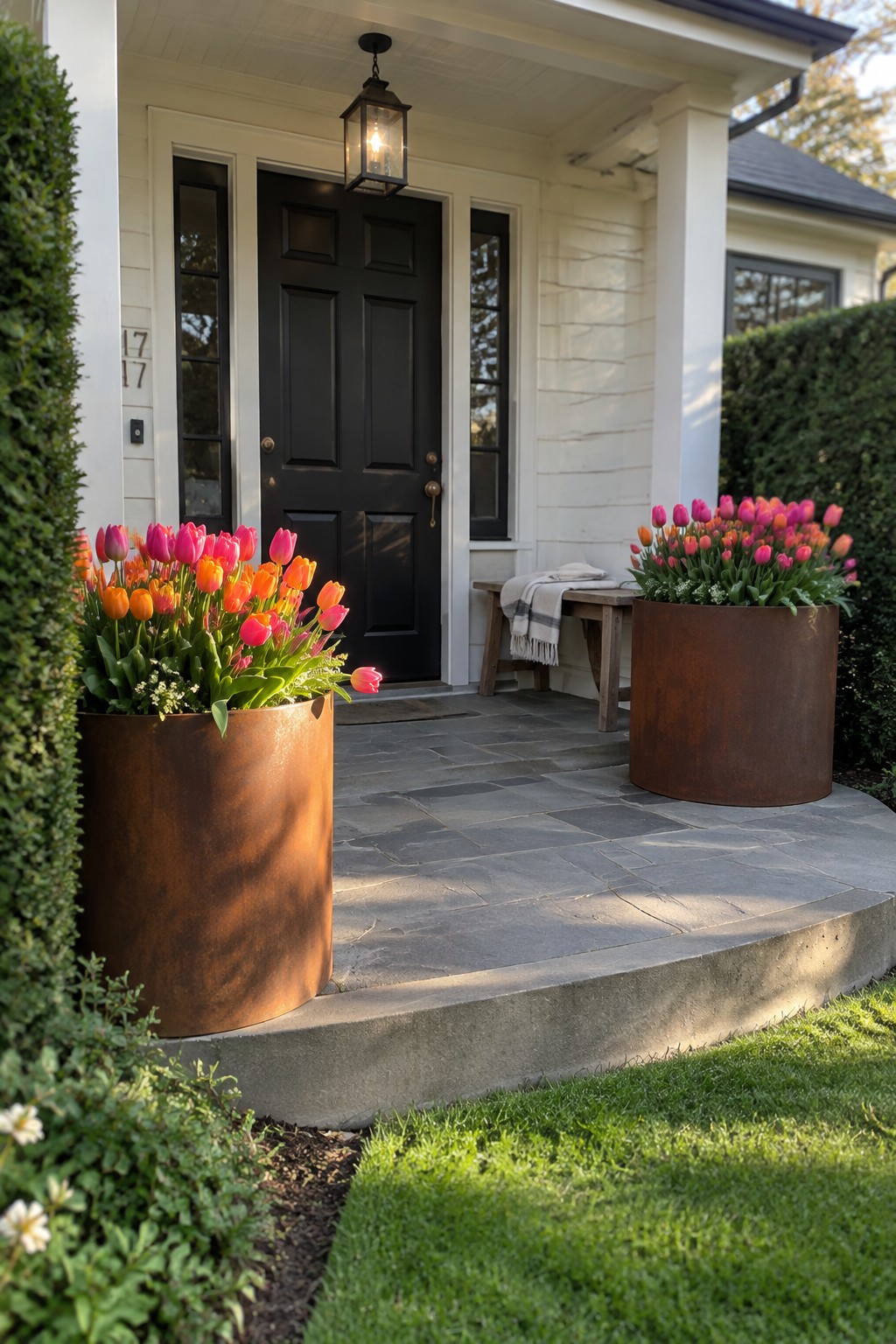
Oversized planters make it easy to bring a strong patch of spring color right to the front door. Tulips in rust-colored containers stand out against the simple entry and give the planting a clear, contained shape.
This works well when there isn’t much room for a flower bed, or when you want color close to the house. Choose sturdy containers with drainage holes, and plant tulips in groups for a fuller look. A pair on either side of the entry can look especially balanced.
Add Tulips Along a Formal Entry Walk
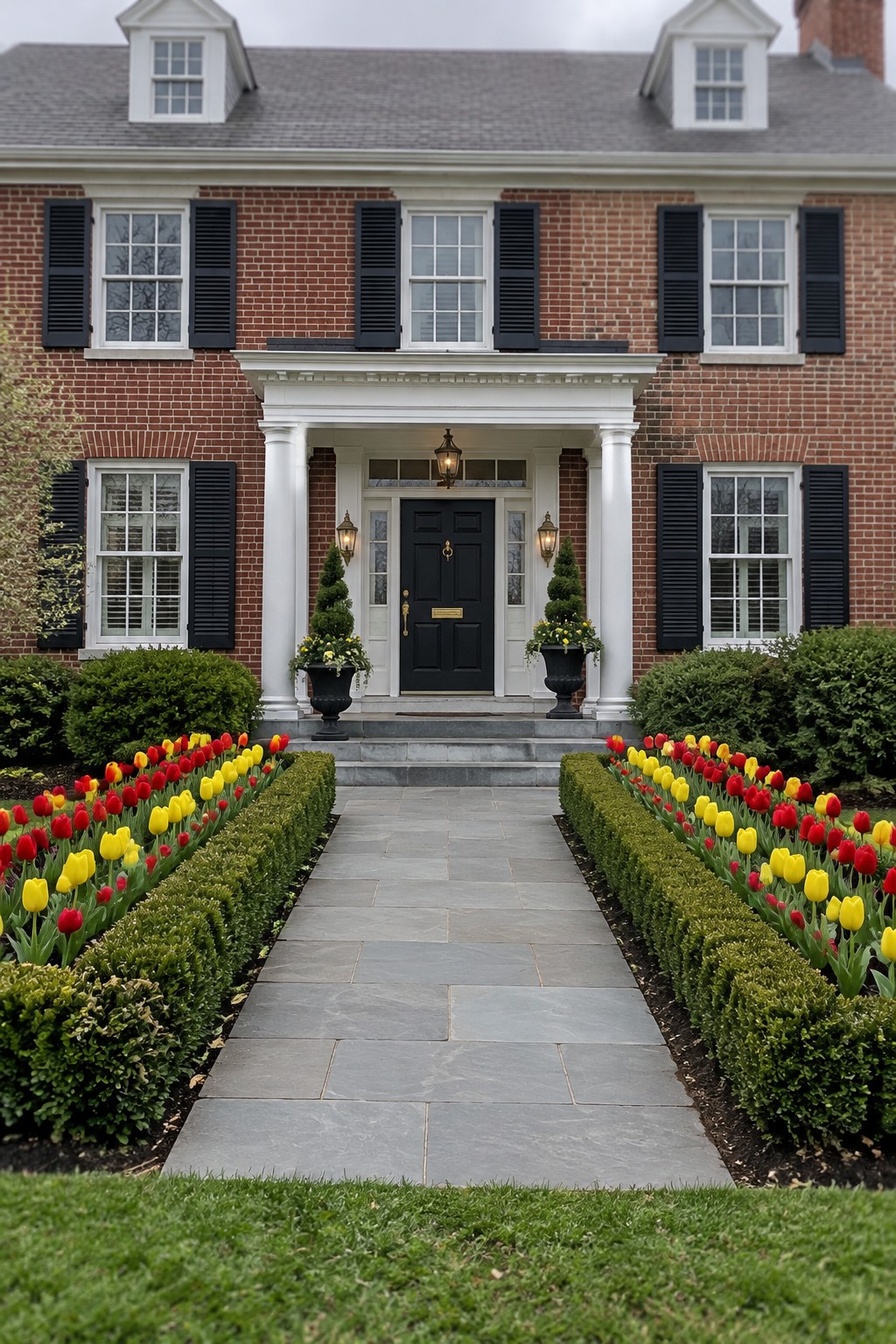
A straight front walk gives tulips a clear place to shine. Planting them in long, matching beds on either side makes the approach feel orderly, while the bright flowers bring color to a traditional brick home.
For a similar look, keep the beds narrow and use repeating rows of tulips rather than mixing many flower types. This works especially well along a centered path, where the planting can mirror the front door. Add low edging plants if you want the beds to look tidy after the tulips fade.
Use Tulips to Fill Raised Garden Beds
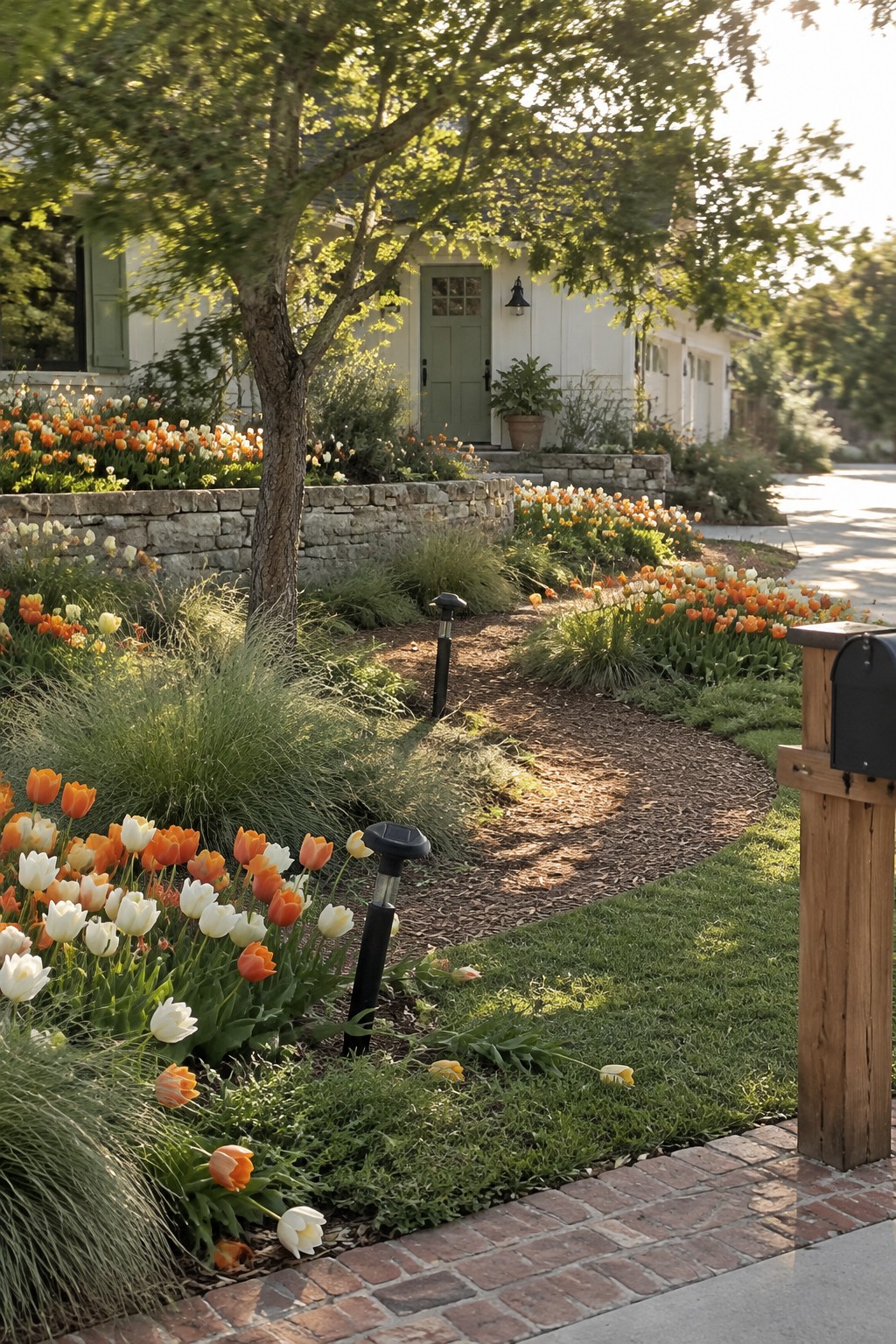
Raised beds can give front-yard tulips a clear shape and help keep the planting tidy. A low stone wall holds the bed in place, while clusters of orange and white blooms make a simple, noticeable color display.
Plant tulips in generous groups rather than scattering single bulbs throughout the bed. This approach suits homes with a defined entry garden, and the raised edge can also make planting easier to maintain.
Plant Tulips Along a Narrow Entry Walk
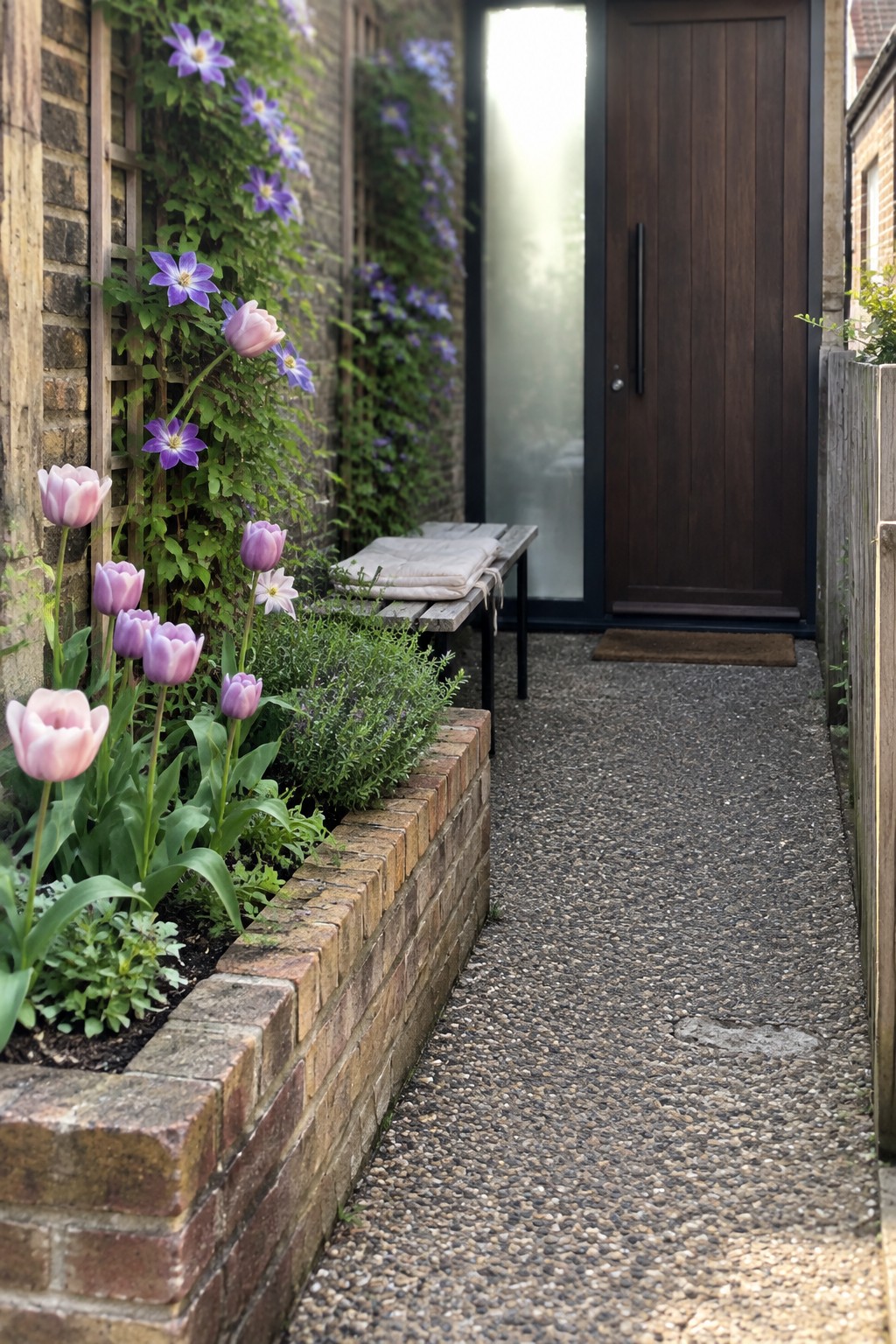
A narrow entry walk can feel more welcoming when tulips grow in a raised bed beside it. The brick edge keeps the planting tidy, while pink tulips and purple clematis add color without taking over the path.
Use this idea where space is tight and a full front-yard bed would crowd the walkway. Keep the flowers on one side or set them back far enough that people can pass comfortably.
Plant Tulips in Gravel Beds Along a Front Walk
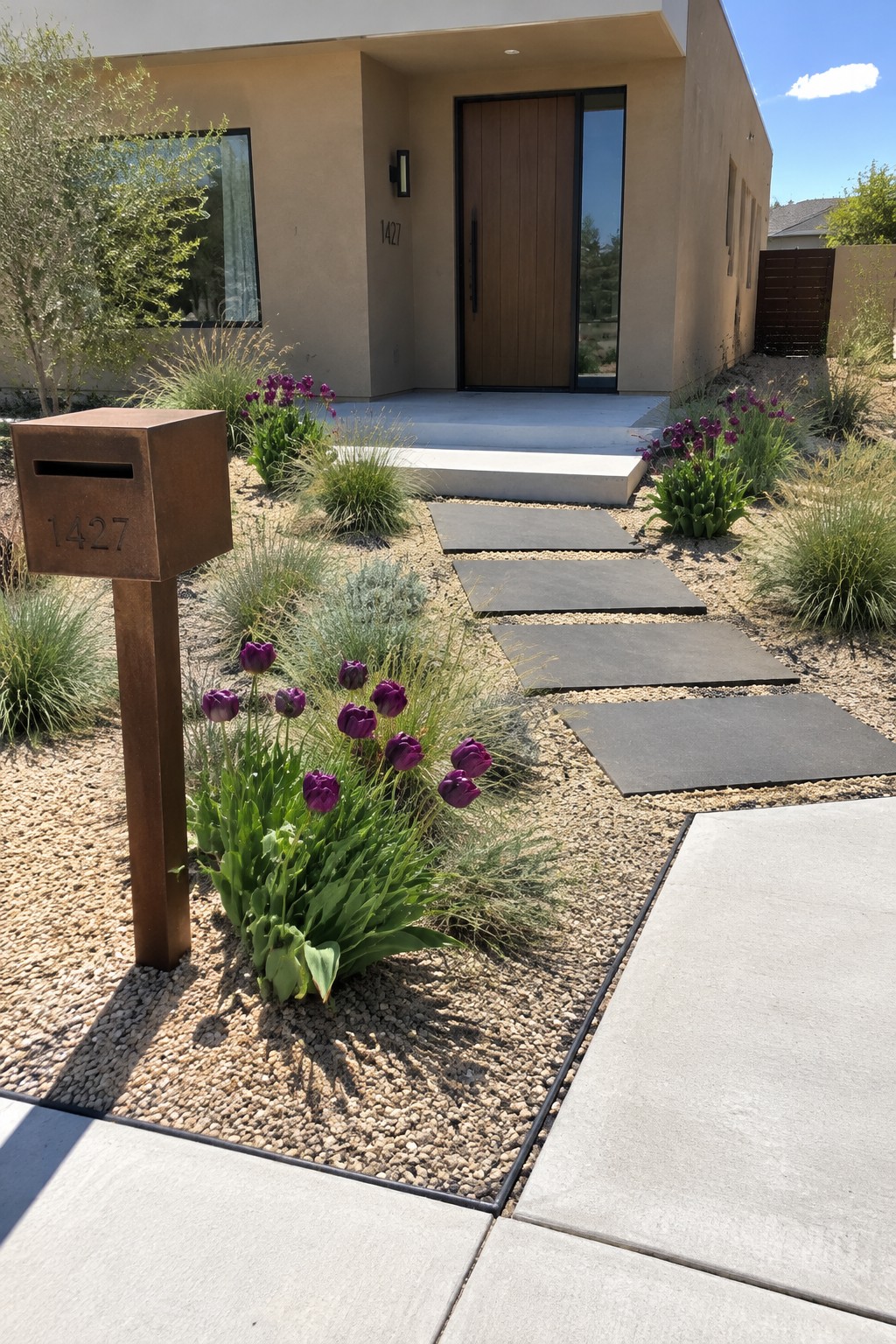
Gravel beds can give a front walk a neat, low-water setting for spring tulips. The stones keep the planting area defined, while clusters of purple blooms bring a clear band of color near the entry.
Leave enough room between the tulips and the walking stones so the plants don’t crowd the path as they grow. This approach suits modern homes and works well with drought-tolerant grasses; use gravel that drains freely, and plan to water the tulips while they’re growing.
Layer Tulips Along a Garden Path

A brick path feels more settled when flowers run alongside it instead of sitting in separate patches. Tulips bring a clear band of spring color to the route, while lower plants can fill in around them after the blooms fade.
For a similar look, plant tulips in generous groups along one or both edges of a walkway. This works especially well on a path leading to a front door, but leave enough room for people to walk comfortably and keep the bed edge easy to maintain.
Use Matching Tulip Pots to Dress Up the Front Steps

Large pots of tulips can make a front entry feel cared for without changing the garden beds. Matching blue-green planters on either side of the steps give the flowers a clear place to stand out, while keeping the planting easy to change with the seasons.
Choose sturdy pots that suit the scale of the steps, and make sure they have drainage holes. Red-and-white tulips bring a cheerful spring touch, but leave enough room around the doorway for people to pass comfortably.
Layer Tulips in Raised Front Yard Beds
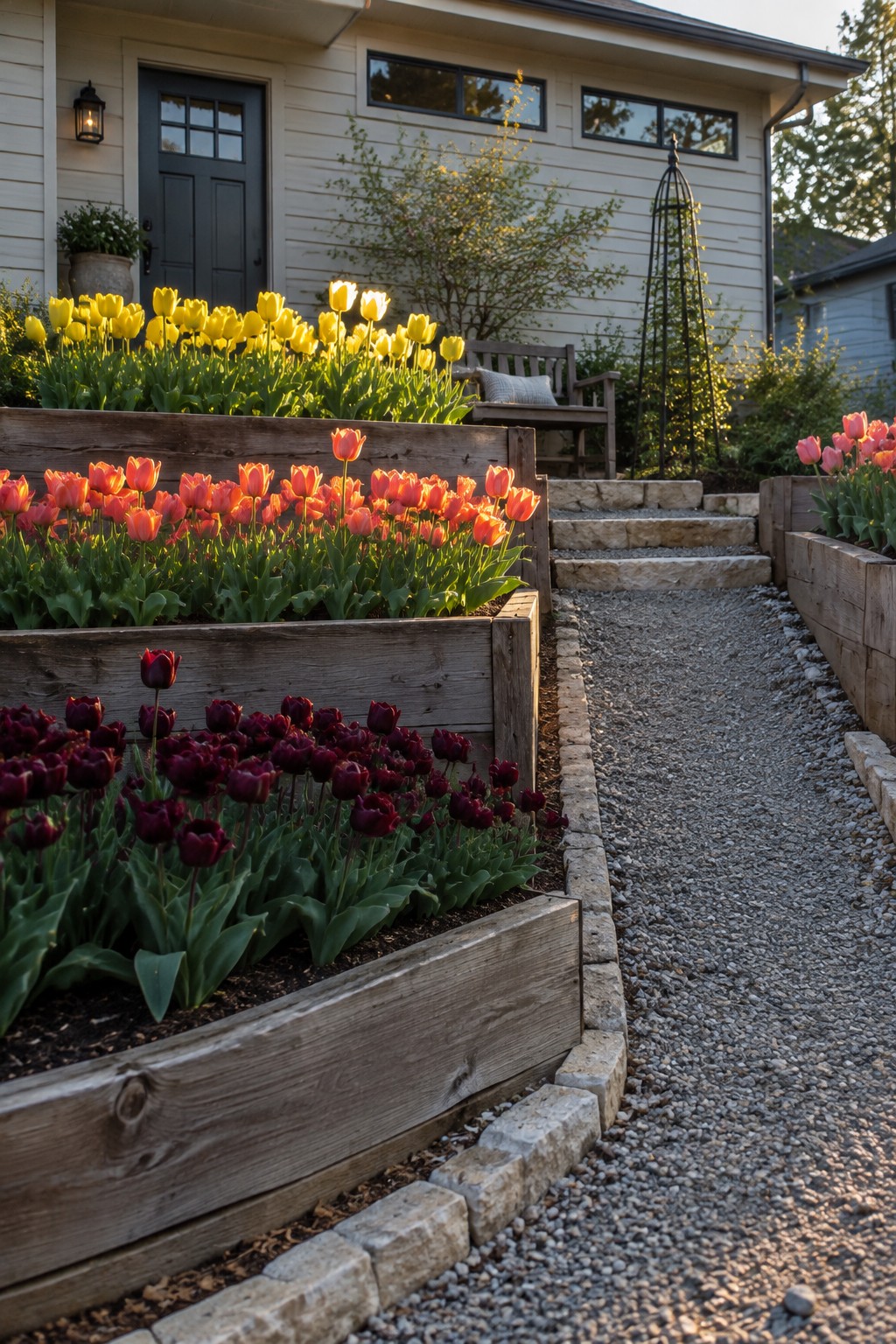
Raised beds make it easy to group tulips by color and keep the planting area neatly defined. Here, separate beds hold dark red, coral, and yellow blooms, giving the garden a clear rhythm along the gravel path.
This approach works well on a sloped or uneven front yard, where raised borders can help organize planting areas beside a walkway. Keep the beds wide enough for the bulbs and leave a comfortable path between them for everyday use.
Add Tulips to Gravel Garden Beds

Tulips planted in gravel beds bring a clear band of spring color to a front walk without filling the whole yard with flowers. The gravel keeps the beds looking tidy between blooms, while the repeated rows of red and yellow tulips give the planting a simple rhythm.
This approach suits modern homes and narrow spaces beside a path. Use a defined bed edge to keep gravel from spilling onto the walkway, and plant tulips in generous groups for a fuller look.
Plant Tulips in Raised Entry Beds

Raised masonry beds make tulips easy to enjoy right beside the front door. Their clear edges give the flowers a defined place, while clipped shrubs help the planting look tidy even as the tulips bloom.
This setup works well in a small entry courtyard or along a front walk. Mix tulips in a few colors for spring, and leave enough room between bulbs and shrubs so both can grow without crowding.
Plant Tulips in Stone-Tiered Garden Beds
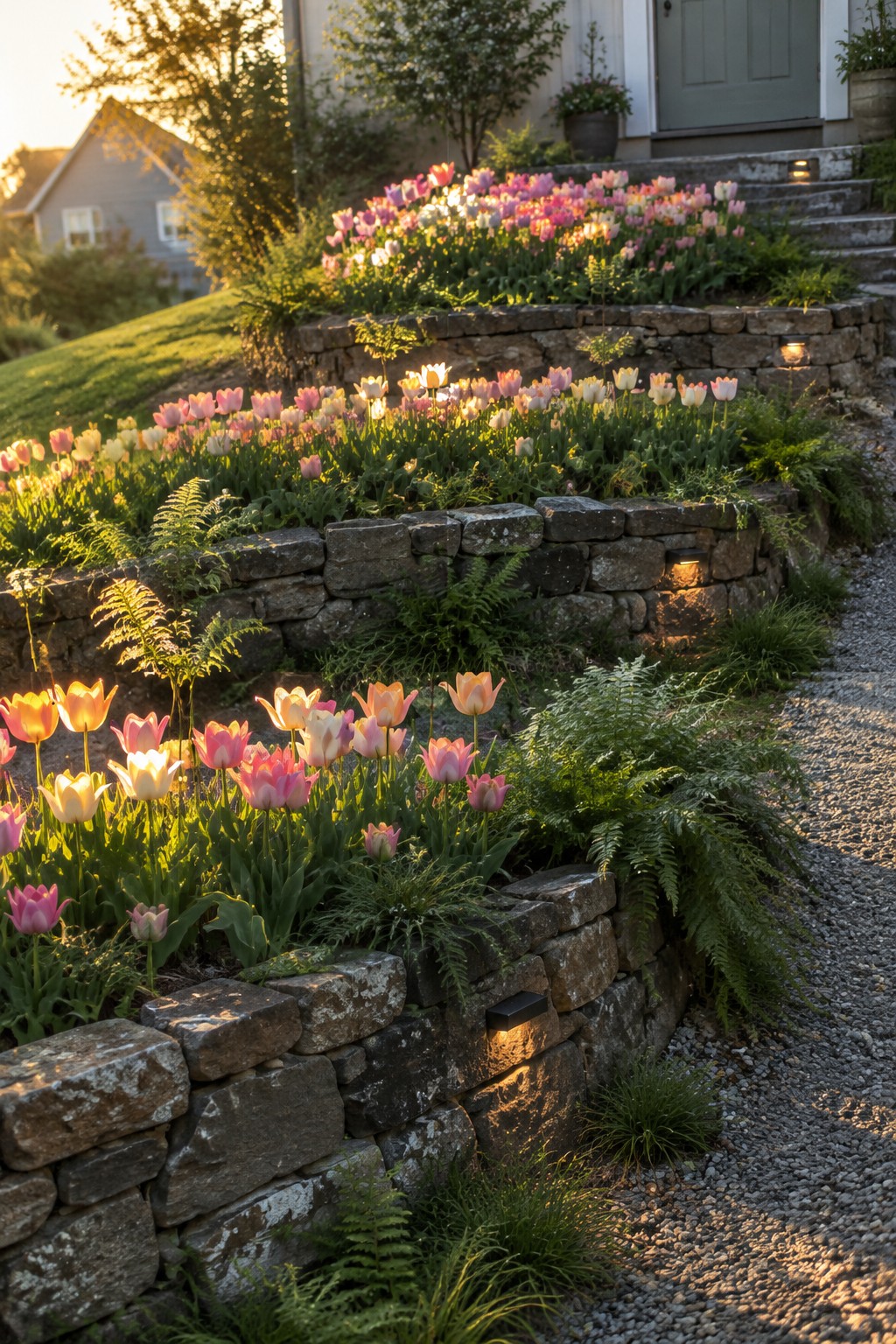
Stacking raised beds into a slope gives tulips room to show in several bands instead of getting lost in one large planting area. The stone walls also give the front yard a clear structure, while tulips bring seasonal color to each level.
This approach works well on sloped yards where a flat bed would be awkward to maintain. Keep the beds deep enough for planting and leave a practical route between them, such as the gravel path shown here.
Add Tulips to Narrow Gravel Beds

Tulips can bring a clear band of spring color to a front walk without taking up much room. Planting them in narrow gravel beds keeps the flowers close to the path and lets the repeated clusters carry the look.
This works well beside a modern entry where there is little space for a wider garden bed. Mix white and deep pink tulips, and leave room for their leaves to fade after blooming before tidying the bed.
Add Tulips Along a Cottage Garden Path

Tulips planted beside a brick path bring spring color right to the route leading to the front door. They stand out among lower flowers and leafy plants, so the path feels like part of the garden rather than just a way through it.
For a similar look, tuck tulips into the edges of a winding walkway and mix in perennials that can fill the bed after the blooms fade. Leave enough room for the flowers to grow without spilling onto the walking surface.
Use Rusted Steel Planters for Tulip Beds

Raised steel planters give a front yard a clear place for spring tulips, especially where a simple lawn and gravel path leave room for a defined bed. The rust-colored sides also make the flowers feel like part of the entry landscaping rather than a temporary display.
Use this approach beside a walkway or near the front steps, and plant tulips close together for a full band of color. Leave enough space around the beds for easy access, and check that they drain well so bulbs do not sit in wet soil.
Plant Tulips in Matching Beds Beside the Front Steps
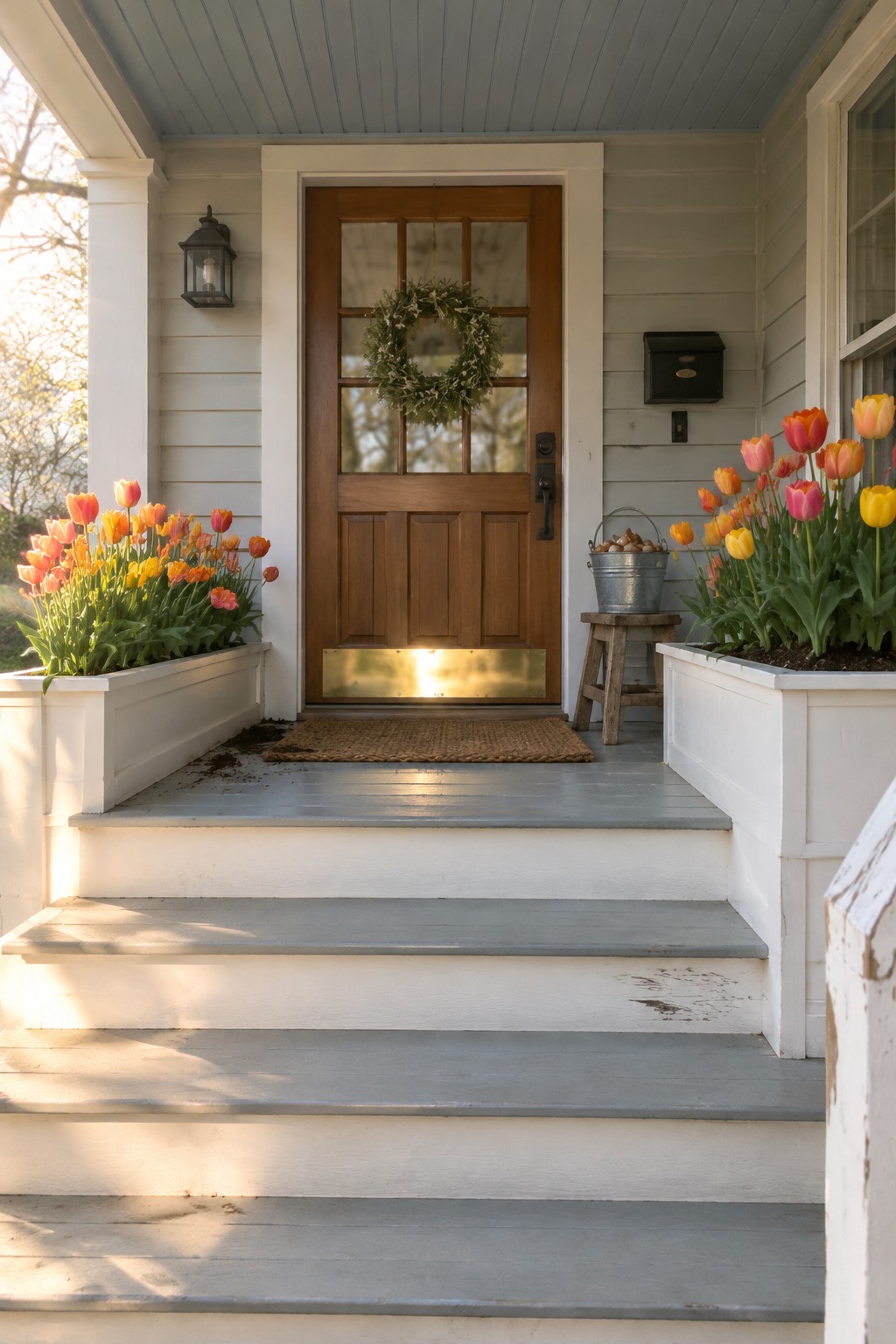
Matching raised beds can make a front entry feel organized while still bringing in plenty of spring color. Here, orange, yellow, and pink tulips fill the planters on either side of the steps, making the planting feel connected to the doorway.
Use this idea where the entry has room for beds without narrowing the stairs or walkway. Repeat a few tulip colors in both beds for a tidy look, and leave enough space for the flowers to spread as they grow.
Create a Curved Tulip Border Around the Lawn

A curved tulip bed gives a front yard a softer shape than a straight row along the path. Here, bands of pink, white, and orange tulips follow the lawn’s rounded edge, making the planting feel planned without looking too formal.
Use this idea to outline a small lawn or define the edge of a front garden bed. Plant tulips in broad, continuous bands for a clear color pattern, and leave enough room behind them for foliage or low shrubs once the blooms fade.
Add Mosaic Stepping Stones Beside the Tulip Path
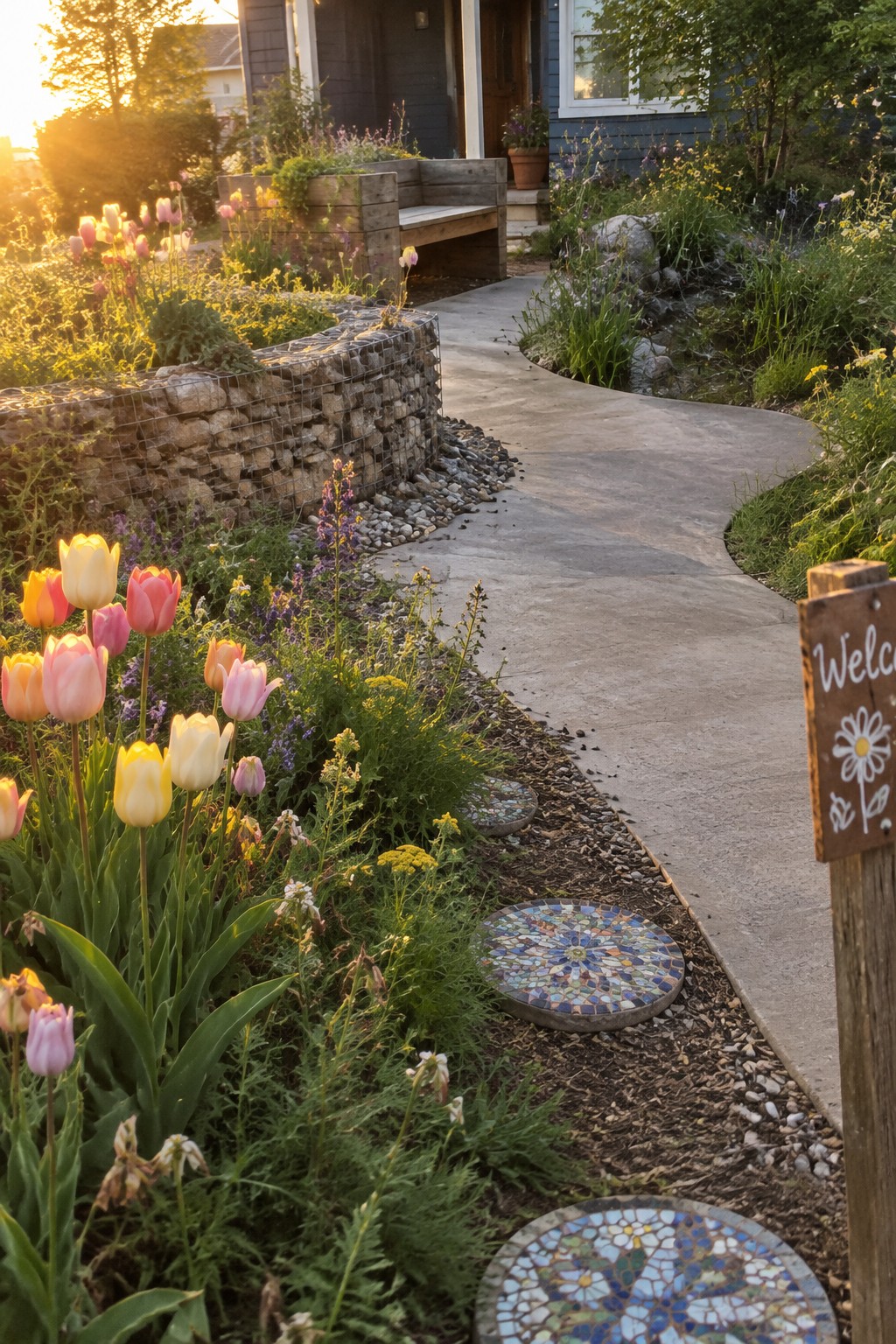
A curved concrete walk can feel less plain when the planting bed beside it has its own stepping stones. Here, round mosaic stones sit in the gravel edge among the tulips, adding a small decorative touch without interrupting the main route.
Use a few stones as accents rather than lining the whole path with them. Leave enough room for plants to grow, and keep the main walkway clear and easy to follow.
Frequently Asked Questions
Q: When should I plant tulip bulbs for a spring display?
A: Plant them in fall, once the weather cools and the soil is easy to work. That gives the bulbs time to settle in before spring.
Q: How can I keep tulips from looking sparse along my walkway?
A: Plant bulbs in generous clusters rather than a single straight line. Mix a few colors or repeat the same group along the path for a fuller, more natural effect.
Q: Will tulips come back every year?
A: Some varieties return reliably, but many bloom best in their first year. If you want a fresh, full display each spring, plant new bulbs in fall.
Q: What can I plant with tulips to keep the front yard colorful after they fade?
A: Pair them with low-growing perennials or annuals that fill in later, such as pansies or catmint. Choose plants that won’t crowd the tulip foliage while it’s still feeding the bulbs.
