


Marigolds bring a steady dose of color to fall beds, but they look best when their bright blooms have a clear place in the garden’s layout.
I like pairing them with quieter foliage or edging plants, so the color feels intentional rather than crowded.
Along paths and borders, their rounded shapes can soften hard edges and help guide the eye through a planting area.
As autumn light shifts and other flowers fade, a well-placed patch of marigolds can keep the yard looking lively without changing the whole design.
I’d start with the planting combinations that suit your space, then adapt the spacing and colors to fit your own garden.
Use a Stone Path to Lead Through Marigold Beds
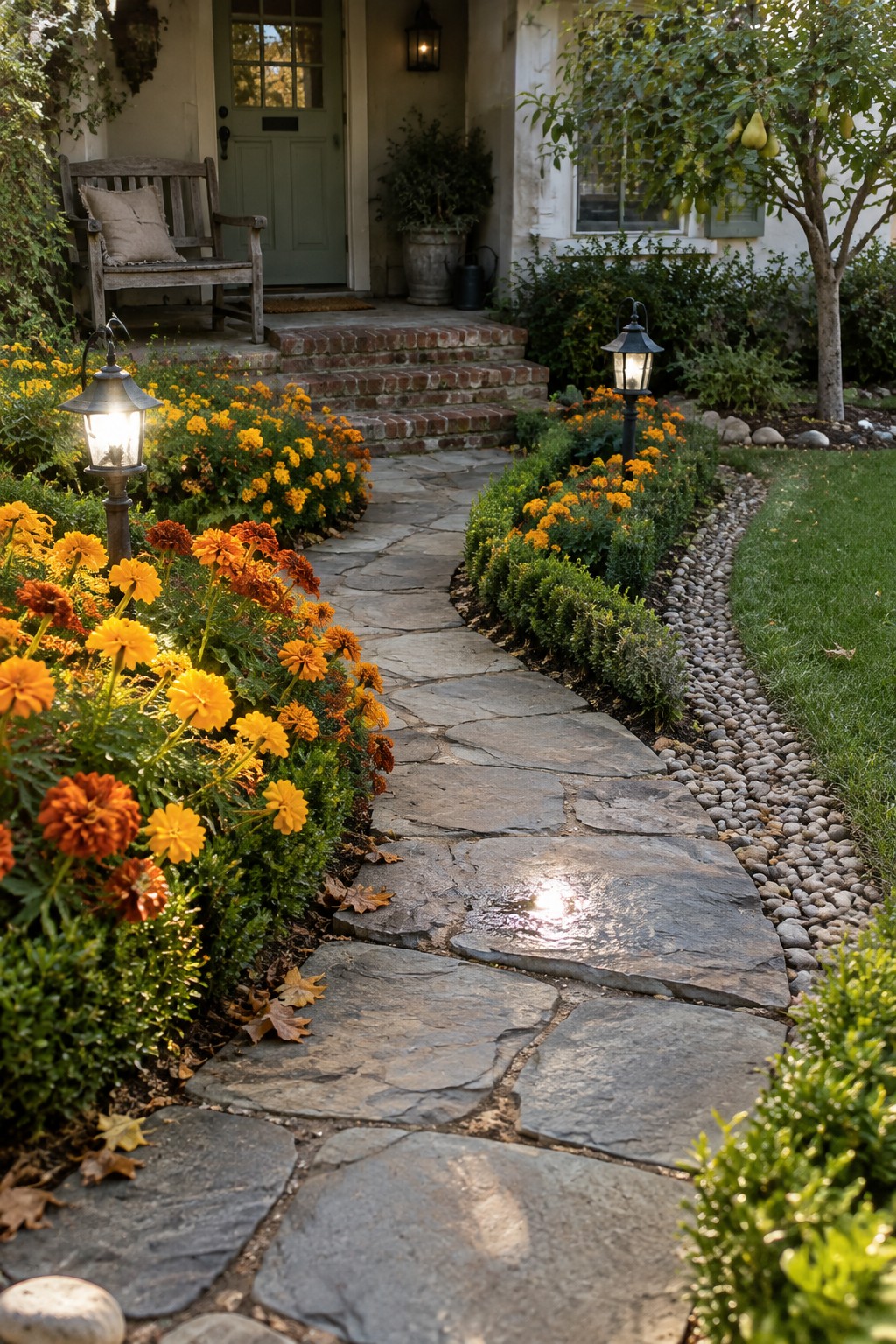
A stone path gives a flower bed a clear shape and makes it easier to enjoy the planting up close. Marigolds lining the edges bring a cheerful run of fall color along the route to the front door.
For a similar look, plant marigolds in loose groups beside the path rather than spacing them evenly like a border. Leave enough room for the plants to spread, and keep the stones level so the walkway stays comfortable to use.
Plant Marigolds Along Patio Edges
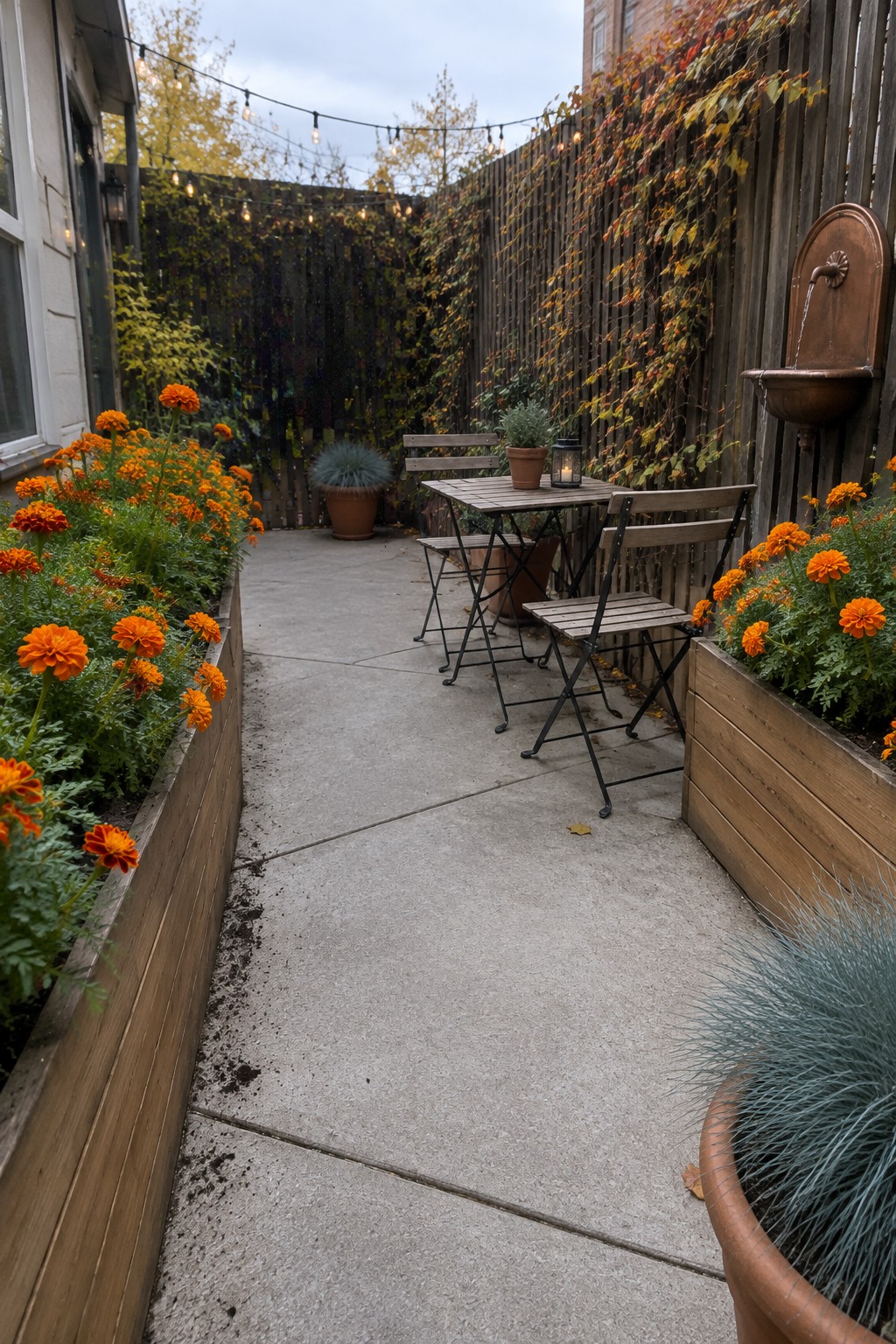
Marigolds are an easy way to bring strong fall color to an outdoor seating area. Planting them in long beds along the patio edges gives the flowers room to spread while keeping the color close to where people sit.
Use raised beds or a defined border to keep the planting neat and leave enough clear space for walking and moving chairs. Marigolds work well along a fence or beside a narrow patio, where a simple row can make a small space feel more finished.
Layer Marigolds Along Garden Paths
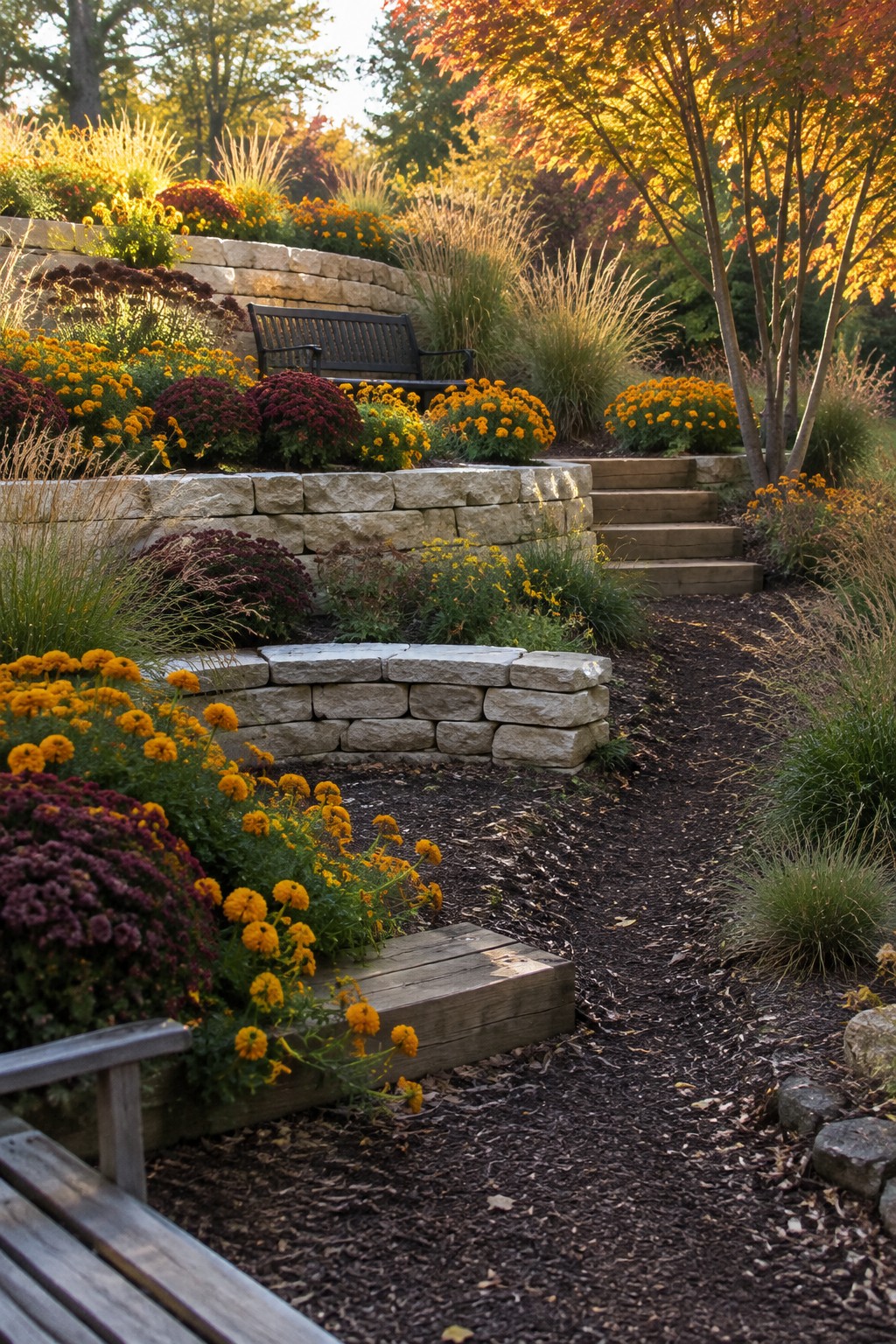
Marigolds make a garden path feel connected to the planting around it. Here, bright orange flowers repeat along the path and between the stone retaining walls, giving the garden a clear autumn color theme without covering every open patch.
Use marigolds along the edges of a mulched path or in small groups at the front of a flower bed. Leave enough room for the path to stay easy to walk, and mix in a few darker plants for contrast.
Use Marigolds Along a Narrow Garden Bed
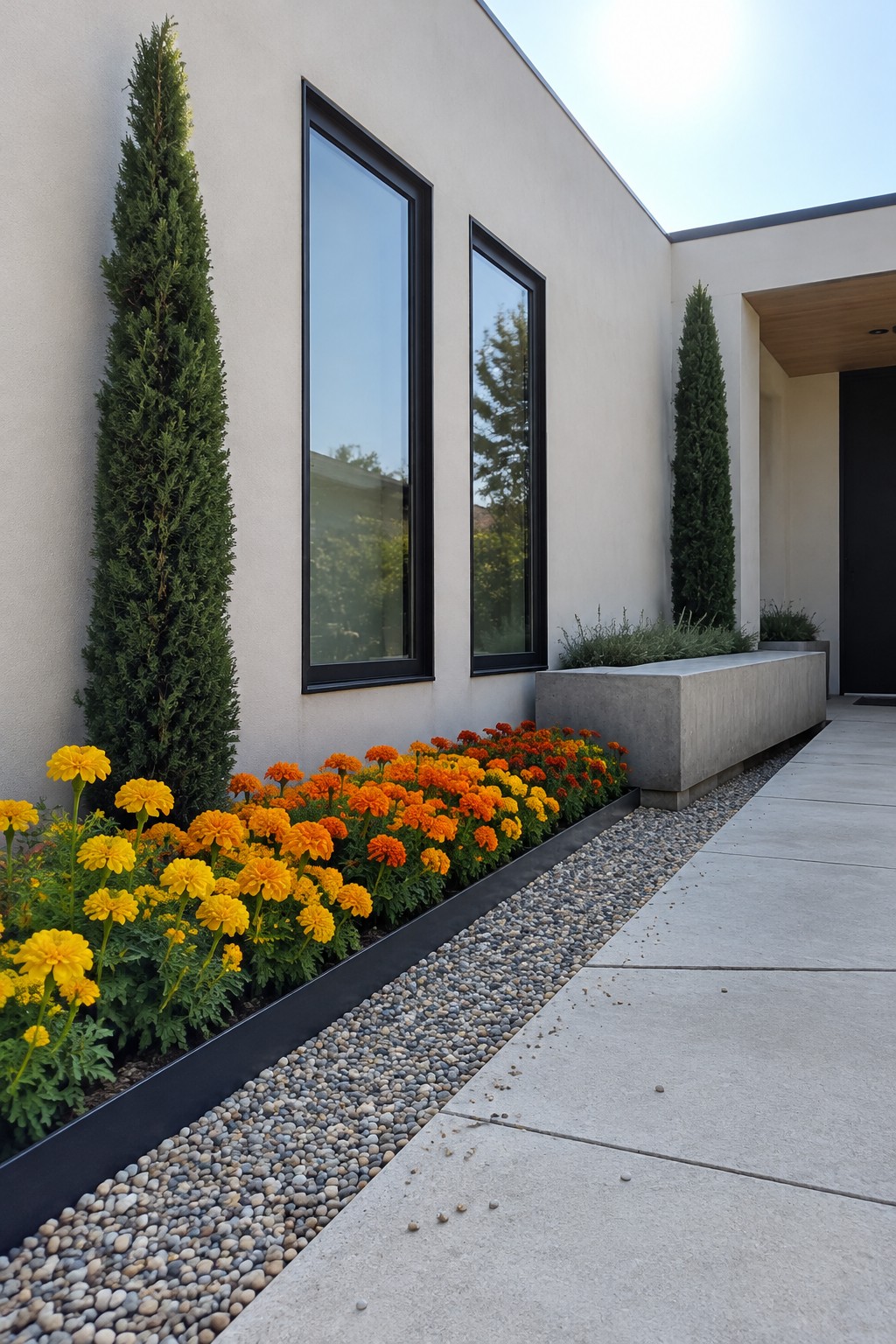
Marigolds work well in a long, narrow bed because their bright color makes a clear border beside a walkway or house. Planting them in a generous sweep gives the bed a consistent look without needing a complicated mix of flowers.
Use a low edging strip to keep soil and plants from spilling onto the path, and leave enough room for the marigolds to spread. This approach suits a modern entry or any walkway with a slim planting area.
Use Marigolds to Mark an Outdoor Dining Area
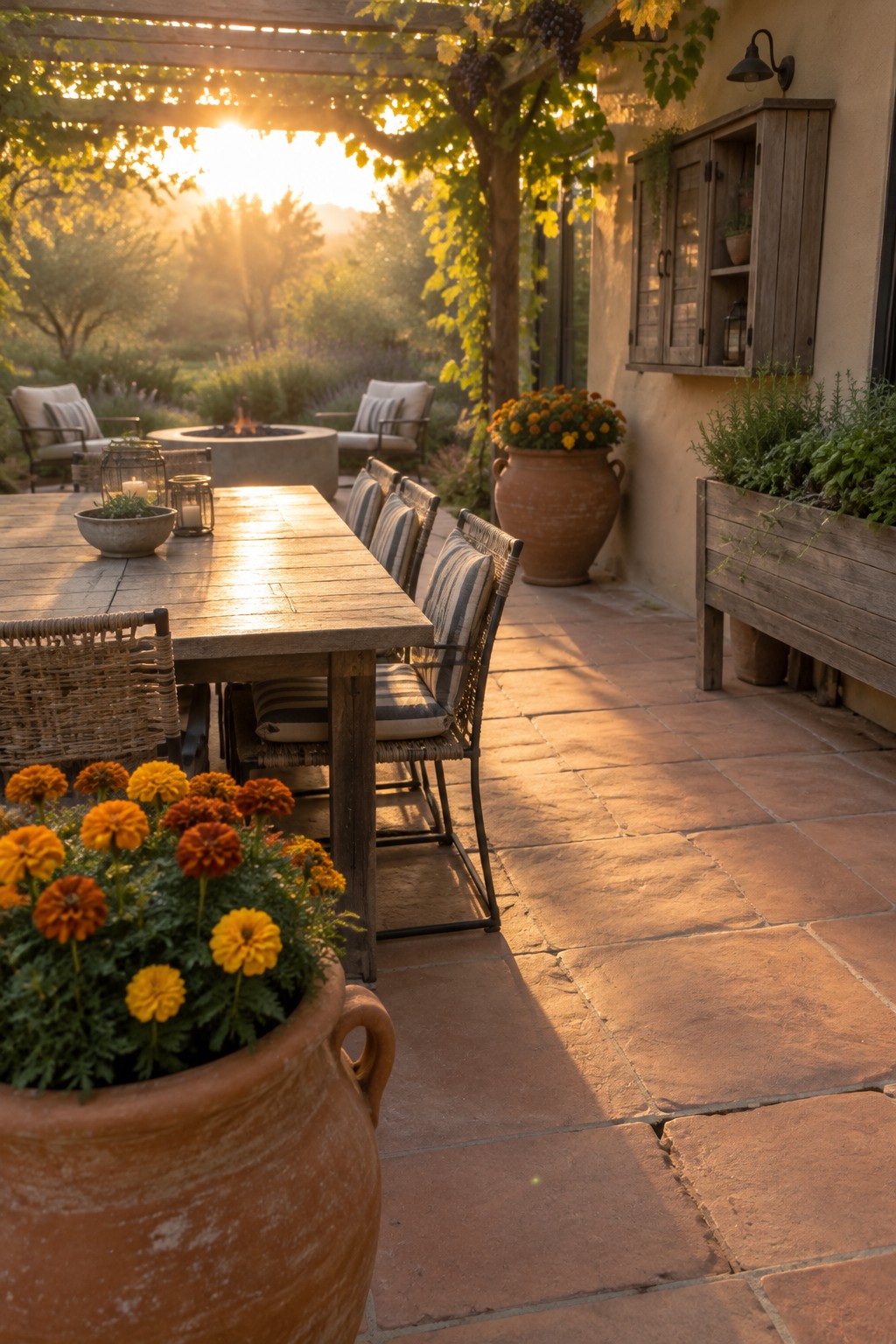
Marigolds can help define an outdoor dining spot while bringing a clear note of fall color. A large terracotta pot near the table makes the flowers easy to notice without needing to plant a whole border.
Use this idea on a patio where there’s room for a sturdy container near the seating, but keep it out of the main walking path. Choose a pot with enough space for the marigolds to grow comfortably, and water it regularly as the season cools.
Use Marigolds to Brighten a Porch Entry
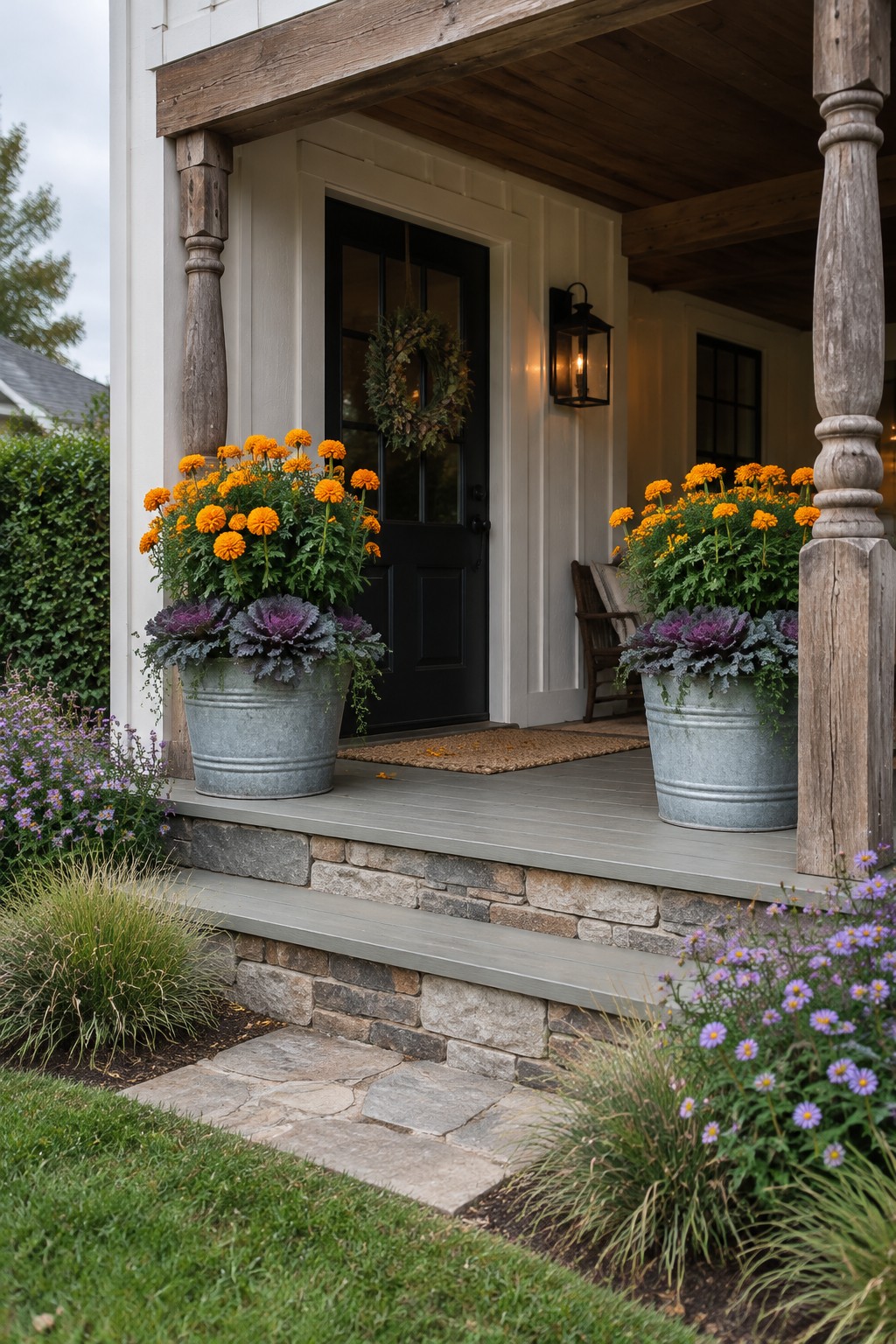
Marigolds in large planters bring a clear patch of autumn color right to the front door. Their orange blooms stand out against the dark entry, making the porch feel cared for without changing the planting beds.
Try this idea beside a covered entry where pots can sit out of the way of the door and steps. Galvanized containers suit a casual farmhouse-style home, and a few purple ornamental cabbages at the base add interest as the season cools.
Add Marigolds to Poolside Planters
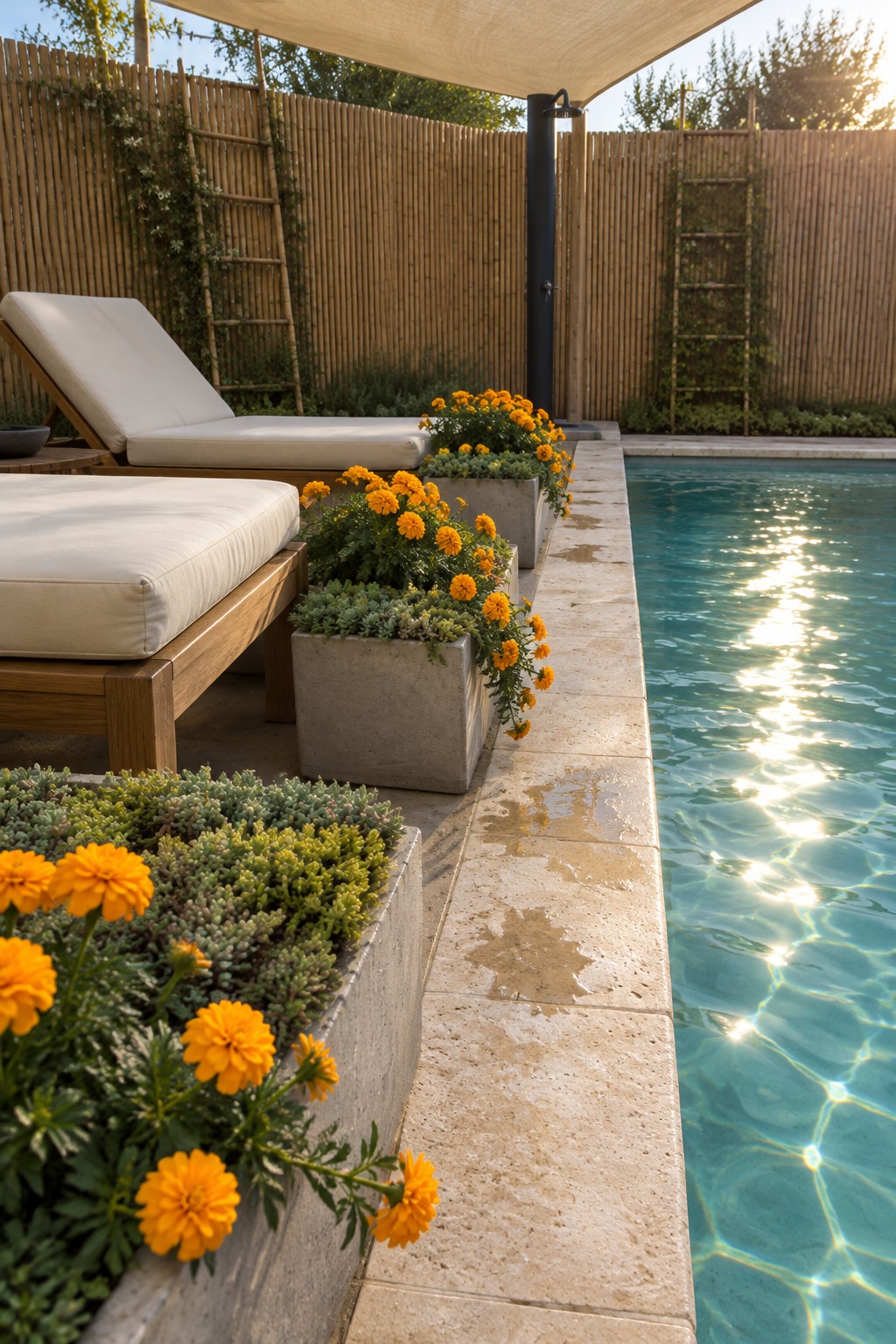
Marigolds can bring a welcome burst of fall color to a poolside seating area. Planted in raised containers, they brighten the edge without taking up space needed for loungers or walking.
Use sturdy planters along the pool deck, leaving a clear path around the water. Marigolds do well in sunny spots, but choose containers with drainage and keep them far enough from the pool to limit splashing.
Use Marigolds to Edge a Brick Walkway

A row of marigolds along a walkway gives the path a clear, colorful border. Their compact blooms suit this kind of planting because they bring a strong band of autumn color without hiding the brick.
Plant them in a continuous bed beside the path, leaving enough room for the flowers to spread. This works well along front walks, but keep plants trimmed back so they do not spill onto the paving.
Use Marigolds to Brighten a Courtyard Patio
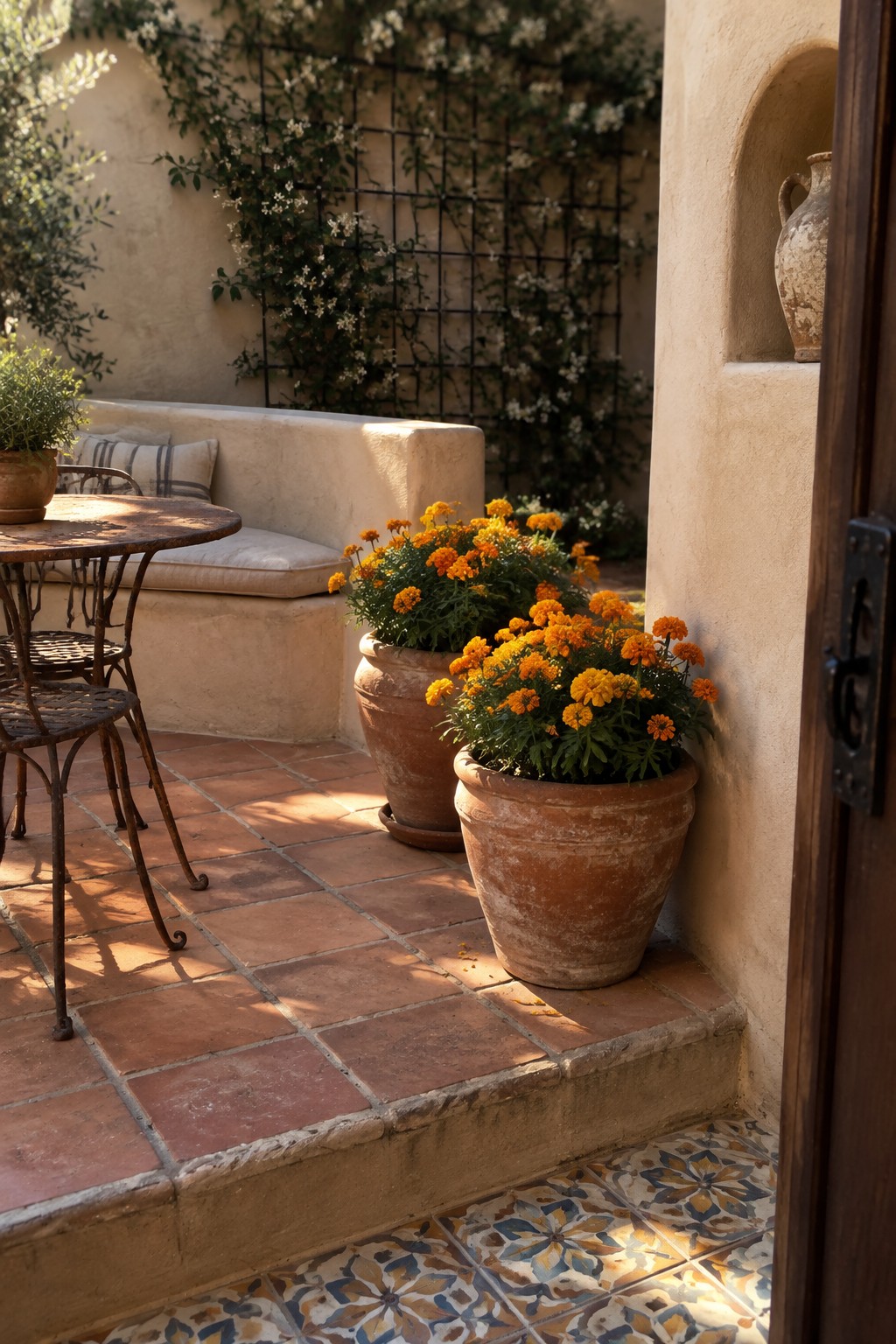
Marigolds in large pots are an easy way to bring fall color to a small patio. Their orange blooms stand out against terracotta and plaster, and containers let you enjoy the flowers without making a permanent garden bed.
Place pots near a seating area or along the edge of a raised patio, leaving a clear path between them. Choose sturdy containers with drainage holes, and water regularly as the soil in pots can dry out faster than a garden bed.
Create a Meandering Path Through Marigold Beds
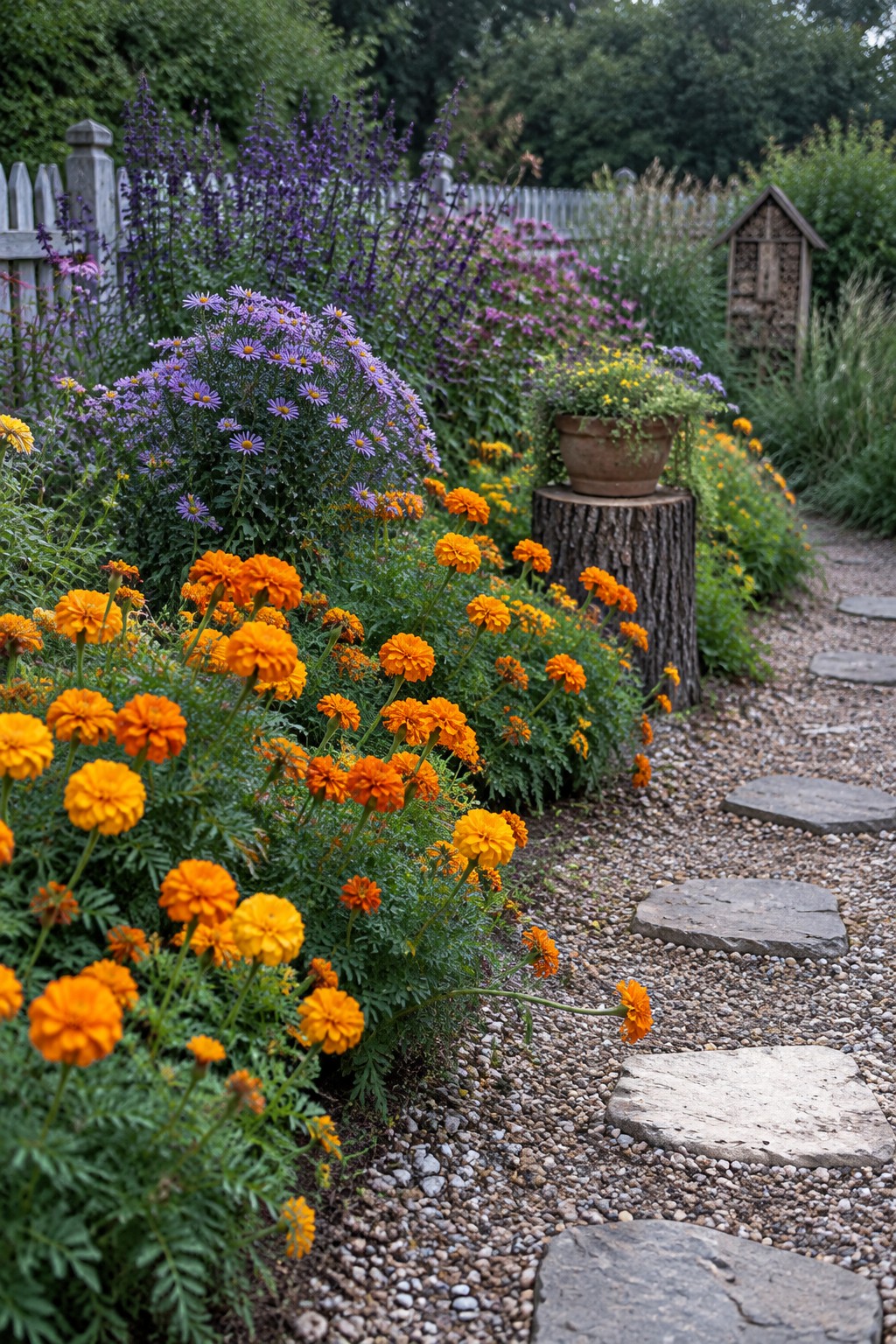
A gravel path with stepping stones can make a flower bed feel like part of the garden, rather than a border you only look at from the side. Marigolds along the edge bring a clear band of autumn color, while taller flowers behind them add a little height.
This layout works well in a cottage-style garden or along a side yard. Keep the path wide enough to walk comfortably, and leave room between the stones so the gravel stays easy to maintain.
Use Marigolds in Raised Entryway Beds
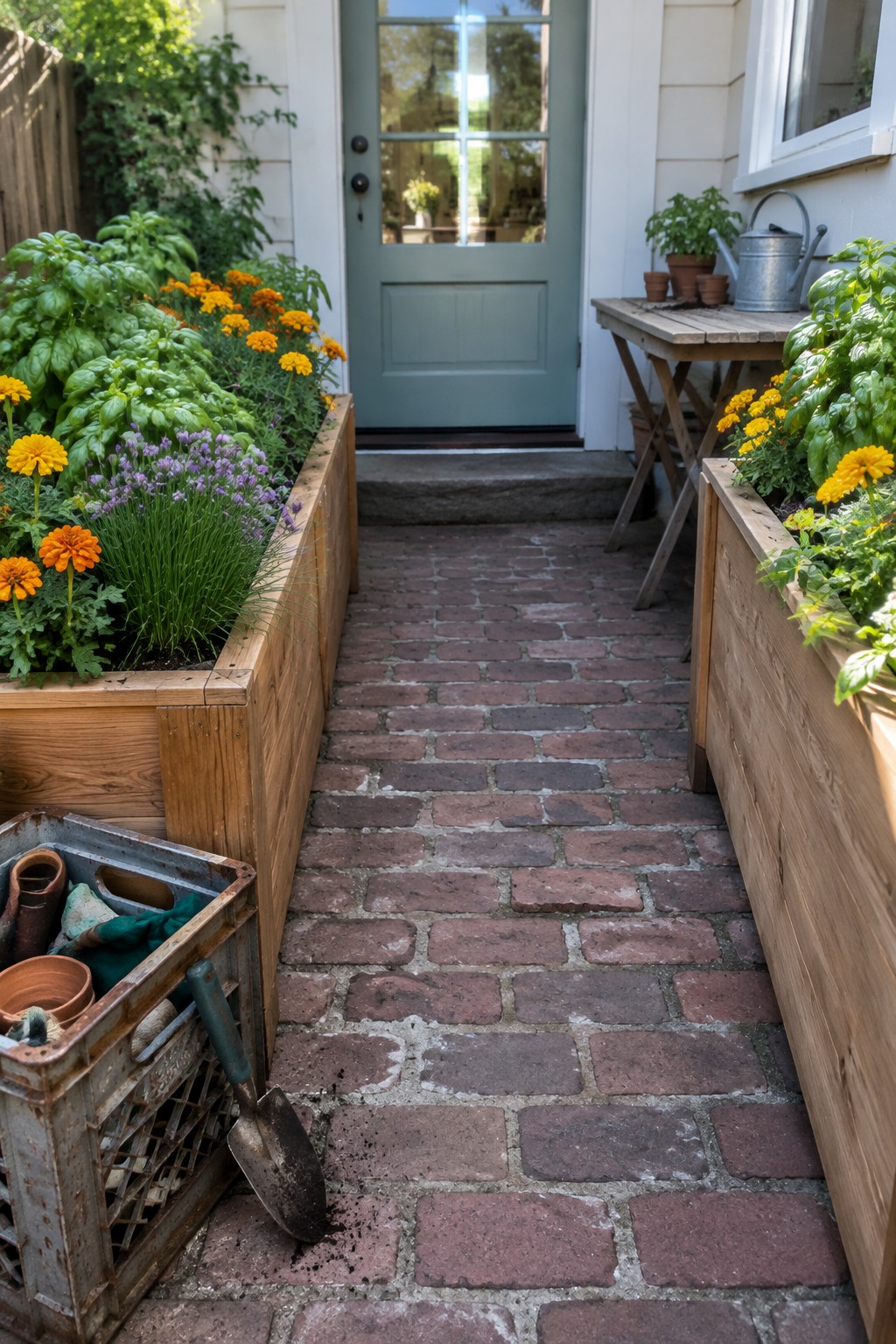
Raised beds are a practical way to bring fall color along a narrow path. Marigolds tucked among leafy plants make the entry feel cheerful without taking up space on the walkway.
This setup works well beside a back door or along a small side yard. Leave enough room between the beds for comfortable passage, and mix marigolds with plants that can handle the same sun and watering needs.
Use Marigolds to Line a Front Walk
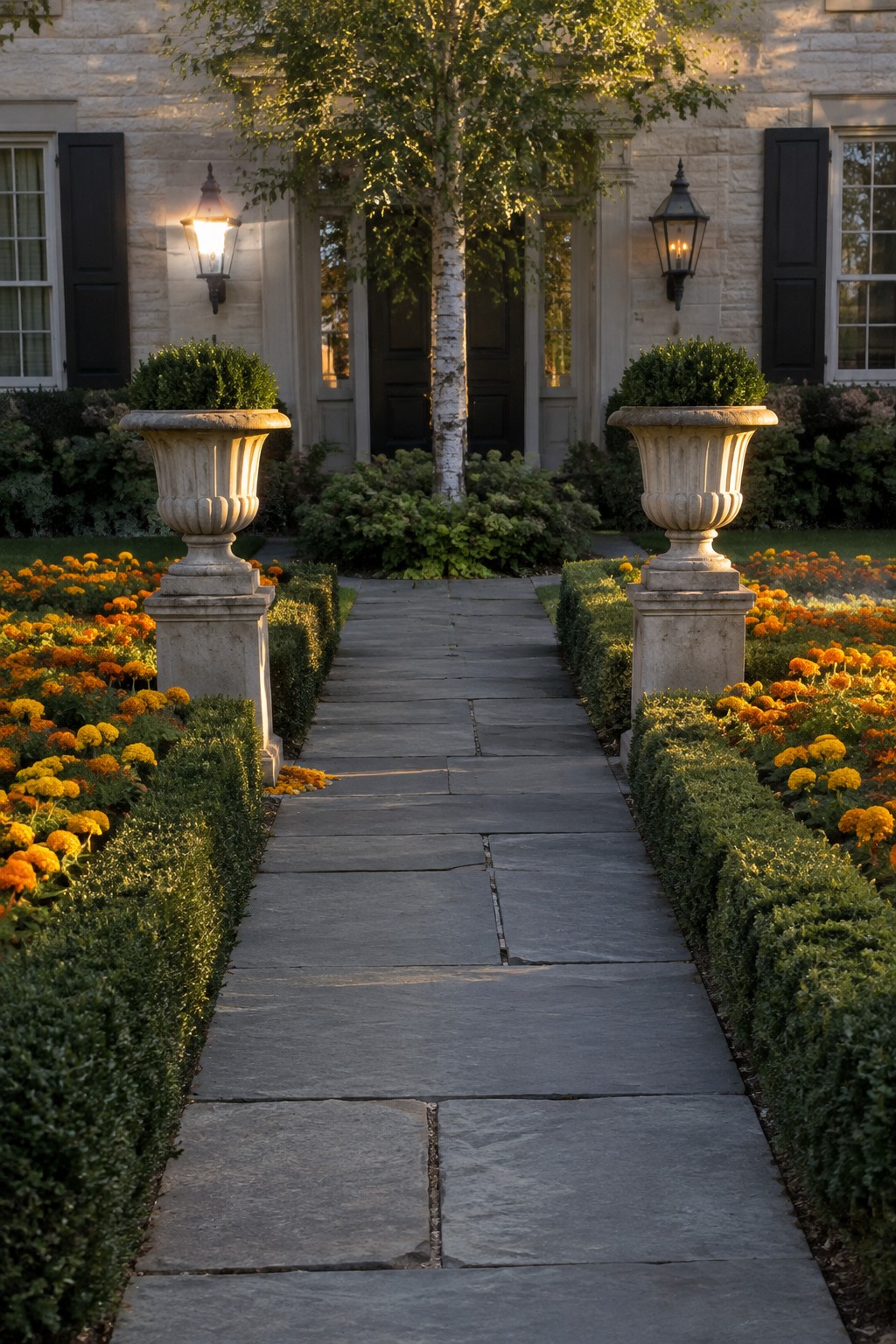
Marigolds along a front path make the route to the door feel clear and cared for. Their orange blooms bring a simple band of fall color to a stone walkway without needing a complicated planting plan.
Plant them in a low bed beside the path, keeping the flowers from spilling onto the paving. They suit traditional front gardens especially well, and clipped edging can help the walkway stay neat as the plants grow.
Use Rusted Steel Beds to Shape Marigold Plantings
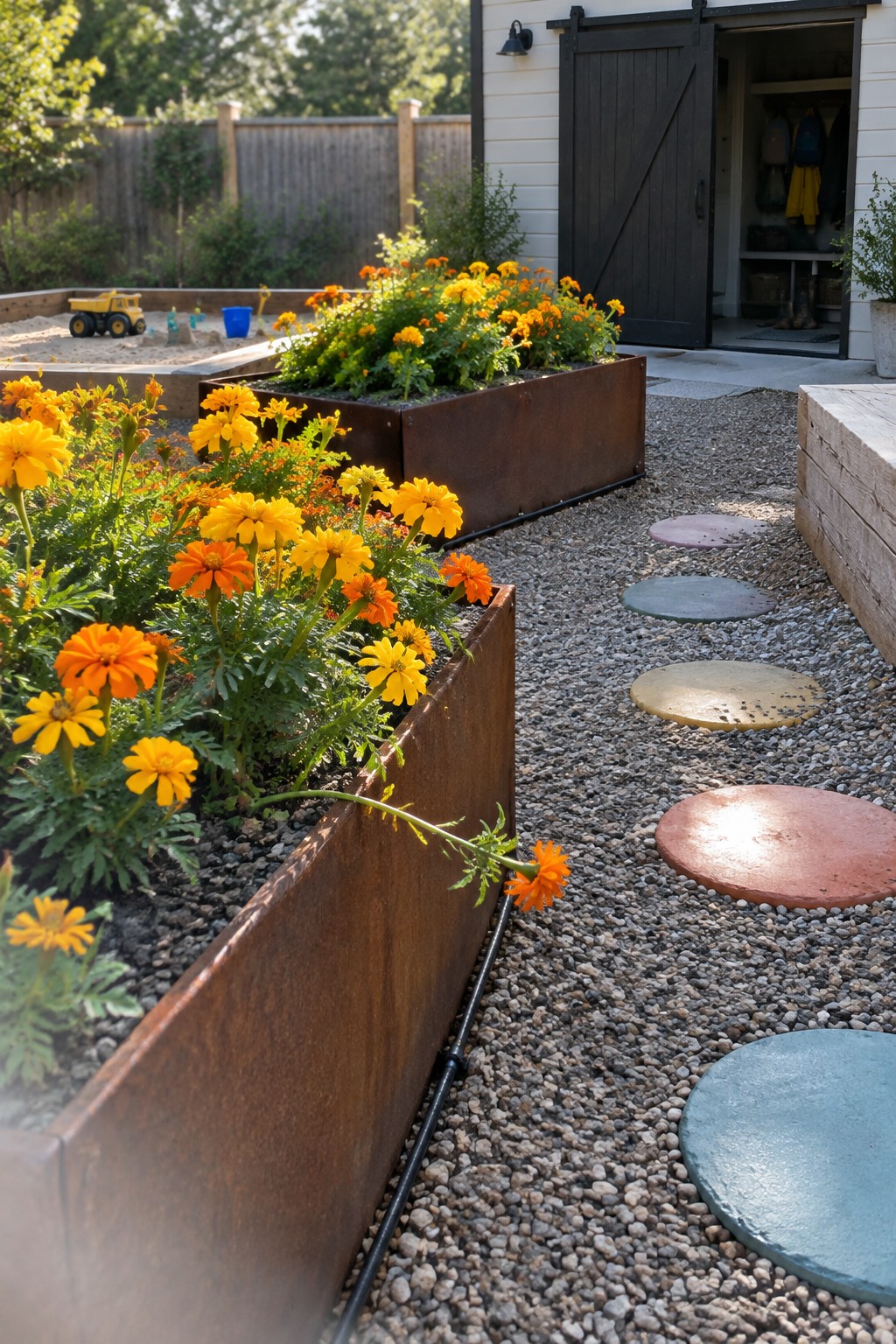
Raised steel beds give a flower garden a clear shape and keep the planting distinct from the gravel path. Marigolds work well here because their bright blooms spill color across the top of the dark, simple edging.
This approach suits a small backyard where you want defined planting areas without a formal look. Leave enough space between beds for an easy walking route, and choose sturdy edging that can hold the soil in place.
Grow Marigolds in Balcony Planters
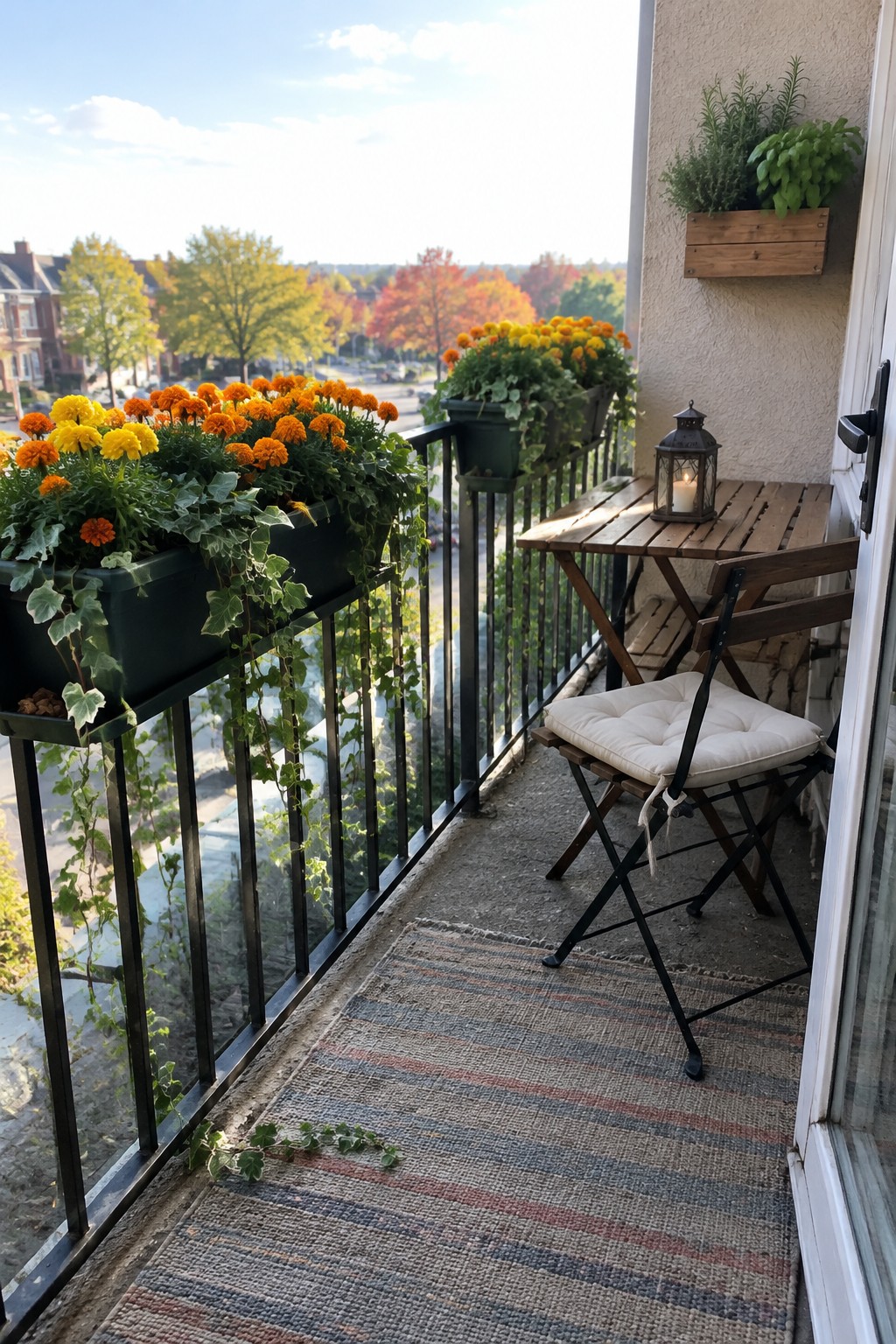
Marigolds are an easy way to bring fall color to a small balcony. Planting them in railing boxes lets you enjoy a generous display without using up the floor space needed for a chair or table.
Choose sturdy planters that attach securely to the railing, and give the flowers enough room to grow. A mix of orange and yellow marigolds works well for an autumn look, while trailing greenery can spill over the edge.
Use Marigolds to Edge a Gravel Garden Path
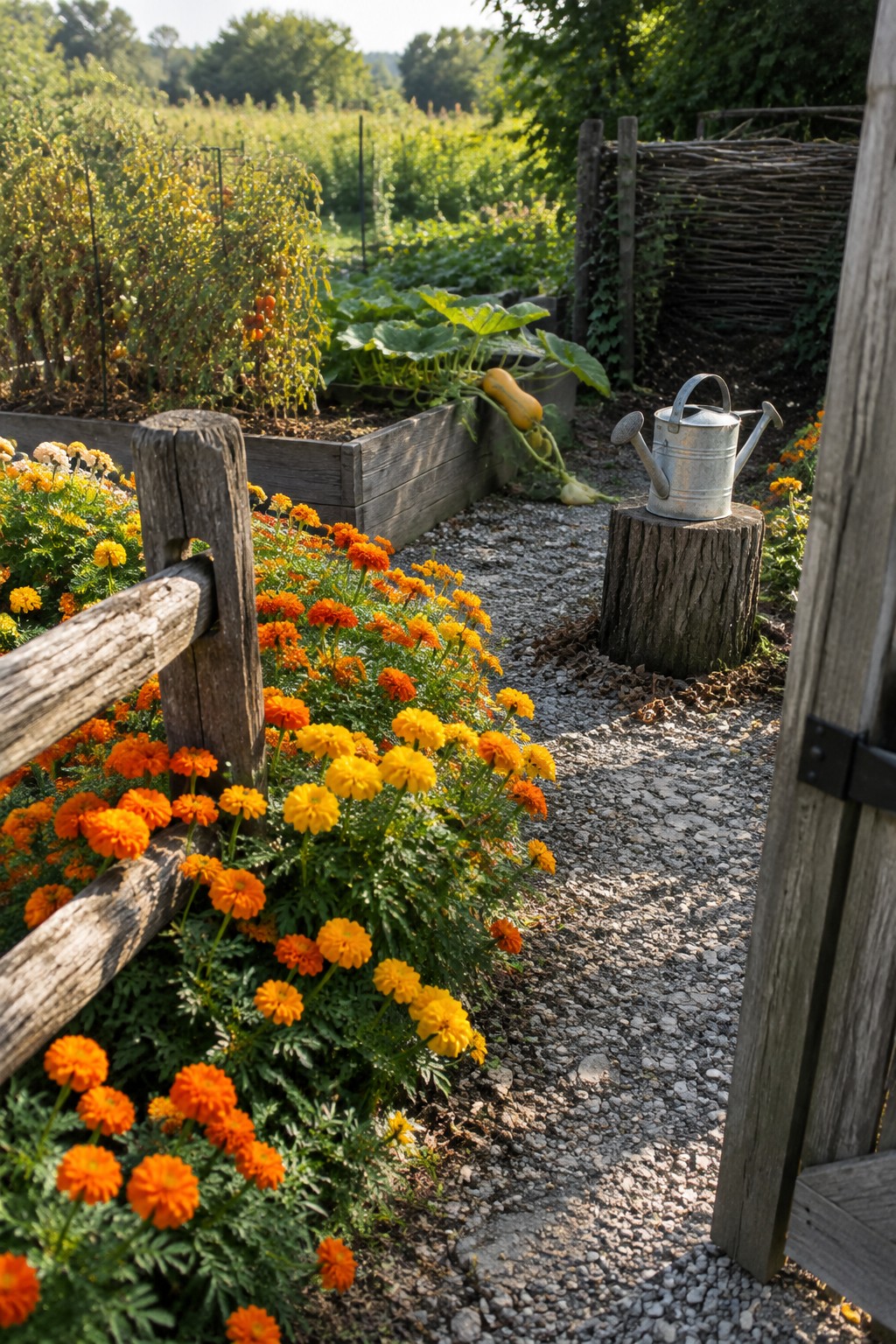
Marigolds can give a simple gravel path a clear, colorful edge. Planting them in a broad bed beside the walkway makes the route through the garden easy to follow without needing a formal border.
This approach works well in cottage-style gardens and around raised vegetable beds. Leave enough space for the flowers to spread, and keep them trimmed back from the path so they do not narrow the walking area.
Use Marigolds in a Narrow Side Garden
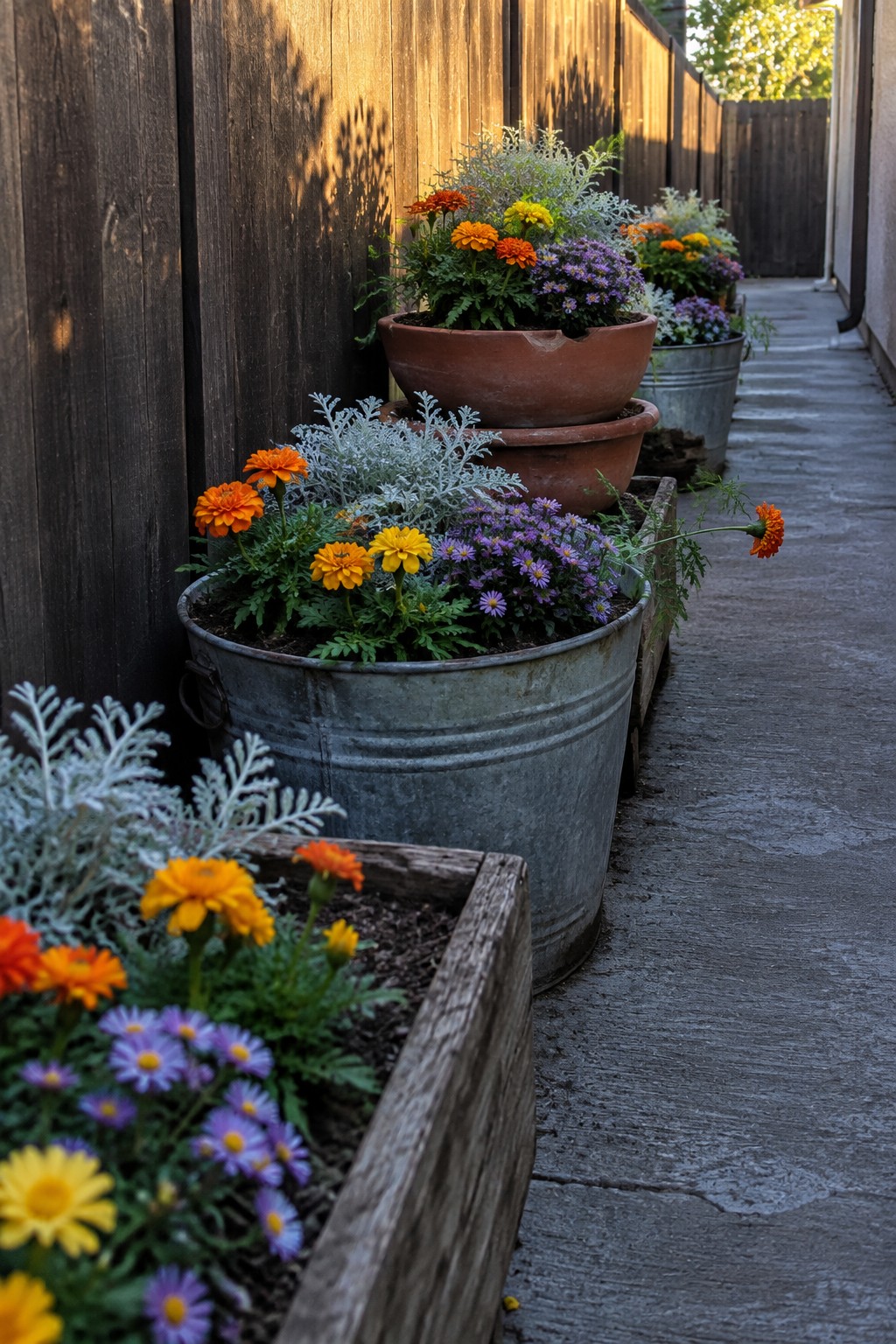
A row of containers is a simple way to bring fall color into a narrow side yard. Marigolds planted with a few purple flowers and silvery foliage make each pot feel full without needing a wide garden bed.
Use pots of different sizes to give the planting a little variety, and leave enough room for a clear walking path. This approach works well beside a fence or along a side entrance where in-ground planting space is limited.
Grow Marigolds in Pots for a Small Garden Workspace
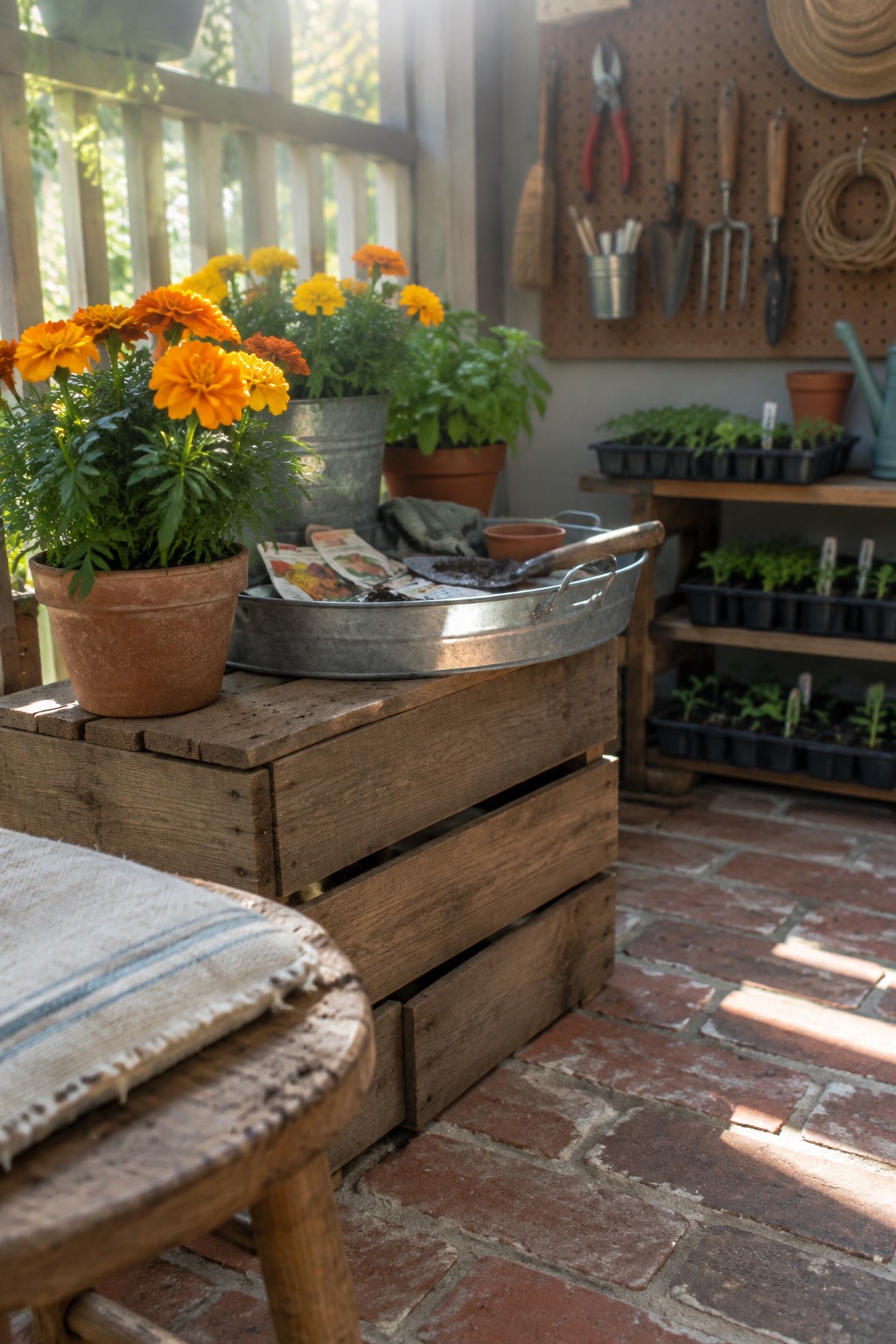
Potted marigolds make it easy to bring fall color to a small garden workspace without planting a permanent bed. A terracotta pot of orange blooms can sit on a workbench or beside a potting area, where it brightens the spot and stays easy to move.
Choose a pot with drainage holes and water when the soil begins to dry. This approach works well on a porch or in a greenhouse, especially if you want seasonal color without giving up space for seedlings or garden tools.
Use Marigolds to Brighten a Fall Porch
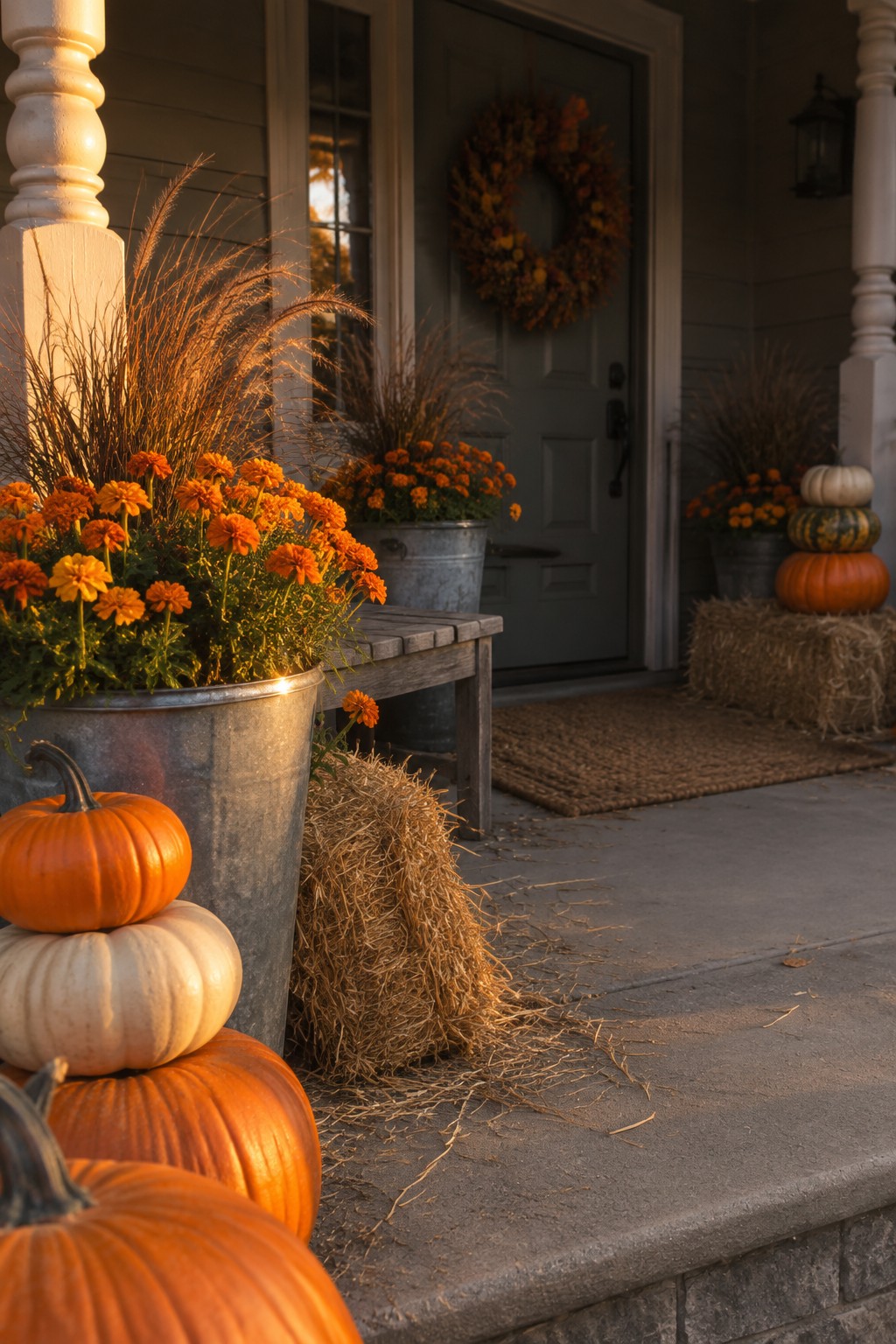
Marigolds in large porch planters bring a strong patch of autumn color right to the front door. Their orange blooms look at home among fall decorations, and the tall grasses in the same pot add height without needing a complicated planting plan.
Try this idea on a covered entry where the pots are easy to water and protected from hard weather. Choose containers that fit the porch, then leave enough room around the doorway for people to come and go comfortably.
Frequently Asked Questions
Q: Can marigolds handle chilly fall nights?
A: Yes, marigolds can keep blooming through cool nights as long as frost hasn’t arrived. Cover them when a frost is forecast, since even a light freeze can damage the flowers.
Q: Which marigolds work best in fall containers?
A: Compact French marigolds fit neatly around the edges of pots, while African marigolds add taller blooms at the center. Choose a pot with drainage holes, and water when the top inch of soil feels dry.
Q: Can I plant marigolds beside mums or ornamental cabbage?
A: Absolutely. Their warm blooms pair nicely with the deeper colors of mums and the cool foliage of ornamental cabbage. Leave enough room for air to move between plants so the display doesn’t feel crowded.
Q: How do I keep marigolds blooming longer?
A: Snip off faded flowers regularly to encourage fresh blooms. If your plants look tired near the end of the season, a light trim can tidy them up.
