

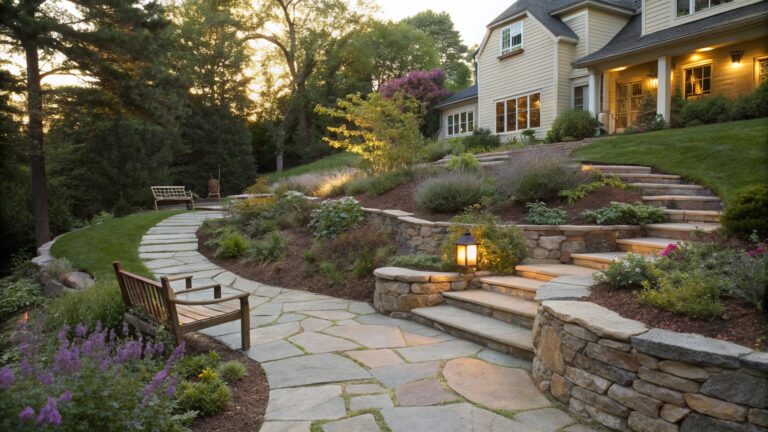
My sloped yard started as a muddy mess after every rain, with soil slipping away and leaving gaps where plants couldn’t take root.
I learned that flower beds work best when they hug the hill’s natural lines, using deep-rooted flowers and shrubs to anchor everything in place.
What catches the eye first is usually how the layout directs water downhill without carving gullies, blending beauty with real function.
Edging matters more than you’d think.
A few of these ideas fixed my erosion issues for good, and I’ve bookmarked them to tweak for steeper spots down the line.
Terraced Stone Steps with Flower Beds
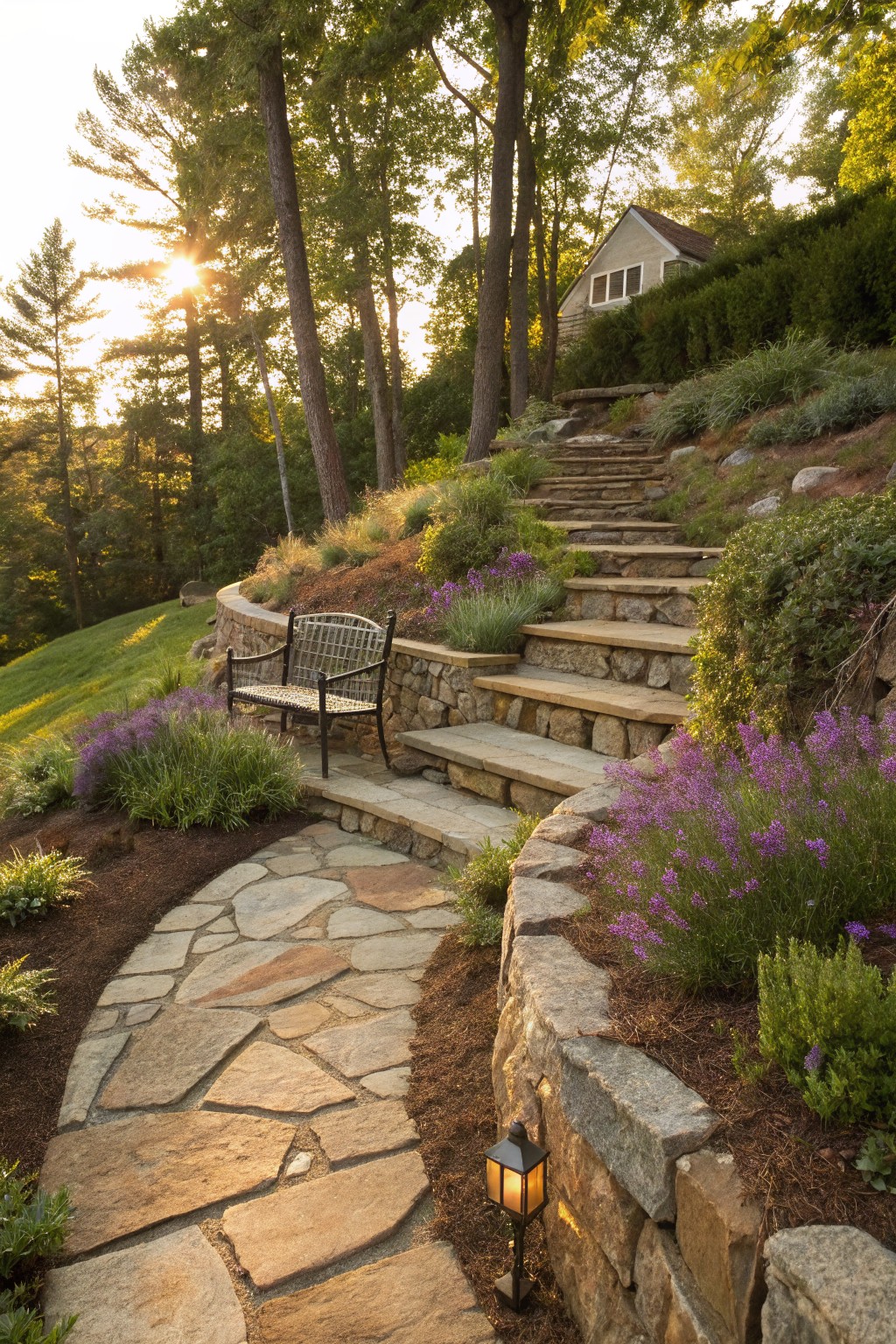
Sloped yards can wash away fast in rain, but terraced steps built right into the hill fix that nicely. Here, rough-cut stone stairs hold the soil steady with low retaining walls tucked between them. Purple lavender and grasses root right into the edges, softening the hard lines while their roots grip the earth extra tight.
This idea shines on moderate to steep drops near a house or patio. It fits wooded spots best, where the stone blends with nature. Leave room for a bench halfway up… people love that pause. Pick drought-tough plants, and slope the steps just a bit for water runoff.
Terraced Retaining Walls for Sloped Beds
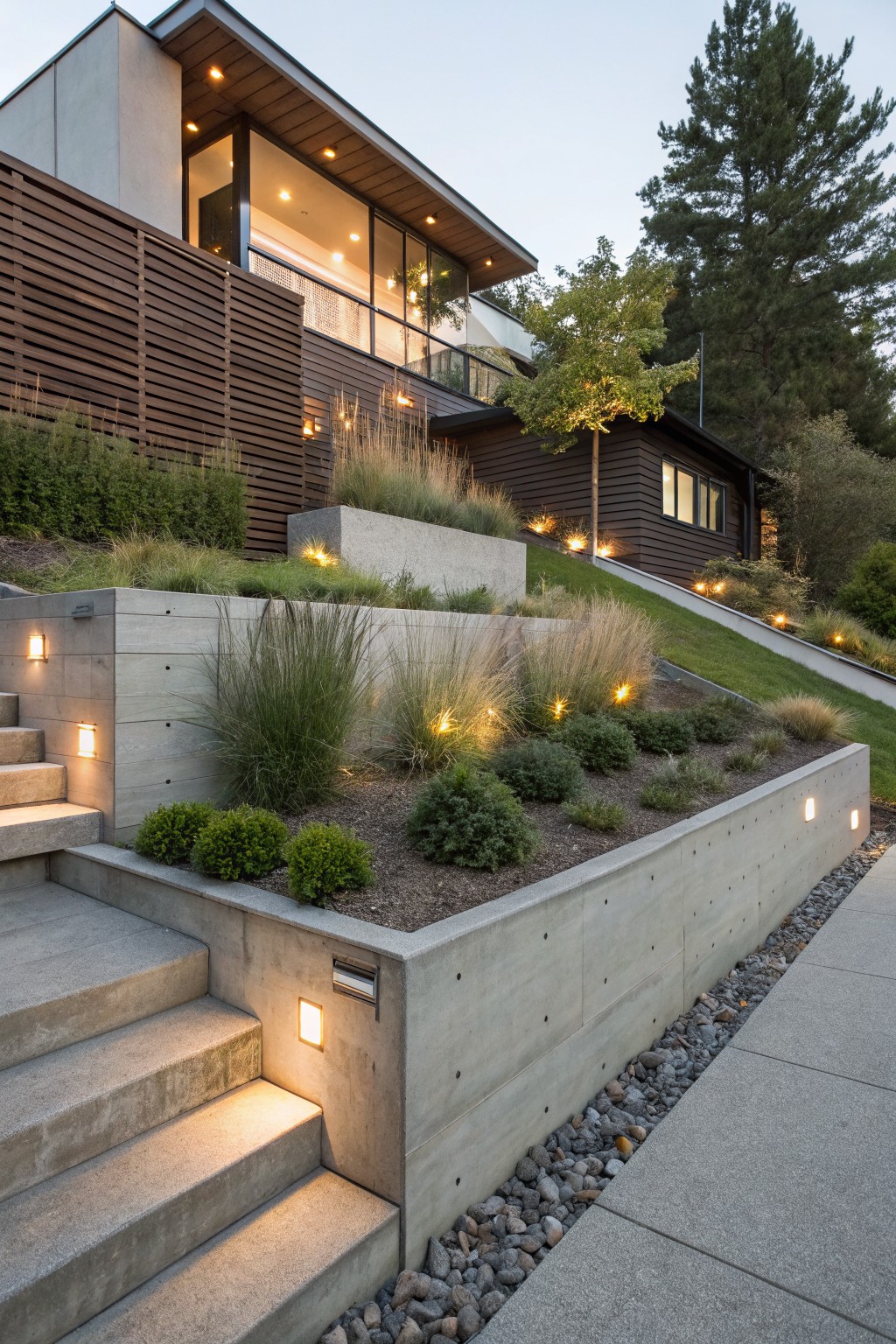
Sloped yards can wash away soil fast during rain, but terraced concrete retaining walls fix that by creating level planting beds. You see thick concrete tiers here, filled with grasses and shrubs that root in deep and hold everything steady. The walls are simple and strong, blending right into the landscape without much upkeep.
Build these on any hillside to make usable garden space. They suit modern homes best, especially with steps running alongside for getting around. Tuck in low lights along the edges for nighttime paths. Just pick tough plants like ornamental grasses that won’t flop over.
Terraced Timber Beds for Sloped Yards
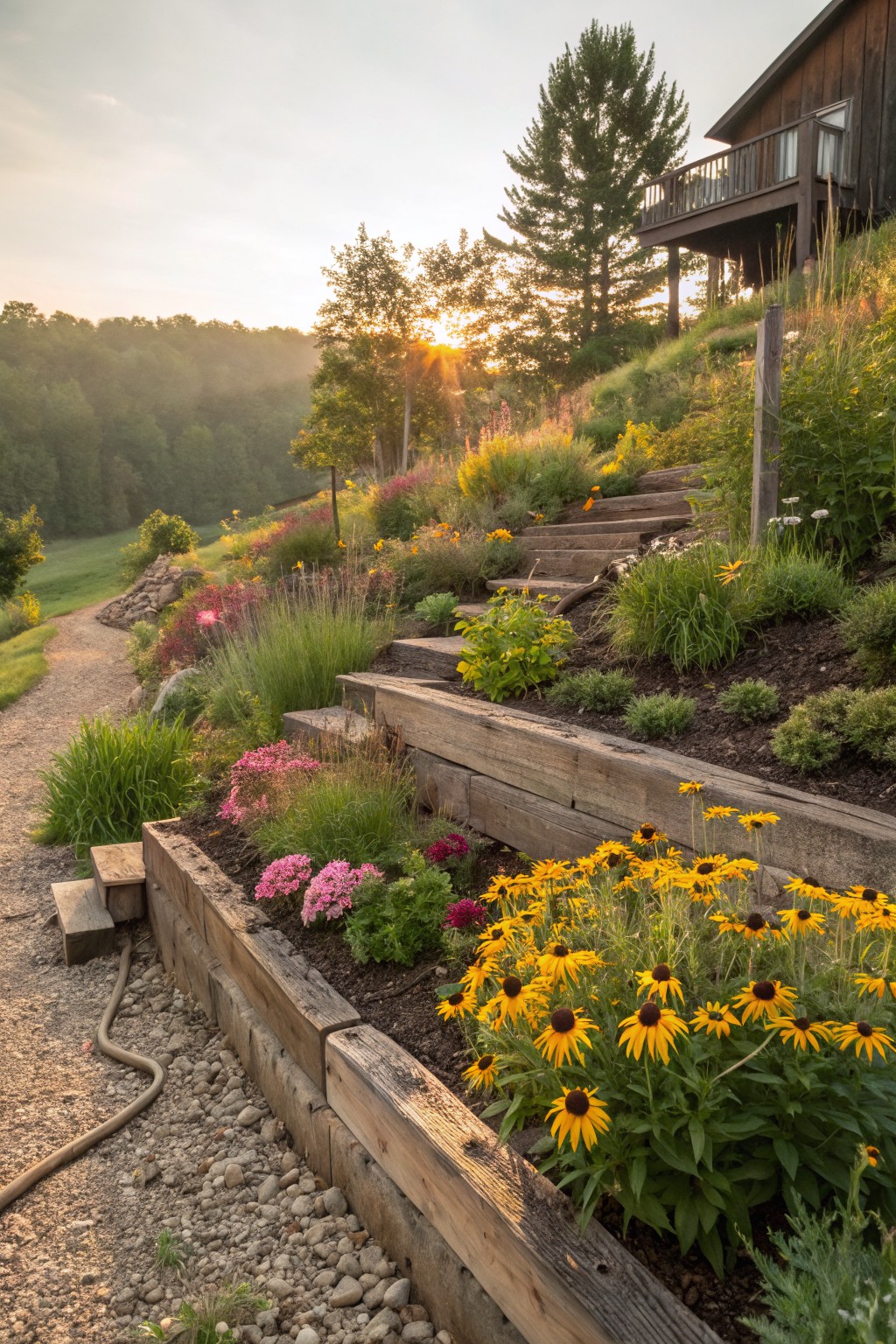
One good fix for a steep yard is timber retaining walls that create flat beds for plants. You stack rough-cut wood to hold back soil, then pack in flowers like black-eyed Susans and tall grasses. It stops erosion cold and makes the slope look planted on purpose, not like a headache.
These terraces fit any hillside near a house or path. Start with sturdy, treated timbers so they last. Plant roots grip the dirt quick… add steps between levels for easy walks. Works on wooded lots where you want low upkeep. Just keep water away from the wood bases.
Lavender Pots Along Sloped Retaining Walls
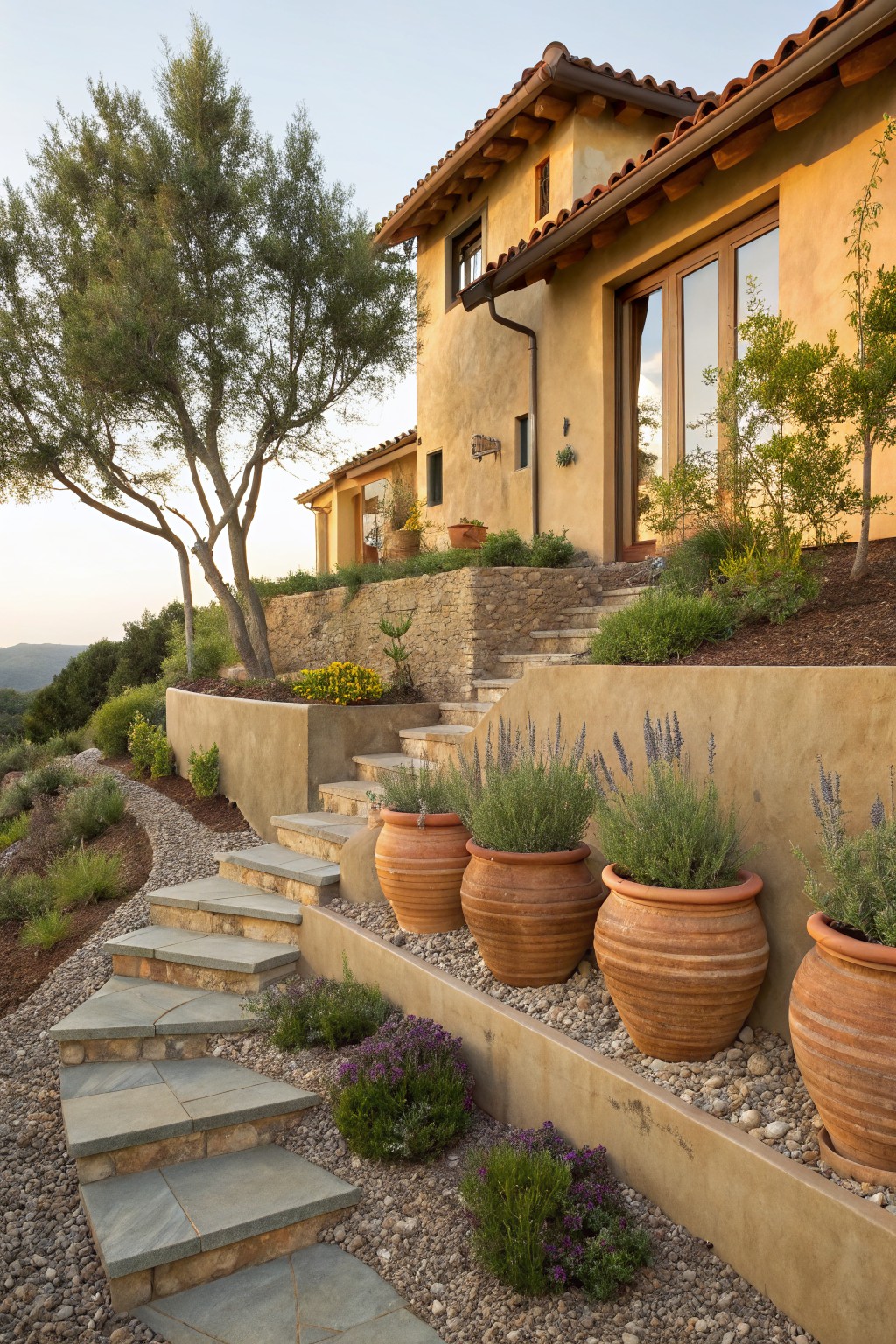
Large terracotta pots packed with lavender line these stucco retaining walls on a hillside. The setup works well because the walls terrace the slope, and the heavy pots add weight to keep soil from washing away during rain. Stone steps weave through it all, making the yard easy to get around.
This idea fits sloped yards near houses with a warm, earthy look. Go for bigger pots to really stabilize things, and pick tough plants like lavender that don’t need much water. Skip it on super-steep spots without good drainage first.
Rustic Wooden Steps for Sloped Yards
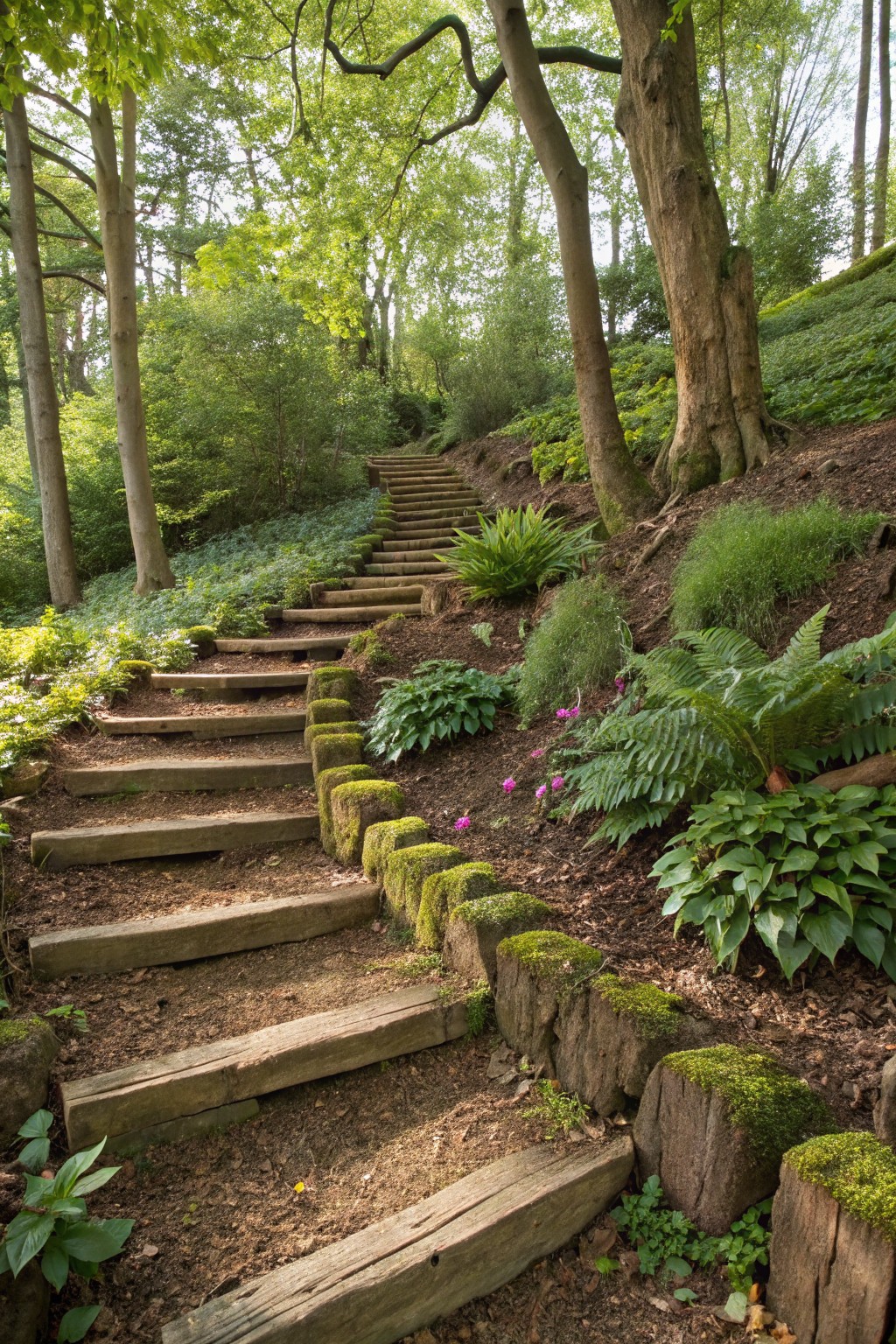
One straightforward way to handle a steep yard is with rough-cut wooden steps like these. They fit right into the natural slope, using thick logs as risers and treads that won’t wash away in rain. The mossy log pieces along the edges hold back soil and plants, keeping everything in place without looking forced. It’s a low-key fix that lets water drain through instead of pooling.
You can pull this off on wooded lots or shady hillsides where ferns and hostas already grow. Start by digging shallow trenches for the logs, stack them sturdy, and fill gaps with dirt for your flowers. Watch for rot over time… treat the wood or swap in cedar if you want it to last. Works best where you want a path that blends in, not stands out.
Terraced Stone Walls for Sloped Yards
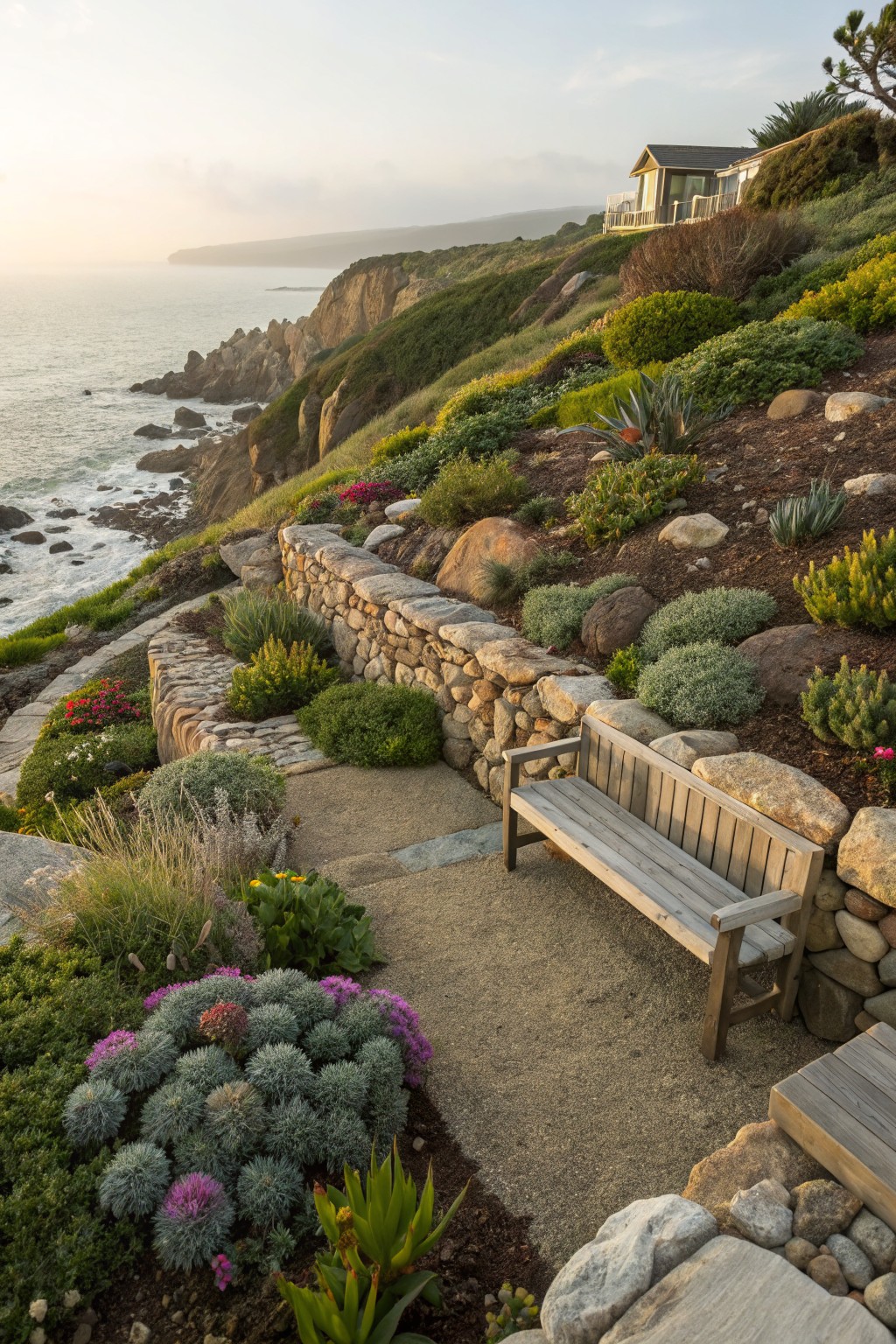
One smart way to handle a steep slope is terracing it with dry-stacked stone walls. These hold back soil while creating flat spots for flower beds. You get erosion control plus usable garden space. In this setup, the walls curve naturally with the land, and low plants like succulents fill in the pockets. It looks rugged yet tidy.
Use this on coastal slopes or anywhere runoff is a problem. Pick local stone for a seamless fit, and plant drought-tolerant stuff like agave or grasses that root deep. Add a gravel path and bench for sitting spots. Watch the wall height though. Keep steps under three feet or add railings. Works best where you want low upkeep.
Terraced Retaining Walls and Steps for Slopes
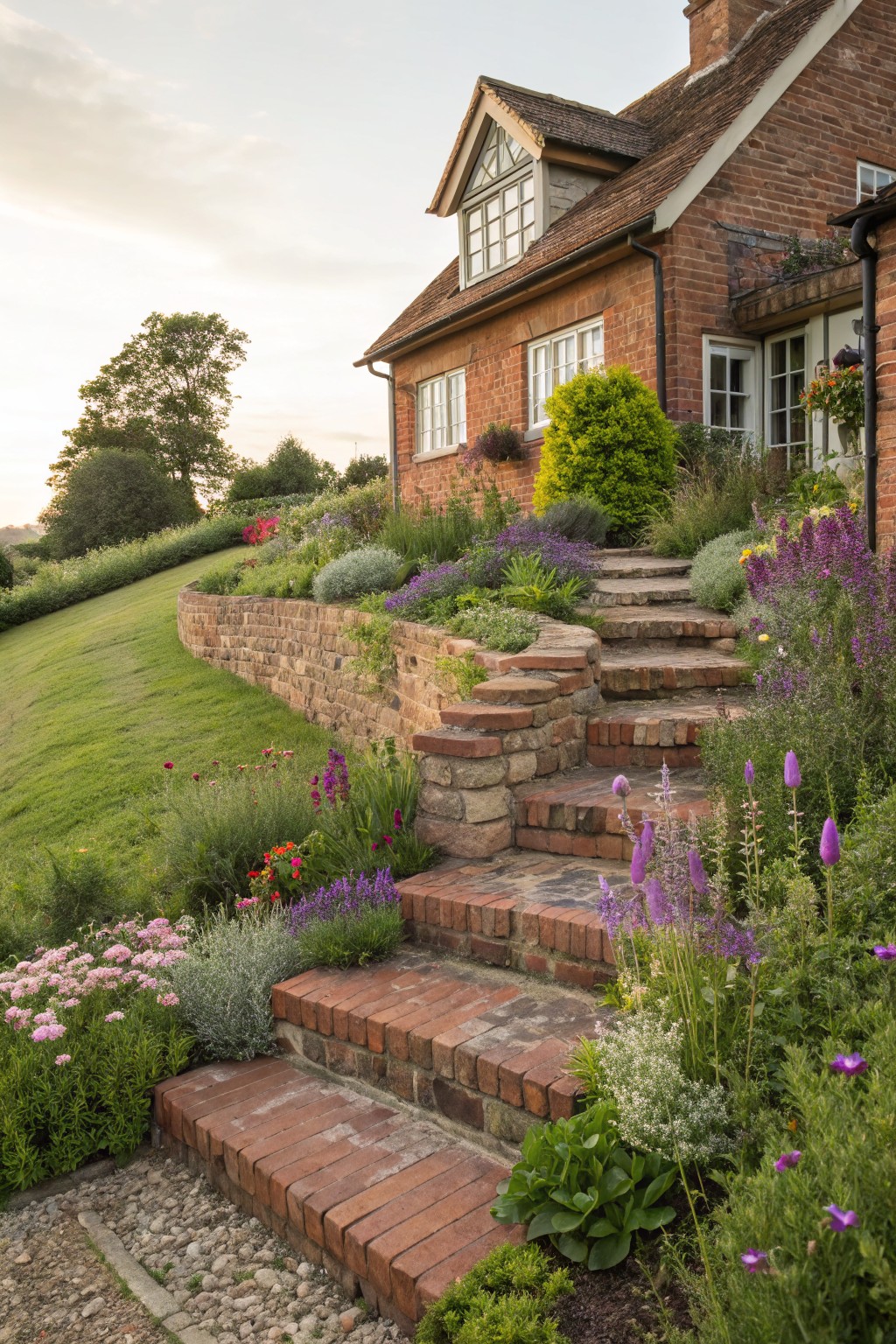
One solid way to handle a sloped yard is terraced retaining walls with built-in steps. Here, sturdy stone walls curve gently up the hill, holding back soil while brick steps make it easy to climb. Flowers and perennials spill over the edges, like those tall purple spikes and low pink clusters. This setup stops erosion cold by keeping soil in place and roots digging in deep. It turns a tricky slope into something pretty and walkable.
You can pull this off on moderate slopes near the house entrance, especially with a traditional brick home like this one. Start with local stone for the walls to blend right in, then add steps wide enough for two people. Plant tough, drought-friendly stuff that grows fast, such as lavender or sedum. Keep the beds mulched to hold moisture. It works best where you want low upkeep but still some color through summer.
Stone Steps with Dry Creek Beds
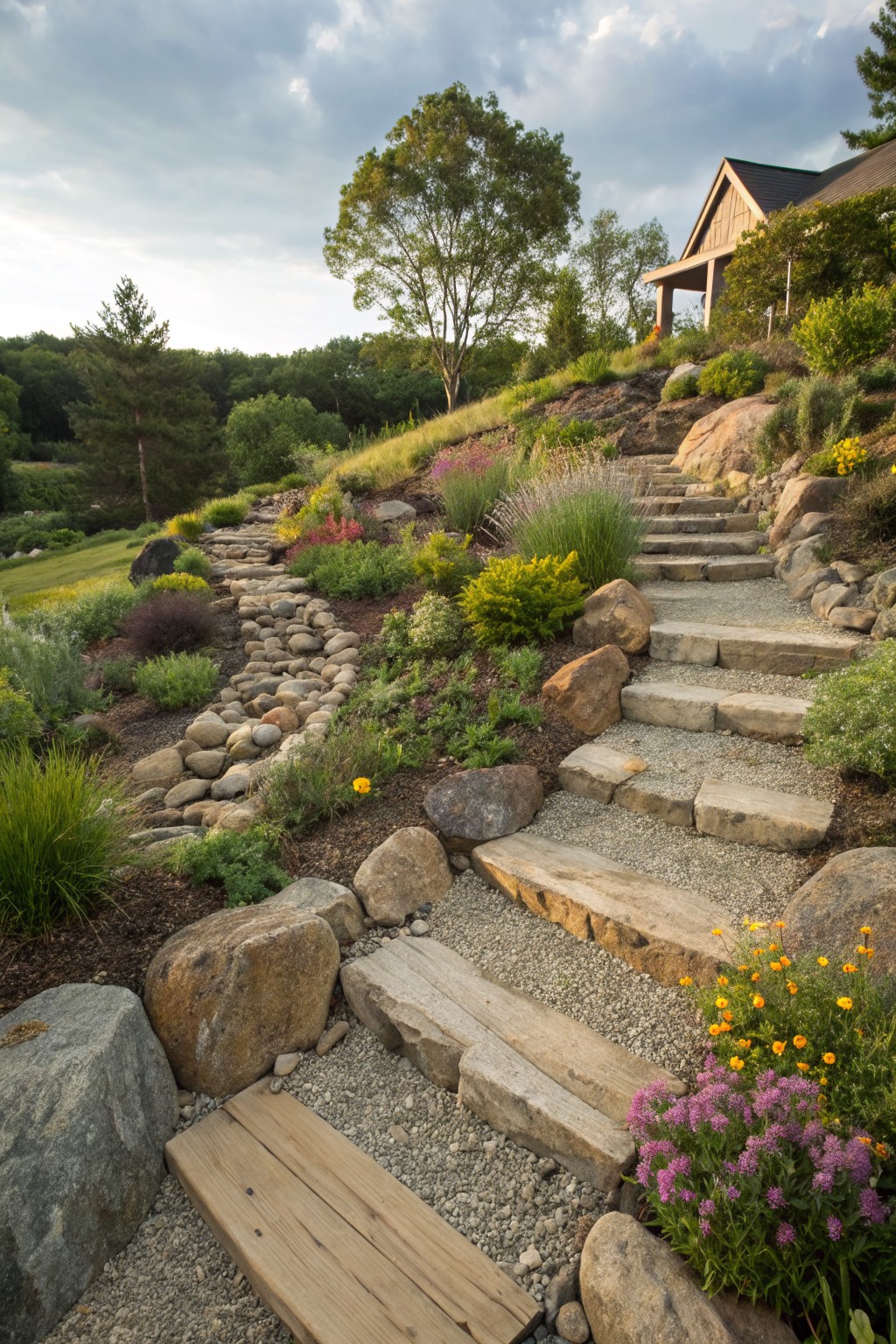
Slopes can wash out fast in heavy rain, but wide stone steps paired with a dry creek bed of smooth river rocks handle runoff smartly. The rocks let water flow down without carving paths through soil, while big boulders hold everything steady. Plants tucked in along the edges soften the look and keep roots from shifting dirt.
This works best on backyard hills leading up to a house or deck. Pick flat-ish steps for safe walking, and line the creek with gravel for easy drainage. Go for tough perennials like lavender or grasses that won’t mind wet feet now and then. Just make sure the slope grades right so water stays in the creek.
Tiered Stone Walls with Flower Beds
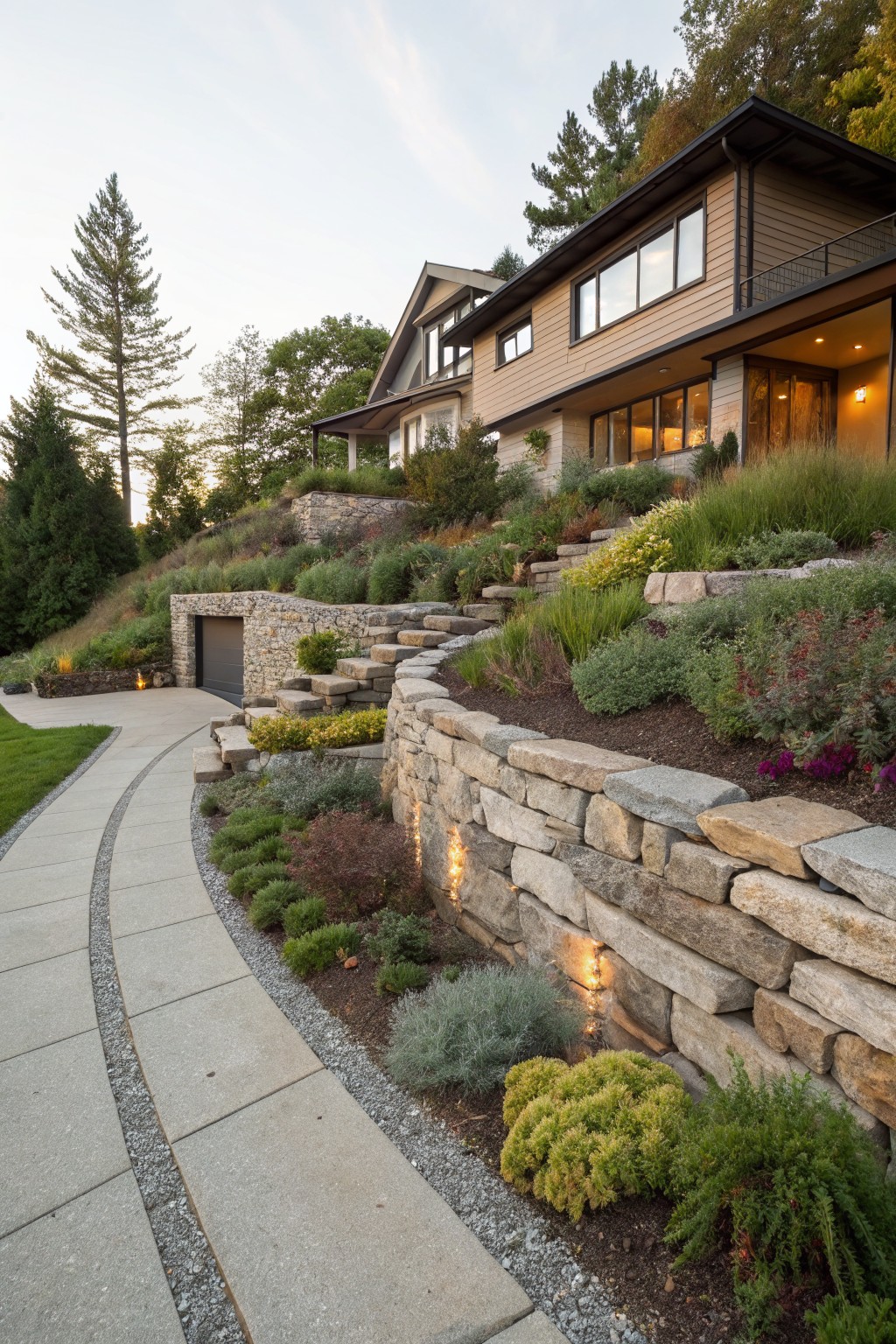
Sloped yards can wash away without something solid to hold the soil. Tiered stone retaining walls do that job nicely, like you see here with rough natural stones stacked into levels. Plants tuck right into the beds above and between the walls, their roots grabbing the dirt while the stones keep everything in place. It’s a simple fix that looks natural too.
Put these on any hillside, especially ones leading up to a house or garage. Use low-growing stuff like grasses, sedums, and small shrubs so they don’t flop over. Keep the joints dry-stacked for that rugged feel… or mortar them if your slope is steep. Works on all kinds of homes, from modern to cabin-style.
Irregular Stone Steps in Sloped Beds
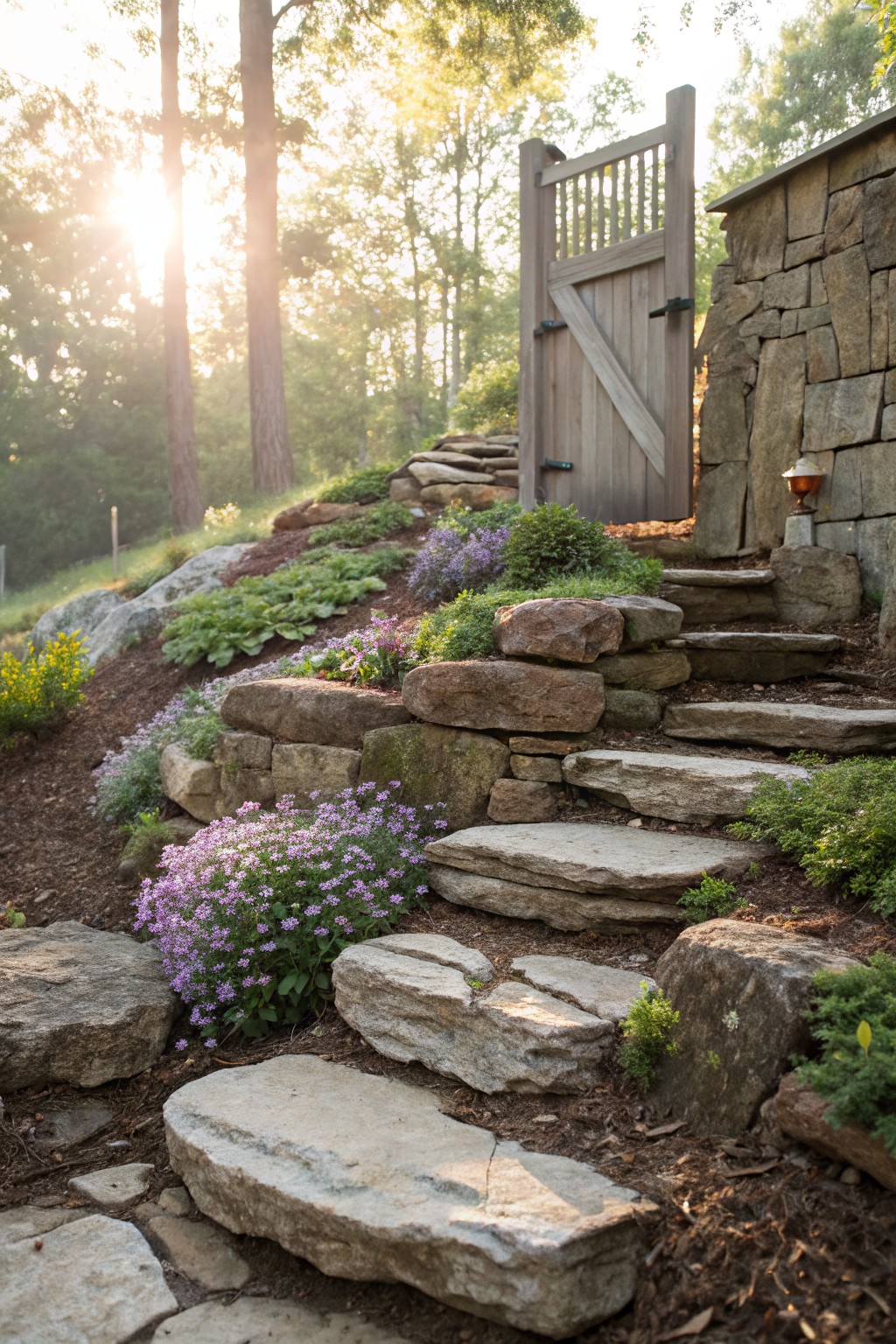
One smart way to handle a sloped yard is to set irregular stone steps right into flower beds. Those big, flat slabs create a path that follows the hill, while plants fill in the gaps and edges to hold everything in place. You see purple flowers spilling over the stones here, plus low greenery that softens the drop. It stops erosion cold, and the whole thing looks natural, not forced.
Put this in side yards or entry paths where you have a noticeable incline. Start with larger boulders at the base for stability, then step up with flagstones. Choose tough plants like sedum or creeping phlox that root deep and spread. Works best on moderate slopes…steep ones might need more engineering. Keep mulch fresh around the beds to help retain moisture.
Tiered Stone Walls for Sloped Flower Beds
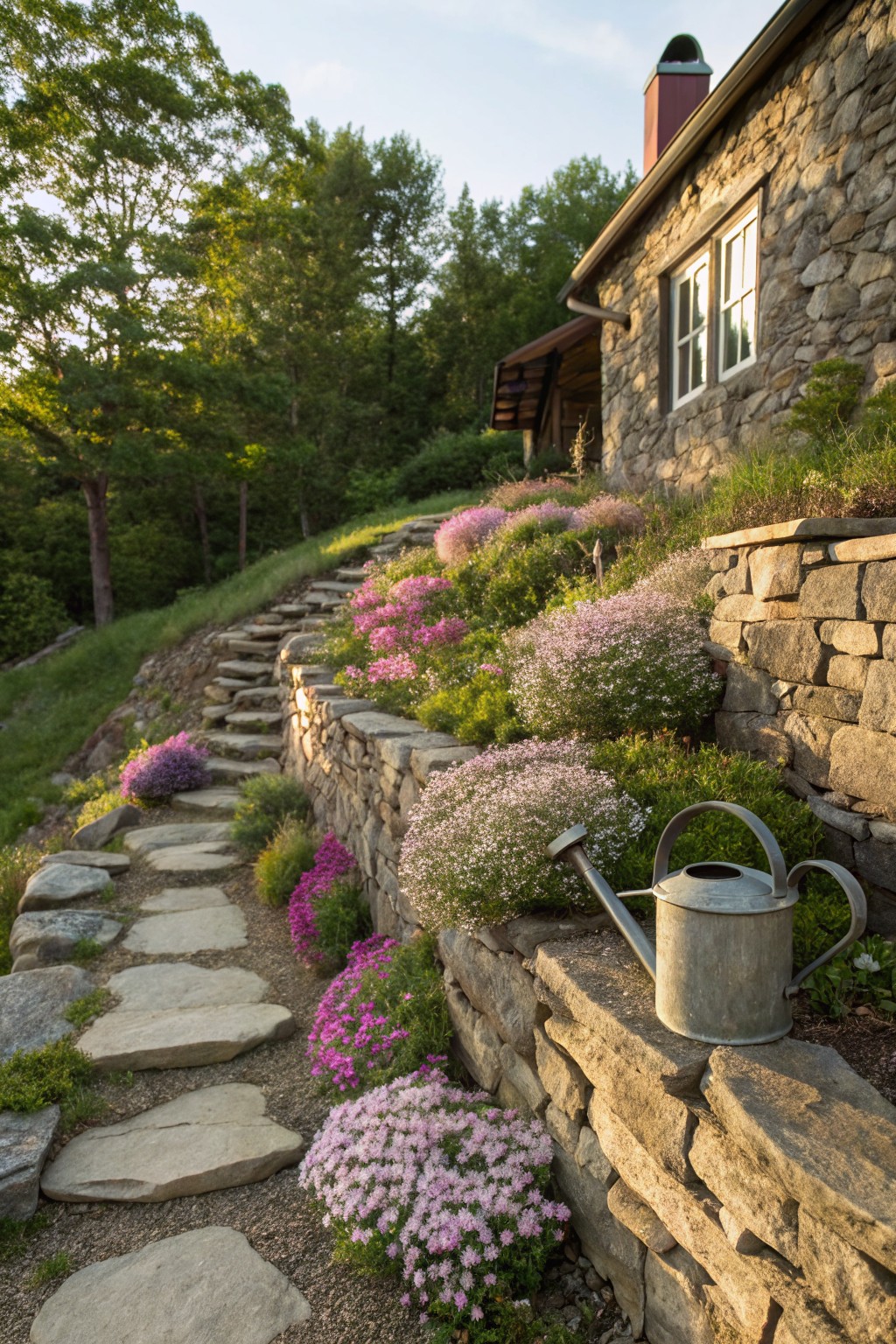
One straightforward way to handle a sloped yard is with tiered stone retaining walls. You stack local fieldstone or similar rough rocks to create flat levels for planting. Fill those pockets with low-growing flowers like the pink sea thrift shown here. It holds soil in place naturally, cuts down erosion, and gives the yard a tidy, cottage look that ties right into a stone house.
These walls work best on moderate slopes around 20 to 30 degrees, where you want both function and some color. Start with good drainage behind the stones to avoid water buildup. They’re low upkeep once planted, suit older homes or rural spots, and that old watering can perched on top adds a folksy touch without trying too hard.
Curved Brick Walls for Sloped Flower Beds
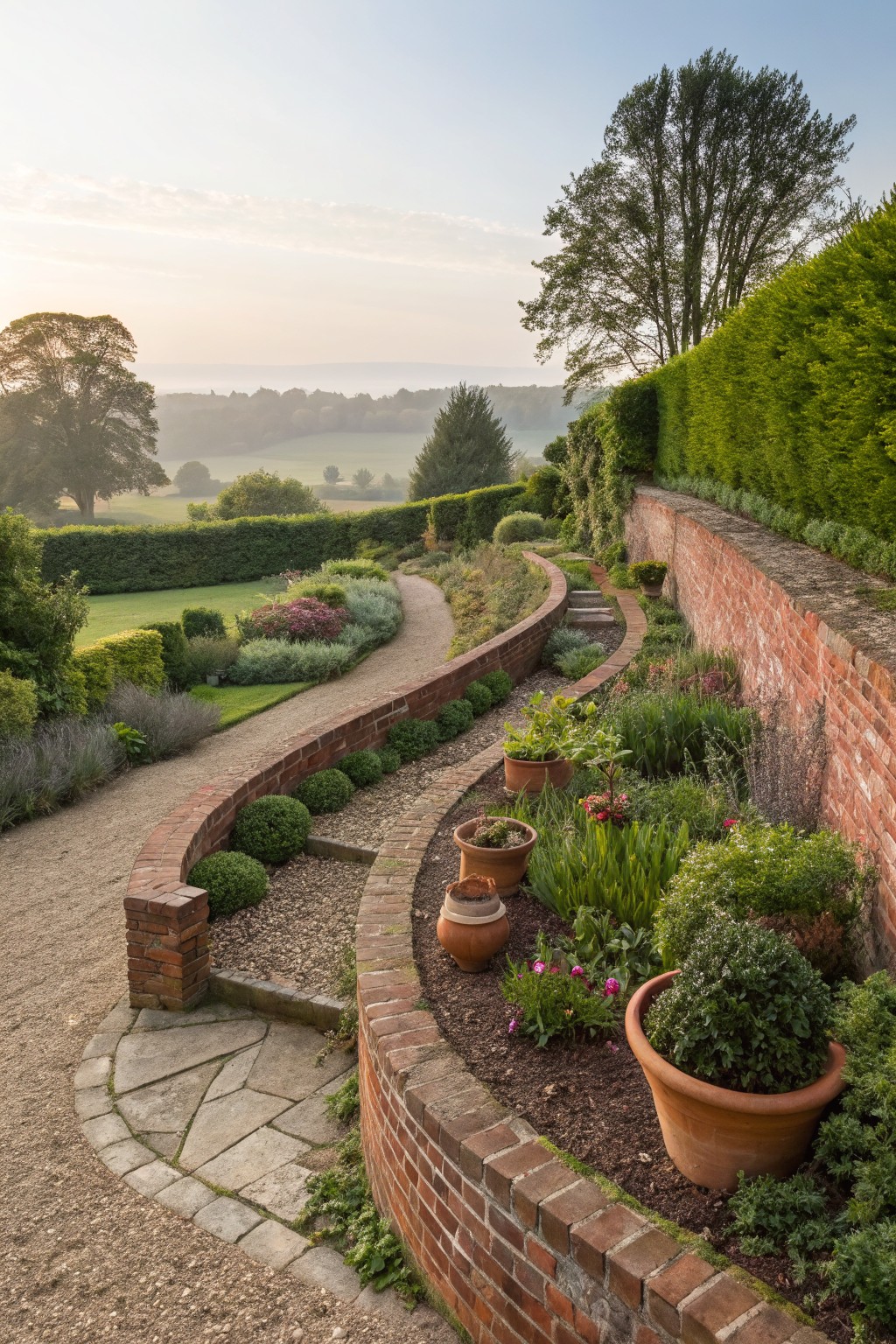
One smart way to handle a sloped yard is with curved brick retaining walls that create flat terraces for planting. These walls hold back soil to prevent erosion while giving you space for flowers, herbs, and shrubs right along the edge. The gentle curve adds a natural flow, and pairing it with a gravel path makes the slope easy to navigate without feeling steep.
This setup works best on moderate slopes around older homes or cottages where brick fits the style. Plant low growers near the base and taller ones up top for stability, and tuck in terracotta pots for extra color. Just make sure the wall has good drainage to avoid water buildup behind it.
Terraced Stone Steps with Planted Walls
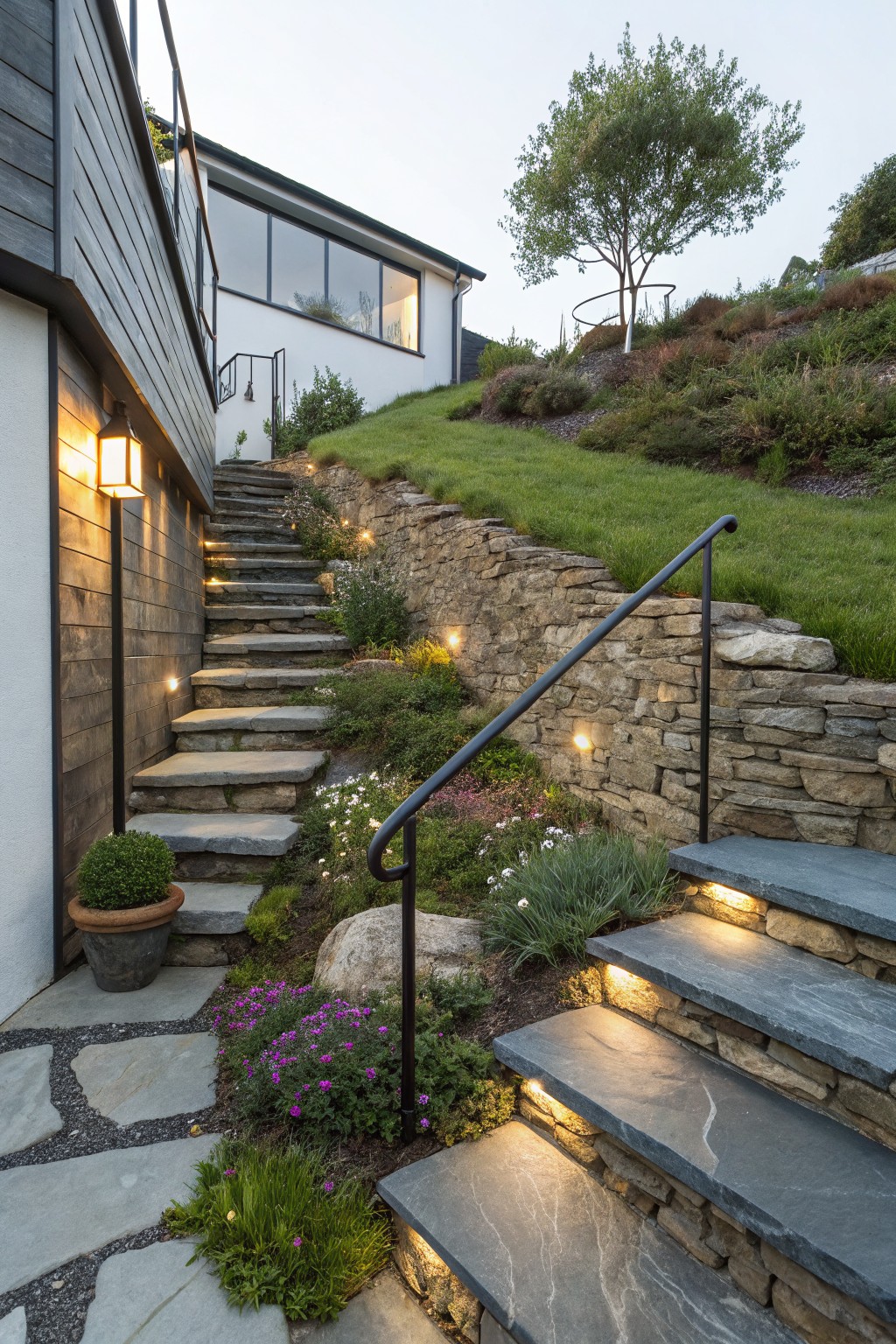
Sloped yards can wash away fast in rain, but terraced stone steps like these hold everything in place. The dry-stacked walls create flat beds for low plants that root deep and grip the soil. You get a sturdy path up the hill plus pockets of color from flowers tucked right into the edges. It’s practical and looks like it grew there.
Use this on paths from driveway to house entrance, especially moderate slopes under 20 feet. Pick tough plants like sedum or lavender that won’t flop over steps. Line the treads with low lights for evening walks. Skip it on super steep spots, where bigger engineering might be needed.
Tiered Retaining Walls for Sloped Flower Beds
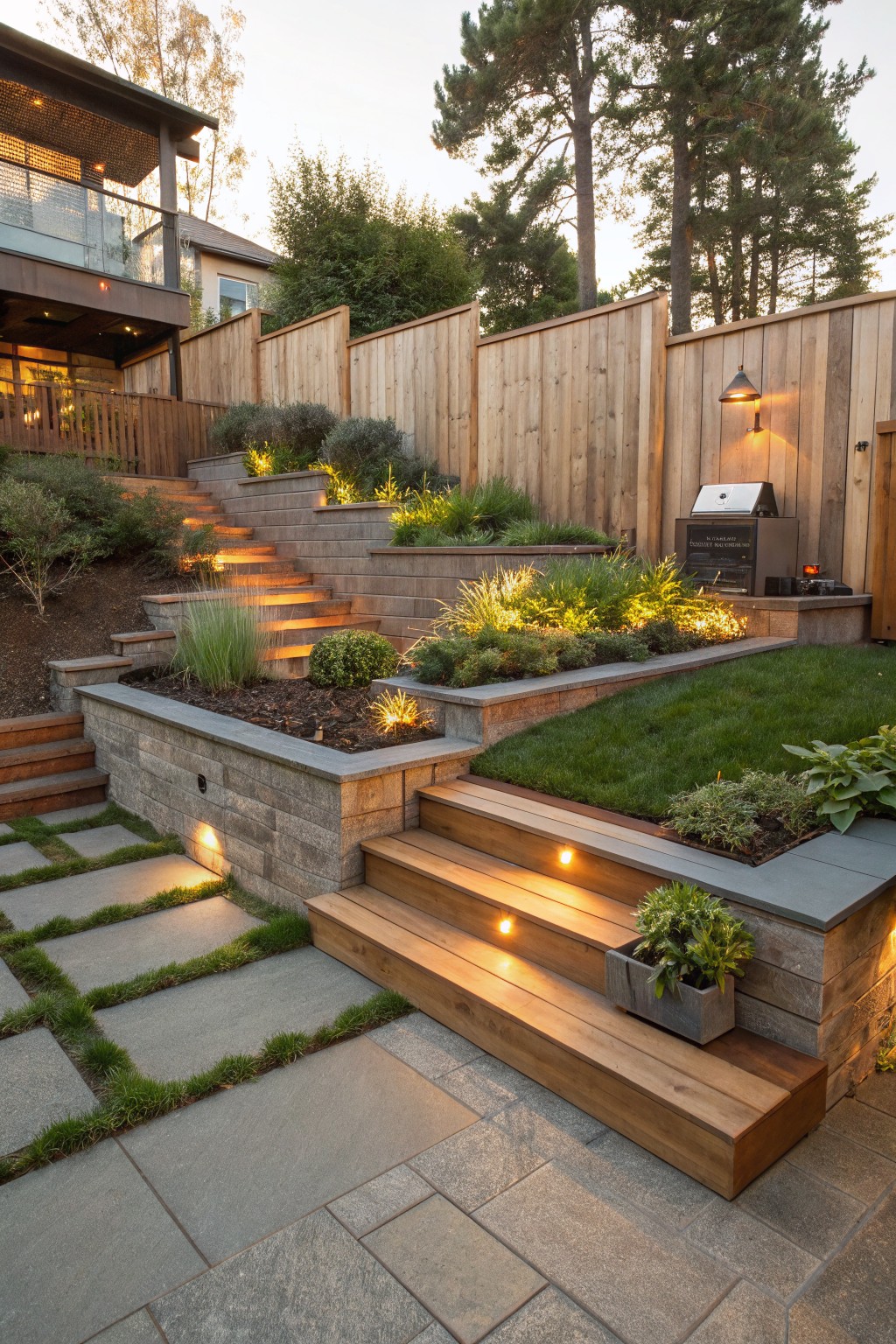
Sloped yards can wash away soil fast if you just plant on them. Tiered retaining walls fix that by creating flat levels for flower beds right into the structure. Stone walls hold everything in place while plants tuck into the pockets, like grasses and shrubs spilling over the edges. Steps between levels make it easy to reach, turning a tricky hill into usable garden space.
This setup suits backyards with a steady drop, especially where you want low upkeep. Build with solid stone or blocks for strength, pick deep-rooted plants to stabilize soil, and add gravel behind the walls for drainage. Wood steps soften the look… just seal them against weather. It keeps erosion down and gives you spots to sit or grill nearby.
Frequently Asked Questions
Q: What’s the quickest way to stabilize my sloped yard before planting flowers?
A: Cover bare soil with thick mulch or straw right away. It traps water and keeps dirt from washing off. Add plants soon after to lock it in long-term.
Q: Can these flower bed ideas work on a really steep hill?
A: Yes, tier your beds with rocks or logs to slow runoff. Pick tough, deep-rooted flowers like coneflowers that grip soil hard.
Q: Do I need fancy soil prep for sloped beds?
A: Mix in compost to help roots spread fast. Skip it on mild slopes, but wet clay needs grit like sand to drain better.
Q: Which plants stay put during heavy rain?
And go for natives like black-eyed Susans. Their roots knit soil together tight. They bounce back quick too.
