


I’ve noticed that in small yards, flower beds really define the paths and open areas, turning a cramped lot into something navigable. The first giveaway of a rushed layout is when plants spill onto walkways, making every step feel off-balance. Edging changes that. Over time, budget-friendly plantings in these beds fill out and lock in the structure you want. One idea with layered perennials stands out for how I’d test it on my uneven ground.
Brick Raised Beds Along a Narrow Path
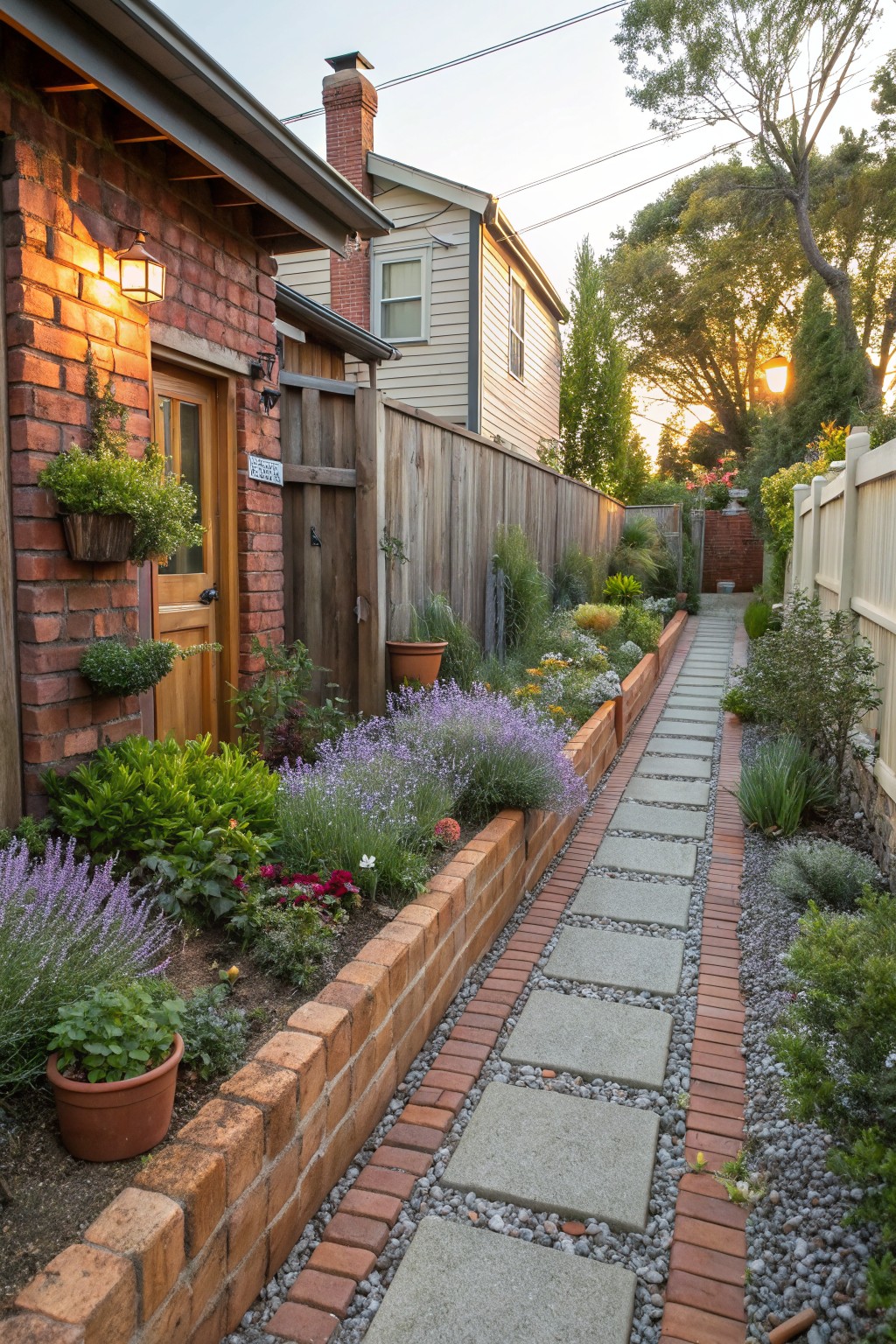
One smart way to handle a skinny side yard is building raised beds from basic bricks right along the path. It gives you instant flower beds without eating into the walking space. Here you see lavender and grasses tucked in, with a simple stone path and gravel edge keeping it neat and low fuss.
This works best in tight spots like between houses or leading to a back gate. Stack bricks a couple courses high, plant drought tolerant stuff, and you’re set on a budget. Skip fancy materials. Just makes that forgotten strip feel like part of the garden.
Simple Paver Path with Rock Edging
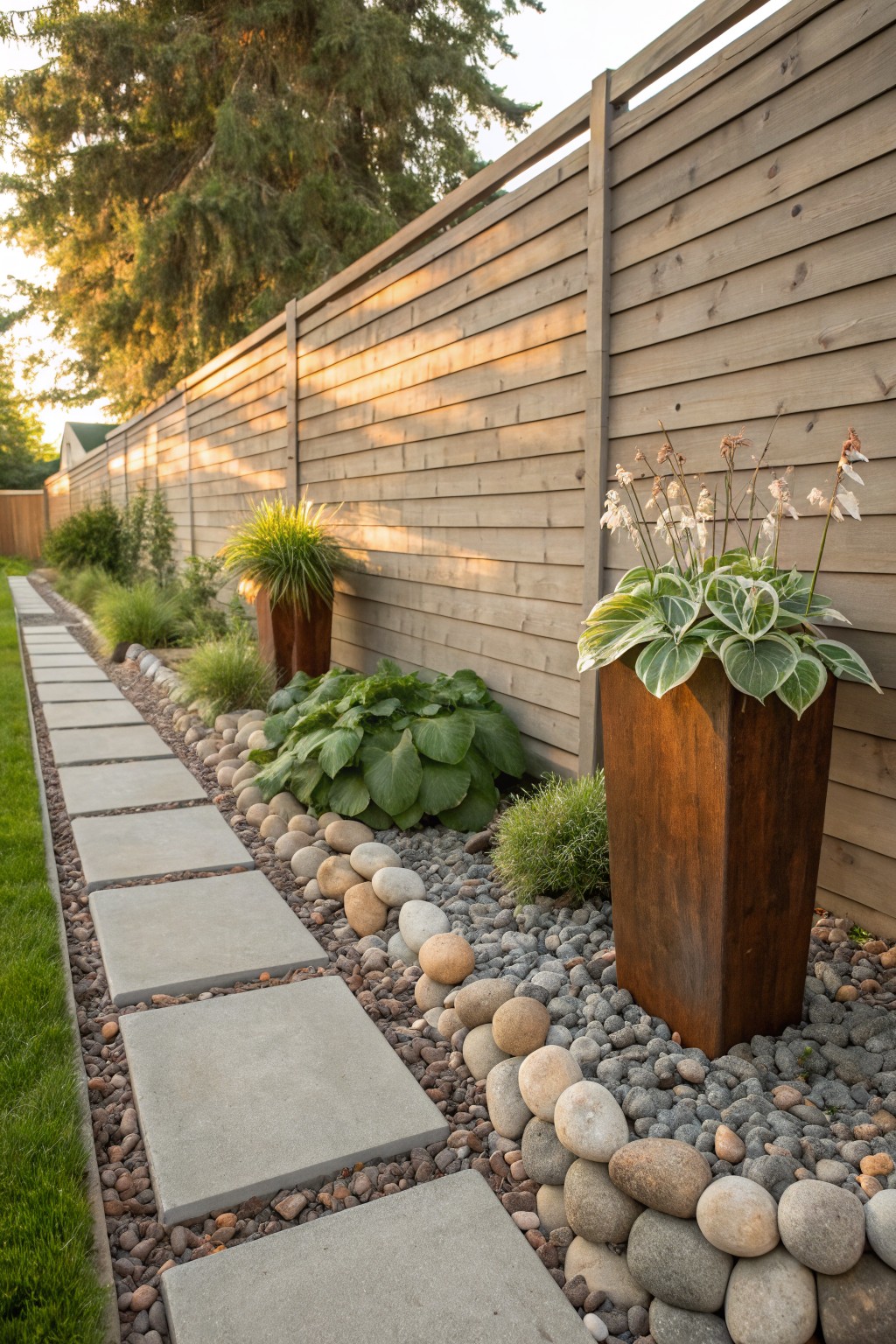
A straightforward path like this makes a small side yard feel more usable right away. Gray concrete pavers lead the way, edged by smooth river rocks and bigger boulders that keep everything in place. The rocks add some natural shape without much work, and plants like hostas tuck in nicely along the border. It’s a budget-friendly setup that separates the lawn from the planting area cleanly.
You can pull this off in any narrow strip along a fence or house side. Grab pavers from a big box store, source rocks locally for cheap, and plant tough stuff that doesn’t need fussing over. Works best in shady spots… just watch the rocks don’t wander onto the path over time. Keeps foot traffic easy and the beds tidy.
Raised Wooden Beds Fit Small Yards
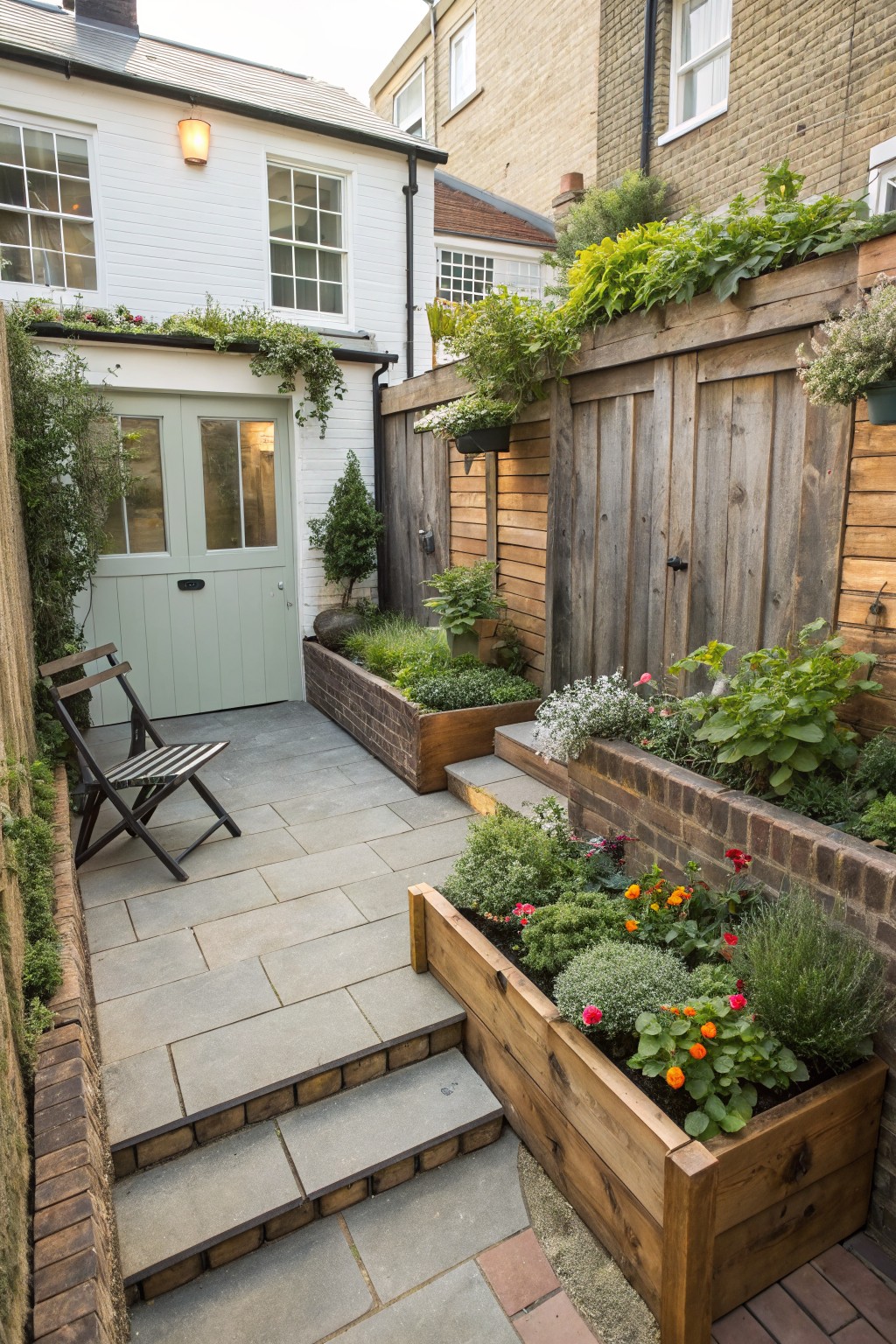
Raised wooden beds work well in tiny backyards like this one. They line the walls and steps, letting you grow flowers and herbs right up against the house without eating into the walking space. The rough wood pairs nicely with brick edges, giving a sturdy, garden-shed feel that’s easy on the eyes.
You can build these on the cheap with basic lumber or scraps from a local yard. They’re perfect for urban spots with poor soil, since you control what’s inside. Just make sure to add drainage holes at the bottom. They suit any small patio area, especially if you want low upkeep and lots of color close at hand.
Tiered Wooden Planters for Sloped Yards
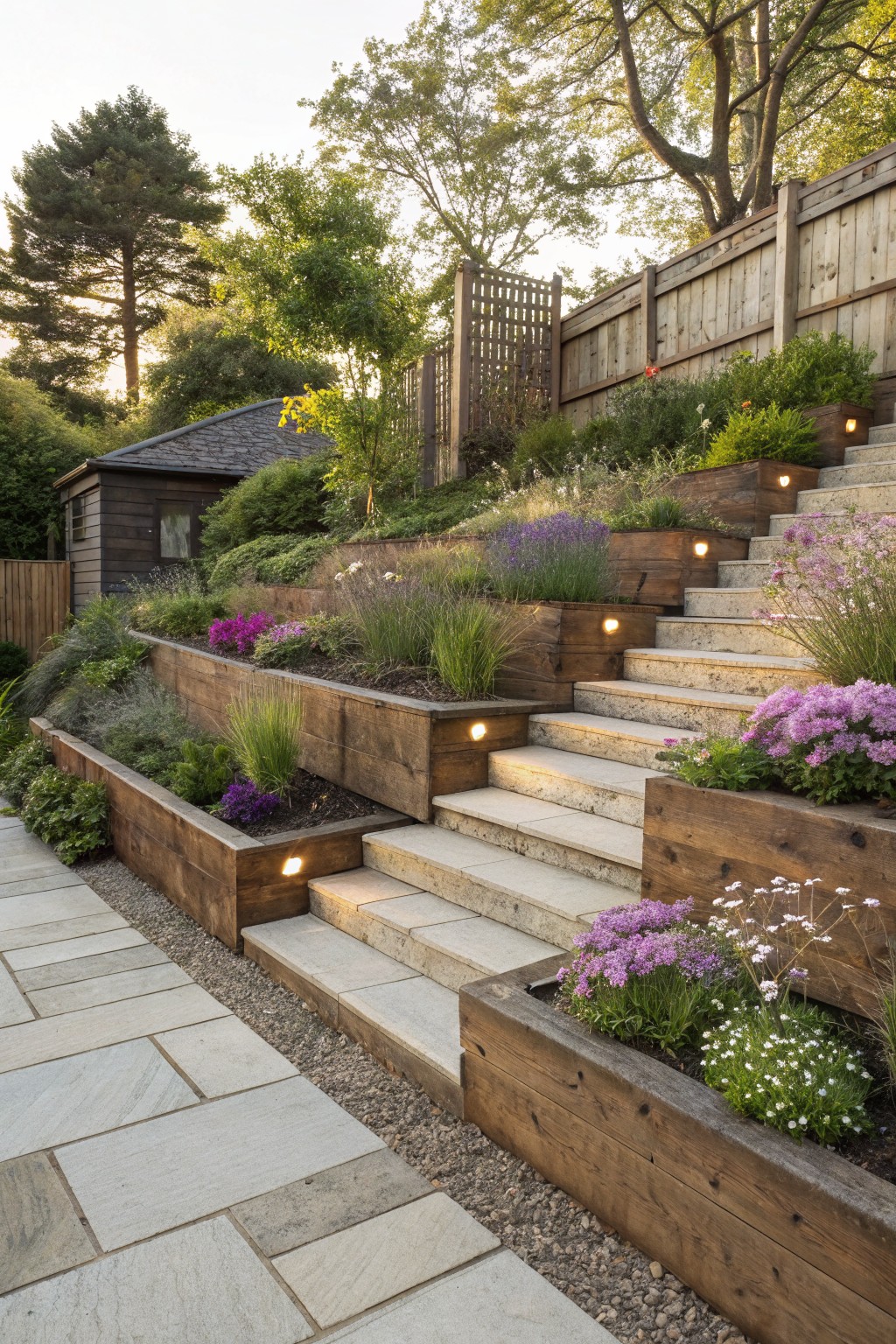
Sloped yards can be tough to work with. They often end up as wasted space or just grass that slides away in the rain. But these tiered wooden planters change that. They hold back the soil while giving you flat spots for flowers and grasses. The wood looks natural against the plants, and it keeps everything neat without much cost.
You can build them yourself using affordable timber sleepers or leftover boards. Stack them two or three levels high on smaller slopes, like this one with steps running through. Fill with tough, low-water plants such as lavender and sedums that trail over the edges. It works great for compact backyards on a budget. Just make sure to treat the wood against rot, or swap in cedar if you can.
Curved Path Through Gravel Beds
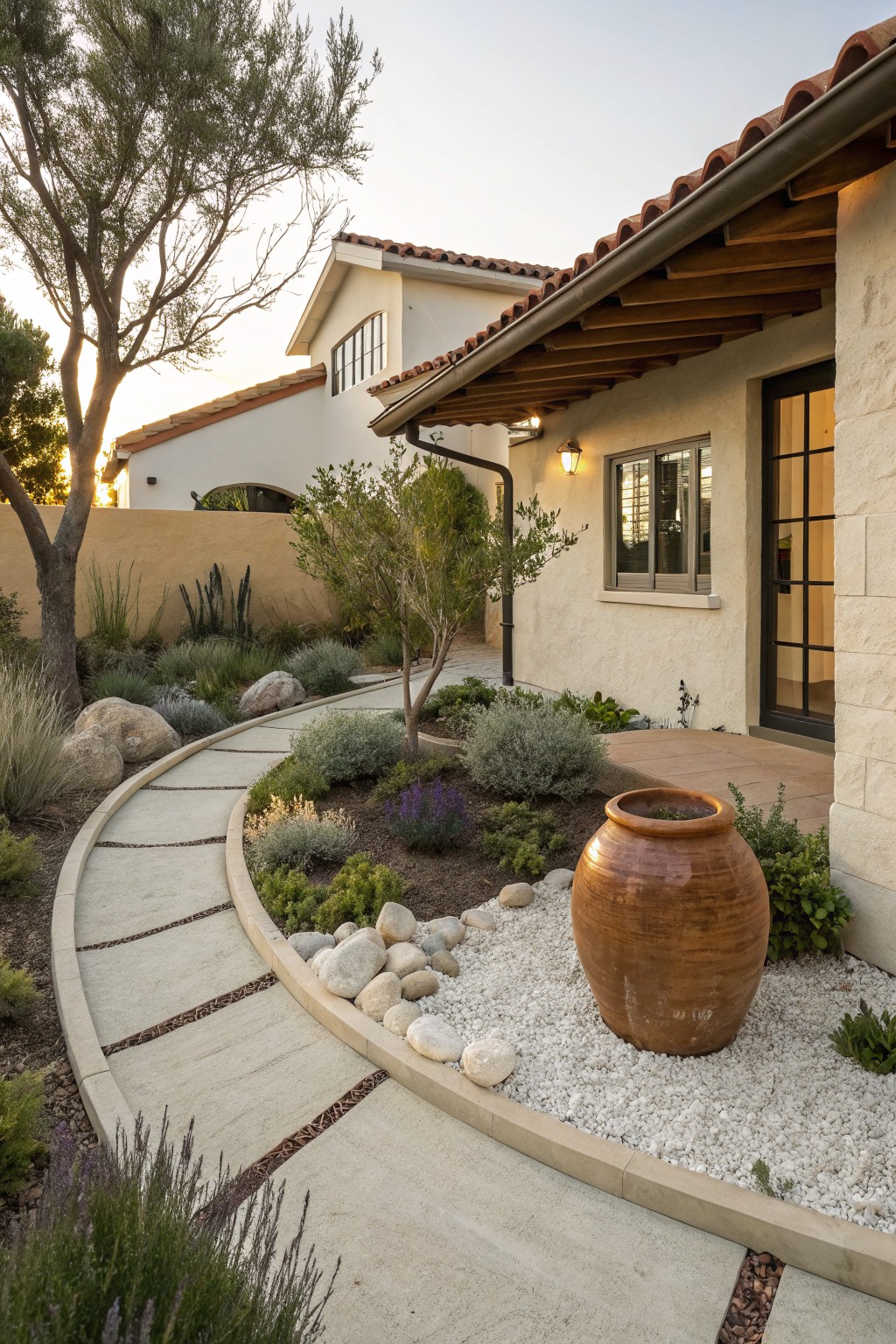
A simple curved path like this makes a small yard feel bigger and more welcoming. It uses concrete slabs set in a gentle sweep, edged by gravel and river rocks that hold back the soil. Drought-tolerant plants tuck in along the edges, like lavender bushes and small succulents, for easy color. That big terracotta pot near the end adds a focal point without extra work.
This works best in tight side yards or entry paths where you want low upkeep on a budget. Start with basic concrete pavers for the walk, fill beds with cheap gravel mulch, and plant tough locals that don’t need much water. Skip fancy edging. It suits sunny spots and keeps things neat year round.
Driveway Edge Raised Beds
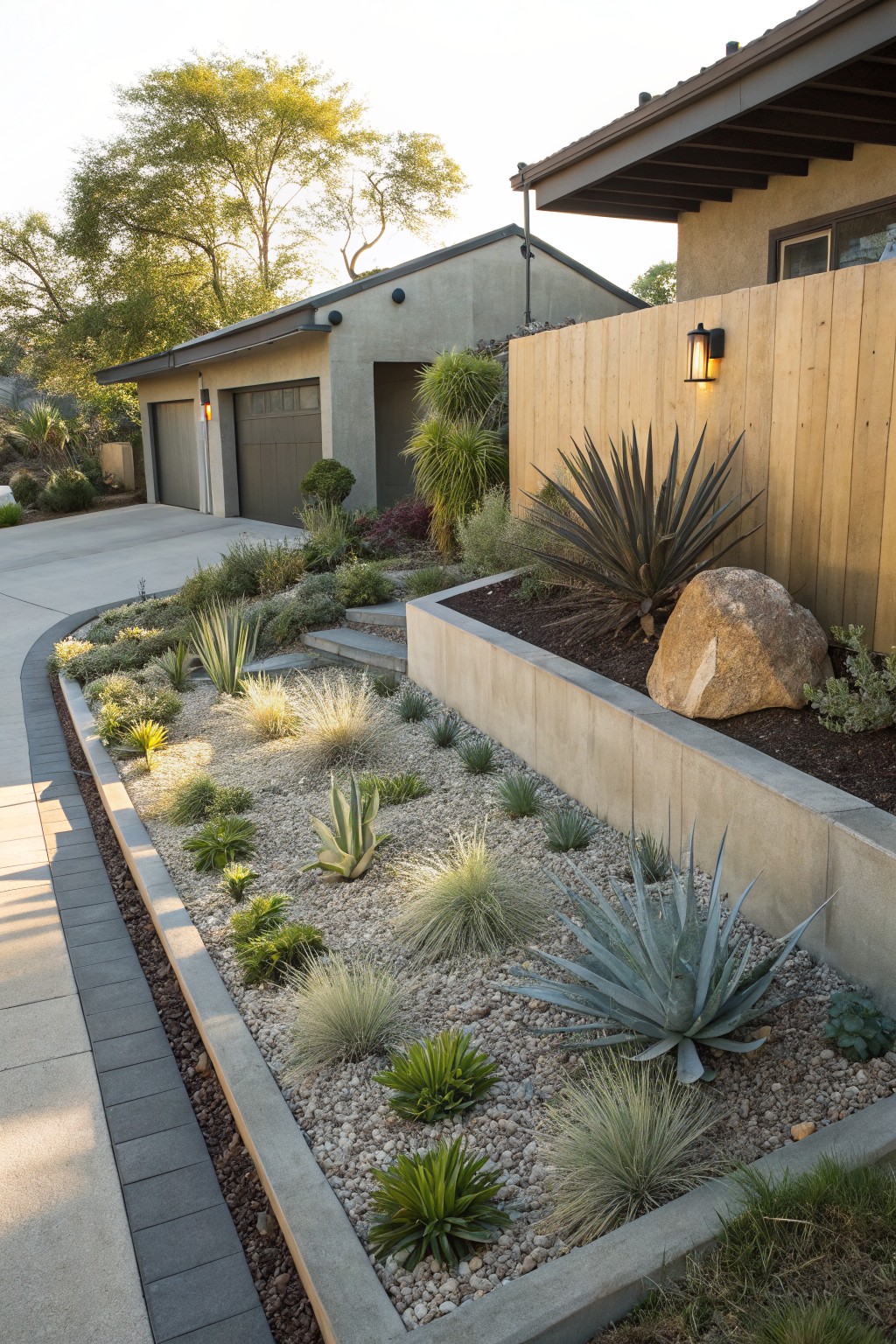
Raised concrete beds like these run right along the driveway, turning a plain edge into a tidy garden strip. Tough plants such as agaves, grasses, and small succulents fill them out, with gravel mulch keeping soil neat and weeds away. It’s a straightforward way to add green without grass mowing or constant watering.
These beds suit small yards perfectly, especially where space is tight next to a garage or path. Stack concrete blocks or pour simple forms for the walls, then plant low-water varieties and scatter pebbles on top. Budget-friendly since materials are basic, and it holds up in sun or dry spots. Just make sure drainage is good to avoid soggy roots.
Winding Stone Paths for Small Yards
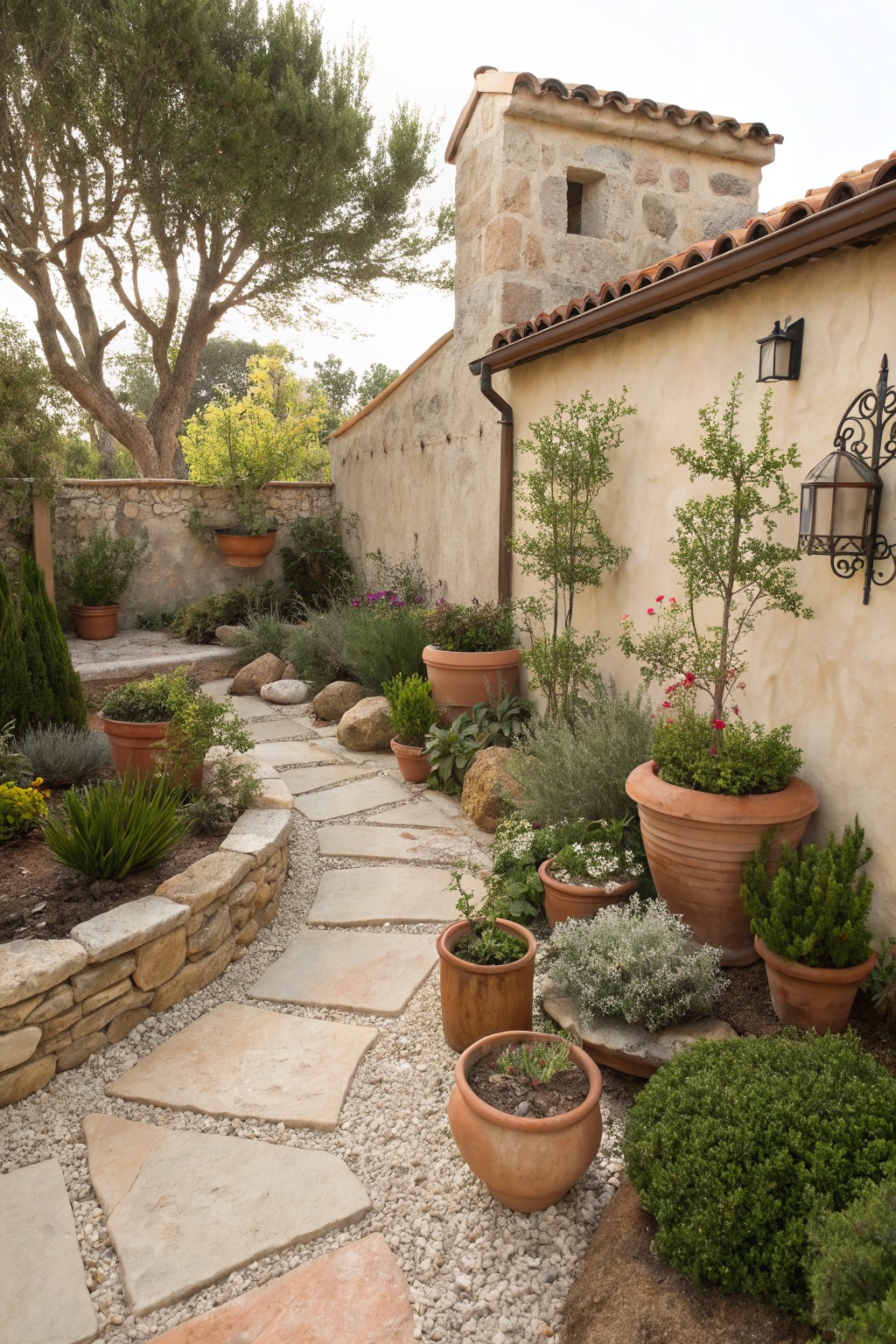
A simple winding path like this turns a tight yard into something you actually want to walk through. Those irregular stone pavers laid over gravel keep costs down, and filling the edges with terracotta pots of all sizes adds instant color and life without digging up the whole space. It feels natural, not forced.
Use this in any narrow side yard or courtyard where straight lines would feel boxy. Mix short herbs in small pots with taller shrubs for height, and keep the path at least three feet wide so two people can pass. Watch the gravel buildup on stones though… a quick sweep keeps it looking sharp.
Curved Raised Beds with Plank Edging
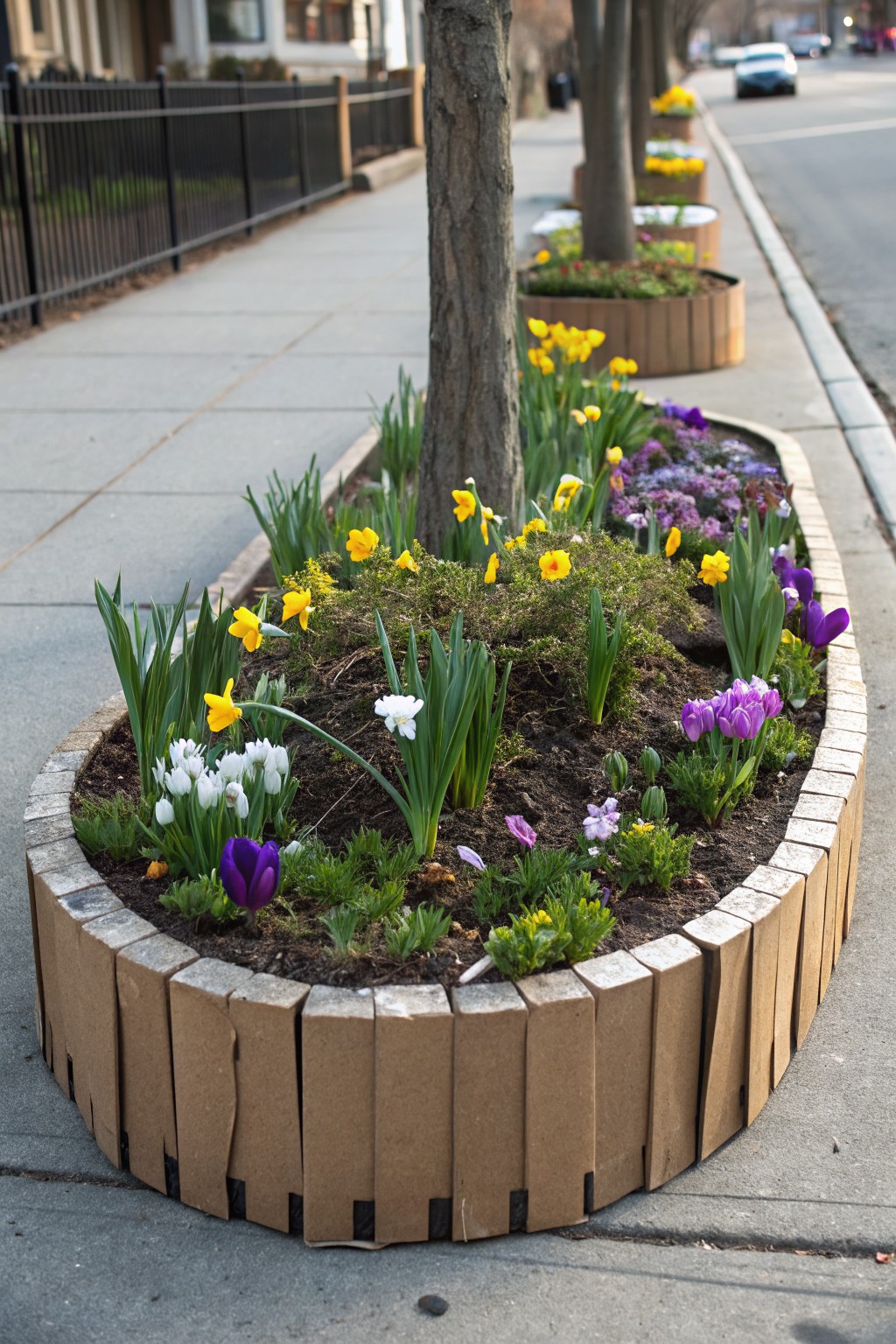
One smart way to add flowers to tight spots is building a raised bed curved around a tree trunk. Here, simple plank edging forms the border. It looks like affordable cardboard or wood slats stacked up. Inside, spring bulbs like daffodils and tulips fill it out for easy color. This keeps everything contained and neat without taking up walkway space.
Try this along a fence line or street tree in a small yard. It’s cheap to put together, great for renters since it’s not permanent. Plant bulbs in fall for next spring’s show. Just make sure the edging holds up to wet weather… or swap in treated wood if needed.
Terraced Wooden Beds for Sloped Yards
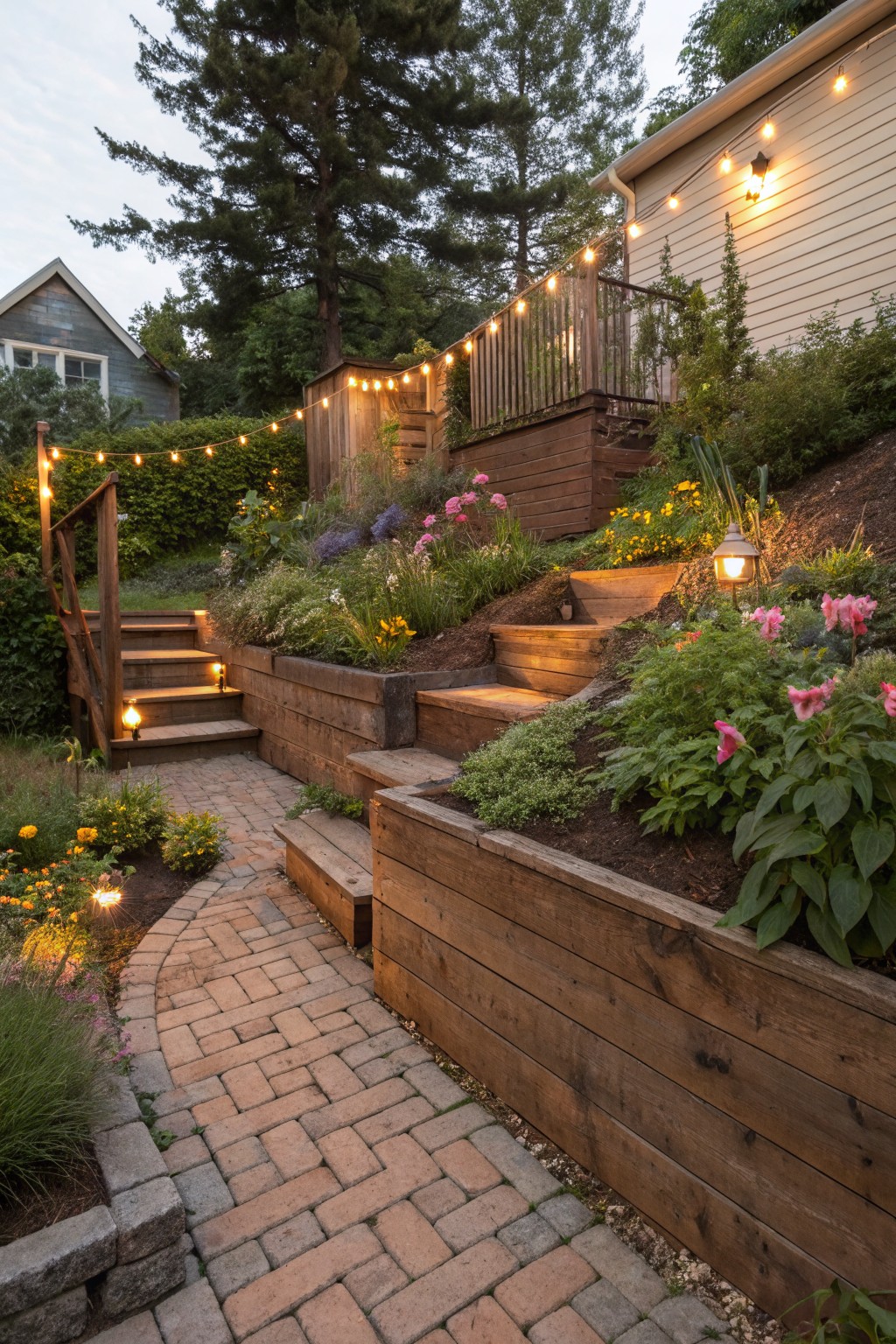
Slopes can be tricky in small yards. They make flat planting space hard to come by. But these wooden retaining walls fix that by creating flat terraces stacked right up the hill. Flowers spill out from the beds, and simple steps connect everything. It’s a practical way to add garden room without big earth moving.
You can build this on a budget with untreated lumber or reclaimed wood. Stack the beds two or three high where the drop is steepest, then add a winding path like the brick one here to tie it to the house. Works best for yards under an acre that get some sun. Just treat the wood against rot, or swap in concrete blocks if you want longer life.
Winding Paver Path Through Flower Beds
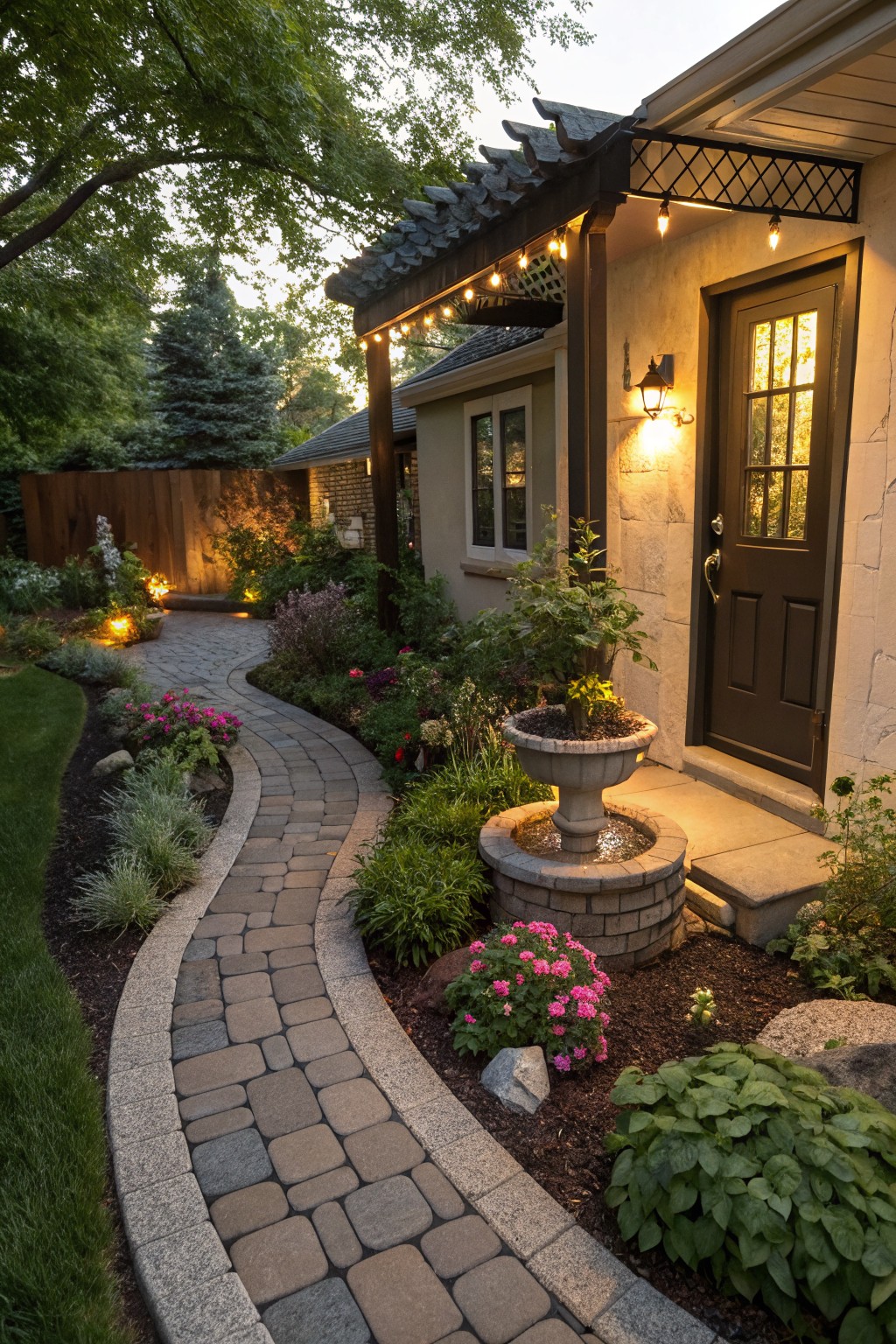
A simple winding path like this one makes a small yard feel bigger and more interesting right away. Made with basic pavers edged by low plants and colorful blooms, it pulls your eye toward the house door without taking up much space. That little stone fountain near the end adds just enough focal point, and the soft evening lights make it welcoming even after dark.
This setup works great in tight side yards or along a fence line where straight paths would look boxy. Grab affordable pavers from a big box store, layer in easy perennials like those pink flowers for borders, and keep beds mulched to save on weeding. It suits most homes on a budget, just watch the curve doesn’t get too tight for wheelbarrows.
Stacked Concrete Block Planters
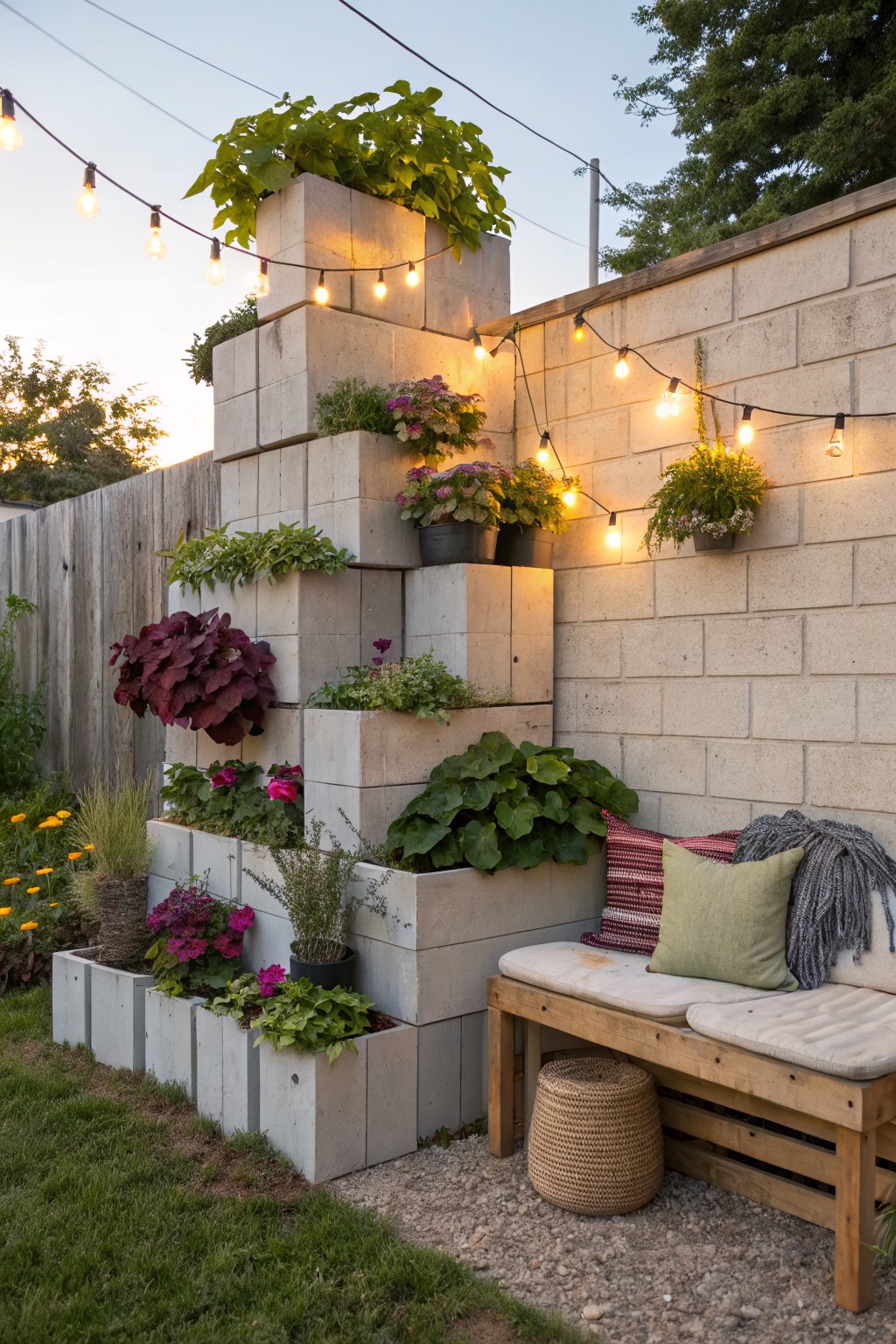
One smart way to add flower beds to a small yard is stacking concrete blocks into low tiers or walls. You just fill the openings with soil and plants, like trailing greens or colorful blooms. It turns a plain corner into something full and green without much cost or space. Those blocks are cheap and sturdy, and they hold up well outdoors.
Put them along a fence or wall to save ground space, maybe add a bench nearby for sitting. Mix in different plants for year-round interest, and string lights make it nice at night. This works best in tight backyards where you want low-maintenance color. Watch the drainage though, or roots might rot.
Tiered Pallet Planters for Tight Spaces
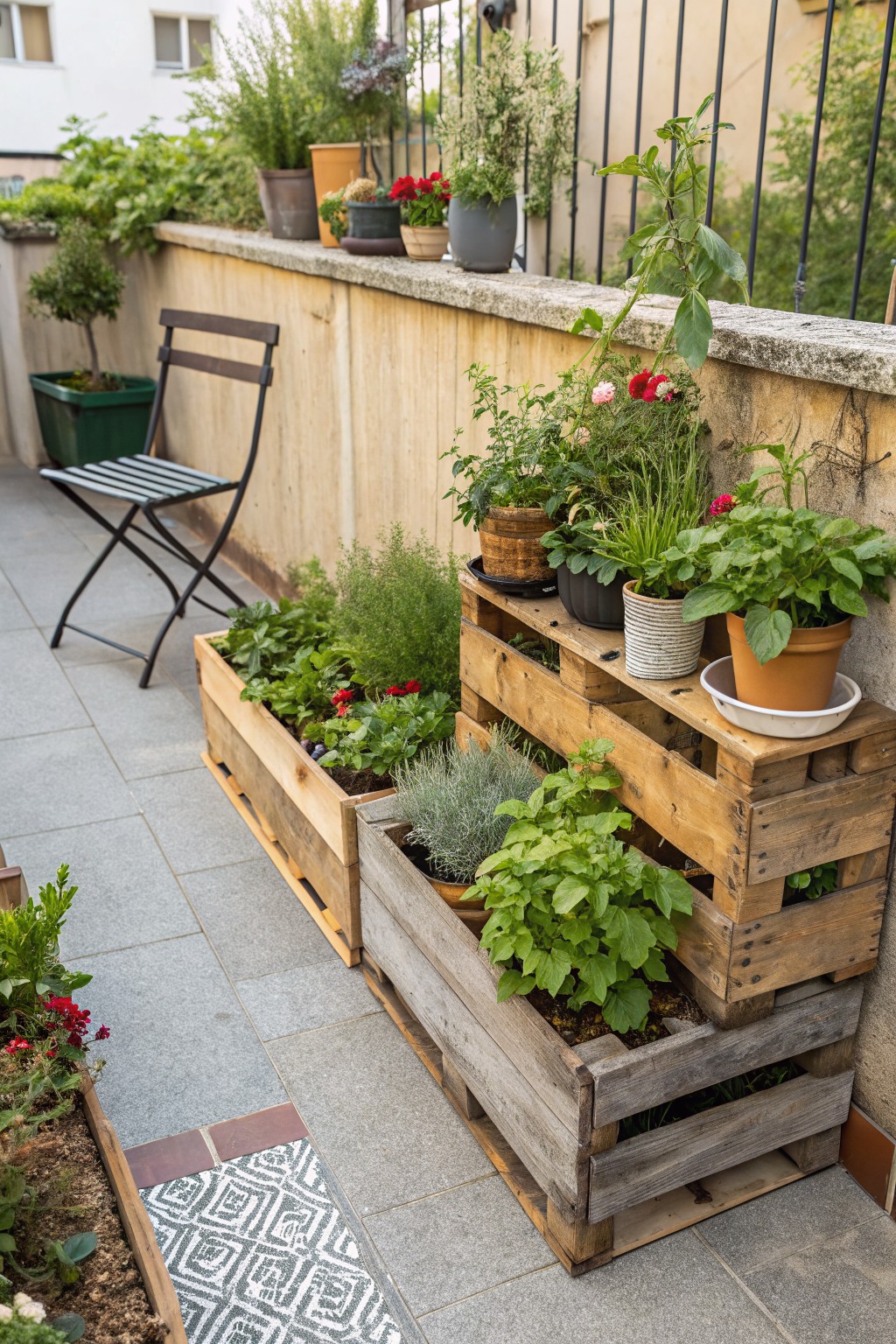
One smart way to fit more plants into a small balcony or terrace is stacking old wooden pallets into tiered planters. You see them here holding herbs, strawberries, and flowers all in one spot. It turns a plain outdoor corner into a real garden without taking up much floor space. These setups feel practical and look right at home against a stucco wall or railing.
To pull this off, grab some sturdy pallets from a warehouse or online, line them with landscape fabric to hold soil, and stack two or three high. Fill with easy growers like basil, tomatoes, or petunias that thrive in pots. It works best on sunny patios or balconies under 100 square feet. Just secure the stacks well so they don’t tip, and refresh the soil yearly.
Frequently Asked Questions
Q: How much money do I really need to start one of these small flower beds? A: You can pull off a nice 4×4 bed for under 50 bucks if you shop end-of-season sales at local nurseries.
Hunt for perennials and mulch on clearance. Skip fancy pots, grab what you need from dollar stores.
Q: My yard soil looks awful. Do I have to replace it all? A: Loosen up what you’ve got and mix in some compost from kitchen scraps or cheap bags.
That feeds the roots without dumping cash on topsoil. Plants thrive once you fluff the base.
Q: Which ideas work if my yard gets mostly shade? A: Go for the hosta and fern borders from idea 12, they love low light and spread cheap.
Tuck in impatiens for pops of color. Water them steady, and they fill out fast.
Q: How do I stop weeds from taking over my new beds? A: Layer cardboard under mulch right after planting, it smothers weeds for months.
Pull any stragglers weekly. And top up mulch yearly to keep it simple.
