

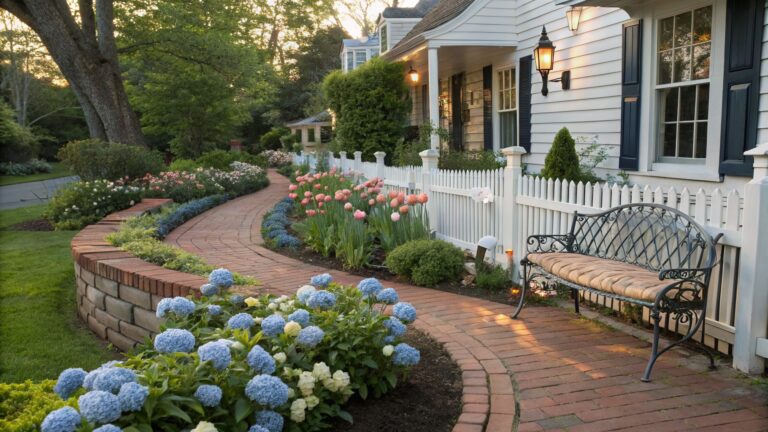
I’ve noticed in my own yard that tulips and hydrangeas work best when you layer them thoughtfully along pathways or borders, letting the early tulip bursts lead into the hydrangeas’ longer summer show. Garden layouts really come alive with this kind of color progression, especially since tulips fade gracefully while hydrangeas bulk up the structure over time. That steady balance catches the eye first on a walk through the yard. Planting them with simple edging keeps everything from spilling over into lawn areas, something I’ve tested after a few overgrown seasons. Several approaches here adapt well to different yard sizes, making them practical to sketch out for your next spring tweak.
Brick Path with Tulip and Hydrangea Borders
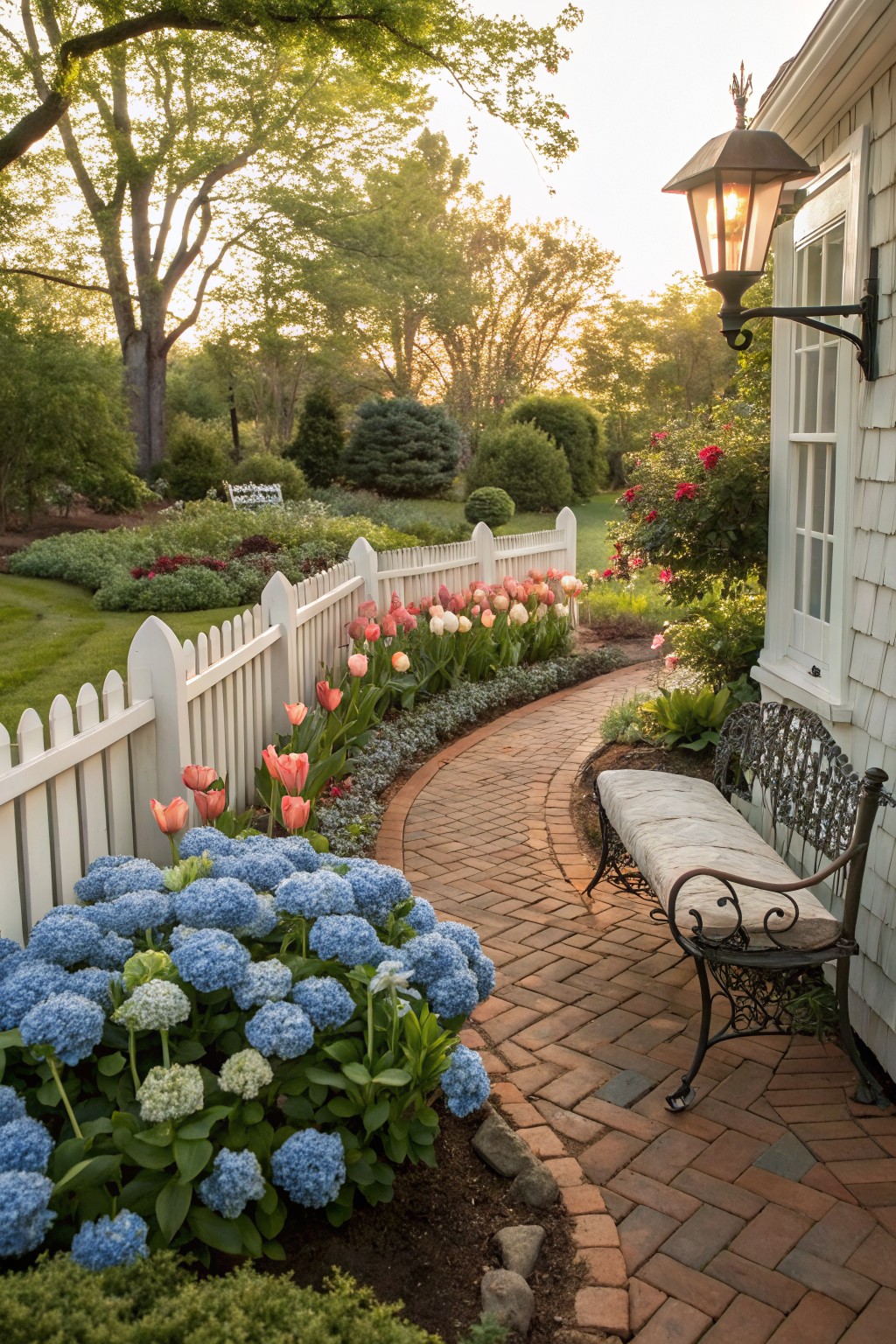
A gentle brick path like this works so well for guiding folks through a side garden. Orange tulips line one edge right up against the white picket fence, while big blue hydrangea bushes fill out the other side. That warm-cool color mix keeps things balanced and pretty from spring into summer, without much fuss.
Try it along the house or toward a back gate, especially on older homes with shingle siding. Curve the path a bit to make it feel welcoming, plant the tulips close to the fence for structure, and let hydrangeas mound up naturally. Just keep the bricks level so no one trips.
Raised Beds Layering Hydrangeas with Tulips
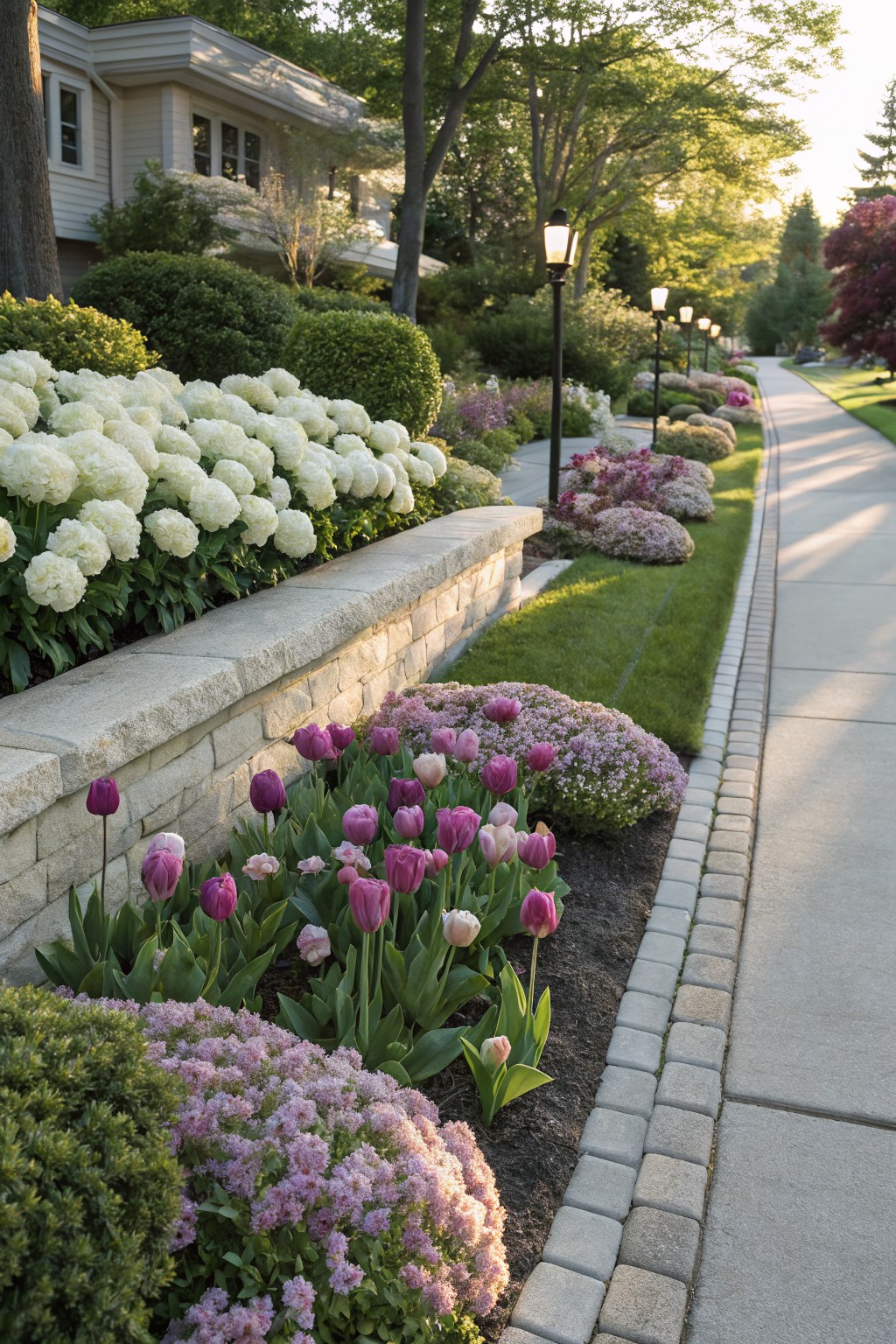
One straightforward landscaping idea here pairs big white hydrangea bushes with pink tulips in a raised stone bed right along a walkway. The hydrangeas mound up high against the wall for structure, while the tulips add lower color pops in spring. That simple layering keeps things balanced and lets each plant shine without crowding the path.
You can pull this off in any front yard or driveway edge where space is tight. Go for a low stone or block wall about two feet high, plant tulips at the base, and tuck in hydrangeas behind. It suits smaller lots… just mulch well to hold moisture and cut down on weeding.
Terraced Steps for Sloped Yards
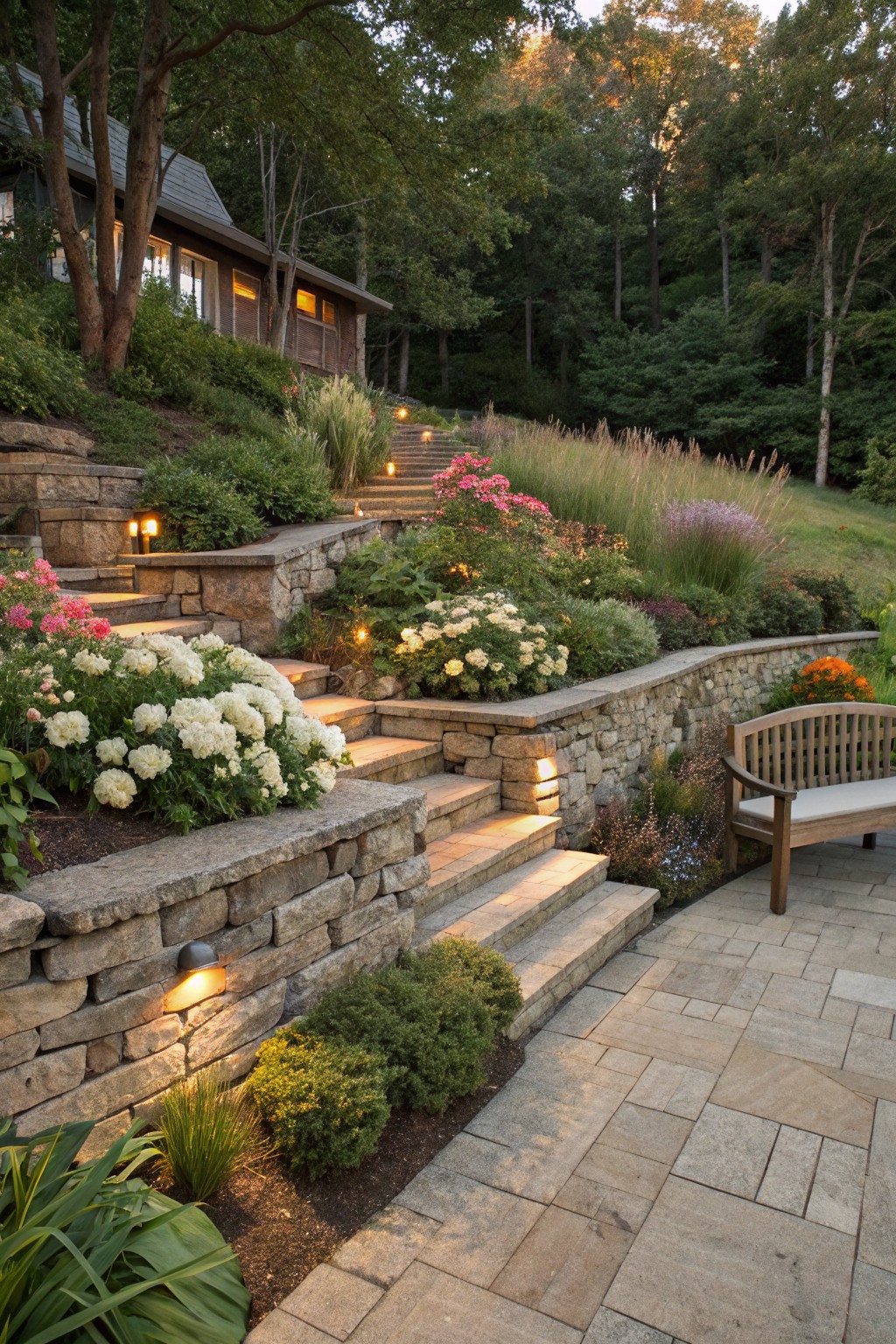
Slopes can be tricky around a house but terraced steps like these make them workable and pretty. Stone walls hold back the soil while wide steps give you a steady path up the hill. White hydrangeas spill over the edges into the beds, mixing soft flowers with the solid rock for a natural look that fits right into the woods.
This works best on hillside lots where you need to connect yard levels without it feeling steep or plain. Use local stone to blend in, plant tough shrubs like hydrangeas that handle some shade, and add low lights along the treads for safer walks at dusk. Just check your drainage first… wet soil behind walls can cause trouble over time.
Tulips Along a Lit Entry Path
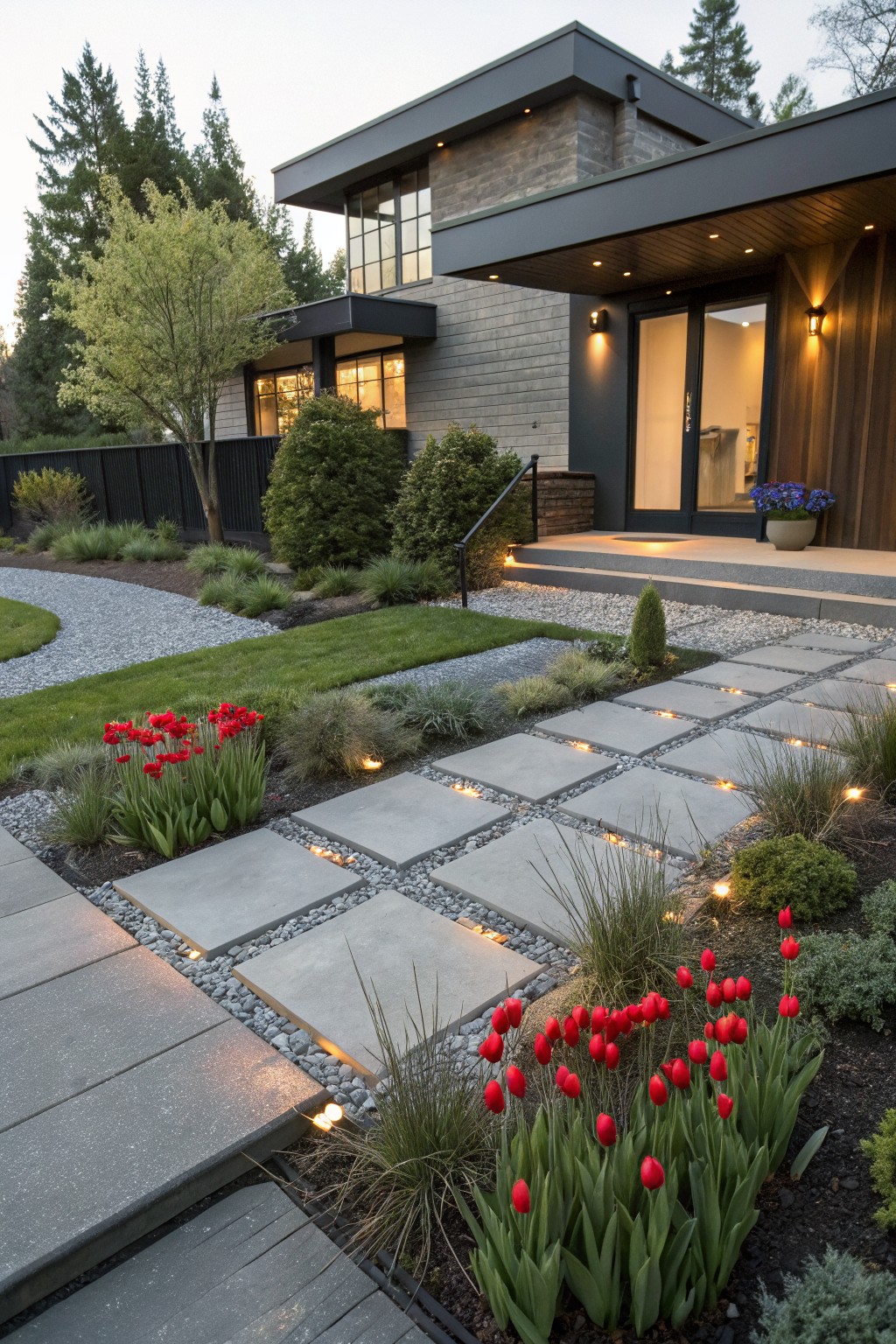
A simple concrete path like this one uses big square pavers with lights tucked right into the edges. Red tulips planted in the narrow beds alongside add a bright spring welcome. It keeps things modern and clean while the glow at night pulls you right to the door.
This works best in front yards with straight runs to the entry. Use drought-tolerant grasses mixed in for filler after tulips fade. Stick to larger pavers if your path is wide, or it can feel busy. Easy to copy on most any home style.
Garden Paths Bordered by Hydrangeas
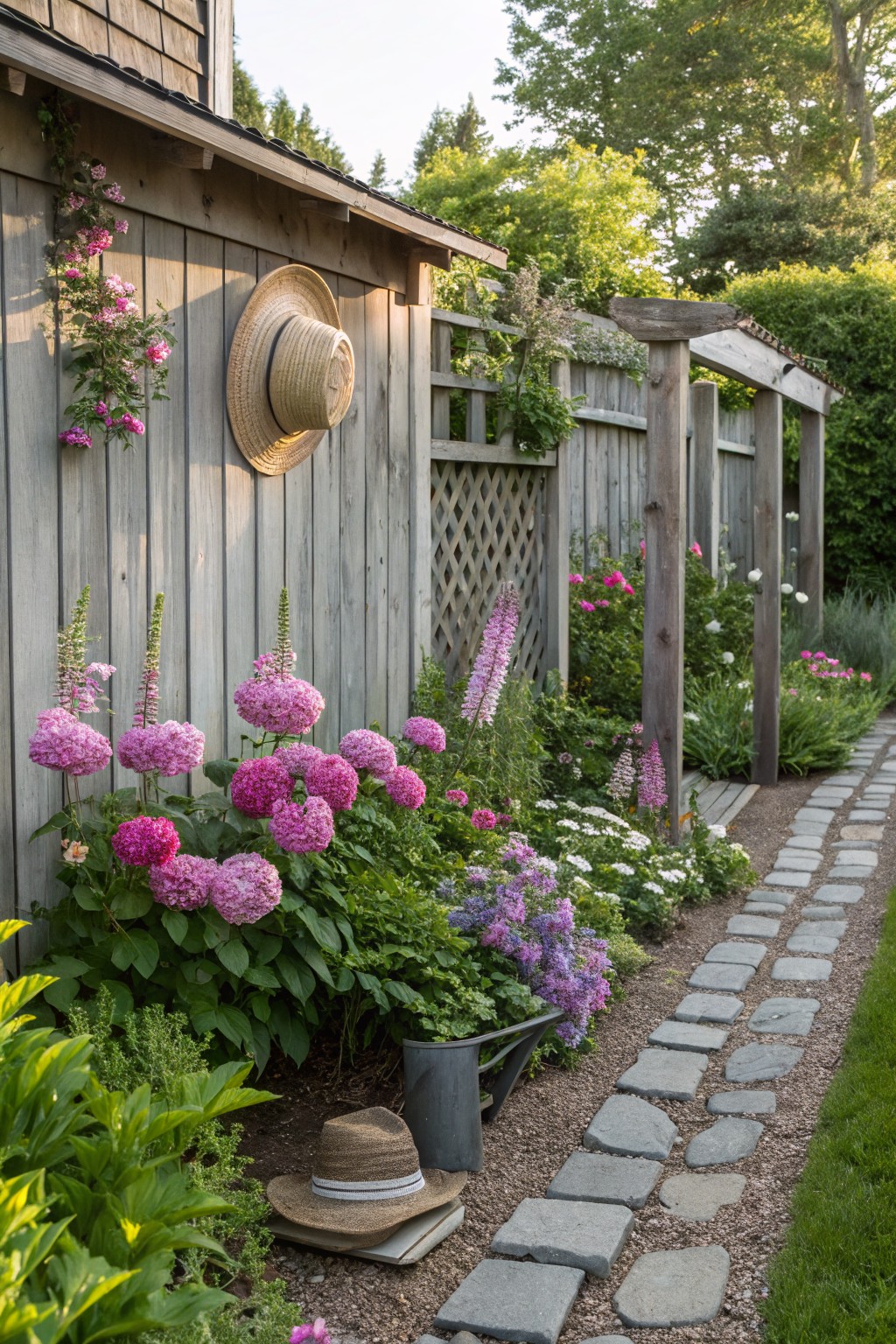
One simple way to make a side yard feel like a real destination is to run a stone path right through big clusters of hydrangeas. These pink mopheads grow tall and full along the edge, spilling a bit over the path but never blocking it. Paired with the soft gray fence, it gives that easy cottage feel without much fuss.
This setup works best in narrow spaces next to a house or garage, where you want color but not a wide open lawn. Plant the hydrangeas in full sun to part shade, and edge the path with gravel for drainage. Keep taller foxgloves behind them for height… just watch that the path stones don’t shift over time.
Raised Planters Pack Color into Narrow Yards
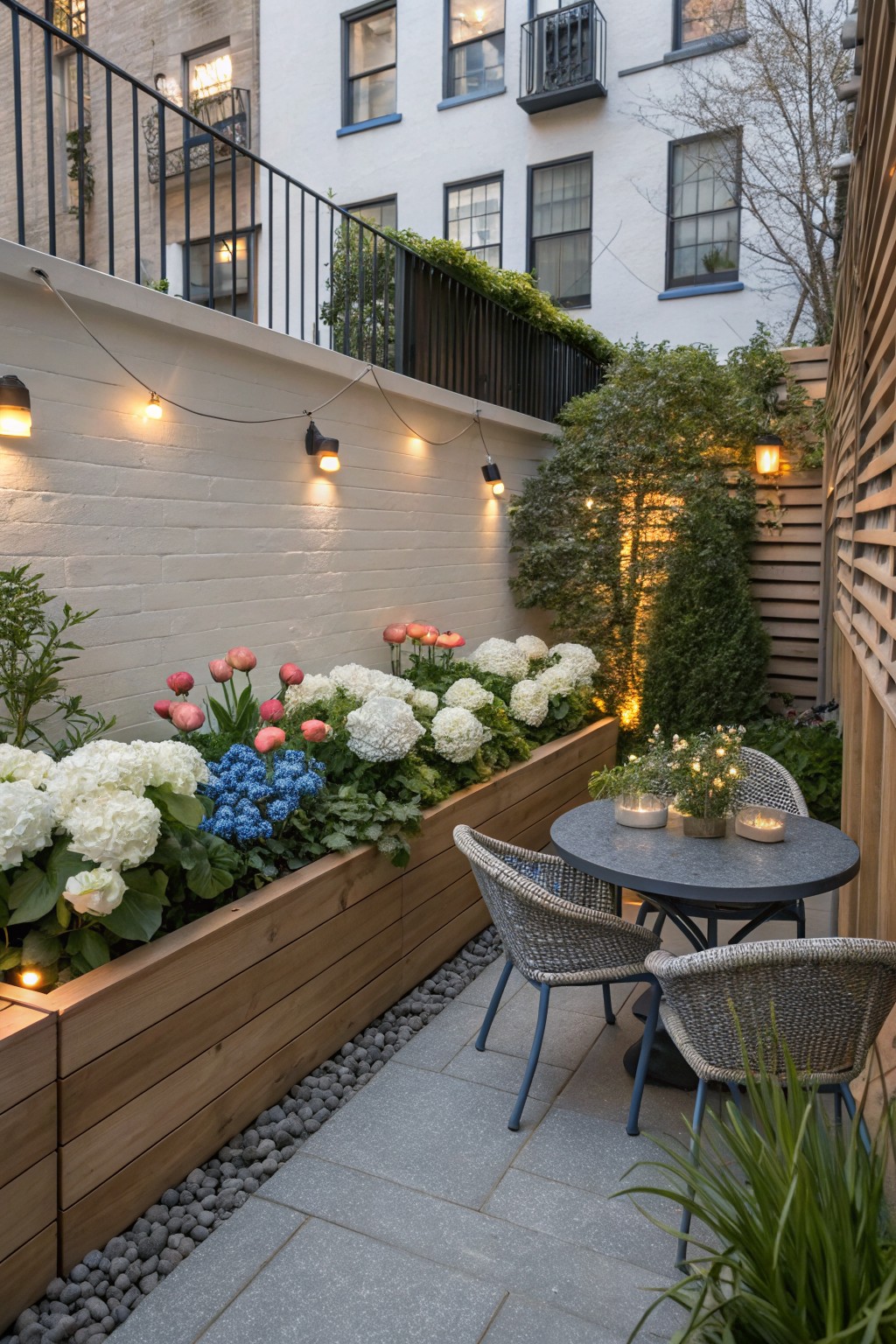
In spots like this slim courtyard between buildings, raised wooden planters make a big difference. They hold a mix of big white hydrangeas, pink tulips, and blue flowers right up against the wall. That setup turns a plain walkway into something full of life without taking up ground space.
These work best in urban backyards or side yards where room is tight. Build them from cedar for weather resistance, keep them about two feet high, and plant in layers for year-round interest. Just watch the drainage so roots don’t stay too wet. Add a small table nearby if you want a spot to sit.
Winding Stone Path to a Garden Bench
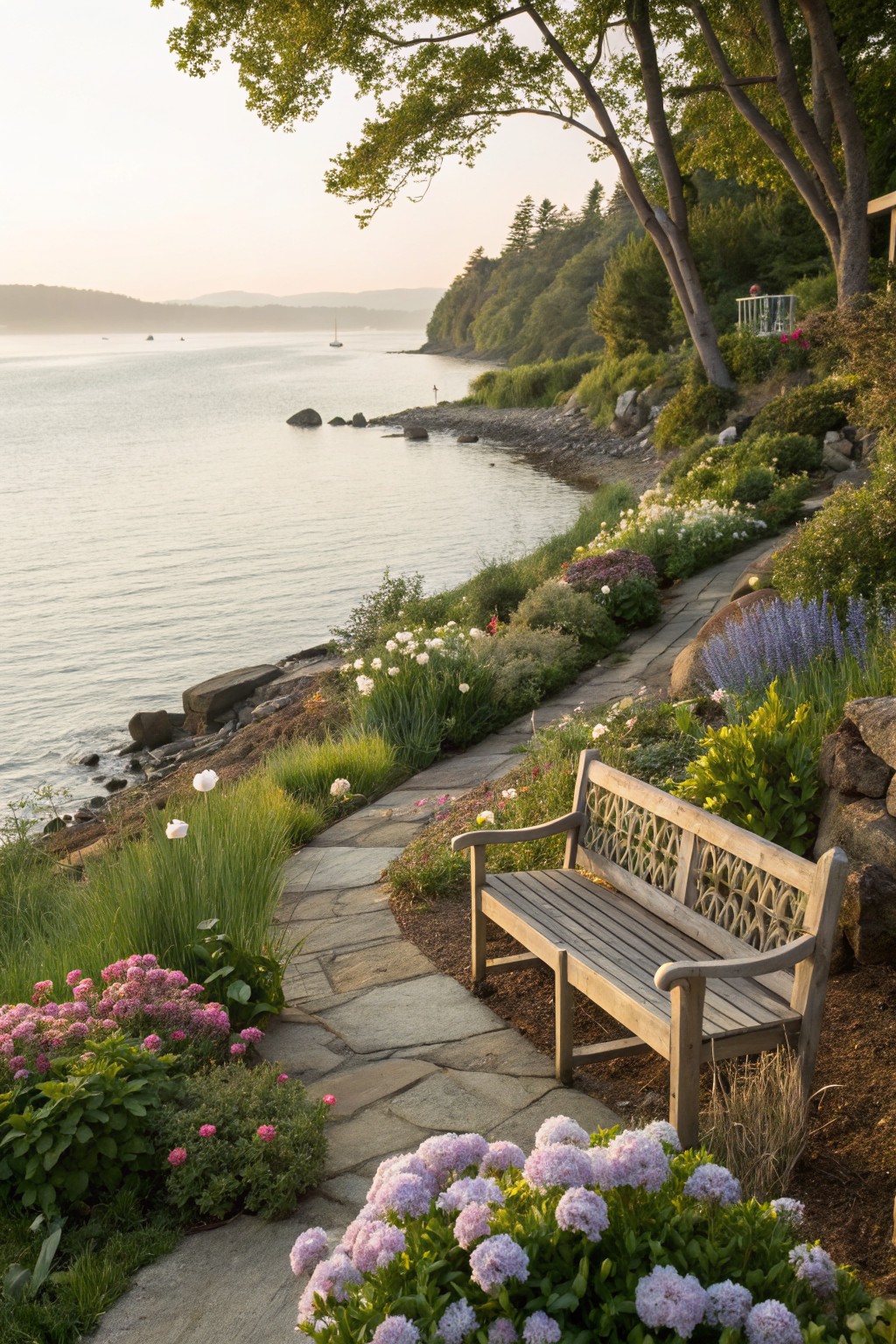
A simple stone path like this winds gently through layered plantings right to a bench spot. What stands out is how the path pulls you along with low grasses and those big hydrangea blooms in pink and purple edging the way. It keeps the garden feeling open yet guided. The bench at the end sits natural against rocks, perfect for taking in a water view without much fuss.
This setup works best in sloped yards near water or woods, where you want easy access to a quiet seat. Lay flat stones in a curve for the path, plant hydrangeas in drifts along the sides for color that lasts summer long. Mix in some tall grasses for height. Skip straight lines here. They feel too rigid next to natural edges.
Hydrangeas Lining Stone Retaining Walls
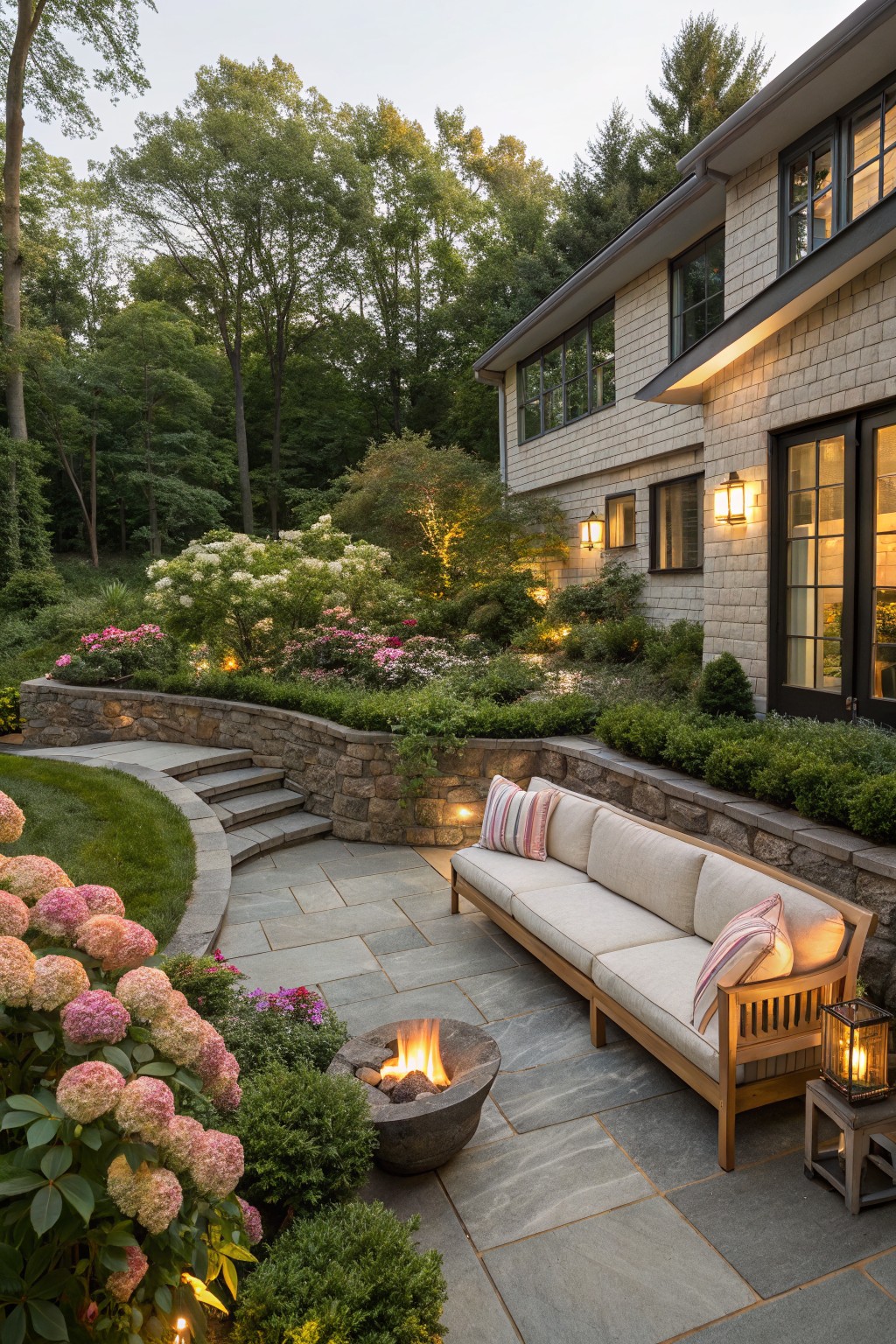
One straightforward landscaping move is planting hydrangeas tight along stone retaining walls. The big clusters of pink and white blooms hug the curves here, softening all that hard stone without hiding it. It pulls color right down to patio level and makes the drop from house to lawn feel purposeful.
This setup shines on sloped backyards where you need levels anyway. Go for larger mophead types that mound up nicely. Partial shade from nearby trees keeps them happy. Watch the soil drainage though, or the roots might struggle. Fits any house style from modern to cottage.
Hydrangeas Along a Curved Driveway Edge
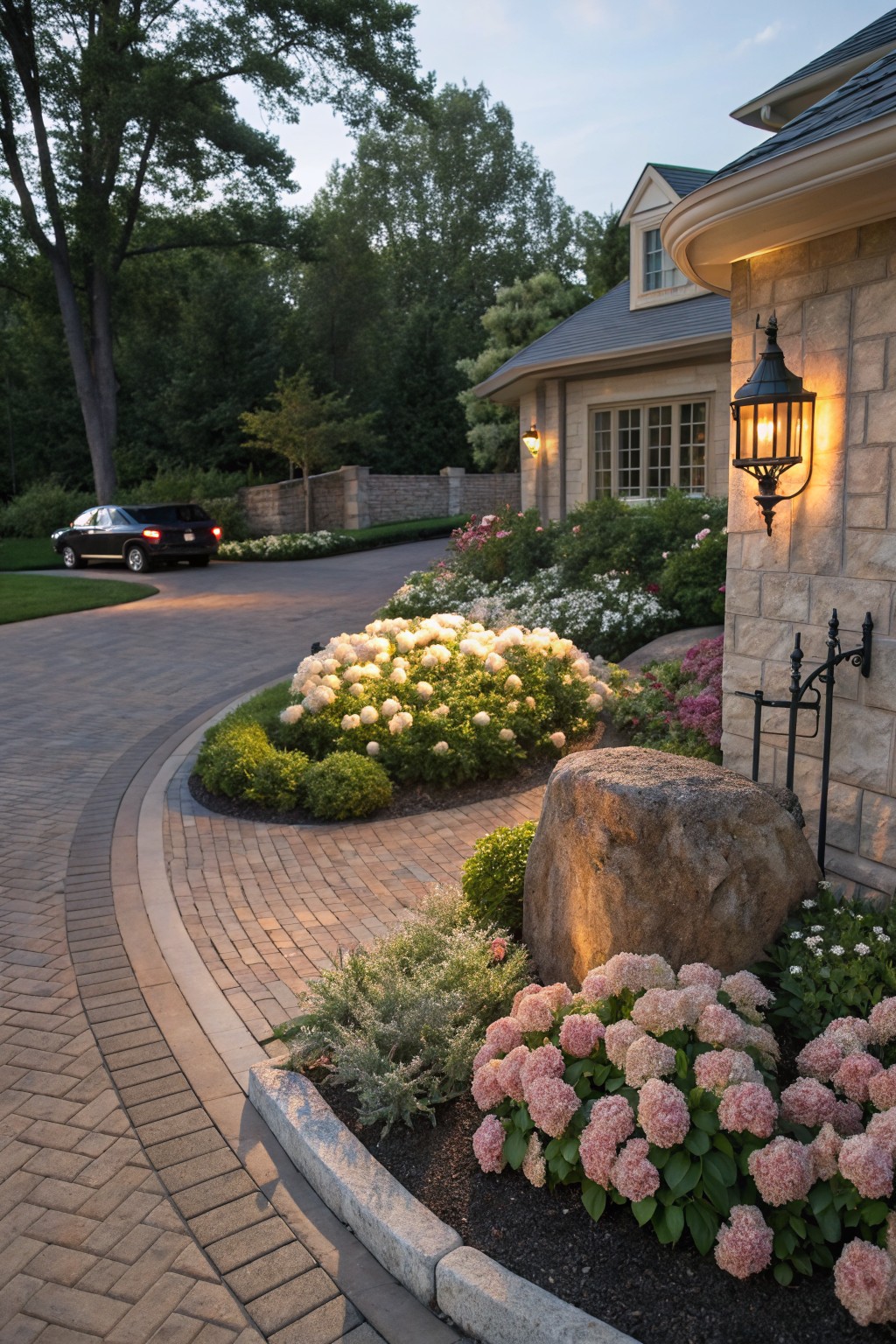
One simple way to make a driveway more inviting is to plant hydrangeas right along the curve. Here the white and pink blooms fill the beds next to the brick pavers, softening the hard lines of the path and stone wall. It gives that gentle flow from street to front door. Folks like how the flowers repeat in big soft mounds without taking over.
This idea fits homes with a bit of formality, like ones with stone siding. Tuck the plants into raised beds edged in brick or granite to hold back the mulch. Go for mophead or panicle types that match your light. They bulk up over time… just prune lightly each spring to keep the shape.
Lining a Walkway with Hydrangeas and Tulips
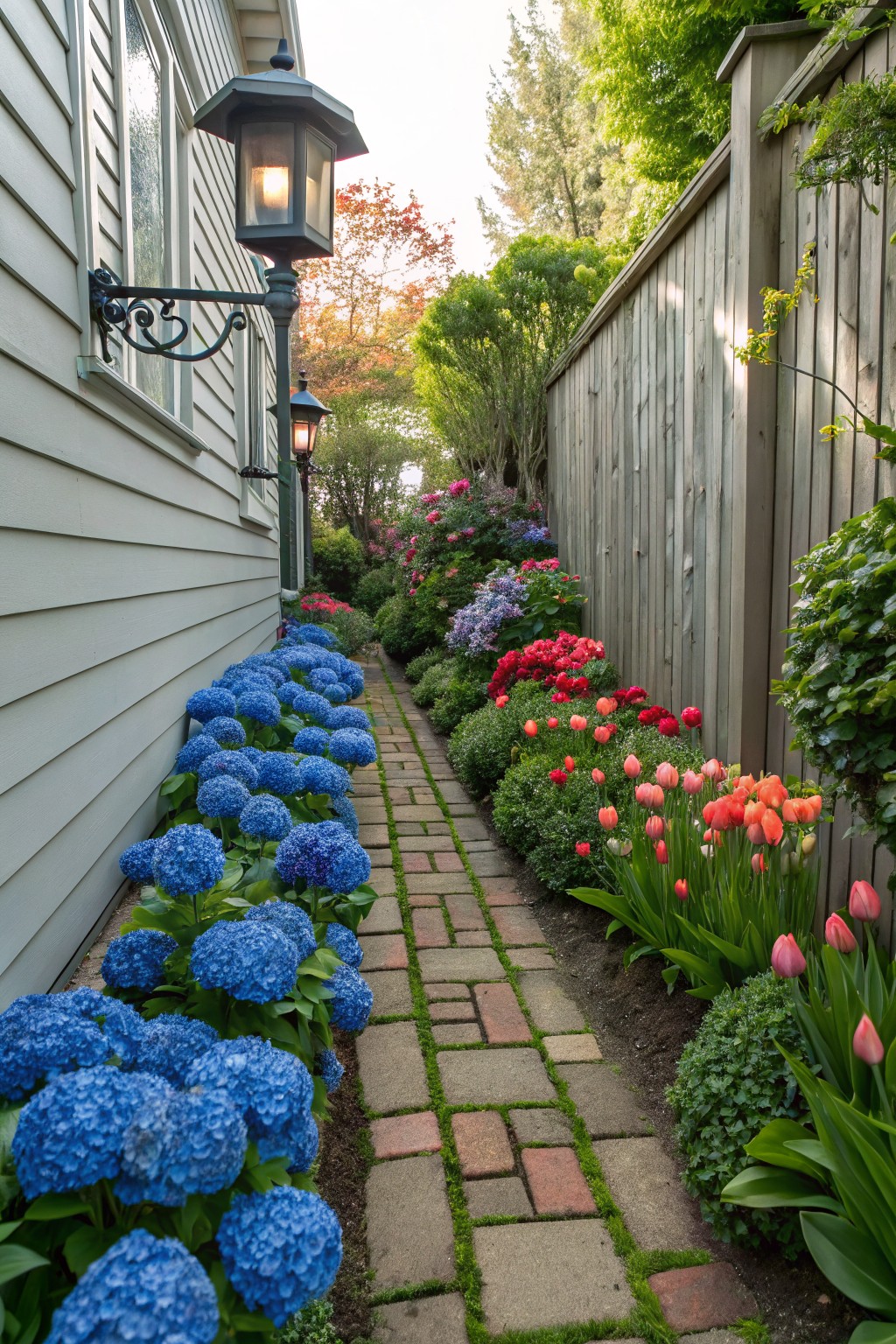
One simple way to add color to a side path or backyard walkway is to plant hydrangeas right up against the house wall. Those big blue blooms hug the siding here and make a solid backdrop. Then tulips go along the fence on the other side for a punch of red and orange. The brick path stays plain in the middle so the flowers do the talking. It keeps things balanced without getting busy.
This setup works great in narrow spots like this one between the house and fence. Pick a sunny path if you can since tulips need it to bloom well, and hydrangeas like some afternoon shade. It fits older homes with light walls best. Just keep the beds mulched to hold moisture… those big hydrangea leaves drink a lot.
Built-In Entry Bench Idea
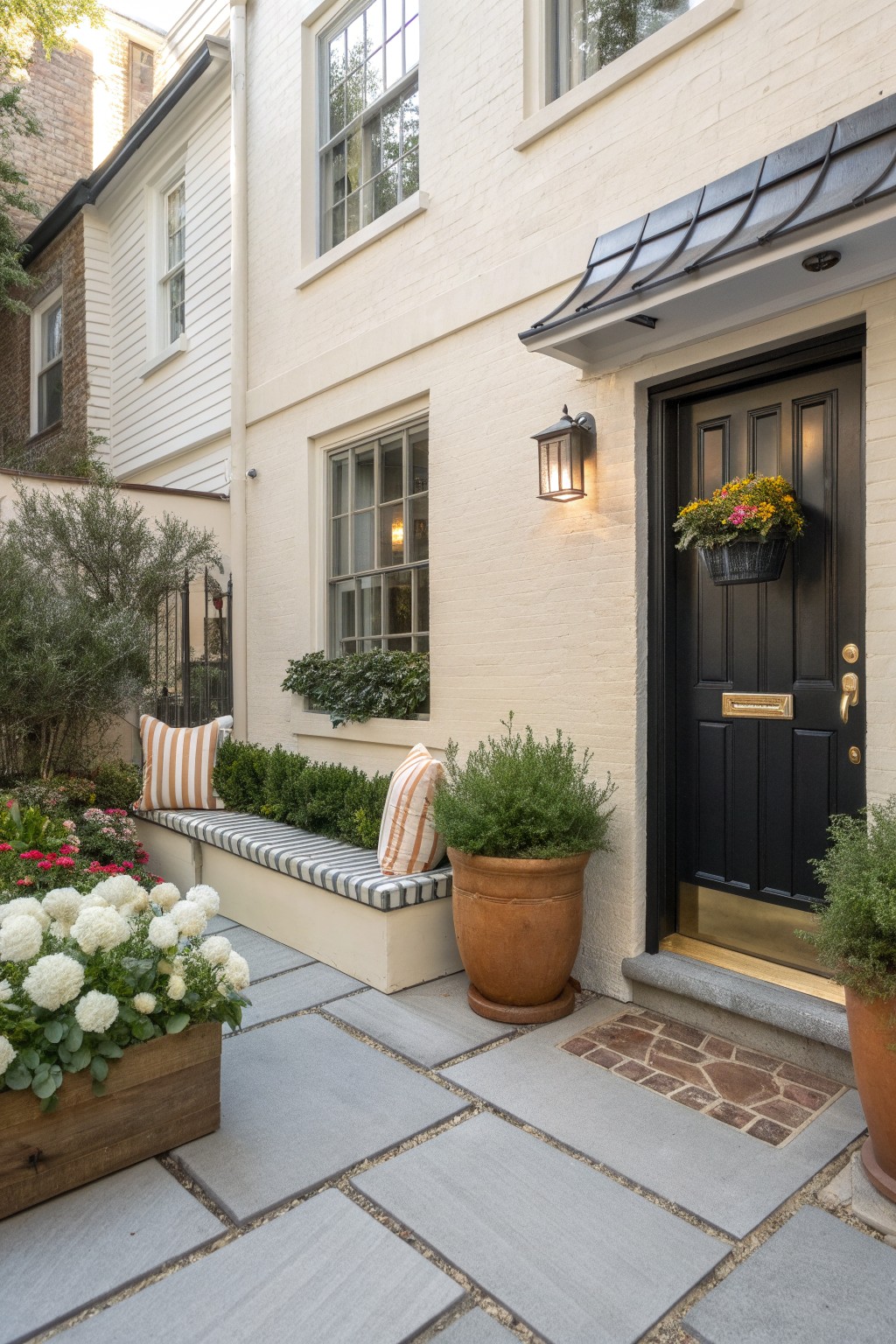
This kind of built-in bench hugs the wall right by the front door. It’s got striped cushions and sits against a tidy row of boxwoods. Nearby white hydrangeas in a wooden box add some soft color without overwhelming the space. Folks like it because it turns a plain walkway into a spot where you might actually pause… maybe put down packages or chat with neighbors.
Try it on narrower front yards or row houses where space is tight. Build the bench low on an existing ledge or add one with concrete blocks. Pair it with potted shrubs on either side of the door for structure, and toss in seasonal flowers like those hydrangeas for easy updates. Just pick cushions that handle rain, or store them inside in bad weather. Works best on traditional style homes.
Round Patio Dining Setup
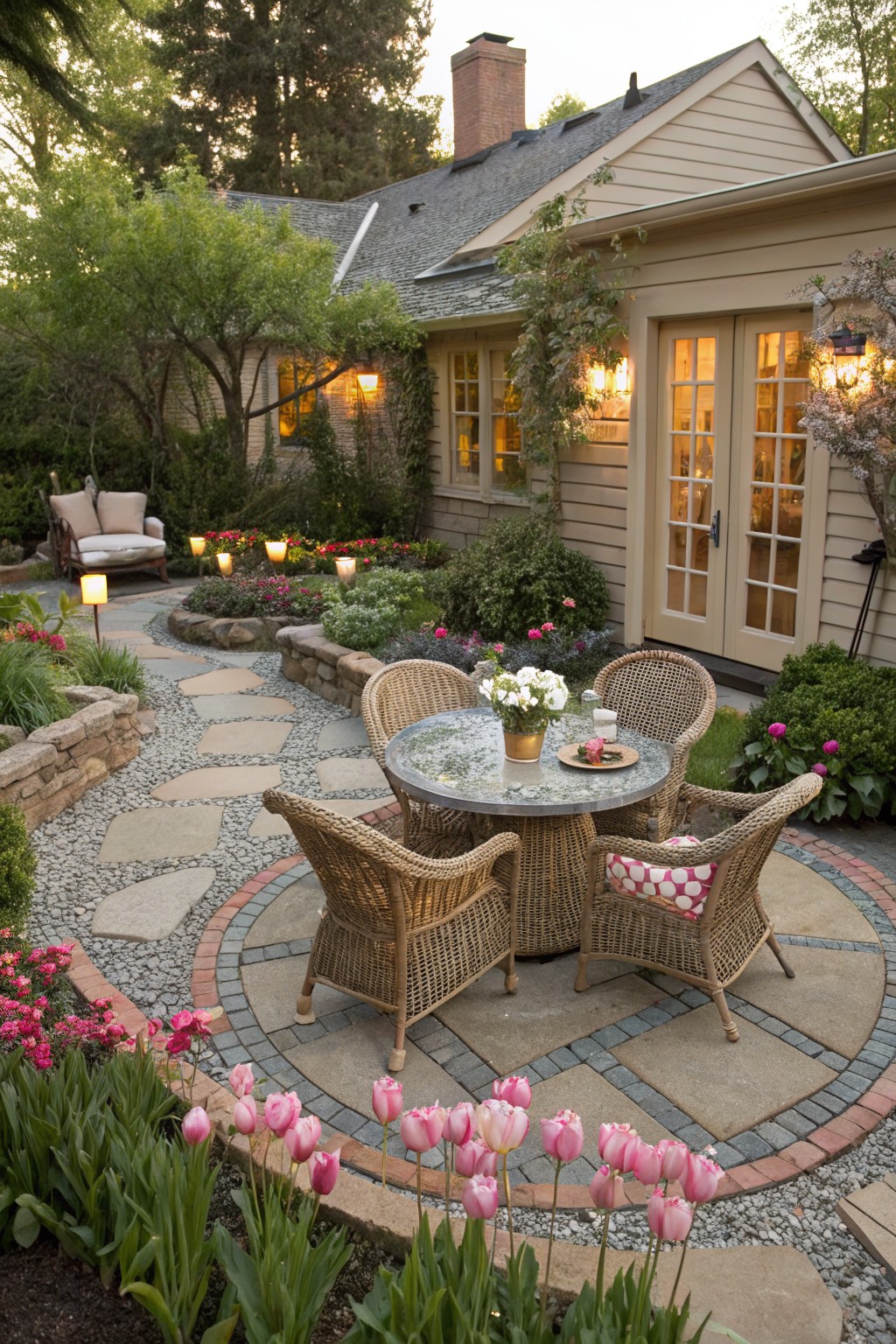
A round table with matching wicker chairs sits right on a circular stone patio. This setup feels just right for casual meals outside, close enough to the house for easy access. The small scale keeps it cozy, and those pink tulips planted along the edge add a soft touch without crowding the space.
Try this in a side yard or snug backyard where you want a dedicated spot for coffee or lunch. Weather-resistant wicker works well, and a glass tabletop shows off a simple vase of white hydrangeas from the garden. Paths leading in make it easy to reach.
Hydrangea Beds Along a Pathway
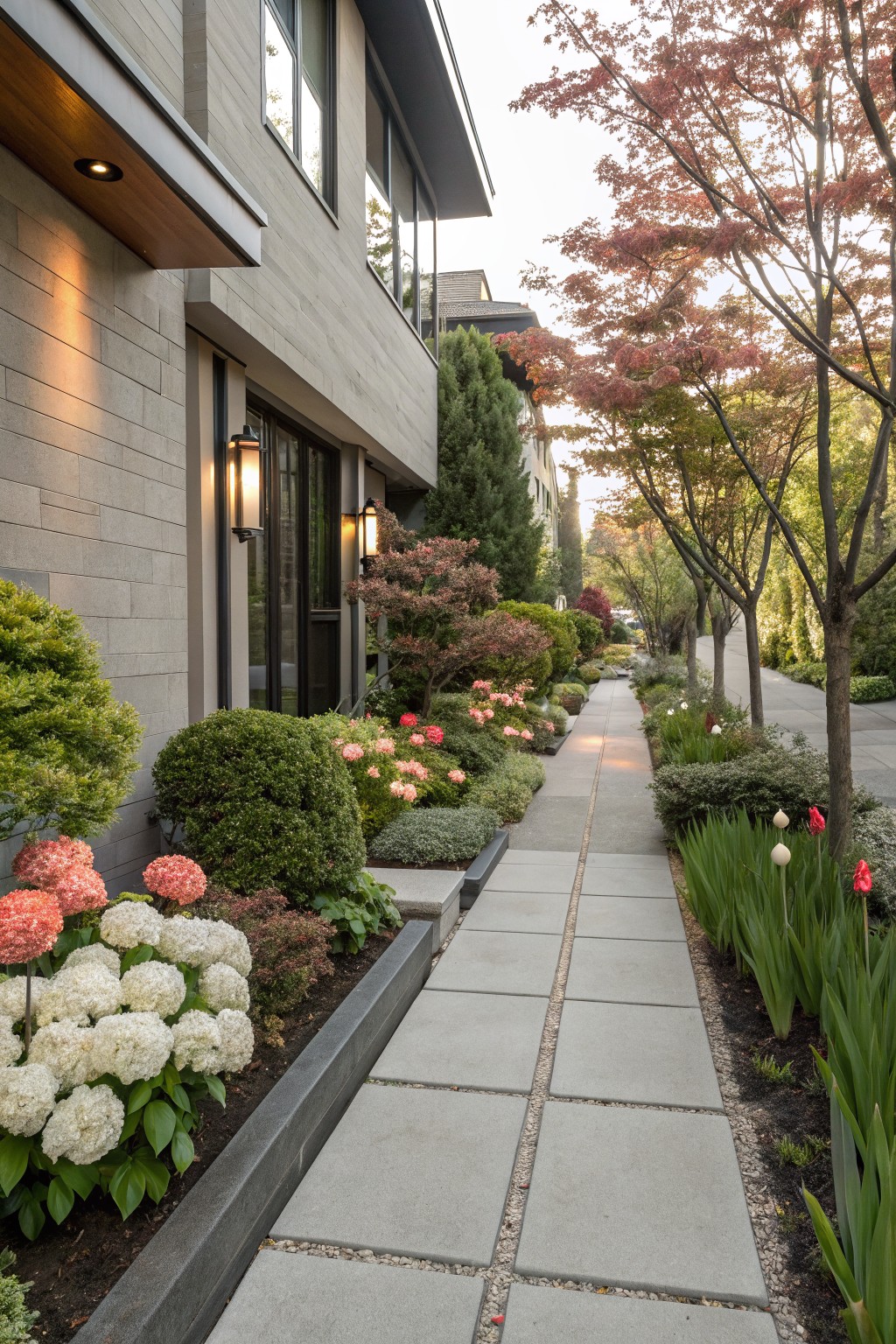
One straightforward way to add color to a walkway is by filling raised beds right next to the path with hydrangeas and tulips. Here the white and pink blooms fill out the beds nicely, softening that plain concrete path while tying into the modern house siding. It keeps things balanced, not too busy, just enough pop as you walk by.
This idea fits side entries or driveways where you want low fuss and steady color through spring and summer. Use simple black edging to hold the soil back from the pavers, and layer in some low shrubs at the base. Pick hydrangeas that repeat bloom… they hold up without much work. Works best on homes with clean lines, keeps the look sharp.
Terraced Steps Lined with Hydrangeas
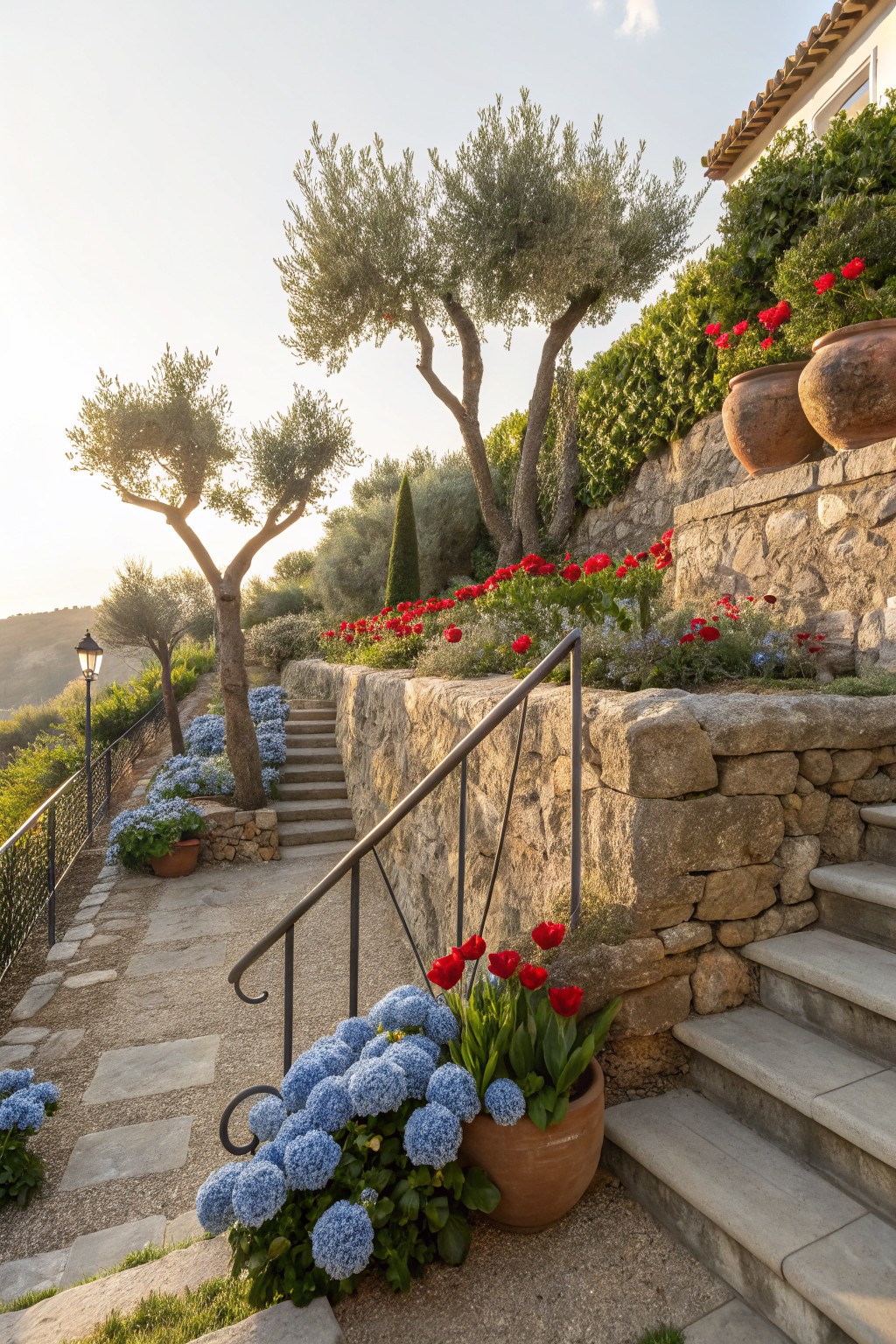
One simple way to add color to a sloped yard is to plant hydrangeas and tulips right along stone steps. In this setup, big blue hydrangea blooms in a terracotta pot sit at the bottom of the stairs, while red tulips pop nearby against the rough stone walls. The mix of blues and reds gives a balanced look that stands out without overwhelming the natural stone and olive trees around it. It feels fresh and easy on the eyes, especially in sunny spots.
This works best in hillside gardens or anywhere with terraced paths, like older Mediterranean-style homes. Just pick large pots for the hydrangeas to anchor the base, and tuck tulips into beds along the edges. Keep the stone clean so the flowers do the color work. It’s low fuss once established, and it makes climbing those steps a little more pleasant.
Tulips Beside a Stone Path
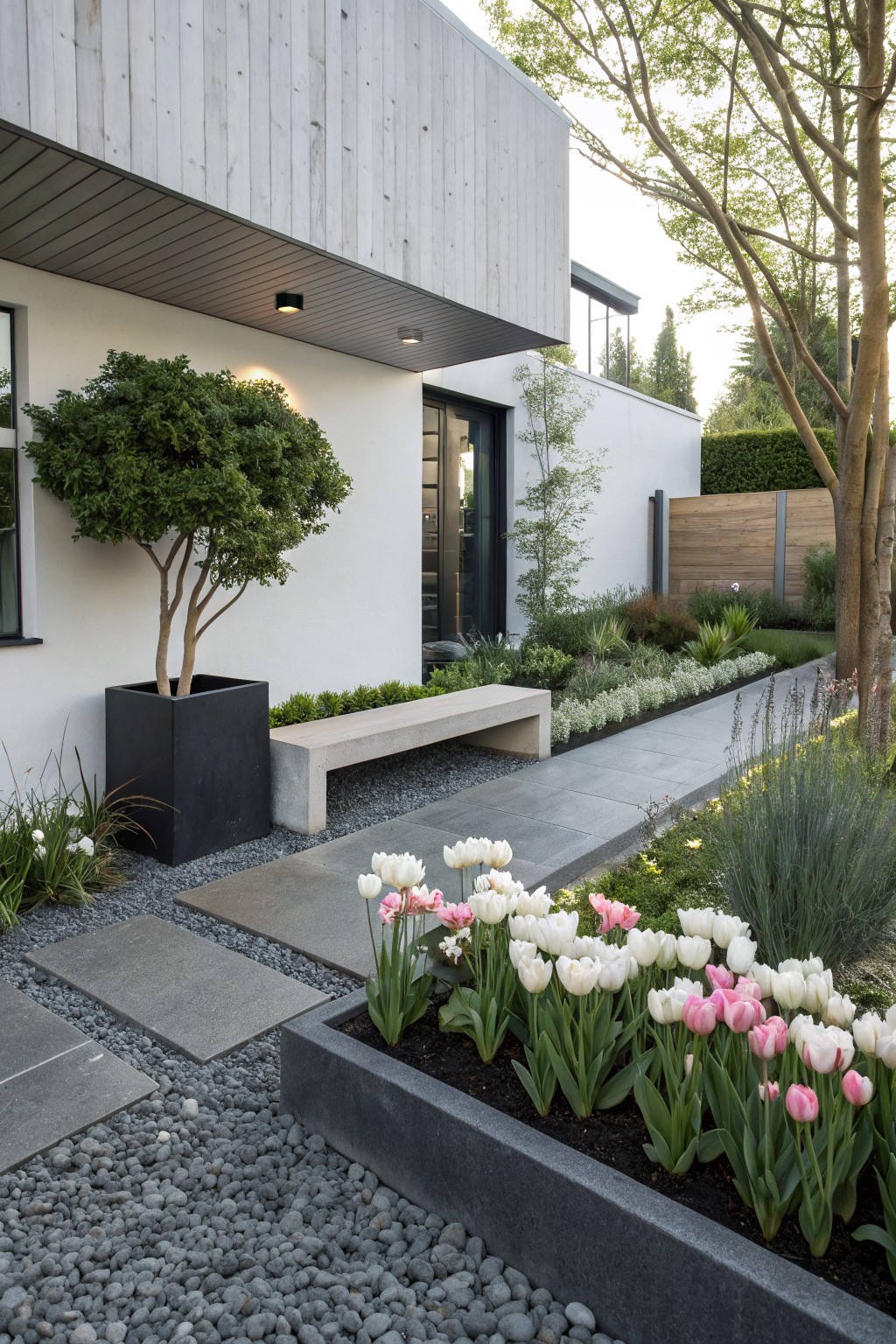
One straightforward way to add color in a front yard is planting tulips right along a walkway like this. The pink and white blooms fill a black raised bed that runs parallel to the gray stone tiles. It pulls your eye toward the house entrance without much effort, and the gravel nearby keeps everything tidy.
This idea fits modern homes with clean lines, where you want flowers but not a wild garden look. Use narrow beds like this in sunny spots, plant bulbs in fall for spring color, and mix heights with low grasses on the other side to balance it out. Just keep the bed edged sharp.
Hydrangea Urns on Entry Steps
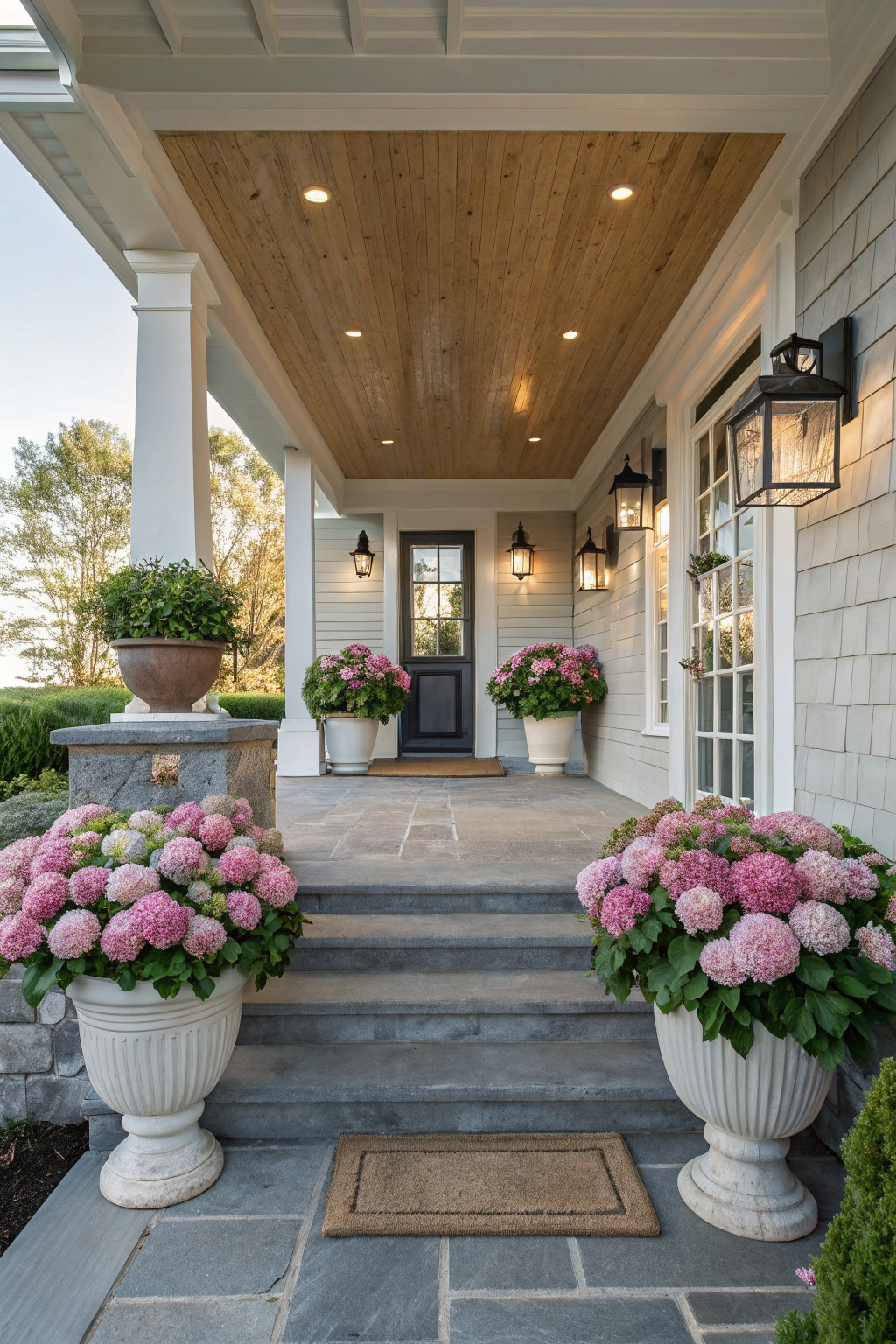
One easy way to add color right up front is to place big urns of hydrangeas on either side of your porch steps. The soft pink blooms pop against stone steps and white pots. They make the whole entry feel fuller and more welcoming without much planting work.
These work best on homes with clean lines like clapboard siding or columns. Go for tall urns that match the step height so they don’t look stubby. In shady spots they hold up well. Just refresh the blooms seasonally to keep it looking fresh.
Terrace Benches with Potted Hydrangeas
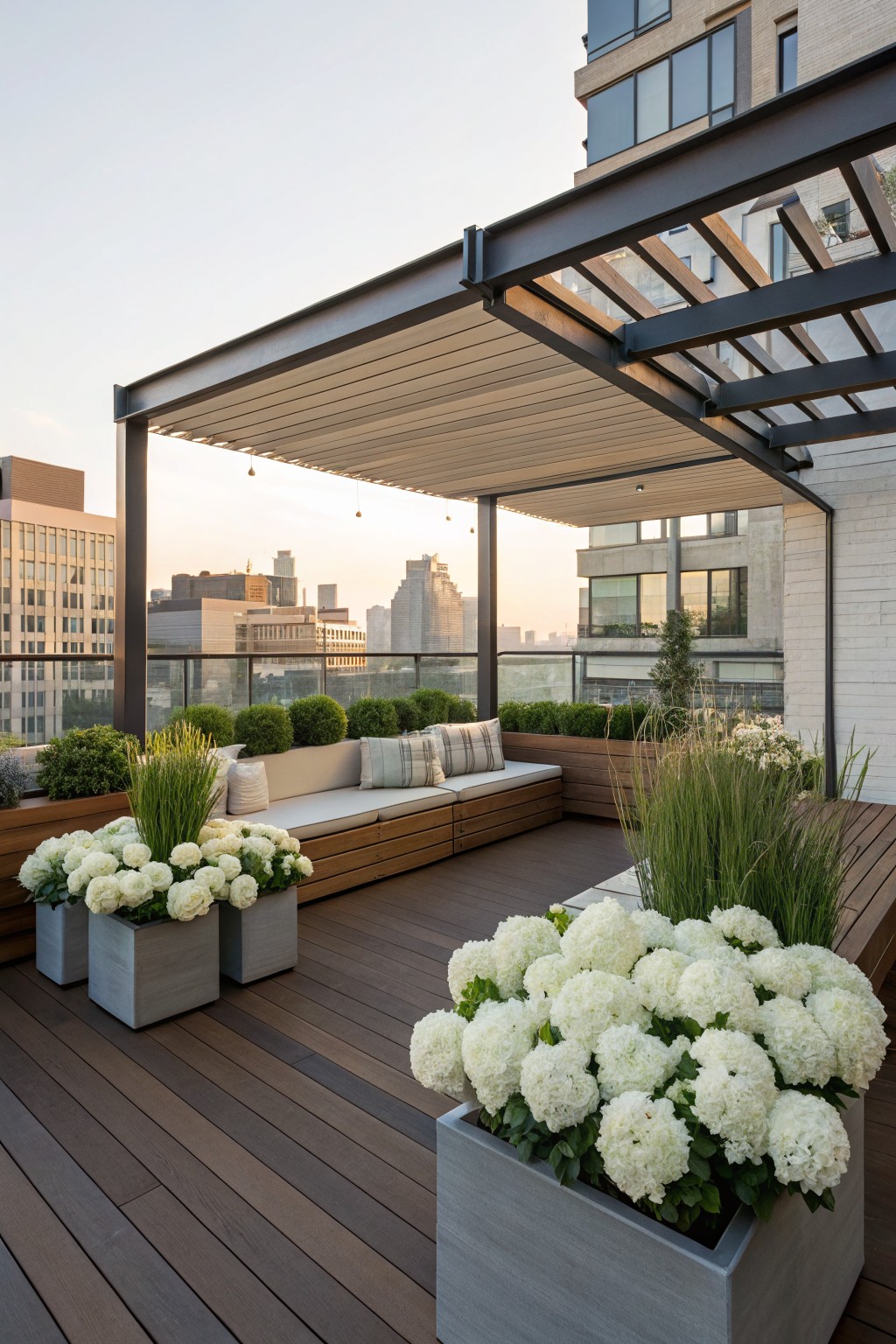
Big pots of white hydrangeas work well around simple wooden benches on a rooftop terrace. They bring in soft color and height that makes the seating area feel enclosed and green. The blooms stand out against the deck boards and metal pergola without taking over the space.
This kind of setup fits urban balconies or decks where you want low-effort greenery. Go for oversized gray pots to hold mature hydrangeas, placing them right next to built-in benches. It suits modern apartments best, and just check that pots drain well to avoid root rot in rain.
Mossy Stone Paths for Shady Gardens
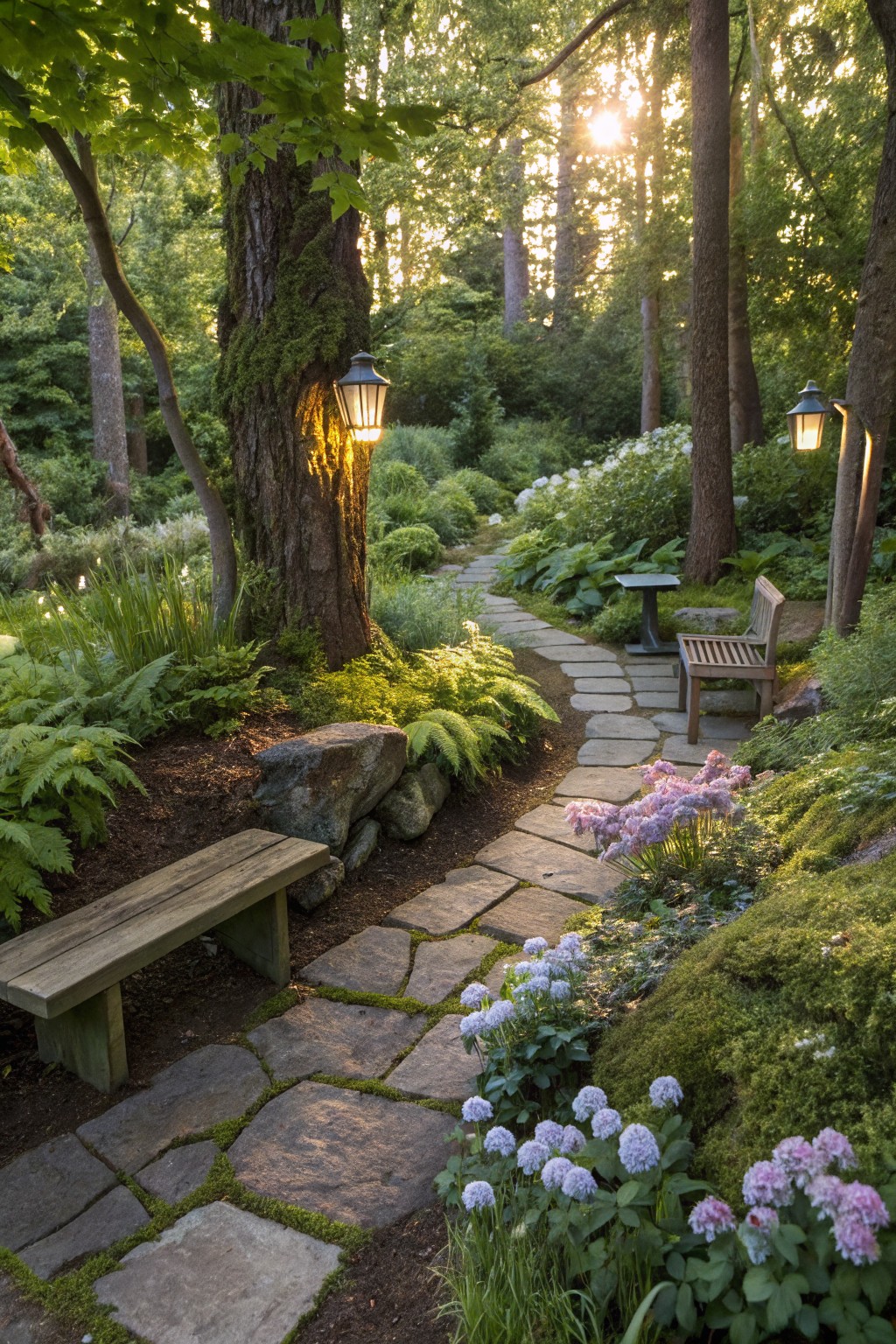
A mossy stone path like this one winds gently through thick plantings, using uneven flagstones that let moss fill the gaps. It feels part of the woods, not added on. The benches tucked along the edges make good pausing spots, right near those blue and pink hydrangea clusters.
These paths work best in shaded yards where grass struggles. Lay irregular local stones for drainage, then edge with ferns and hydrangeas that handle low light. Skip straight lines. Let it curve to slow people down and show off the plants. Watch for slippery moss after rain, though.
Tulips Bordering a Brick Path
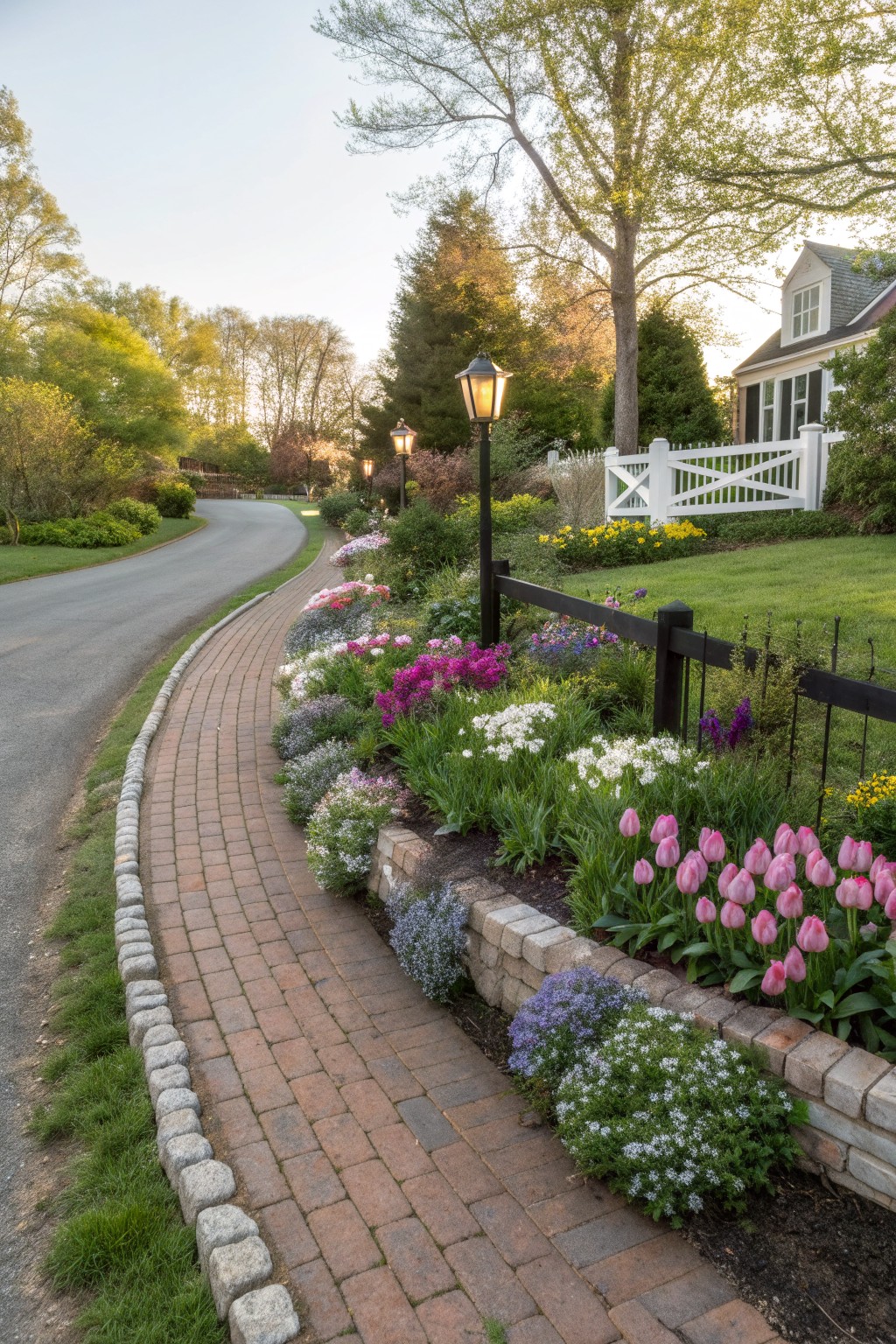
A curved brick walkway like this one makes a yard feel put together and welcoming. The path hugs the edge of the road, with rough stone curbing that holds back beds full of pink tulips and other spring flowers. That simple edging keeps everything tidy while letting the blooms spill over just enough for color without mess.
You can pull this off in a front yard or along a driveway. Go for tulips in the sunny spots for reliable pops of pink and white each spring. Pair with low shrubs at the back of the beds so it stays full year-round. Keeps foot traffic clear too… just watch the scale on smaller lots.
Frequently Asked Questions
Q: When should I plant tulips with my hydrangeas for that perfect spring show?
A: Pop tulips into the ground in fall, about six weeks before your first frost hits. They’ll sprout early spring and bloom right as hydrangeas leaf out, creating that seamless color wave.
Q: Do tulips and hydrangeas play nice in the same spot year after year?
A: Tulips might fizzle after a season or two, but plant them at the base of hydrangeas where you won’t disturb the bulbs. Snip spent tulip flowers and let the leaves yellow naturally. Hydrangeas fill in the gaps without missing a beat.
Q: How do I stop big hydrangeas from swallowing up my tulips?
A: Choose compact hydrangea varieties and space tulips a foot out from the stems. Shear hydrangeas lightly in late winter to keep them open and airy.
Q: What if my yard’s mostly shade—will these combos still work?
A: Go for shade-tolerant tulips like species varieties and mophead hydrangeas. They thrive in dappled light. And position taller tulips up front for balance.
