


When I drive up to a house, the front yard layout hits me first, pulling the eye along pathways or straight into overwhelming chaos. Clear edging and layered plantings make the biggest difference over time, as they hold shape while shrubs mature and fill out. I’ve skipped fussy borders before, only to watch weeds take over the edges a year later. People notice those strong lines right away, the ones that frame the entry and soften the house without hiding it. A few of these setups are practical enough to sketch and test in your own space for that steady, welcoming vibe.
Entry Path with Gravel and Pavers

A straightforward path like this uses large rectangular pavers set into a bed of smooth gravel. It runs straight from the yard to the door, with low grasses and shrubs tucked into narrow beds along one side. This keeps the walk clear and easy to follow while the plants add a bit of texture without taking over.
It’s perfect for a side entry or slim front yard where you need to guide people in without much fuss. Go for pale pavers and pea gravel to brighten things up, and stick to tough, upright plants that won’t flop onto the path. Works best on modern homes that already have sharp lines.
Stepping Stone Path with Gravel Borders

A straight run of large concrete stepping stones set into gravel makes for an easy front entry path. Flanked by blue agave and small grasses, it keeps things low fuss while guiding folks right to your door. No mowing needed, and the gravel edge gives it a clean, finished look that fits modern homes.
This works best in sunny yards where water is at a premium. Lay the stones with enough space between for natural strides, about 24 to 30 inches apart. Add a few rocks for interest, but skip anything too fussy. Suits drought areas or anyone wanting simple curb appeal.
Flank Entry Steps with Potted Olive Trees
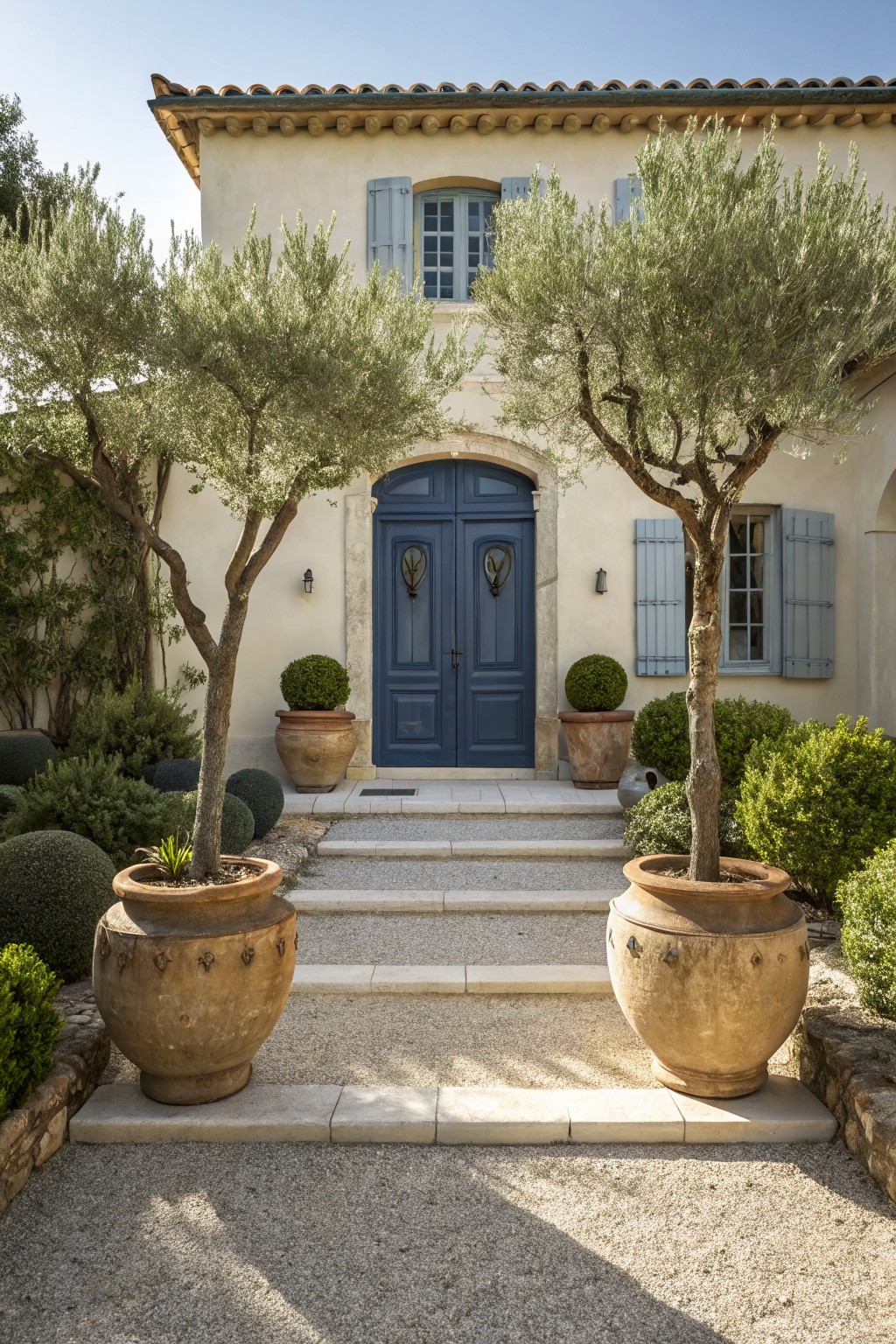
One simple way to make your front yard feel put-together is to place large potted olive trees right at the base of your entry steps. They act like natural posts that guide the eye up to the door. In this setup, the trees in terracotta pots add height and some green without crowding the path. It gives a relaxed Mediterranean vibe that looks good year-round.
This works best on homes with stone steps or a gravel walkway, especially in warmer spots where olives can thrive outside. Go for dwarf varieties in oversized pots to keep things in scale. Pair them with low boxwoods nearby for more layers. Just make sure the pots drain well so the roots stay happy.
Circular Driveway with Central Fountain

A simple way to make your front yard feel put-together is a circular driveway built around a fountain. The brick pavers form a clean loop, and the fountain sits right in the middle like a natural focal point. Boxwood hedges line the edges, keeping everything neat and leading the eye straight to your front door. It gives that classic, welcoming look without much fuss.
This works great on bigger lots where you have room for cars to turn around easily. Pick pavers that match your house, like brick for a traditional feel, and go with a stone fountain that won’t overwhelm. Keep the hedges low and trimmed so they frame without hiding the path. Smaller yards might skip the full circle and just add the fountain off to the side.
Stepping Stones Through Ornamental Grasses

A simple way to guide folks to your front door is with large, irregular stone slabs set right into the ground as stepping stones. Here they wind through tall, wispy grasses that sway a bit in the breeze. It keeps things low fuss since these plants handle dry spells well, and the path feels natural, not too fussy.
You can pull this off in sandy soil or gravel beds. Space the stones about two feet apart for easy steps. It suits beach houses or any yard wanting that casual coastal look. Just pick grasses like deer grass that won’t need much water once they’re in.
Stepping Stone Path in Gravel

A simple way to guide people to your entry is with large square pavers set right into gravel. Small patches of grass fill the gaps between stones, keeping it all low fuss. The dark gravel and light stones stand out nice against the plants, and it fits right with that red Japanese maple nearby. Makes the yard feel open instead of crowded.
Try this in a narrow front path or side entry where full paving would look heavy. It suits modern houses or spots needing a calm walkway. Pick smooth granite pavers about two feet square, and go easy on plants so the path stays clear. Watch the gravel doesn’t shift too much in wet areas.
Winding Stone Path Through Native Grasses

A simple winding path like this one makes your front yard feel more like a natural walk than a straight shot to the door. Made with large stone pavers set in gravel and edged by tall grasses and sunflowers, it guides visitors in a relaxed curve. That soft line breaks up the yard nicely and ties into open countryside views if you have them.
Try this in bigger front yards or rural spots where you want low-maintenance planting. Pick tough natives like switchgrass or coneflowers that handle sun and dry spells. It works on most house styles, just keep the path wide enough for two people… and watch the edges don’t get overgrown.
Winding Paths with Natural Stone Edges
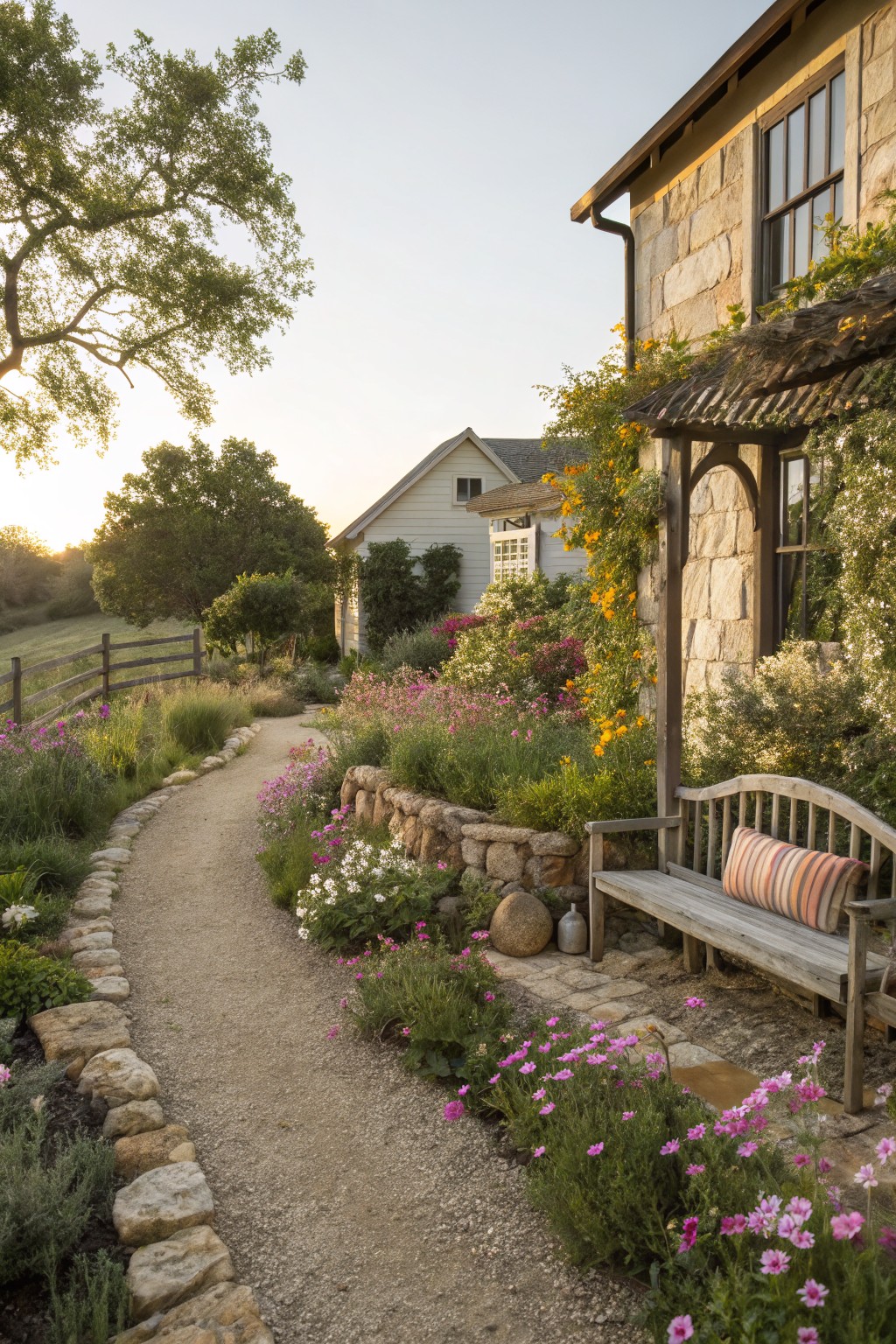
A gravel path that curves softly through the front yard makes the space feel easygoing and alive. Here it’s edged with rugged stones and low walls, with pink cosmos and white flowers spilling right over the edges. That setup guides your eye along without feeling stiff. It turns a simple walkway into part of the garden itself.
You can pull this off in most front yards, especially cottage-style homes or ones with some slope. Layer in perennials at different heights for year-round interest, and pick tough ones like lavender or salvia that don’t need much fuss. Keep the path wide enough for two people. Just watch the stones don’t shift too much in wet soil.
Tiered Stone Steps for Sloped Front Yards

Sloped front yards can feel tricky to approach. But these tiered stone steps built right into retaining walls make it simple and pretty. The rough natural stone holds back the hill while the wide concrete treads give steady footing. Succulents like agave tuck into the edges, along with grasses that sway a bit. It pulls the house right into the landscape without much fuss.
This setup works great on hills where a straight driveway won’t cut it. Use local stone to blend in, and pick tough low-water plants that won’t need constant care. Add a bench at the bottom for a spot to pause. It suits casual modern homes in dry areas. Just make sure the walls are solid, maybe get an engineer if the slope is steep.
Patterned Tile Entry Paths

A tiled path like this turns a plain walkway into something with real charm. The blue and white geometric pattern pulls you right toward the front door. Soft grass borders and simple plantings along the edges balance the hard tiles nicely. It feels fresh without trying too hard.
Try this in tight front yards or side entries where space is limited. Pick durable outdoor tiles in a style that nods to your home, like these tiles against white walls. Fill the borders with low herbs or shrubs for color and scent. Just make sure the tiles have good grip in wet weather.
Frame Your Front Door with Topiary Pots

A pair of large terracotta pots filled with round boxwood topiaries sits right on either side of the entry door. It gives the whole front a neat, welcoming shape that pulls your eye straight to the door without trying too hard. Those soft green orbs work well against the rough stone wall and climbing ivy. They add some order to all the natural growth around the steps and beds.
This setup fits older stone houses or cottages best. Put the pots close to the door on flat ground or your stoop. Go for evergreens so they look good year round. Keep them trimmed simple, nothing fancy. Skip it if your entry is super narrow, or the pots might crowd the path.
Terraced Stone Steps on a Slope
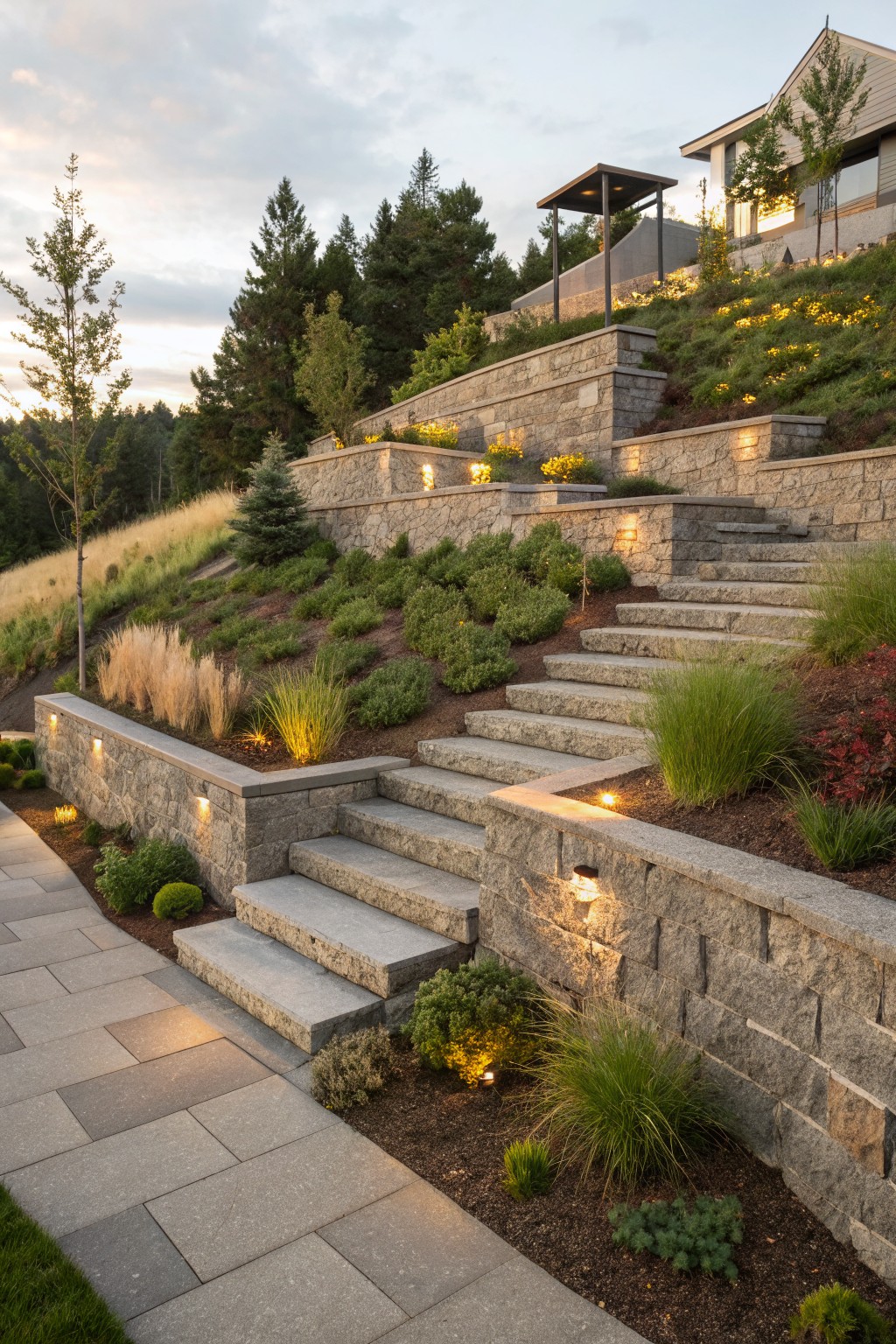
Sloped front yards often feel tough to work with. But stacking stone retaining walls into terraces with wide steps running right through them turns that challenge into something practical and pretty. You get level planting pockets for grasses and shrubs along the way. And those little wall lights kick on at dusk, making the path safe and welcoming without overpowering the look.
This setup shines on properties with a noticeable drop from street to house. It suits homes with a natural or craftsman vibe, where the rugged stone blends right in. Just make sure the walls are built solid for drainage, or water buildup could cause issues down the line. Scale the steps to your slope… too steep, and it’s no fun to climb.
Curved Pathway with Central Tree Planter

A curved gravel path looping around a raised concrete planter makes for a calm entry that pulls you in without trying too hard. Here, a single tree sits right in the middle of the circle, with low shrubs filling out the edges and a simple wooden bench tucked alongside. It softens the approach to the house and adds that bit of nature folks notice right away.
This works best in front yards with room for a driveway curve or walkway loop, especially on modern homes where clean lines meet the yard. Go for light gravel and sturdy concrete to keep upkeep easy, and pick a tree that grows slow like a Japanese maple. Just make sure the path stays wide enough for walking, and skip it if your lot feels too tight.
Wind a Lit Stone Path to the Front Door
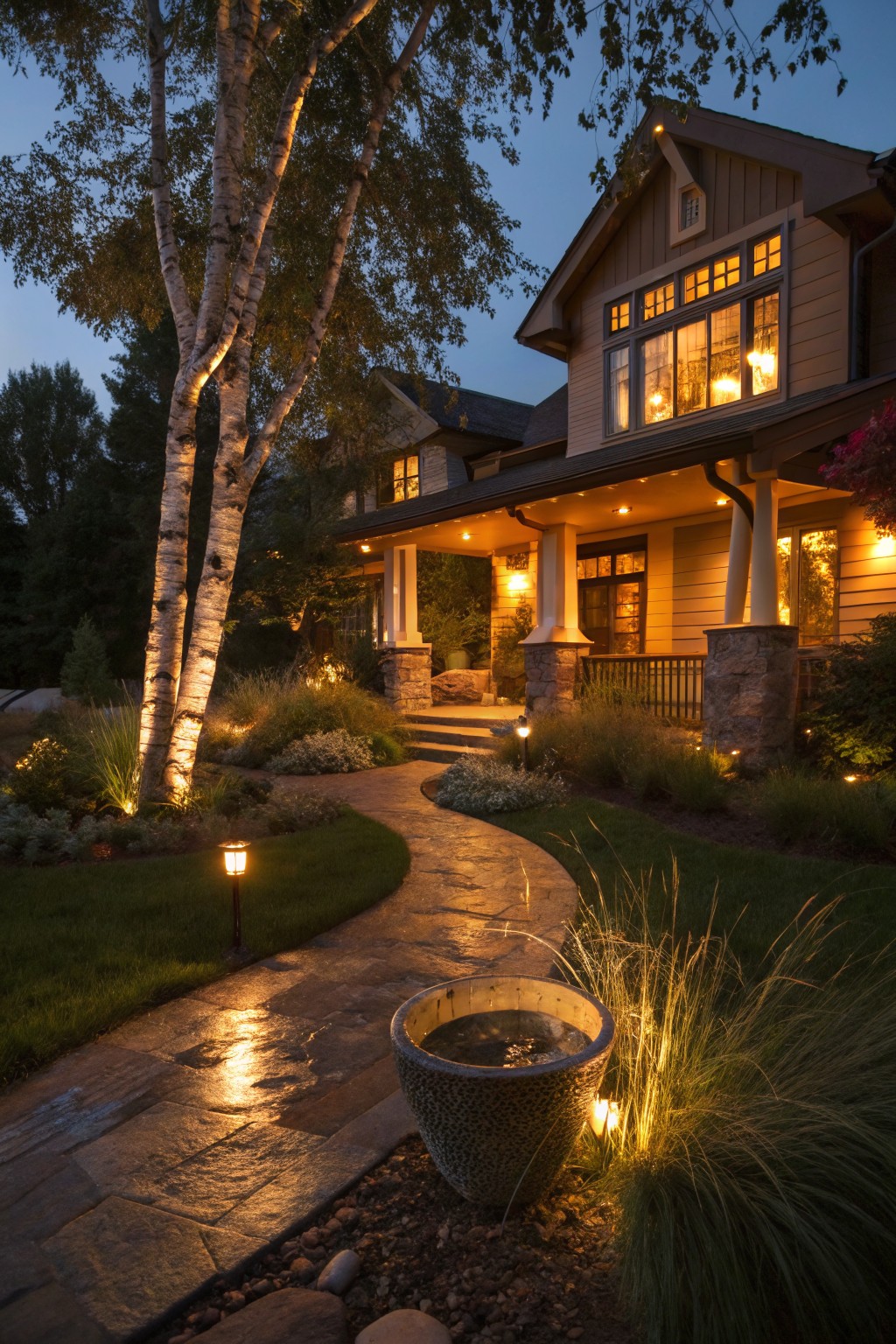
A winding stone path like this one turns a simple front yard into something special at night. Low lamps dot the way, and uplights hit the birch trees just right, casting a soft glow over grasses and plants. It pulls your eye to the house without harsh spotlights, making the walk up feel easy and pleasant.
Lay this out in yards with room for curves, not straight shots. Use flagstone or pavers set in sand for drainage, space path lights every 5 to 10 feet, and pick trees or tall plants for the uplights. It suits craftsman homes or anything with a porch best. Skip it if your yard is tiny… the curves need space to breathe.
Raised Bed Vegetable Gardens

Raised beds like these make gardening simple and organized. Wooden frames hold soil for veggies, greens, and herbs, keeping everything off the ground and easy to reach. Gravel paths between the beds let you walk without mud, and it all ties together without looking messy. The mix of productive plants and a few flowers adds color without much fuss.
Put this in a sunny front yard spot for curb appeal that shows you grow your own food. Use cedar or untreated pine for the beds so they last, and go with larger gravel to fill paths and suppress weeds. It suits smaller yards or sloped areas best. Skip it if you have heavy shade, since most edibles need sun.
Matching Terracotta Pots Beside the Front Door

A simple way to boost curb appeal is placing two large terracotta pots with clipped boxwood trees right on either side of your front door. The matching pair creates balance and draws the eye straight to the entry. Those warm orange pots pick up the stone house nicely, and the evergreens stay green year-round for steady color.
This works best on traditional homes with stone or brick. Go for pots big enough to hold mature plants, about waist-high or taller. Set them on the landing or stoop, and keep the plants trimmed neat. Wall lanterns add light at night. Skip it if your steps are narrow.
Winding Gravel Paths for Natural Entry

A winding gravel path like this one softens a front yard and makes the walk to your door more interesting. The gentle curves, edged with simple brick pavers, guide you past tall ornamental grasses and clusters of pink flowers. It feels relaxed and ties into the landscape without looking too fussy.
You can pull this off in most front yards with some open lawn space. Lay down landscape fabric first, add pea gravel for that crunch underfoot, and plant low-water grasses along the edges for year-round shape. Skip it on super narrow lots, but it’s perfect for country homes or places with a bit of slope.
Frequently Asked Questions
Q: I’m a total beginner. Where do I even start with front yard landscaping?
A: Walk your yard and note sun, shade, and soil type to match a couple ideas from the article. Buy mulch and three easy plants like daylilies or lavender to fill a small bed first. See what thrives, then add more next season.
Q: How can I get that welcoming look without spending a ton?
A: Layer affordable mulch over soil and tuck in native shrubs that grow fast for free once rooted. Skip pricey sod. Let ground covers spread to fill gaps over time.
Q: What if my front yard is really small? Will these ideas still work?
A: Scale them down with container gardens or a single curved path edged in low plants. Cluster pots on steps for punch without crowding. It draws the eye right to your door.
Q: How do I keep it looking fresh without constant upkeep?
And pick tough, low-water plants that shrug off neglect. Top with thick mulch yearly to block weeds and hold moisture. You mow the lawn less too.
