

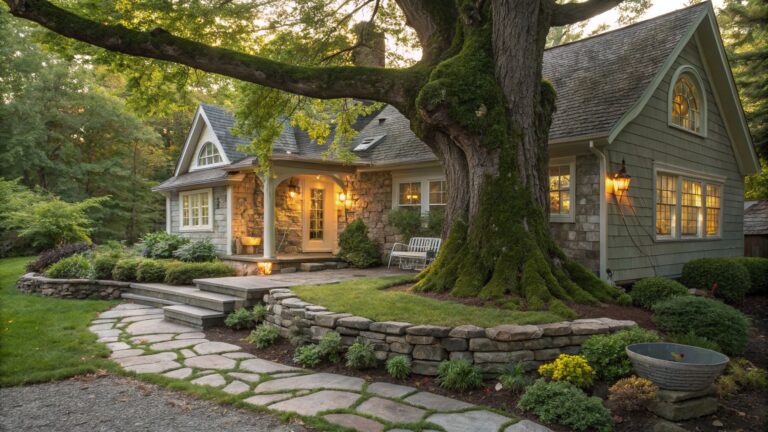
A mature tree right out front often becomes the heart of your yard’s layout if you plan the plantings and paths around it thoughtfully.
I adjusted the edging and added low shrubs near ours one summer, and it finally made the space feel pulled together instead of random.
From the sidewalk, folks always spot how those layers frame the tree first.
Groundcovers and mulch beds help create that cozy vibe without crowding the trunk over time.
Test a couple that fit your soil; they’ll shape up nicely in real yards.
Curved Flagstone Path Around Tree Roots
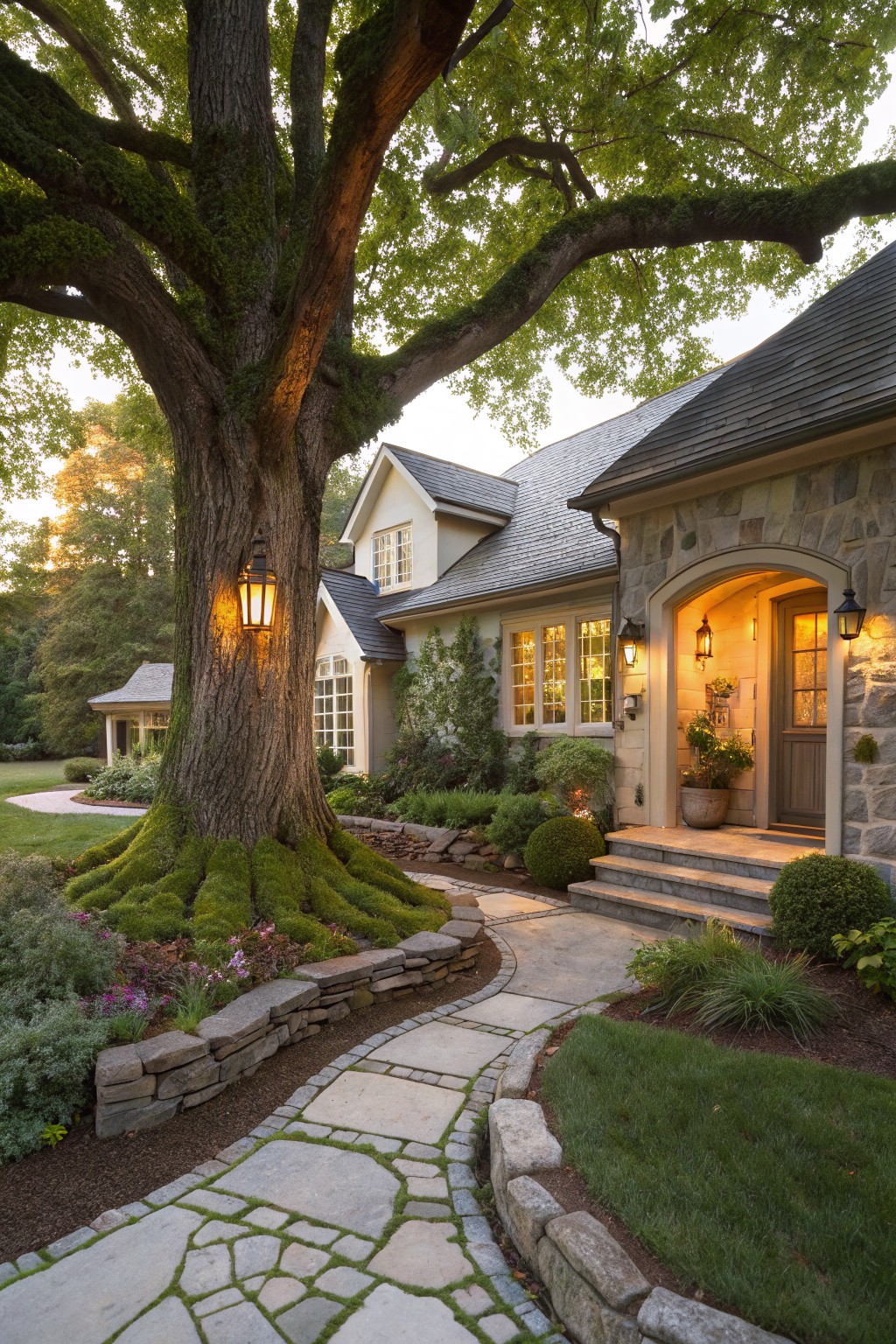
A good front yard path doesn’t fight a big tree. It works with it. Here a wide flagstone walkway curves gently around the base of an old oak, right where the mossy roots spread out. Low dry-stacked stone walls edge both sides, holding back plants without covering up the tree’s natural shape. Lanterns on the trunk and near the door add a soft glow at dusk.
This kind of path suits homes with mature trees close to the entryway. Lay irregular stones in a loose pattern to follow the roots, then fill gaps with moss or groundcover. It fits sloped yards well, since the walls handle the drop-off. Just make sure the path stays wide enough for two people, about four feet across.
Rustic Log Edging for Tree Beds
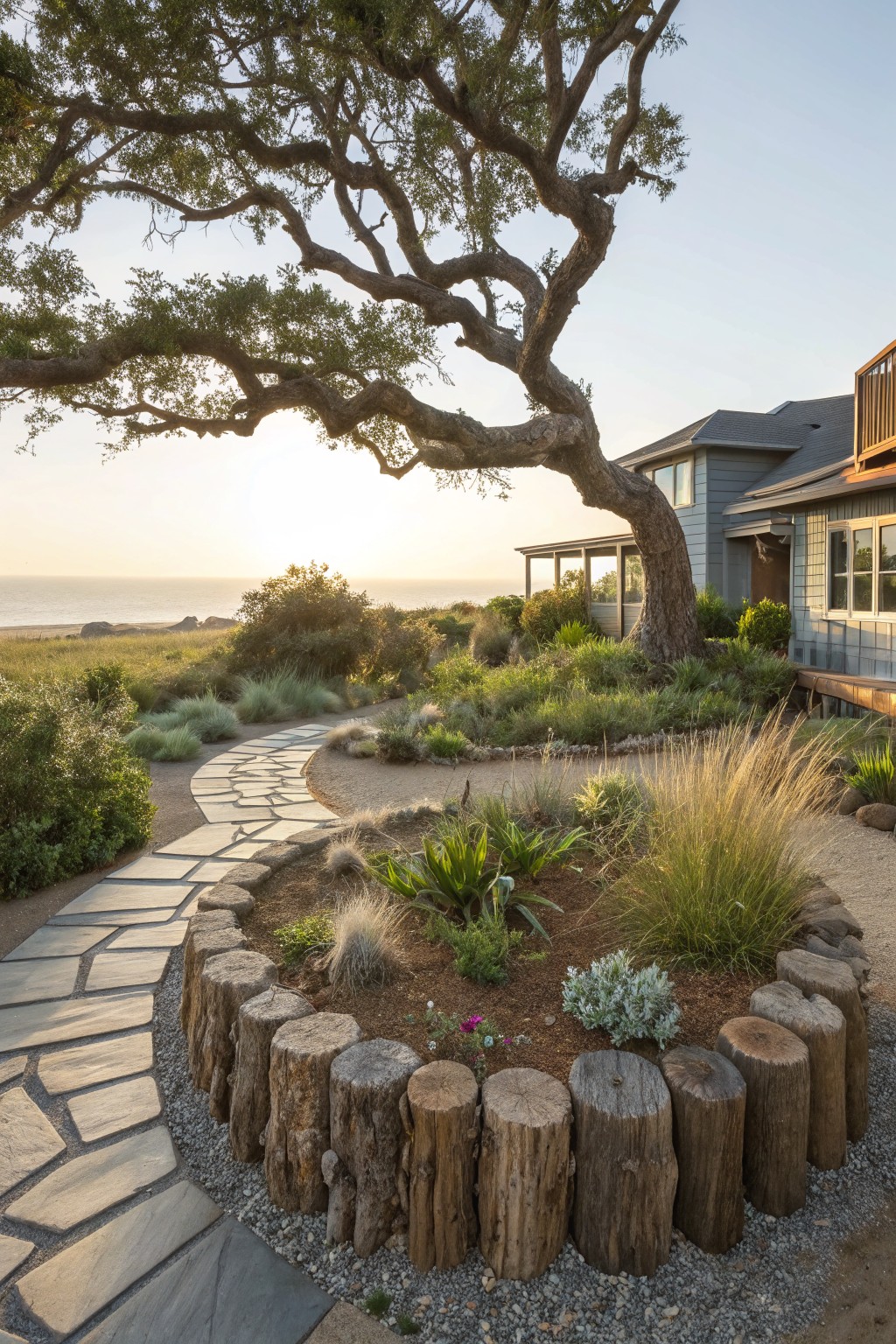
One easy way to make a front yard bed feel more defined and natural is stacking old log rounds into a low circle. Here it’s hugging some drought-tolerant grasses and succulents right by the tree trunk. That wood tone picks up on the tree bark and keeps the whole spot from looking messy. It’s cozy. Fits right in without trying too hard.
Try this where you’ve got a mature tree you want to show off. Source logs from a local mill or salvage yard, cut them to the same height, and bury them partway for stability. Best on sloped lots or coastal yards like this one. Watch for moisture buildup though. Treat the wood first.
Cozy Gravel Nook Under a Mature Tree
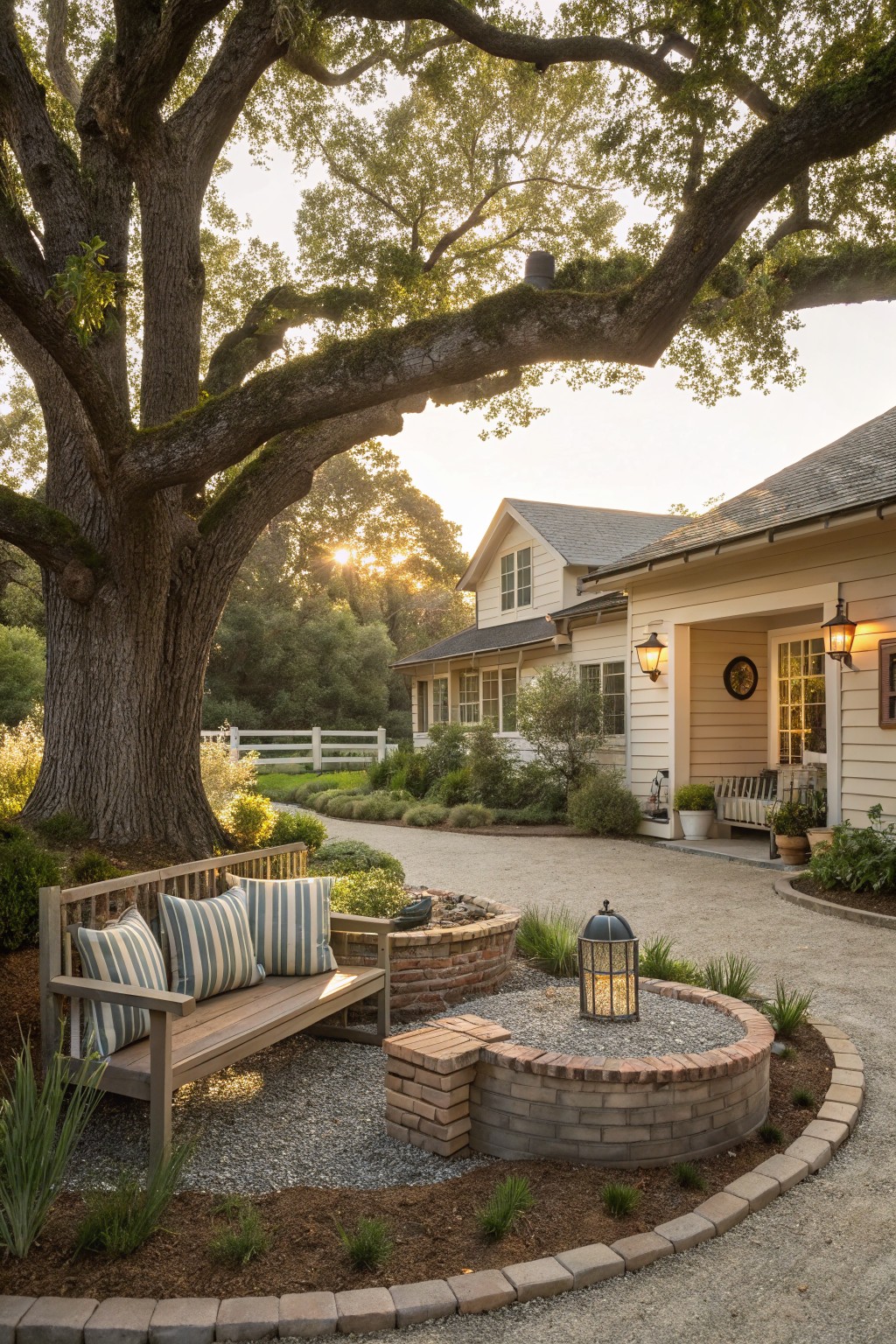
One straightforward way to make a front yard tree the star is to carve out a simple gravel seating area right underneath it. Here a wooden bench sits against the trunk with plump cushions for comfort, and a low brick fire pit circle sits nearby. The gravel keeps things clean and easy, while the tree’s branches offer natural shade. It pulls focus to the tree without much fuss.
This setup works great in yards with a big established tree, especially if space is tight near the house entrance. Use decomposed granite or pea gravel for drainage, add brick or stone edging to define the edges, and plant low grasses around it. Skip it if your tree drops a lot of messy debris, or you’ll be raking nonstop.
Winding Stone Path Around a Mature Tree
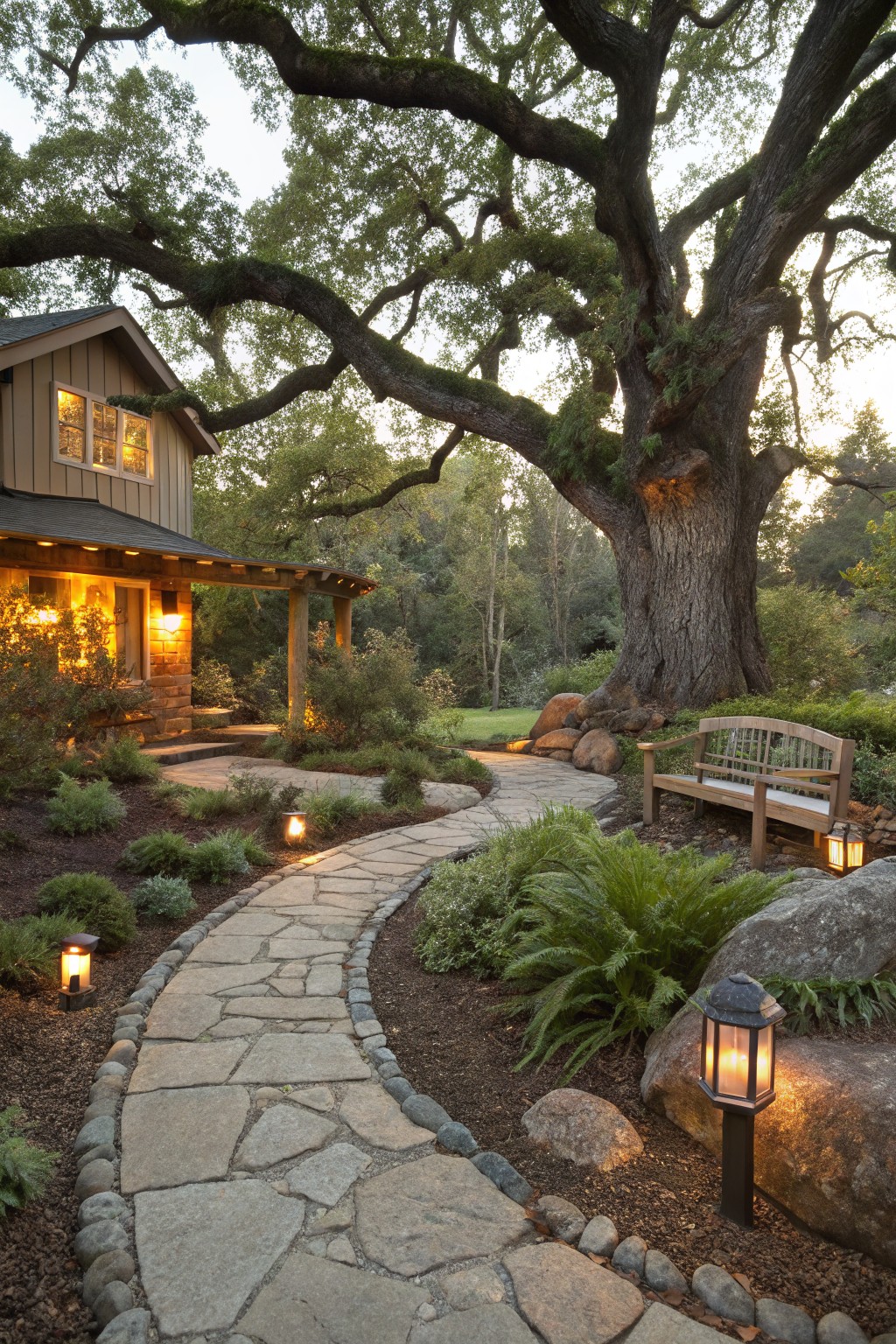
A simple winding path made from irregular flagstone slabs works great when you have a big tree dominating the front yard. It guides folks naturally toward the house while letting the tree take center stage. Edge the path with rounded rocks and mulch beds planted with ferns and low shrubs. That keeps everything tidy and draws the eye along without feeling forced.
This idea fits older homes or cottages tucked into wooded lots. Lay the stones on a gravel base for good drainage, then tuck in battery lanterns along the edges for soft night lighting. Skip straight lines here. The curve slows people down… makes the walk more pleasant. Just watch for tree roots pushing up over time.
Raised Wooden Beds Around the Tree
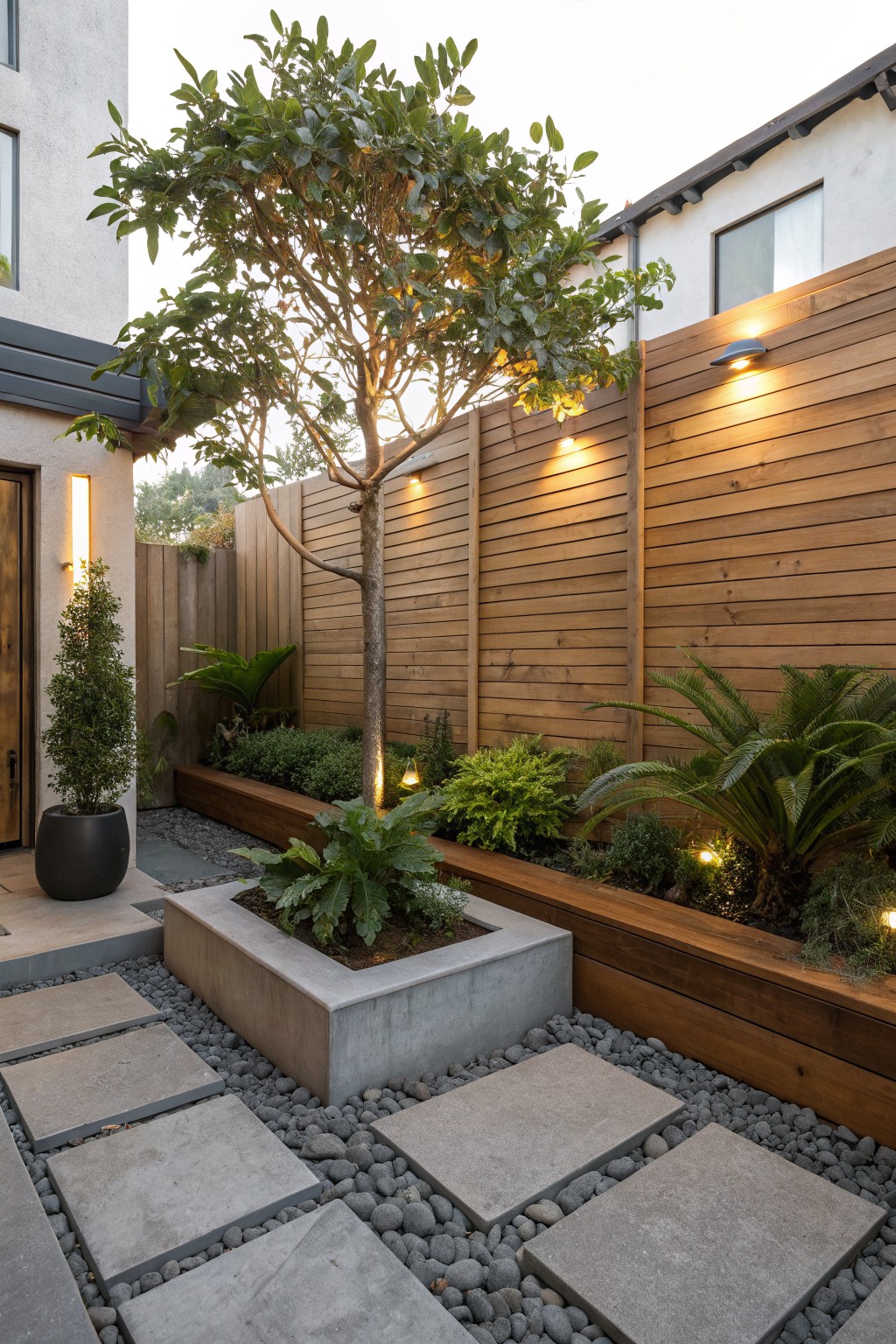
One straightforward way to build a front yard garden is with raised wooden beds that hug right up to the tree trunk. Here the beds are lined with ferns and low greenery, keeping soil contained and plants off the path. The wood matches the slatted fence behind it, so the whole setup feels pulled together without much fuss. That tree ends up looking like it’s always been part of the plan.
These beds work best in tight spaces near the house entry, where you want definition but not a lot of mowing. Go for naturally rot-resistant wood like cedar, build them about a foot high, and fill with drought-tolerant stuff that won’t crowd the roots. Stone pavers over pebbles make a clean walkway through… just mind the tree’s drip line when planting. Suits most any style home, especially if the fence is already wood.
Cozy Gravel Patio Under the Tree
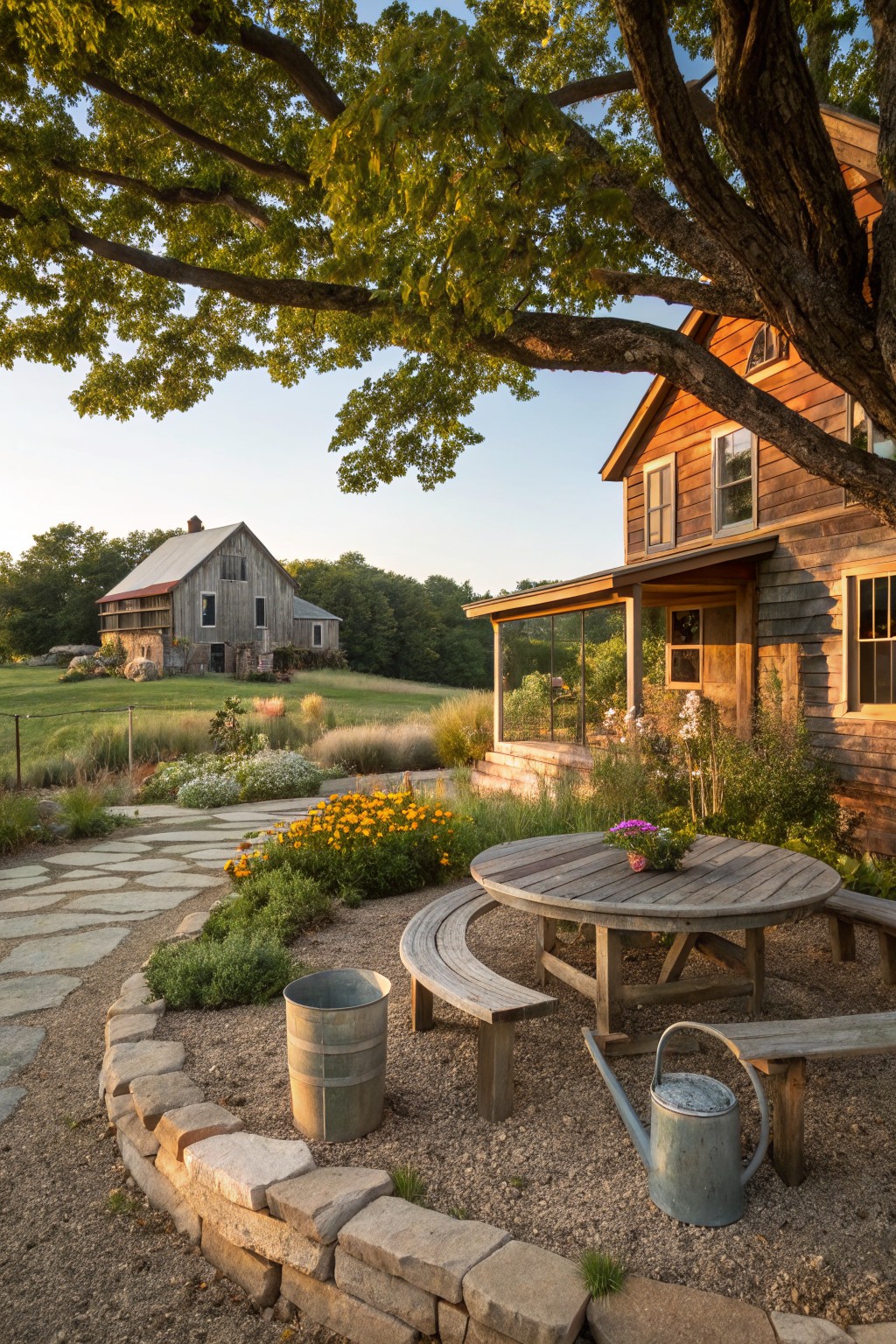
One simple way to make good use of space around a big tree is to carve out a gravel patio with a curved stone wall. It keeps things contained and feels like a natural spot to sit, especially with a round wooden table and benches tucked right in there. The low plants and flowers along the edge add color without crowding, and that old watering can nearby gives it a lived-in garden feel.
This setup works great in a front yard where you want a quiet seating corner that doesn’t take up much room. Use it near the house entry or path for easy access. Pick dry-stacked stone for a rustic look that matches older homes, and go with gravel over grass for low upkeep. Just make sure the tree roots aren’t disturbed too much when building.
Boardwalk Path Around a Leaning Tree
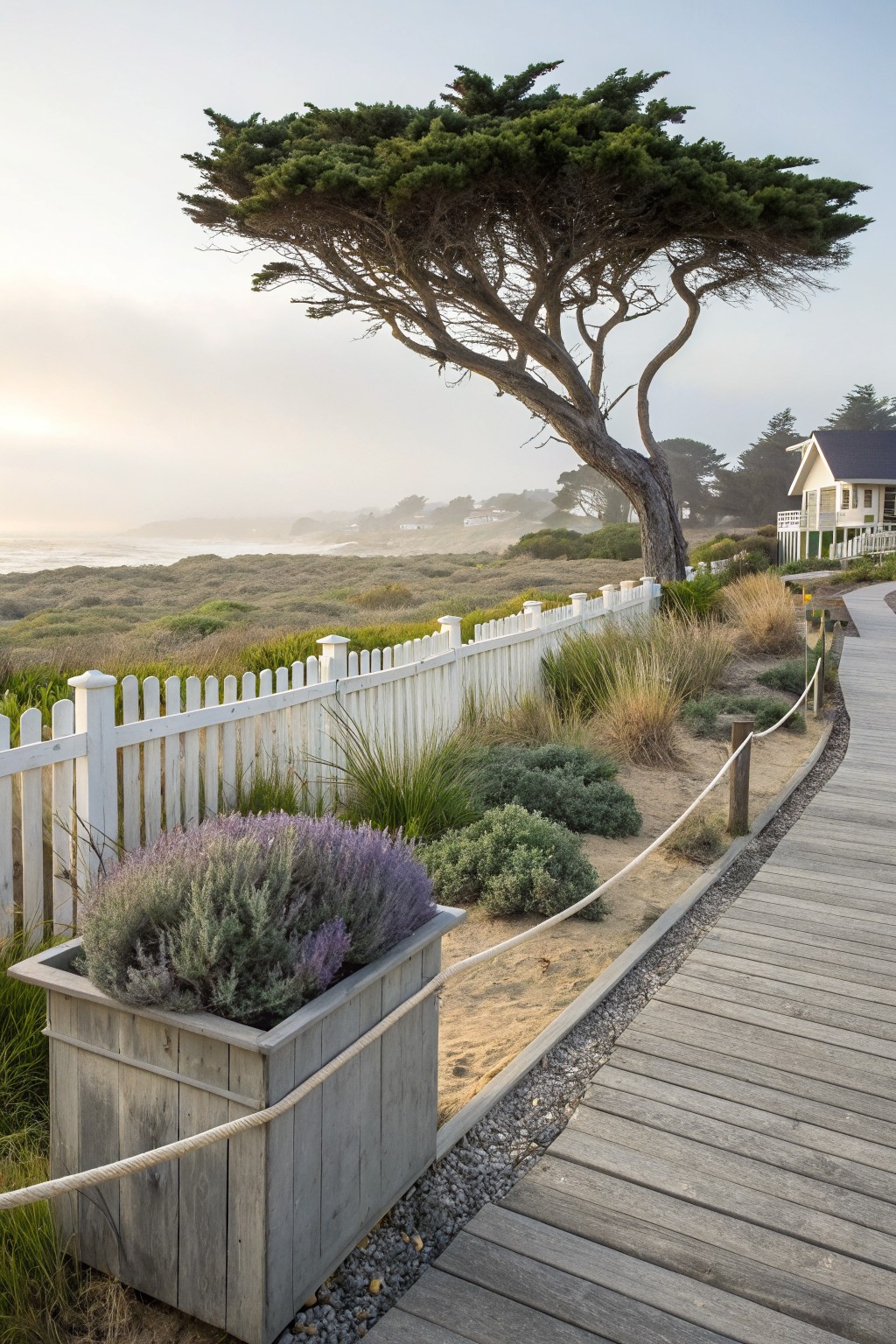
A simple wooden boardwalk snakes along the edge of the dunes here, hugging close to a big leaning cypress tree that bends toward the ocean. That tree does most of the work as the yard’s main feature, with low grasses and a white picket fence keeping things neat but natural. It’s cozy without trying too hard… just lets the landscape lead.
This kind of path works best on sloped or sandy front yards near the coast, or anywhere with uneven ground. Lay the boards elevated a bit for drainage, add native plants like lavender in planters for color, and let a mature tree be the focal point. Skip fussy flowers; stick to tough stuff that handles wind. Suits older beach cottages perfectly.
Tree-Centered Boxwood Circle
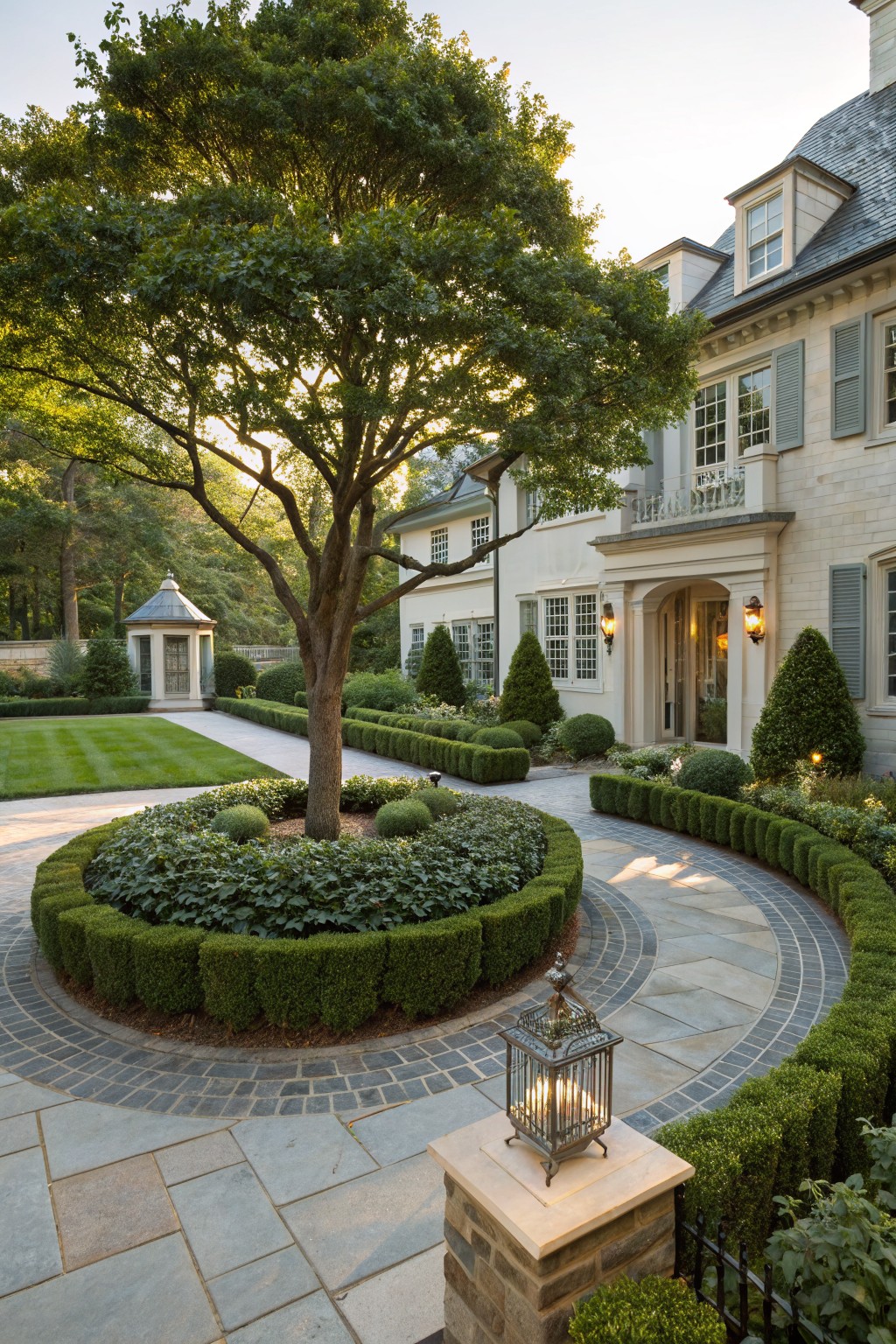
A mature tree takes center stage in this front yard setup, ringed by a tidy circle of boxwoods that hug its base just right. A smooth curving path of stone pavers wraps around the whole thing, guiding you straight to the house door. That simple circle turns the tree into a natural focal point without much fuss, and the low hedges keep everything crisp and walkable.
This works best on larger front yards where you want some structure around an existing tree. Stick to compact boxwoods so they stay below trunk height, and use pale stone for the path to blend with a classic house like this beige one. Skip it if your tree is too close to the drive, though. Keeps the entry formal yet easy to maintain.
Gravel Path Leading to a Tree Bench
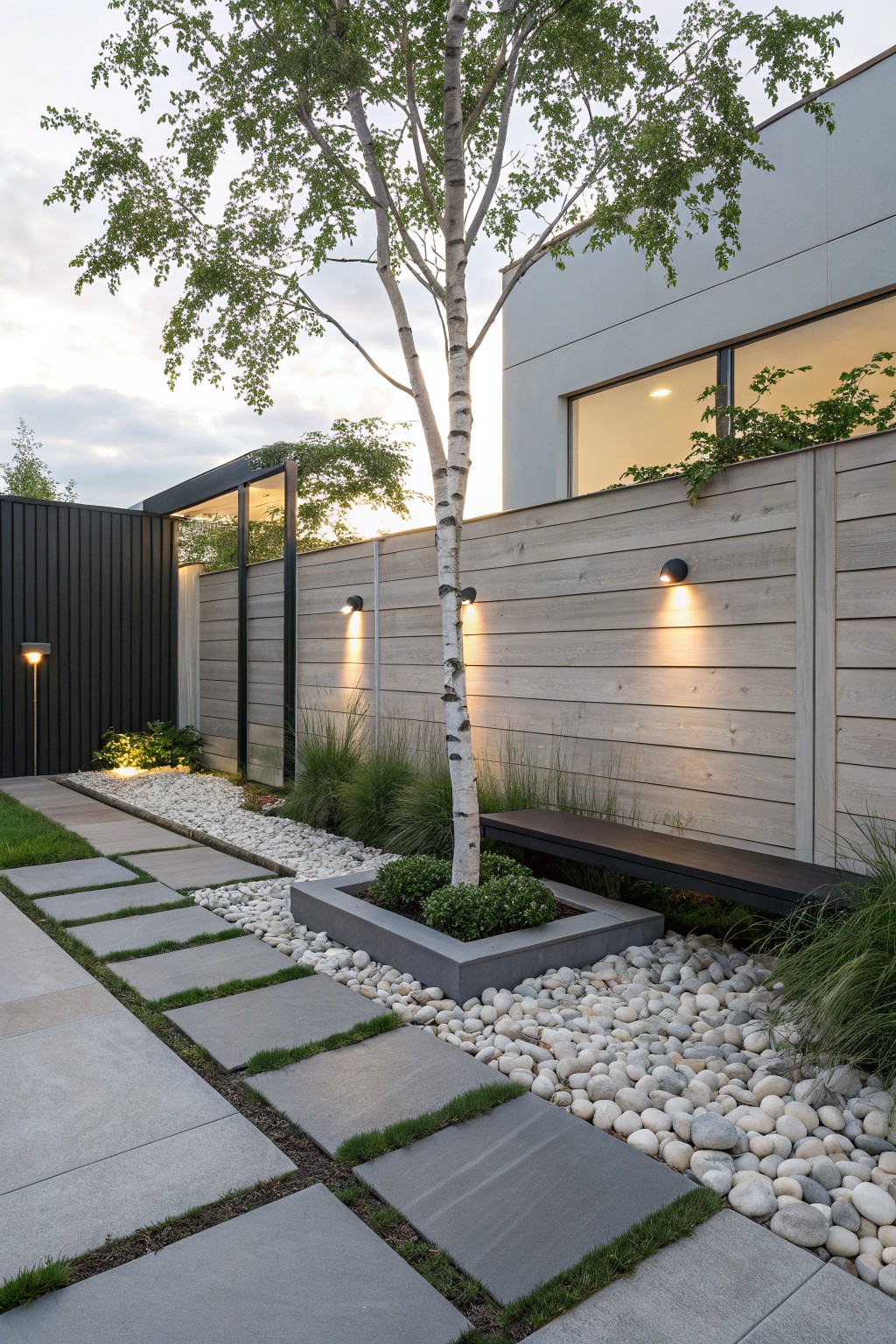
A gravel path like this one makes getting to the tree feel easy and natural. White pebbles fill the space between large gray stepping stones, with bits of grass poking through. It pulls you right to the bench built low against the trunk, where the birch tree takes center stage. Simple. And that evening light from the wall fixtures adds a quiet glow.
You can pull this off in a front yard corner or side garden, especially if you want low upkeep. Use rounded river rock for the gravel so it drains well, and pick pavers that match your house siding. Skip it if your soil holds water, though. Works best on a modest lot where the tree already grows.
Fitting Patios to Existing Trees
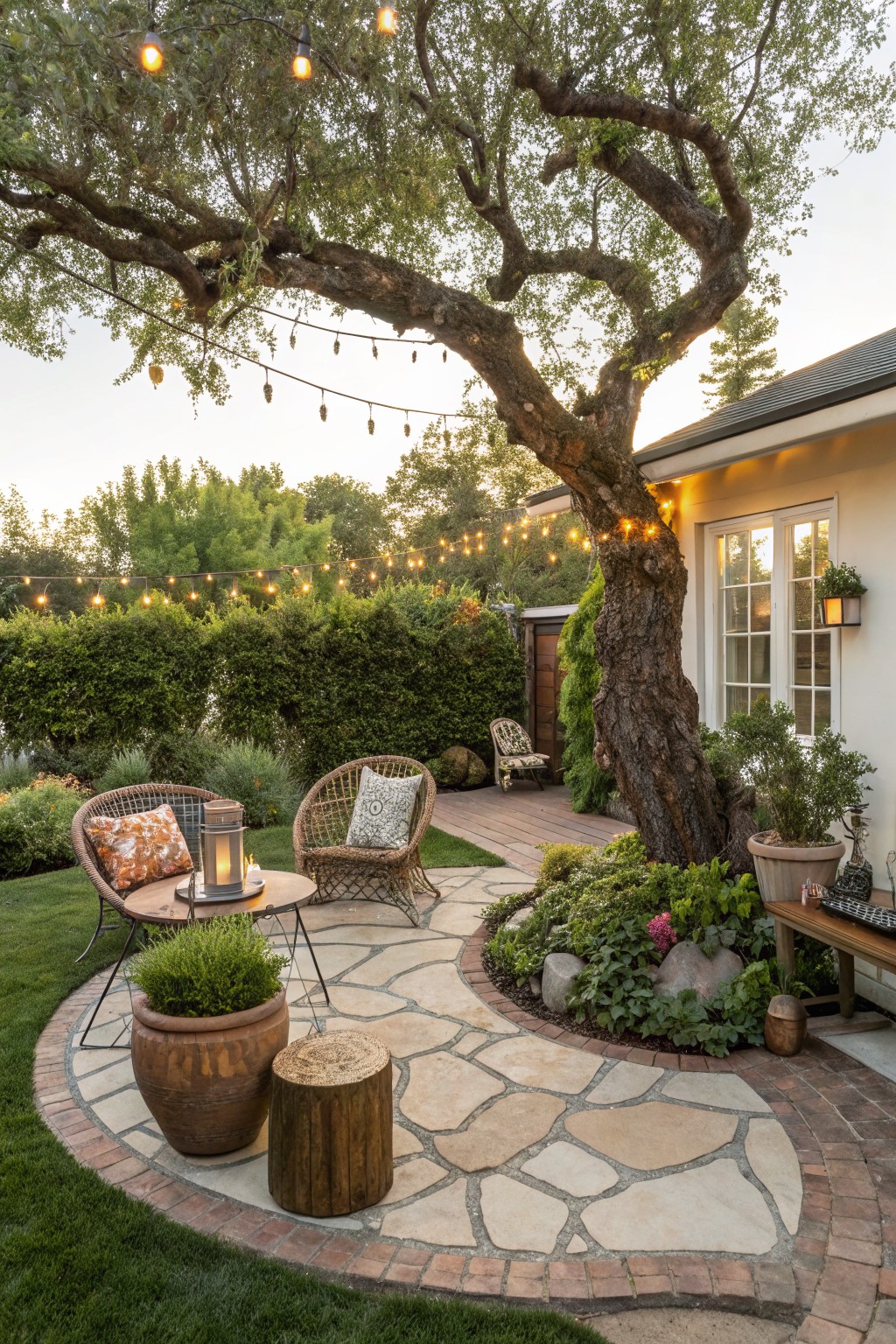
One nice way to work with a big tree in your yard is to curve the patio right up to its trunk. Like in this spot, where flagstone pavers follow the tree’s shape, it keeps the tree front and center instead of fighting it. The result is a natural spot for sitting that uses the tree’s shade and branches. String lights draped overhead make it even better for evenings.
To pull this off, start by planning the curve to avoid major roots, then lay stones in an irregular pattern for that organic feel. Add simple brick edging and tuck in a few pots or low plants along the edge. It fits small backyards or side yards best, especially with older trees like olives or oaks. Just don’t cut too close to the bark, or you might hurt the tree over time.
Mature Tree as Front Yard Centerpiece
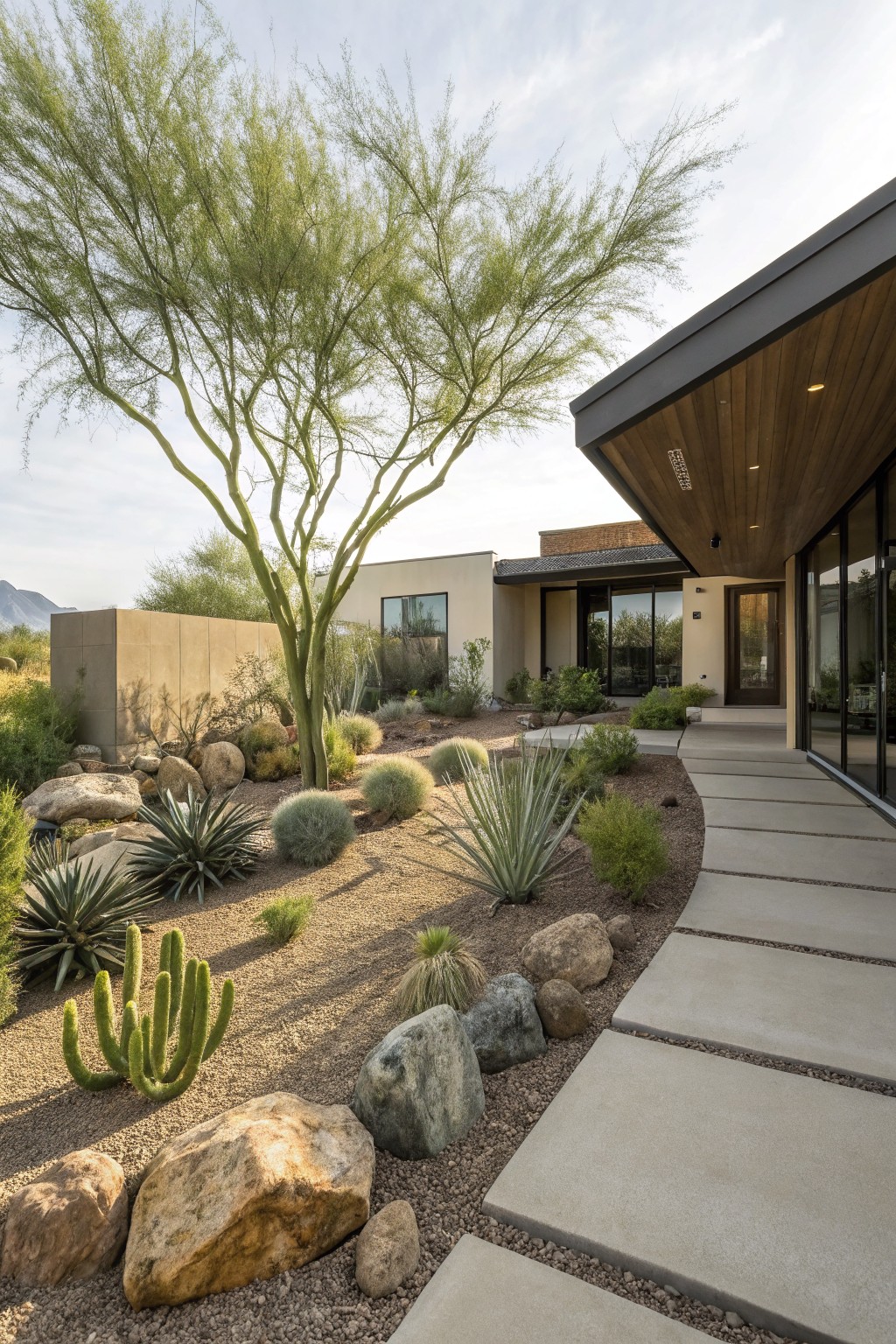
A tall palo verde tree takes center stage in this front yard setup. Its wispy green branches spread wide over boulders clustered at the base and low clumps of agave and cactus. The look stays simple and natural. It pulls focus to the tree without crowding it.
This works best in dry spots like the Southwest. Pick a native tree that fits your space, then add rocks for weight and tough plants that need little water. It suits modern houses with clean lines. Just keep the path clear for easy walking to the door.
Curved Gravel Path Around a Tree
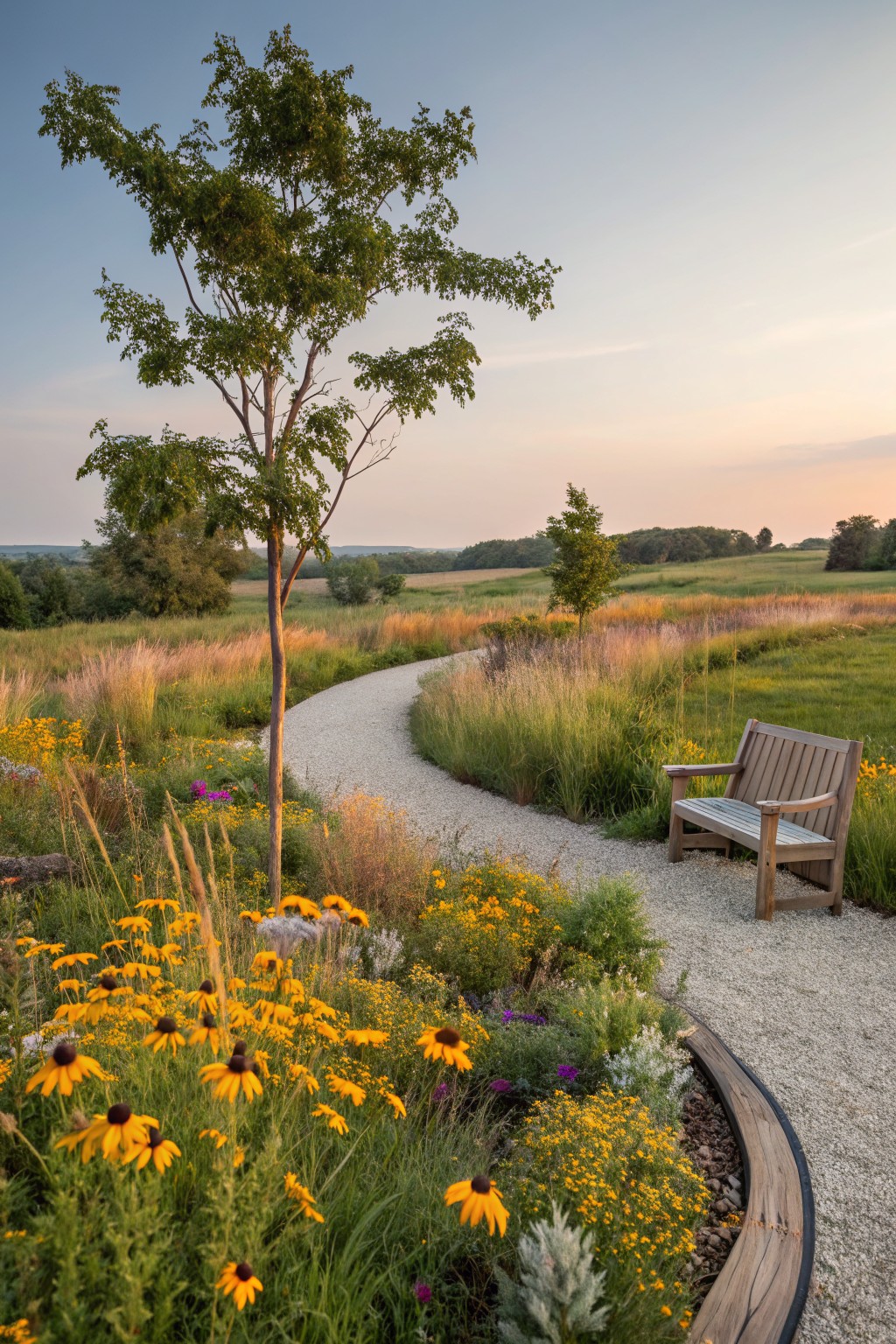
A curved gravel path like this one works nicely to draw attention to a single tree in your front yard. It winds gently right by the trunk, edged with tall grasses and clumps of black-eyed Susans that fill out the borders without crowding things. The tree stands tall in the middle of it all, and that simple loop makes the whole area feel purposeful and easy to walk through.
You can pull this off in most front yards with room for ten or fifteen feet of path. Lay down gravel for drainage and low upkeep, then plant natives around the edges so it stays pretty year after year. Tuck in a wooden bench halfway along if you want a spot to sit. It fits older homes or new ones, just keep the curves soft to avoid a busy look.
Winding Brick Path Around a Tree
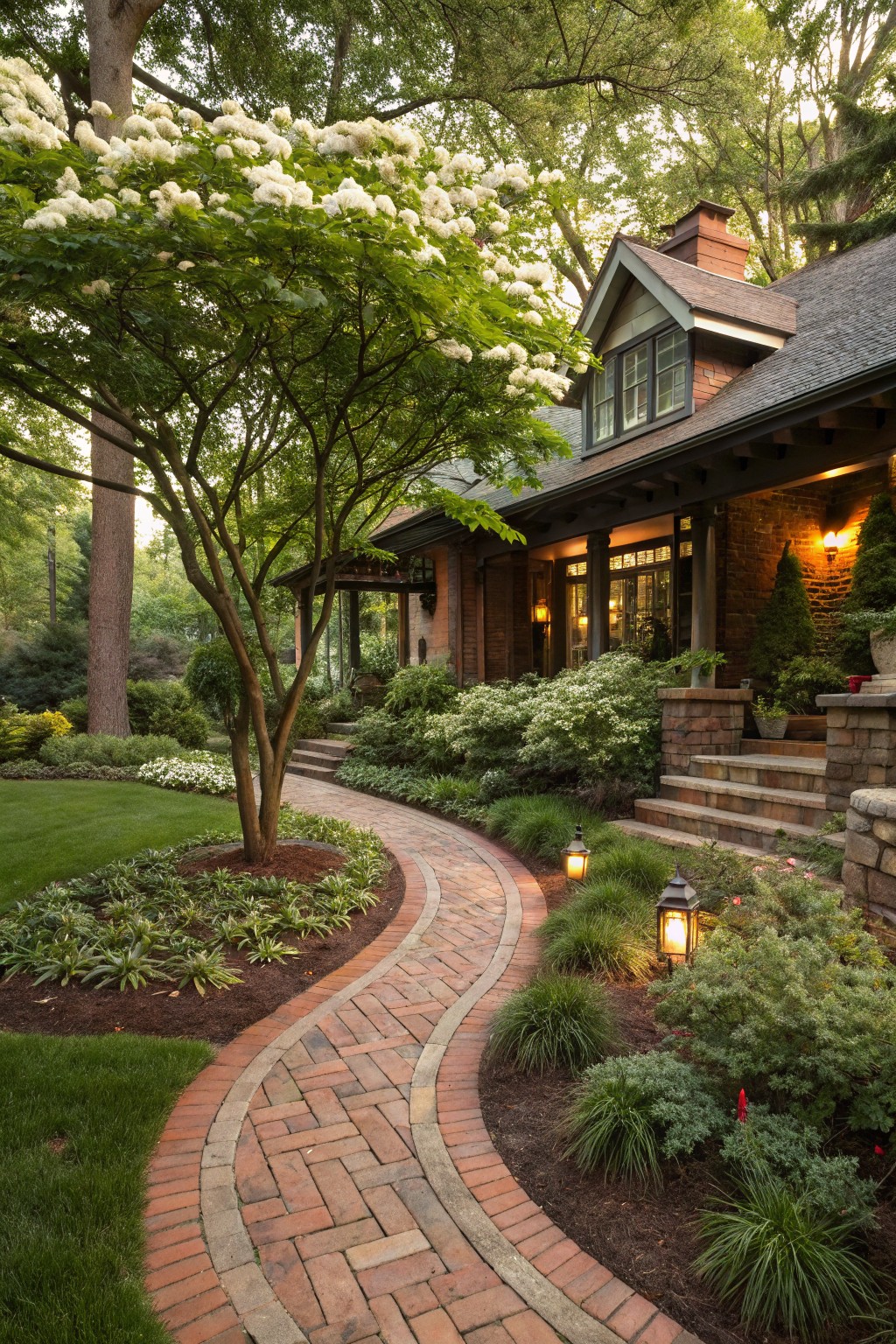
One simple way to make your front yard tree the star is with a curving brick walkway that loops right around it. The path here hugs the tree trunk close, edged with mulch and low plants, so it feels like a natural stroll instead of a stiff sidewalk. That gentle curve slows people down a bit and gives the tree plenty of room to shine, especially when it’s blooming like this one with those white flowers.
You can pull this off on most any lot with a decent-sized tree near the entry. Lay bricks in a soft wave pattern, keep the edges neat with grass or groundcover, and tuck in a lantern or two for evenings. It suits shady yards under big branches… just pick bricks that handle moisture if you’re in a wet spot.
Sculptural Pine Tree in a Modern Yard Bed
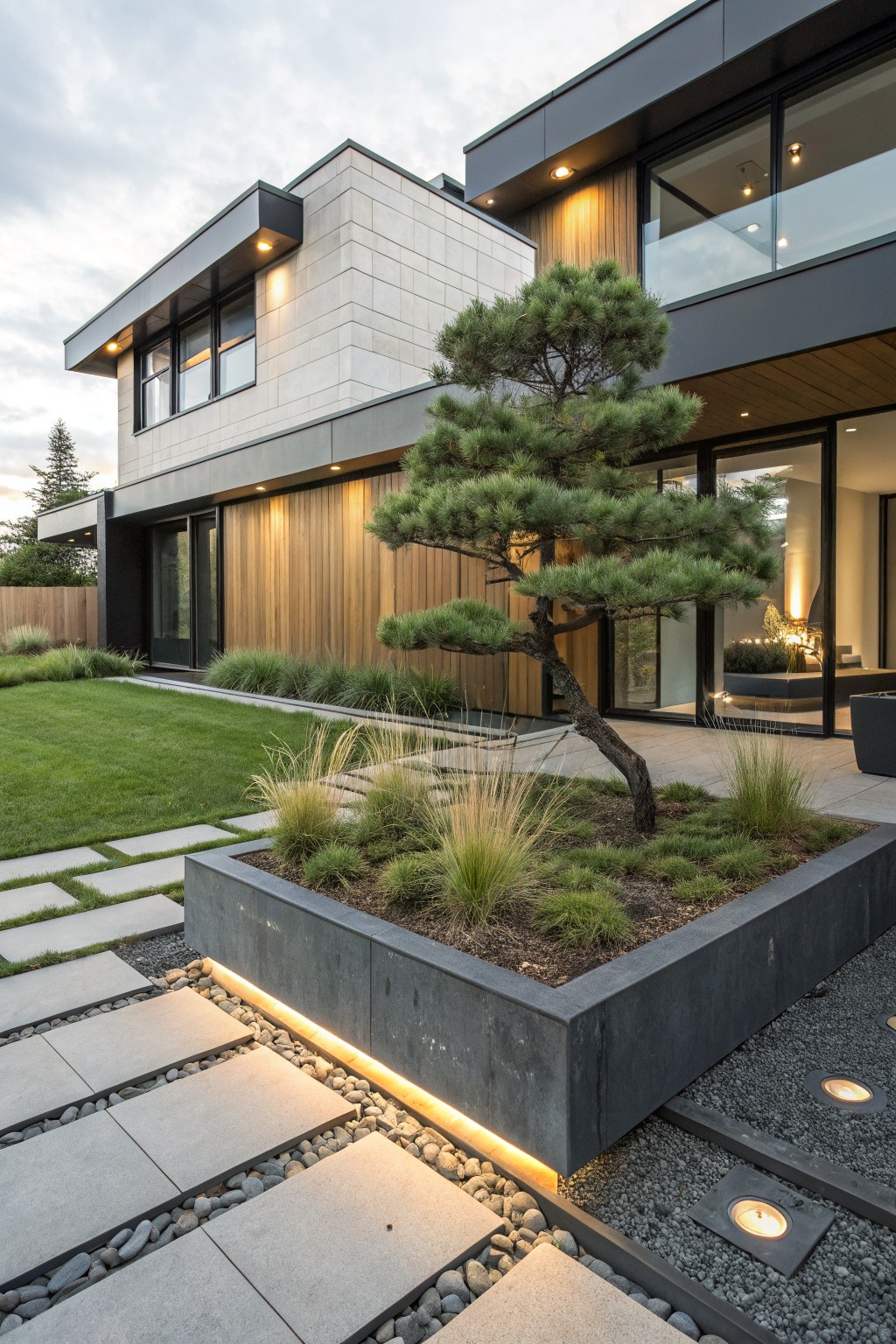
A shaped pine tree like this one makes a strong focal point right out front. Planted in a simple raised concrete bed, it stands tall against the house without taking up much space. The low grasses around its base fill things in nicely, keeping the look clean and easy to maintain. It pulls the eye immediately and fits right with sleek architecture.
Try this in a smaller front yard where you want height but not bulk. Go for a pine or similar evergreen that holds its shape, and tuck ornamental grasses at the edges for softness. Wide concrete paths leading up keep it practical for walking, and it works best on modern homes with clean lines. Just make sure the bed is deep enough for roots to spread.
Winding Stone Path Around the Tree
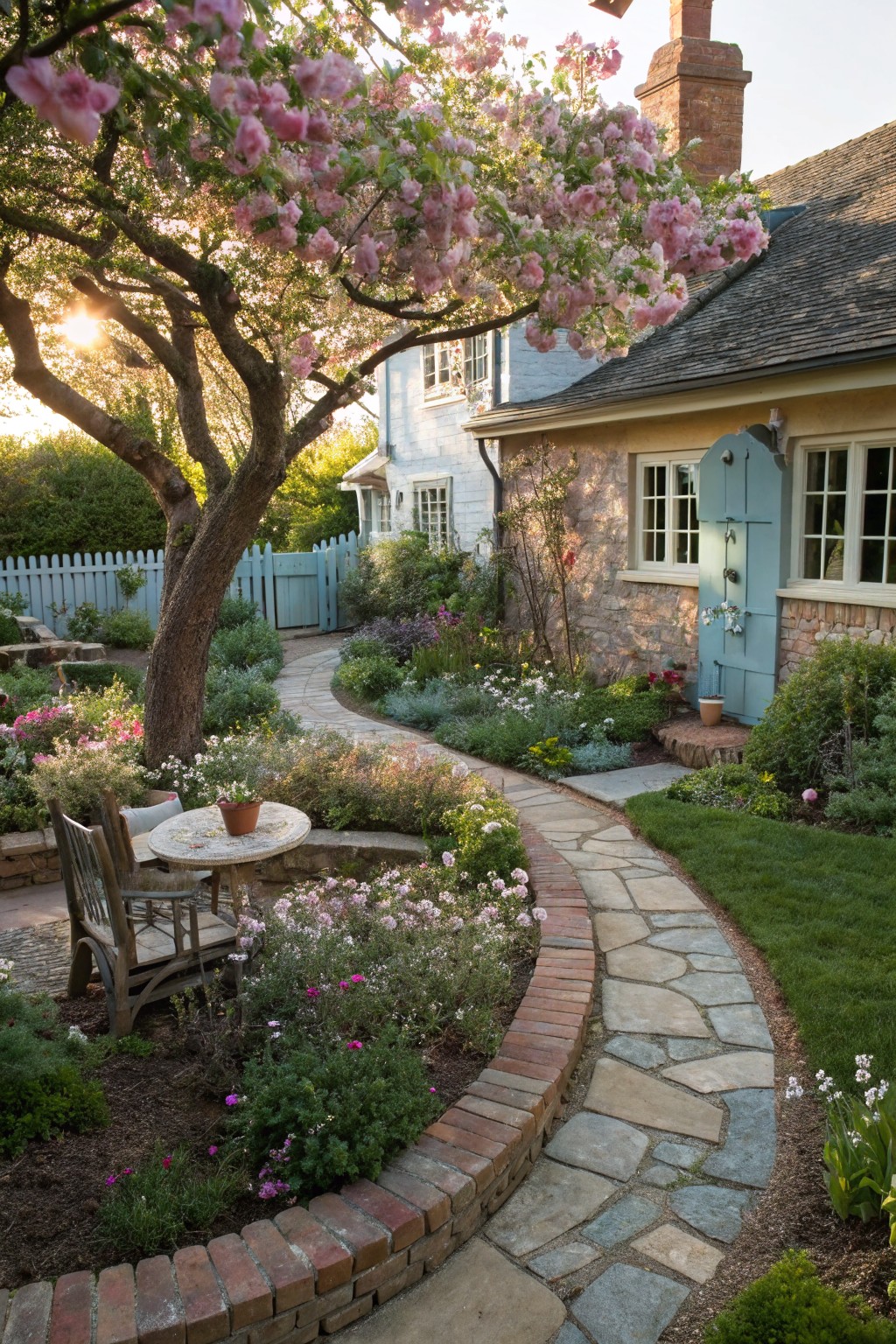
A good front yard path doesn’t go straight to the door. It takes its time, curving around the tree like this one does. Flagstones laid in a gentle sweep, with low brick edging and pockets of flowers all along. The big tree loaded with pink blossoms sits right in the middle, making the whole yard feel like it’s built around it. That setup draws your eye slow and easy.
Put this in a yard with a mature tree you don’t want to cut down. It works on cottage-style homes or anywhere space is tight. Pick rough stone that matches your area, keep the edging simple, and fill in with tough perennials that bloom one after another. Throw in a bench or small table nearby… instant spot to linger. Just make sure the path stays wide enough for two people.
Winding Path Around a Front Tree
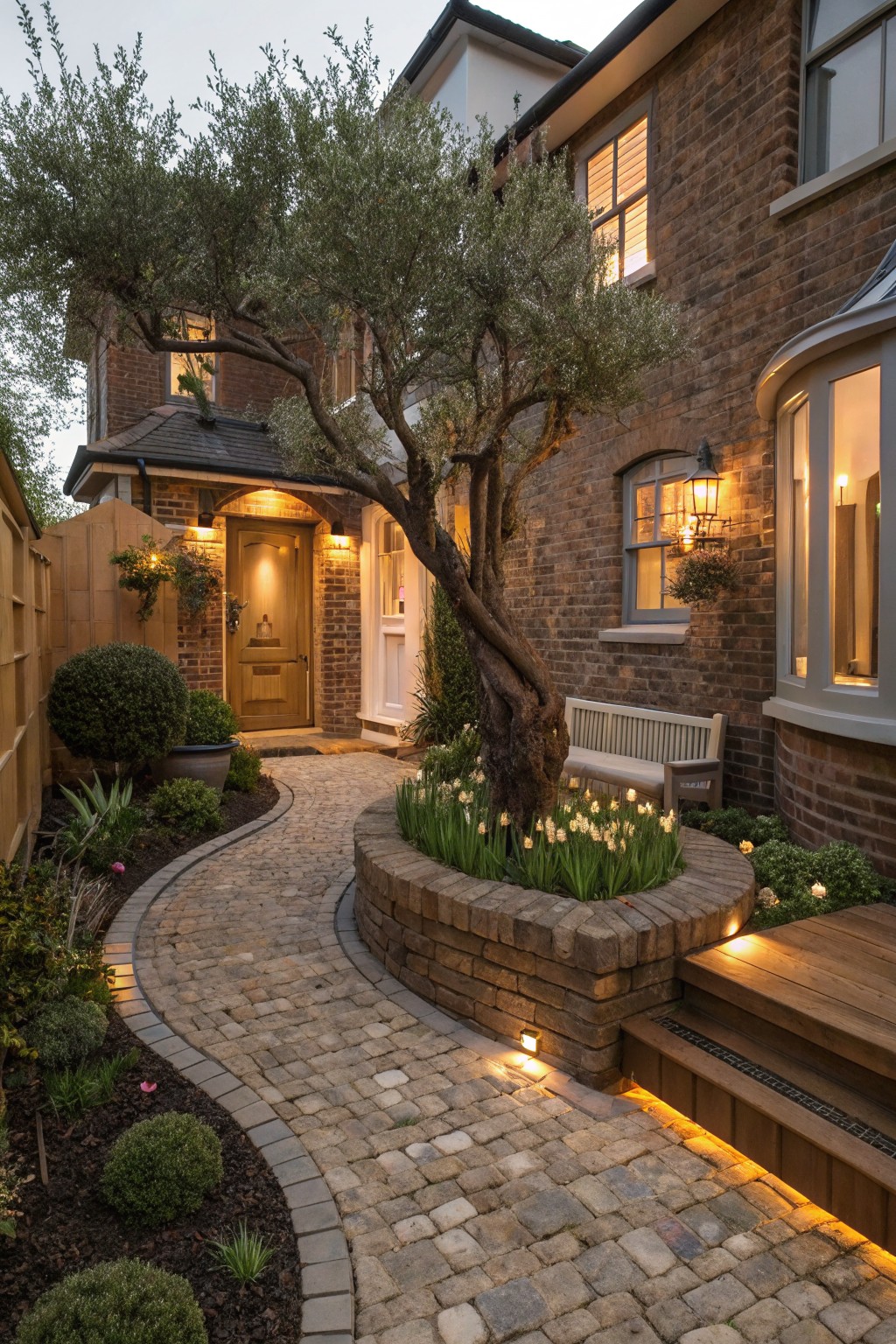
A curved brick path like this one makes your front tree the main event. It starts at the gate and gently winds right around the olive tree, with a raised brick bed hugging the trunk full of spring flowers. That slow curve slows you down a bit. Draws the eye to the tree before the door. And those low lights along the edge make it glow at dusk.
You can pull this off in a narrow yard or side entry. Lay bricks in a loose pattern for easy drainage. Plant low bulbs or perennials in the bed to keep it simple year round. Skip straight lines here. The curve fits older brick homes best. Just watch the tree roots when edging.
Winding Brick Path Around a Mature Tree
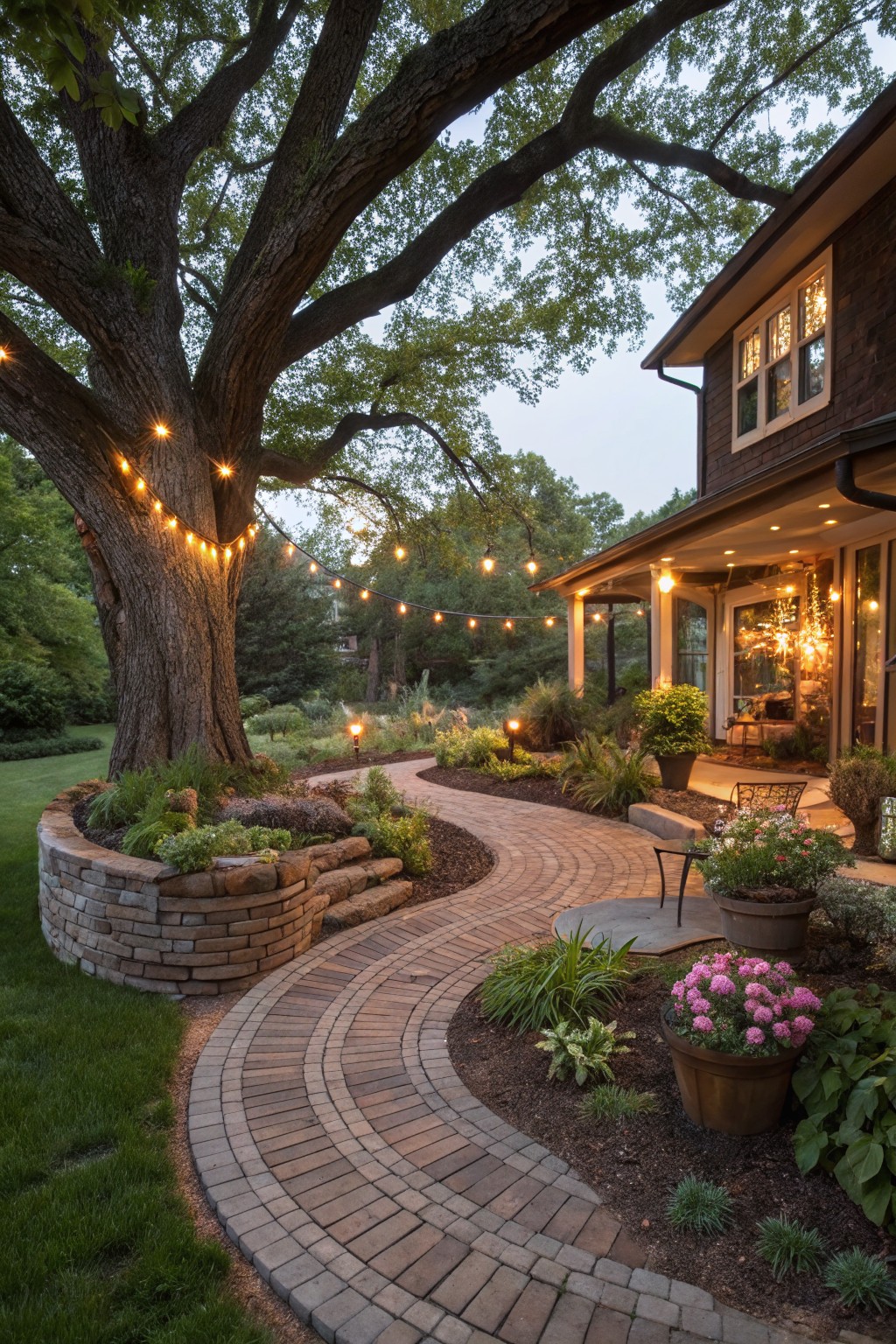
One simple way to make a big tree the heart of your yard is with a curving brick path that winds right around it. Here the path starts near the lawn, hugs the tree trunk, then meanders through low plantings and flower beds before reaching the porch steps. Those string lights wrapped on the branches add a soft glow at night, turning the walk into something special without much fuss.
This works best in yards with some open space around the tree, especially if you want to connect the lawn to a patio or back door. Use bricks for that classic look that blends with stone walls or natural edging. It suits older homes or cottage-style places, and just watch the slope so it stays easy to walk. Keeps foot traffic off the grass too.
Winding Stone Path Around a Flowering Tree
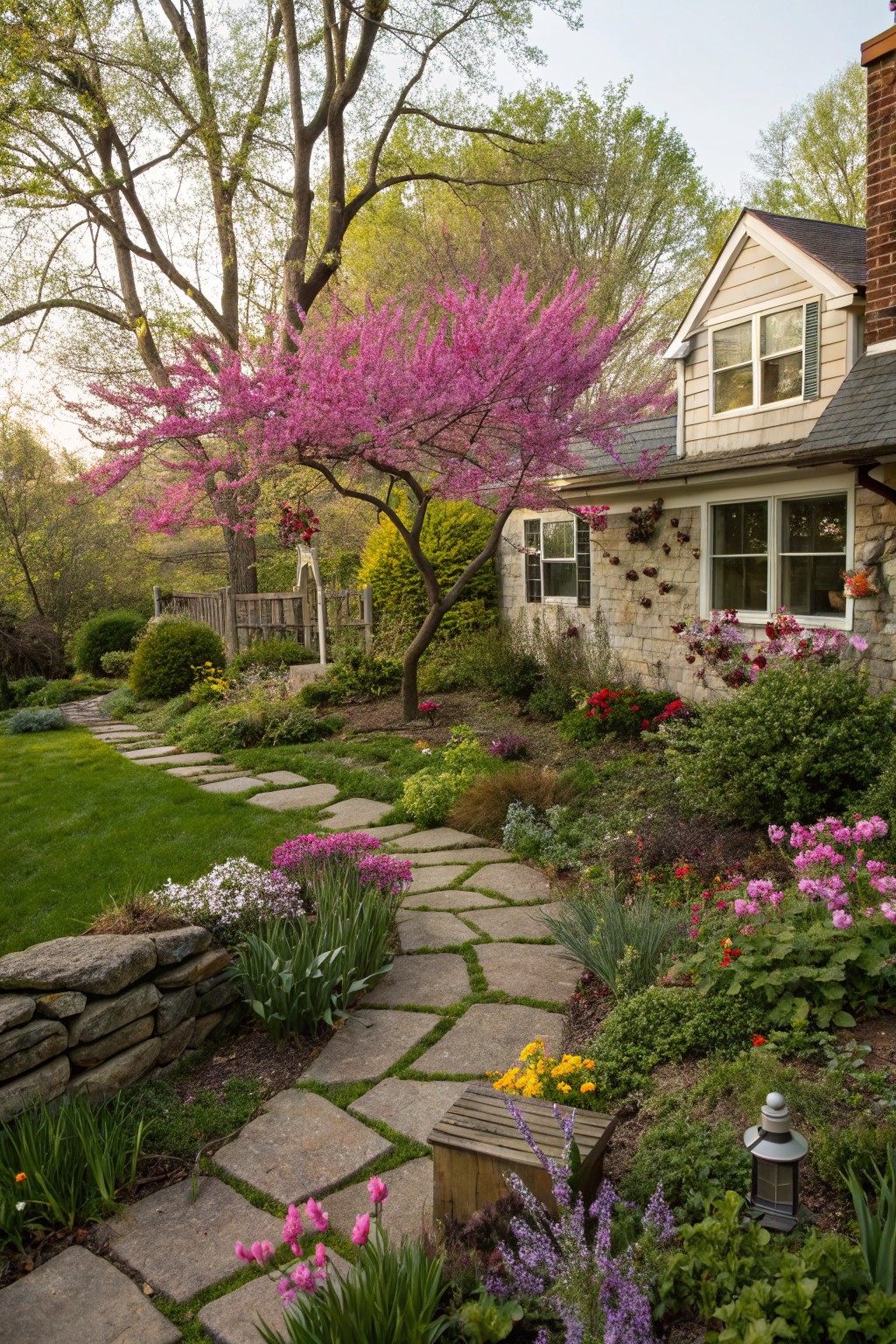
A simple winding path made of irregular stone slabs works great when you want to spotlight a tree like that bright pink one in full bloom. It pulls your eye right through the garden beds filled with spring flowers and low shrubs, making the whole front yard feel like it’s leading somewhere special. The curve keeps it from looking stiff, and the plants spilling over the edges add that cozy, lived-in touch without much fuss.
You can pull this off in smaller front yards too, especially if your tree is already a standout. Just lay the stones in grass or mulch with plants tucked in between, keeping the path wide enough for two people. It suits cottage-style homes or any spot needing more charm. Watch the scale though. Too many big plants and it gets crowded fast.
Blooming Tree in a Curved Entry Bed

One tree can really pull together a front yard spot like nothing else. This setup puts a pink flowering tree right in the middle of a curved concrete-edged bed filled with gravel mulch and clumps of tall grasses. It makes the area feel finished and welcoming without a lot of extra planting.
Try this near your driveway entrance or mailbox. Pick a tree that blooms hard in spring, like a crabapple. Add a few rocks for interest and keep the grasses low maintenance. It suits most homes, especially if you want color that pops but not too much upkeep.
Curved Stepping Stone Path Around the Tree
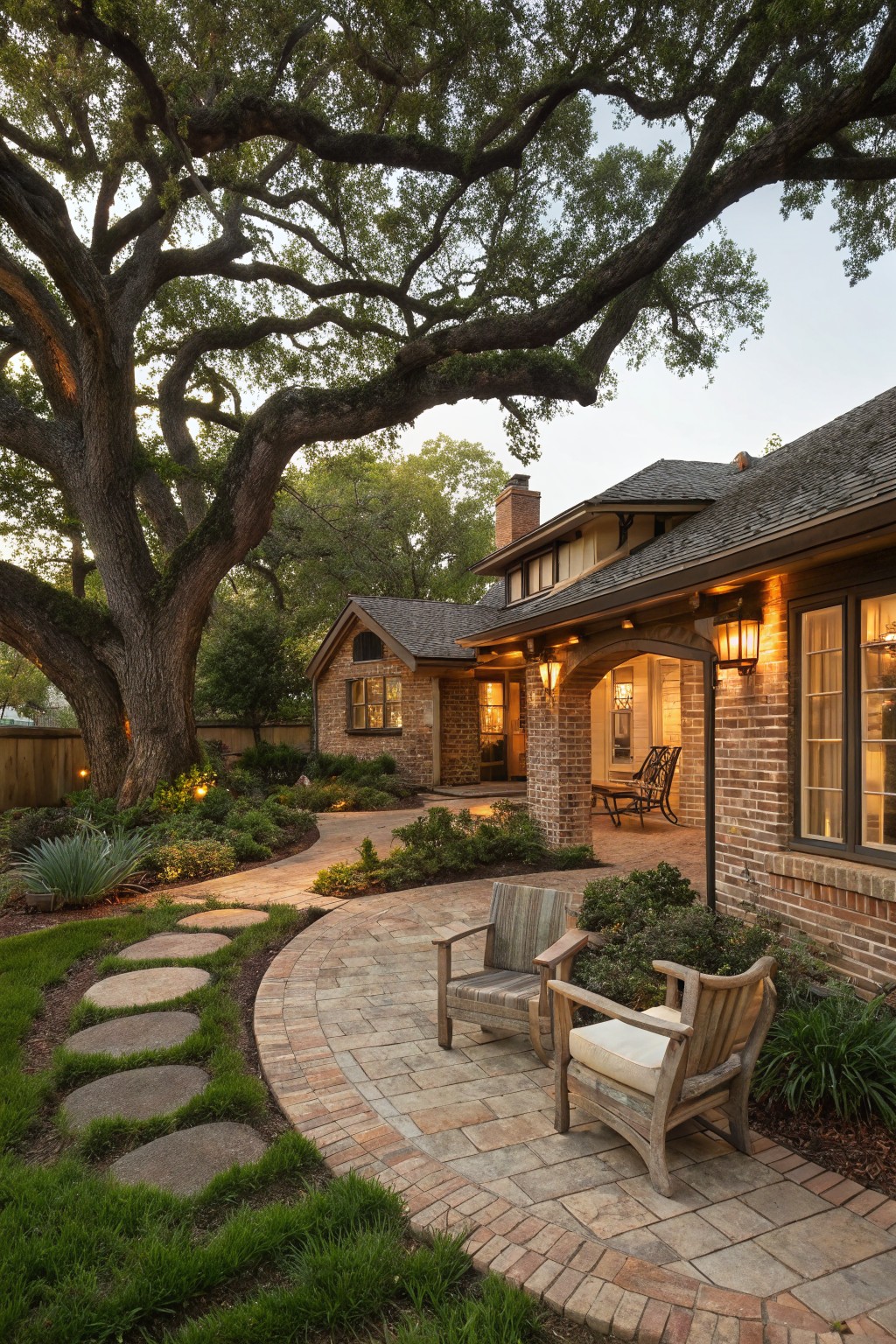
A simple curved path made from flat stones set into the grass works great when you have a big tree dominating the front yard. It guides people right to the house or patio without chopping up the lawn too much. The curve follows the tree’s shape naturally. Keeps things open and easy to walk.
Use this in yards with mature oaks or similar trees where straight paths feel too stiff. Pick stones in earth tones that blend with the soil. Space them just right for regular steps. It suits older homes with brick details. Watch the grass edges so they stay neat.
Front Yard Tree in a Circular Stone Planter
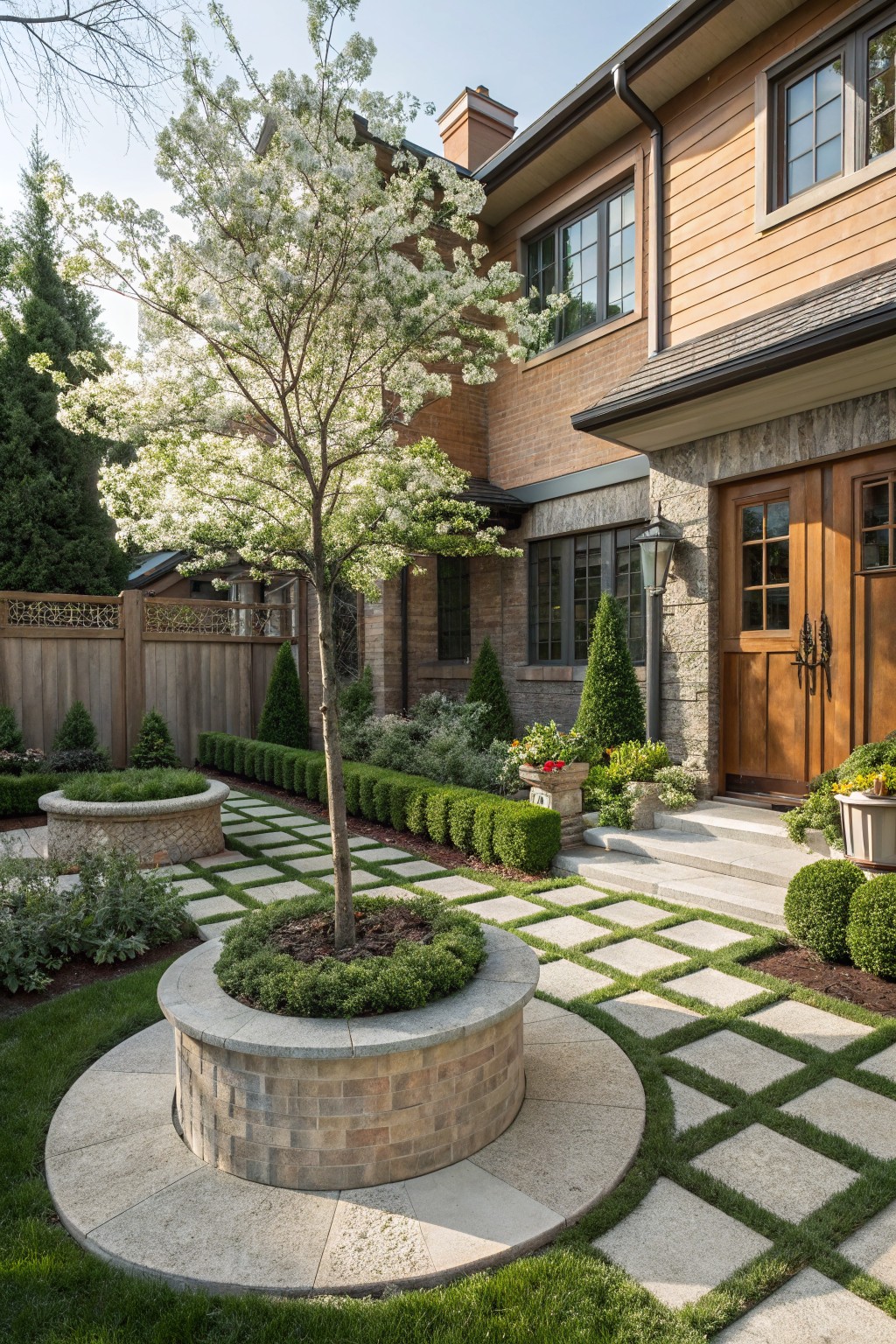
Putting a young tree right in a raised circular stone planter makes it the clear focal point of your front yard path. The planter here, with its brick-like facing, lifts the tree just enough to stand out against the grass and pavers. It keeps everything tidy around the base and guides folks naturally toward the door without much fuss.
This setup suits modest entry areas where you want some structure but not a lot of work. Line the path edges with boxwoods for that neat hedge look, and choose a small flowering tree that won’t outgrow the spot too fast. Works on most home styles… just scale the planter to your walkway width.
Frequently Asked Questions
Q: How far out from the tree trunk do I plant to keep roots happy?
A: Start your plants about three feet away from the trunk. This gives roots room to breathe without competition. You’ll get that cozy layered look without stressing the tree.
Q: What’s the best mulch for these tree setups?
A: Go with shredded hardwood mulch. It holds moisture well and breaks down to feed the soil. Skip piling it against the trunk, though – volcano mulching kills trees.
Q: Do shade-loving plants really thrive right under the tree?
A: Yes, pick hostas or ferns that love low light. They fill in fast and create that soft, inviting vibe. Water them weekly until roots take hold.
Q: How do I handle leaves if my tree drops a bunch every fall?
A: Rake them gently to uncover your plants. Let a light layer stay as natural mulch. And chop extras for compost – it saves you work next season.
