

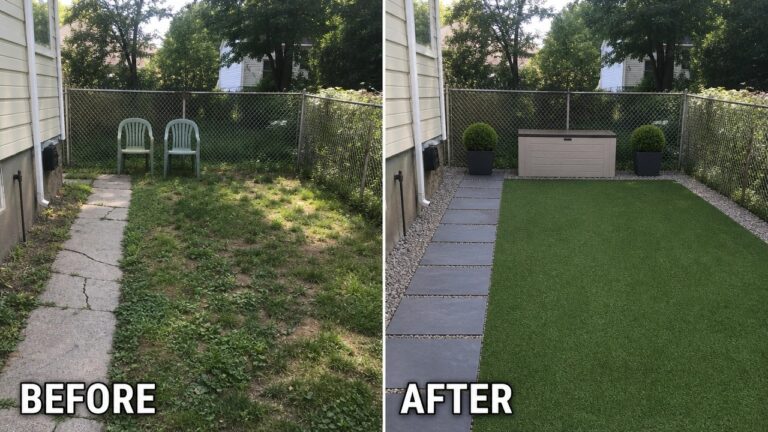
My backyard always felt like a chore because the plants grew too fast and nothing seemed to stay neat for long.
I have found that focusing first on the basic layout and a few hardy choices makes the space feel more settled without constant work.
Low maintenance yards still need some structure so the lawn edges and pathways do not disappear over time.
A few of these ideas show how simple plant groupings can reduce weeding while still giving the yard shape.
I usually try one small adjustment first to see how it holds up through the seasons.
Switch To Artificial Turf For A Low Maintenance Backyard
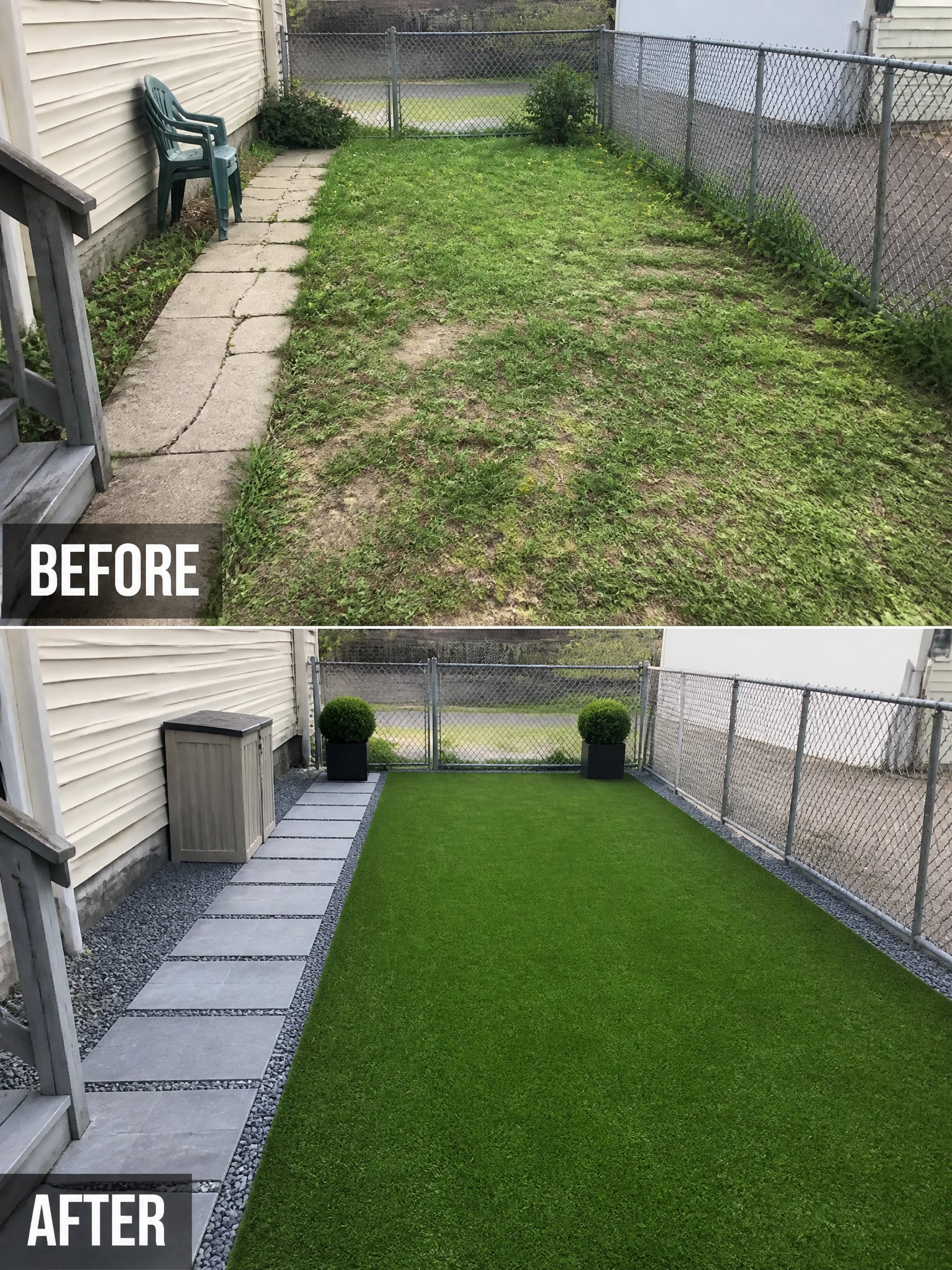
The patchy grass and uneven ground made the yard difficult to use on a regular basis. Laying artificial turf created a flat, even surface that stays green without mowing or watering, while the paver path and gravel borders gave the space clear edges.
This idea works best in small or shaded yards where real grass struggles. Start with cleanup and a simple path layout, then keep any added planters minimal so the area stays easy to maintain over time.
Add Gravel Beds For A Low Maintenance Border
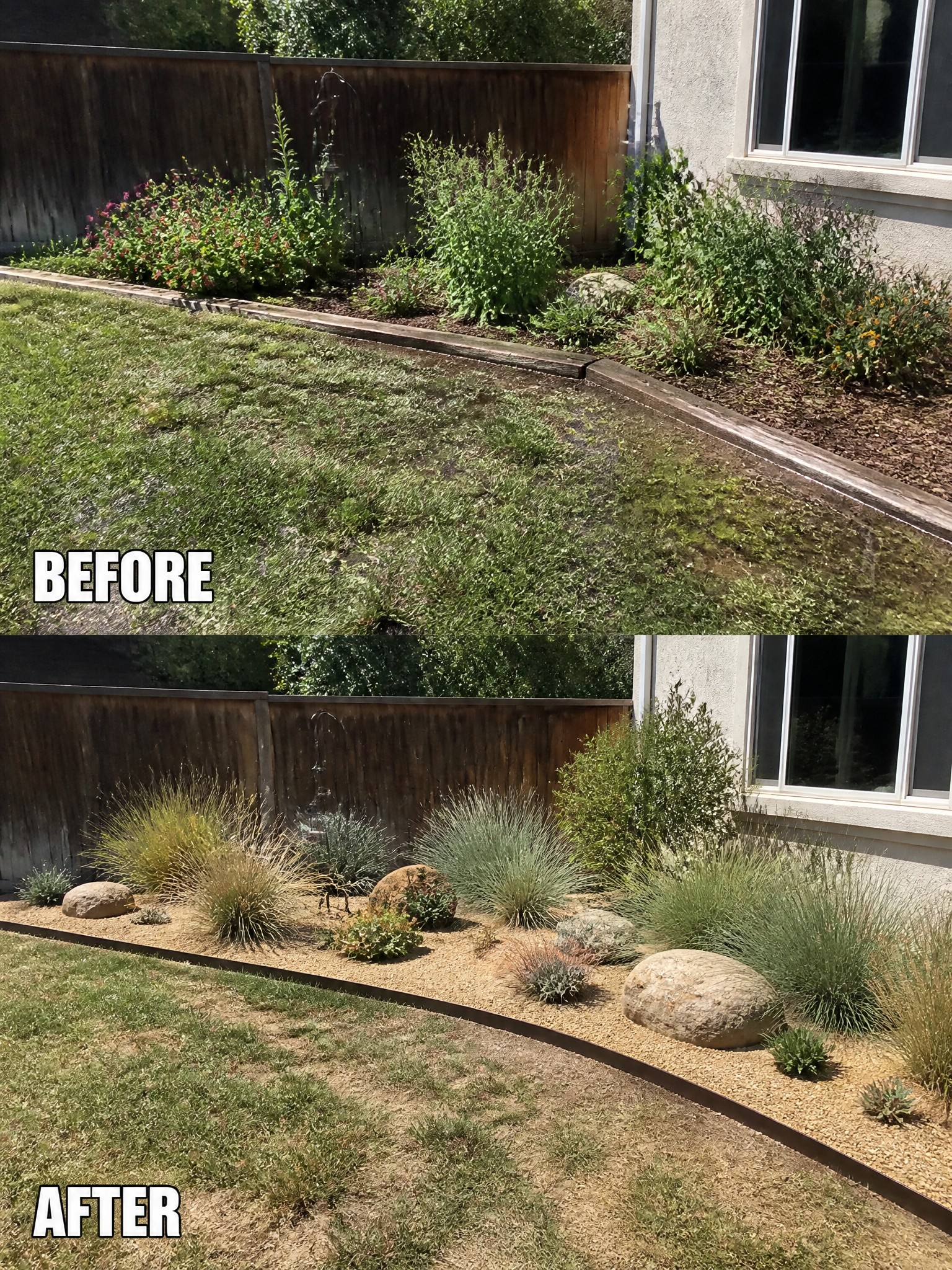
The main change here was swapping a weedy, uneven lawn edge for a clear gravel bed with simple metal edging. This gives the whole side of the yard a tidy shape while cutting down on mowing and weeding right next to the fence.
This approach works best along fence lines or house foundations where grass struggles. Start with basic steel edging to hold the gravel in place, then add a few larger rocks and tough grasses that can handle dry conditions. It keeps the area looking intentional without needing constant care.
Cover Concrete With Gravel For A Low Maintenance Patio
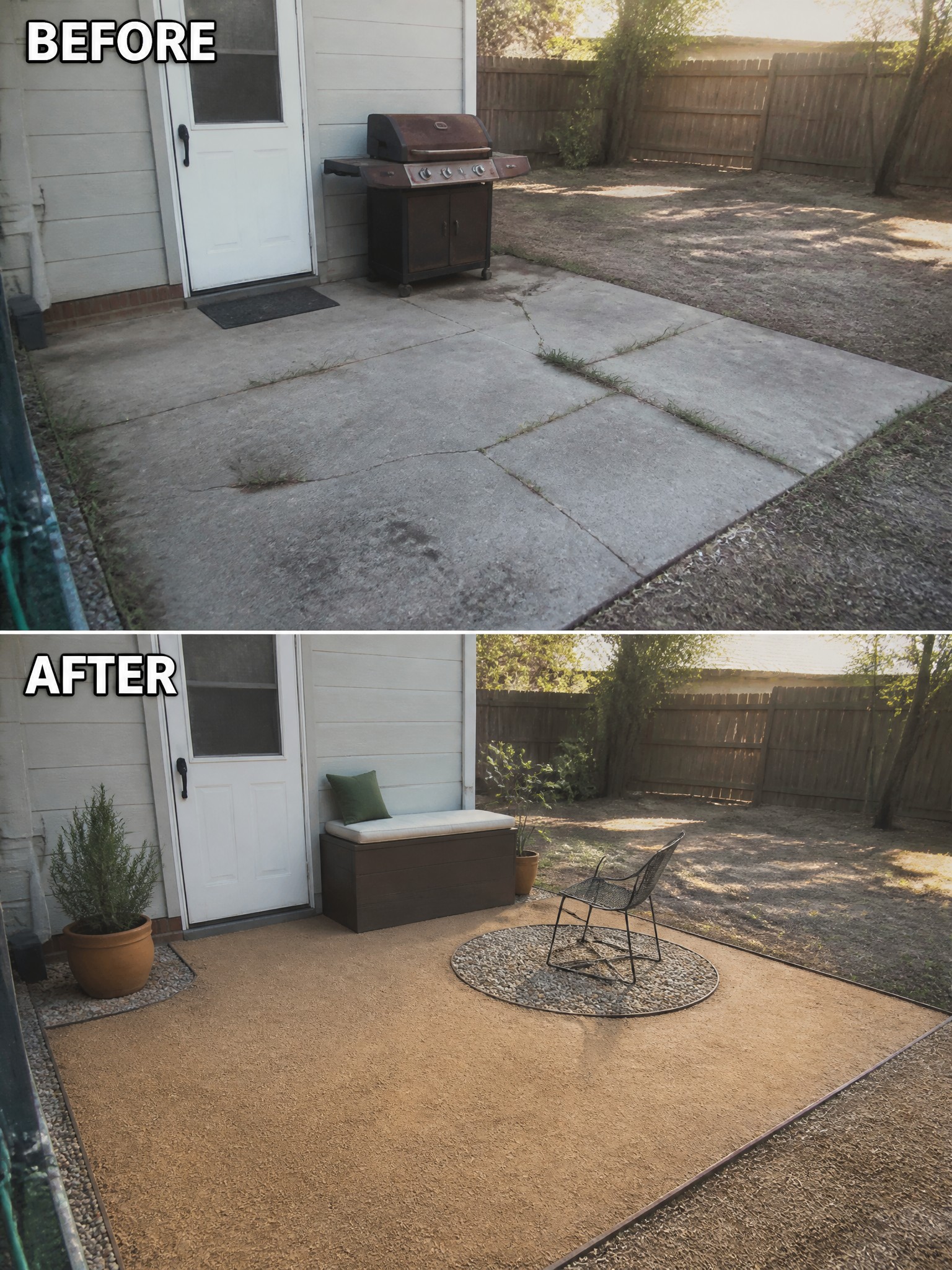
A large concrete slab often looks bare and needs constant cleaning. Replacing the hard surface with gravel creates a softer look that drains well and requires almost no upkeep. The change also makes it easier to place furniture without worrying about cracks or stains.
This approach works best in sunny backyards where grass struggles to grow. Keep the gravel layer thin enough for walking comfort, and choose a neutral color that matches your house. Add just a few weatherproof pieces like a bench and a chair to define the space without crowding it.
Create A Defined Seating Area With A Fire Pit
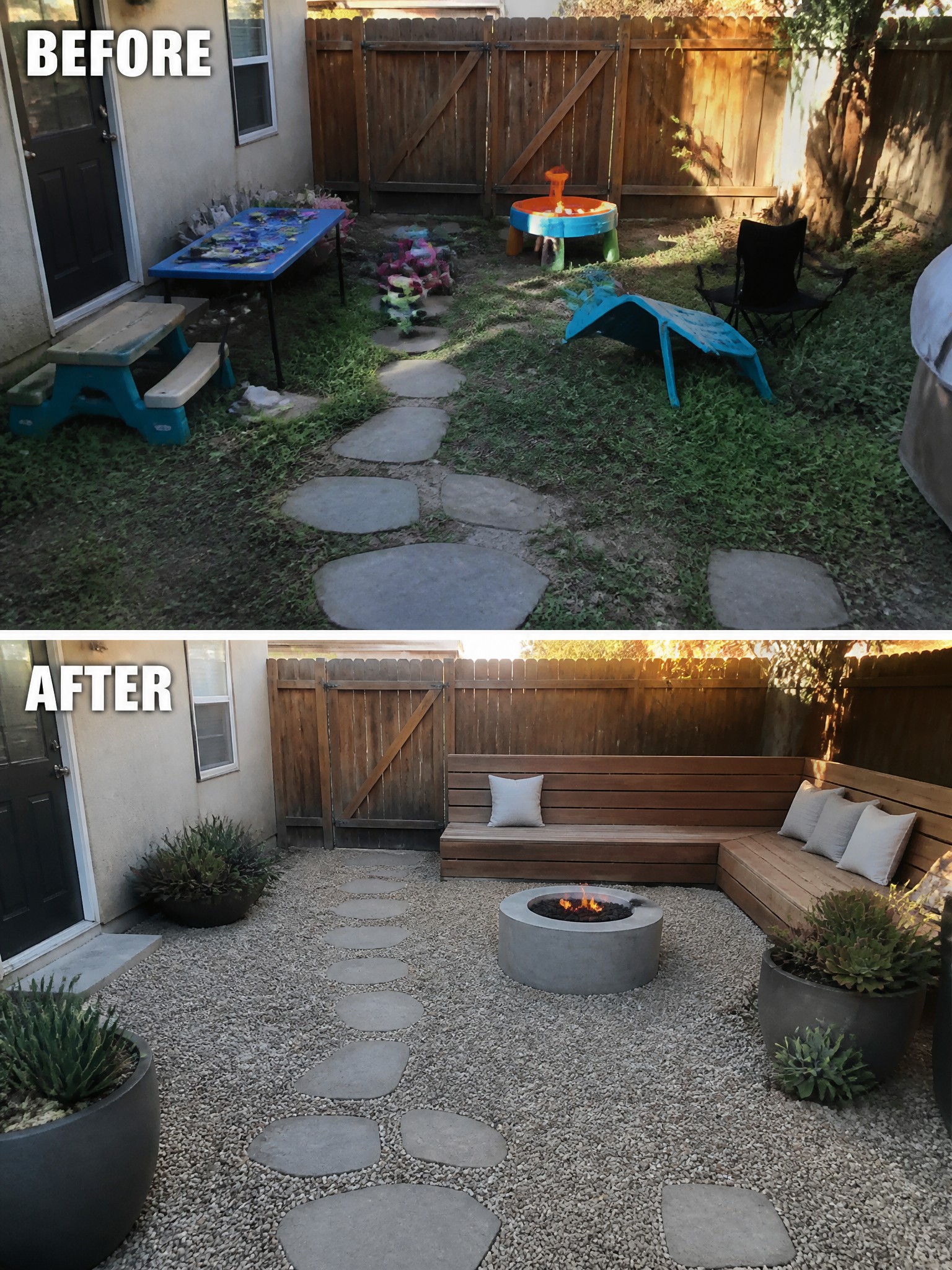
A messy backyard with toys and furniture scattered across the grass can feel hard to use. Replacing the lawn with gravel and adding a built-in wooden bench around a concrete fire pit gives the space a clear purpose. The stepping stones stay, but now they lead to a spot where people actually want to sit.
This approach works well in small yards that need low maintenance. Gravel cuts down on mowing and weeding, while the bench and fire pit create one main gathering spot instead of random furniture. Keep the bench simple, choose weatherproof cushions, and leave enough open gravel around the edges so the area still feels open.
Refinish An Old Deck Before Adding Decor
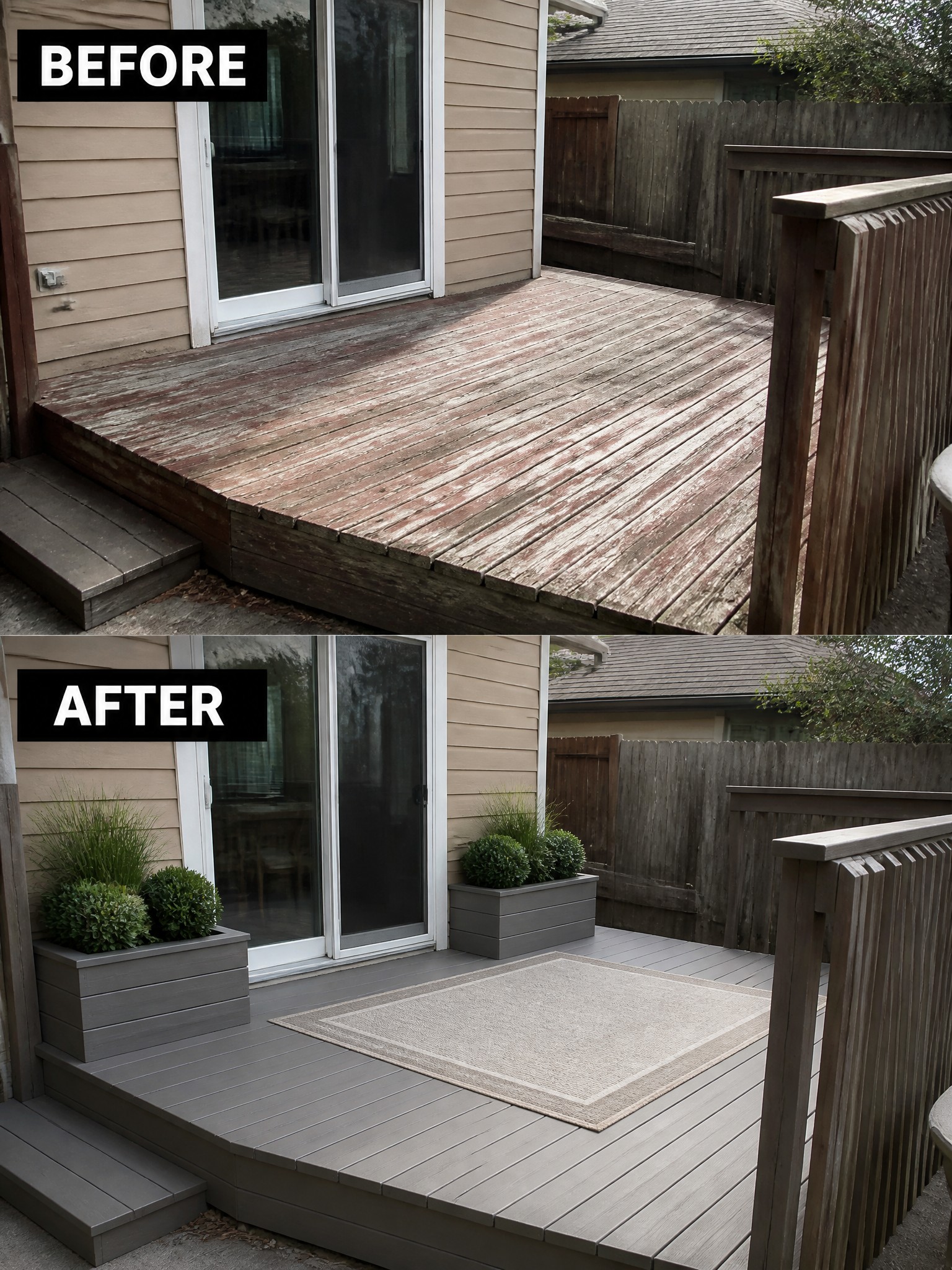
A weathered deck often looks worse than it needs to because the surface has faded and the wood has lost its protection. In this case the fix started with a new finish that brought the boards back to a consistent gray tone. Once the surface looked clean and uniform, two planters and one rug were enough to make the space feel ready for use.
This approach works well on any deck that still has solid structure but needs better weather protection. Choose a finish made for outdoor use and keep the added pieces simple so they do not create extra work later. A single rug helps define the main sitting area while the planters keep the edges tidy without requiring daily care.
Add Structure To An Overgrown Backyard
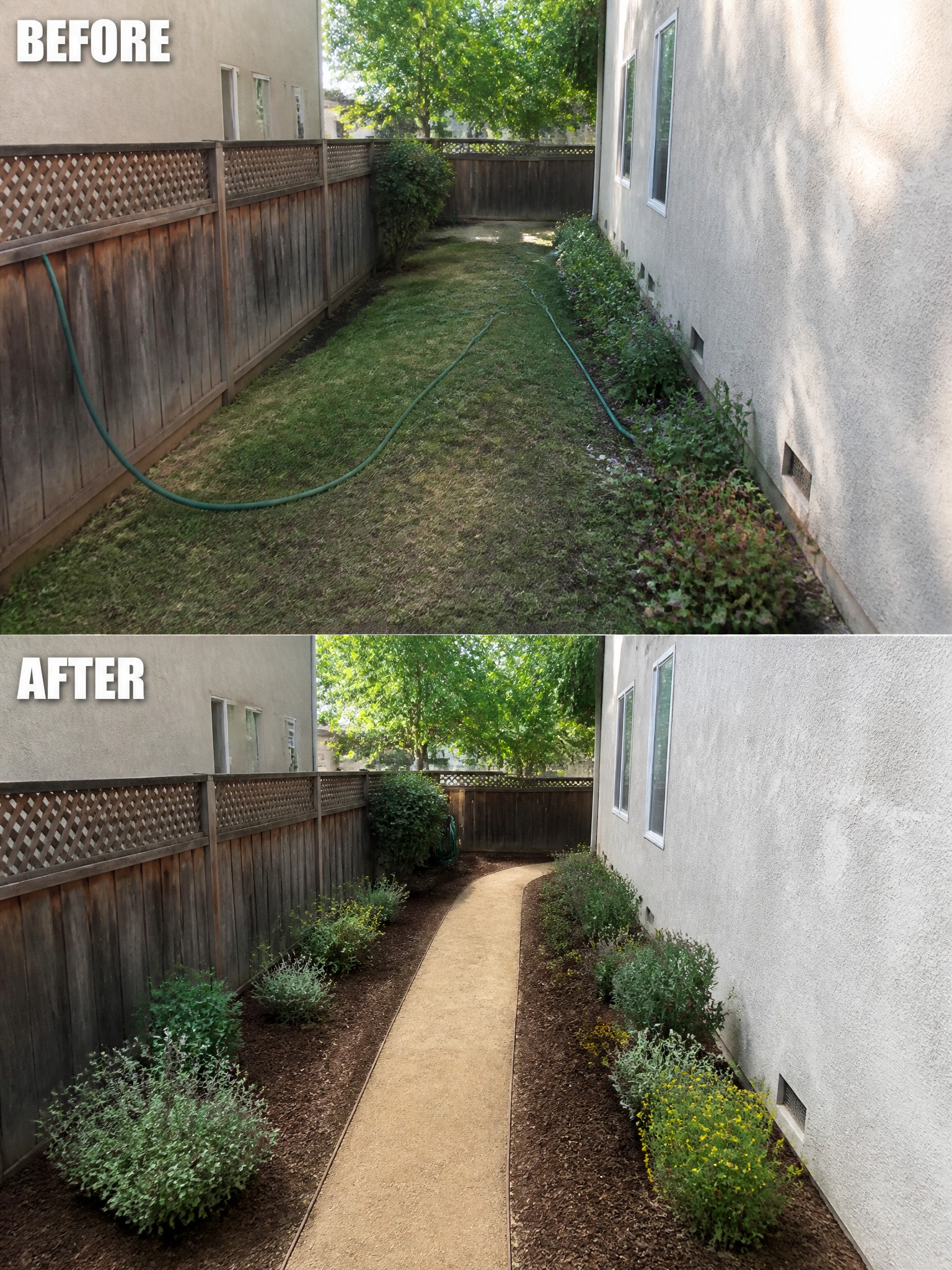
A narrow side yard with patchy grass and scattered plants is hard to keep neat. Adding a straight path and bordered beds with mulch turns the same space into something that feels planned and requires far less upkeep.
This works best in tight areas where a full lawn is more trouble than it is worth. Mulch and low shrubs reduce mowing and weeding while still leaving room to walk through without stepping on plants.
Add Structure To An Overgrown Side Yard
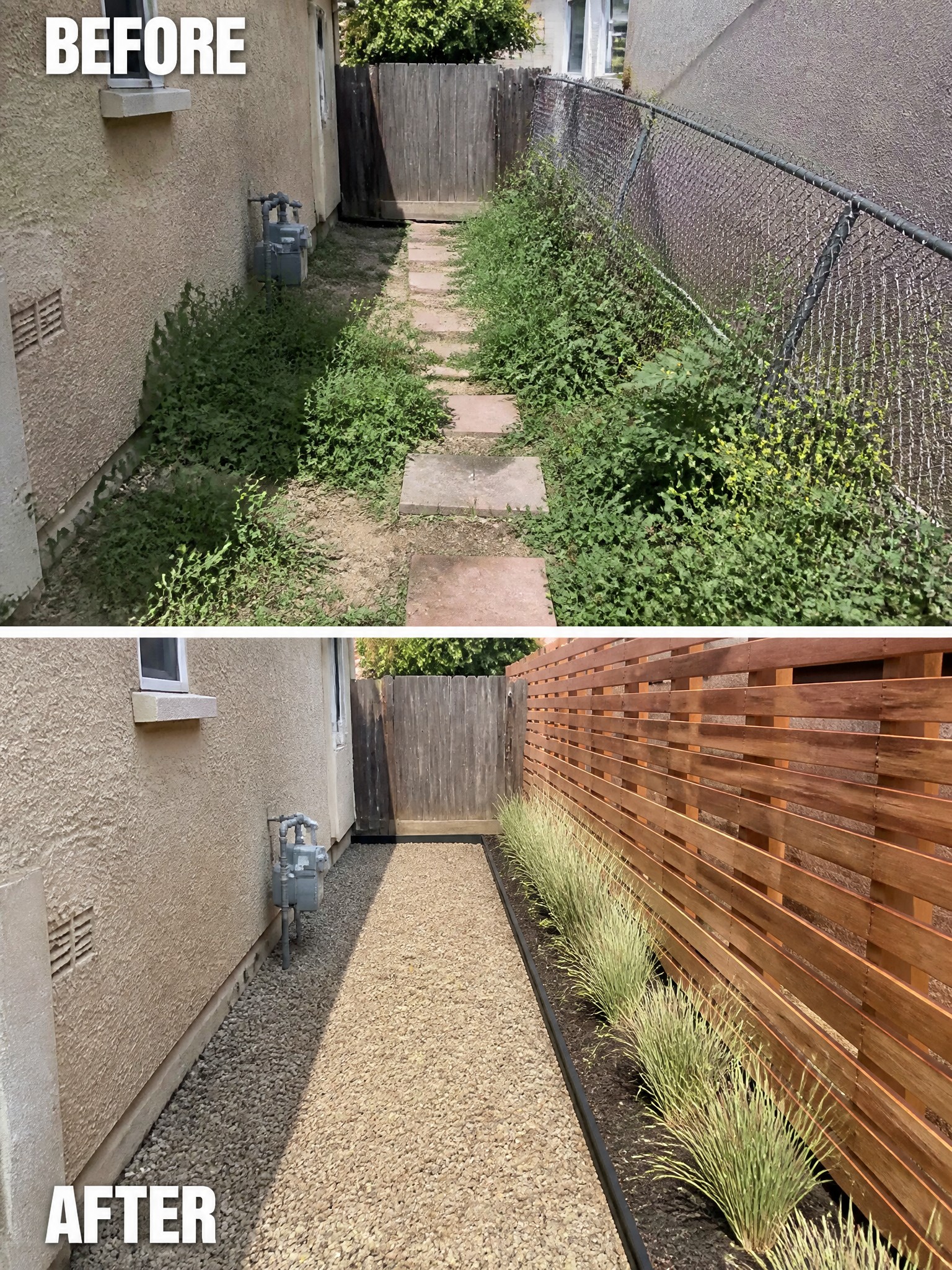
Many narrow side yards end up neglected because they feel too tight for real use. Clearing the weeds first and laying down a simple gravel path gives the space a purpose without crowding it. The new fence also replaces the old chain link, which instantly makes the area feel more private and finished.
This approach works well on any slim lot where you want low maintenance. Start with a solid base layer of gravel so water drains and weeds stay down. Then add a few low grasses along the fence line instead of filling the bed with lots of plants. The result stays tidy with very little ongoing work.
Use Pots To Bring Order To A Cluttered Backyard
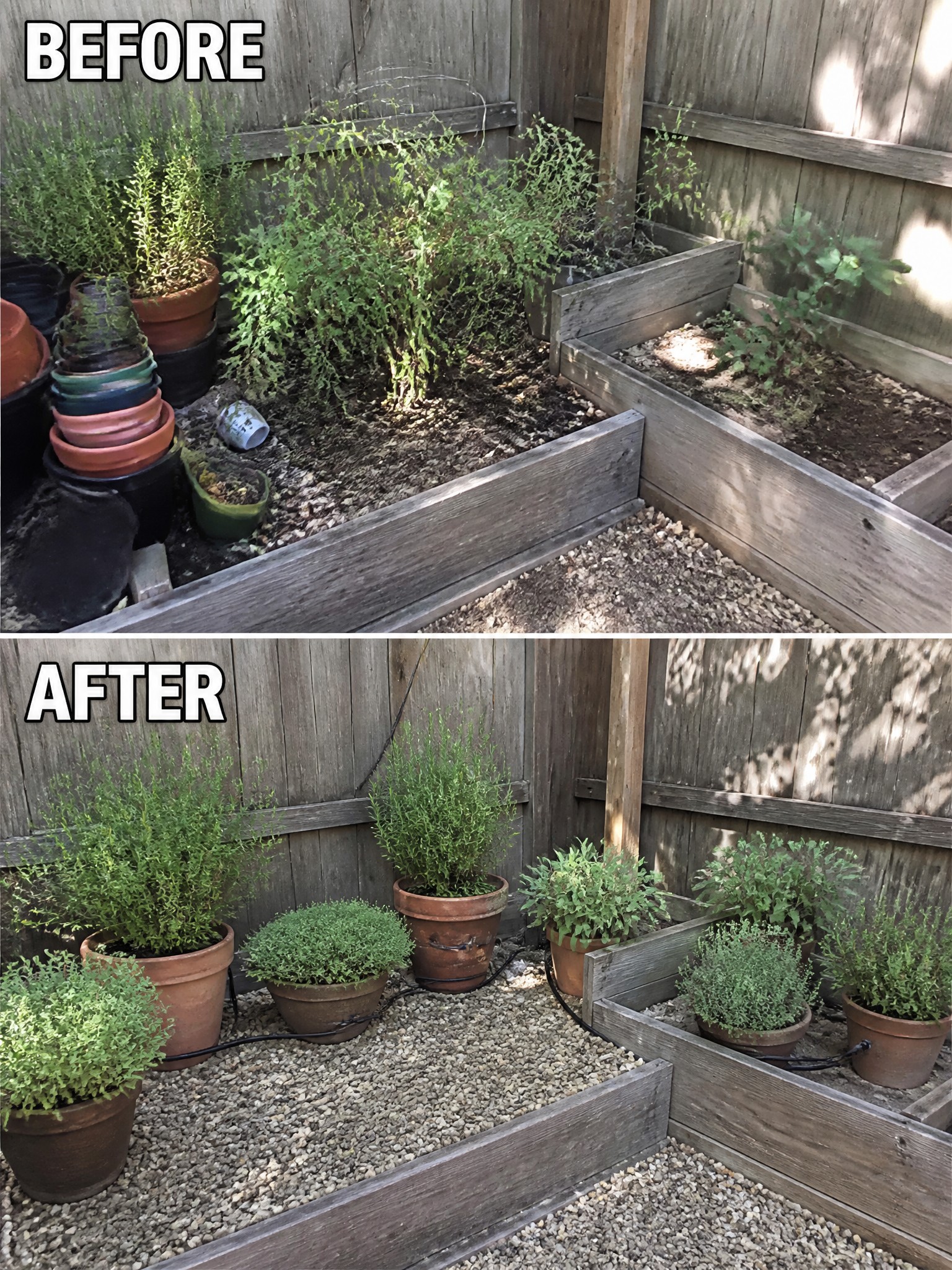
Many backyards start with plants scattered everywhere and beds that grow wild. Moving everything into matching pots and laying down gravel creates a clear layout that feels intentional instead of chaotic. The space becomes easier to walk through and water without fighting weeds or uneven ground.
This approach works well in small yards where in-ground beds are hard to maintain. Start by clearing what you do not want to keep, then group plants by size and sun needs before placing the pots. Gravel helps keep the area dry and stops mud from spreading, so the whole corner stays usable even after rain.
Clean Up Overgrown Edges With Gravel Borders
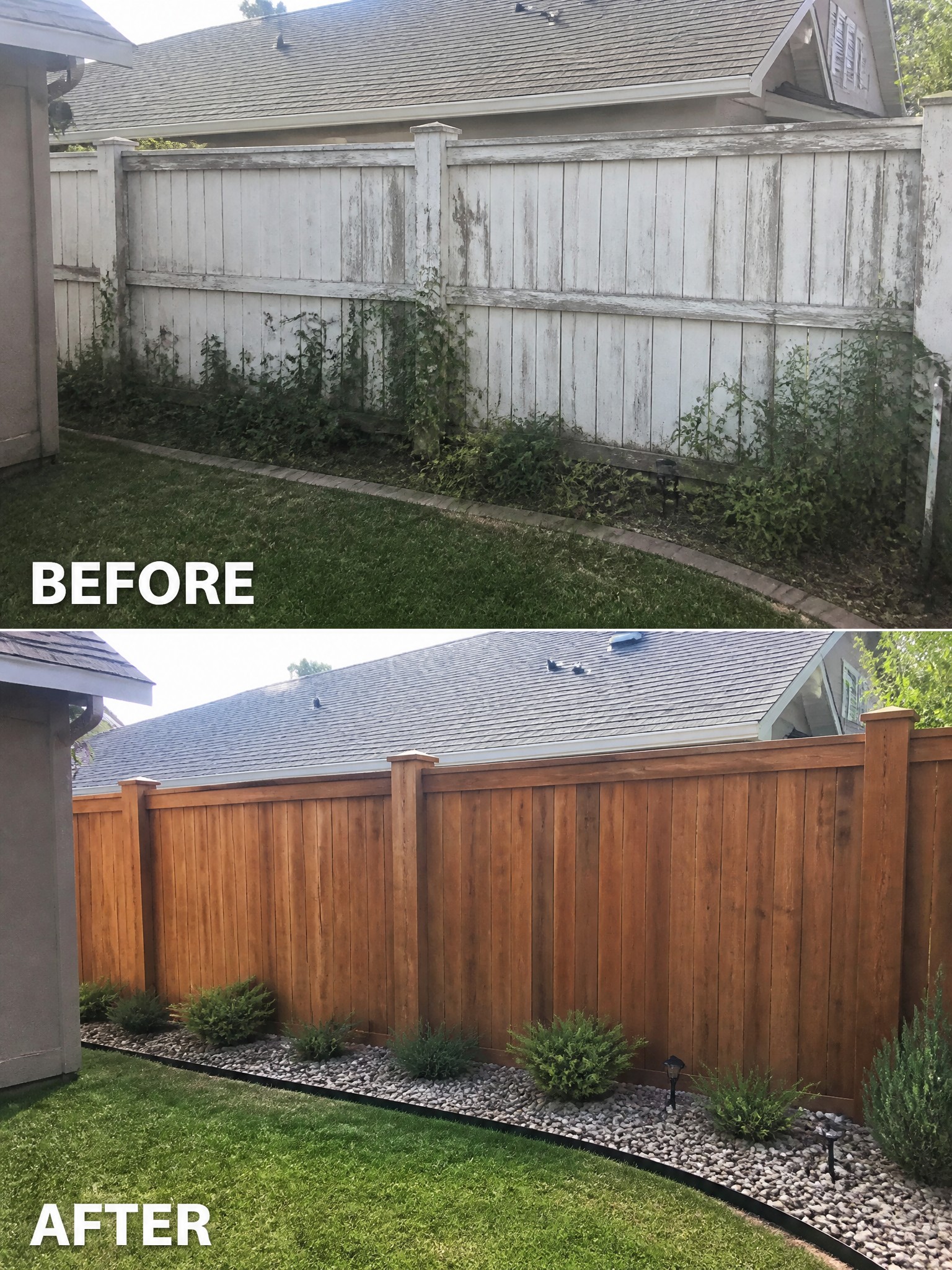
Many backyards start with the same issue. Weeds and vines creep along the fence until the whole edge looks messy and hard to manage. The simple fix is to clear that growth first, then lay down a clean gravel border with a few low shrubs. This gives the yard a finished look without constant weeding or mowing right up to the fence.
Gravel works well because it stays put and needs little upkeep once the edging is in place. Plant a few drought-tolerant shrubs along the strip so the border feels intentional rather than bare. The same approach works on any side yard or back fence where grass meets wood and things always get out of hand.
Add Simple Edging To Define Tree Areas
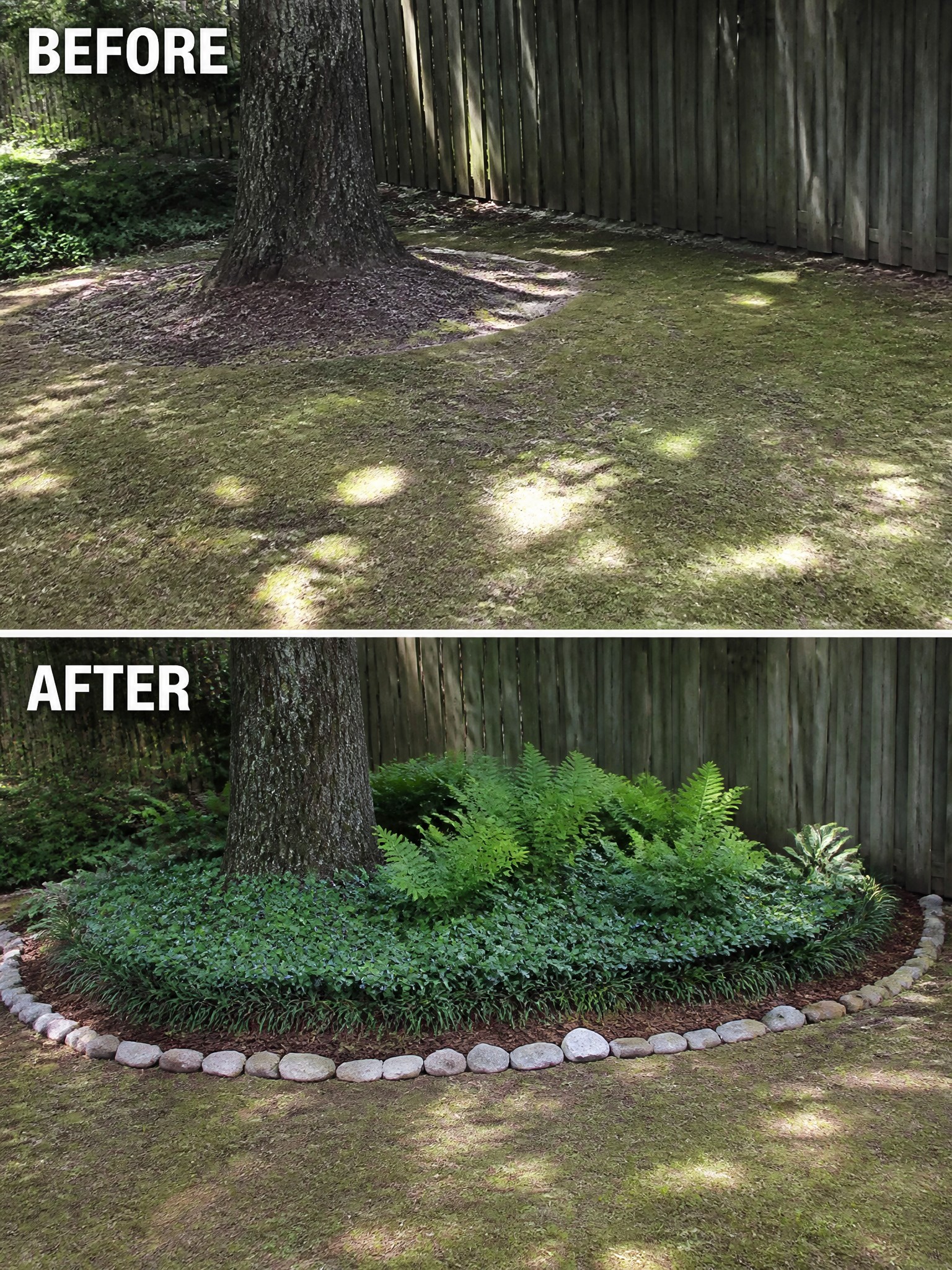
A bare patch under a tree often turns into a mossy mess that is hard to mow and looks unfinished. Adding a low stone border with mulch and shade plants turns the same spot into a contained bed that stays neat. The change is mainly in the ground plane, where the edge now holds everything in place instead of letting the lawn creep right up to the trunk.
This idea suits yards with mature trees where grass thins out in shade. Keep the bed narrow enough to walk around easily, use mulch to cut down on weeds, and pick tough ground covers that fill in without much care. The result is less trimming and a yard that feels more organized with very little ongoing work.
Break Up A Large Lawn With Planting Beds

A big empty lawn can feel like wasted space once you realize how little you actually use it. Replacing most of the grass with planted beds and a simple path turns the yard into something that feels more intentional and easier to manage over time.
This approach works well in sunny backyards where the lawn is mostly for looks rather than play. Start by deciding where you want to walk and sit, then shape the beds around those routes. Keep the plantings fairly low and use a mix of ground covers and grasses so the area does not need constant mowing or watering.
Add Structure To An Overgrown Backyard
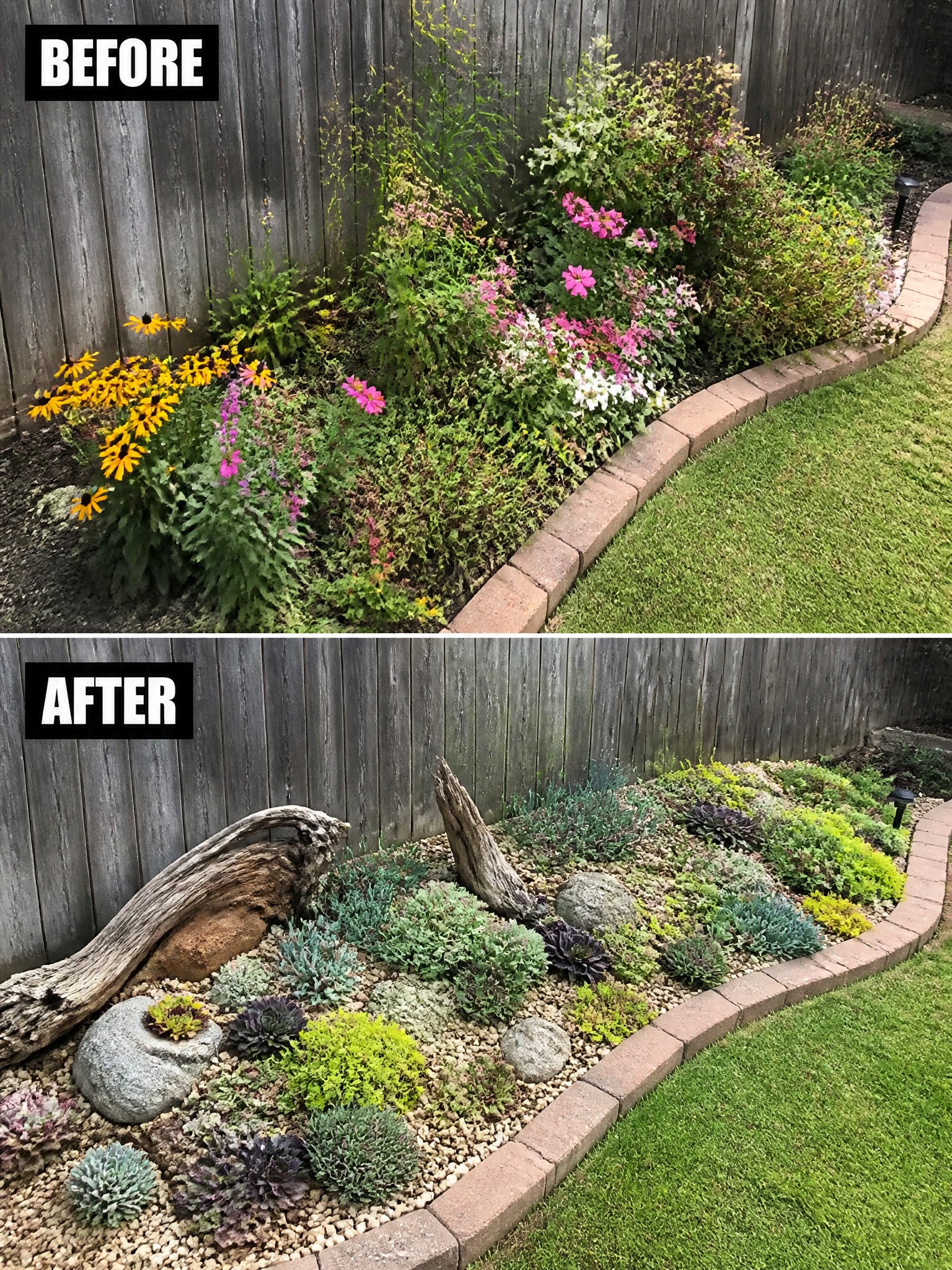
Many yards end up with a jumble of plants along the fence that looks messy and needs constant cutting back. Clearing the bed completely and covering it with gravel gives the space clean edges and stops weeds from taking over.
This idea works best in long narrow beds where you want low upkeep. Stick to a few tough plants like succulents, add a couple of larger rocks or pieces of driftwood, and leave open space between them so the bed stays easy to walk around and maintain.
Use Gravel To Define A Stepping Stone Path
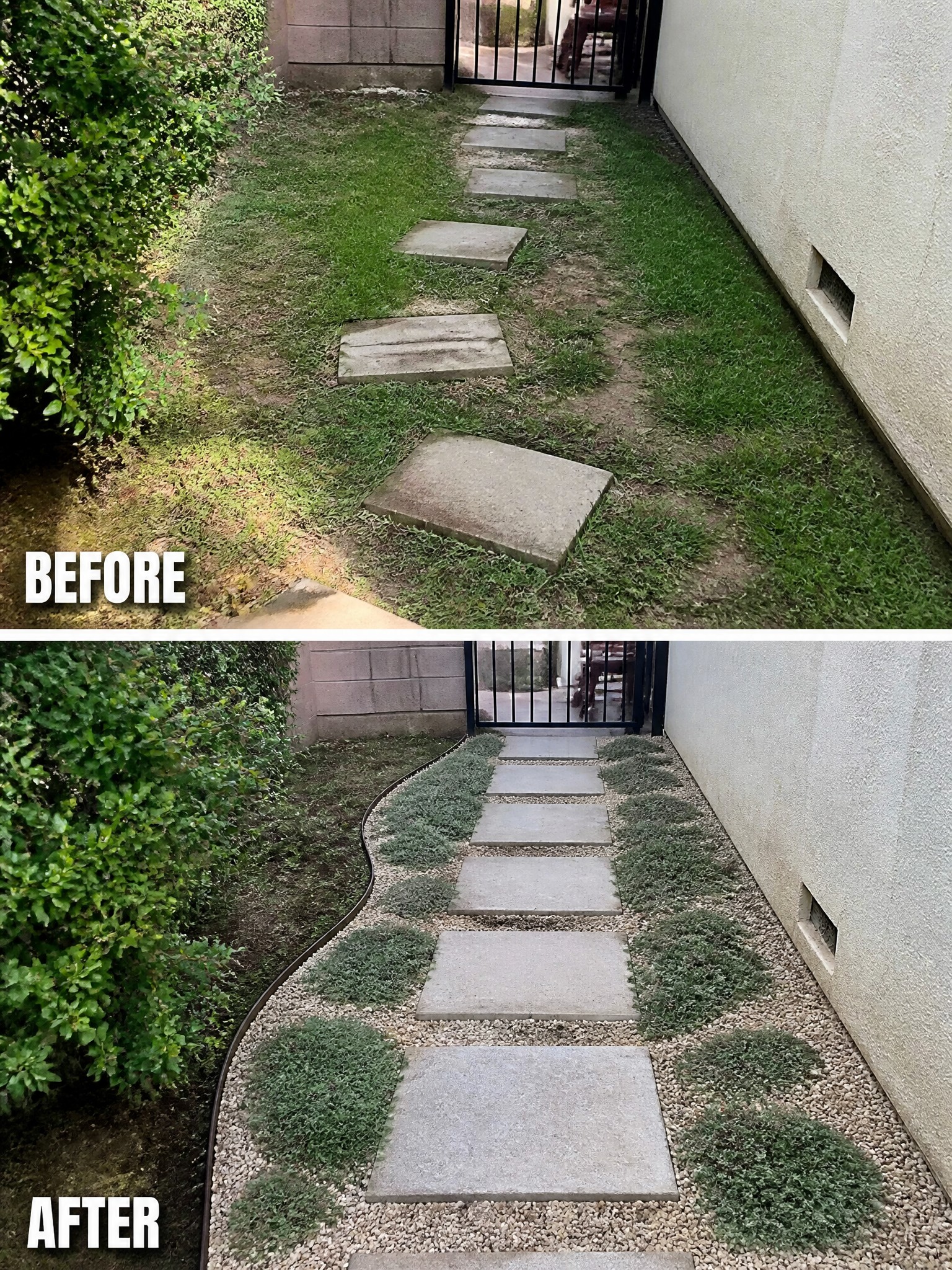
Stepping stones scattered across grass often end up looking messy because the lawn grows right up to the edges. Adding a strip of gravel on both sides creates a clear border that keeps the path looking intentional and stops the grass from creeping over the stones.
This approach works well in narrow side yards or back passages where you want something simple to maintain. Keep the gravel layer thin so it stays level, and choose a low ground cover that spreads slowly rather than one that needs constant trimming. The result is a path that stays usable without weekly mowing right up against the stones.
Clean Up Overgrowth Before Adding New Features
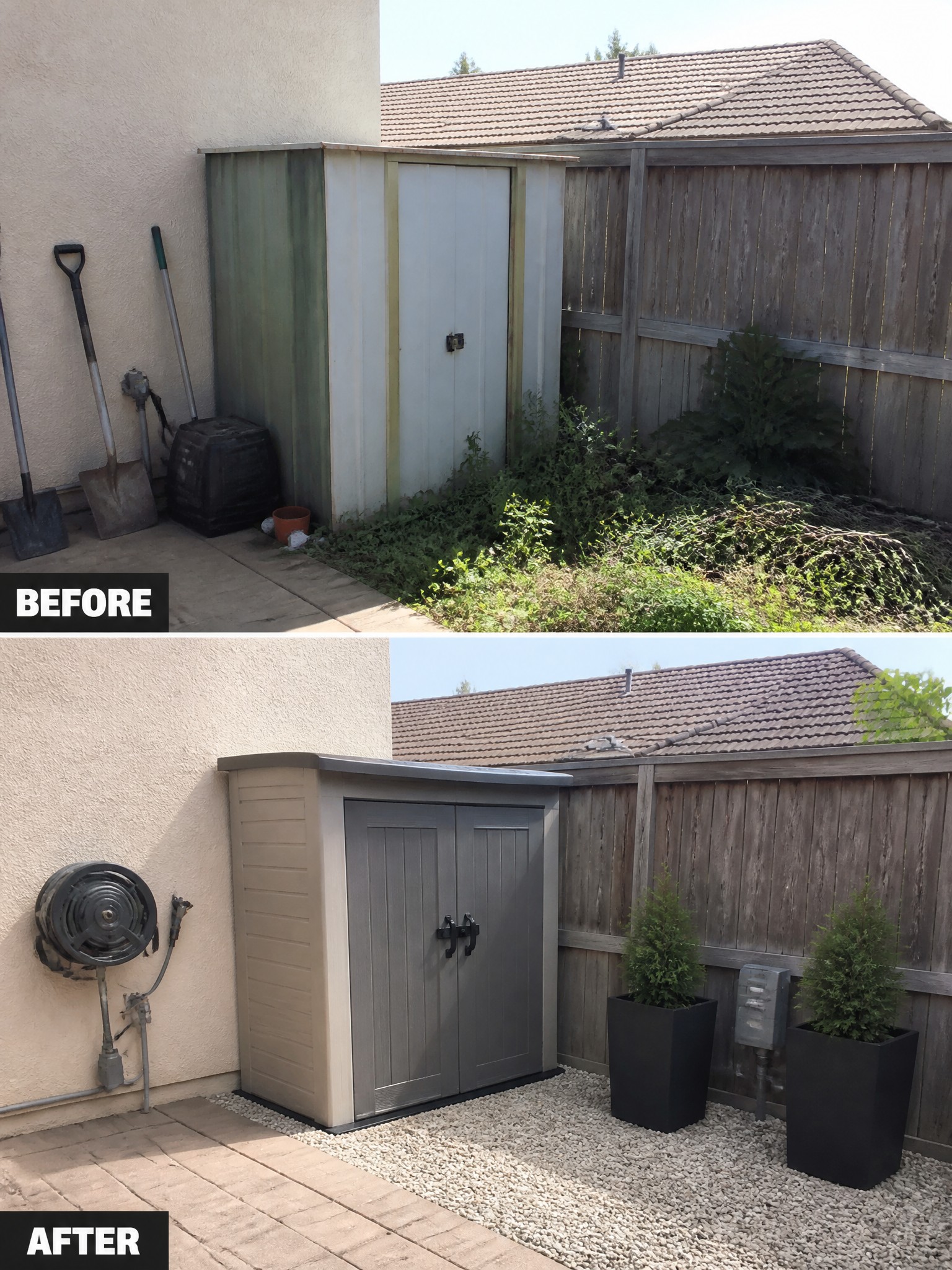
A messy, overgrown corner makes even a useful shed feel neglected. In this case the before photo shows weeds taking over the base of the old shed and tools scattered along the wall. Once the overgrowth was cleared and the ground covered with gravel, the same spot became much easier to maintain and the new shed could stand out without competing with the weeds.
This approach works well in small side yards or back corners where grass is hard to mow. Start by removing the worst of the growth and adding a simple gravel base before you spend money on a new shed or planters. The gravel keeps the area from turning muddy again and gives you a clean surface for pots or a hose reel without constant weeding.
Add Structure To An Overgrown Backyard
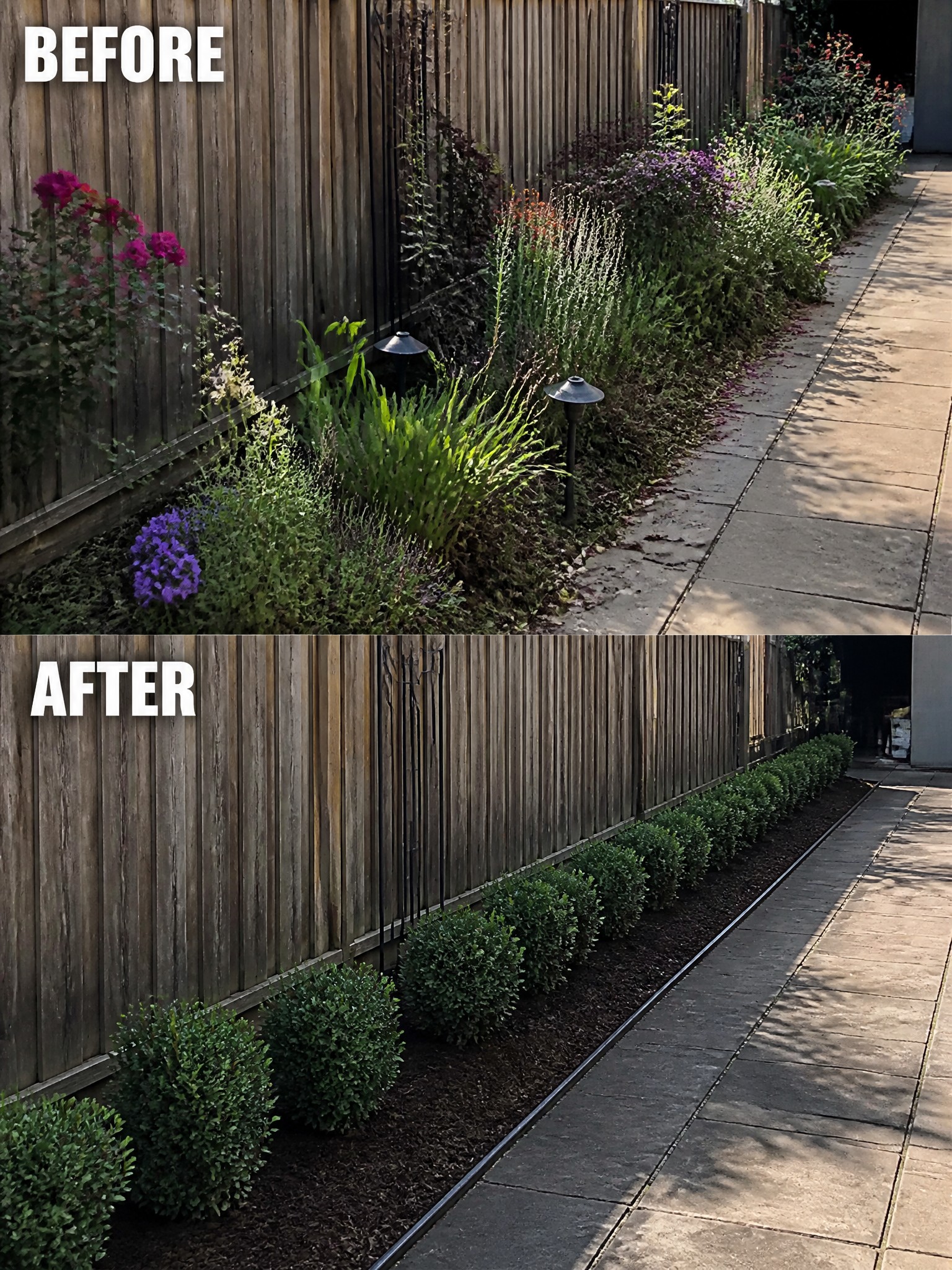
Clearing out mixed and messy growth first makes the biggest difference in a side yard like this one. The before photo shows a jumble of plants at different heights along the fence, while the after shows a straight row of round shrubs set in fresh mulch. That single change turns a neglected strip into something that looks intentional.
This idea works best along fences or paths where you want low maintenance. Pick one compact shrub, space the plants evenly, and use mulch to hold down weeds. It suits homes with long narrow beds that are hard to keep tidy because the result stays neat with very little ongoing work.
Add Structure With Large Planters And Gravel

A cluttered collection of mismatched pots often makes a small patio corner feel messy rather than green. Grouping plants into a few matching large containers and setting them on simple gravel beds creates clear lines and cuts down on daily sweeping and weeding.
This approach works well on concrete patios or side yards where you want low-maintenance planting without major construction. Choose weatherproof pots in one color, limit the number to three or four, and keep the gravel edge curved or straight so the space still feels open for walking through.
Replace Old Weedy Pavers For A Low Maintenance Patio
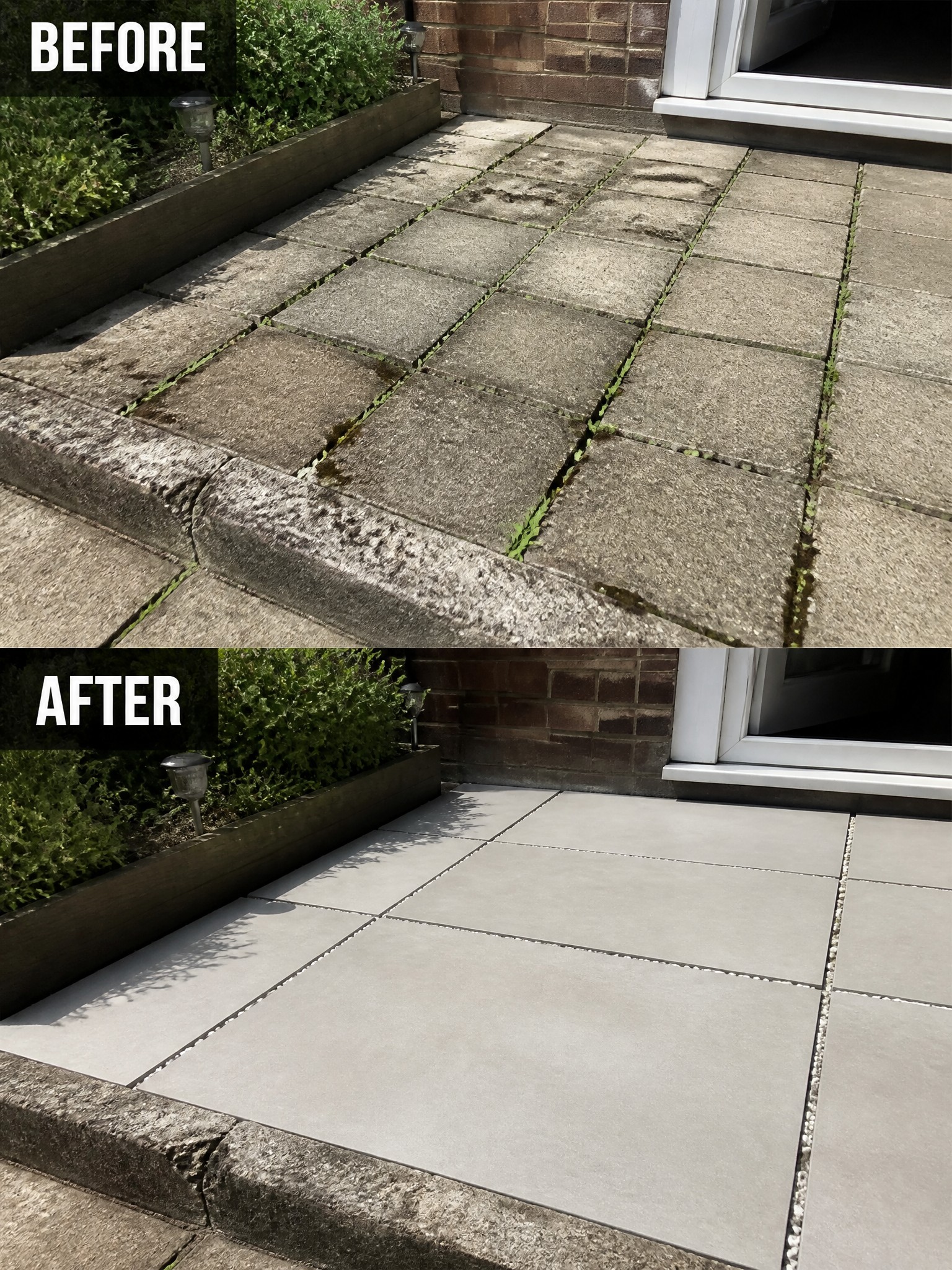
Old patio surfaces often become a constant battle with weeds and moss once the grout starts to break down. In this case the before photo shows cracked, dirty pavers covered in growth, while the after shows a fresh set of larger, light-colored pavers that leave almost no room for weeds to take hold. The change makes the whole area look cared for without requiring weekly scrubbing.
This approach works best on small patios or side yards where you want the space to stay usable but do not want to add furniture or plants right away. Choose pavers with tight joints and a slightly textured finish so they stay safer when wet and need little more than an occasional sweep.
Terrace A Sloped Yard To Create Usable Garden Beds

A bare sloped yard often stays empty because soil washes away and nothing stays level. Building low stone retaining walls turns the slope into flat terraces that hold soil in place and create room for planting. The shift from loose dirt to structured beds with mulch makes the whole space feel planned instead of neglected.
This idea suits homes with noticeable grade changes where a flat lawn is not realistic. Start with solid walls that handle drainage, then add a simple mix of shrubs and ground cover. Keep the plant choices low maintenance so the beds stay tidy without constant work.
Add A Shade Sail To Create Usable Patio Space
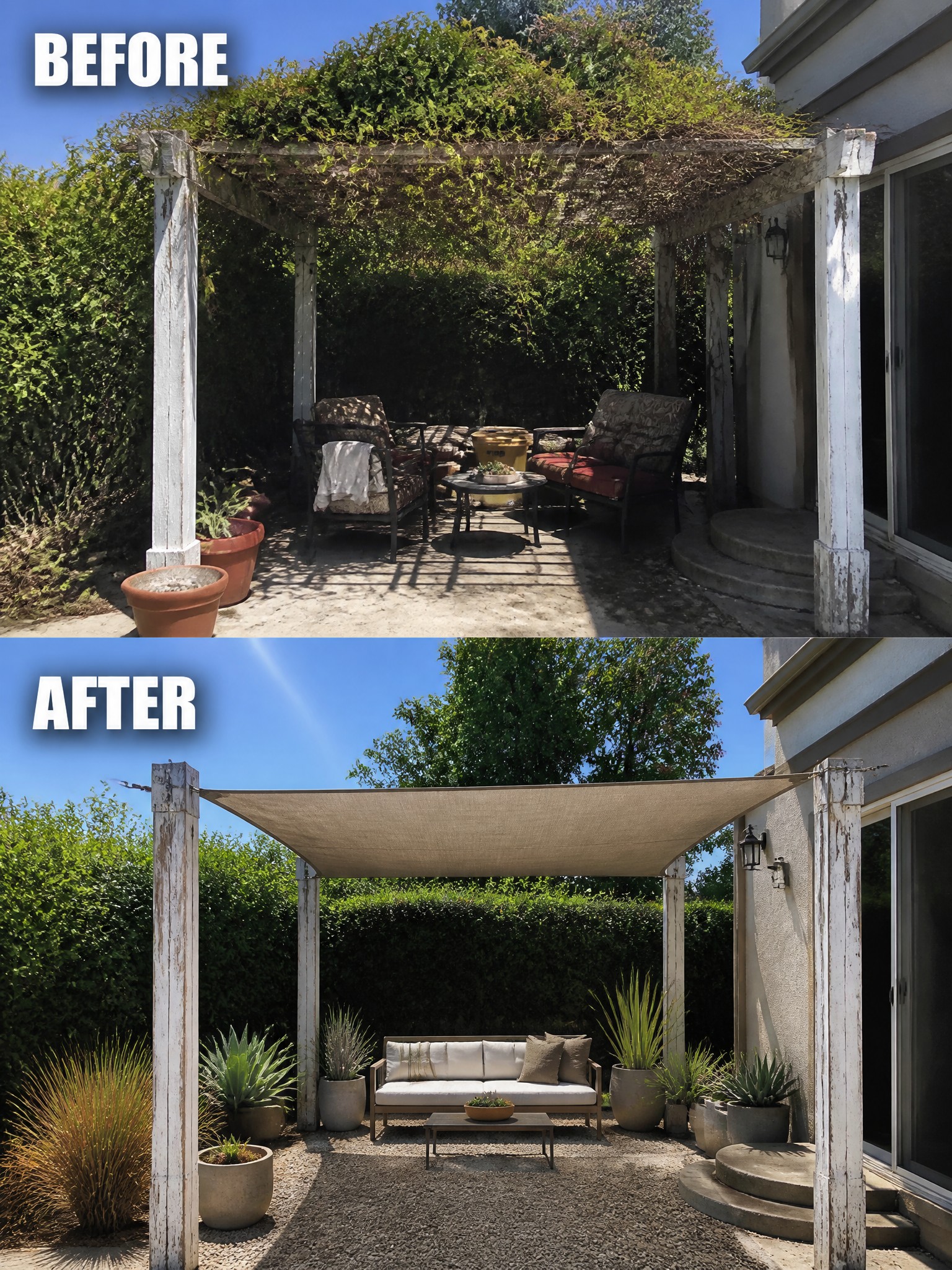
The before photo shows a pergola weighed down by heavy vines that created uneven shade and a cluttered feel. Replacing them with a single fabric shade sail gives steady coverage, opens up the view, and lets the seating area below feel like an actual room instead of an afterthought.
This idea works best on existing structures where the posts are still solid. Measure the space first so the sail sits at a slight angle for water runoff, then keep the furniture simple and weatherproof so the whole spot stays practical through the seasons.
Add Structure To An Overgrown Backyard
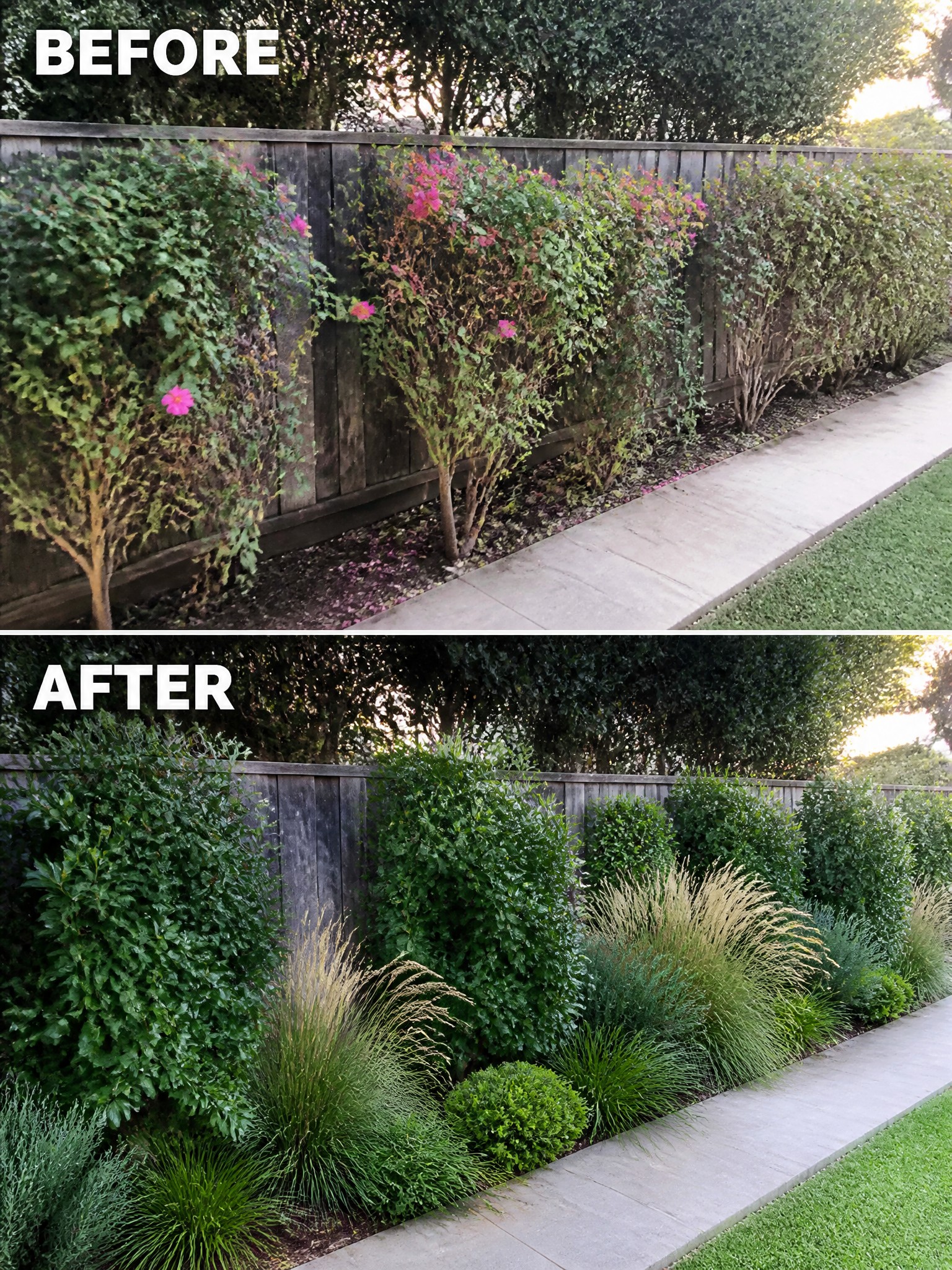
Many backyards start with a messy strip of shrubs that grow wild along a fence. The before photo shows exactly that, with uneven growth and no clear shape. In the after photo the same area has been cleaned up and replanted with layers of shrubs and grasses that stay neat and give the space a finished look.
The key is to start with removal, then plant in groups of different heights instead of letting everything fill in on its own. This approach works well along fences or property lines where you want privacy without constant trimming. Keep the beds narrow enough to reach from the path so maintenance stays simple.
Replace A Soggy Lawn With Gravel And Defined Beds

A lawn that collects water after rain often creates more problems than it solves. In this case the grass was replaced with a layer of gravel that lets water drain away while keeping the surface usable year round. The planting was then pulled into clear beds along the fence line so everything stays contained and easy to maintain.
This approach works well in backyards that stay damp or see heavy foot traffic. Start by removing the turf and adding a simple border to hold the gravel in place. Then choose a few shrubs or potted plants that can handle the conditions instead of trying to grow a full lawn. The result is a yard that looks tidy without constant mowing or watering.
Use Pavers To Define A Simple Outdoor Patio

Many backyards begin as bare dirt or patchy grass with nowhere comfortable to sit. Adding a paved section gives the space a clear floor and makes it feel like an actual room you can use. The shift from loose ground to a square of pavers lets a table and chairs sit level and stay clean.
This idea suits small yards that need low maintenance. Keep the paved area modest in size, choose durable outdoor furniture, and add a few planters around the edges so the space feels finished without constant upkeep. String lights can extend the hours you spend there once the base is solid.
Frequently Asked Questions
Q: How do I choose plants that actually survive without daily watering?
A: Check what already grows well in nearby yards or parks. Stick with those same native options and group them by similar water needs. They settle in faster and need far less attention after the first season.
Q: Will gravel paths get messy with leaves and debris over time?
A: Rake them lightly a few times a year. The open surface lets most small bits sift through or blow away on their own. You avoid the buildup you see with solid paving.
Q: Can I add seating without creating another surface to clean?
A: Place a simple bench right on the grass or existing gravel. It stays usable without extra sweeping or sealing. Move it only when you mow or refresh the ground layer.
