

Many backyards end up as afterthoughts because they lack defined areas for walking or sitting without sinking into grass or mud.
Pavers solve that by creating stable surfaces that stand up to weather and foot traffic year after year.
I tend to think about daily use first when planning any changes out there since looks alone rarely keep people coming outside.
Plants then fill in around the pavers to soften the look and bring in birds or bees that make the space feel alive.
Small adjustments like these add up without needing a complete overhaul of the yard.
Use Pavers To Create A Defined Seating Area

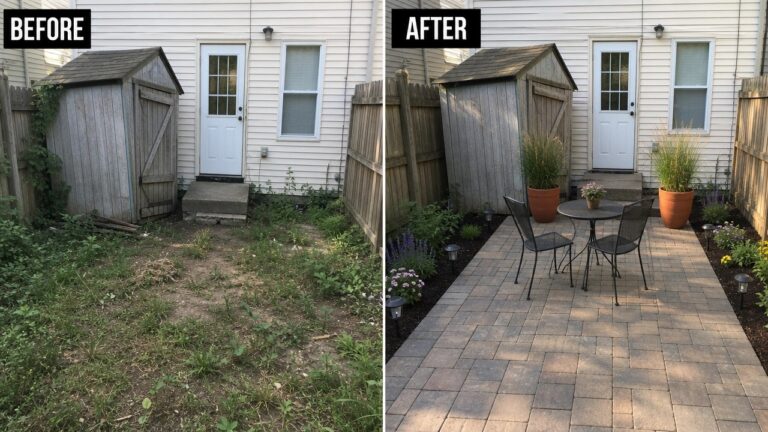
An overgrown backyard often feels like wasted space until you give it a clear floor. Adding pavers turns the patchy grass into a solid, usable surface that can hold furniture without sinking or looking temporary. The simple addition of a small table and chairs immediately shows the area has a purpose.
This idea works best in narrow side yards or back corners where grass struggles but there is still room to move around the furniture. Start with a basic paver layout that fits your seating needs, then add a few large pots so the planting stays low-maintenance and easy to adjust. Keep the rest of the yard simple so the paved zone stays the main focus.
Turn A Bare Patio Into A Seating Area
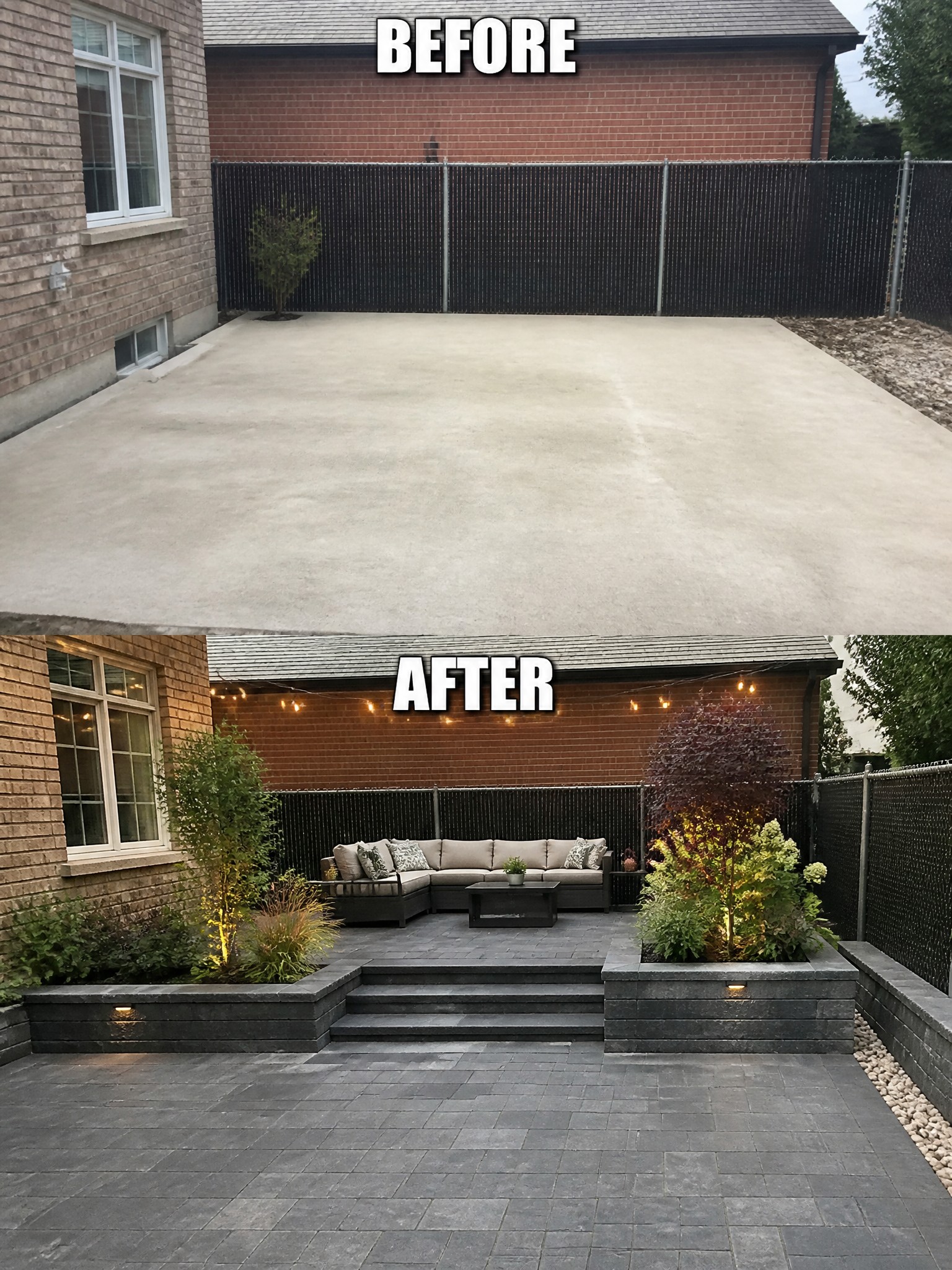
A plain concrete slab often sits unused because it lacks any sense of purpose. Laying pavers over the surface gives the space a finished floor, while raised planters and a sectional create clear zones for sitting and moving around.
This idea works best in backyards that already have a solid base but feel empty. Focus first on the hardscaping to set boundaries, then add plants in a few key spots so the area feels balanced rather than crowded.
Add Structure To An Overgrown Backyard

A loose gravel path through tall grass often leaves a yard feeling messy and unplanned. Switching to pavers gives the same route a clear shape and stops the lawn from creeping in. The change also makes room for simple garden beds along the edges so plants stay contained instead of spilling onto the walkway.
This idea works best in backyards that already have a gate or destination at the end of the path. Clear the overgrowth first, then lay the pavers in a gentle curve to improve flow. Keep the beds narrow enough that mowing stays easy and the new plants have room to fill in without crowding the walkway.
Turn Bare Concrete Into A Paved Outdoor Dining Spot
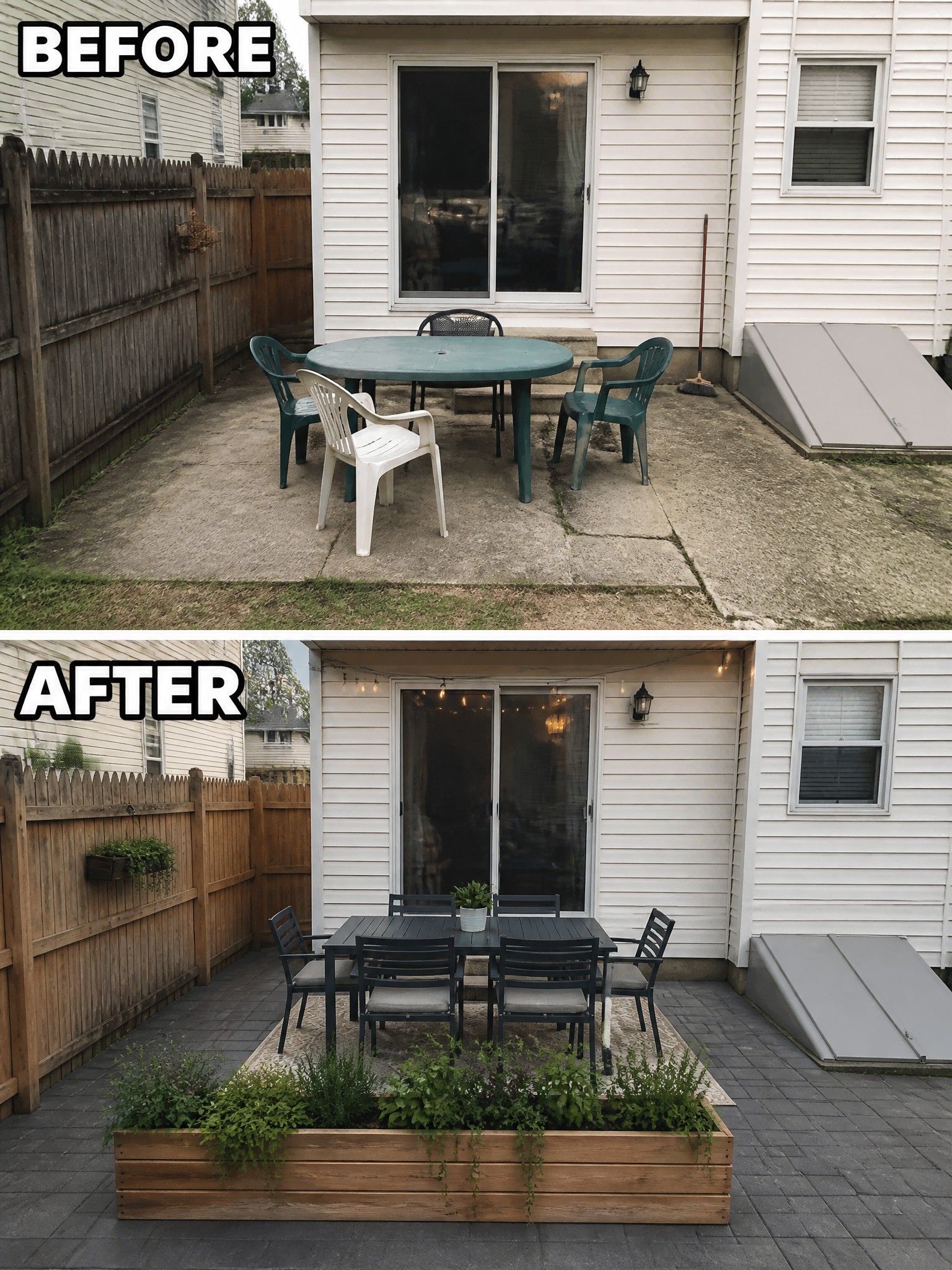
A plain concrete slab often feels like wasted space because it has no clear purpose. Laying pavers gives the area a finished floor, which instantly makes it feel like a real room instead of leftover ground. Adding a large planter at one edge helps anchor the table and chairs so the layout feels intentional rather than scattered.
This approach works well in small backyards where you need every square foot to count. Start with the pavers to set the boundaries, then bring in weatherproof furniture and one or two big planters. Keep the middle open for walking and make sure the rug sits fully under the table so the space stays balanced.
Use Pavers To Define An Outdoor Fire Pit Area
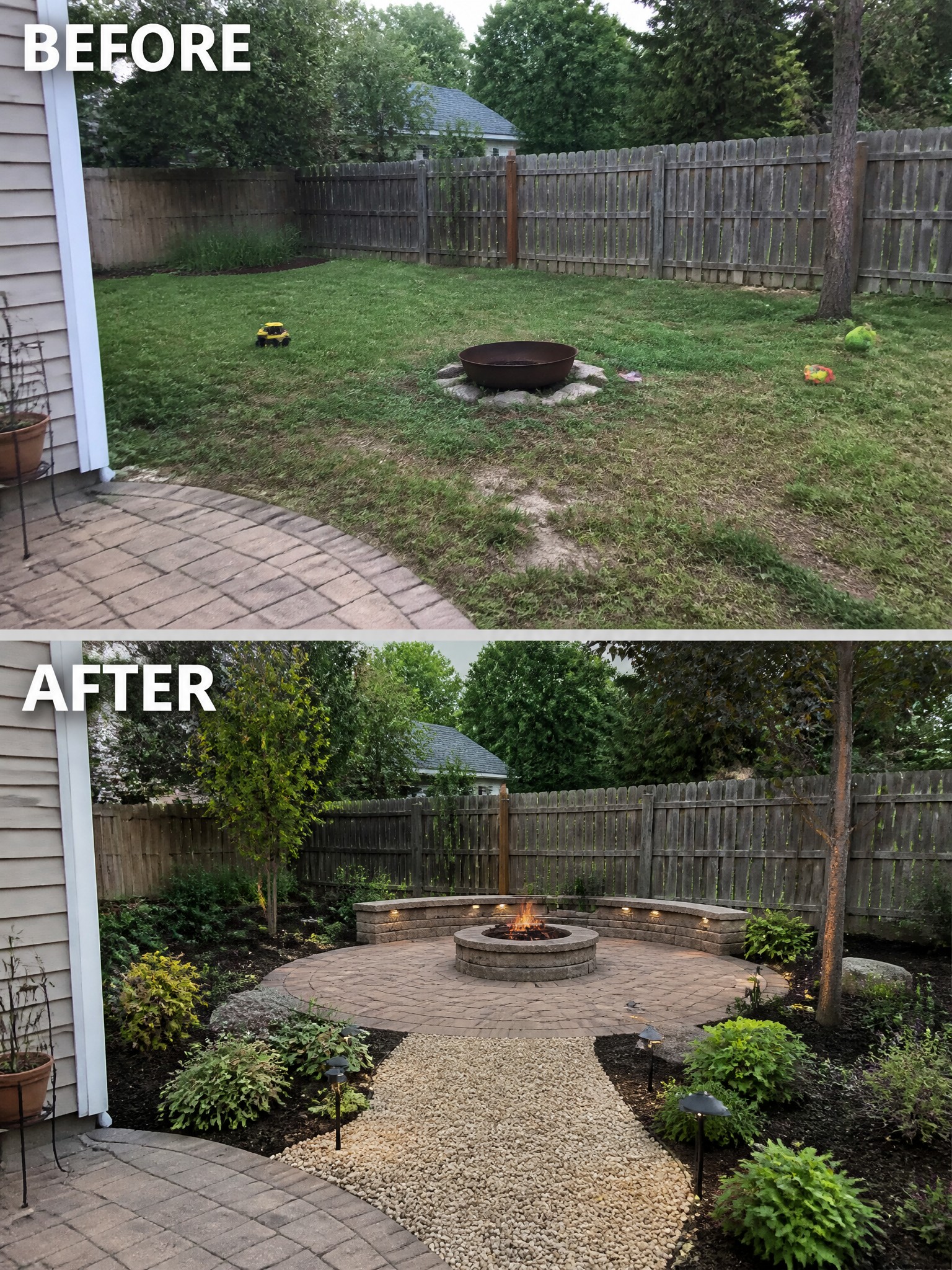
A bare backyard with just a lone fire pit sitting on the grass can feel unfinished and hard to use. Adding a circle of pavers around the fire pit, plus a low seating wall, gives the space a clear purpose and makes it feel like a real room outside. The simple gravel path and added plants keep everything grounded without crowding the area.
This approach works well in medium or larger yards where you want one main gathering spot. Start with the pavers to set the shape, then add plants around the edges so the lawn stays open and easy to maintain. Keep the scale modest so there is still room to walk around the seating.
Turn A Plain Concrete Path Into A Defined Walkway
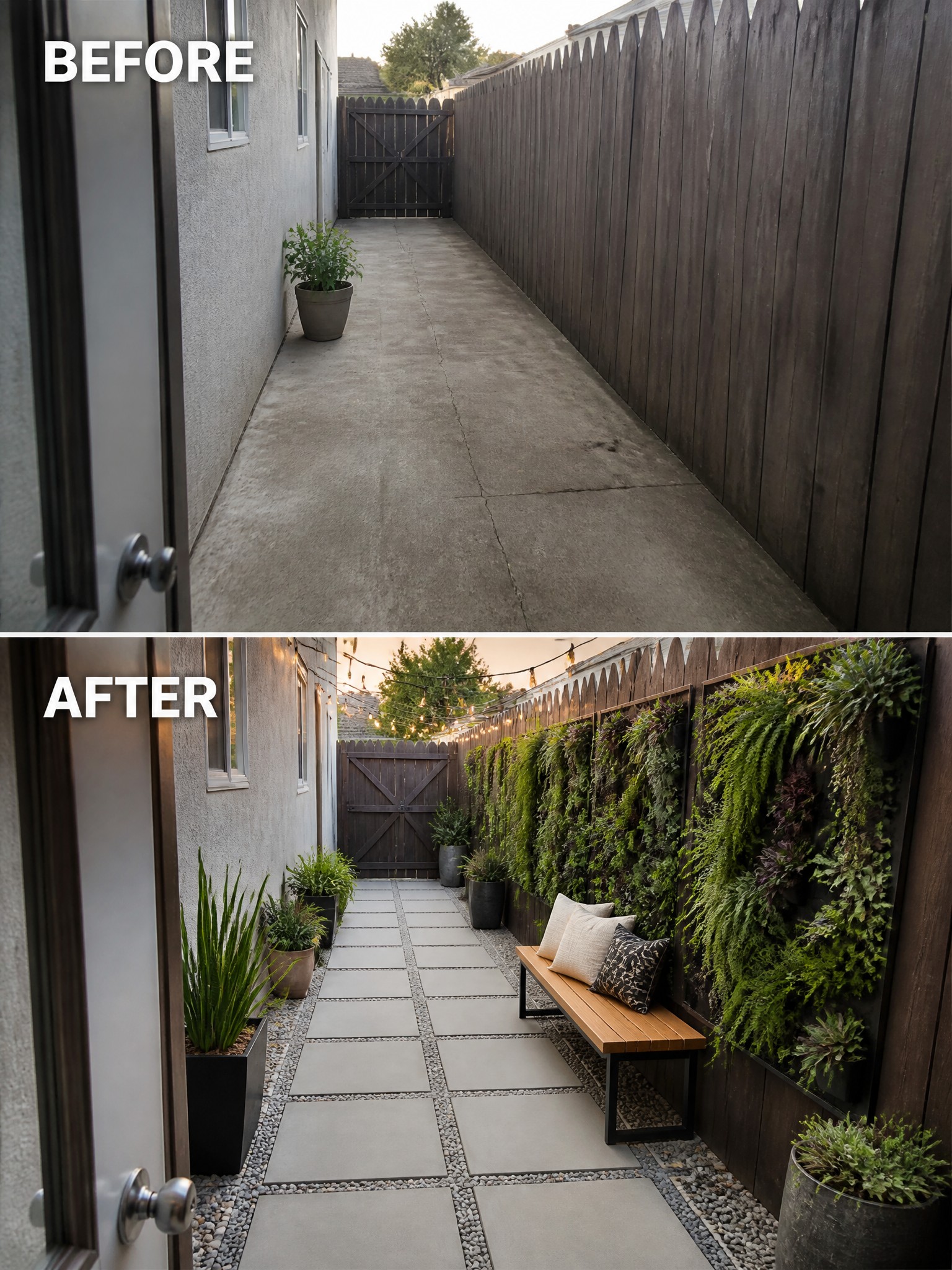
A narrow side yard with nothing but concrete often feels like wasted space. Laying pavers in a simple grid with gravel borders gives the area clear structure, while adding potted plants and a bench turns the path into something you can actually use.
This approach works well in tight yards where there is little room for wide beds or large furniture. Keep the paver layout straight, repeat the same plant containers along one side, and add a single bench near the middle so the space feels intentional without crowding the walkway.
Use Pavers To Give Structure To A Backyard Path

A simple dirt trail through the lawn often leaves the yard feeling unfinished. Adding a row of concrete pavers turns that loose path into a clear walkway, while gravel edges and planted borders keep the lawn neat and the beds from spilling over.
This approach works well in long, narrow yards where you want a main route without paving the whole space. Start with the path itself, then add low plants along the sides so the walkway feels intentional rather than added on later.
Add Structure To A Sloped Backyard

A steep slope with no clear path often stays messy and hard to use. The original area had an uneven dirt track and a drainage channel that collected water at the bottom. Adding pavers to form steps and building low retaining walls gave the slope a clear shape and made it simple to walk from one level to the next.
This idea works best on yards with noticeable elevation changes where you need better access. Clear the overgrowth first, then set the hardscaping before adding plants along the edges. Keep the steps wide enough for comfortable footing and leave planting space on the sides so the area does not feel too built up.
Use Pavers To Turn A Concrete Pool Deck Into A Seating Area
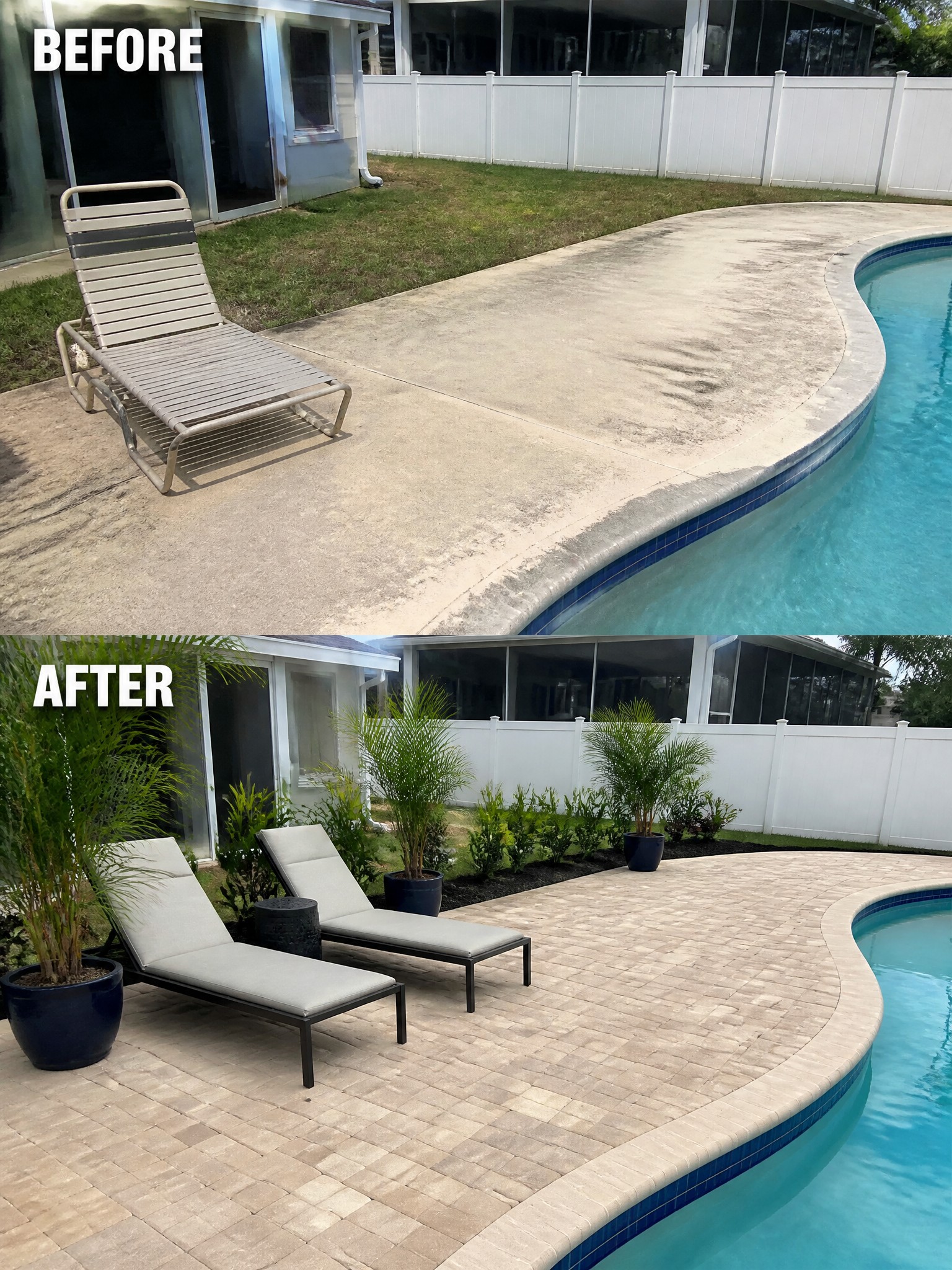
The before photo shows a plain concrete deck around the pool that feels unfinished and hard to use. Switching to pavers creates a more stable surface that looks cleaner and gives the area a clear purpose as a place to sit.
This idea works best on pool decks that already have the basic shape but lack any real structure. Keep the furniture simple with two or three lounge chairs, add a few large pots with palms or shrubs along the edge, and make sure the pavers stop short of the pool coping so water can drain properly.
Use Pavers To Create A Defined Path Through A Wet Yard

A muddy path that turns slick after rain makes the backyard feel unfinished and hard to use. Switching to a grid of pavers with grass growing through the openings gives a firm surface while still letting water drain. The change turns the same route into something you can walk on without tracking mud everywhere.
This idea works best in side yards or back areas that stay damp for weeks. Lay a good base first so the pavers stay level, and keep the planting simple along the edges so the path stays the main feature. It is a practical fix that does not require covering the whole yard in solid concrete.
Use Pavers To Create A Defined Backyard Seating Area
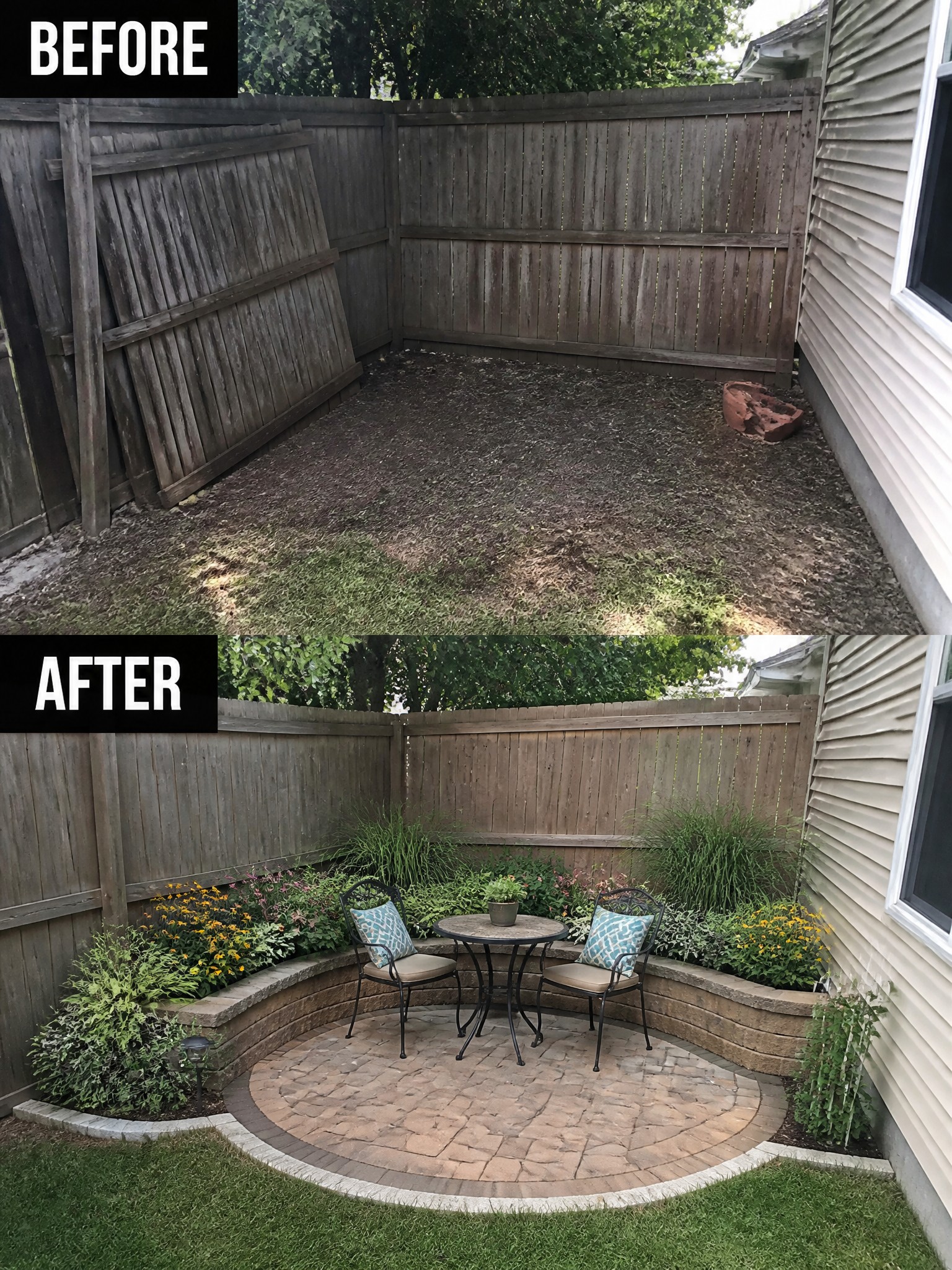
A bare dirt yard often feels like wasted space until you give it a clear shape. Adding a paver patio with a curved retaining wall turns that empty corner into a usable spot for chairs and a table. The before photo shows nothing but open ground against the fence. The after shows how a simple paved circle and planted beds make the area feel intentional and ready for sitting.
This approach works well in small or medium backyards where you want one main gathering spot without crowding the whole lawn. Start with the paver layout first, then add the border planting so the seating area stays the focus. Keep the furniture scale modest so there is still room to walk around the edges.
Add Structure To An Overgrown Side Yard
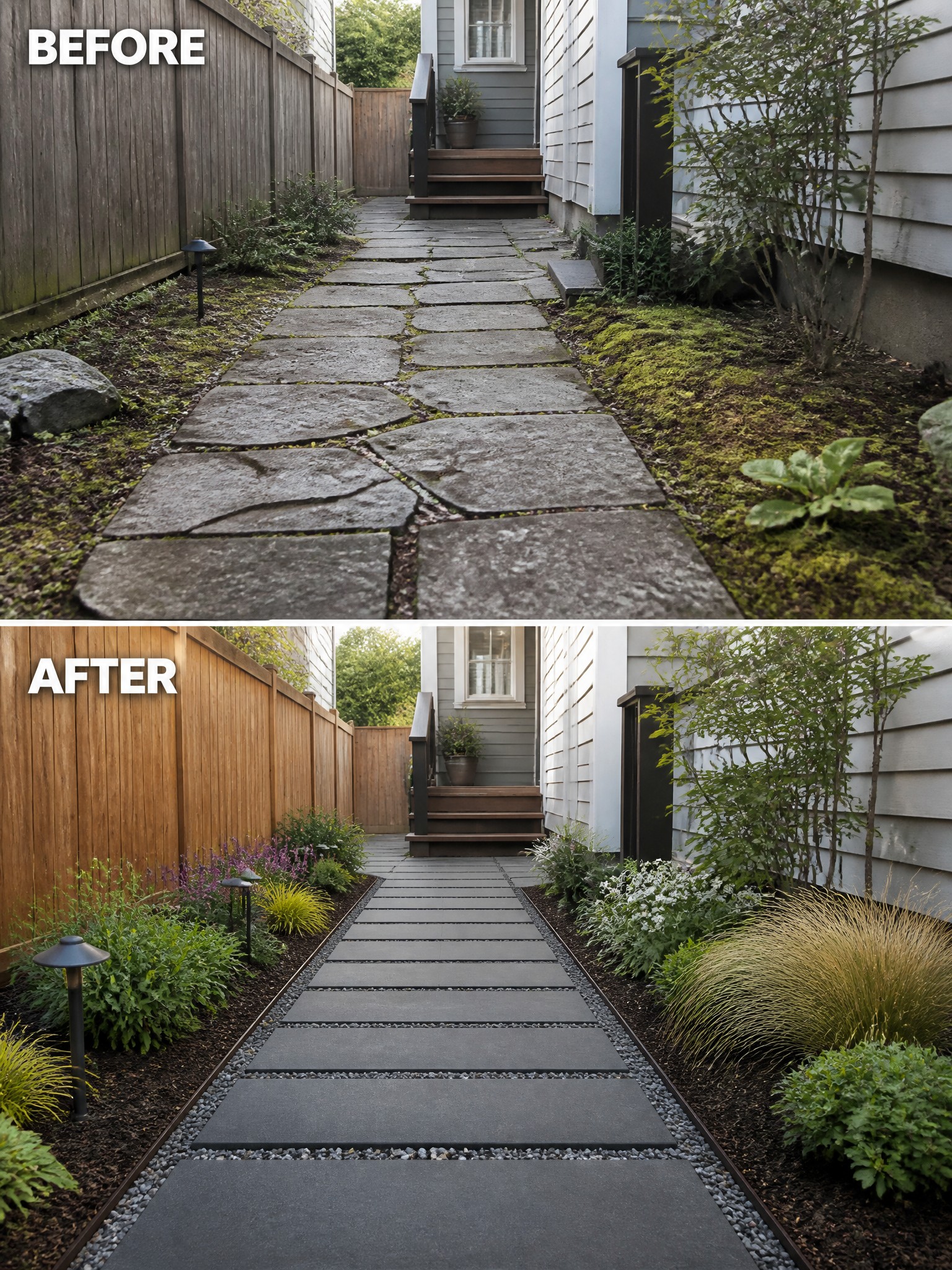
An overgrown side yard path quickly starts to feel like wasted space when moss and weeds take over the edges. Laying a straight paver walkway with gravel borders gives the narrow passage a clear shape and makes the whole area look intentional. The new planting beds on each side keep the plants from spilling onto the path and create a simple, repeatable pattern.
This idea works best in tight spaces between houses or fences where there is little room for curves or large features. Clear the ground first, then set the pavers on a solid base so the path stays level over time. Choose a few plant varieties that stay within the beds and repeat them along the length of the walkway for a calm, low-maintenance result.
Use New Pavers To Define An Outdoor Seating Area
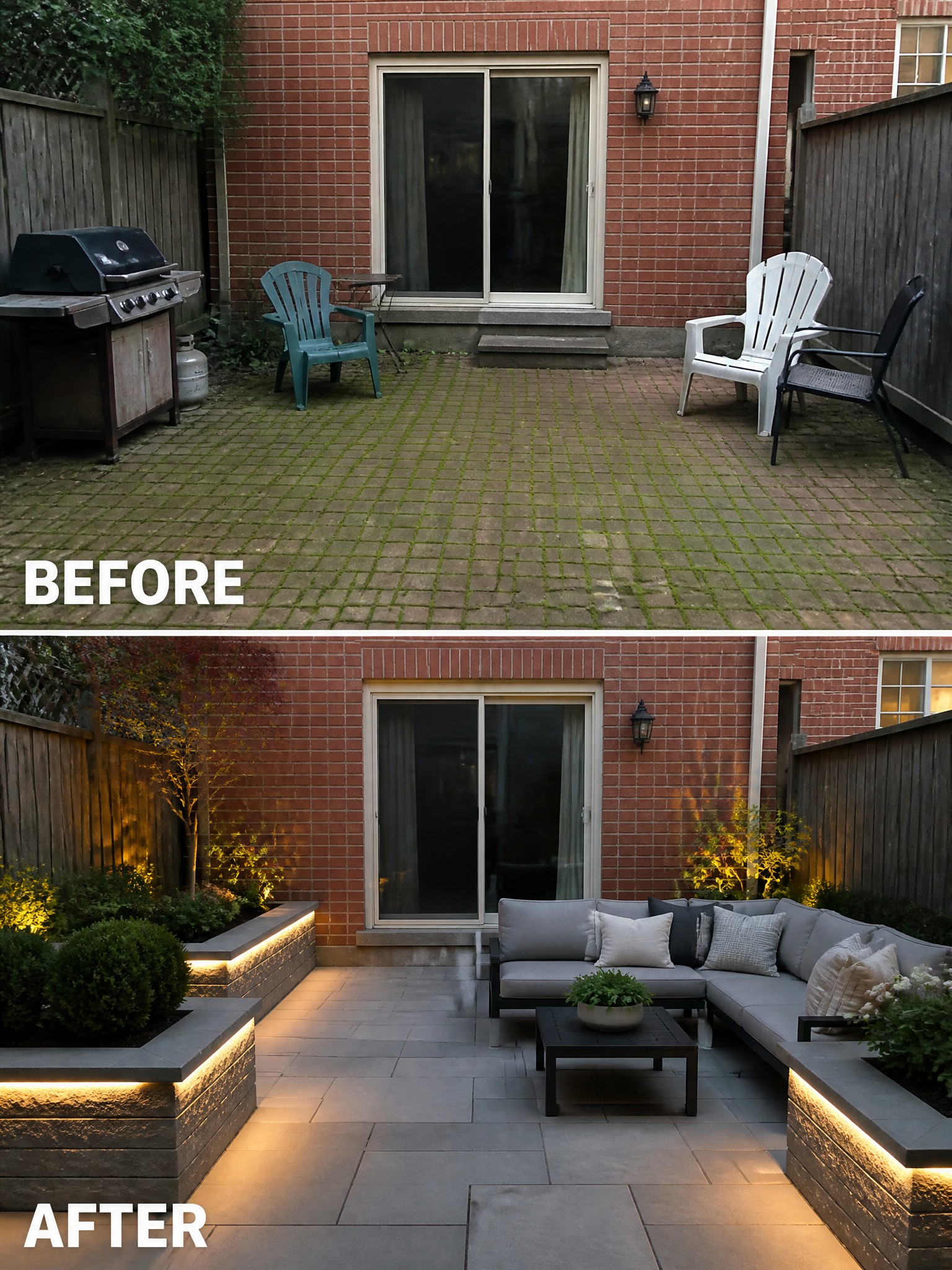
An old patio covered in moss often feels damp and unfinished, which makes it hard to use for much beyond storage. Replacing the surface with clean pavers creates a flat, dry base that instantly feels more intentional. Adding raised planters along the edges further helps shape the space so furniture has a clear place to sit.
This idea works best in smaller yards where you need the patio itself to do most of the organizing. Lay the new pavers first, then add simple planting beds before choosing any seating. It keeps the layout practical and leaves room to walk around the furniture without crowding the area.
Add Structure To An Overgrown Backyard
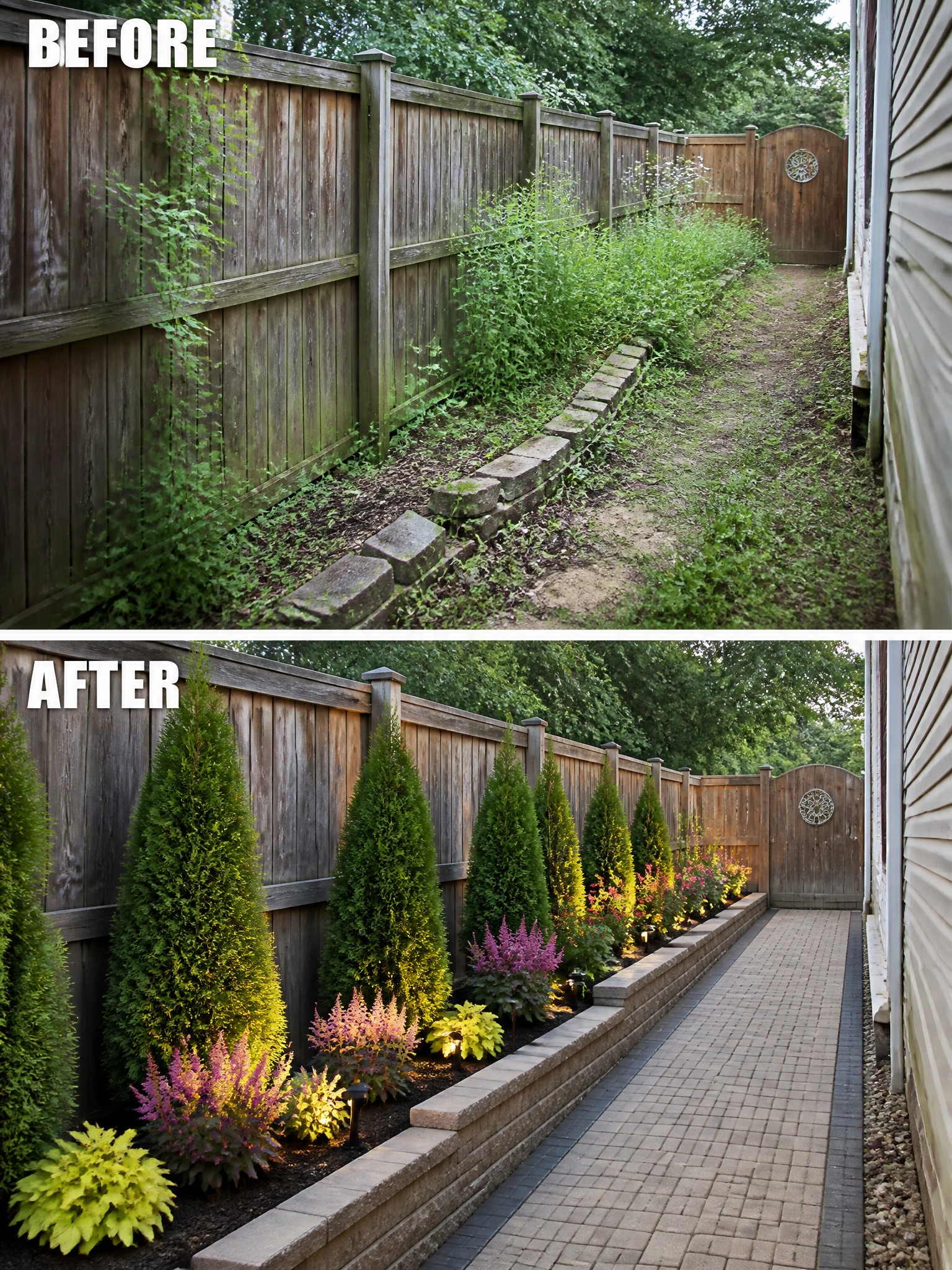
A narrow side yard often turns into a messy strip of weeds and dirt when left alone. The before photo shows exactly that problem, with uneven blocks and wild growth along the fence. Adding a clean paver path and a raised bed with layered plants turns the same space into something that feels intentional and easy to maintain.
This approach works well along fences, property lines, or any long narrow area where you need a path plus some greenery. Start by clearing the overgrowth and setting a simple edge with blocks or stone. Then choose a few tall evergreens for height and fill in with lower shrubs that add color. The pavers keep the walkway dry and defined while the plants soften the fence without taking over the space.
Use Pavers To Give A Backyard Better Structure
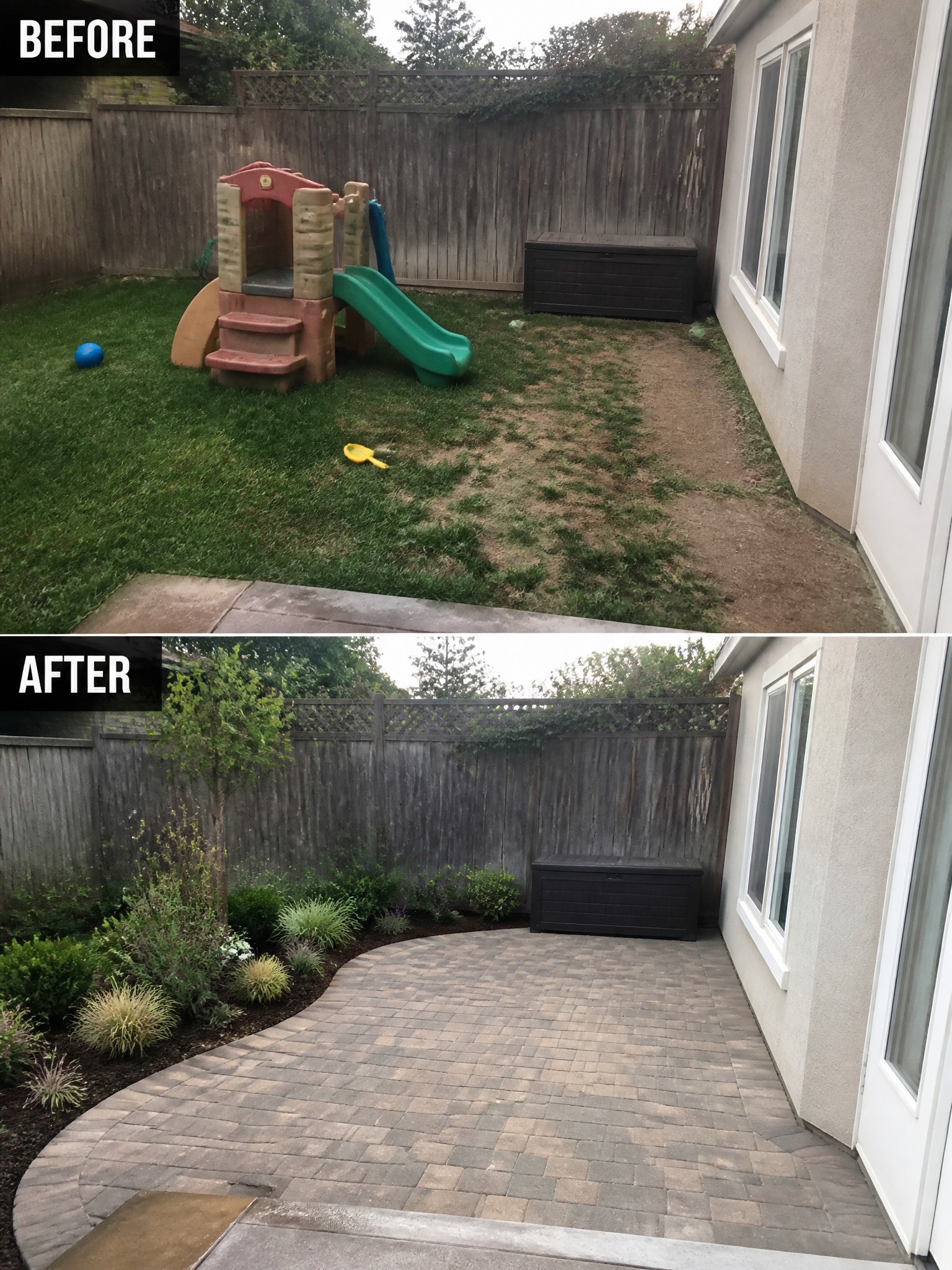
A patchy lawn and worn dirt path can make a backyard feel unfinished and hard to use. Adding a paved surface creates a solid base that organizes the space and makes it easier to walk and place furniture without dealing with mud or uneven ground.
This approach works well in smaller yards where you want to keep some open area while still having a clear spot for seating or play. Start by deciding how much lawn to keep, then lay the pavers in a simple pattern that follows the natural shape of the yard. Once the hard surface is in place, add planting beds along the edges to soften the look and keep the space from feeling too open.
Define A Narrow Side Yard With Pavers And Planting
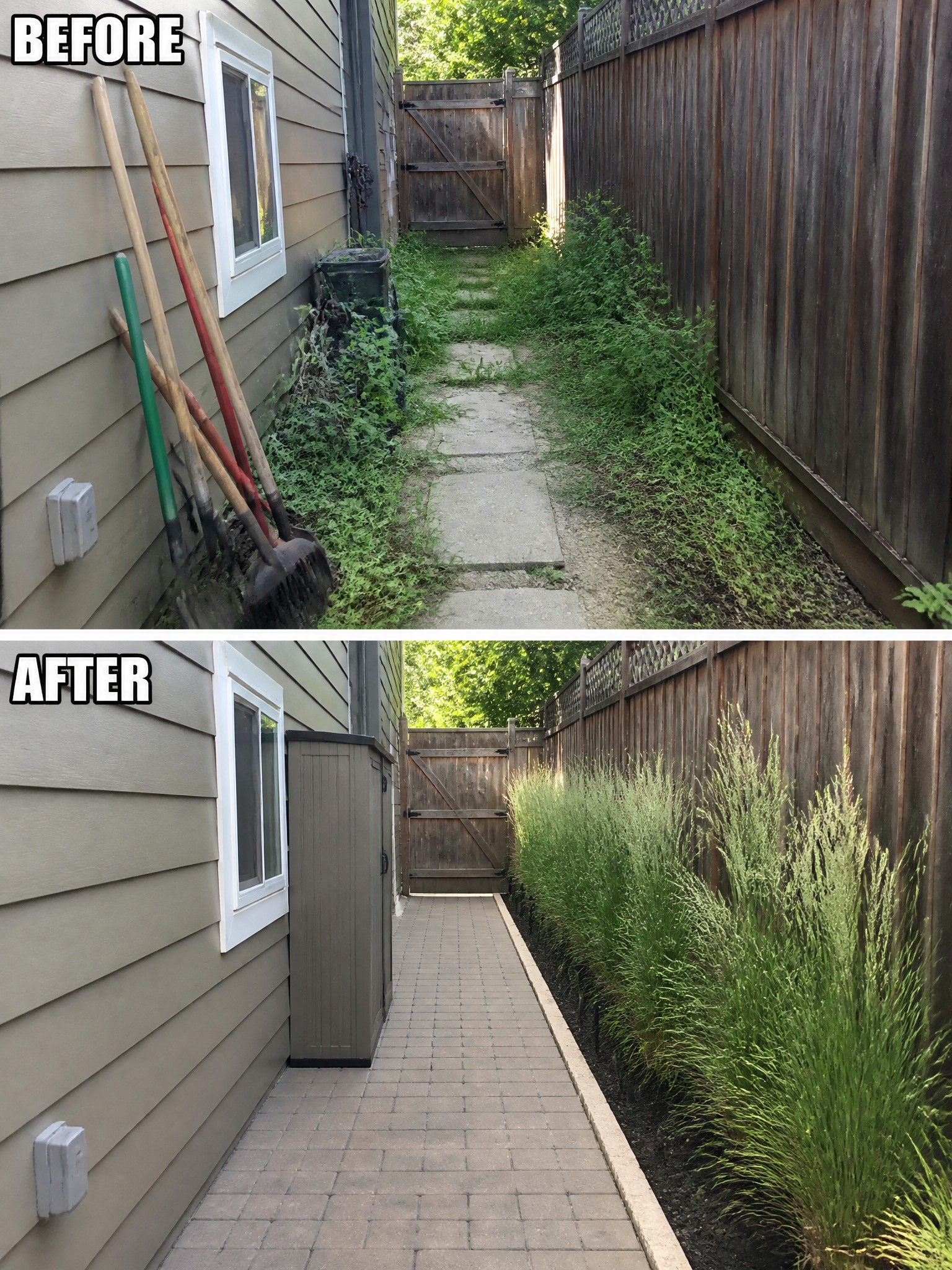
A narrow side yard often gets ignored until the weeds take over and the path becomes hard to walk through. Replacing the old concrete slabs with pavers creates a flat, usable walkway, while a simple row of tall grasses along the fence adds structure without crowding the space.
This idea works best in tight areas where you need both access and some greenery. Clear the overgrowth first, then lay the pavers in a straight line and keep the planting limited to one side so the path stays open and easy to maintain.
Turn An Empty Backyard Into An Outdoor Kitchen
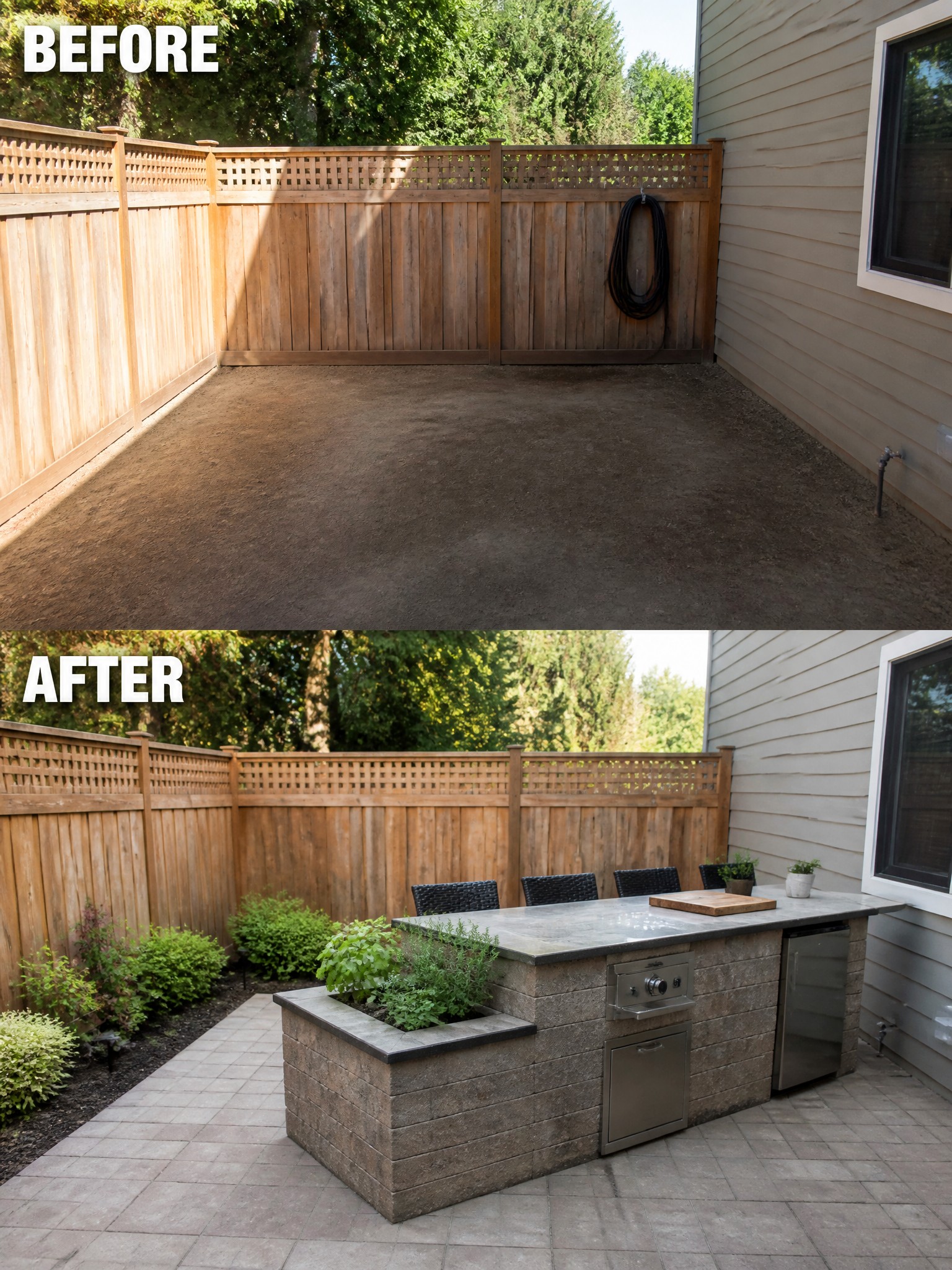
A bare dirt yard offers little reason to spend time outside. Adding a paved surface and a built-in kitchen gives the space a clear purpose and turns it into an area where people actually want to gather. The simple change from loose ground to solid pavers creates a stable floor that supports furniture and daily use without constant cleanup.
This approach works best in backyards that already have a fence or wall for some privacy. Start with the pavers to define the main zone, then add one large piece like an outdoor kitchen island that holds the grill and a small fridge. Keep the planting simple and repeat a few shrubs along the edges so the space feels finished without becoming crowded.
Turn A Bare Concrete Patio Into A Defined Seating Area
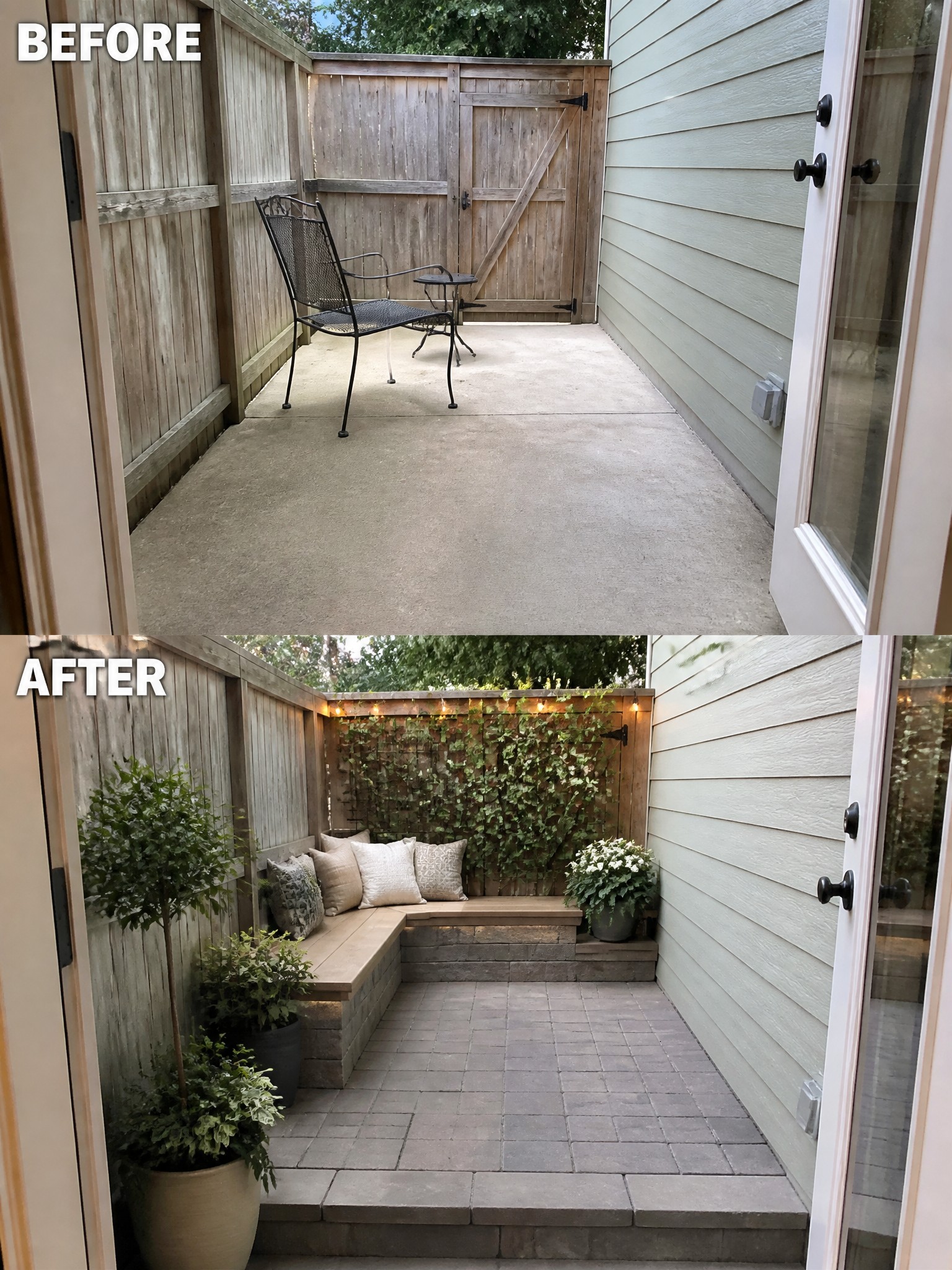
A plain concrete slab often sits unused because it lacks any sense of structure or purpose. Replacing the surface with pavers and adding a built-in bench immediately turns the space into a place where people actually want to sit and spend time.
This idea works best in small or narrow yards where loose furniture can feel scattered. Lay the pavers first to set clear boundaries, then build simple seating along the edges so the area feels finished without crowding the middle. Keep plants in pots rather than permanent beds if you want to adjust the layout later.
Add A Paver Path To Shape An Overgrown Yard
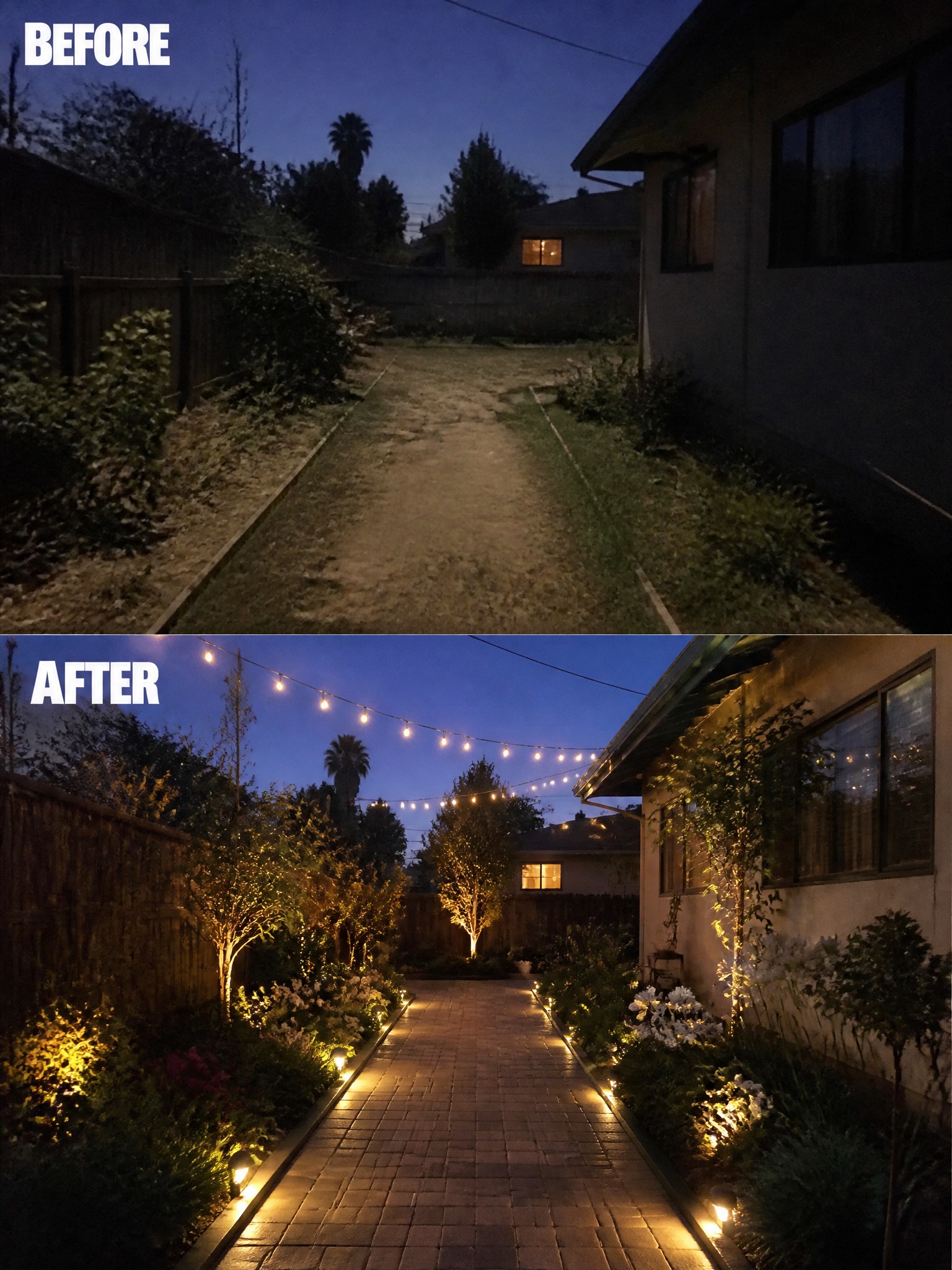
A worn dirt trail through a backyard often leaves the space feeling unfinished. Laying pavers creates a clear route that organizes the whole area and makes it easier to walk through without tracking mud or stepping on plants. The change also gives you straight edges to work with when adding garden beds on either side.
This idea works best in long or narrow yards where the layout feels scattered. Keep the path width comfortable for two people and use simple lighting along the edges so it stays usable after dark. Focus on the path first before adding too many plants or features.
Use Raised Planters To Add Structure Along A Fence
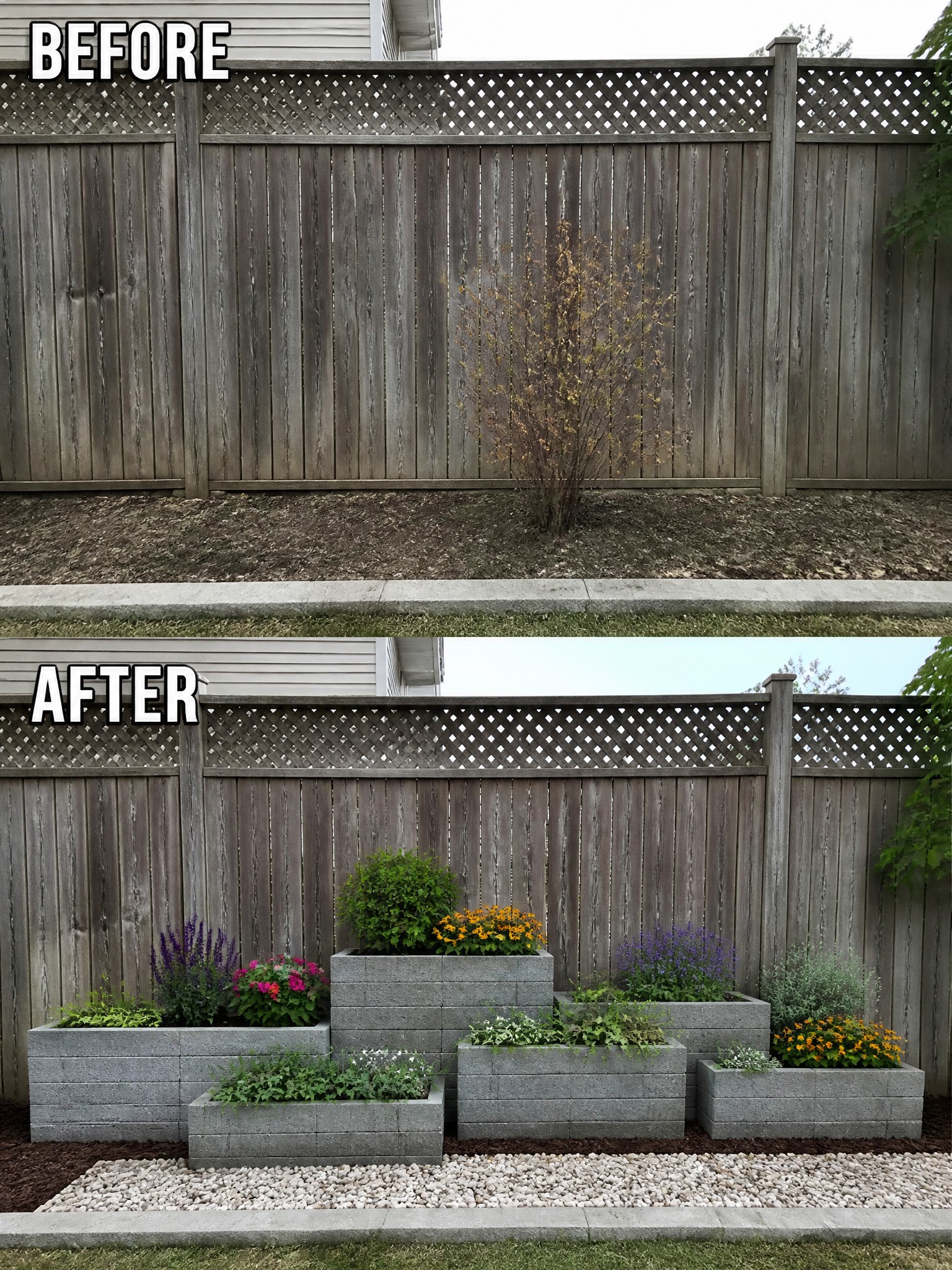
A bare strip of ground in front of a fence often looks unfinished and hard to maintain. Raised concrete block planters solve that by creating clear beds that hold soil, plants, and mulch in place. The change from weedy dirt to layered beds gives the whole fence line a finished look without needing a full yard overhaul.
This approach works well in narrow side yards or along back fences where space is limited. Start with a simple row of blocks, then vary the heights to add interest. Choose plants that match your climate and keep the number of varieties low so the beds stay easy to care for.
Replace An Old Deck With Pavers
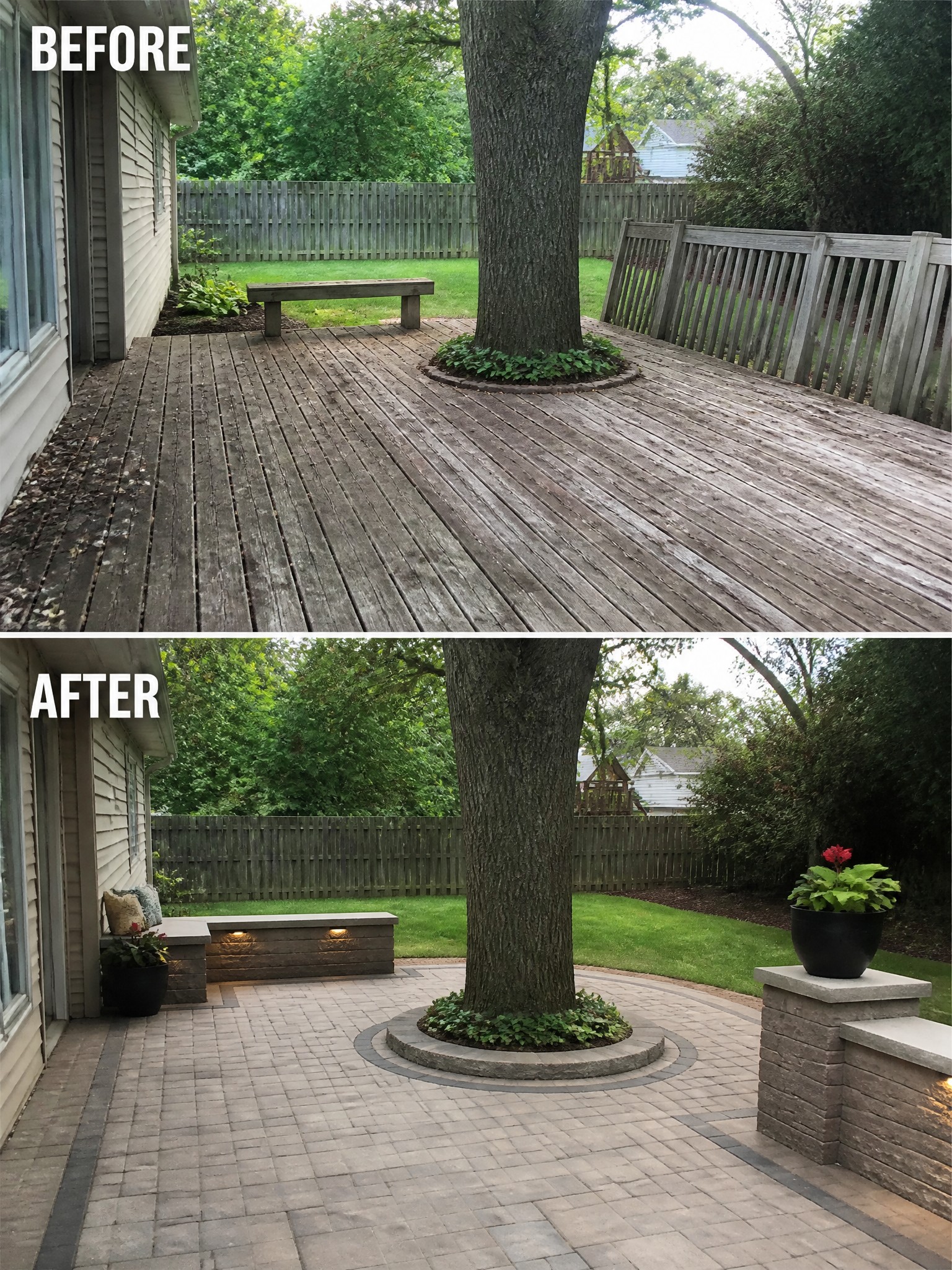
The wooden deck had faded and worn over time, making the whole backyard feel tired. Switching the surface to pavers created a cleaner, more durable area that holds up better to weather and daily use.
This change works best when the deck frame is still solid but the boards need replacing. Pavers give you a fresh look, let you shape the space around existing trees, and open up options for simple seating or lighting without a full rebuild.
Add Structure With Pavers In A Bare Backyard
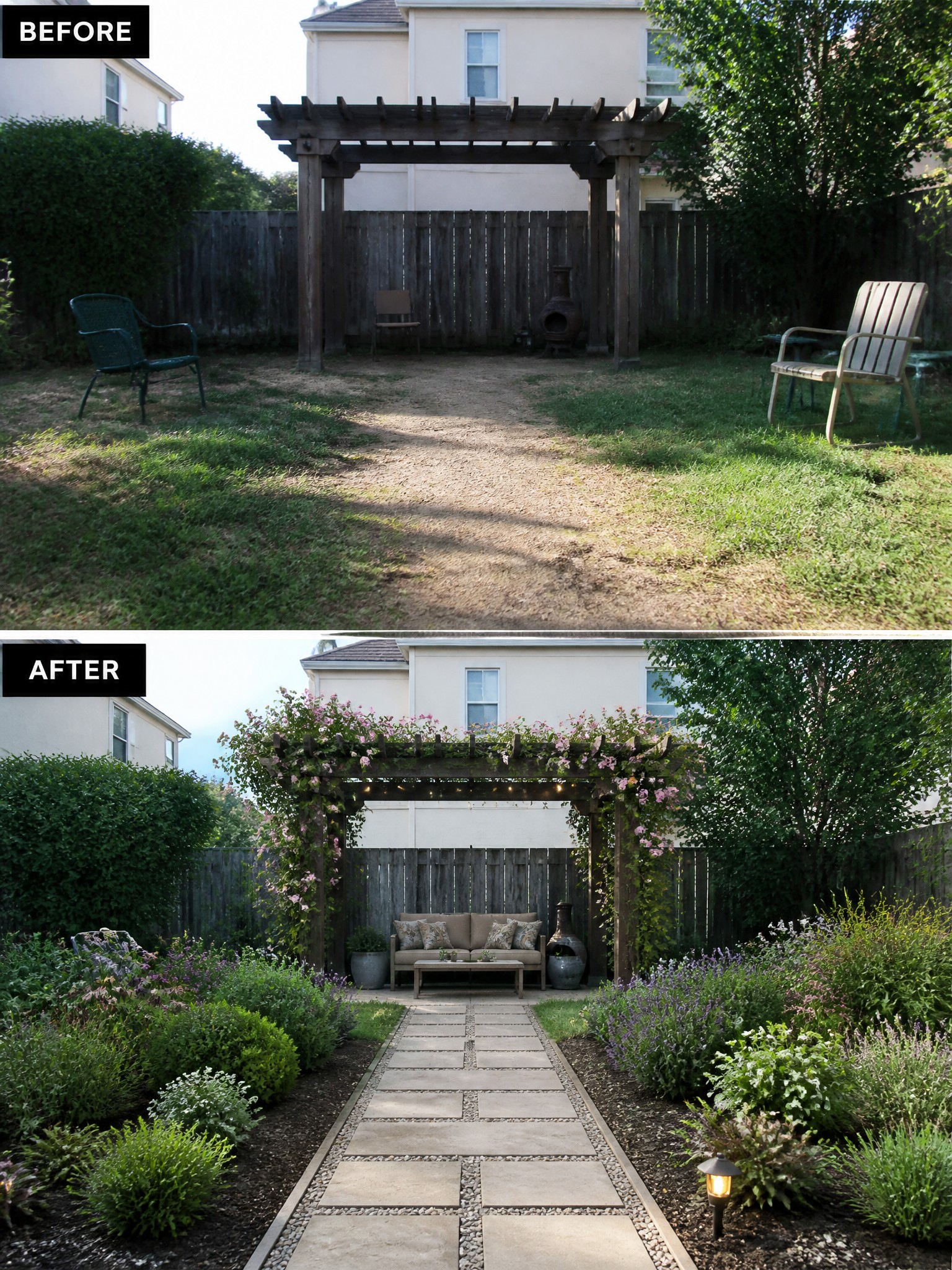
A patchy dirt yard with no clear route often feels unfinished. Adding a simple paver path with gravel edges gives the space shape and makes it easy to walk through without tracking mud. The plants along the sides then fill in around that path, turning open ground into defined beds.
This approach works well in smaller backyards where you want to create order without crowding the space. Start with the path first so the planting has a clear frame to follow. Keep the beds modest in width so the lawn or seating areas still have room to breathe.
Create A Defined Path With Pavers In A Narrow Yard
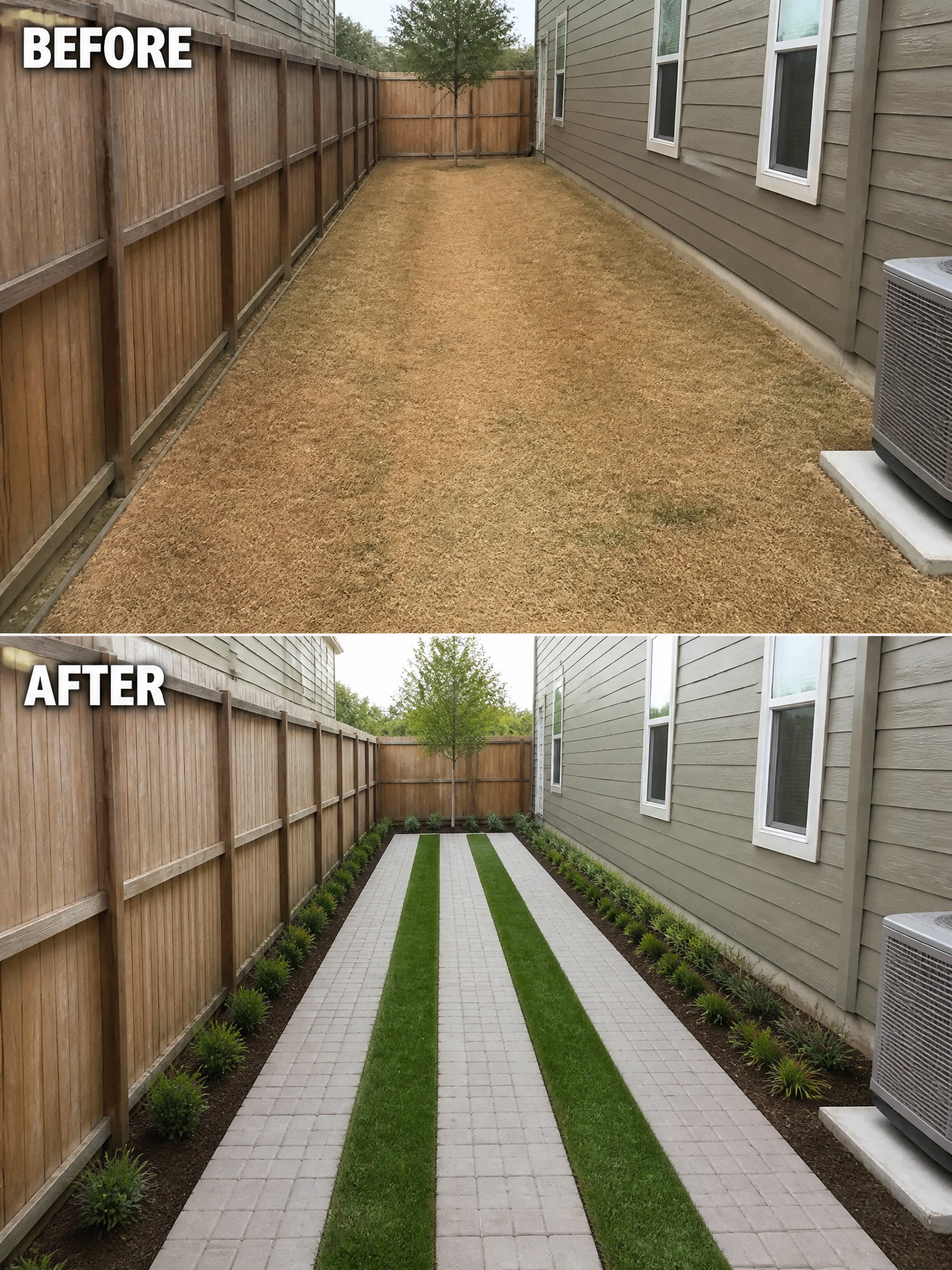
A long narrow yard with nothing but dirt often feels unfinished and hard to use. Adding a central path made of pavers with grass strips running through it gives the space clear direction while leaving room for simple planting along the edges.
This idea works best in side yards or backyards that sit between fences and the house. Lay the path first so it runs the full length, then keep the borders narrow and planted with low shrubs. The result stays practical and easy to maintain without crowding the space.
Use Pavers To Shape Planting Beds Along The House
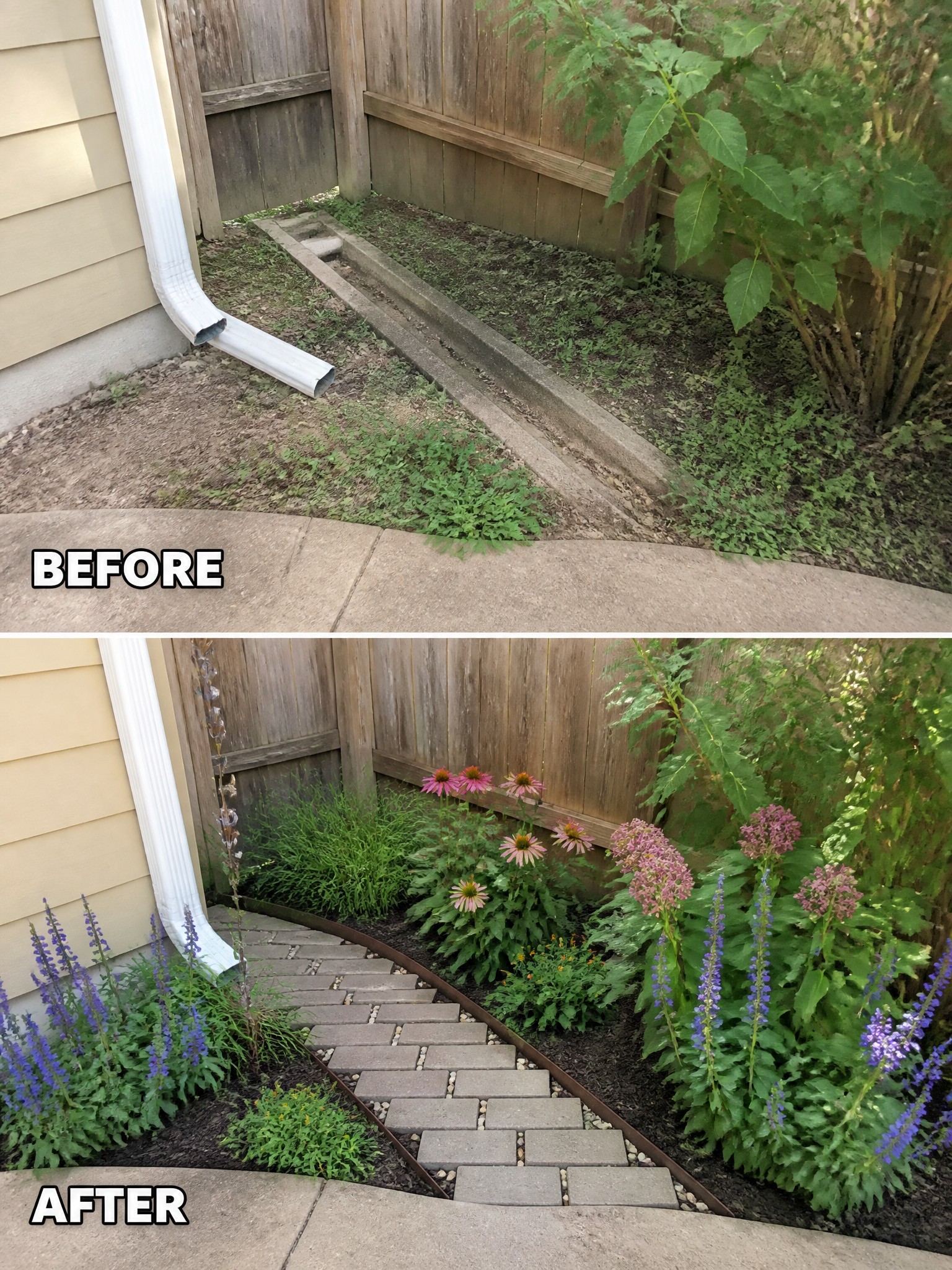
A narrow strip of dirt and weeds next to the house can feel like wasted space until you add a clear edge. In this case the before photo shows an open area with a downspout draining straight onto bare soil. The after photo shows how a simple run of pavers creates a clean border that lets plants fill in without looking messy.
This approach works well on side yards or foundation strips where the ground slopes or stays damp. Start by laying the pavers to follow the house line and set the planting depth, then choose a mix of taller perennials and lower ground covers so the bed looks full without crowding the path. Keep the layout narrow enough that you can still reach the plants for watering and weeding.
Frequently Asked Questions
Q: What if my yard slopes and I want a flat patio area?
A: Level the ground with compacted gravel before you set the pavers. This stops shifting later and keeps rain from washing soil onto the stones. Once the base is firm, tuck low plants along the edges to hide any small gaps.
Q: How do I stop weeds from popping up between the pavers?
A: Lay landscape fabric under the base layer during installation. Sweep sand or polymeric jointing material into the cracks afterward so nothing takes root. A quick pull every few months is usually all you need after that.
Q: Which plants hold up best right next to pavers in full sun?
A: Choose tough varieties like sedum or lavender that like dry soil and do not mind reflected heat. Plant them in pockets of good soil between or beside the stones. Water them regularly the first year so roots establish.
Q: Do I need a pro or can I tackle the pavers myself?
A: A small path or patio is doable in a weekend if you rent a plate compactor for the base. Just work in sections and check level often. Bigger jobs with curves go faster with an extra pair of hands.
