


Front yards often end up looking scattered when the planting beds have no real definition or consistent shape from one season to the next.
I have found that sorting out the beds first usually makes the rest of the yard feel more pulled together without extra effort.
Clean planting areas give everything else a better starting point and help the space read as more cared for overall.
A few stand out for how simple they are to adapt.
Trying one or two of them can shift how the front of the house feels when you come home each day.
Create Defined Planting Beds For A Cleaner Front Yard
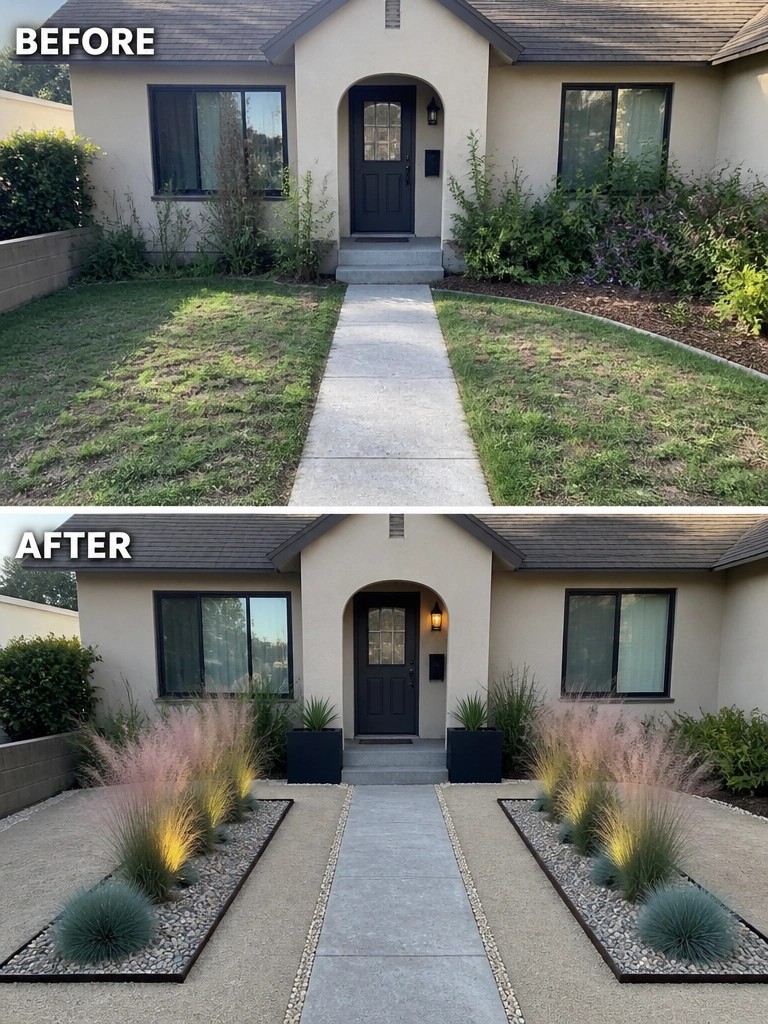
The front yard had patchy grass and plants that grew without any clear shape. Adding simple bordered beds with gravel and a few repeated plants gave the space a much tidier layout and made the walkway feel more intentional.
This approach works best on smaller front yards where you want to keep some lawn but still add order. Mark out the beds first, use solid edging, and keep the planting simple so the beds stay easy to maintain.
Create Clean Planting Beds Along The Front

One simple way to update an older front yard is to replace a jumbled mix of shrubs with one long, clearly defined bed. The original concrete planter and overgrown greenery made the space feel messy. Switching to a low border, gravel fill, and repeated succulents gives the whole front a tidy, settled look without adding a lot of new hardscaping.
This approach suits homes with a wide foundation line where the planting runs the length of the house. Keep the plant choices limited so the bed stays low and easy to care for. A dark border and a few larger rocks help hold the shape and make the gravel feel like part of the design instead of just filler.
Add Defined Planting Beds To Clean Up The Front Yard

The main change here is replacing a scattered line of overgrown bushes with low, structured beds that run along the front of the house. The wood borders give the planting a clear edge, and the simple mix of shrubs and flowers keeps the look neat instead of wild.
This approach works on many older homes where the lawn just runs straight up to the foundation. Clear the old growth first, then build the beds with basic timber so the shape stays consistent. Keep the planting low in front of windows and repeat the same shrubs to avoid a cluttered result.
Add Defined Planting Beds To Structure The Front Yard
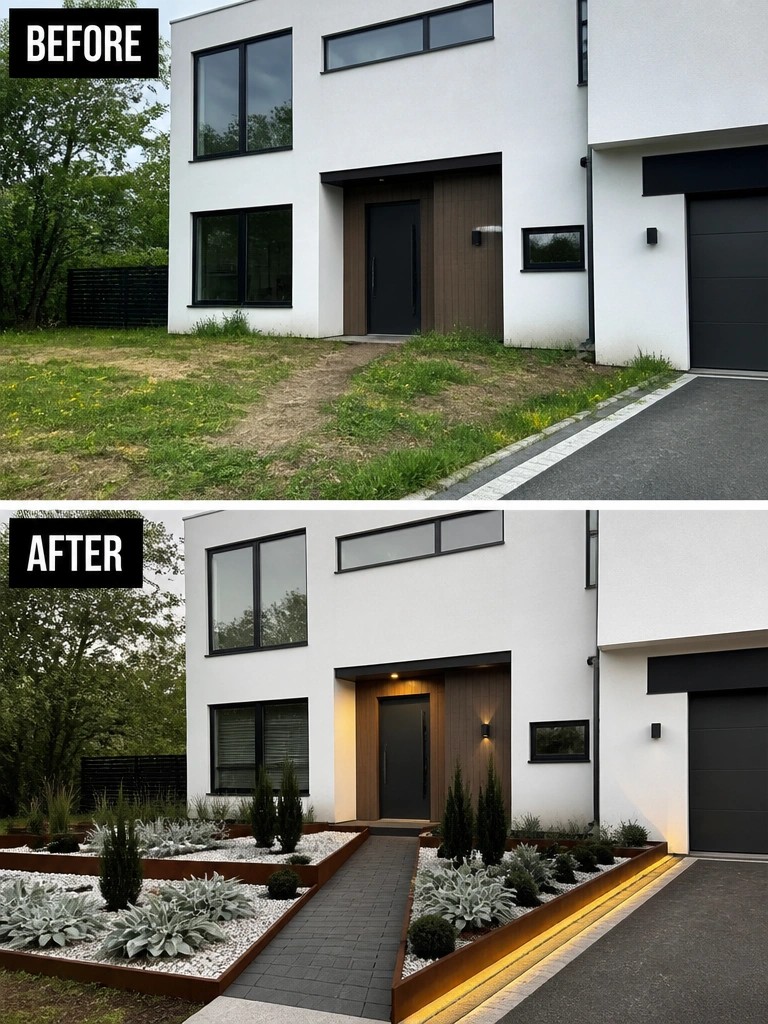
The front yard had no clear shape before, with just patchy grass and dirt leading up to the door. Adding raised beds with clean edging and a simple paved path gave the space order and made the entry feel more intentional.
This idea works best on homes with plain facades where the yard needs some backbone first. Keep the beds low and use gravel or mulch to hold the look together without adding too many plants at once.
Add Terraces To A Sloped Front Yard

A steep, weedy slope often looks messy because there is no clear way to plant or maintain it. Building low stone retaining walls turns the same slope into a series of flat beds that hold soil and plants in place. The new walls also create a simple path of stone steps that makes the front door easier to reach.
This approach works best on yards that drop sharply from the street or sidewalk. Start with the walls first, then fill the beds with mulch and a few repeating plants so the slope stays neat without constant weeding. Keep the walls low enough that they do not require permits, and leave enough space between beds for easy mowing or trimming along the edges.
Add Defined Planting Beds Along The Walk
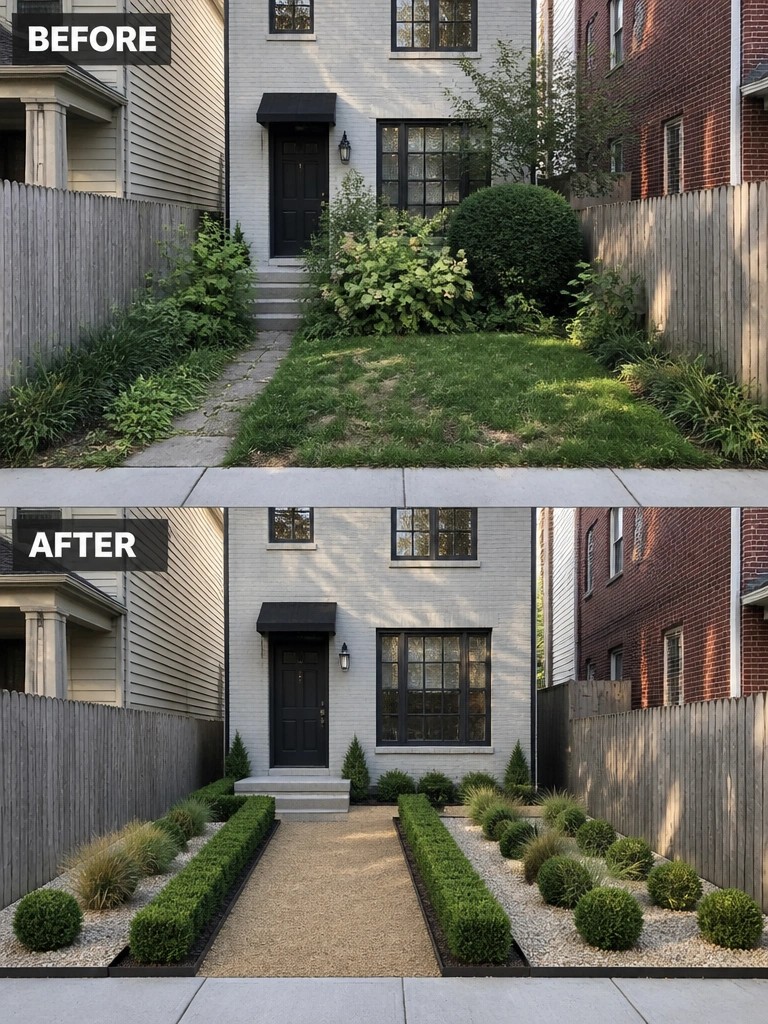
The biggest shift in this yard comes from replacing the loose lawn edges and scattered plants with straight, bordered beds on both sides of the path. Gravel fills the beds and keeps the lines crisp while low shrubs and grasses stay contained.
This idea suits small front yards where you want to keep the walkway open but still add order. Lay out simple rectangular beds first, pick one edging style, and stick to a short list of plants that will not outgrow the space.
Add Defined Planting Beds To Shape The Front Yard

A patchy lawn with no clear path makes the front of a house feel unfinished. Adding gravel beds, stepping stones, and grouped plantings gives the space shape and makes the walk to the door feel intentional. The simple change from open grass to bordered beds does most of the work.
This approach works well on small or sloping yards where a full patio would feel too large. Start with the path so people know where to walk, then fill the beds with low plants that stay neat. Keep the gravel or mulch line crisp so the beds stay looking clean through the seasons.
Add Defined Edges To Your Planting Beds

The front yard looked scattered before because the shrubs sat in loose clumps with no clear boundary. Adding a low stone edge around the beds and filling them with a simple mix of flowers and small evergreens gave the whole entry a much tidier frame.
This approach works well on any house where the lawn meets the foundation without a break. Start by laying out the edge first, then plant inside it. Keep the beds no wider than you can reach from the path so they stay easy to maintain.
Define Your Front Yard With Curved Planting Beds

A wide lawn with a straight path can look unfinished even when the house itself is in good shape. The main change here was replacing sections of grass with gravel and adding curved beds that follow the shape of the house. This gives the entry a more settled look without needing new hardscaping or major construction.
This approach works well on modest front yards where you want to reduce lawn size and add color. Start by marking simple curves that feel natural from the sidewalk, then fill the beds with a mix of perennials and mulch or gravel. Keep the path clear and the beds a consistent depth so the yard still feels open rather than crowded.
Define Planting Beds With Clean Edging And Mulch

The front beds looked messy and unplanned next to the old walkway, but adding a clear edge and fresh mulch made them look intentional. The after photo shows how a simple border keeps plants contained and gives the whole entry a much neater appearance without any major construction.
This idea works best on homes where the beds have filled in over time and need a reset. Clear out the worst of the overgrowth first, then add a low edging material and mulch before planting in small groups. It keeps the yard looking tidy year after year with very little extra work.
Add Defined Planting Beds Along The Front
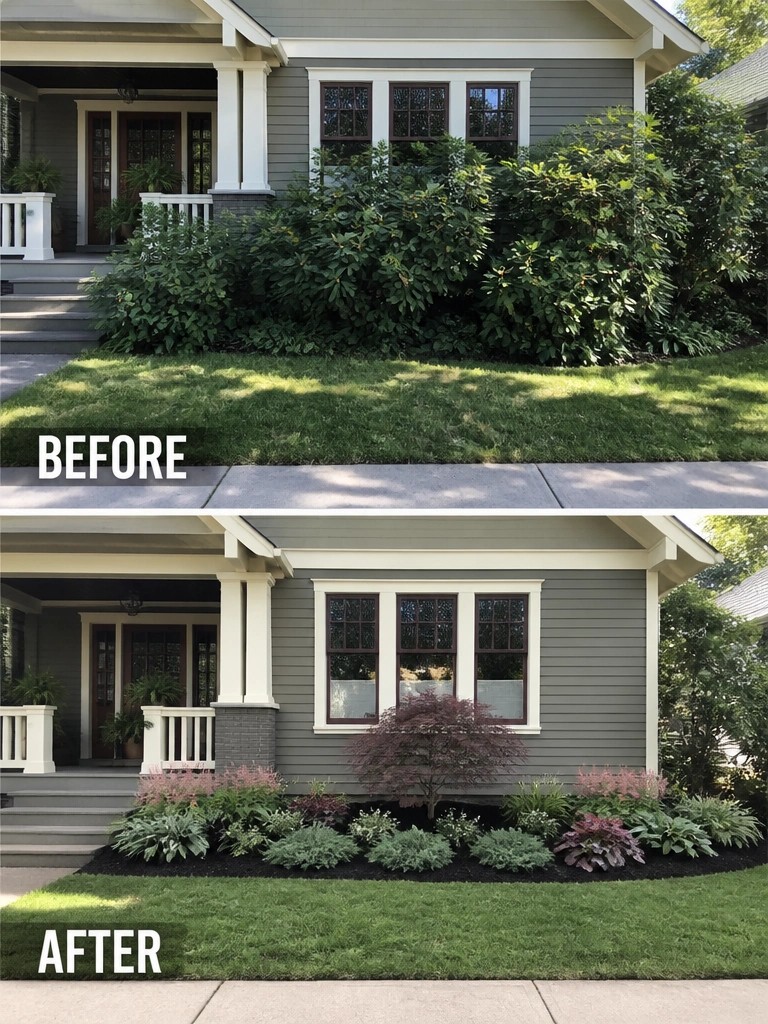
The biggest shift here comes from clearing out the thick, overgrown shrubs and replacing them with a low border of plants set in dark mulch. The result feels much cleaner and lets the house show through instead of disappearing behind the greenery.
This approach works best when the beds have become too wild and need a reset. Start by removing what is overgrown, add a clear edge, and keep the new plants low and simple so the beds stay neat without constant trimming.
Define The Front Yard With Clean Planting Beds
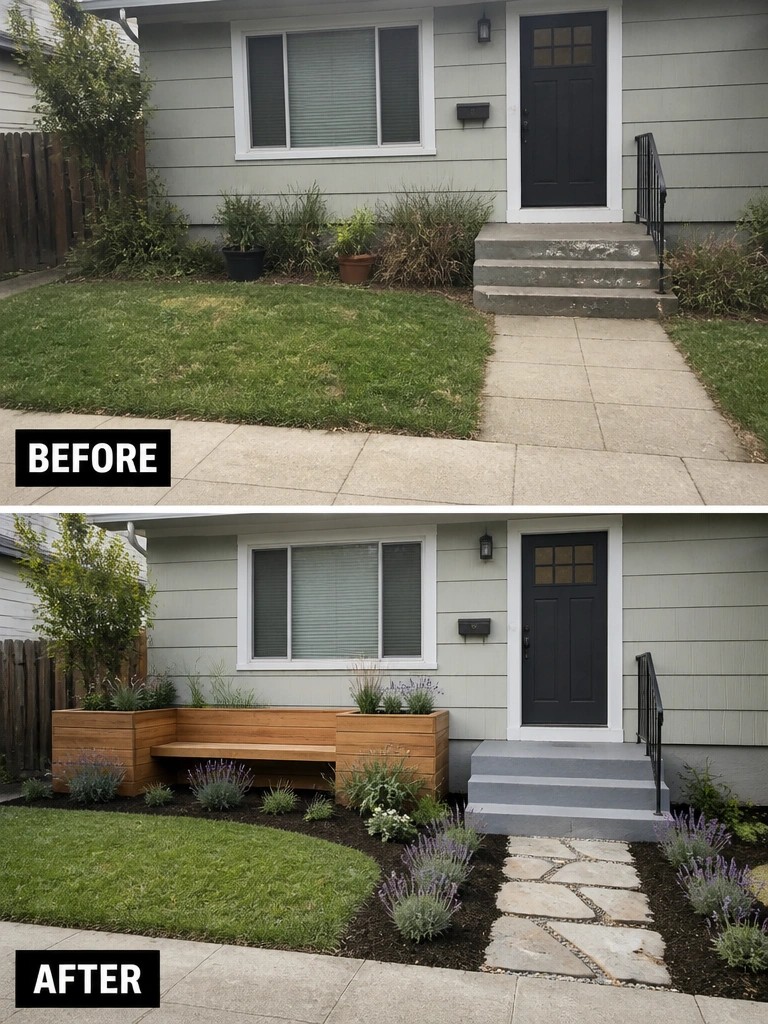
The front yard felt scattered before, with grass running right up to the house and plants placed without clear edges. Adding raised wooden planters along the walkway and filling the new beds with mulch created sharp lines and a much more organized look.
This idea works best on smaller front yards where you want structure without crowding the space. Outline the beds first, then add one or two built-in pieces that double as seating. Keep the plantings simple so the beds stay easy to maintain over time.
Define Planting Beds Along The Foundation

The main change here is turning a messy strip of weeds and random plants into one clear bed with a simple edge. That single step makes the whole front look intentional instead of neglected. The plants are now grouped by size and color instead of just filling space, which keeps the bed from looking chaotic.
This idea works well on any older home where the foundation planting has grown out of control. Start by cutting everything back and adding a hard edge, then fill the bed with a few repeated plant types rather than one of everything. It keeps the area easy to maintain and gives the house a finished base without needing major construction.
Add Defined Planting Beds With Gravel
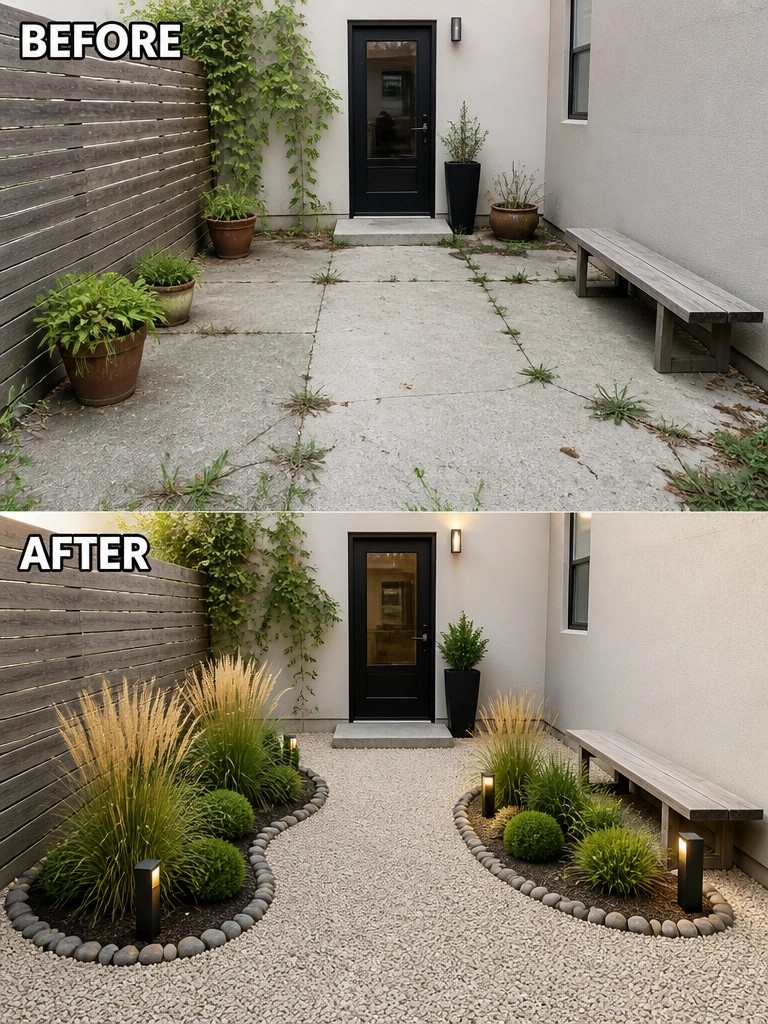
A bare concrete area can feel unfinished and hard to maintain when plants are just scattered in pots. Replacing most of the concrete with gravel and adding low stone edging creates clear planting zones that look intentional and keep weeds down.
This approach works well in small side yards or entry courts where you want plants without losing walking space. Start by deciding the bed shapes, lay the gravel thick enough to cover the old surface, and keep the plantings low so the door and bench stay easy to reach.
Add Defined Planting Beds Along The Entry
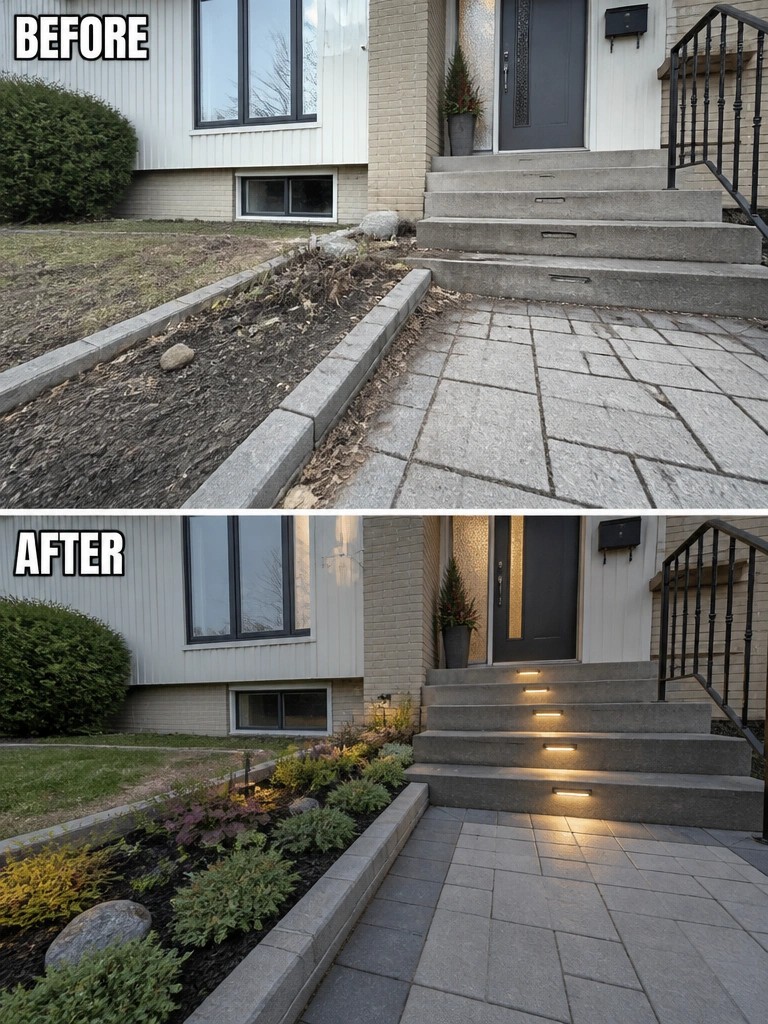
The main change here is turning a messy, weed-filled strip into a clean planting bed with a solid edge. Once the bed has shape, the whole front feels more intentional and the walkway looks wider without any other big changes.
This idea works best on homes where the front beds have been neglected or left as plain dirt. Start by setting a clean border, then fill with low shrubs and ground cover that stay neat year-round. Skip the urge to overplant. A simple mix of textures and a bit of mulch keeps it looking tidy without constant work.
Define Planting Beds To Give The Front Yard Structure
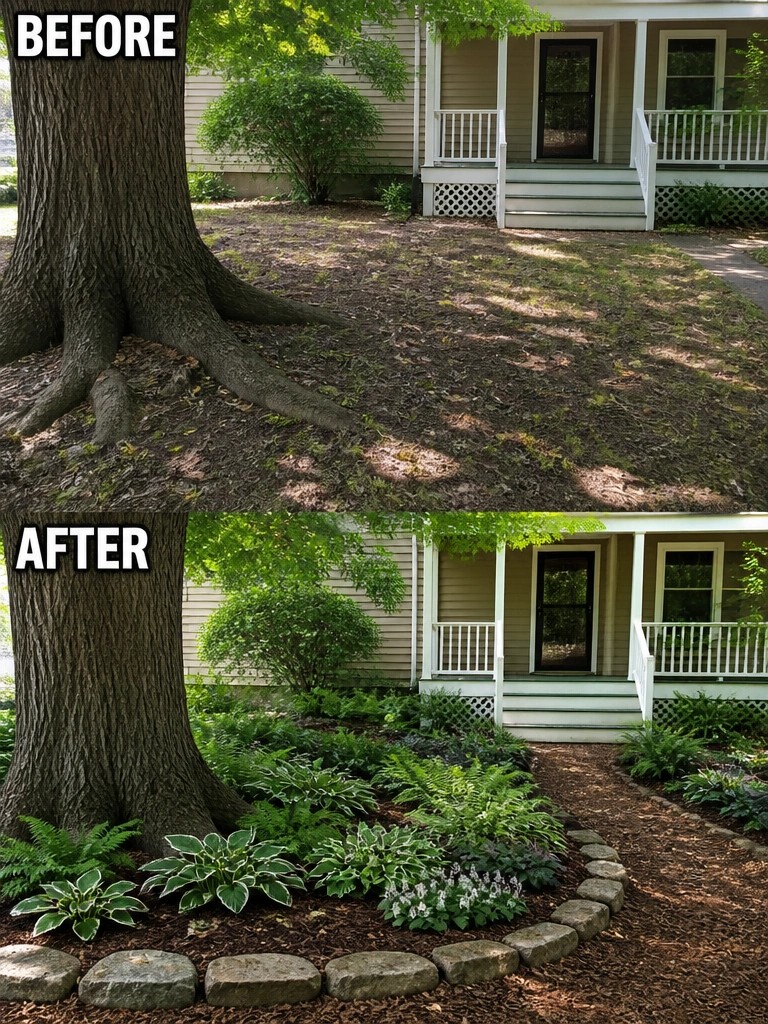
Adding clear edges and mulch turns a patchy, weedy area into something that looks planned. The ground around the tree and along the house went from bare dirt to mulched beds with a simple stone border that keeps everything contained.
This idea works best on homes where trees or open foundation space make the yard feel unfinished. Lay out a gentle curve first, add mulch to control weeds, and choose shade plants that fit the spot so the beds stay low-maintenance.
Create Defined Planting Beds At The Front Entry

Overgrown shrubs can quickly take over a front entrance and make the whole house feel smaller. In this case the before photo shows thick bushes crowding the steps on both sides. The after photo shows those shrubs removed and replaced with mulch beds that hold smaller plants and a pair of narrow trees. The change opens up the walkway and gives the gray door a clearer frame.
This approach works best on small front yards where you want the house to stay visible. Start by clearing the largest plants first, then lay down a simple edge and mulch so the beds look finished even before new plants fill in. Keep the plant sizes modest so they do not block windows or the door in a few years.
Define Front Yard Planting Beds With Edging
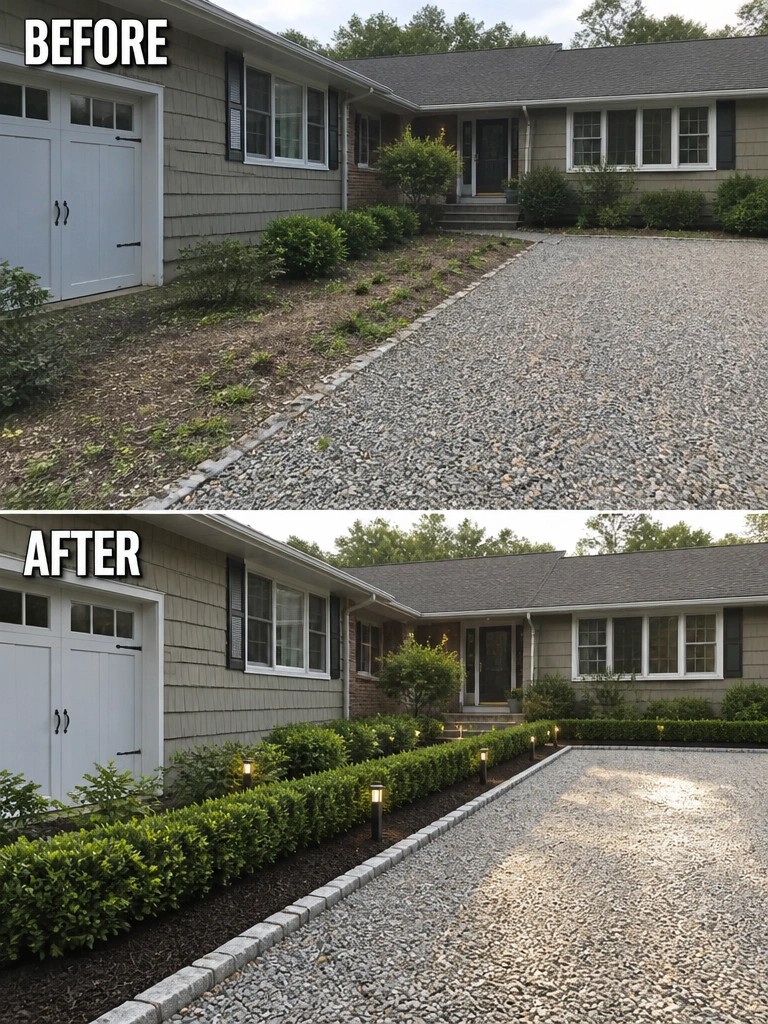
The main change here is how the planting areas were given a clear edge and filled with mulch. Before, the beds looked scattered and uneven along the driveway. After, a simple stone border and fresh mulch create straight lines that make the whole front look more intentional.
This approach works well on homes with gravel driveways or long foundation plantings. Start by setting a firm edge first, then add mulch to keep weeds down and give shrubs room to fill in. Low lights along the border can help too if you want the beds to look neat after dark.
Frame The Front Steps With Clean Planting Beds
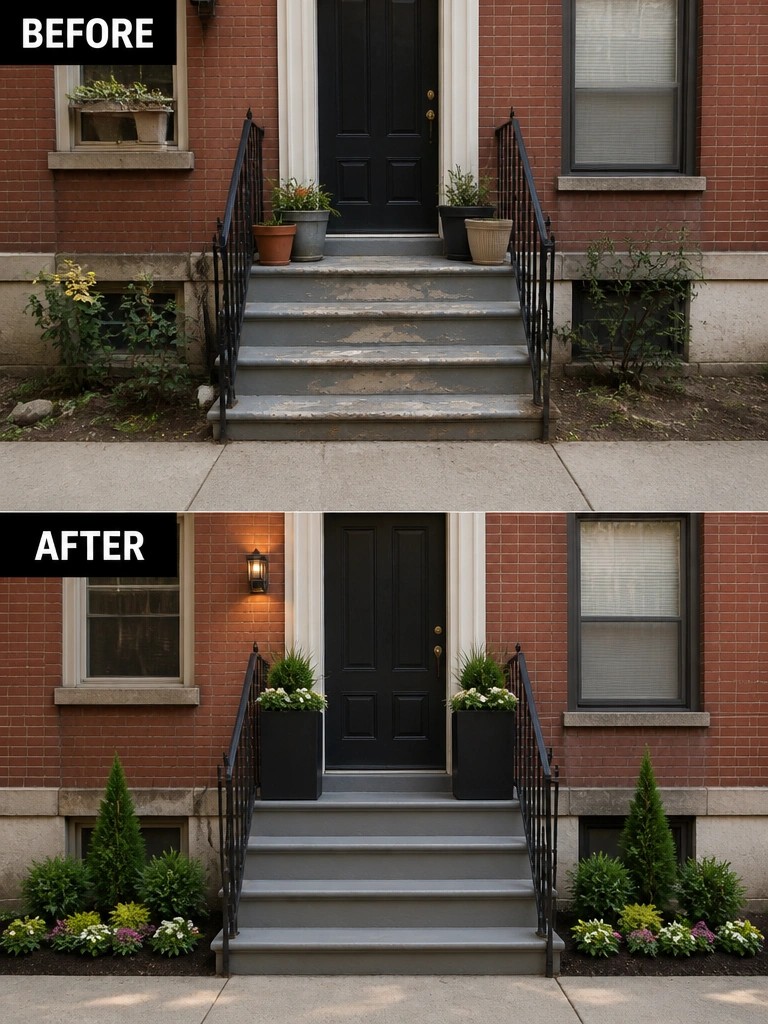
The main change here is swapping scattered pots and messy ground cover for two large matching planters on the steps plus fresh, low planting beds along the sides. This gives the entry a much tidier look without any big construction. The black planters sit neatly on either side of the door and the new beds stay low so the steps remain the clear focus.
This approach works well on older brick homes where the entry feels a bit bare or overgrown. Start by picking two or three matching planters in a simple shape and color, then fill the ground beds with a mix of evergreen shrubs and seasonal flowers. Keep the beds narrow enough that they do not crowd the walkway.
Add Defined Planting Beds To Shape The Front Yard
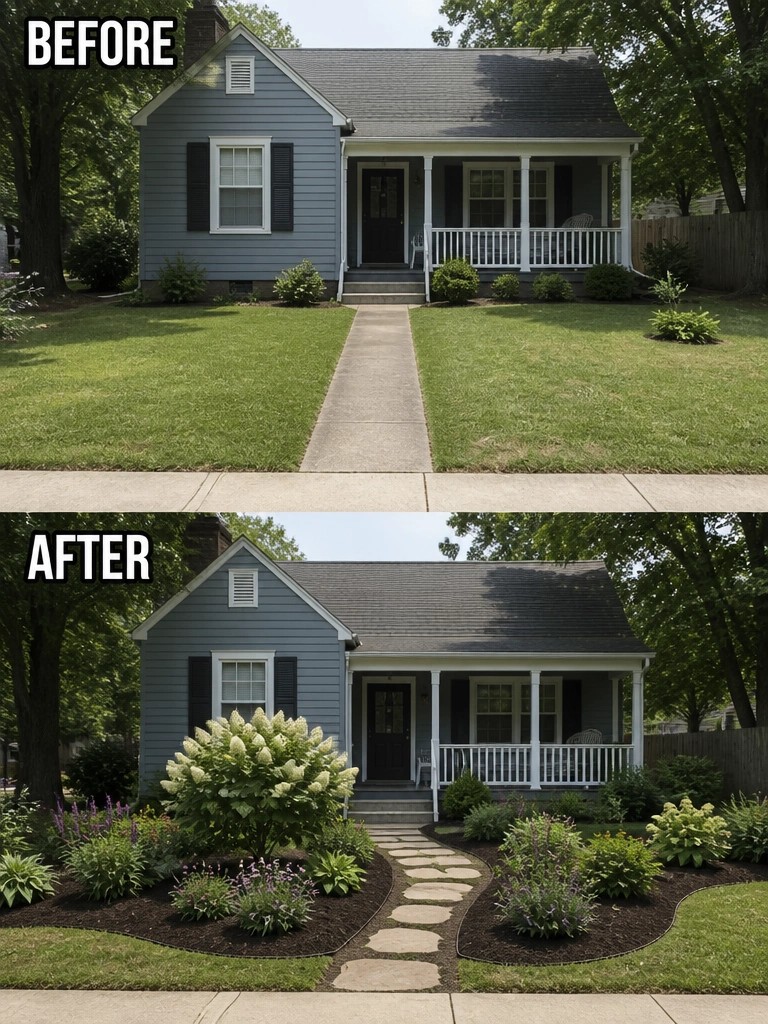
A plain front lawn with a straight path often feels unfinished. Adding curved planting beds on either side gives the yard clear structure and makes the walk to the door feel more intentional. The mulch and edging keep the beds looking tidy while the stepping stones soften the old solid path.
This approach suits homes where the lawn is mostly open and you want to add interest without major construction. Mark gentle curves first with a hose, then install a simple border and mulch before planting. Stick with a few repeating plants so the beds stay easy to maintain and do not feel crowded.
Frequently Asked Questions
Q: What plants actually stay neat in clean modern beds without constant trimming? A: Go for low mounding options like lavender or dwarf fountain grass. They fill the space evenly and hold their shape through the seasons.
Q: How do I stop weeds from ruining the look right after I redo the beds?
A: Lay down a weed barrier fabric before adding soil or gravel. Pull any stragglers by hand every couple of weeks at first until the plants fill in.
Q: Is there a simple way to edge the beds so they keep that sharp modern line?
A: Sink metal or concrete strips along the border flush with the grass. They block grass from creeping in and make mowing easier.
