

I often find that a yard starts to feel more settled once the basic lines of the lawn and beds are cleaned up.
A few well placed shrubs can do more for privacy than I expected in the first year or two.
Edging makes a bigger difference than I thought.
Over time the plants fill in and the whole layout starts to look intentional rather than scattered.
I like to test these kinds of updates gradually so I can tell which ones actually suit the way we use the space.
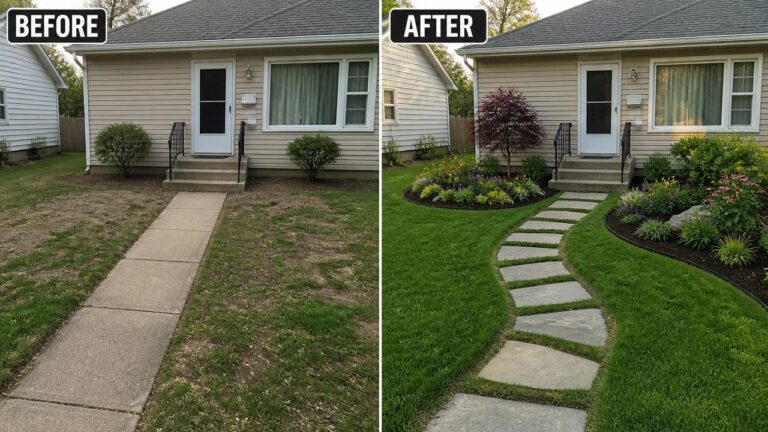
Define The Front Yard With Garden Beds And A Path
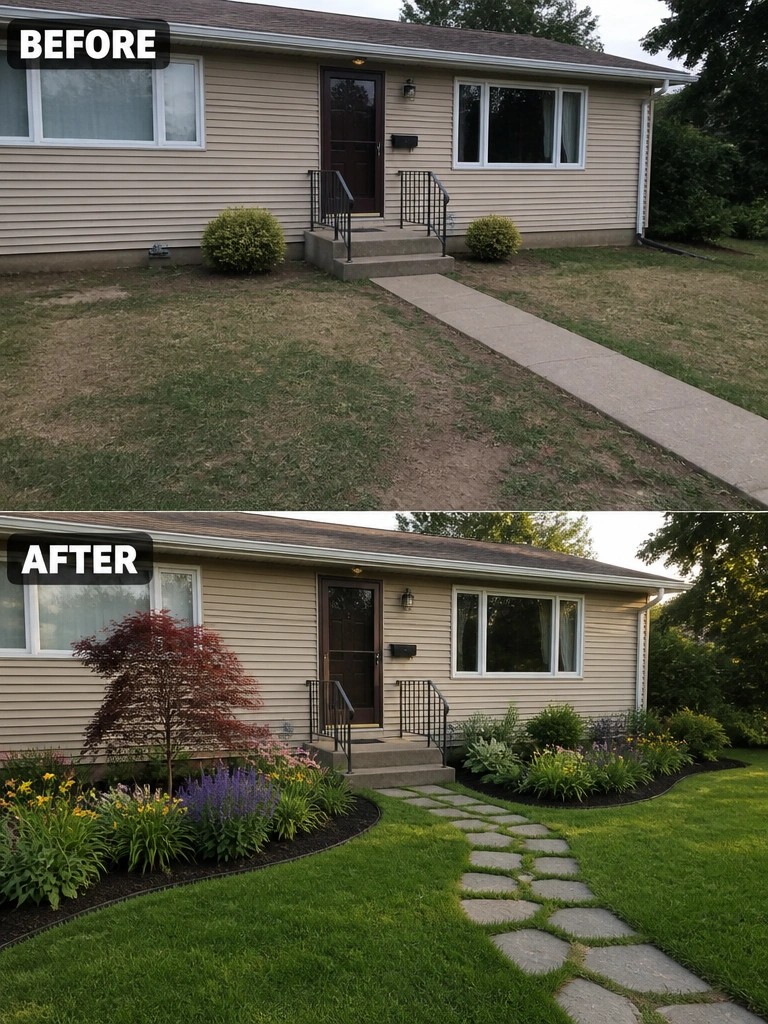
A front yard with nothing but patchy grass and a plain concrete walk feels unfinished. Adding planted beds along the house and swapping the straight path for stepping stones gives the space clear shape and makes the entry feel more intentional. The new beds also soften the foundation and tie the house to the lawn without needing a full redesign.
This approach works best on smaller or simple yards where you want structure without crowding the space. Start by cleaning up the lawn edges and laying out the beds first. Then add the path so it leads naturally to the door. Keep the plantings low near the windows and repeat a few colors so the beds look planned rather than scattered.
Add Structure To An Overgrown Backyard
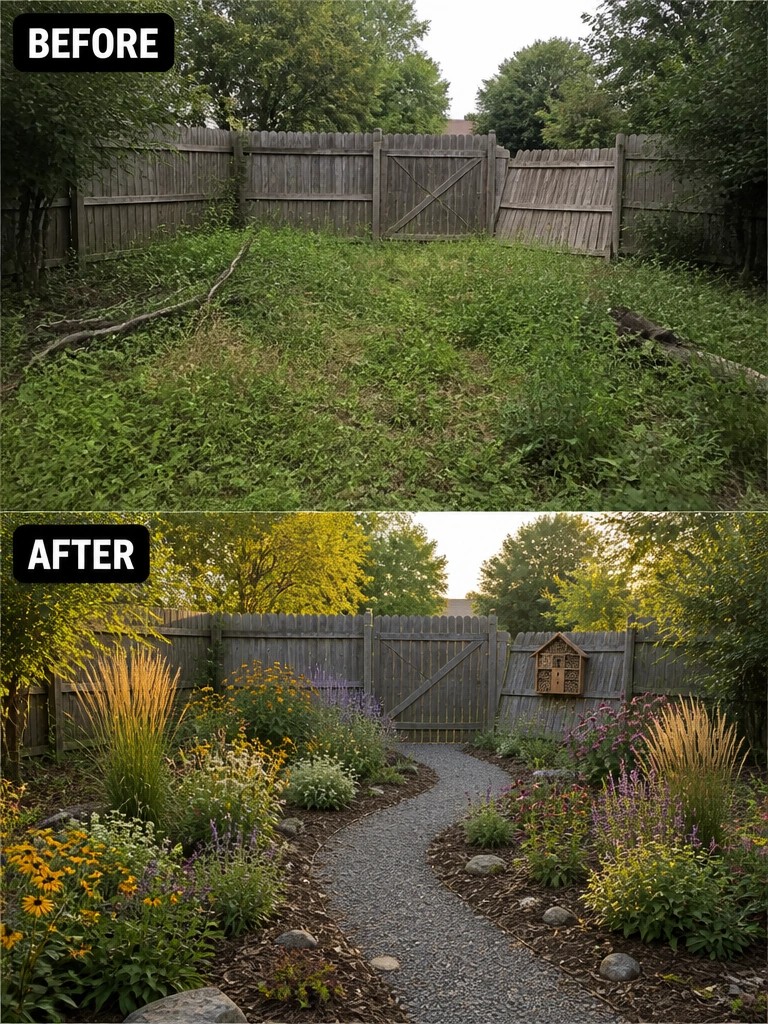
A messy yard with nothing but tall weeds and no clear layout is hard to enjoy. Clearing the overgrowth first and then adding a gravel path with planted borders on both sides gives the space a purpose and makes it feel intentional instead of neglected.
This idea works well in any yard that feels shapeless. Start by removing the worst of the weeds, lay down a simple path to guide movement, and build raised or mulched beds along the edges. Keep the planting simple at first so the structure stays visible instead of getting lost in too many plants.
Define The Yard Edge With A Simple Planted Border
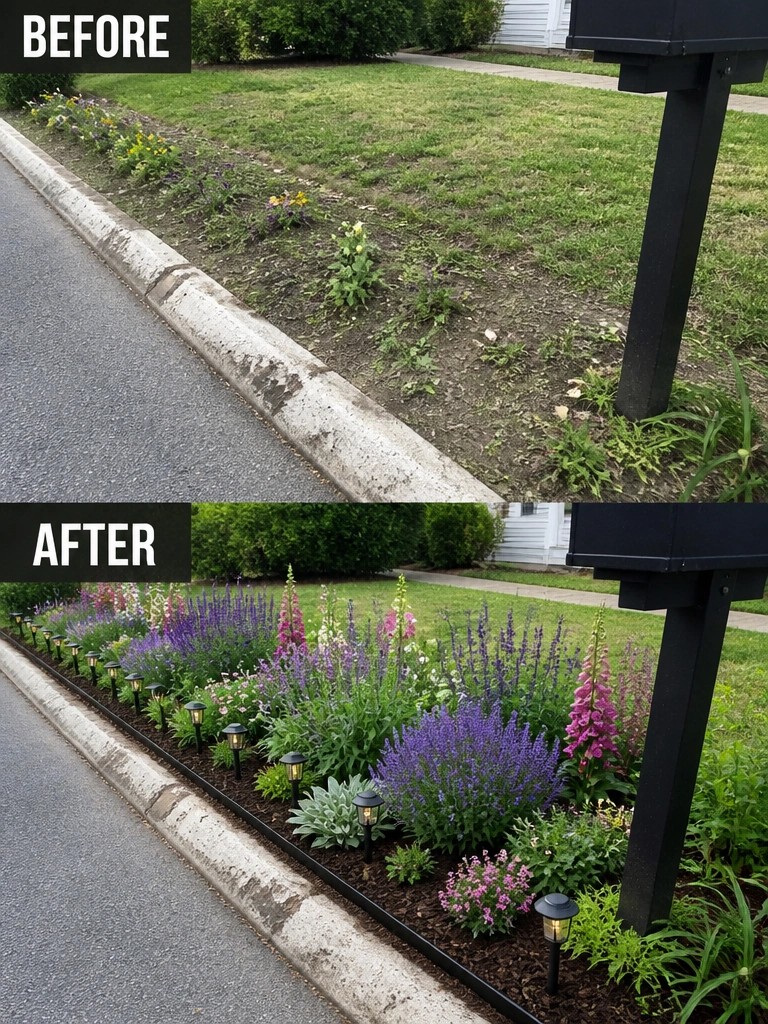
A narrow strip along the curb often ends up as the messiest part of the yard. Weeds take over, grass creeps onto the pavement, and the whole area looks neglected. Adding a clear border with mulch and a row of plants turns that awkward strip into something intentional. The edging keeps everything in place, and the planting gives the front of the property a finished look without much extra work.
This approach works best on small frontage areas where you want structure but do not need a full garden redesign. Start with a clean edge and mulch to stop weeds, then choose a mix of heights and colors that stay low enough to see over from the street. The same idea can tidy up side yards or the space between the sidewalk and the road on many suburban lots.
Add A Defined Path To A Narrow Side Yard
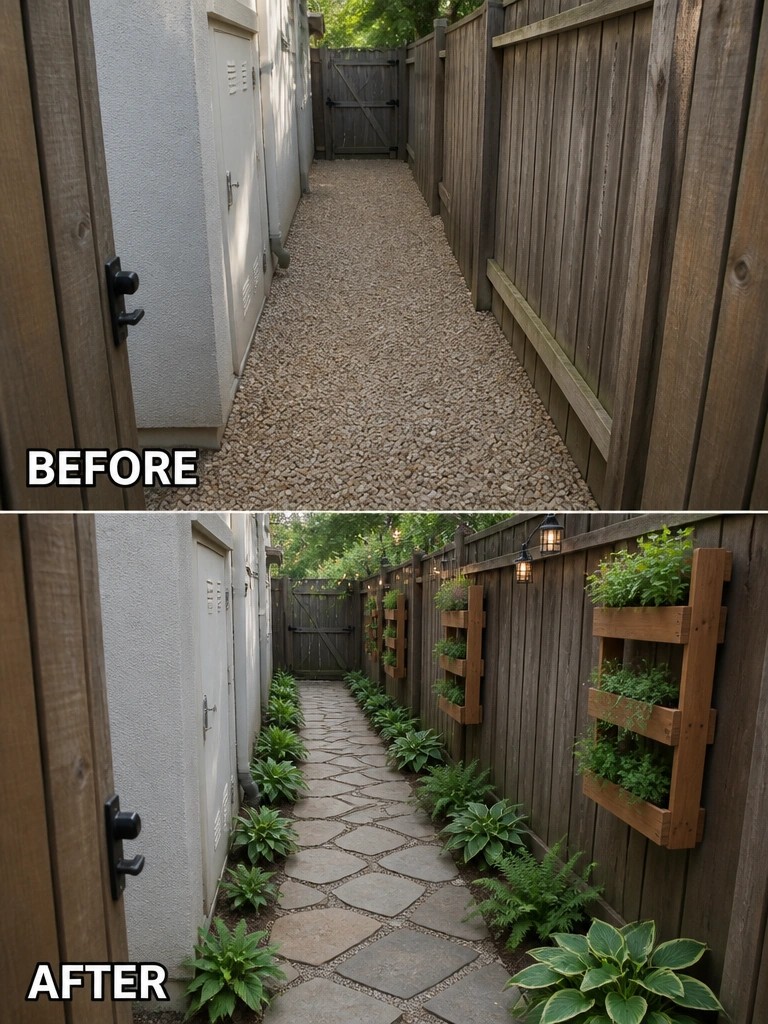
A narrow side passage often stays bare because it feels like leftover space rather than a real part of the yard. Switching from loose gravel to a laid stone path and adding plants along both sides gives the area a clear purpose and makes it more pleasant to walk through.
Vertical planters attached to the fence add greenery without taking up ground space. This works well on homes with tight side yards where you need access but still want some planting that stays out of the way.
Add Defined Beds To Shape A Front Yard
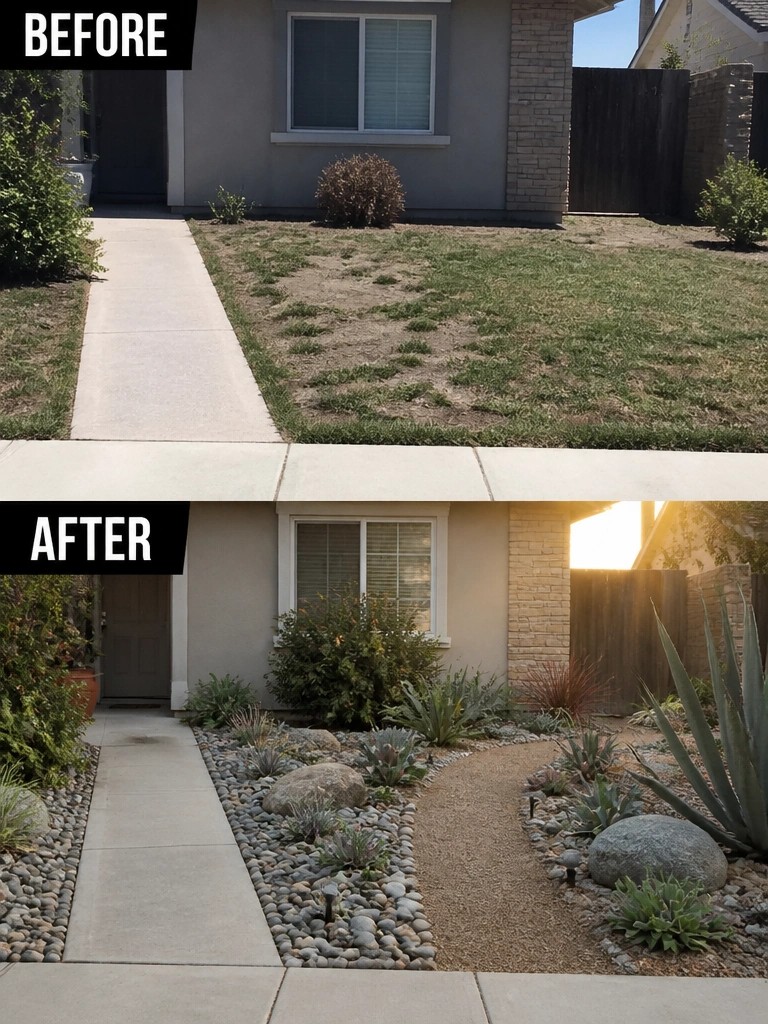
A patchy lawn often makes a front yard feel unfinished. Replacing the uneven grass with gravel paths and rock-bordered beds gives the space clear lines and makes it look intentional instead of neglected.
This approach works well in dry climates where grass struggles. Start by removing the worst areas of lawn, then lay down gravel or decomposed granite for the main paths and use larger stones to hold the beds in place. Keep the planting simple with a few types of succulents and shrubs so the beds stay easy to maintain.
Add Structure To A Sloped Backyard With Terracing
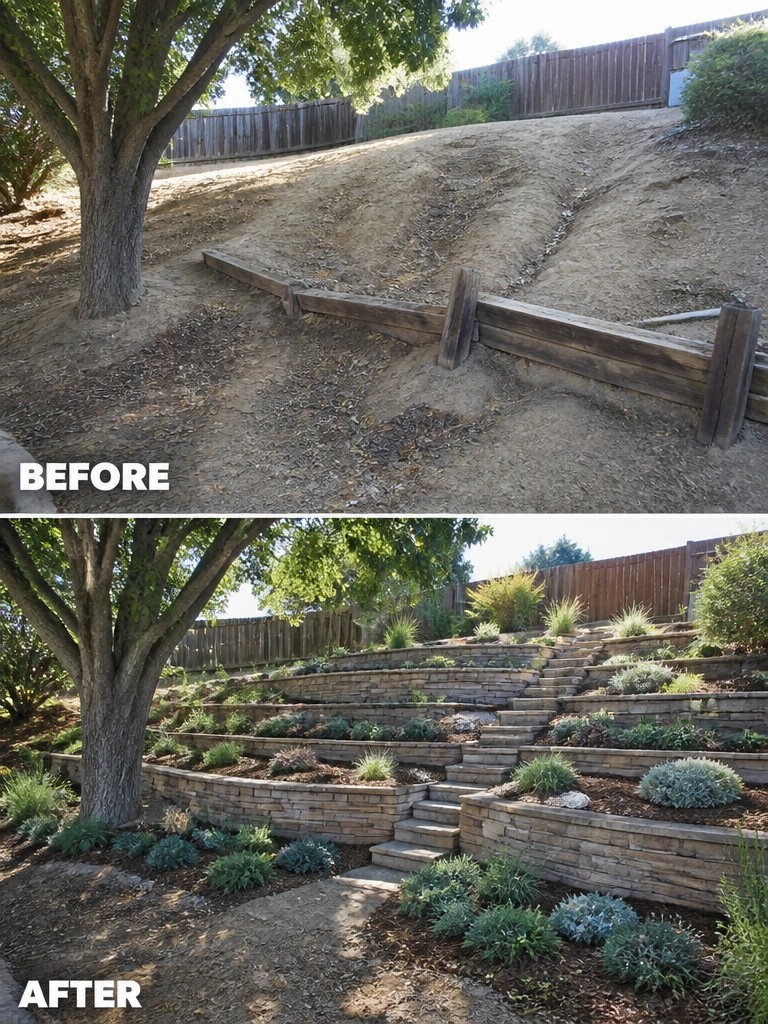
A bare slope often sits unused because the ground shifts and water runs off too fast. Terracing it with stacked stone walls creates flat beds that hold soil in place and give plants room to grow.
This approach works well on any yard with a noticeable grade. Focus on solid walls and drainage first, then add plants that match your area. Keep the beds simple so the slope stays easy to maintain over time.
Turn An Empty Yard Into A Fire Pit Seating Area
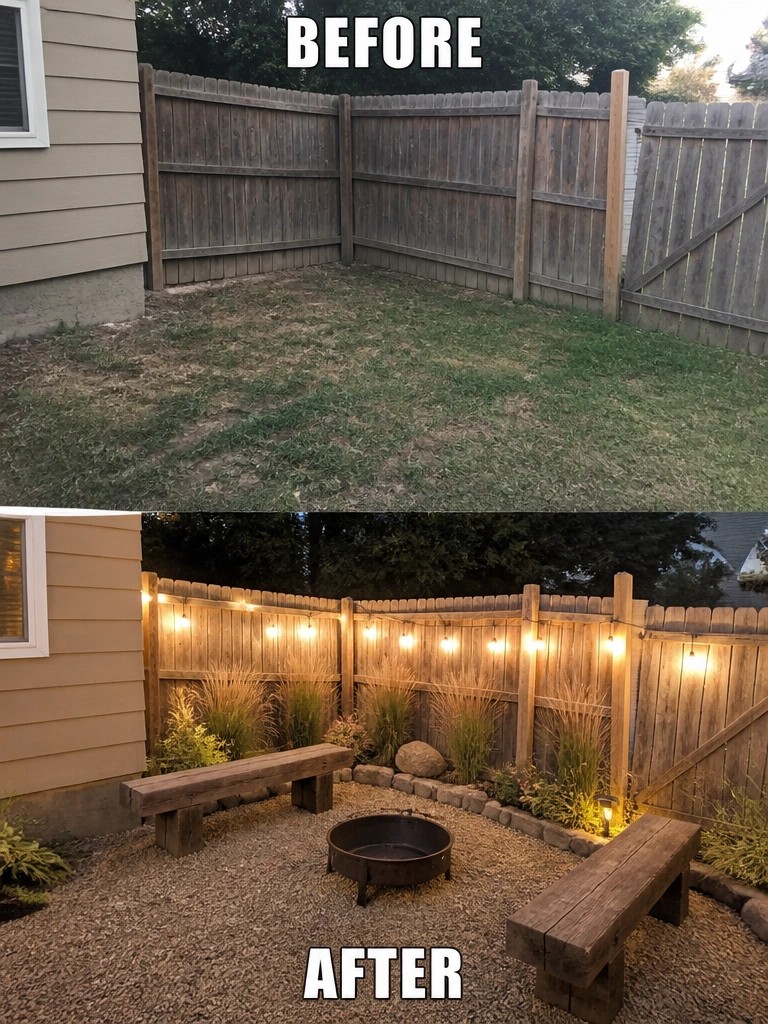
A bare backyard with nothing but grass and a fence can feel like wasted space. Adding gravel to define the area, placing a fire pit in the center, and setting simple wooden benches around it turns the spot into a place where people actually want to sit. String lights along the fence add just enough light for evening use without needing a big electrical project.
This approach works best in smaller yards where you want one clear zone rather than trying to landscape the whole thing at once. Start with the gravel base so the area stays dry and low maintenance, then add seating that can stay outside year round. Keep the planting simple along the edges so the focus stays on the seating rather than constant garden work.
Replace A Concrete Path With Stepping Stones
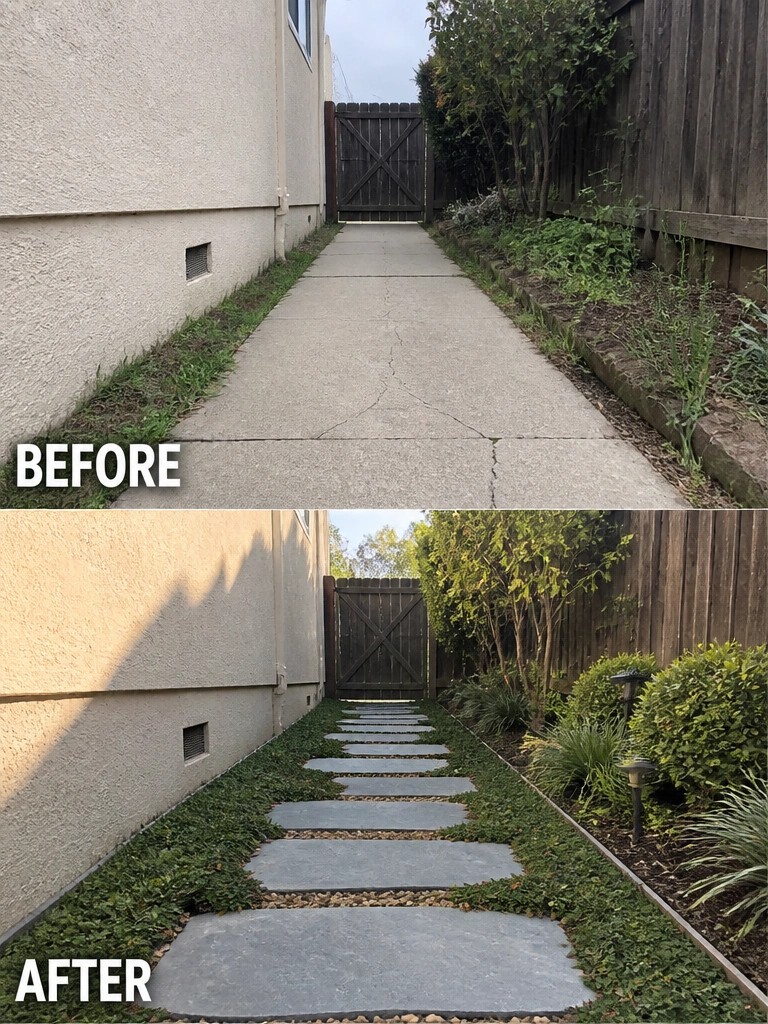
A solid concrete path often feels too harsh in a narrow side yard. Replacing it with stepping stones set into grass or ground cover softens the look and lets the walkway blend into the surrounding planting instead of cutting straight through it.
This works best in tight spaces along the house where you still need a clear route but want some greenery. Keep the stones large enough to walk on comfortably and leave room for low plants or mulch between them so the path stays practical while looking more natural.
Create A Planting Island In A Large Lawn
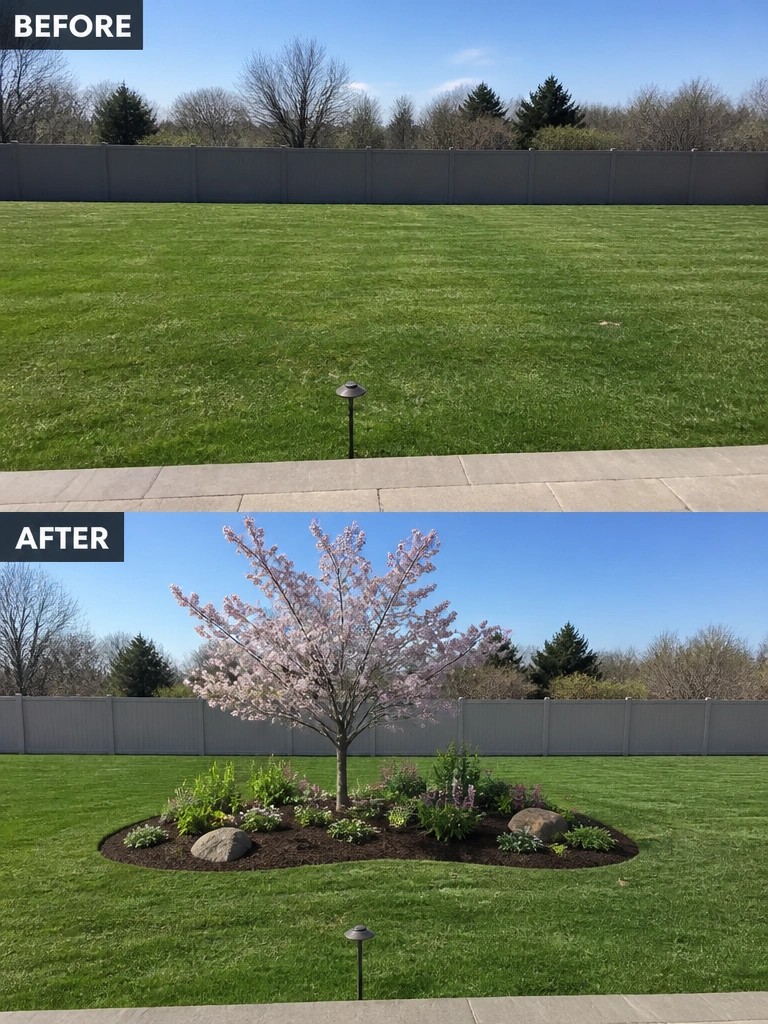
A wide open lawn often looks unfinished because there is nothing to break up the flat space. Placing a single tree with a mulched bed around it gives the yard a simple focal point while leaving most of the grass untouched.
This idea works best in yards that already have a decent lawn but feel too empty. Choose a tree that will not outgrow the space, keep the bed narrow enough to mow around easily, and add just a few plants so the bed stays low maintenance.
Add Defined Garden Beds Along The Pool
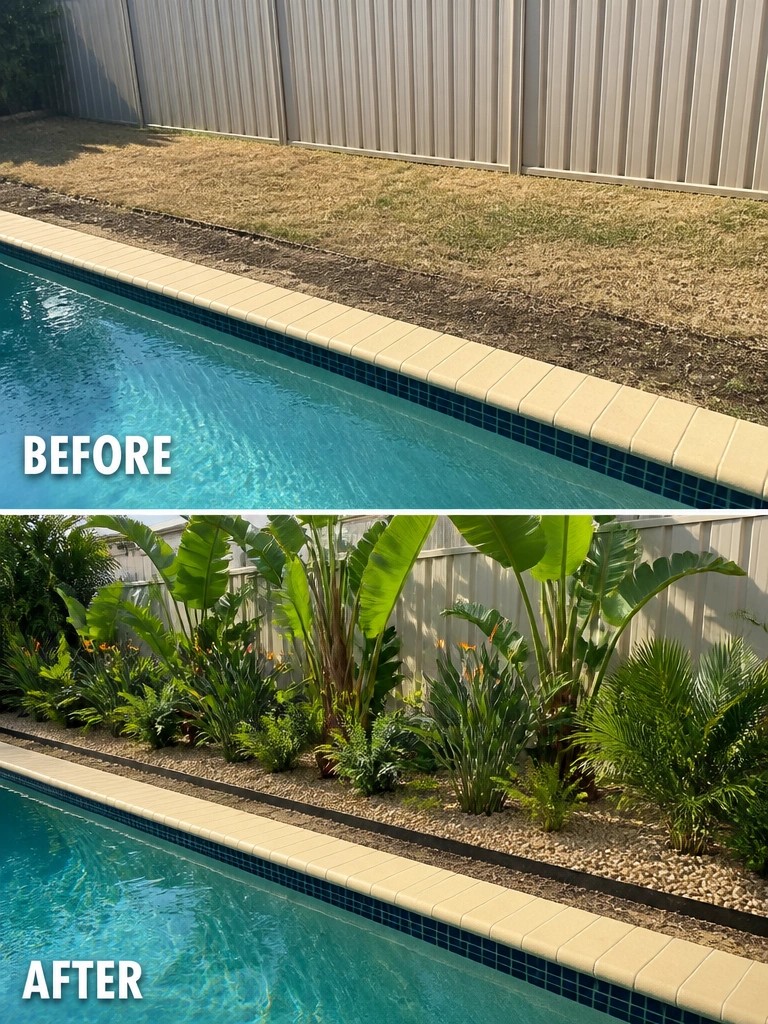
A bare strip of grass right next to the pool often looks unfinished and hard to maintain. Adding a simple garden bed with edging, gravel, and a mix of plants gives the area clear structure and turns that awkward edge into something intentional. The gravel keeps things tidy while the plants soften the look without crowding the water.
This approach works best on long, straight pool edges where you want low-maintenance greenery. Start with a clean border and gravel base before choosing plants that can handle sun and pool chemicals. Keep the bed narrow enough to leave walking room and repeat a few plant types rather than mixing too many.
Replace Overgrown Shrubs With A Low Hedge
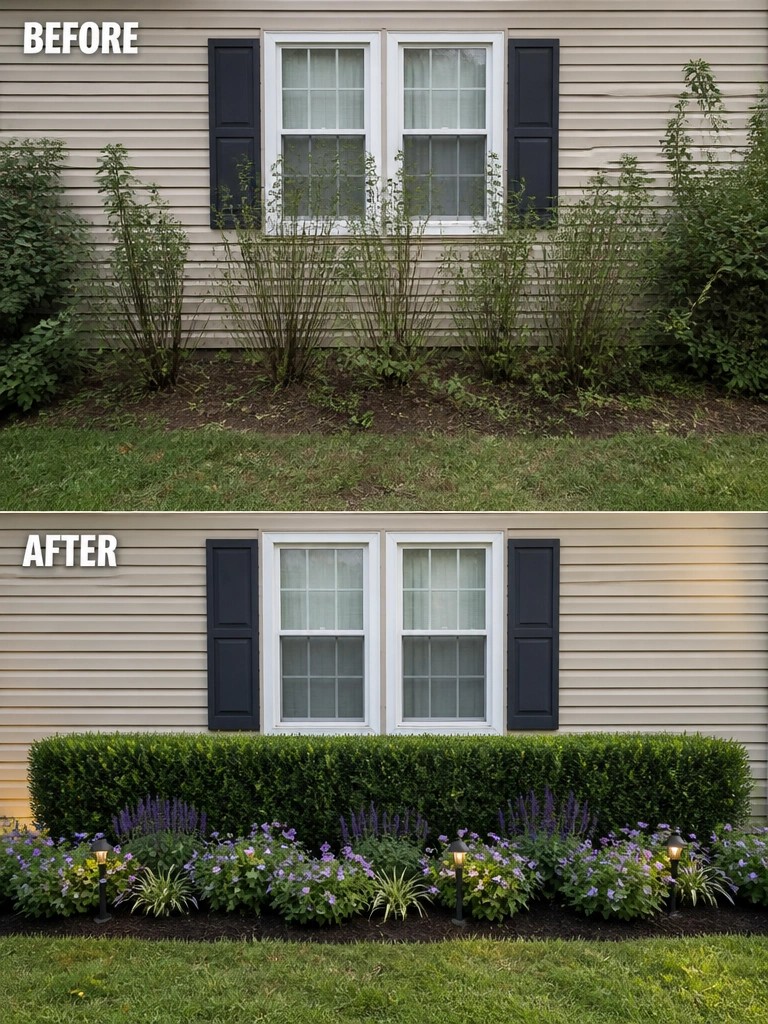
Many homes end up with foundation plants that grow too tall and messy over time. In this case the before photo shows tall, uneven shrubs blocking the lower part of the windows and making the front of the house look neglected. The after photo shows a simple fix: the old growth was removed and replaced with a low, even hedge topped with smaller flowering plants and a few lights.
This approach works well along the front of a house because it keeps windows clear while still giving the siding a finished edge. Start by cutting everything back to the ground so you can see the actual shape of the bed. Then choose one main hedge plant that stays under window height and add a narrow row of flowers in front. The result looks planned without requiring a lot of new hardscaping.
Turn A Bare Concrete Yard Into A Garden With Raised Beds
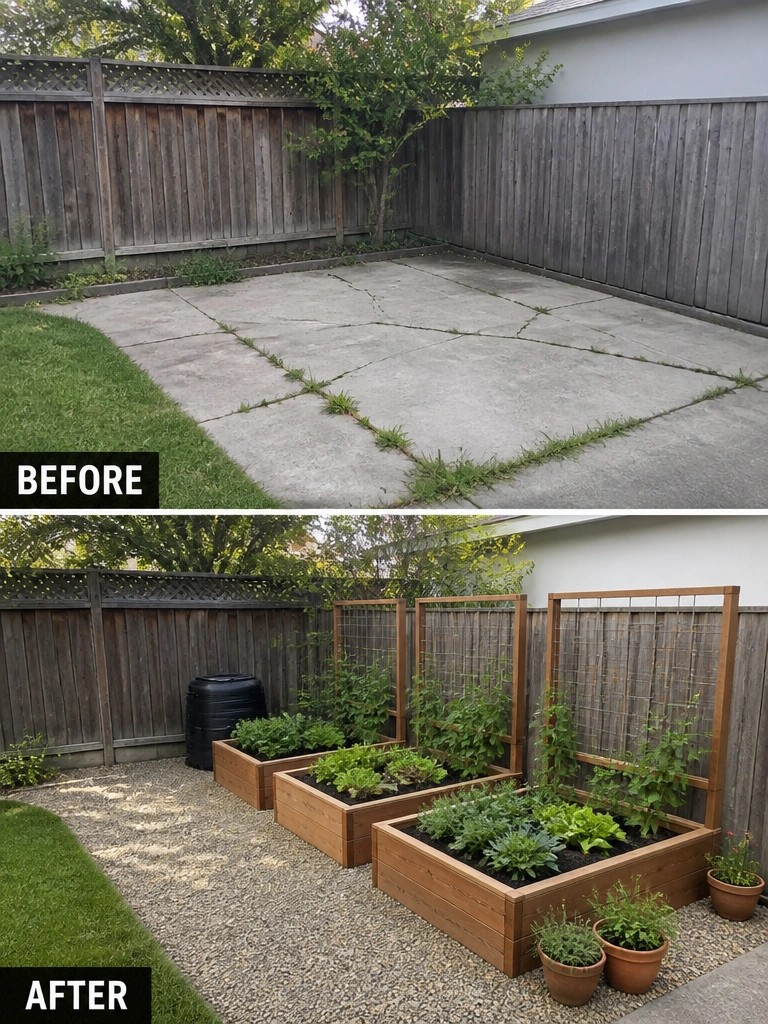
A plain slab of concrete often leaves a backyard feeling unfinished and hard to use. Raised beds solve this by creating clear planting zones, adding height, and making it easy to grow vegetables or flowers without dealing with poor soil underneath.
This approach works best in smaller yards or rental properties where you cannot dig into the ground. Keep the beds simple, line them up along a fence or wall, and use gravel to cover the remaining surface so the space stays low maintenance and easy to walk through.
Define A Walkway With Edging And Garden Beds
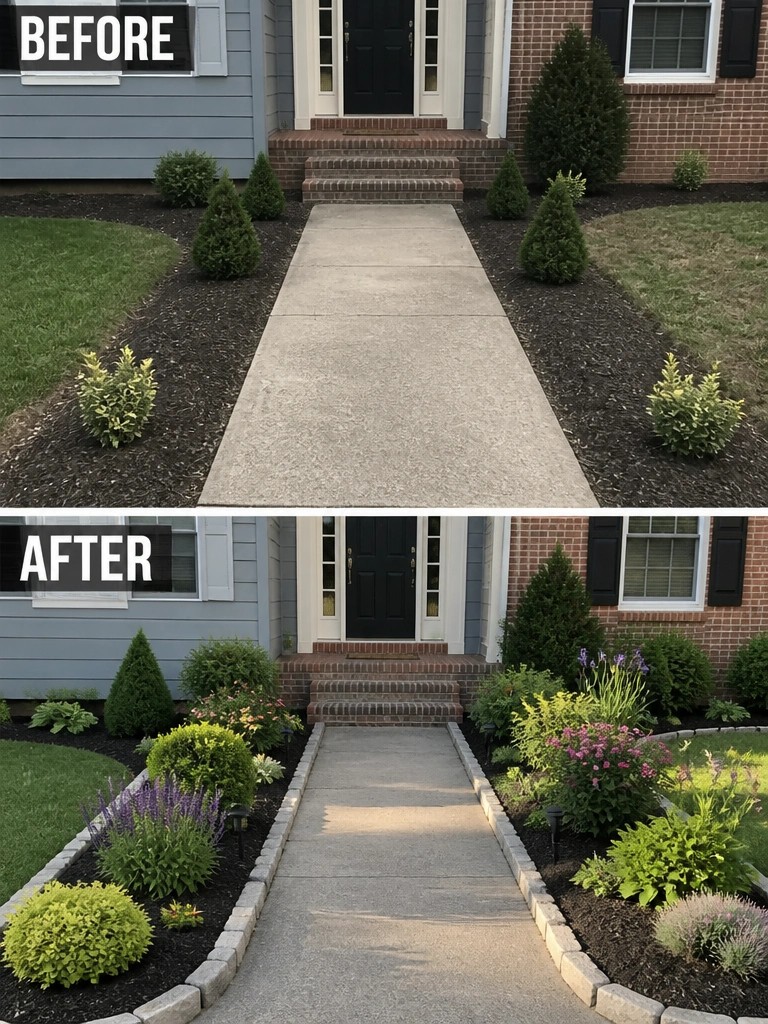
A plain concrete path often looks unfinished when the ground on either side stays flat and bare. Adding a simple stone edge creates a clear border that turns scattered mulch and small plants into proper garden beds. The result feels more intentional and keeps the walkway from looking like it was just dropped onto the lawn.
This idea works on many homes because it adds structure without needing a full redesign. Use edging that matches your house style, then fill the beds with a mix of shrubs and lower plants so the sides feel balanced. Keep the beds a consistent width so the path stays easy to walk along.
Add Terraced Beds To A Steep Slope
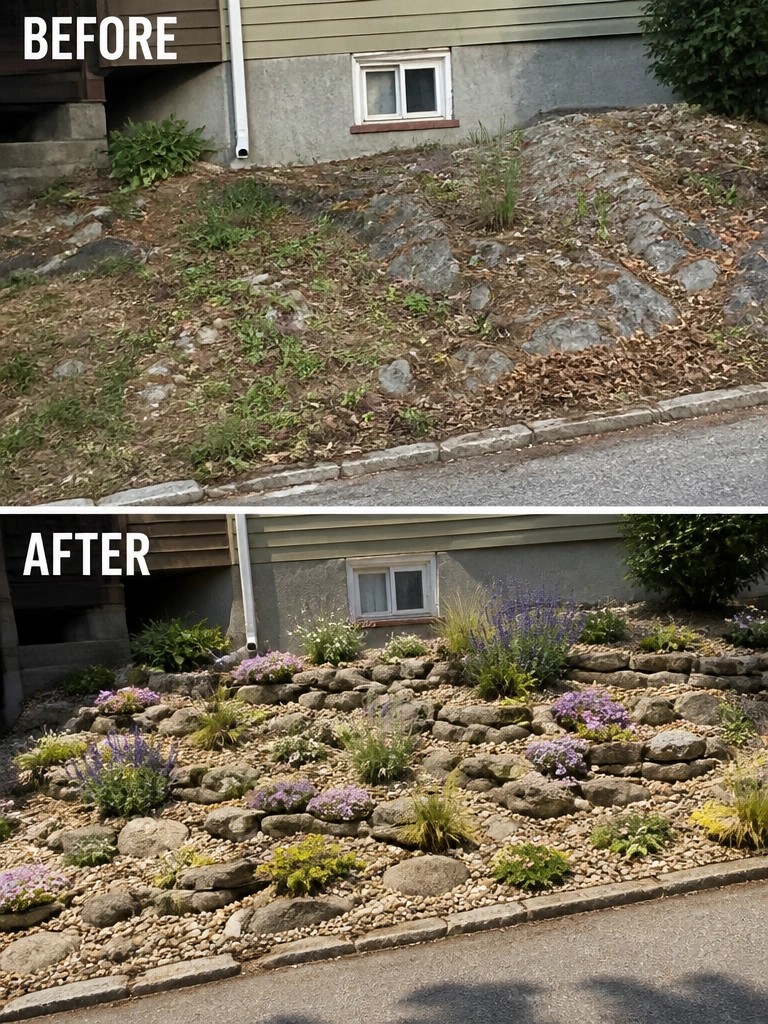
A sloped yard often ends up as a weedy mess because nothing holds the soil in place. The simple fix shown here is building low stone walls to create flat planting areas that step down the hill. Once the beds are defined, mulch and plants fill in quickly and keep the whole area looking intentional instead of neglected.
This approach works best on slopes where grass refuses to grow. Start by clearing the weeds and leaves, then stack stones or blocks to form the terraces. The same idea can be used on smaller hills in the front or side yard as long as you keep the walls low and the beds narrow enough to reach for weeding.
Define A Plain Yard Edge With A Planted Border
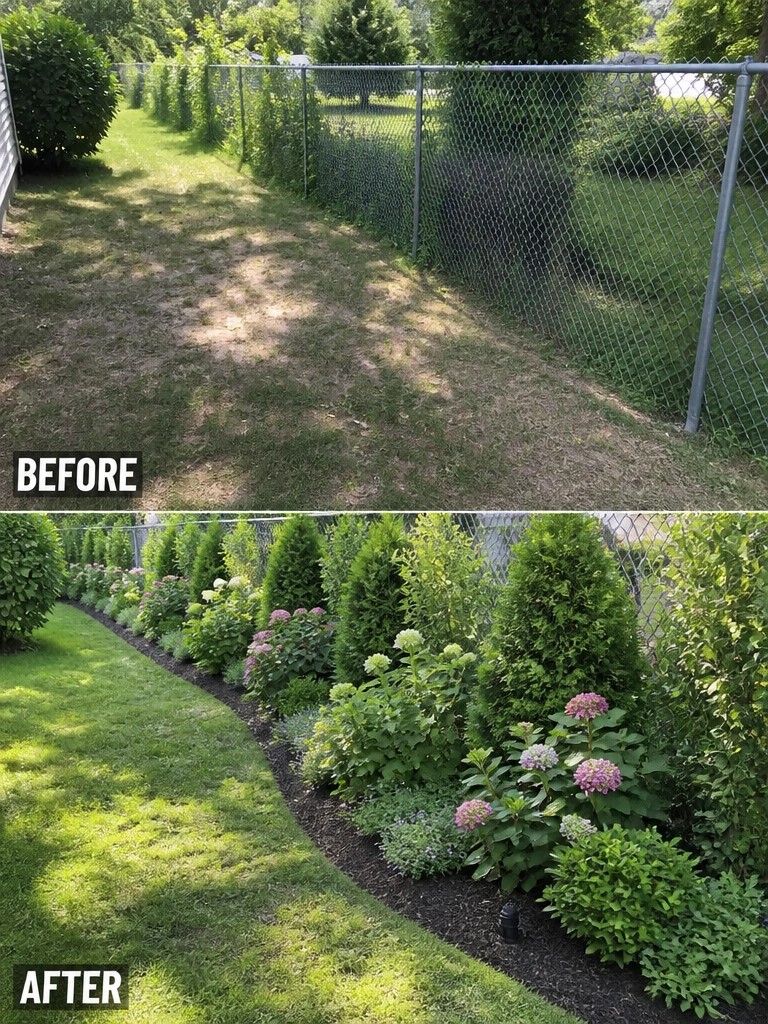
A long stretch of patchy grass next to a fence often feels unfinished. Adding a mulched garden bed with layered shrubs and flowers gives the space a clear shape and turns the fence line into a feature instead of just a boundary.
This approach works well in any yard where the lawn runs straight against a fence or property line. Start by cleaning up the grass edge, then choose a mix of evergreens for height and lower flowering plants for color. Keep the bed a consistent width so mowing stays simple and the planting does not crowd the lawn.
Add Structure To A Bare Backyard
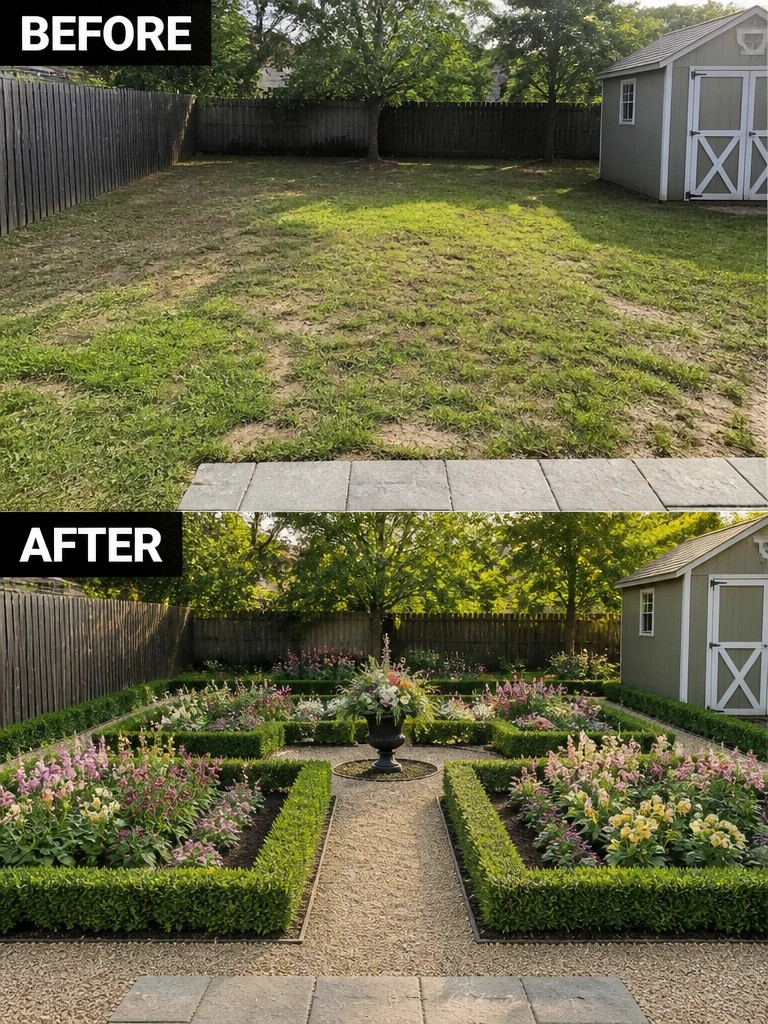
A flat stretch of grass often feels unfinished because nothing divides the space or gives it purpose. Low box hedges and gravel paths turn that empty area into a series of clear beds, which makes the yard feel both larger and more intentional.
This layout works best in modest backyards where you want planting without losing open ground. Lay out the beds and paths first, then add plants inside the compartments so the structure stays visible even after the flowers fade.
Clean Up An Overgrown Curb Area With Defined Planting
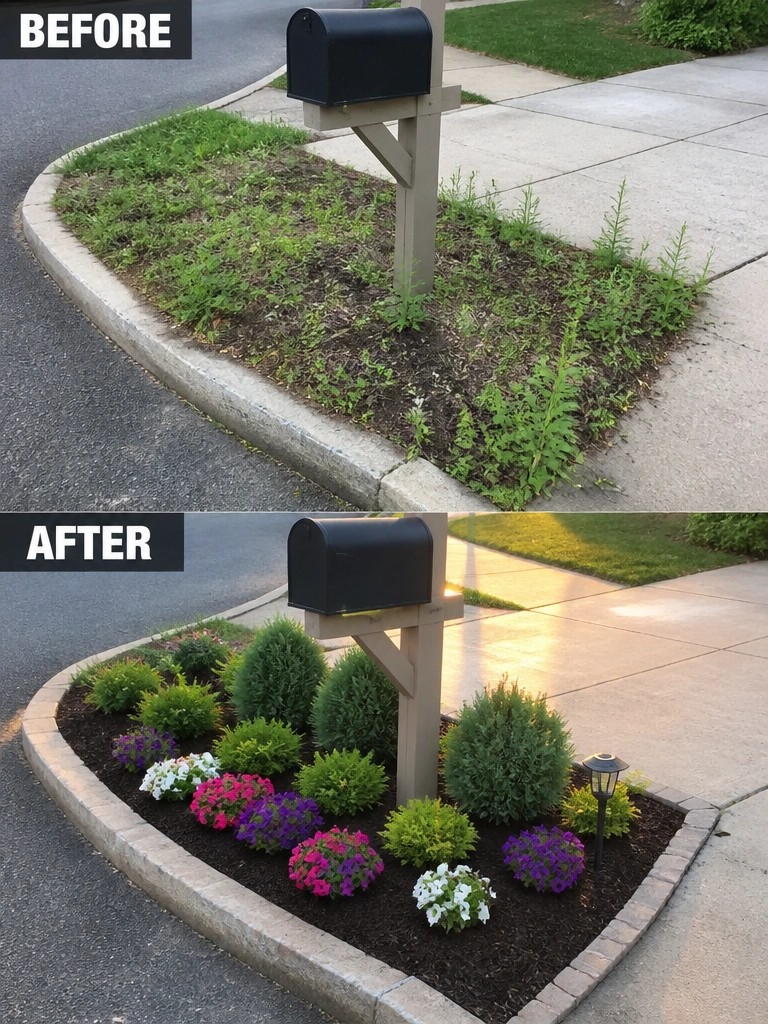
A messy strip of weeds and bare dirt along the street can make the whole front of a house look neglected. Clearing the area first and then adding a clean edge, mulch, and a simple mix of shrubs and flowers gives the space shape and makes it feel intentional instead of random.
This idea works especially well in narrow spots like the area around a mailbox. Keep the planting simple with a few evergreens for structure and some low flowers for color. It stays easy to maintain and helps the yard look cared for without needing a big budget or a lot of new features.
Add Planting Structure To A Bare Backyard
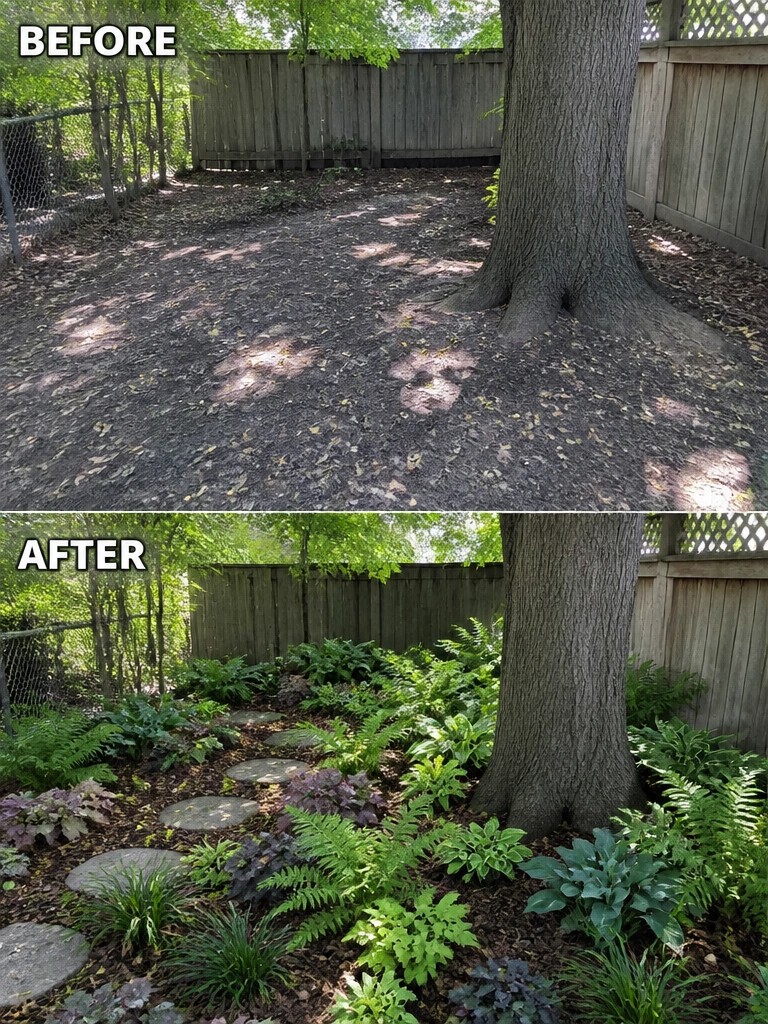
A bare dirt area around a large tree often looks unfinished and hard to use. Adding mulched beds filled with ferns, hostas, and other shade plants, along with a few stepping stones, gives the space clear shape and makes it feel like an intentional part of the yard.
This idea works best in shady spots where grass is difficult to grow. Keep the beds simple, repeat a few plant types, and leave enough open space so the tree stays the main focus rather than getting crowded.
Define A Front Walkway With Gravel Beds
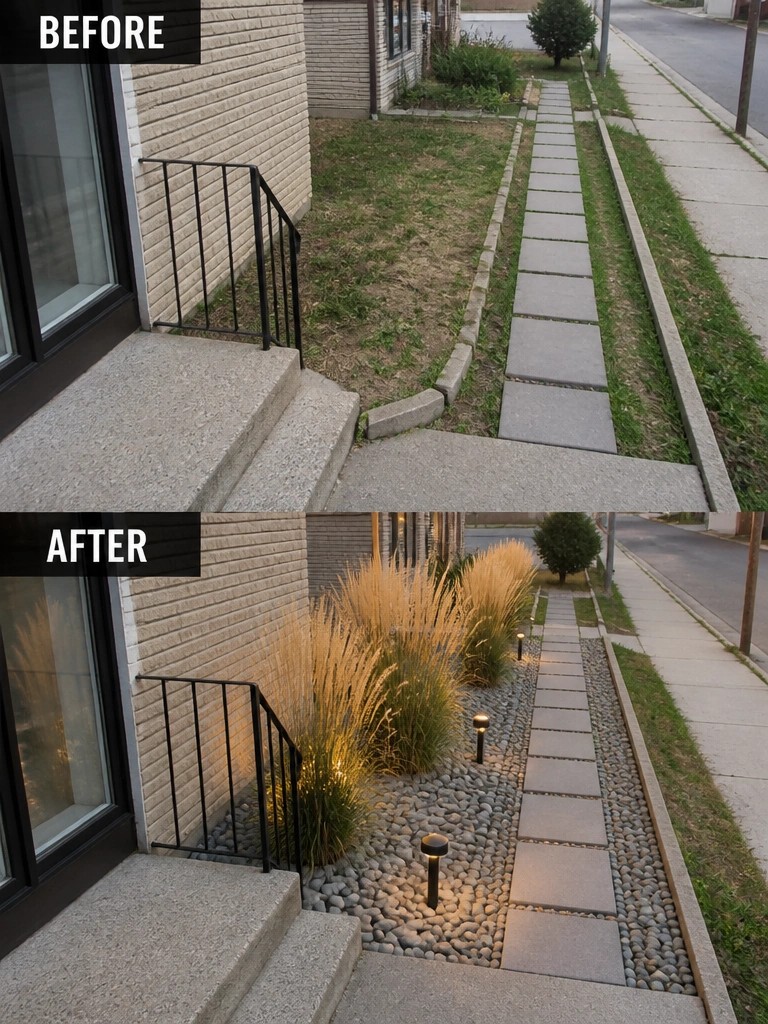
The original side path sat between two strips of patchy grass that never looked finished. Replacing the grass with gravel beds and adding a few tall grasses gave the walkway a clear edge and made the whole front feel more put together.
This idea works best on narrow strips next to a house or sidewalk where grass is hard to keep neat. Keep the planting simple, use edging to hold the gravel, and add a couple of low lights if you want the path to feel usable after dark.
Add A Mulched Border To Clean Up The Patio Edge
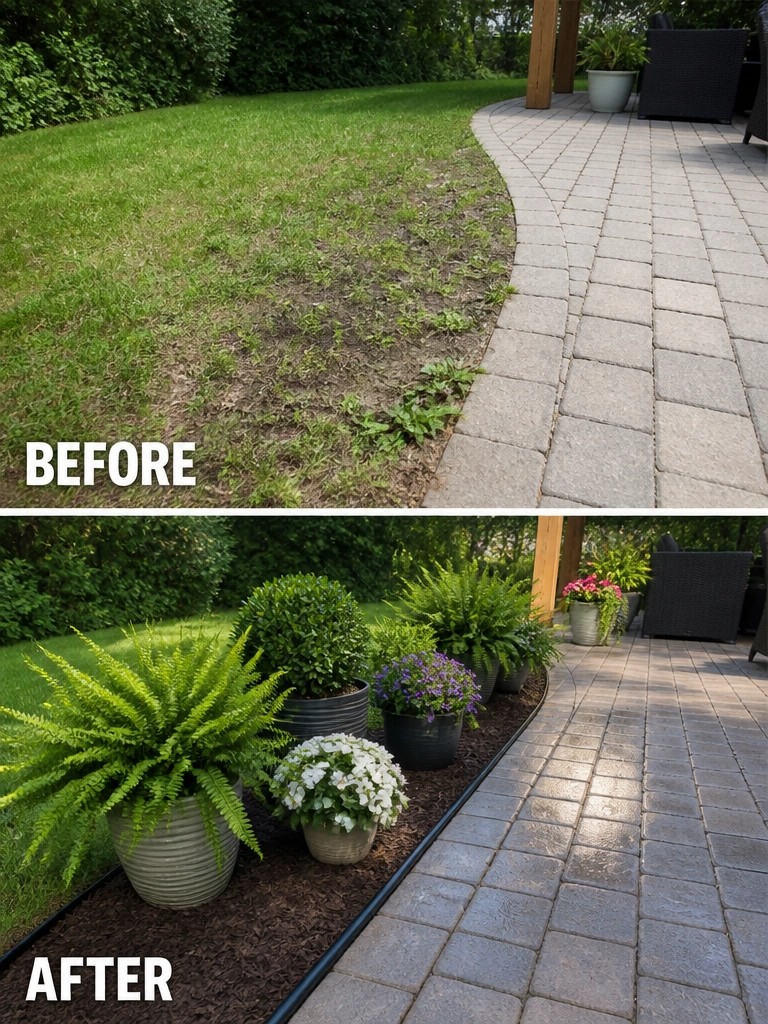
The patchy grass right next to the patio made the whole side of the yard look neglected. Laying down a simple mulched bed with a clean edge gave the space a clear line and made the area feel more intentional.
This idea works best along paved areas where the lawn tends to creep in. Use basic edging to hold the mulch, keep the bed narrow enough to walk around easily, and start with a few larger plants so the border does not feel sparse while everything fills in.
Add Vertical Structure To A Fence Border
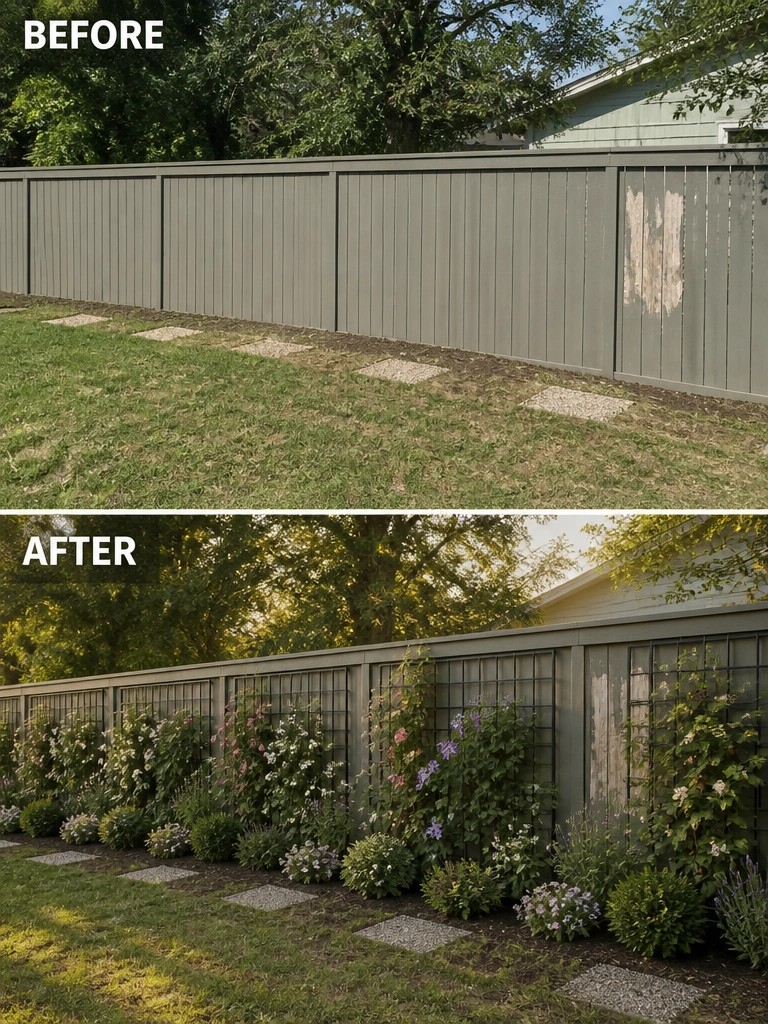
A plain fence often leaves the edge of a yard feeling unfinished. Adding a row of trellises and planting at the base gives the fence a clear purpose and turns that line into a garden feature instead of just a barrier. The simple change from bare panels to planted grids and layered shrubs makes the whole yard feel more intentional.
This idea works best along a long fence where you want privacy or screening without losing the yard’s shape. Start with sturdy trellises spaced evenly, then fill in with a mix of taller climbers and lower shrubs so the planting has depth. It suits homes with straight property lines and gives you an easy way to add color and greenery without crowding the lawn.
Add Structure To An Overgrown Backyard
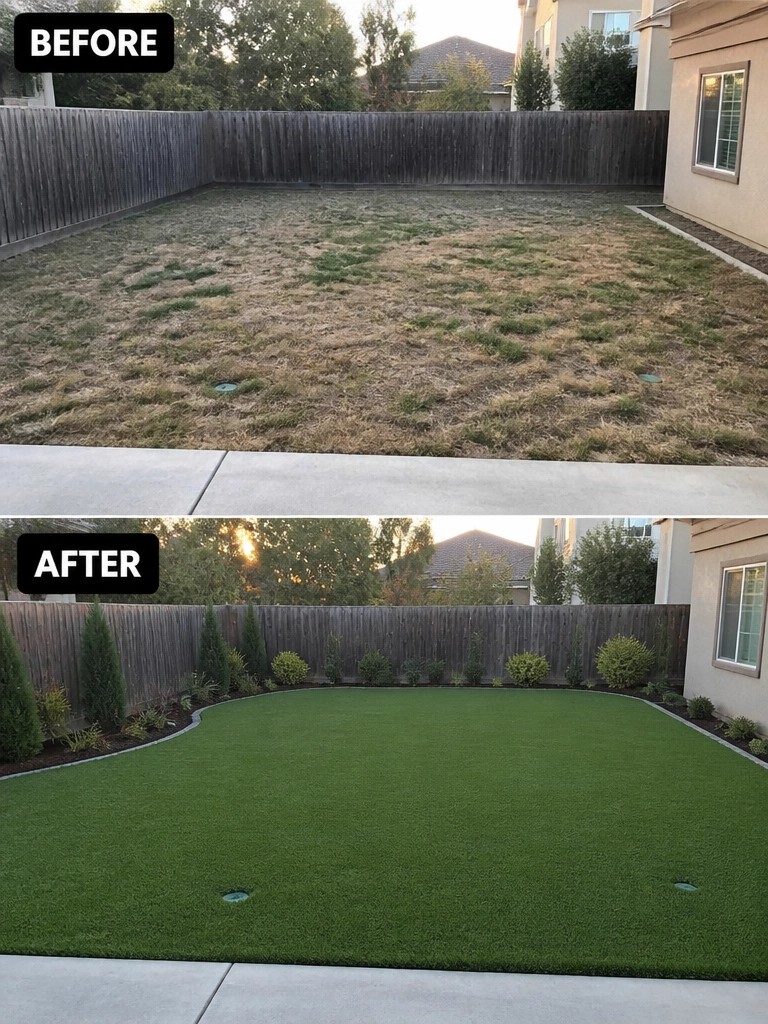
A patchy, uneven lawn makes the whole yard feel unfinished. The simple fix here was to replace the tired grass with a clean, even surface and add a curved planting border along the fence line. That one change gave the space clear shape instead of just filling it with random growth.
This idea works best in smaller yards where you want a usable lawn without adding lots of extra features. Start with the main surface and the edge first. Once those are set, you can add plants or seating later and the yard will already feel planned instead of scattered.
Add Pavers To Give An Empty Backyard Clear Structure
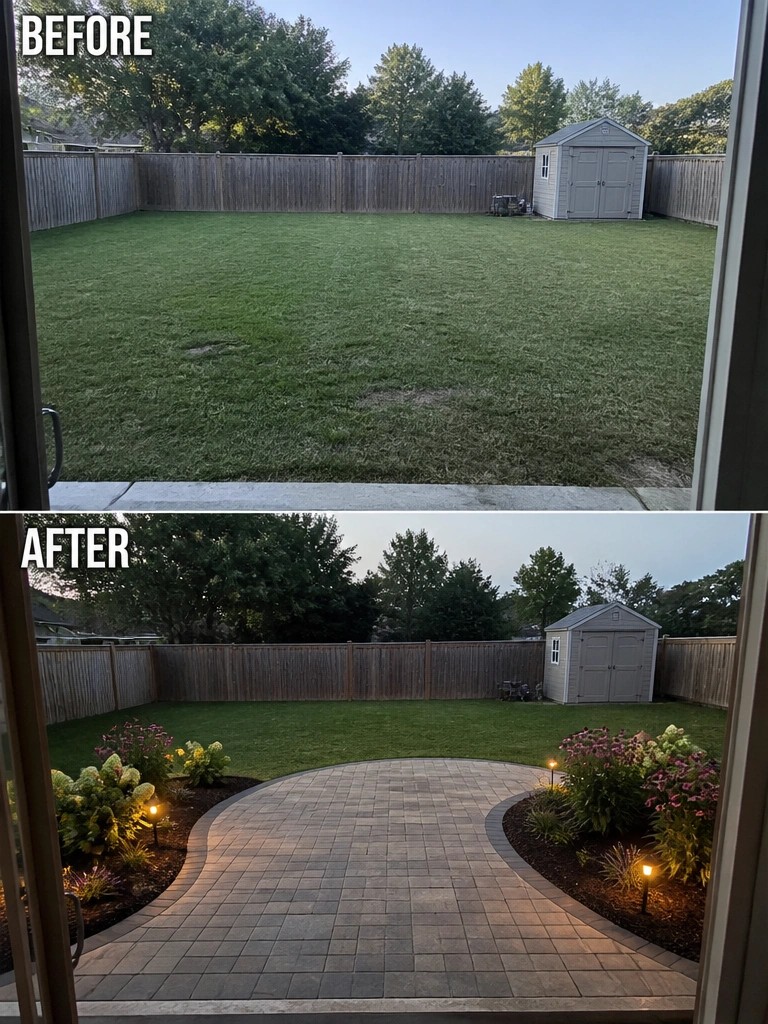
An open lawn can feel unfinished even when it is neat. Adding a paver patio with curved garden beds gives the space a clear center and makes the yard feel more planned. The change turns a flat stretch of grass into a defined area that is easier to use and easier to maintain.
This approach works well in backyards that are mostly lawn and lack any hard surface. Start with the patio shape first, then add the planting beds along the edges. Keep the beds modest in size so the lawn still has room to breathe and the new features do not crowd the space.
Define The Entry With Layered Garden Beds
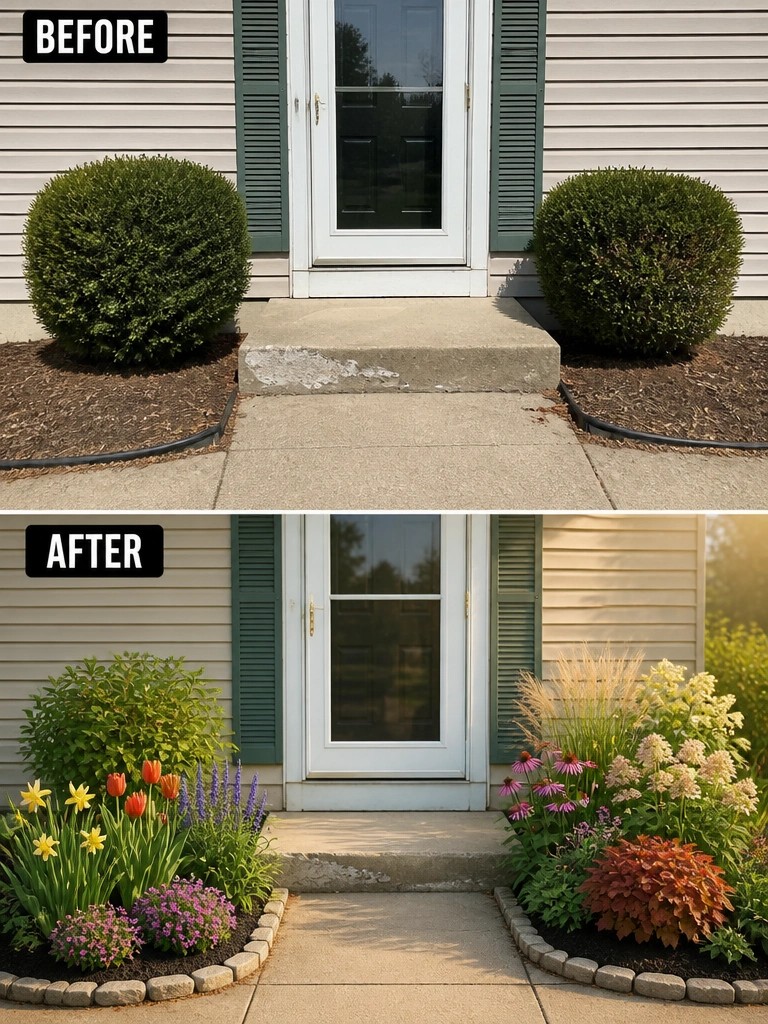
Plain shrubs on either side of the steps can make a front door feel flat. Replacing them with layered beds that mix taller plants, lower flowers, and some texture adds height and color without crowding the walkway. The stone edging also keeps the beds neat and gives the whole entry a finished look.
This idea works well on small front yards where you want impact close to the house. Start by clearing the old planting, then build the beds with a clear border before adding plants in groups of different heights. It suits most entry styles as long as you leave enough room to walk comfortably to the door.
Add A Simple Path To Organize A Narrow Side Yard
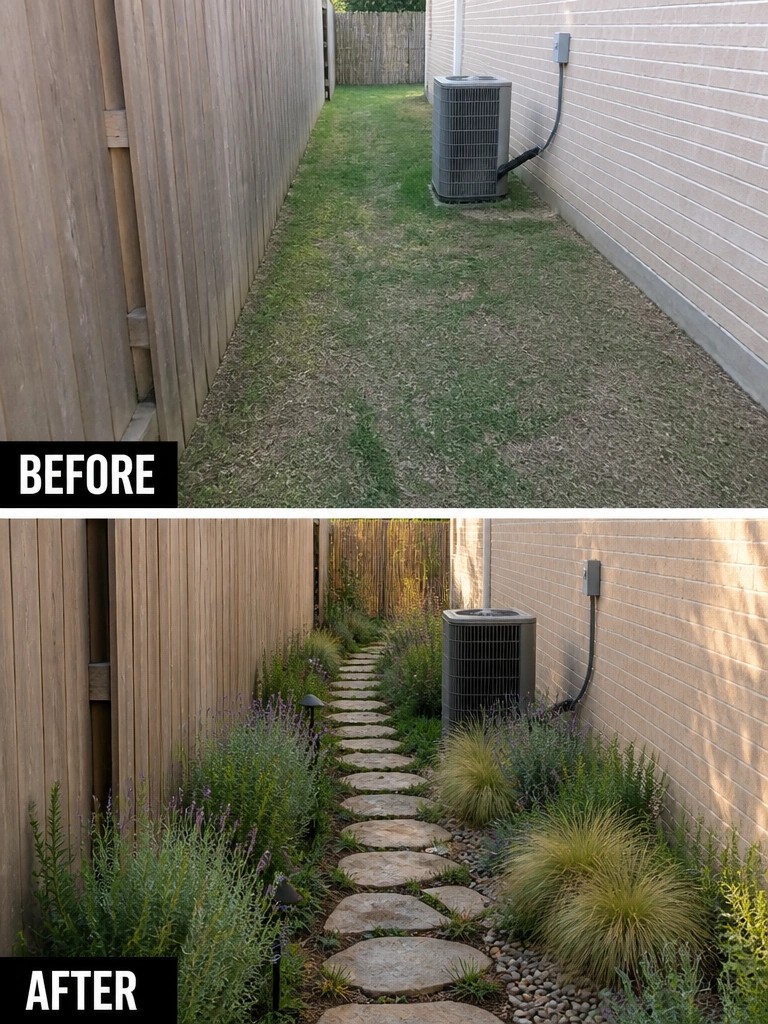
A narrow side yard often ends up as wasted space because there is no clear way to move through it. Adding a stepping stone path right away gives the area purpose and makes it feel intentional instead of leftover. The planting along the edges then softens the fences and walls without crowding the walkway.
This approach works best in tight access areas where you still need to reach the back of the lot or an AC unit. Start with the path to set the layout, then fill the borders with low plants that can handle the shade and limited width. Keep the plantings simple so the space stays easy to walk and maintain.
Frequently Asked Questions
Q: My yard gets mostly shade. Can any of these ideas still make a big difference there? A: Pick shade lovers like hostas or ferns to fill in bare spots. They grow fast and turn a dim area into something lush without fighting the sun. Add a few stepping stones to guide the eye through the new growth.
Q: How do I keep new plants alive in the first month after I copy one of these makeovers? A: Water them deeply every other day at first while roots settle. Watch the leaves for wilting and ease off once you see steady new growth. Mulch around the base helps hold moisture without extra work.
Q: What if I want to try these changes but have zero landscaping experience? A: Begin with one low risk swap such as laying fresh mulch or grouping pots. Those steps alone can shift the whole feel of a yard in a weekend. Tackle bigger jobs only after you see how the small ones turn out.
