


I have noticed that outdoor spaces often need better structure around the edges before lighting can do its job properly.
Placing lights near pathways or key plants helps guide the eye without making the yard feel overdone.
In my own yard I usually begin by marking out where I want the light to fall after dark.
This approach keeps things practical as the seasons change and the plants grow.
It works better than adding fixtures at random.
Use Path Lights To Make The Front Yard Feel Finished
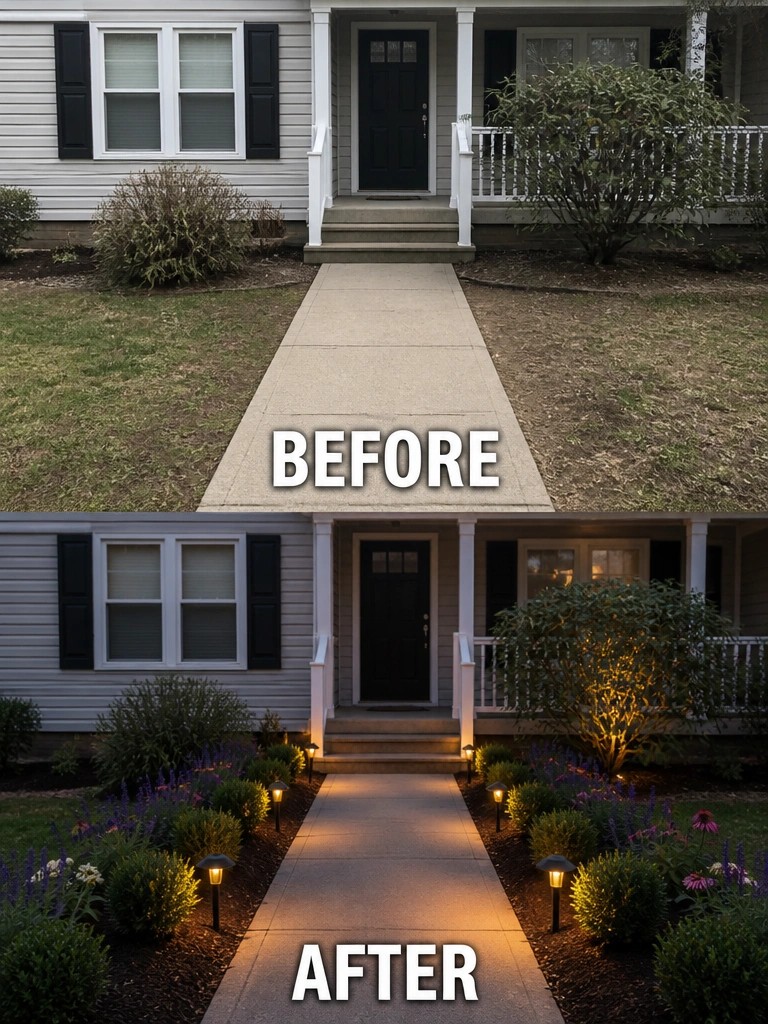
A plain concrete walkway often looks unfinished when the surrounding beds are empty or sparse. Adding low path lights along both sides, plus a few accent lights tucked into the new planting, gives the whole front a clear structure and makes the house feel more welcoming at night.
This works best on homes where the entry path is the main view from the street. Keep the fixtures simple and low so they light the ground without glare, and space them evenly so the walk feels guided rather than spotty. Start with the lights and mulch first, then add plants around them.
Use Outdoor Lighting To Make A Patio Feel Cozy
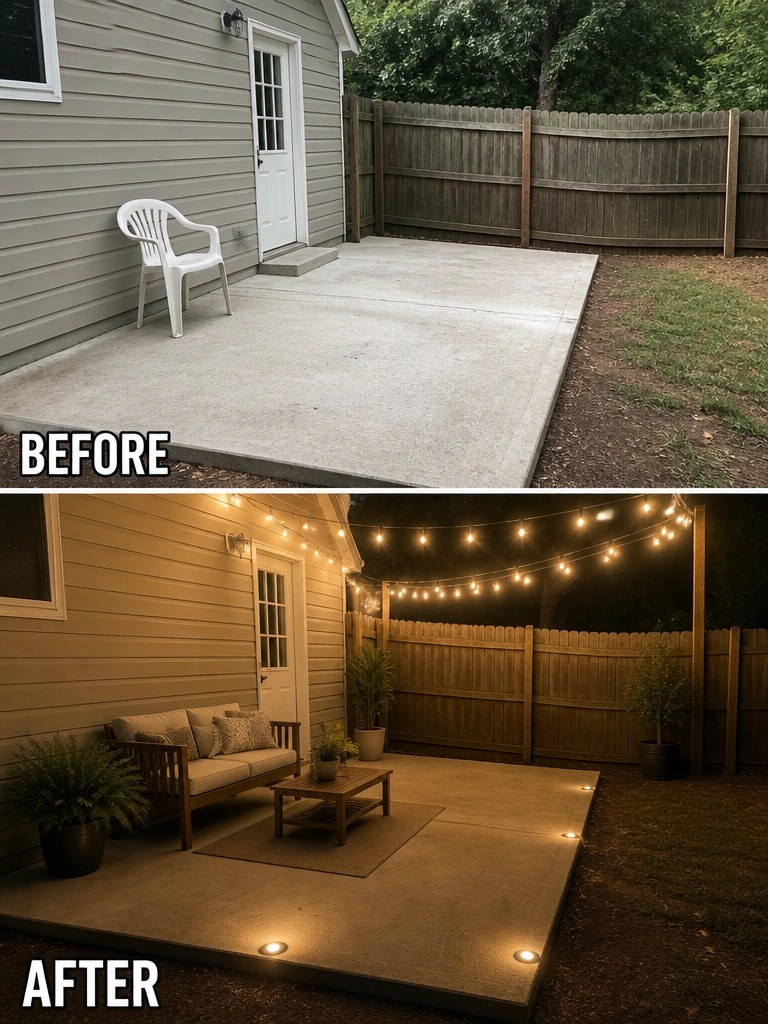
A bare concrete patio often sits unused once the sun goes down. Adding string lights overhead and a few ground lights around the edges turns the same slab into a space that feels welcoming at night. The simple addition of lighting makes the area feel defined and ready for evening use without any major construction.
This approach works best on patios that sit right off the house and already have a fence or posts for hanging lights. Start with sturdy outdoor string lights and a couple of solar ground lights to mark the seating area. It suits homes with basic backyards where the goal is to create a usable spot for relaxing without adding furniture or plants right away.
Add Path Lighting To A Narrow Side Yard
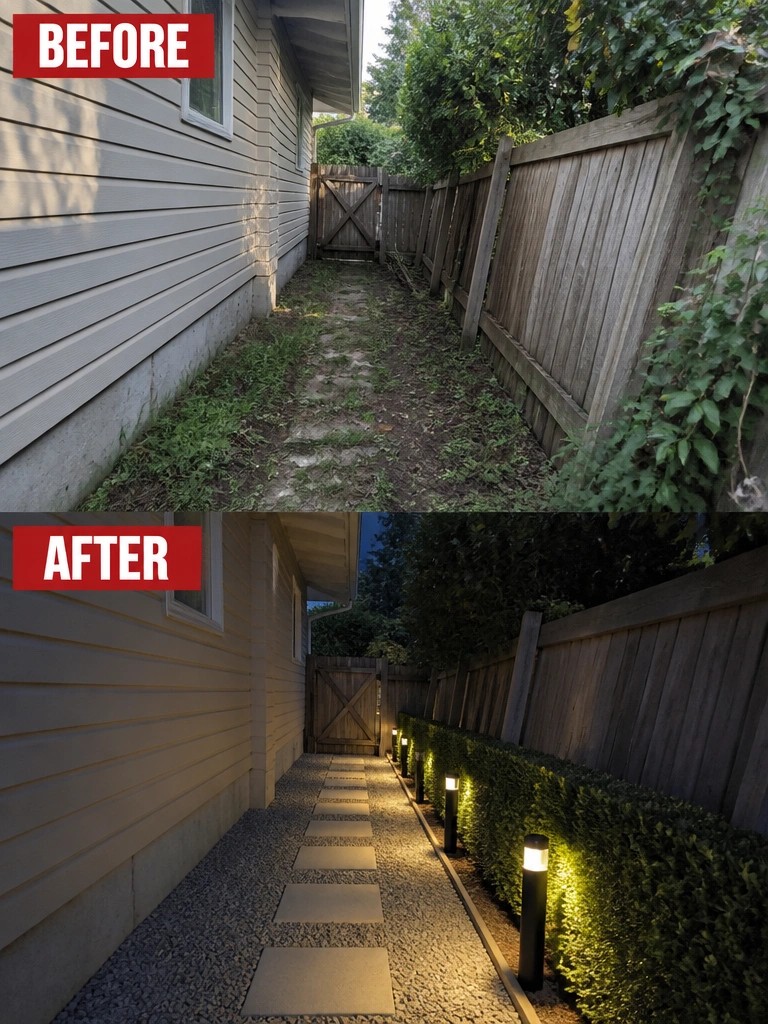
A narrow side yard often ends up as an afterthought, with weeds and bare dirt making the space feel neglected. Adding a row of path lights gives the area a clear purpose and makes it easy to walk through after dark.
Keep the lights low and evenly spaced so they guide the way without filling the space with glare. This approach works on many homes where the side yard is the main route to the backyard and needs to feel intentional rather than forgotten.
Highlight Trees With Outdoor Landscape Lighting
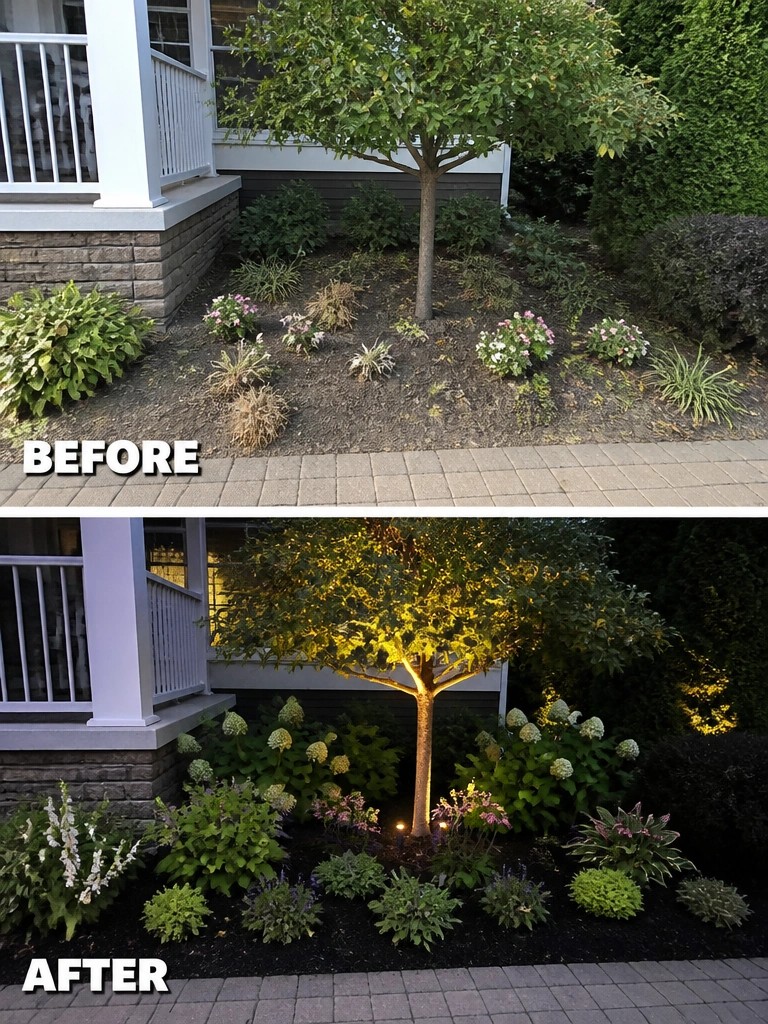
A messy front bed with patchy weeds and scattered plants can look neglected even in daylight. Clearing the area, adding fresh mulch and layered plants, then placing a few low lights around the base of the main tree turns the same spot into a clear focal point once the sun goes down.
This approach works best on small front gardens or side beds where one tree already exists. Keep the lights aimed upward at the canopy and use just enough fixtures to avoid glare on the walkway. The result feels intentional without requiring a full redesign of the whole yard.
Add Pathway Lighting To Define A Driveway Edge
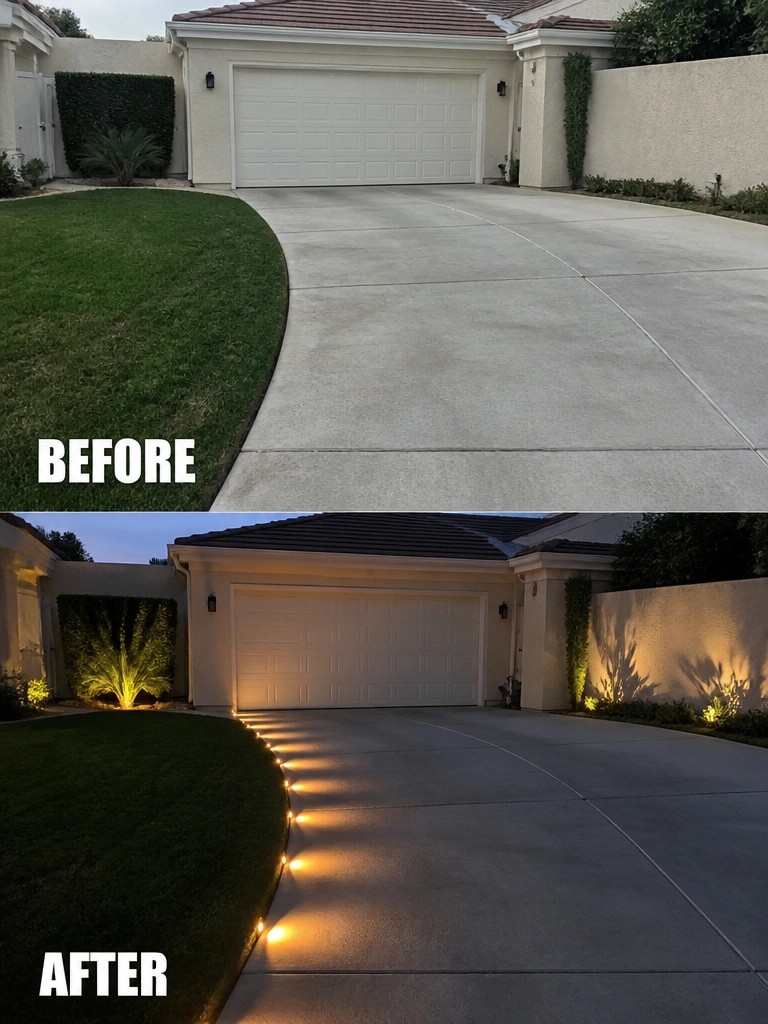
The main change here is the addition of low pathway lights along the curve where the lawn meets the concrete. This simple line of lights gives the driveway a clear border at night and draws attention to the planting without any major construction.
This idea works best on homes where the driveway sits right next to the lawn and looks flat after dark. Start with a few solar or low-voltage lights spaced evenly along the edge, then add one or two uplights on key plants if you want more depth. Keep the spacing consistent so the line stays clean instead of looking spotty.
Add Outdoor Lighting To Make A Pool Deck Usable At Night
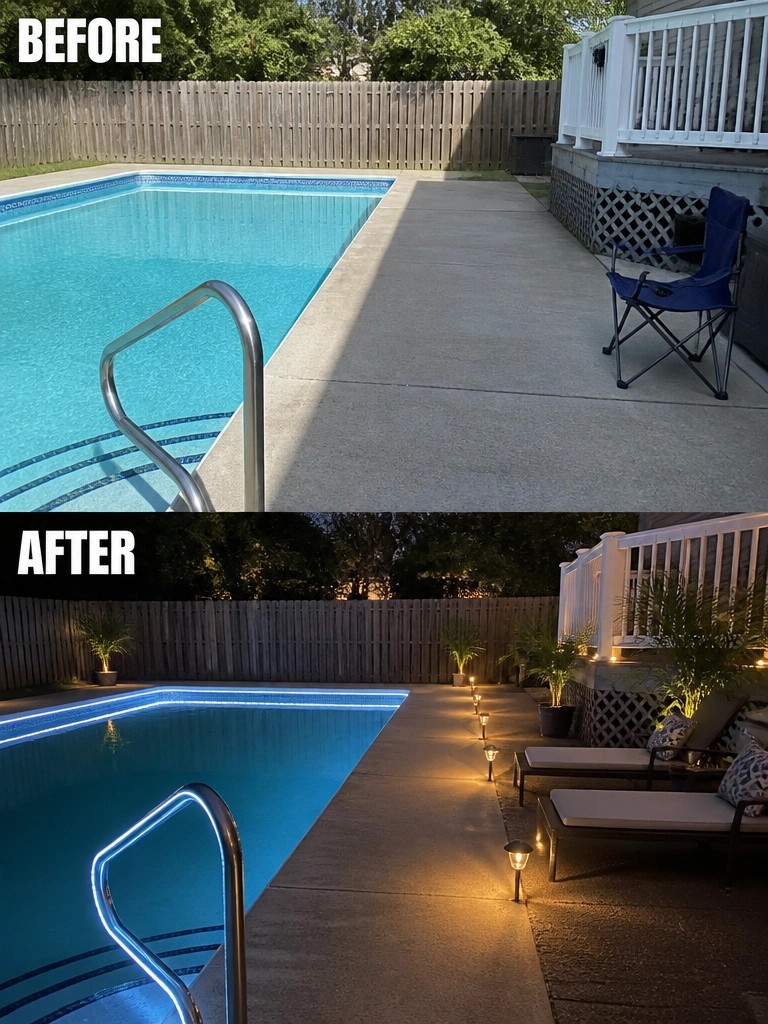
A bare pool deck often feels unfinished once the sun goes down. In this case the concrete sat empty except for one chair, so the space went unused after dark. Adding a few well-placed lights along the path, around the pool edge, and near the seating instantly changed how the area felt and how late it could be enjoyed.
The same idea works on any pool deck or patio that already has a solid surface. Start with simple solar or low-voltage path lights to mark the walking route, then add one or two brighter spots near chairs or loungers so people can actually sit comfortably. Keep the total number of fixtures modest so the lighting stays even rather than spotty.
Use Outdoor Lighting To Make An Entry Feel Welcoming
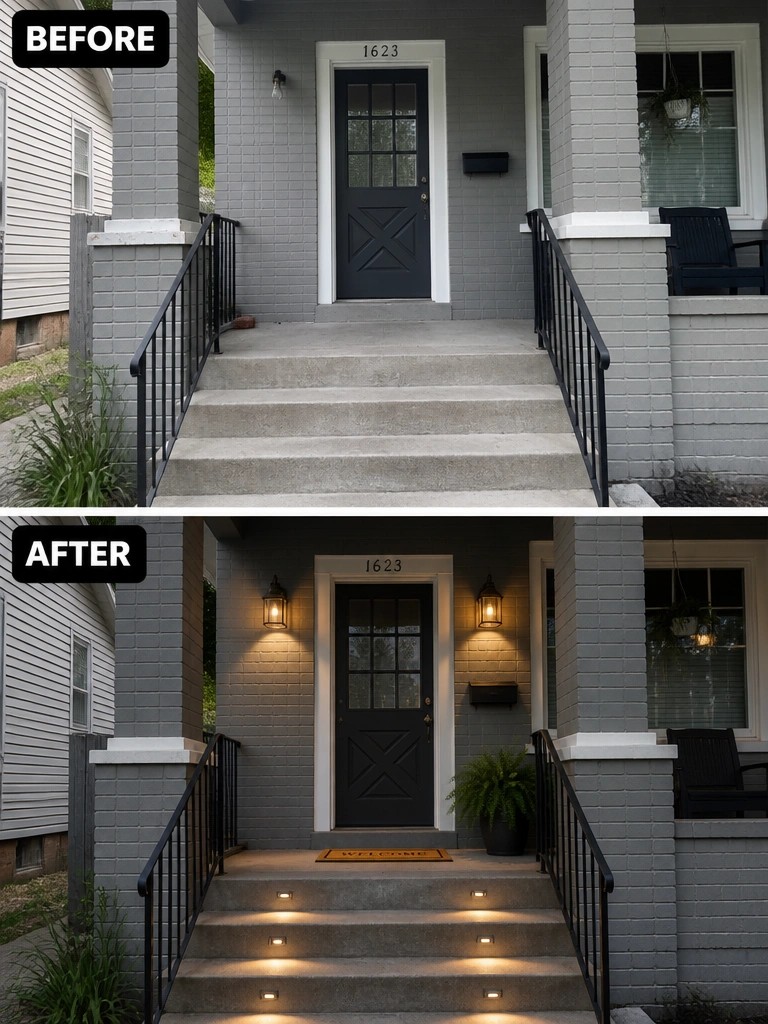
Adding lights along the steps and beside the door turns a plain concrete entry into a space that feels safer and more inviting at night. The before photo shows a flat, unlit staircase with no real definition after dark. In the after photo, small recessed step lights and a pair of wall sconces create a clear path and draw attention to the door without overdoing it.
This approach works well on any front porch or side entry that gets used after sunset. Start with simple, weatherproof fixtures aimed at the walking surface first, then add one or two lights at eye level near the door. Keep the number of lights modest so the result stays practical rather than overwhelming.
Use Lighting To Make A Fire Pit Area Feel Cozy
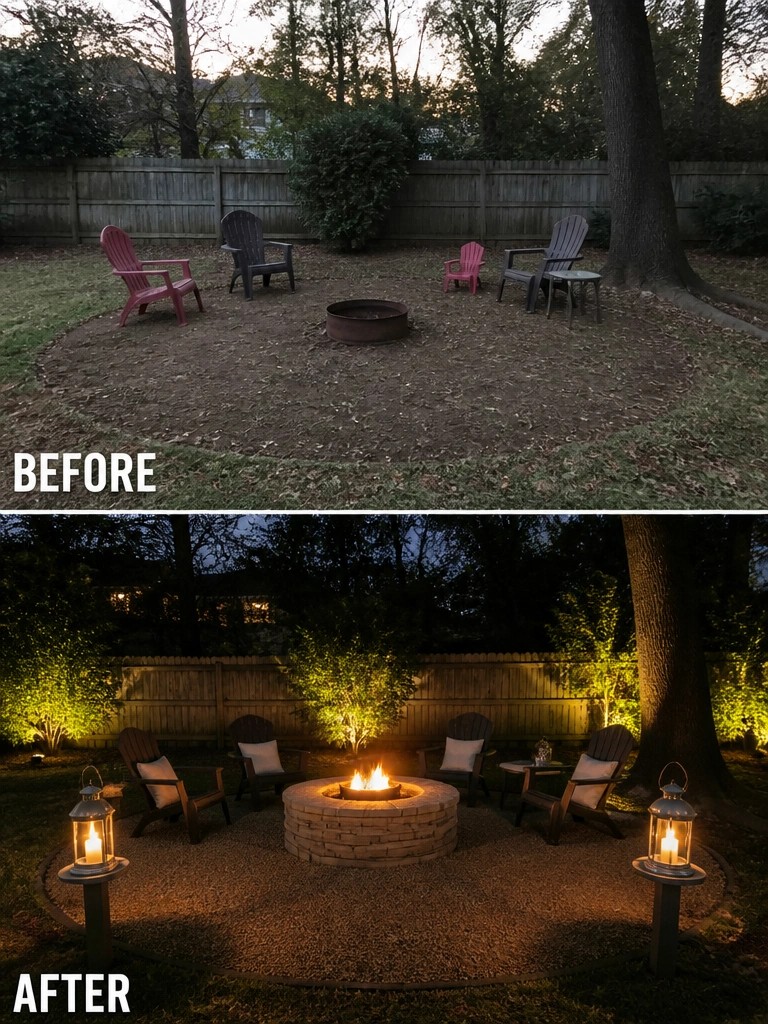
A bare fire pit in an open yard often sits unused once it gets dark. Adding a few lanterns and some simple landscape lights around the seating gives the space enough visibility to feel inviting without taking away from the fire.
This idea works best in backyards that already have a basic fire pit and some seating. Place weatherproof lanterns near the chairs first, then add a couple of low lights aimed at nearby plants or trees. Keep the lighting soft so the main glow still comes from the fire itself.
Add Lighting Along Retaining Walls To Define Garden Beds
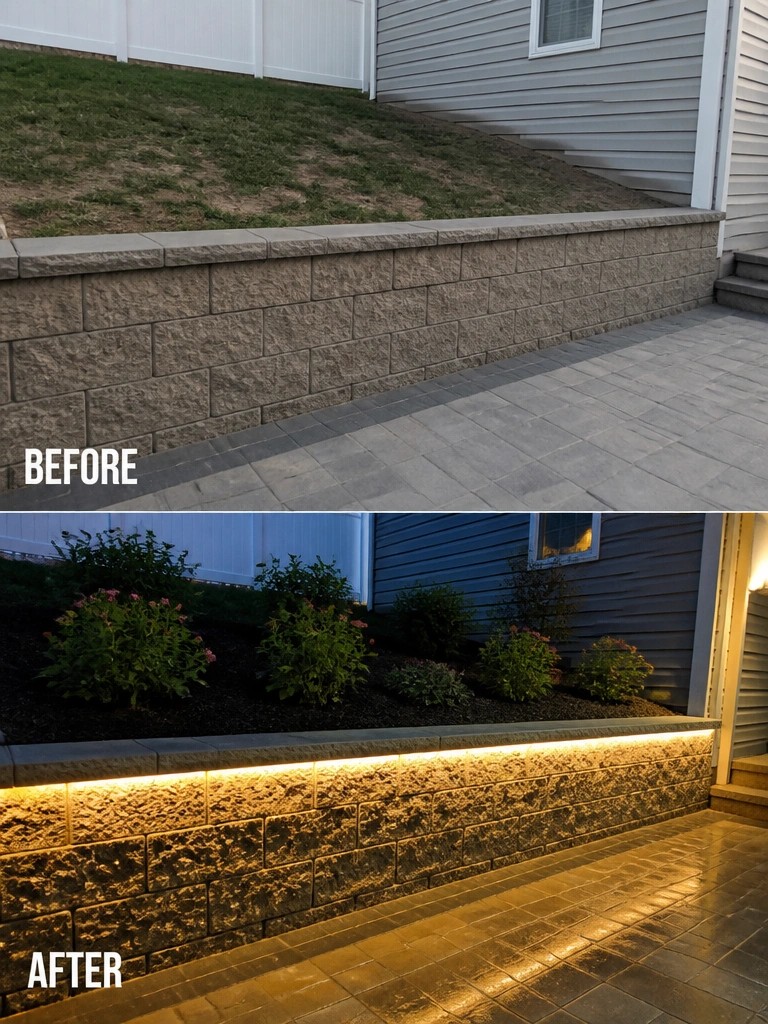
A plain retaining wall often leaves a sloped yard feeling unfinished. Adding a continuous line of lighting along the top edge turns the wall into a clear border and gives the new planting bed a purpose once the area is mulched and filled with shrubs.
This approach works best on houses where the wall sits next to a patio or walkway. Place the lights first so you can see the exact line they create, then add plants that will catch the glow rather than block it. Keep the planting simple so the lighting stays the main feature instead of competing with too many different heights or colors.
Use Lighting To Make A Pergola Patio Feel Cozy
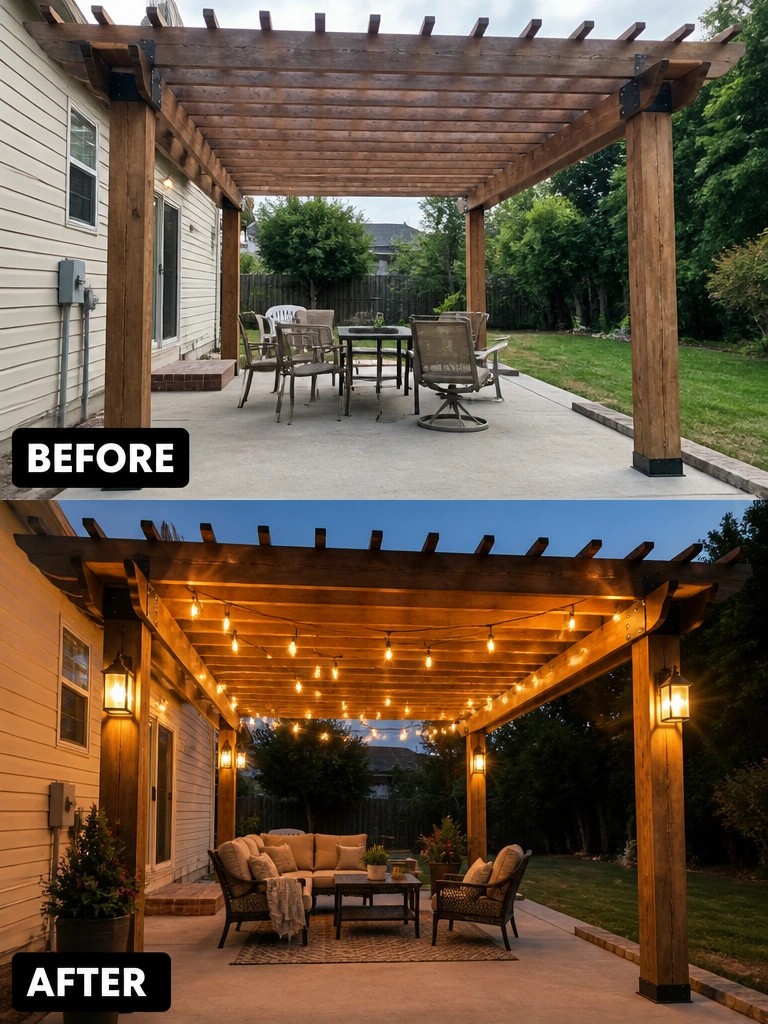
Adding simple lighting can turn a basic pergola and concrete slab into a space people actually want to sit in after dark. The before photo shows an empty structure with just a table and chairs. In the after, string lights across the beams and a few wall lanterns change the whole feel without any major construction.
This idea works best on covered patios or decks where you already have a roof or beams to hang lights from. Start with one string of lights and a couple of lanterns near seating areas, then add a rug and weatherproof furniture if you want more comfort. Keep the number of lights modest so the space still feels relaxed instead of overly bright.
Add Lighting Along A Garden Path

A simple dirt path through an overgrown garden can feel forgotten once the sun goes down. Adding low path lights and a few accents on the arch turns the same route into something you actually want to use after dark. The gravel surface helps too, but the lighting is what gives the space structure when natural light fades.
This idea works well on any property with a winding path or a main garden entrance. Start with a few solar or low-voltage lights along the edges and one or two spots to highlight a focal point like an arch or tree. Keep the spacing even so the path stays easy to follow without feeling overdone.
Use Landscape Lighting To Highlight The Entry
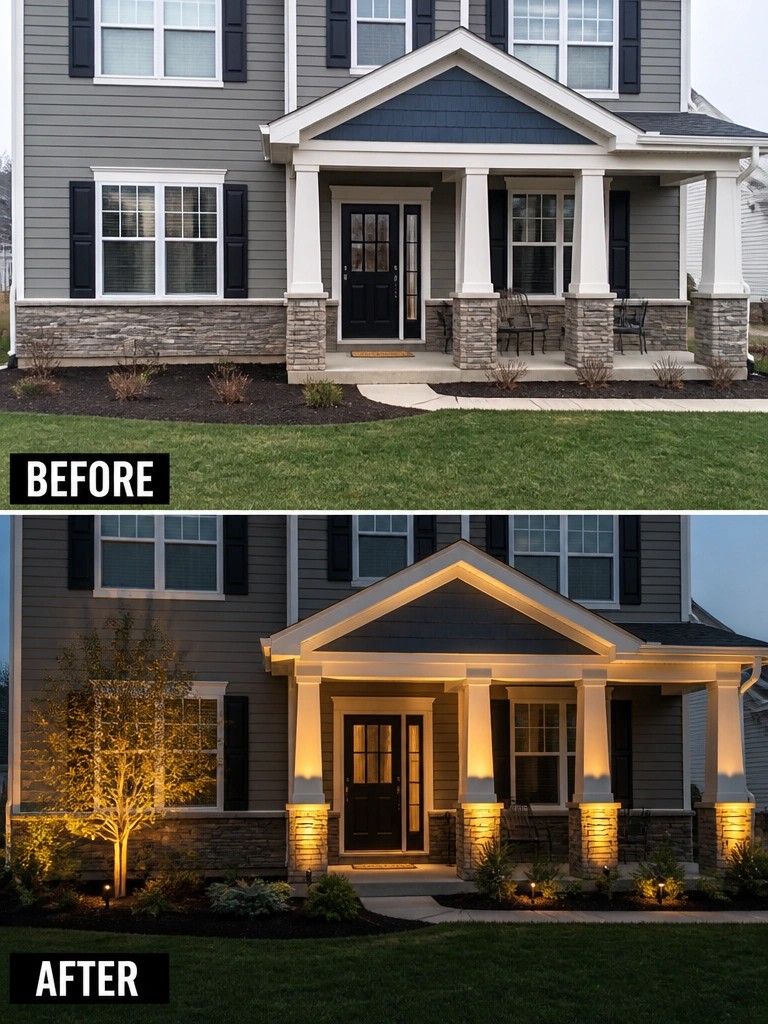
Adding simple outdoor lighting can turn a plain daytime front yard into something that feels intentional after dark. The main change here is placing warm lights at the base of the columns and along the planting beds, plus a small uplight on the tree. This draws attention to the entry without needing major construction or new plants.
This approach works best on houses where the front already has decent structure but looks flat once the sun goes down. Start with one or two focal points like columns or a small tree, then add low ground lights along the beds. Keep the fixtures modest so they do not overpower the house or create harsh glare on the walkway.
Use Outdoor Lighting To Make A Plain Courtyard Feel Usable
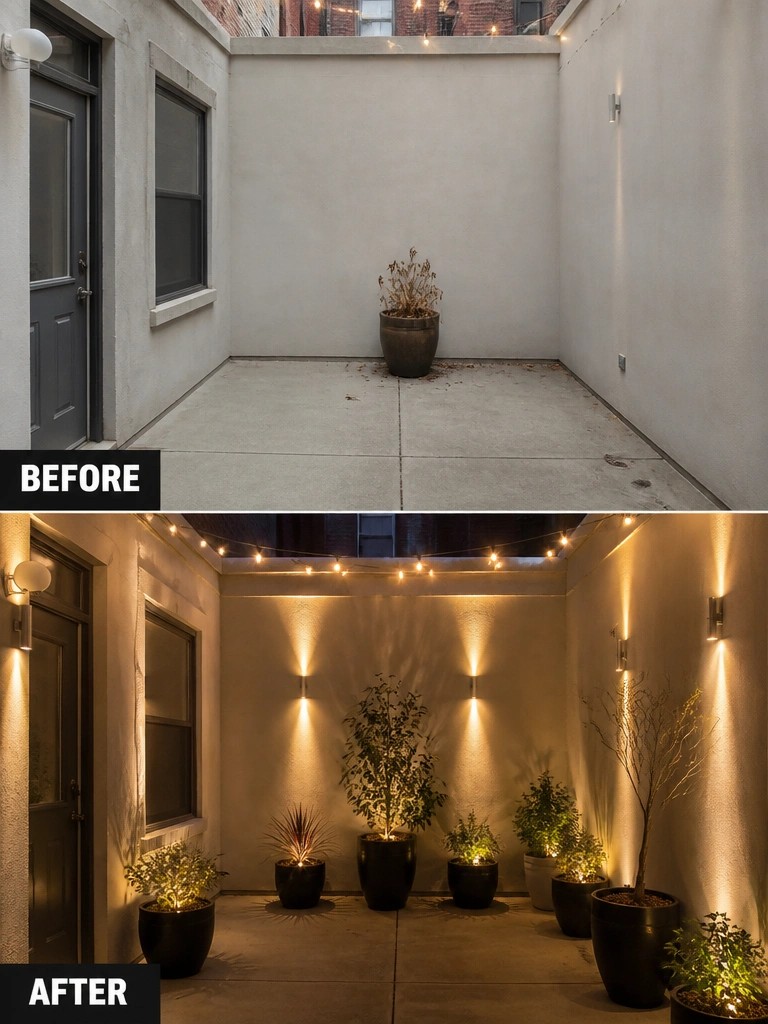
A bare concrete courtyard often stays empty because it feels cold and flat once the sun goes down. Simple wall sconces and a line of string lights can change that by adding soft layers of light that make the space feel finished and worth spending time in.
This idea works especially well in small urban yards or side courtyards where there is little room for large furniture. Place the lights so they wash the walls rather than shine straight down, then add a few large pots with plants to catch the light. Keep the setup simple so the space still feels open and easy to move through at night.
Use Landscape Lighting To Highlight A Rock Garden
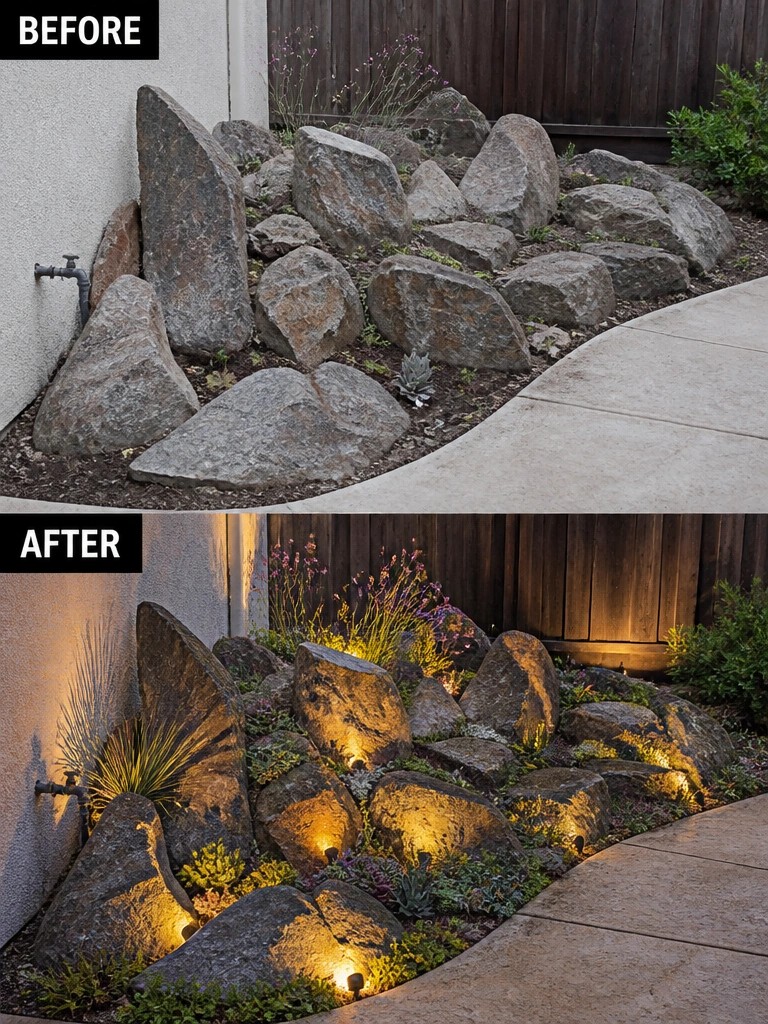
Adding a few low lights around the rocks turns a plain bed into something that stands out after dark. The before photo shows the same stones and plants, but they disappear without any light. Once the fixtures are in place, the shapes of the rocks become clear and the planting feels more intentional.
This idea works well in any side yard or front bed that already has larger rocks or hardscaping. Start with a couple of small uplights tucked at the base of the biggest stones, then add one or two more if needed. Keep the fixtures low so they do not glare into windows or walkways.
Define Your Lawn With Simple Border Lighting
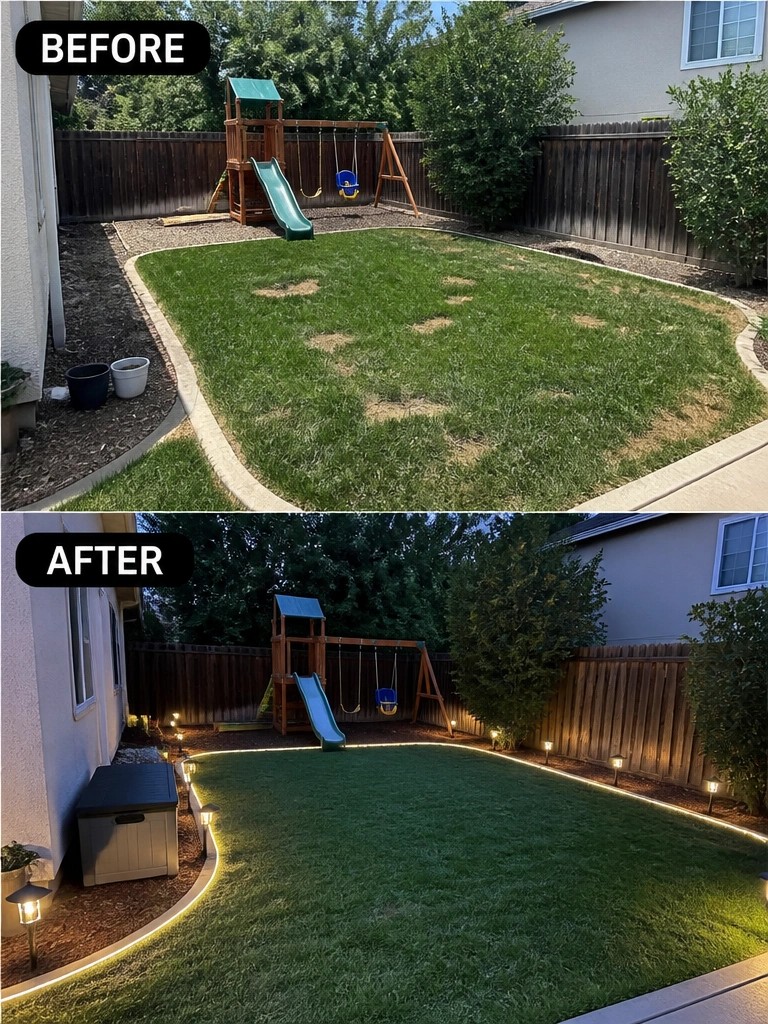
A patchy lawn often feels unfinished because the edges blend into the surrounding dirt and mulch. Adding a clean line of low lights along the border creates clear definition and turns the open grass into a more intentional space.
This works especially well in family yards that already have a play structure. Focus first on the perimeter with mulch and even spacing for the lights, then keep the center open for play. It improves safety at night without crowding the lawn or requiring major planting changes.
Add Outdoor Lighting To Highlight A Garden Pond
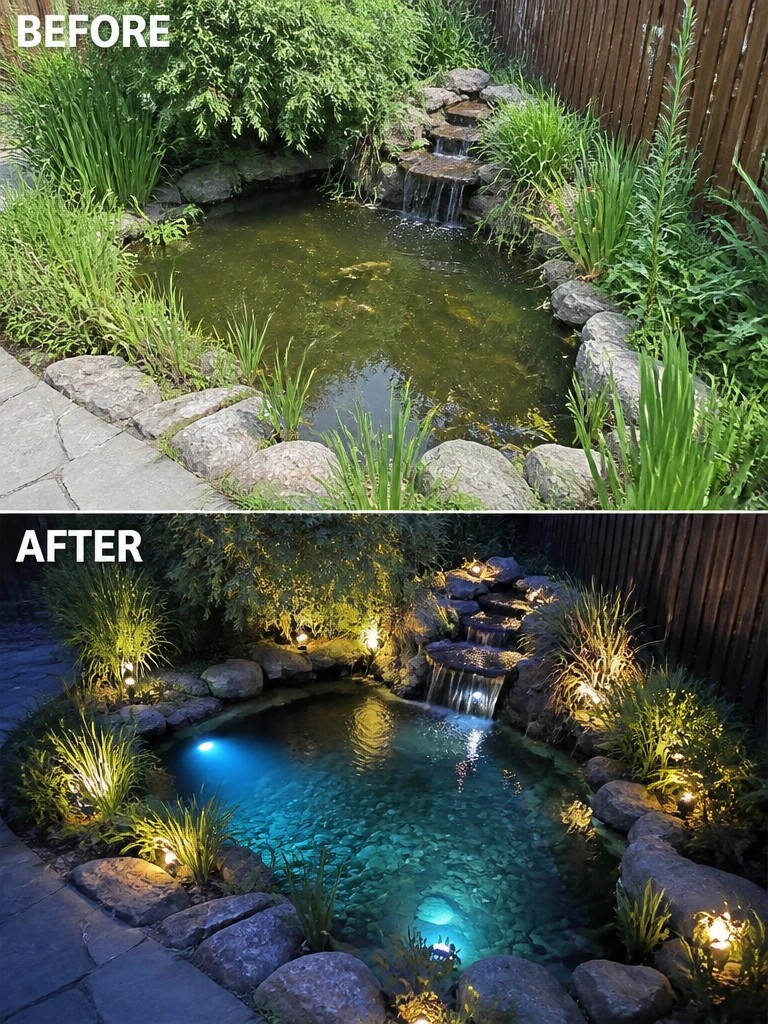
Adding lights around a pond can turn a daytime feature into something that stands out after dark. The main change here is the placement of small fixtures along the rocks and in the water itself, which draws attention to the waterfall and the edges without overwhelming the space.
This idea works best in smaller yards where the pond is already a focal point. Start with a few low-voltage lights aimed at key spots like the rocks and moving water, then add more only if needed. Keep the fixtures hidden so the glow feels natural rather than obvious.
Use Lighting And Planting To Refresh A Fence Line
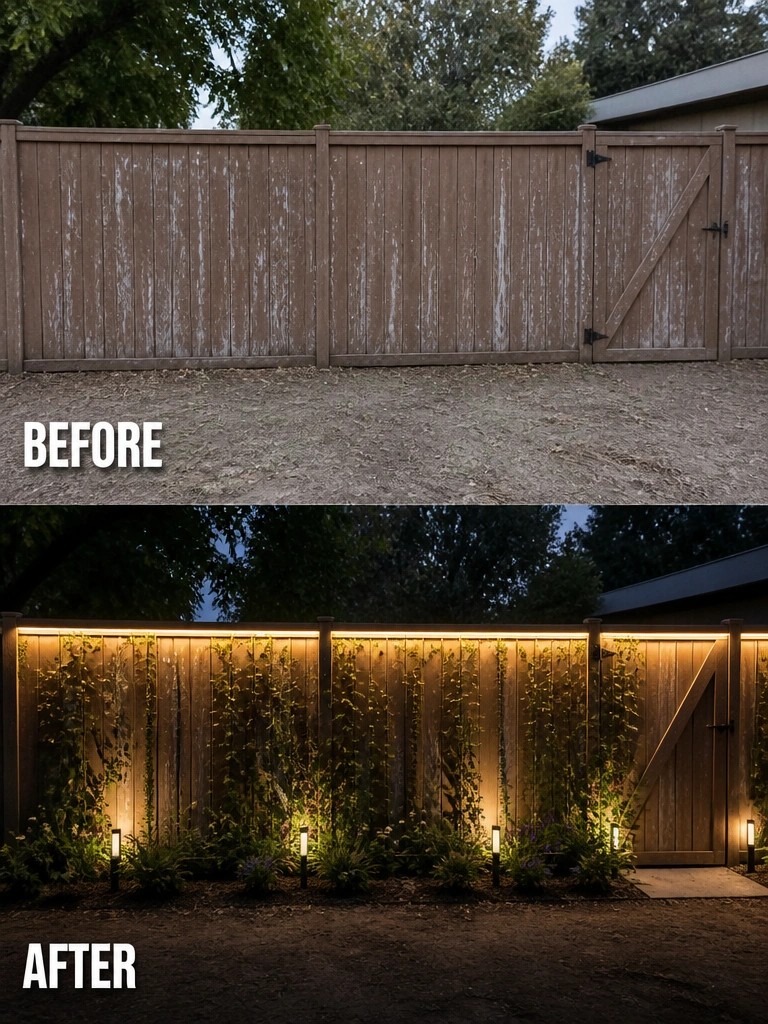
A plain fence next to bare dirt often feels like the end of the yard. Adding a strip of warm lighting along the top rail and letting vines climb the boards turns the same fence into a soft green wall that glows at night. Low path lights and a simple planting strip at the base finish the look without much extra work.
This idea works best along side or back boundaries where you already have a fence. Start with one or two hardy climbers and a few low-voltage fixtures, then let the plants fill in over a season or two. It keeps the space feeling open while giving the eye something pleasant to land on after dark.
Add Step Lights To Make Outdoor Stairs Easier To Use
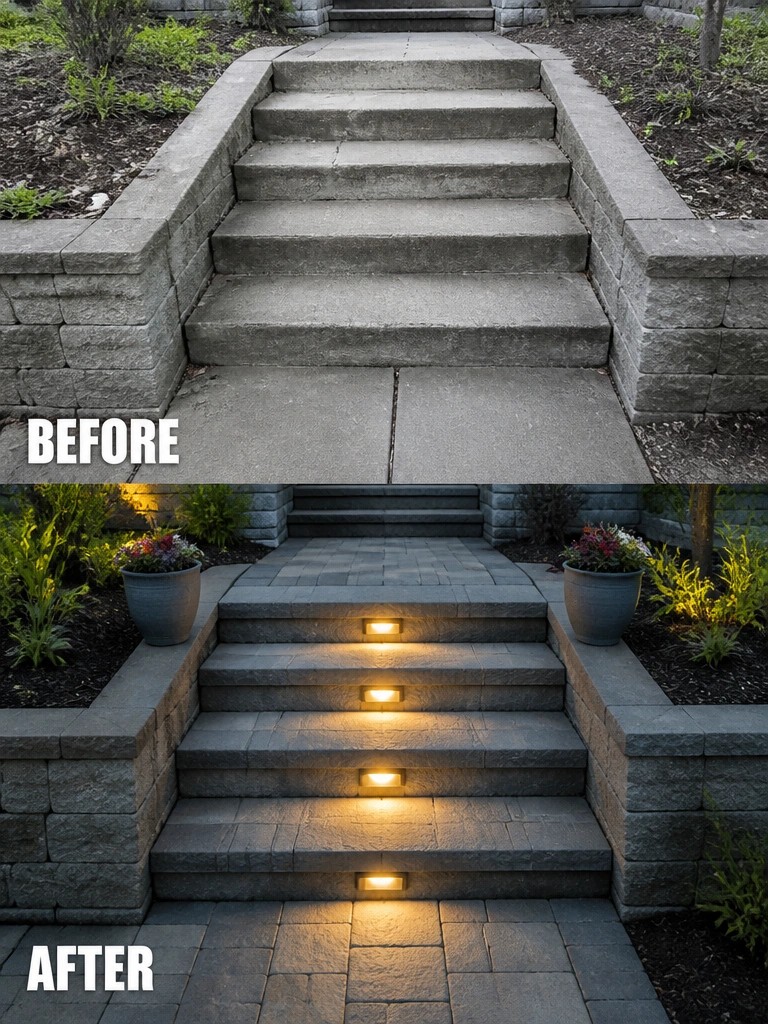
Stairs that sit in a landscape often get ignored until someone trips on them at night. Adding a few recessed lights into the treads changes that quickly. The plain concrete steps become visible and the path feels more finished without any extra structures.
This idea works best on garden stairs, side entries, or any set of steps that connect different yard levels. Use low-voltage or solar versions that tuck into the risers so they stay out of the way. Keep the spacing even and test the light spread before you finish the install.
Use String Lights To Make An Outdoor Dining Area Usable At Night
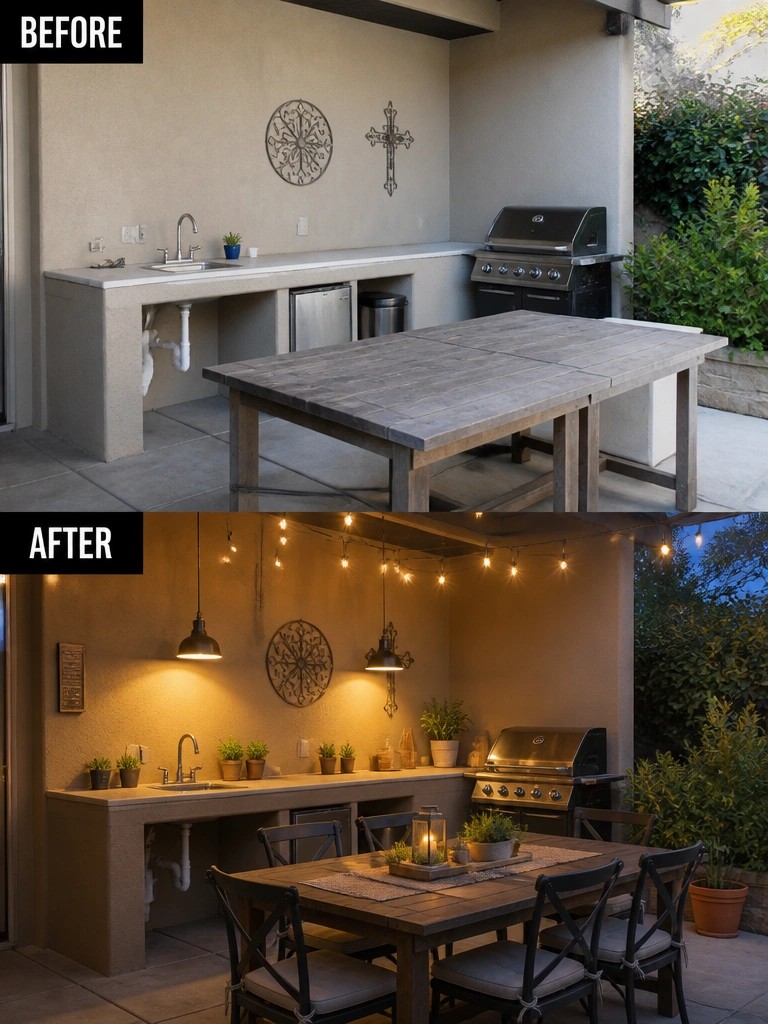
Adding a few strands of lights and a couple of pendants turned this plain patio into a space that actually gets used after dark. The before photo shows a basic setup with just a table and counter, while the after adds warm overhead lighting that draws people to the table once the sun goes down.
This idea works best on patios or decks that already have a dining table in place. Run the lights along the ceiling or rafters so they sit above the seating, and keep the bulbs simple and warm rather than bright white. It is an easy change that does not require new furniture, just a few hours and an outdoor-rated string light kit.
Add Pathway Lighting To Define The Entry
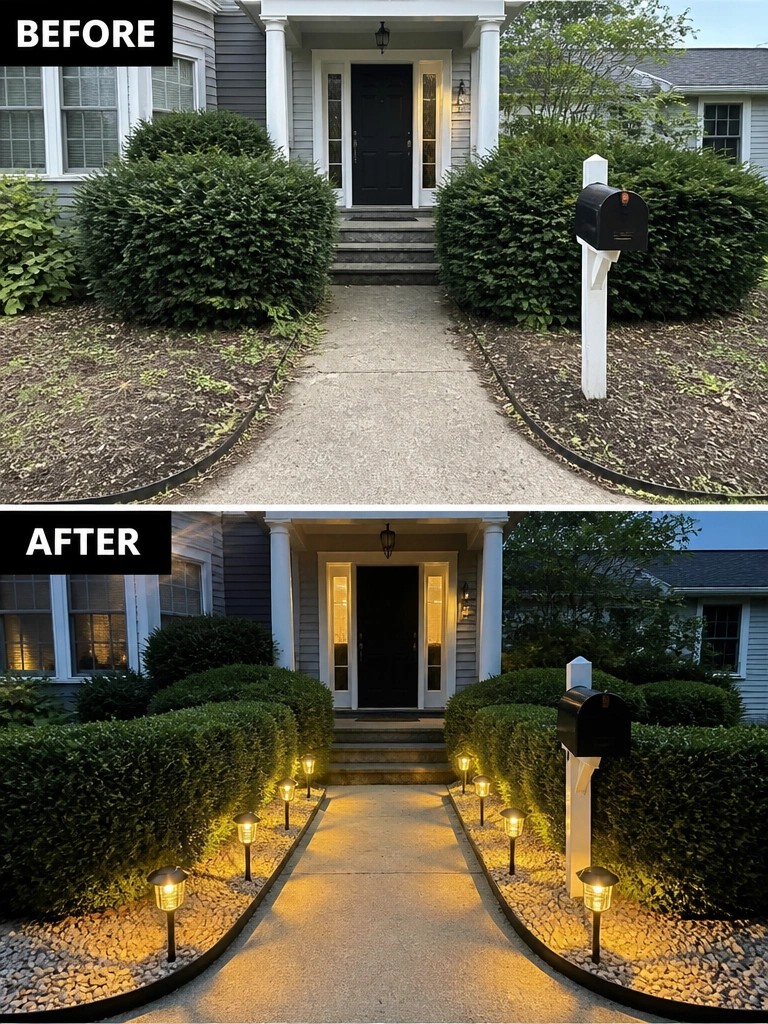
The front walk stands out more once low lights are placed along the edges. The gravel borders keep the beds tidy and give the lights a clean base so the path feels like a clear route instead of just a strip of concrete.
This idea suits homes where the front yard is mostly lawn and shrubs. Place the lights about two feet apart, use solar versions to avoid wiring, and keep the spacing even so the line stays straight. It works on both narrow and wide walks and makes the entrance easier to find after dark without changing the plants themselves.
Add Lighting To A Sloped Garden Path
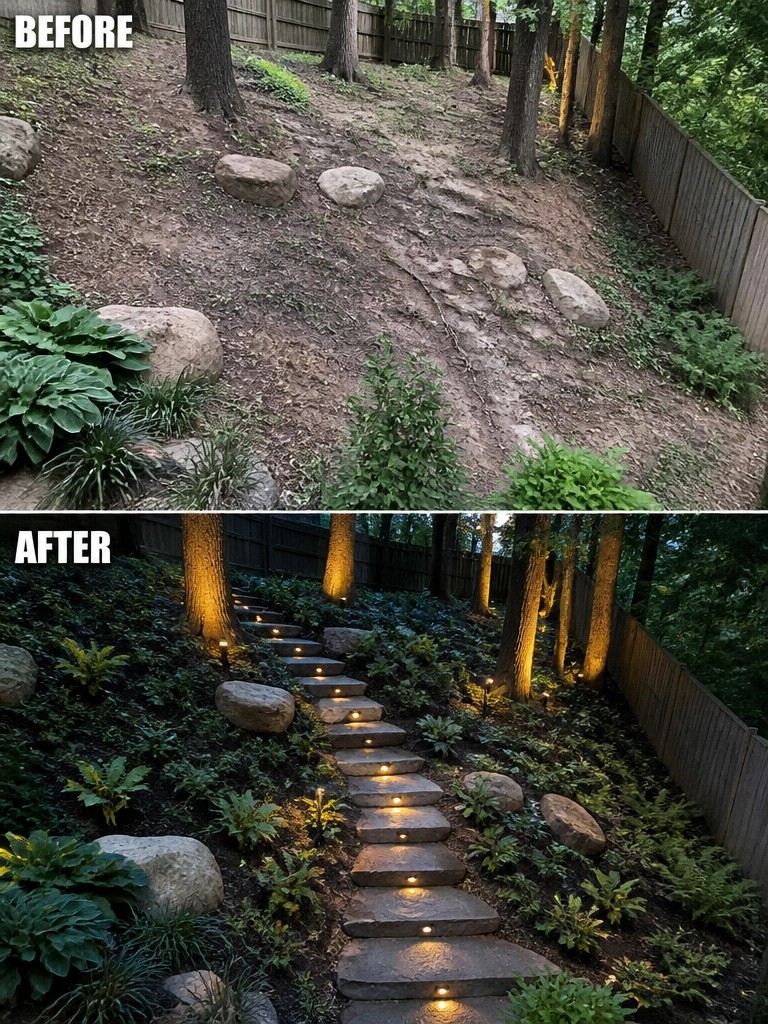
A worn dirt path on a slope often feels more like an obstacle than a feature. Replacing it with a set of stone steps and adding small lights along the edges gives the area a clear route and makes it safe to use after dark.
This idea works best on yards with noticeable changes in level. Focus first on building solid steps, then add low pathway lights so the stairs remain visible without overpowering the surrounding plants. The same approach can help any sloped section that needs better access.
Use Outdoor Lighting To Make A Balcony Feel Usable At Night
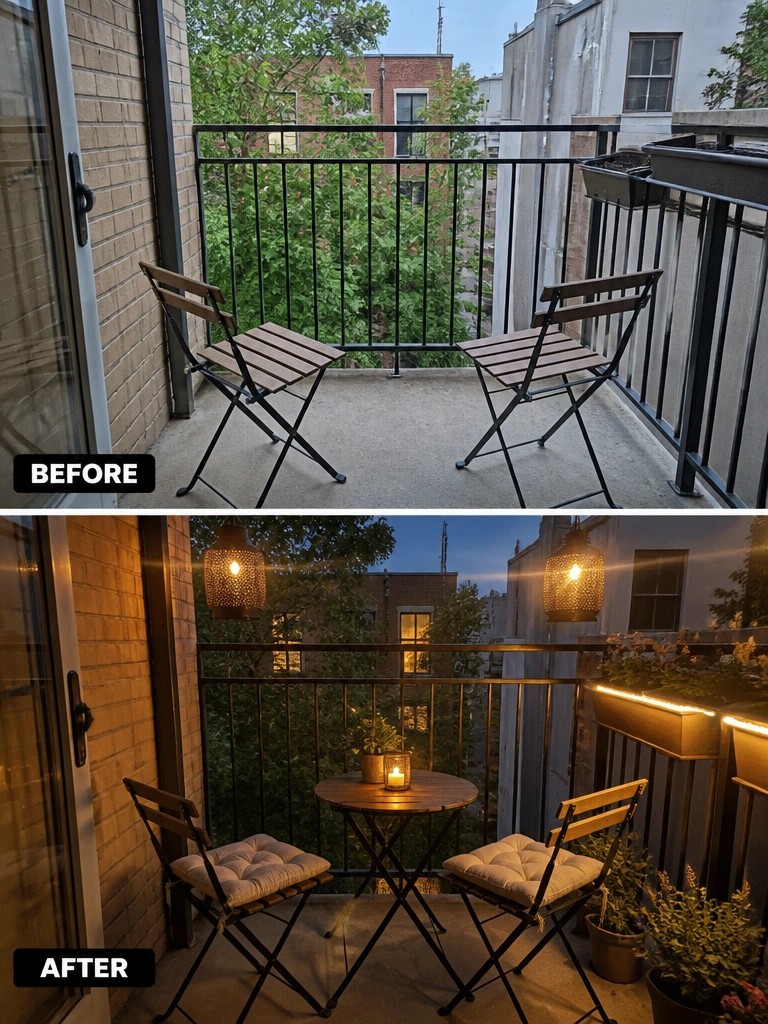
Many balconies sit empty because they feel unfinished once the sun goes down. Adding a small table, chair cushions, and a few lights gives the space a clear purpose and makes it comfortable after dark.
Hang one or two lanterns above the seating area and run a simple strip of lights along the railing. This approach works especially well on small urban balconies where floor space is limited and you want the light to feel warm rather than harsh.
Add Path Lights To Define An Open Lawn
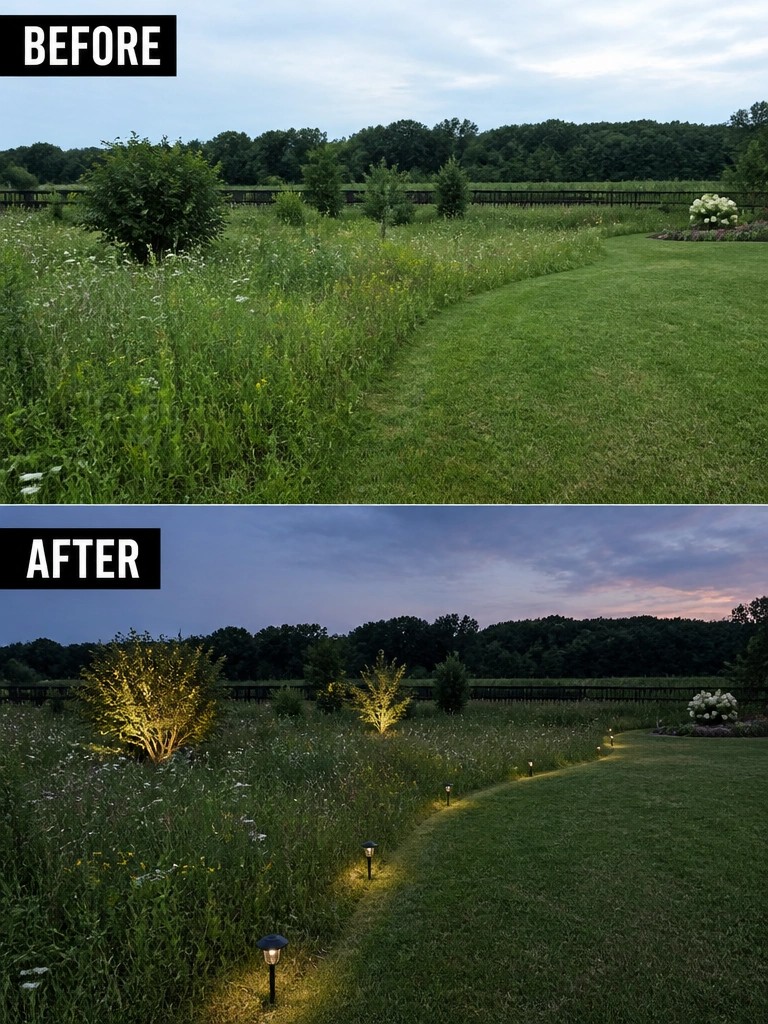
An open stretch of grass often looks unfinished once the light fades. Placing a few low path lights along the curve gives the yard a clear route and makes the space feel more intentional without adding fences or new beds.
This works especially well on larger properties that still want a natural look. Keep the lights simple and low to the ground, space them evenly along the main walking line, and add one or two uplights on existing shrubs if you want a bit more interest at night.
Frequently Asked Questions
Q: Can I install these lights on my own if I have never done wiring before?
A: Start with solar powered options that need no wiring at all. They stick right into the ground and you can move them around until the effect looks right.
Q: How do I stop the lights from shining straight into my windows at night?
A: Angle them downward toward the plants or paths instead. Low voltage spotlights tucked under shrubs create a soft glow without the glare. Walk around the yard after dark to check what you see from inside.
Q: What kind of bulbs last longest in outdoor fixtures?
A: LED bulbs handle weather changes far better than older types. They also use less power so you can leave them on longer without big bills. Replace them every few years when they start to dim.
