

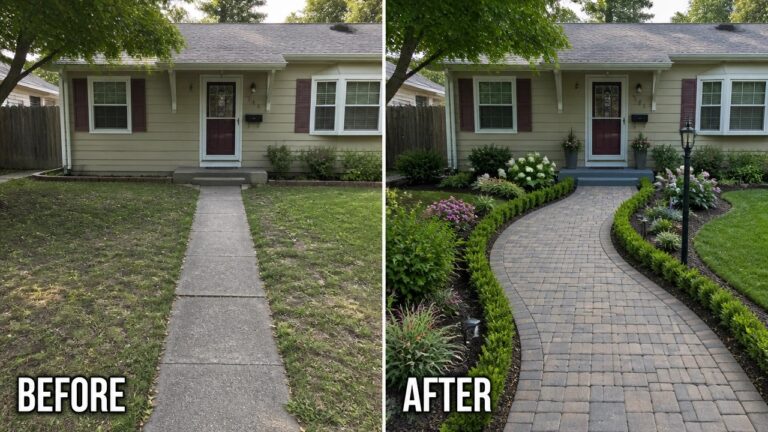
I have noticed that front and back yards often lose their shape when planting beds grow uneven and pathways start to disappear under grass or weeds.
Adding basic structure through edging and clearer lawn lines tends to make the space feel more settled without needing a full redesign.
I like to try small clusters of plants for privacy first so I can see what actually works in the light and soil conditions of my own yard.
Many of these ideas build on cleanup and layout steps that improve how the area functions day to day rather than just adding more elements.
Seeing the ground and plantings work together again brings a quiet satisfaction that lasts longer than quick decorative fixes.
Curve The Front Path To Give The Yard More Shape
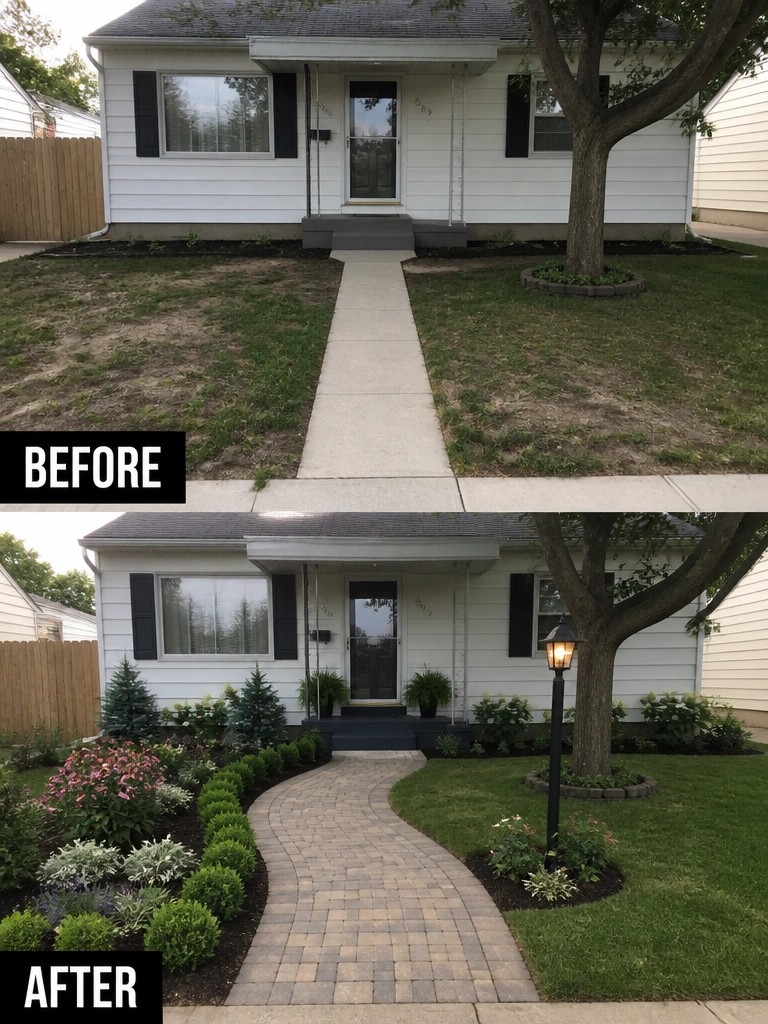
A straight concrete walk with patchy grass on both sides often makes a front yard feel flat and unfinished. Switching to a gently curved paver path and adding planted borders on either side creates a simple route that leads the eye toward the house and gives the whole space a planned look.
This approach works best on smaller or average lots where the front yard needs more direction than just lawn. Start with the path layout first, then fill the new beds with a mix of low shrubs and seasonal color so the beds stay full without crowding the walkway. Keep the curve gentle so it still feels natural and easy to walk.
Add Terracing To A Sloped Backyard

A sloped yard often ends up as wasted space because grass struggles to take hold and the ground feels uneven underfoot. Terracing solves this by breaking the slope into flat planting areas that stay put and look intentional. The stone walls here turned a patchy hillside into a series of beds that are easy to maintain and pleasant to walk through.
This approach works best on yards with noticeable drop-offs where you want planting rather than just lawn. Start with the walls to create the levels, then fill the beds with plants suited to your conditions. Keep paths and gravel simple so the focus stays on the beds themselves instead of crowding the space with too many extras.
Add Defined Garden Beds To Shape A Plain Yard
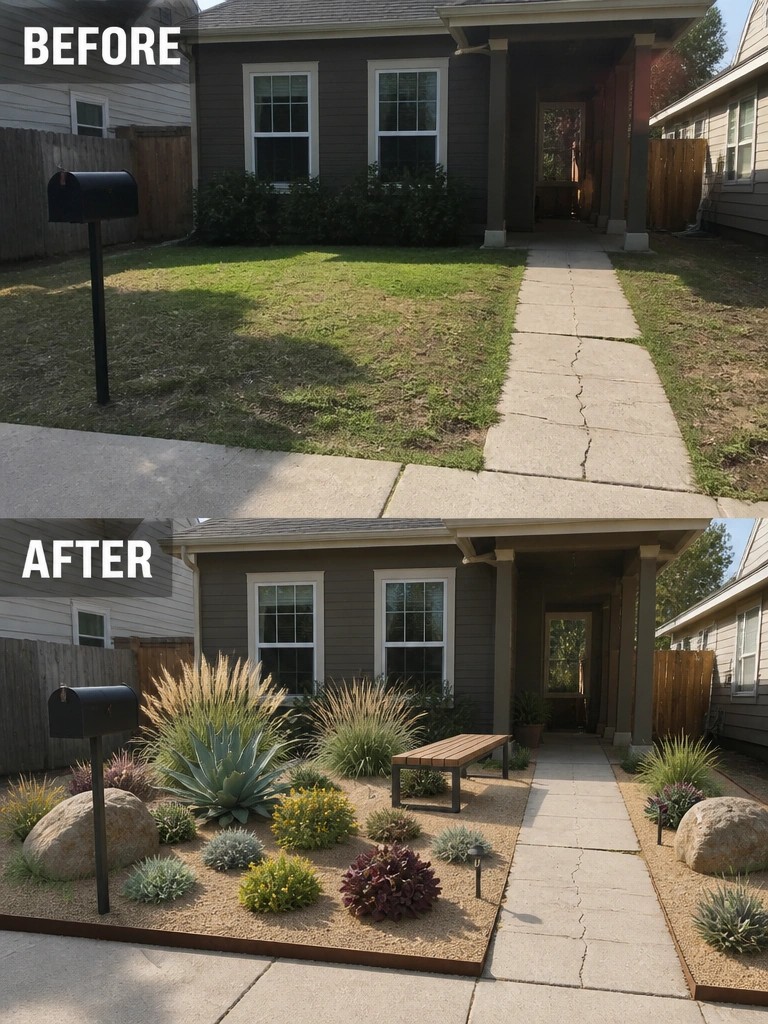
A plain lawn often looks unfinished because nothing separates the grass from the walkway or gives the eye a place to rest. In this case the fix was simple. The patchy grass was replaced with gravel beds edged in steel, a few large rocks, and a mix of low plants that fill the space without crowding it.
This approach works well on small front yards where you want curb appeal without a lot of maintenance. Start by marking out the beds with a hose so you can see the shape from the street. Keep the planting simple, use one or two repeating colors, and leave enough open gravel so the beds still look neat in winter. The bench is optional, but it gives the new layout a clear purpose.
Turn A Bare Patio Into A Seating Area
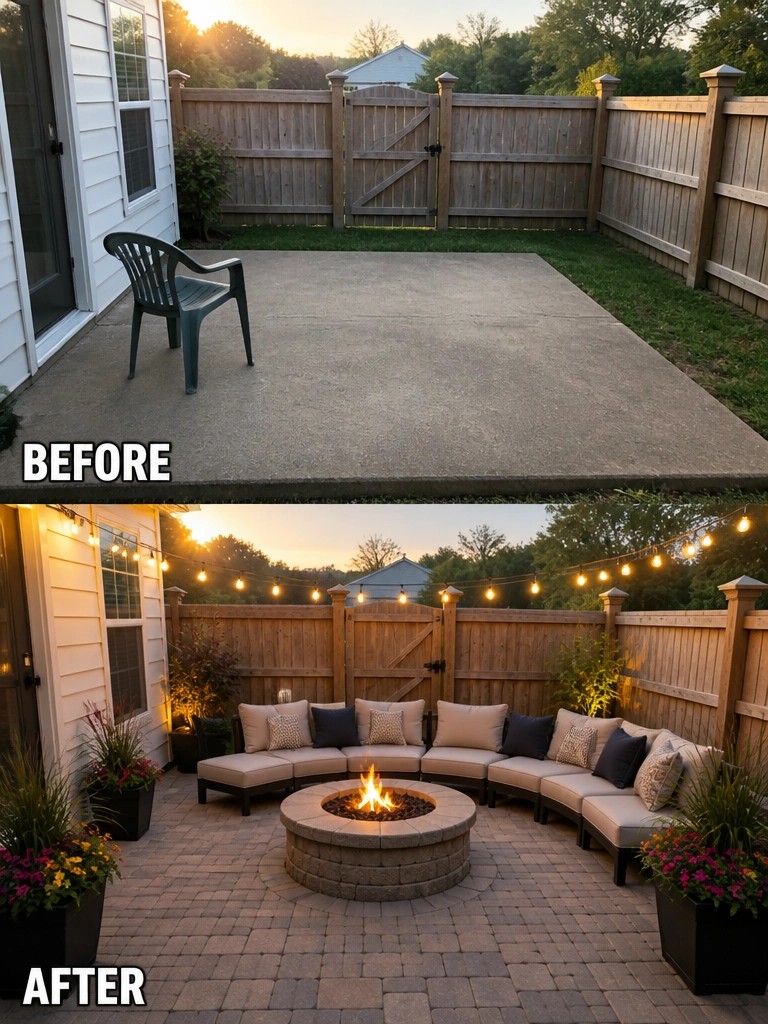
An empty concrete slab rarely gets used because it has no clear purpose. Adding a curved sectional around a central fire pit turns the same space into a spot where people actually sit and gather.
This idea works best on flat backyards that already have a solid base. Place the seating first to define the zone, then add simple lighting and a few large planters around the edges so the middle stays open for walking.
Add Tall Planting For Privacy In A Side Yard
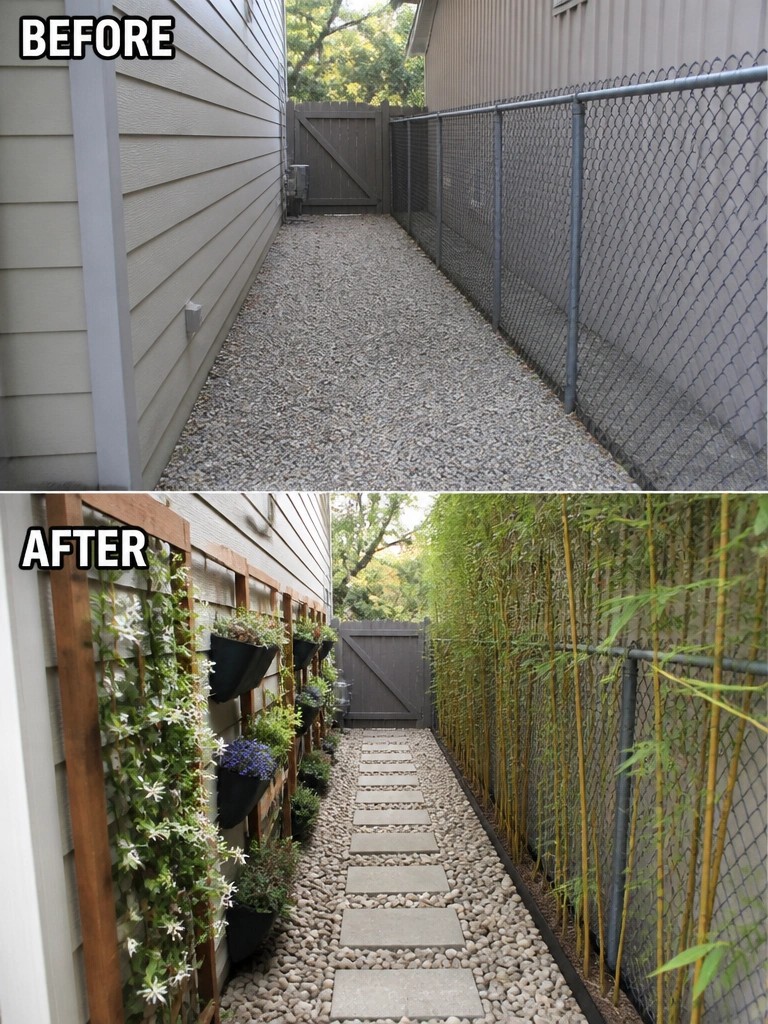
A narrow gravel path next to a chain link fence often feels exposed and unfinished. Adding a row of tall bamboo along the fence creates a living screen that blocks the view while softening the whole space. Vertical gardens on the opposite wall add another layer of greenery without taking up floor space.
This approach works well in tight side yards or alleyways where there is little room for wide beds. Start with fast-growing screening plants that can handle the local climate, then layer in wall planters for extra color and texture. Keep the path clear so the area stays easy to walk through.
Add Structure To An Overgrown Front Yard
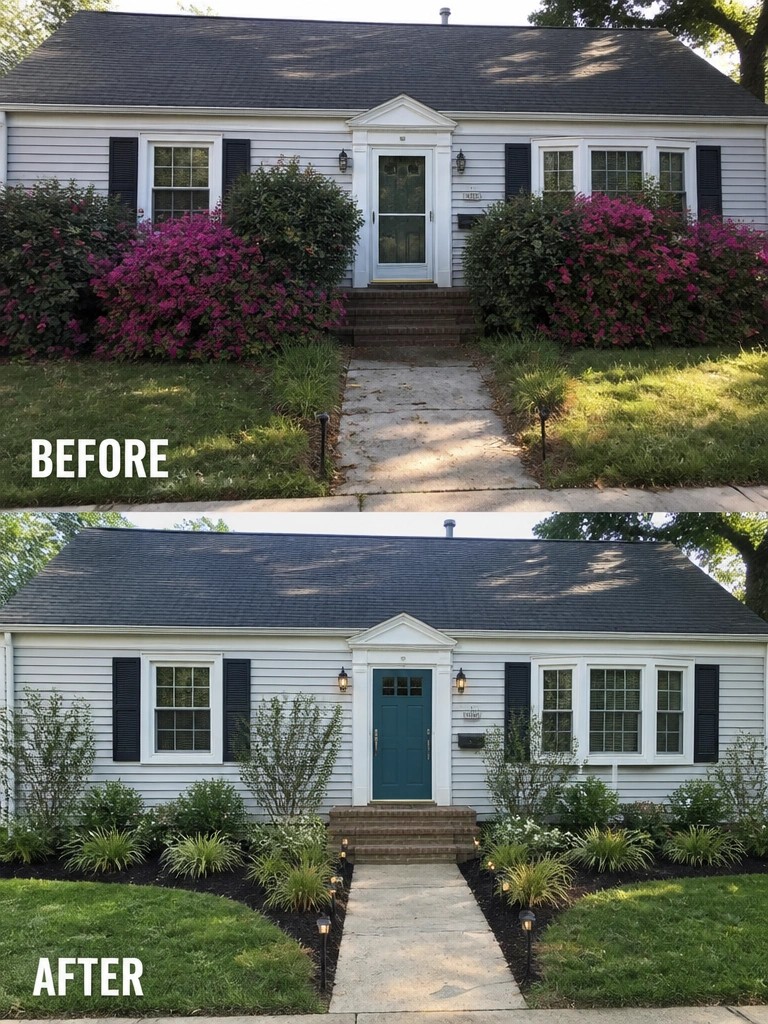
Clearing out large overgrown shrubs and replacing them with smaller plants in neat beds makes the front yard feel much more planned. The walkway now has clear borders, and the added path lights give the entry a finished look without crowding the space.
This idea works best on modest front yards where you want to keep some lawn but still create order. Start with the cleanup and edging first, then choose plants that stay in scale with the house so the beds do not overwhelm the view from the street.
Add A Path And Planting Beds To Shape A Basic Yard
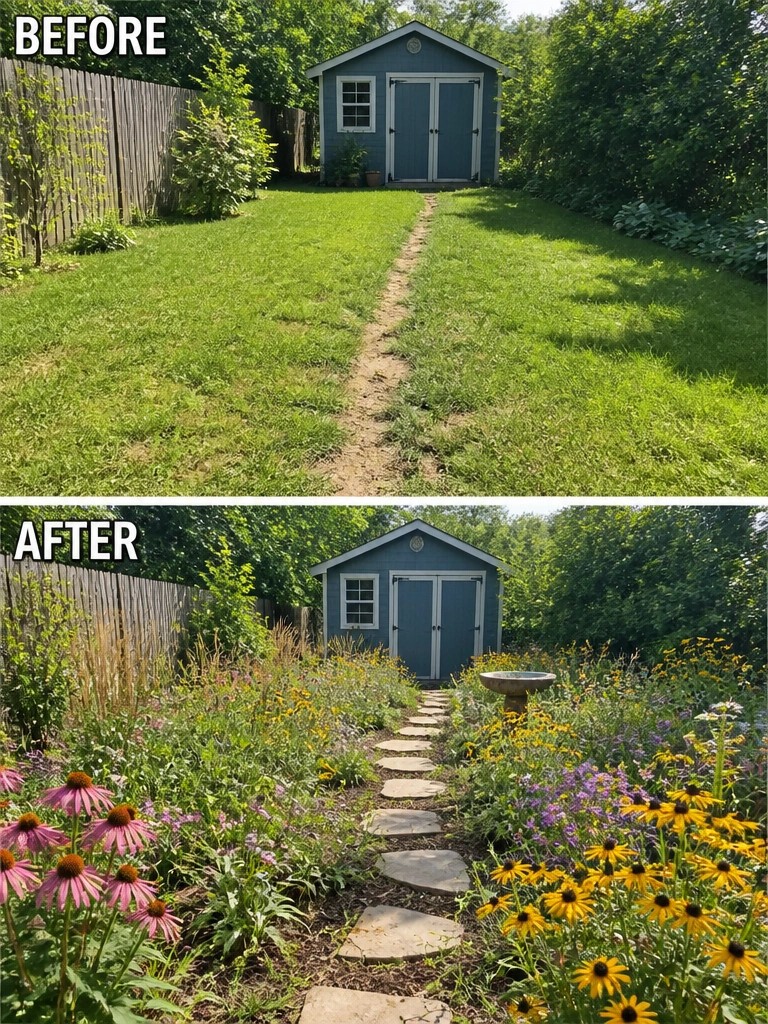
A plain lawn with nothing but a worn dirt trail can feel unfinished. Laying down stepping stones gives the space a clear route, while planting beds on both sides turn empty grass into something that feels intentional and full.
This approach works well in smaller yards or back areas that lead to a shed or seating spot. Start with the path to set the direction, then fill in the beds with a mix of taller and lower plants so the layout stays balanced without crowding the walkway.
Add Retaining Walls To Give A Sloped Yard Structure
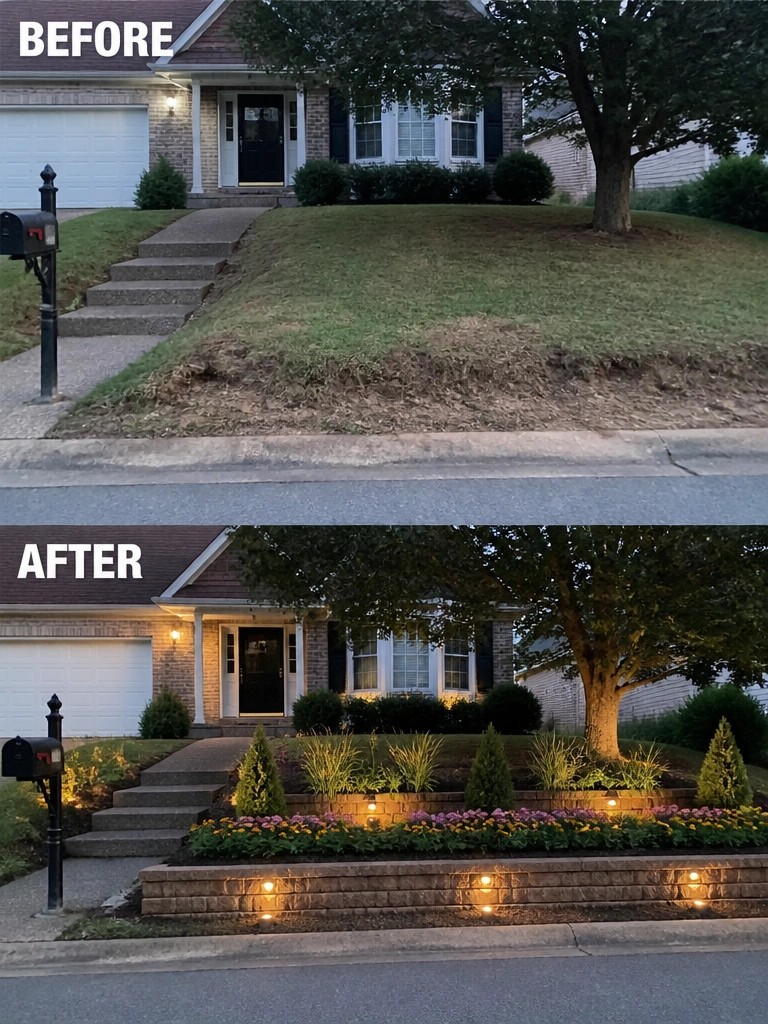
A sloped front yard often looks unfinished because the lawn runs straight down without any breaks. The change here shows what happens when you add low retaining walls to create flat planting beds. The beds hold the soil in place and give you clear spots for layered plants instead of just grass running into the street.
This approach works well on any home where the yard drops toward the road. Start with the walls first so the beds stay level, then fill them with a mix of taller shrubs at the back and lower flowers along the front edge. Keep the rest of the lawn simple so the new beds stand out without crowding the space.
Turn A Bare Patio Into A Usable Outdoor Space
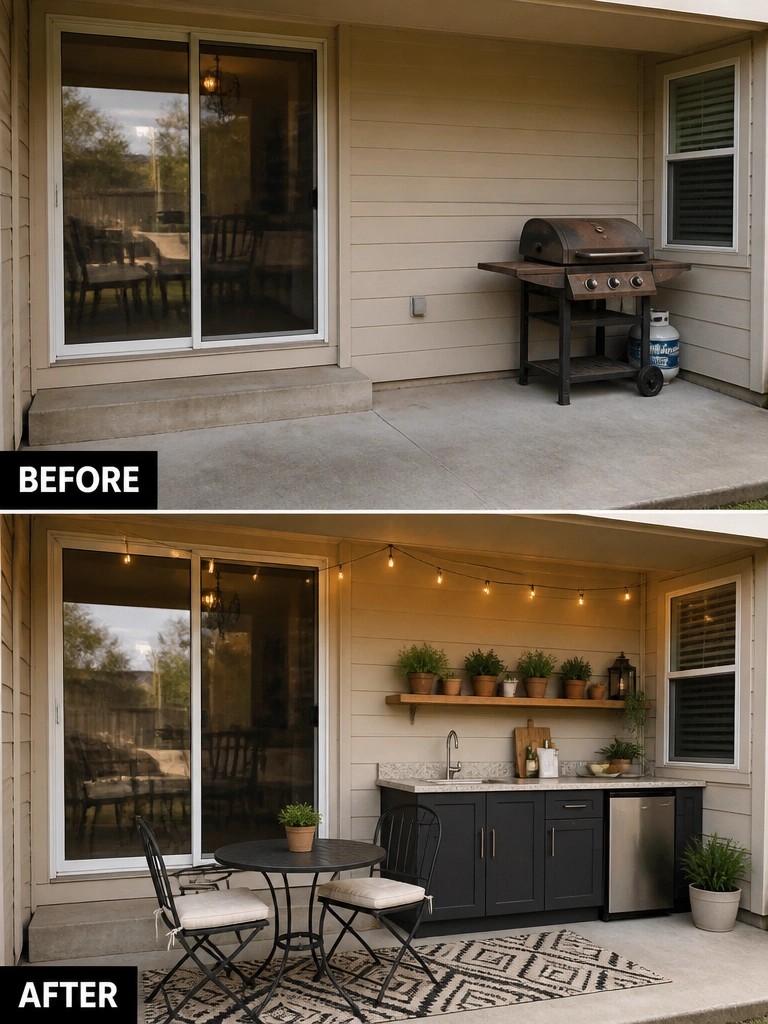
A plain concrete patio with nothing but a grill often sits unused because it has no clear purpose. Adding a small dining table, chairs, and a simple rug gives the space a defined living area that people actually want to sit in.
String lights and a basic counter with storage take it further by making the area feel finished for meals or evening use. This works best on covered patios where weather protection is already in place. Keep the layout open enough for easy movement and choose furniture that can stay outside.
Add Layered Planting Along The Fence
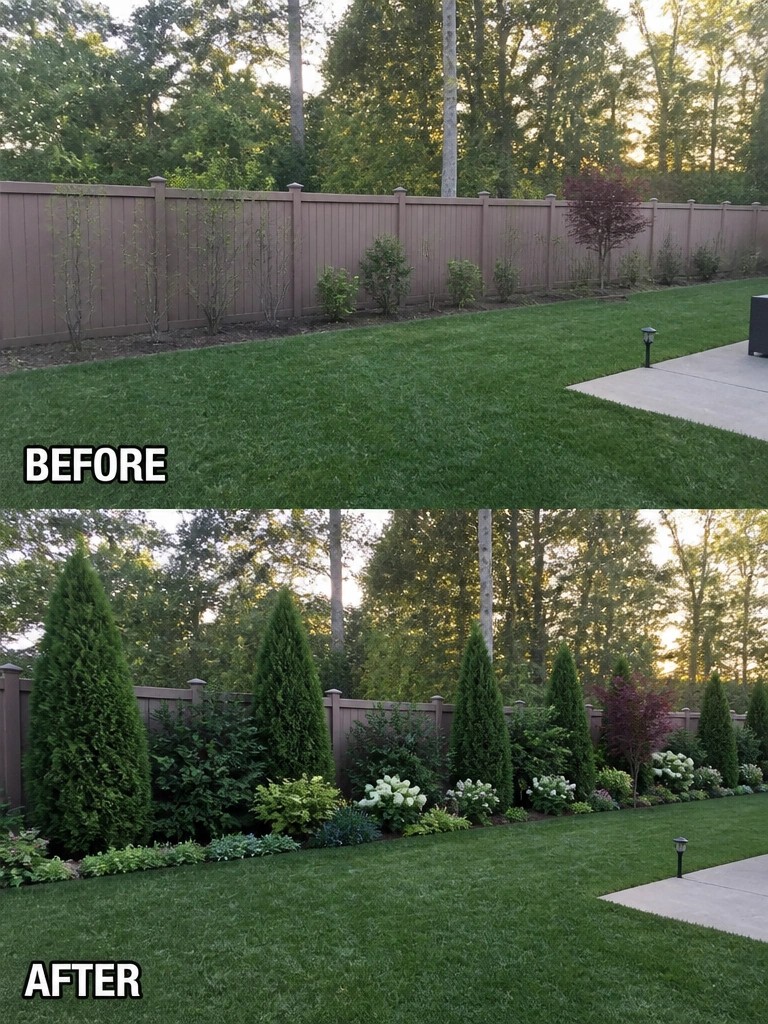
A long fence with just a few small shrubs can leave the yard feeling open and flat. In this case, the change came from adding a full row of taller evergreens at the back, then filling in with mid-size shrubs and lower flowering plants right along the edge. The result gives the space more height and a clear border without crowding the lawn.
This approach works well in backyards where you want privacy but still need to keep the open feel of the grass. Start with a few taller evergreens spaced evenly, then add two or three different heights in front so the bed looks full from the start. It is an easy way to make a plain fence line feel more intentional.
Give A Bare Porch A Clear Purpose
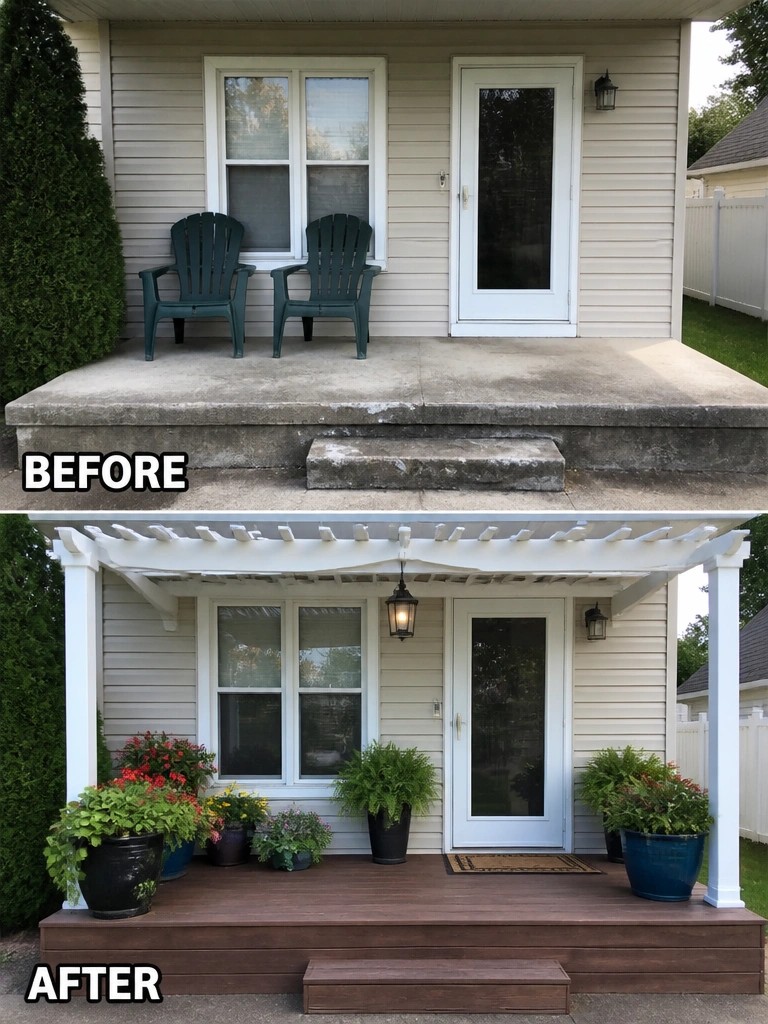
A concrete slab with nothing but two chairs often feels like an afterthought. Adding a pergola and switching to a wood deck creates a real entry space that feels intentional instead of leftover.
This idea works best on houses where the front door sits on a flat, exposed surface. Keep the structure simple, choose weather-safe materials, and add just enough planting to soften the edges without crowding the walkway.
Add A Garden Border Along Your Sidewalk
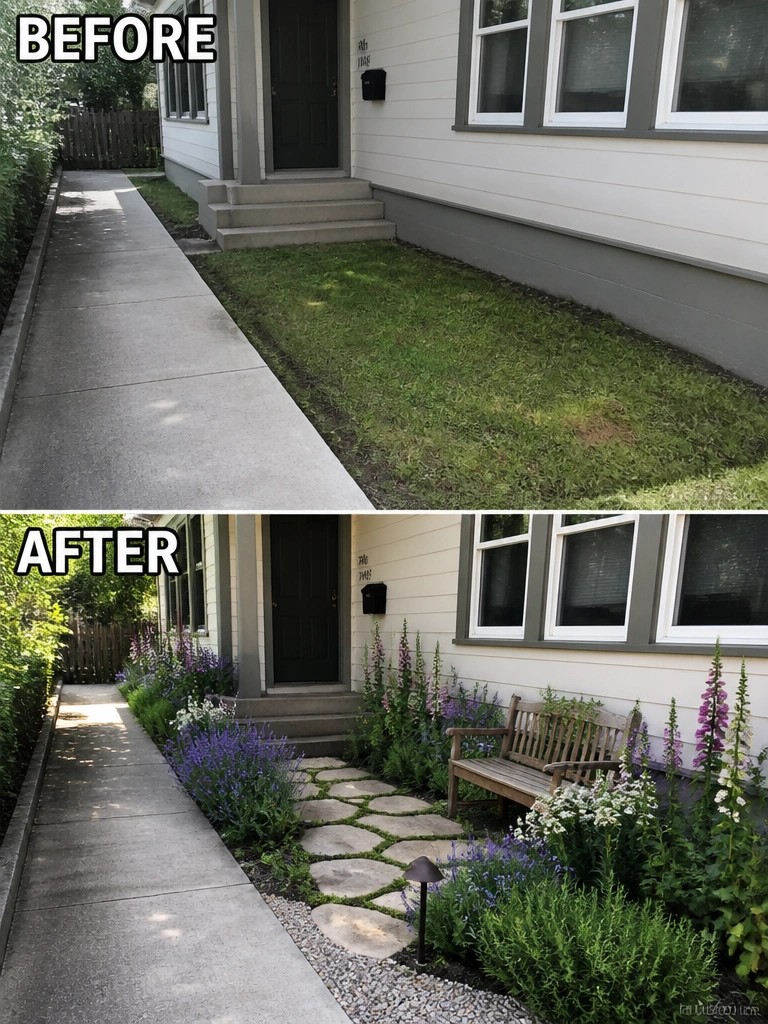
A plain strip of grass next to a concrete path often feels unfinished. Adding a defined border with stepping stones and layered plants turns that narrow space into something more intentional and welcoming without needing a full yard overhaul.
This approach works well on smaller lots or along the side of a house where space is tight. Start by laying out a simple stone path to guide movement, then fill the beds with a mix of taller flowers and lower ground cover. Keep the planting depth modest so the area stays easy to maintain and does not crowd the walkway.
Manage Slope Runoff With A Dry Creek Bed
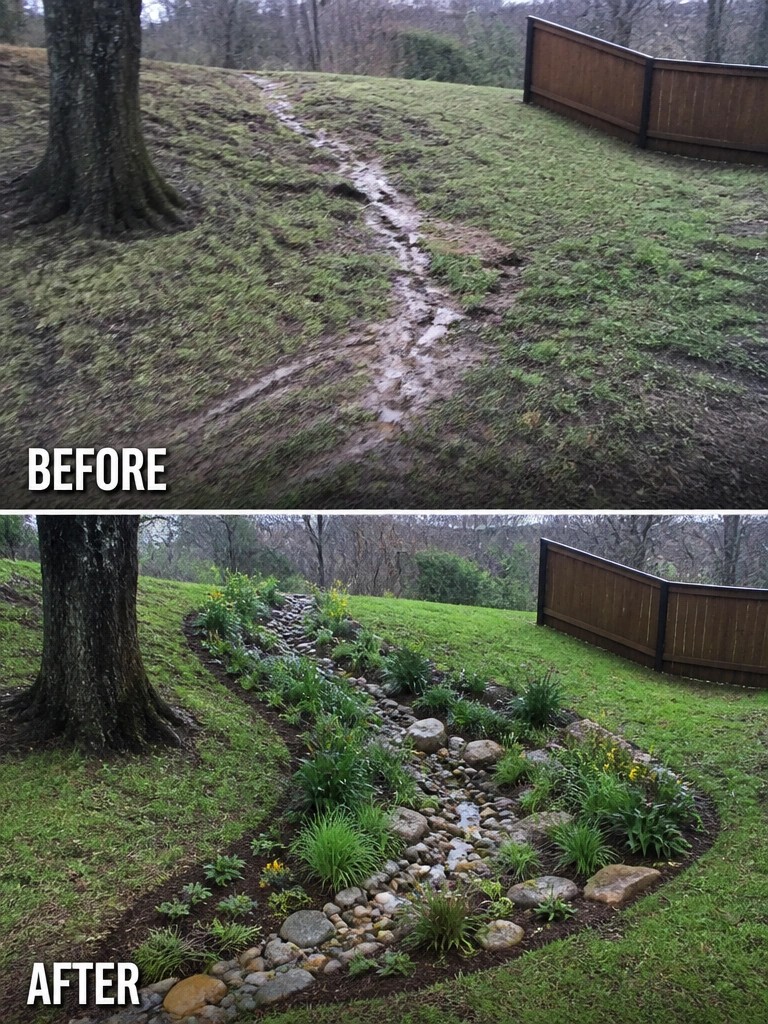
A muddy track carved by water down a grassy slope is a common issue on many properties. Turning that path into a rock-lined channel stops further erosion and gives the area a clear purpose instead of leaving it to wear away each season.
This idea suits homes with gentle slopes where rain tends to follow the same route. Use larger stones along the edges and smaller gravel in the center, then add plants that handle occasional moisture. Keep the bed narrow enough to blend with the lawn but wide enough to carry water away from problem spots.
Refresh An Old Shed With Paint And Storage
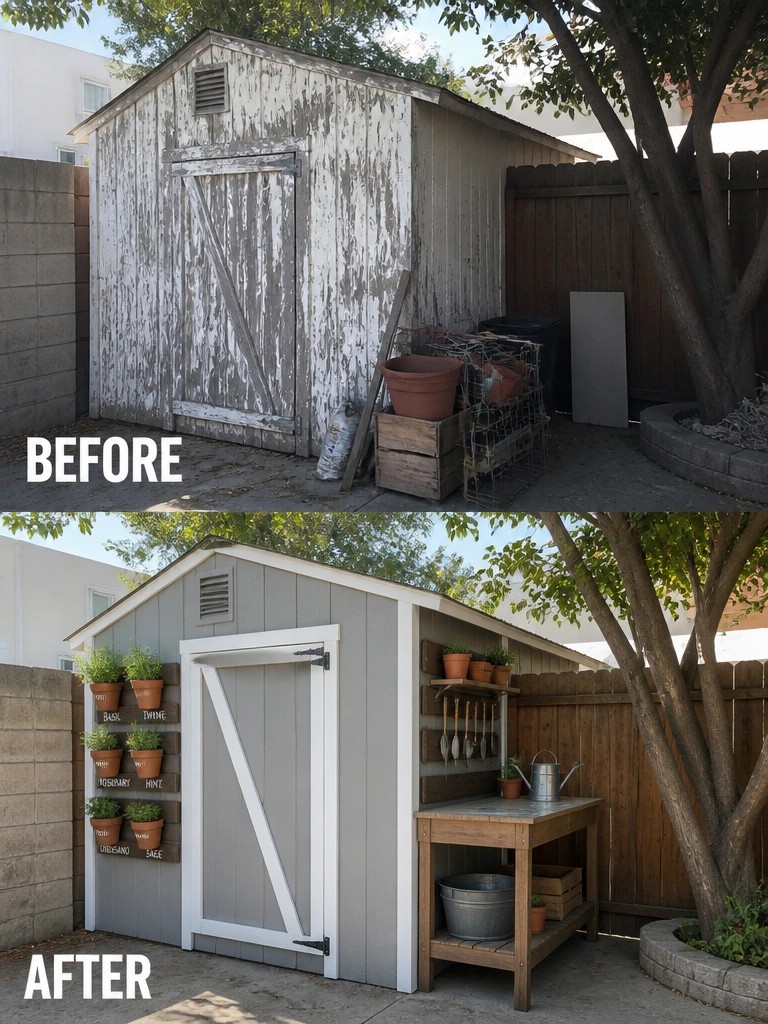
An old weathered shed can drag down the look of a backyard even when the rest of the yard is fine. A simple coat of paint plus a few practical additions turns it from an eyesore into something that actually helps with gardening. The main change here is covering the peeling wood with a solid color and adding white trim around the door so the structure feels intentional instead of neglected.
This approach works best on sheds that are still sound but just look tired. Start with a good cleaning and exterior paint meant for wood, then add wall-mounted planters or a small bench for tools. Keep the additions useful rather than decorative so the space stays practical for actual yard work.
Add Paver Borders To Define A Driveway
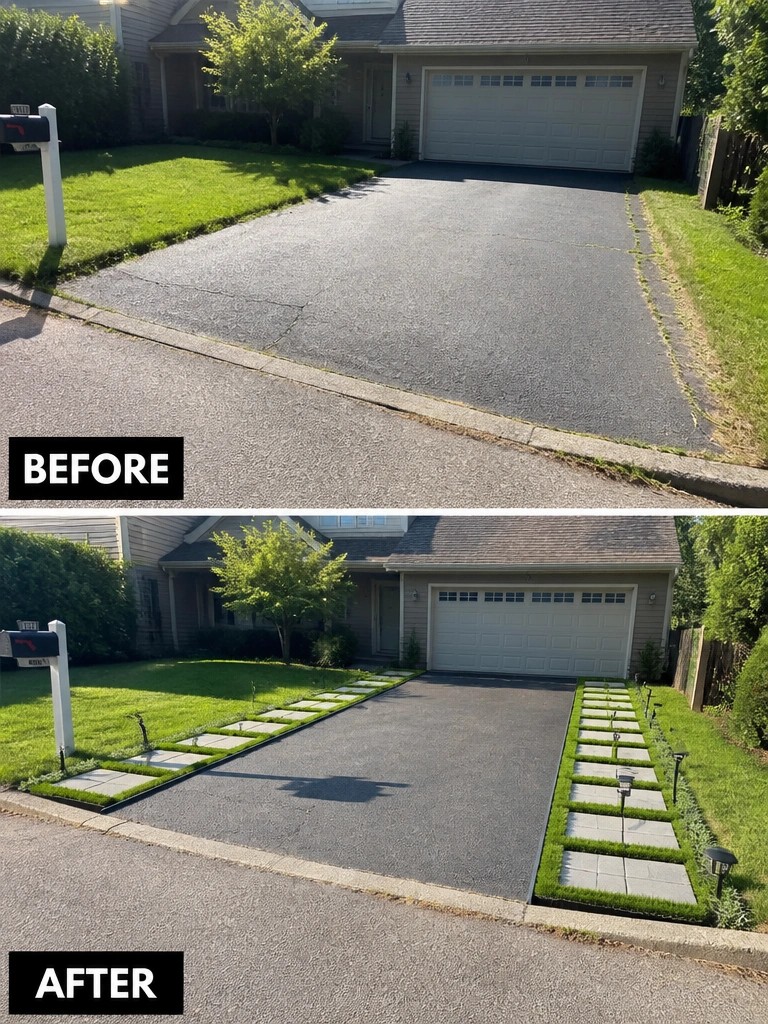
A plain asphalt driveway often looks unfinished where it meets the lawn. Adding a row of pavers set into grass on each side gives the area clear edges and turns the sides into simple walking paths instead of leftover space.
This idea works best on homes with wide driveways that dominate the front yard. Keep the paths narrow enough to leave room for the lawn and add a few low lights if you want evening use. The main goal is structure first, not extra plants or decor.
Add A Deck To Create Usable Outdoor Space
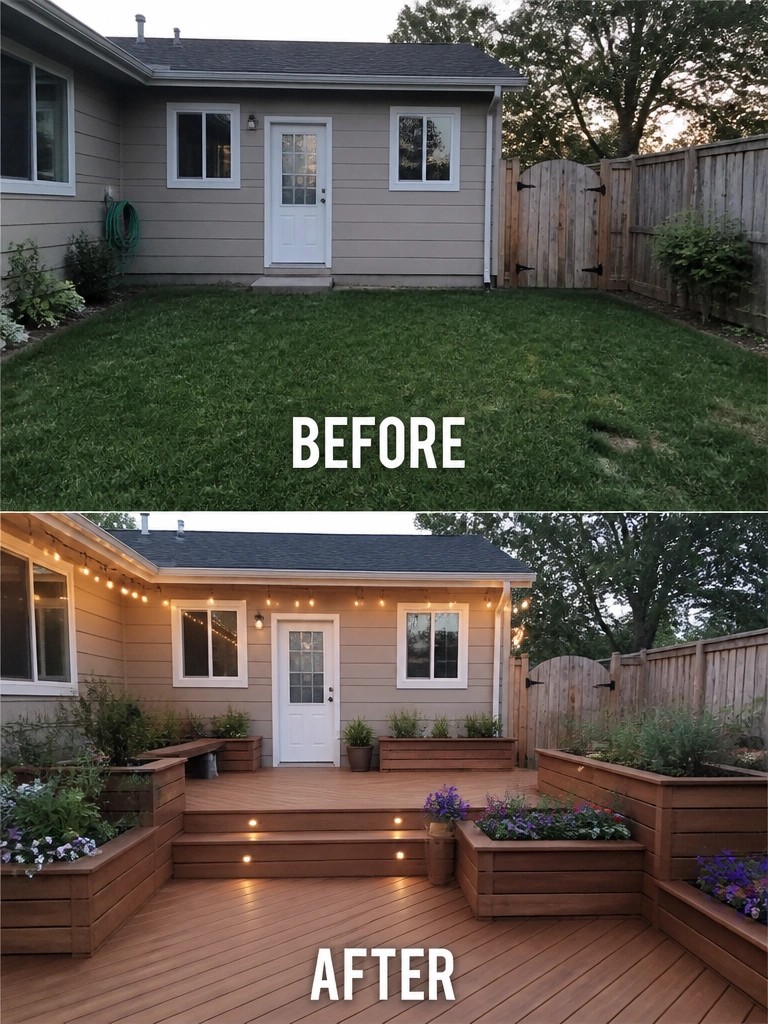
A plain backyard lawn often sits unused because there is no clear place to sit or gather. Adding a deck gives the space a floor and a purpose, turning it into an area where people actually want to spend time. The change here came from replacing the open grass with a wooden deck and adding raised planters along the edges to define the space without crowding it.
This approach works well in smaller yards where a full patio might feel too big or permanent. Start with the deck size and shape first, then add planters or lighting only where you need them for seating or paths. Keep the furniture simple so there is still room to move around.
Add Defined Garden Beds To Frame The Lawn
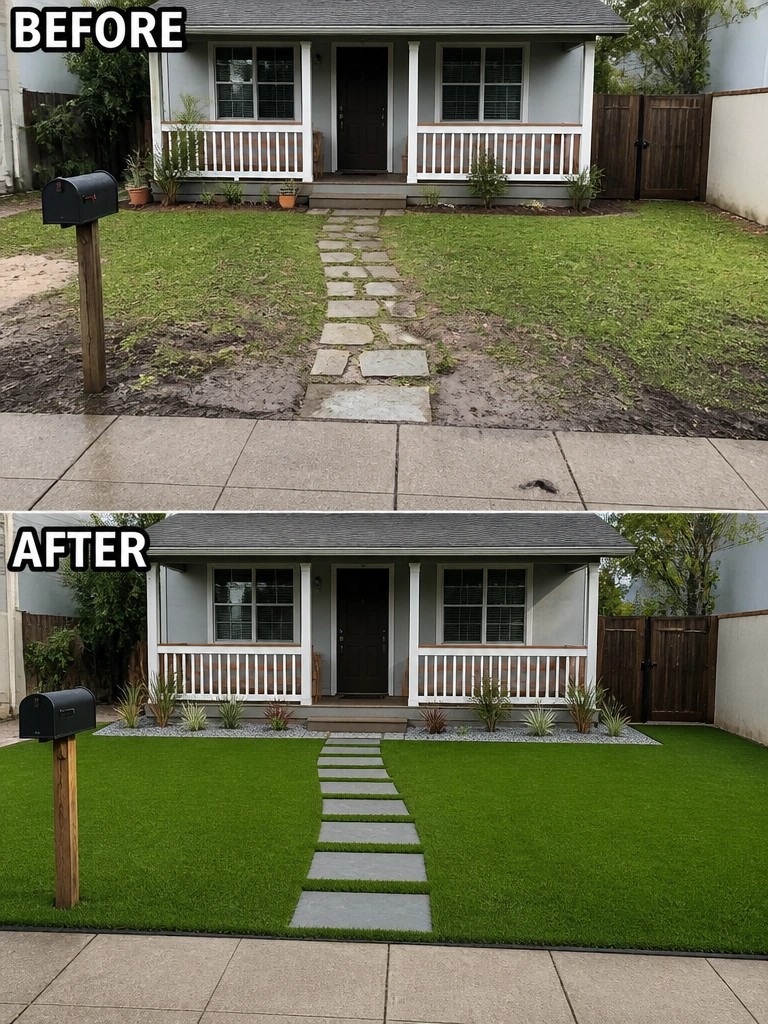
Many front yards end up looking scattered because the grass runs right up to the house with no clear separation. Adding a narrow gravel strip along the foundation gives the planting area a firm edge and keeps the lawn looking intentional instead of leftover.
This works best on smaller yards where you want a tidy appearance without constant upkeep. Keep the beds shallow so they do not shrink the usable grass space, and stick to low plants that stay contained. The change makes the whole front feel more settled.
Turn A Bare Backyard Into A Fire Pit Seating Area
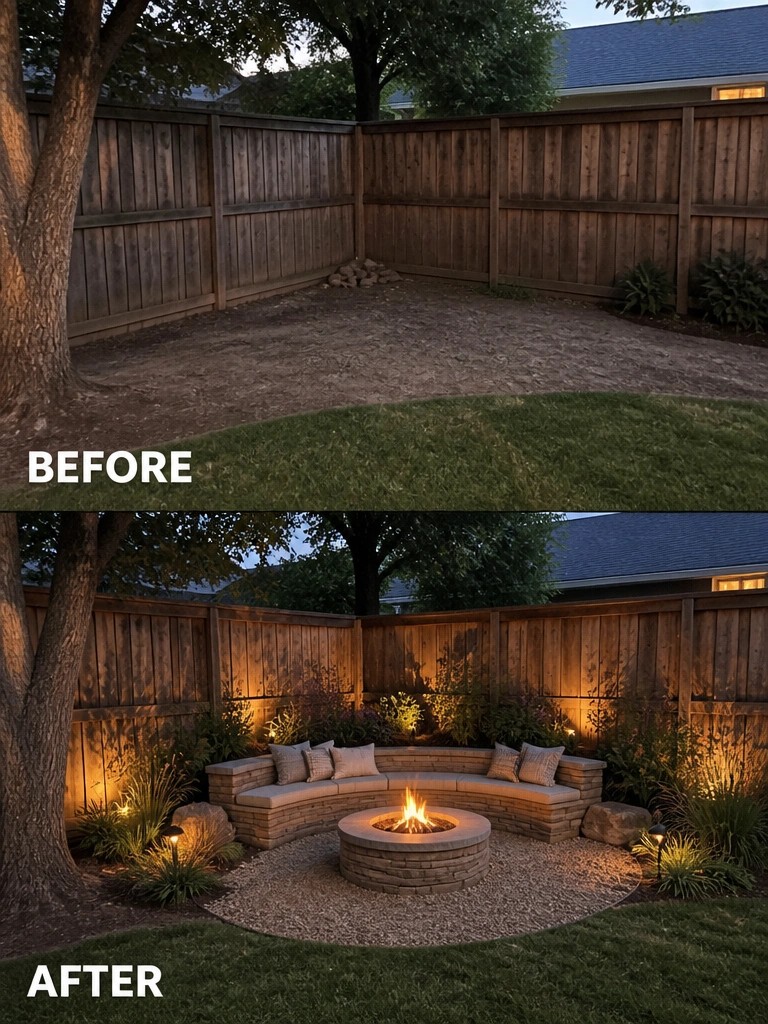
An empty backyard often stays unused because it lacks any clear spot to gather. Adding a fire pit with seating built around it gives the space a single purpose and makes it feel like an outdoor room. The main change here was moving from open dirt to a defined circle of gravel, a low curved bench, and simple plantings that frame the area.
This idea works best in backyards that are mostly open and flat. Place the fire pit first so everything else can sit around it, then keep the surrounding plants low so the seating stays the main focus. Make sure there is still open lawn or path space nearby so the new area does not block movement through the yard.
Turn An Empty Patio Into A Seating Area
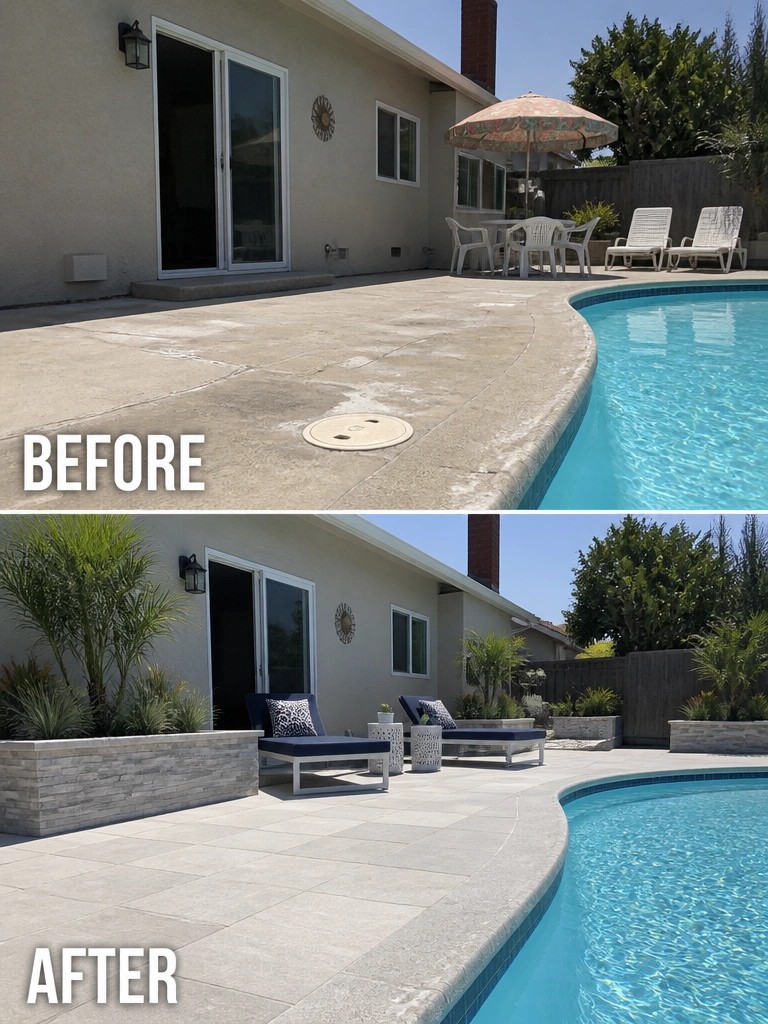
A bare concrete slab next to a pool often feels like wasted space. In this case the before photo shows just that, a flat open deck with nothing to encourage anyone to stay outside. Adding a couple of lounge chairs, a few low tables, and raised planters with greenery turns the same area into a place where people actually sit and relax.
This idea works best on any flat concrete or paver surface that already has decent sun or shade. Keep the furniture scale modest so there is still room to walk around the pool, and choose weatherproof pieces that can stay out year-round. Start with seating and a few planted containers before adding anything else.
Define The Front Yard With A Fence And Planted Borders
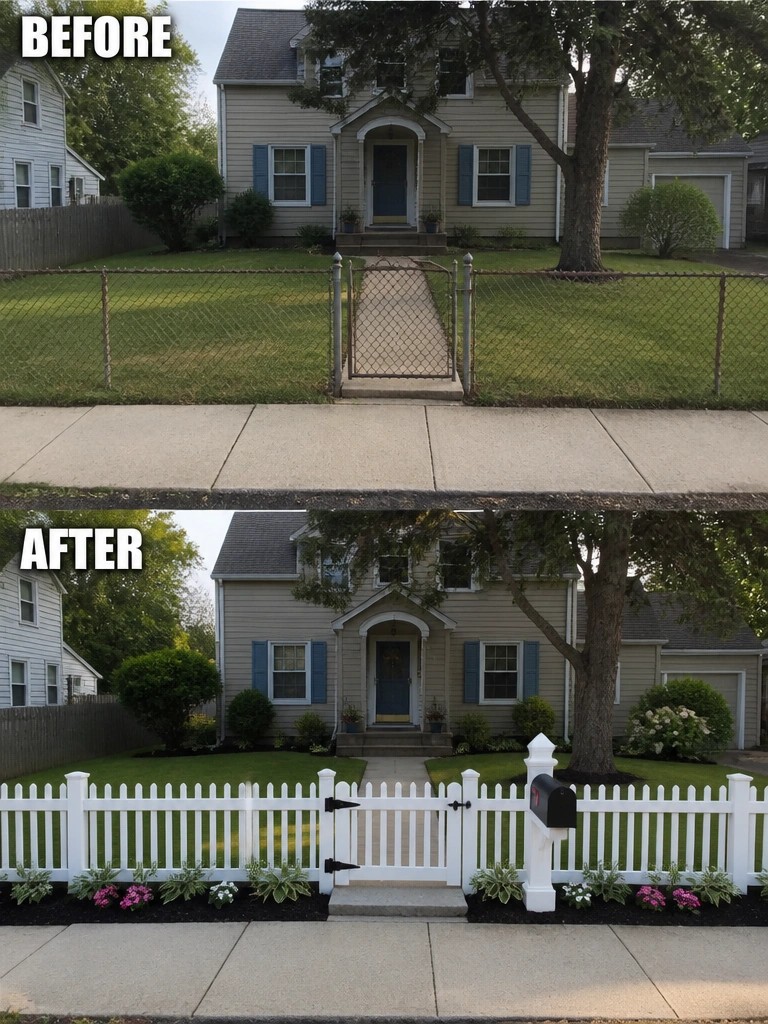
A simple fence paired with low garden beds can give a plain front yard real shape. The chain link fence left the lawn looking open and unfinished. Switching to a white picket fence and adding narrow beds along the base created a clear edge that makes the whole property feel more put together.
This idea works best on houses where the lawn runs straight to the sidewalk with no separation. Keep the beds shallow so they do not crowd the path, and choose plants that stay low. The fence sets the boundary first, then the planting softens it without adding much work.
Add Steps To Manage A Steep Side Yard Slope
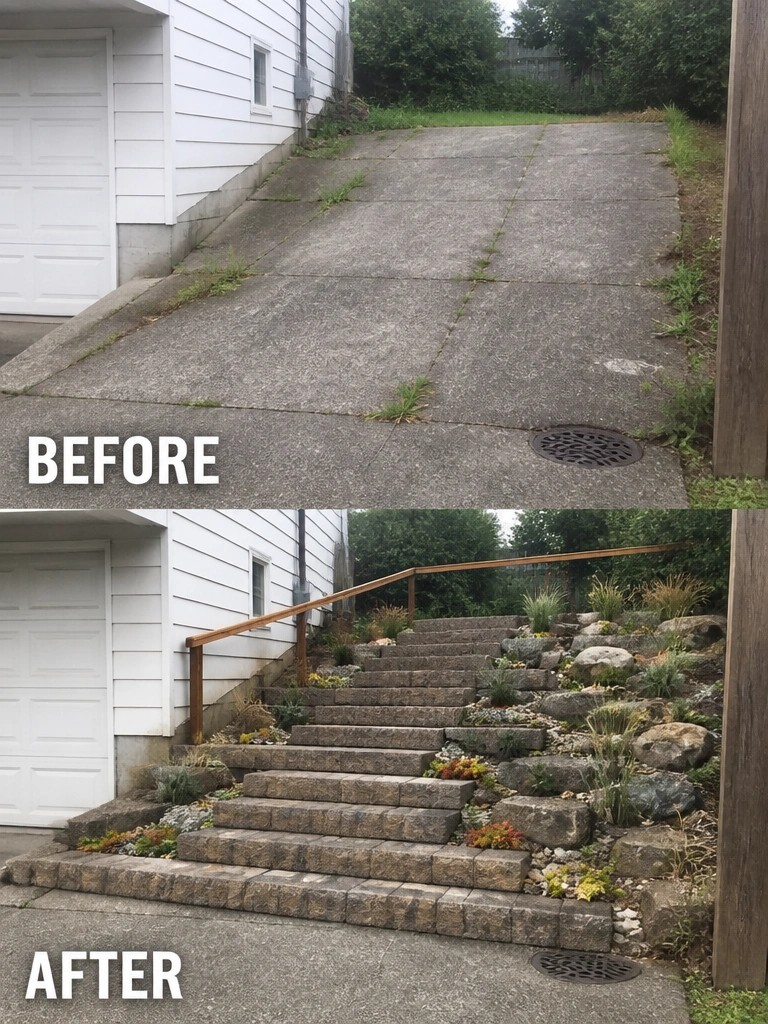
A long, plain concrete slope next to a house often ends up as wasted space that is hard to walk on and even harder to maintain. Adding a set of wide stone steps with terraced beds on either side turns the slope into a clear path and gives the area real structure.
This approach works best on narrow side yards or drive aprons where the grade is too steep for lawn or simple planting. Start with solid steps that match the width people need to walk comfortably, then fill the sides with low retaining walls or stacked stone to create planting pockets. Keep the plant choices simple and repeat the same few varieties so the beds look intentional instead of scattered.
Add A Garden Bed Along The Fence
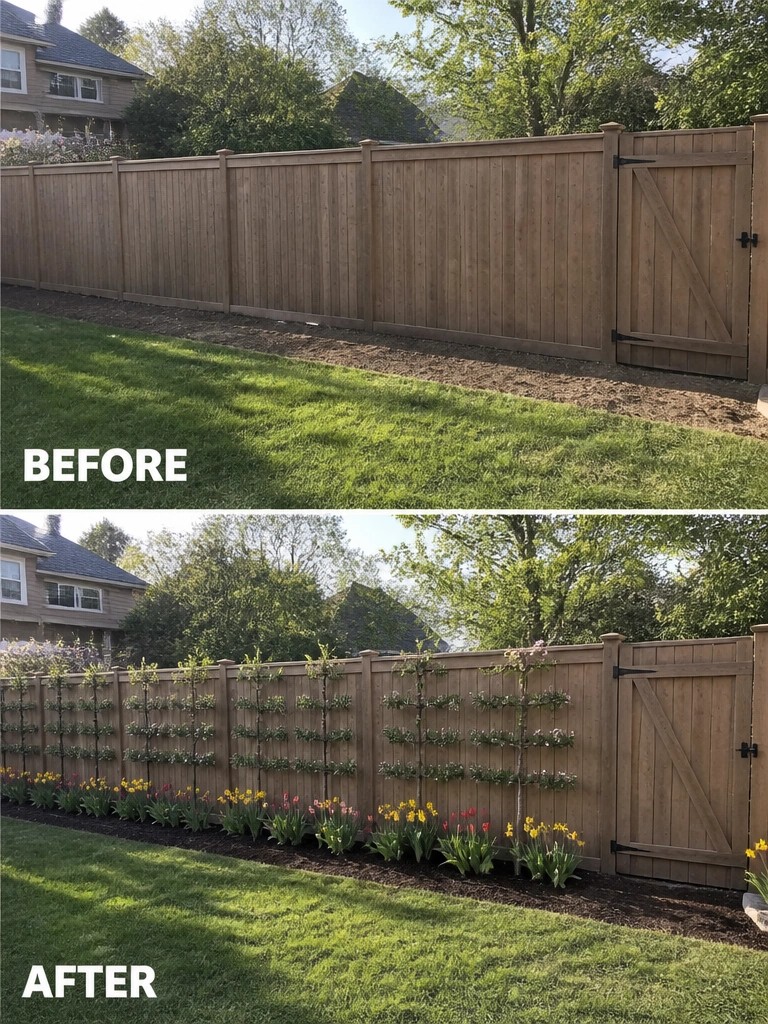
A narrow planted border can turn a plain fence line into something more finished. The before photo shows just grass meeting the wood, while the after adds a mulched bed with flowers along the base and some simple vertical planting on the fence itself. The change gives the eye a clear line to follow and makes the space feel more intentional.
This idea works best in yards where the fence takes up a lot of visual space. Keep the bed fairly narrow so the lawn stays usable, and choose plants that match the light and your willingness to water. Start with the bed and edging before adding anything else.
Frequently Asked Questions
Q: My backyard is tiny. Which ideas actually work there?
A: Stick with container gardens and a single vertical trellis along one fence. These take up almost no ground space yet add the height and color most small yards need. Keep the center open so the area still feels usable.
Q: What plants survive with little watering?
A: Choose native grasses and shrubs. They adapt to your local rain patterns and need almost no extra care once settled.
Q: How do I handle drainage issues before adding new features?
A: Start by checking where water pools after rain. Then shape the soil gently to direct flow away from the house. This step prevents bigger problems later on.
