

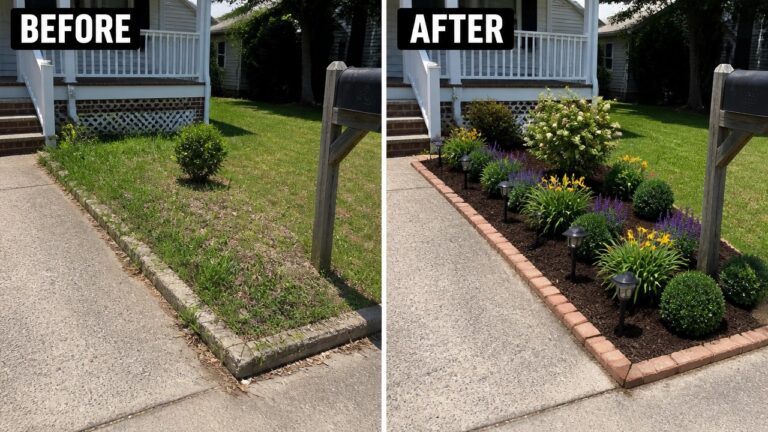
Yards often look a little unfinished when the lawn edges wander and the beds lack any clear shape from one year to the next.
I have noticed that addressing the basic layout first tends to make everything else fall into place more easily.
Cleanup matters.
Once the overgrowth gets handled and a few paths are defined, the space starts to feel like it belongs with the house rather than sitting apart from it.
Trying one or two of these approaches at a time has shown me how small shifts can add up without needing a big budget.
Add Edging To Create A Defined Garden Bed
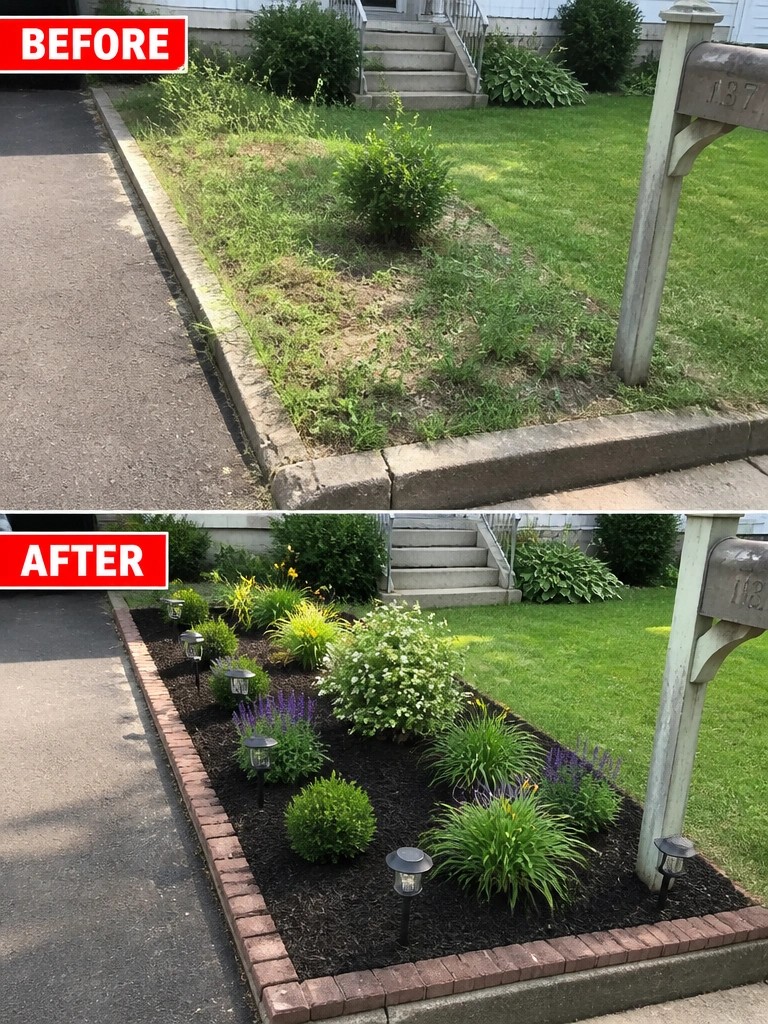
An overgrown strip along the driveway or sidewalk often looks messy because it has no clear edge. Adding a simple brick border and filling the area with mulch turns that neglected patch into a proper garden bed. The change gives the whole front a much tidier look without requiring a lot of new plants right away.
This idea works well on narrow spaces next to pavement where grass struggles to stay neat. Start by cutting a clean line and installing the edging before you add mulch or plants. It keeps the bed from spreading into the lawn and makes future weeding easier.
Add Defined Garden Beds To Clean Up An Overgrown Border
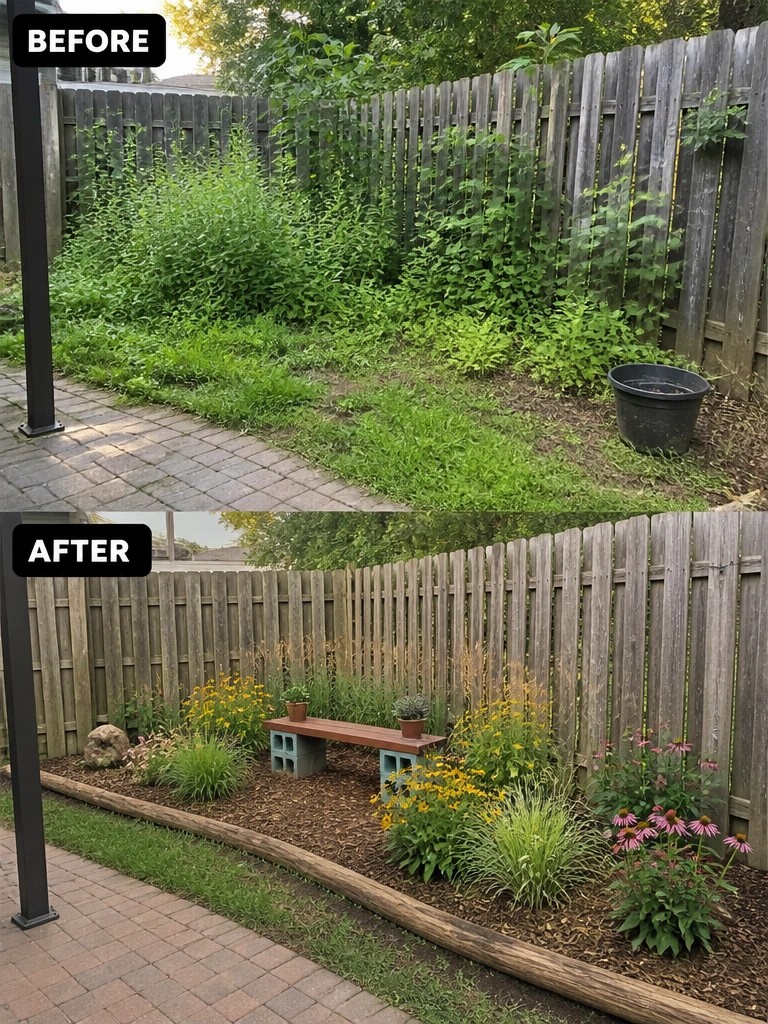
An overgrown strip along a fence often looks worse than it needs to because there is no clear edge or separation from the lawn. Clearing the weeds and adding a simple border with mulch turns the same space into something that feels intentional instead of neglected. The after photo shows how a few planted beds and a basic bench give the area purpose without requiring a big budget.
This approach works best along fences, driveways, or side yards where grass struggles to grow anyway. Start by removing the worst of the overgrowth, then lay down a clear edge and a layer of mulch before adding plants. It keeps the space looking tidy even when new growth appears and makes future maintenance much easier.
Add Structure To A Narrow Side Yard
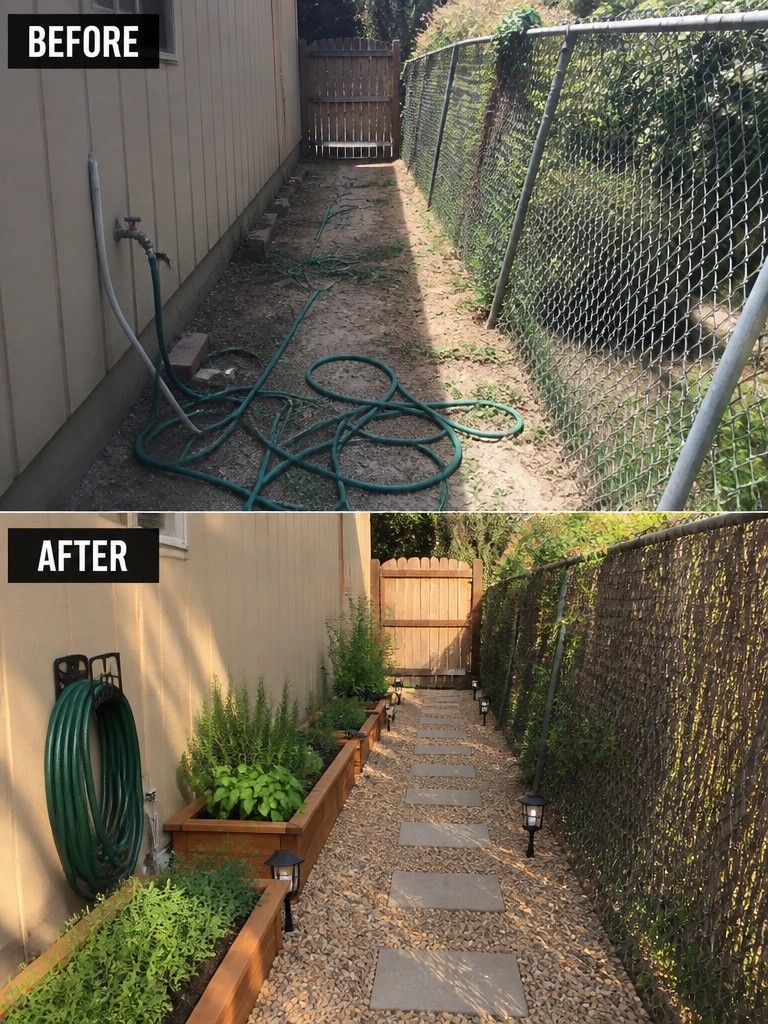
A narrow side yard often ends up as wasted space because it feels awkward and hard to maintain. In this case the before photo shows bare dirt and a hose left in a heap. The after shows a simple fix: a gravel base, stepping stones down the middle, and raised beds along the house to keep plants contained and the path clear.
This approach works well on any slim strip between a house and a fence. Start by laying down landscape fabric and gravel so the ground stays dry and weed-free. Add a few raised beds for planting and a basic path so the space feels intentional instead of forgotten. The beds also give you room to grow without crowding the walkway.
Define Lawn Edges To Give The Yard More Structure
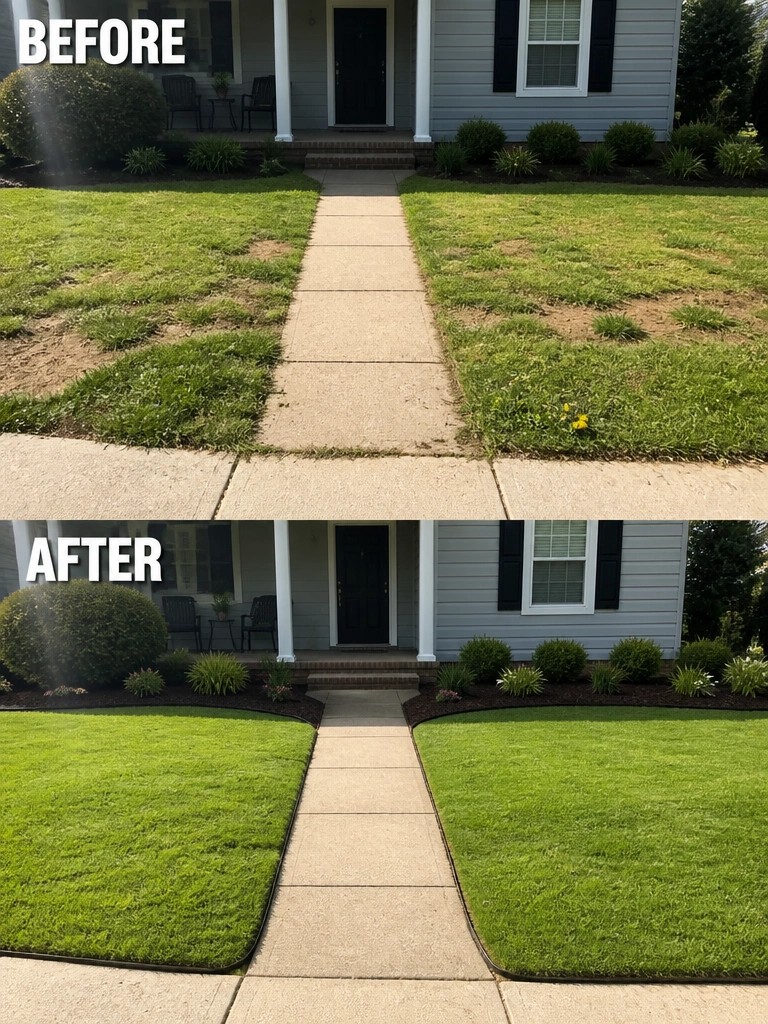
A patchy lawn with no clear shape often looks messy even when the grass is green. Adding a simple curved edge along the walkway and creating mulched beds on either side instantly makes the whole front yard feel planned and cared for. The before photo shows uneven grass running right up to the path, while the after shows clean borders that separate the lawn from the planting areas.
This approach works well on small to medium front yards where the sidewalk or path is a main feature. Start by marking a gentle curve with a hose or string, then cut the edge and add mulch in the new beds. Keep the planting simple at first so the clean lines stay the focus.
Define A Plain Path With Pavers And Gravel
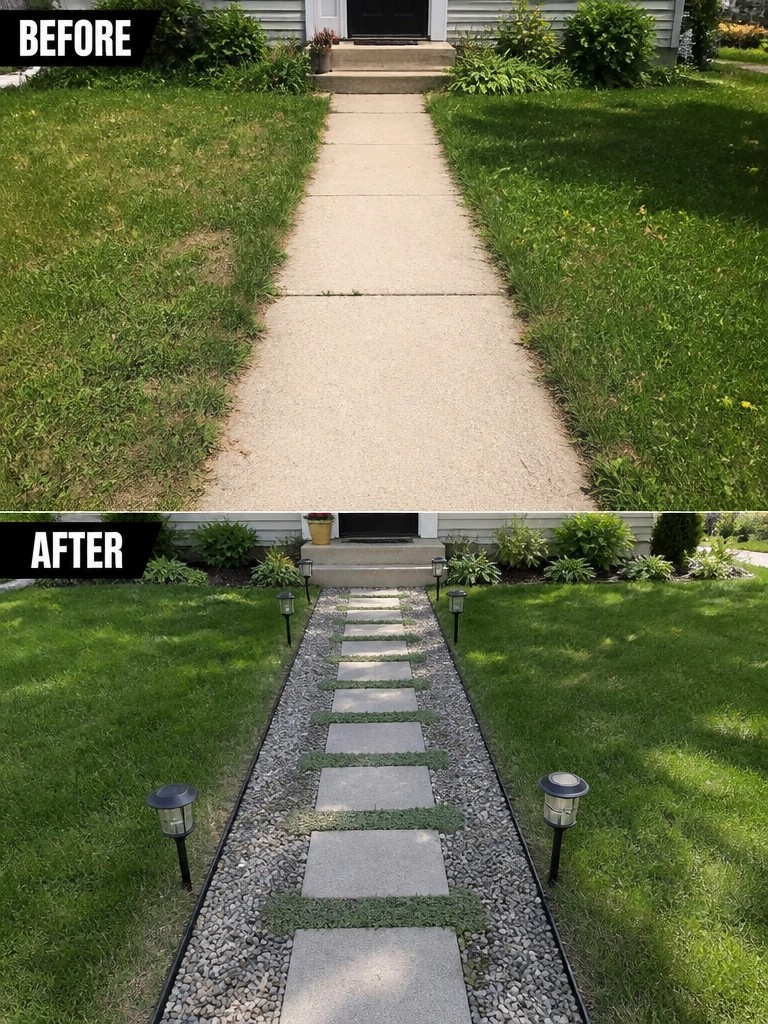
A wide concrete walkway often looks flat and unfinished next to a lawn. Switching to pavers set in gravel breaks up the solid surface and gives the path a cleaner, more intentional shape. The gravel also helps control weeds and improves drainage along the edges.
This idea works best on straight, simple front paths where you want structure without a big budget. Lay the pavers with consistent spacing, fill the gaps with gravel, and keep the planting low so the path stays the main feature. A few solar lights along the sides make it safer to use after dark.
Turn A Bare Patio Into A Seating Area

A plain concrete slab often sits unused because it lacks any clear purpose. Adding a simple seating setup with a low pallet sofa, a small table, and string lights overhead gives the space a reason to be used.
This approach works best on small patios or side yards where you want function without crowding the area. Keep the furniture scale modest, choose pieces that can stay outside, and add lighting near the seating so the spot feels usable in the evening.
Add Structure To A Steep Slope
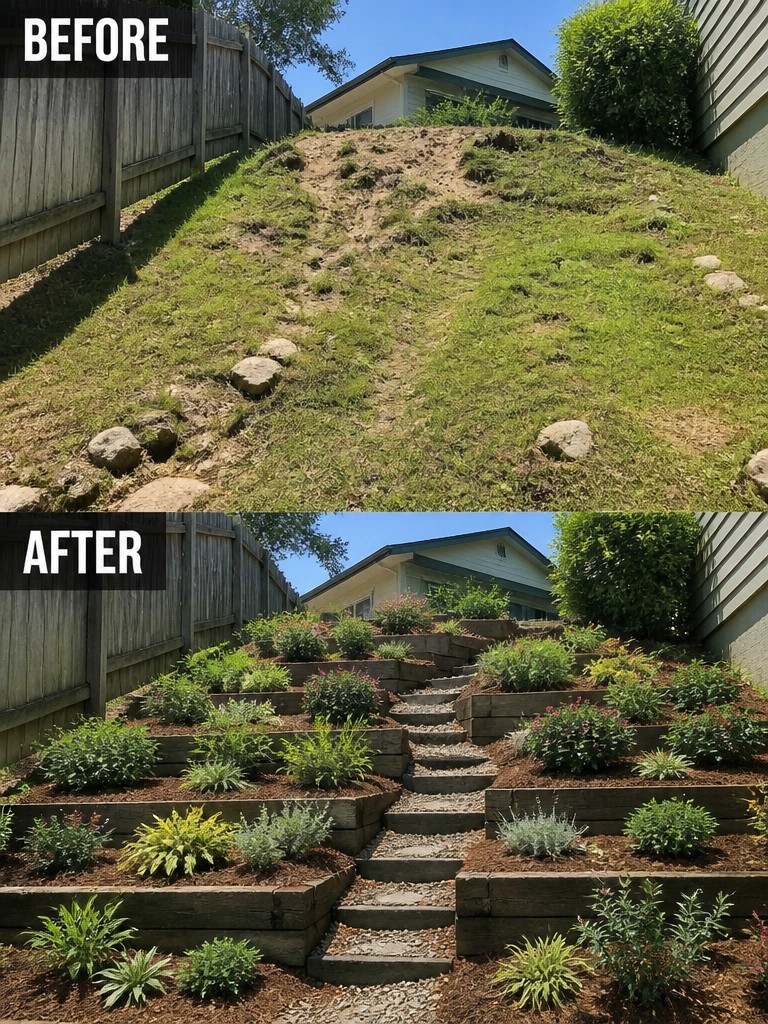
A steep, bare slope is tough to mow and easy to ignore. Terracing turns that same slope into a series of flat, planted beds that stay in place and look intentional. The wooden retaining walls and simple stairs shown here give the yard clear levels and make the space much easier to maintain.
This approach works best on yards where grass struggles to hold the soil. Start with the retaining walls to create the terraces, then fill the beds with mulch and a few reliable plants. Keep the materials simple so the structure stays affordable and blends with the rest of the yard.
Create Defined Garden Beds Along The Foundation
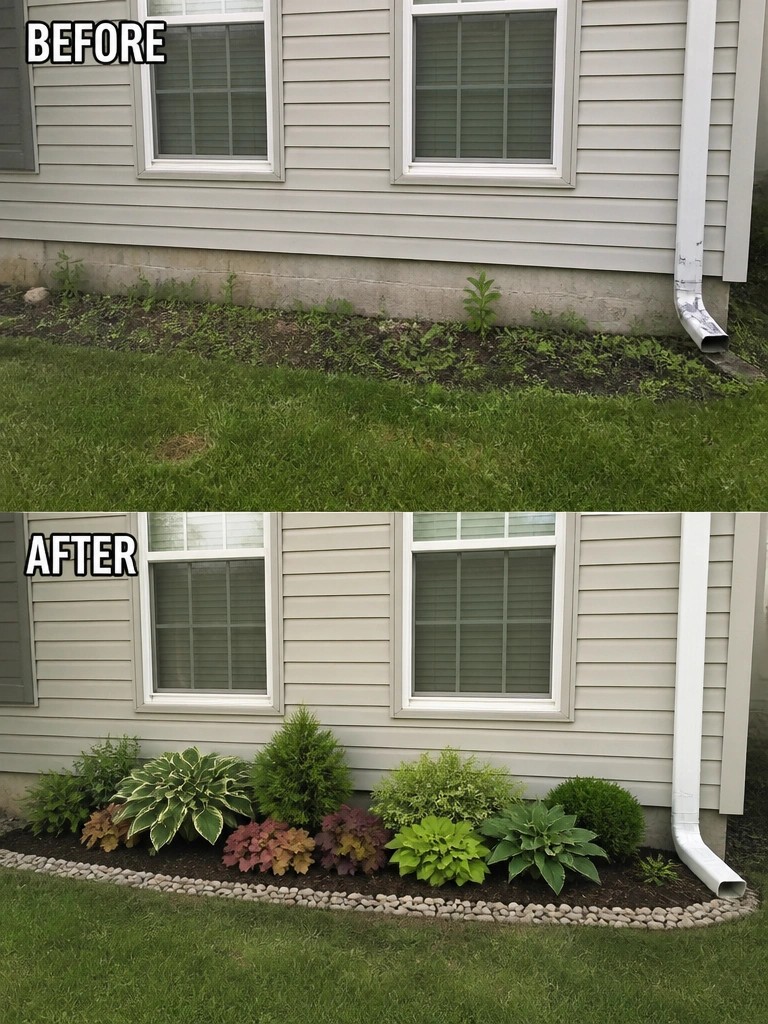
A bare strip of grass and weeds right up against the house often looks unfinished. Adding a clear border with edging stones and filling the bed with a mix of shrubs and hostas gives the area purpose and makes the whole side of the house feel more intentional.
This approach works on almost any home where the lawn runs straight into the siding. Start with a simple edge using stones or pavers, lay down mulch, and keep the planting low and varied. It stays practical because the border makes mowing easier and keeps the bed from spreading into the grass over time.
Add Lattice Panels To A Fence For Vertical Interest
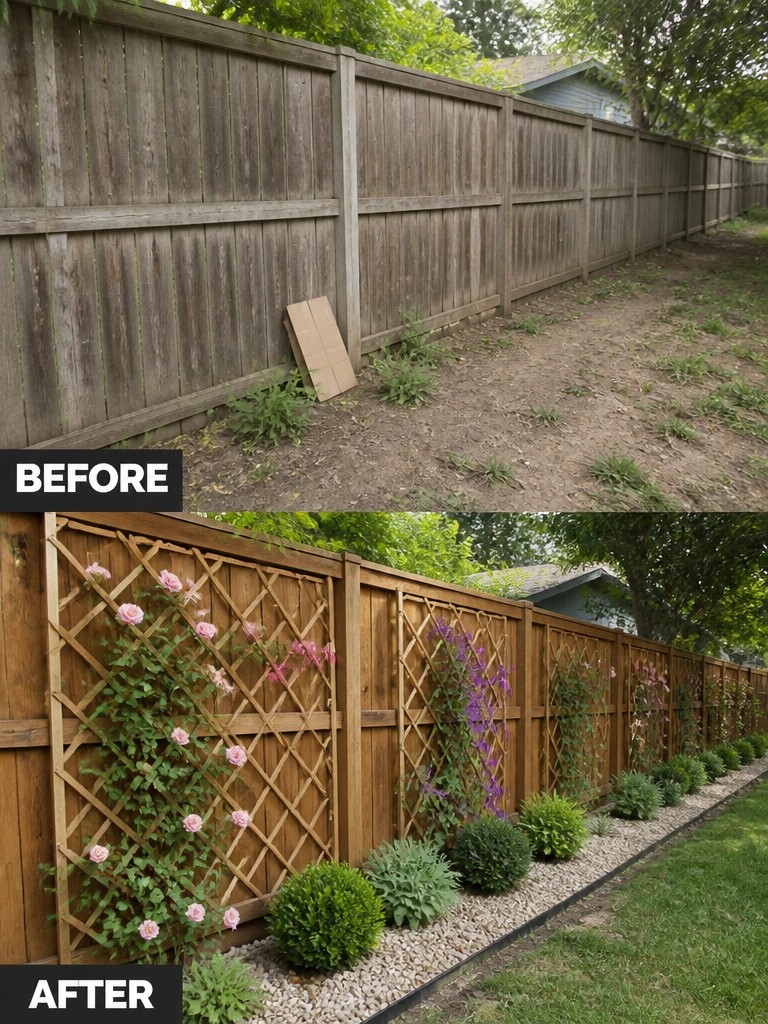
A long plain fence with bare dirt underneath often looks unfinished. Adding lattice sections gives the fence height and structure while creating space for climbing plants to grow upward instead of spreading out on the ground.
This approach works well along side yards or back fences where you want coverage without taking up much width. Use pressure-treated lattice, secure it firmly to the existing posts, and plant climbers that suit your climate. Gravel or mulch along the base keeps the area tidy and reduces weeding.
Frame Your Front Steps With Potted Plants
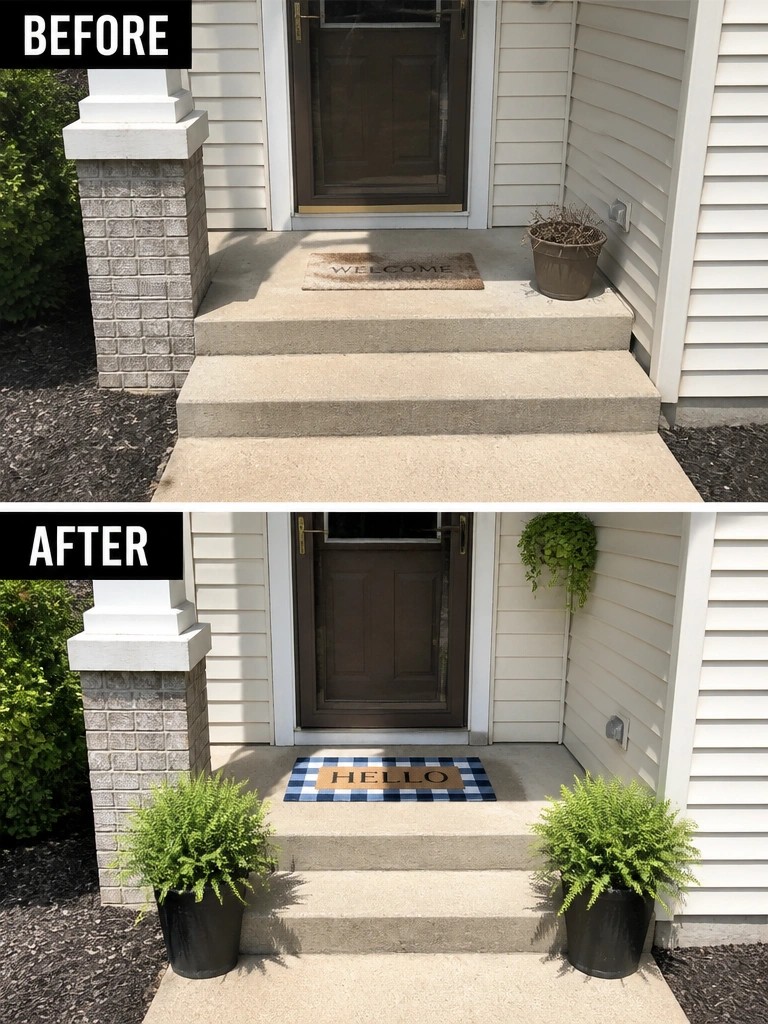
A plain set of concrete steps often looks unfinished even when the rest of the house is tidy. In this case, the before photo shows bare steps with only a basic welcome mat and one tired pot off to the side. The after version adds two matching planters filled with bright ferns placed at the base of the steps along with a fresh doormat. That single change gives the entry a much more complete and cared-for appearance.
This approach works well on any home with a small front stoop or a short flight of steps. Choose two identical pots in a dark color so they stand out against the concrete, and pick plants that can handle sun or shade depending on the exposure. Keep the scale modest so the walkway still feels open, and add a simple new mat if the old one is faded. The whole update stays affordable and can be done in an afternoon.
Add Defined Garden Beds To Frame The Lawn
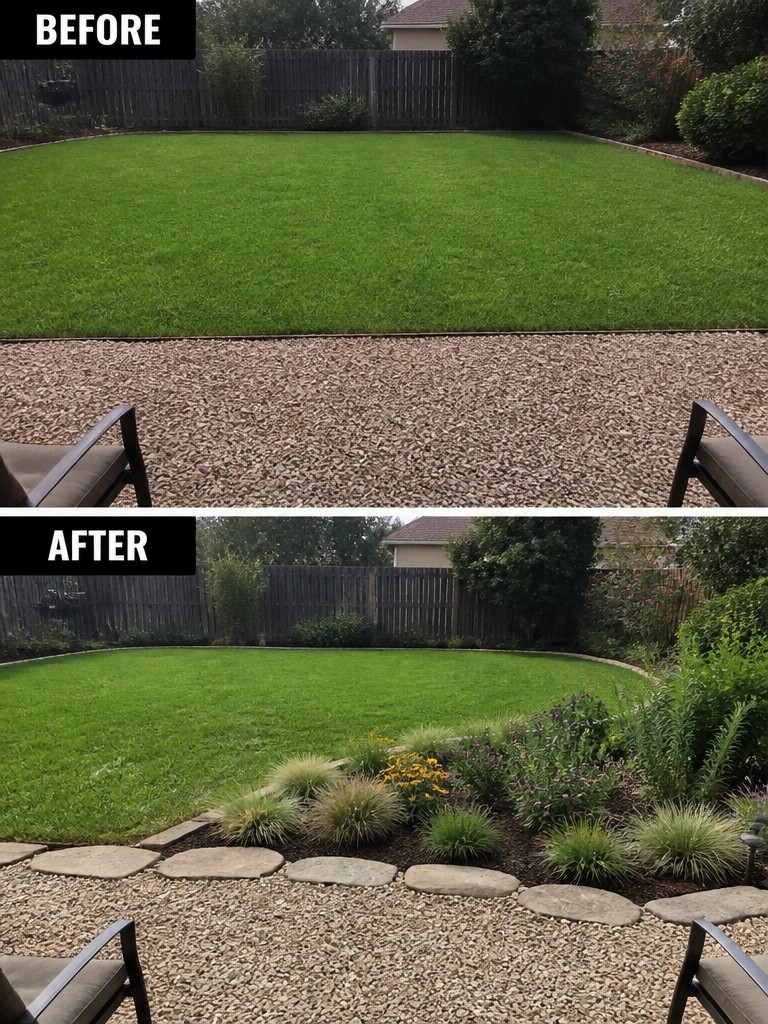
A simple way to improve a flat backyard is to add a planted border that gives the lawn a clear edge. The before photo shows just grass meeting gravel with nothing to break up the space, while the after adds a low garden bed filled with grasses and flowers that separates the lawn from the gravel area.
This works best in yards that already have a decent lawn but feel unfinished around the edges. Outline the bed with stones or pavers first, then fill it with a few repeating plants and mulch. The goal is to create structure without crowding the open space or adding high maintenance.
Plant A Simple Garden Bed Along The Foundation
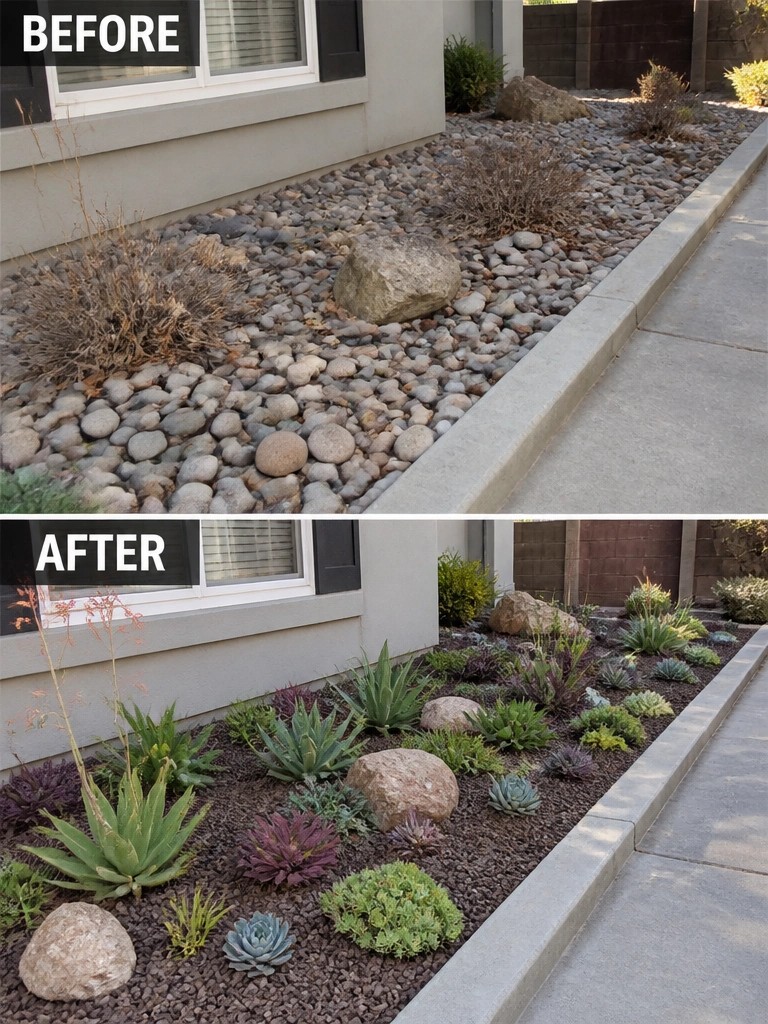
A narrow strip of gravel and dry shrubs along the house often ends up looking messy because nothing is really planted there. Replacing that strip with a row of succulents and small accent plants gives the area clear shape and keeps it from feeling empty or overgrown.
This works best on homes with a long, flat foundation edge where you want low water use and minimal upkeep. Start by clearing out the old growth, add a layer of mulch or gravel, and group a few types of hardy plants so the bed looks full without crowding the walkway.
Add Structure To An Overgrown Backyard
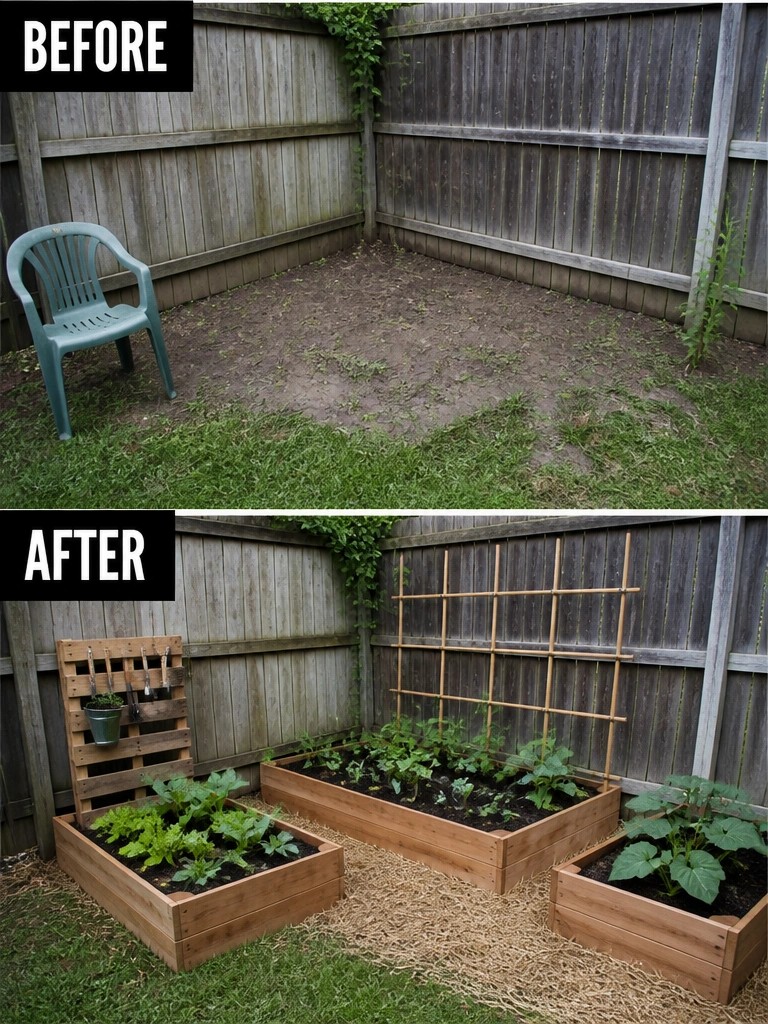
A bare backyard often feels unfinished because there is no clear layout or purpose. Adding raised beds gives the space definition and turns unused dirt into a working garden. The change here shows how a few simple beds and a trellis can replace an open, weedy area with something orderly and productive.
This approach works best in small yards or corner spots where you want to grow vegetables without taking over the whole lawn. Use basic lumber for the beds, fill them with good soil, and add mulch around the edges to keep weeds under control. Keep the number of beds modest so there is still room to walk and work comfortably.
Define Garden Beds Around Downspouts

A bare muddy patch from a downspout can quickly turn into an eyesore and an erosion problem. Adding a simple bordered bed with mulch and plants gives the water a place to drain while keeping the soil in place and the area looking intentional.
This approach works well on small side yards or foundation lines where runoff collects. Start with a low edging material that follows the natural shape of the wet spot, lay down a thick layer of mulch, and choose plants that tolerate occasional moisture. It keeps the fix low cost and easy to maintain.
Use Planters To Frame A Simple Patio
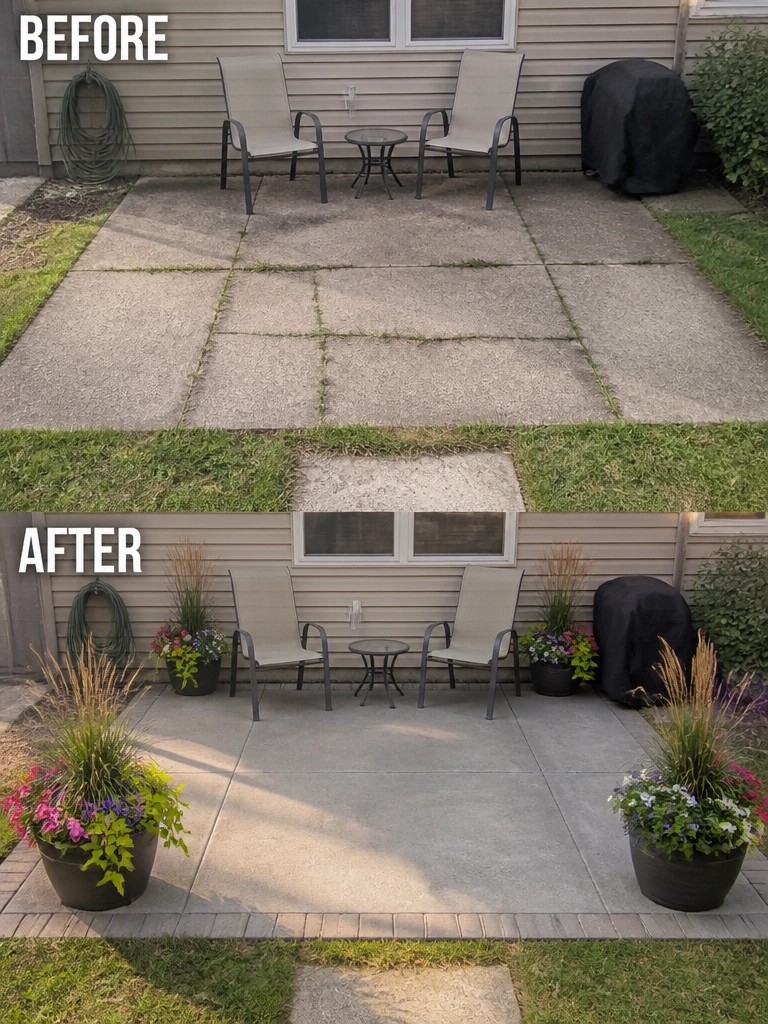
A bare concrete patio often feels unfinished even when it already has chairs and a table. In this case the space gained a much clearer shape once large planters were placed along the edges. The plants soften the hard surface and create a natural border that makes the seating area feel more intentional.
This approach works well on any small patio or slab that sits right against the house. Start with a few oversized pots in the same color or material, then fill them with a mix of tall grasses and lower flowers. The key is keeping the center open for movement while the edges do the work of defining the space.
Define The Lawn Edge With A Simple Hedge
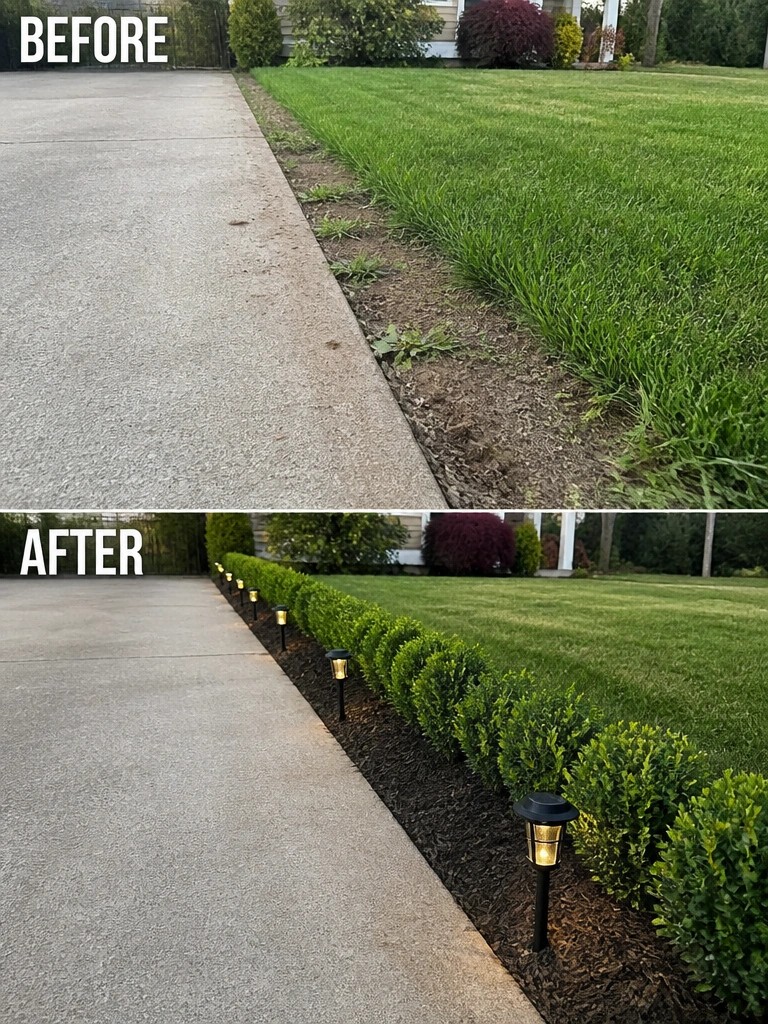
A common problem with driveways is the messy strip where grass meets concrete. Weeds and uneven growth make the edge look neglected. Adding a low row of shrubs in mulch creates a clear line that instantly organizes the space, and solar lights add a gentle glow once the sun goes down.
This approach suits homes with long driveway borders or straight lawn edges. Start by clearing the weeds and adding a narrow bed of mulch. Choose compact shrubs that stay under two feet tall, then space them evenly. The lights can be solar so there is no need for wiring, and the whole project stays affordable while making the front of the house look more intentional.
Use Pavers To Create A Defined Seating Spot
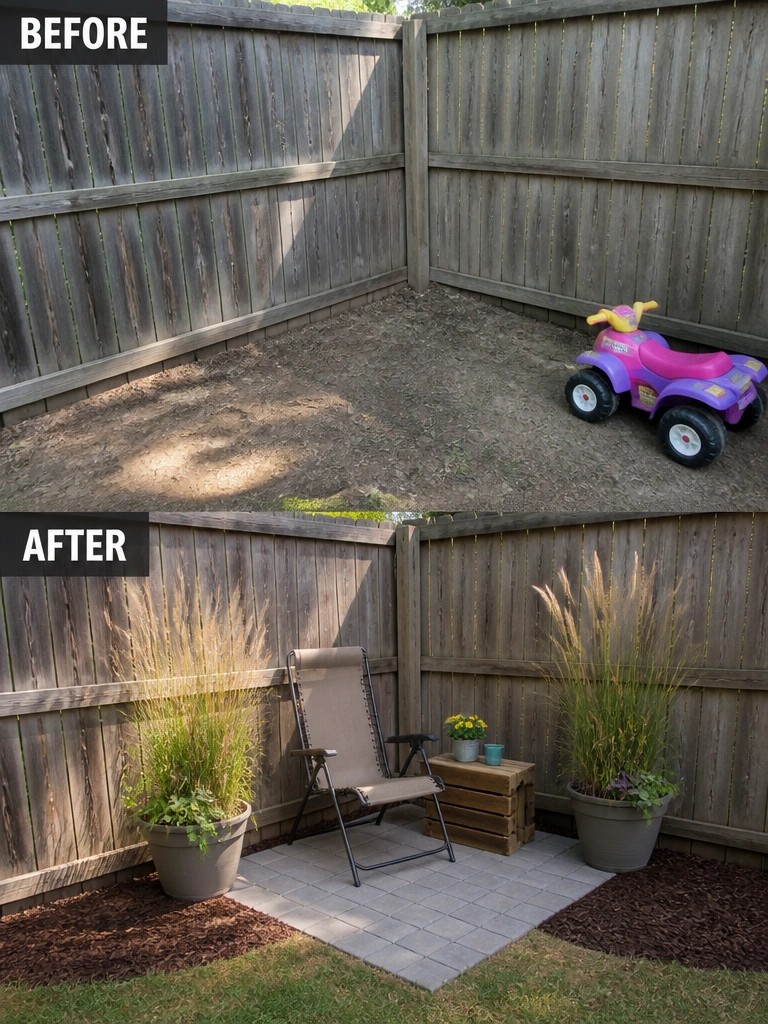
A bare dirt corner next to a fence often stays unused because it has no clear purpose. Adding a small section of pavers gives the space a floor, which instantly makes it feel like a place to sit rather than just leftover ground. The change from open dirt to a simple paved patch with a chair and a couple of pots is enough to turn the area into something functional.
This idea works well in small backyards where you want one easy spot to relax without building a full patio. Start with the pavers to set the boundary, then add a few large pots so the planting stays contained and easy to maintain. Keep the rest of the yard simple with mulch so the paved area stands out without crowding the space.
Add Defined Garden Beds To Shape The Yard
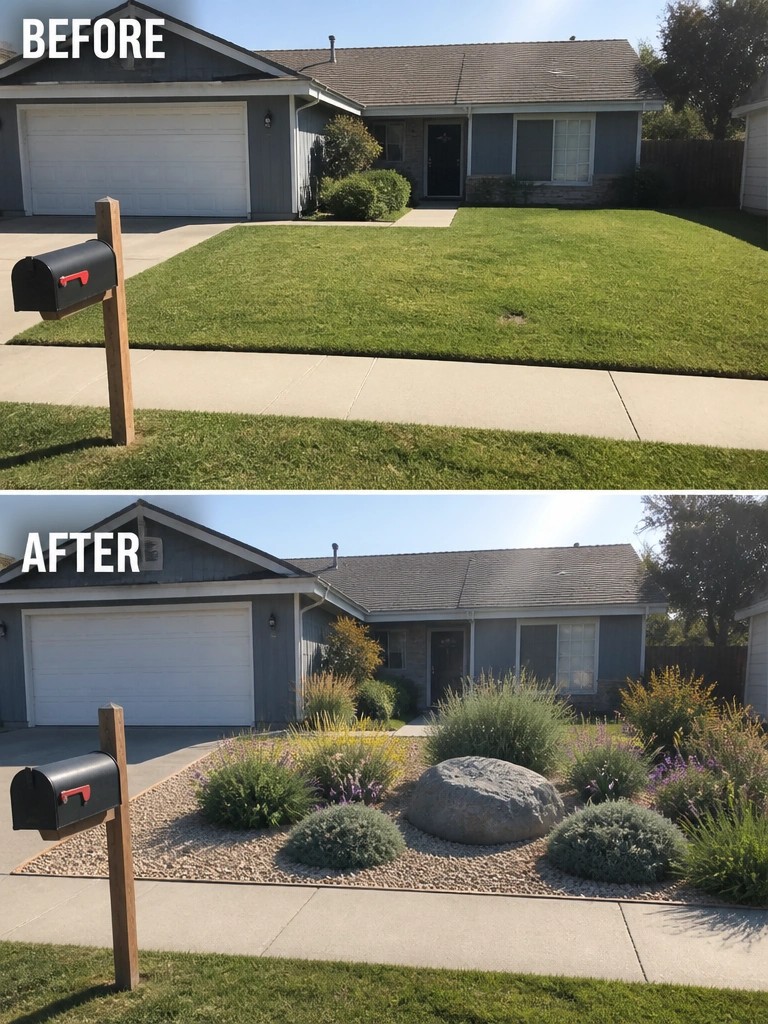
The front lawn went from a wide stretch of plain grass to a much more organized space once gravel beds were added along the walkway. A few shrubs, a large rock, and simple curves in the layout give the area clear shape without needing a full redesign.
This approach suits homes with basic front yards that feel too open. Outline the beds first with edging, fill them with gravel or mulch, then add groups of low plants and one or two larger rocks. The result looks planned while keeping maintenance low.
Add Structure To An Overgrown Border
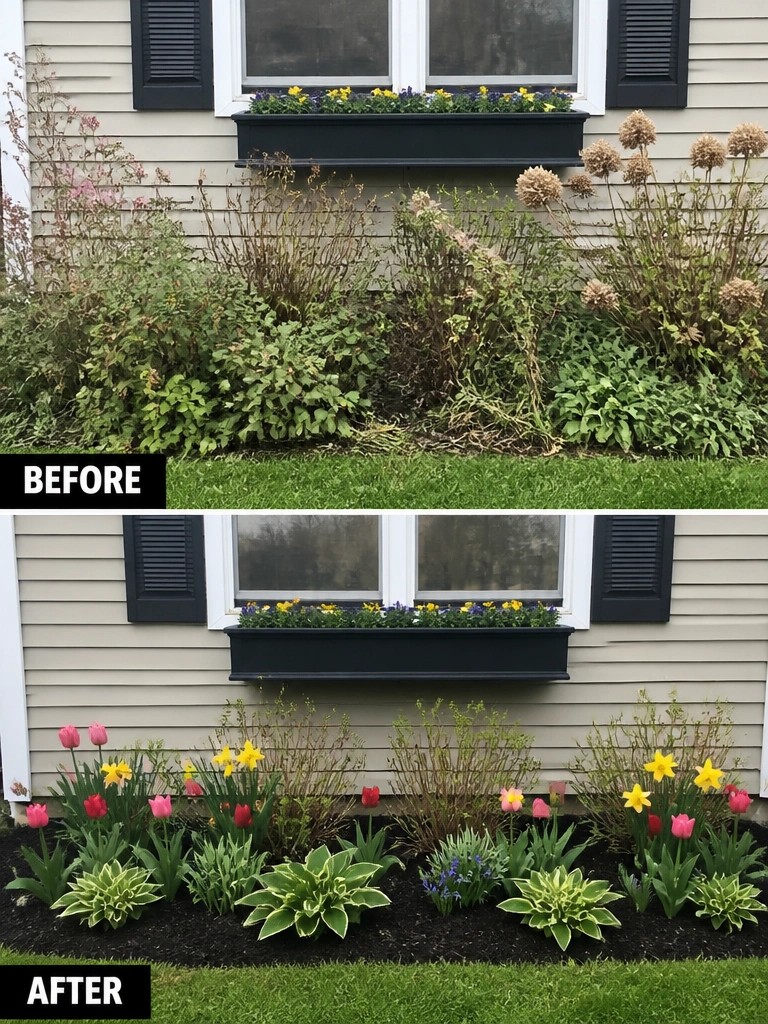
Clearing away the old growth first made the biggest difference here. Once the tangled plants were removed, a simple mulched bed with a clear edge gave the area a fresh start that actually shows off the new flowers and hostas.
This idea works best along the front of a house where the planting needs to look tidy from the street. Keep the bed narrow enough to reach from the lawn, use mulch to hold down weeds, and stick to a small mix of plants that repeat across the space.
Define Tree Bases With Mulch And Planting

The ground around a mature tree often stays bare because grass struggles there and the roots sit close to the surface. A simple ring of mulch with a few shade-tolerant plants gives the area a finished look and cuts down on weeding.
This idea works best in front yards or along driveways where you want order without crowding the tree. Keep the bed narrow, choose plants that tolerate dry shade, and add stepping stones only if you need regular access. The mulch does most of the work once the plants fill in.
Add Edging To Define Garden Beds
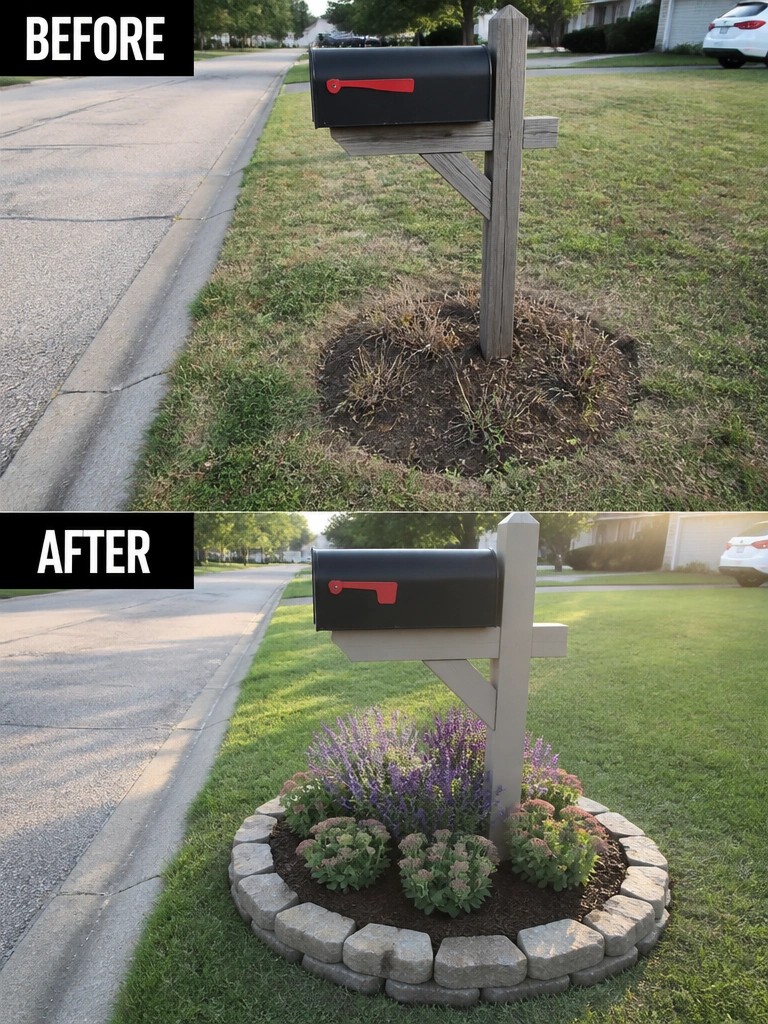
A bare patch of dirt around a mailbox or post often looks unfinished even when the rest of the yard is mowed. Laying a simple stone border and filling it with a few plants gives the area a clear shape and makes the whole front strip feel more intentional.
This approach works best along driveways, near utility features, or in any small spot that tends to stay weedy. Clean the area first, then set the edging before you plant so the bed stays contained and easy to maintain over time.
Frequently Asked Questions
Q: Where should I start if my budget is really tight? A: Pick one small project like adding mulch or cheap edging first. That gives you quick wins without spending much. Then build from there as you save more.
Q: How often do I need to water new additions to keep them looking good? A: Water deeply once a week for most plants in the first month. Check the soil with your finger to see if it feels dry. This prevents overwatering which can kill roots fast.
Q: What if my soil is mostly clay and nothing grows well? A: Mix in some compost to loosen it up. Start with hardy options like daylilies that handle tough spots.
