

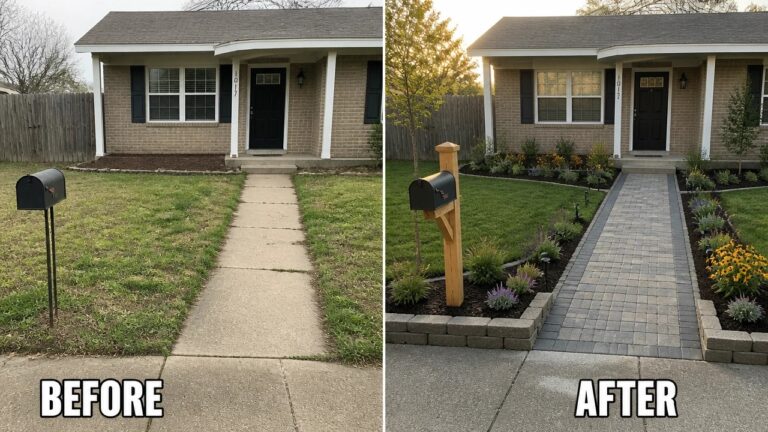
Outdoor spaces around a house often end up looking unfinished because the planting and paths develop without much planning.
I have found that focusing on structure like edging and simple pathways gives the whole yard a more settled look before anything else gets added.
A few layered shrubs can create privacy without blocking light or requiring constant upkeep.
Cleanup matters more than most people expect.
The ideas worth testing are the ones that build on what is already there rather than starting from scratch.
Add Structure With Pavers And Garden Beds
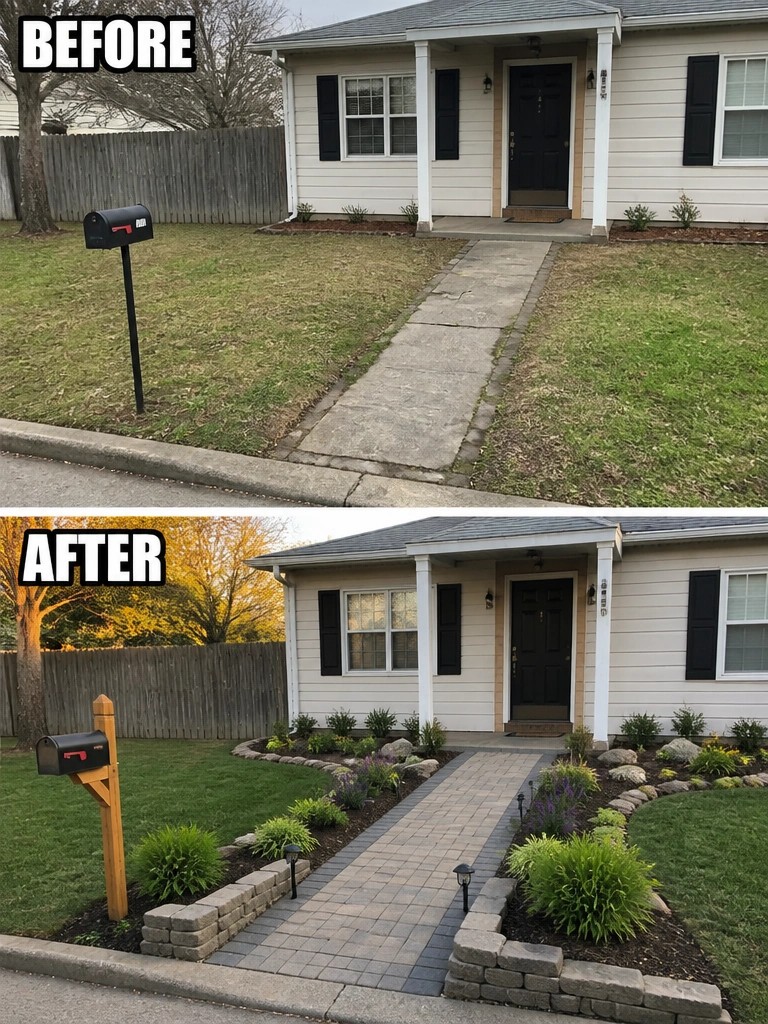
A plain front yard with just grass and a cracked walkway can look unfinished. Replacing the old path with pavers and adding low stone borders creates clear lines that make the whole space feel planned instead of leftover.
This approach works well on small or average lots where the lawn runs right up to the house. Start with the walkway and edging first, then fill the beds with simple shrubs and ground cover. Keep the plantings low near the path so the walk stays easy to use and the beds do not crowd the entrance.
Add Structure To An Overgrown Backyard
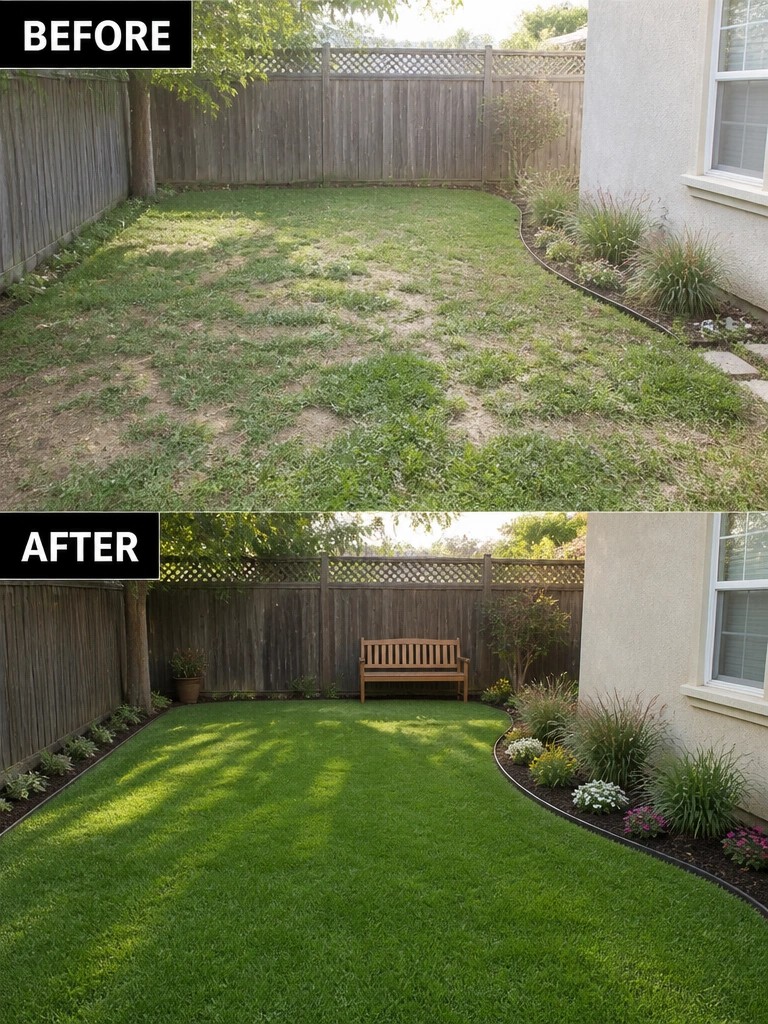
A patchy lawn with soft edges makes a backyard feel unfinished even when the fence and house are in good shape. The main change here was mowing and edging the grass into a clean shape, then adding a planted border that runs along the fence and house. That single step turned the space from scattered weeds into a clear lawn with purpose.
This idea works best in small yards where you do not want to add patios or big structures. Mow first, then mark a simple curve or straight line for the beds and fill them with low plants that stay contained. The result feels planned without much extra cost.
Define A Narrow Side Yard With A Stone Path
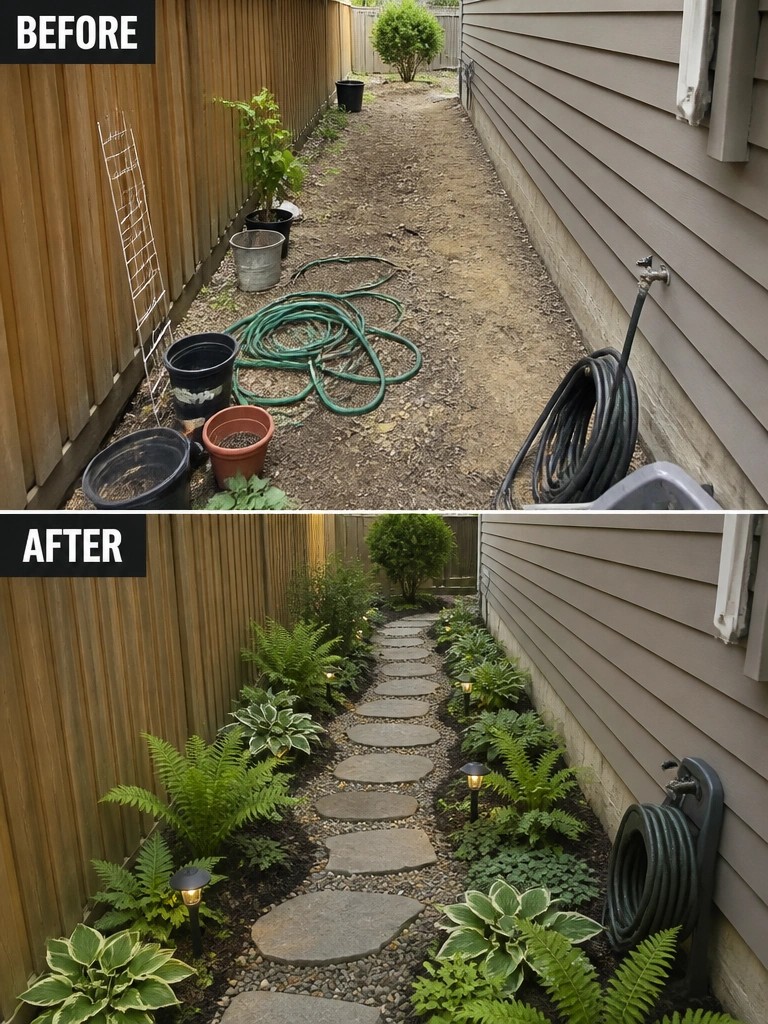
A narrow side yard often turns into a catch-all for hoses and empty pots when it has no clear purpose. Laying a simple stone path through the space gives it structure and turns the dirt strip into a usable walkway instead of an afterthought.
This idea works best in tight areas between a house and fence where traffic needs to move through cleanly. Clear the clutter first, then place stepping stones with gravel or mulch filling the gaps. Add low plants along the edges to keep the beds looking finished without crowding the path.
Define Foundation Beds With Mulch And Layered Planting
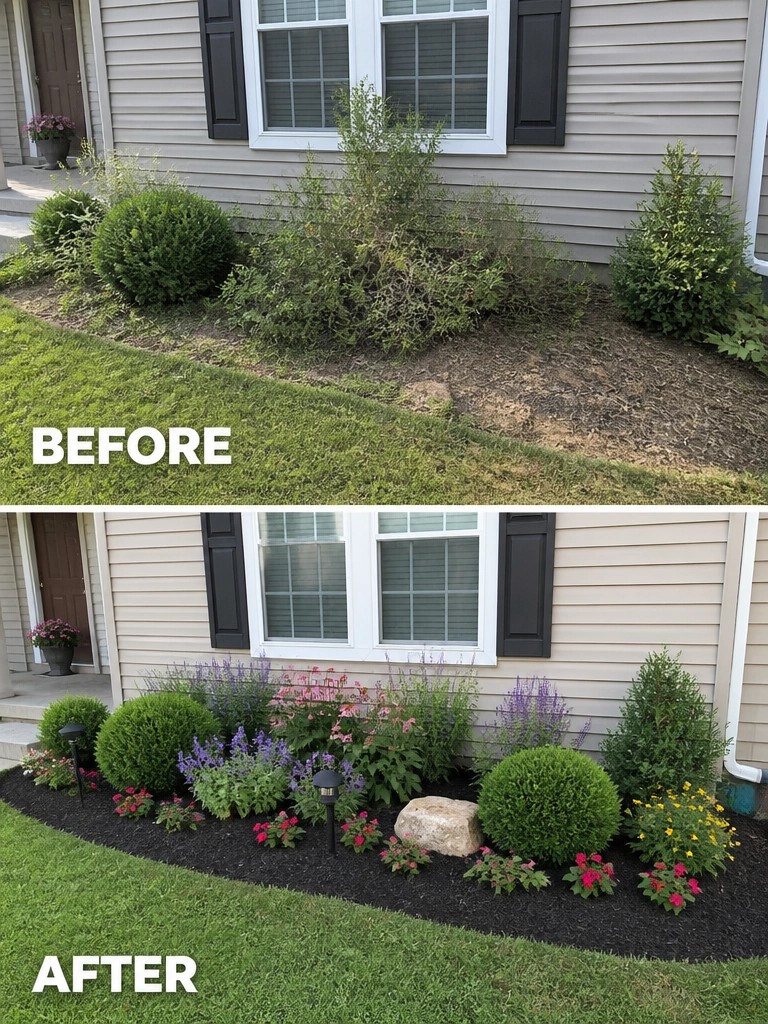
The main change here is clearing out the messy, overgrown shrubs and bare dirt along the house and replacing them with a clean edge, fresh mulch, and a simple mix of shrubs and flowers. This gives the whole front a much more finished look without needing major construction or new hardscaping.
This approach works well on any home where the foundation planting has gotten away from you. Start by removing the worst of the overgrowth, then lay down mulch to create a clear border. From there you can add a few different plant heights and colors so the bed feels full but still easy to maintain.
Add Terracing To A Sloped Yard For Usable Garden Space
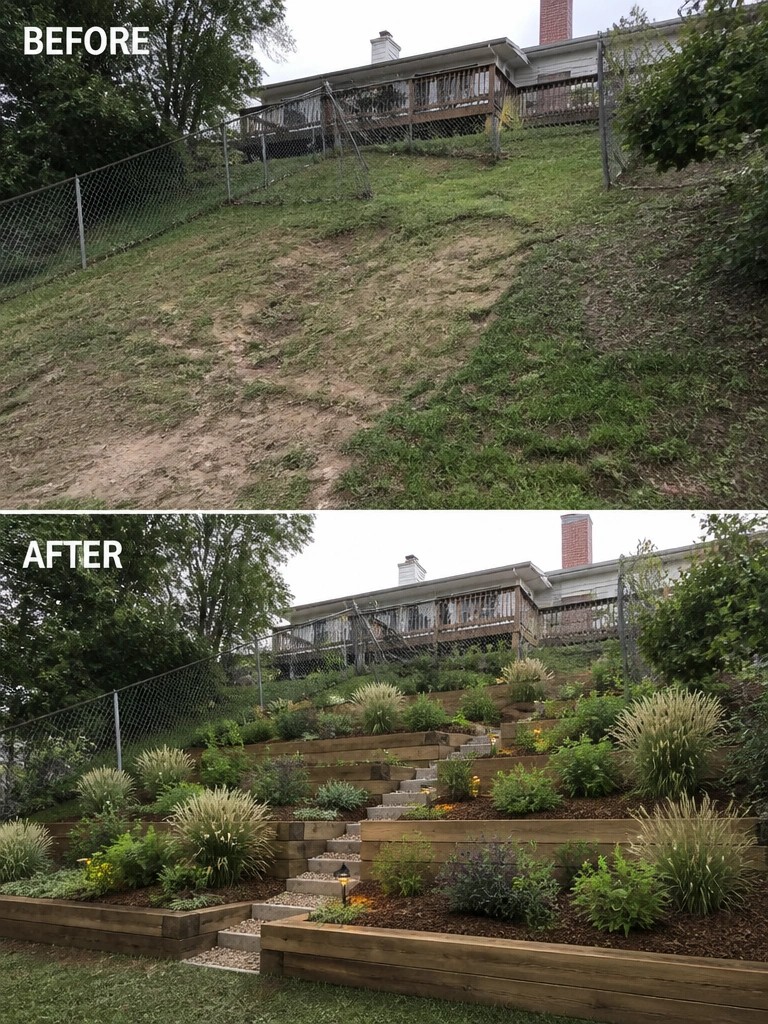
A steep backyard slope often ends up as a patch of bare dirt or patchy grass that is difficult to mow and easy to ignore. Adding low wooden retaining walls creates flat terraces that turn the hill into a series of stable planting beds.
This idea suits homes with noticeable grade changes where erosion or drainage is a concern. Plan the walls and steps first so the beds connect naturally and leave room to walk between them. Once the structure is in place, mulch and repeat plant groupings keep the slope looking intentional instead of overgrown.
Turn An Empty Patio Into A Seating Area
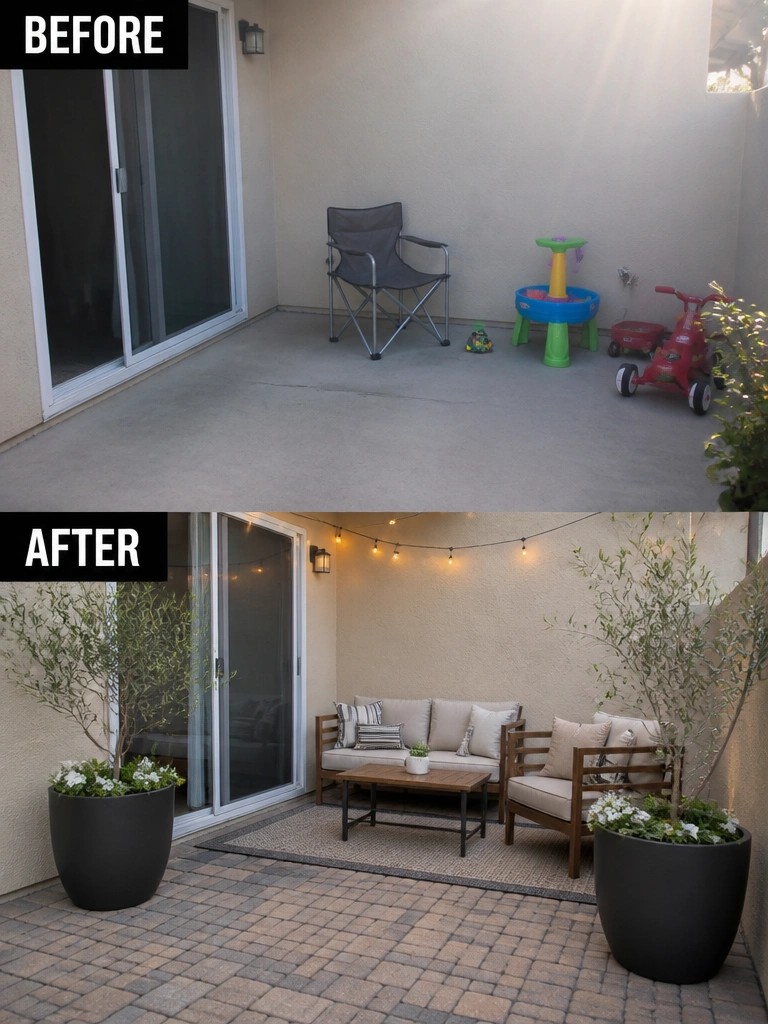
A bare concrete patio often feels like wasted space because there is nothing to anchor it. Replacing the plain slab with pavers and adding a simple seating group with a rug underneath creates a clear outdoor room that invites people to sit and stay.
This idea works best on small side yards or back patios where you want function without major construction. Keep the furniture scale modest, add a couple of large planters for softness, and run string lights overhead so the space feels usable after dark.
Trim Overgrown Shrubs To Open Up The Entry
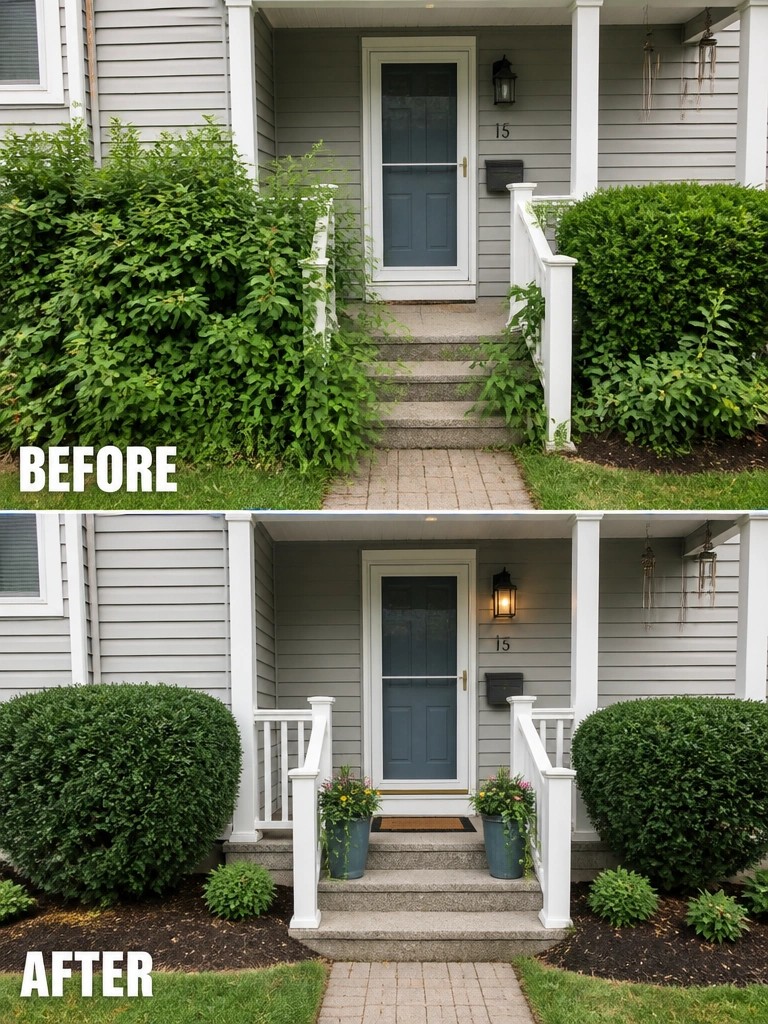
Overgrown shrubs can make even a simple front entry feel closed in and messy. In this case the wild growth on both sides of the steps was cut back into tight rounded shapes and the ground was cleaned up with fresh mulch and smaller border plants. The change immediately makes the door and steps feel more welcoming without any changes to the house itself.
This approach works well on older homes where foundation plantings have been left alone for years. Start with a hard prune or full removal of anything that blocks light or the walkway, then add a few potted plants near the door for color. Keep the shapes simple and repeat the same plant type on both sides so the entry stays balanced.
Build Raised Beds To Organize An Empty Yard
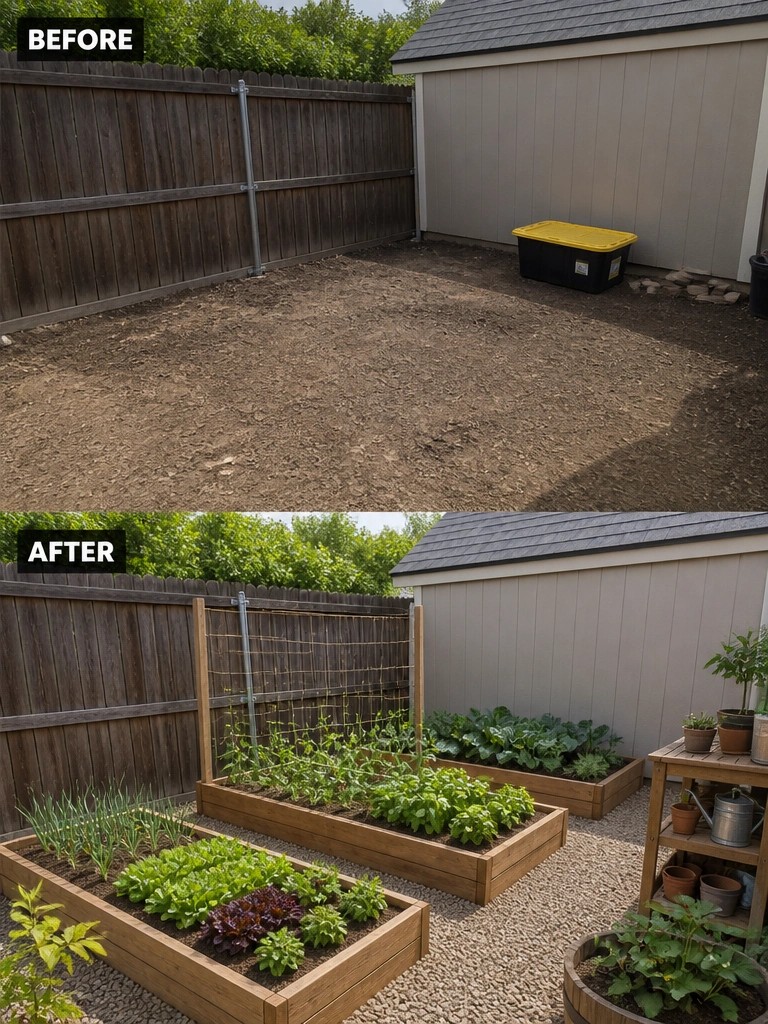
A bare stretch of dirt next to a shed often stays unused because there is no clear place to start. Raised beds solve that by giving the space edges and height so soil stays contained and plants have a defined home. The change from open ground to a few simple wooden boxes turns the area into something that feels intentional instead of leftover.
This idea suits small or narrow yards where you want vegetables or herbs without digging up the whole lawn. Keep the beds a consistent size and material so they read as one group rather than scattered boxes. Gravel or mulch between them helps with drainage and makes weeding easier later on.
Add Structure To A Narrow Side Yard
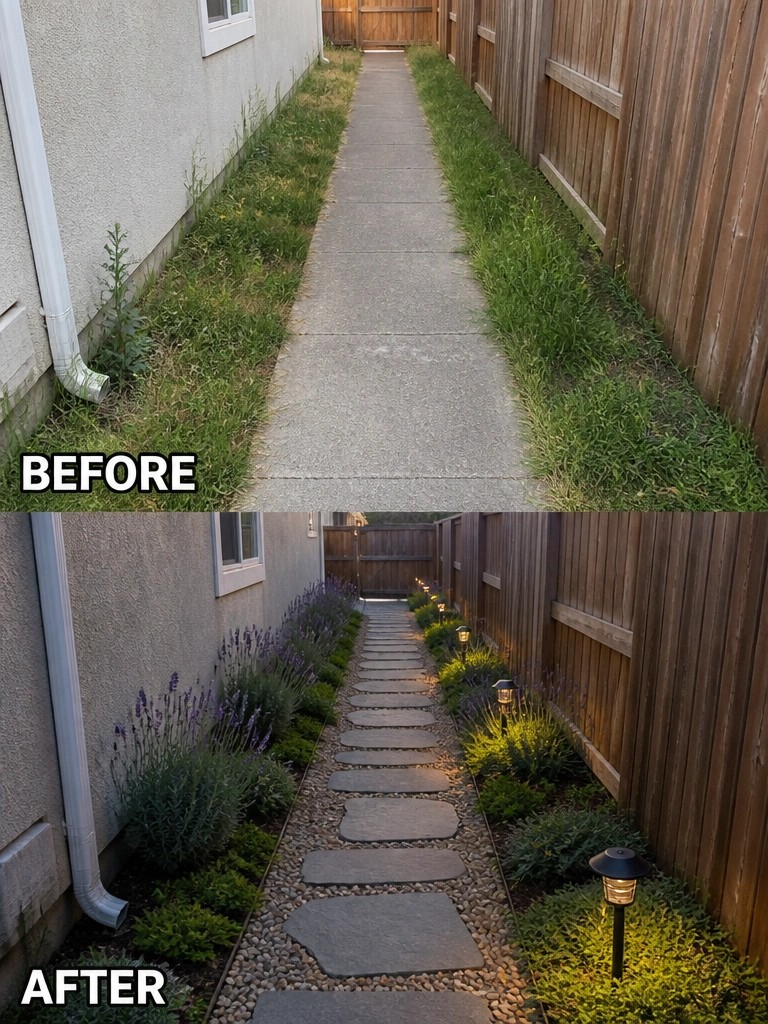
A narrow side yard often becomes the part of the property that gets ignored. The concrete path stays, but the edges turn into a strip of weeds and patchy grass. Replacing that with a clear path of stepping stones set in gravel and simple border planting turns the space into something that looks intentional instead of leftover.
This idea works on any long, tight area between a house and a fence. Keep the planting low and repeat the same few plants so the walk stays open and easy to maintain. Gravel or a similar filler helps control weeds and gives the whole path a cleaner edge without needing a big budget.
Add Defined Garden Beds To An Overgrown Border
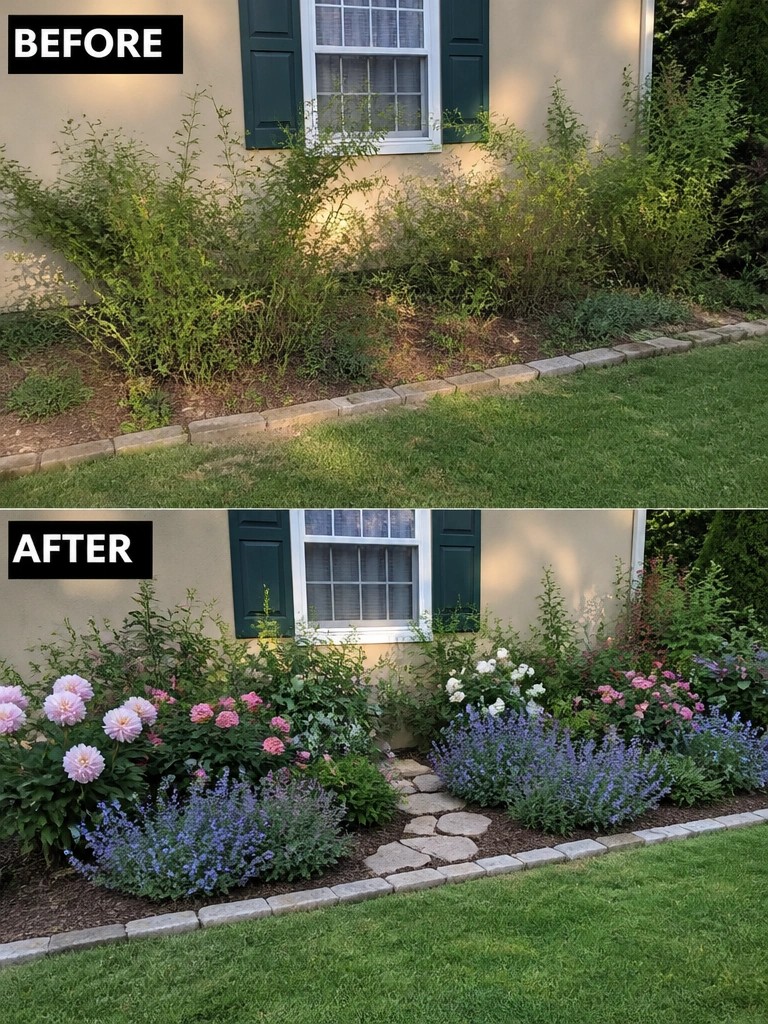
Overgrown foundation plantings often end up looking messy because the shrubs spread without any clear shape. Adding stone edging, fresh mulch, and a simple planting layout turns the same strip of ground into something that looks planned rather than neglected.
This idea works best along the front of a house where the beds are seen every day. Start by removing the old growth, set a firm edge, and choose plants in a few different heights so the bed feels full without becoming crowded.
Use Lighting To Make A Patio Feel Cozy
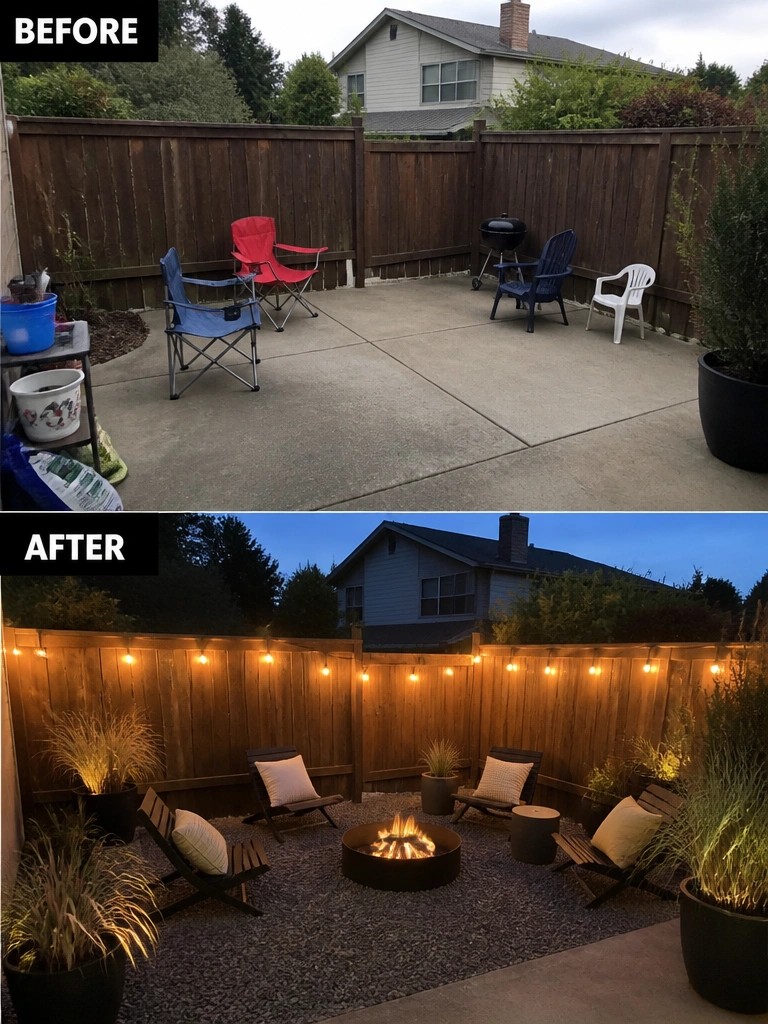
A plain concrete patio often stays unused after dark because it feels empty and exposed. Adding a simple string of lights along the fence and centering the space around a fire pit gives the area a clear purpose and makes it comfortable to sit outside once the sun goes down.
This approach works best on patios that already have a fence or wall to hang lights from. Keep the seating low and weatherproof, and use gravel or pavers to define the sitting zone so it feels separate from the rest of the yard. Start with the lights and one focal point like a fire pit before adding more furniture.
Define A Narrow Side Strip With Rocks And Planting
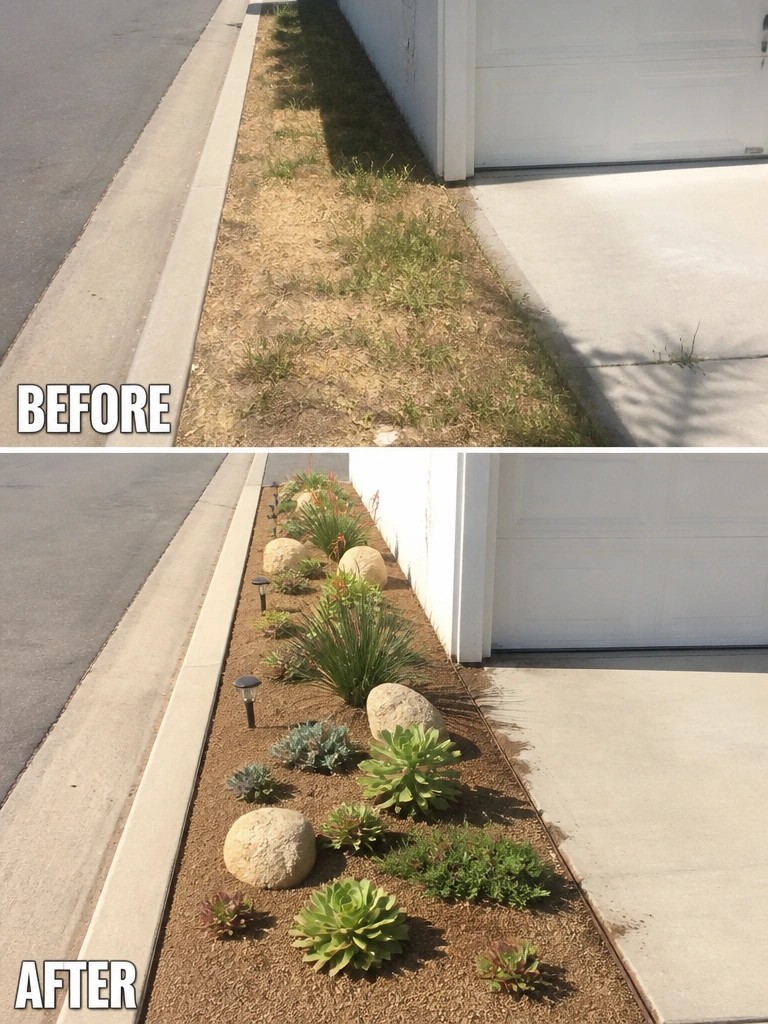
A long strip between the house and driveway often gets ignored because it feels too thin for real planting. Clearing the weeds and adding a few large rocks gives the space instant shape. Filling in with succulents and a handful of taller plants then turns the bare dirt into a clean border that leads the eye down the side of the house.
This idea works best on homes where the side yard is mostly functional rather than a main seating area. Start with the rocks first so the bed feels grounded, then add plants that can handle the sun and stay low. Repeat the same few plant types instead of mixing too many varieties.
Add Structure Along A Fence With Trellises And Planters
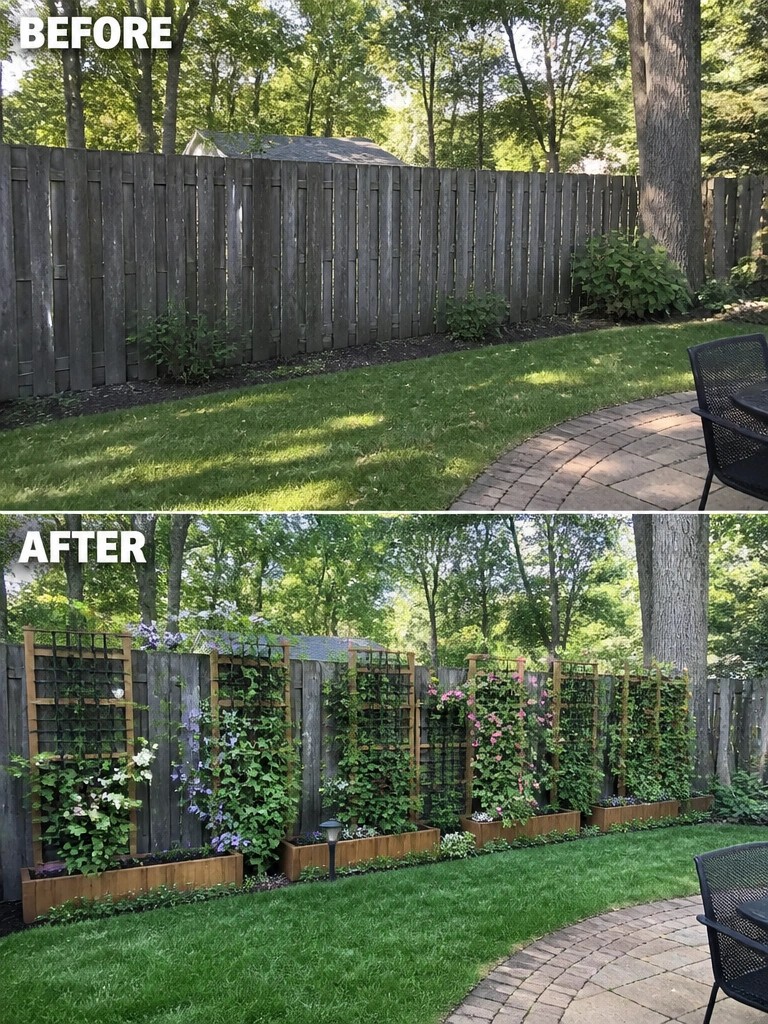
A plain fence line often leaves the edge of a yard feeling unfinished. Adding a row of trellises with climbing plants and simple raised beds creates clear shape and brings the planting up to eye level. The before photo shows just grass meeting a bare fence, while the after shows how repeating the same trellis style and wood tone turns the whole border into one connected feature.
This idea works best in yards where the fence is already in decent shape but needs more presence. Start by placing the beds and trellises at even spacing, then choose vines that will cover the grids without constant trimming. It keeps the lawn open while giving the fence a finished look that still feels like part of the garden.
Add Structure To An Overgrown Backyard
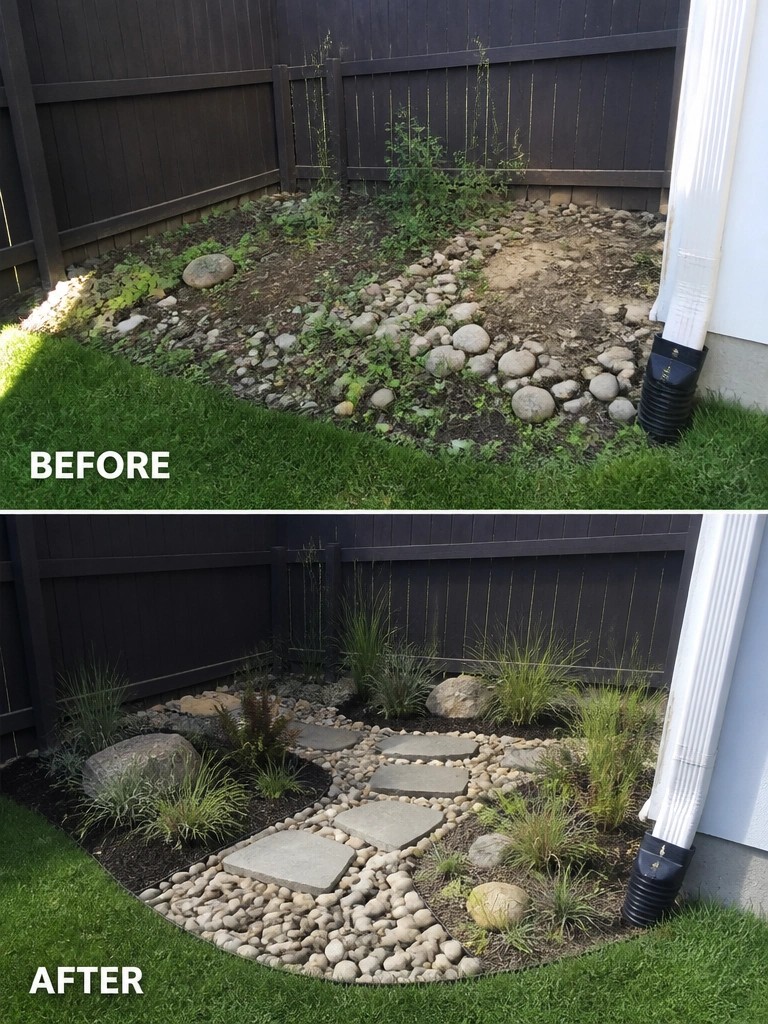
A messy corner often stays that way because there is no clear layout to follow. Adding stepping stones and defined beds gives the space a purpose and makes it easier to maintain over time.
This works best in small yards where you want to keep some lawn but still create order. Outline the beds first, then add a simple path before planting. The result feels planned without needing a full redesign.
Add A Raised Planter And Lattice For Privacy
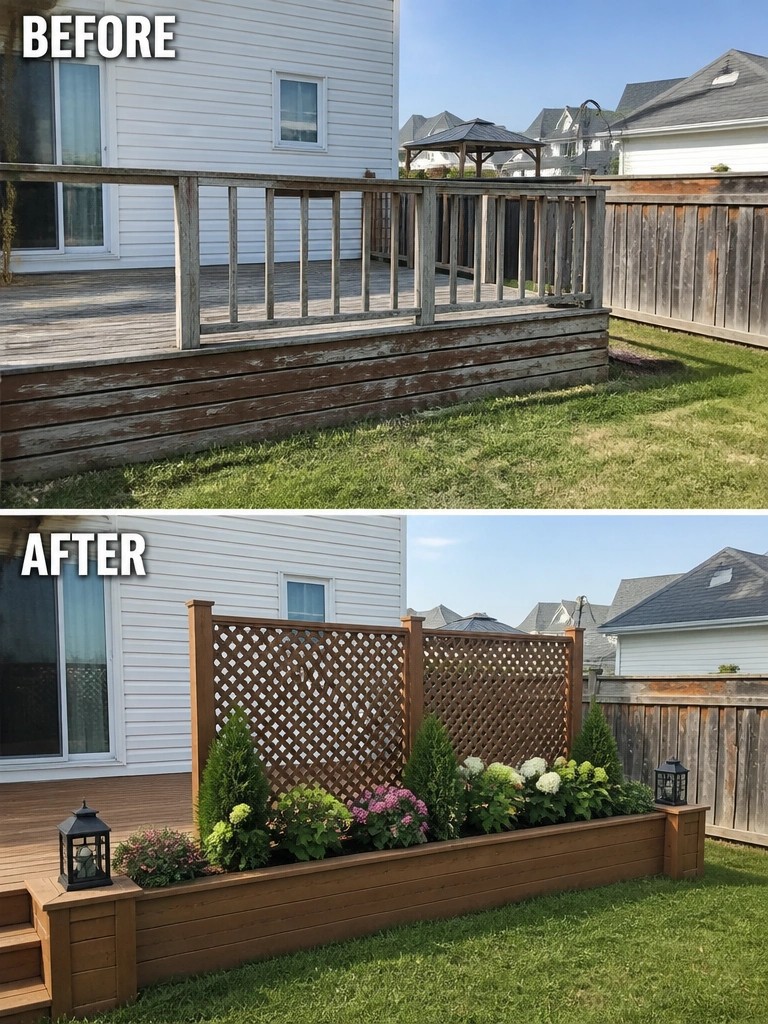
A plain deck edge next to open lawn often feels unfinished. In this case the change came from adding a raised planter with a lattice screen on top. That one addition gave the space clear boundaries, blocked the view of the neighbor’s yard, and let the planting look intentional instead of scattered.
The same approach works on most decks or patios that sit right against a fence or open lawn. Keep the planter height low enough that it does not block light into the house, and choose lattice that matches the deck stain so the whole thing reads as one built feature rather than separate pieces. Start with the structure first, then fill in the plants.
Create A Pollinator Garden In Your Backyard
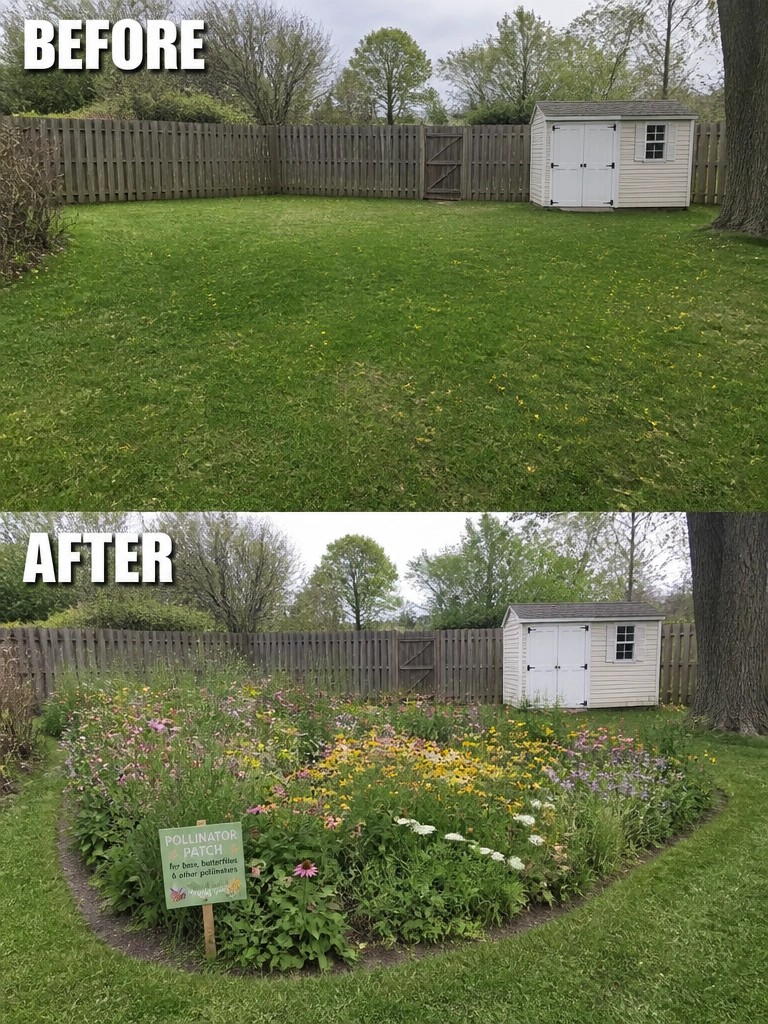
A large empty lawn can feel unfinished even when it is neat. Adding one defined garden bed filled with flowers gives the space a clear purpose and brings in color and movement without needing to rework the whole yard.
Start by marking out a simple shape in the grass and planting a mix of native flowers that support bees and butterflies. Keep the bed a manageable size at first so it stays easy to maintain, and use a small sign if you want to mark the area as a pollinator patch. This approach works well in backyards that already have a fence and shed, since the new bed adds interest while leaving most of the lawn open for other uses.
Add Structure To A Bare Sloped Path
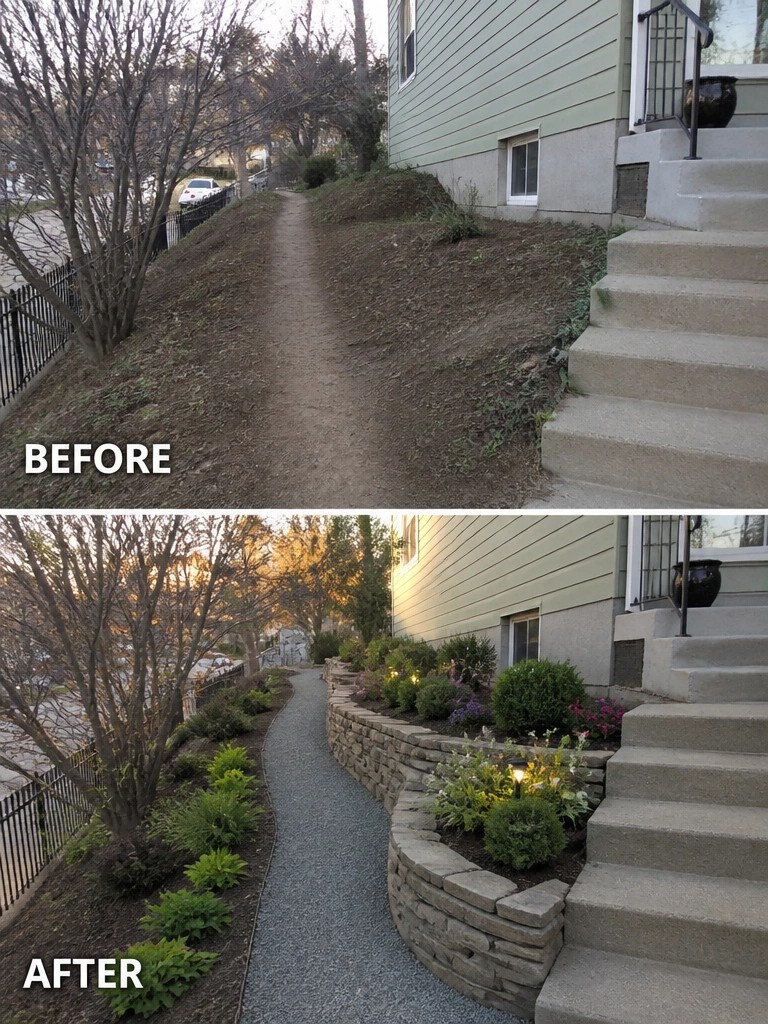
A dirt path running down a slope tends to look unfinished and can wash out over time. Low stone retaining walls solve this by holding the soil in place and creating real garden beds along the edges, while gravel gives the path a clean surface that stays usable in any weather.
This idea works best on properties where the land drops away from the house and you want planting space without a big grading project. Keep the beds fairly narrow at first so the path still feels open, and choose plants that can handle the sun exposure on your slope.
Add Landscape Lighting To Define The Front Walk
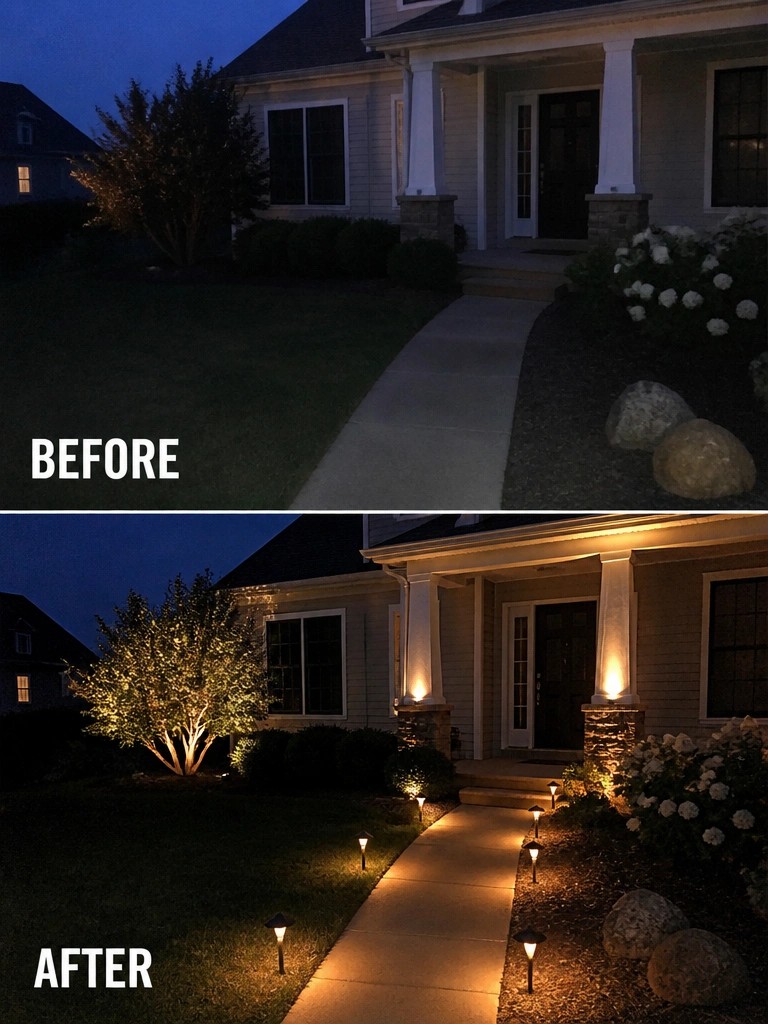
Many front yards look unfinished at night because the path and plantings disappear into the dark. Adding a few low path lights along the walkway and a couple of uplights on key trees or shrubs gives the whole space structure and makes the entry feel intentional.
This approach works especially well on houses where the front walk is the main feature you want to emphasize. Start with solar or low-voltage lights placed every few feet along the path, then add one or two accent lights at the base of a tree or in a bed. Keep the spacing even and avoid over-lighting so the effect stays calm rather than harsh.
Turn A Bare Patio Into An Outdoor Seating Area
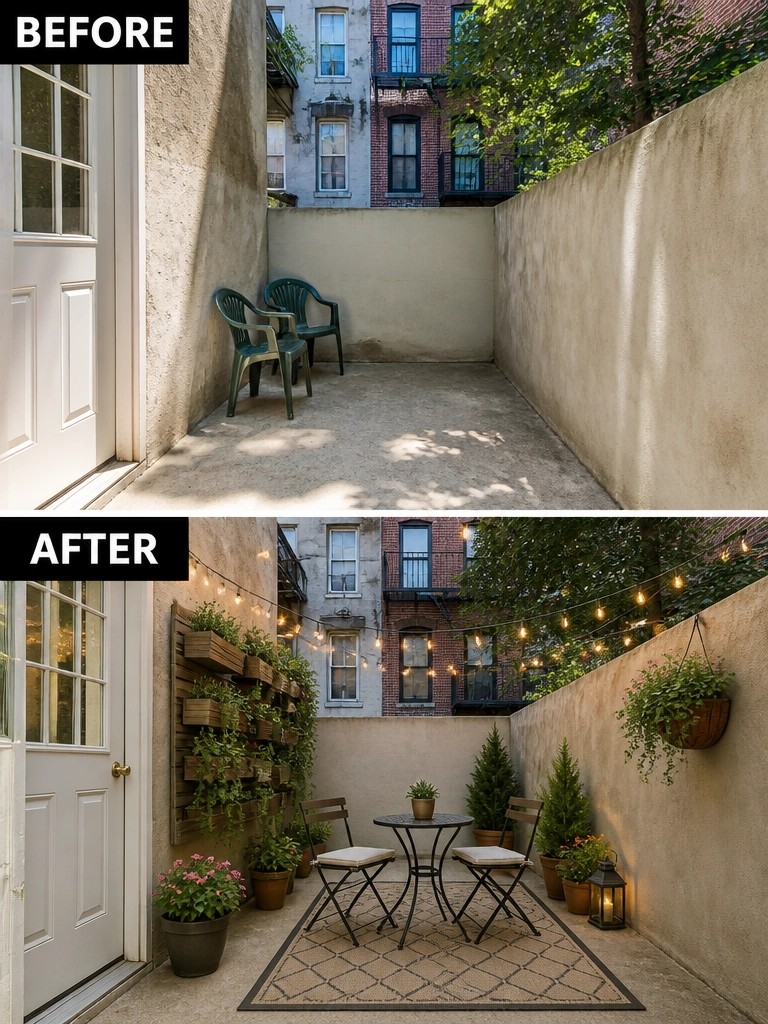
A plain concrete courtyard often feels unfinished because there is nothing to show where people should sit or spend time. Adding a rug, a small table with chairs, and string lights gives the space a clear purpose without needing major construction. The rug anchors the seating zone while the lights make the area usable after dark.
This approach works well in small urban yards or side courtyards where space is limited. Start with a weatherproof rug and a few pieces of furniture that fit the scale of the area, then add simple lighting and a few plants. Keep pathways clear so the space still feels open rather than crowded.
Use Pavers To Give A Pool Area More Structure
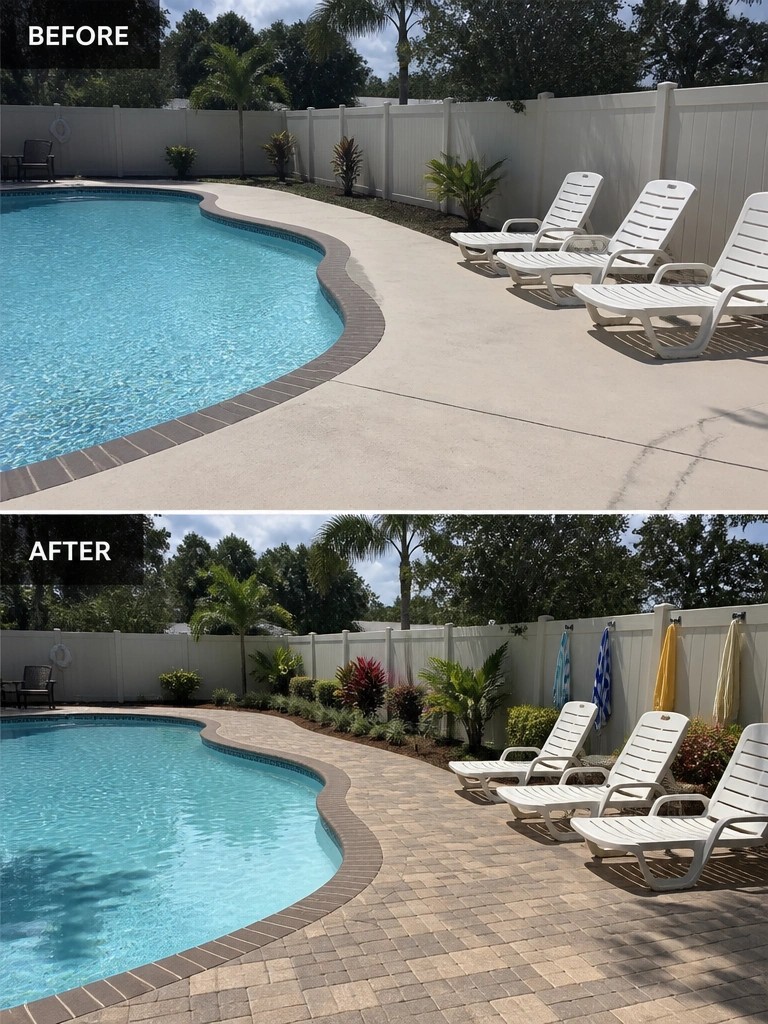
A plain concrete deck next to a pool often looks unfinished even when the pool itself is nice. Switching to pavers creates clear edges and a more intentional surface while the added planting beds soften the fence line and give the space a settled feel.
This approach works well on any pool deck that feels too open or bare. Start with the hard surface first, then add a few planted borders along the fence or house. Keep the plant choices simple and repeat a few varieties so the beds look planned rather than scattered.
Add Stone Facing To A Retaining Wall
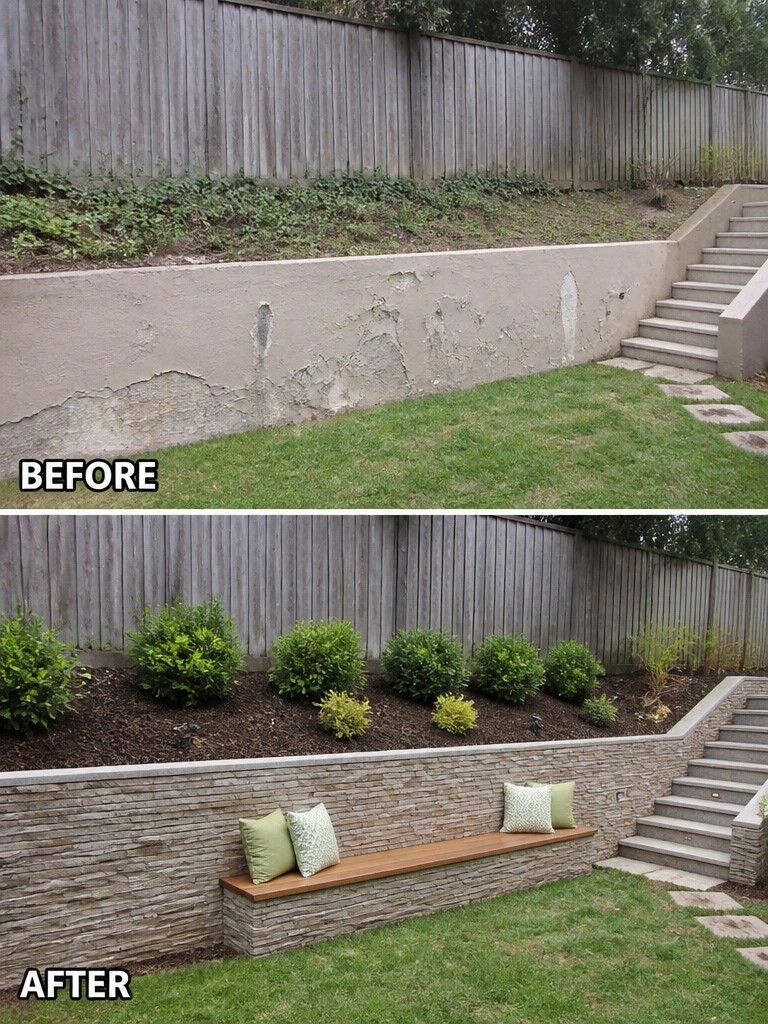
A plain retaining wall often stands out in a negative way once the rest of the yard is cleaned up. Covering it with stacked stone gives the wall texture and helps it blend into the garden instead of interrupting it. The addition of a planted border along the top further softens the line and creates a clear edge between the lawn and the slope above.
This approach works best in smaller yards where the wall takes up a lot of visual space. Keep the planting simple with low shrubs and mulch so the stone remains the main feature, and make sure the bench or seating stays in scale with the wall so the area does not feel crowded.
Create Organized Storage For Garden Tools
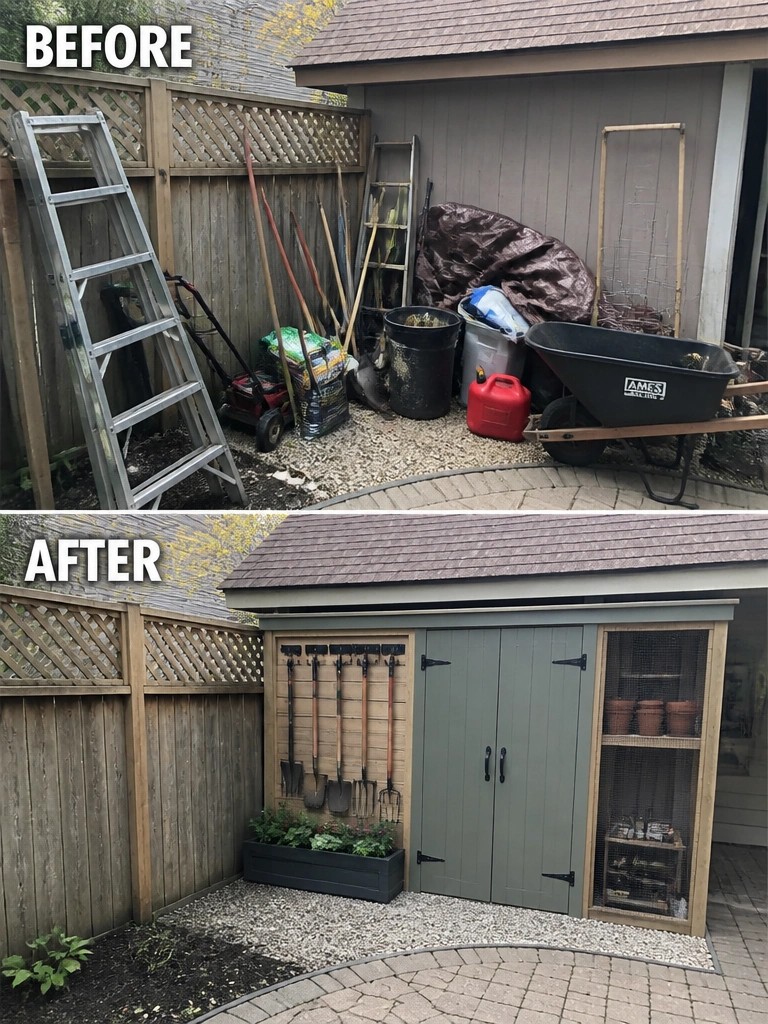
A cluttered corner full of leaning ladders and scattered tools makes the whole yard feel unfinished. Adding a simple storage wall and a closed shed turns that same spot into a clean, functional area where everything has a place and the ground stays clear.
This approach works best in smaller yards or side yards where tools get used often. Hang the most common items on a wall rack so they stay easy to grab, and keep the rest behind doors to protect them from weather. Start with the storage first before adding plants or seating, since a tidy base makes the rest of the yard look more intentional.
Add Hedges To Give A Front Lawn More Structure
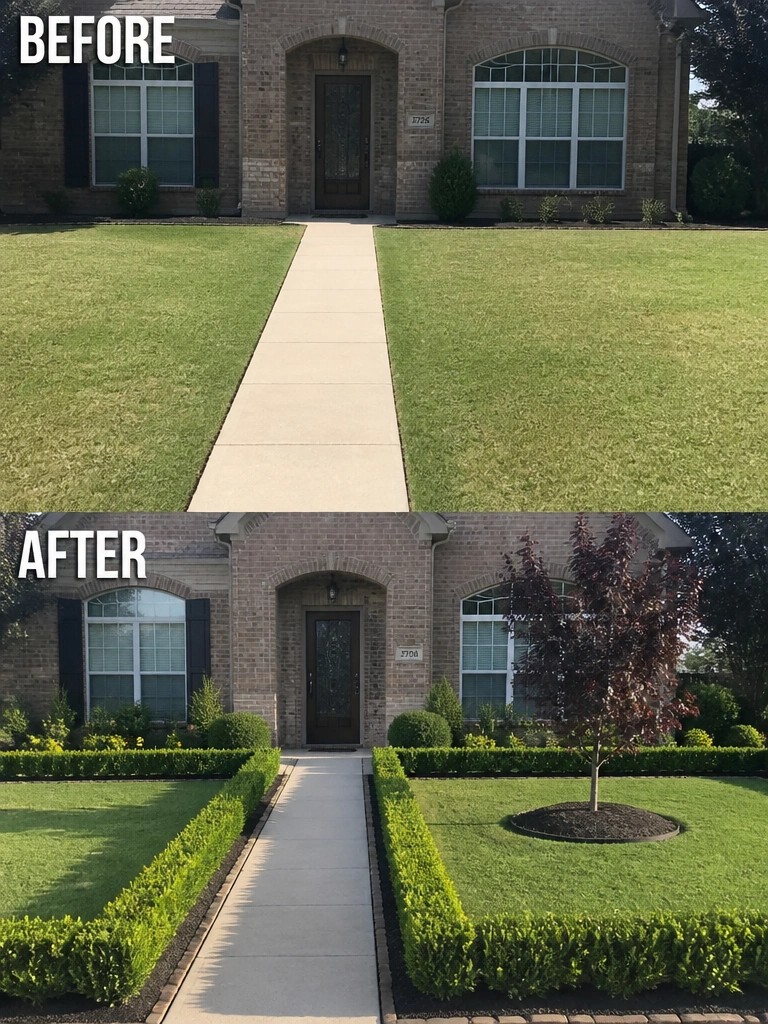
A wide open lawn with nothing but a straight path can look unfinished even when the grass is healthy. In this case the change came from adding low hedges along both sides of the path and around the lawn edges, plus one small tree set in a simple mulched circle. Those borders turn the same yard into something that feels planned instead of empty.
This approach works well on houses with a clear walkway from the street. Keep the beds narrow so the lawn still feels open, and choose evergreen shrubs that stay low and neat. Start by marking the edges with a hose or string before you dig, and make sure the beds are wide enough for the plants to grow without crowding the path.
Add Stone Edging Around A Pond
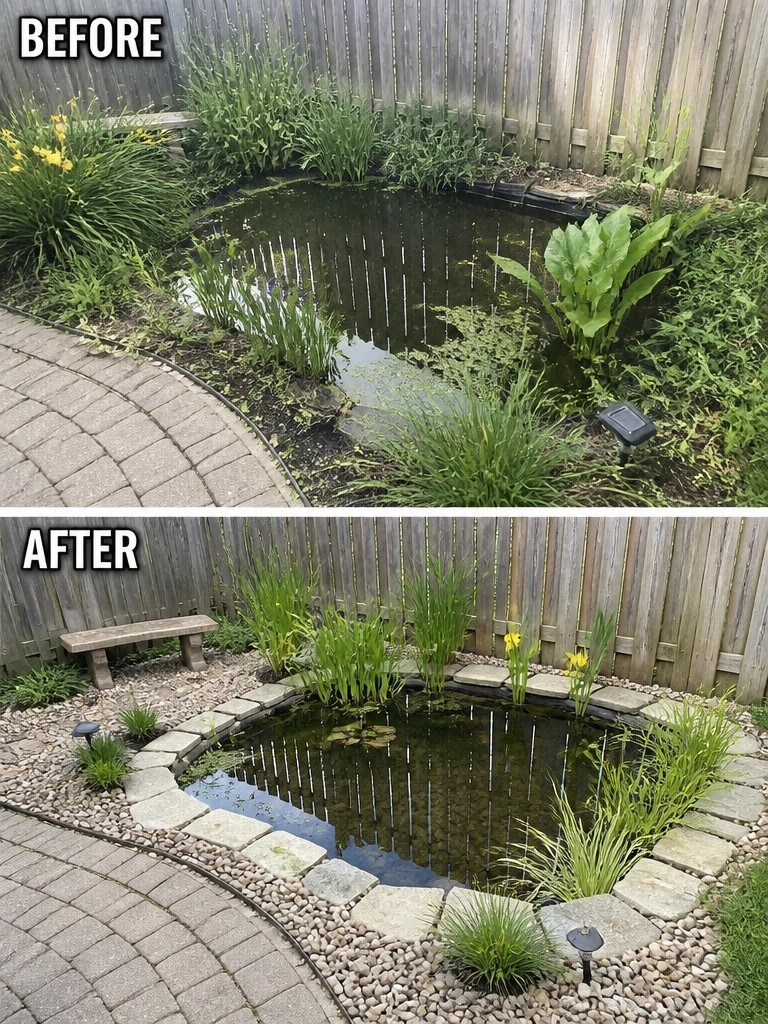
One simple way to improve a backyard pond is to give it clear edges. The before photo shows an overgrown water feature with plants spilling in from all sides and no real boundary. Adding a line of flat stones and a gravel border around the pond creates a neat frame that keeps everything in place and makes the water look intentional rather than neglected.
This approach works well in smaller yards where the pond is a main feature. Start by clearing excess growth and deciding on the shape you want. Then lay pavers or stones that match the scale of the space. The result feels more finished without needing major construction or new plants.
Frequently Asked Questions
Q: When should I start if winters hit hard where I live?
A: Plan your layout in late winter when you can see the bare space clearly. Order plants and materials for early spring so roots settle before summer heat arrives. This timing cuts down on extra watering too.
Q: How do I keep a small yard from feeling crowded with new beds and paths?
A: Stick to two or three repeating plant shapes instead of mixing lots of varieties. Leave open grass or gravel pockets between features so the eye can rest. That breathing room makes everything feel bigger without extra work.
Q: What if my dog tears up new mulch every time he runs through?
A: Lay down heavier river rock in the paths he uses most. It stays put better than wood chips and still looks finished. Check the edges after a week or two and tuck any loose spots back in place.
