

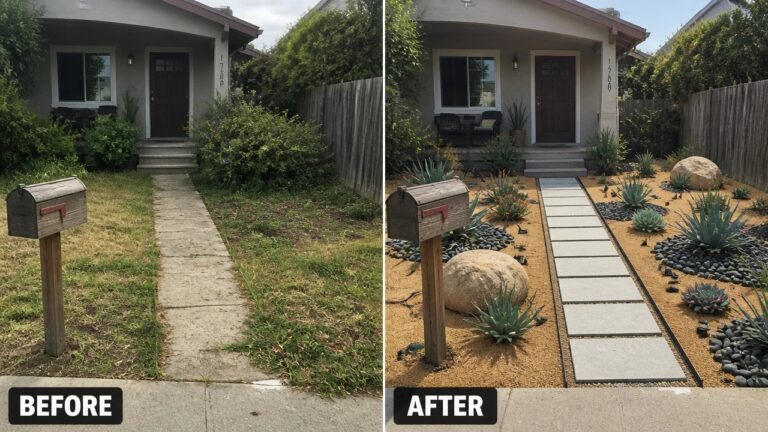
Many yards lose their shape when edges blur and plantings spread without much structure over the years.
I find that starting with basic cleanup and defined borders creates more lasting order than adding extra features.
These adjustments build gradually and make the space feel more settled without a full redesign.
Simple fixes often come first for me.
Some of the ideas worth testing involve rethinking how paths and lawn areas divide the yard rather than just planting more.
Clean Up An Overgrown Yard With Gravel And Simple Borders
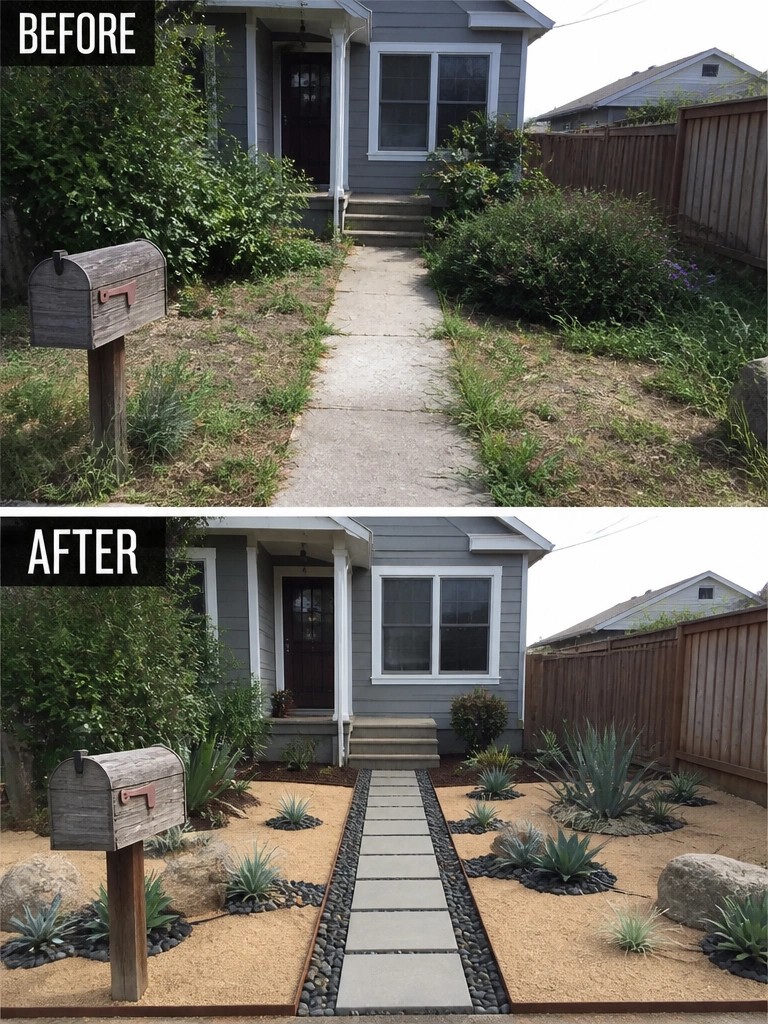
The front yard shifted from uneven grass and weeds to a gravel surface with clear rock borders around the plantings. This single change gives the space a much tidier look and makes the walkway feel more intentional.
Gravel and defined beds work best in smaller front yards that get little foot traffic. Clear the old growth first, add a barrier, then lay the gravel and group a few tough plants together rather than spreading them out. This approach keeps maintenance low and helps the yard feel more structured without needing constant mowing.
Add Structure To An Overgrown Backyard
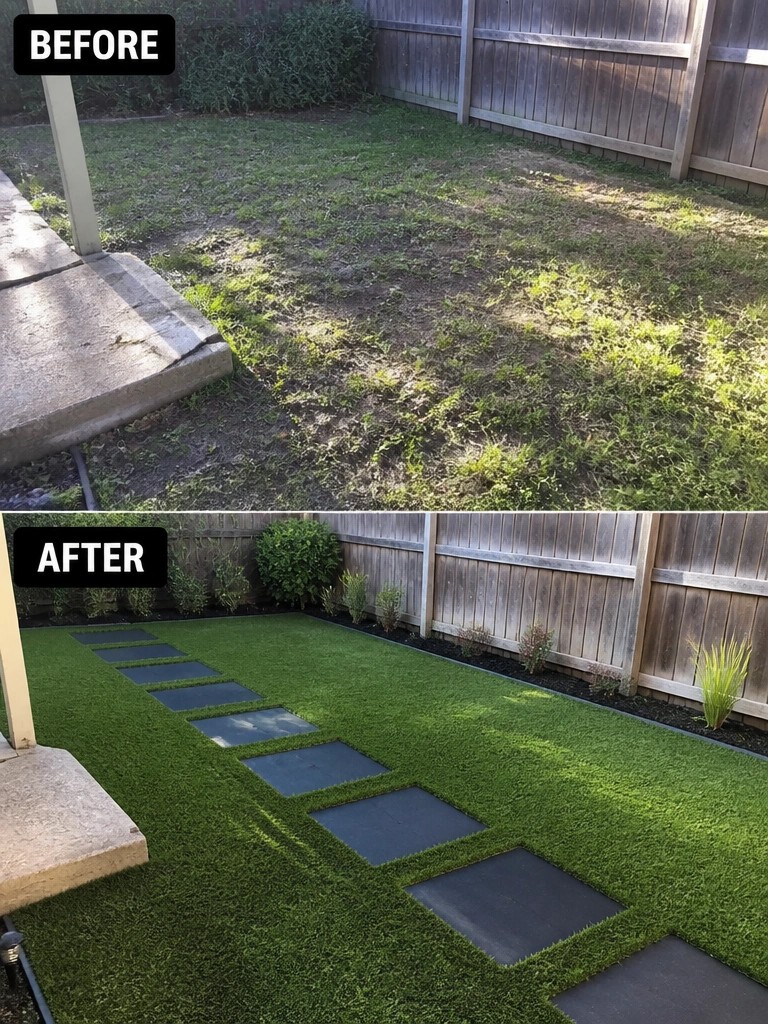
A patchy lawn often feels unfinished because there is no clear way to move through it. Adding a straight line of stepping stones gives the space direction right away. The new turf then fills in the rest, so the yard looks uniform instead of scattered.
This works best in smaller yards where you want the lawn to stay open but still feel planned. Place the path first, then plant along the edges so the beds stay neat. It keeps foot traffic contained and makes mowing or maintenance simpler later on.
Use Pavers To Create Structure
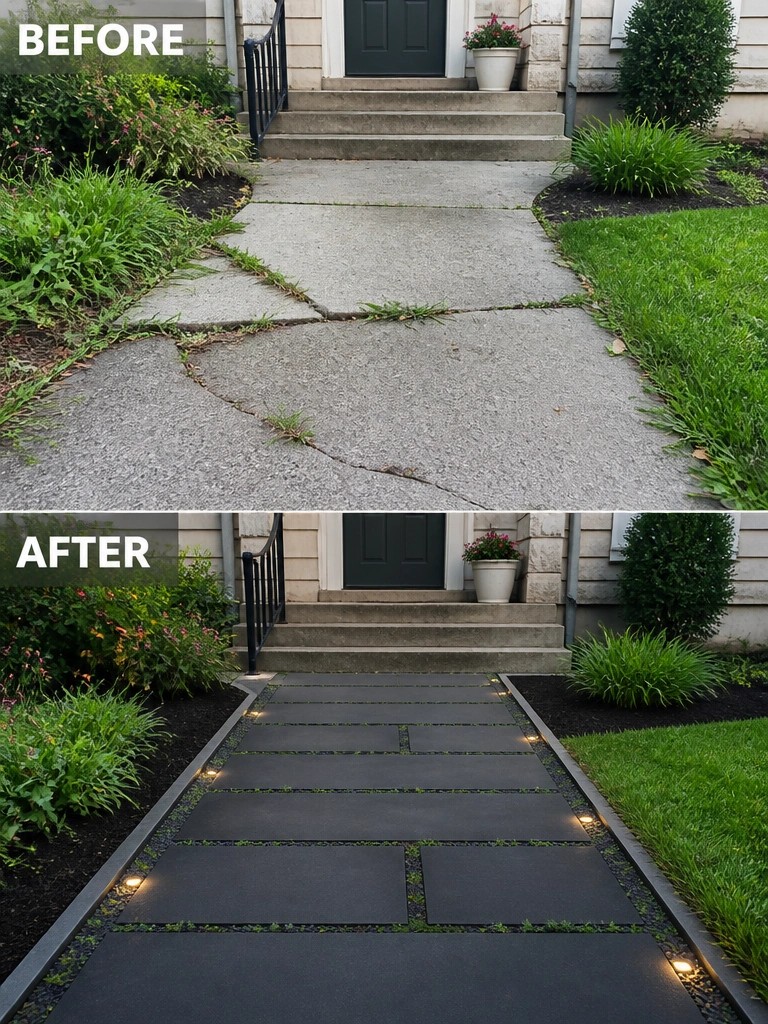
A cracked and uneven concrete path makes the whole front yard feel neglected. Switching to dark pavers laid in a simple grid gives the walkway a clear shape and instantly makes the entrance look intentional.
This approach works best on older homes where the original path has shifted or grown weedy. Keep the pavers in one consistent color and add a narrow gravel border on each side so water drains and weeds stay down. The same idea can be used on side paths or small courtyard areas without needing a full redesign.
Add Structure To An Overgrown Side Yard
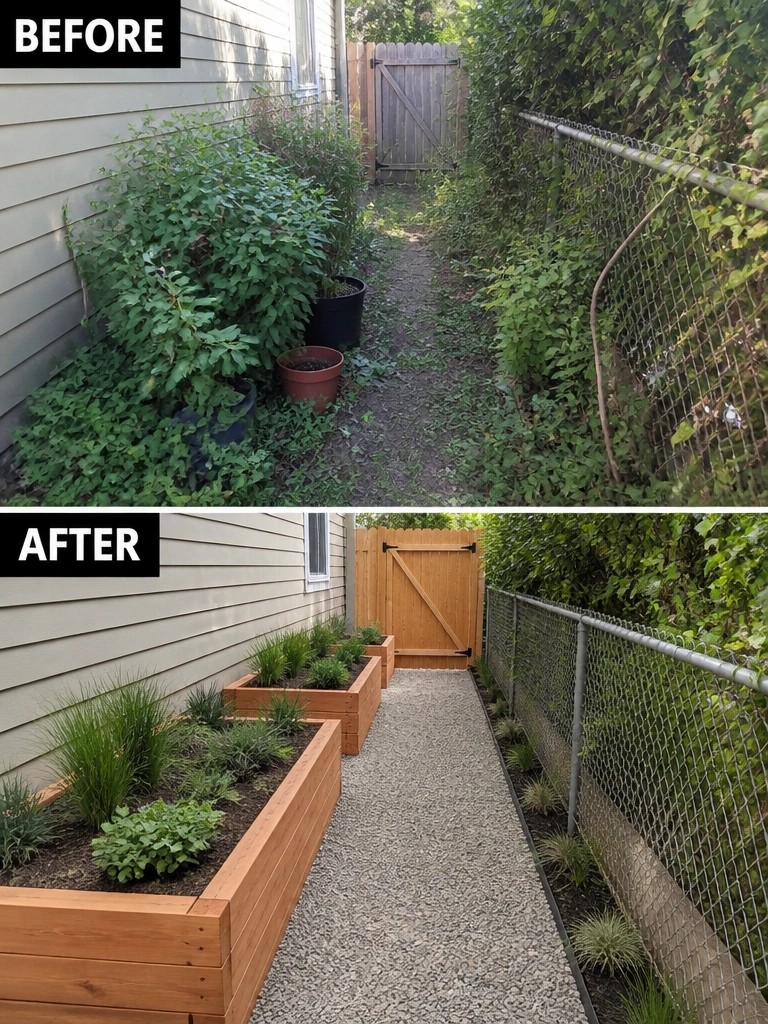
A narrow side yard often turns into a catch-all for random pots and unchecked growth. The main change here was replacing that loose mess with a few long raised beds and a clean gravel path. The beds give the plants a clear home while the gravel keeps the walkway dry and easy to maintain.
This approach works best on tight lots where grass is hard to keep and full landscaping feels like too much. Start with the path and beds first, then fill them with simple repeats of the same plants. It keeps the space looking planned without crowding the walkway or blocking access to the gate.
Define Garden Beds With Simple Edging
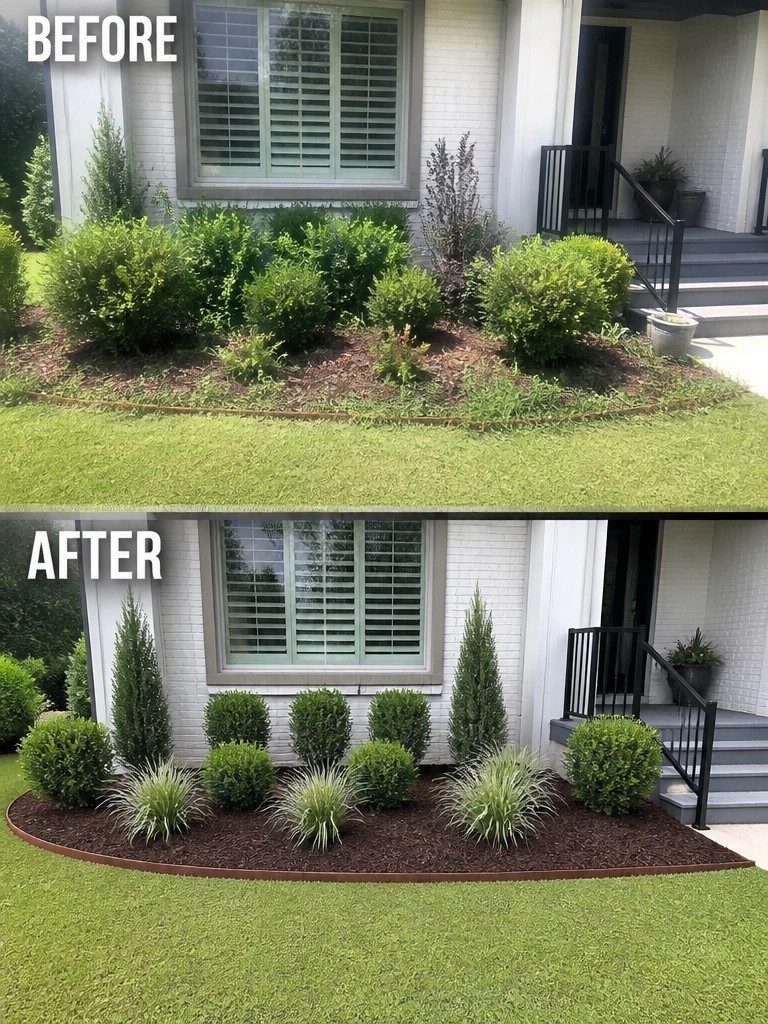
A front bed that has grown out of control often looks worse than a bare one. Adding a clean metal edge and a layer of mulch gives the planting a clear shape so the house does not feel swallowed by random shrubs. The result is a yard that reads as intentional instead of neglected.
This idea works on almost any home where the beds have lost their lines. Cut back the worst overgrowth first, set a simple border that follows the house or lawn, then mulch so the remaining plants sit neatly inside the new shape. The change stays low cost and can be done in a weekend.
Add Structure With A Fence Line Planter
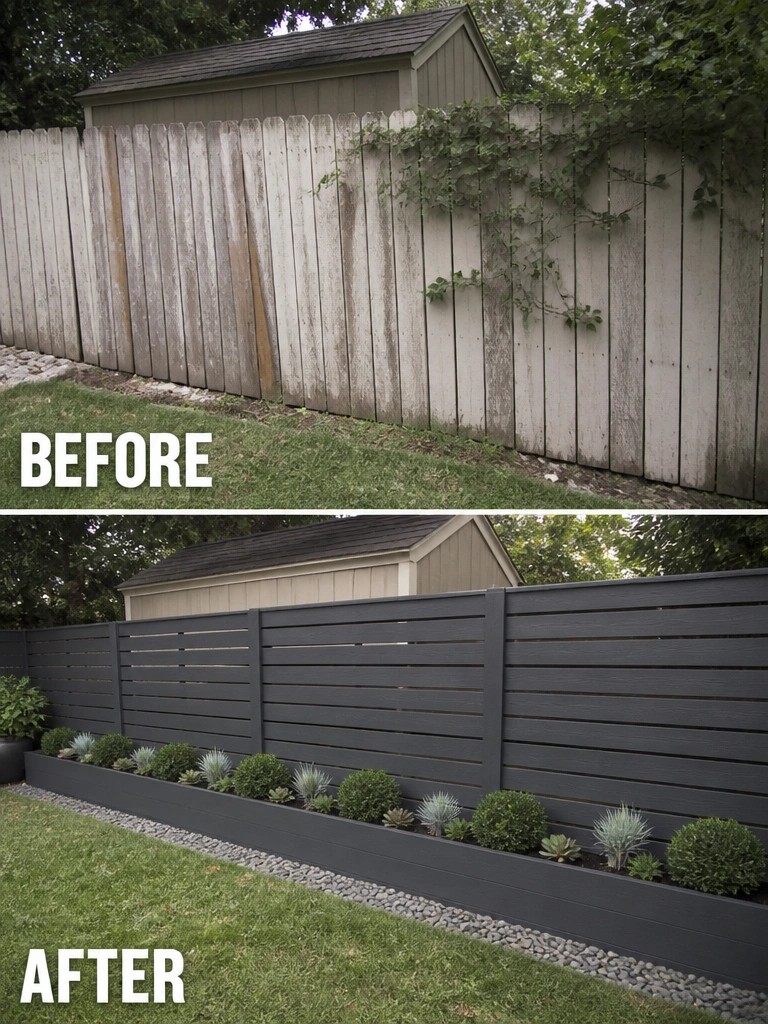
A tired fence can make the whole yard feel neglected. Replacing the old vertical boards with a horizontal style and adding a long built-in planter at the base gives the space a much cleaner line. The gravel edge and simple row of plants keep the bed from looking messy while still softening the fence.
This idea works best along side yards or back property lines where you need order without taking up much room. Keep the planting simple and repeat the same few plants so the bed stays easy to maintain. Focus on the bed and edging first before you decide on a new fence.
Add Structure To A Sloped Backyard
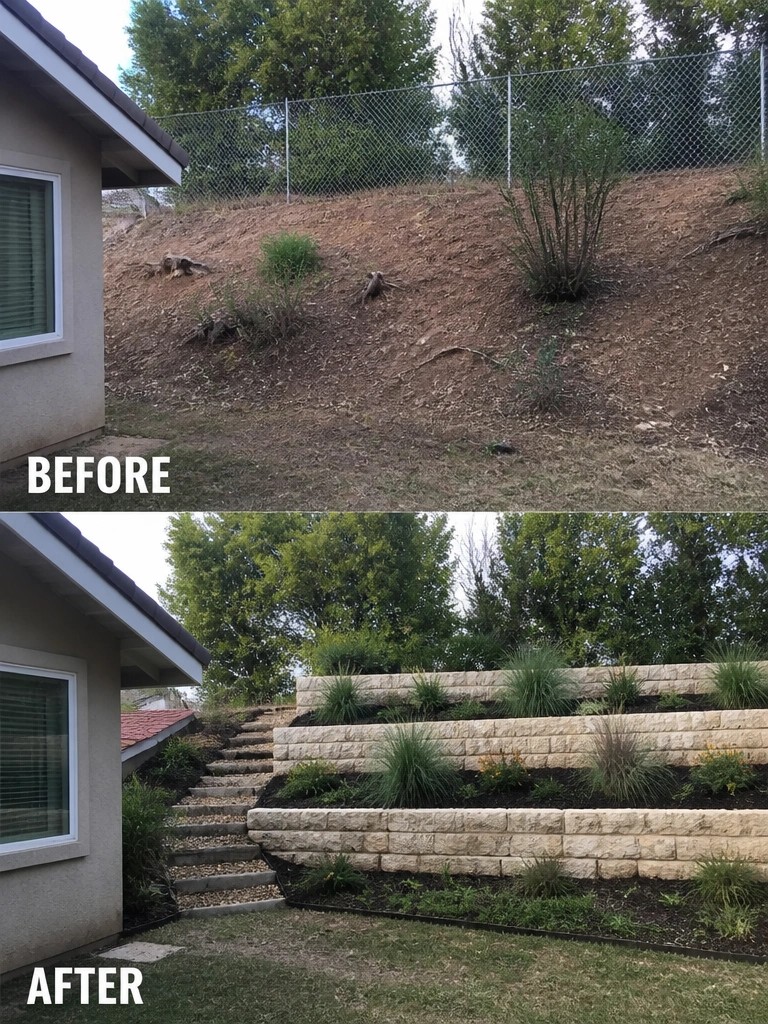
A bare dirt slope next to the house often looks messy and hard to use. Adding terraced retaining walls turns that slope into flat planting areas that stay in place and give the plants room to grow without washing away.
This approach works best on yards with noticeable drop-offs where grass or simple planting never quite takes hold. Start with the walls to create the shape, then fill the beds with low-maintenance plants that suit your climate. The result feels more intentional and keeps the area from looking neglected.
Turn A Cluttered Patio Into A Defined Seating Area
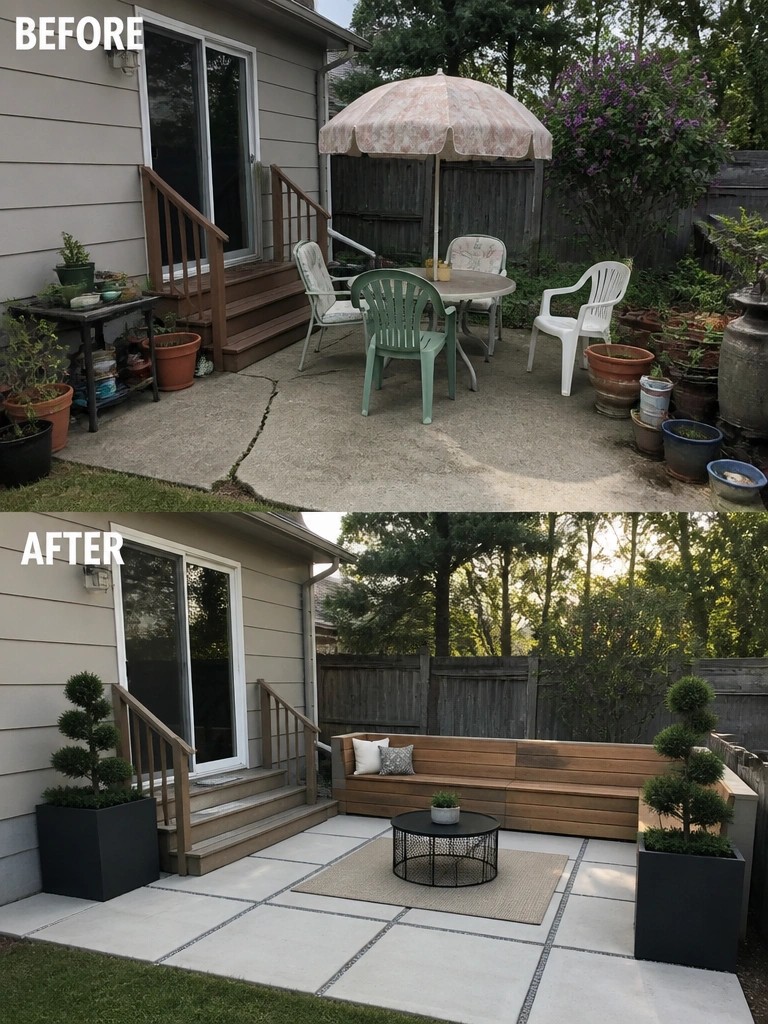
A patio full of mismatched chairs and scattered pots rarely feels like a place to sit. Replacing the loose furniture with a built-in bench and laying out large pavers gives the space clear edges and a single purpose. The result is an outdoor room that actually invites people to stay instead of just passing through.
This approach works best on a flat concrete slab that already has decent access from the house. Keep the bench simple and weatherproof, then add just a couple of large planters at the corners to frame the seating without crowding the middle. A single rug and small table are usually enough to finish the layout.
Define The Lawn Edge With Shrubs And Gravel
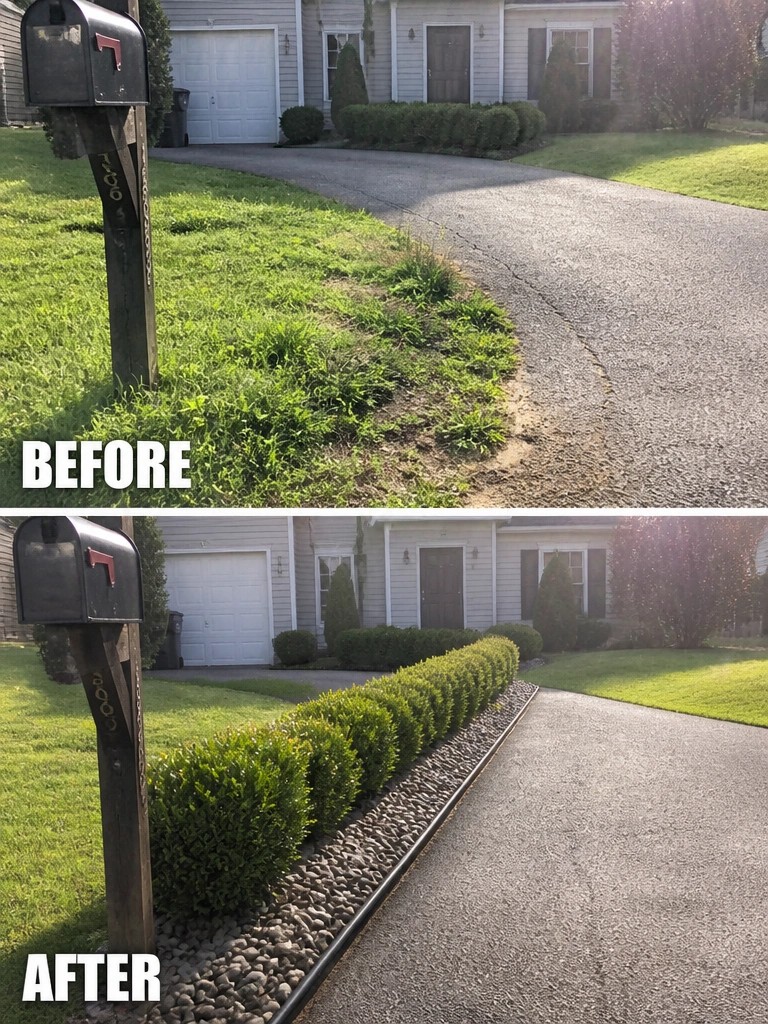
The main change here is turning a ragged strip of weeds and grass along the driveway into a straight, planted border. A simple line of low shrubs set in gravel stops the lawn from creeping onto the pavement and gives the whole front a much tidier shape.
This approach works best on properties where the lawn runs right up to a driveway or walkway. Clear the overgrowth first, then install a firm edge and repeat one type of shrub so the line stays consistent. It keeps things looking neat without adding a lot of extra plants or features.
Add Structure To An Overgrown Path
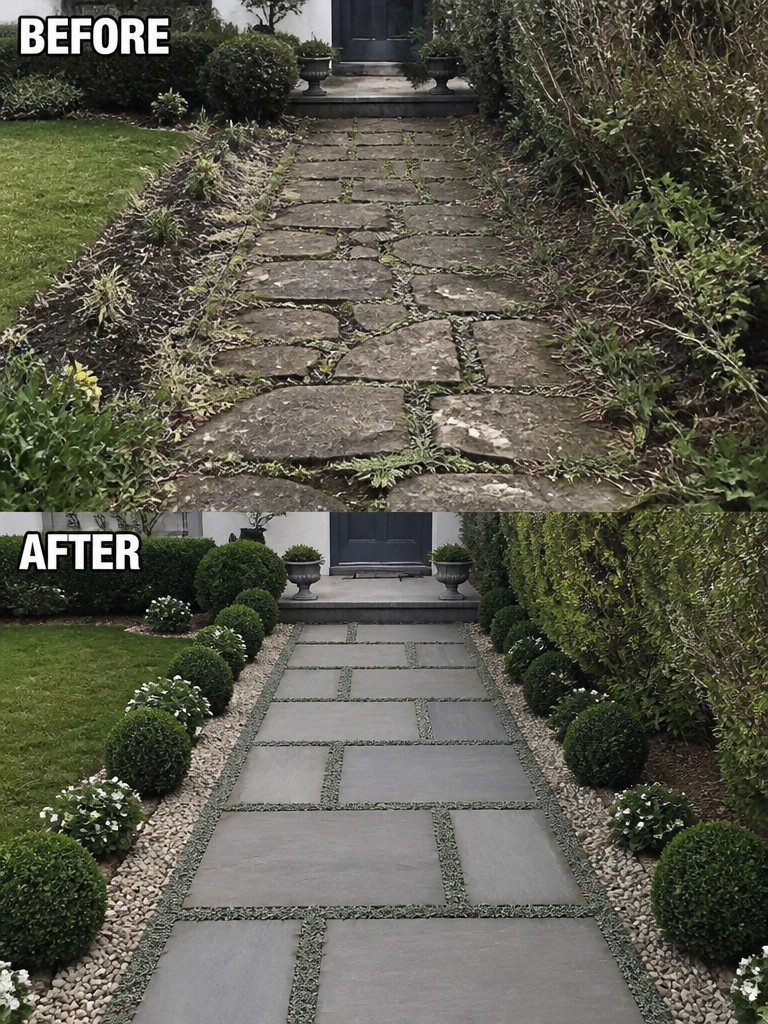
An overgrown path quickly starts to look neglected once the edges blur and plants spill onto the stones. The simplest fix is to add clear borders using gravel and low shrubs so the walkway stays visible and easy to follow. This change alone makes the whole area feel intentional instead of messy.
The idea works best on narrow side paths or front walkways where you want low maintenance without losing the natural look. Start by clearing the overgrowth, then lay gravel along both sides and repeat one or two compact plants for rhythm. Keep the planting simple so the path remains the main feature.
Add Matching Planters To Frame The Front Steps
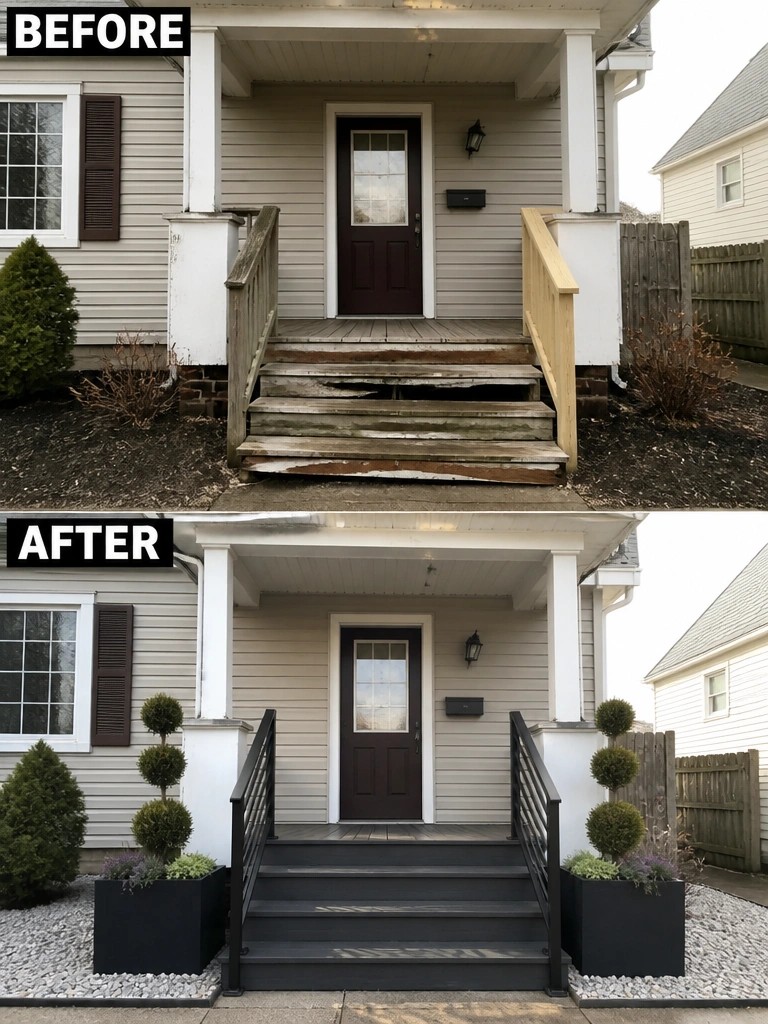
The biggest difference here comes from replacing the worn wooden stairs and railings with a solid dark set and then placing two large matching planters on either side. That simple move takes a messy, uneven entry and gives it clear lines and balance. The gravel beds underneath the planters also help keep the ground looking tidy instead of just bare mulch and scattered plants.
This approach works well on any small front yard where you want structure without a full redesign. Start with two identical planters in a dark finish, fill them with something tall and rounded like the shrubs shown, and keep the rest of the planting low and even. It keeps the focus on the door while making the whole entrance feel intentional and easier to maintain.
Define The Space Around Trees With Mulch And Edging
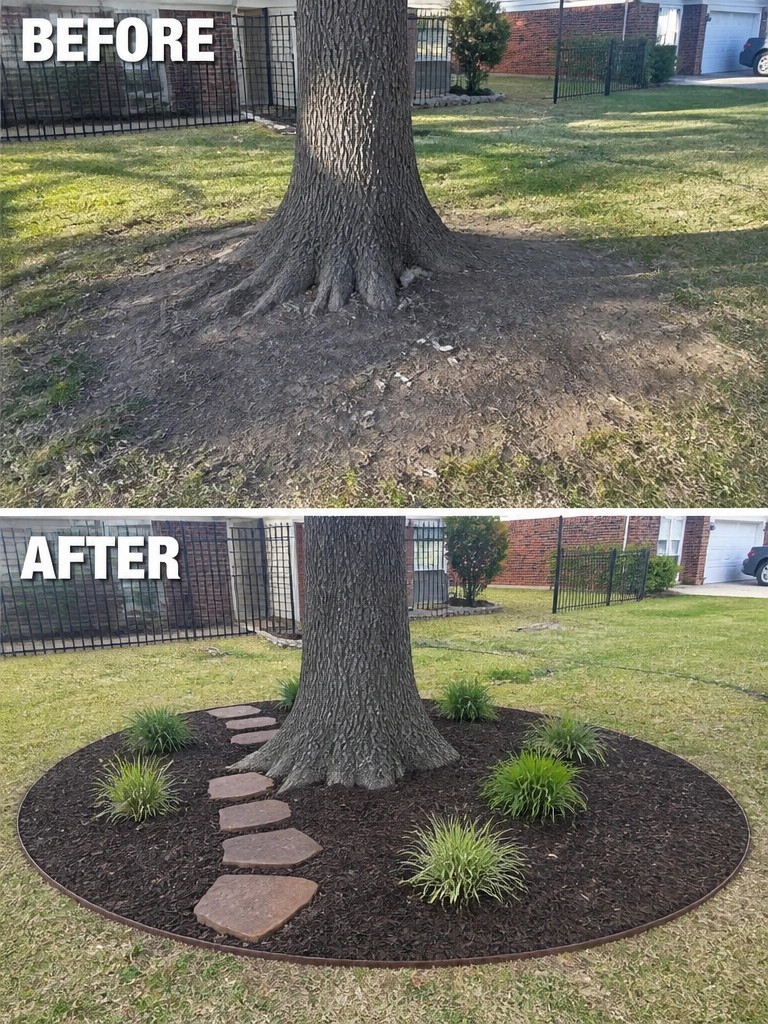
A bare patch of dirt and weeds under a tree makes the whole yard look unfinished. Adding a simple ring of mulch with a metal edge creates a clear border that keeps grass out and gives the tree its own space. The stepping stones and a few plants turn the spot into something intentional instead of just empty ground.
This works well in any yard where trees sit in the middle of the lawn. Start by clearing the area, then install edging and lay down a few inches of mulch. Keep the planting light so the bed stays easy to maintain and does not crowd the tree roots.
Add Structure To An Overgrown Garden Bed
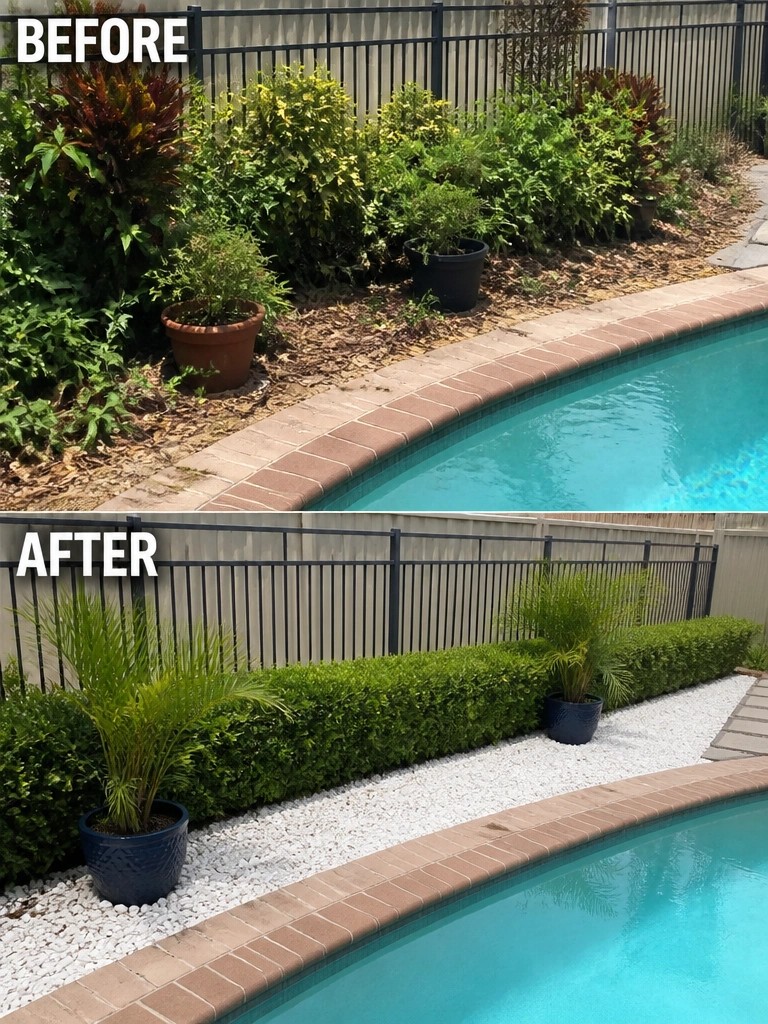
The before photo shows a messy mix of shrubs and pots sitting right against the pool with no clear edge. The after version replaces that with a low, even hedge and a layer of white gravel that runs in a straight line. The change makes the whole area look planned instead of neglected.
This idea works best when you want a simple, low-maintenance border next to hard surfaces like pools or paths. Clear out the old plants first, put in a uniform hedge, and use gravel to hold the shape and reduce weeds. It suits yards that already have clean fencing or paving and just need the planting to match.
Add Structure To An Overgrown Backyard
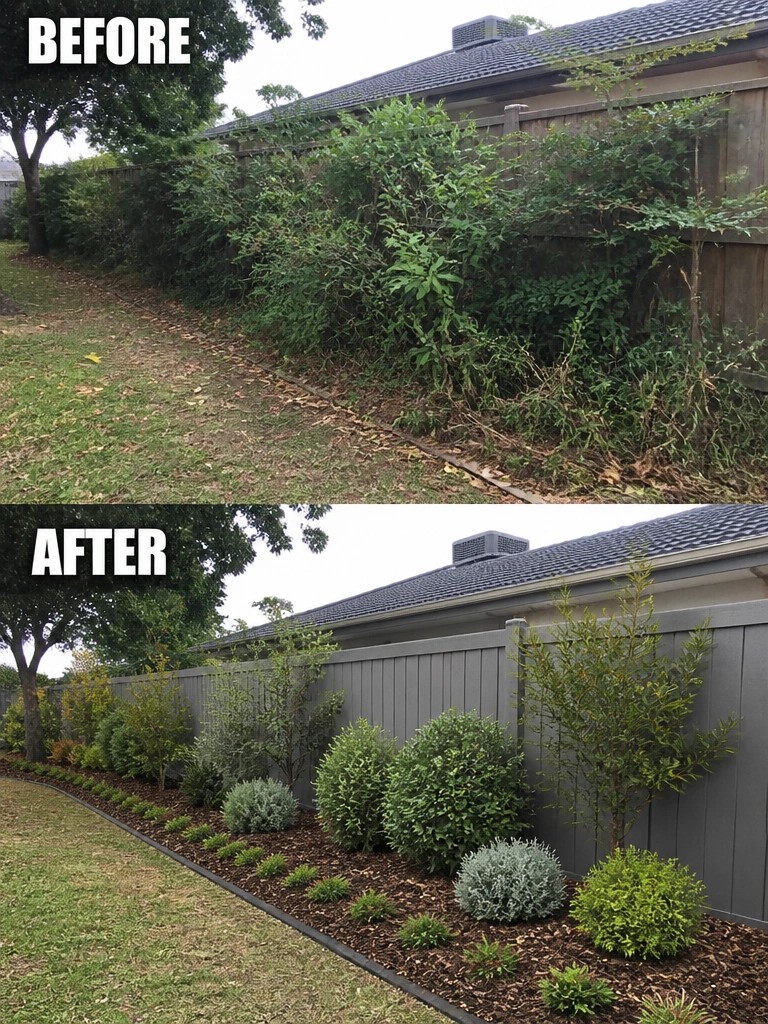
Overgrown fence lines often turn into a tangle of branches and weeds that make the whole yard feel neglected. Clearing that growth and replanting in clear beds with mulch creates a much cleaner edge that actually shows off the plants instead of hiding them.
This idea works best on long, narrow strips beside fences or property lines. Start by removing everything that is out of control, then lay out a simple curved or straight bed, add a layer of mulch, and choose a mix of low and medium shrubs that will stay in bounds. The result feels planned without needing a lot of extra features.
Replace Overgrown Shrubs With Defined Garden Beds
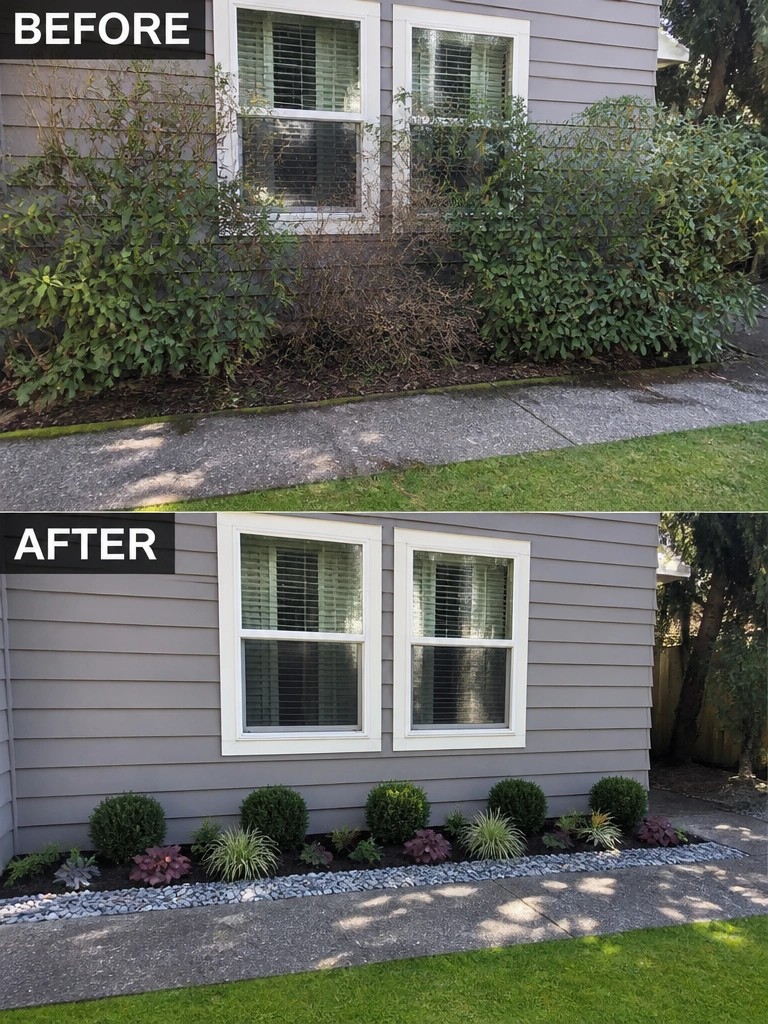
Overgrown foundation shrubs often make the front of a house look messy even when the rest of the yard is fine. Clearing them out and putting in a simple row of low shrubs with a rock edge gives the same area a much tidier shape without adding a lot of new plants.
This approach works best on houses where the beds sit right against the siding. Start by removing the old growth completely, then keep the new planting low so windows stay clear. A single line of edging material like river rock helps the bed look finished even when the plants are still small.
Clean Up Overgrown Beds For A Tidy Front Yard
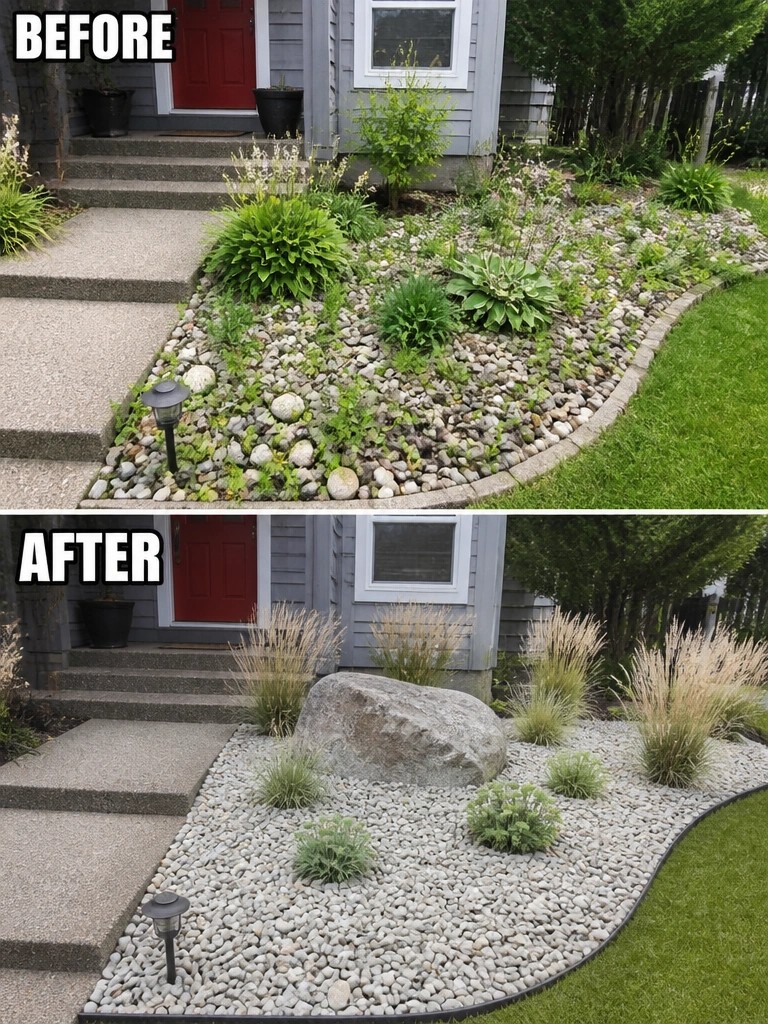
The main change here is clearing out a crowded, uneven garden bed and replacing it with a simple gravel surface and a few repeated plants. This removes the scattered look and gives the area along the steps a much cleaner outline that still feels natural.
This approach works well along walkways or near entries where you want low maintenance without leaving the space bare. Start by removing old growth and leveling the area, then add a border and gravel to hold the shape. Keep the planting simple so the bed stays easy to care for over time.
Add Structure To An Overgrown Border
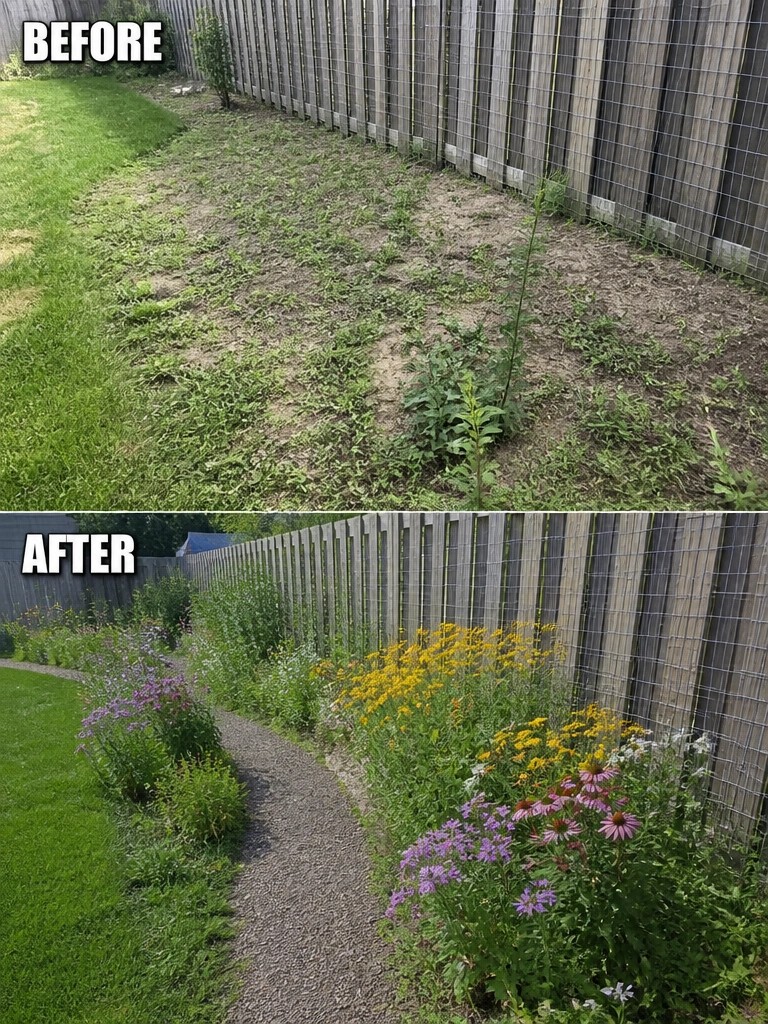
The main change here is turning a weedy, undefined strip along the fence into a clear garden bed with a gravel path. Once the overgrowth is cleared and the planting area is edged, the space suddenly looks planned instead of neglected.
This idea works best on narrow side yards or fence lines where you want low maintenance color. Start with the path and bed lines before adding plants, and choose perennials that fill in over a season or two so the beds do not look sparse right away.
Add Defined Garden Beds For A Neater Yard
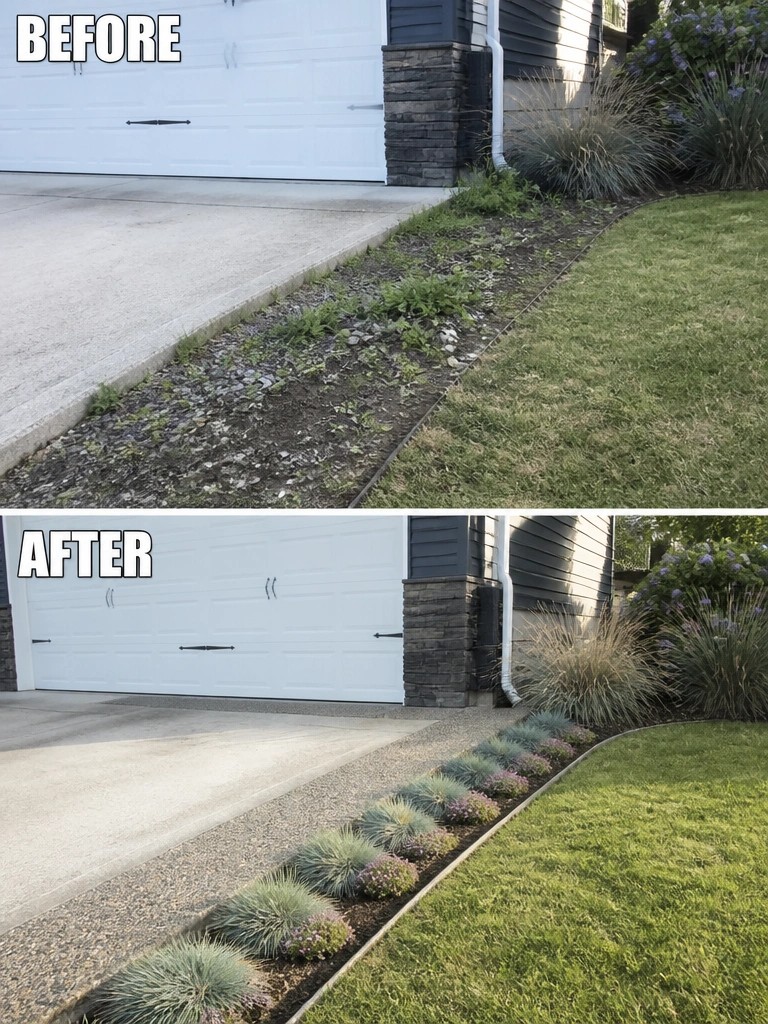
A weedy strip of dirt next to the driveway always makes the side of a house look unfinished. Adding a clean edge and a row of low plants turns that same narrow space into something that feels deliberate and much easier to keep up.
This idea works best on small strips where you want order without adding a lot of maintenance. Clear out the weeds first, install simple edging to hold the lawn back, then plant in a repeating pattern that stays low to the ground. The result is a yard that looks planned even on busy weeks.
Add Defined Borders To Mailbox Beds
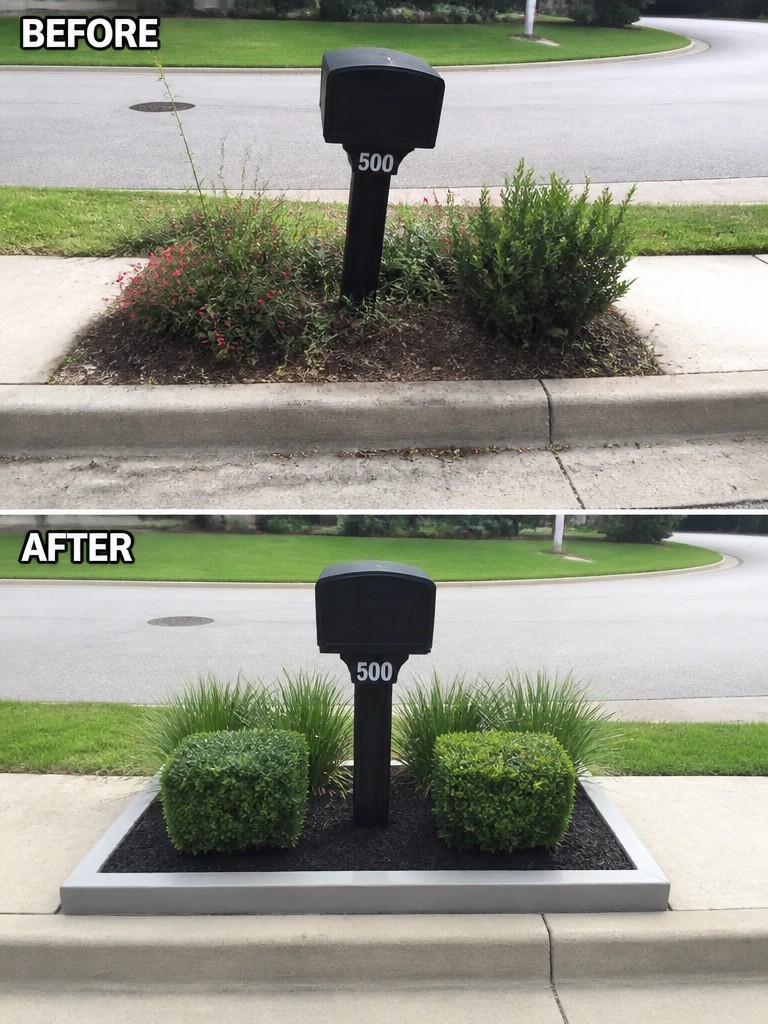
A mailbox bed often looks messy when plants are left to spread without any edge. Adding a simple border and fresh mulch pulls the whole area together and makes the planting look planned instead of accidental.
This idea works best in front yards where small beds sit right next to the street. Clear out the old growth first, then install edging that lines up with the sidewalk. Mulch keeps the look neat and cuts down on weeds so the shrubs stay the main feature.
Frequently Asked Questions
Q: What plants work best if I want that sleek modern look but hate constant pruning?
A: Go for grasses or succulents that grow in tidy clumps. They keep their shape without much fuss and add texture to your beds. Pair them with clean edged borders to hold everything in place.
Q: Can I use concrete in my remodel without it feeling too stark?
A: Mix in some wood accents or warm gravel tones around the concrete. This softens the edges while keeping the overall clean lines you want. Start small with a patio area to test how it fits your space.
Q: My current yard has old mulch everywhere. How do I switch to something fresher looking?
A: Remove the mulch and lay down decomposed granite instead. It drains well and stays put better than loose chips. Rake it smooth once a year to refresh the surface.
