

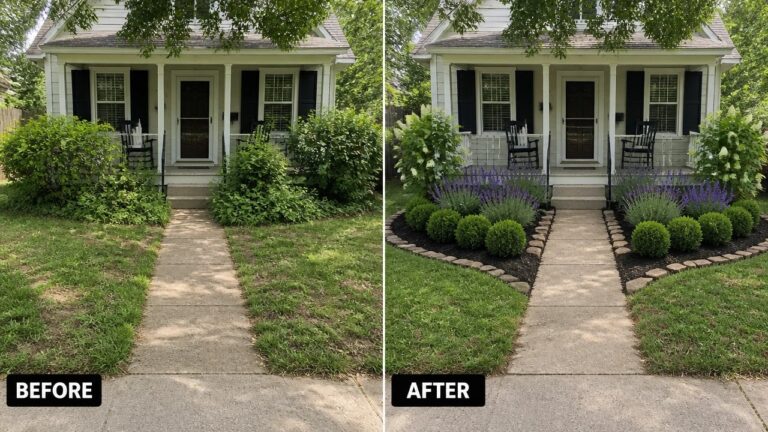
Yards tend to feel a bit scattered when new plants go in without a clear sense of how they will sit together over the seasons.
I usually start by looking at the overall layout and edging first because those choices make everything else hold together better.
Structure matters more than it seems at first.
Once the beds have steady lines and the plants are grouped with room to grow, the space stops looking like it needs constant fixing and starts to feel settled on its own.
Testing a few simple patterns in my own yard has shown how those decisions keep things neat without adding extra work later on.
Add Defined Borders To Shape The Front Beds
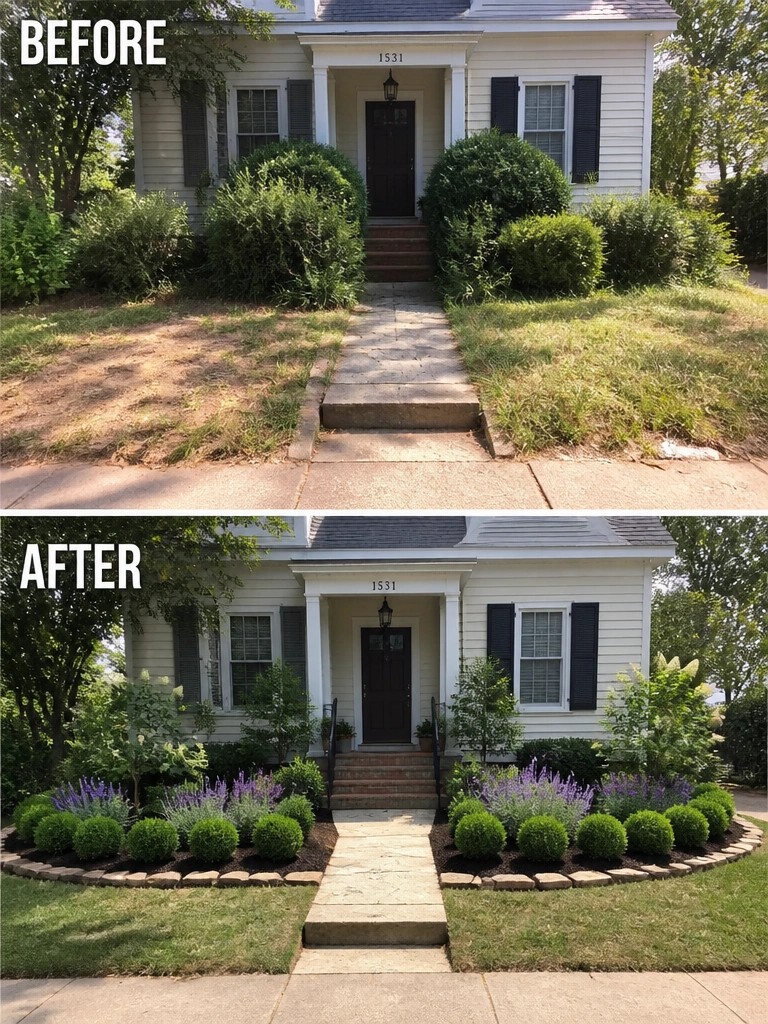
The biggest improvement comes from giving the front planting area a clear edge instead of letting grass and shrubs run together. A simple stone border turns the space into rounded beds that feel planned and much easier to maintain.
This idea works especially well on modest front yards where you want order without adding walls or large features. Outline the beds first with something low like stones or bricks, then fill them with a repeating mix of shrubs and a few taller plants for height. Keep the curves soft so the lawn stays open and welcoming.
Add Planting Structure To A Narrow Side Yard
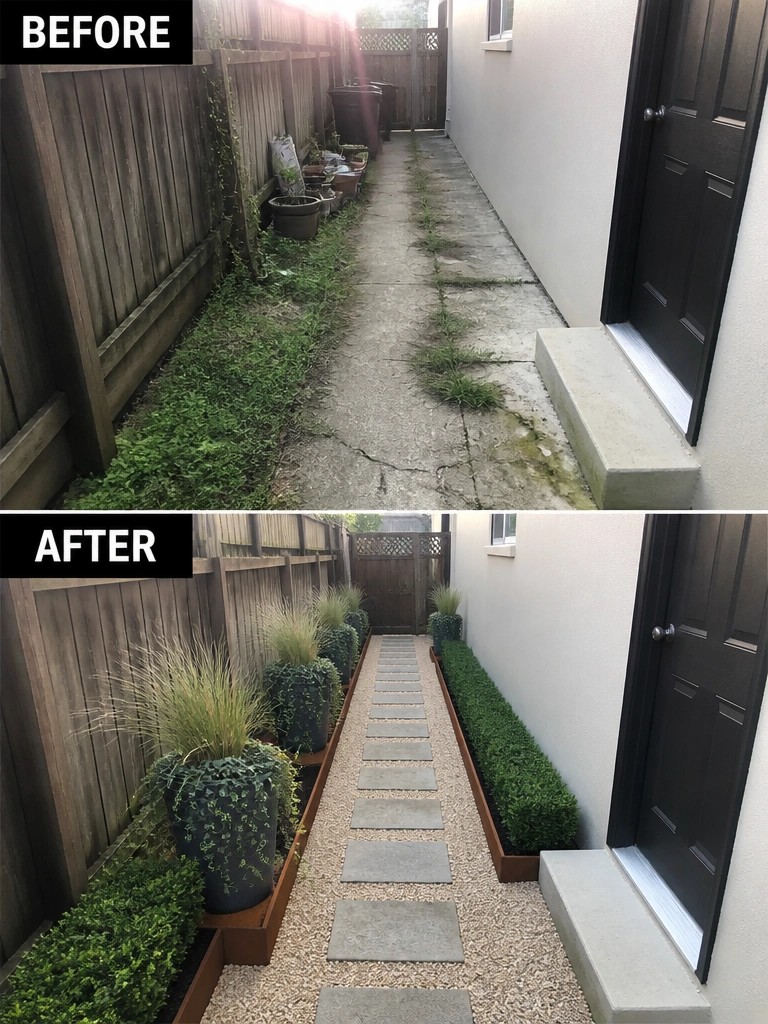
A narrow side yard often ends up as wasted space because it is hard to keep tidy. The key change here was adding clear borders and a simple gravel path with stepping stones. Once the edges were defined, the whole area stopped feeling like an afterthought and started working as a clean walkway.
This approach works best on tight lots where grass is difficult to maintain. Start by laying out the beds and path first, then choose low plants that stay within the lines. Gravel and metal edging keep the look neat without much ongoing work.
Add Structure To A Sloped Backyard
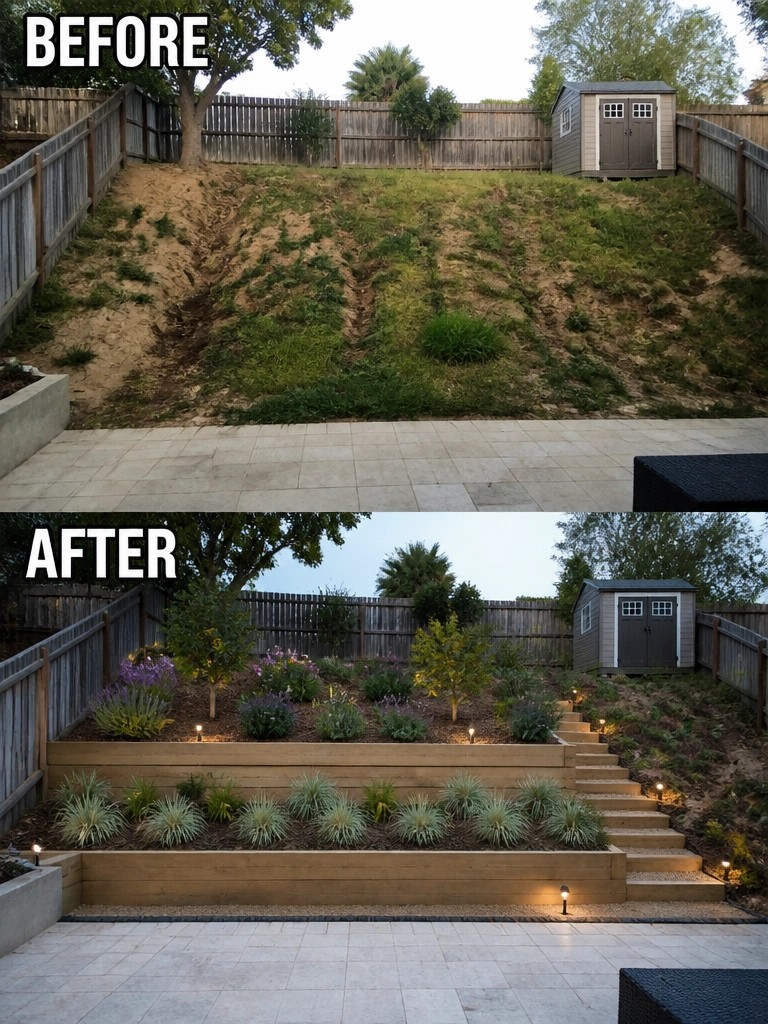
A steep or uneven backyard usually stays overgrown because grass and weeds have nothing to hold them in place. Building a few simple terraces with retaining walls creates level planting areas that keep the slope under control. The result is a yard that looks intentional instead of neglected.
This idea works best on yards that drop more than a few feet. Use wood or stone to form the terraces, then fill each level with plants that match the sun exposure. It cuts down on erosion and gives you separate beds to manage instead of fighting one big slope.
Add Defined Garden Beds For A Cleaner Front Yard Look
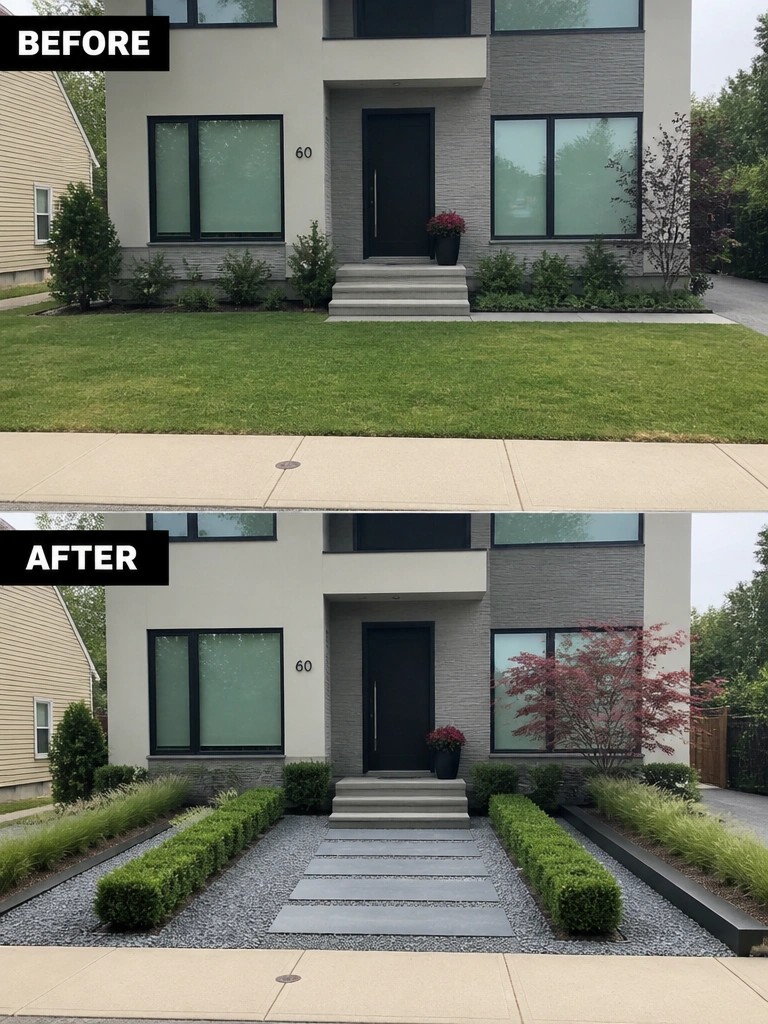
A flat lawn with no real edges makes the front of a house feel unfinished. In this case the change came from carving out clear beds along the walkway, filling them with gravel, and adding low hedges plus a few upright plants. The stepping stones then give a direct path to the door without the grass looking trampled.
This approach works best on small to medium front yards where you want order without a lot of upkeep. Start by marking simple rectangular beds, lay down edging, and keep the plant choices limited to two or three heights. The gravel keeps the beds looking tidy year-round and makes mowing easier since the lawn edge is now straight.
Add Structure To An Overgrown Fence Line
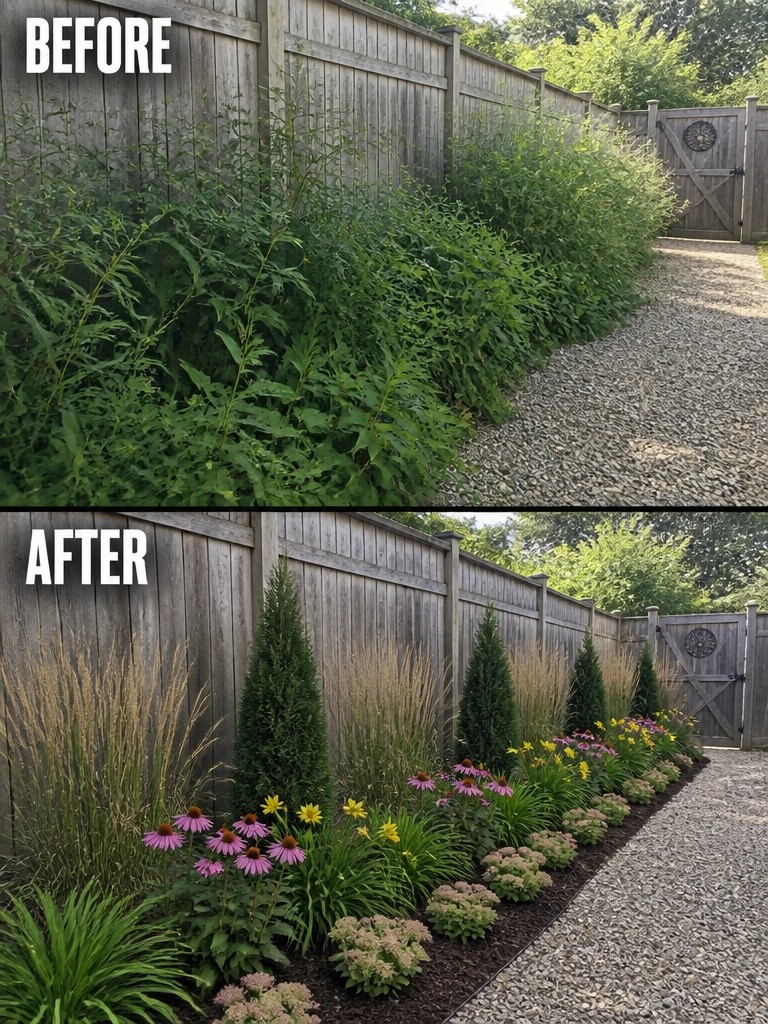
Clearing out the thick, wild growth first makes the biggest difference here. Once the messy plants are gone, a simple row of defined beds with layered heights and repeated shapes gives the whole edge a clean, intentional look that follows the path without crowding it.
This idea works best on long, narrow borders where you need order but still want some variety. Keep the plant mix simple, use a few repeating heights, and leave enough space between groups so the bed stays easy to maintain over time.
Add Defined Garden Beds For A Cleaner Yard
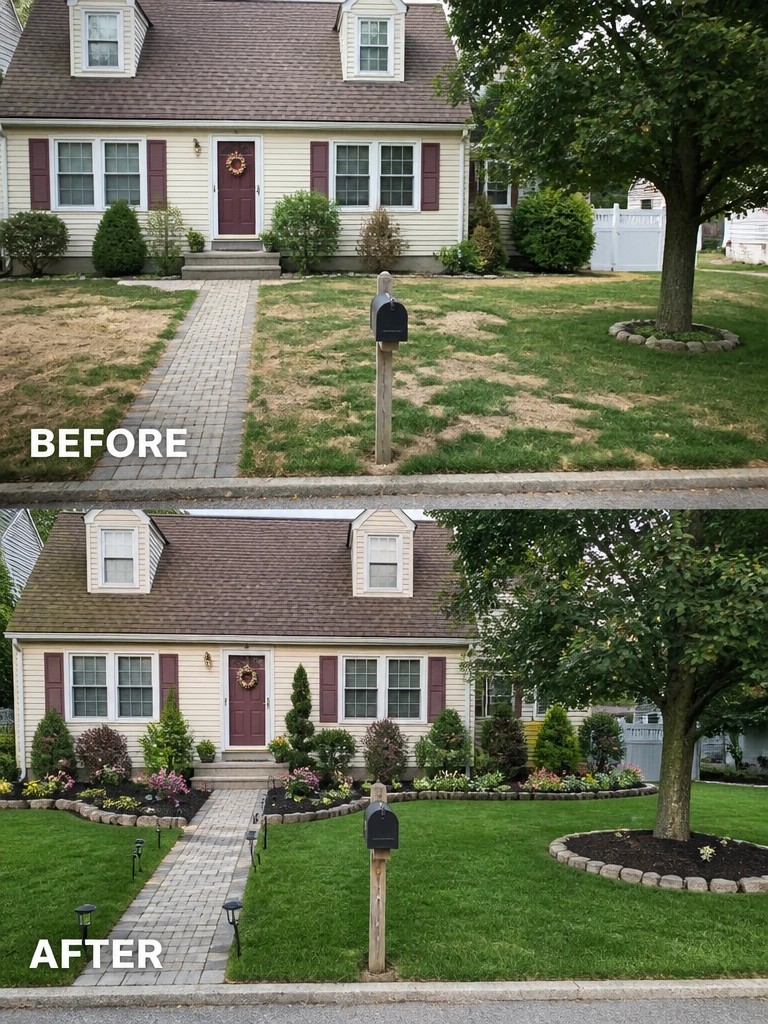
One of the simplest ways to improve a patchy front yard is to add clear garden beds instead of letting the lawn run right up to the house. Here the uneven grass was replaced with mulched borders that follow the path and wrap around the front, which gives the whole space a much more planned look.
This idea works best on small yards where you want structure without adding lots of new features. Mark out the beds first, use a simple edge, and keep the plantings in scale with the house so the beds stay easy to maintain.
Use Raised Planters To Add Structure To A Small Yard
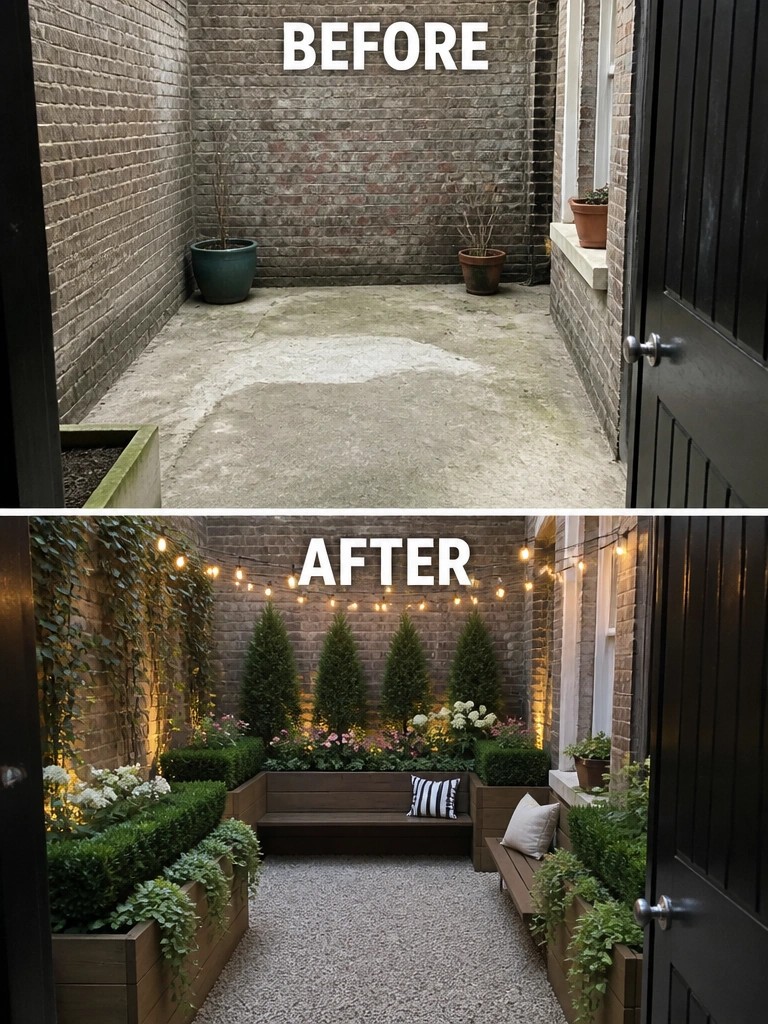
A bare concrete space often feels unfinished because there is nothing to break up the flat surface or guide the eye. Adding raised wooden planters changes that quickly. They create clear edges, hold the planting in place, and turn an empty area into something that feels intentional and easy to maintain.
This approach works well in narrow side yards or small courtyards where ground beds are not practical. Keep the planters simple, repeat one or two evergreen shapes, and leave enough open ground for walking or seating. The result stays neat without needing constant redesign.
Add Defined Edges Along Your Driveway
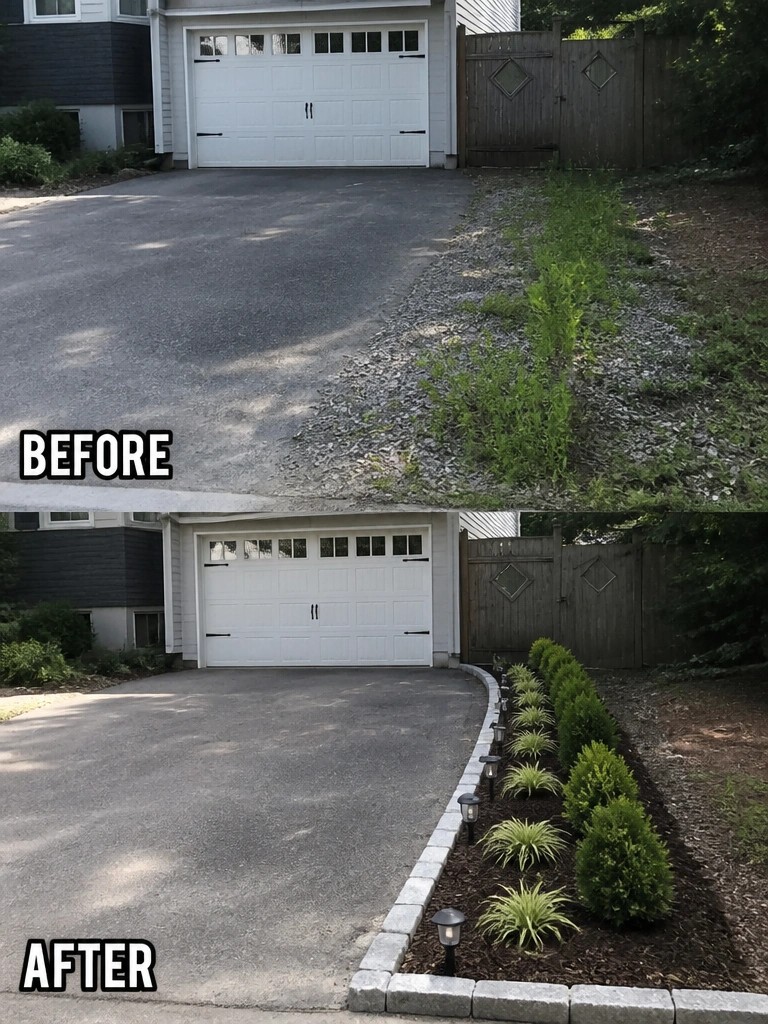
A strip of gravel and weeds next to a driveway often looks messy because it has no clear boundary. Adding stone edging, mulch, and a row of plants creates a simple border that keeps the area looking neat without much ongoing work.
This idea works best on narrow side strips where full landscaping feels like too much. Keep the plant choices low and repeat a few types for a tidy line. Solar lights along the edge add a bit of definition at night and help mark the border so cars stay clear.
Add Structure To An Overgrown Backyard
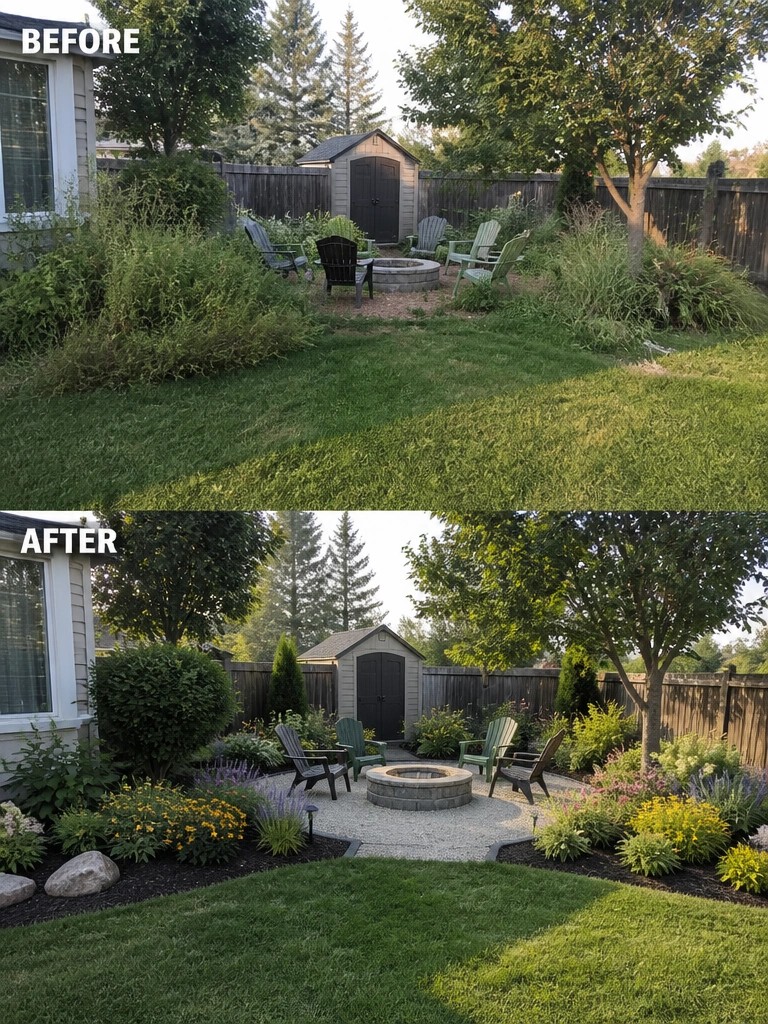
One of the quickest ways to improve a messy backyard is to add clear planting borders instead of letting shrubs and grasses spread everywhere. In the before photo the beds had no real shape and the plants grew wild around the fire pit. After the change the beds are edged, mulched, and filled with repeating groups of flowers and shrubs that keep the space looking tidy.
This approach works well in small to medium yards where the lawn needs to stay open but the edges feel neglected. Start by cutting back the worst overgrowth, then lay out simple curved or straight beds that follow the fence line or seating area. Use a consistent mulch and repeat a few plant types so the beds look planned rather than scattered.
Add Structure To An Overgrown Border
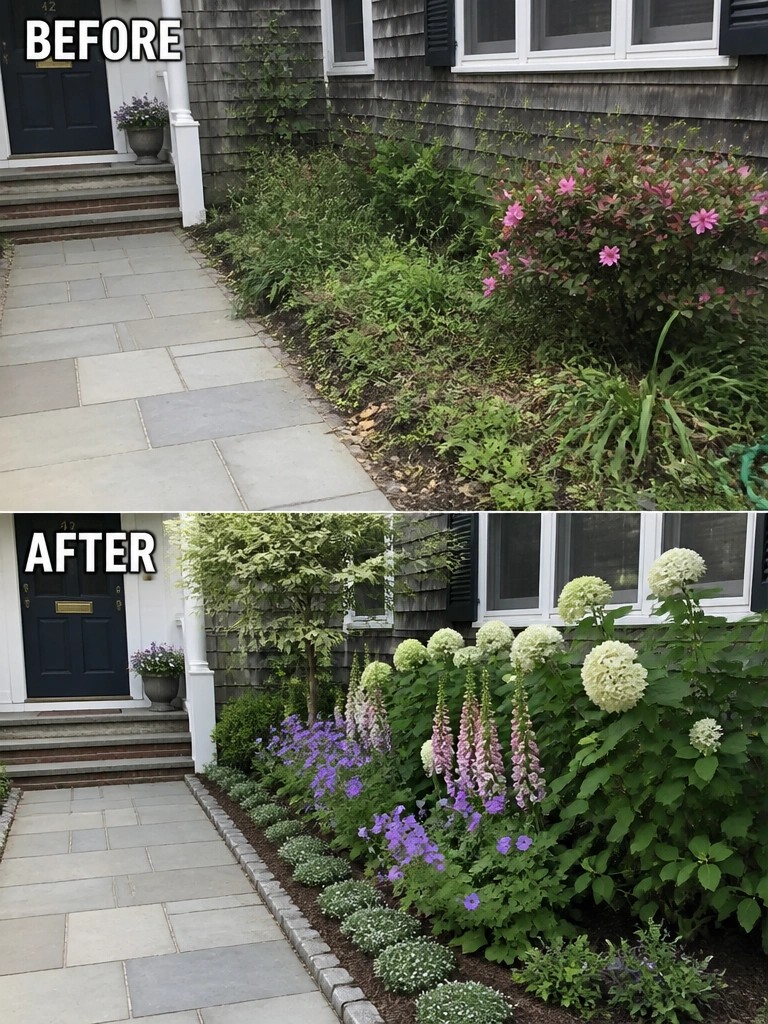
Clearing out the messy growth first made the biggest difference here. Once the old plants were removed, simple edging and rows of flowers and shrubs gave the border a clean shape that follows the path instead of spilling onto it.
This idea works best along house foundations or walkways where you need order but still want color. Keep the plant choices simple, repeat a few varieties, and let the edging do the work of holding everything in place. It suits older homes that already have a path and just need the planting area tidied up.
Add Structure To An Overgrown Front Yard
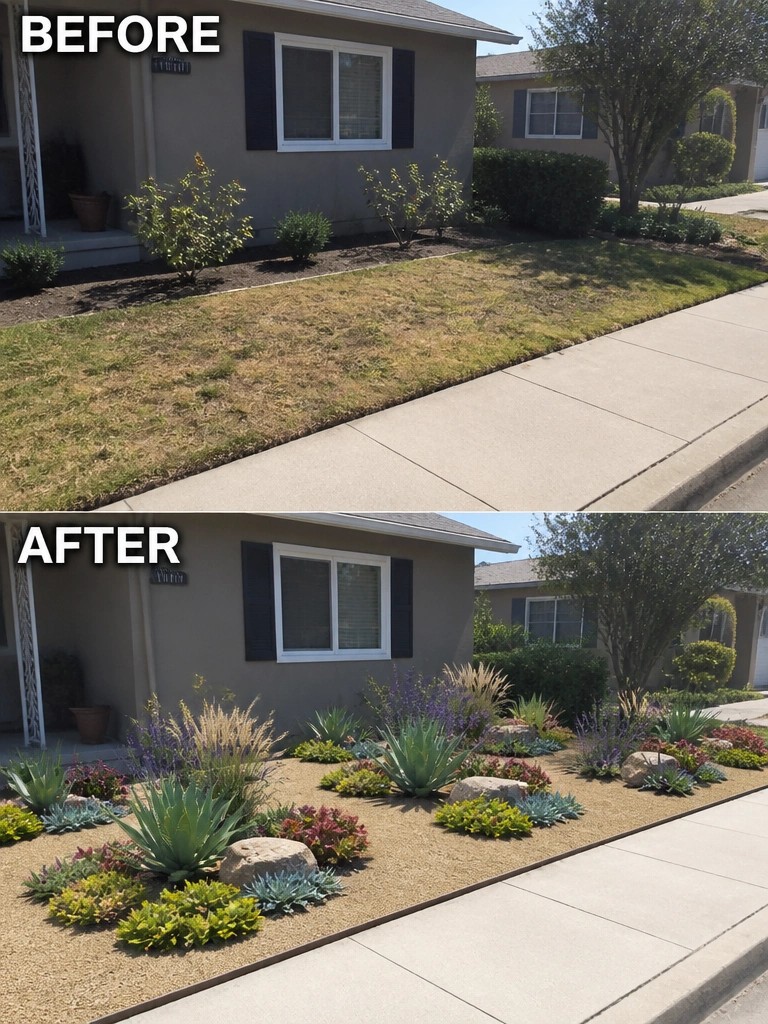
A patchy lawn with no clear edges often makes a front yard look neglected even when the house itself is fine. Replacing the grass with gravel beds and grouping plants into defined clusters gives the space a planned appearance that holds up better over time.
This idea works best in small yards or along sidewalks where you want low maintenance without a full redesign. Clear the old grass first, add simple edging, and keep the plant groupings simple so the beds stay readable from the street.
Create A Garden Bed Around A Tree Base
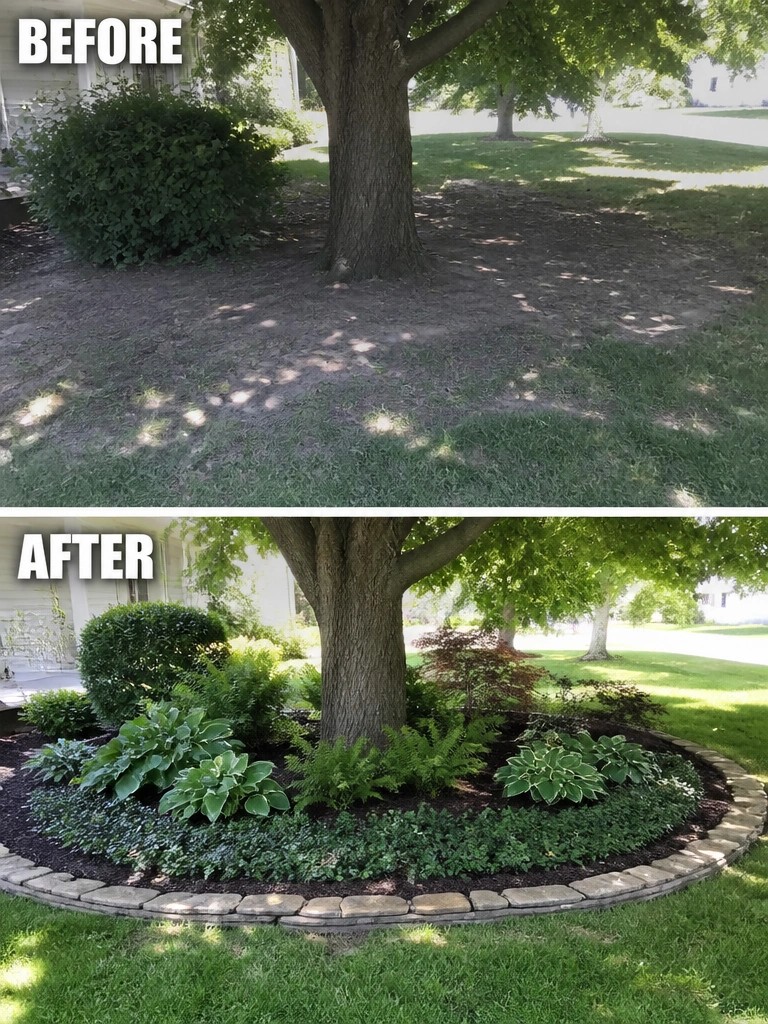
Many yards have a large tree that leaves a bare or patchy spot underneath. Adding a simple garden bed with edging turns that empty space into something more intentional and easier to maintain. The main change here was installing a low stone border and filling the area with mulch and layered plants instead of leaving the ground exposed.
This approach works well in any yard where trees create awkward open zones. Start with the edging to hold the shape, then add mulch to keep weeds down before choosing plants that handle shade. It keeps the area looking planned without needing constant work.
Add Structure With Raised Garden Beds
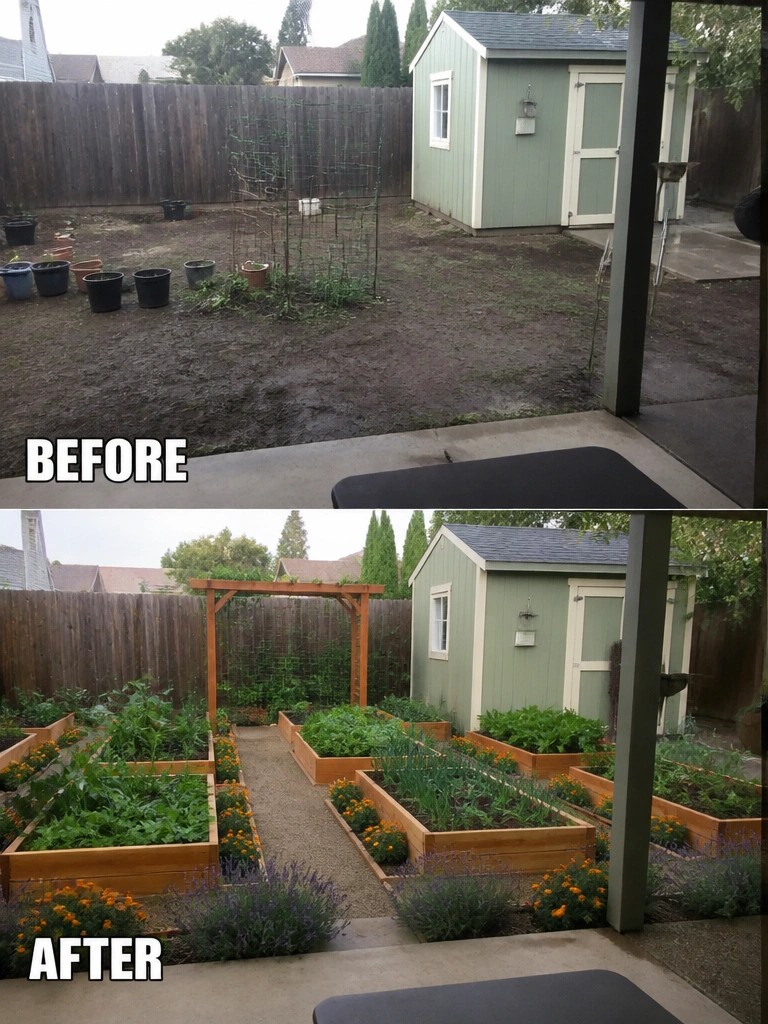
A bare backyard with loose pots and uneven ground often feels unfinished and hard to use. Raised beds change that by giving the space clear lines and separate growing areas, which keeps plants contained and makes the whole yard look more organized.
This approach works best in smaller yards where you want room to walk between beds without crowding the space. Lay out the beds first with paths in between, then fill them with soil before planting. It keeps maintenance simple and prevents the garden from spreading into every corner.
Create Structure With Defined Garden Beds
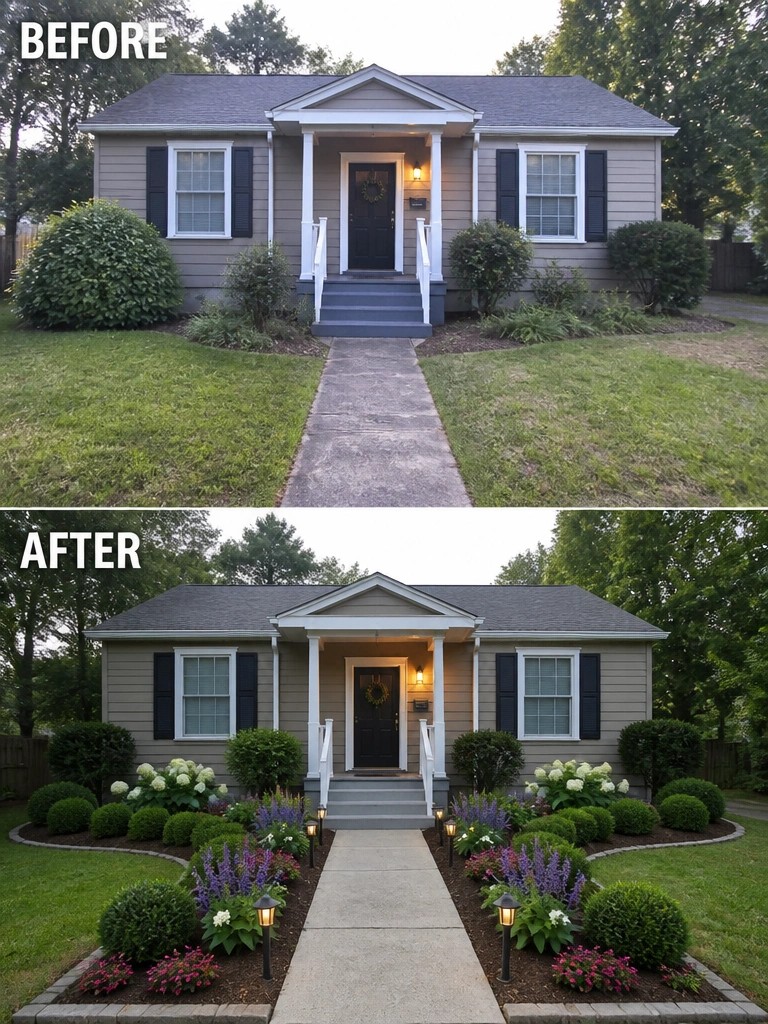
The front yard looked scattered before, with shrubs sitting loosely on the lawn and no clear edge along the path. Adding curved beds with simple stone edging and mulch gave the whole space a much more organized feel. The plants now sit in layers instead of spreading out randomly, which makes the entry feel more intentional without needing a big overhaul.
This approach works well on smaller front yards where you want the house to stay the main focus. Start by marking out the beds with a hose or rope so you can see the shape before you dig. Keep the beds a consistent width and repeat a few plant types rather than mixing too many varieties. The clean lines do most of the work once the grass is edged and the beds are mulched.
Add Structure To An Overgrown Backyard
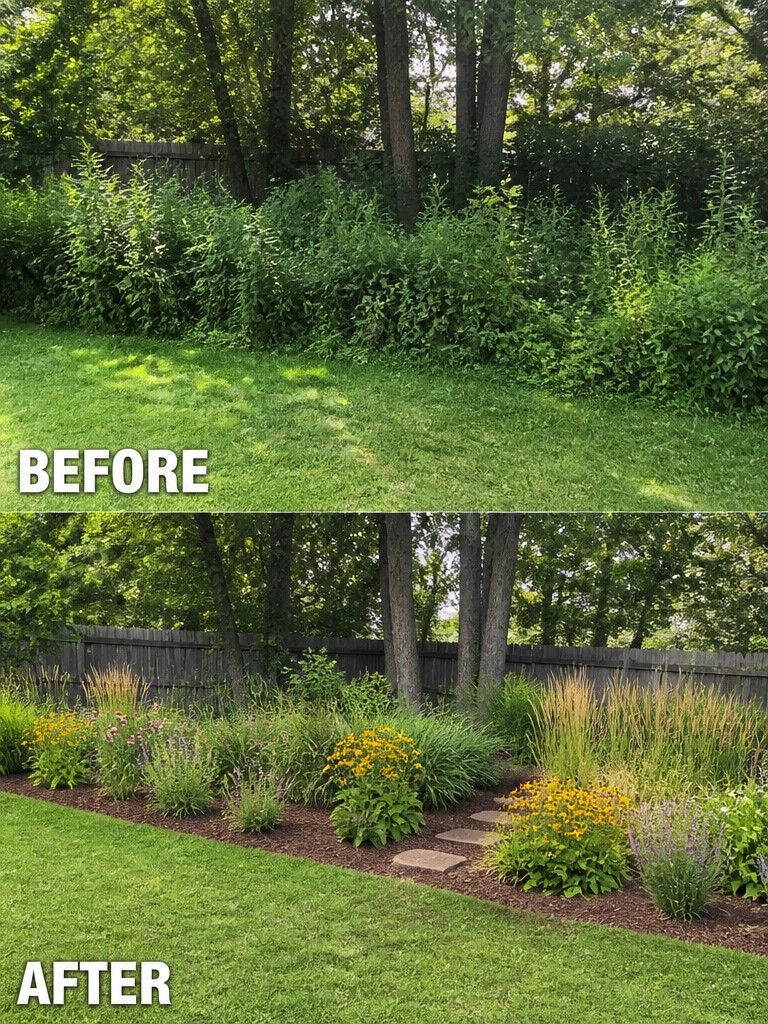
Many yards start out with a thick wall of untended growth along the fence line that makes the whole space feel smaller and harder to use. Clearing that growth and replacing it with a simple planted border and mulch gives the lawn a clear edge and makes the yard feel intentional instead of neglected.
This approach works best in long, narrow yards or along property lines where you want some softness without losing usable lawn. Start by removing the heaviest overgrowth, lay down a defined bed with mulch, and keep the planting fairly low and repetitive so the border stays easy to maintain.
Add Raised Planters To Define A Patio
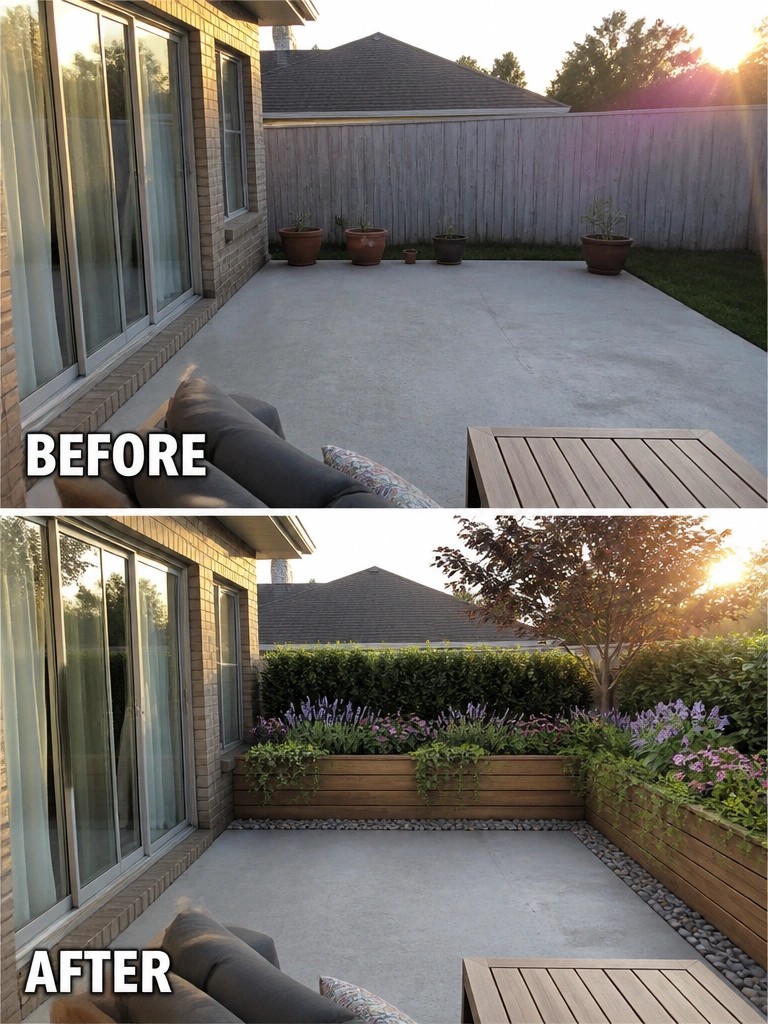
A bare concrete patio often feels unfinished because there is nothing to mark where the open space ends and the yard begins. Adding a few raised wooden planters along the edges gives the area clear boundaries without crowding the seating space. The change turns an empty slab into something that feels more like a finished outdoor room.
This approach works well on small or medium patios where you want planting without losing floor space for chairs and tables. Keep the beds low enough to sit on if needed, and choose plants that stay mostly green so the structure looks tidy year-round. Start with the planters first, then add furniture once the shape of the space feels settled.
Create Defined Garden Beds Along The Front Walk
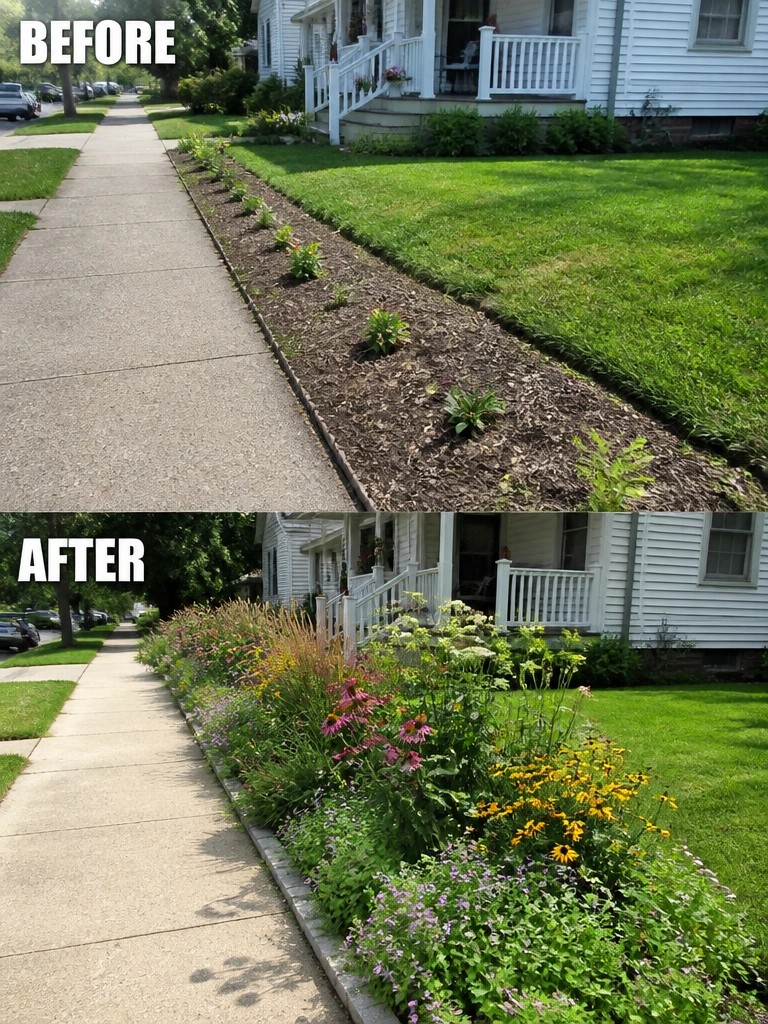
The narrow strip next to the sidewalk looked unfinished with just mulch and a few scattered plants. Adding a full border of layered perennials filled the space and gave the front of the house a clear edge that connects the lawn to the path.
This idea works best on long, thin areas where you want structure without crowding the yard. Keep the tallest plants toward the back, mix in mid-height flowers, and finish with low ground cover in front so the bed looks full from the sidewalk without blocking the walkway.
Add Defined Beds To An Overgrown Pond Edge
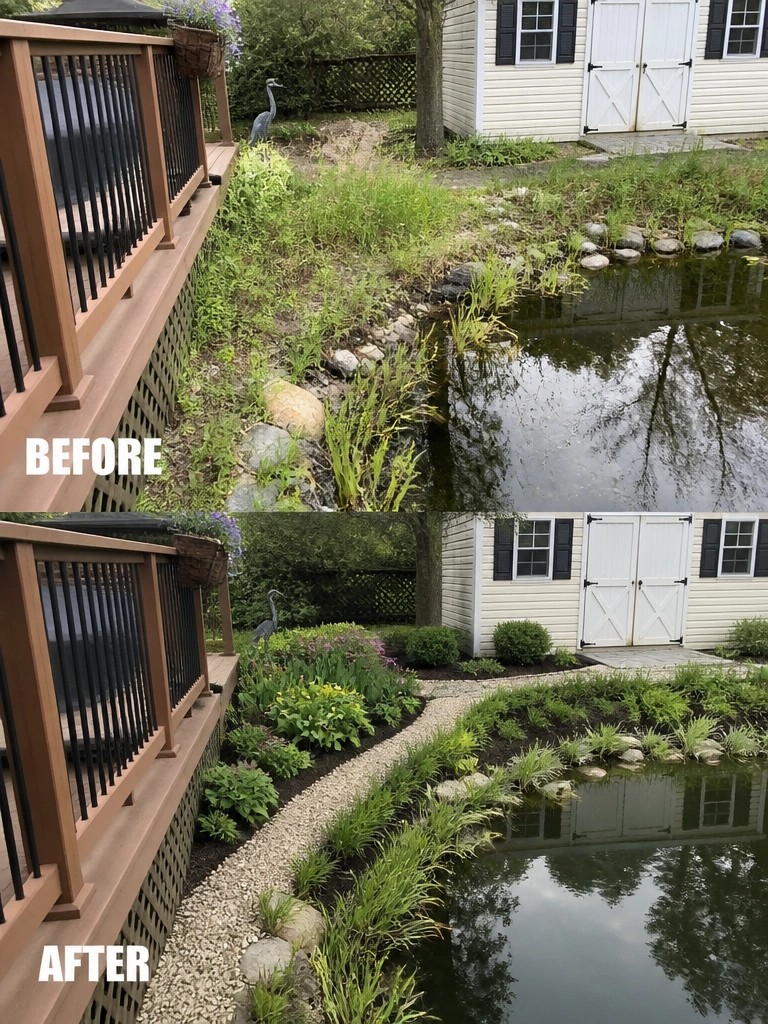
The main change here is the shift from loose, weedy growth right up to the water to a set of clear garden beds edged with gravel. That simple border and the mulch inside it make the whole area read as intentional instead of neglected.
This approach suits small backyards that already have a pond or stream. Mark the shape you want first, lay down a clean edge, and keep the planting low and simple so the water stays the main feature.
Add Structure To Front Steps With Matching Planters
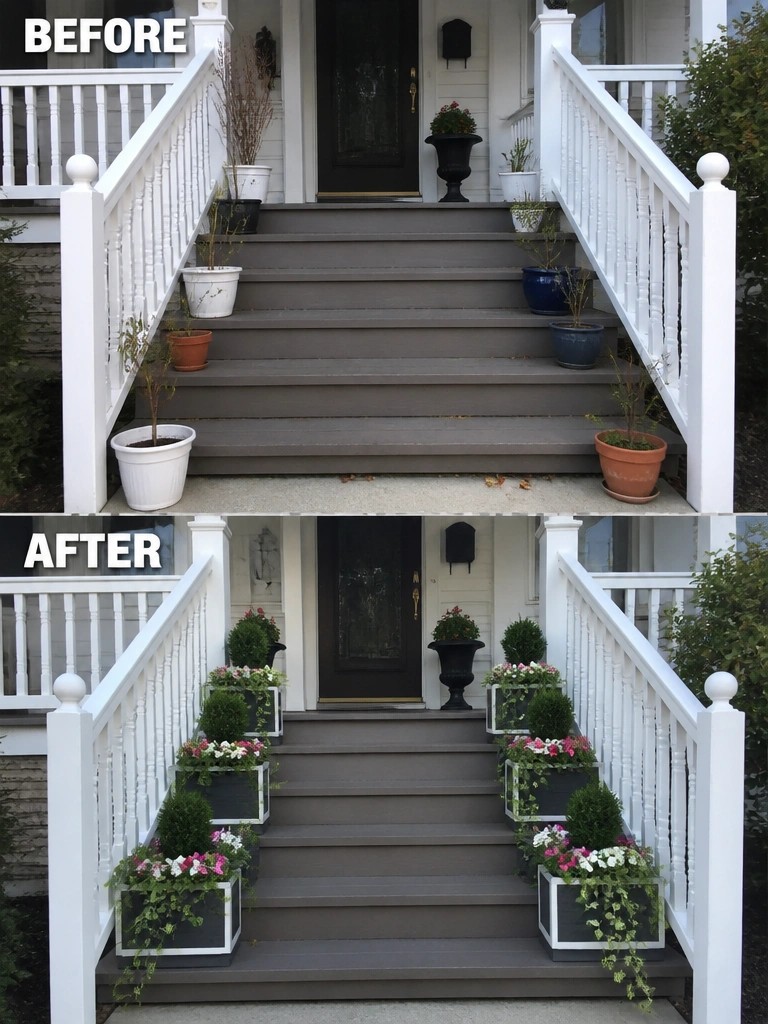
The scattered pots on these steps made the entry feel messy and unplanned. A few matching containers placed evenly on both sides turned the same stairs into a clean, balanced approach that leads the eye straight to the door.
This idea works on any set of outdoor stairs where you want the planting to feel deliberate rather than random. Stick to the same style and size of planter, use a simple mix of evergreens and flowers, and keep the number of containers modest so the stairs stay easy to use.
Add Defined Borders To Shape A Backyard Lawn
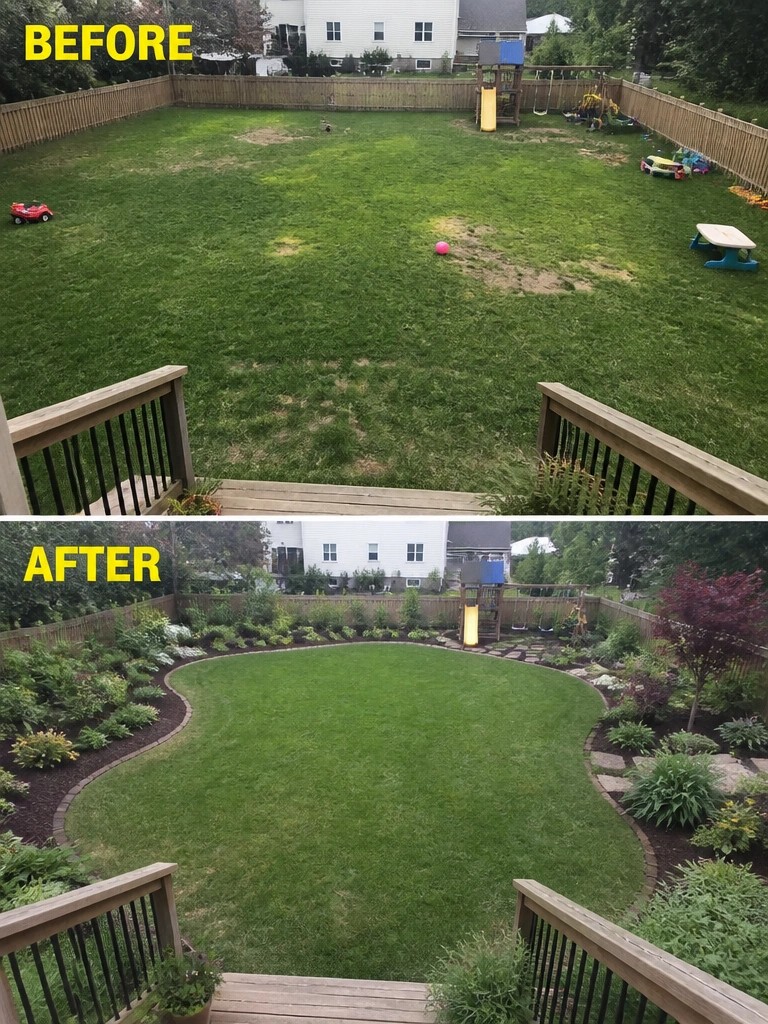
A large open lawn can start to feel shapeless without clear edges. In this yard the before photo shows a wide stretch of grass with no real boundaries, while the after shows how a simple stone edge and planted beds pull everything into one tidy shape. The curved border gives the lawn a purpose and makes the surrounding plants feel intentional instead of scattered.
This approach works well in any backyard that has enough space for a central lawn but needs better organization. Start by deciding on the lawn shape first, then add the edging and beds around it. Keep the beds at a consistent width so the whole layout stays balanced and easy to maintain.
Define Garden Beds To Replace Overgrown Foundation Areas
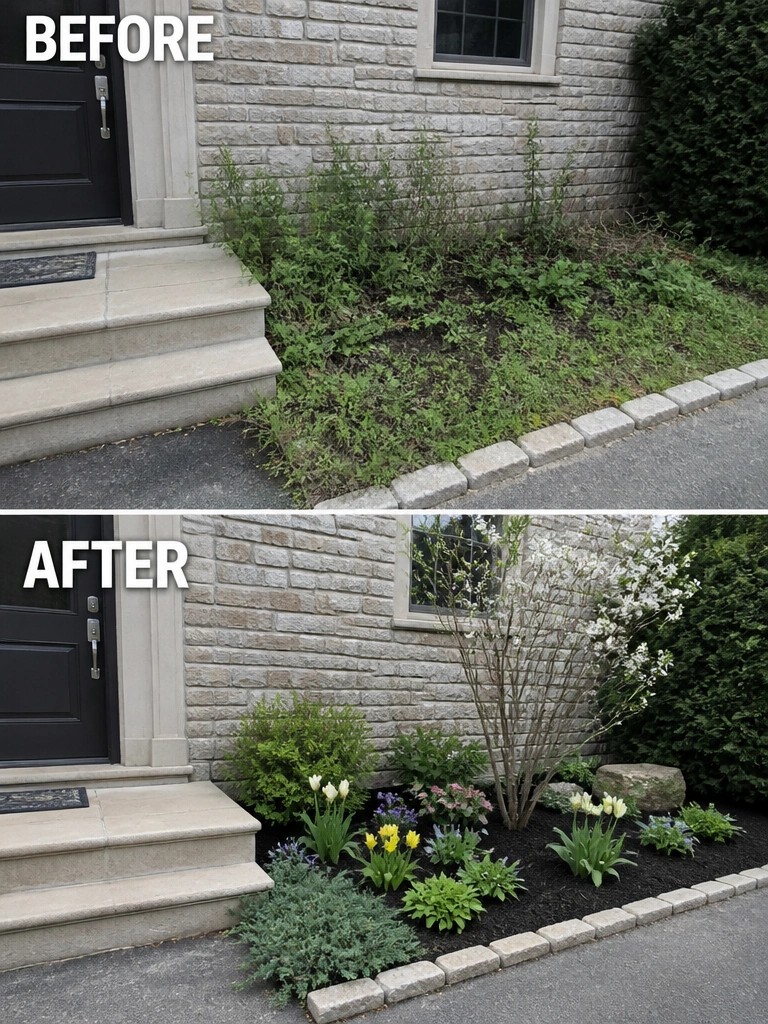
Clearing out the messy growth first makes the biggest difference. Once the weeds and volunteer plants are gone, a simple edged bed filled with mulch gives the whole front a much tidier look and keeps new plants from getting lost.
This approach works well on any house where the foundation planting has gotten away from you. Start with the edging and mulch, then add a few shrubs for height and some lower perennials for color. Keep the bed a consistent width so it feels planned rather than scattered.
Add Structure To A Bare Backyard
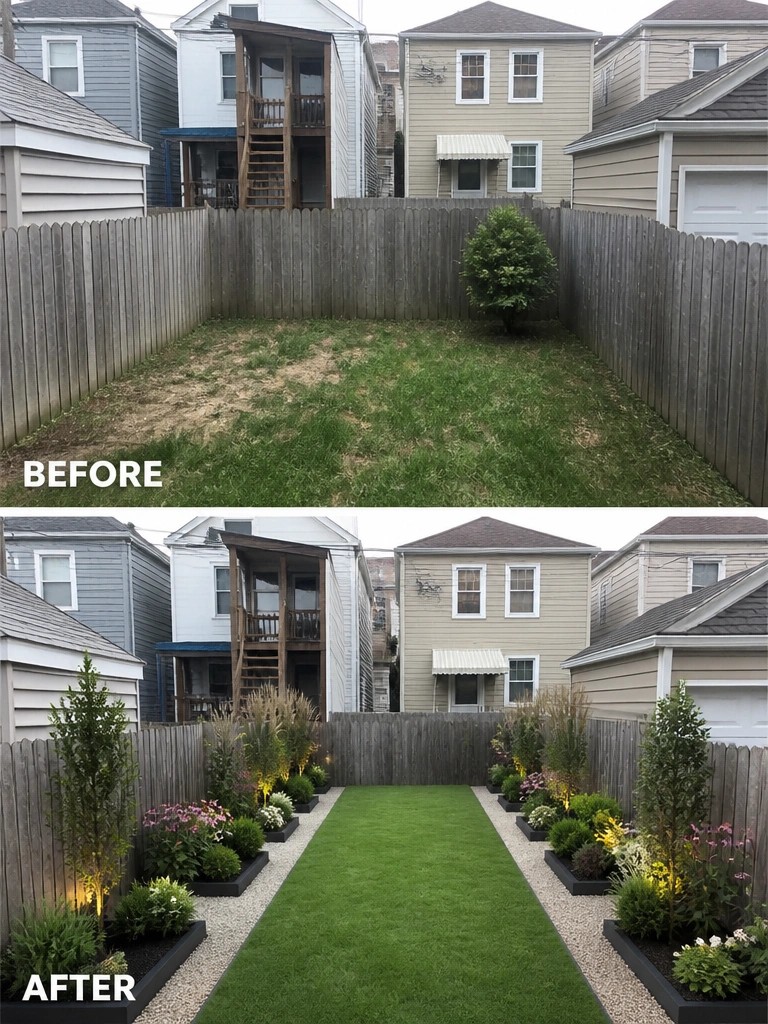
A bare yard with nothing but patchy grass often feels unfinished and hard to use. Adding a central lawn strip bordered by gravel and rectangular beds gives the space clear lines and makes it feel planned instead of leftover.
This idea works best in smaller yards where you need to keep planting contained. Place simple raised beds along the edges, fill them with a mix of evergreens and lower shrubs, and keep the middle open for easy movement.
Add Gravel And Edging To Structure A Front Yard
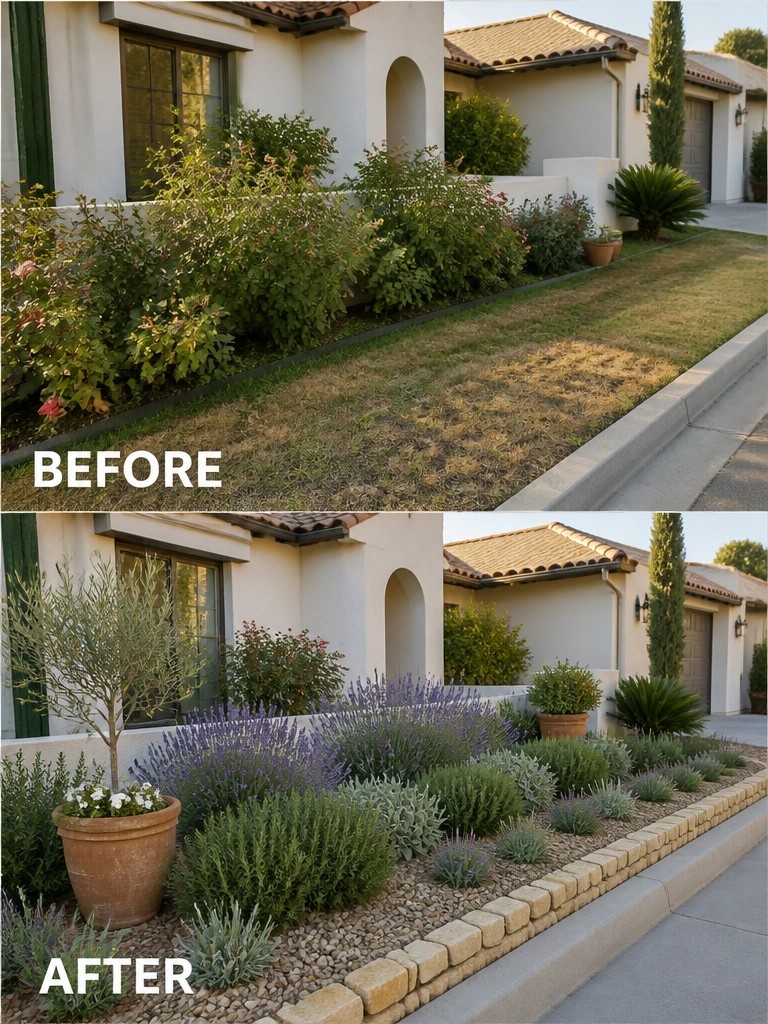
Replacing a patchy lawn and overgrown shrubs with gravel beds and a brick border gives the front of the house a much cleaner shape. The change makes the planting feel planned instead of scattered, and it reduces the amount of grass that needs regular care.
This approach works best along the street side of a house where you want a tidy look without adding a lot of new features. Clear out the old plants first, put in a simple edge, and keep the new beds low so they stay easy to walk past.
Add A Retaining Wall To Shape A Sloped Yard
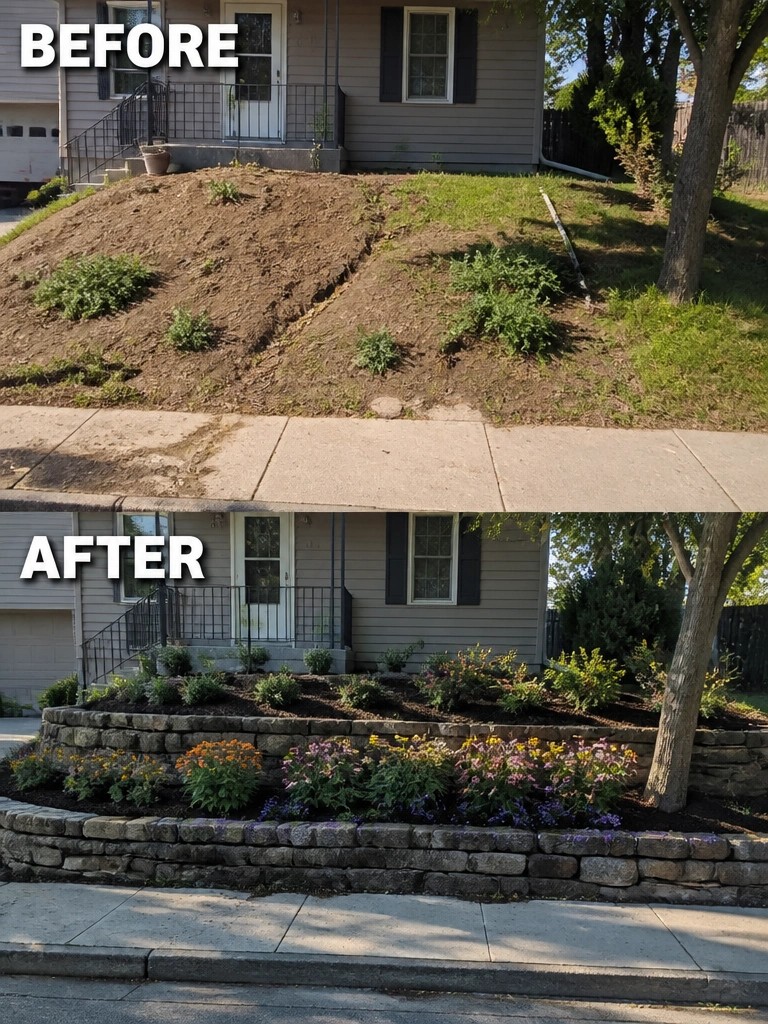
A bare hillside in front of the house often ends up patchy and hard to maintain. Adding a low stone retaining wall creates flat planting areas that hold soil in place and give the whole front a cleaner layout. The beds stay neat because the wall stops everything from sliding down toward the sidewalk.
This idea works best on homes where the yard drops toward the street. Build the wall first to set the shape, then fill the new beds with mulch and plants suited to the sun exposure. It turns a tricky slope into something you can actually care for without constant erosion or mowing problems.
Add Structure To An Overgrown Backyard
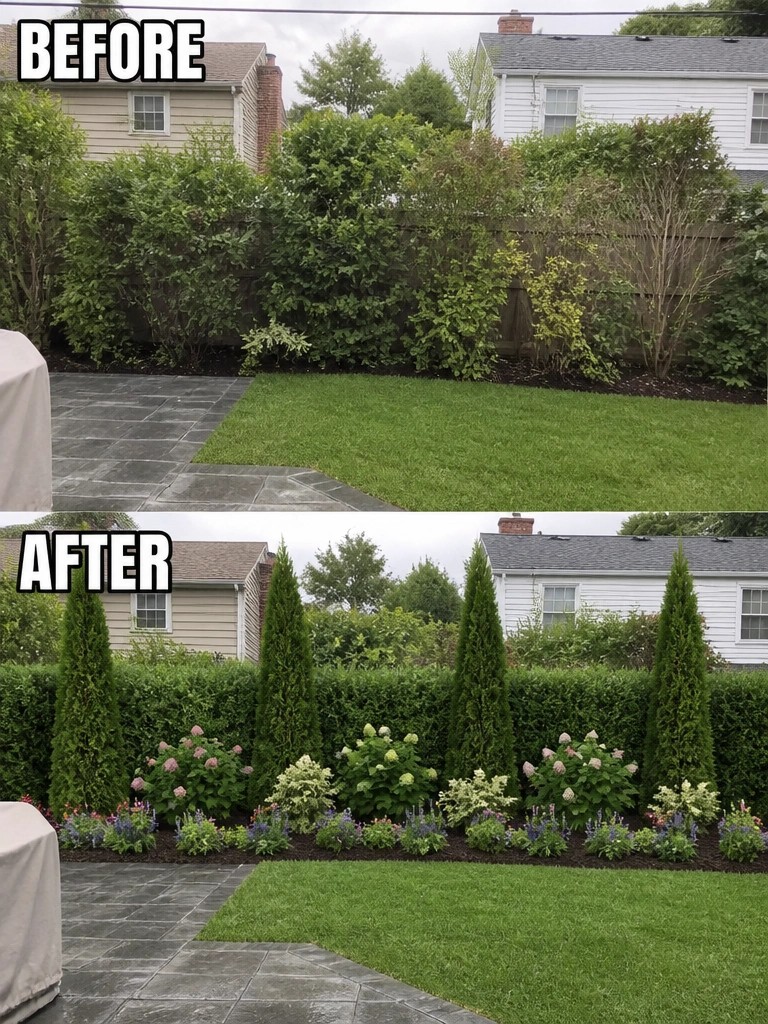
The main change here is turning a thick, uneven hedge into a clean layered border. A low hedge runs straight across the back, taller evergreens break up the line at even intervals, and a narrow flower bed with mulch sits in front to keep everything looking neat.
This idea works best in yards where the planting has grown out of control. Cut back the heaviest growth first, then add plants in repeating heights and simple groups. The structure makes the space feel larger and easier to maintain without adding extra features.
Frequently Asked Questions
Q: How do I choose plants that stay looking clean without constant work?
A: Go for slow growing shrubs like boxwoods along the edges. They hold their shape with one trim in spring and another in fall. Fill in with flowers that bloom at the same height for a tidy row.
Q: Can these ideas work if I only have a tiny yard?
A: Yes. Focus on one straight border with three matching plants. Add a single tree or tall grass at the back for height. The clean lines make the space feel bigger right away.
Q: How often should I check on the new plantings?
A: Water them deeply once a week for the first season. After that most established shrubs handle dry spells on their own.
