

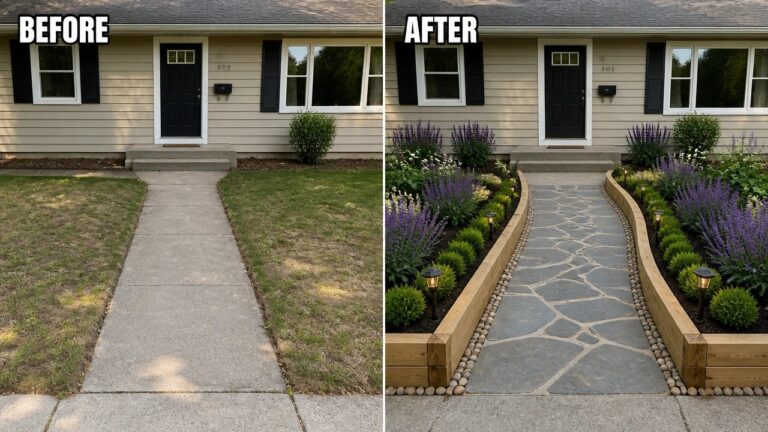
My backyard always seemed a bit scattered until I started paying attention to how the ground was laid out and where the plants actually belonged.
Pavers helped me mark out walking routes that kept the grass from getting worn down in random spots, and the beds gave me places to group the shrubs without them spreading everywhere.
I have found that once those basics are in place the whole area starts to feel more intentional and easier to maintain.
A few of the approaches are worth trying on a small scale first.
They show how steady adjustments to the layout can turn a patchy lawn into something that actually gets used on weekends.
Give A Straight Path More Structure With Pavers And Beds
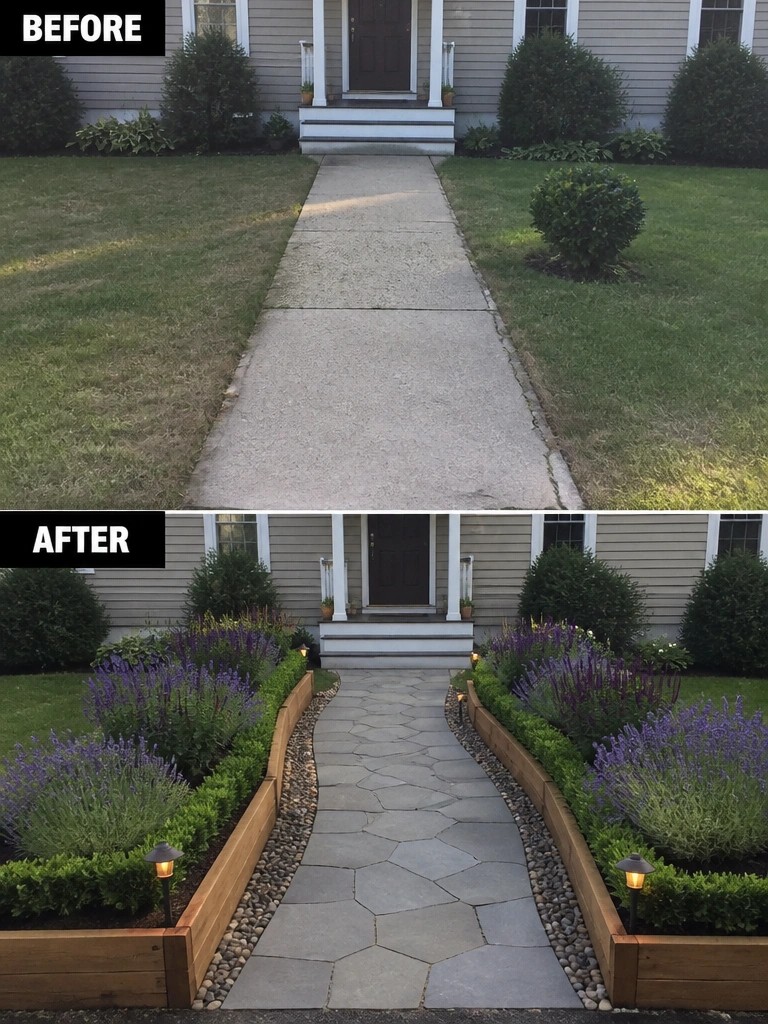
A plain concrete walkway tends to look unfinished when it sits between two wide lawns. Switching to pavers set in an irregular pattern and adding raised beds with wooden edges on each side gives the path a clear shape and makes the whole front yard feel more planned.
This idea suits homes with a long, narrow approach where you want to guide people forward without crowding the space. Keep the beds fairly narrow so the path stays the main feature, and choose edging that matches the style of your house before you add plants.
Add Pavers And Garden Beds To Define A Small Yard
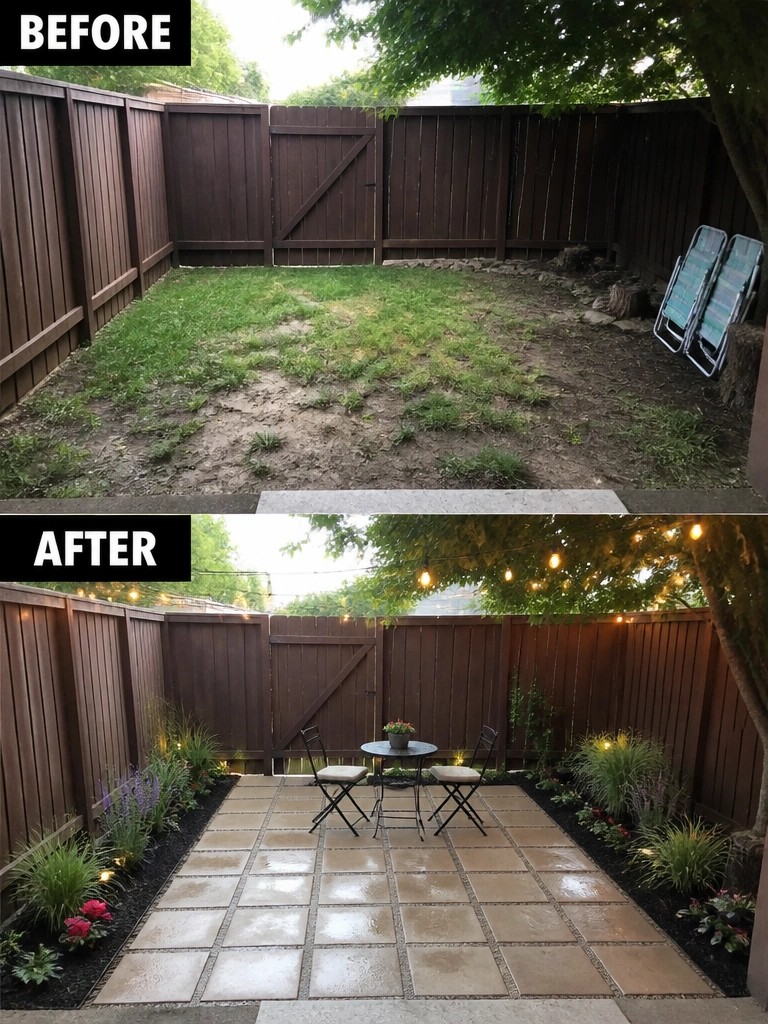
A patchy lawn often leaves a backyard feeling unfinished and hard to use. Laying pavers creates a flat, usable surface right away, while garden beds along the edges give the space clear boundaries and keep grass from creeping back in.
This approach works well in narrow or average-sized yards where you want seating without losing all the open ground. Start with the paver area sized for your furniture, then keep the beds simple with a mix of low plants and mulch so the layout stays easy to maintain.
Define A Narrow Side Path With Pavers And Planting Beds
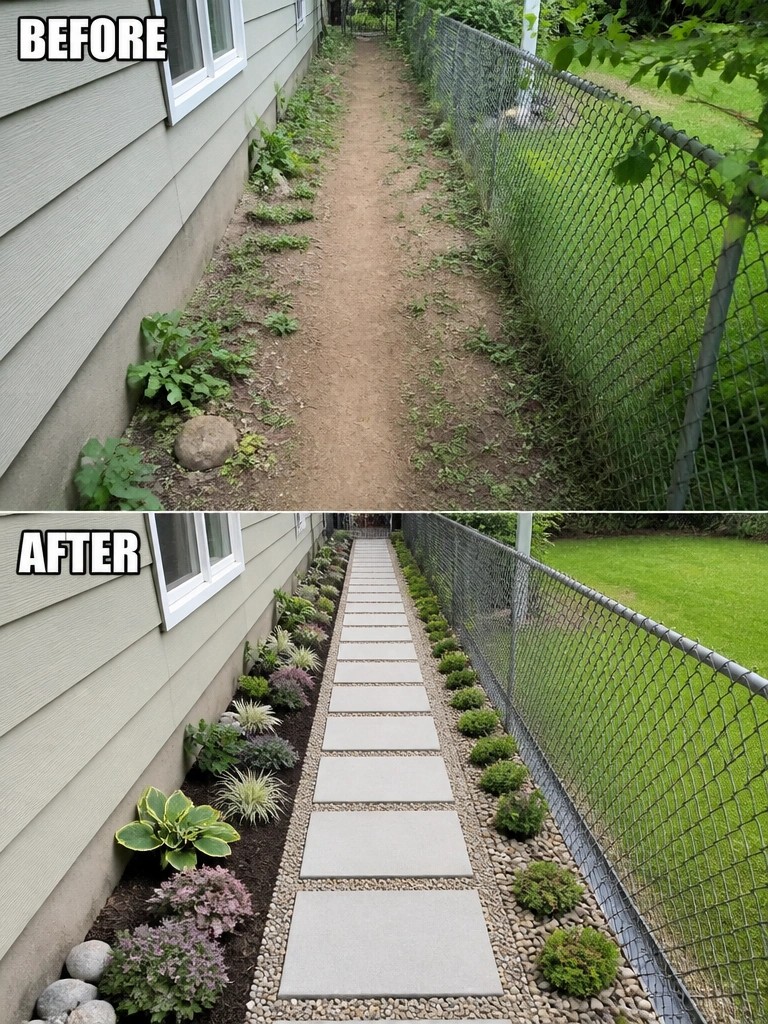
A bare dirt path running between a house and fence often feels unfinished and hard to maintain. Adding a straight line of pavers with gravel edges and planted beds on both sides gives the space clear shape and makes it much easier to walk through and keep tidy.
This approach works well in tight side yards where you need a simple walking route without crowding the area. Start by clearing weeds and leveling the ground, then lay pavers in a consistent width so the beds stay narrow and manageable. Low shrubs and ground cover keep the look neat without blocking the path.
Use Pavers To Give Steps A Clean Structure
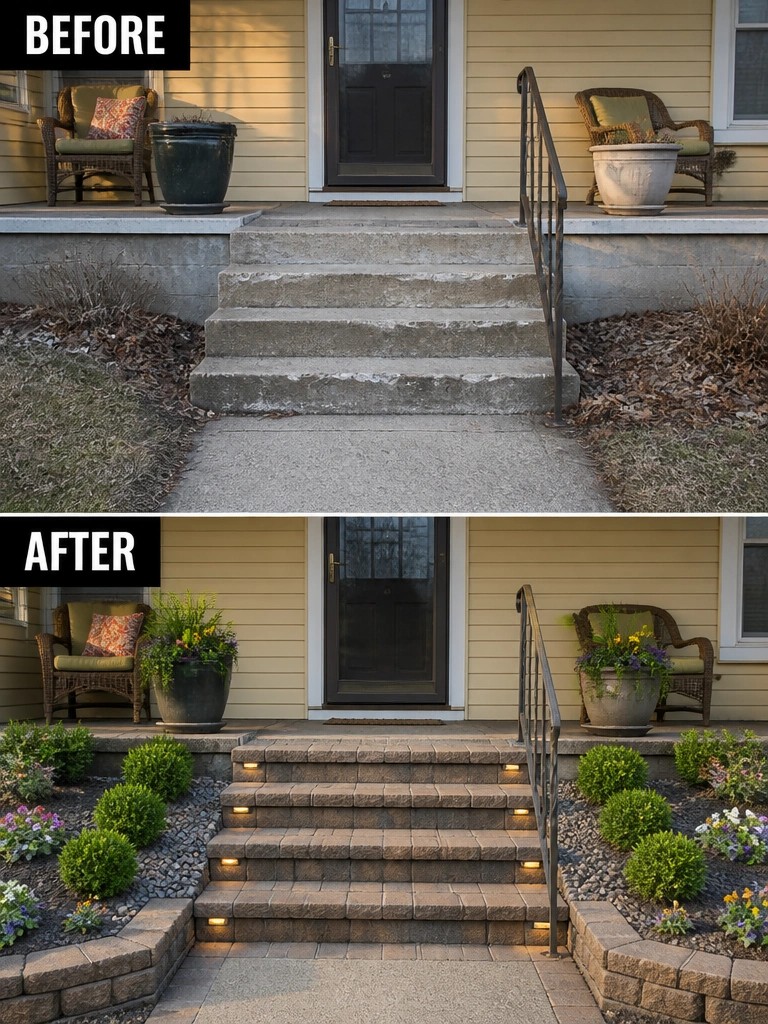
The main change here is replacing worn concrete steps with pavers that create clear lines and add built-in lighting. At the same time, the loose mulch areas on both sides were turned into edged garden beds that keep plants contained and make the whole entry feel planned instead of scattered.
This approach works well on any front walk or porch steps where the hard surface looks tired. Start with the paver layout so the shape is set, then fill the beds with low shrubs and seasonal color. Keep the beds fairly narrow so they do not block movement, and use the same edging material on both sides for a balanced look.
Add Pavers To Shape An Overgrown Border
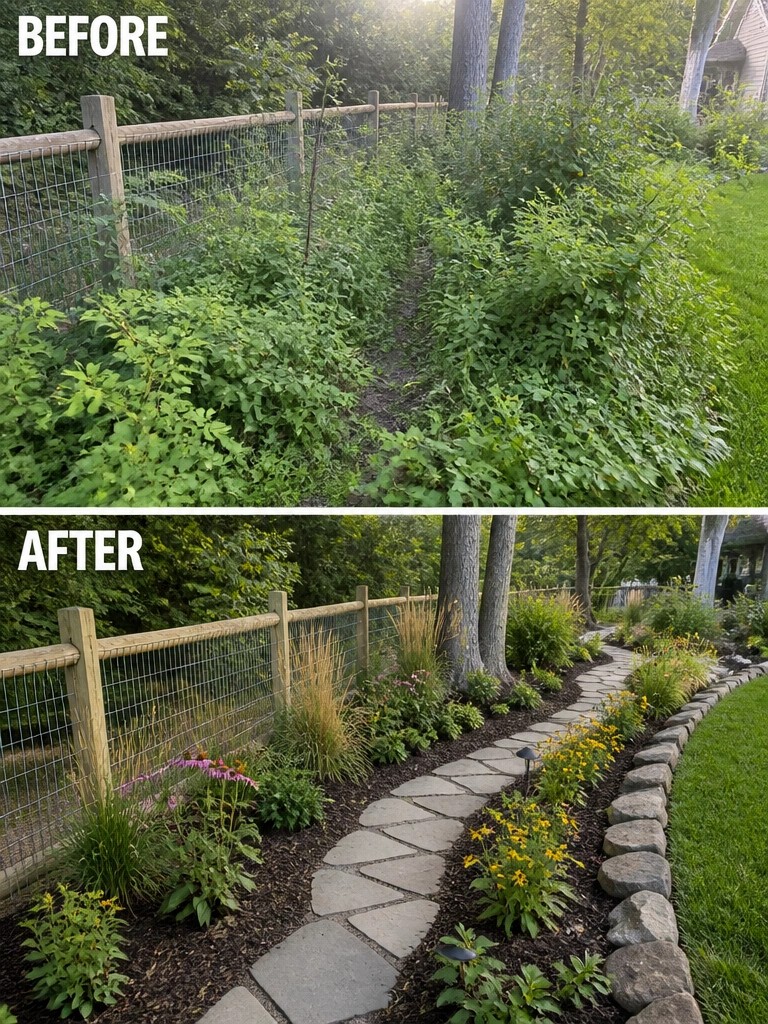
A simple stone path and a few defined beds can turn a thick, messy slope into something usable. The before shows plants spilling everywhere with no clear edge, while the after adds a curving walkway that separates the garden from the lawn and keeps everything looking intentional.
This approach works best along fences or property lines where growth gets away from you fast. Start by clearing the worst of the overgrowth, then lay the pavers first so the beds have a clear shape before you plant. Mulch helps keep the look clean and cuts down on weeds.
Define Driveway Edges With Pavers
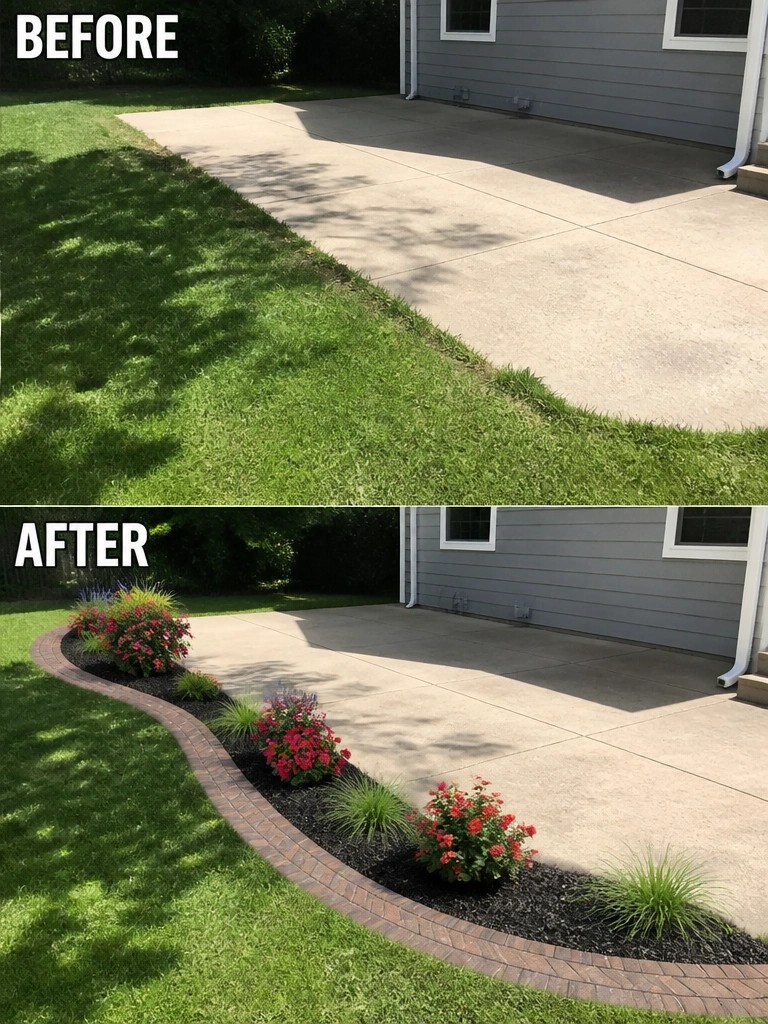
A straight concrete driveway next to a lawn often looks unfinished. Adding a curved brick paver edge creates a clear border that lets you add mulch and plants without the grass creeping in. The change turns a simple side strip into a planted bed that softens the hard surface and gives the whole front a more planned look.
This idea works well on homes where the driveway takes up a lot of space. Start by marking a gentle curve with a hose, then set the pavers on a simple base. Keep the bed narrow enough to reach for weeding, and choose plants that match the light in that spot. The edging does most of the work by keeping the design tidy over time.
Define A Patio With Pavers And Garden Beds
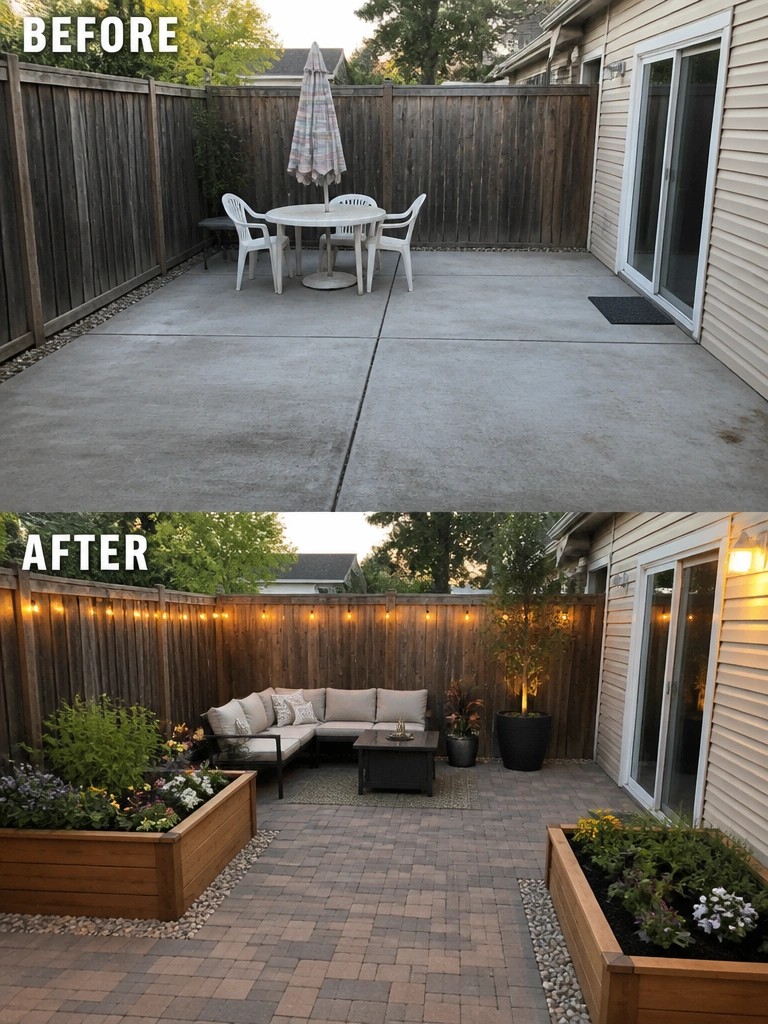
A bare concrete slab often feels unfinished and hard to use. Adding pavers creates a clear floor for seating while raised garden beds give the space edges and soften the look. The shift from open concrete to a defined area with plants on both sides makes the patio feel like an actual room instead of leftover space.
This approach works well on smaller yards where you want seating without crowding the whole area. Start with the paver layout so you know where the beds should sit, then keep the planting simple with a mix of taller shrubs and lower flowers. Make sure the beds leave enough room to walk around the furniture.
Turn A Bare Slope Into Tiered Garden Beds
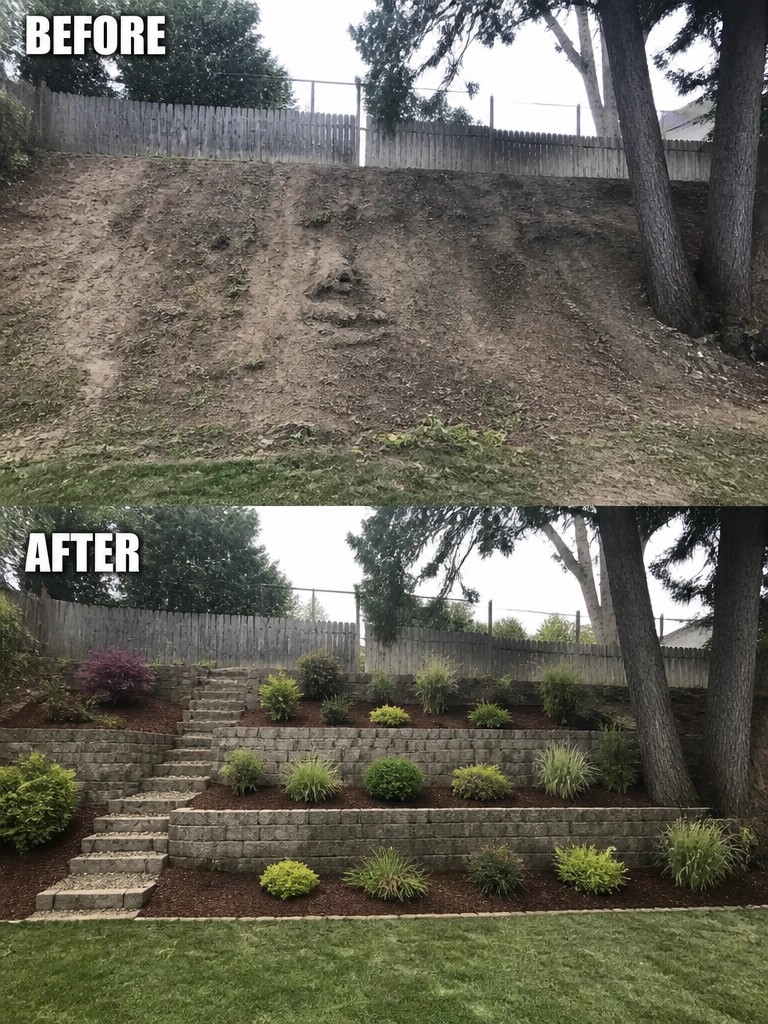
A steep, bare hillside is hard to plant and easy to lose to erosion. Adding low retaining walls turns the slope into flat, usable beds that hold soil and mulch in place. The change from an open dirt face to stacked levels makes the whole yard feel more organized.
This approach works best on moderate slopes where full grading would be too expensive. Start with the lowest wall first, backfill each level, and repeat the pattern upward. Keep the beds narrow enough to reach across for weeding, and choose plants that match the sun exposure on each tier.
Add Pavers And Garden Beds To Define A Pool Edge
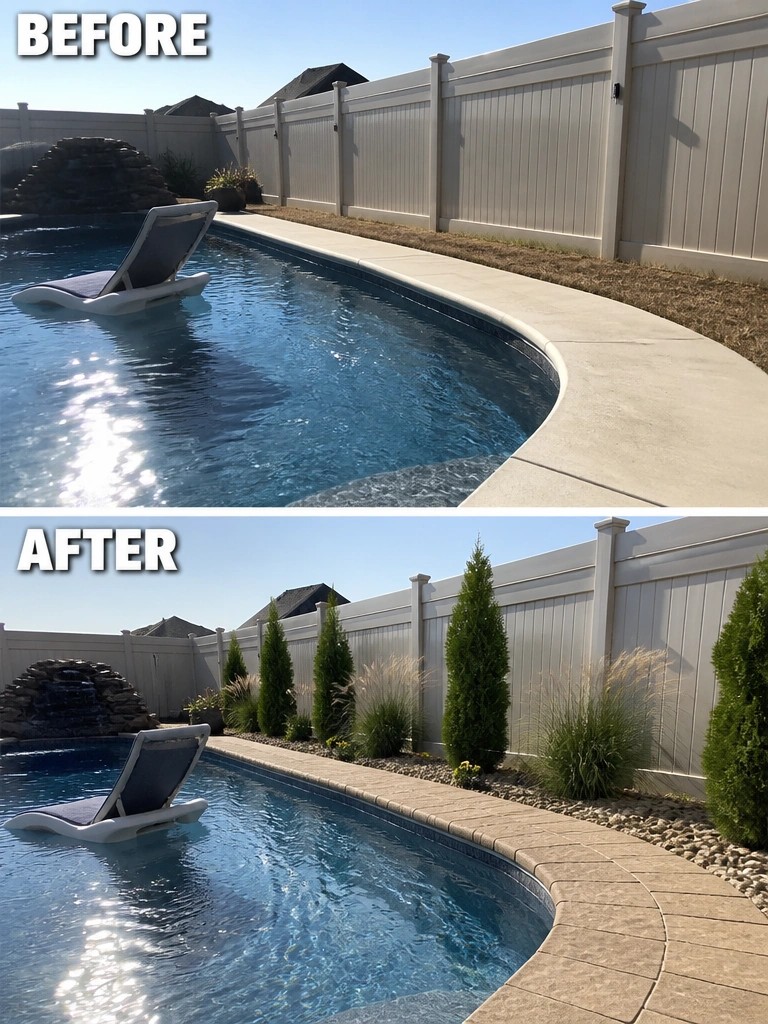
A plain concrete pool edge next to bare ground can feel unfinished. Switching to pavers for the border and adding a row of garden beds with shrubs and grasses gives the whole area clear shape and makes the space feel more intentional.
This approach works well on long pool sides or curved sections where the yard meets the deck. Start with the paver edge first so the planting beds have a clean line to follow, then fill in with a mix of taller evergreens and lower grasses. Keep the beds narrow enough that they do not crowd the walkway.
Replace A Cracked Walkway With Pavers
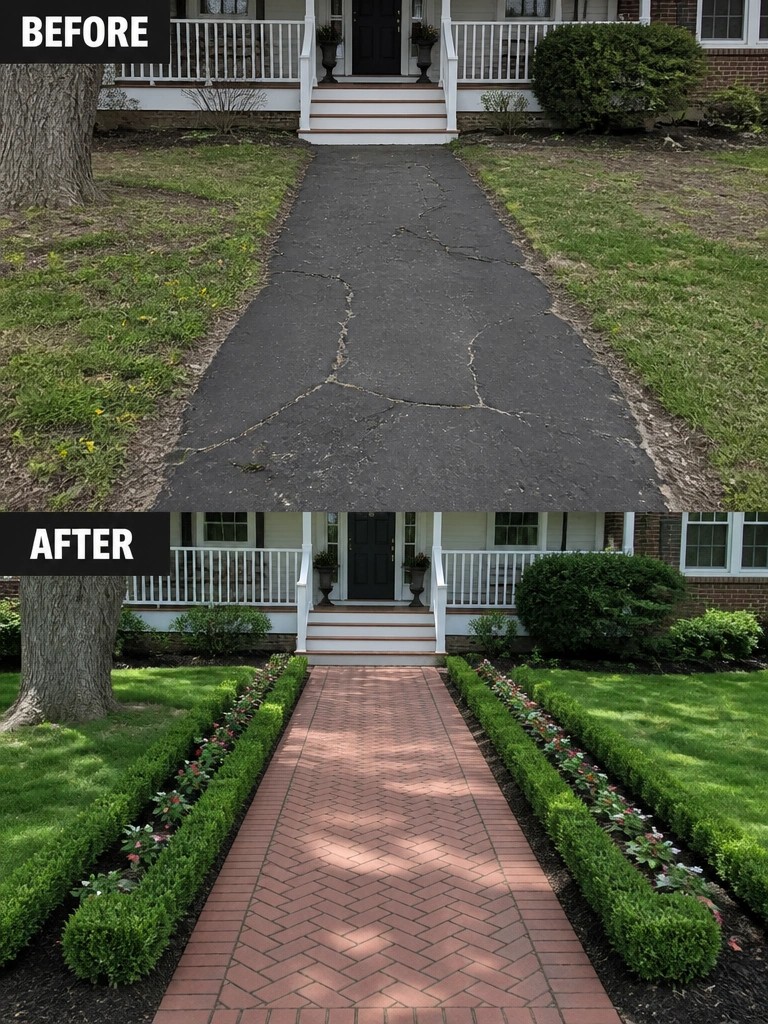
A cracked asphalt path makes the whole front yard feel neglected. Switching to brick pavers gives the walkway a solid, finished surface and creates a clear line from the street to the door. Adding low hedges and flower beds along both sides keeps the edges neat and stops grass from creeping onto the path.
This approach works best on simple front yards where the walk is the main feature. Start by removing the old material completely so the new pavers sit flat, then keep the planting simple with one or two repeating shrubs and a narrow flower border. The result looks planned without requiring a lot of extra space or complicated features.
Use Pavers To Shape A Bare Concrete Area
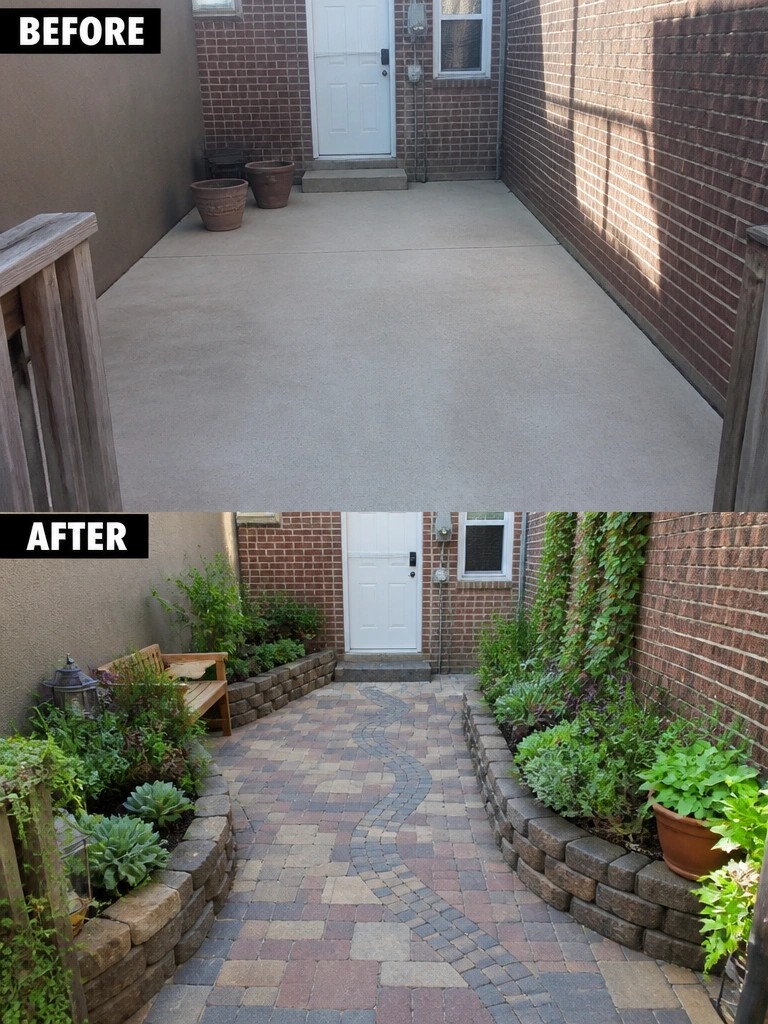
A flat concrete slab can feel like wasted space until you give it a clear path and some borders. In this case the pavers create a gentle curve that leads the eye to the door while the low stone walls turn the edges into actual garden beds instead of leftover strips.
This approach works well on narrow side yards or small entries where you need both a walkway and planting room. Start by laying out the path first so the beds follow its shape, then keep the plantings simple and low so the walkway stays the main feature.
Add Paver Edging To Shape A Garden Bed
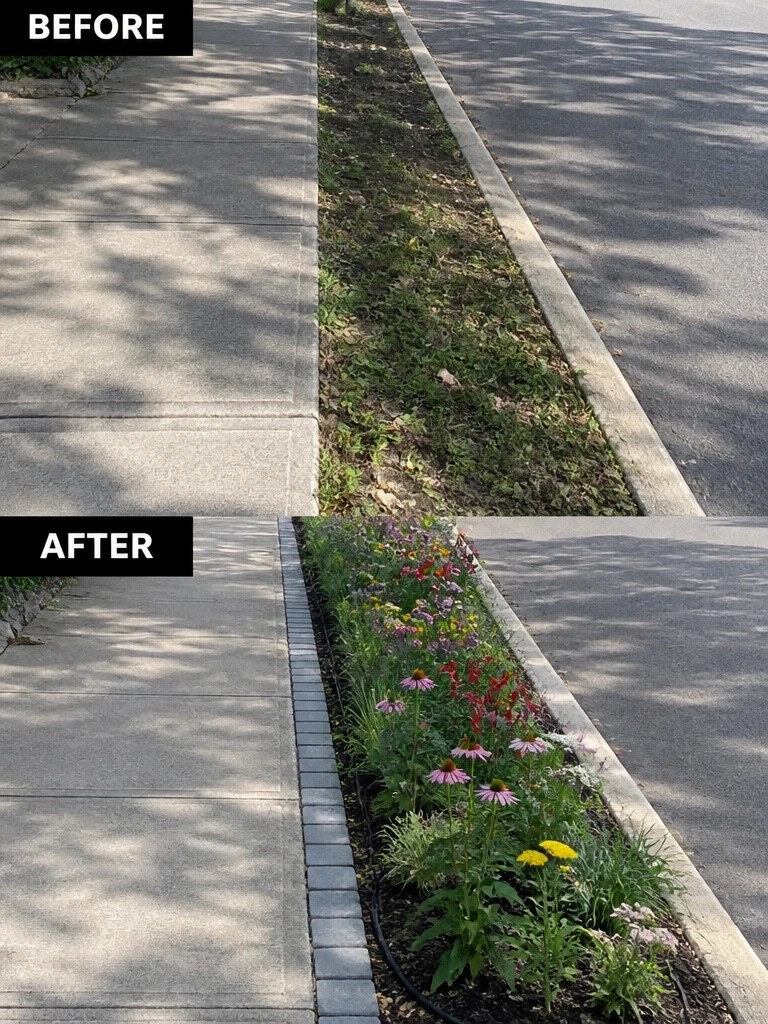
A weedy strip between the sidewalk and curb often gets ignored because it feels too narrow to do much with. Adding a simple paver border turns that same space into a clear garden bed that can hold flowers and mulch without looking messy. The edge gives the planting a finished line that separates it from the grass and the street.
This idea works well on any long, thin area where you want planting without losing walking space. Start with a basic paver or brick edge, then fill the bed with a mix of perennials that can handle the sun and occasional road salt. Keep the planting low enough that it does not block the view from the sidewalk.
Use Pavers To Define A Fire Pit Area
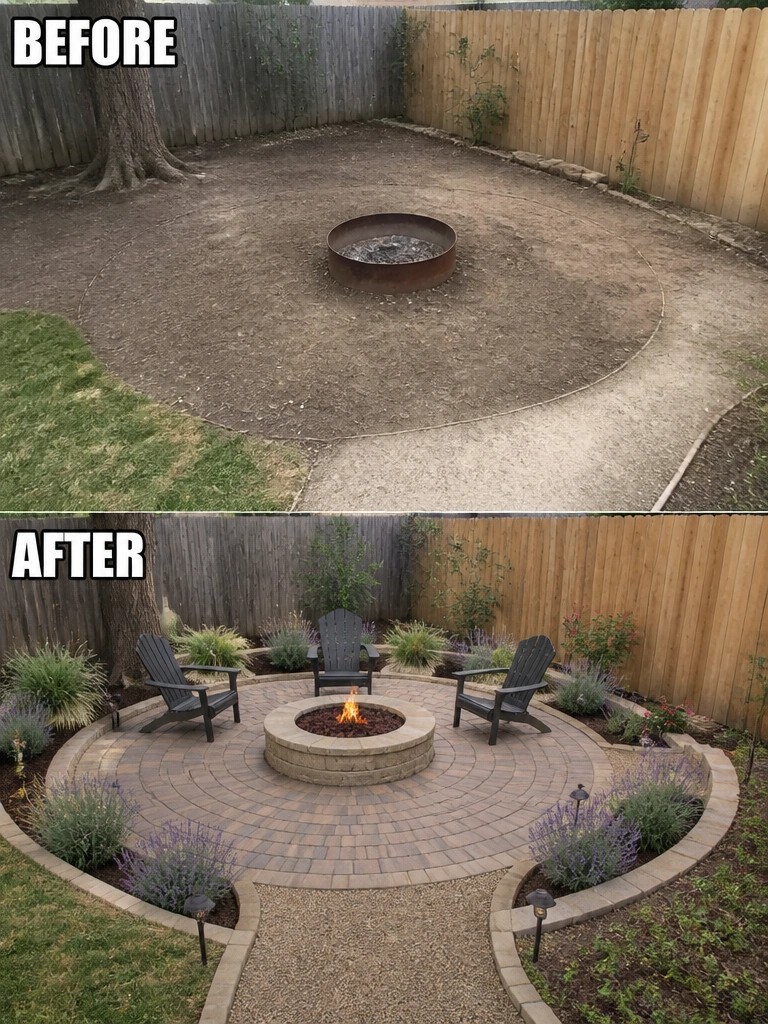
A bare dirt yard with just a metal fire ring often feels unfinished and hard to use. Adding a circle of pavers around the fire pit gives the space a clear edge and creates a stable surface for chairs. The garden beds added around the pavers keep planting contained and make the whole area look more intentional.
This approach works well in backyards that already have a fire pit but lack any surrounding structure. Start with the paver circle first, then add the beds and simple edging so the layout stays easy to maintain. It suits smaller yards where you want a usable seating spot without filling the entire space.
Use Pavers To Shape A Soggy Lawn Into Garden Beds
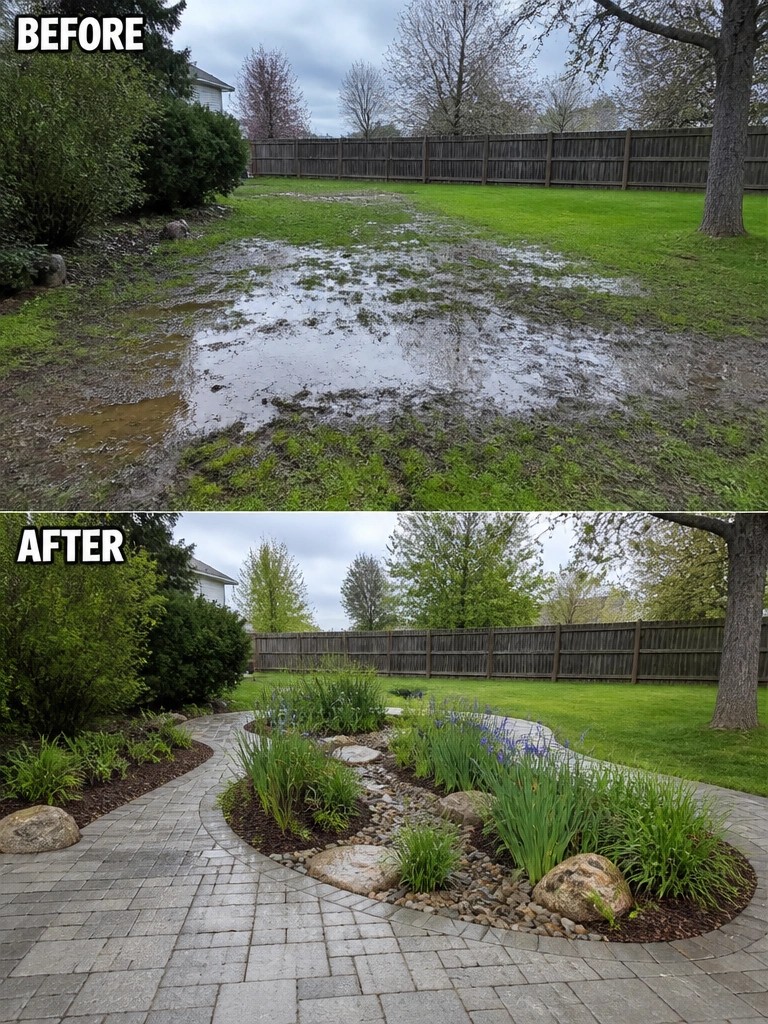
A wet, muddy patch in the backyard often stays unusable because water collects and grass cannot take hold. Laying pavers in a gentle curve and building raised beds around them gives the water a place to drain while turning the same space into a planted area that stays neat.
This approach works well in low spots where the lawn struggles. Start by improving drainage under the pavers, then keep the beds narrow enough to reach from both sides. The result is a simple path that guides movement and keeps mulch and plants contained without constant edging.
Break Up A Large Lawn With Paver Paths And Garden Beds
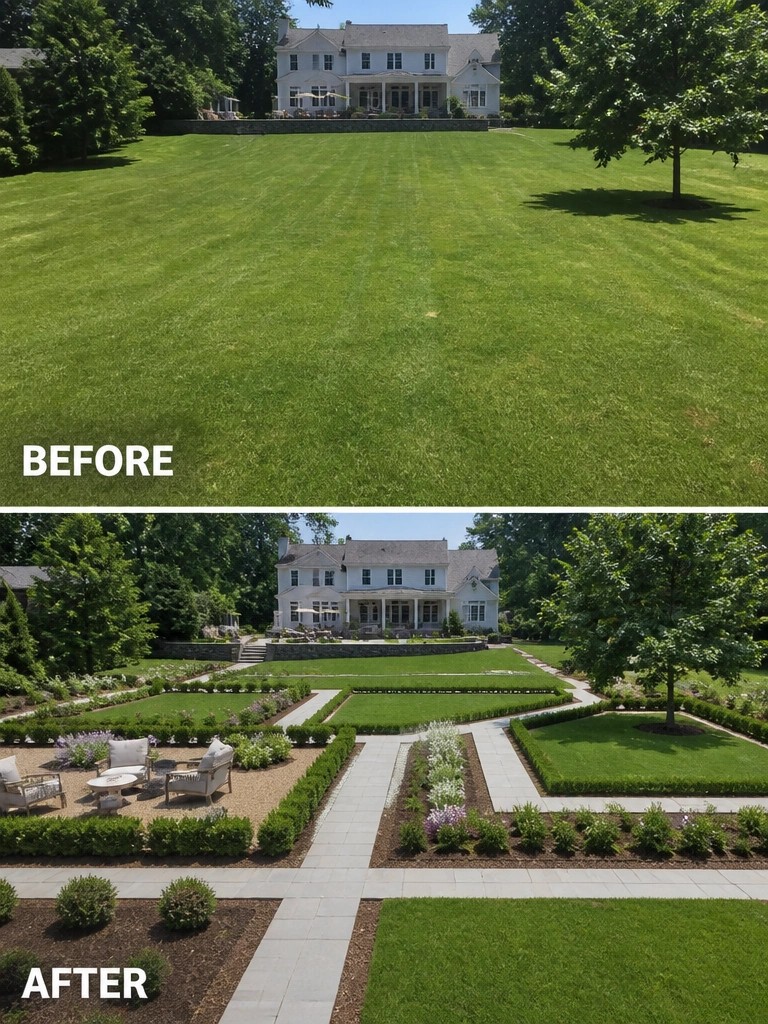
A big open lawn can feel unfinished even when the grass looks healthy. Adding paver paths and raised garden beds divides the space into smaller sections that feel more intentional and easier to maintain.
This approach works well on properties with wide yards where there is no clear flow between the house and the rest of the landscape. Start by laying out paths that connect main areas like seating spots or entry points, then fill the new beds with simple shrubs and perennials. Keep the lawn edges clean so the new structure stands out without crowding the space.
Add Structure To An Overgrown Side Yard
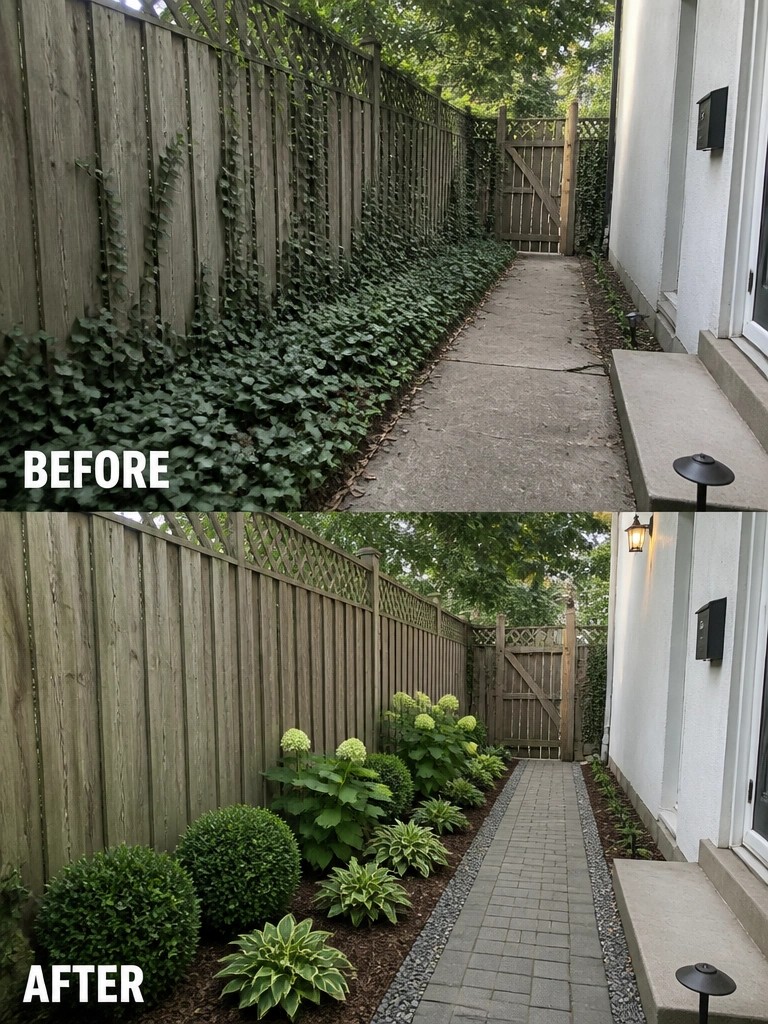
Overgrown ivy can quickly take over a narrow path and make the whole side of the house feel neglected. In this case the concrete walkway was replaced with brick pavers and the ivy was cleared away so low garden beds could be added along the fence. The new beds give the space a clear edge and keep plants from spilling onto the path.
This approach works well on any long, narrow side yard where you want to improve access without major construction. Start by removing the heaviest growth first, then lay a simple paver or gravel path to create the main line. Once the path is set, fill the beds with a mix of low shrubs and perennials that stay within bounds. The result feels intentional even when the planting stays fairly simple.
Add A Paver Path To Shape The Yard

A messy backyard often feels bigger and more neglected when there is no clear path or edge to follow. Adding a simple paver walkway through the center and planting garden beds on both sides gives the space an immediate sense of order. The path leads the eye forward and makes the yard feel smaller and more intentional instead of just an open patch of weeds.
This approach works well in long or narrow yards where the lawn runs straight into the fence. Start by clearing the area completely before laying the pavers so the beds sit at the right height. Keep the plantings fairly low near the path so the walkway stays easy to use and does not feel crowded.
Use Pavers And Garden Beds To Structure A Front Yard
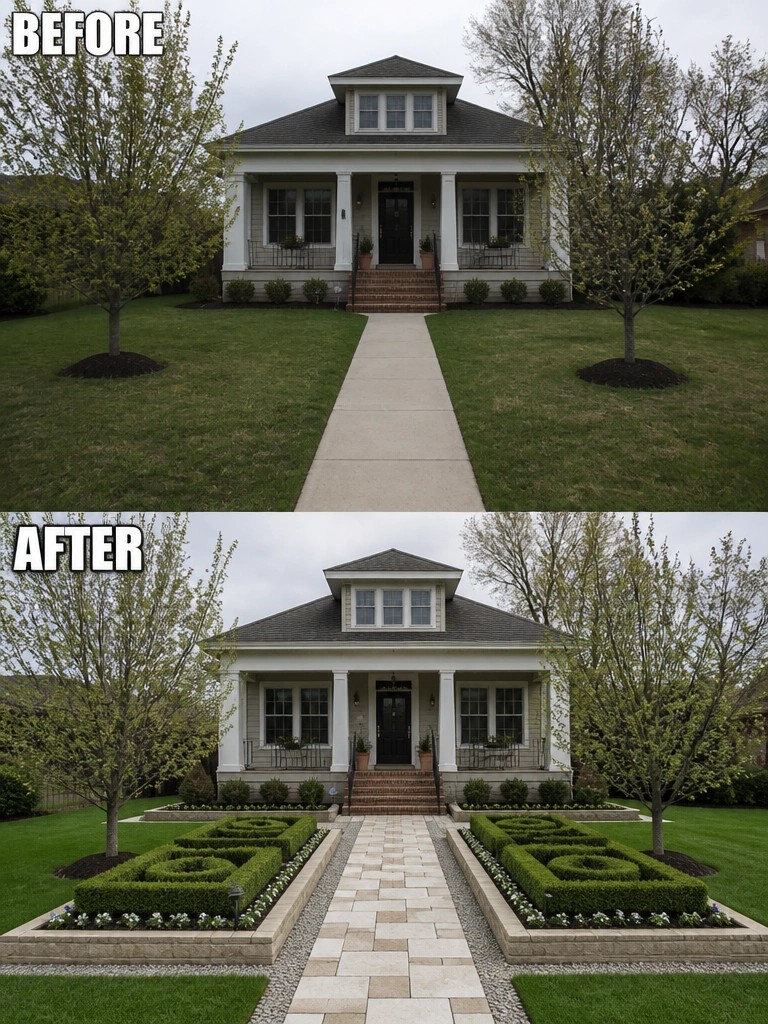
The front yard changed from a plain lawn with a basic concrete path into a more organized space once the garden beds were added. The new beds frame the walkway and give the yard clear shape while keeping the lawn open on both sides.
This idea works best on homes where the front path feels too plain. Lay out the beds first with simple edging, plant low hedges inside them, and use pavers down the center with gravel along the sides. It gives the yard a finished look without crowding the space or requiring a full redesign.
Add Defined Garden Beds To Organize An Overgrown Yard
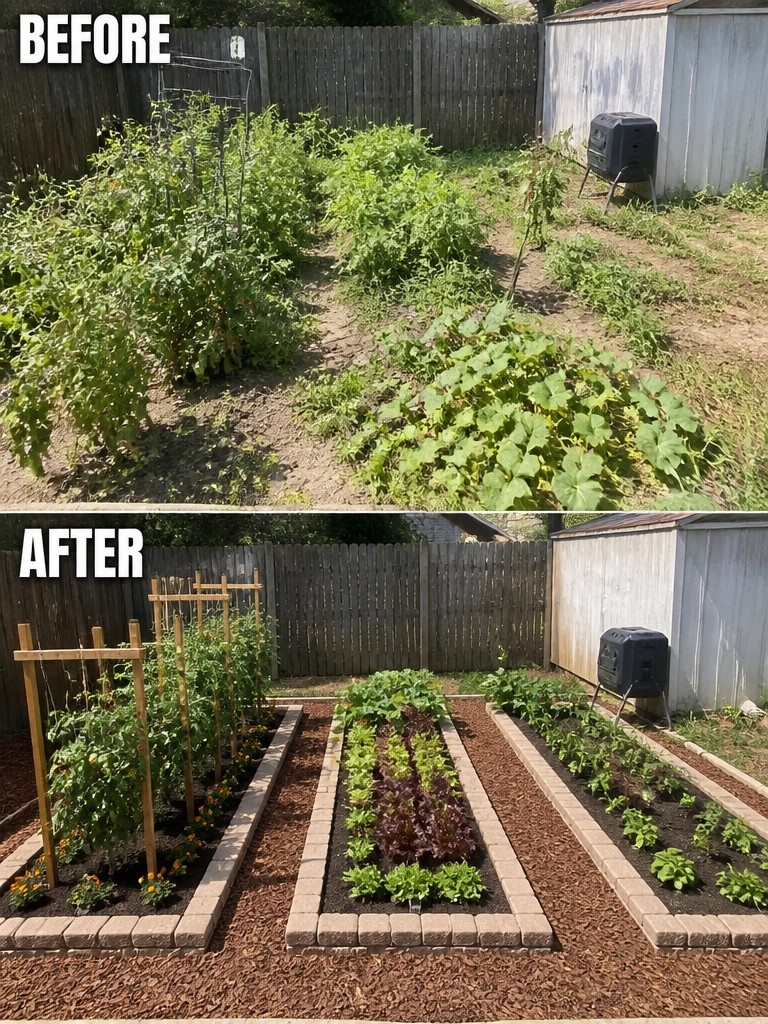
A messy backyard with plants growing in every direction becomes much easier to manage once you add clear borders and walkways. The paver edging and mulch keep the beds separate from the surrounding grass and give the whole space a planned feel instead of a random patch of dirt and vines.
This idea works best in yards that already have some sun but lack any real layout. Mark out straight rows first, install simple edging, and fill the beds before planting. It keeps maintenance lower and makes it easier to reach everything without stepping on the soil.
Use Pavers To Shape A Bare Backyard

A flat dirt yard offers little to work with, but adding a curved paver patio right away gives the space a clear purpose. The garden beds along the fence then frame the seating area and keep the planting from looking scattered. This simple layout turns an empty corner into a spot where chairs and lights can actually stay.
The same approach works well in small or narrow yards where you want to avoid a large lawn. Start with the pavers to mark the main sitting zone, then add beds on the edges using the fence as a backdrop. Keep the paths wide enough for easy movement and choose plants that can handle the local conditions so the beds stay low-maintenance.
Add Structure To A Bare Entry With Pavers And Garden Beds
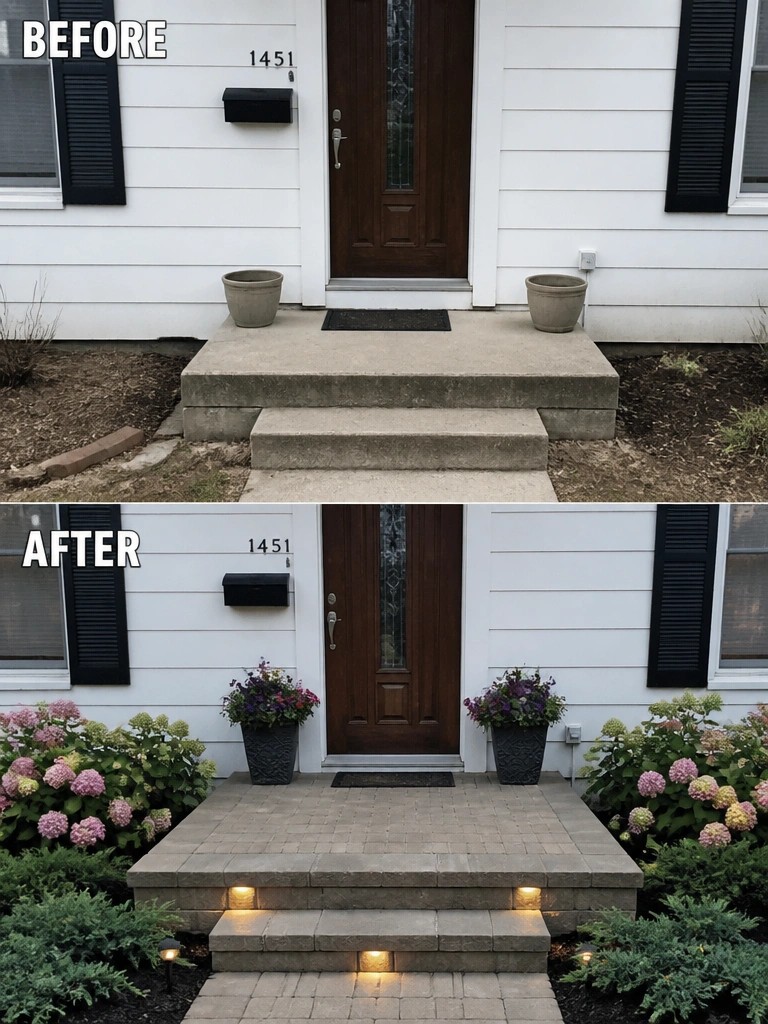
A bare concrete porch often looks unfinished when the ground around it stays flat and empty. Laying pavers across the landing gives the entry a solid edge and a more finished surface. Adding garden beds on each side brings planting right up to the steps so the whole area feels planned instead of leftover.
This idea works best on small front yards where you want to improve the approach to the door without a big budget. Keep the beds fairly narrow and use plants that stay tidy. The pavers also make it simple to run low lights along the steps if you want the entry to feel safer after dark.
Use Pavers To Give A Side Path More Structure

A gravel side yard often stays bare because it feels like leftover space. Switching to pavers creates a solid walking surface while a raised garden bed along the house adds planting without taking up much room. The change turns a narrow passage into something that feels planned instead of neglected.
This idea works best on homes with long side yards that connect the front and back. Keep the bed narrow and choose tough shrubs that do not need constant care. The pavers also make it easier to move through the space with a hose or wheelbarrow.
Create Defined Garden Beds Along Pavers
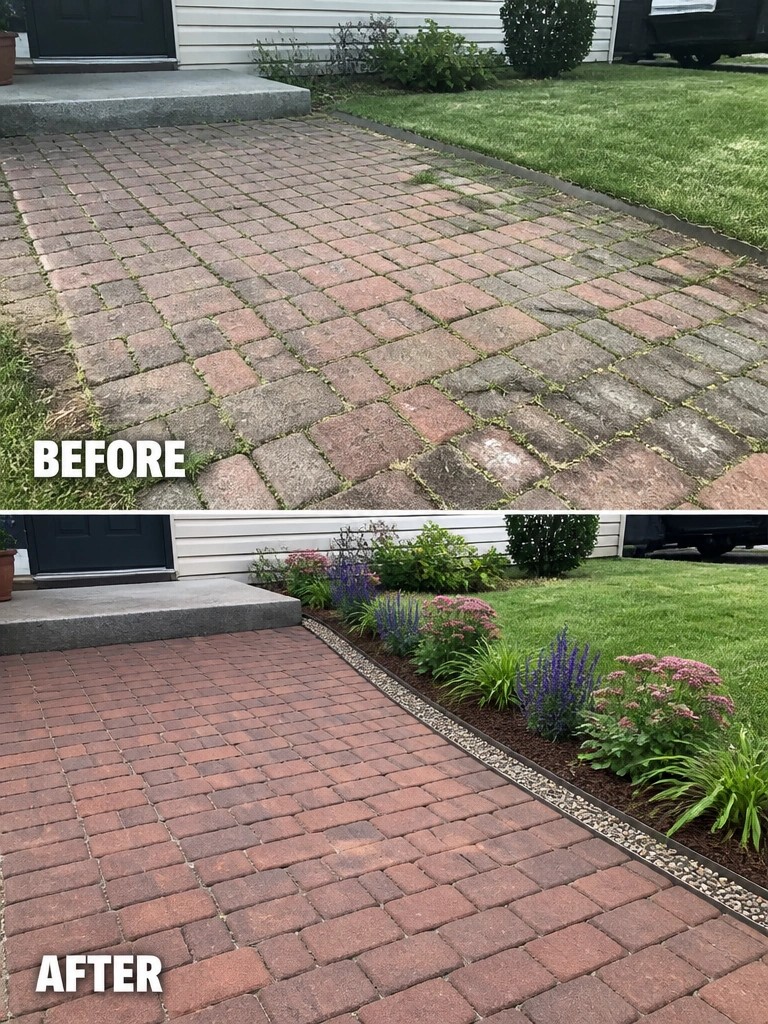
A common issue with paver walkways is the ragged edge where the hard surface meets the lawn. In this case the fix was straightforward. Adding a clean border and a narrow garden bed gave the whole area structure and made the pavers look more intentional.
This approach works well on any home where pavers already exist but feel unfinished. Install simple edging first, then fill the bed with mulch and a mix of low perennials that stay neat without constant work. The result is a clearer path and an easier yard to maintain.
Add Structure To An Overgrown Stairway
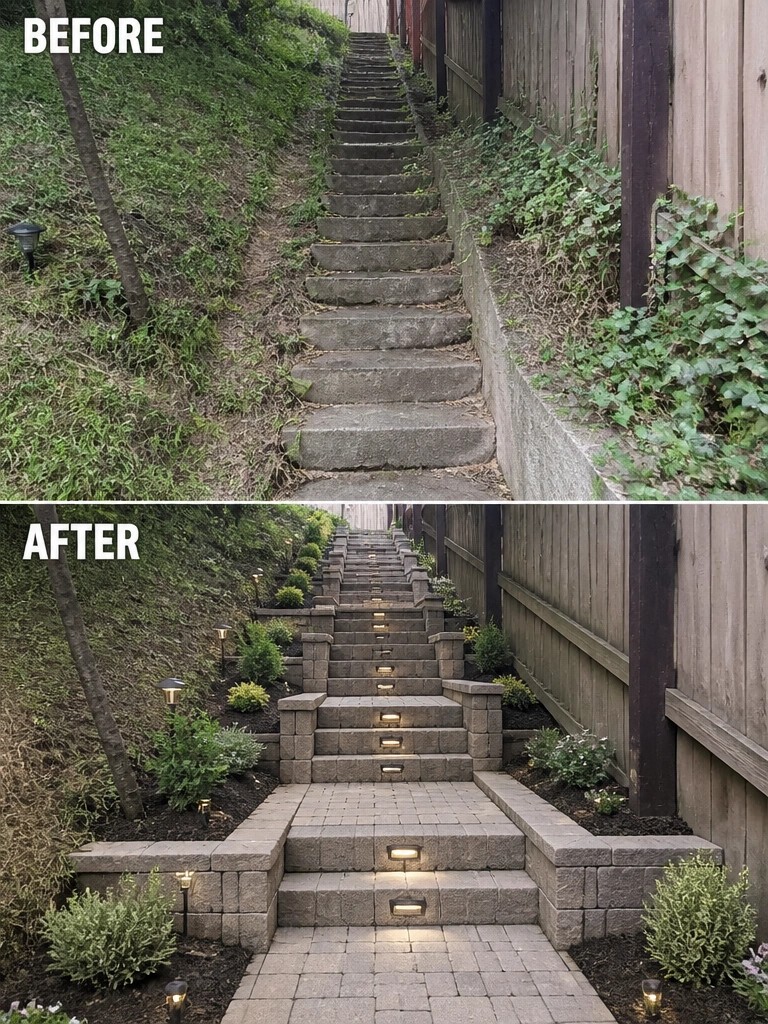
A steep set of old concrete steps can easily disappear into the surrounding growth when there are no clear edges. Replacing the worn stairs with pavers and building low stone walls on each side gives the slope a purpose and makes the path feel intentional instead of forgotten.
This approach works well on any hillside or narrow side yard where the ground drops away. Start by clearing the overgrowth, then set the pavers in straight runs with planted beds between the sections so the slope stays manageable and the plants have room to fill in without taking over the walkway.
Frequently Asked Questions
Q: How do I choose pavers that won’t clash with my existing garden beds? A: Match the paver color to your soil or the dominant plant tones nearby. Lay a few samples on the ground first and check how they look at different times of day. This keeps the whole area feeling connected without extra effort.
Q: What base do I need under pavers so they stay flat over time? A: Dig down a few inches and pack in crushed gravel before you set anything. Add a thin layer of sand on top for fine adjustments as you work. The beds beside them will drain better too when water has somewhere to go.
Q: How often should I clean between the pavers once everything is done? A: Sweep out leaves and debris every couple of weeks during growing season. A quick rinse with the hose handles most stains without special tools. And check for weeds early so they do not take hold in the joints.
