

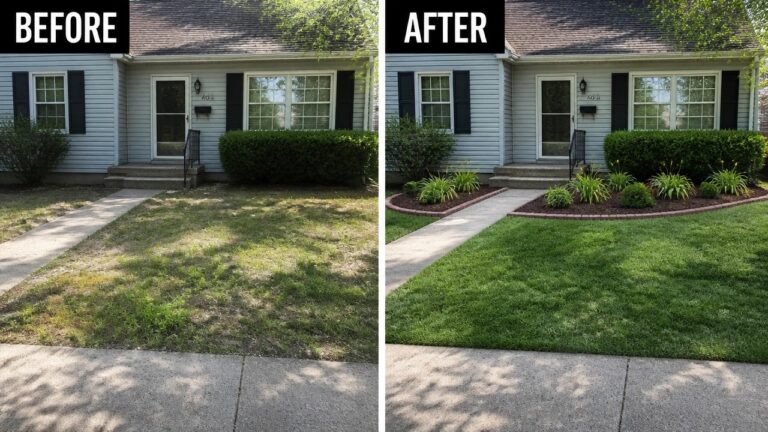
I often start by looking at how the existing layout of a yard holds up before adding anything new to it.
Clearing away overgrowth and defining the beds tends to make the whole property feel less overlooked in a way that is hard to ignore.
Working in stages with budget options for pathways or privacy screens lets things settle into place without rushing the process.
Some changes stick better than others.
I tend to save the ones that build on what is already there.
Define Your Garden Beds With Simple Edging
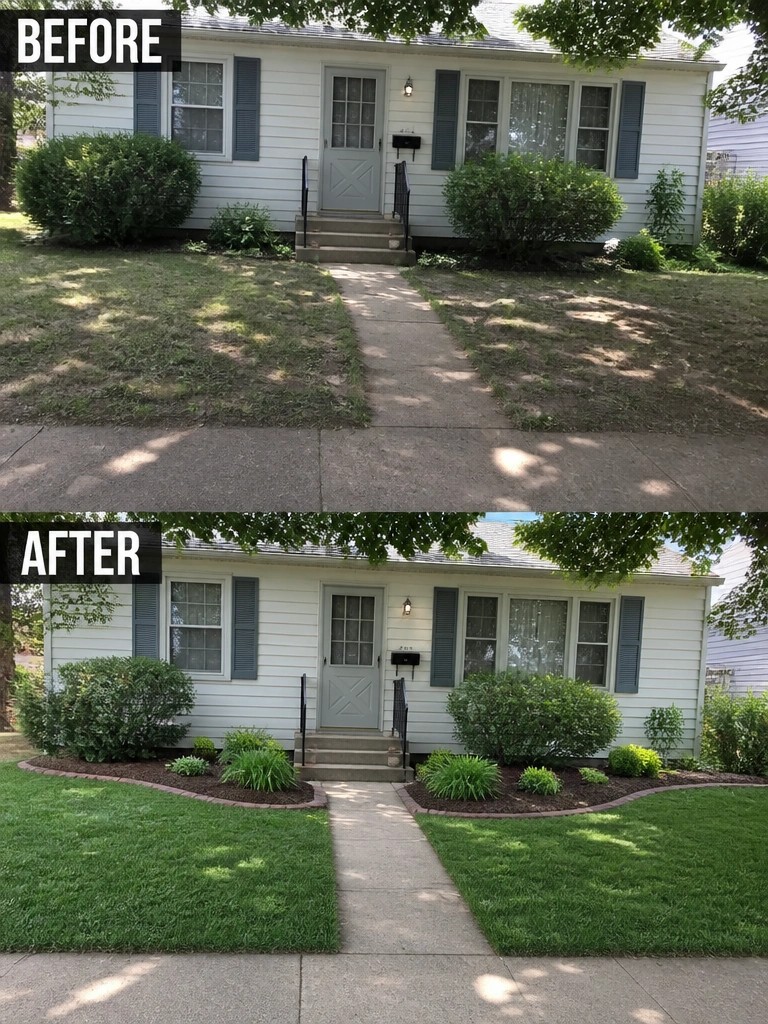
The front yard looked scattered because the lawn ran right up to the house with no clear separation. Adding a clean edge and mulch around the foundation shrubs pulled everything into shape and gave the beds a finished look without adding many new plants.
This approach works best on small front yards where the lawn and planting areas compete for attention. Start by marking a gentle curve along the house, then cut the edge and add mulch to keep the beds distinct. It keeps maintenance easier and stops the grass from creeping into the shrubs over time.
Define The Front Path With Pavers And Gravel
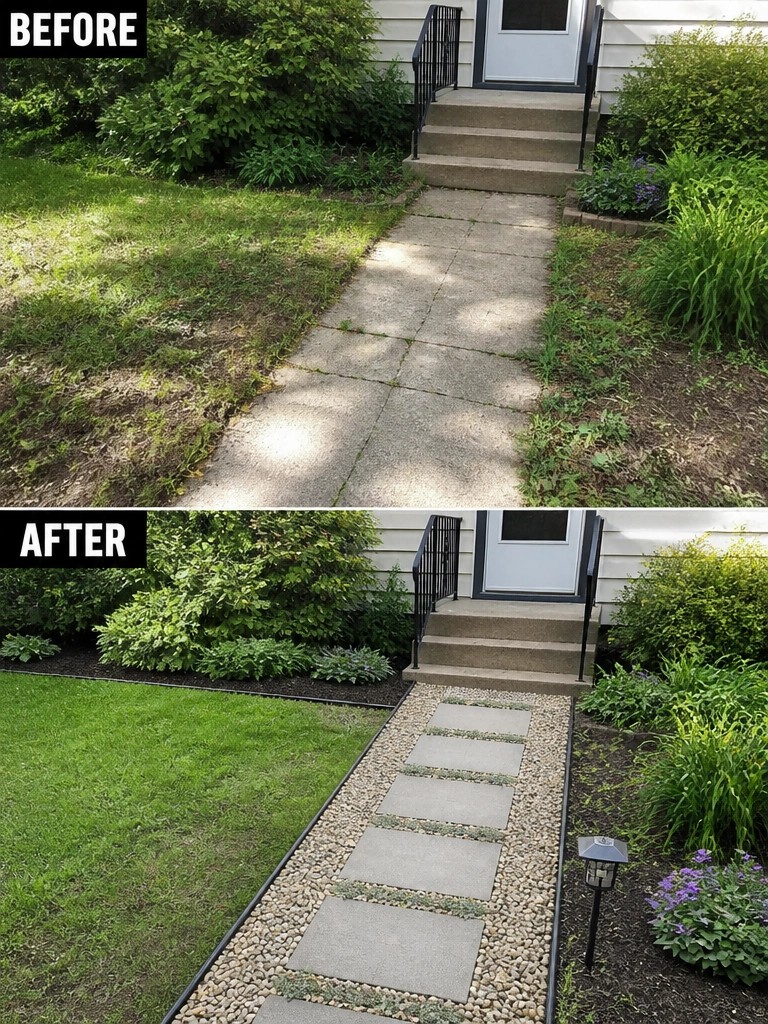
A plain concrete walkway next to ragged grass edges often makes the front yard feel unfinished. Switching to stepping stones set in gravel gives the path clear shape and keeps the lawn from creeping over the edges.
This idea works best on straight, narrow approaches where you want simple structure without adding much cost. Keep the gravel contained with edging and choose stones that match the scale of the house so the path feels balanced rather than oversized.
Define Foundation Beds With Layered Planting
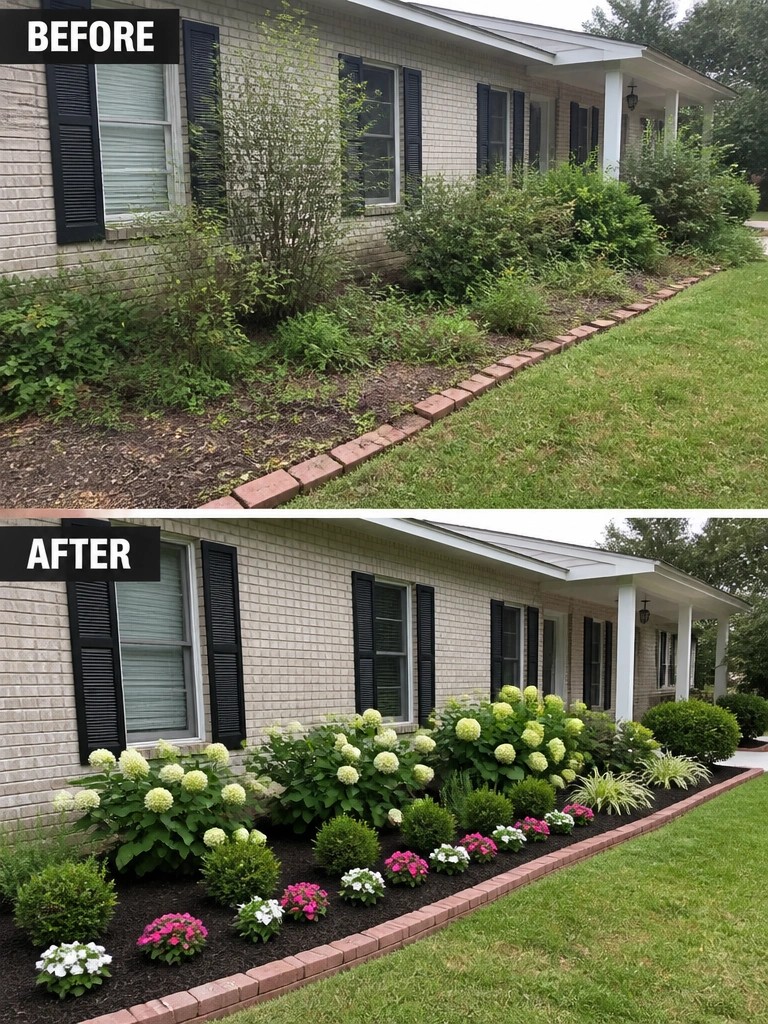
Overgrown shrubs and weeds along a foundation make the front of a house look neglected. The simple fix shown here is clearing the mess first, then laying out beds with a clear structure of taller plants in the back and smaller ones in front, all edged neatly and mulched.
This approach works well on long, low ranch homes where the planting runs the full length of the house. Start by removing whatever is there, keep the existing brick border if it is still solid, and choose a few repeating plants rather than filling the space with too many varieties. Mulch helps keep the beds looking tidy between waterings and weeding.
Define The Curb Strip With Gravel And Plants
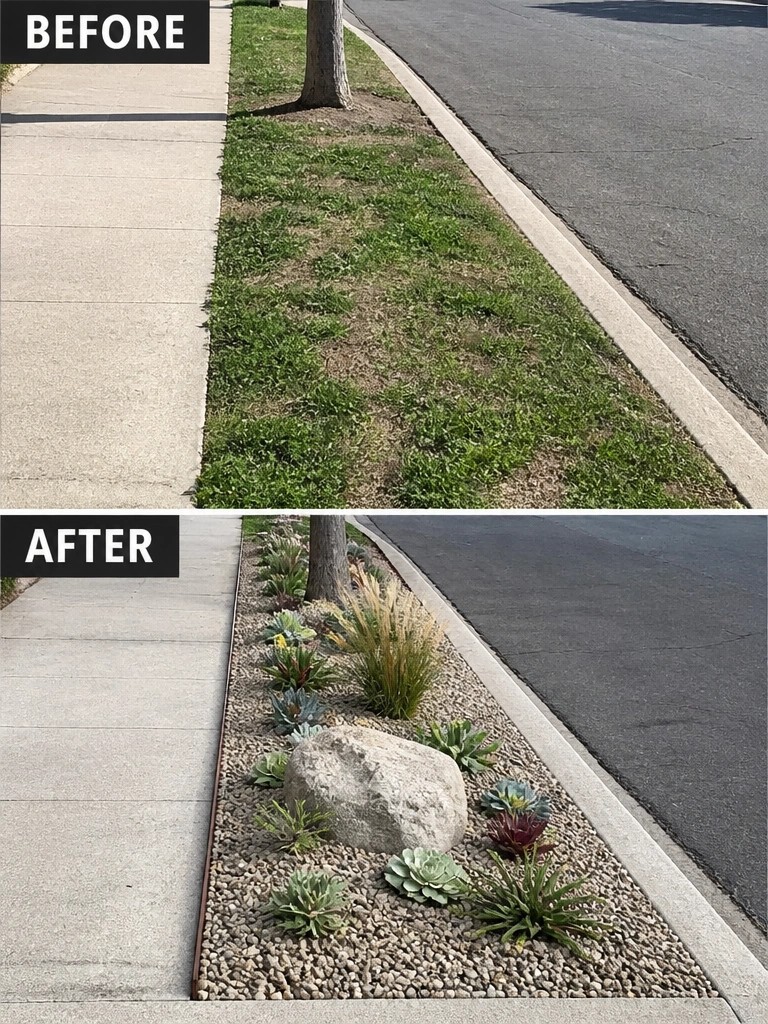
A narrow strip of grass between the sidewalk and street often ends up patchy and difficult to maintain. Switching it to a gravel bed with a few low plants creates a clean edge that makes the whole front look more cared for.
This idea works best on small or awkward areas where a full lawn does not make sense. Edging the space first, adding fabric and gravel, then planting hardy succulents keeps the look simple and helps control weeds without constant mowing.
Replace Overgrown Shrubs With Low Foundation Beds
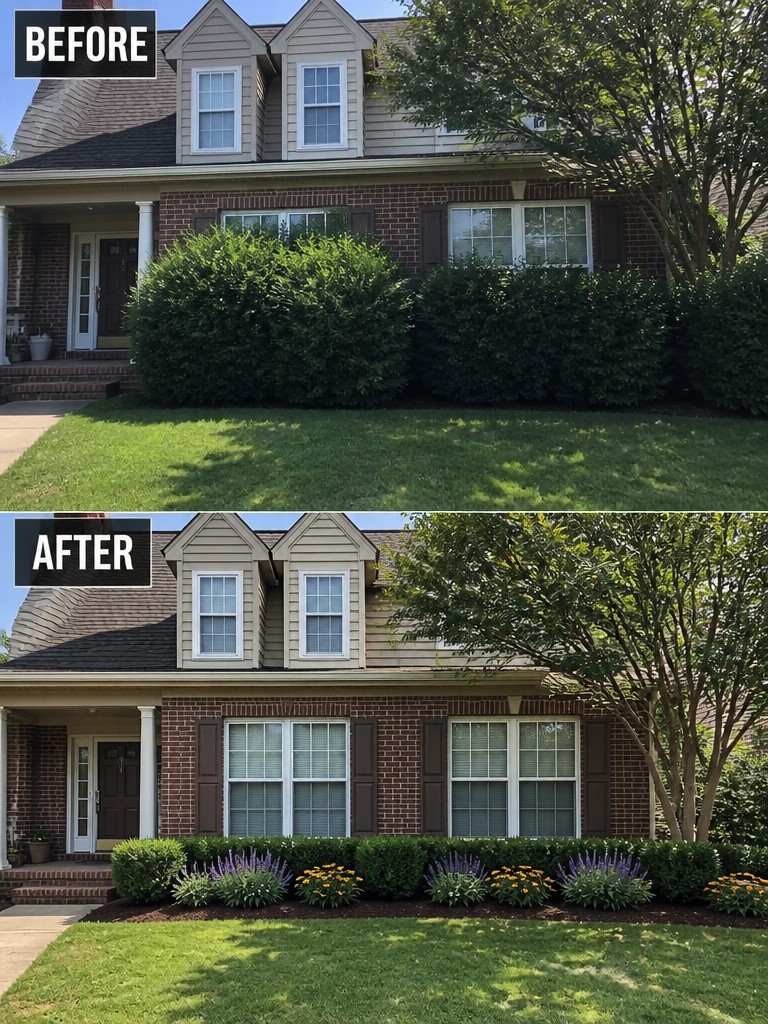
Large shrubs can quickly hide windows and make a house feel closed in. Removing the heavy bushes along the front and adding a row of lower plants opens up the view of the brick and creates a much lighter look.
This idea works on many older homes where foundation plantings have simply outgrown their space. Keep the beds narrow, use a mix of perennials for color, and add mulch to keep the edge clean.
Define A Bare Corner With Raised Planters
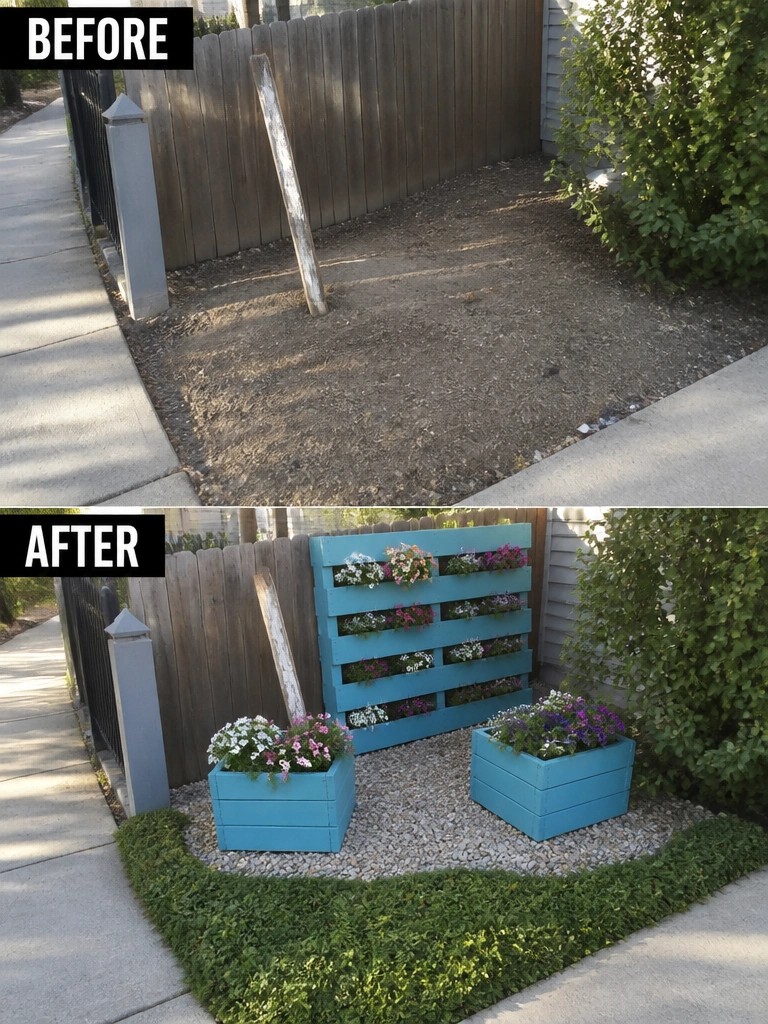
A bare dirt patch next to a fence often feels like wasted space. Adding a few raised planters, some gravel, and a simple grass edge turns the area into something that looks intentional and easy to maintain. The change works because the planters give height and hold the planting in one clear spot instead of letting it spread everywhere.
This idea suits small side yards or corners where a full garden bed would feel too big. Start with the planters first, then fill the ground with gravel so weeds stay down and the space stays neat. Keep the number of planters small so there is still room to walk around them.
Add Tiered Beds To Handle A Slope
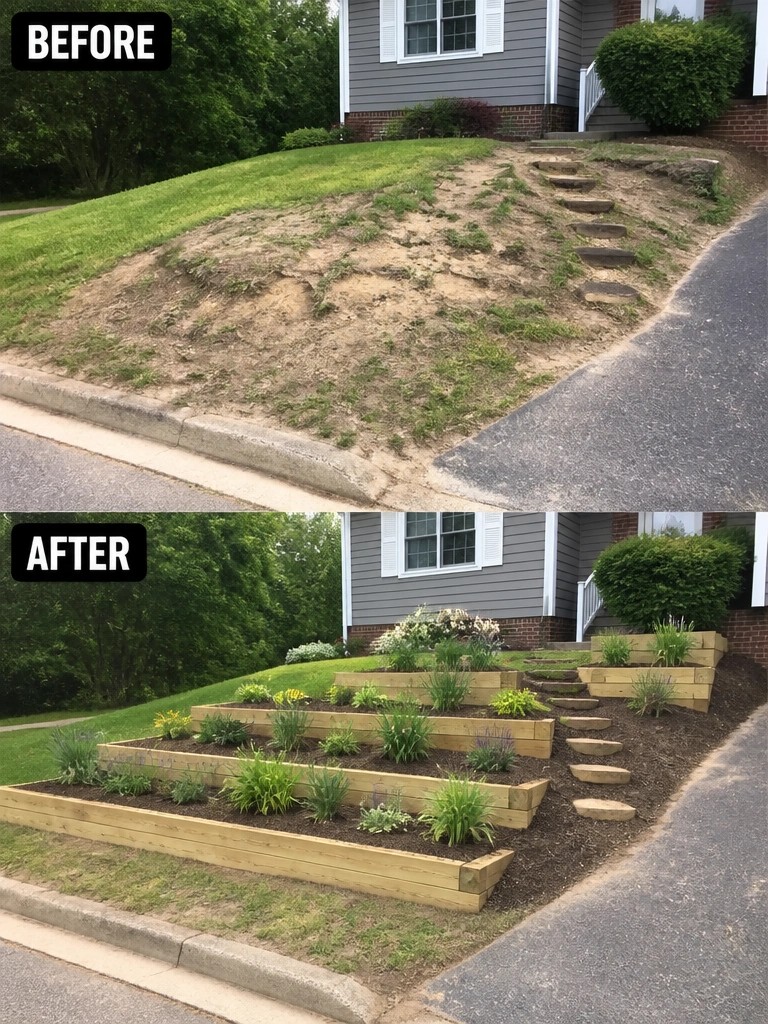
A bare slope often leads to erosion and patchy grass that never looks finished. Adding tiered retaining walls turns the same area into usable planting space while keeping the soil in place.
This idea works best on front or side yards where the grade drops toward the street. Use basic lumber for the walls, build from the bottom up, and keep the beds narrow enough to reach across without stepping inside them. Mulch helps hold everything down until the plants fill in.
Dress Up Concrete Steps With Planters And String Lights
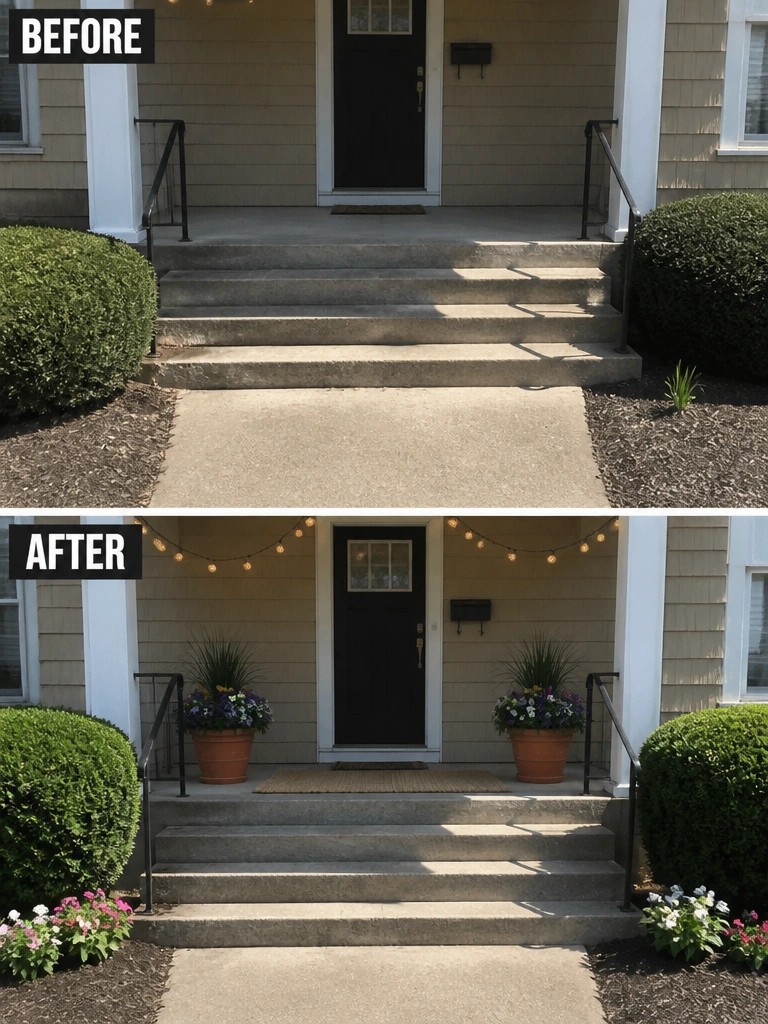
A plain set of concrete steps can look flat and unfinished when there is nothing to break up the gray surface. Placing matching pots on either side of the door and running a simple string of lights overhead gives the entry a clear center and makes the house feel more cared for.
This approach works best on homes with small front porches or basic stoops. Keep the pots in scale with the door, choose plants that match the season, and use lights that can stay up without much fuss. The goal is to add structure without crowding the walkway or steps.
Define Garden Beds With Simple Edging
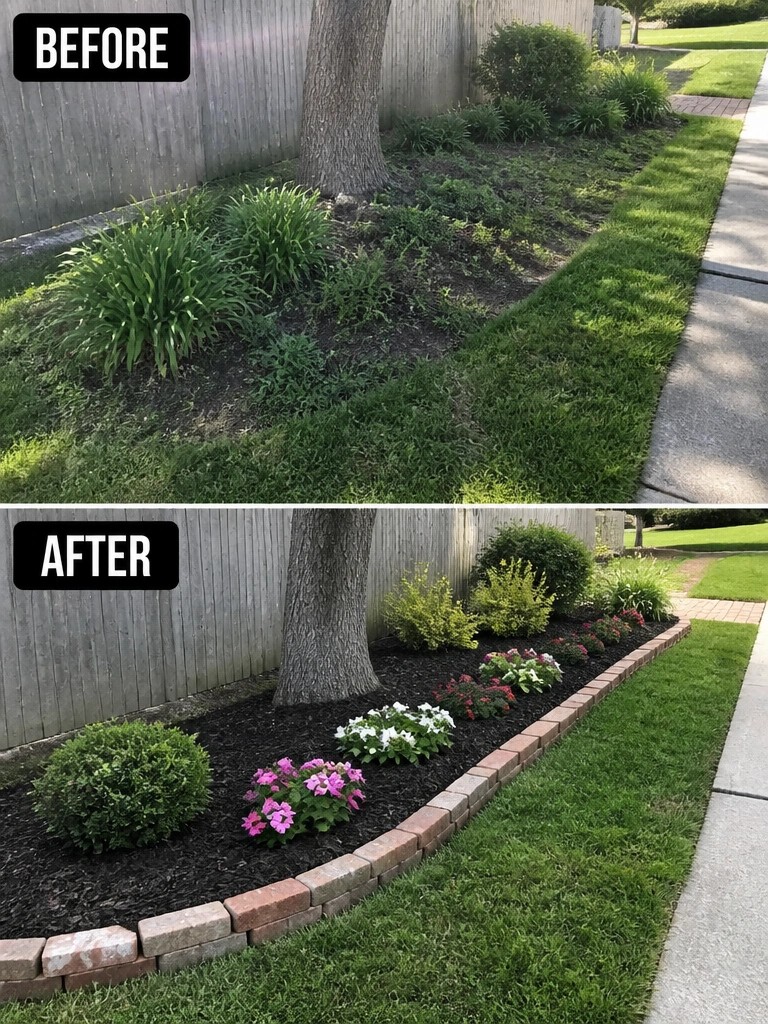
A common issue in many yards is a strip of weeds and uneven grass running along a fence or property line. Adding brick edging and a layer of mulch turns that messy area into a clear planting bed that looks planned and stays easier to maintain.
This idea works best in narrow side yards or front borders where you want structure without a lot of new construction. Clear the weeds first, then set the edging in a gentle curve before mulching and adding a few shrubs and flowers. The result keeps grass from creeping in and gives the whole area a finished edge.
Use Gravel And Stepping Stones To Organize A Front Yard
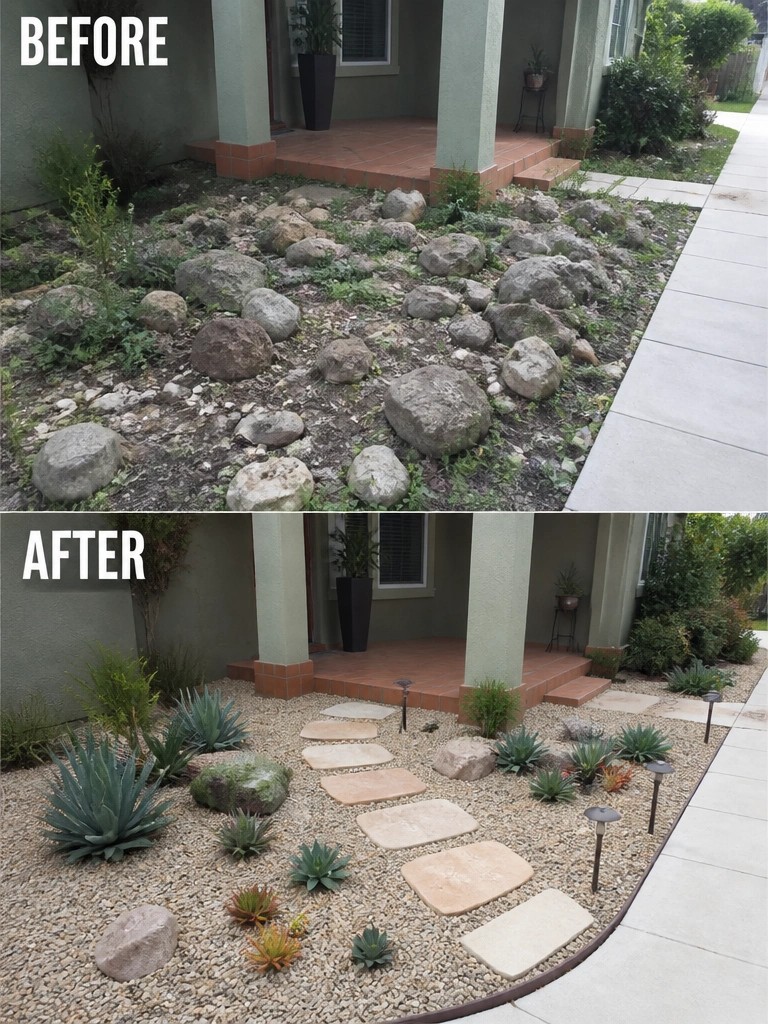
The front area went from a messy spread of loose rocks and weeds to a clean gravel surface with a simple stone path. That one change makes the entry feel planned instead of neglected and cuts down on constant weeding.
Gravel works best in small front yards or side strips where you want low maintenance. Start with a solid base layer, then add stepping stones only where people actually walk. Keep new plants spaced out so the gravel stays the main surface instead of getting crowded.
Add Defined Mulch Beds Around Trees
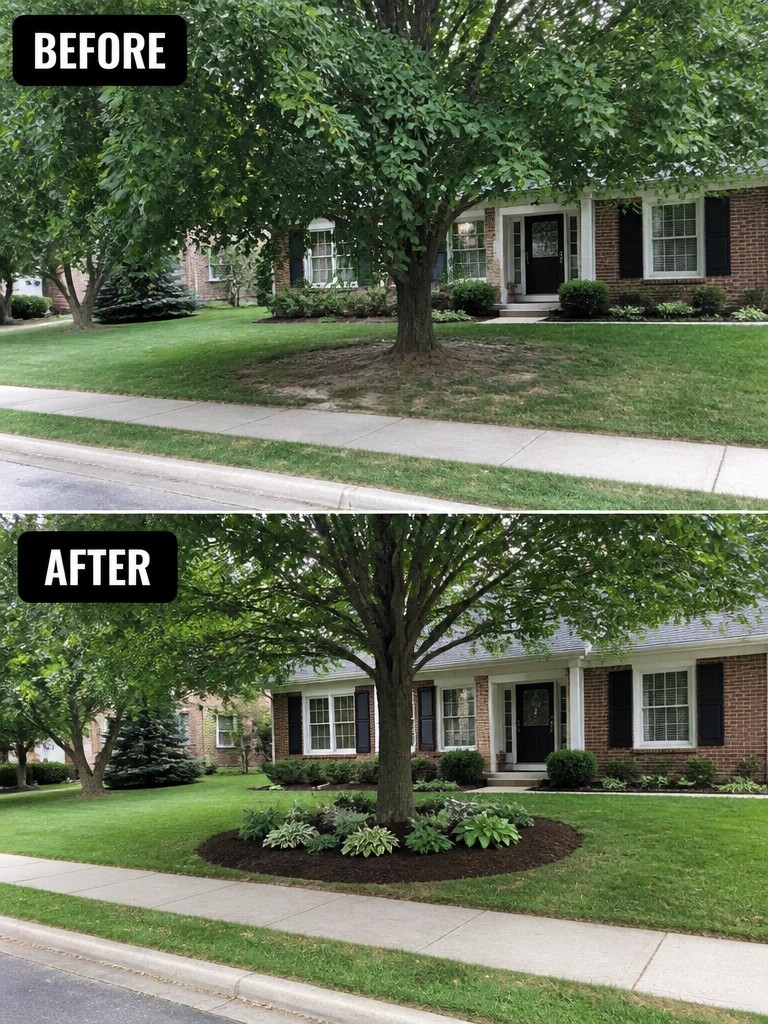
The bare dirt circle around the tree stood out against the rest of the lawn and made the whole front yard look unfinished. Adding a simple mulch bed with a few shade plants filled that gap and gave the tree a clear, tidy border without changing anything else.
This works well in front yards where trees sit in the middle of the grass. Start by edging a circle or shape around the trunk, then add mulch and a handful of plants that can handle the shade. Keep the bed a reasonable size so mowing stays easy and the plants have room to grow.
Create A Border Garden Along Your Fence
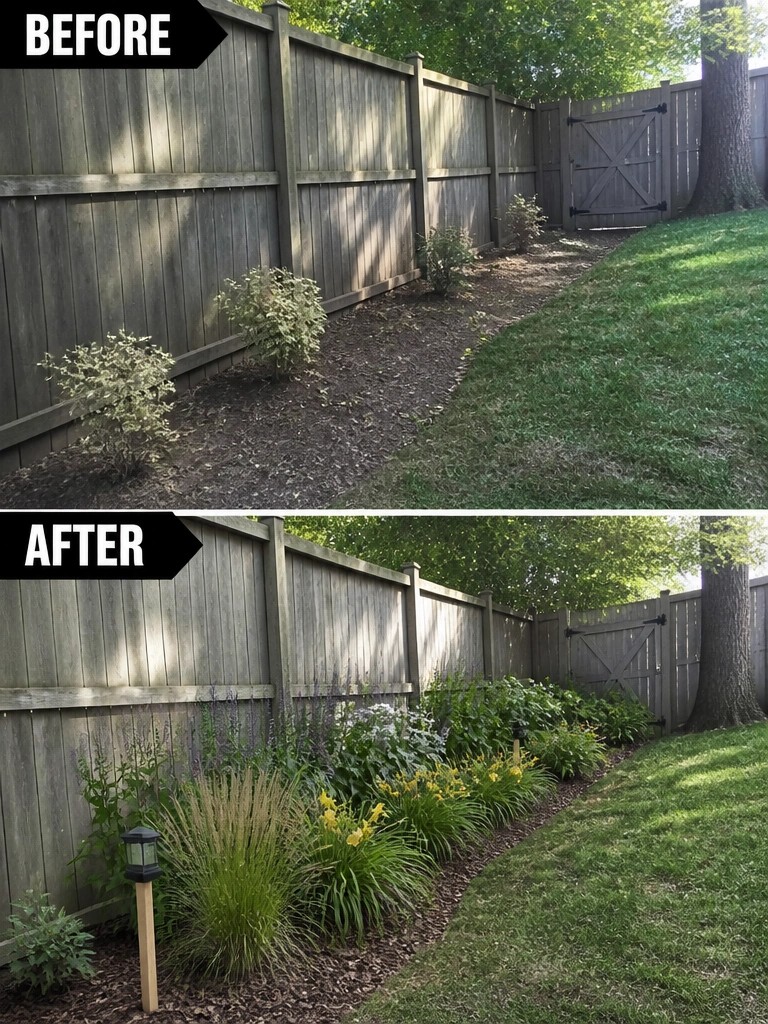
A bare strip of dirt along a fence often makes the whole yard feel unfinished. Adding a defined garden bed fills that gap with plants of different heights and colors, turning an empty edge into something that looks planned and cared for.
This idea works best where the fence runs next to a lawn or path. Clear the area first, lay down mulch, and choose a few taller grasses or flowers mixed with lower ground cover. One simple light can highlight the bed at night without overcomplicating the space.
Create A Defined Path In A Neglected Front Yard
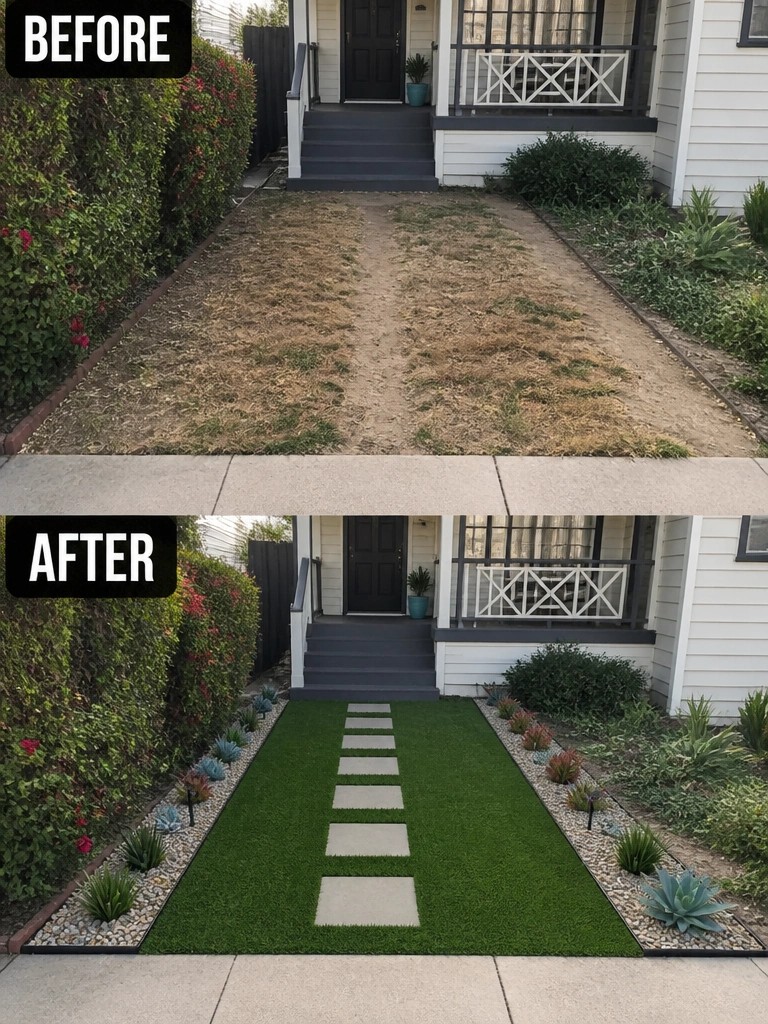
A patchy dirt path makes the front of a house look unfinished. Replacing it with turf and a row of stepping stones gives the walkway a clear shape while the gravel borders on each side keep the planting neat and contained.
This approach works well on narrow front yards where you want low maintenance and a tidy look. Start by clearing the old surface, then lay turf or grass in the center and add simple borders with gravel or small plants. The path stays easy to walk on and the edges stop the rest of the yard from feeling scattered.
Add Retaining Walls To A Steep Front Slope
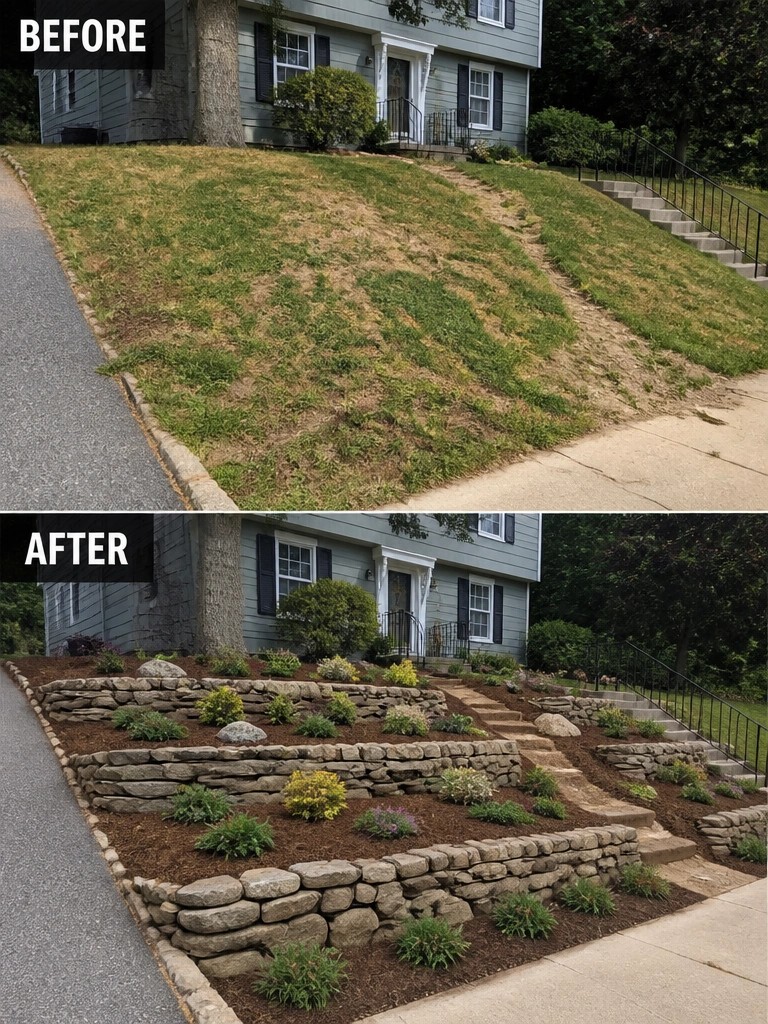
A steep, patchy lawn often looks messy and stays difficult to maintain. Adding low stone retaining walls breaks the slope into level beds that hold soil and mulch in place. This change turns an awkward incline into a series of clean planting areas that are much easier to care for.
The approach works best on front or side yards where grass struggles to grow evenly. Keep the walls modest in height and repeat the same stone style so the beds feel connected. Focus first on good drainage and mulch depth before adding too many plants.
Define The Driveway Edge With Simple Garden Beds
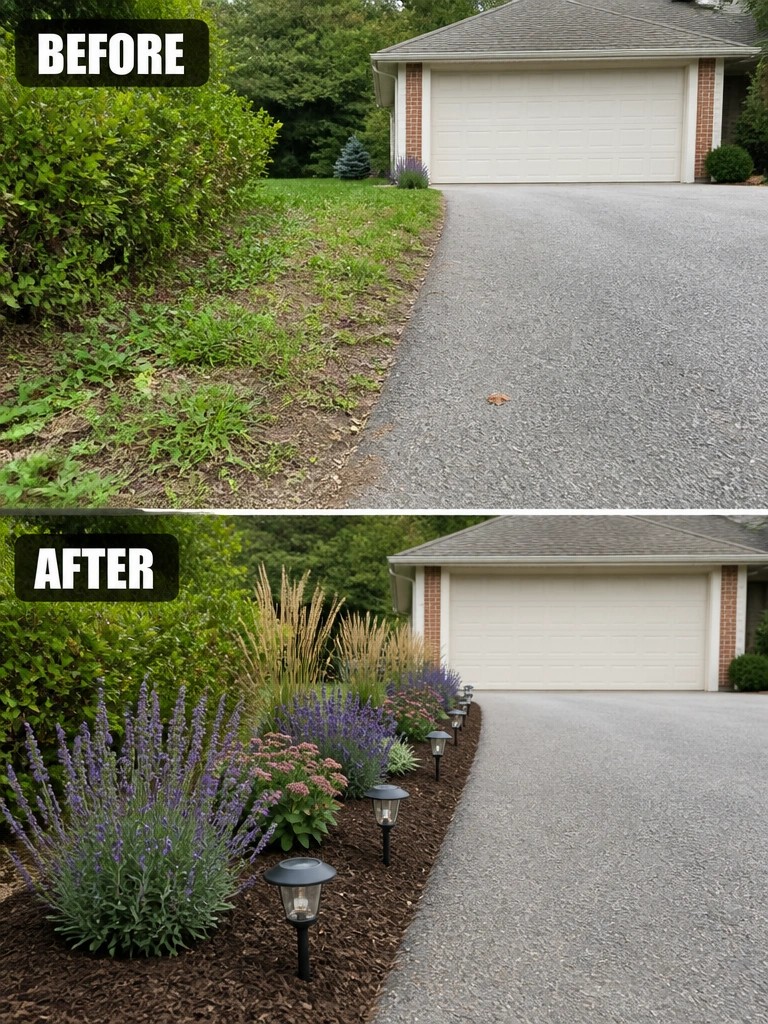
A messy strip of weeds and uneven grass along a driveway can make the whole front look neglected. Turning that area into a mulched garden bed with a mix of plants and a few lights gives the space a clear shape and makes the entrance feel more cared for.
This idea works on any home where the driveway runs close to the lawn. Clear the overgrowth first, add a layer of mulch to keep weeds down, and plant a few taller grasses or perennials for interest. The lights are optional but help mark the edge after dark without much cost.
Use Gravel And A Trellis To Define A Small Courtyard
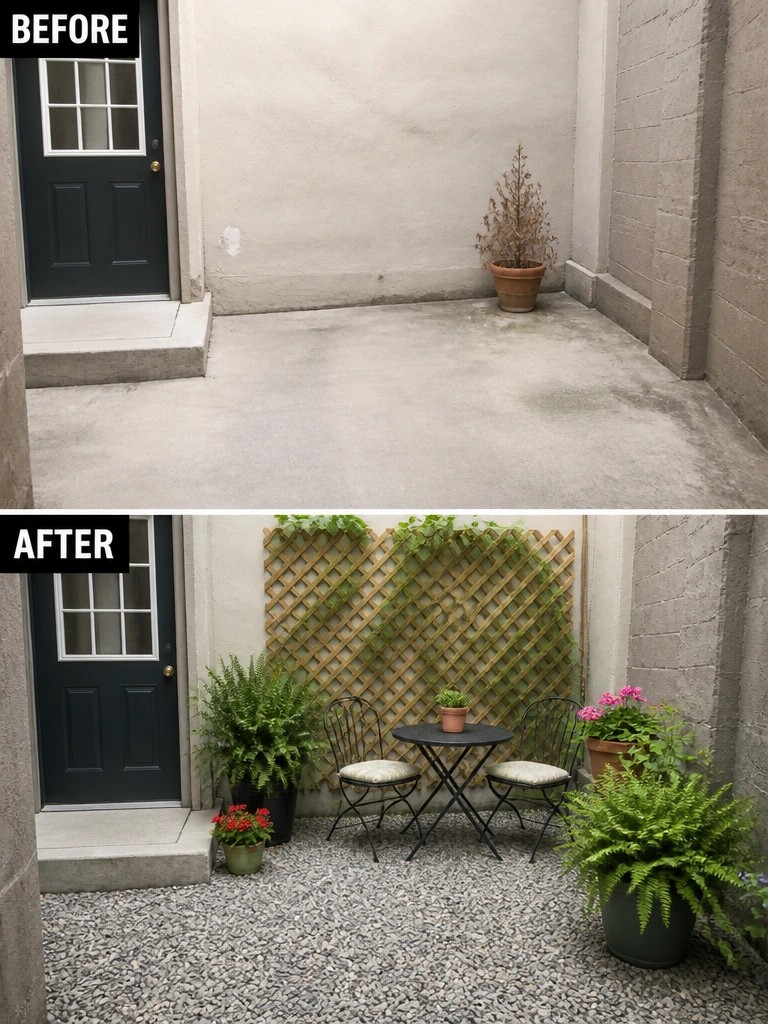
A bare concrete slab often looks unfinished and uninviting. Switching the surface to gravel and adding a simple wooden trellis with vines gives the space clear boundaries and brings in vertical greenery that softens the walls.
This idea suits narrow side yards or small entry courts where you want structure without a big budget. Start with the gravel base to set the layout, then add a trellis against one wall and fill in with pots. Keep the planting simple so the area stays easy to maintain.
Define The Entry With A Simple Stone Path

A dirt trail through the lawn often makes the front yard feel unfinished. Replacing it with flat stone pavers set in sand creates a clear route to the door while the added mulch strips on both sides keep the edges neat and stop grass from creeping in.
This approach works well on homes where people already walk the same line across the yard. Start by marking the path width, lay the pavers level, then plant low grasses or ground cover along the borders so the walkway feels settled without needing constant trimming.
Replace An Overgrown Shrub With Defined Garden Beds

A single large shrub can quickly take over a front bed and leave the whole area looking messy. Removing it and putting in several smaller plants with different heights and bloom times gives the space more shape and color without needing a big budget.
This approach works well along the front of a house where you want something low enough to keep the windows clear. Start by clearing the old growth completely, add fresh mulch, and group plants in clusters rather than spacing them out evenly. A few taller grasses or yellow flowers near the back and shorter ones up front will keep the bed looking full for most of the season.
Frequently Asked Questions
Q: Can I really boost curb appeal just by adding some edging around my beds? A: Start by digging a clean line with a spade around your existing beds. Then fill in with cheap rubber or wood edging from the store. This simple step frames your plants and makes the whole yard look neat right away.
Q: What works best for covering bare spots without new sod? A: Spread a layer of mulch over those areas after pulling weeds. You can also tuck in a few cheap perennials that spread on their own. The mulch keeps moisture in while the plants fill out over time.
Q: How often do I need to water new additions in the first month? A: Check the soil every few days with your finger. Water deeply when it feels dry an inch down. New plants settle faster with consistent moisture like this.
