

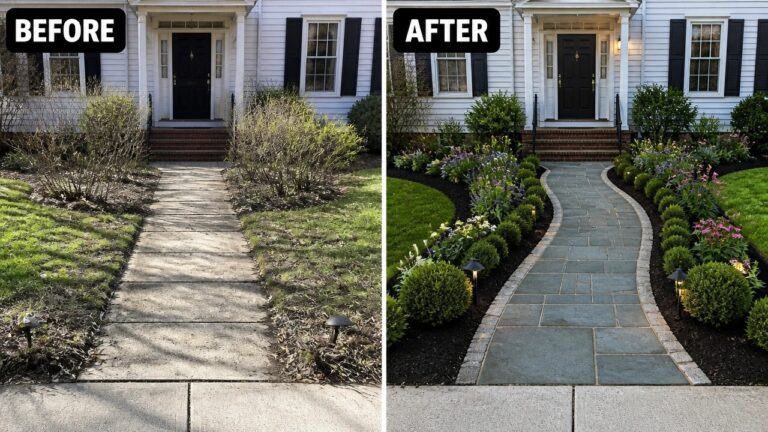
I have noticed that yards often look a bit neglected when the beds run together without clear edges and the paths feel more like afterthoughts than actual routes.
Adding structure to those areas tends to make the whole space easier to maintain and more pleasant to spend time in.
I usually try a simple border material first to see how it changes the way the lawn and plantings relate to each other.
Once the main lines are set, filling in with new plants becomes much more straightforward and the results hold up better through the seasons.
Small adjustments like these can turn a patchy yard into something that feels settled without requiring a full redesign.
Curve The Path And Add Defined Garden Beds
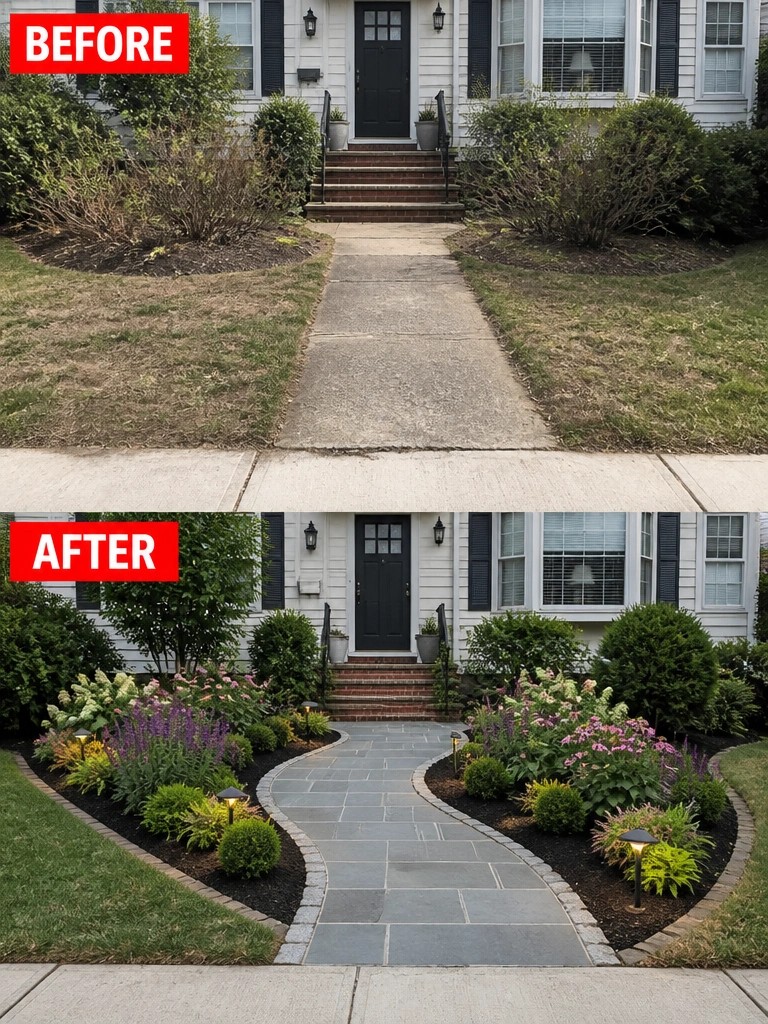
A straight concrete walkway with messy shrubs on both sides often makes a front yard feel flat and unplanned. Switching to a gently curved stone path with mulched beds on either side gives the whole space clear shape and makes the walk feel more welcoming.
This approach works well on modest front yards where the lawn runs right up to the house. Start by deciding the new path width and curve, then add a simple border material like brick or stone to hold the mulch in place. Keep the plantings low near the walk so the curve stays visible and easy to follow.
Add Structure With A Path And Raised Beds
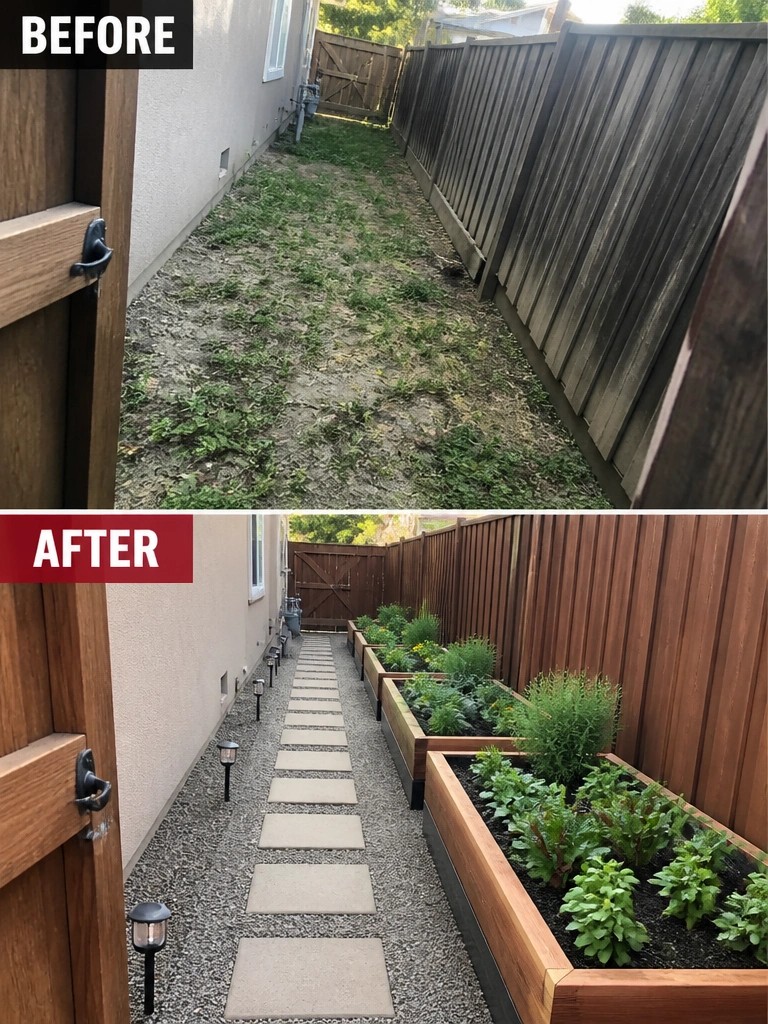
A narrow side yard often stays neglected because it has no clear use. Laying a straight paver path and setting raised beds along the fence gives the space a simple layout that is easy to walk through and keep tidy.
This idea works best on long, tight areas next to the house where grass will not grow well. Keep the path narrow enough to leave room for the beds, and choose raised planters that match the fence height so the whole run feels planned rather than crowded.
Add A Path And Borders To Shape A Bare Yard
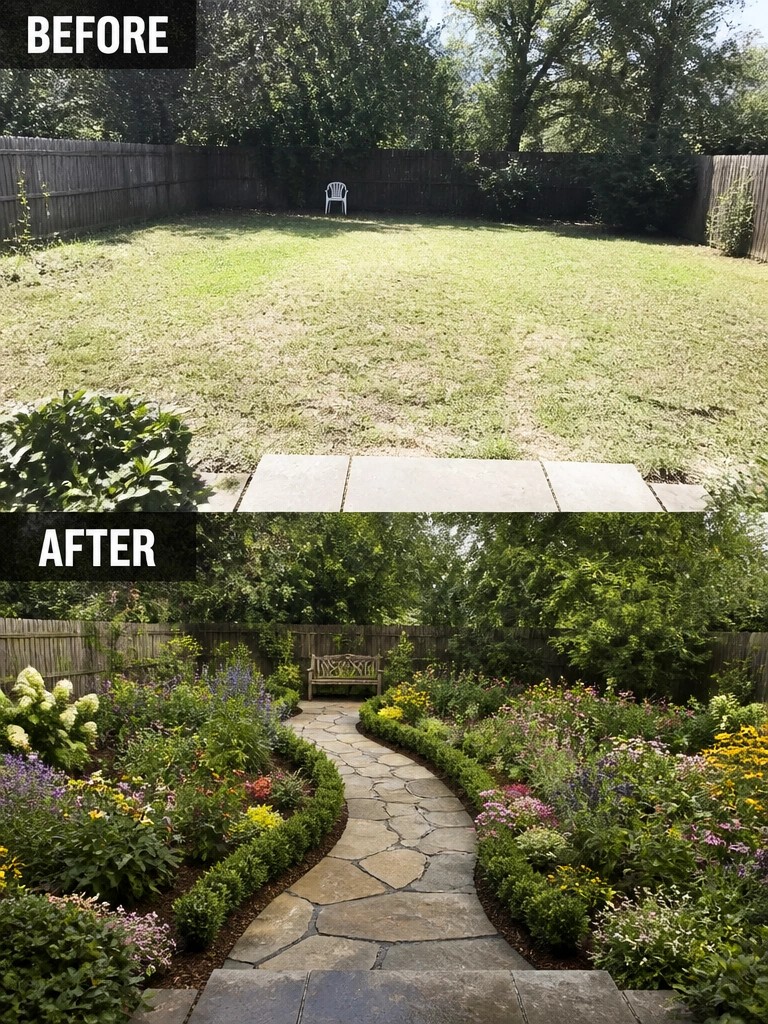
An empty lawn can feel unfinished even when it is tidy. Adding a simple stone path with planted borders on both sides turns the space into something that feels planned and easy to use. The before photo shows just grass and a fence, while the after shows how a curving path and layered beds pull everything together without needing a lot of extra features.
This idea works well in a medium or large backyard where you want a clear route and some planting without crowding the space. Start with the path to set the main line, then build the beds along the edges using a mix of shrubs, perennials, and ground cover. Keep the lawn areas on the sides open so the yard still feels open rather than packed.
Define The Driveway Edge With Raised Beds
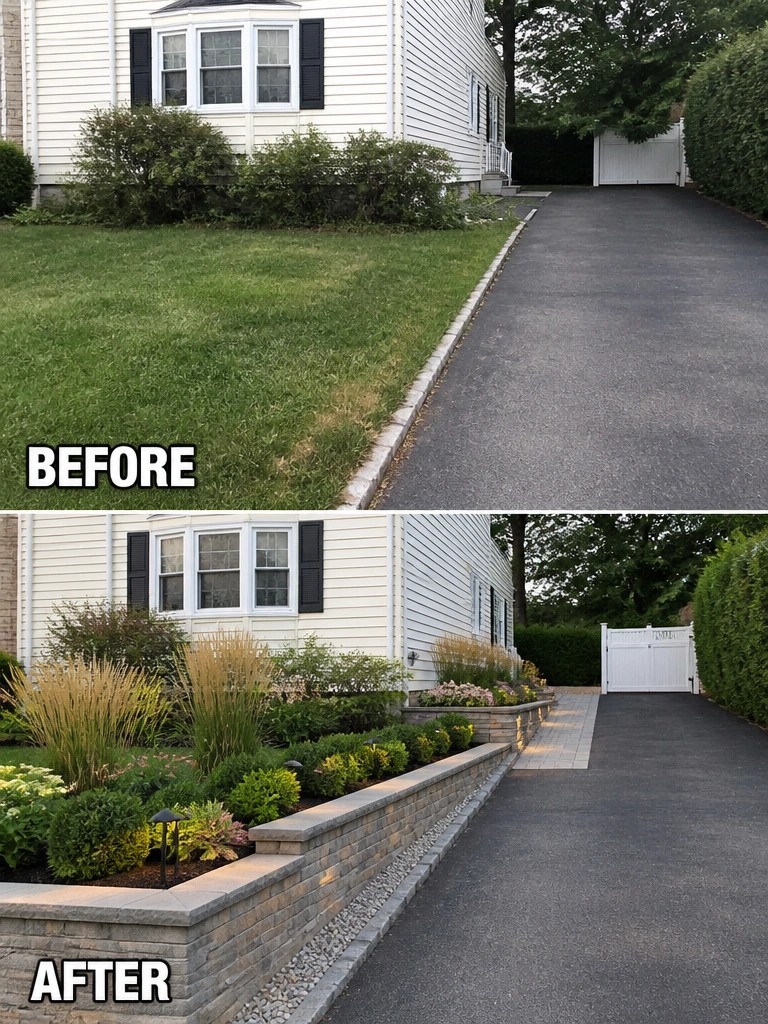
One simple way to improve a front yard is to add raised beds along the driveway. The before photo shows grass running straight to the pavement with little separation. The after version uses a low stone wall and gravel to create a clear border that holds plants in place and gives the whole side of the house more structure.
This idea works best on homes where the driveway sits close to the lawn. Start with the edging material first, then fill the bed with a mix of heights so nothing looks too flat. Keep the bed narrow enough that it does not crowd the walking area or make snow removal harder in winter.
Add Defined Beds And A Path To Shape Up The Front Yard
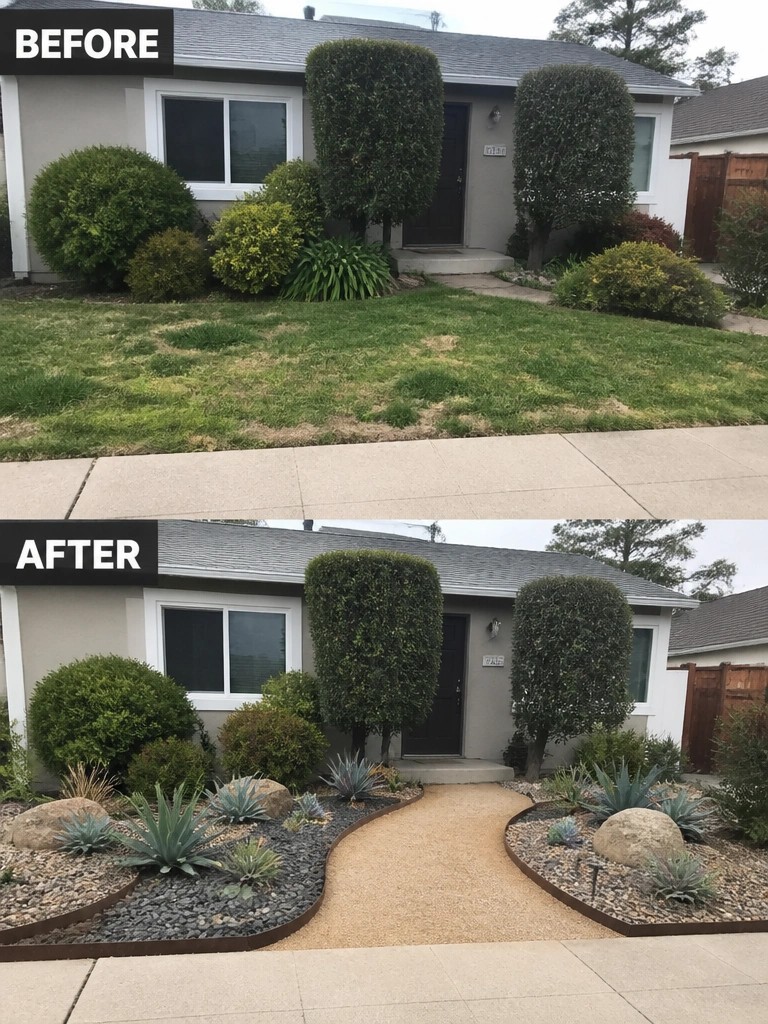
A patchy lawn with scattered shrubs often makes the front of a house feel unfinished. Adding curved metal borders, gravel beds, and a simple path gives the yard clear structure and directs people straight to the door.
This idea suits homes with small front yards that need better flow. Start by laying out the beds and path first, then fill them with low-water plants and a few rocks. It keeps the space easy to maintain while making the entrance feel more welcoming.
Add Defined Borders Along A Path
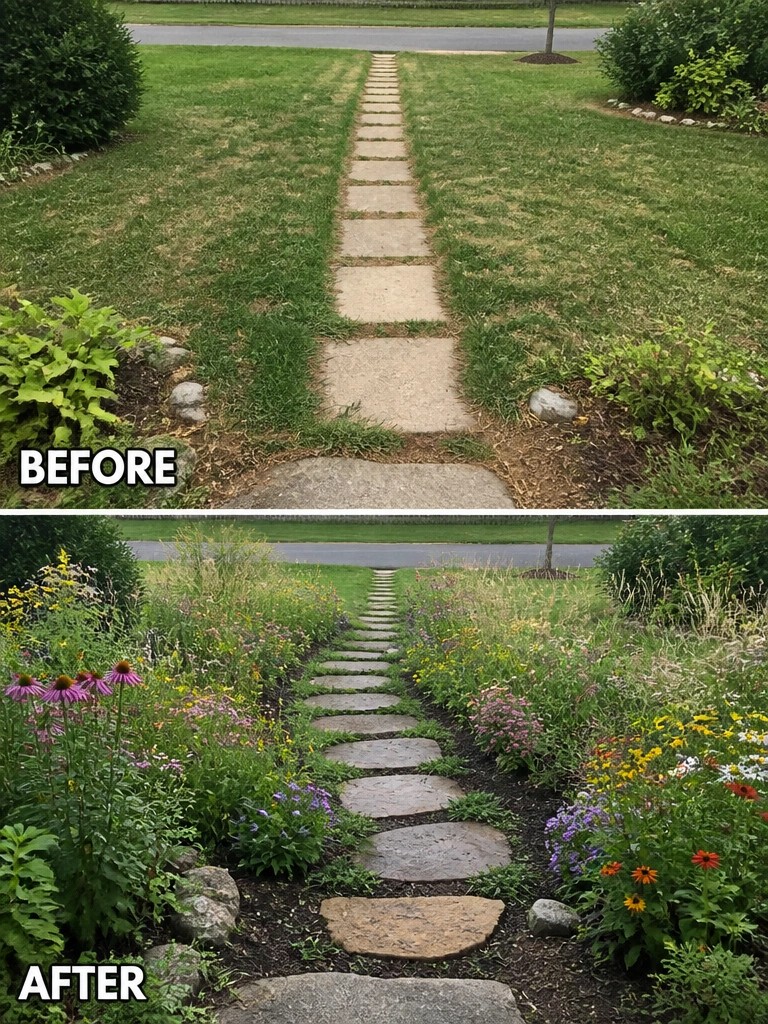
A straight line of stepping stones through the lawn can feel unfinished on its own. Adding planted beds on both sides gives the path a clear edge and turns it into a real garden feature instead of just a walkway.
This idea works best in front yards or side yards where you want a simple path to feel more planned. Keep the beds narrow at first so they do not crowd the walkway, then choose a mix of perennials that bloom at different times to hold interest through the season.
Use Pavers To Give A Front Path Better Structure
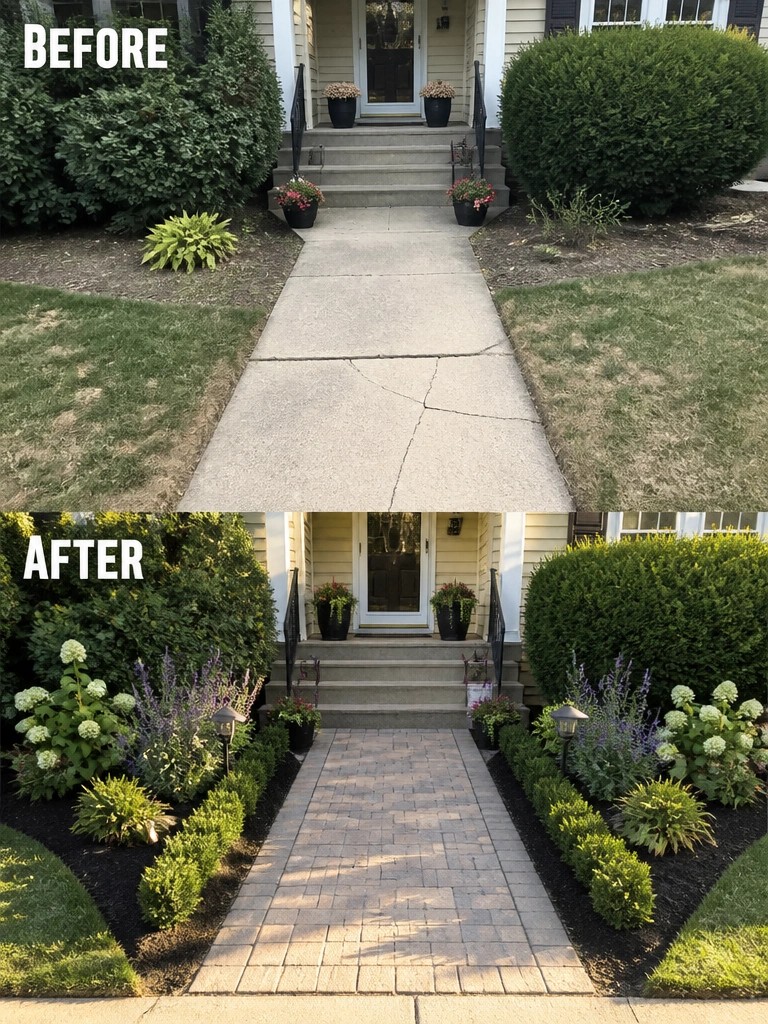
A cracked concrete walkway often makes the front of a house feel unfinished. Switching to pavers creates cleaner lines and a more intentional layout, while the new mulched beds on each side keep planting contained instead of scattered.
This approach works well on any modest front yard where the path is the main feature. Start with the hardscaping first, then fill the beds with a mix of low shrubs and taller plants so the walkway feels framed rather than exposed.
Add Structure To A Sloped Backyard
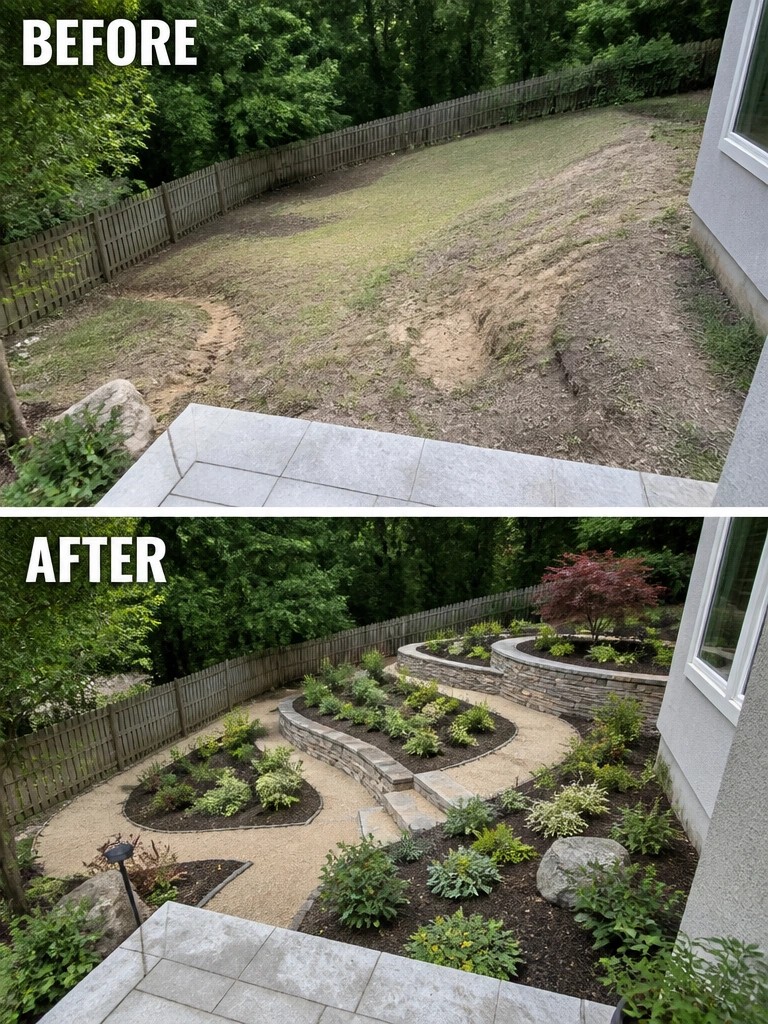
A bare slope like this one tends to wash out and feel unfinished no matter how often the grass is cut. Adding low stone walls created flat planting areas that follow the hill, while the new paths give a clear way to walk through without tracking mud. The beds now hold soil in place and make the whole yard look intentional.
This approach works best on hills where you want planting space without losing the natural grade. Build the walls and paths first so the layout stays practical, then add plants that match the amount of sun the slope gets. Keep the beds narrow enough that everything stays reachable for weeding and watering.
Plant A Border Along The Fence
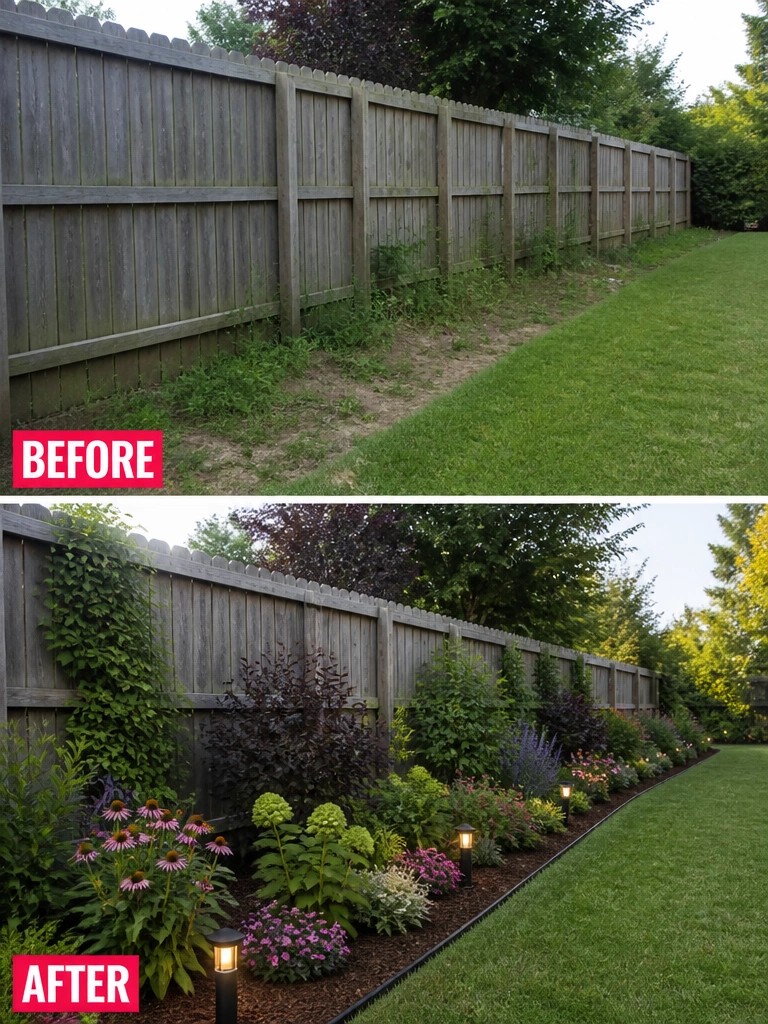
A long fence often leaves a strip of dirt and weeds that makes the whole yard feel unfinished. Adding a simple planted border with mulch and low lights turns that neglected edge into something that looks planned and cared for. The change here comes from clearing the weeds first, then laying down edging and filling the bed with a mix of shrubs and flowers.
This idea works well on any straight fence line where you want to soften the wood without blocking it completely. Start with mulch to keep weeds down and give the bed a clean look, then add a few taller shrubs for height and shorter plants in front. Outdoor lights along the edge make the border useful after dark and help mark the line between lawn and garden.
Add Raised Beds And A Path To Shape Your Yard
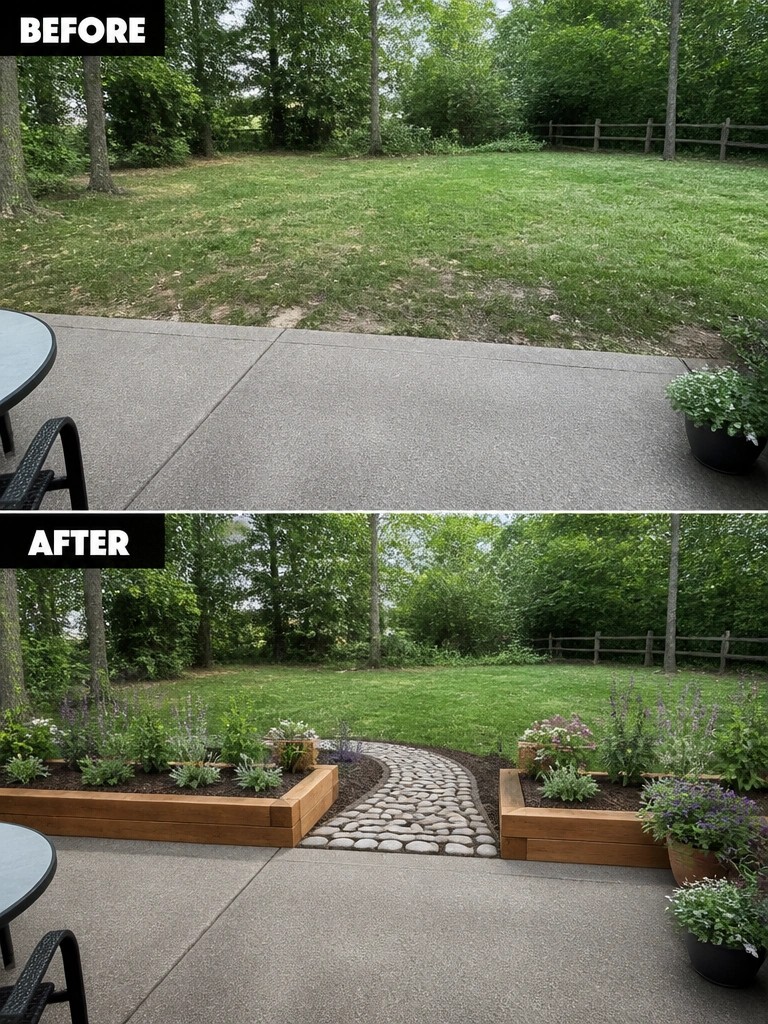
A flat stretch of lawn next to a concrete patio often feels unfinished because nothing marks where the seating area ends and the open yard begins. Adding raised beds on both sides with a simple stone path between them creates clear edges and turns the same space into something more usable and intentional.
This approach works best on yards where the patio already exists but lacks any planting structure. Start with the beds first so the path has something to connect to, and keep the planting simple with a mix of taller and lower plants so the beds feel full without crowding the walkway.
Add Edging To Create Defined Garden Borders
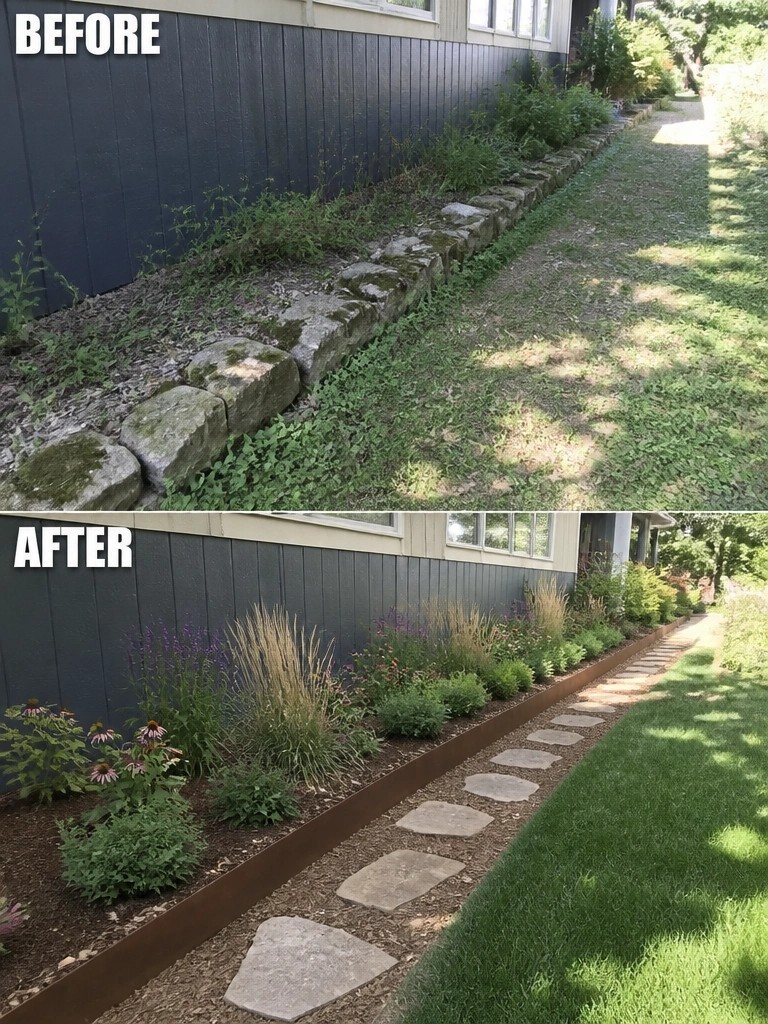
An overgrown strip along the house can quickly look messy when plants spill out and old stones sink into the grass. Adding a clean metal edge gives the border a firm line, keeps mulch in place, and makes room for a simple path of stepping stones. The result feels much more intentional without needing a full redesign.
This approach works well on narrow side yards where space is tight. Start by clearing weeds and setting the edge before you plant, so the beds stay neat as things fill in. It is an easy first step that makes future maintenance simpler.
Add A Path To Give A Bare Backyard Structure
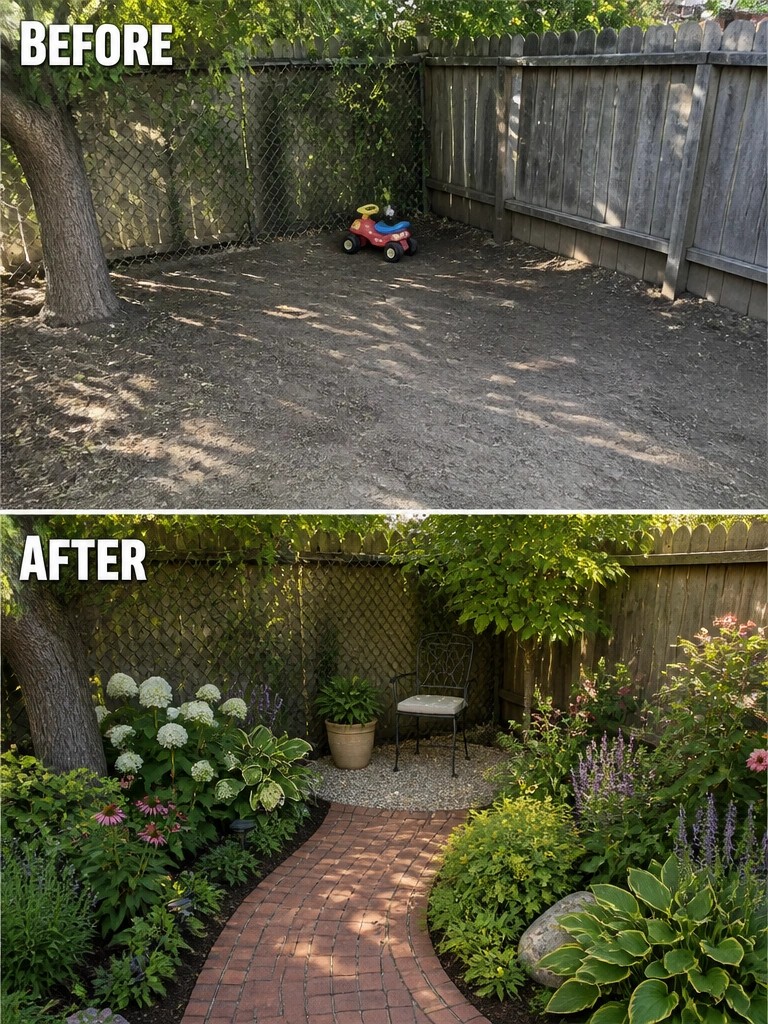
A backyard that is just bare dirt often feels like wasted space because there is no clear way to move through it or use it. Adding a brick path that curves through the area and placing planted beds along the edges creates simple structure that makes the whole yard feel intentional and easier to enjoy.
This idea works best in small or narrow yards where you need to define walking areas before adding too many plants or features. Lay out the path first so the beds have a natural edge, then fill them with a mix of shrubs and flowers that suit the light conditions. Keep the path width comfortable for walking so the space stays practical rather than crowded.
Replace A Muddy Path With Pavers And Gravel
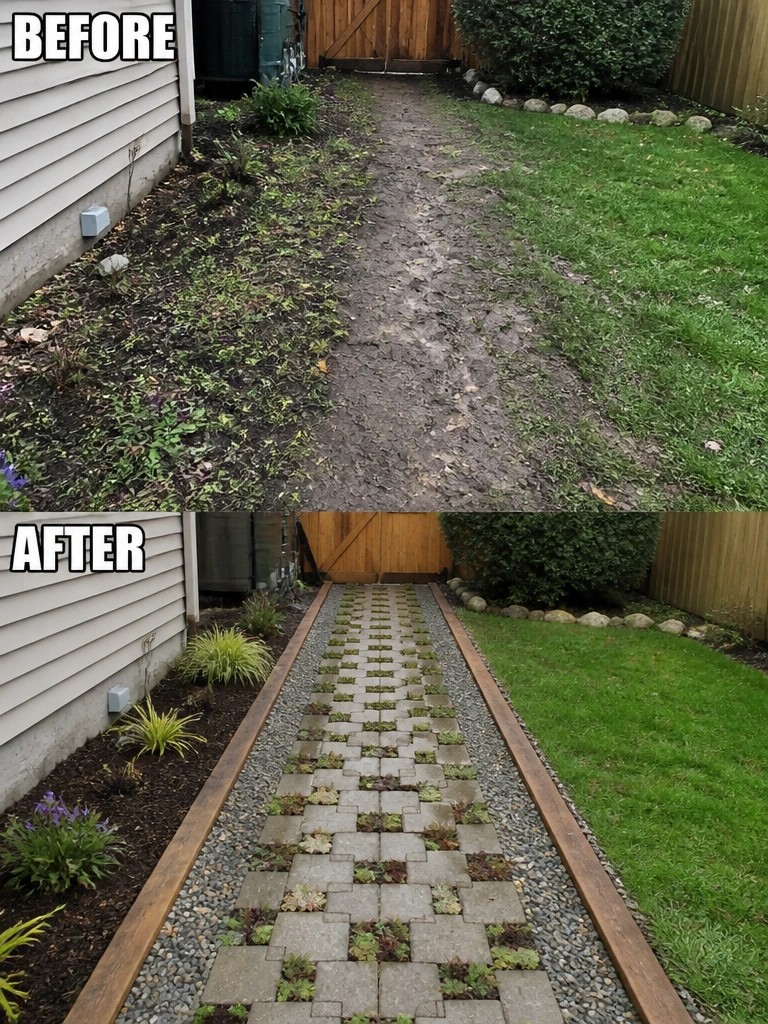
A dirt path that turns to mud after rain makes the side yard feel unfinished. Laying down pavers with gravel on both sides gives the walkway a clear shape and keeps feet clean.
This idea works best along the side of a house or between lawn and beds. Keep the path width comfortable for walking and use simple edging to hold the gravel in place so the look stays neat over time.
Add A Path To Give Front Beds Structure
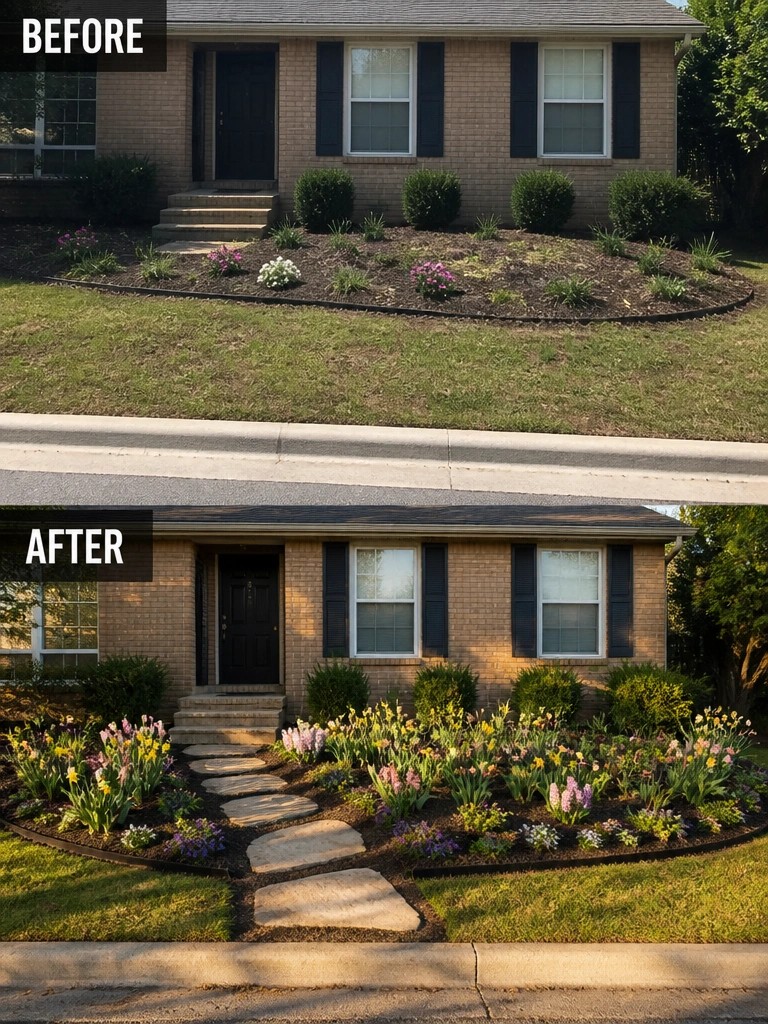
A simple path through the front beds can turn a loose, shapeless planting area into something that feels planned. In this case the main change was adding stepping stones that lead from the lawn straight to the door, while the curved bed got tighter planting and clearer edges.
This idea works best on a small front yard where the lawn meets the house without much definition. Start by laying out the path with stones or pavers so it feels natural to walk, then fill the beds around it. Keep the planting simple and repeat a few colors or plant types so the whole area looks pulled together instead of scattered.
Define A Narrow Side Path With Simple Edging
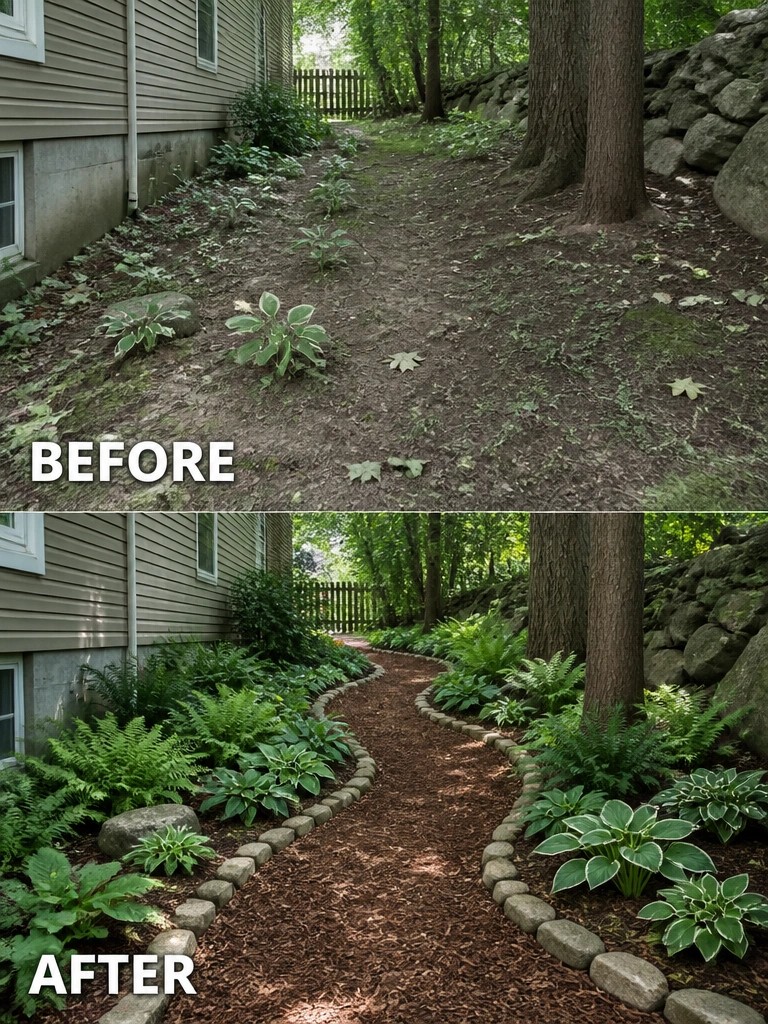
A messy dirt path next to the house often looks worse than it needs to because nothing holds the space together. Adding a clear stone edge and a layer of mulch instantly turns the same area into something that feels intentional instead of neglected. The planting stays simple too, with low ferns and hostas filling the new beds so the whole strip looks finished without crowding the walkway.
This approach works well on any narrow side yard where you want a path that stays usable after rain. Start with the edging first so the shape is set, then add mulch thick enough to keep weeds down. It keeps the focus on the house rather than fighting an endless patch of weeds and leaves.
Add Structure To A Poolside Yard With Pavers And Borders
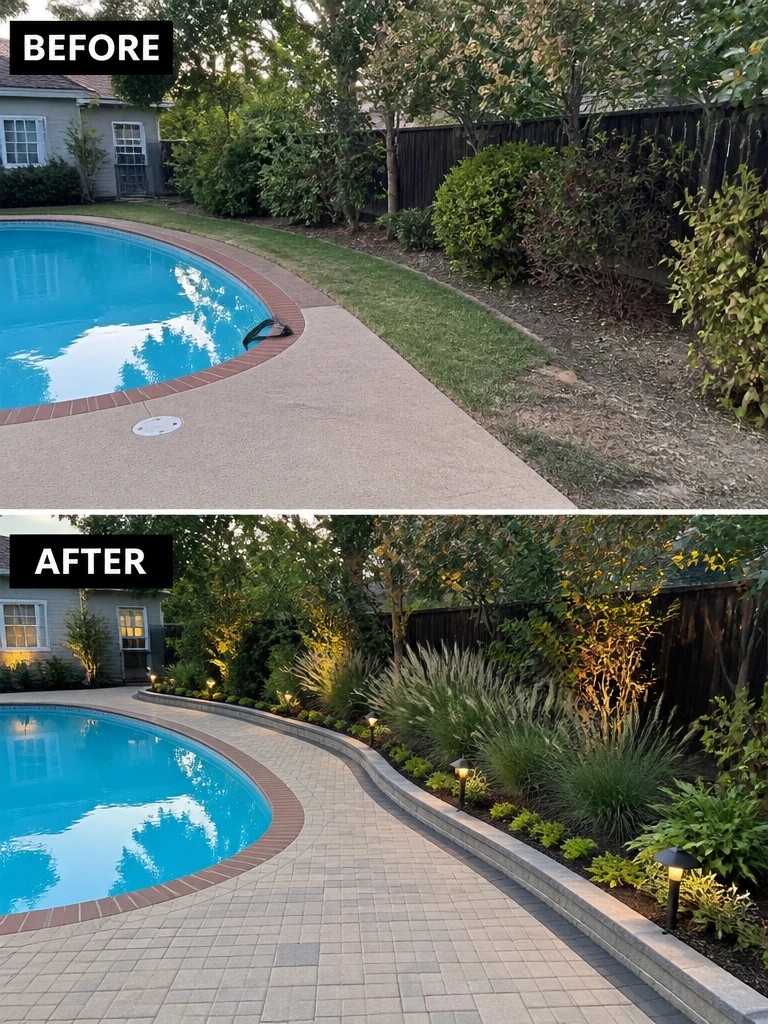
A plain concrete edge next to a pool often looks unfinished when the planting along the fence stays messy. Switching to pavers creates a clear path that curves with the pool, while a low stone border holds the soil and plants in place. The result feels organized without needing a full redesign.
This approach works well on any long, narrow side yard where you want walking room but also need to control weeds and mulch. Start with the hard edge first, then fill the beds with a mix of taller grasses and low ground cover so the planting stays full but contained. Keep the path width comfortable for two people to pass, and add a few low lights only where feet actually land at night.
Add Structure To A Plain Front Walkway
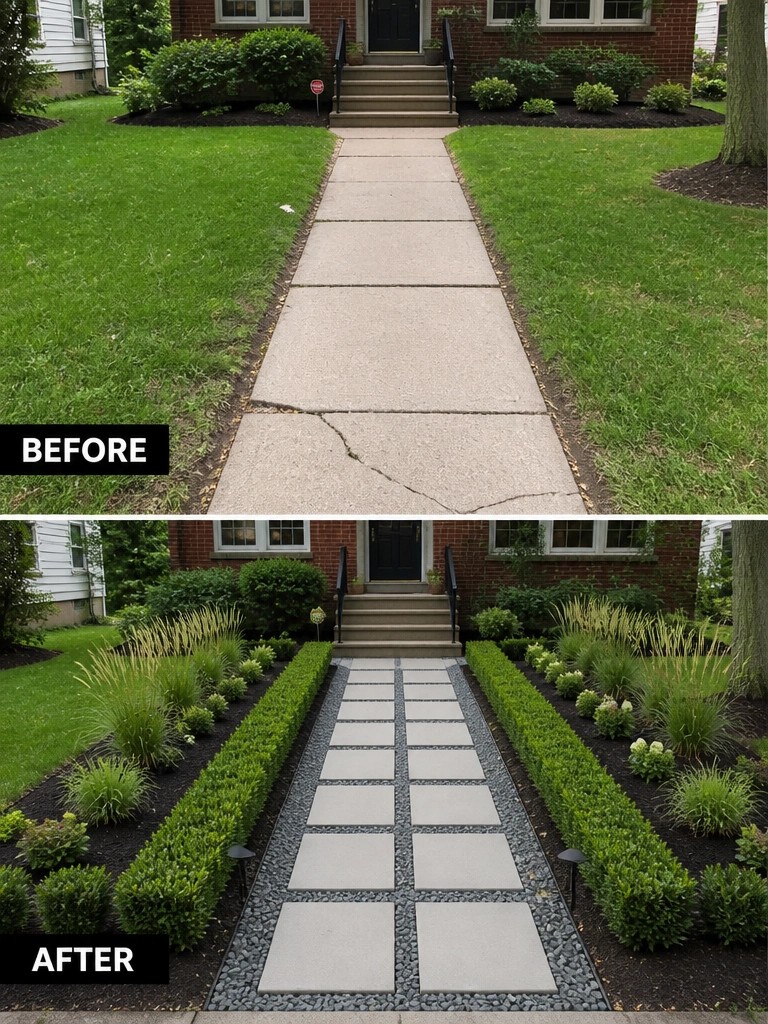
A straight concrete path with nothing on either side often feels unfinished. In this case, the simple fix was to replace the solid slab with a grid of pavers set in gravel and to add planted beds along both edges. The beds give the path clear borders, while the gravel softens the look and makes the pavers stand out.
This approach works best on modest front yards where the walkway is the main feature. Keep the beds fairly narrow so they do not crowd the lawn, and choose a simple mix of low shrubs and grasses that stay neat without constant trimming. Start by marking straight edges before you dig so the whole layout stays balanced.
Add Defined Beds To Integrate Utility Equipment
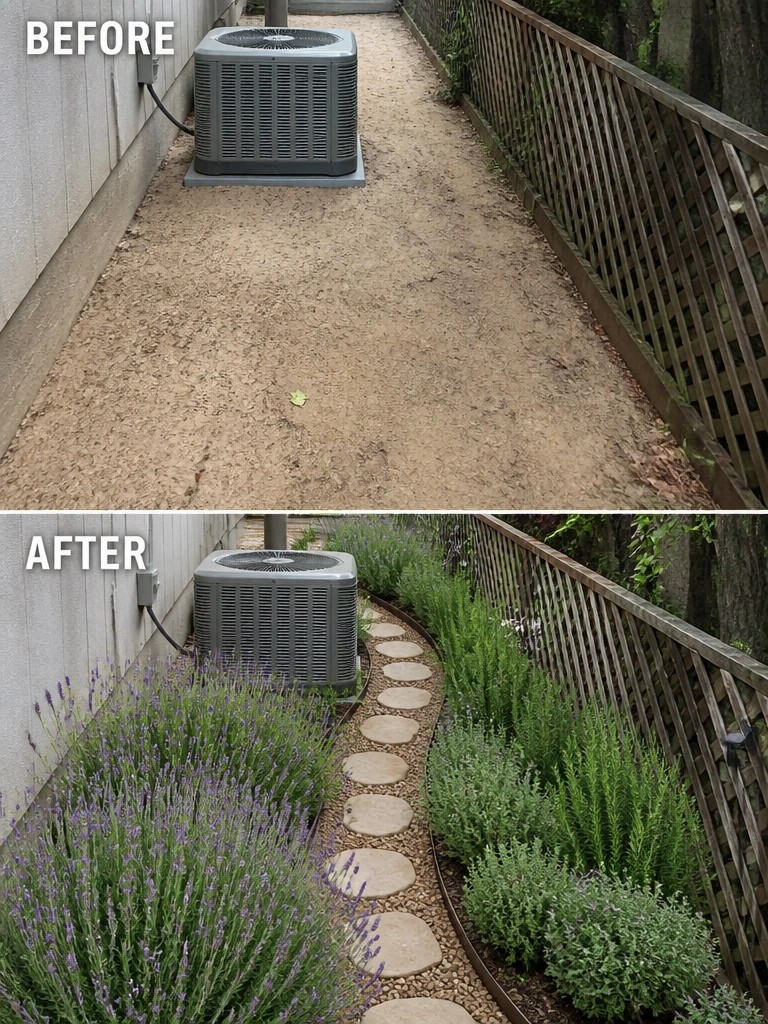
A narrow side yard with just bare dirt and an exposed air conditioner feels purely functional. Adding curved planting beds on both sides of a simple stepping stone path gives the space structure and makes the unit feel like part of the garden instead of an eyesore.
This approach works well in any tight side yard or service area where you need access but want something more finished. Keep the beds narrow enough to leave clear walking space, use low to medium plants that tolerate the heat from the unit, and edge the beds cleanly so the path stays obvious.
Define The Front Path With Brick And Planted Beds
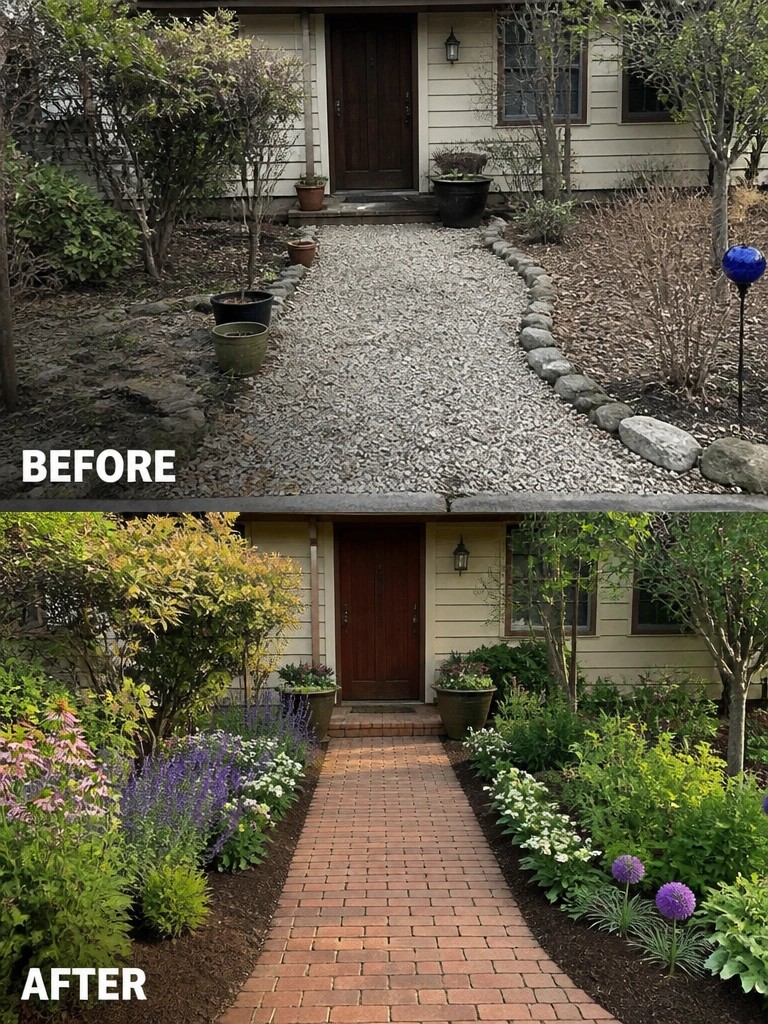
Replacing a loose gravel path with brick pavers instantly gives the entry a more finished shape. The planted beds on either side help hold the design together and keep the walkway from feeling like it just trails off into the yard.
This approach works well on small front yards where you want a clear route to the door without crowding the space. Keep the beds fairly narrow at first so there is still room to move, and choose plants that stay roughly the same height on both sides for balance.
Add Structure With A Path And Garden Beds
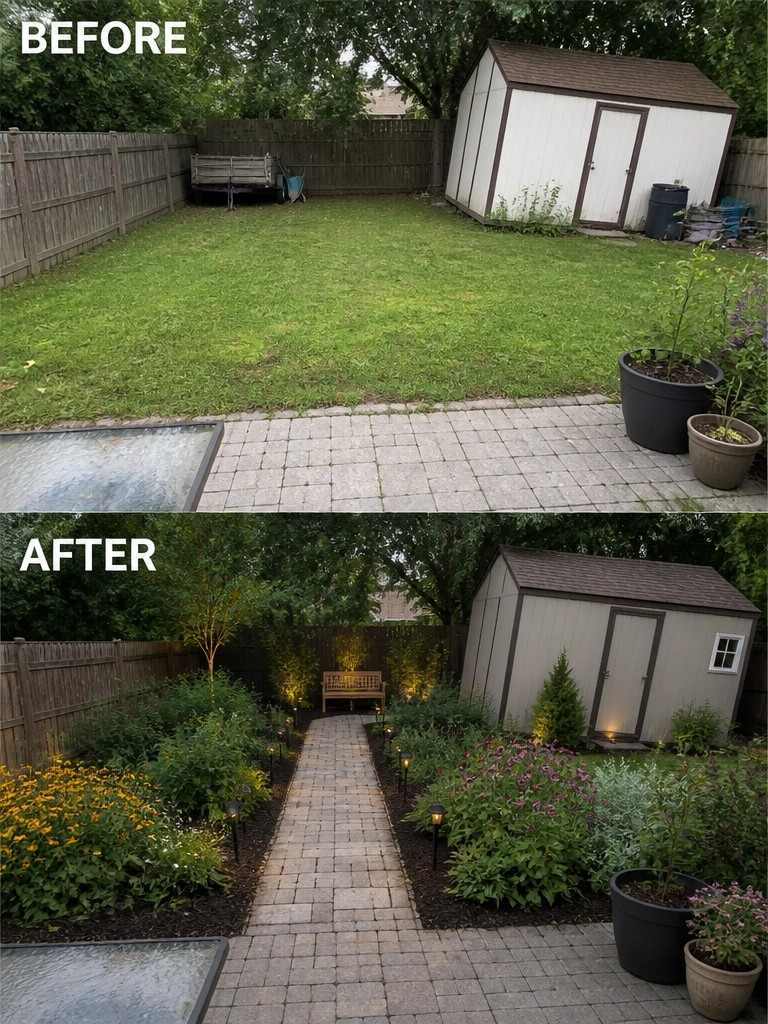
A large open lawn can feel unfinished even when it is tidy. Adding a central path with planted beds on both sides gives the space a clear layout and turns the yard into something you can actually use. The path leads the eye toward a simple bench while the beds keep planting contained and easy to maintain.
This approach works well in backyards that have room but lack any real organization. Start with the path to set the main route, then fill the beds with a mix of shrubs and seasonal flowers. Keep the planting simple at first so the structure stays visible instead of getting lost in too many plants.
Frequently Asked Questions
Q: How do I keep mulch from spilling onto my paths after a heavy rain?
A: Rake the beds so they slope gently away from the path edges. Add a thin layer of gravel right along the border to catch anything that shifts. This setup holds up better than straight edges alone.
Q: What works for borders if I want something that lasts without constant trimming?
A: Pick low growing shrubs like boxwood or lavender for your borders. They stay neat with just one or two cuts a year. Plant them close enough so they fill in and block weeds too.
Q: Can I add a path through an existing flower bed without tearing everything up?
A: Lay stepping stones directly on the soil between plants first to test the route. Then dig out just enough for a gravel base under each one. You avoid disturbing roots while creating a solid walk.
