

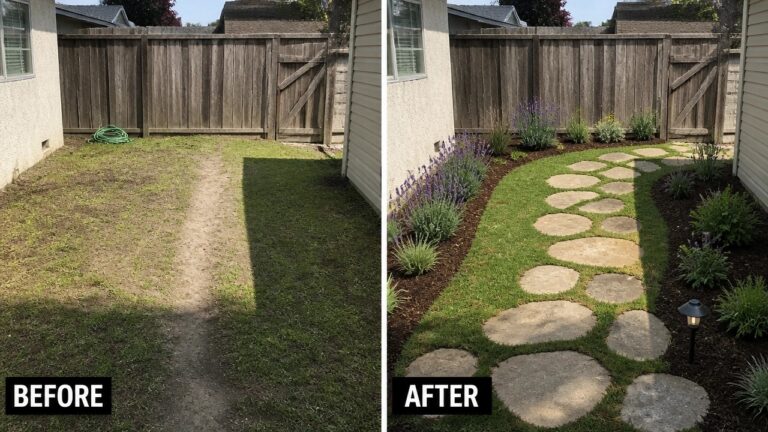
Small outdoor spots tend to feel cramped when there is no clear edging or planting structure to guide the eye.
Over time the ground gets uneven and plants spill over without any real layout holding them in place.
I usually start by testing a simple path or border first because that single change gives the whole area a sense of order.
Layers matter most.
Paying attention to those basic adjustments often turns a forgotten patch into a space that feels settled and ready to use.
Add A Path To Give A Small Yard Structure
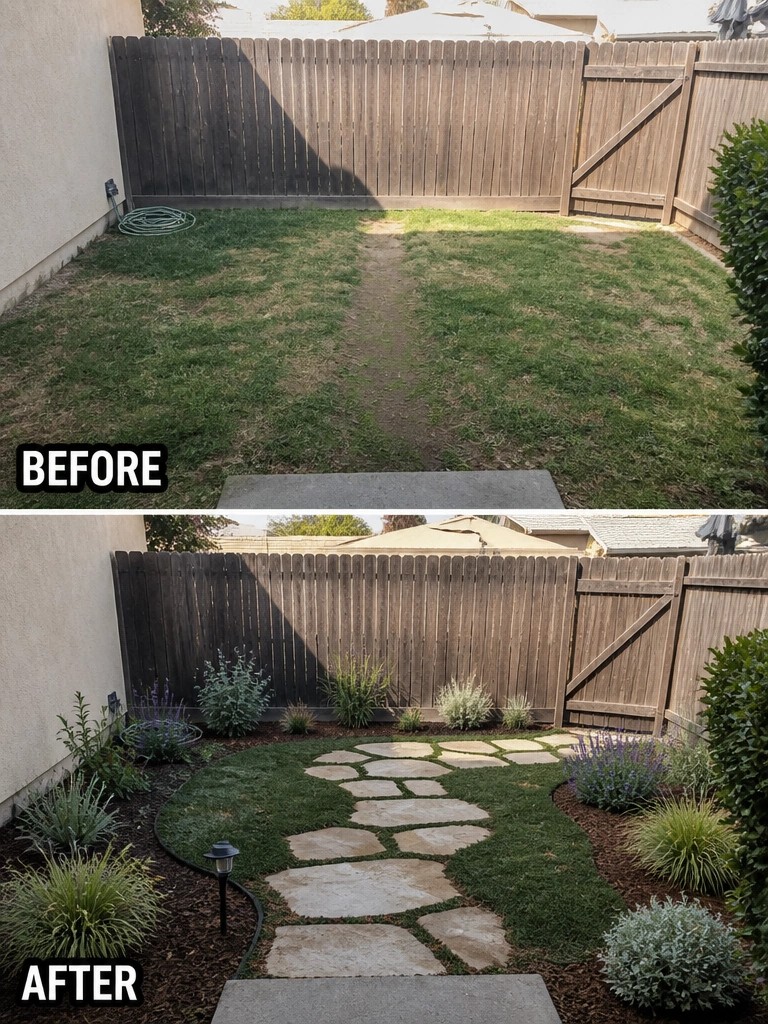
A worn dirt path across plain grass usually means the yard has no clear way to move through it. Adding a simple stone path changes that by creating a defined route and breaking up the open lawn into smaller, easier sections.
This idea works best in compact backyards where you want to keep most of the grass but still make the space feel intentional. Lay the pavers first before planting along the edges so the path stays the main organizing feature rather than an afterthought.
Turn A Bare Patio Into A Usable Seating Spot
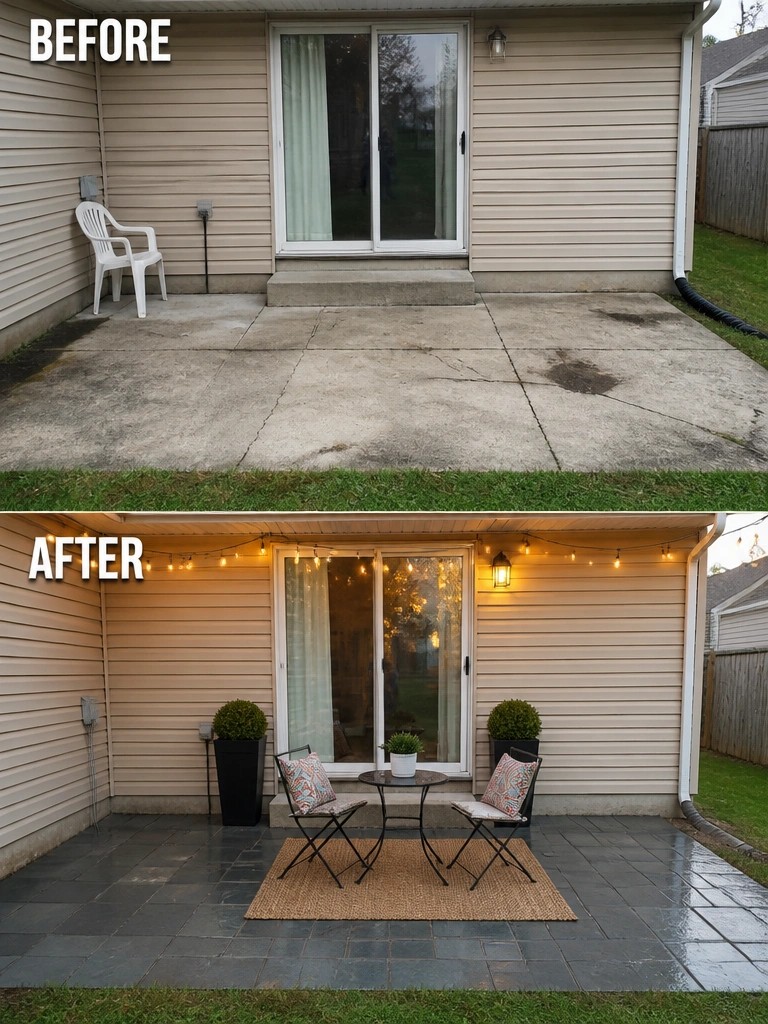
Many concrete slabs sit empty for years because they feel too open and undefined. Adding a small rug, a compact table and chairs, and a few pots created a clear spot for sitting without crowding the space.
This idea works best on small yards or side patios where you want a simple place to eat or relax. Keep the furniture scale modest, choose pieces that can stay outside, and use one rug to mark the area so the rest of the slab stays open for movement.
Add Vertical Planters To A Narrow Side Yard

A narrow side yard between houses often stays bare and weedy because there is little room for normal garden beds. Adding a simple wood screen with hanging planters gives the space structure and turns the path into something people actually want to use.
This idea works best on tight lots where the side yard is mostly concrete and fence. Start with a basic screen or fence, hang a few sturdy containers, and run low lights along the ground so the walkway feels finished without crowding the space.
Define Overgrown Borders With Raised Garden Beds
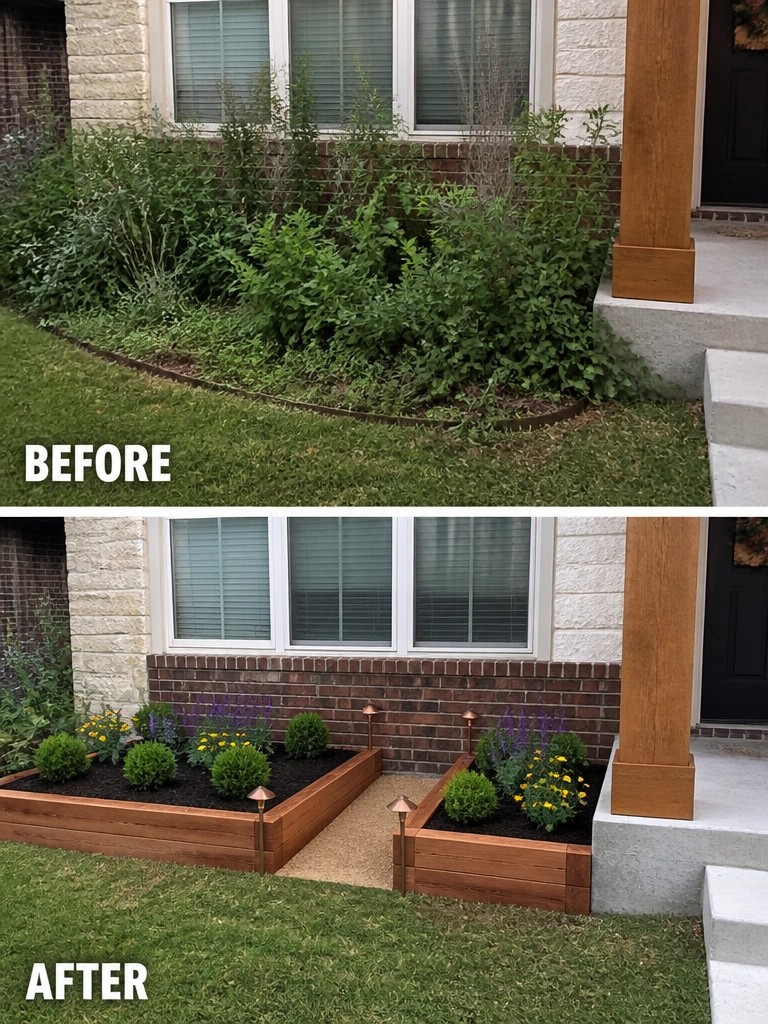
Raised beds can turn a messy foundation planting into something much easier to manage. The before photo shows shrubs spilling out onto the lawn with no clear edge, while the after uses simple wooden planters to keep everything contained and looking intentional.
This idea suits homes with narrow strips of planting along the house where regular maintenance feels overwhelming. Start by clearing the old growth, then build or buy beds that match the scale of the space and leave room for a small path or mulch area between them.
Turn A Bare Balcony Into A Usable Seating Area
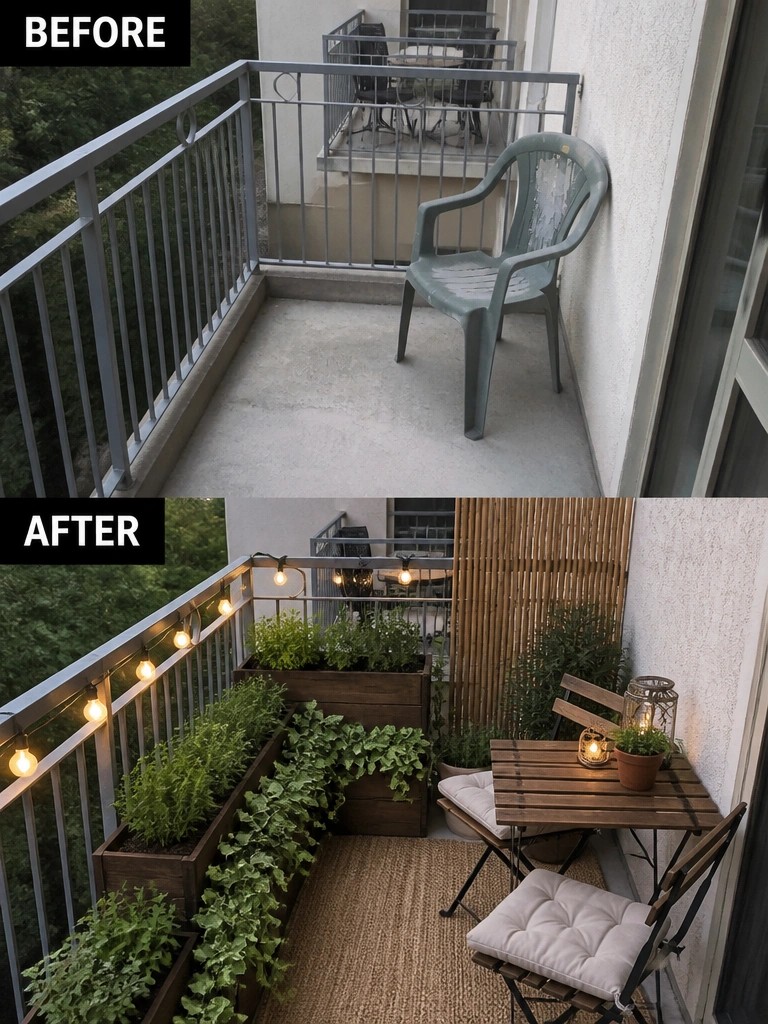
Many small balconies sit empty because they feel too exposed or unfinished. Adding a row of raised planters along the railing and string lights overhead gives the space edges and makes it feel more enclosed without any major construction.
This idea works best on concrete balconies that get some evening use. Start with the planters to bring in greenery and block a bit of the view, then add simple seating and lights so the area feels comfortable after dark. Keep the furniture light enough to move when needed.
Turn A Steep Slope Into Terraced Garden Beds
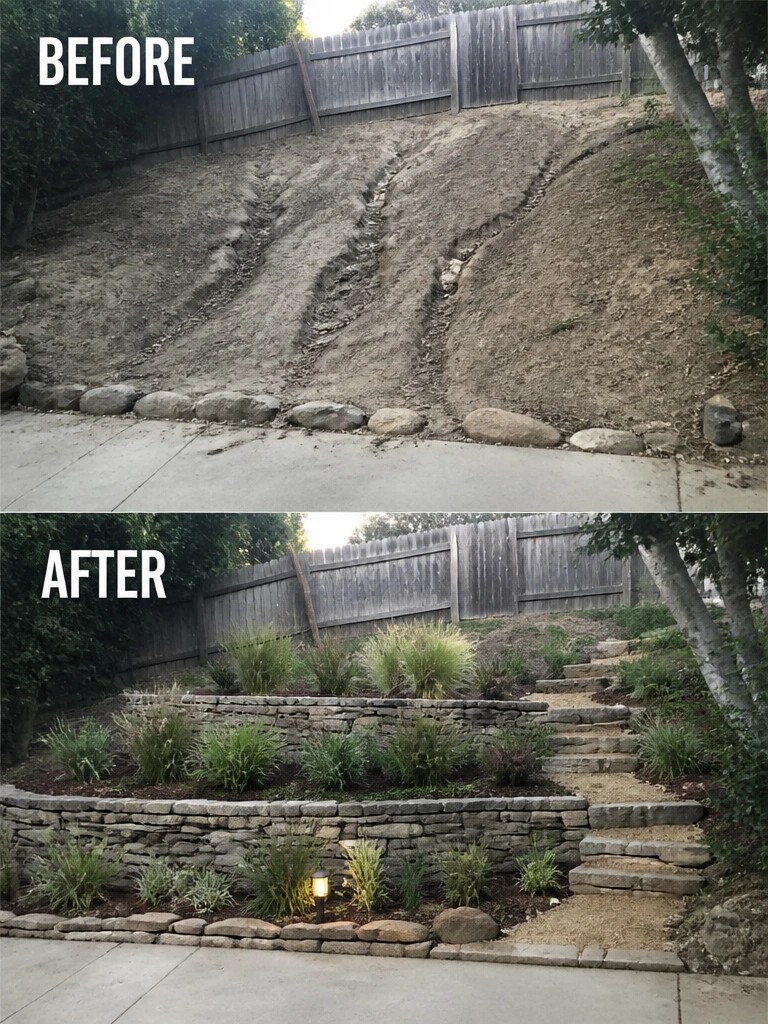
A bare dirt slope tends to erode and feel unusable until you add retaining walls. The stone walls here create flat beds that hold soil and let plants establish without washing away. The added steps also make it simple to walk through the space instead of fighting the incline.
This idea suits small yards with a noticeable drop. Focus first on low walls that match the scale of the slope, then plant in layers so nothing looks overcrowded. Keep paths wide enough for easy movement once the beds fill in.
Add Structure With A Stepping Stone Path And Garden Beds
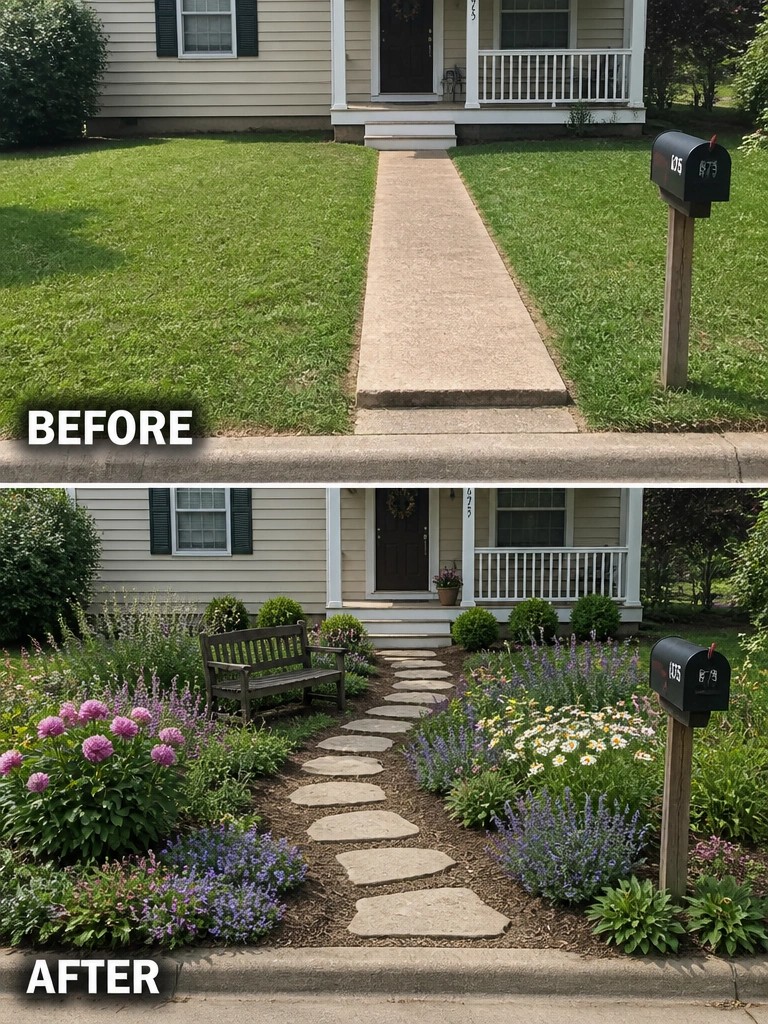
A straight concrete path through a plain lawn can feel flat and uninviting. Switching to stepping stones and adding planted borders on both sides gives the front yard a clear layout and makes the walk to the door feel more intentional. The beds frame the path without crowding it, and the bench adds a simple resting spot that fits the scale of the space.
This approach works well on small to medium front yards where you want more interest but do not need a full redesign. Start by laying out the stones to create a gentle curve, then build the beds around them with a mix of taller and lower plants. Keep the lawn edges clean so the new planting stays the main feature.
Add A Trellis To Bring Order To An Overgrown Fence
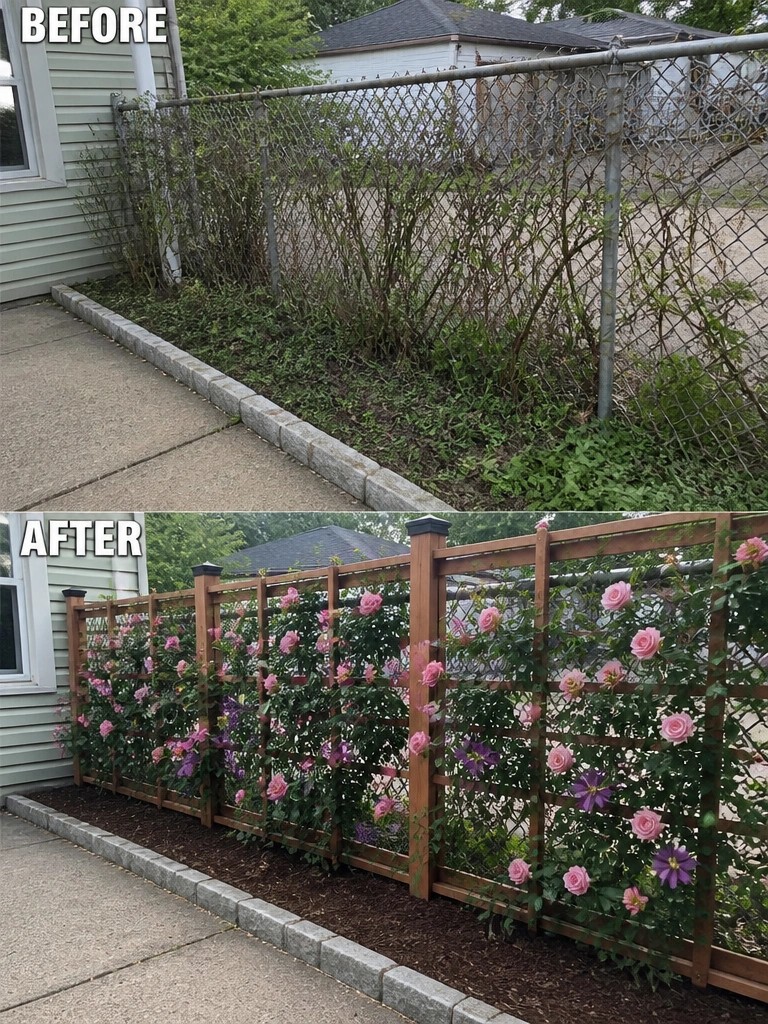
An overgrown fence line often makes the whole yard feel messy. In this case the chain link was buried in tall weeds and straggly bushes. Adding a simple wooden trellis in front of the fence created a clean vertical surface, and planting climbing roses turned the same narrow strip into a tidy garden bed.
This idea works well along sidewalks or property edges where space is tight. Start by clearing the old growth and laying down mulch so the new plants have room to spread. A trellis also gives you the option to add more vines later without the area looking wild again.
Add Structure To A Small Front Yard With Gravel And Rocks
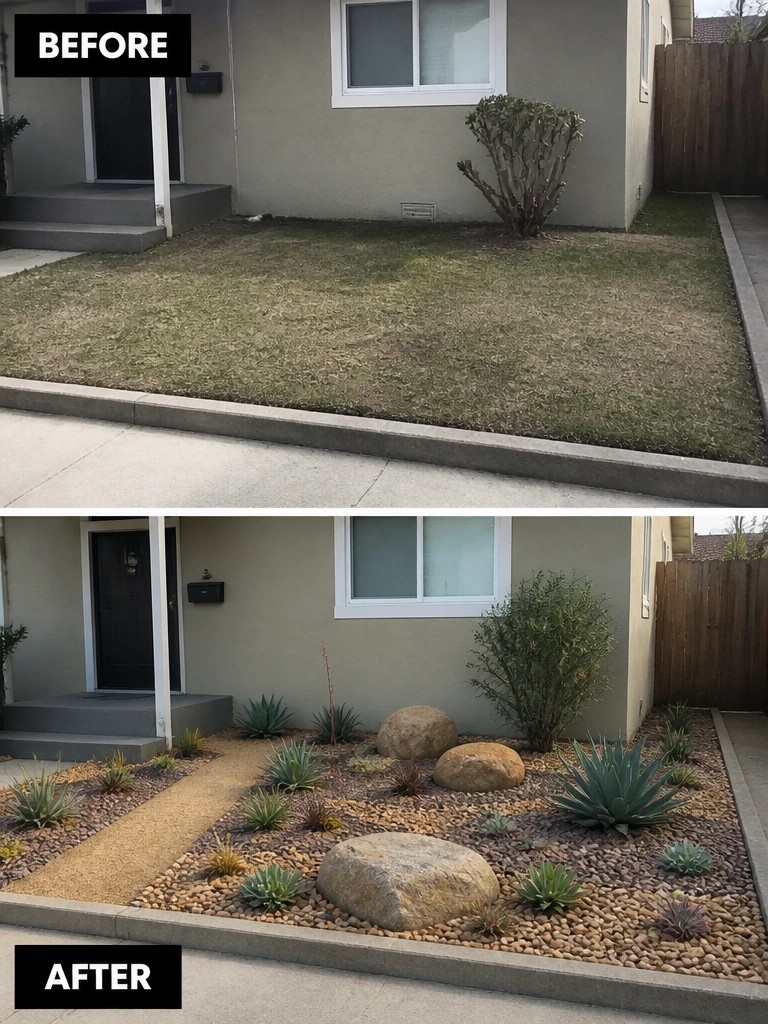
The patchy lawn was replaced with gravel beds that create clear zones across the yard. A few large boulders and grouped plants now give the space shape and keep it from looking flat.
This idea suits small front yards where a full lawn is hard to maintain. Clear the grass first, then use gravel to define the beds and add a few big rocks before planting. It keeps the area looking intentional without needing constant mowing or watering.
Add Gravel And Planters To Define A Small Side Yard
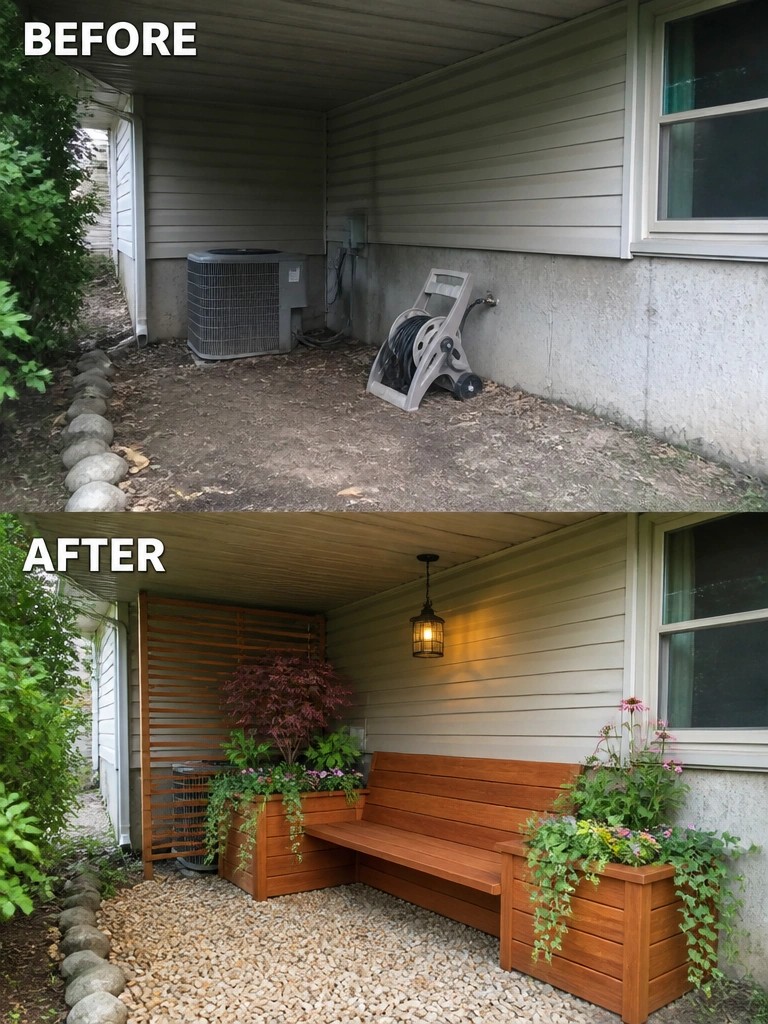
A bare patch of dirt next to the house often stays unused because it feels unfinished. Laying down gravel gives the ground a clean surface that drains well, while a few large planters create clear edges and spots for plants. The result turns a leftover strip into a space that actually feels like part of the yard.
This approach works best on narrow side yards or utility areas where you need to hide equipment without crowding the space. Keep the planters simple and repeat the same wood tone so the area stays calm. Start with the gravel base before adding anything else, since it makes the biggest difference in how finished the spot looks.
Create A Defined Path In A Narrow Side Yard
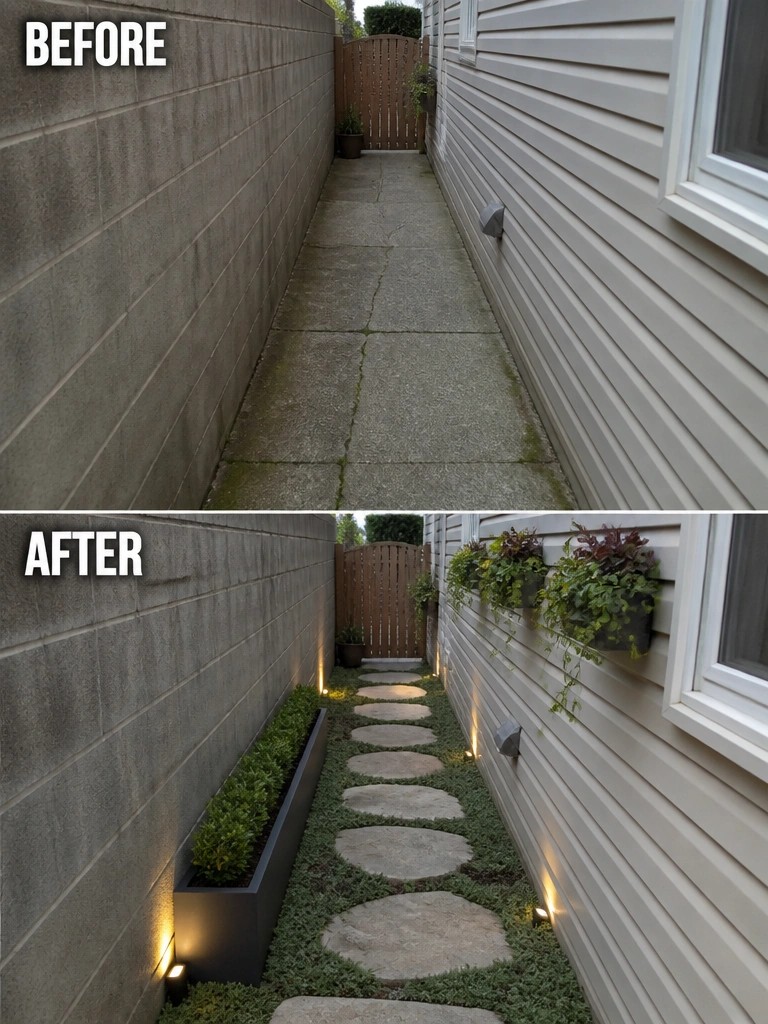
A long, plain concrete strip between a house and a wall often feels like wasted space. Adding a row of stepping stones with low ground cover on either side gives the area a clear route and breaks up the hard surface. A long planter along one wall adds height without crowding the walkway, while a few low lights keep the path usable after dark.
This approach works well on tight lots where a full patio would not fit. Start by laying out the stones to follow the natural flow, then add plants that stay low so the space still feels open. Keep the lighting simple and aimed at the ground so it guides feet without glare.
Add Raised Beds To Give A Small Yard Structure
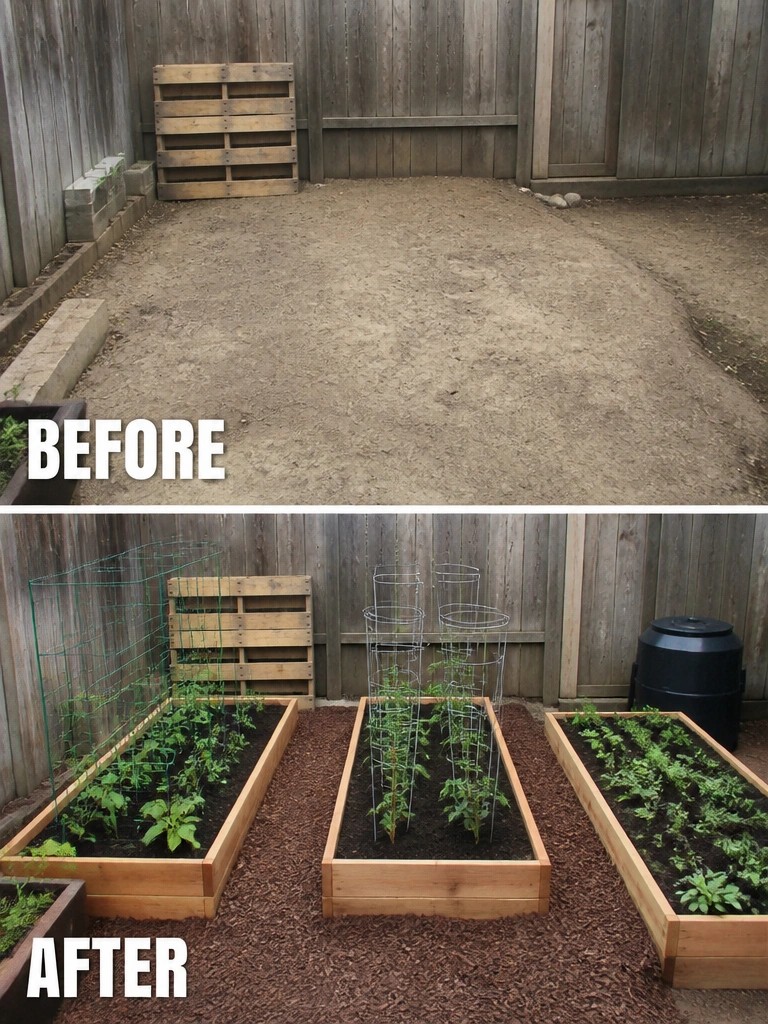
A bare dirt yard often feels like wasted space because there is no clear place to plant. Raised beds solve that by creating defined growing areas that keep plants organized and make the whole yard look intentional.
This approach works best in small backyards where you want to grow food or flowers without covering the entire ground. Start with a few beds in a simple layout, use basic supports for vining plants, and cover the open ground with mulch to keep things tidy and low maintenance.
Add Structure To A Small Backyard With Gravel
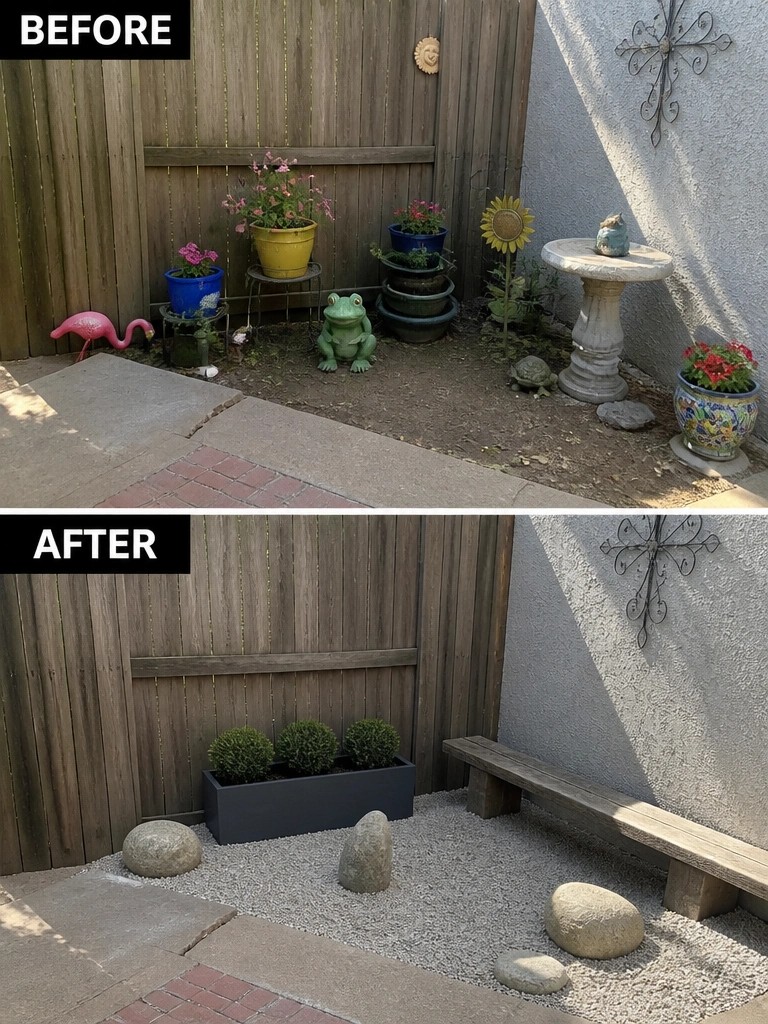
Small outdoor corners often collect too many separate pots and ornaments until the space feels scattered. Removing the extras and laying gravel creates a simple base that ties everything together and makes the area look more planned.
This idea works best in tight side yards or back corners where you want a low-maintenance surface. Keep the planting limited to one long box with a few shrubs, then add a handful of rocks and a basic bench so the space stays open and easy to walk through.
Define Garden Beds With Simple Edging

Adding a low stone border turns a scattered gravel area into a clear planting space. The edging gives the bed a finished shape and keeps mulch and plants from spilling onto the lawn.
This approach works best in small front yards or along walkways where you want planting without a full redesign. Lay the border first to set the size, then choose a few reliable perennials that suit the light. Leave enough room for the plants to fill in over time.
Add Planters To Define A Small Deck
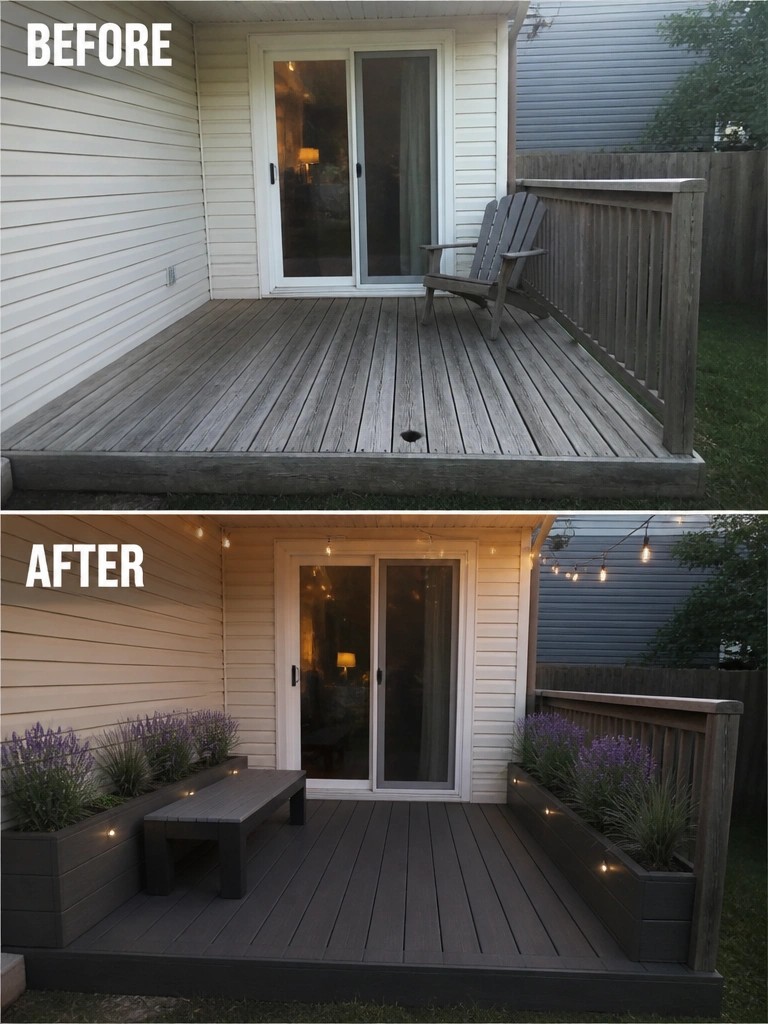
A plain deck often feels like just a platform until you give it some edges. In this case the before version had open sides and little else, which left the space looking unfinished. Adding raised planters along both sides created clear boundaries, brought in some planting, and made the deck feel more like a room.
This approach works well on small decks where you do not have room for large furniture or structures. Keep the planters low enough to sit on if needed, use simple lighting inside them, and choose plants that can handle your local weather. The key is letting the planters do the work of shaping the space before you add anything else.
Add Lighting To Highlight A Garden Path
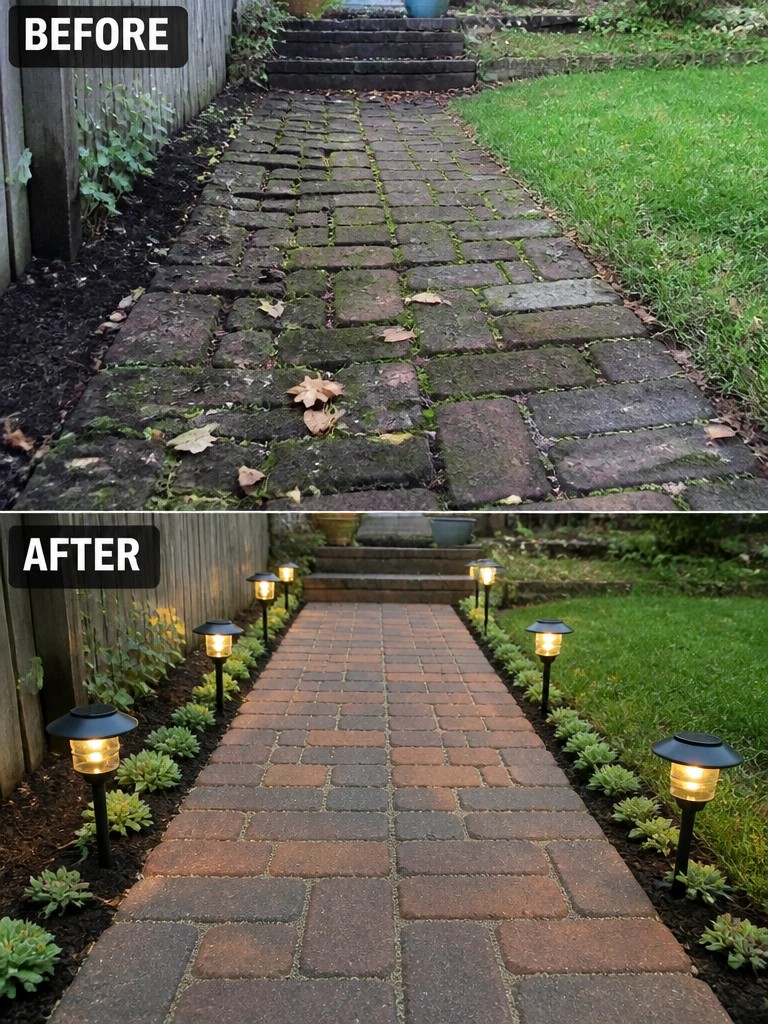
A tired brick path can drag down the whole yard once the bricks get covered in moss and the edges turn ragged. Cleaning the surface and adding a row of simple solar lights with low planting along both sides makes the walkway feel intentional and easy to use at night.
This idea suits narrow side yards or small back gardens where the path needs to connect spaces without crowding them. Stake the lights so they follow the line of the walk, and choose compact plants that stay low enough for foot traffic. Focus on the path itself first before adding anything else.
Use A Retaining Wall To Shape A Sloped Garden Bed
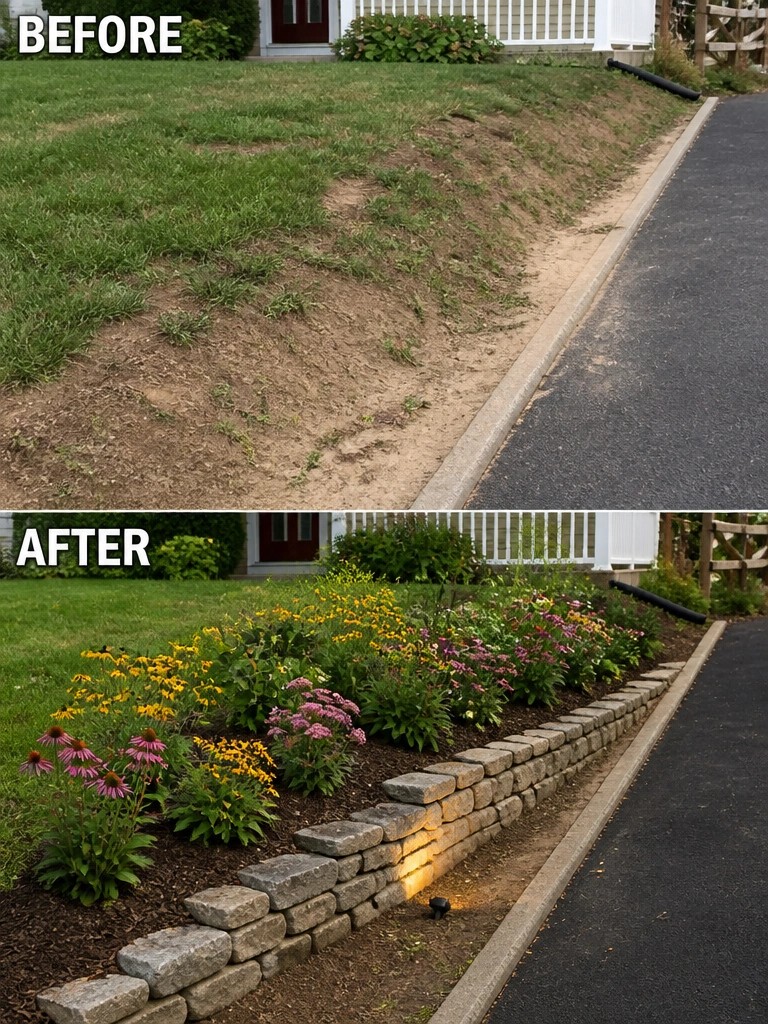
A bare slope next to a driveway often ends up weedy and hard to mow because the soil keeps shifting. Adding a low retaining wall creates a flat planting area that stays put and gives the edge of the yard a finished look. The simple block wall in this case turns an awkward incline into a spot that can actually hold flowers and mulch without washing out.
This approach works best along driveways or front lawns where the ground drops toward the street. Keep the wall height modest so it does not block views, and choose blocks that match any existing concrete edging on the property. Once the wall is in, focus on easy perennials and a layer of mulch rather than trying to plant directly into the slope.
Add Turf To Turn Bare Ground Into A Seating Area
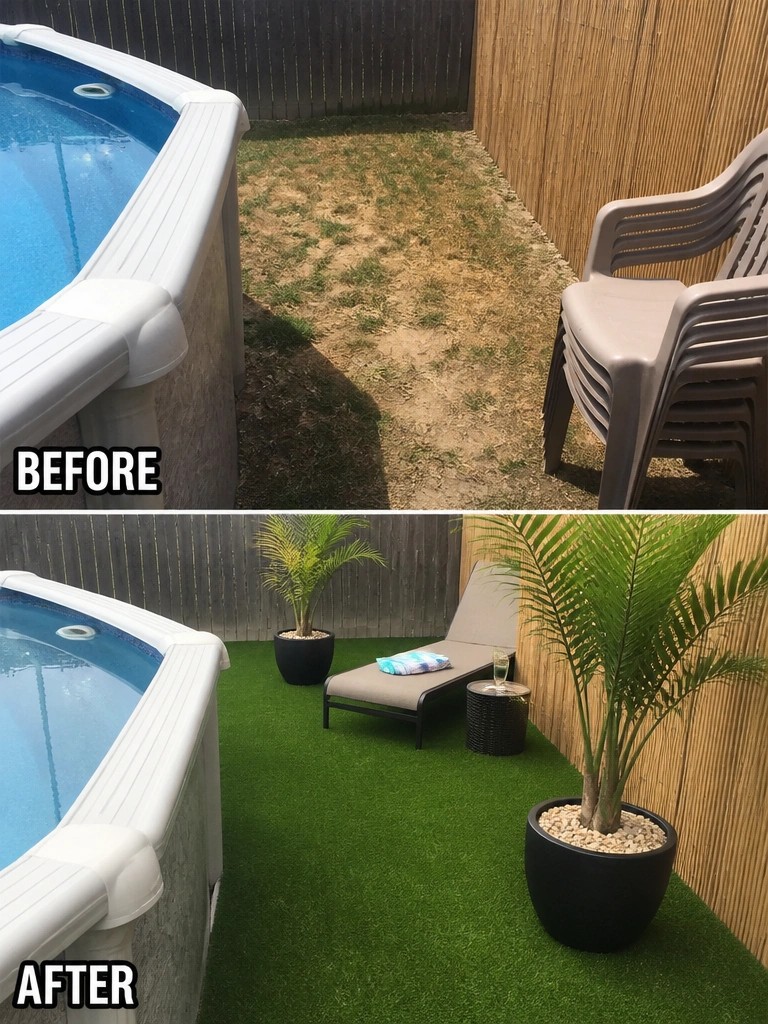
The patchy dirt next to the pool made the whole space feel unfinished and hard to use. Laying down artificial turf gave the area a clean surface right away, which made it easy to add a lounge chair and a few potted plants without the ground looking neglected.
This idea works best in small yards where real grass is patchy or difficult to maintain. Start with the turf to create a flat, usable base, then keep the rest simple with one or two large planters and weatherproof seating. It leaves room to move around the pool while still giving you a defined spot to sit.
Add A Vertical Garden To A Small Outdoor Wall
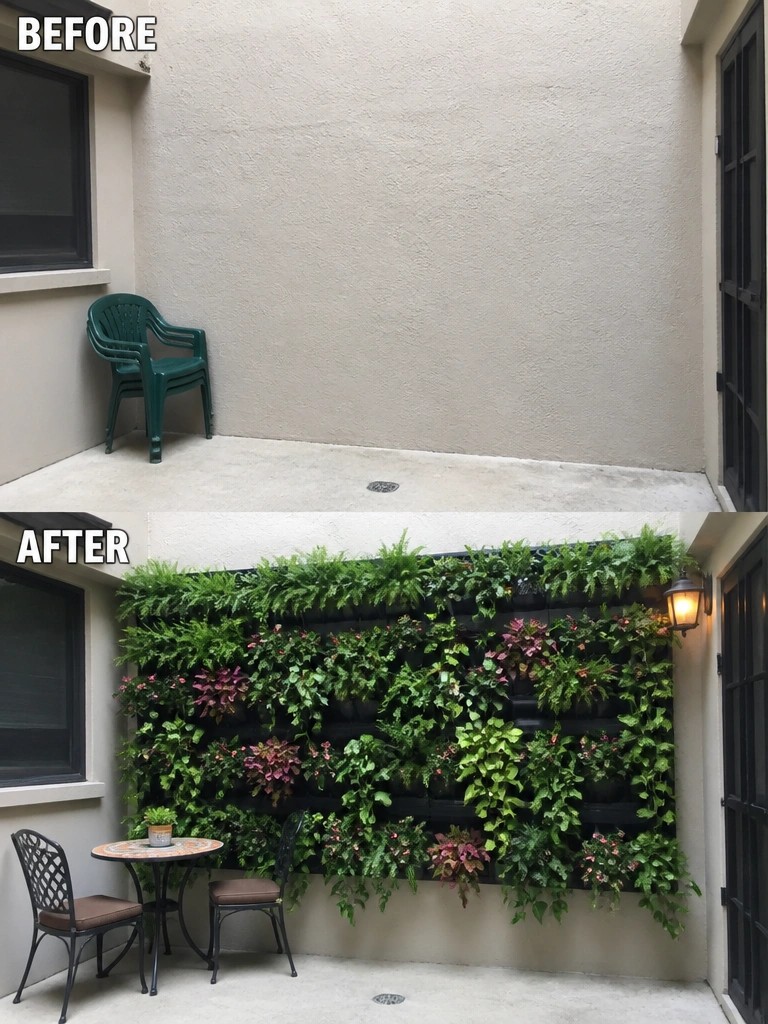
A blank wall next to a concrete patio often leaves the space feeling unfinished. Adding a living wall with layered plants turns that empty surface into the main feature and brings life to the whole area without using up floor space.
This approach works especially well in courtyards or narrow outdoor spots where a traditional garden bed would not fit. Start with a simple modular system, pick plants that match the light you have, and keep the rest of the furniture light so the space stays easy to move around in.
Fill Balcony Planters With Seasonal Color
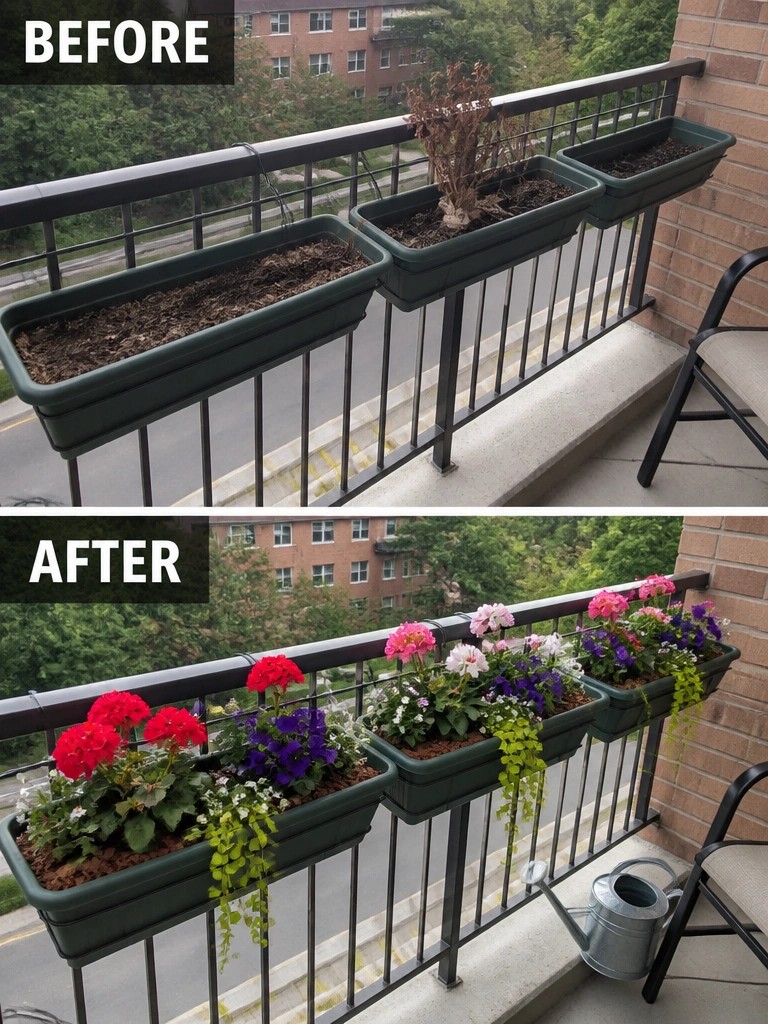
Many balconies start with a few rail planters that sit half empty or full of tired soil. The change comes from clearing out the old material and filling them with a mix of bright annuals and a few trailing plants that spill over the edges. This simple step turns a flat railing into the main feature without adding furniture or big structures.
The same approach works on any small outdoor space that has room for containers. Choose plants that match the light on your balcony, water regularly, and keep the color mix simple so it does not feel crowded. A few well planted boxes can make the whole area feel cared for even when the rest stays plain.
Turn An Overgrown Side Yard Into A Garden Path
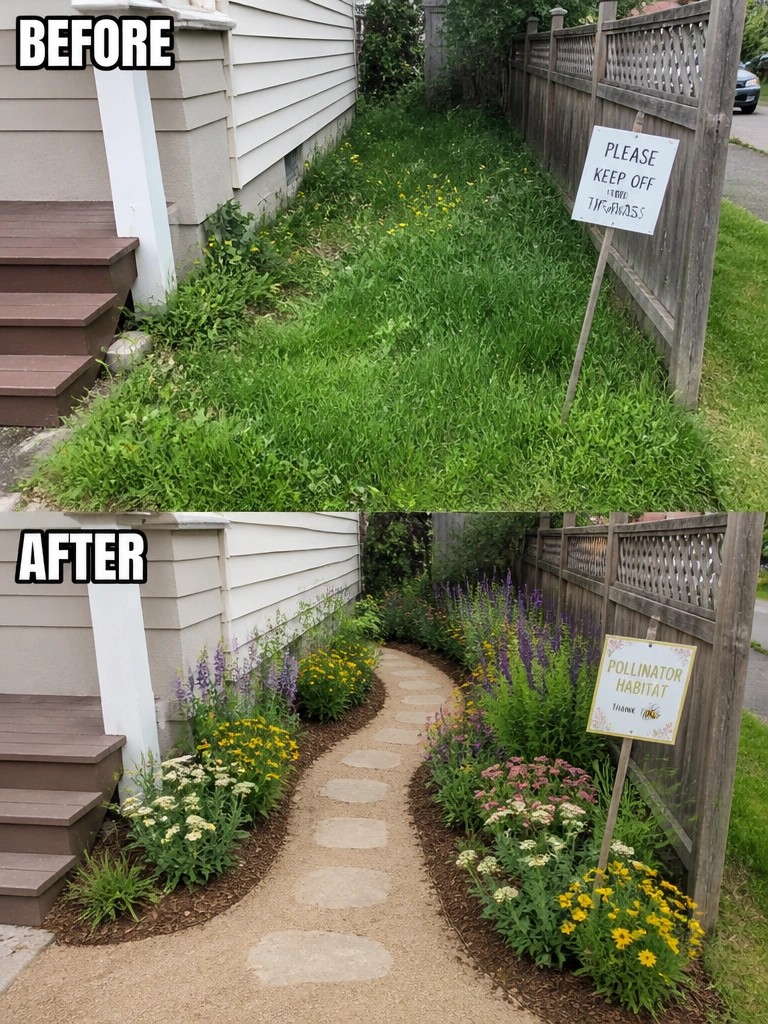
An overgrown strip of grass next to the house often ends up ignored or trampled. Adding a simple path of stepping stones and planting along both sides gives the space a clear purpose and makes it easy to walk through without compacting the soil. The change from tall weeds to mulched beds also cuts down on maintenance.
This approach works well on narrow lots or side yards where there is not much room for big features. Start by clearing the area, lay out a gentle curve with pavers or gravel, then add a mix of flowering plants that fit your climate. Keep the beds a consistent width so the path feels balanced and leaves enough space to move through comfortably.
Frequently Asked Questions
Q: What plants hold up best in a small space that gets baked by afternoon sun?
A: Choose drought tolerant varieties like succulents and lavender. Water them deeply once a week at first. They fill in fast without much fuss.
Q: How can I add seating without eating up all my floor space?
A: Tuck a slim bench along one wall. It doubles as storage for tools or cushions too. Keep the rest open for movement.
Q: Do these projects need a lot of upkeep once they’re done?
A: Most of the ideas focus on low maintenance choices like gravel and hardy shrubs. Spend a few minutes pulling weeds each month. That keeps everything looking fresh.
