


Many backyards have shady areas that feel unfinished because the planting stays too simple without any real layers underneath.
Ferns and hostas work well together when placed to build height gradually so the space develops depth instead of staying flat.
Soil matters more than it seems at first.
I always check the light patterns in my own garden before deciding how dense the layers should be in each spot.
These kinds of ideas help when you want the layout to look natural rather than forced after a few years of growth.
Stepping Stone Paths in Shade Gardens
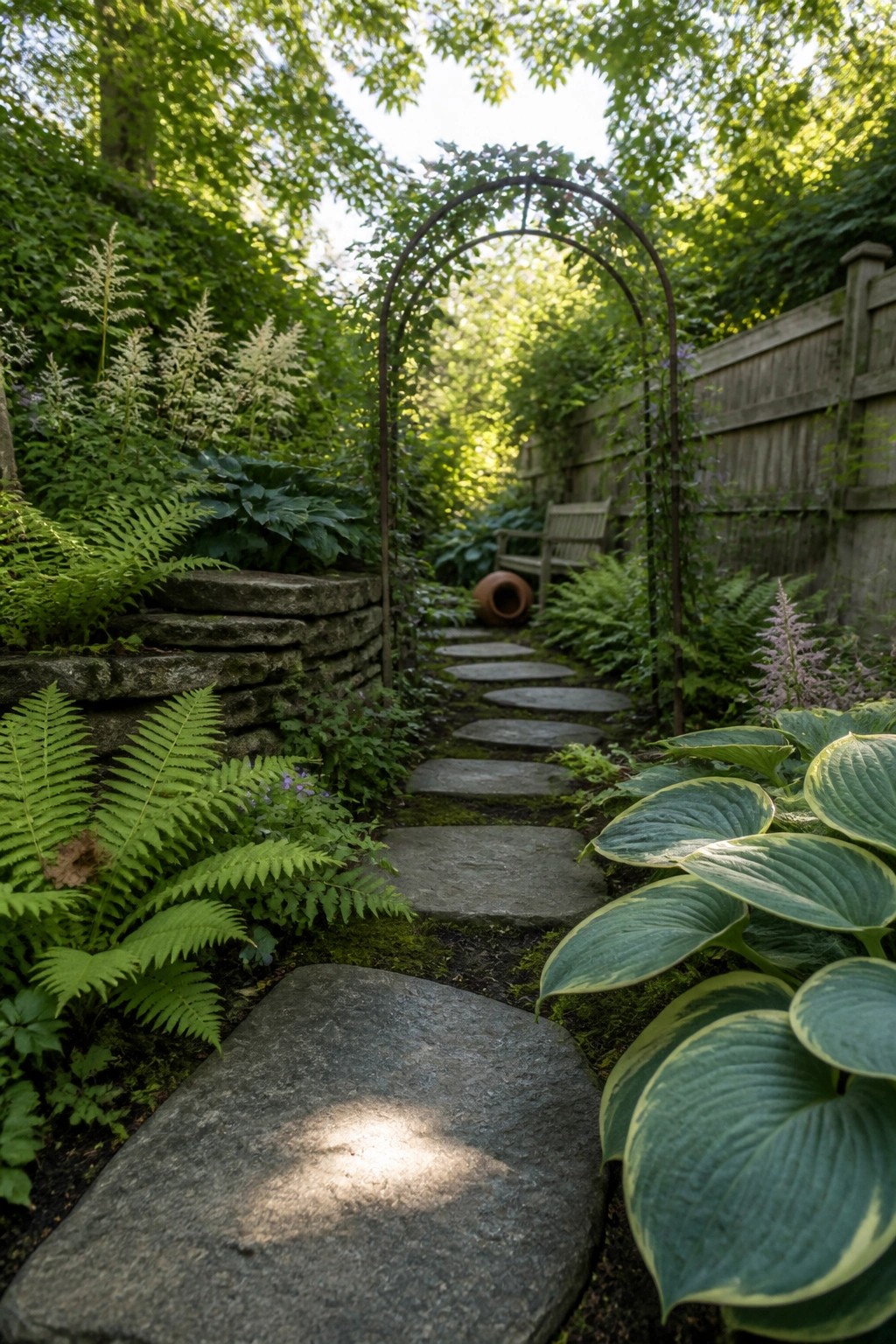
A simple path of irregular stepping stones works well when you want to move through a shaded area without clearing too much space. It lets the ferns and hostas grow right up to the edges and gives the garden a quiet, natural feel instead of a wide open walkway.
Place the stones where the ground is already fairly level and set them slightly apart so moss can fill the gaps over time. This approach suits side yards or wooded lots where you need a clear route but still want the plants to feel like the main feature.
Layer Hostas With Ferns Along Shaded Paths

Hostas and ferns work well together when you want to fill the edges of a path in shade. The broad leaves of the hostas sit low while the ferns add height and texture behind them, which keeps the planting from looking flat or sparse.
This approach suits older homes with brick walls or narrow side passages where light stays low most of the day. Keep the bed narrow enough that the plants do not crowd the walkway, and let the foliage spill just a little over the edge so the hard surface feels softer.
Stone Edging For Shade Beds
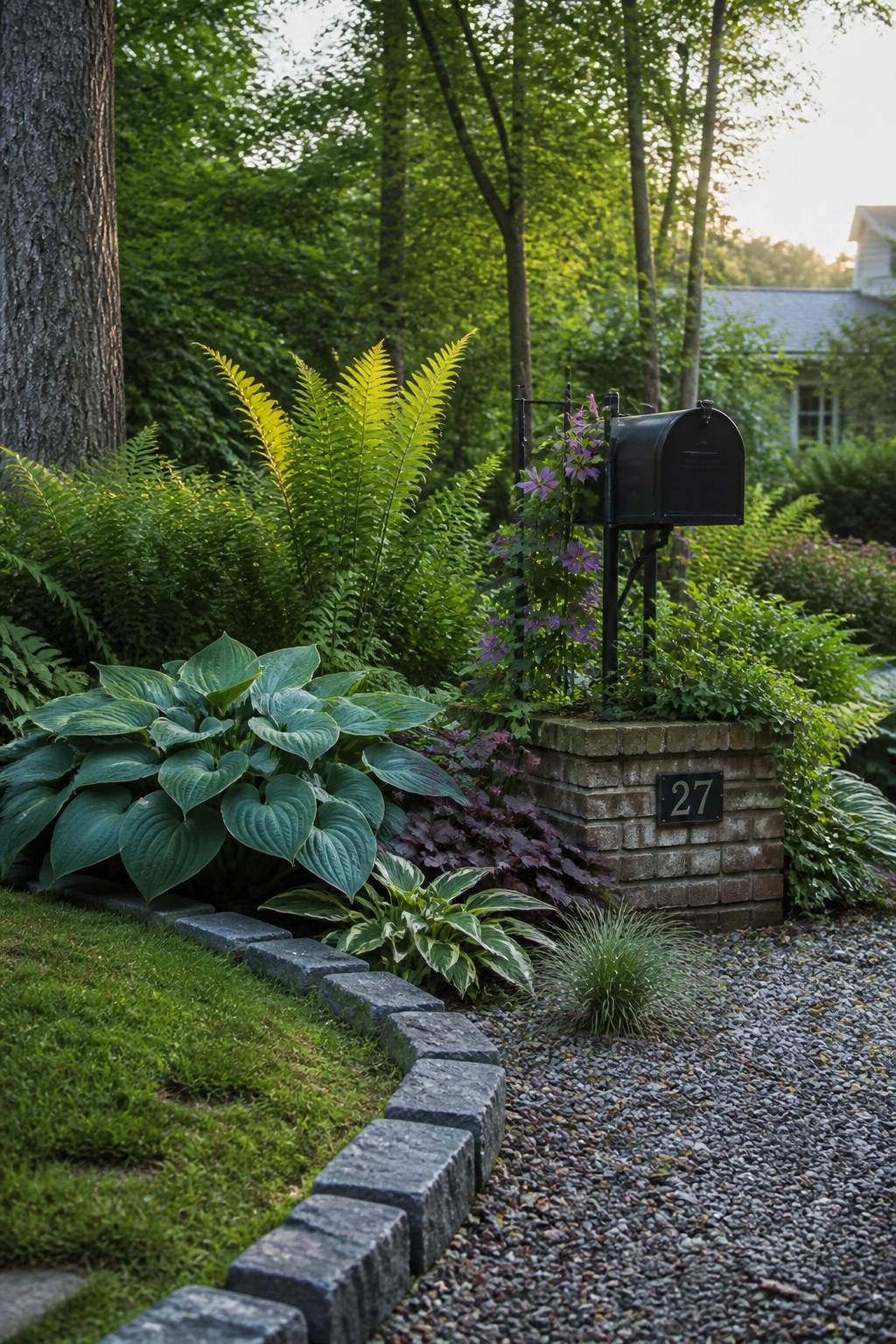
A low stone border helps shade gardens feel organized while still looking natural. It keeps the hostas and ferns from creeping onto the lawn or path and gives the planting area a clear shape that works well under trees.
This kind of edging suits older homes or wooded lots where you want the garden to feel settled rather than manicured. Use stones that match the local stone or gravel so the whole area stays simple and low maintenance.
Line Paths With Layered Hostas And Ferns
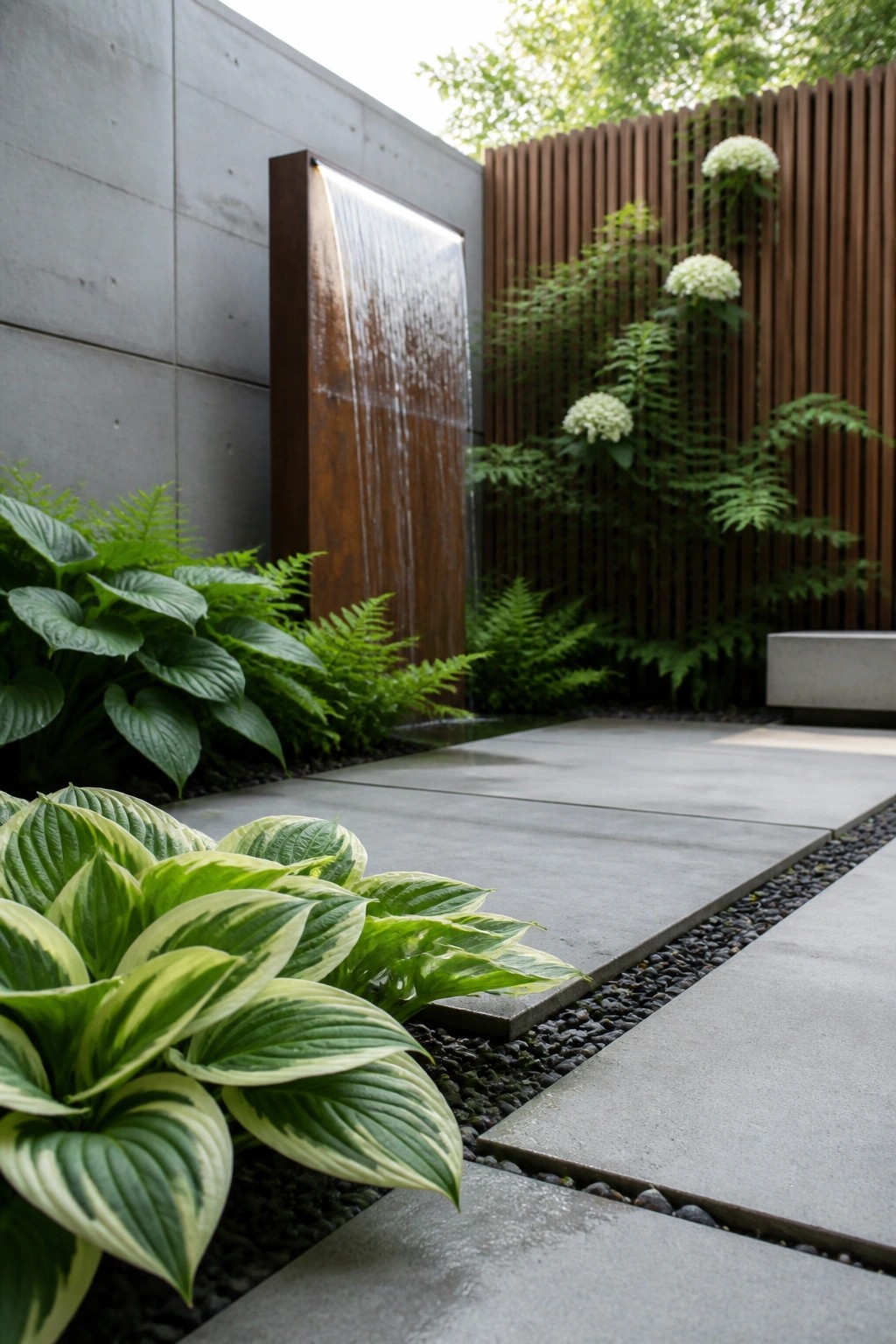
Layering hostas and ferns right along the edges of a path gives shade gardens a soft, full look without crowding the walkway. The plants spill over just enough to hide the hard lines while still leaving room to walk. This approach works especially well when the path itself is simple and wide.
It suits gardens that already have concrete or stone underfoot and need planting that feels natural rather than fussy. Keep the layers low in front and a bit taller behind so the path stays easy to follow. Gravel between the pavers helps with drainage and keeps the whole edge looking neat over time.
Layered Containers for Shady Seating Areas
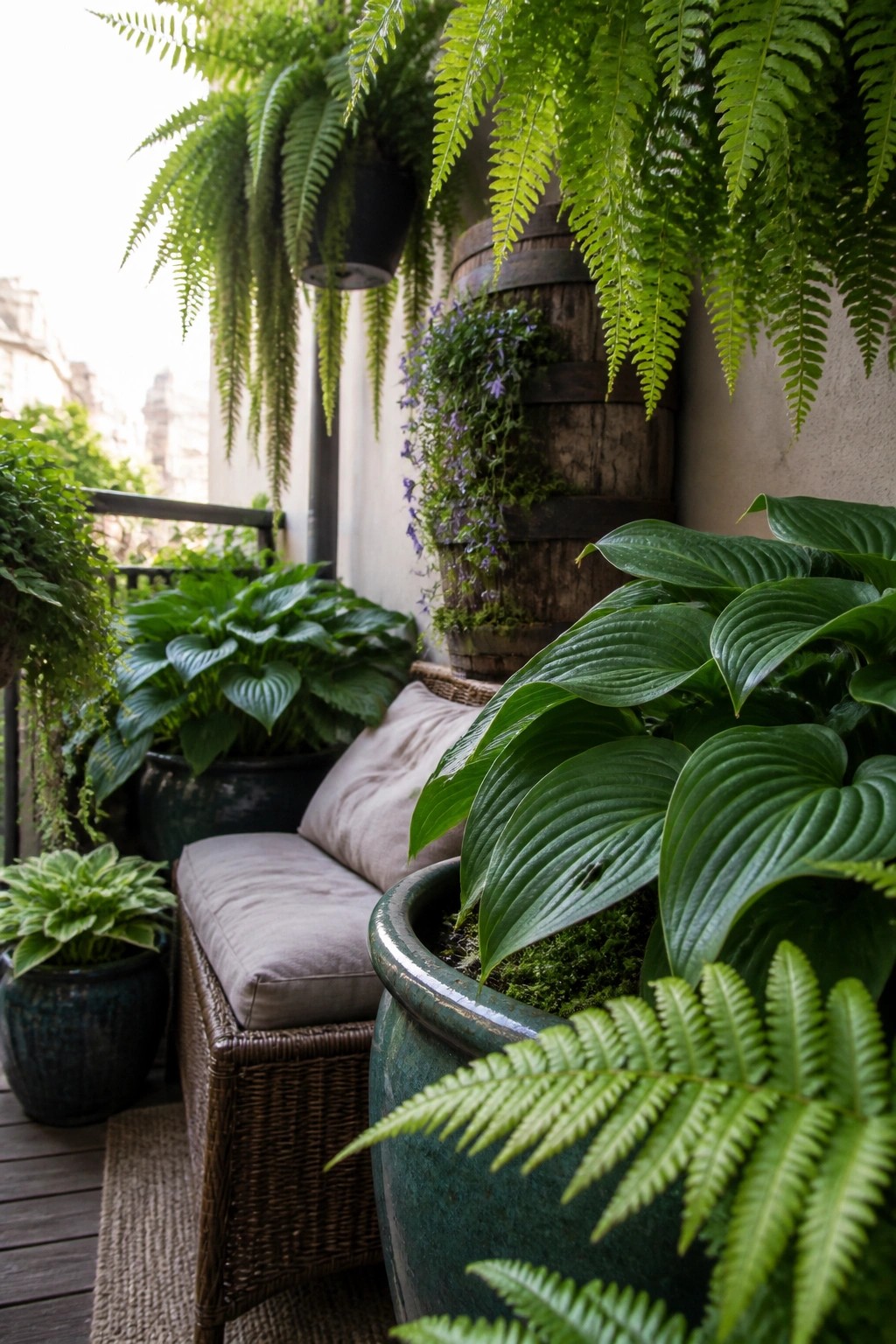
Grouping large pots of ferns and hostas around a bench or chair turns a small outdoor spot into a quiet green nook. The plants create soft layers that feel full without needing much floor space. It works especially well where light is low and soil is limited.
Place taller ferns toward the back and lower hostas in front to build depth. Stick to similar pot colors so the greenery stays the focus. This approach suits balconies, side porches, and shaded decks where you want plants close to the seating.
Layer Hostas And Ferns On Retaining Walls

Many shade gardens sit on slopes where plants can slide or wash out after rain. Low stone walls solve this by creating flat planting tiers that let hostas and ferns settle in and spread.
This approach works best in wooded yards with gradual drops. Keep the walls modest in height and let the foliage drape over the edges so the structure feels like part of the garden rather than a hard barrier.
Layering Hostas and Ferns Around a Fountain

A small fountain makes a good anchor in a shady spot. Placing hostas and ferns in loose layers around the base softens the hard surface and gives the area a quiet, settled look without much effort.
This works best in brick courtyards or narrow side gardens where space is tight. Keep the ferns toward the center and let the hostas edge the path so the planting stays full but easy to walk around.
Log Planters Along Shaded Paths
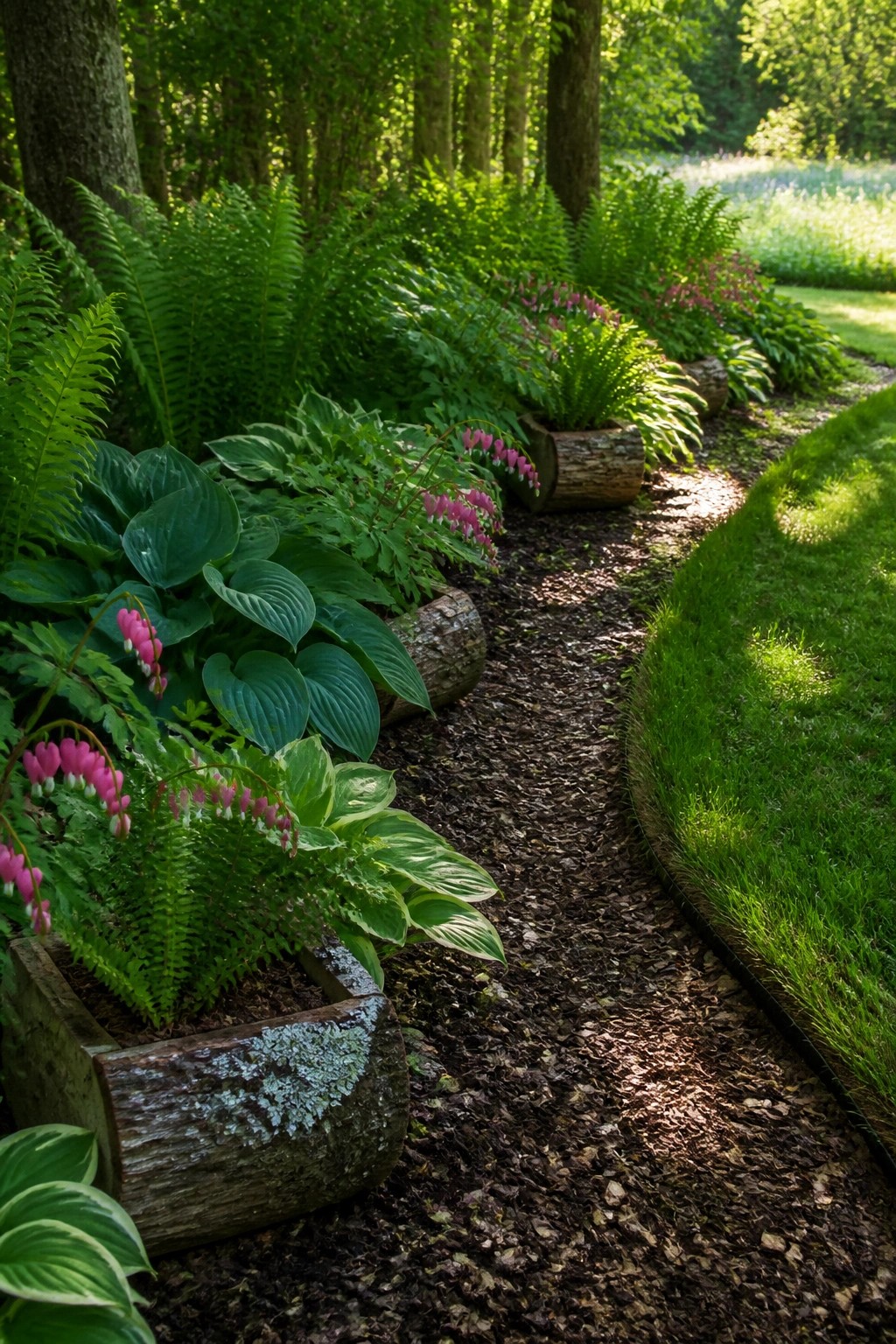
Hollowed logs make simple planters that suit shade gardens well. They blend into the setting without looking added on and give ferns and hostas a place to spill over naturally along a path.
Set them where the ground is already mulched and the light stays dappled. They work best in older yards with trees overhead, though you need to check that the wood holds up over time in damp spots.
Raised Beds Work Well In Shaded Gardens
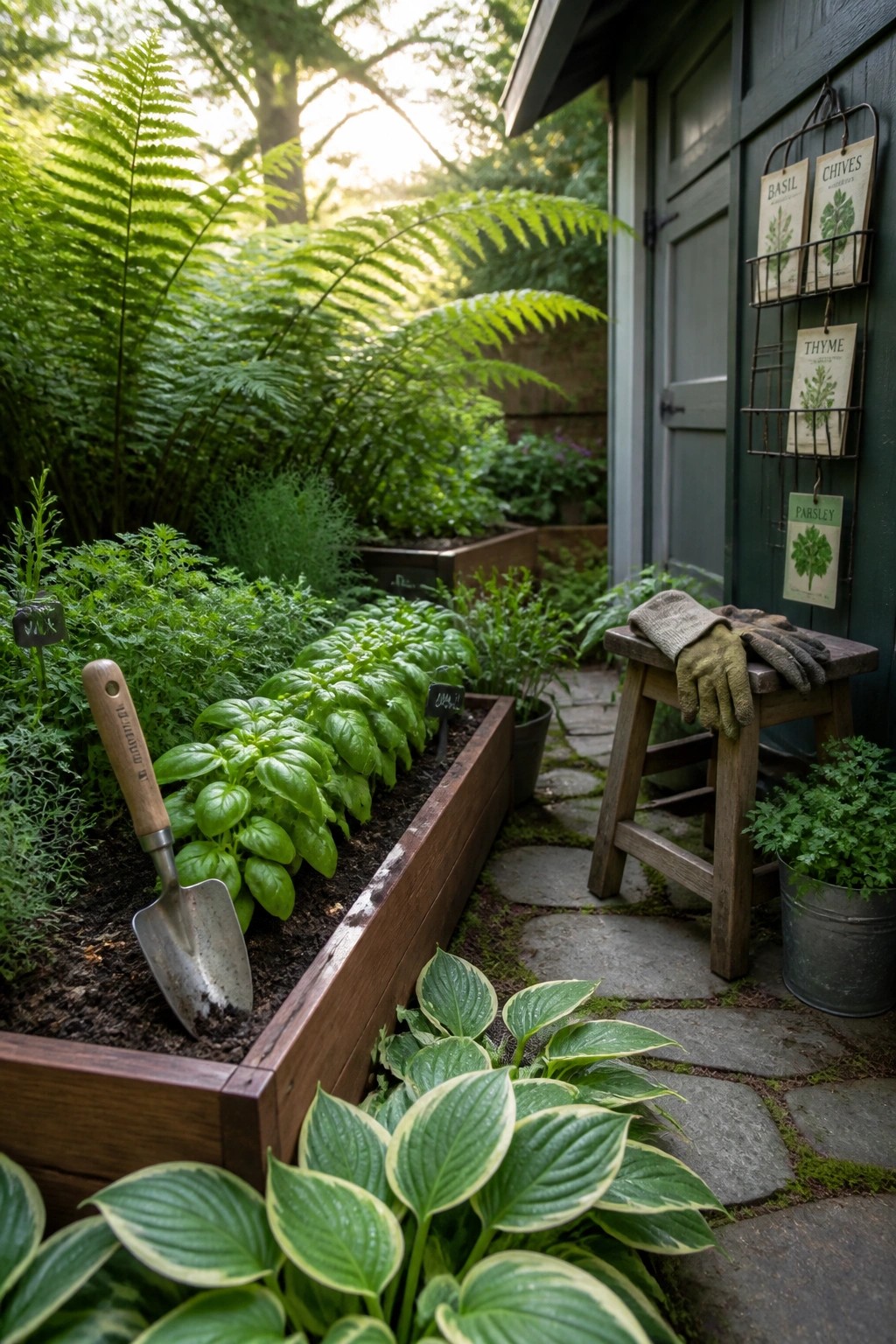
Raised beds give you a clear spot to grow herbs even when the rest of the garden stays shady. They keep the soil warmer and easier to manage, while the ferns and hostas around them fill in the space with soft layers that feel natural.
Place the bed along a path or next to a shed so you can reach it without stepping on the plants. This works best in side yards or smaller lots where dappled light reaches the ground for part of the day.
Boxwood Hedges For Defined Shade Beds

Low boxwood hedges work well in shade gardens because they give clear shape to the beds without competing with the softer plants inside. The hedges keep hostas and ferns looking organized even when the foliage grows full and loose.
This layout suits larger shade areas where you want a bit of structure. Plant the hedges first to mark out the beds, then fill in with layers of hostas along the edges and taller ferns or foxgloves toward the center. Keep the paths simple so the focus stays on the planting.
Soften Pool Edges With Hostas And Ferns

Hostas do a good job of breaking up the hard line where stone meets water. Their big leaves spill forward and make the edge feel less rigid, especially when you back them with ferns that add height without taking over.
This works best in shady spots where the plants stay lush. Keep the biggest hostas closest to the border and let the ferns sit a little farther back so the layers stay readable from a few feet away.
Layer Hostas And Ferns Around Seating Areas
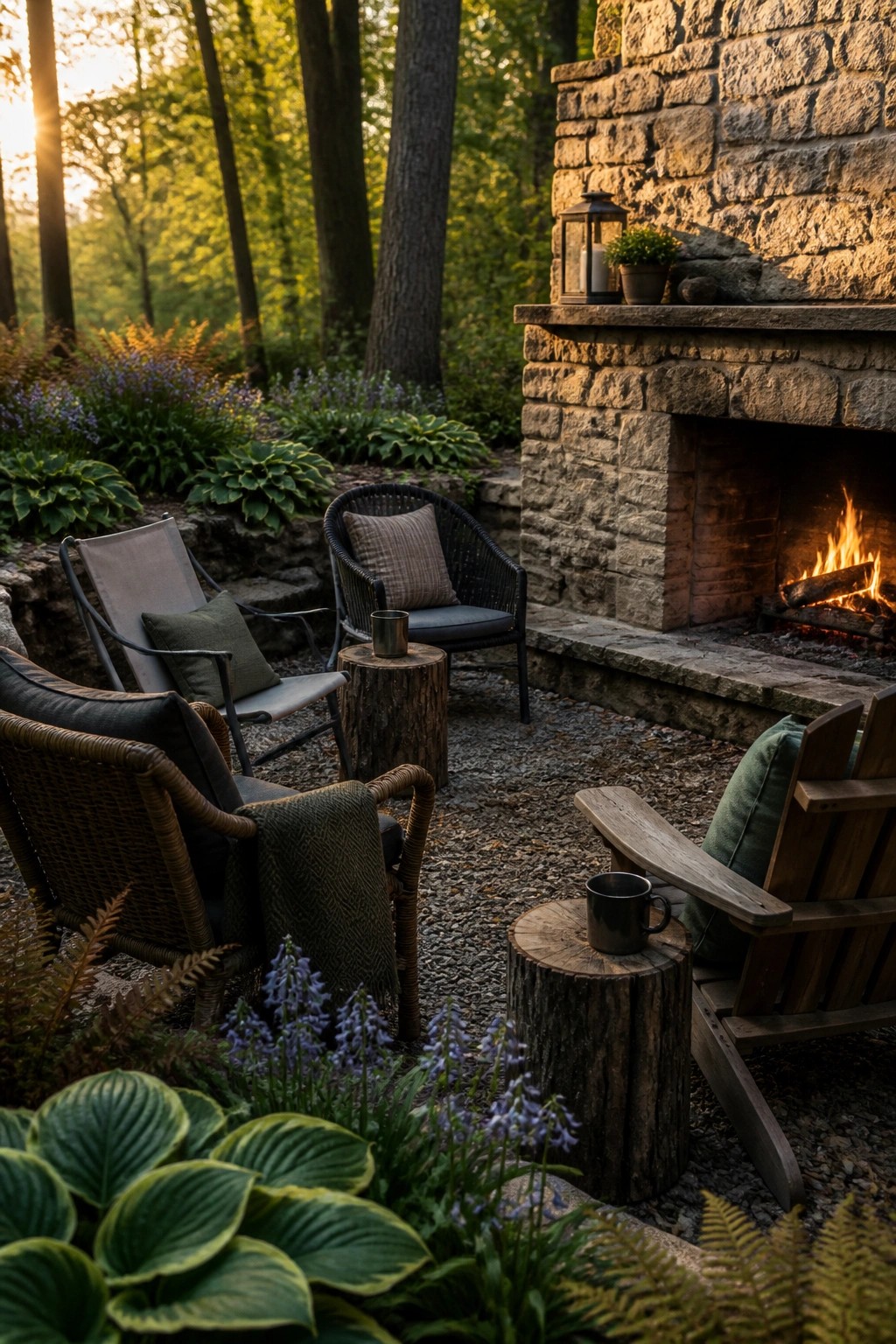
Hostas and ferns work well when planted right up against the edges of a gravel seating spot. They fill in the space between the hard ground and the surrounding trees without needing much sun. The different leaf shapes and heights create a gentle transition that makes the whole area feel more settled.
This approach works best in shaded yards where you already have a fire feature or a few chairs set up. Keep the plants in loose groups rather than straight lines so they look natural over time. Watch how far the hostas spread in the first couple of seasons and adjust the spacing if they start crowding the path.
Add Height With a Simple Ladder Shelf

A ladder leaned against a wall gives you an easy way to stack pots at different levels. This works especially well in shade gardens where ferns and hostas already like to grow in layers, and the extra height keeps the planting from feeling flat on the ground.
Place the ladder where it gets good shade and tuck smaller pots on the rungs while larger ones sit at the base. It suits older homes with narrow side yards or shady corners that need more plants without digging new beds. Just make sure the ladder is stable and the pots are not too heavy for the rungs.
Layer Hostas And Ferns Along Brick Paths

Hostas and ferns work well together when you plant them in repeating layers beside a walkway. The big leaves of the hostas fill the lower level while the ferns add height and softness above them. This setup feels natural and keeps the path from looking too bare or hard.
It suits homes with partial shade and established trees. Keep the beds a consistent width so the plants can grow together without crowding the bricks. One or two larger containers near the door can add a bit more structure if the beds start to feel too loose.
Layer Ferns and Hostas Along Stone Steps

Ferns and hostas make a strong pair when used to soften a stone stairway in shade. The ferns bring height and texture while the hostas fill lower spots with broad leaves, turning a plain path into something that feels more like a woodland walk.
This works best on shaded slopes or entries where the stone can stay cool and damp. Plant in loose groups rather than straight lines, and leave enough room along the edges so the steps remain easy to use.
Potted Ferns Around A Porch Bench

Placing large pots of ferns right next to a bench turns a simple seating spot into something softer and more shaded. The plants add height and texture without needing a full garden bed, and they work especially well on a covered porch where the light stays low.
This approach suits homes with limited yard space or anyone who wants to move plants around as the seasons change. Keep the pots grouped rather than spread out, and choose varieties that handle some dryness if the area gets breezy.
Tree Stump Planters For Hostas

Tree stumps make good planters in shade gardens because they lift the hostas off the ground and give the bed a little height. The wood also blends right into the setting without adding anything too polished.
Place a few stumps of different sizes along the edge of a path or near a bench, then fill them with hostas and tuck ferns and low ground cover around the base. This works best in older yards where you already have some trees and want a simple way to add layers without a lot of new materials.
Wooden Paths Through Shade Beds
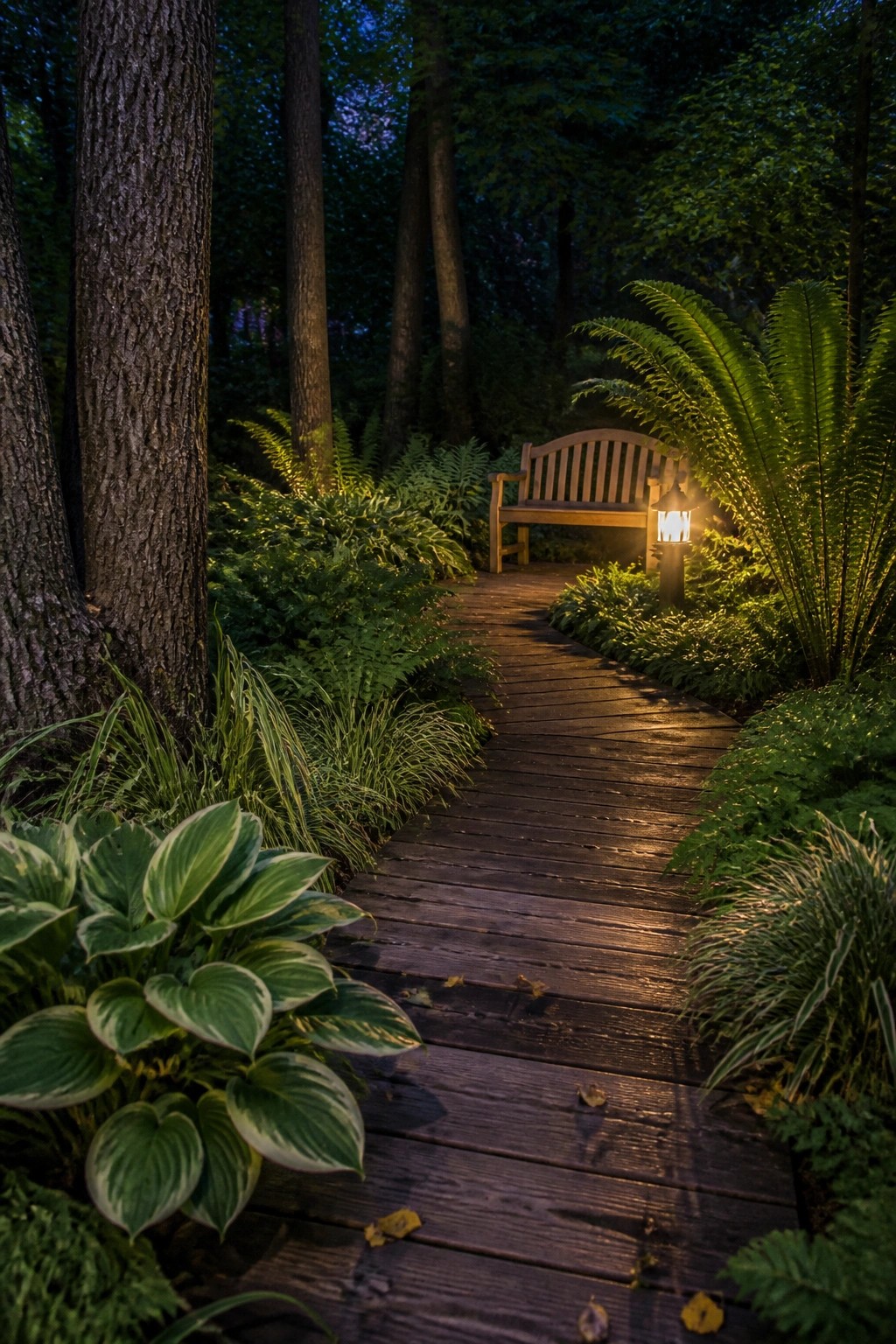
A wooden path gives structure to a shade garden without overpowering the soft layers of ferns and hostas. It keeps foot traffic off the soil and creates a clear route that lets the planting feel full and natural on both sides.
This approach works well in larger wooded areas where you want a simple way to move through the space. Use untreated boards that will weather to a soft gray, and let the path curve gently so it follows the natural flow of the beds rather than cutting straight lines.
Frequently Asked Questions
Q: How far apart should I space hostas when building those soft layers with ferns?
A: Give each hosta about two feet of room so the fronds can spread without fighting. Tuck the ferns in the gaps once the hostas settle in. That spacing keeps the whole bed looking full but still airy.
Q: My shade garden gets a little extra light on one edge. Will the ferns still settle in okay?
A: Most ferns handle a touch of morning sun as long as the soil stays moist. Shift the more delicate ones toward the deeper shade side. Watch them for a few weeks and move any that start to crisp.
Q: Do I need to add anything special under the hostas for that woodland feel?
A: A light layer of leaf mold or shredded bark works fine to hold moisture and echo the forest floor. Skip heavy fertilizers. Let the plants knit together on their own after the first season.
