


When I lay out a garden the hard surfaces always end up guiding how the whole space feels day to day.
Stone and gravel set the paths and edges first, which then lets the plants settle into clearer shapes instead of looking scattered.
Edging matters more than it seems at first.
I keep coming back to the fact that loose gravel drifts over time unless the borders are thought through from the start.
A couple of these simple plant and stone combinations seem worth marking down so I can test them against what already grows in my yard.
Gravel Paths With Stepping Stones
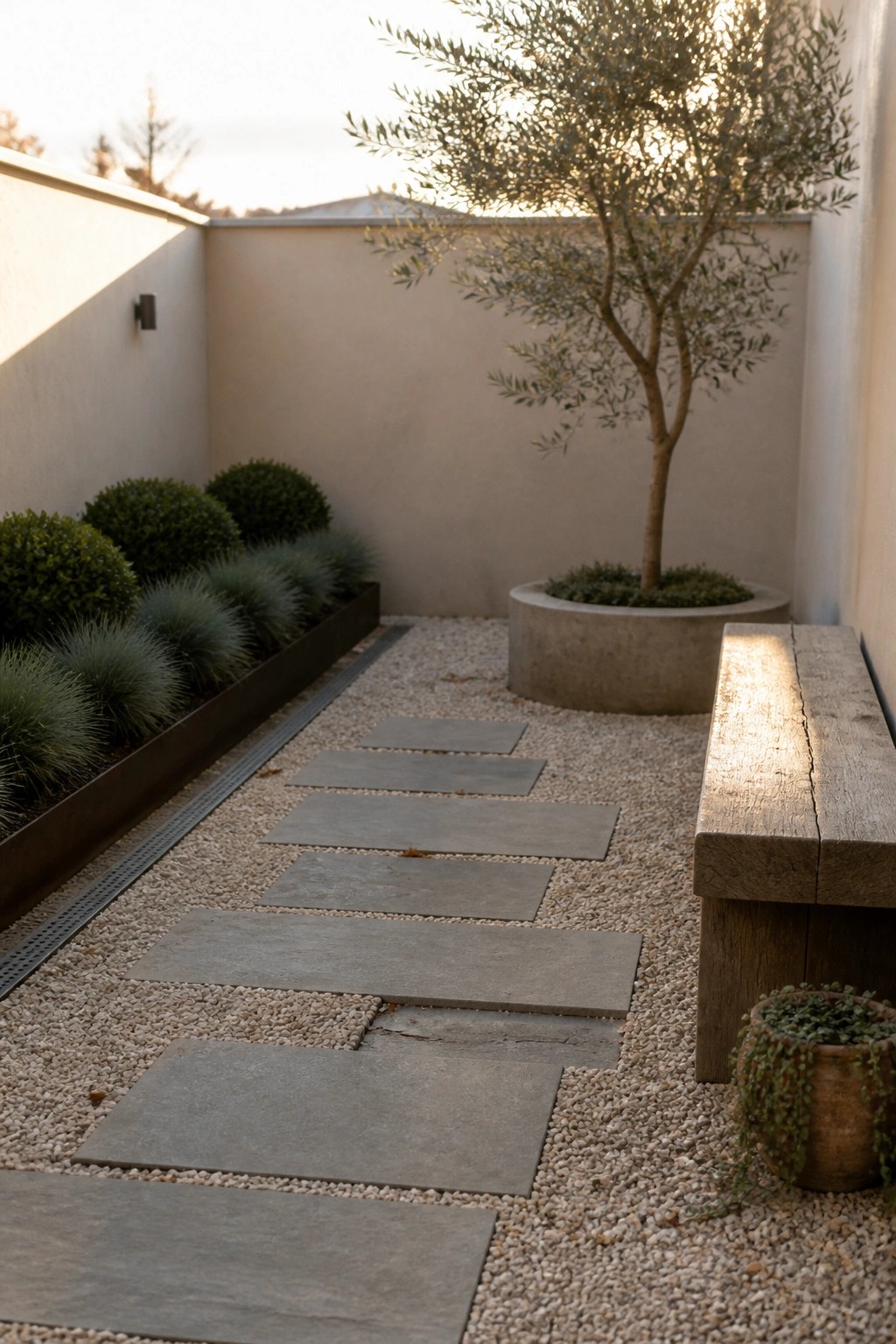
A gravel path with flat stones set into it gives you a clear route without covering the whole area in solid paving. It feels light and simple, and the gravel helps with drainage while the stones keep your feet out of the loose stuff.
This works best in narrow side gardens or small yards where you want something low maintenance. Keep the stones evenly spaced for walking comfort and use a border of plants to hold the gravel in place over time.
Gravel Paths With Stepping Stones

A gravel path with wide stepping stones works well in narrow spaces between a house and a fence. The stones give firm footing while the gravel keeps the surface simple and low key.
This layout suits side yards or slim garden runs where you want access without crowding the space with paving. Round shrubs along one edge help soften the look and guide the eye forward without adding clutter.
Raked Gravel For A Calm Garden Base

Raked gravel gives a garden a quiet, settled look that feels easy to live with. The patterns add some movement without cluttering the space, and the whole setup stays simple even when the rest of the yard is left plain.
This works best in smaller gardens or tight corners where you want low maintenance and a steady sense of order. Keep the gravel depth even and choose stones that sit naturally in the layout so the raking stays the main feature.
Stone Retaining Walls For Garden Levels

Low stone walls help shape a garden into clear sections without adding much fuss. They hold the soil in place and give the beds a firm edge that gravel paths can follow naturally.
This approach suits yards with any kind of slope and works on flatter sites too when you want simple separation between planting areas and walking space. Keep the stone color neutral and the wall height modest so the whole layout stays calm and easy to care for over time.
Stone Paths Set In Gravel

Many gardens feel more organized when a path uses large stone pavers set into gravel instead of a solid surface. The combination keeps things simple, lets water drain easily, and creates a quiet rhythm that suits calm, minimalist planting.
This layout works best along the side of a house or in smaller yards where you need a clear route but do not want heavy paving. Keep the gravel light in color and space the pavers evenly so the path stays easy to walk and simple to maintain over time.
Reflecting Pools Set in Gravel

A long rectangular pool sits better in gravel than in stone or concrete. The loose surface softens the hard edges and keeps the whole area looking open and simple without extra paving.
This setup suits dry climates and smaller yards that need low upkeep. Keep the planting to a few clipped hedges and one or two larger trees, then add plain benches so the water stays the main feature.
Stone Pavers Laid In Gravel

Large stone pavers set into gravel make a simple and practical path through a garden. The wide slabs give a solid place to walk while the gravel fills the gaps and keeps the whole layout looking open and uncluttered. This approach works especially well when you want clean lines without a lot of different materials. It suits modern homes or any garden that aims for low upkeep. The gravel helps with drainage and weeds stay easier to manage if you choose the right base. Just keep the paver spacing even so the path feels steady underfoot.
Gravel Paths With Stepping Stones
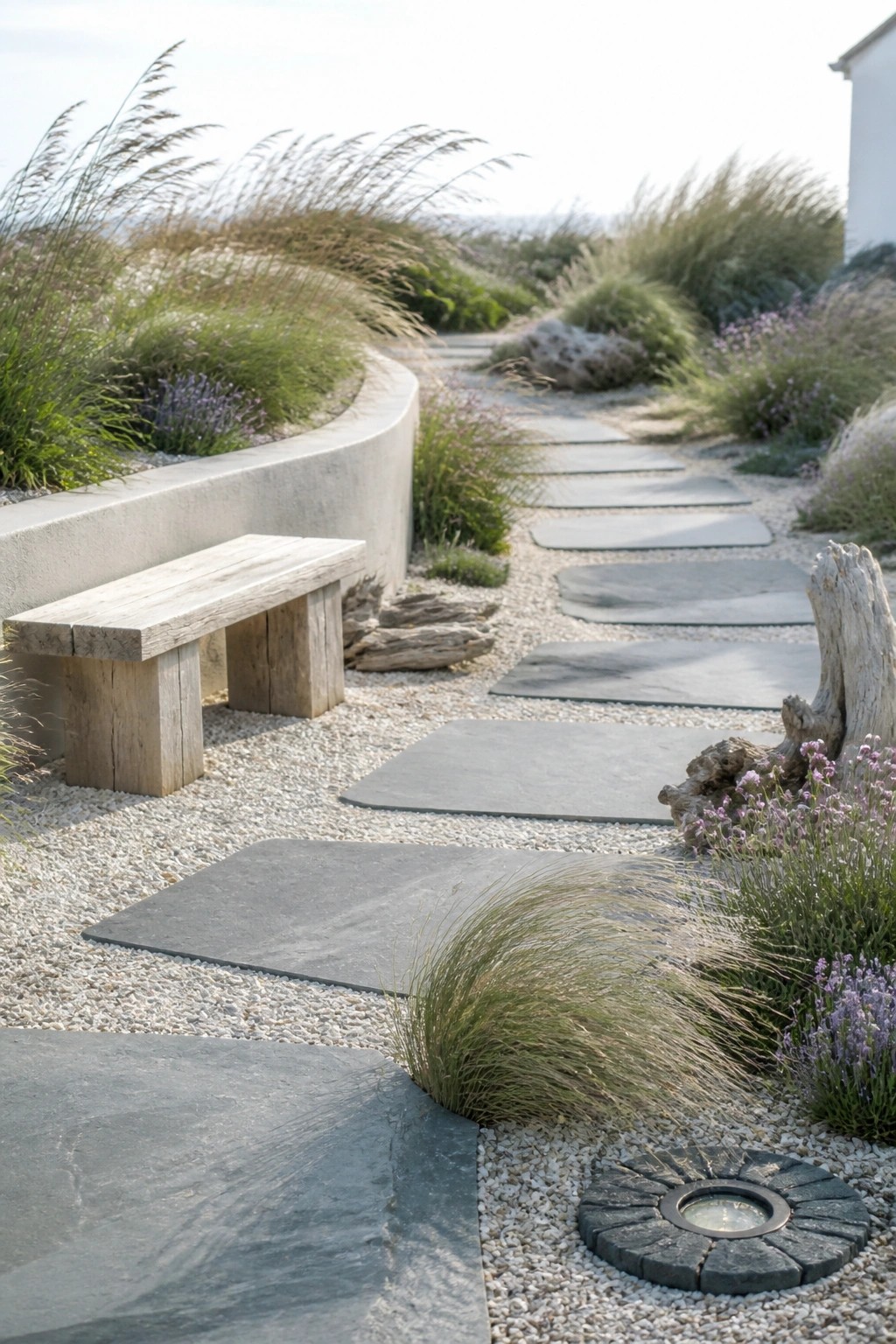
Large stone slabs set into gravel create a simple path that feels relaxed and easy to maintain. The stones give you solid footing while the gravel keeps the surface light and allows water to drain without extra work.
This layout suits open gardens or side yards where you want to connect different areas without adding heavy paving. Keep the stones fairly level and space them at a natural walking stride so the path stays practical over time.
Gravel Circles to Define a Seating Area
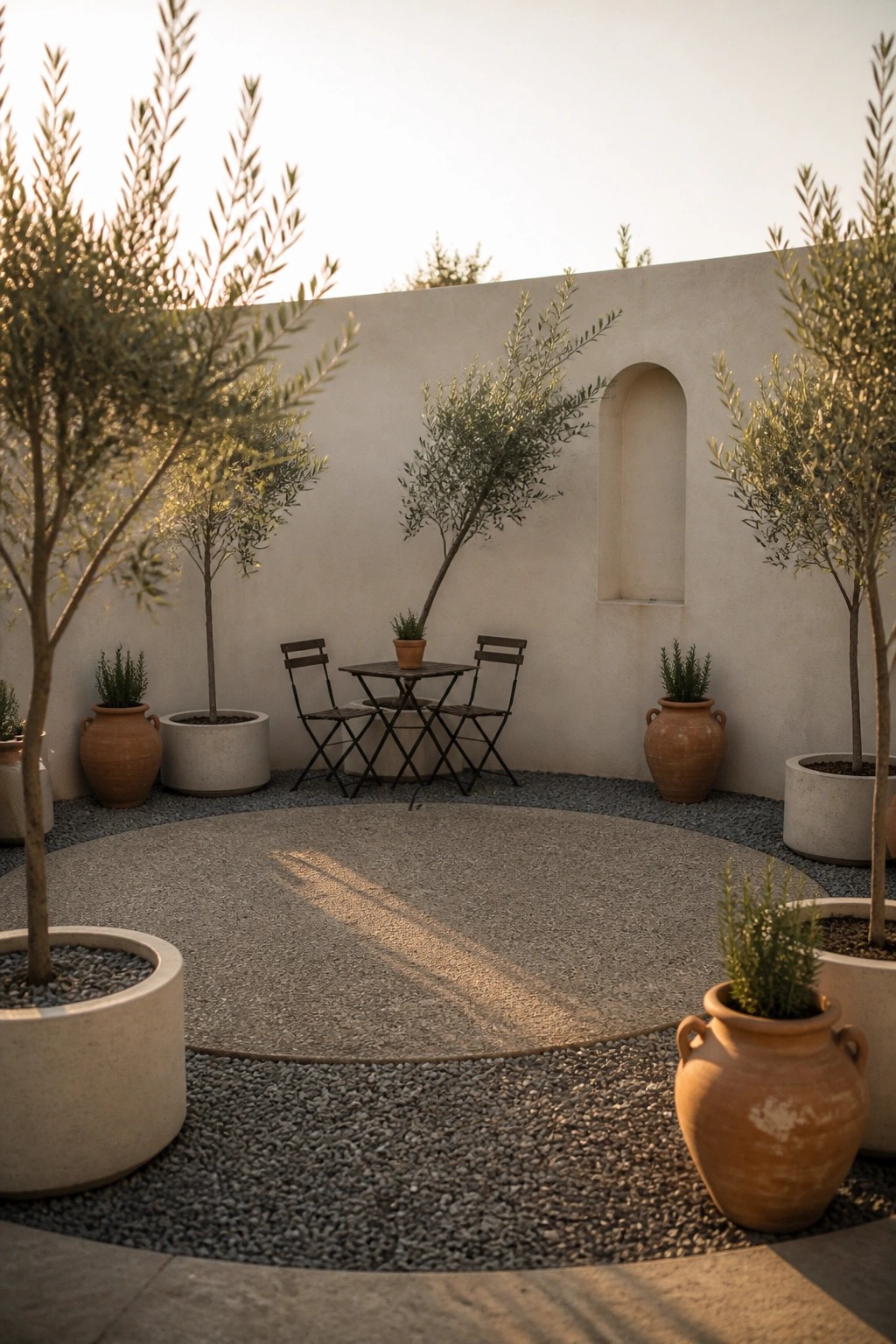
A circular gravel patch gives a small seating spot a clear place without adding paving or extra edges. It keeps the whole garden feeling open and simple while still showing where to sit.
This layout works best in a courtyard or enclosed side yard with mostly gravel underfoot. Place a few potted trees around the edge to soften the circle and give a bit of shade and privacy.
A Slim Water Channel to Separate Path and Planting
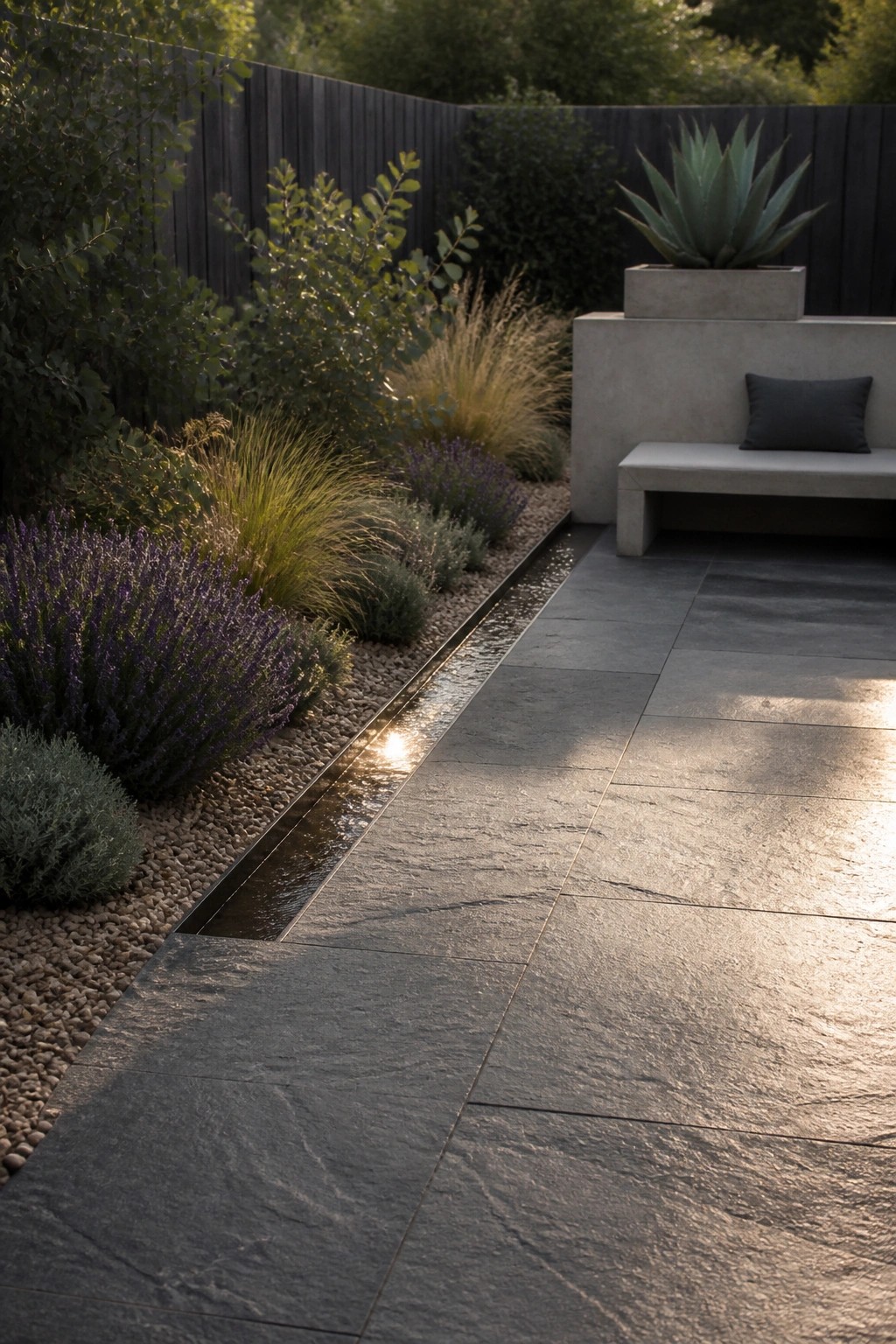
A narrow water rill gives the garden a clear edge without adding walls or extra structures. It keeps the planting bed distinct from the stone path while introducing a quiet line of movement that feels calm rather than busy.
This approach works best in compact spaces where you want minimal upkeep. Set the channel close to the paving, use gravel on the planting side, and choose low plants that stay contained. Avoid wide or ornate versions that can start to feel fussy.
Timber Steps Through Gravel

Dark timber steps set into gravel create a simple path that feels grounded and easy to follow. The contrast between the wood and the loose stone keeps the layout clean while still letting the surrounding moss and low plants do most of the work.
This setup works best in smaller gardens or narrow side areas where you want clear movement without adding much structure. Use weathered wood and a fine dark gravel so the path blends rather than stands out.
Stone Paths With Gravel Edges
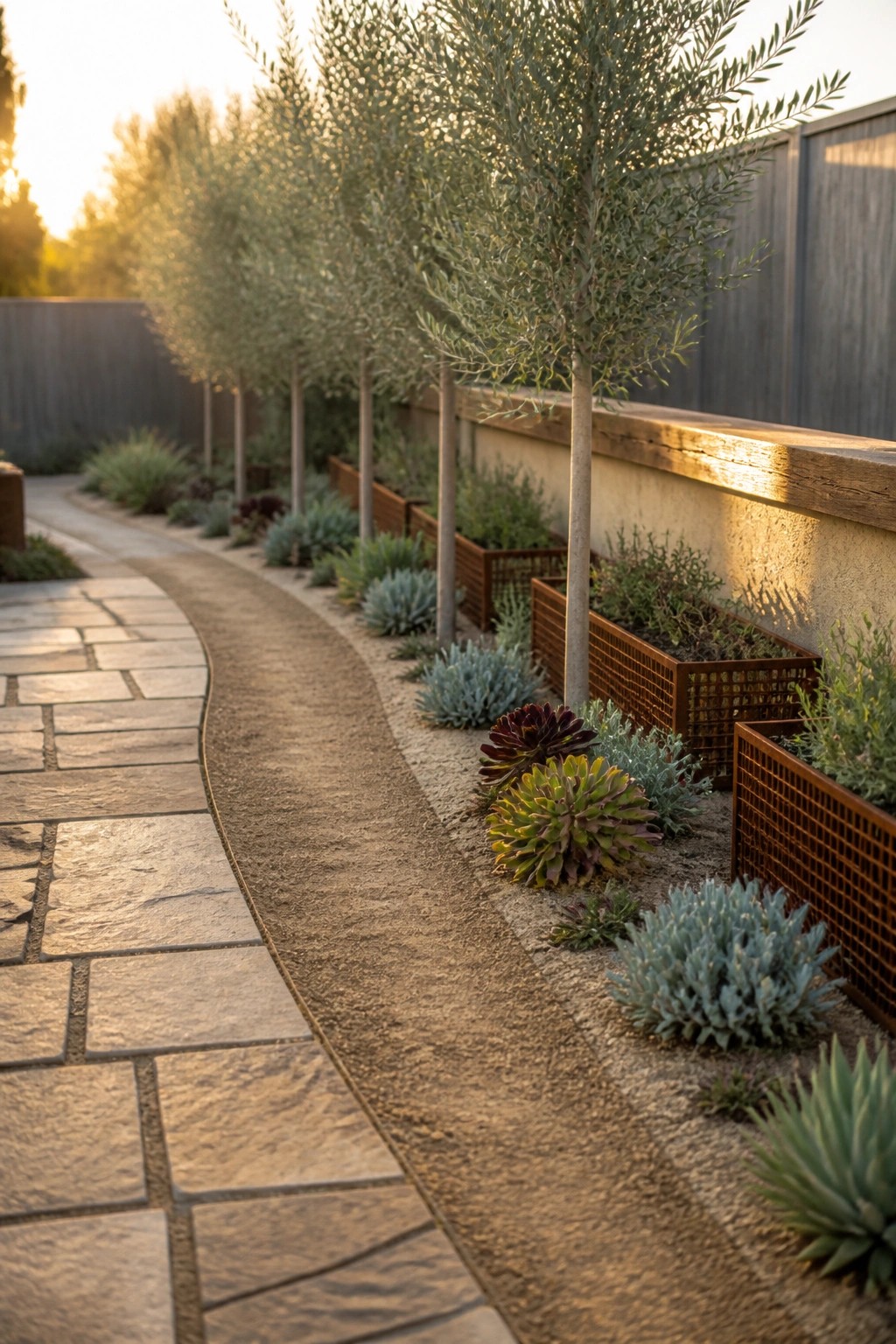
A stone path next to gravel gives the garden a clear route without making everything feel too rigid. The mix keeps the surface practical for walking while the gravel softens the edges and cuts down on weeding.
This layout works best in long narrow gardens or along a fence line where you need steady footing but still want planting space on one side. Raised beds help contain the soil and keep the overall look simple and low maintenance.
Gravel Channels In Paved Garden Paths

A narrow strip of gravel running through a paved path gives the walkway more texture without making it feel busy. It softens the look of solid concrete while still keeping a clear route underfoot.
This works best on longer or gently curving paths where you want some movement in the design. Match the gravel tone to the paving and keep the edges clean so the whole thing stays simple and easy to maintain.
Raised Concrete Planters For A Modular Garden Layout
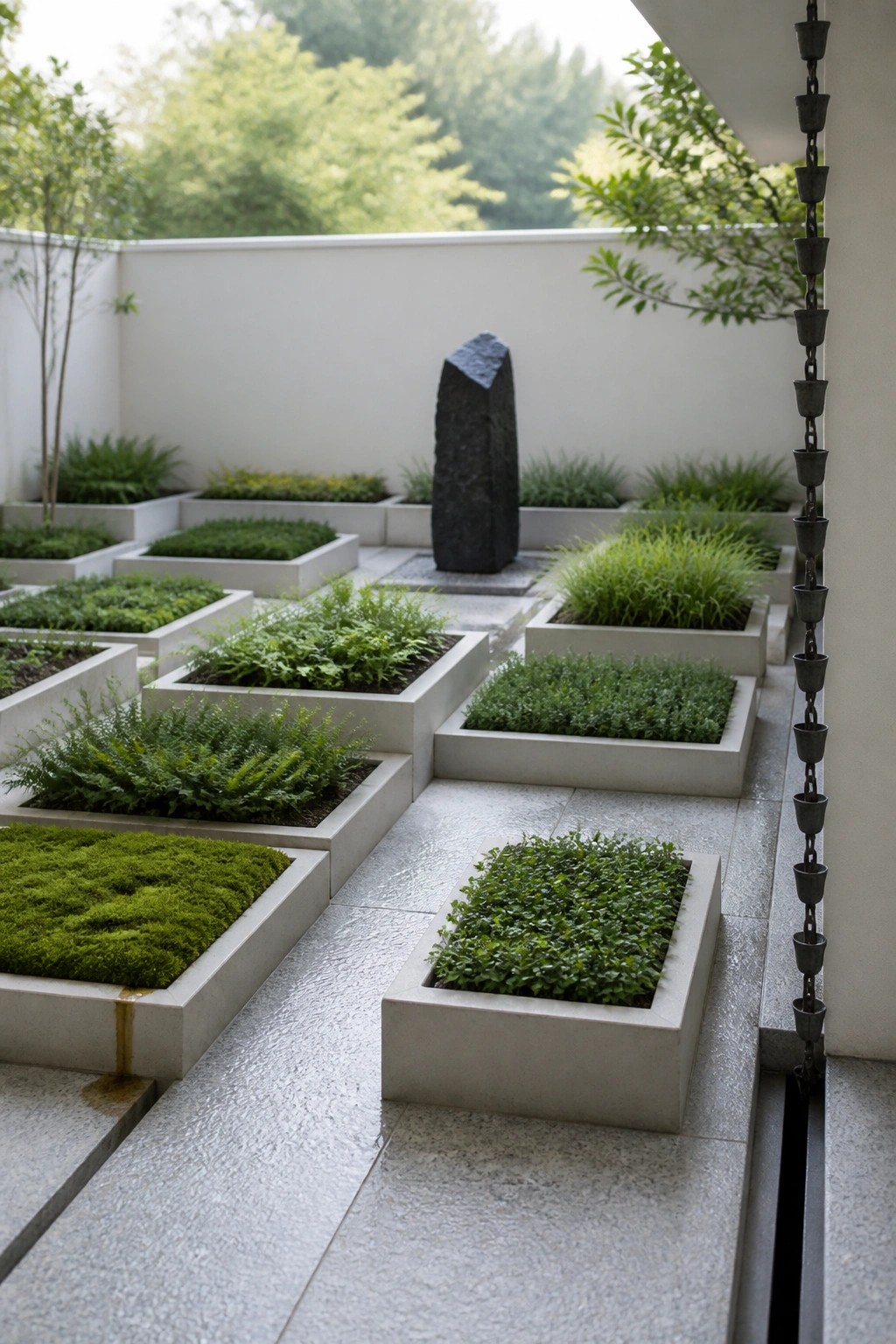
Raised concrete planters give a garden a clear structure without needing lots of extra edging or borders. The boxes keep different plants separated while still letting the greenery feel connected across the whole space.
This approach works best in smaller yards or paved courtyards where you want low maintenance and clean lines. Keep the planters fairly low and vary the plant heights inside them so the layout stays interesting without looking busy.
Circular Gravel Areas For Quiet Focus
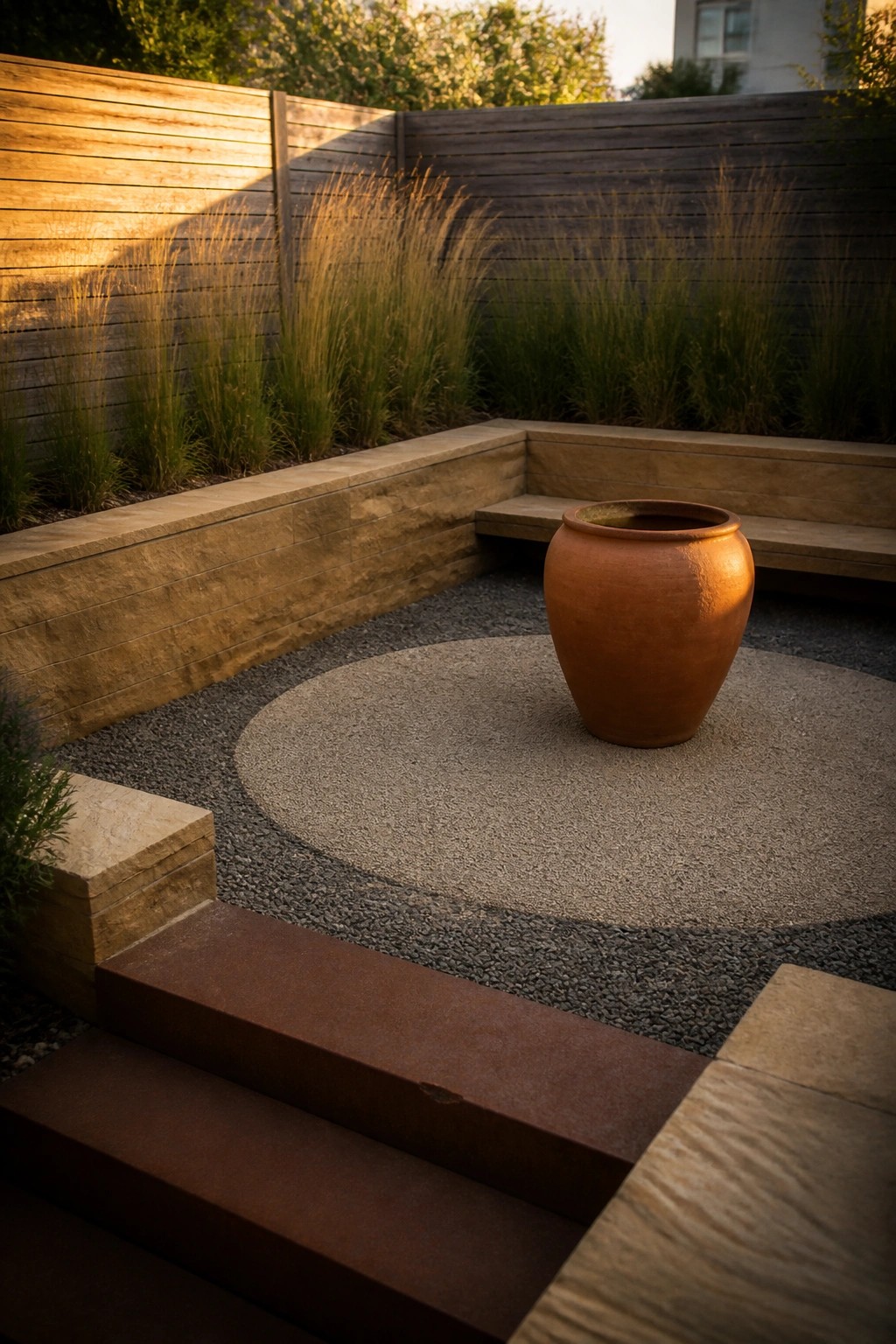
A circular gravel patch set into a larger gravel surface gives a garden an easy focal point without extra ornament. It keeps the space calm and structured while letting one simple object, like a large pot, stand out clearly.
This layout suits small yards or narrow side gardens where you want low maintenance and a sense of order. Use neutral gravel tones and keep the surrounding grasses soft so the circle stays the main feature.
Stone Pavers Set In Gravel

Large stone pavers laid over a gravel base give a garden a simple, orderly feel without looking too rigid. The gaps filled with gravel help with drainage and keep the surface from feeling heavy or closed in. This approach works especially well in small or rooftop spaces where you want clean lines but still need something practical underfoot.
It suits modern homes or any garden aiming for low maintenance. Keep the pavers large and the gravel consistent in tone so the pattern stays calm. Avoid mixing too many plant types around the edges or the whole thing can start to feel busy.
Stepping Stone Paths Through Gravel

Stepping stones set into gravel give a garden an easy flow without covering everything in solid paving. The flat slabs keep the surface walkable while the gravel adds texture and helps with drainage.
This approach suits narrow side gardens or small courtyards where you want a light footprint. Space the stones so they feel natural underfoot and let low shrubs soften the edges over time.
Stone Pavers Set In Gravel

A path made of large stone pavers set into gravel gives a garden clear direction without making it feel rigid. The gravel softens the edges and lets the path blend into the surrounding planting instead of cutting through it like a hard surface would. This setup works especially well in smaller gardens where you want movement without adding more pavement.
It suits homes that already use simple materials and want low-maintenance outdoor space. Keep the pavers large and evenly spaced so the gravel shows through and the plants along the sides can spill over slightly. Avoid filling every gap with too many different textures or the calm look starts to break up.
Stone Slabs In Gravel For Simple Paths

Large stone slabs laid into gravel make a path that feels direct and easy to follow. The slabs give a solid surface underfoot while the gravel keeps the whole thing low key and drains well after rain. This approach avoids the need for fancy edging or multiple materials.
It suits narrow side gardens or back areas where you still want access without crowding the planting beds. Keep the slabs fairly large and space them evenly so the walk feels natural. The rusted metal planters shown here work nicely because they add a bit of height without breaking the simple lines.
Frequently Asked Questions
Q: How do I keep weeds out of the gravel areas?
A: Start with a solid weed barrier fabric under the gravel. Rake the surface every few weeks to disrupt any sprouts. This setup stays low maintenance and looks sharp.
Q: What greenery stays calm and fits the stone look?
A: Choose slow growing shrubs like boxwood or lavender. Plant them in clusters of three near the stones. They bring softness without taking over the space.
Q: Can I mix different gravel colors?
A: Stick to one shade for a unified feel. Two tones can work if you separate them with a stone border. Test a small patch first to see how they blend in your light.
Q: How do I make sure the design feels balanced?
A: Group your stones in odd numbers. Leave plenty of open gravel between them. Step back often while building to check the overall flow.
