

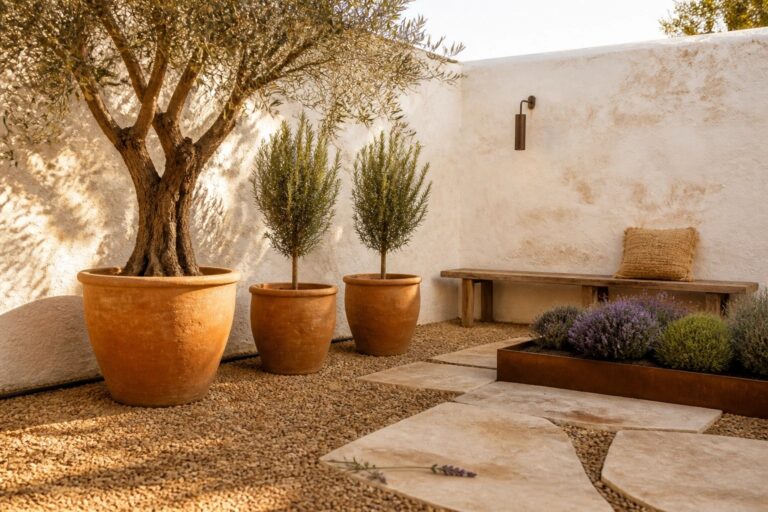
Gardens often hold up better when the planting follows the real conditions of sun, soil, and water rather than a picture from a magazine.
I have learned that hardy choices grouped by similar needs keep the layout looking intentional even after a few seasons of growth and change.
Once paths and edging sit in place, the space starts to feel shaped instead of scattered.
Some ideas only prove themselves after a year of actual weather.
I usually check how each section drains before I commit to anything that will spread.
Large Pots For Trees And Shrubs
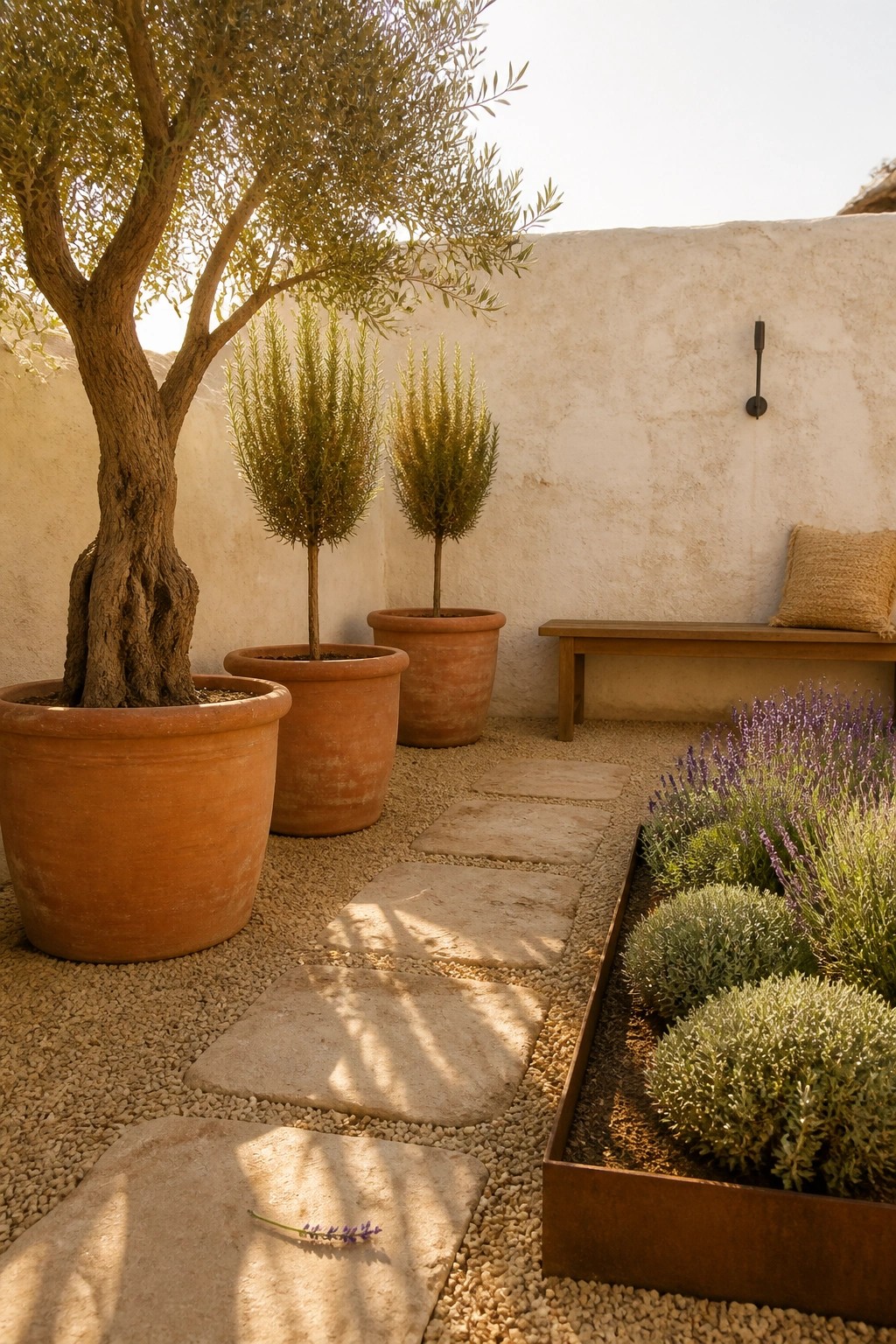
Large pots give you a simple way to add height and structure without planting directly in the ground. They work especially well with tough trees and shrubs that do not need much water once established. The containers also let you move things around if a spot gets too much sun or needs a change later on.
This approach suits small yards, gravel gardens, or paved areas where digging is not practical. Stick to one or two pot sizes and repeat the same material so the look stays calm. Make sure the pots have good drainage and choose plants that match your climate so they stay healthy with little extra care.
Gravel Paths For Low Maintenance Gardens
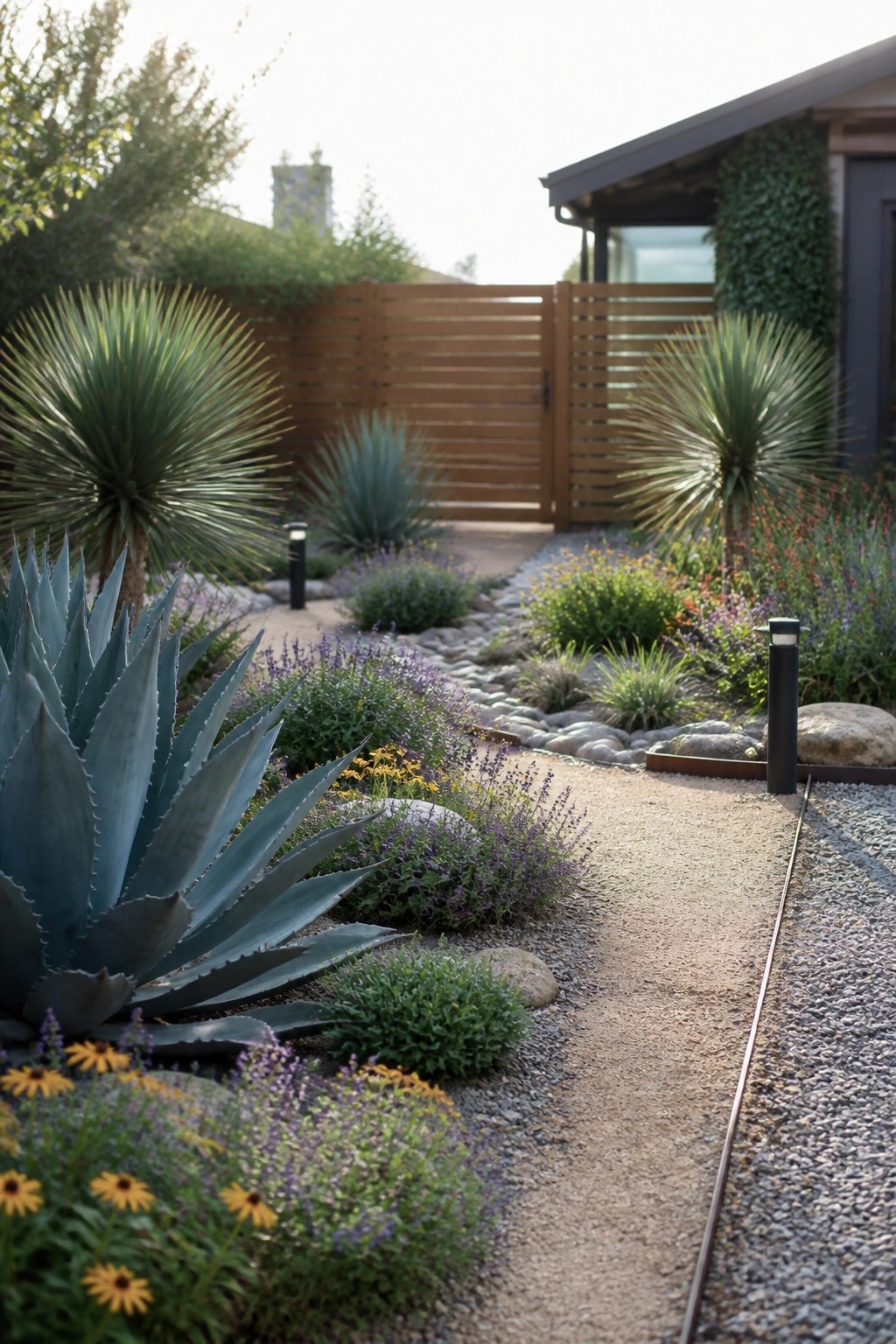
Gravel paths work well in gardens because they need almost no upkeep compared to lawn or mulch. They let water drain straight through and keep weeds from taking over if the base is done right. The plants along the edges stay healthy with little watering once established.
This approach suits dry or sunny yards best. Pick tough varieties like agaves and yuccas for structure, then mix in a few flowering perennials for color. Add simple metal edging to hold the gravel in place and prevent it from spreading into the beds.
Potted Succulents Along Stone Paths
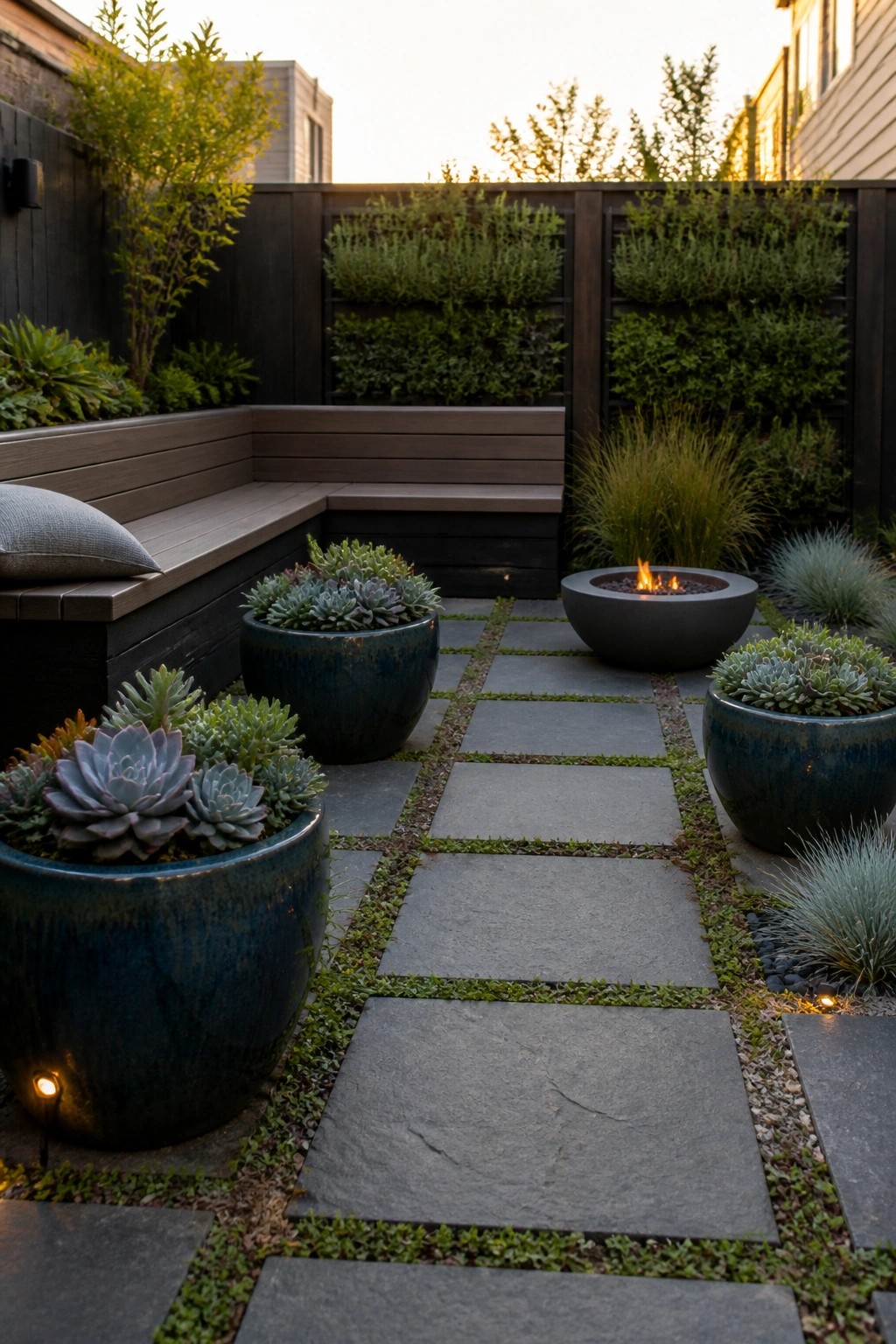
Succulents planted in large pots make a simple choice for low maintenance gardens. They handle dry spells well, need little watering, and stay looking neat without much trimming or fuss. The pots also let you add greenery right along a path without digging new beds.
This works best in smaller yards or paved areas where you want some planting but prefer to keep things contained. Choose tough varieties that match your climate, and place the pots where they get the right amount of sun. The stone path and ground cover between the pavers help keep weeds down too.
Stone Paths With Hardy Border Plants
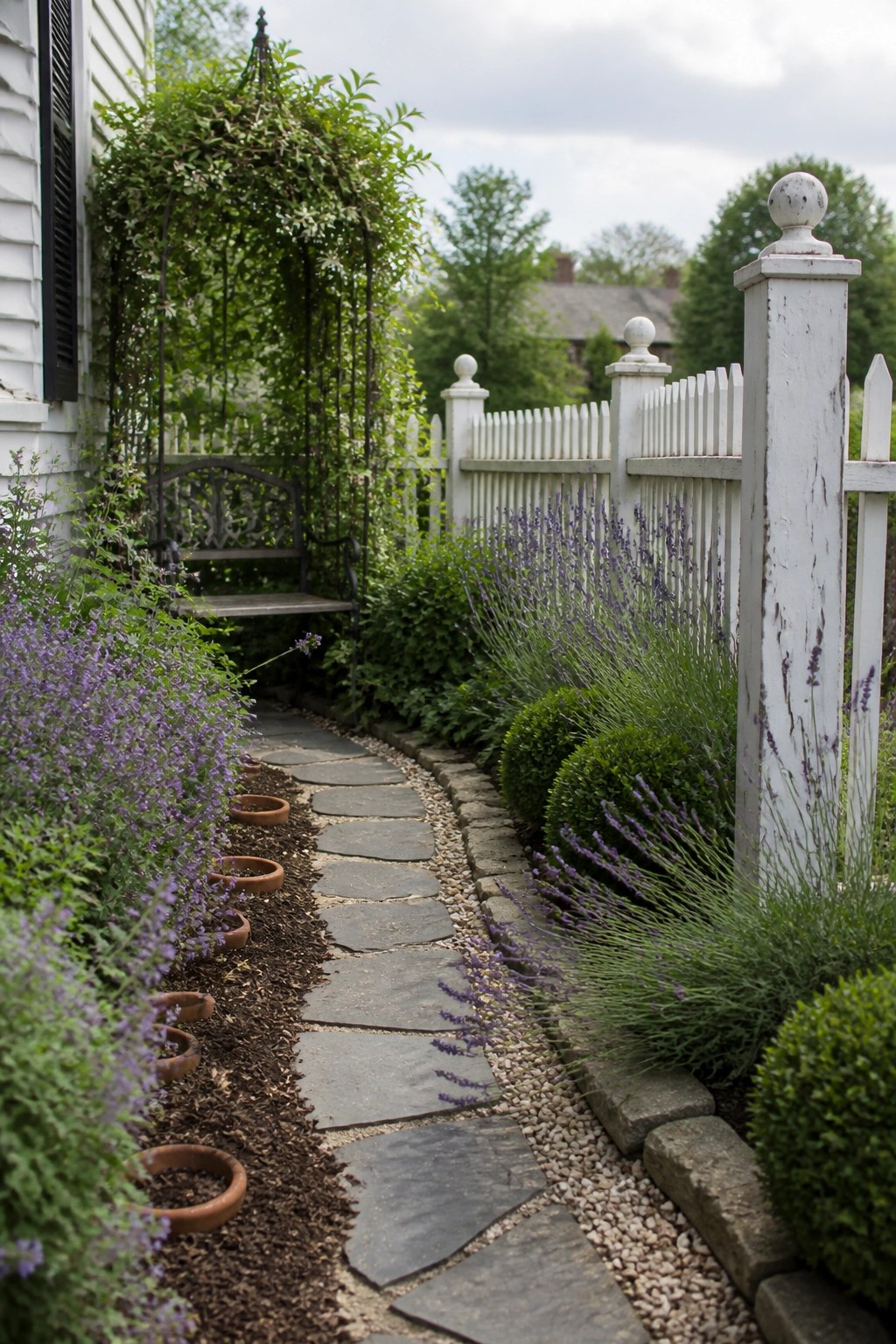
Stone paths edged with tough plants give you a garden that stays looking good without constant work. The path itself needs little more than occasional weeding along the edges, and the lavender and similar shrubs hold up well through different seasons.
This setup works especially well along the side of a house or fence where space is narrow. Pick plants that match your climate so they do not require extra watering or feeding once established.
Gravel And Stone Edging For Low Maintenance Beds
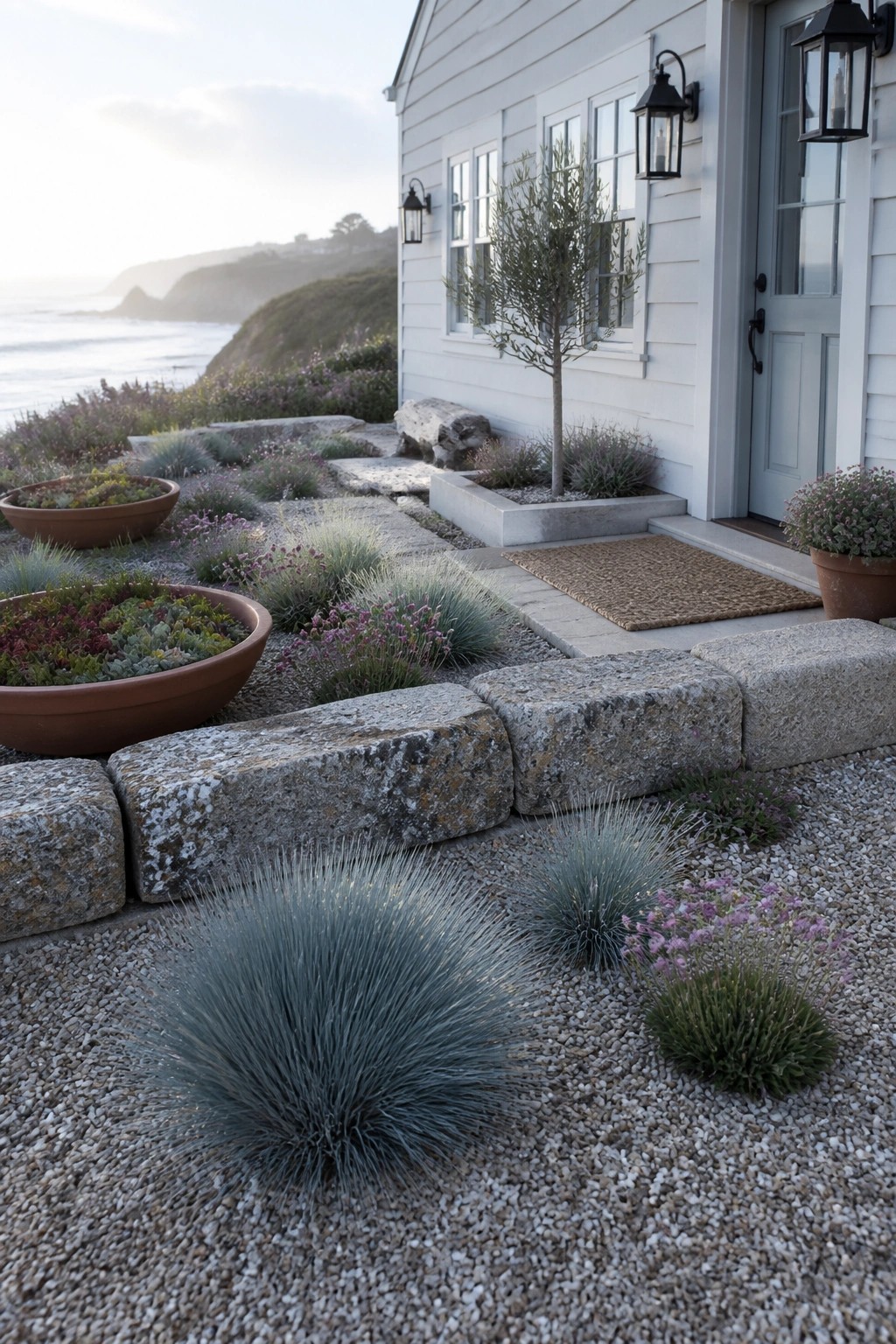
Gravel works well as a ground cover because it lets water drain fast and cuts down on weeds. Stone blocks along the edges keep everything in place without needing constant trimming or replanting.
This approach suits homes near the coast or in drier climates where hardy grasses and succulents already grow with little care. Just lay the gravel thick enough and choose plants that match your local conditions.
Paver And Gravel Paths Keep Garden Upkeep Simple
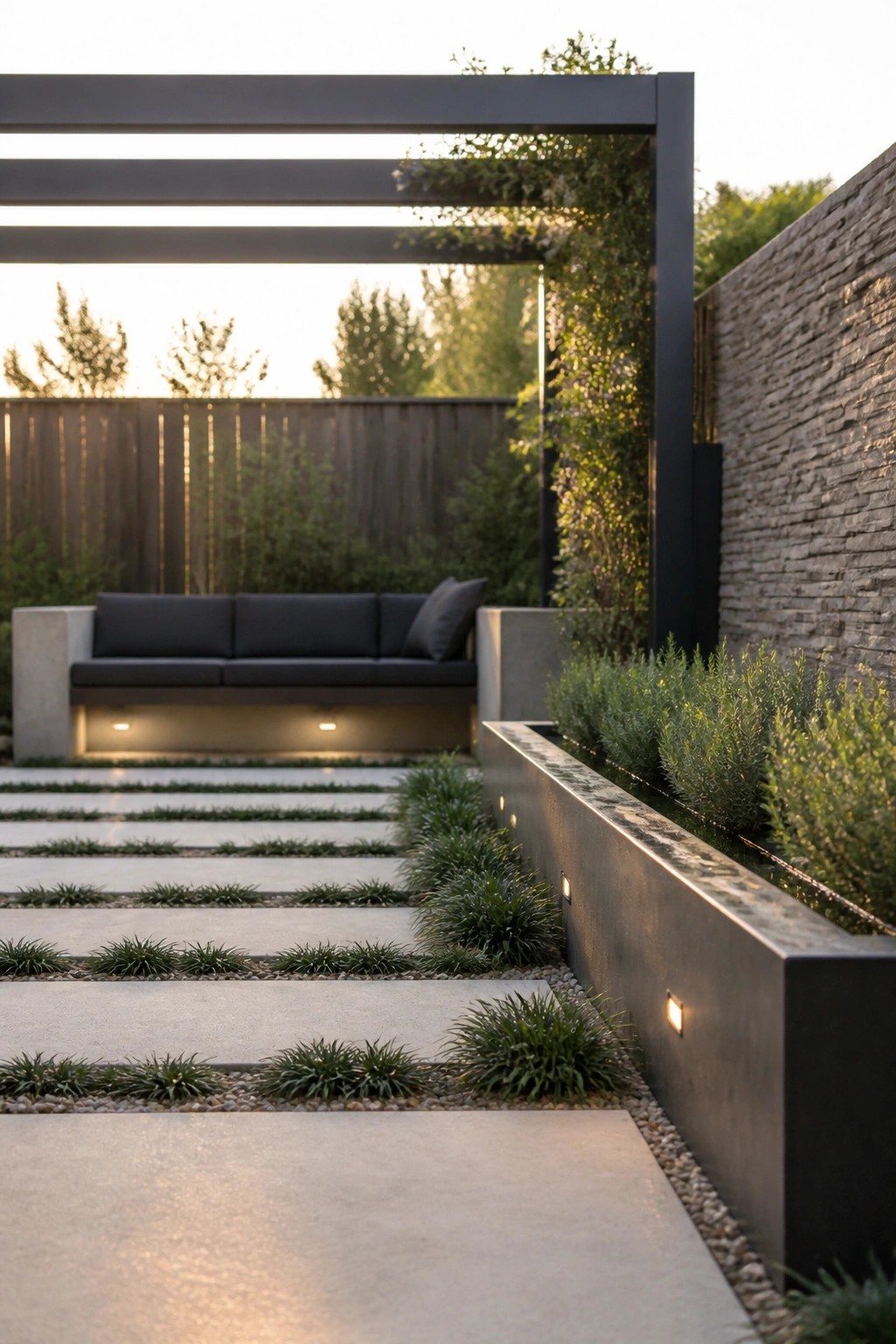
This approach uses wide concrete slabs set with gravel between them and small hardy plants tucked into the gaps. It gives a clear route through the garden without creating big areas of lawn or loose mulch that need constant care.
The setup works best in side yards or along the edge of a patio where you want a defined walkway that still feels natural. Gravel handles drainage well and the low plants stay neat with very little trimming. Just keep the beds narrow enough that everything stays easy to reach.
Terracing Slopes With Stone Walls
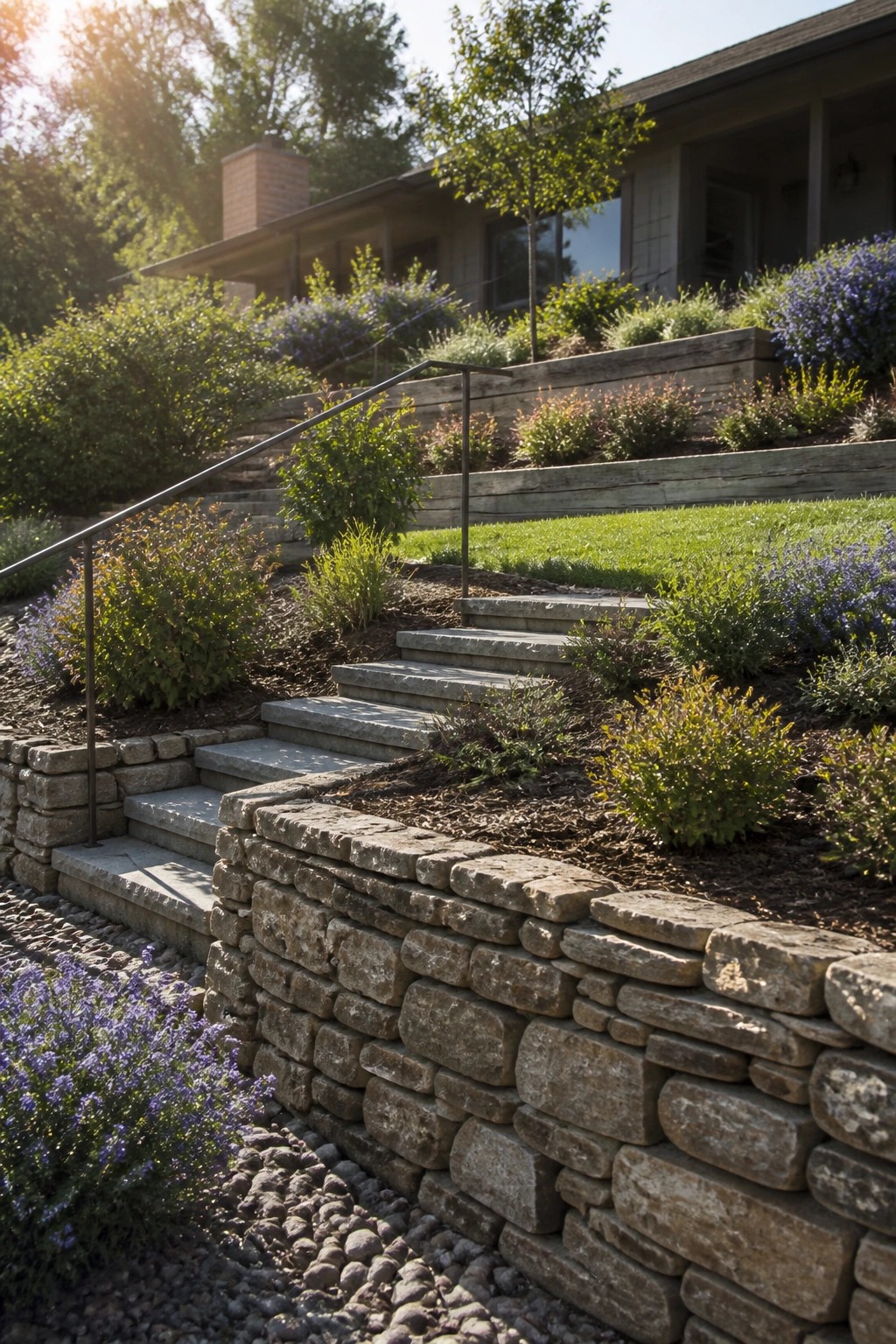
Stone retaining walls make sloped yards much easier to handle by turning steep ground into a series of flat beds. The layers keep soil in place so you spend less time dealing with erosion or runoff, and the stone itself needs almost no upkeep once it is set.
This setup works best on properties with noticeable hills where you still want planting space. Use the walls to create wide steps or terraces, then fill the beds with tough shrubs and ground covers that spread on their own. Avoid overplanting at the start so the beds stay simple to manage over time.
Layering Hardy Perennials Along Brick Paths
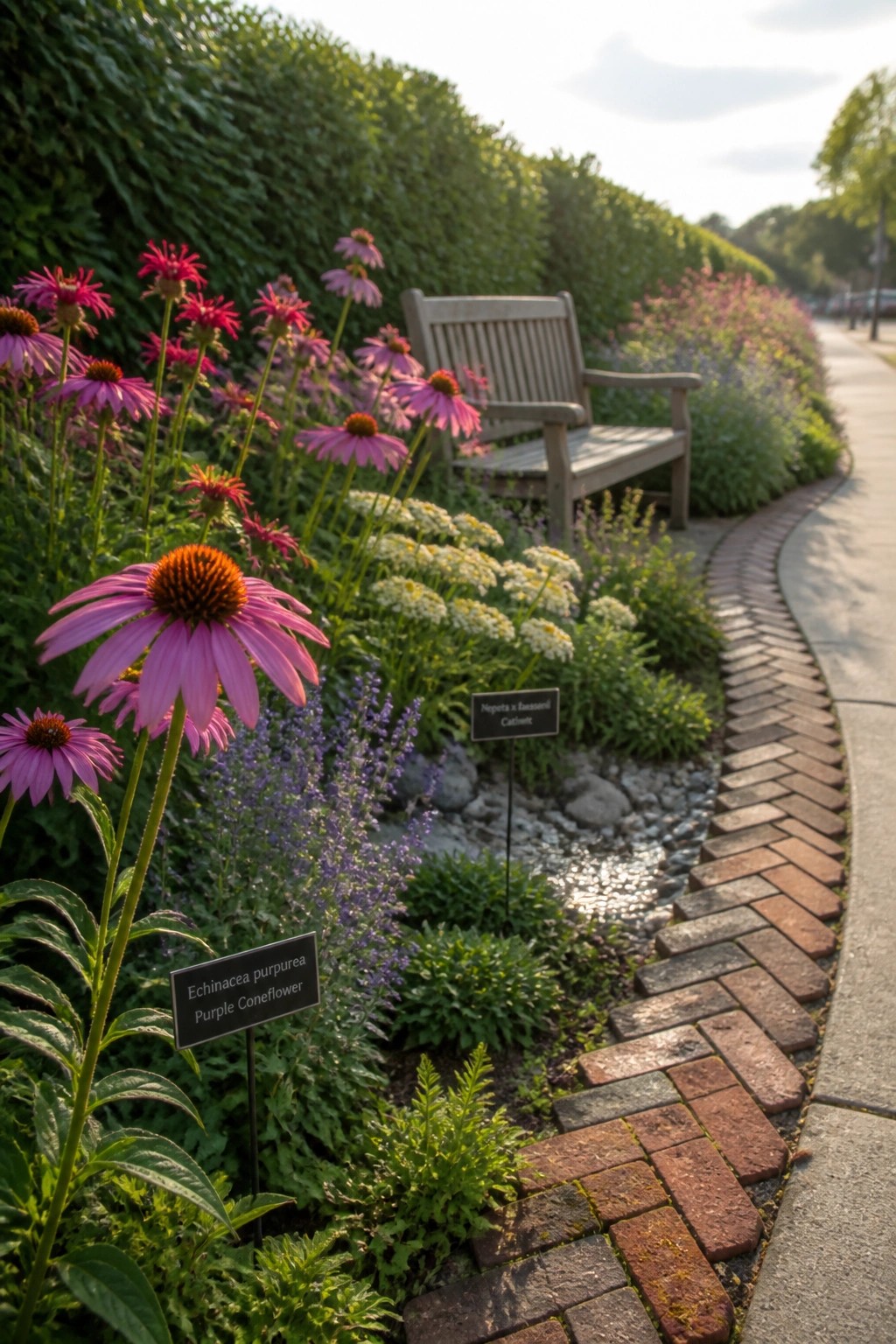
Brick paths paired with tough perennials make garden upkeep much simpler. The coneflowers and catmint in this bed stay reliable through the season and need only basic trimming now and then. The path keeps everything contained so weeds stay out of the beds and walking stays easy.
This approach suits homes with existing walkways or narrow side yards. Use a simple brick edge to separate the planting from the main path, then fill the bed with a few repeat perennials that match your climate. Avoid crowding too many varieties in one spot.
Raked Gravel Keeps Garden Maintenance Low
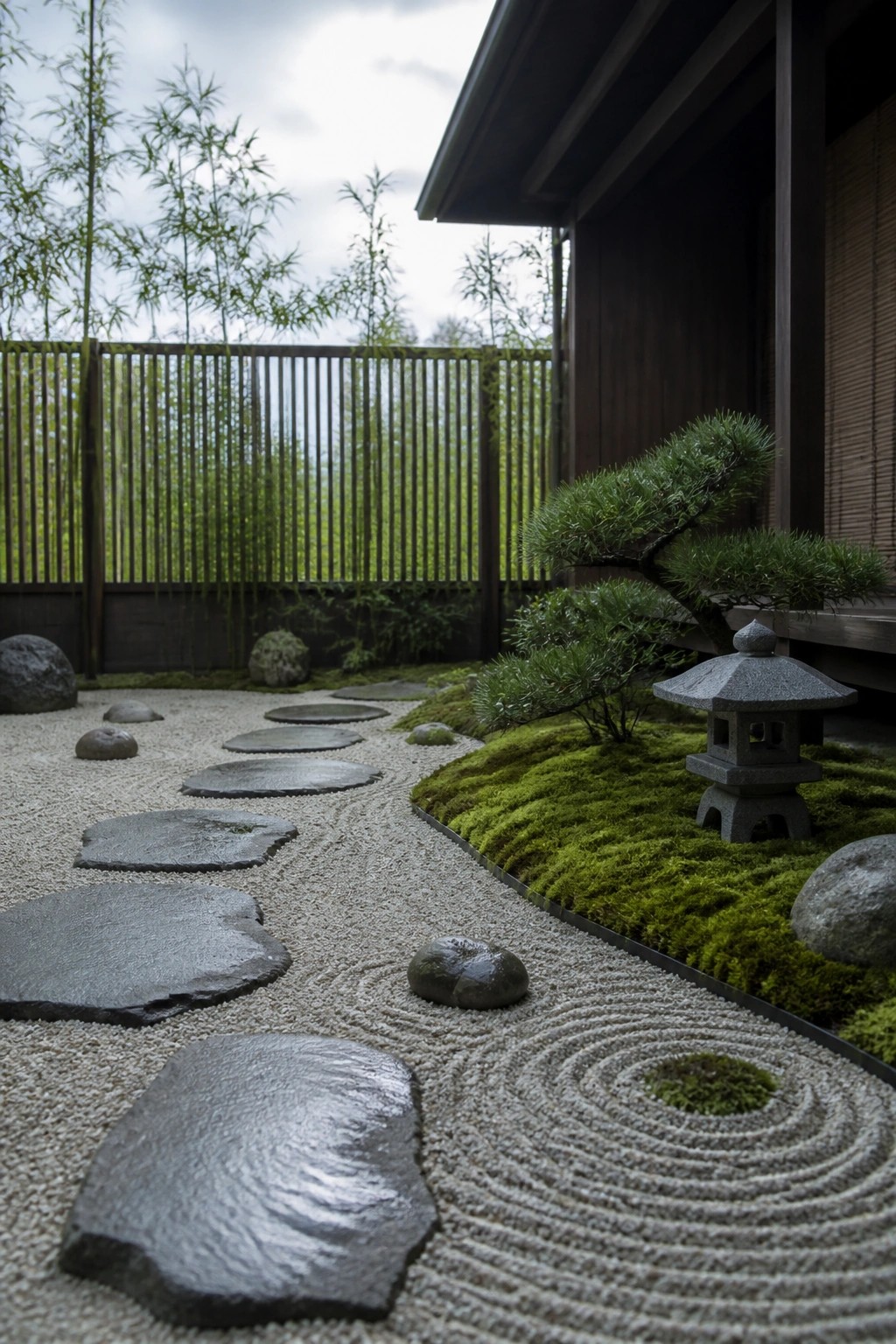
Raked gravel works well when you want a garden that stays neat without regular mowing or heavy watering. The surface drains quickly and needs only occasional raking to refresh the patterns, which makes it a practical choice for people who prefer simple upkeep over constant work.
This style suits smaller yards or side gardens where grass is hard to maintain. Keep the planting sparse with tough evergreens and moss, and limit the number of stones so the raking stays easy to manage over time.
Gravel Base Around A Fire Pit
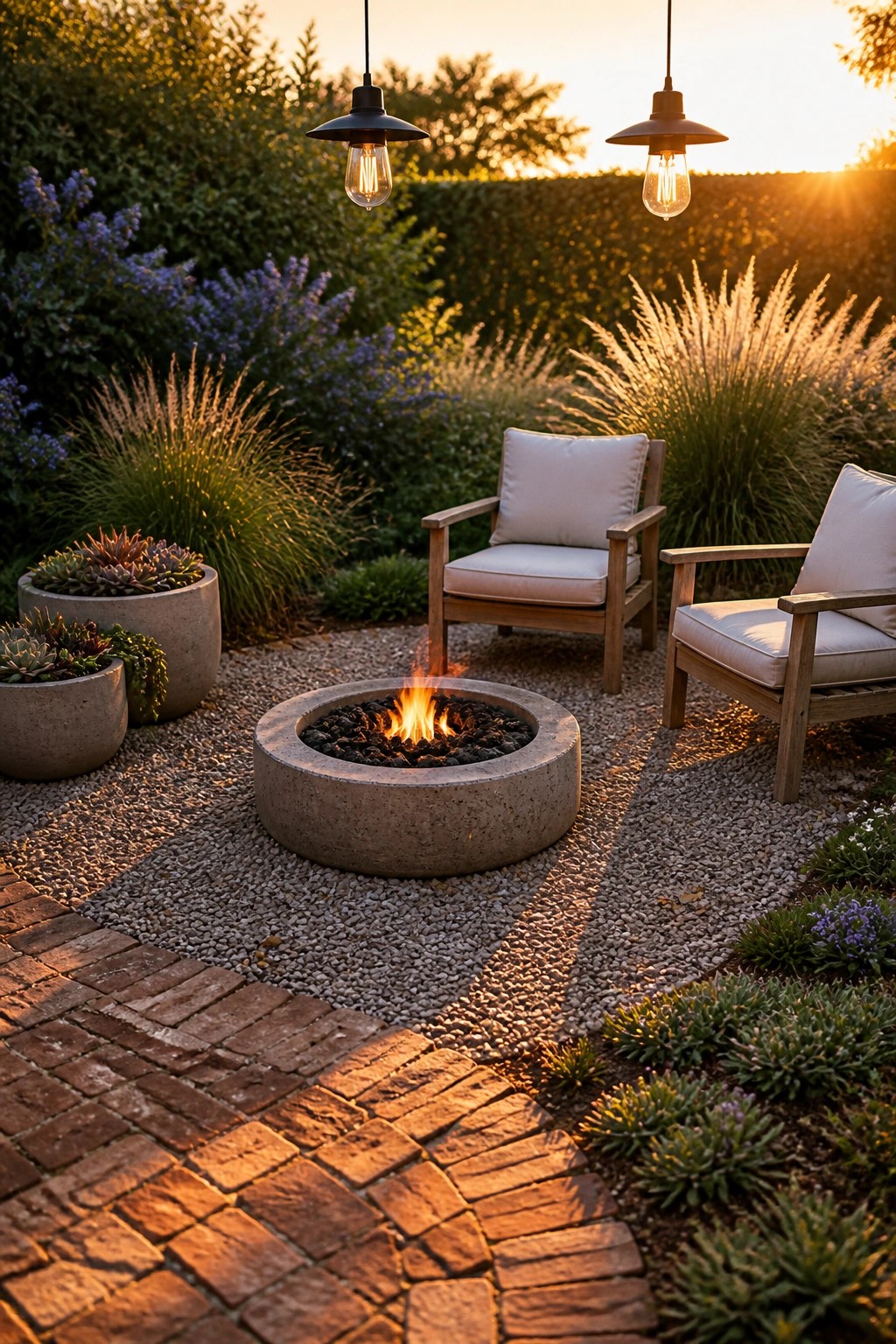
A gravel base around a fire pit keeps the area looking neat with almost no upkeep. It drains well after rain and stops weeds from taking over, which makes the whole spot easier to manage than grass or mulch.
This works best in smaller gardens or side yards where you want a clear seating zone without constant tidying. Pair it with a few hardy potted plants and simple chairs so the space stays practical year after year.
Paved Paths With Hardy Border Plants
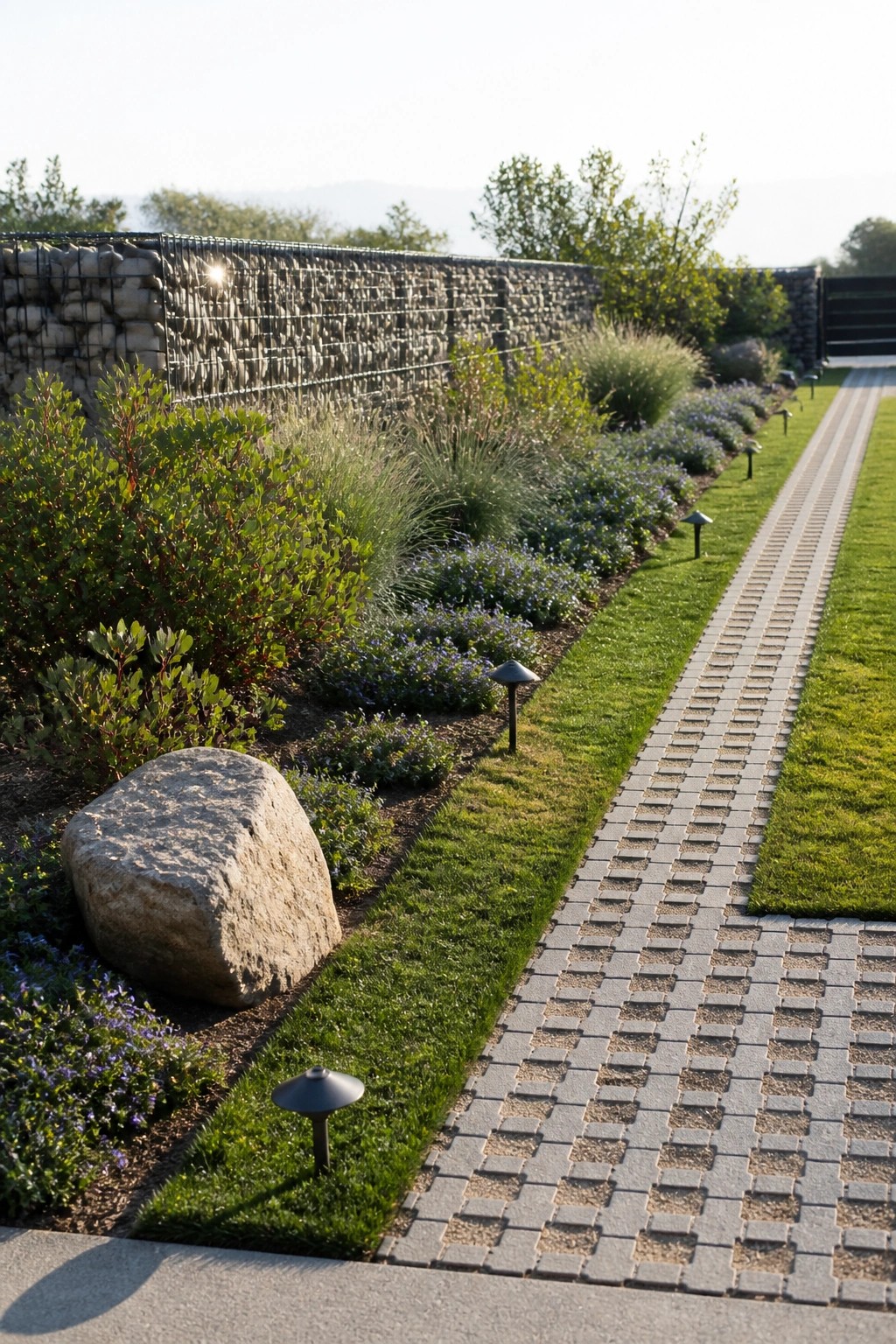
A straight paved path next to a row of tough plants keeps the garden looking neat without constant work. The path gives clear access while the plants on one side handle most of the visual interest, so you spend less time weeding or mowing edges.
This layout works best in long side yards or along fences where space is narrow. Choose grasses and low flowering perennials that spread slowly, and add a few path lights so the route stays usable after dark without extra fixtures.
Container Planting On Balconies
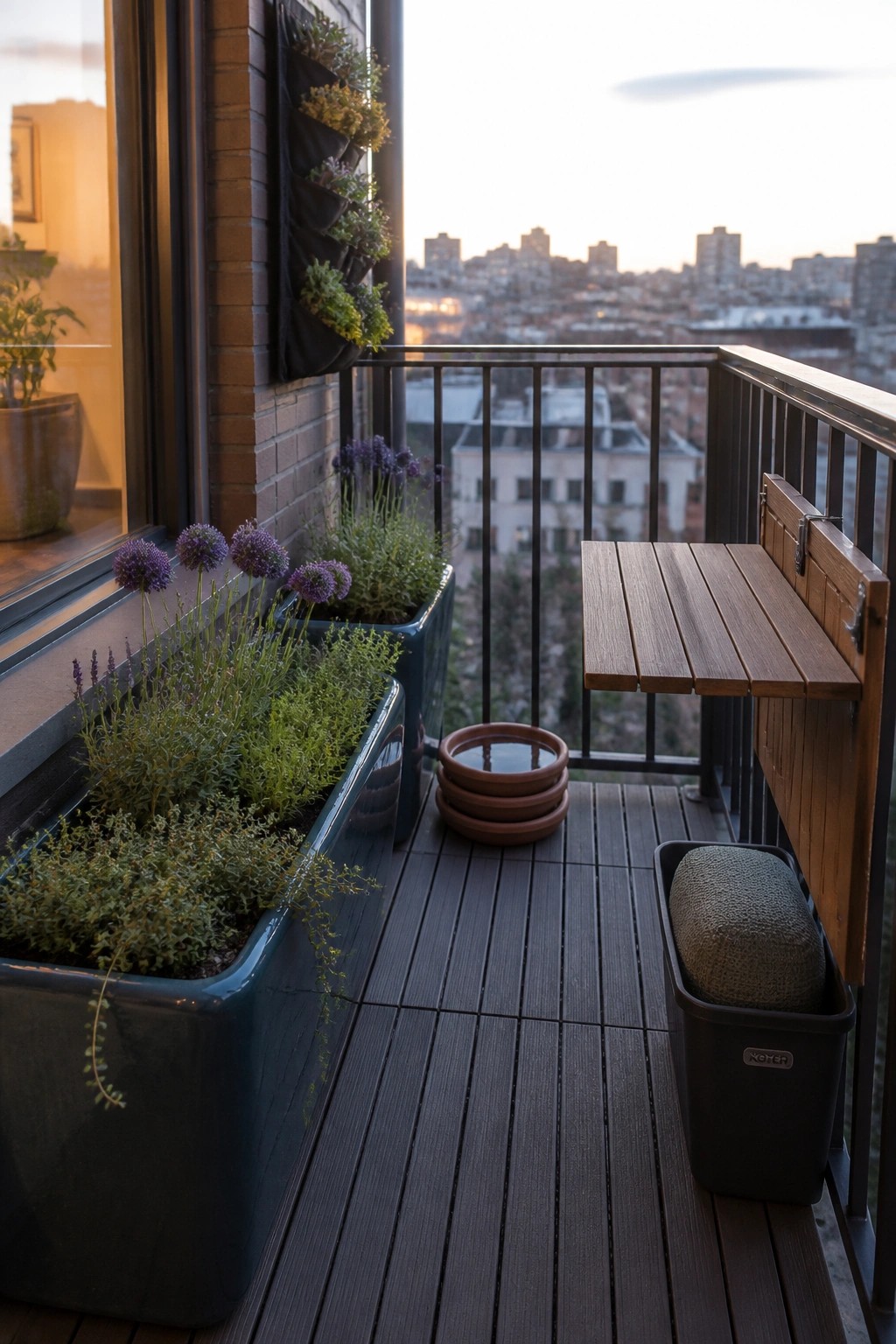
Container planting works well when space is limited and you still want some greenery without much fuss. Large pots let you control the soil and move plants if the sun or wind shifts, which keeps things simpler than dealing with in-ground beds.
Group three or four sturdy planters along one side and stick with hardy varieties that tolerate dry spells and wind. This setup suits apartments or townhouses where a full garden is not an option, and it avoids the extra work of weeding or edging.
Stone Terracing For Sloped Gardens
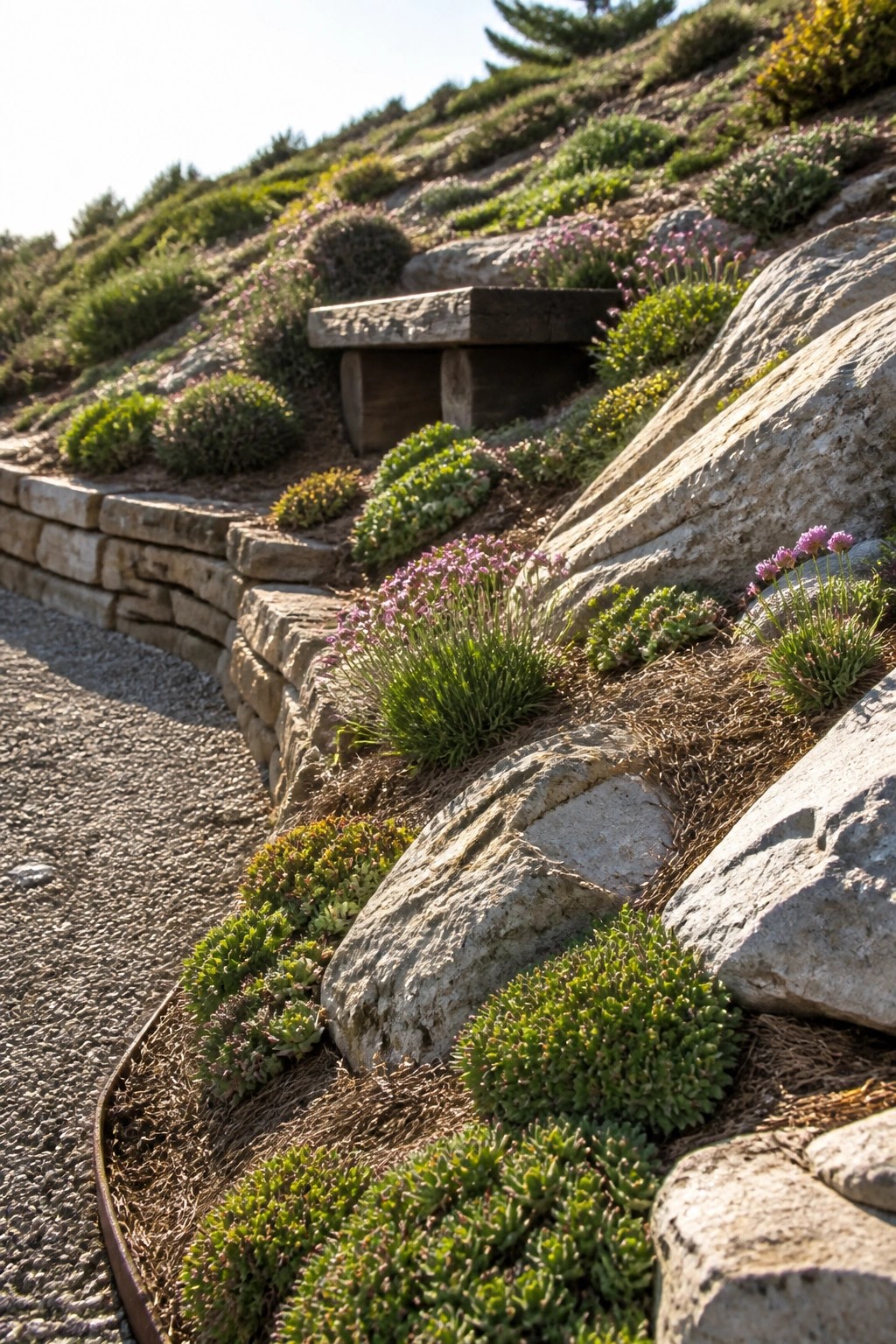
Stone terracing works well on slopes because it stops soil from washing away while giving you flat planting areas that are easier to manage. The rocks also help hold moisture around the roots, so you spend less time watering once the plants settle in.
This approach suits homes with uneven yards where mowing or regular garden work would be difficult. Focus on hardy ground covers and succulents between the stones, and keep the walls low enough that they do not need extra reinforcement.
Large Containers For Simple Patio Planting
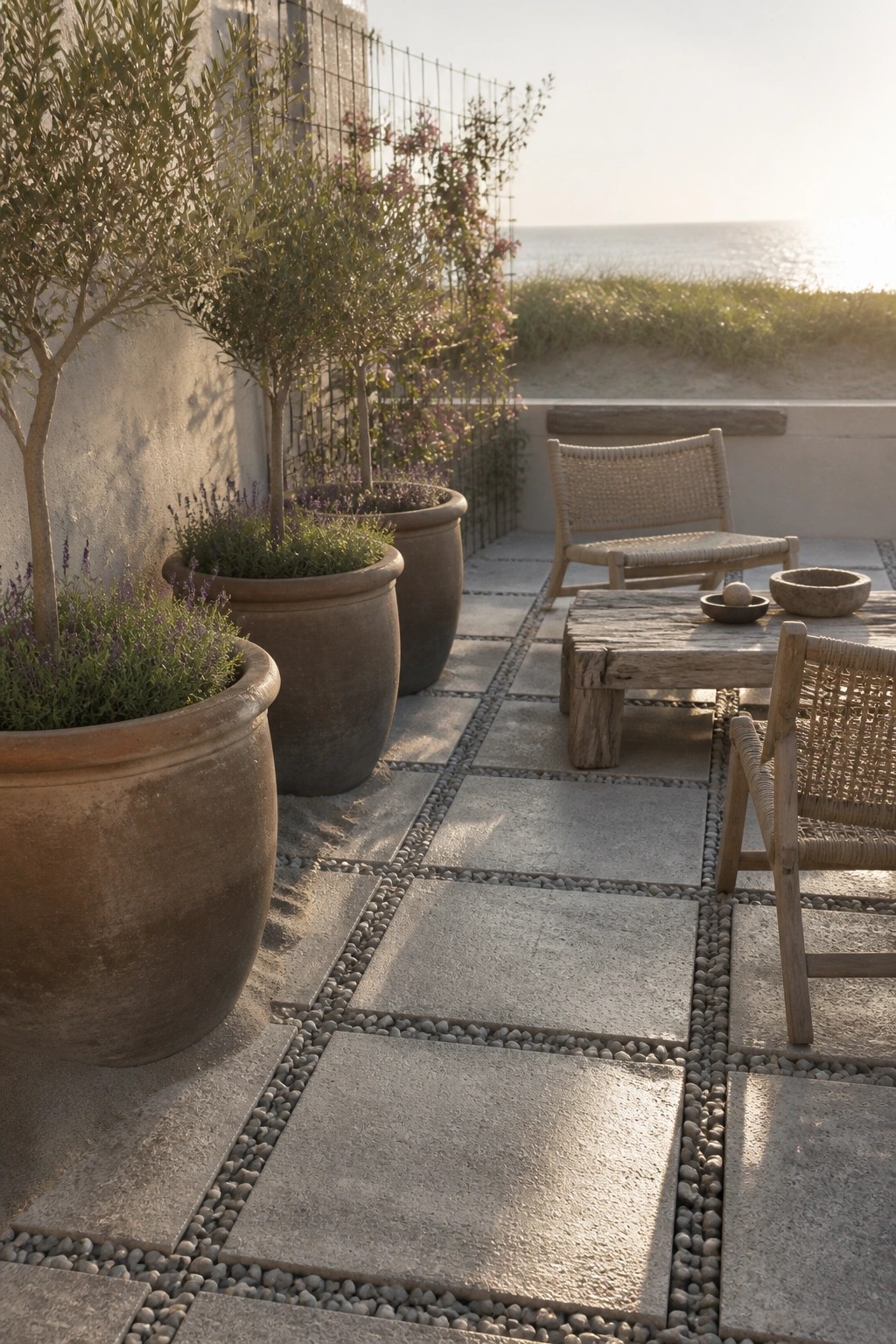
Large pots let you add real plants to a paved patio without digging beds or dealing with poor soil. They keep things flexible and cut down on weeding and watering chores once the plants are established.
This approach suits coastal homes or any space where you want greenery that can be moved or swapped out easily. Stick with tough varieties like olive trees and lavender that handle sun and dry spells well.
Gravel Paths With Stone Borders
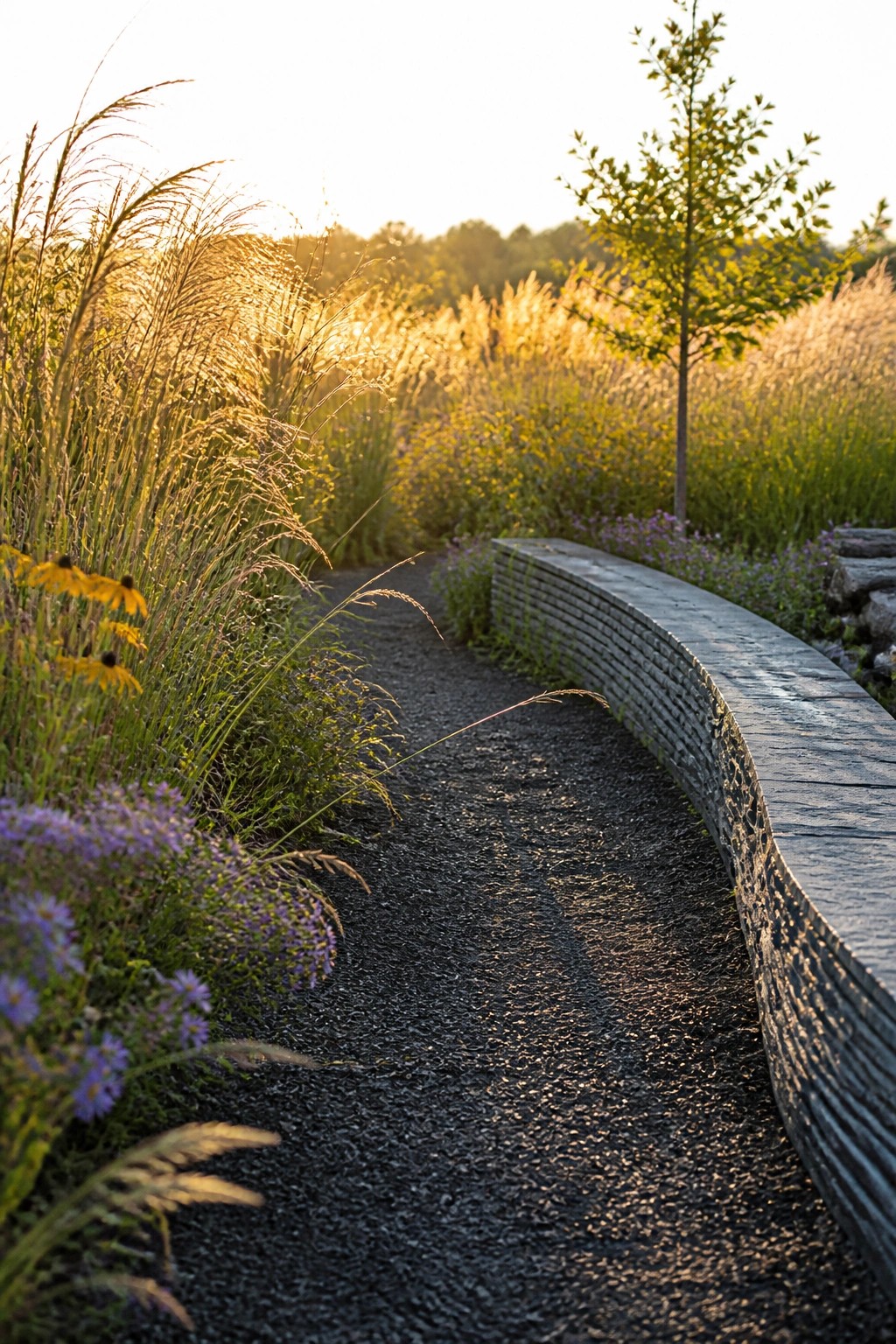
A gravel path gives you a simple way to move through the garden without adding a lot of upkeep. The dark gravel stays in place with minimal weeding, and it pairs well with a low stone border that holds the shape of the beds over time.
This setup works best in larger yards or along the side of a house where you want a natural look without daily work. Stick to tough grasses and perennials that fill in on their own, and keep the path width wide enough for easy walking and occasional raking.
Metal Containers For Low Maintenance Planting
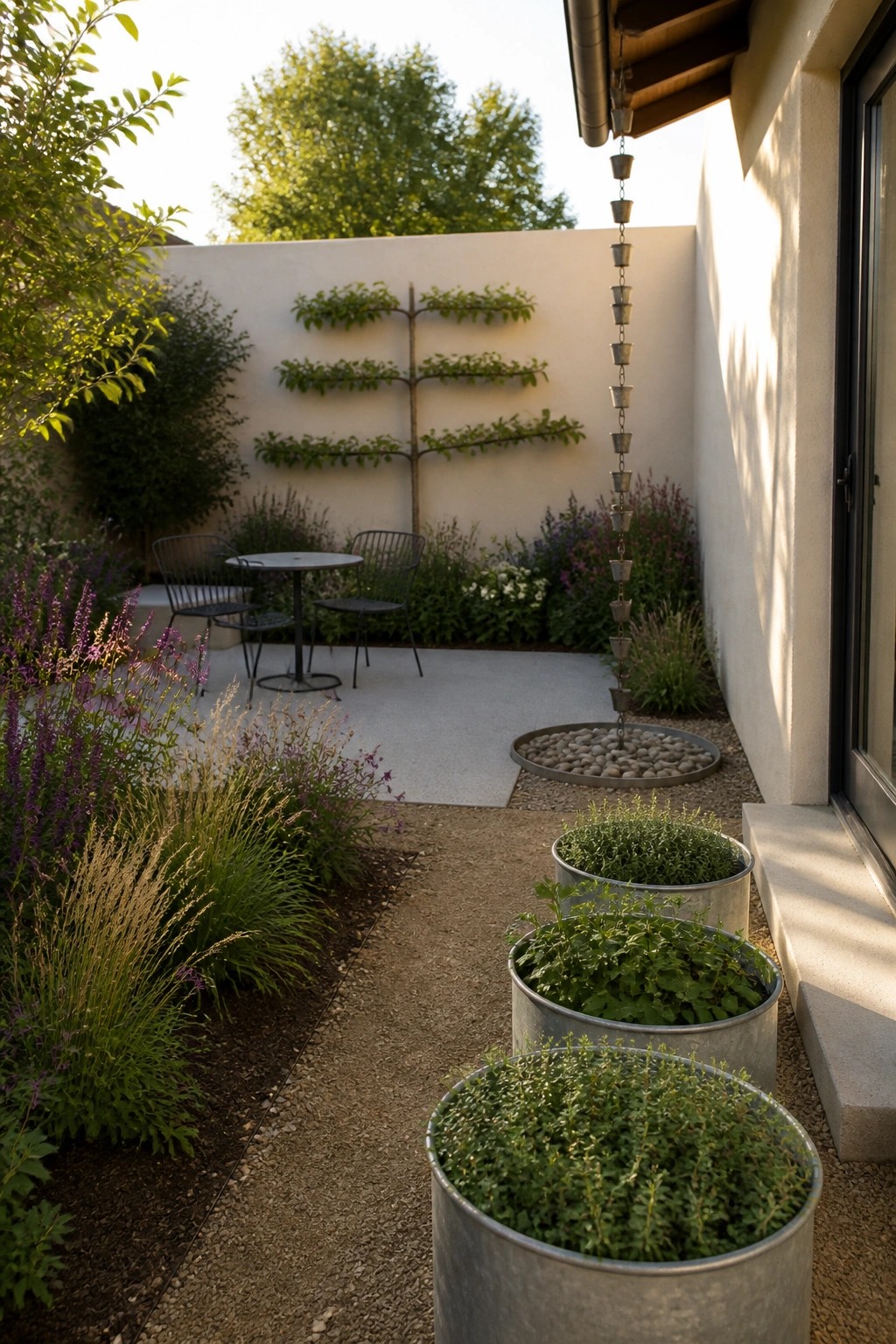
Large metal containers give you a clean way to add plants without creating big garden beds that need constant weeding and edging. They keep everything contained, so soil stays put and watering stays simple. The look works well in small yards or along paths where you want greenery but not a lot of upkeep.
Place the tubs on gravel or a hard surface so drainage stays easy and weeds have less chance to take hold. They suit homes with limited space or people who want to adjust the layout from time to time without digging. Just pick tough plants that handle the container conditions and you are set.
Natural Stone Edging For Garden Paths
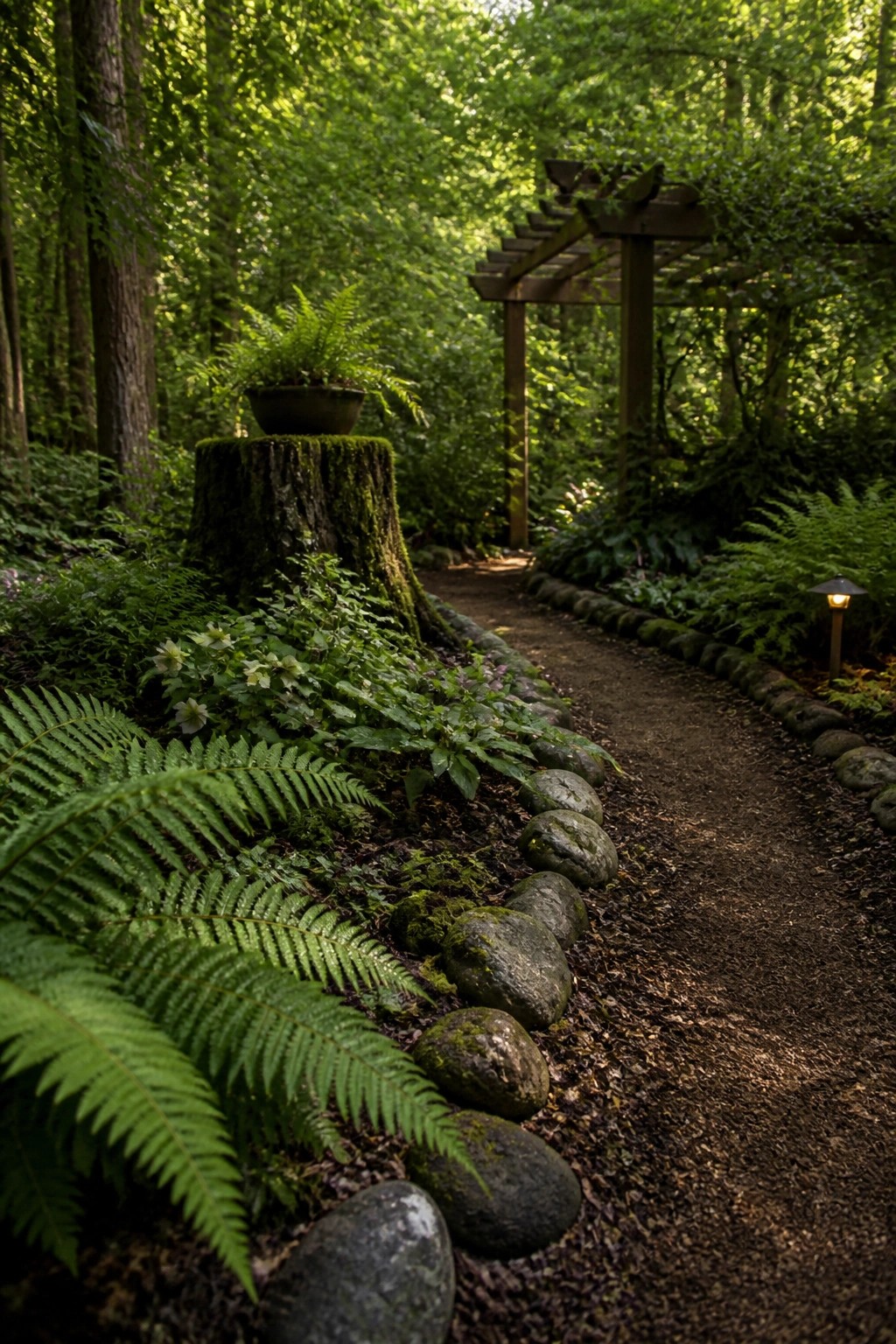
Natural stone edging gives a garden path clear shape without needing much ongoing care. The stones keep soil and plants from spilling onto the walkway while letting the path follow the natural lay of the land.
This works especially well in shaded areas where ferns and similar hardy plants already grow well. Once the stones are set, they stay in place on their own and reduce the need to constantly redefine bed edges or repair washed-out paths.
Raised Beds With Gravel Paths
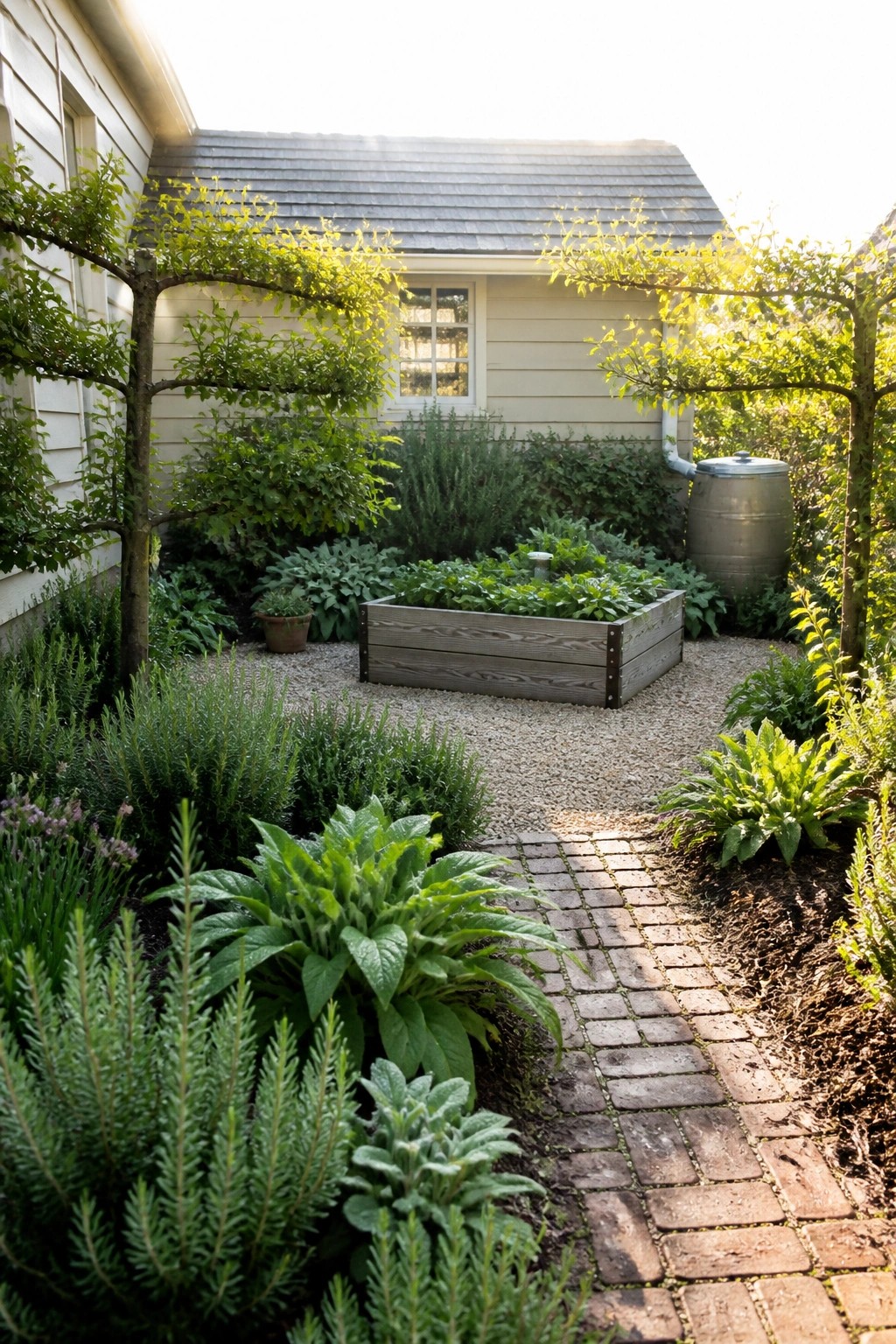
Raised beds keep planting areas neat and contained while cutting down on weeding and soil compaction. Gravel around the beds drains well and limits mud, which means less work after rain or watering.
This approach suits side yards or compact spaces where you want defined growing areas without constant maintenance. Stick with rot-resistant wood for the beds and a thick layer of gravel so paths stay clear over time.
Line Paths With Tall Narrow Trees
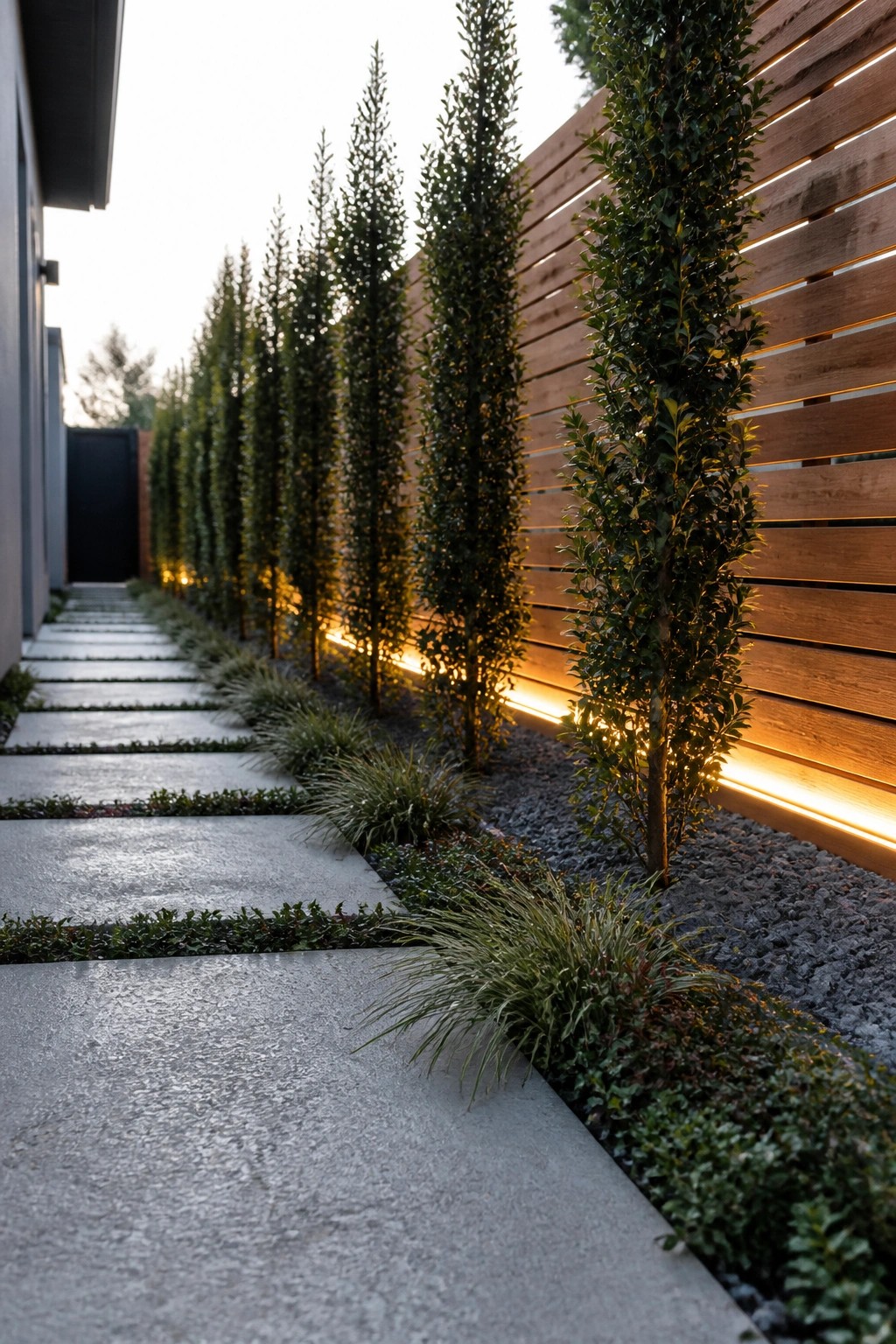
A straight row of columnar trees gives a garden clear structure without needing constant trimming or reshaping. These trees stay slim as they grow tall, so they define the edge of a path while taking up very little ground space. Once planted, they need only occasional watering and basic weeding.
This layout suits narrow side yards or fence lines where you want height and a sense of enclosure. Space the trees evenly and choose varieties suited to your local conditions. The result stays tidy with far less upkeep than wider shrubs or mixed borders.
Raised Metal Planters With Hardy Plants
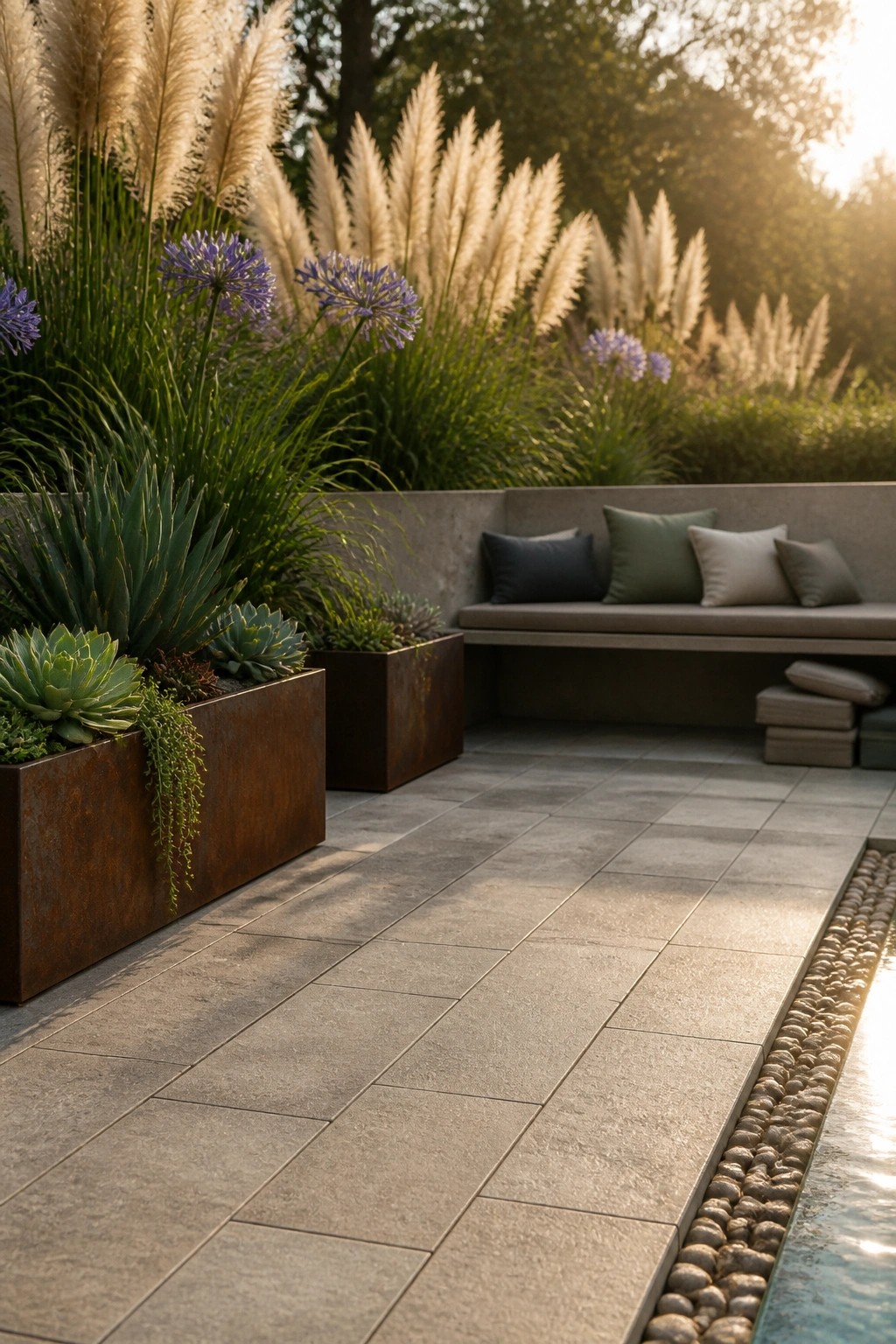
Raised metal planters make it simple to grow tough plants without much fuss. They keep soil contained, drain well, and let you place drought-tolerant choices like succulents and tall grasses exactly where they work best. The look stays neat even in hot weather or busy seasons.
These planters suit patios, side yards, or small gardens that need structure without daily care. Choose rust-finished metal for a lived-in feel and fill them with plants that handle sun and limited water. Just watch the size so they do not crowd walking paths.
Frequently Asked Questions
Q: How much watering do these designs actually need once the plants settle in?
A: Most of the hardy options only need a good soak every couple of weeks after the first season. Check the top inch of soil with your finger and skip the hose if it feels moist. This keeps roots deep and strong without daily fuss.
Q: Weeds keep popping up even with mulch, what then?
A: Pull them by hand when they are small (no fancy tools needed) and the ground is soft after rain. A thick layer of organic mulch stops most from starting in the first place.
Q: Can I add a few colorful annuals without turning the garden into more work?
A: Tuck in a handful of tough annuals like marigolds in spots that get full sun. They fill gaps nicely and need little beyond the same watering as your perennials.
Q: What about poor soil in my yard?
A: Mix in some compost when planting to give new roots a boost. The suggested hardy plants handle average conditions fine once established.
