

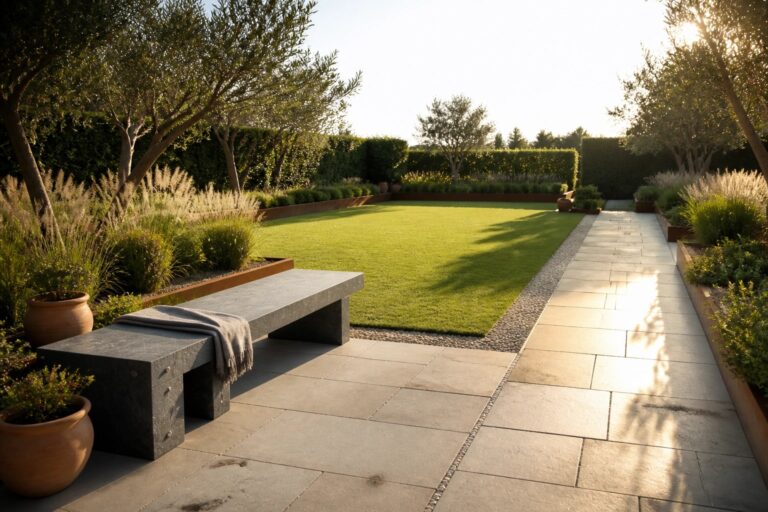
Large gardens tend to lose their shape when open space and planted areas are not planned together from the start.
I have noticed that good layouts usually include paths or edges that let the eye move smoothly between the two without either one taking over.
Testing a few simple divisions in my yard showed me how much difference a clear boundary can make once the plants fill in over a season or two.
Some approaches handle scale better than others.
It helps to look at how the whole space will feel after a few years rather than just at the beginning.
Straight Paths Keep Large Gardens Organized
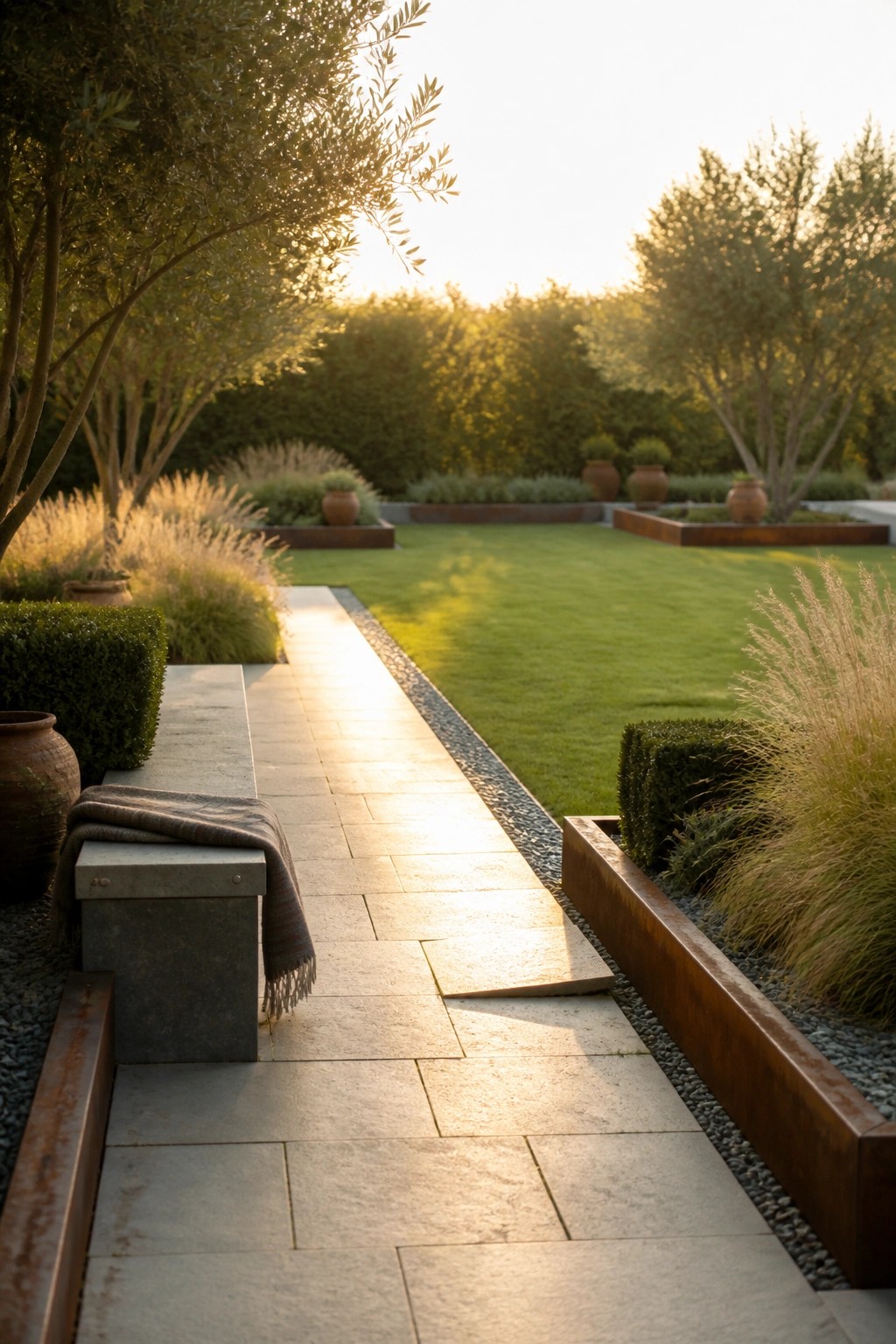
A straight path through a big garden gives the space structure while leaving the lawn open and usable. It creates a clear line that separates the planted edges from the main lawn area without breaking up the overall feel.
This approach works best in larger yards where you need a simple way to move through the garden without losing the sense of openness. Metal edging along the path helps keep the gravel in place and stops plants from creeping onto the walkway over time.
Stone Paths That Keep Planting And Open Space In Balance
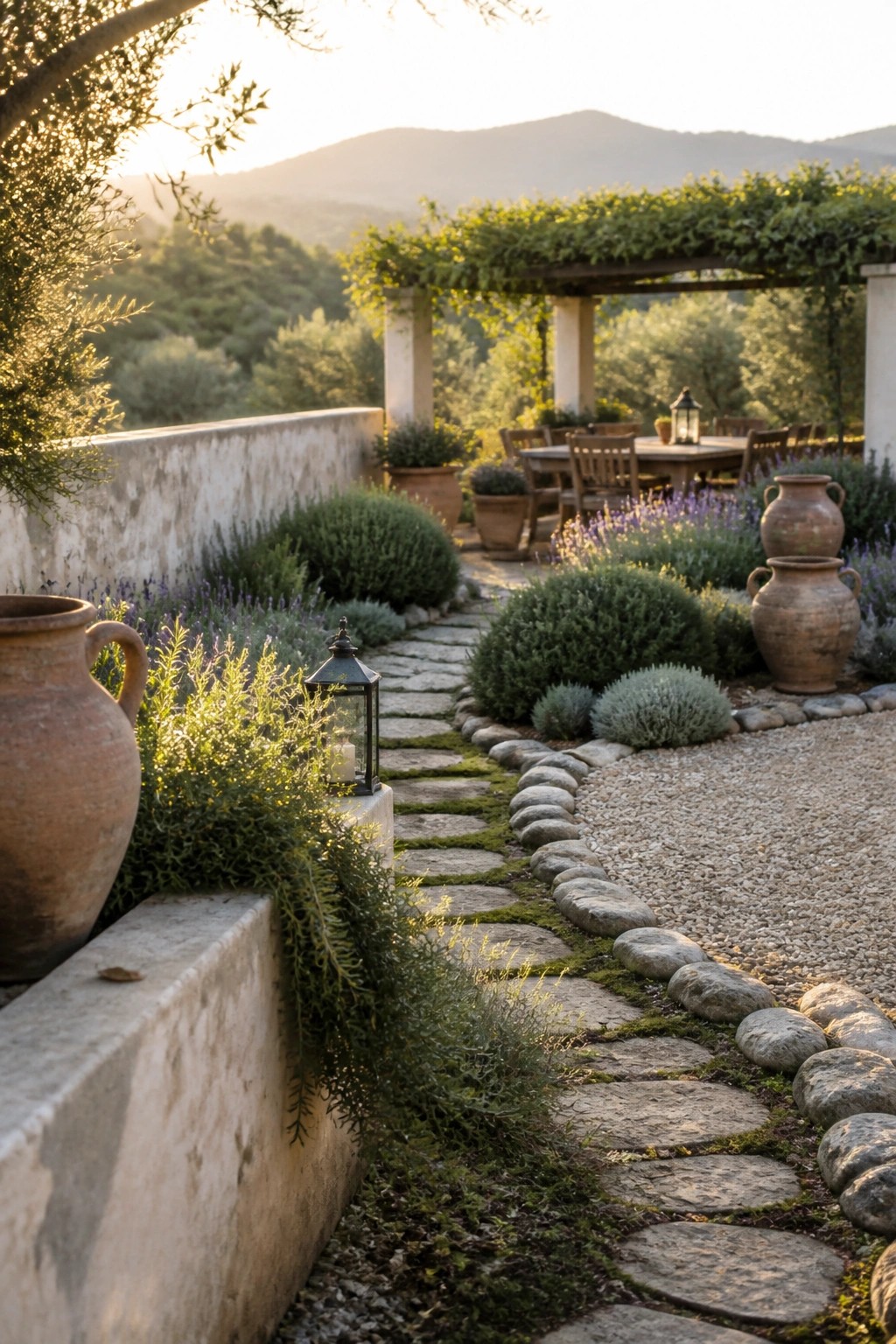
A stone path edged with rocks gives the garden clear structure without closing off the planted areas. It lets you walk through the space while the lavender and shrubs grow right up to the edge, so the beds still feel full and natural.
This kind of path works best in larger gardens that mix gravel or lawn with heavier planting. Keep the stones irregular and the edging low so the path feels like it belongs to the landscape instead of cutting it in half.
Curved Brick Paths To Shape Garden Zones

A curving brick path gives large gardens a gentle way to separate open lawn from planted beds. It keeps the grass feeling spacious while giving flowers and shrubs a clear place to fill in along the edges.
This layout works best on properties where you want walking routes without losing too much open space. Use a simple material like brick and keep the curve soft so the path feels natural rather than forced.
Stepping Stone Paths Keep Large Lawns Usable
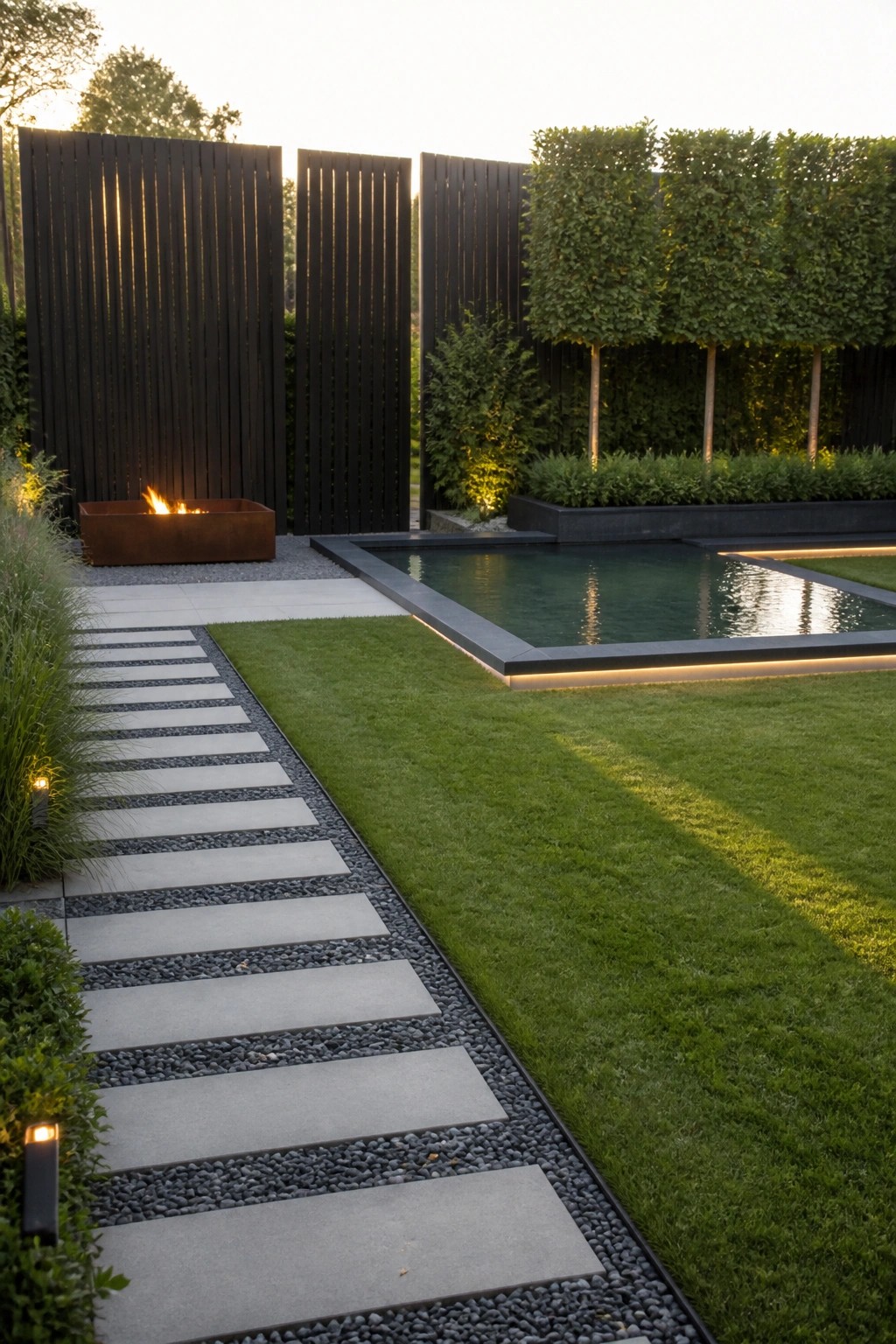
A simple path of large stepping stones set in gravel gives you a clear route across the garden without cutting the lawn into smaller pieces. This approach works especially well when you have a big open area that still needs to feel connected.
Place the path where people actually walk, such as from the house toward a pool or seating spot. Keep the stones wide enough for comfortable steps and let the gravel fill the gaps so the grass stays the main feature. The result is practical access that does not shrink the open space.
Curved Paths That Keep Open Lawn Areas Feeling Spacious
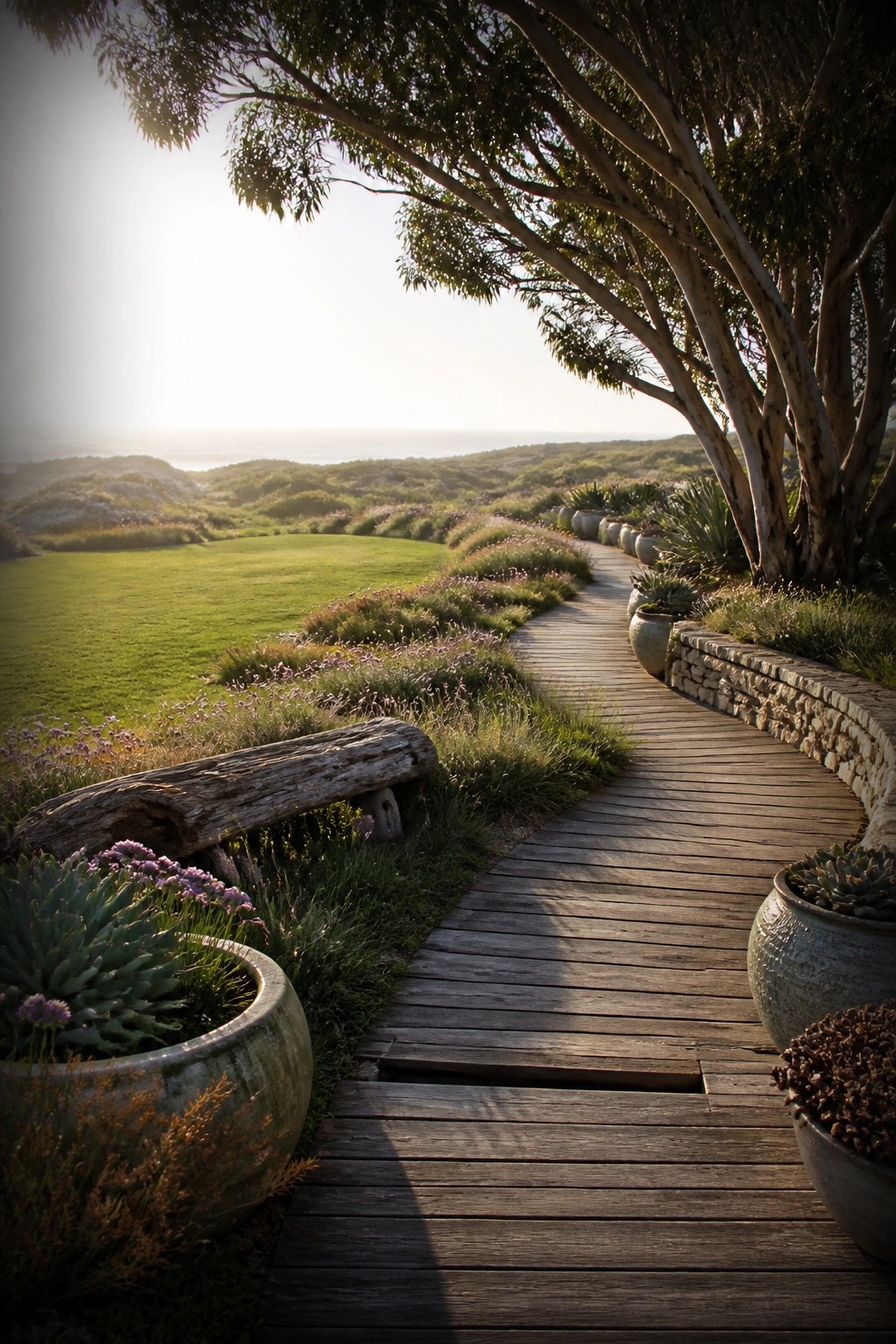
A curved path works well in larger gardens because it moves through the space without splitting the lawn into smaller sections. It gives structure to the planted edges while leaving the open grass intact for a sense of room to move around.
This layout suits homes with bigger yards where you want both usable lawn and defined beds. Keep the path material simple and let the curve guide the eye along the planted borders instead of trying to add too many extra features.
Stone Paths That Guide Movement Through Planting
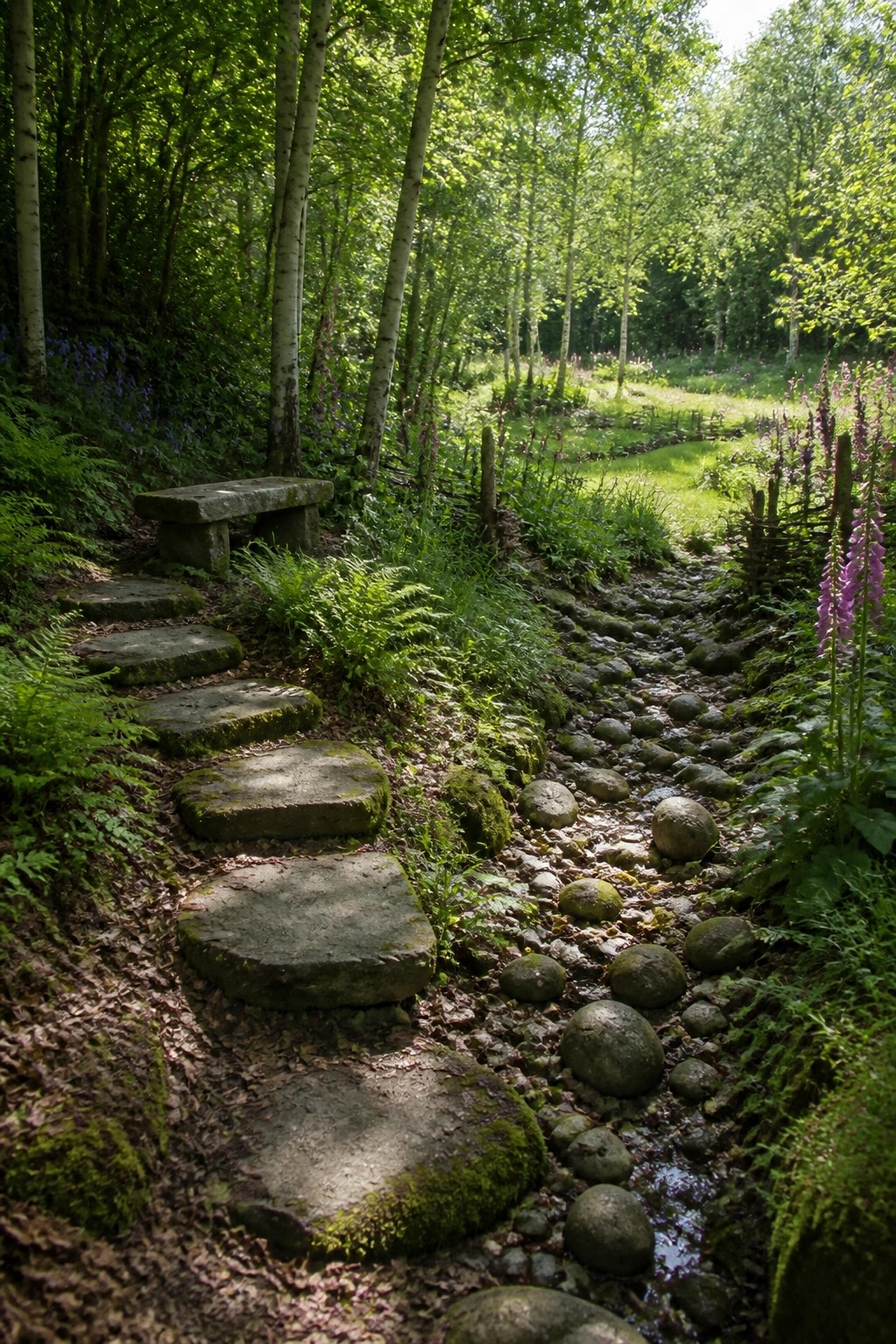
Large flat stones set into the ground make a path that feels like it belongs in the garden instead of cutting through it. The slabs sit low enough that ferns and low plants can grow right up to the edges, so the planted areas stay full and the open space between them still reads as one connected garden.
This works best on gentle slopes or where you need a clear route without adding a wide hard surface. Keep the stones irregular in size and spacing so the path feels relaxed rather than formal, and let moss or ground cover fill the gaps over time.
Straight Paths Divide Lawn From Planted Beds
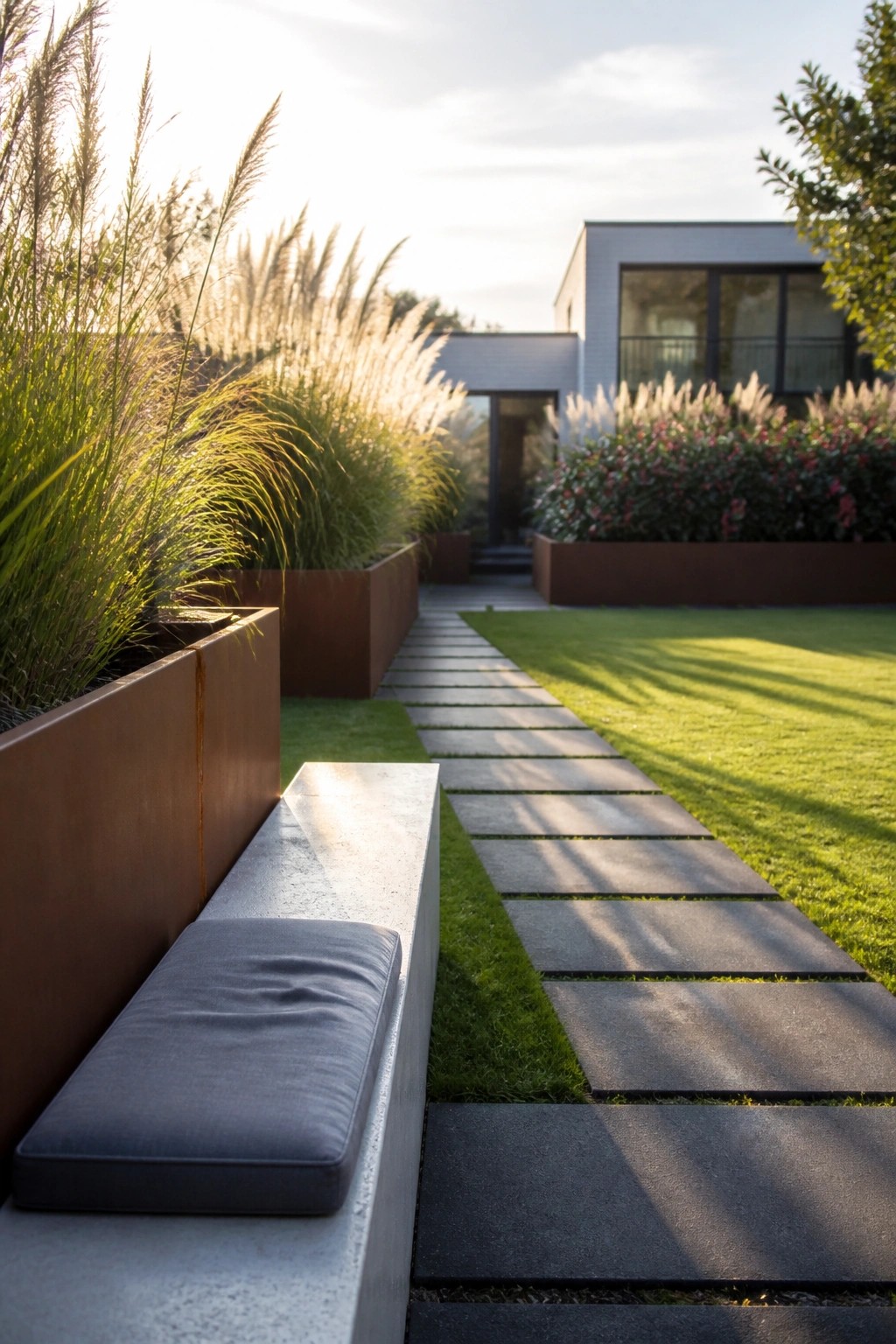
A straight path made of separate stone slabs gives a large garden clear structure without cutting off the open feel of the lawn. It keeps the grass usable on one side while the planted beds stay neatly contained on the other.
This layout works best in modern yards where you want simple maintenance and a sense of order. Keep the path narrow enough to feel natural and let the planting run alongside it in raised beds so the beds stay defined year after year.
Gravel Paths With Stone Edging
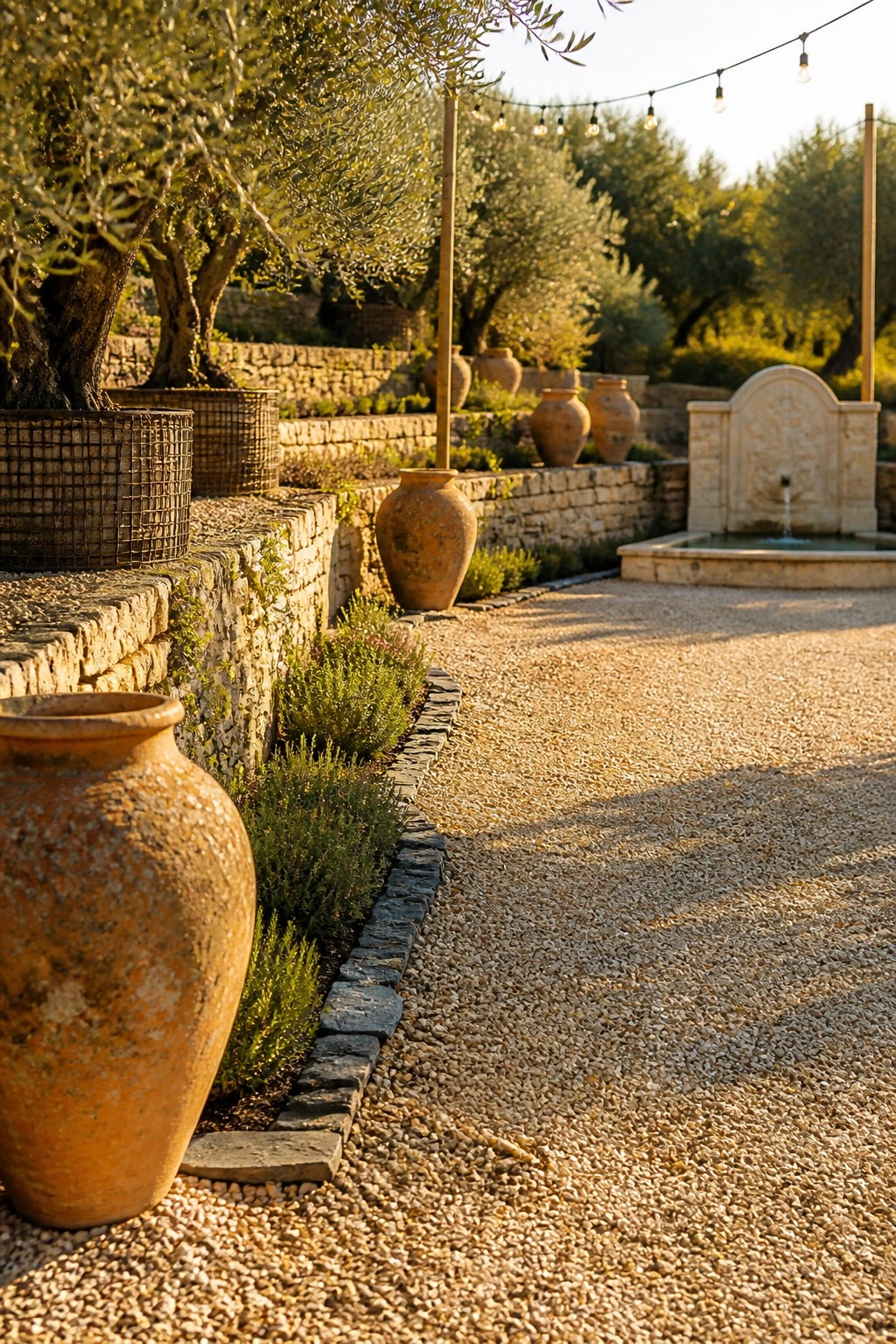
Gravel works well in large gardens because it keeps the main space open and easy to walk across. Adding a low stone edge along the sides gives the planted beds a clear shape without blocking the flow or making the garden feel chopped up.
This approach suits dry climates and Mediterranean gardens best. Keep the edging simple and low so it blends into the landscape, and use a few larger pots along the border to add height where the planting stays low.
Stepping Stones In Moss Offer A Simple Path Through The Garden

Stepping stones set into moss give a large garden an easy way to move through planted areas without cutting them into separate sections. The stones sit low so the moss can grow right up to the edges, which keeps the planting looking full and connected.
This layout works best on mostly flat ground where foot traffic stays light. Space the stones at a natural walking distance and let the moss soften the edges over time so the path feels like part of the garden rather than something laid on top of it.
Center Your Patio Seating Around a Fire Pit
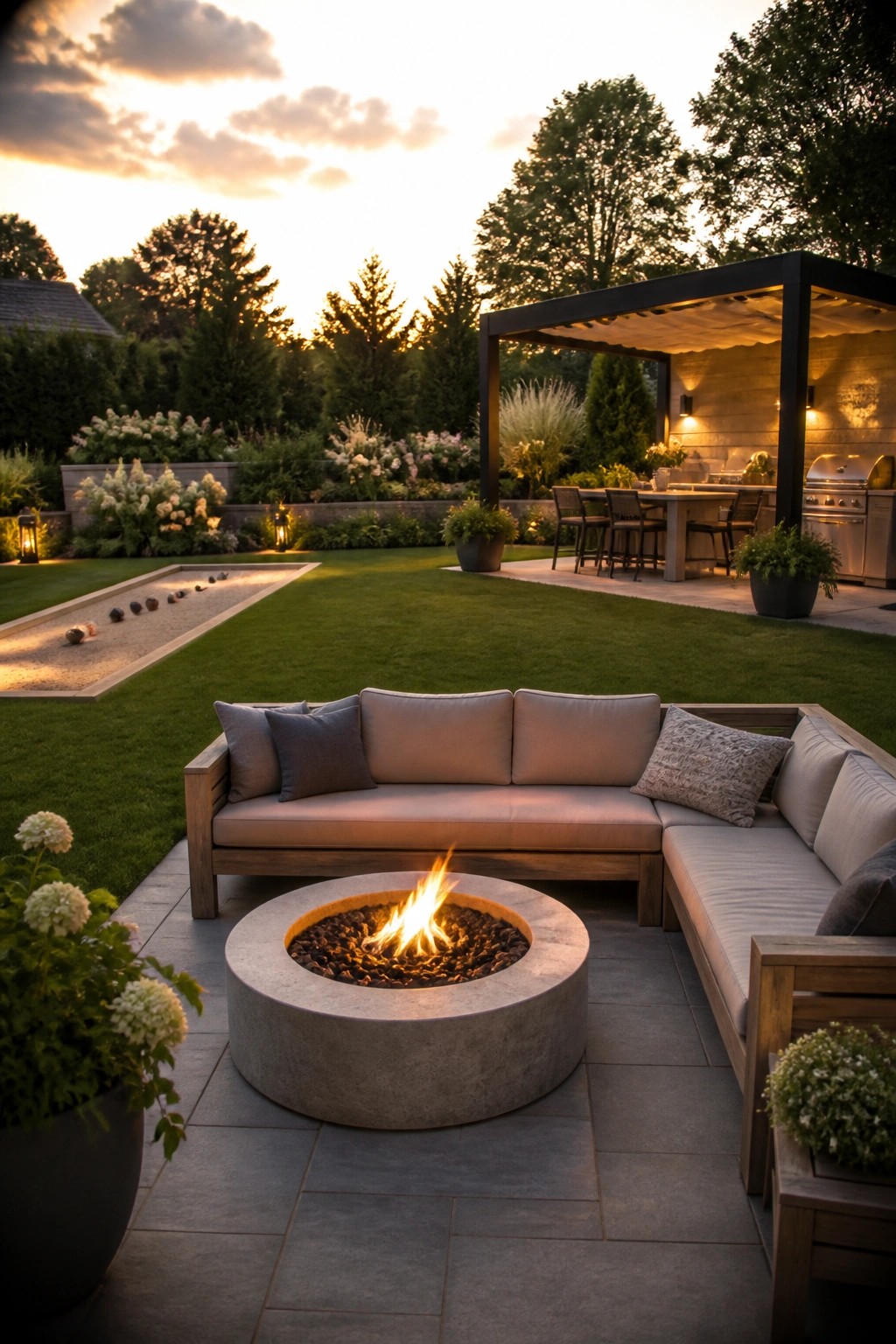
A fire pit placed right in front of a large sectional gives the patio a clear purpose. It turns an open area into a spot where people actually want to gather after dark. The setup works because the seating wraps around the heat source instead of lining up along the edge.
This approach suits bigger gardens that already have plenty of lawn and planting beds. Keep the paved zone modest so it does not take over the whole yard. Make sure the fire pit sits low enough that the view across the grass stays open.
Curving Paths That Separate Planting Zones
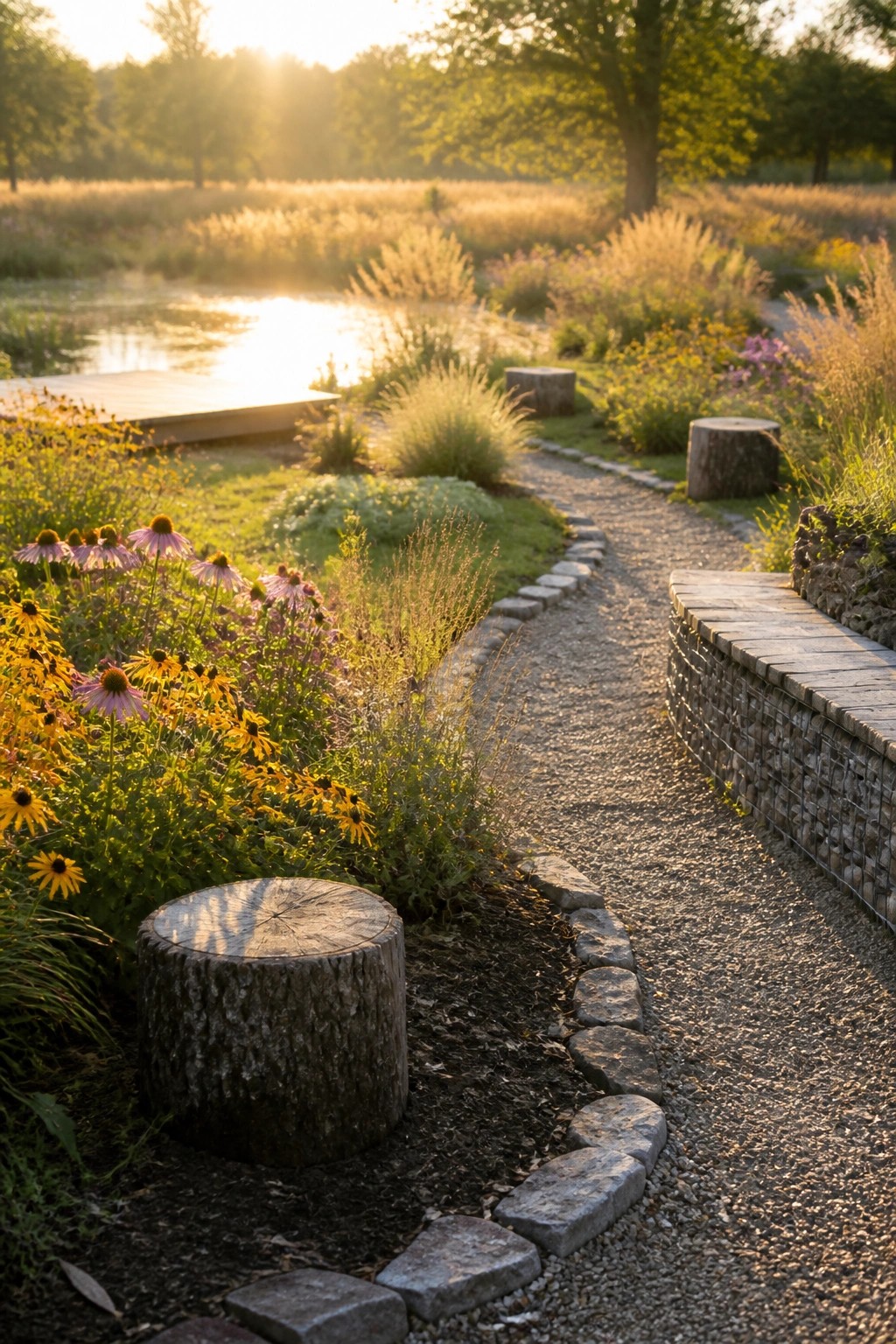
A simple gravel path with low stone edging can do a lot to keep a large garden from feeling crowded or scattered. The curve lets you move through the space without cutting straight across every bed, so planted areas stay full while still leaving room to walk and enjoy open views.
This works especially well in bigger yards where you want both lush planting and easy access. Keep the edging low and natural so it blends with the beds, and let the path widen or narrow slightly as it moves around the main planted sections.
Gravel Paths Edged With Planting Beds

Gravel paths work well when they sit between clear planted borders. The low shrubs and hedges keep the open gravel from feeling too loose while still letting the garden feel spacious overall.
This approach suits larger yards that need structure without losing the sense of room to walk. Keep the borders low and consistent so the path stays the main route through the space.
Stone Paths Balance Open Lawn With Structured Planting Beds
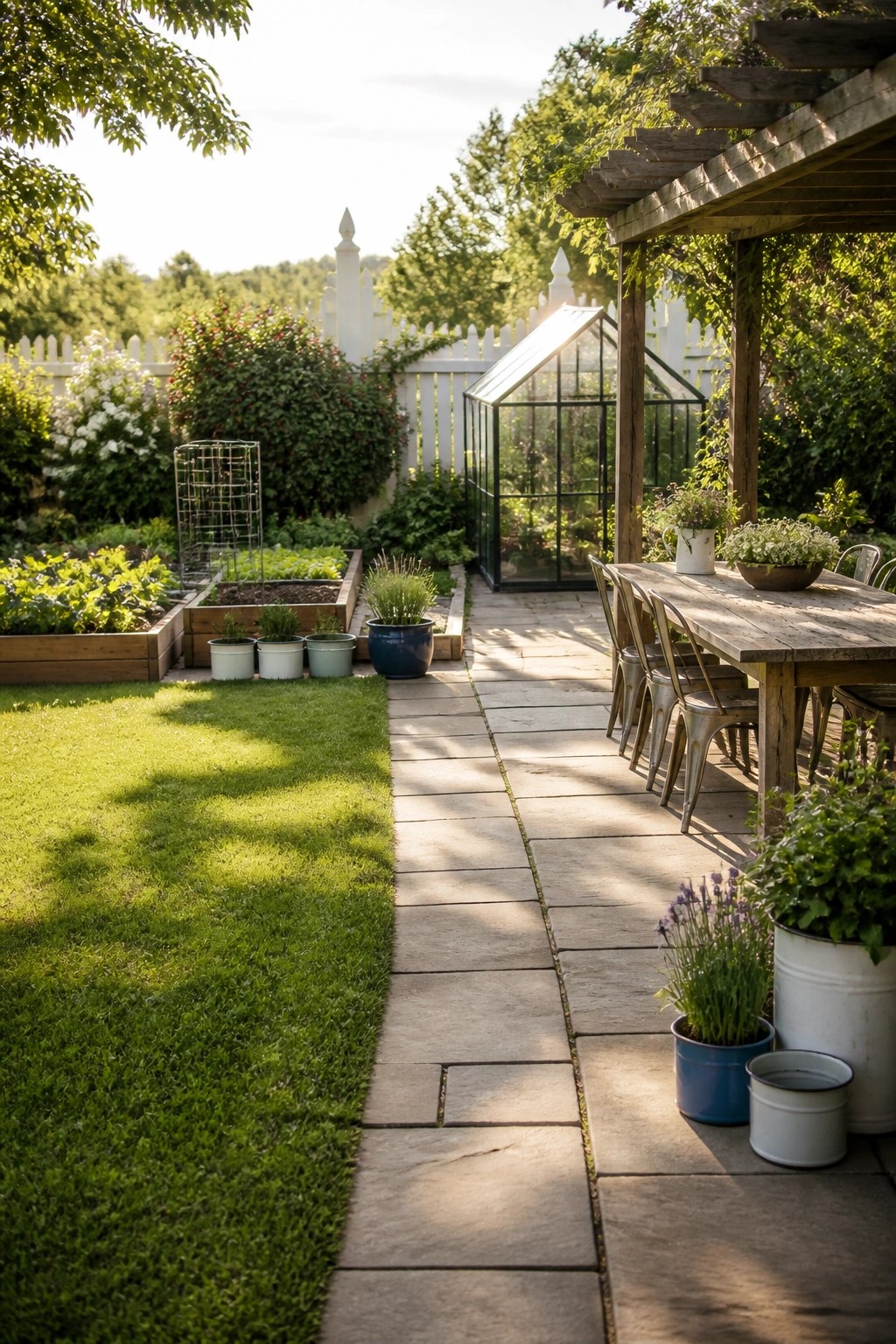
A long stone path running through a large garden helps keep the open lawn area feeling spacious while still giving structure to the planted zones beside it. The path creates a clear division that stops the beds from creeping into the grass and makes both parts of the garden easier to maintain.
This layout works well in bigger yards where you want room to walk and relax without losing the feeling of a productive garden. Raised beds along one side and open grass on the other keep the space from looking too crowded, and the path gives you a practical way to move between them.
Stepping Stones Set In Gravel
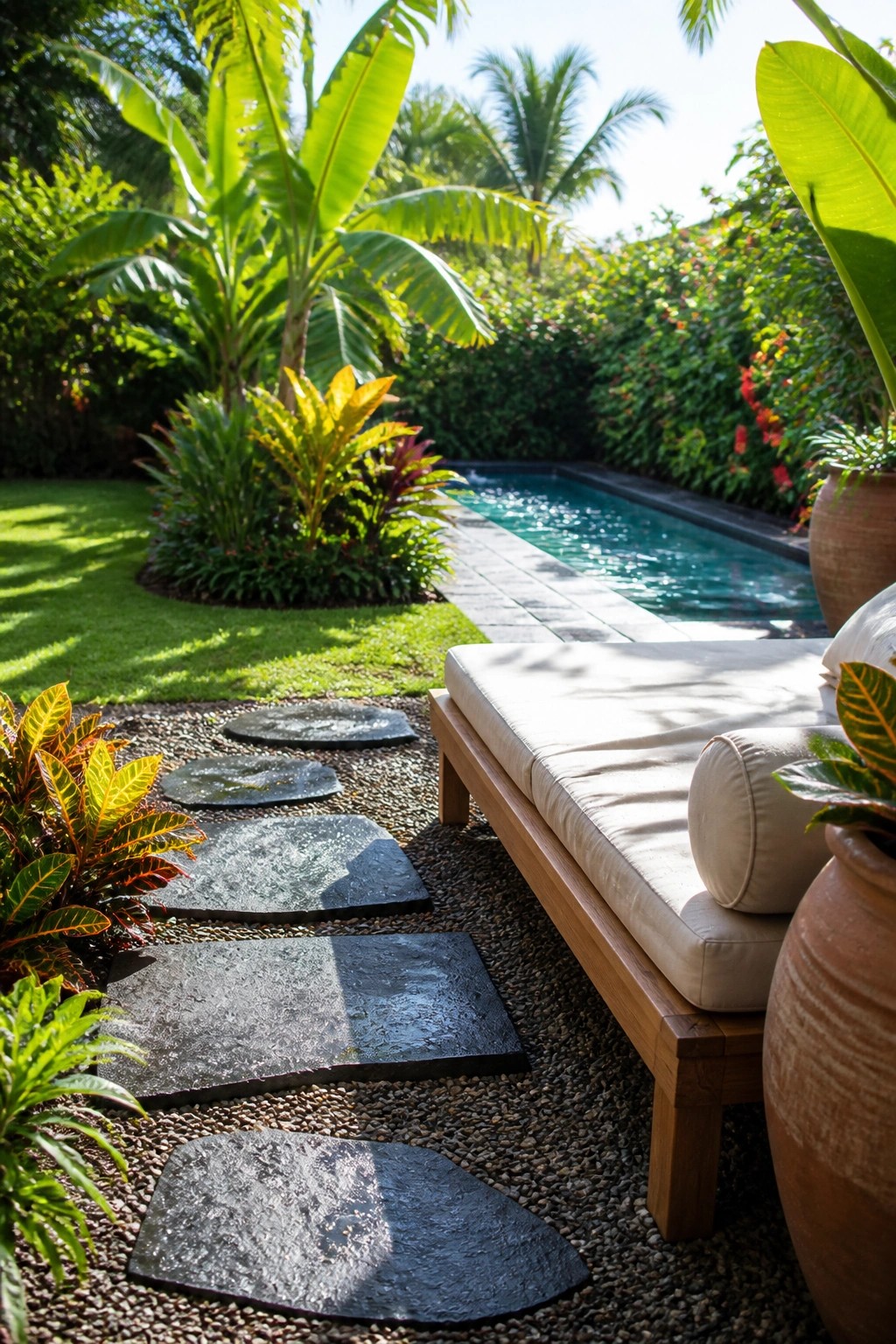
Stepping stones placed in gravel give a garden a clear route without turning the whole area into hard paving. The gaps between the stones let the surrounding beds stay planted and full, which helps keep the balance between open ground and growing zones.
This layout works best in larger gardens that need a path from one area to another, like from the lawn to a pool edge. Space the stones for natural steps and choose gravel that stays put but still drains.
Gravel Paths Separate Planted Beds in Large Gardens

Gravel works well for creating open space that keeps a big garden from feeling crowded. It lets the planted areas read as distinct zones without needing walls or heavy dividers. The curved edges on the beds add a soft rhythm that guides movement through the space.
This approach suits flat sites where you want low maintenance and good drainage. Group plants in beds or containers so they stay contained, then leave generous gravel between them. Watch the scale. Too many small beds can break up the openness you are trying to keep.
Use A Central Path To Balance Planted Borders And Open Lawn

A straight path through the middle gives structure without cutting the garden in half. It keeps the planted edges full and interesting while leaving the far end open and easy to walk into.
This works best in larger gardens where you want plenty of flowers and shrubs along the sides but still need a clear way through. Keep the path simple in brick or gravel and let the borders do the work on either side. Watch the width so the path feels generous rather than tight between the beds.
Stone Markers For Garden Paths

Large gardens can feel confusing without some kind of direction, and these simple stones make it easy to find your way. They sit right on the grass and point clearly without adding clutter or breaking the natural flow of the space.
The same idea works well on any big property where paths wind through different planted areas. Keep the markers low and made from local stone so they blend in, and use them only where a turn or destination needs to be obvious.
A Narrow Water Channel Creates Clear Garden Divisions

A long, narrow pool set in concrete works well for breaking up a large garden without chopping it into small pieces. The straight lines give the eye a path to follow while the water reflects sky and plants, so the space still feels open. Planted beds along one edge add softness and keep the hardscape from looking too stark.
This setup suits properties with a decent stretch of lawn and some existing trees or shrubs. Keep the channel fairly simple and let the planting do most of the work on either side. Avoid making it too wide or overly ornate, or it can start to feel like a barrier instead of a quiet link between zones.
Winding Paths That Separate Planting From Lawn
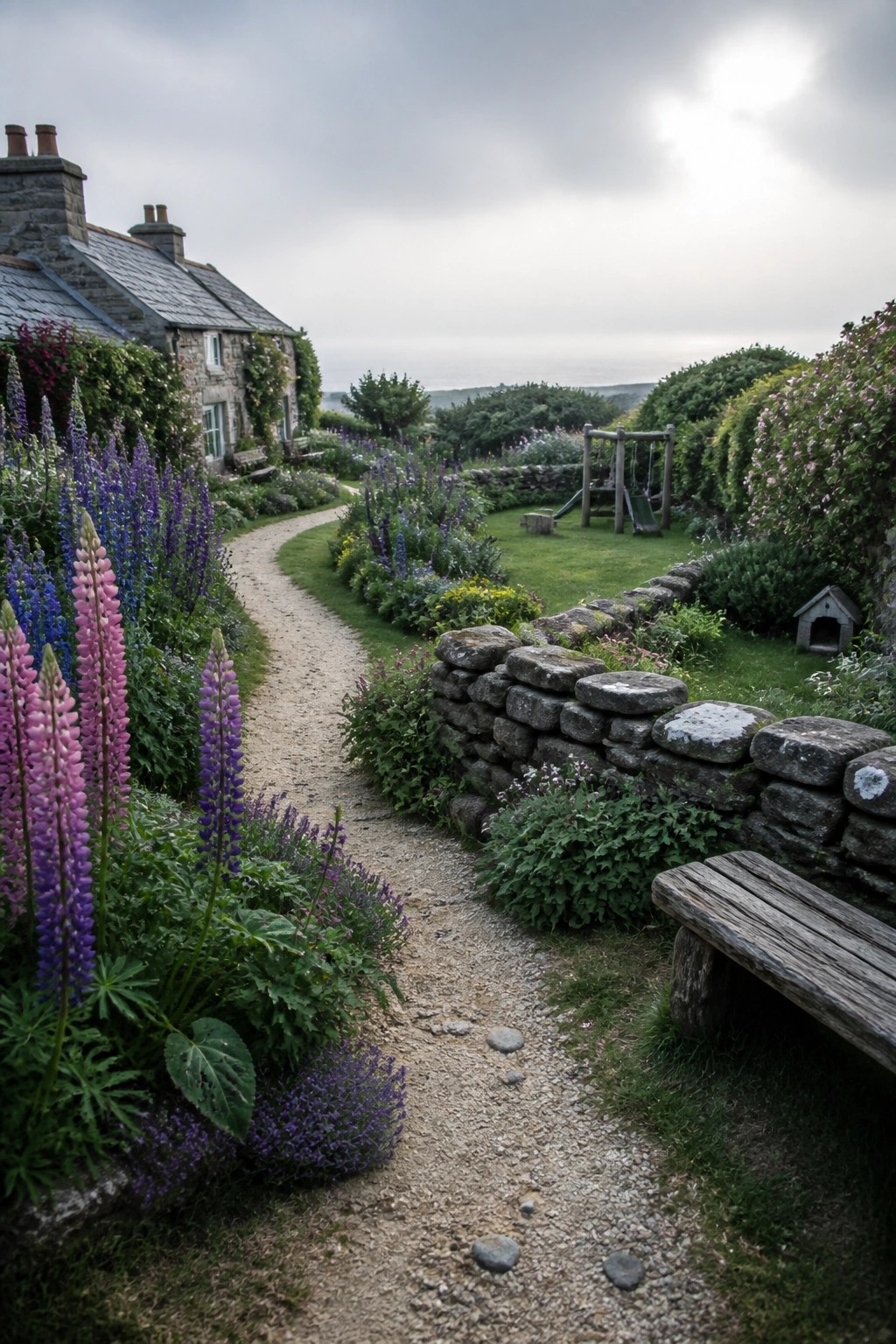
A curving gravel path helps divide a large garden into distinct areas without losing the flow between them. The low stone walls along the edges keep the beds contained while the planting stays full and close to the walkway.
This layout works best on properties where you want colorful borders near the house but still need an open lawn beyond. Use the same path material throughout and let the beds vary in depth so the planted side feels softer against the grass.
Line Your Garden Path with a Water Channel
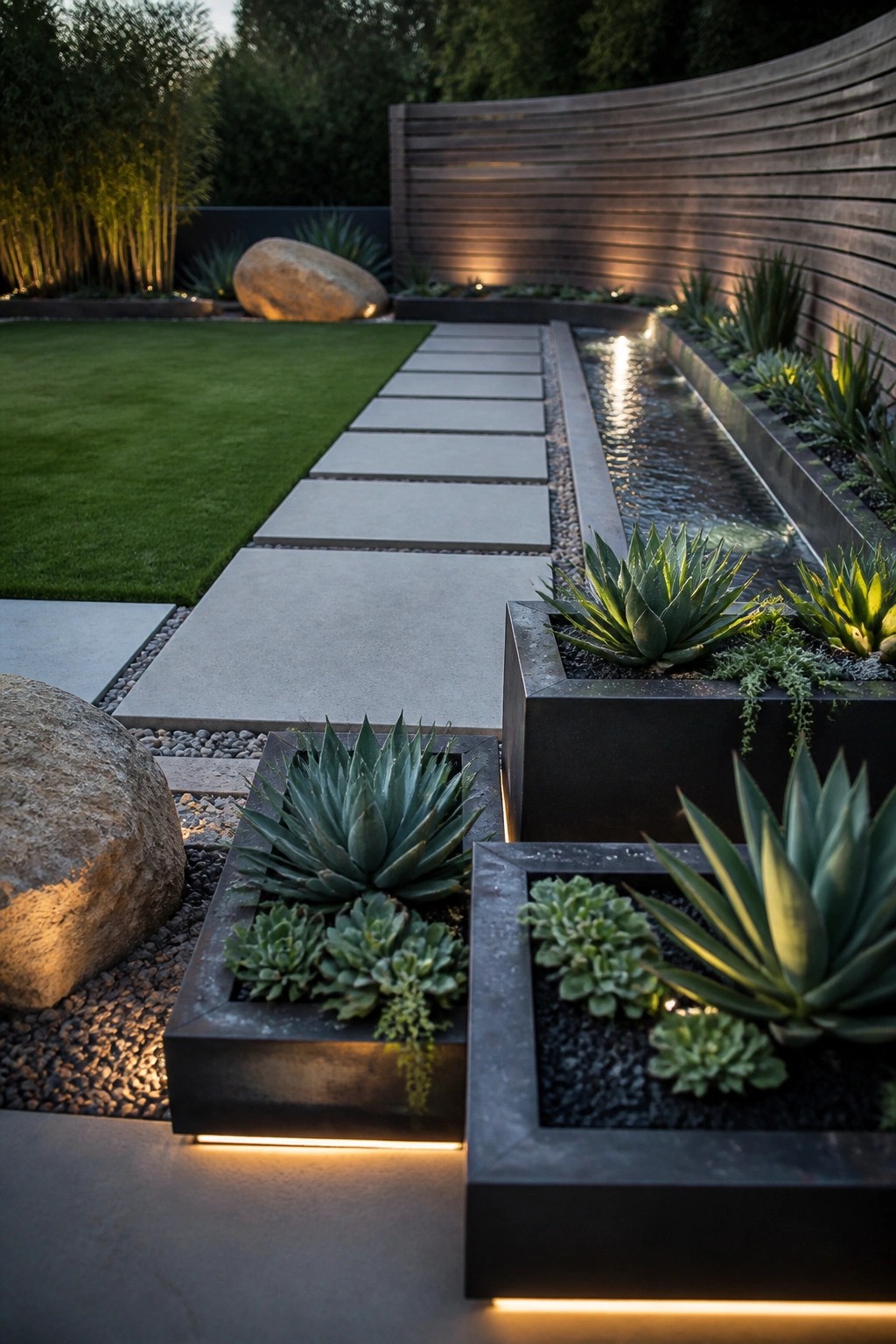
A narrow water channel running beside a paved path gives the garden a clear structure. It separates the open lawn from the planted areas without blocking views or making the space feel divided. The water adds movement and a bit of sound, while the path stays easy to walk.
This works best in larger gardens where you want to keep plenty of open grass but still have defined planted zones. Keep the channel fairly slim and use simple raised beds along one side so the layout stays balanced. Avoid making the water feature too wide or it can start to feel like a barrier.
Frame A Large Lawn With Border Planting
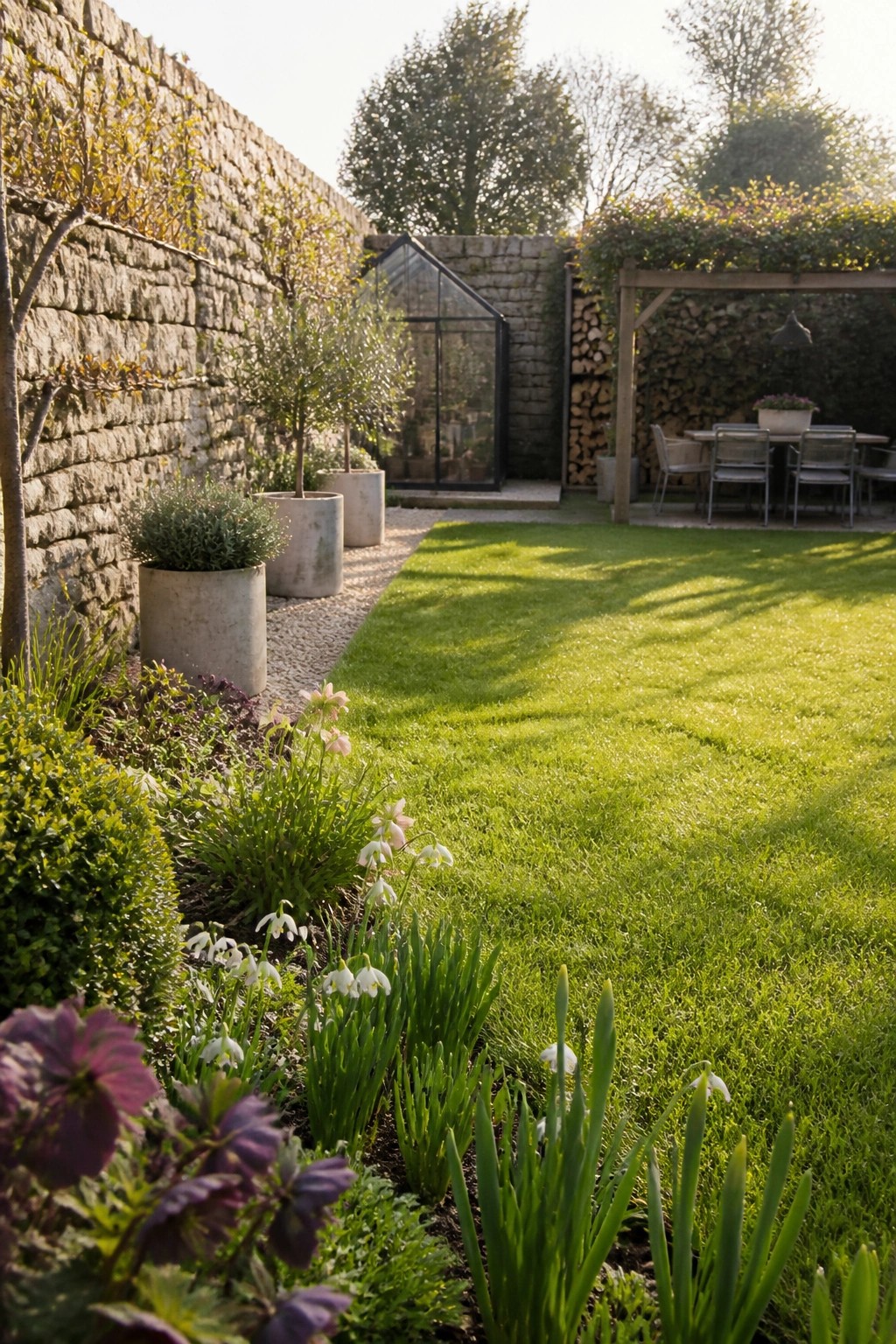
A big garden often works best when the center stays mostly open. Keeping a wide stretch of lawn clear gives the space room to breathe while planted beds along the edges add structure without taking over.
Start with a few taller plants or pots near walls and paths, then add lower layers in front. This layout suits homes with existing boundaries like stone walls, where the planting can soften the edges but leave the middle open for easy movement and everyday use.
Built-In Seating With Vertical Planting Screens
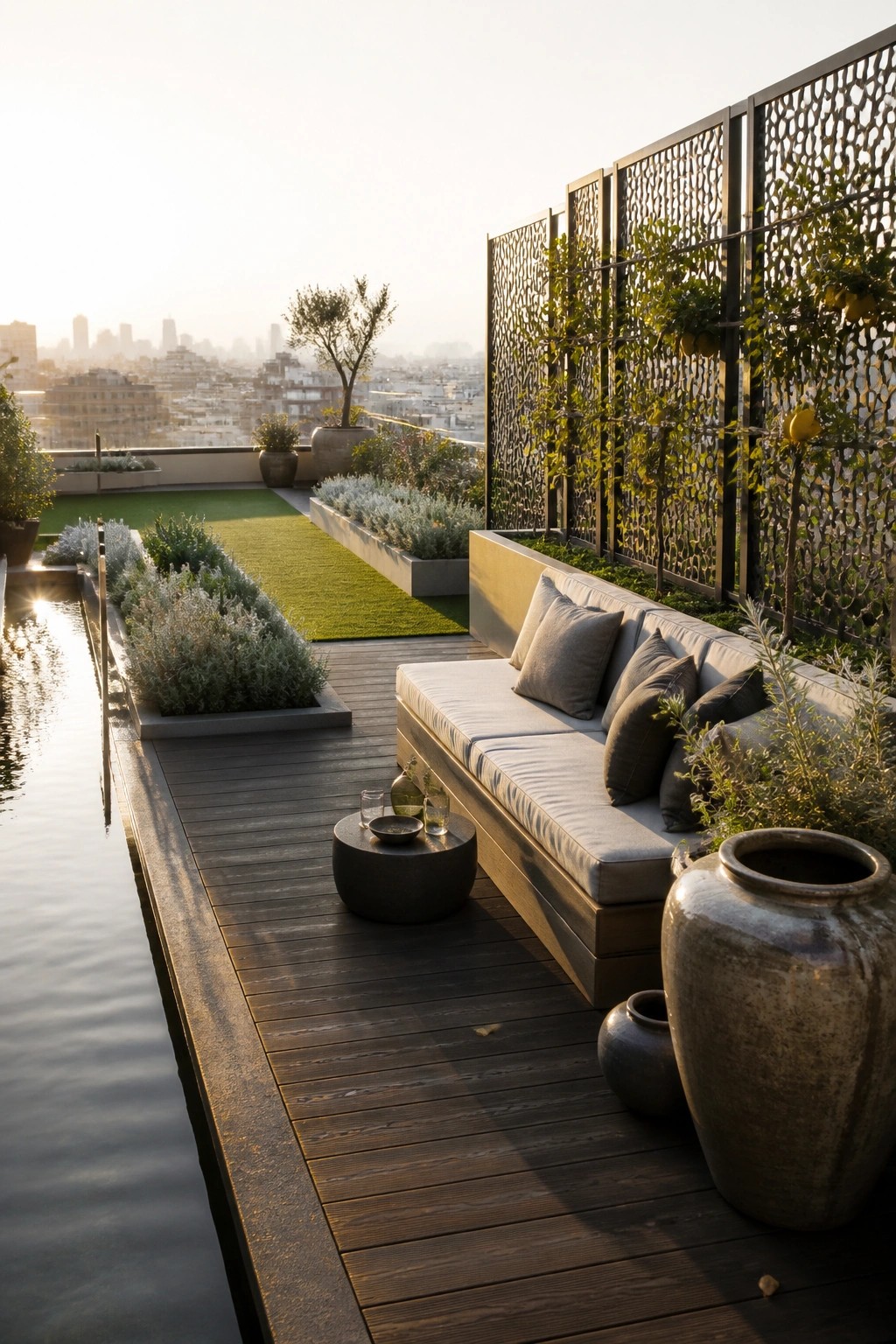
A long built-in sofa along the edge of a terrace gives you plenty of seating without taking up floor space with separate chairs. The back of the sofa sits against a row of screens that hold climbing plants, which creates a soft boundary while still letting light through.
This setup works well on rooftops or wide decks where you need to carve out a living area without building full walls. Keep the front of the deck open so the space does not feel boxed in, and choose screens that can support real plants in containers rather than just decoration.
Frequently Asked Questions
Q: How do I figure out the right split between open lawn and planted beds in a large yard?
A: Walk your space at different times of day and note where you like to sit or play. Mark those spots first so the open areas support how you actually use the garden. Plant taller groups around the edges to frame the lawn without eating into it.
Q: What works best for keeping paths from chopping up the open feel?
A: Use stepping stones or narrow gravel strips that curve gently instead of straight lines. Let the grass or low ground cover flow right up to the edges. This keeps the planted zones looking like natural extensions rather than separate rooms.
Q: How can I stop the open areas from looking bare once the beds fill in?
A: Add a few small trees or large shrubs spaced out in the lawn itself. They give height without crowding and cast moving shadows that make the space feel more alive through the seasons.
