

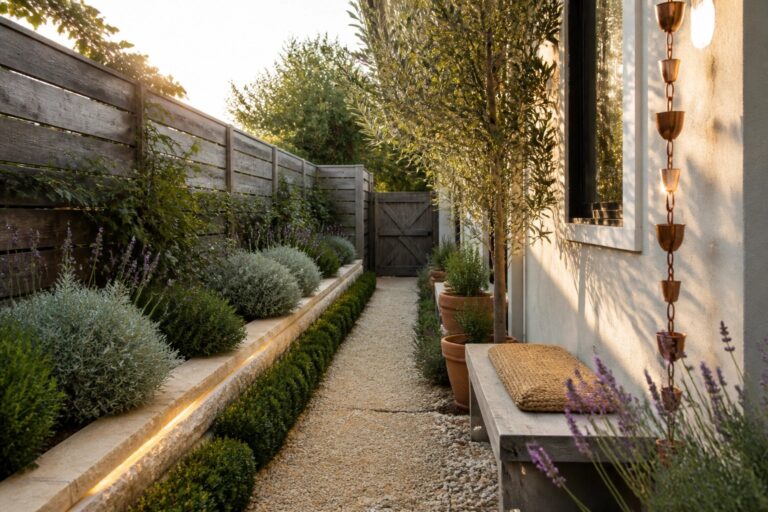
Long side yards often end up as awkward strips because the layout rarely gets planned with the same care as the main garden beds.
I have watched how a steady path line combined with layered edging plants can pull the eye forward and keep the space from feeling pinched.
In my own yard the shift that mattered most came from narrowing the planted borders so the center stayed open and walkable year round.
Over time those repeated shapes and simple materials start to give the whole length a sense of order that holds up through the seasons.
A few of these adjustments are worth trying first on paper before any digging begins.
Gravel Paths Work Well In Long Narrow Gardens
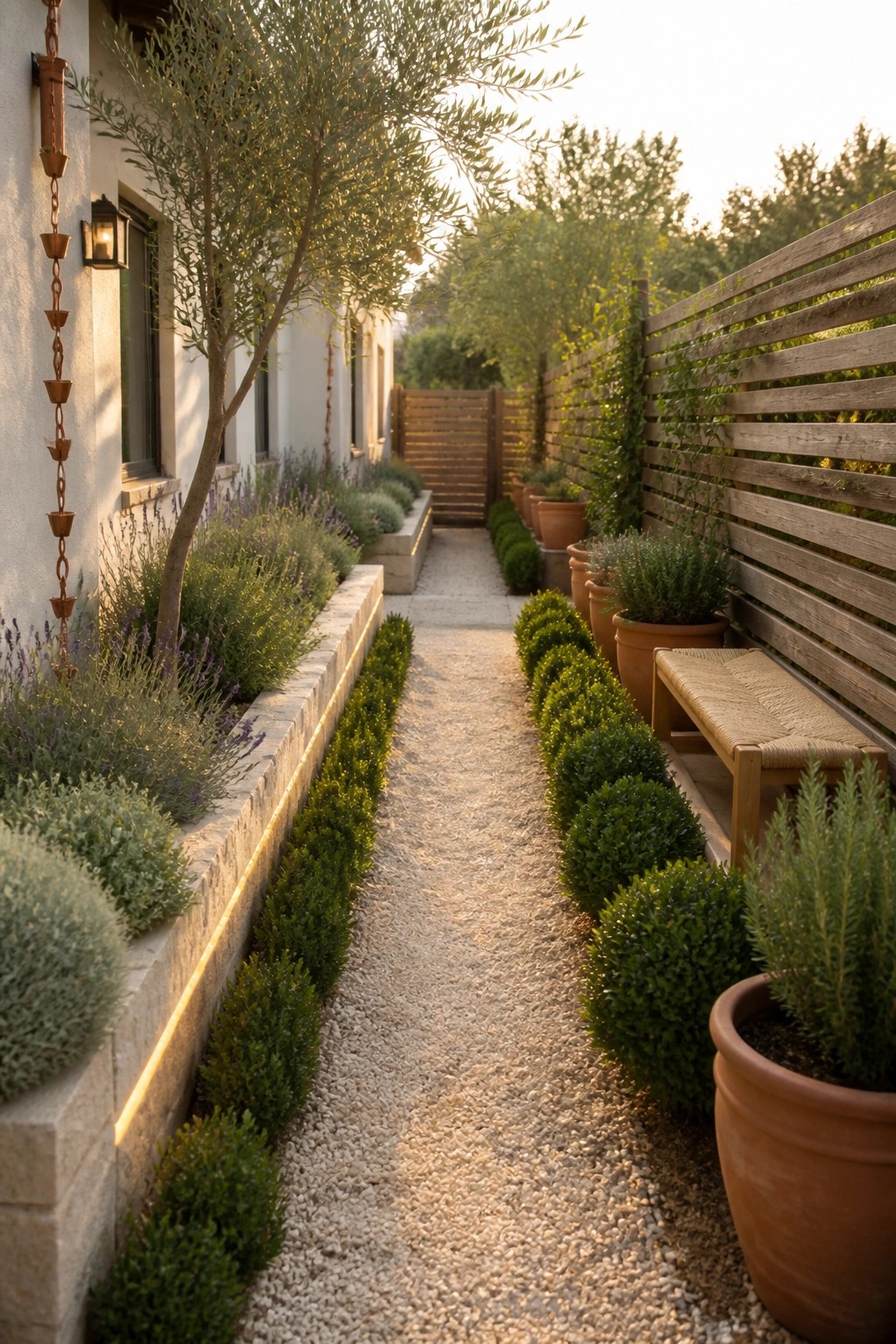
Gravel is a good option for side yards that feel too tight for anything else. It drains quickly, stays cooler than concrete, and gives the space a softer look without costing much to install.
Edge the gravel with stone or brick so it stays put, then add planting beds or pots along the sides. This works best on homes where the side yard is mainly used for access rather than sitting, and it keeps the whole area from looking like an afterthought.
Line One Wall With a Raised Planter
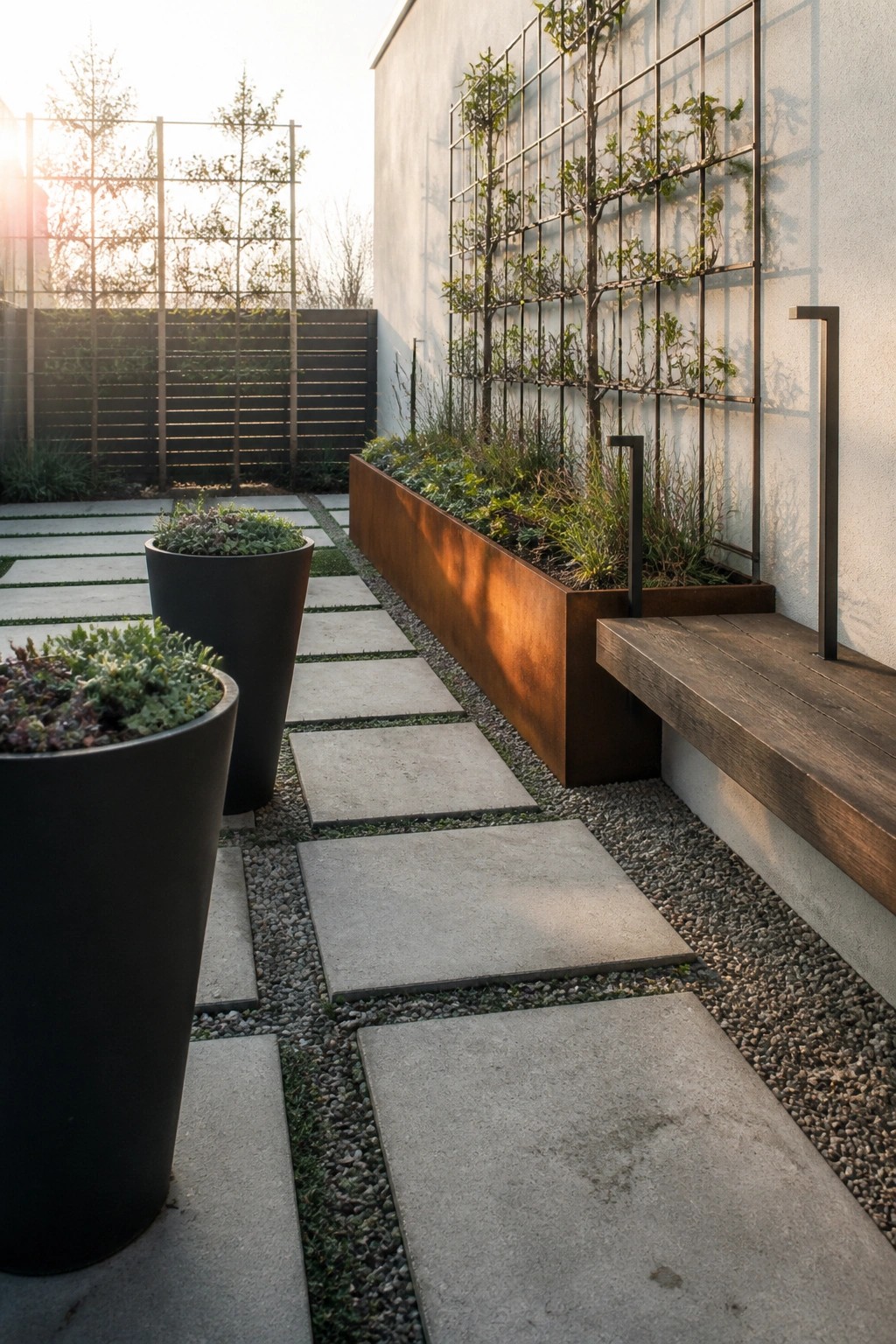
A long raised planter set against the side wall turns a narrow strip into something useful. It gives you room for plants while keeping the path clear and making the whole space feel more structured.
You can add a bench right to the front of the planter so the seat doubles as edging. This setup works best in tight side yards where you need both growing space and a place to sit without crowding the walkway.
An Archway Gives A Narrow Path Clear Structure
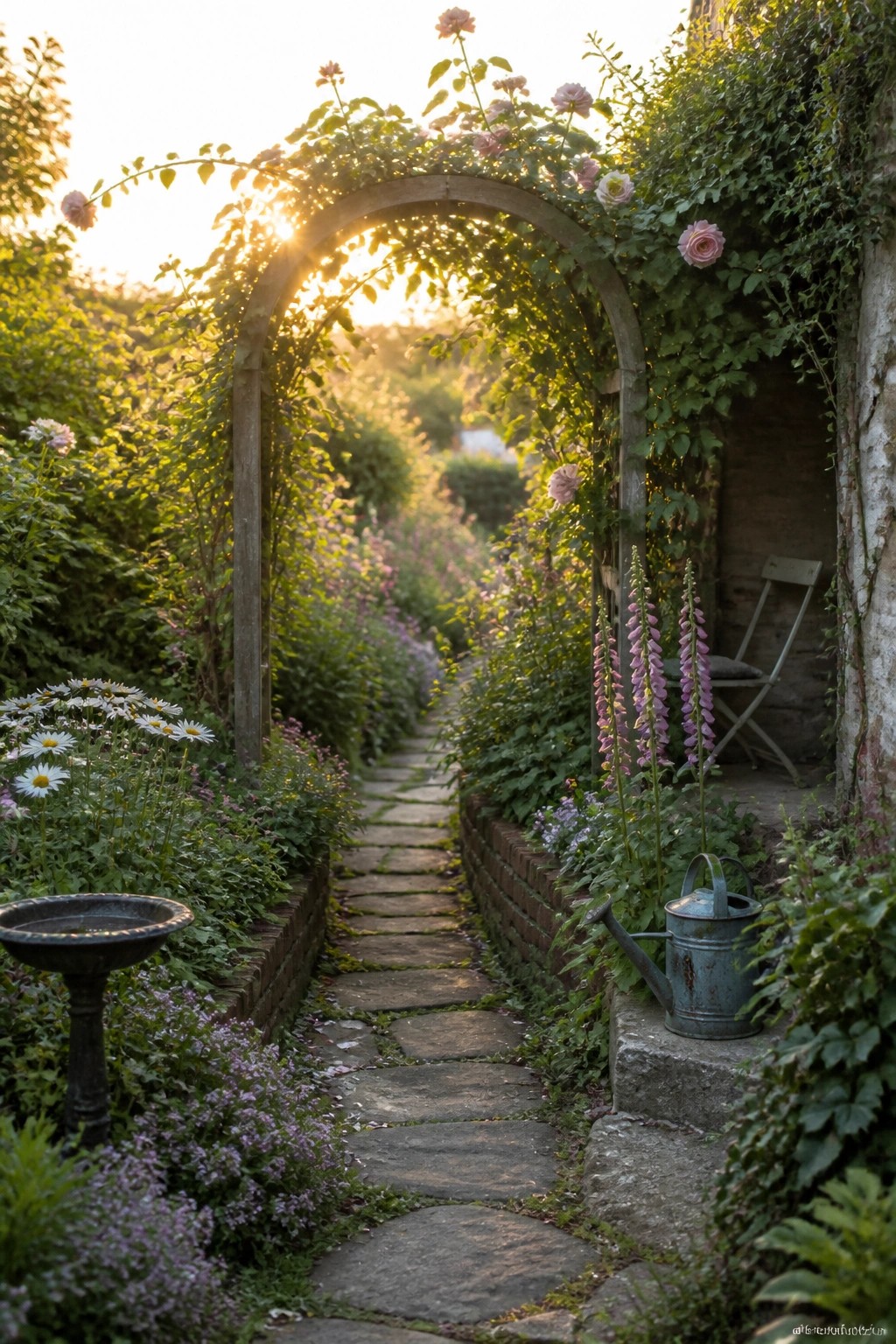
An arch over a path works well in a long narrow garden because it breaks up the straight line and gives the space a sense of order. The climbing plants soften the frame without crowding the walkway, and the path itself stays simple so it does not fight for attention.
This approach suits side yards that need to feel like a destination rather than just a route. Keep the arch modest in width, choose a material that matches nearby walls or fences, and let the planting grow over time so the structure feels settled rather than added on.
Stepping Stones Turn Narrow Side Yards Into Usable Paths
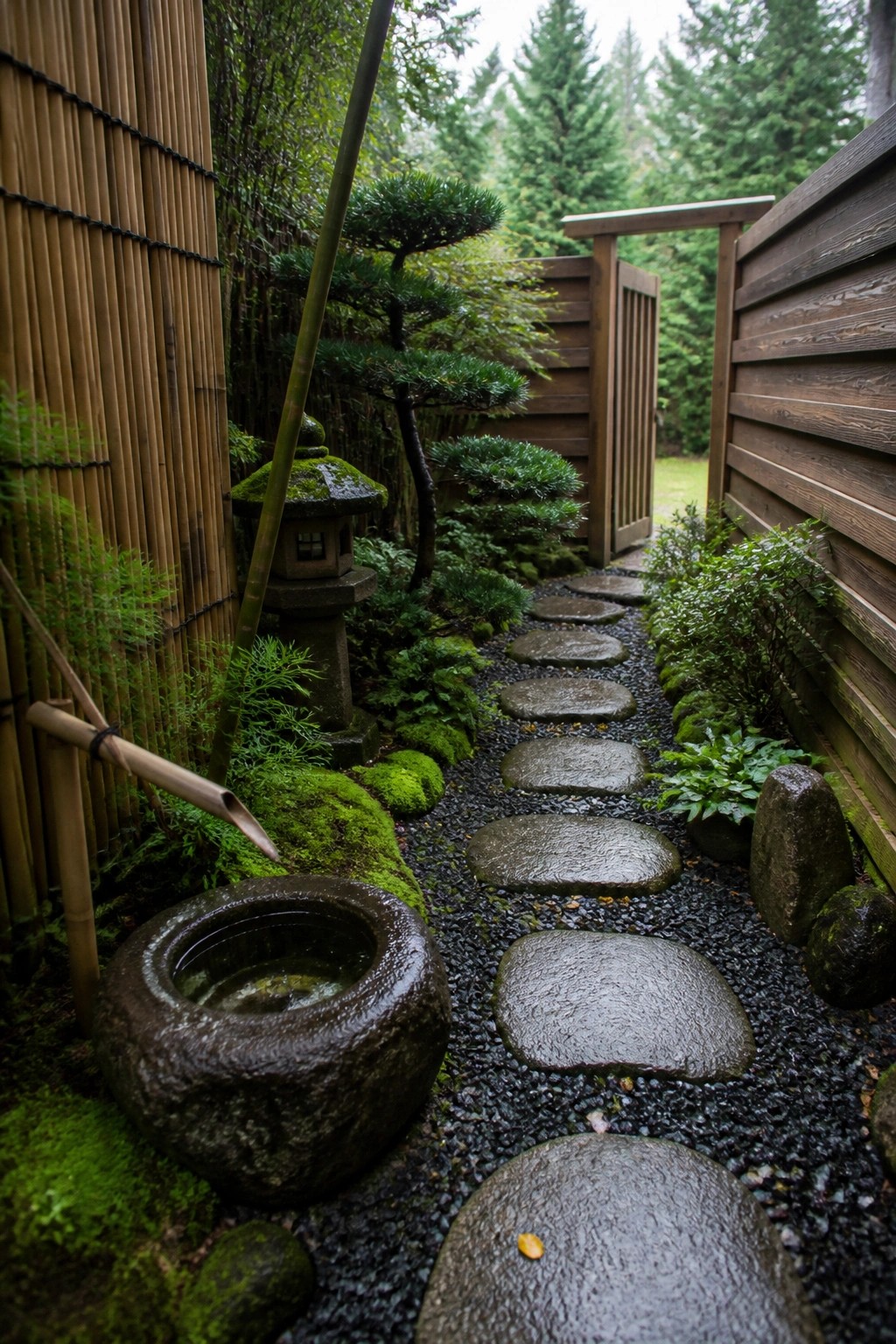
A line of stepping stones set into gravel gives a narrow side yard a clear route without taking up much width. It keeps the space open while still making it easy to walk through, which is often the main problem in these long thin areas.
This setup works well along the side of a house where you need regular access to the back. Use larger stones spaced for comfortable steps and fill the gaps with gravel so water drains and weeds have less room to grow. Keep plants low along the edges so the path stays the main focus.
Tiered Planters Add Growing Space In Narrow Yards
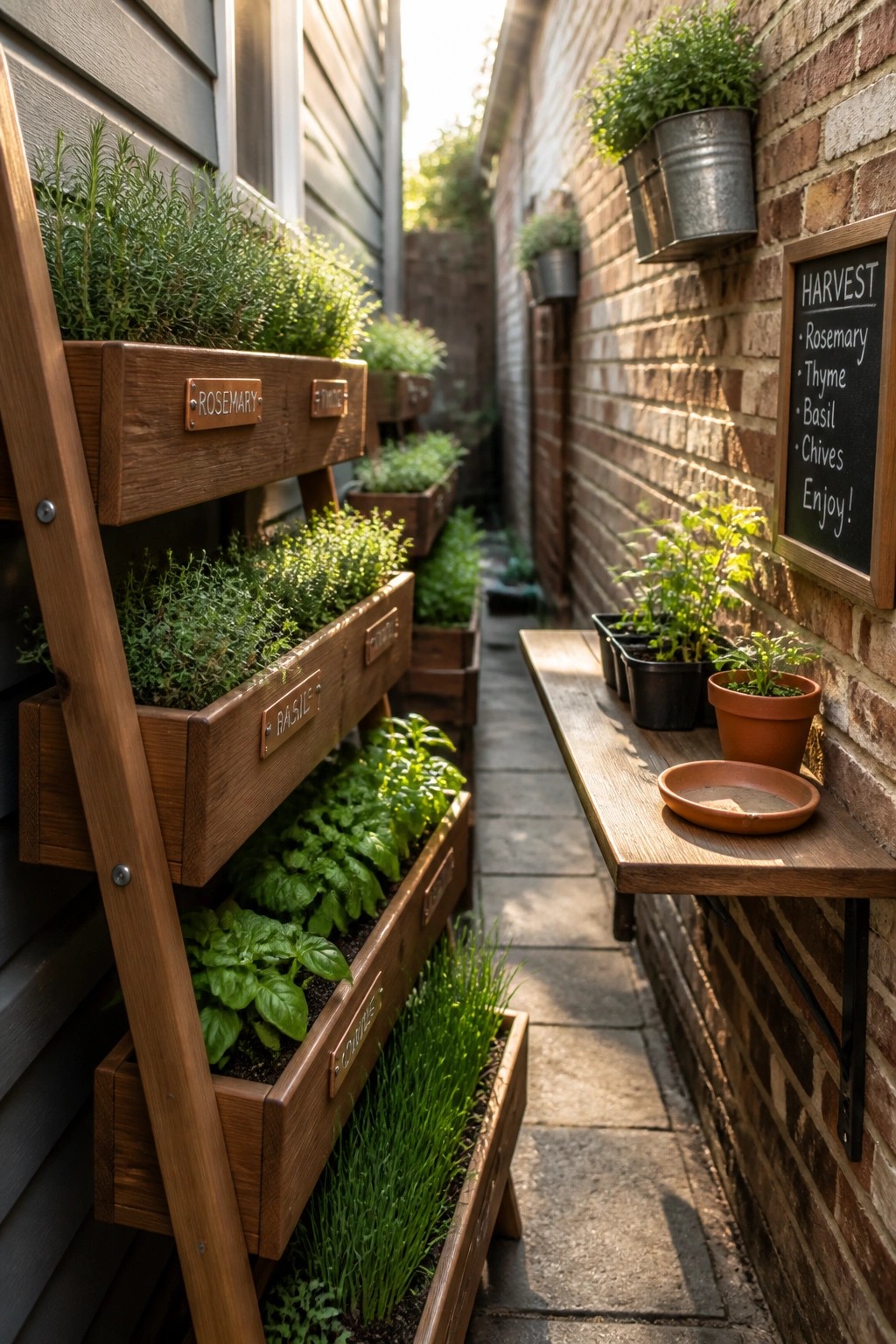
Many narrow side yards end up wasted because there is not enough room for regular garden beds. Tiered wooden planters solve that by stacking several levels of soil along one wall so you can grow herbs and greens without eating into the walkway.
This approach works best along the side of a house or fence where the space is long but tight. The boxes can be sized to fit the exact width available and planted with things that get regular use like rosemary or basil so the area stays practical instead of just decorative.
Stepping Stones Make Narrow Side Yards Easier to Use

Stepping stones give a long narrow garden a clear way through without crowding the space. They sit right in the soil or mulch and let plants grow right up to the edges, so the whole area still feels green instead of just a walkway.
This layout works best in side yards that get used for access or quiet seating. Space the stones so each step lands comfortably, and keep the surrounding plants low near the path so the route stays open. Wet stones can get slippery, so choose a slightly textured surface if rain is common where you live.
Add a Linear Water Feature
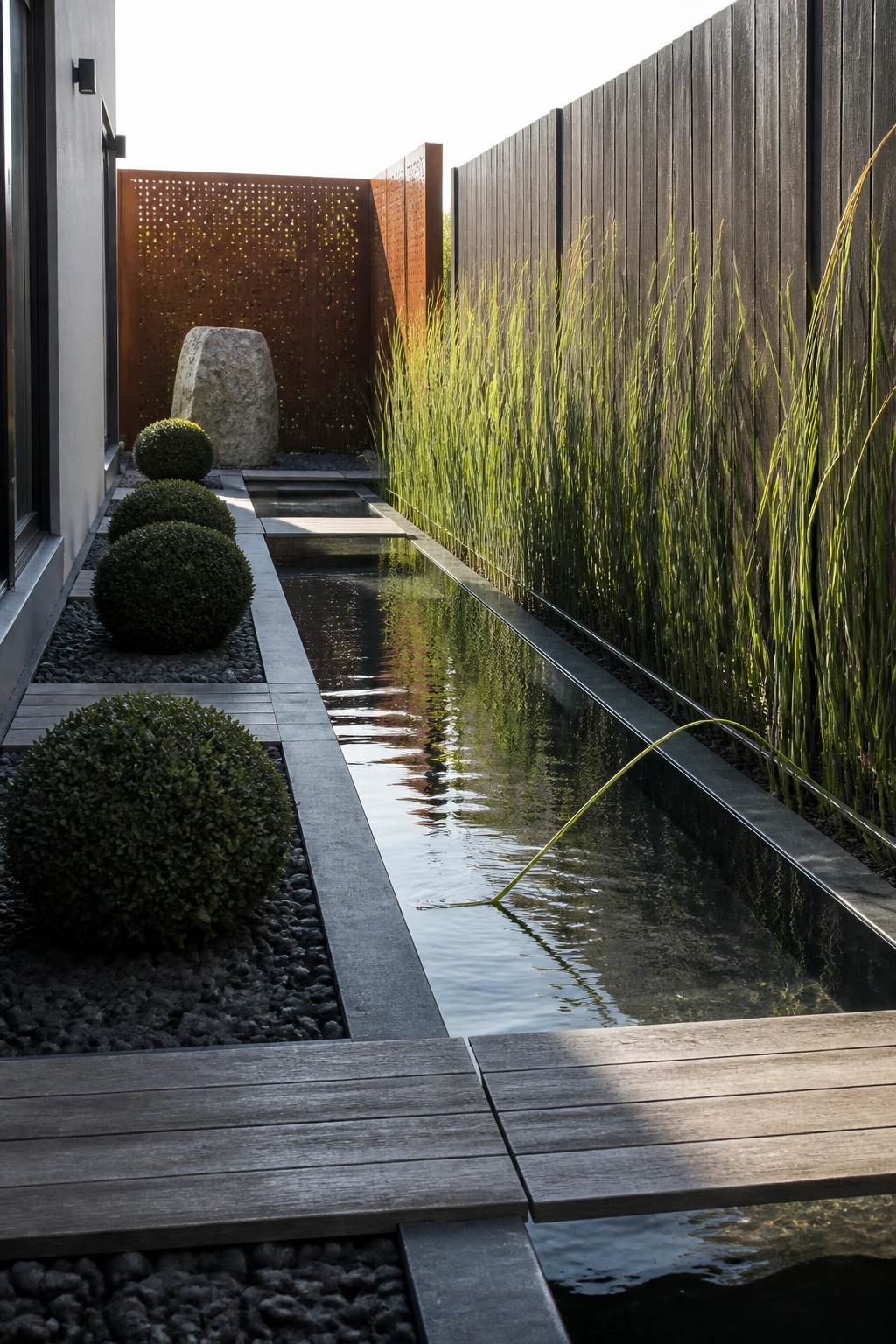
A straight water channel works especially well in a long narrow side yard. It creates movement and reflection without crowding the space, and it gives the eye something to follow from one end to the other.
Keep the edges simple with gravel, low shrubs, and a few taller grasses. This setup suits homes with tight side access where you want interest but still need room to walk through. The wooden decking at the end helps tie the water into a usable path.
Raised Beds Make Narrow Side Yards More Usable
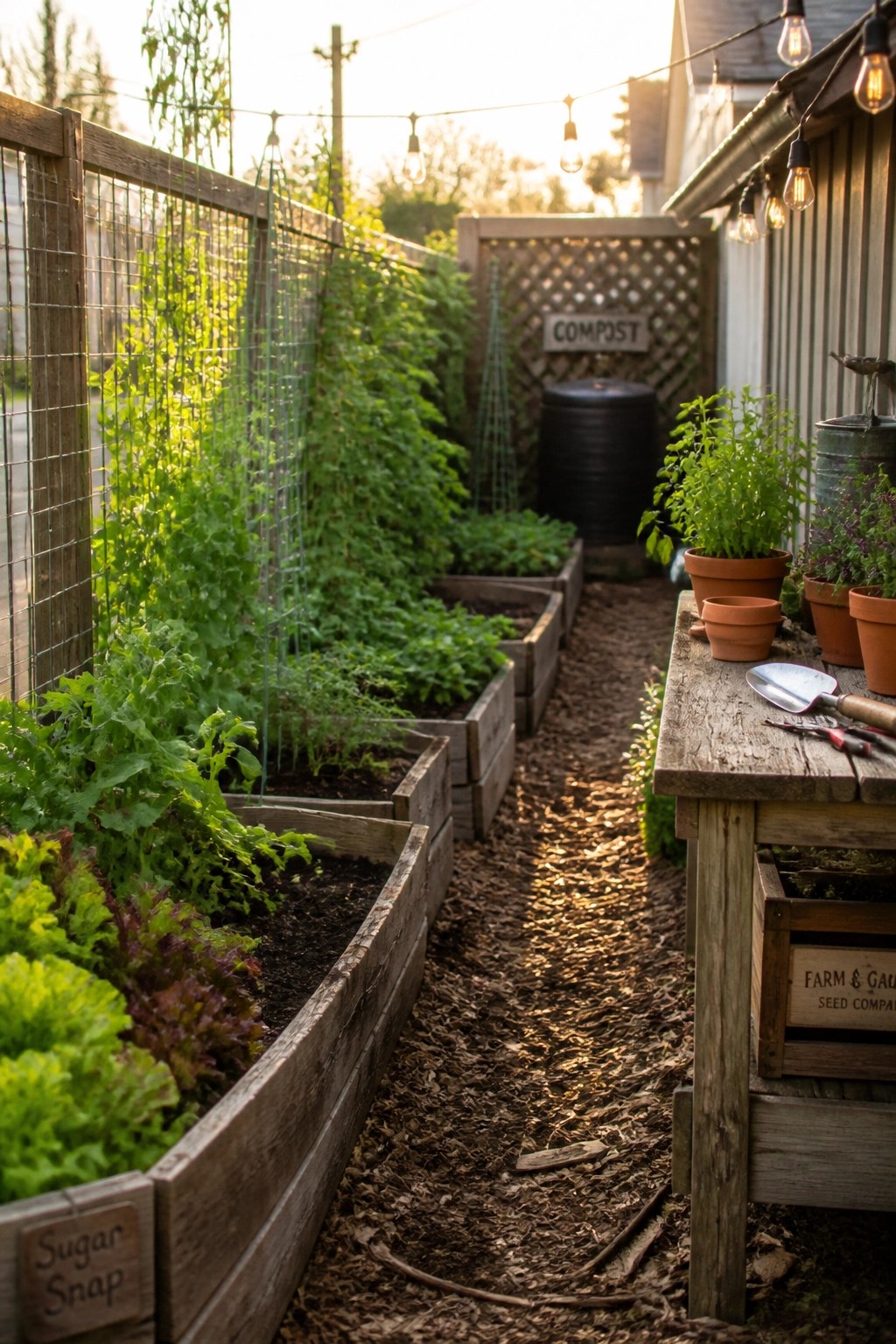
Raised beds turn a long, thin strip of ground into something you can actually garden in without fighting weeds or compacted soil. They also keep the path clear so you can walk through without stepping on plants.
This setup works best along the side of a house or fence where space is limited. Build them from wood or another simple material, keep the path between them wide enough for a wheelbarrow, and plant what you actually want to harvest or enjoy.
Edge The Path With A Low Stone Wall
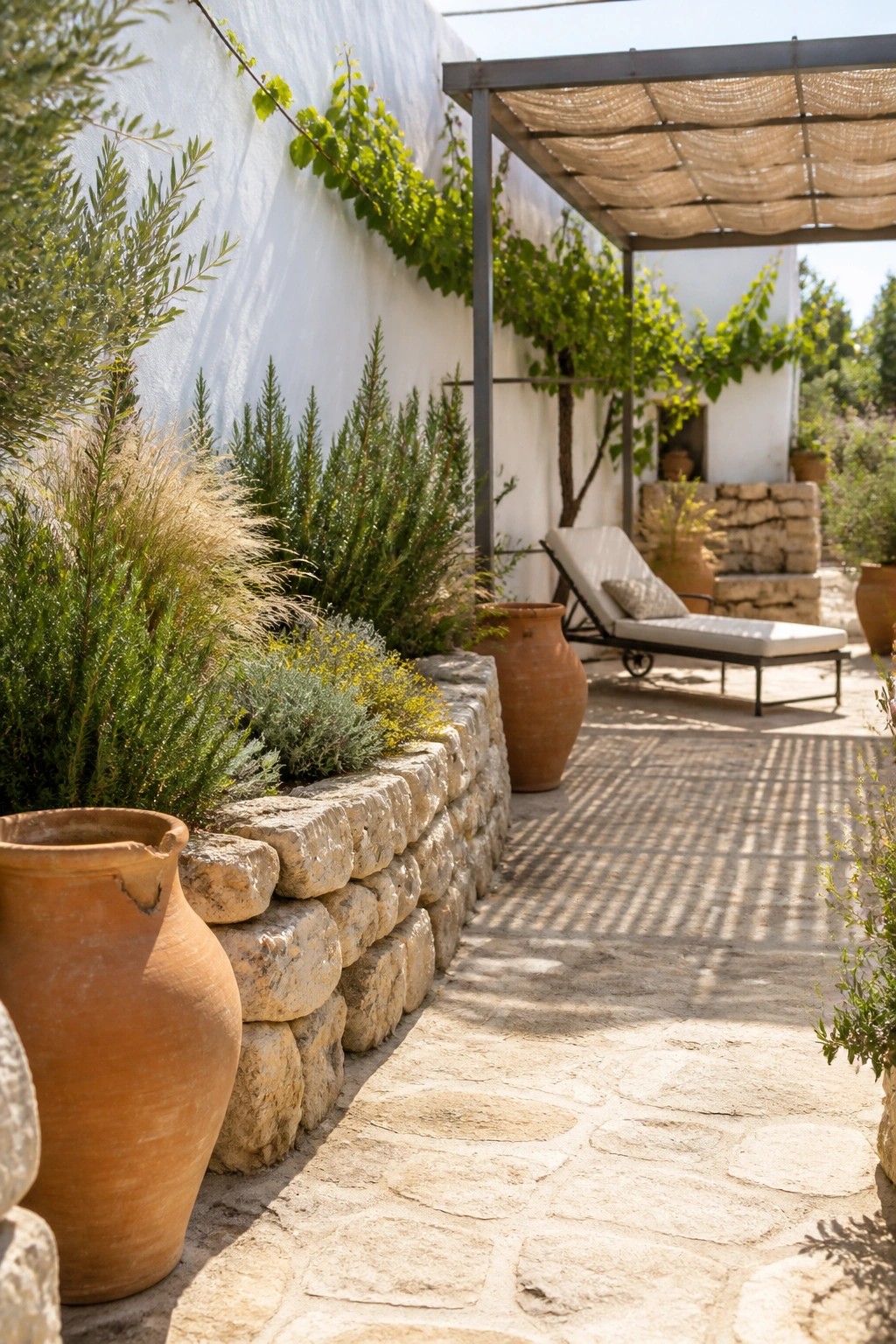
A low stone wall gives a narrow side garden a clear boundary without eating up much space. It holds the soil and plants in place so the walkway stays open and easy to use.
This approach works well when the yard runs long and thin. Keep the wall low and simple, then add a few large pots along the top or base for extra planting room without crowding the path.
Lay A Stone Path Between Raised Beds

A narrow side yard often feels like wasted space until you add a clear path. Stone pavers set in gravel give steady footing and break up the length so the area does not feel like a tunnel. Raised beds along one side keep soil contained and make planting easier without crowding the walkway.
This setup works best on homes with a long blank wall next to a fence. Keep the beds at a comfortable height for weeding and use simple vertical supports for vines so they climb instead of sprawl. The result is a garden that feels organized rather than squeezed.
Vertical Gardens Help Narrow Side Yards Feel Fuller

Vertical gardens work especially well in tight side yards because they add plenty of greenery without eating into the limited ground space. The plants climb up wall-mounted panels and boxes, turning plain fences or house walls into living surfaces that make the whole area look softer and more inviting.
This approach suits homes with long, skinny passages where a regular garden bed would feel cramped. Keep the path clear and use sturdy planters that can handle weather so the setup stays low-maintenance over time.
Repeat Matching Pots Along a Narrow Path

A long narrow side yard often ends up as a forgotten strip, but repeating the same large pots down both sides turns it into a clear walkway. The consistent shape and color keep the eye moving forward without crowding the space.
This approach works best on homes with straight side access and a simple planting style. Use pots in the same material so the line feels calm, and leave just enough room for a bench or two where the path widens slightly.
Stepping Stone Paths Open Up Narrow Side Yards
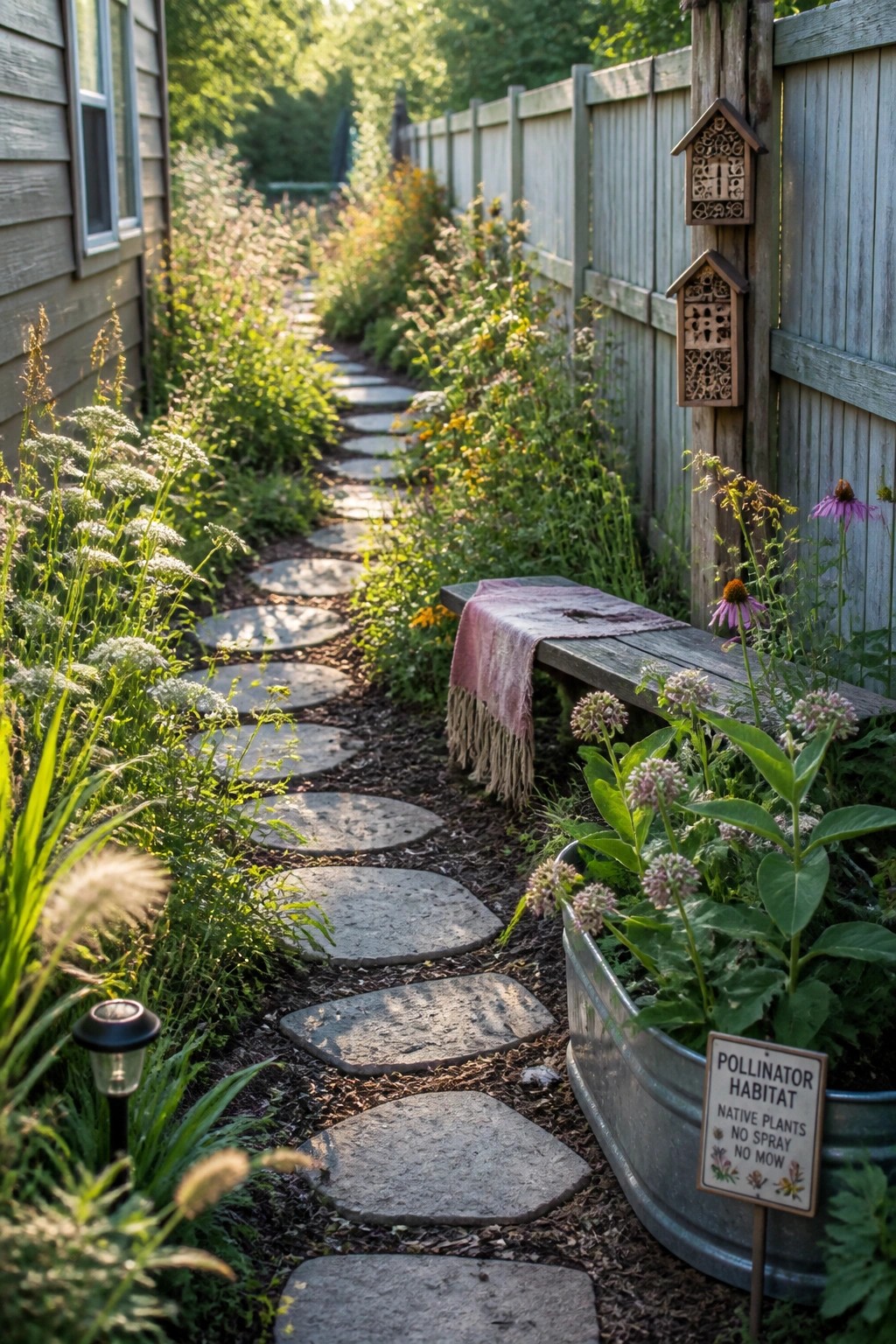
A path made of stepping stones gives a long, narrow side yard a clear route without crowding the space. It breaks up the length and keeps the ground easy to walk on even when the beds are full of plants. The stones also let you add layers of greenery right up to the edges without blocking the way.
This works best in side yards that connect the front and back of the house. Space the stones a comfortable stride apart and let the planting spill in around them. Keep the beds simple so the path stays the main feature instead of competing with too many separate elements.
Add A Lap Pool Down The Length Of The Yard

A long narrow pool works well in a side yard because it uses the full length of the space without needing much width. The deck running right beside it gives you a place to walk and sit, and the screen on the far side keeps things private without closing the area in completely.
This setup suits homes with a long strip of yard next to the house. Keep the pool simple and make sure the deck material can handle water and sun. The main thing to watch is drainage so the deck stays dry and safe to use.
Stone Paths Help Narrow Yards Feel More Usable

A stone path gives structure to a long, tight side yard that might otherwise feel like wasted space. It turns the area into a clear walkway instead of a strip of plants that people just walk around.
This works best on homes where the side yard runs between the house and a fence or wall. Keep the stones irregular in size and set them in gravel so water drains well. Add low plants along the edges if you want softness without crowding the path.
Add A Straight Line Of Stepping Stones
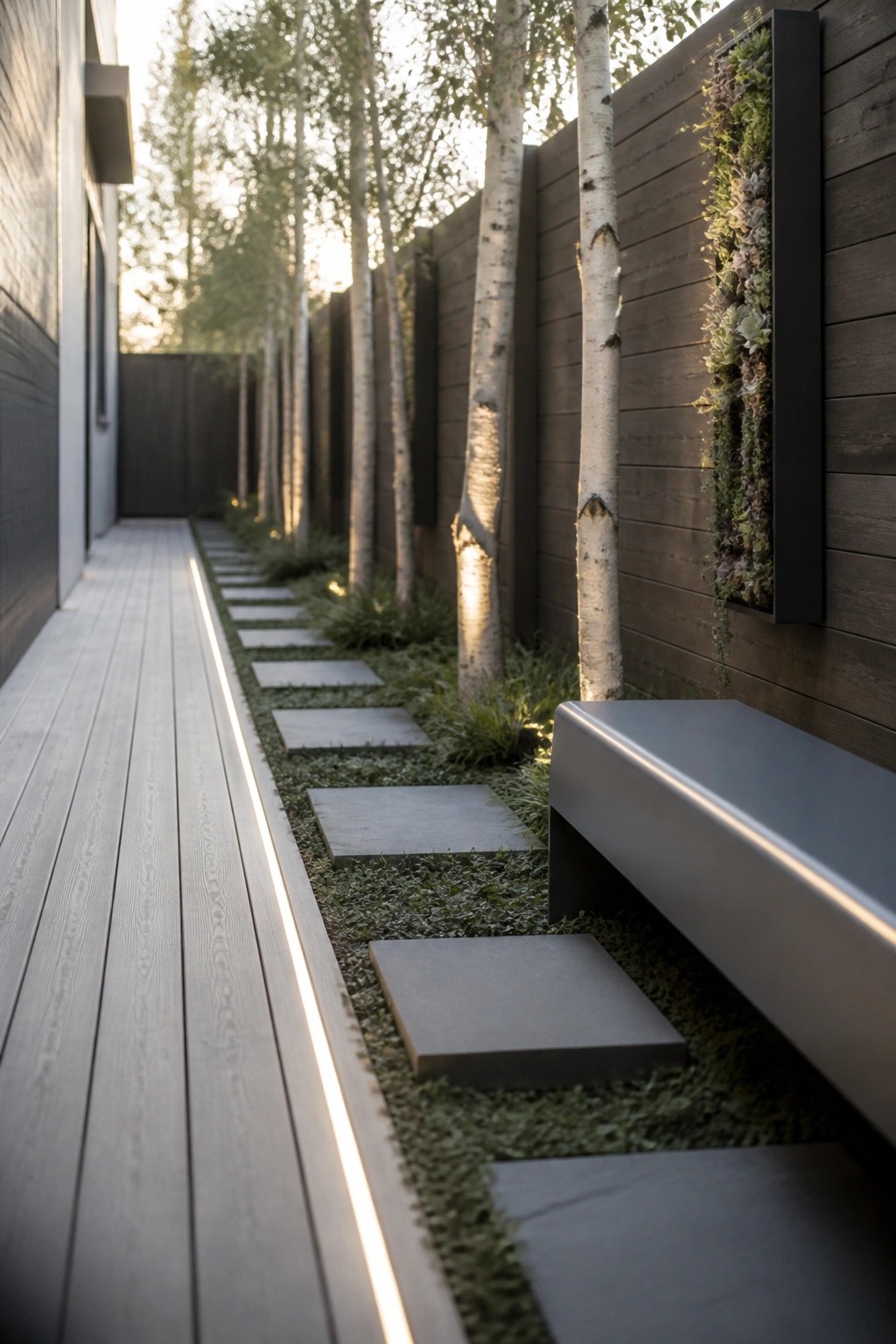
A simple row of stepping stones works well in a narrow side yard because it gives the space a clear purpose without taking up much room. The stones keep the path defined while the grass or ground cover fills in around them, so the whole area feels organized instead of just leftover space between the house and the fence.
This layout suits long, tight yards where you need a walkway but do not want a full patio. Space the stones evenly and keep them low so they do not interrupt the view down the length of the yard. You can run them alongside a deck or fence to make the most of every inch.
Use a Fire Pit to Make the Yard More Usable
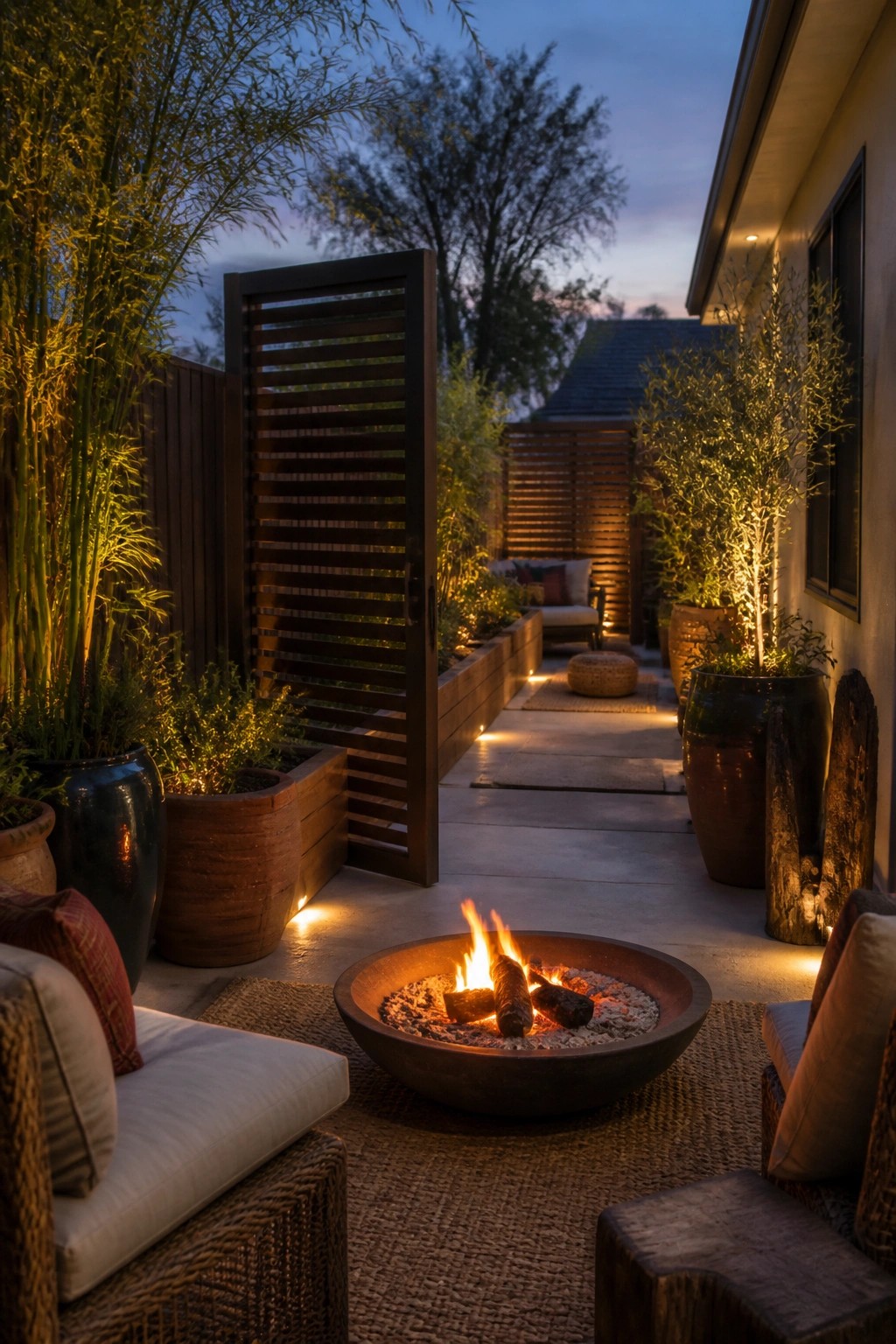
A fire pit gives a narrow side yard a clear purpose. It creates a spot where people actually want to sit, even in a space that might otherwise feel like a passageway.
Place it on a small paved section with a rug underneath and a couple of seats around the edges. This works especially well if you add some screening on the sides for privacy and keep the surrounding plants simple.
Create a Path With Stepping Stones

A stepping stone path gives a narrow side yard a clear route without crowding the space. It turns an awkward strip into a walkable area that feels intentional rather than leftover.
Set the stones in a slightly irregular line and leave room for moss or low ground cover between them. This approach suits homes with trees or fences along the side and keeps maintenance low.
Gabion Walls With Seating Work Well In Narrow Yards
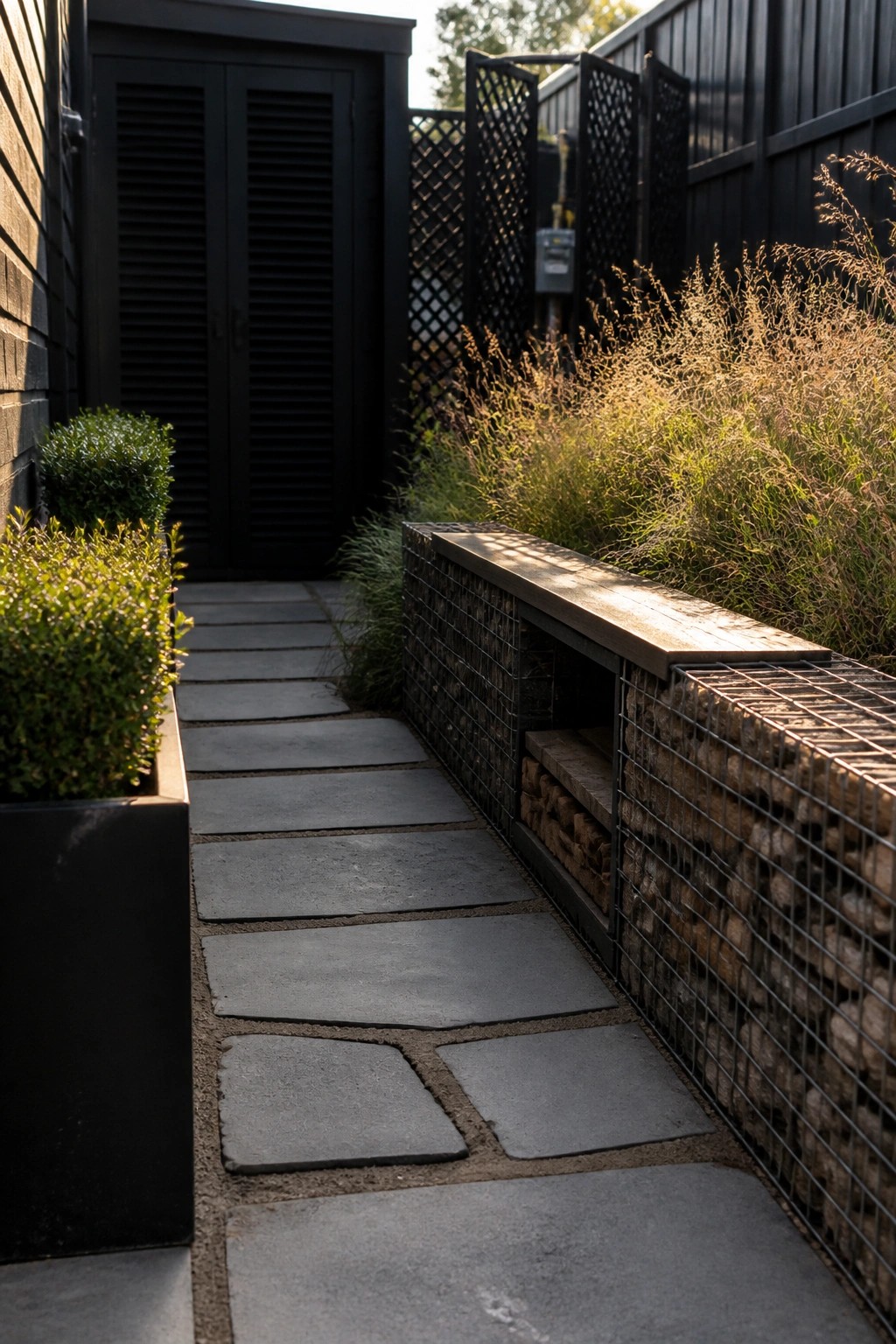
A gabion wall topped with a simple wood cap gives you a sturdy edge and a place to sit without eating into the width of the path. The wire cages hold stone in place while the flat top turns the structure into a bench that feels built in rather than added on.
This approach suits long side yards where space is tight and you still want something useful along the route. Keep the wall height low so it does not block light, and choose a path material that matches the stones inside the cages for a quiet, consistent look.
Frequently Asked Questions
Q: My side yard stays shady most of the day. Which plants will thrive without much sun?
A: Ferns and hostas grow well in low light. Place them along the fence to add soft layers without competing for the little sun that reaches the ground. Water them more often since house overhangs dry out the soil faster.
Q: How can I stop the garden from looking cluttered with so many ideas in one long space?
A: Repeat two or three plant types in sections instead of switching everything up. This keeps the view moving forward as you walk the length. Change only the ground texture or edging at the halfway point for a simple shift.
Q: Will adding a path take up too much room in an already narrow yard?
A: Stepping stones set right into the soil leave more room for planting than a solid walkway. Space them for natural steps and let low ground cover grow between. You gain access while the beds stay full on both sides.
Q: What about drainage when the side yard slopes?
A: Angle the soil in each bed so water moves away from the house. A small gravel pocket at the low end catches extra flow and keeps the rest of the garden from washing out.
