

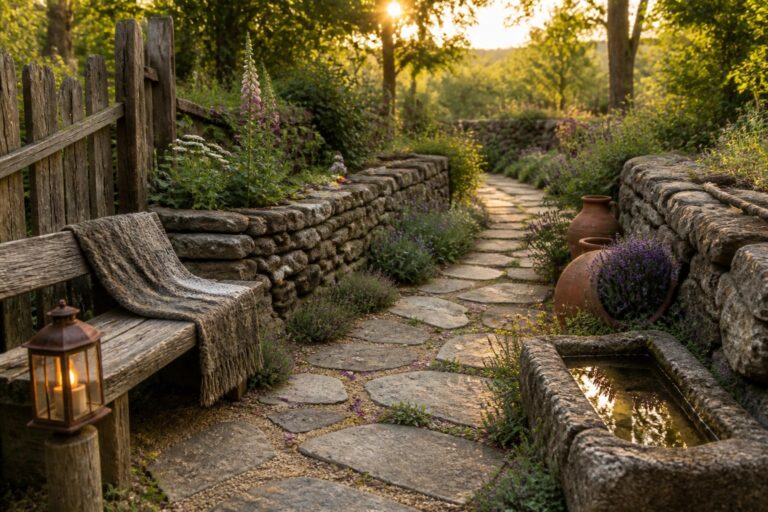
I have found that gardens start to feel right only after the stone paths and wood borders settle into the ground and the plants begin to knit everything together.
When I lay out a new bed I always check how the edges will guide daily movement rather than just how they look on paper.
Some layouts work better once plants fill in.
Weathered wood needs room to age without fighting against neat borders or it quickly starts to look out of place.
I usually try one small combination of local stone and loose planting near the back fence first to see how it holds up through a full year.
Stone Paths With Low Walls
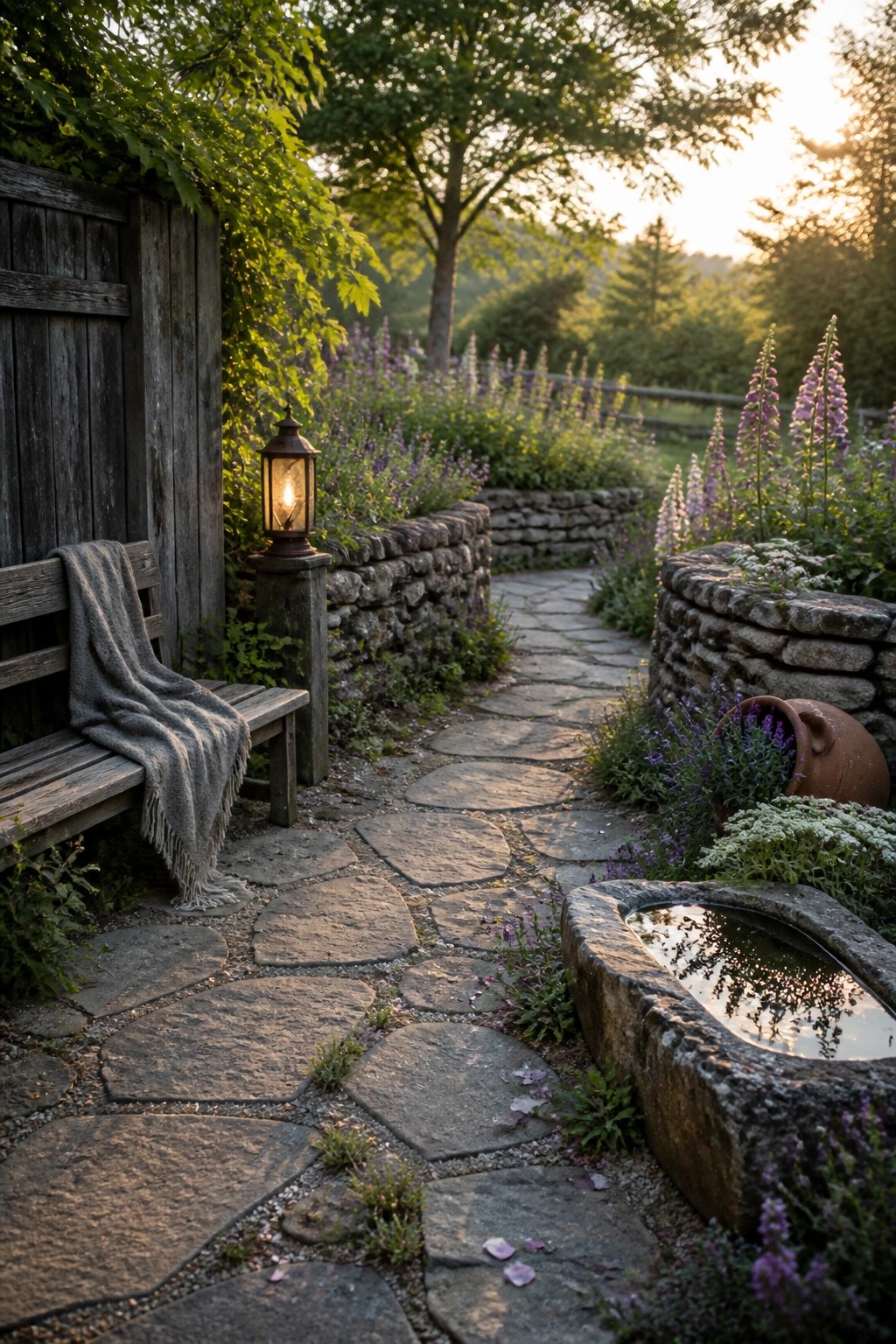
Natural stone paths feel more settled when they sit low to the ground and follow the shape of the land instead of cutting straight lines. Low walls made from the same stone help hold the edges without making the path look too built or formal.
This approach works best on sites that already have some slope or uneven ground. Keep the planting loose along the sides so the stones read as part of the garden rather than a separate feature.
A Wooden Gate Set In A Stone Wall
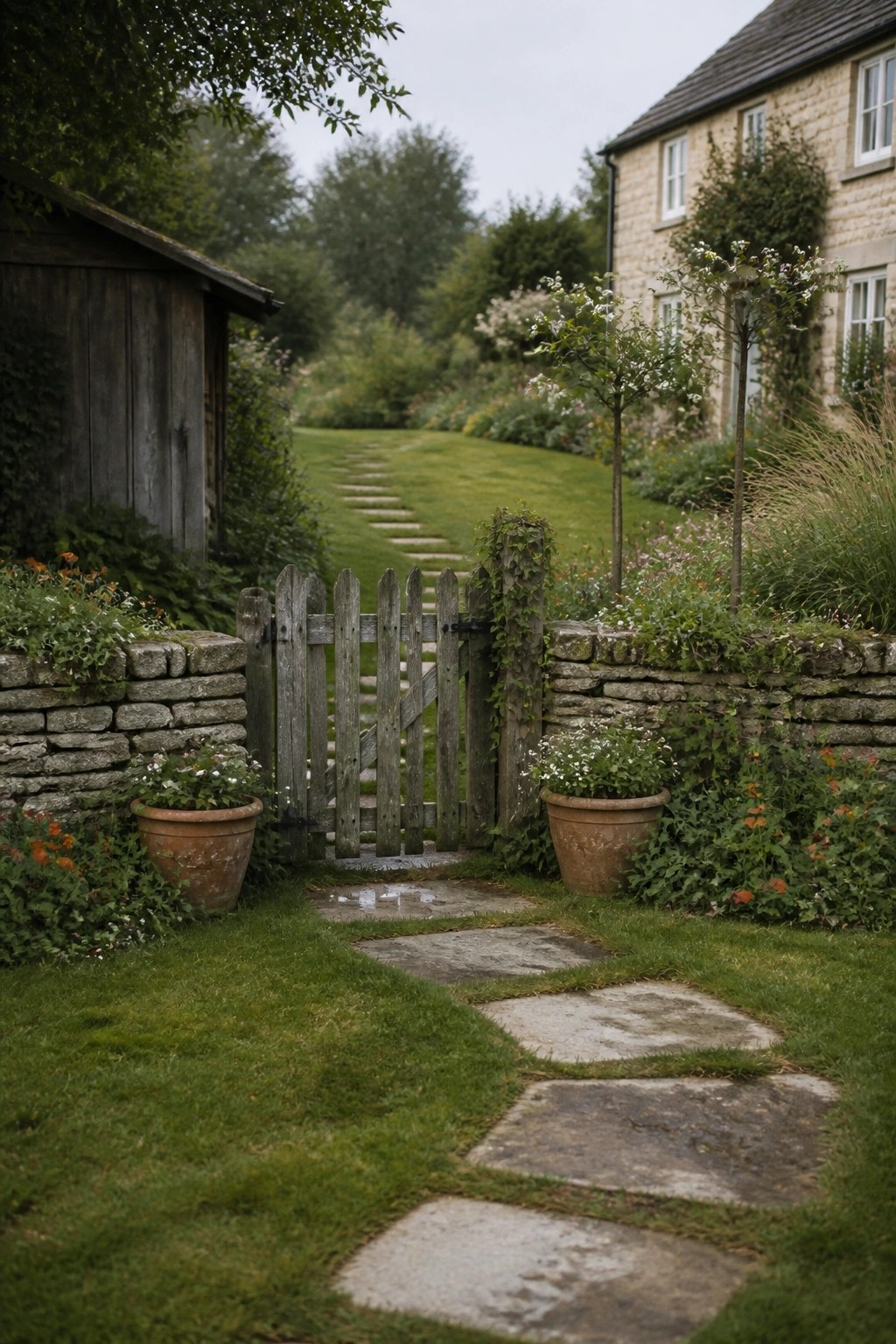
A wooden gate works well when it sits right in a low stone wall. The weathered boards give a soft break in the hard stone line, and the whole entrance feels like it belongs to the garden instead of sitting on top of it.
This idea suits older cottages or any place where you want the path to feel like a continuation of the house rather than a separate feature. Keep the wood untreated so it ages with the stone, and let a few plants spill over the wall on either side.
Pergola Shade Over A Stone Patio
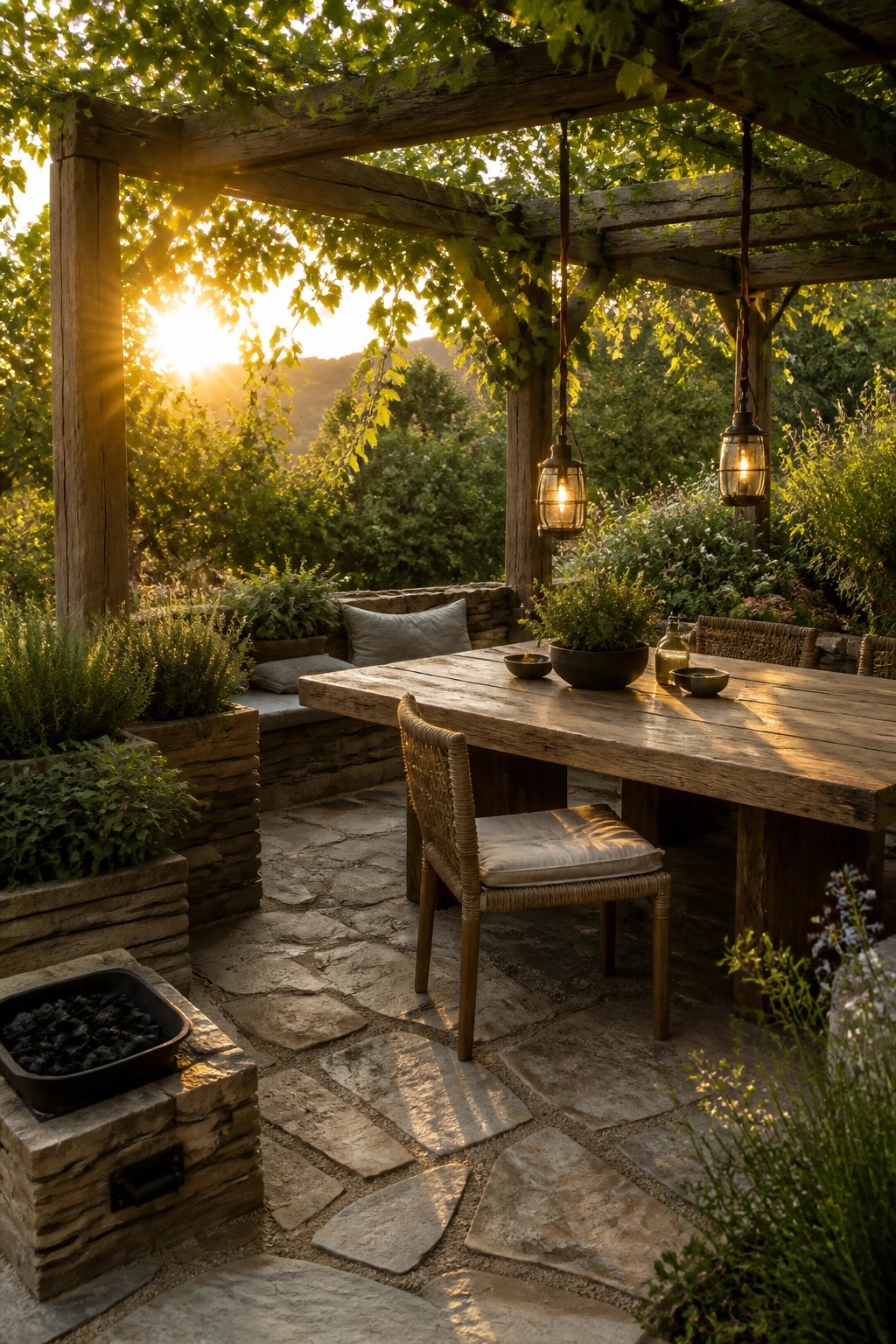
A pergola made of weathered wood gives an outdoor dining spot a clear sense of place while still letting light and air move through. The stone paving underneath keeps the area grounded and ties it to the garden beds nearby.
This setup works well on a slightly sloped yard or a flat terrace where you want room for a table and chairs without building full walls. Use simple posts and cross beams so the wood can silver over time, and let nearby plants grow a bit wild to soften the edges.
Defining A Fire Pit With A Low Stone Wall
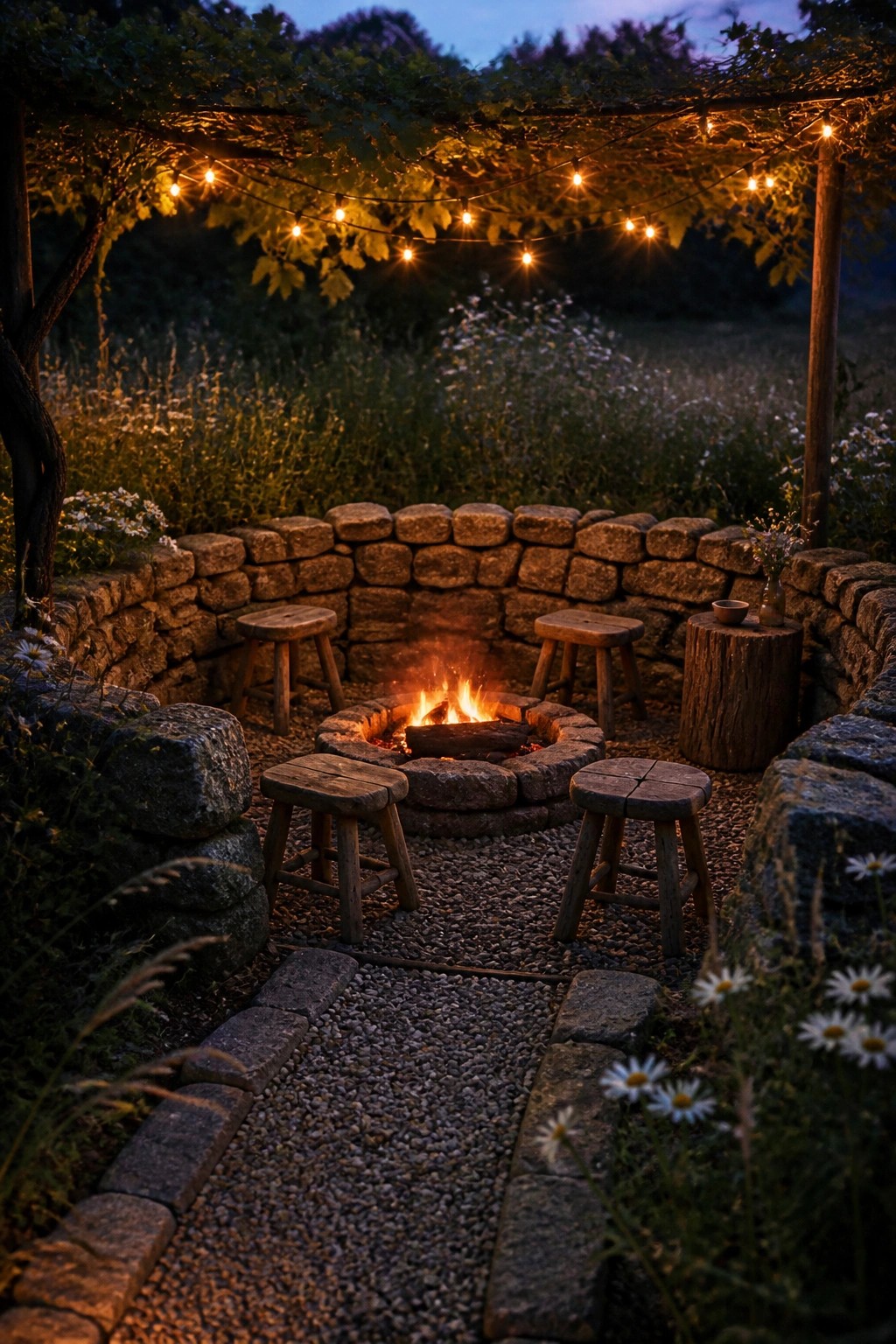
A low stone wall around a fire pit gives the space a clear edge while still keeping it open to the garden. The rough stone feels at home with wild planting, and the simple wooden stools keep the seating practical and unforced.
This works best in a larger yard where you want a gathering spot that does not compete with the surrounding landscape. Use local stone if you can, and let the flowers and grasses grow right up to the outside of the wall so the whole area blends in.
Stone Circles That Shape A Gravel Path
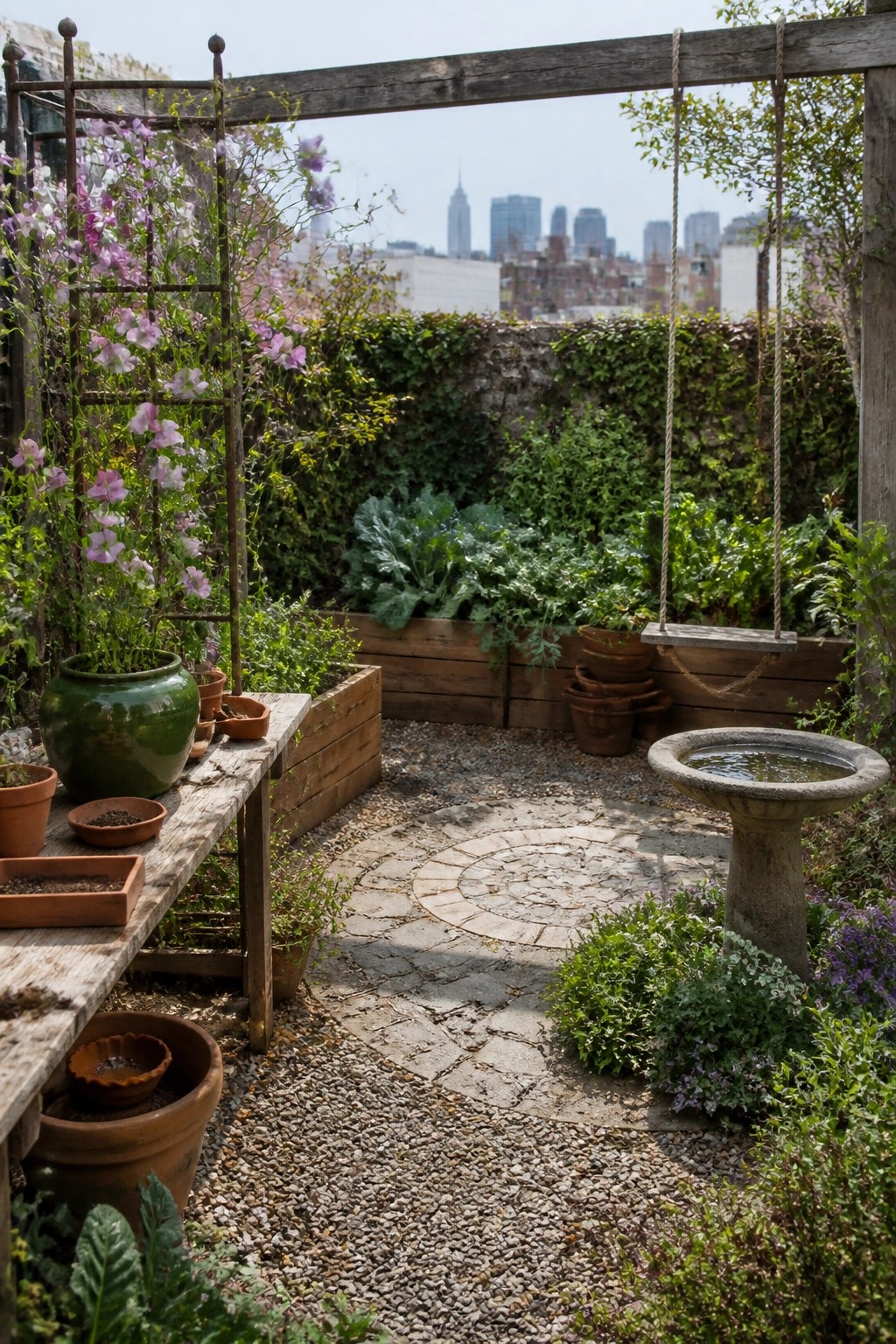
A circular stone pattern set right into the gravel gives the garden a clear center without making the space feel boxed in. It breaks up the loose surface in a way that feels natural and still keeps the whole area easy to walk across. Many people like this because it adds a bit of structure while letting the planting stay loose around the edges.
This layout works especially well in smaller yards or city gardens where you need the path to do more than just connect two points. Keep the stone simple, match the gravel tone if you can, and let raised beds or pots sit along the sides so the circle stays the main feature.
Natural Stone Edging With Wild Planting
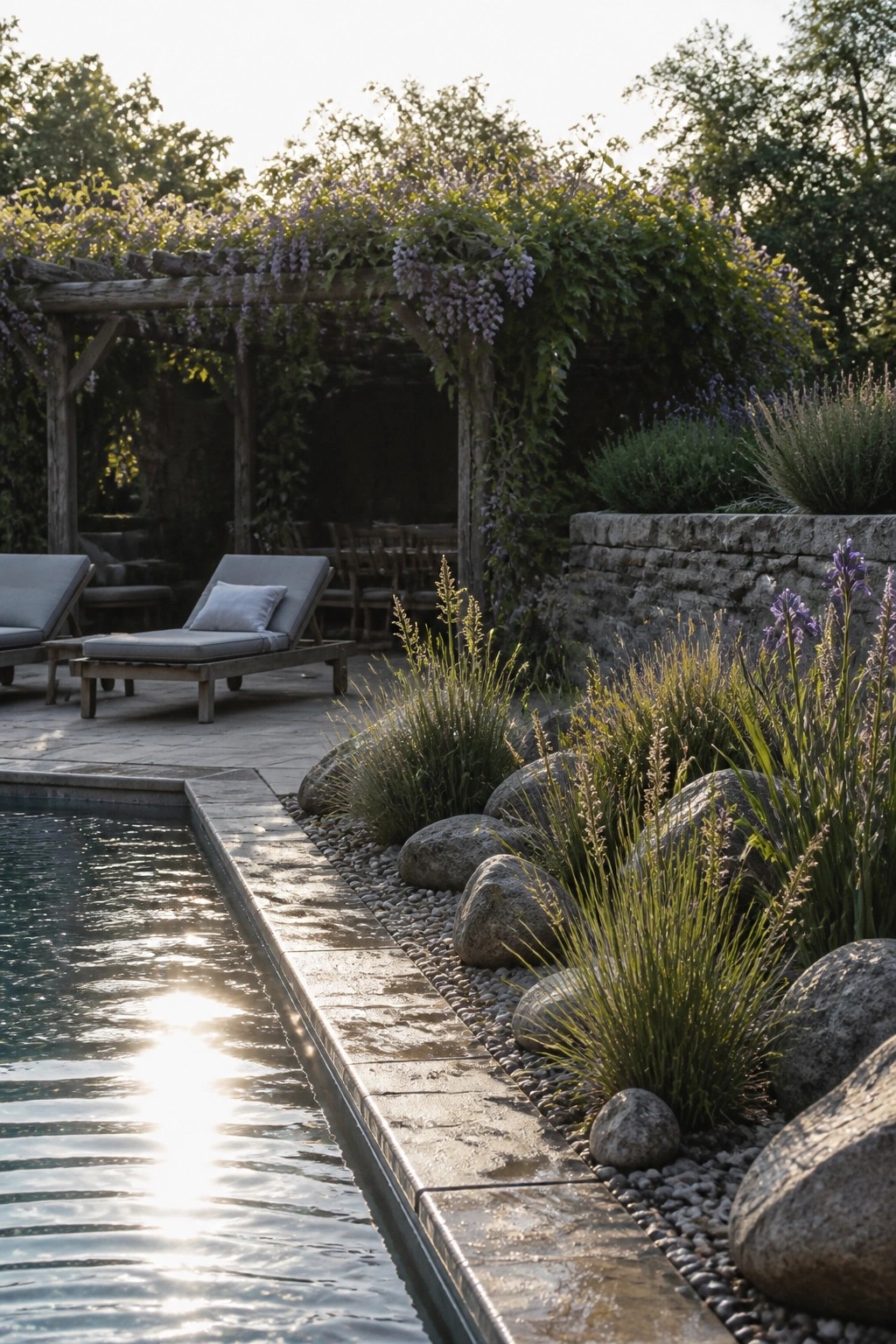
Large stones and gravel make a simple way to soften the edge of a pool without making it look too neat. The boulders sit low and let the plants grow right up against them, so the whole border feels like part of the garden instead of a hard line.
This approach suits homes that already have a rustic or relaxed style. Set the biggest rocks first, add a layer of gravel, then fill in with grasses and flowers that can tumble over the stones. It stays low maintenance and ages well as the planting fills out.
Stone Paths With Loose Planting
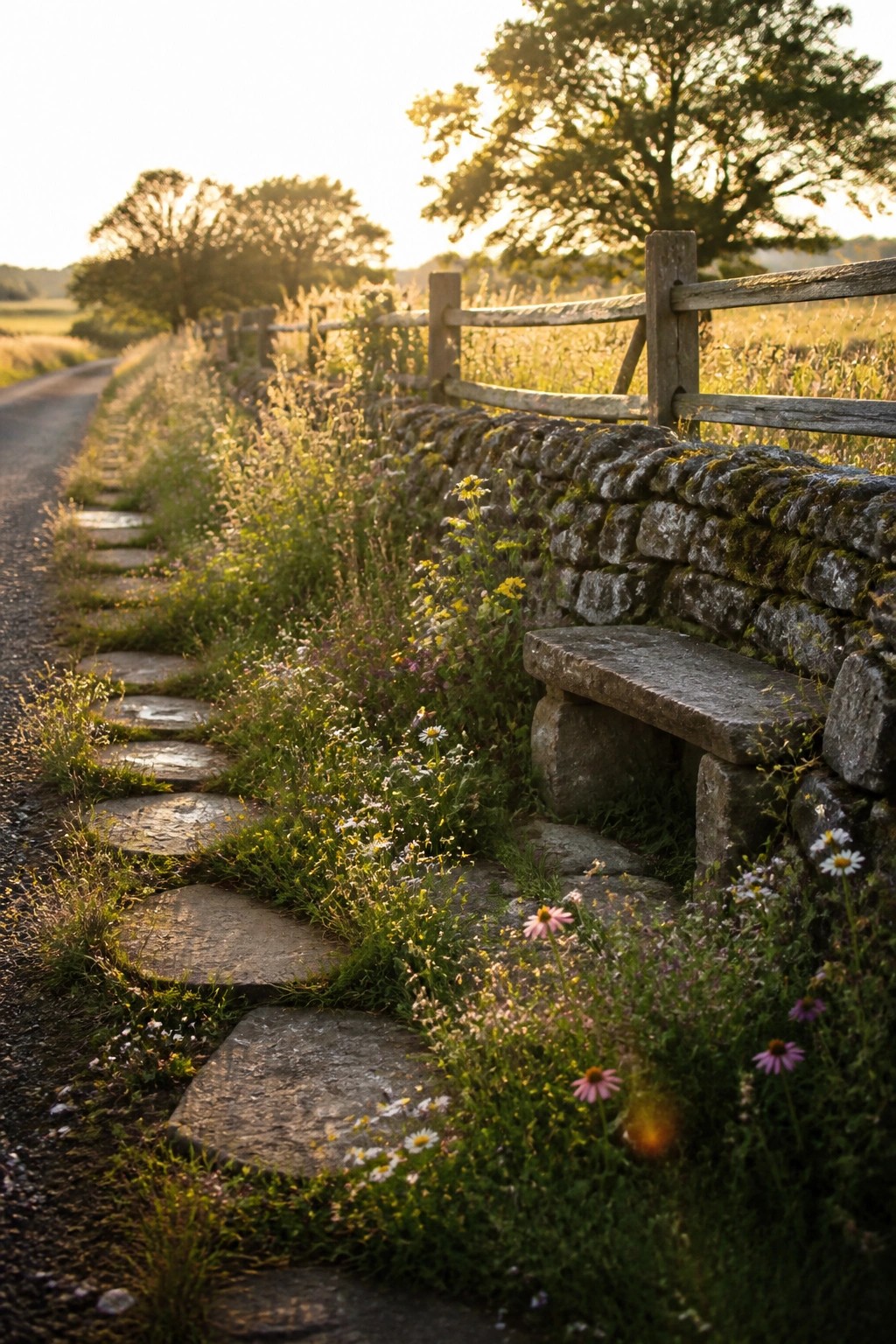
A path made from flat, irregular stones works well when you let the planting grow right up to the edges. The wildflowers and grasses soften the hard surface and keep the whole thing from looking too planned.
This setup suits older properties or gardens that already have stone walls. Use whatever plants self-seed in your area, keep the path wide enough for easy walking, and resist the urge to tidy it up too much.
Raised Beds Made From Weathered Wood
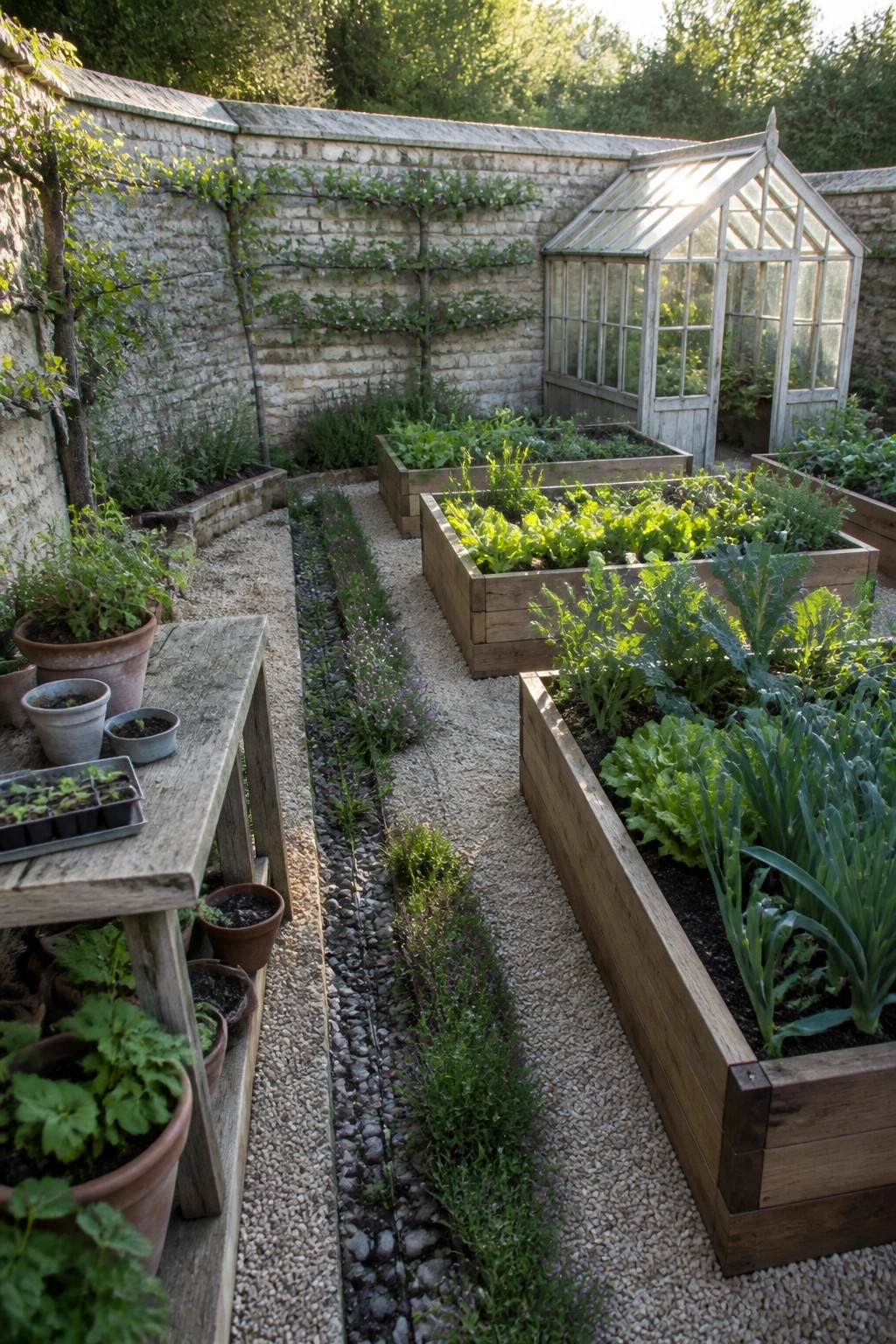
Raised beds built from weathered wood give a garden clear lines without making it feel too formal. They keep the soil contained and make it easier to reach the plants without bending over too much.
This setup works well against a stone wall or in a smaller space where you want some order. The gravel paths between the beds help with drainage and keep the whole area low maintenance.
Natural Stone Steps With A Wood Handrail
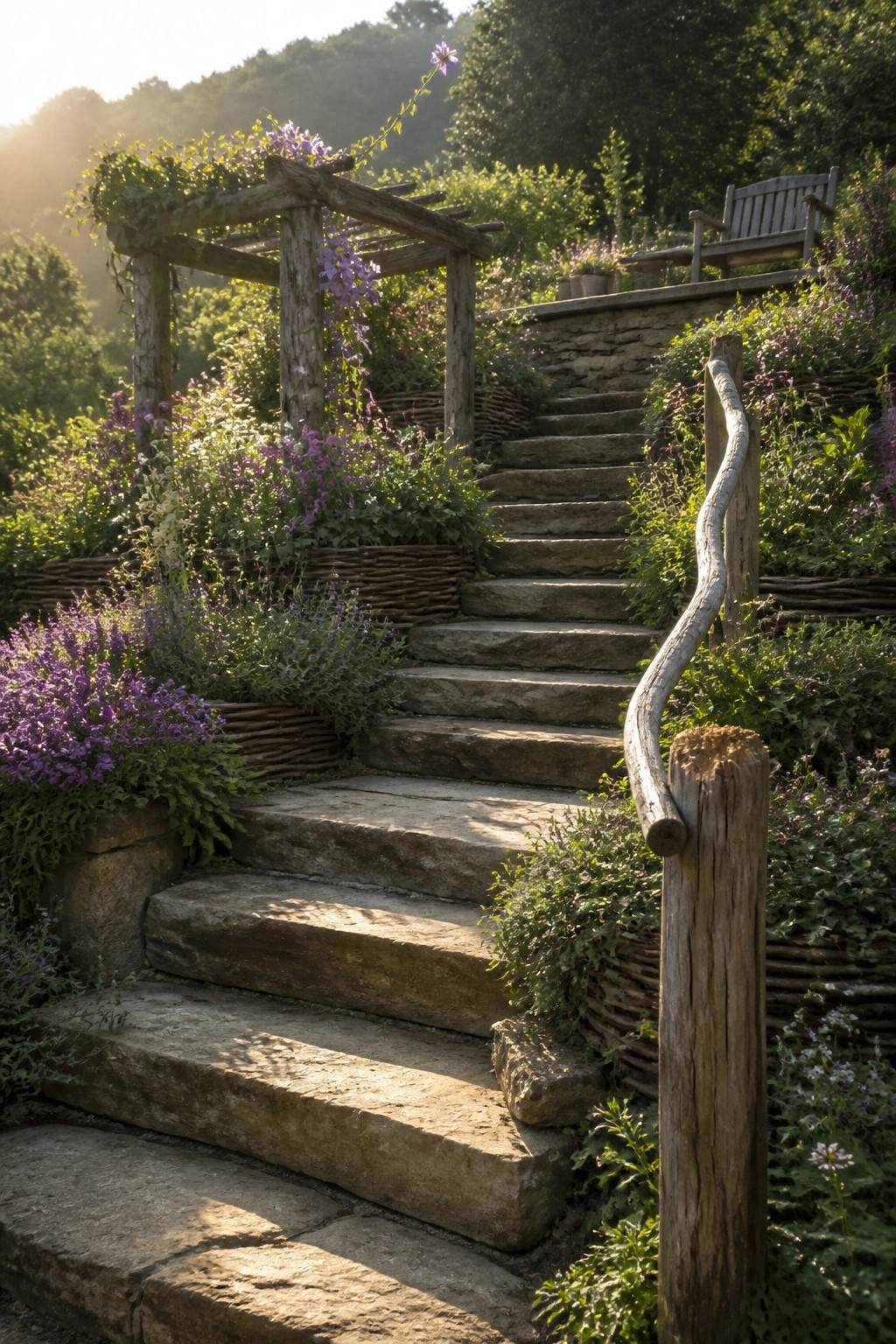
Stone steps work well on slopes because they stay put and give solid footing even after rain. The rough surface and uneven edges keep the look simple and tied to the ground instead of trying to hide the change in level.
A single weathered wood rail adds just enough support without turning the path into a formal feature. This approach suits smaller gardens or side yards where you want the planting to stay the main focus. Keep the rail low and let the flowers grow close so the steps feel like part of the beds rather than a separate walkway.
Mossy Stone Paths For A Natural Walkway
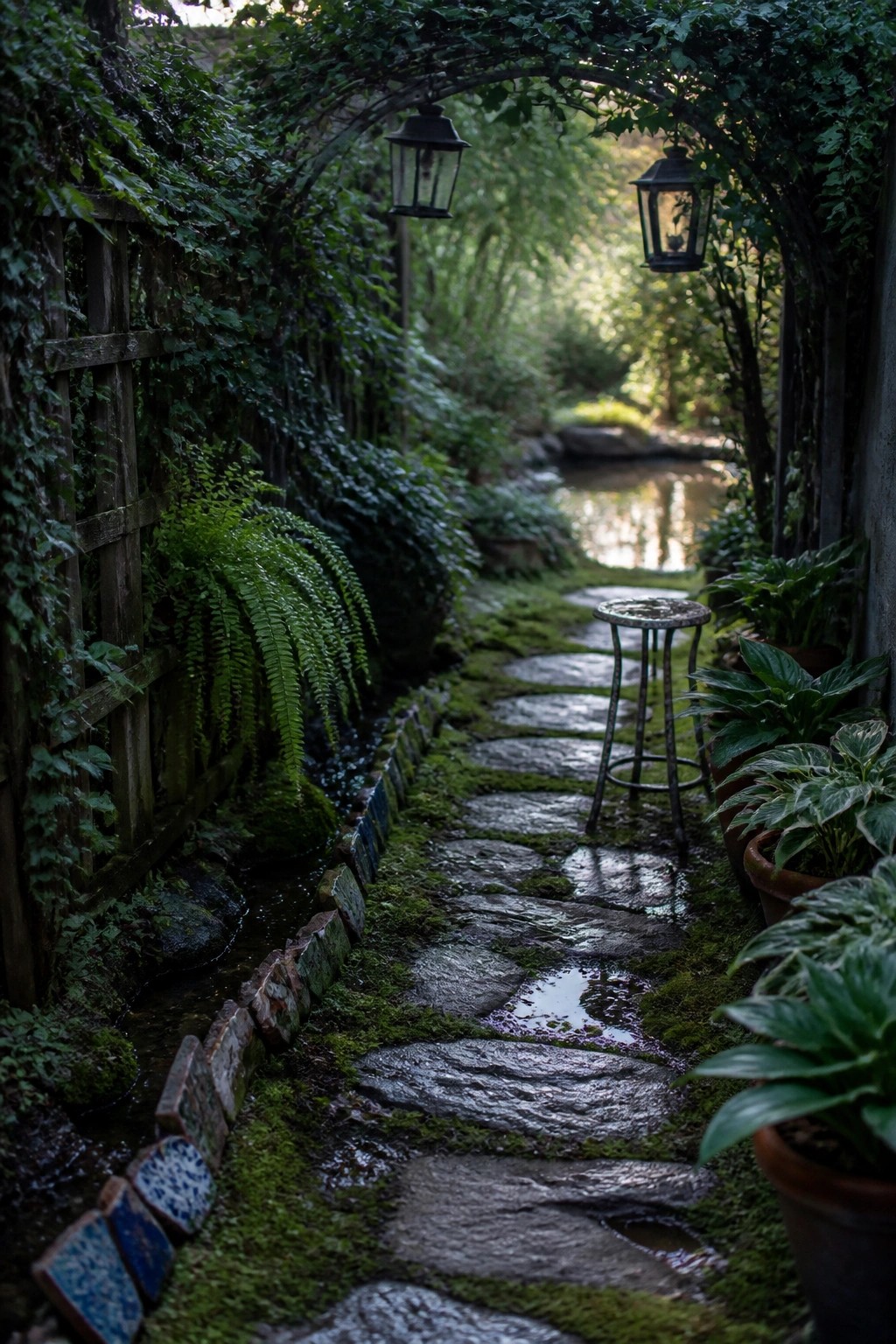
A path made of irregular stones set into thick moss gives a garden a settled, lived-in look without much effort. The moss softens the edges, fills the gaps, and keeps the stones from feeling too formal or placed.
This kind of path works best in shaded areas where moss can thrive. Keep the stones slightly uneven and let the path curve gently rather than running in a straight line. A simple water edge beside it adds sound and movement, but the moss and stone alone already create the main effect.
Natural Stone Garden Paths
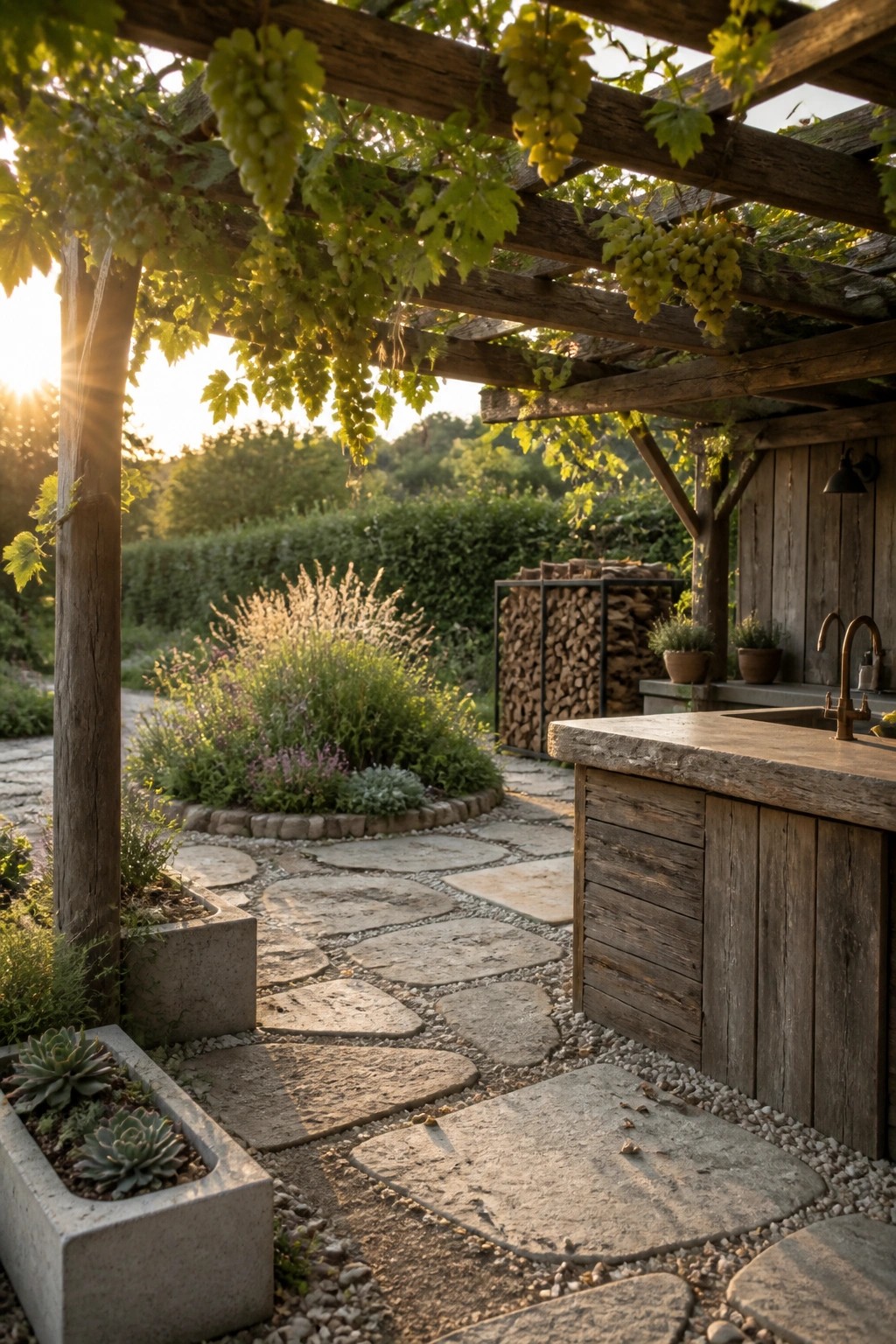
Natural stone paths give a garden that settled, lived-in feel without trying too hard. The irregular slabs sit low in gravel so the whole walkway blends into the beds instead of cutting across them like a hard line. It works especially well when the planting is loose and a bit wild, which softens the edges and keeps the stone from looking too deliberate.
This approach suits older homes or larger yards where you want the garden to feel connected rather than divided into rooms. Lay the stones with enough space between them for a few low plants to creep in, and make sure the base is solid so the path stays level over time. The wood elements around it, like a simple pergola or bench, help tie everything together without adding extra fuss.
Using Low Stone Walls For Garden Edges
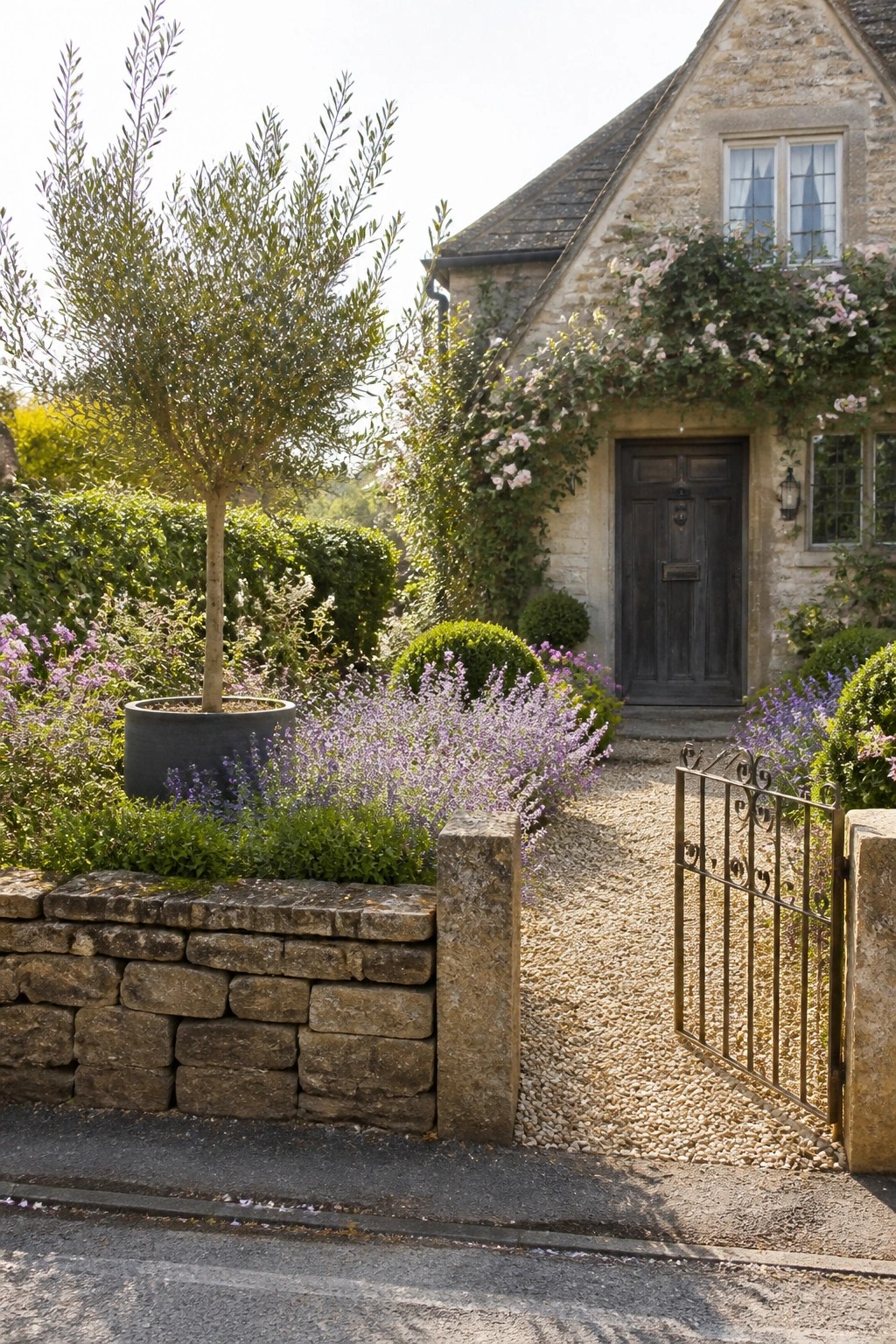
Low stone walls give a garden a clear shape without making it feel stiff. They hold the beds in place while letting plants grow a little loose over the edges, which fits the rustic look the article is after.
This works best along the front of a property or beside a path where you need a simple border that lasts. Match the stone to any existing walls or the house itself, and keep the height modest so the planting stays the main focus.
Use a Stone Wall for Built-In Seating
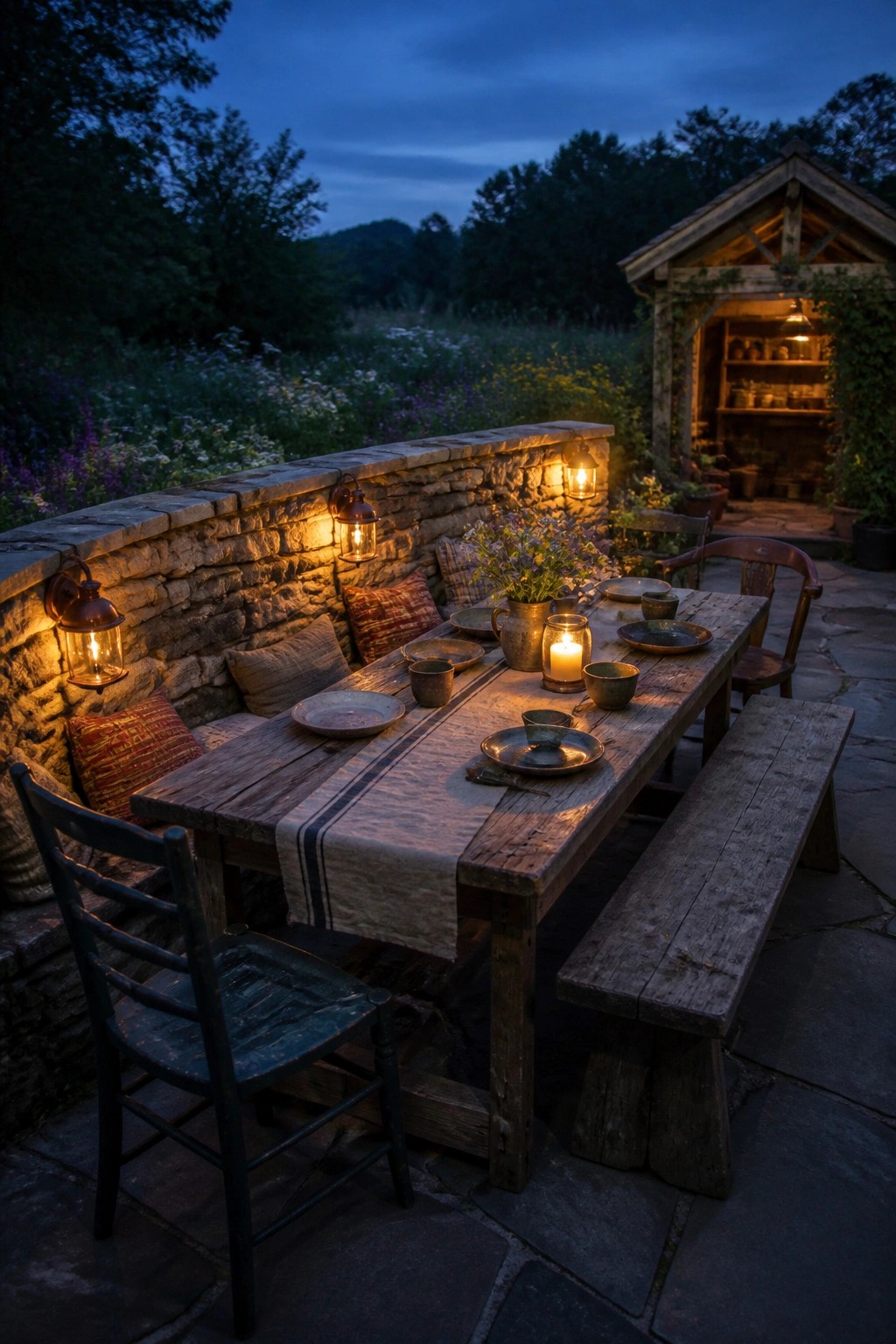
Running a bench right up against a low stone wall gives an outdoor dining area a settled, permanent feel. The wall acts as a natural backrest, and adding a few cushions turns it into comfortable seating without needing extra furniture.
This setup works best on a patio or terrace that already has some hardscaping in place. It suits older homes or gardens where you want the dining space to blend into the surroundings rather than stand out as a separate structure.
Weathered Wood Furniture on Stone Terraces
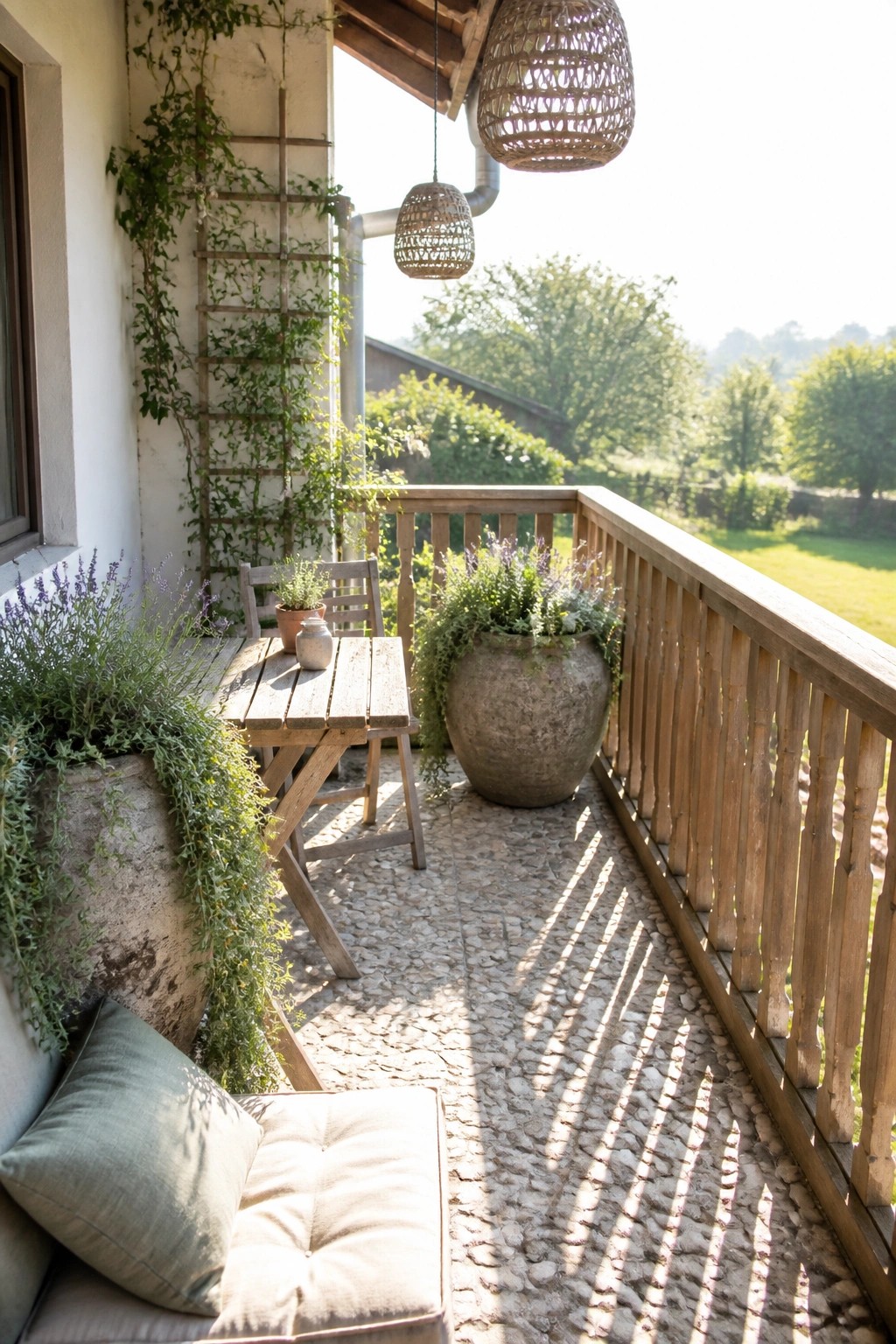
A small wooden table and chairs can turn a simple stone-paved balcony into a usable spot without much fuss. The worn finish of the wood pairs naturally with the rough texture of the stone, and the whole setup feels at home next to loose planting in big pots.
This works best on balconies or terraces that already have stone underfoot. Keep the furniture light and movable so you can shift it around as needed, and let the plants spill over the edges rather than trying to line everything up neatly.
Gravel Paths With Natural Stone Borders
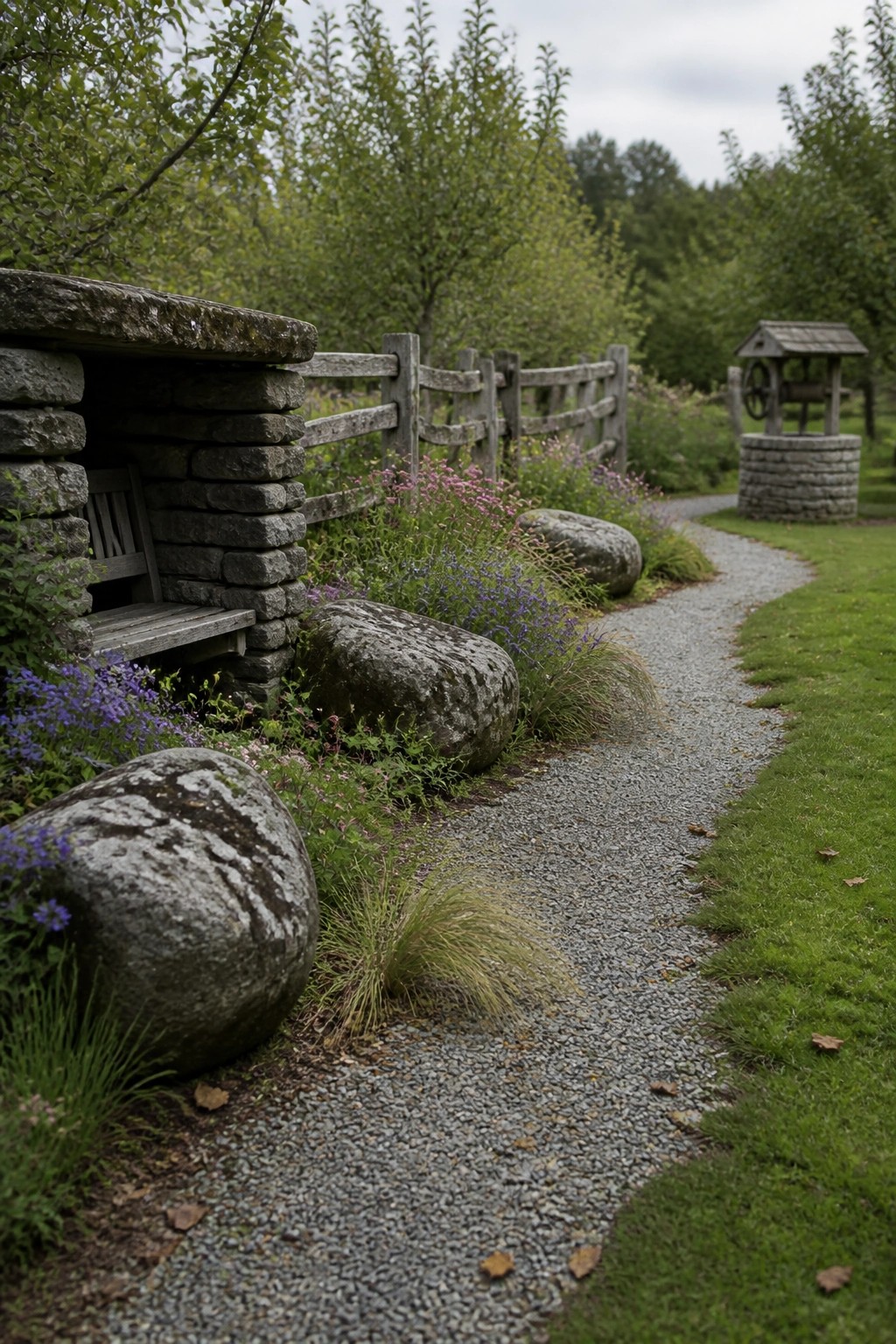
Gravel paths work well in rustic gardens because they feel informal and let water drain without extra effort. They blend easily with wild planting and large stones placed along the edges.
Use this approach on side yards or larger plots where a winding route makes sense. Keep the gravel layer thick enough to stay put and choose stones that match the local rock if possible.
Mossy Stone Steps In A Wild Garden
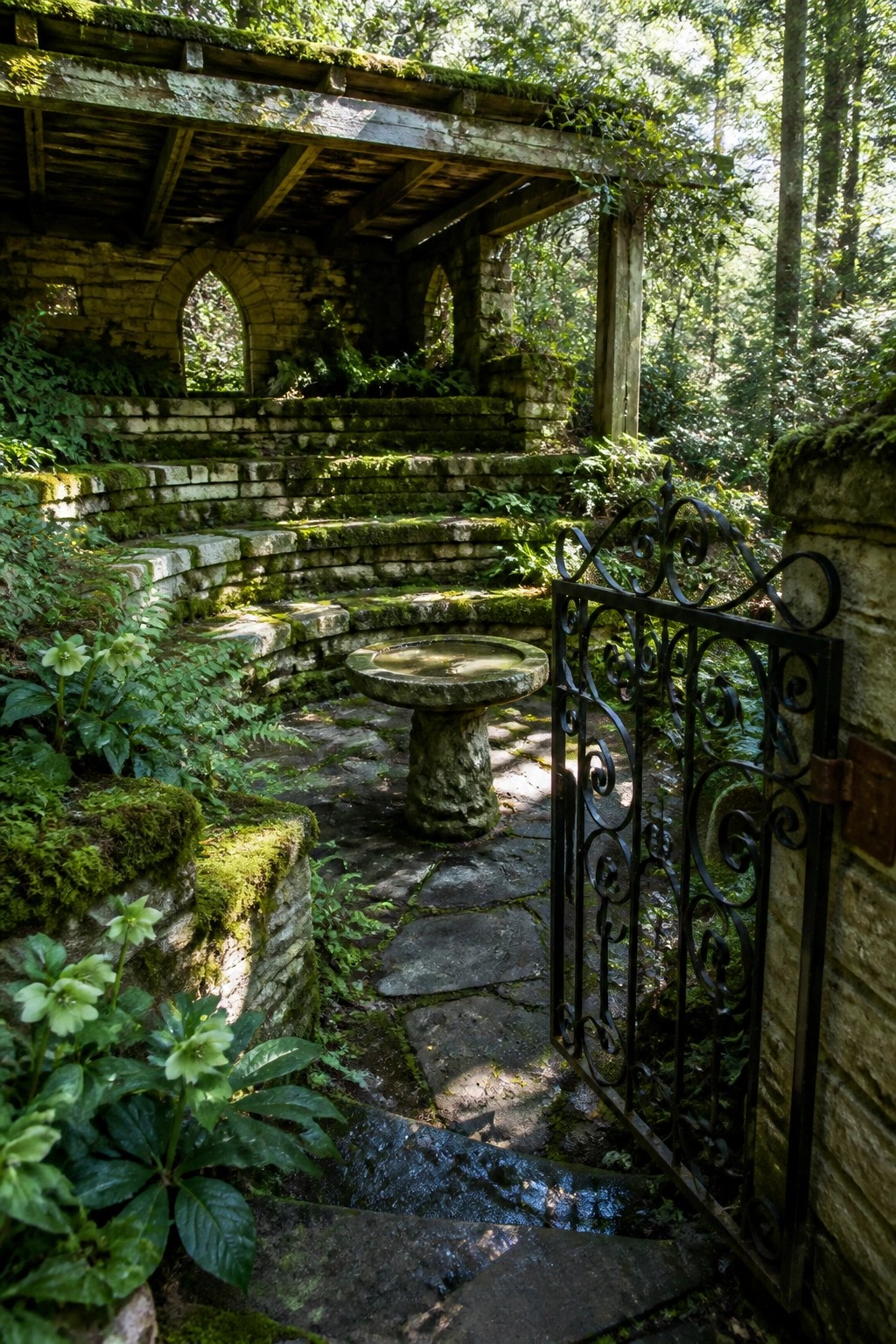
Stone steps that are allowed to collect moss and let plants grow around the edges end up looking like they have always been there. This works because the stone and the planting start to read as one surface instead of separate parts.
It suits shady or wooded sites where moisture helps the moss take hold. Use real stone with some texture so the growth can settle in, and keep the surrounding planting loose rather than tightly edged.
Weathered Wood Edging For Natural Stone Beds
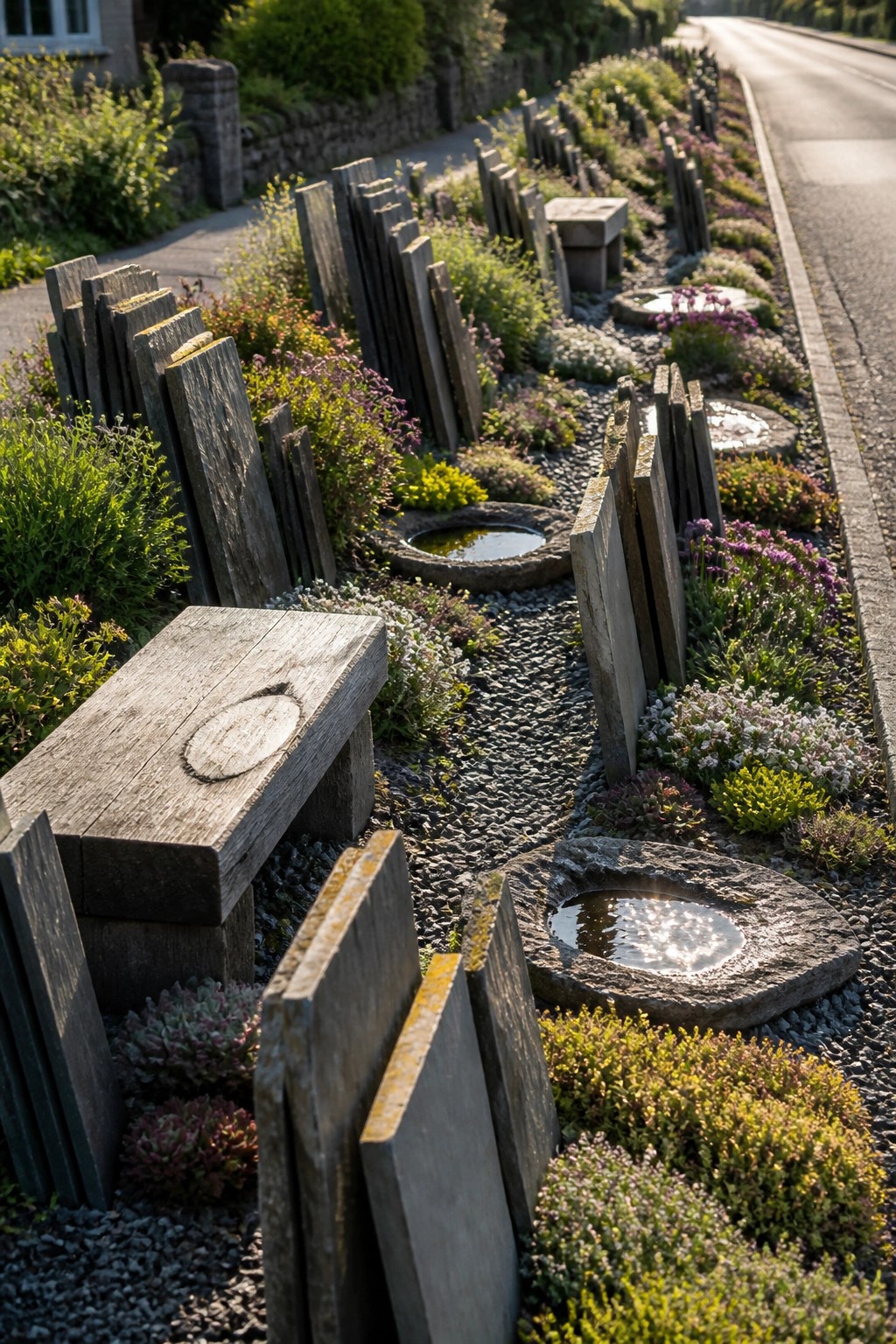
Weathered wood planks set upright give a garden bed clear shape while still feeling relaxed. They pair easily with stone and gravel because the wood adds height and a rough texture that stone alone often lacks.
This works best along roadsides or long borders where you need a simple divider that does not feel too formal. Keep the planting loose and varied so the wood reads as part of the garden rather than a fence.
Stepping Stone Paths Over Water
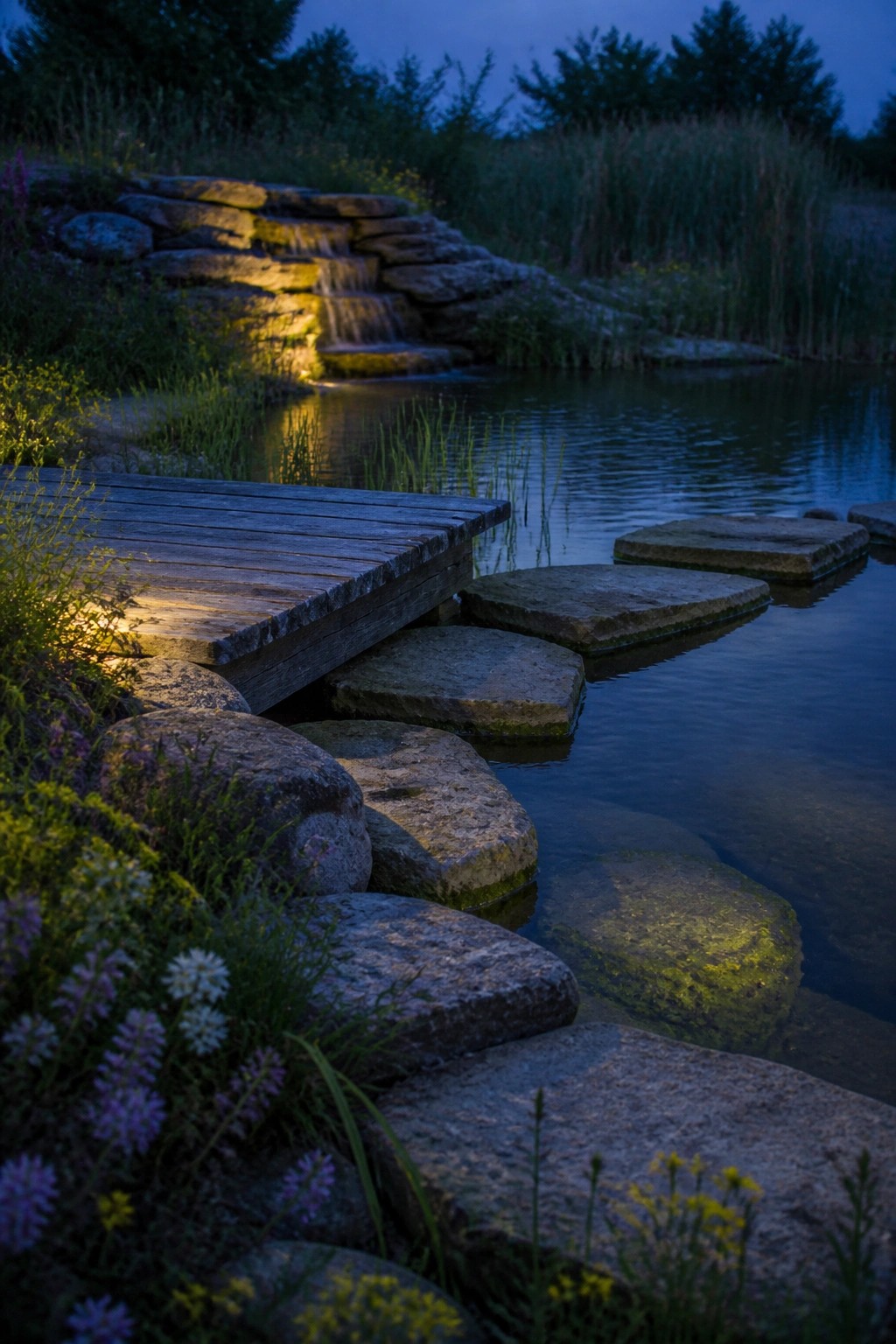
A simple path of large flat stones set right into the water gives a garden a quiet way to cross without adding a bridge. It keeps the pond open and lets the stones feel like they are part of the landscape rather than something built over it. The wood platform at the edge helps the path start naturally from the bank.
This works well in smaller gardens or yards that already have a low wet area. Set the stones so they sit just above the water and space them for a comfortable step. Keep the planting loose around the edges so the path blends in instead of standing out.
Weathered Wood Furniture Suits Small Garden Patios
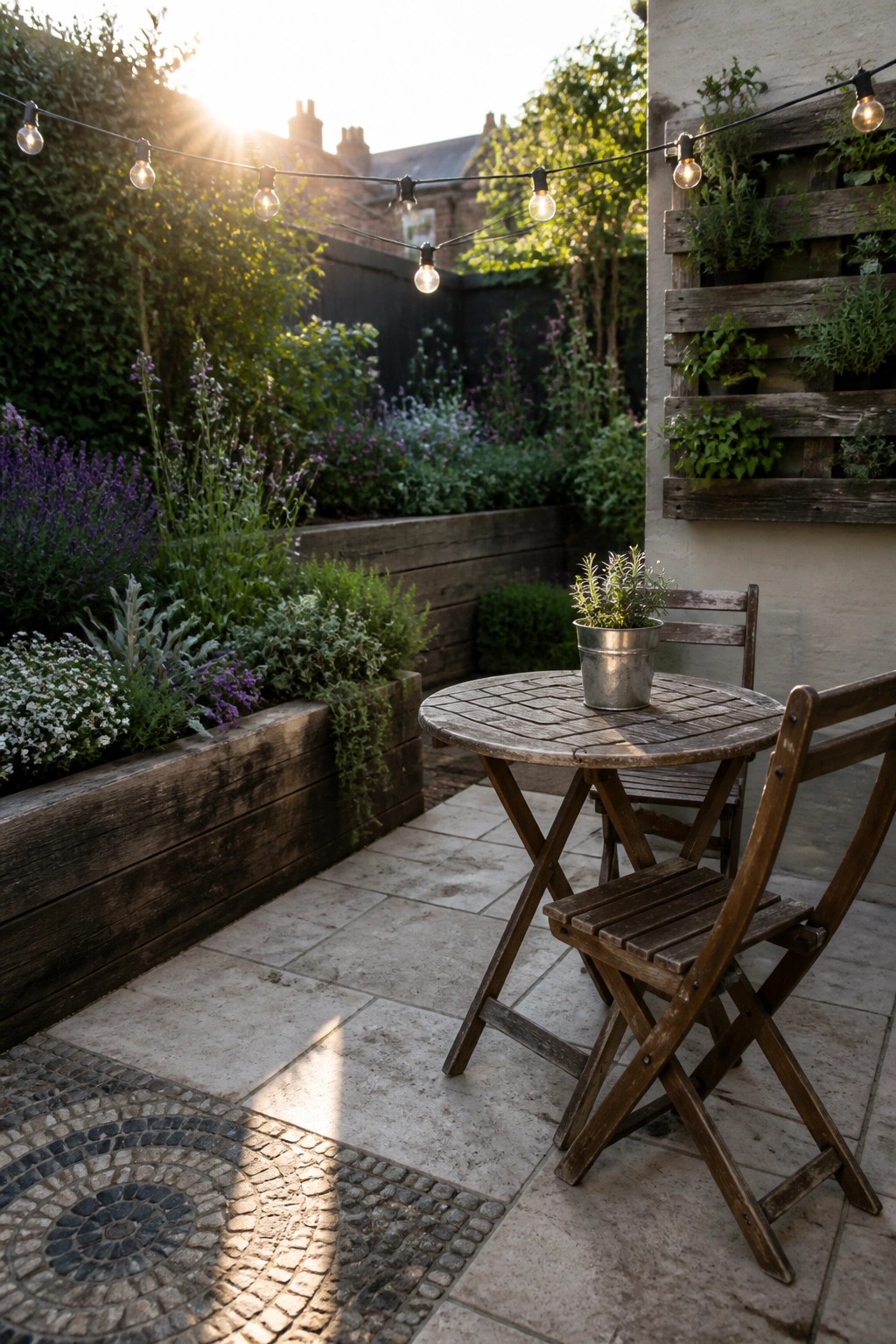
Weathered wood chairs and tables add an easy rustic touch to outdoor seating without needing a big space. They sit well on stone paving and blend right in with raised wooden beds and simple planting.
This approach works best in modest yards or side areas where you want seating that can shift around. It suits older homes or gardens already using wood, and the pieces hold up fine with basic care.
Stone Paths With Wild Planting
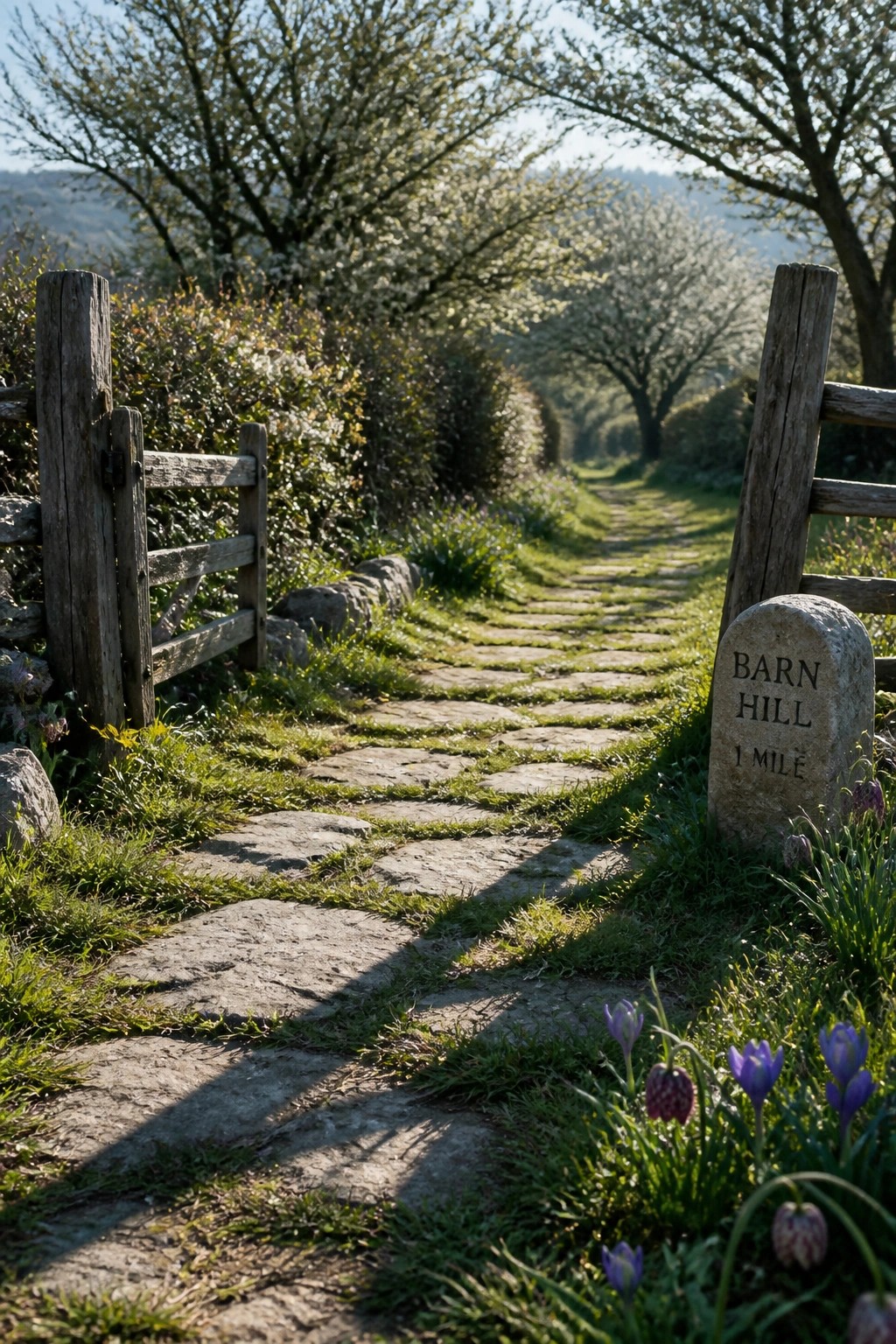
A simple path made from uneven stone slabs gives the garden a settled look without trying too hard. It lets people move through the space easily while the planting stays loose and natural on either side.
This works best in larger yards or older properties where you want to connect different areas without adding formal lines. Use weathered wood for gates or edging nearby and let flowers and grasses grow right up to the stones so the whole thing feels part of the landscape rather than added on top.
Stack Stone Into Circular Beds
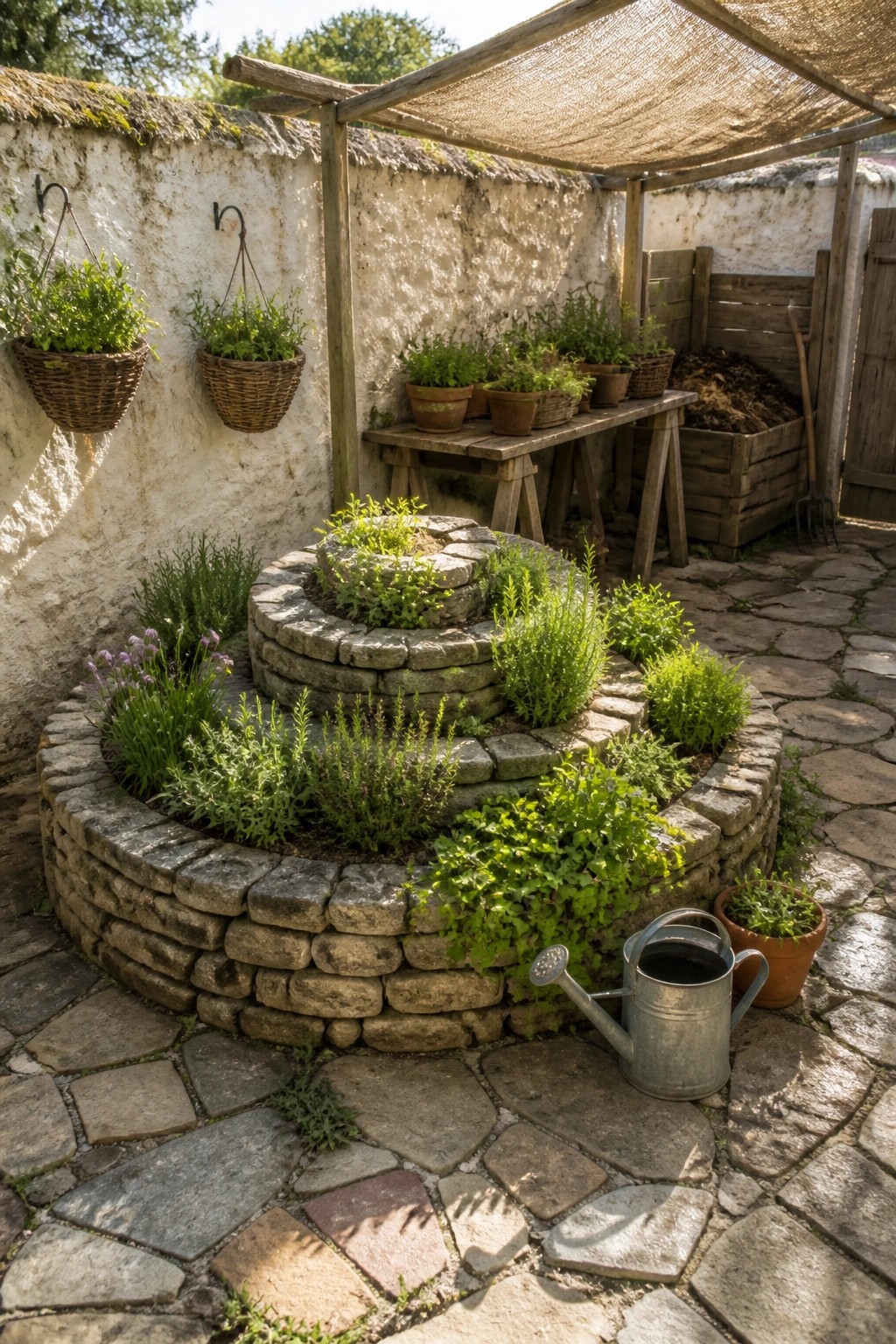
Stacked stone circles give a garden real structure while still letting plants grow freely. The different heights create layers that make even a small space feel full and interesting without needing fancy edging or straight lines.
This works best in older gardens or cottage settings where you want herbs, flowers, and trailing greens to spill over the edges naturally. Use dry stacked stone so it settles over time and keep the planting loose rather than too neat.
Frequently Asked Questions
Q: How do I keep the wild planting from swallowing up my stone paths?
A: Choose tough but contained varieties like creeping thyme or native grasses and plant them in pockets between the stones. Trim back the edges once or twice a year so the paths stay clear. The weathered wood accents nearby will still show through without constant fuss.
Q: Can I use fresh cut wood or does it have to be old and gray already?
A: Fresh wood works fine if you stack it in a spot that gets full weather for a few months first. The rain and sun will gray it naturally while you build the rest of the garden. Pair it with your stone right away so everything settles together.
Q: What if my soil is mostly clay and the stone shifts after rain?
A: Dig out a few extra inches under each stone and add a layer of crushed gravel before setting them. This drains water fast so the stones stay put. The wild plants on top will root in and help lock everything down over time.
