

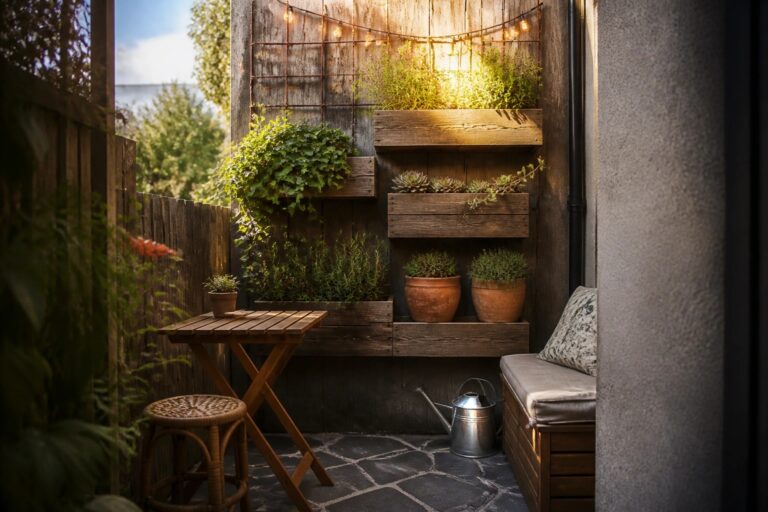
I have found that compact patios often end up unused when the layout ignores how people actually move through the space each day.
Adding seating and plants requires real attention to scale so the area does not feel cramped the moment you step outside.
One solid chair can shift everything.
I usually test a couple of simple plant placements first in my own yard before committing to any larger changes.
These kinds of adjustments tend to reveal what the space needs most without overcomplicating it.
Mount Planters on the Wall
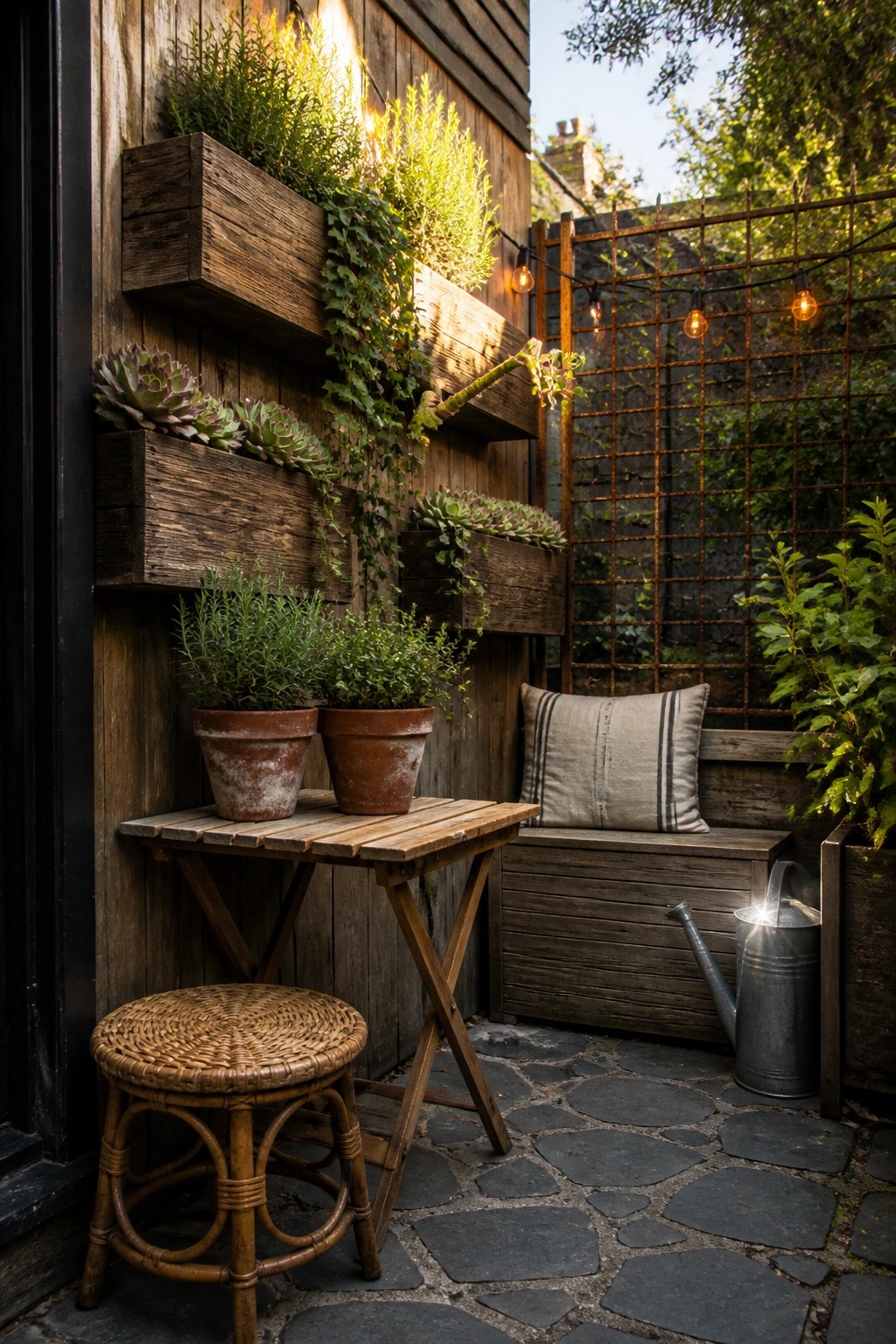
One simple way to add more plants in a small patio is to mount wooden boxes straight onto the wall. This keeps the floor open for a table or a couple of chairs while still giving you room for succulents and trailing vines.
It works best on solid wood or masonry walls where the boxes can be screwed in firmly. Use the same wood tone as any existing fence or bench so the planters blend in rather than stand out.
Built-In Seating Works Well In Compact Patios
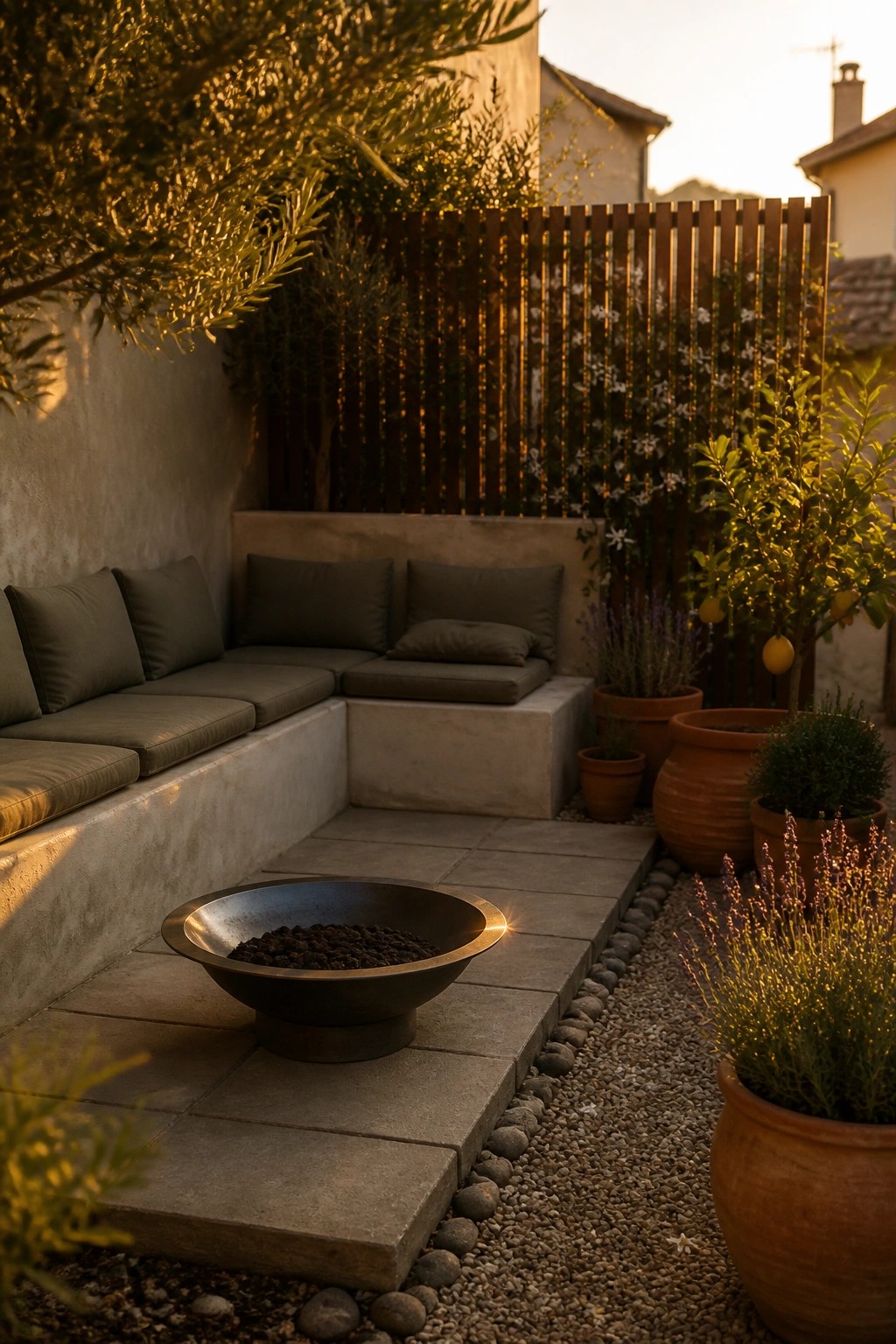
Built-in seating helps small patios feel more open because it uses the edges of the space instead of adding freestanding furniture that takes up floor room. In tight corners this keeps the middle clear and still gives you a place to sit.
It works best on patios with at least one solid wall or fence to build against. Add a simple fire pit in front and cushions on top so the area feels finished without looking crowded.
Mount A Bench Along The Wall
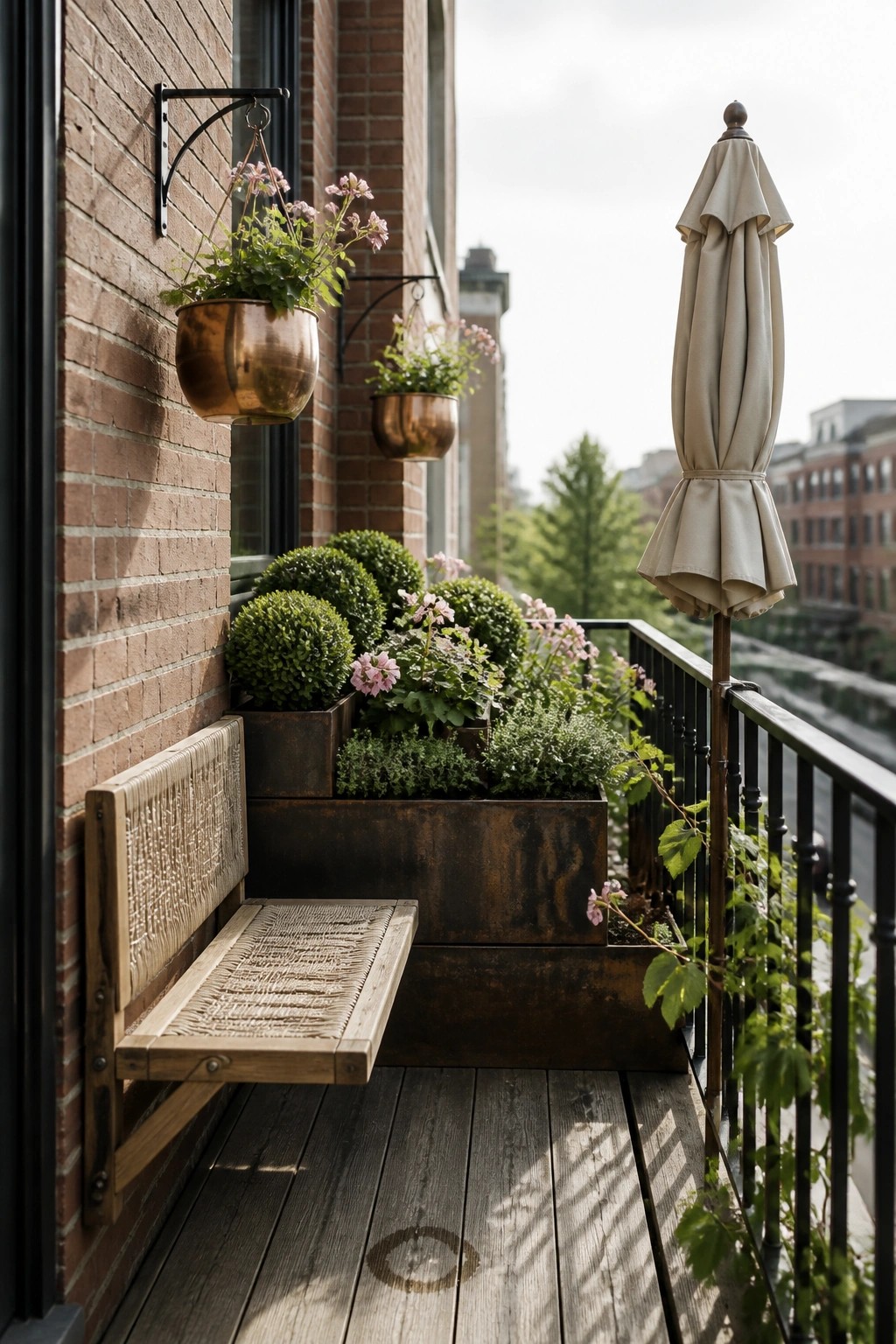
A wall mounted bench keeps the floor open on a small balcony while still giving you a place to sit. It works especially well when you line up planters right in front of it so the whole setup feels like one unit instead of separate pieces taking up room.
This approach suits narrow balconies or tight corners where every inch matters. Just make sure the bench is firmly attached and the wood is treated for outdoor use so it holds up over time.
Use A Daybed To Create A Cozy Seating Spot
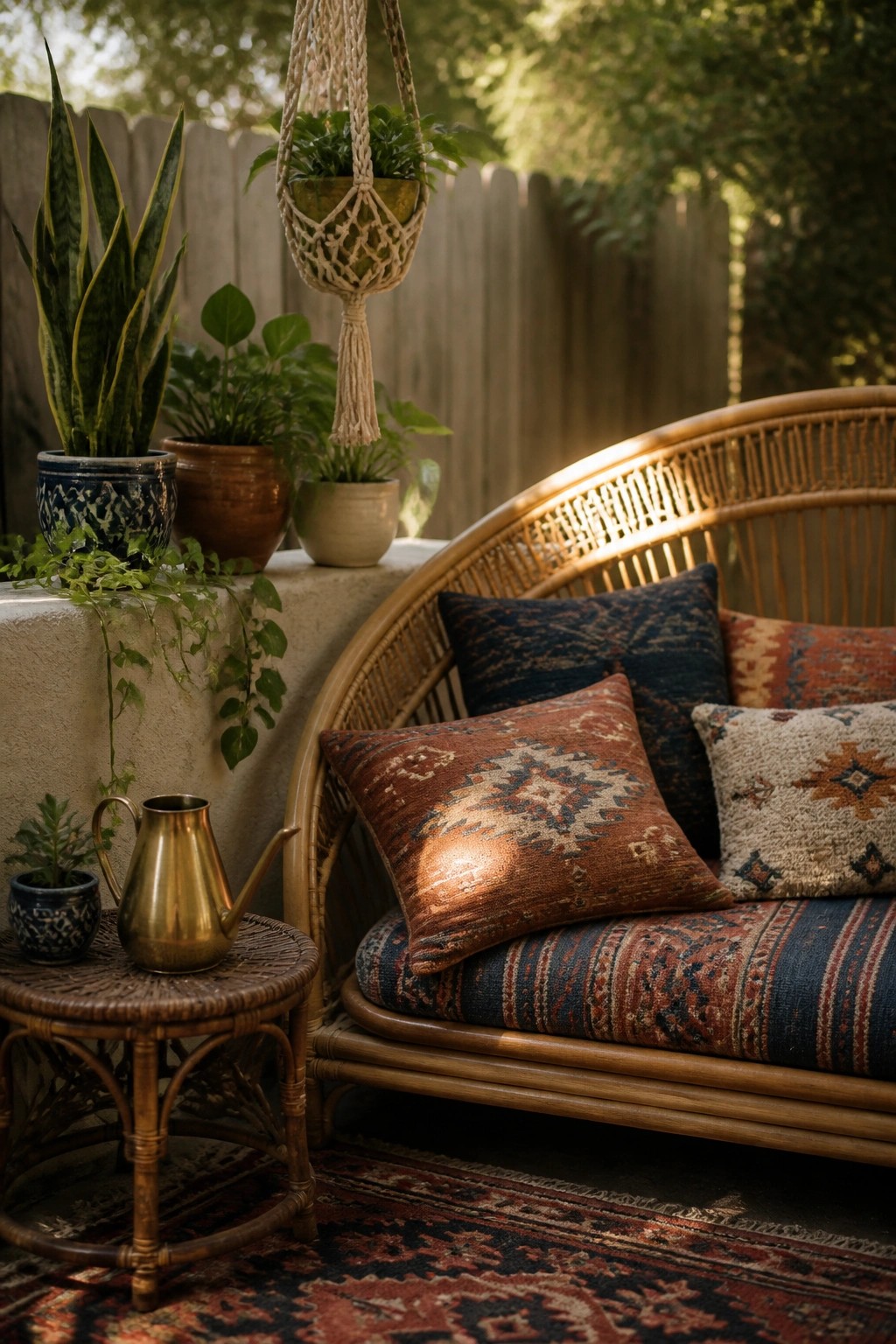
A daybed gives you a full place to lounge in a small patio without needing much extra room. The low profile and soft cushions turn an empty corner into something you actually want to sit in for a while.
Set it against a fence or wall and add a few plants around the edges. This works best in compact yards where a regular chair set would feel too spread out.
Built-In Bench And Fold-Down Table
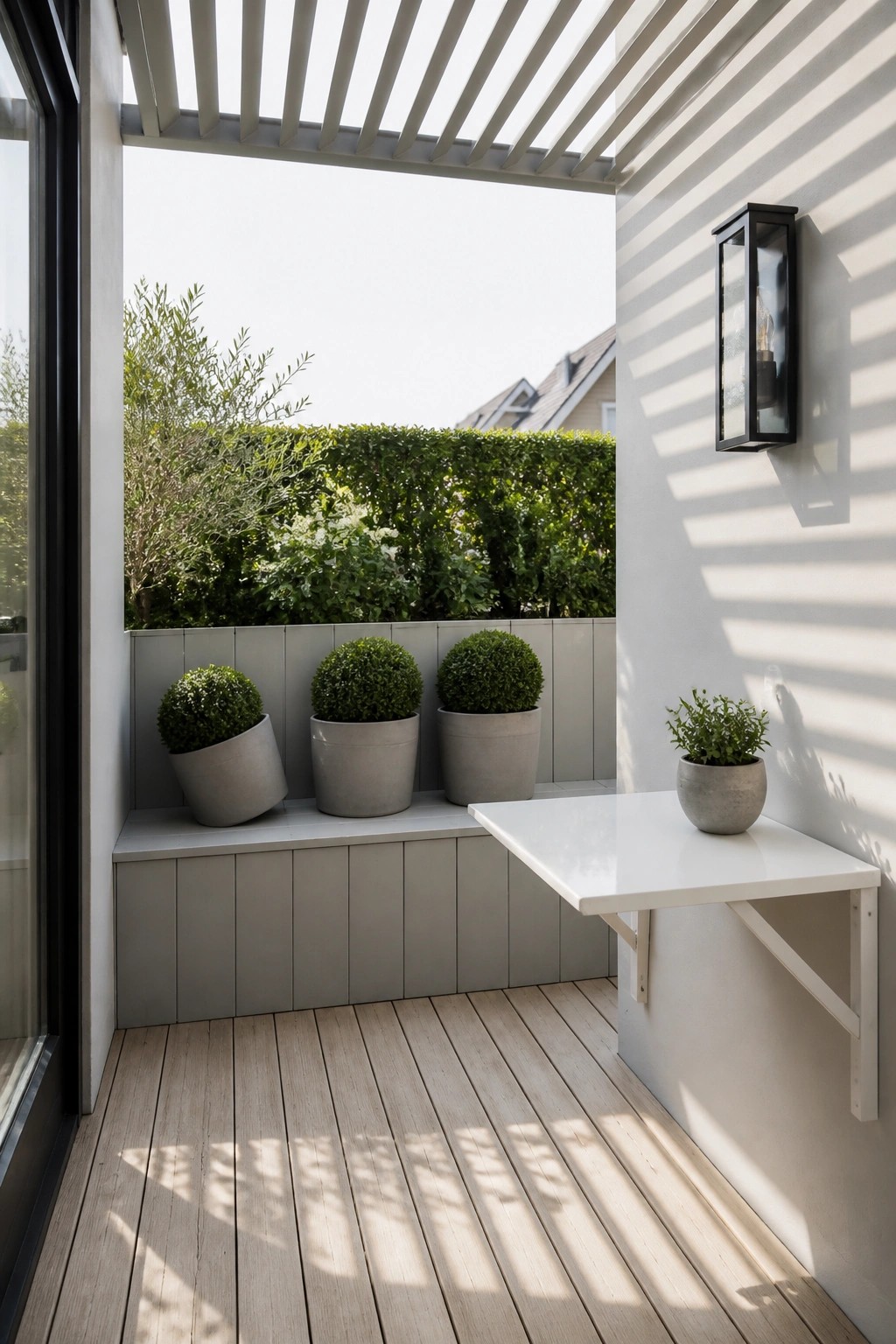
A built-in bench along the wall gives you permanent seating without eating into floor space. It also creates a ready ledge for pots so plants stay off the ground and stay organized.
A fold-down table mounted on brackets works when you need a surface and tucks away the rest of the time. This combination fits narrow side patios or small balconies where fixed furniture would feel cramped.
Hang A Pallet Herb Garden On One Wall
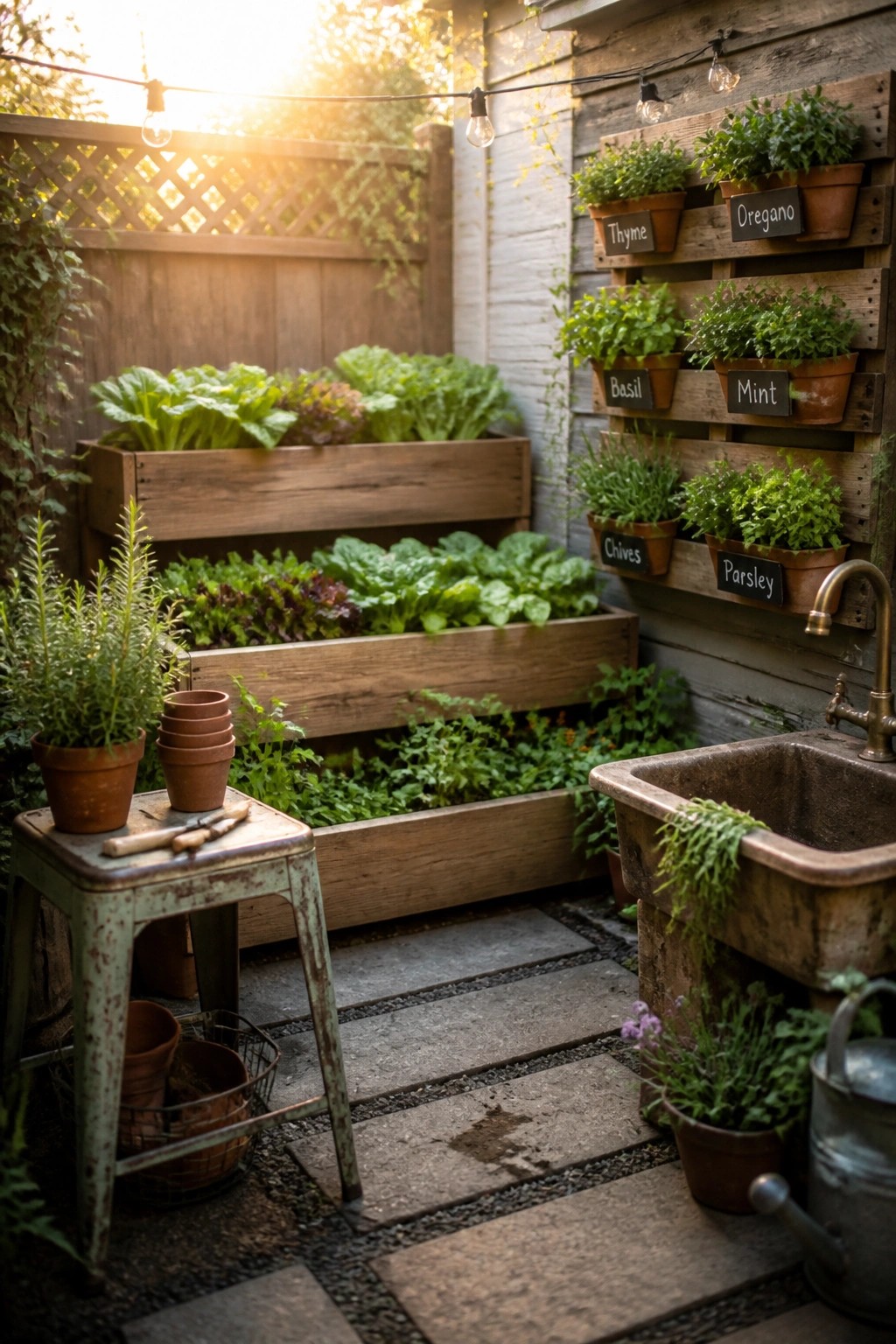
Small patios often run out of ground space fast, but a wall can hold plenty of plants if you use it right. Mounting a wooden pallet gives you rows of pockets for herb pots without crowding the floor or blocking the path.
This setup suits narrow side yards or corner patios where every inch counts. Screw the pallet to the wall, tuck in small pots, and keep the labels simple so you can grab what you need while cooking. Just check that the wall can handle the weight once the pots are watered.
Vertical Garden Walls Free Up Floor Space
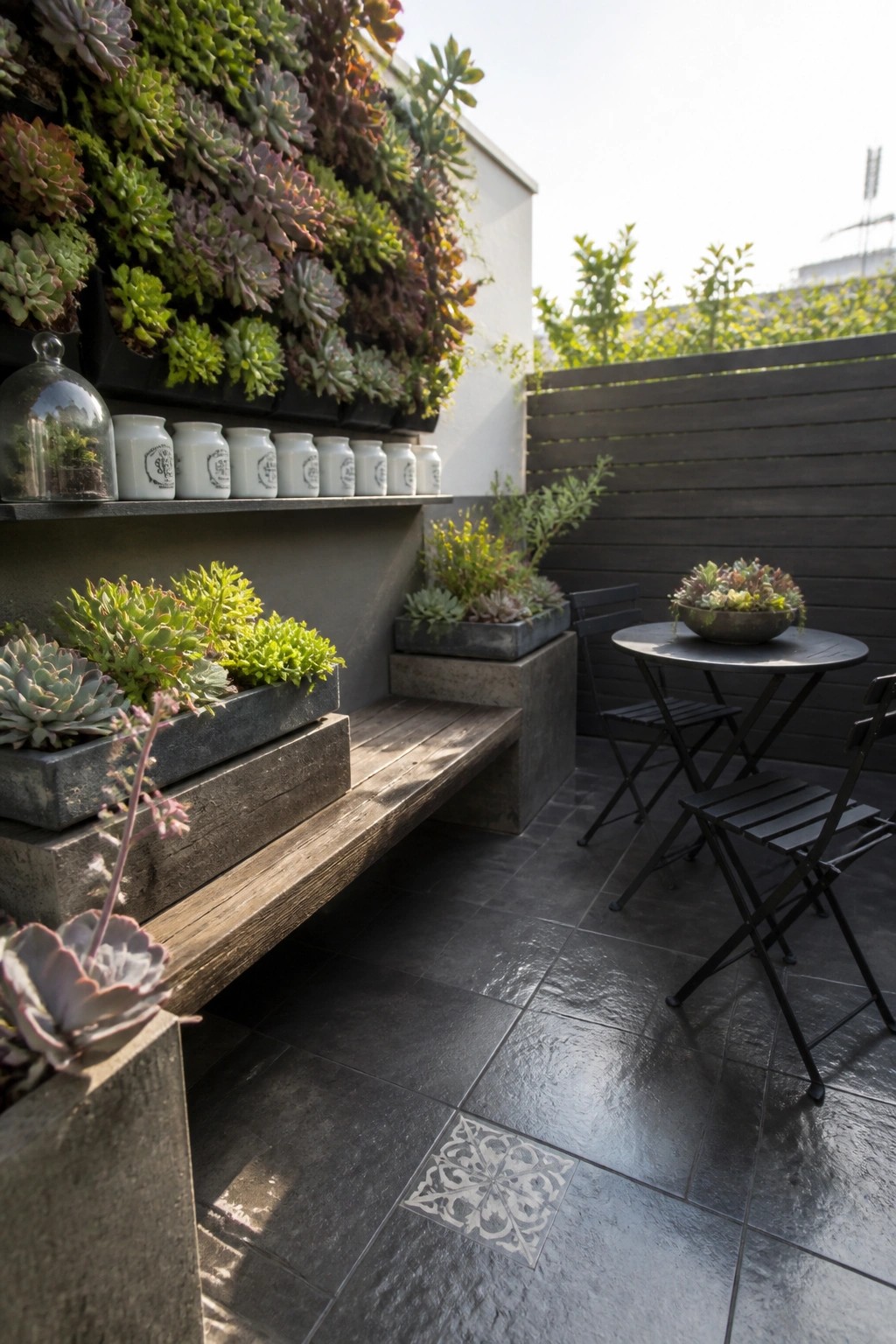
A living wall of succulents gives you plenty of greenery without crowding the ground. In a small patio this approach keeps the floor open for seating or walking while still filling the view with plants.
Place the wall along one side or in a corner where it can catch light. Choose hardy succulents that need little water and pair them with simple benches or low planters so the whole area stays easy to maintain.
Cluster Pots Around a Small Wooden Stool
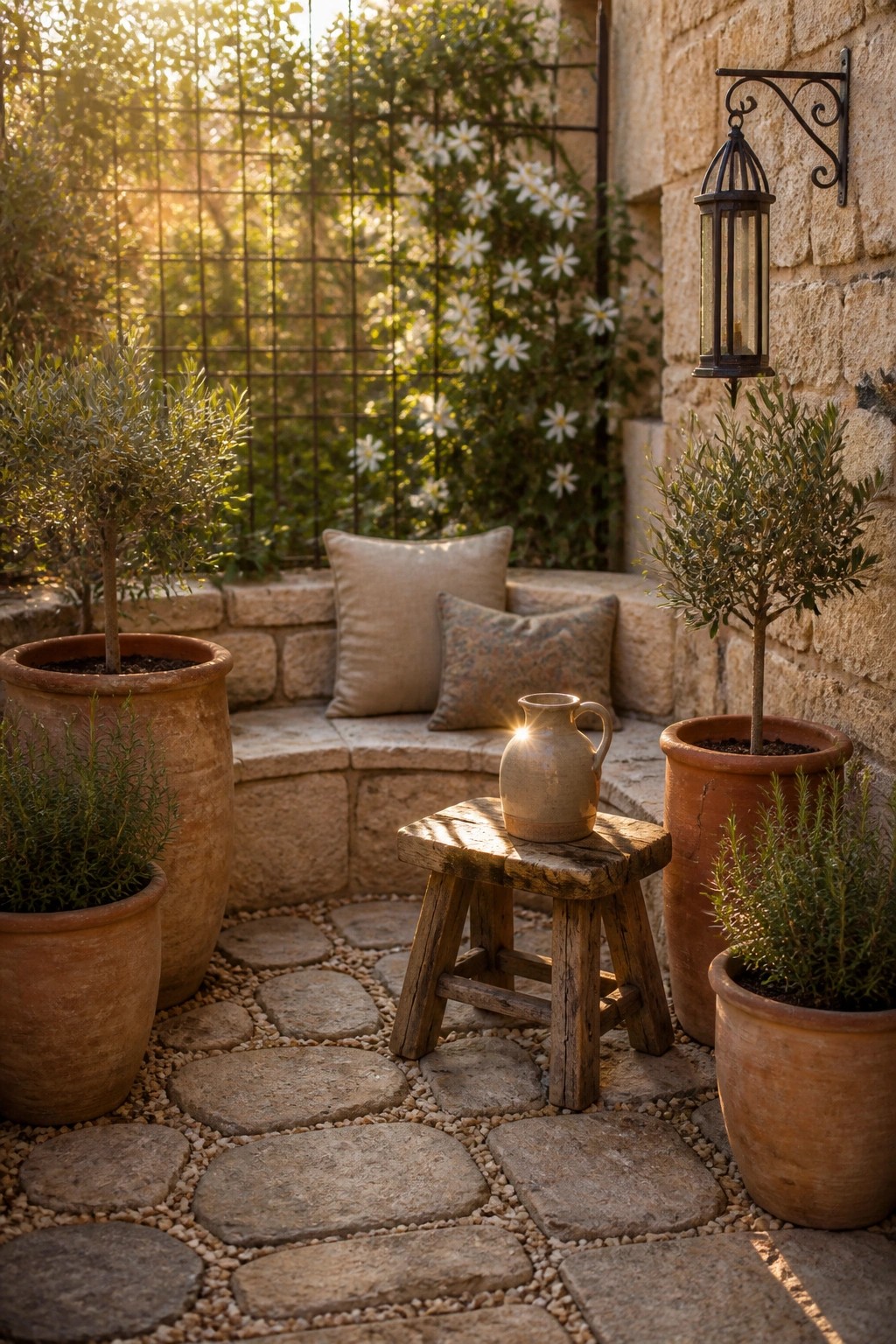
A few large pots grouped around a low wooden stool can turn a tight corner into a workable little seating spot. The stool sits low enough to feel part of the planting rather than a separate piece of furniture, and the pots give you instant greenery without digging beds or taking up floor space.
This setup works best on stone or gravel in small yards, side returns, or balcony edges where you only have room for a bench or a couple of chairs. Stick to two or three sizes of pot and repeat the same material so the whole group feels settled instead of scattered.
Folding Chairs For Narrow Side Yards
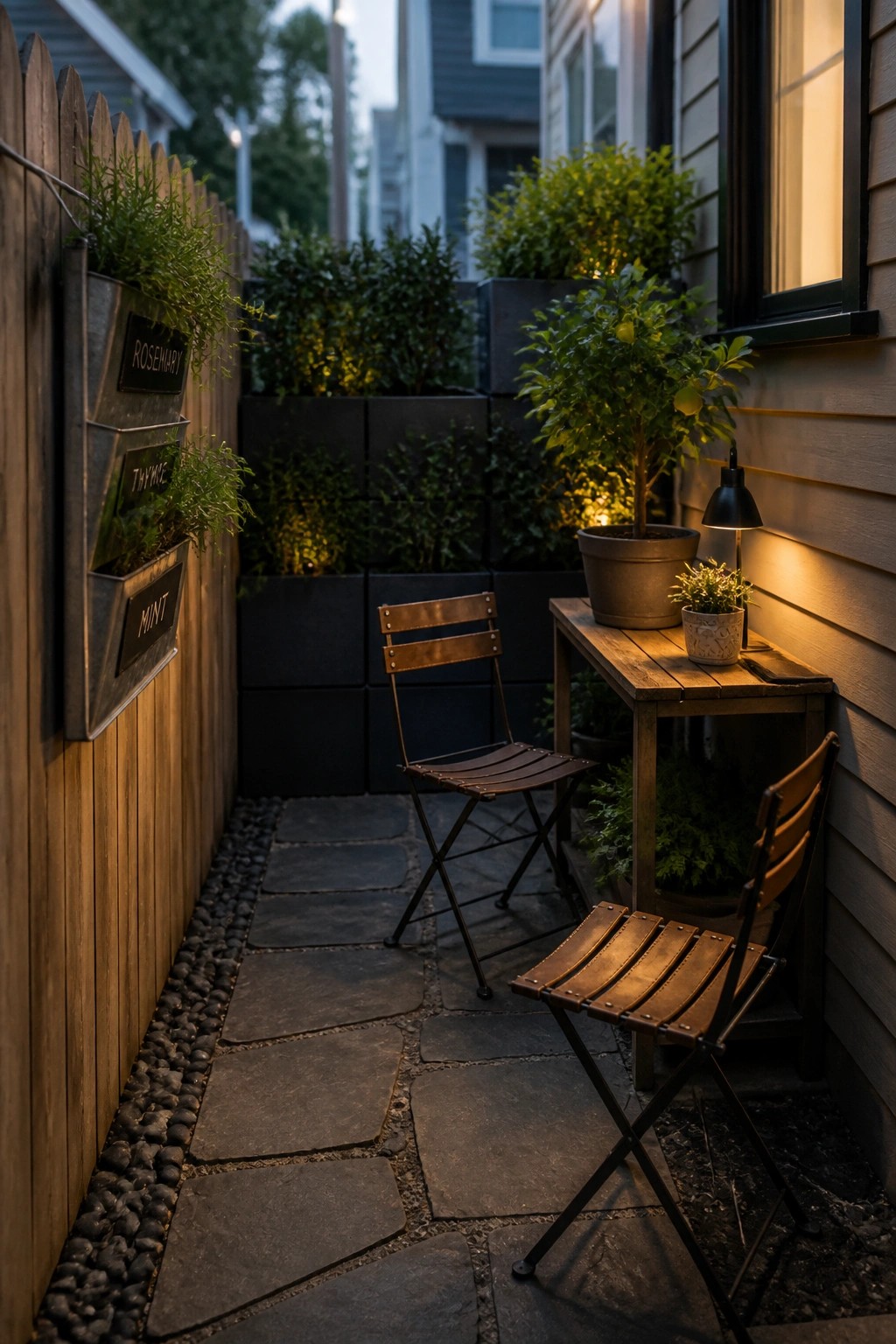
Many homes have a slim strip of space along the side that feels too tight for anything useful. A pair of folding chairs and a narrow table can turn that leftover area into a quiet spot without blocking the path or needing much room.
This works well on homes with a fence on one side and the house on the other. Keep the pieces light so you can move them when needed, and use wall planters for herbs to add greenery without taking up floor space.
Bench Seating Along the Wall
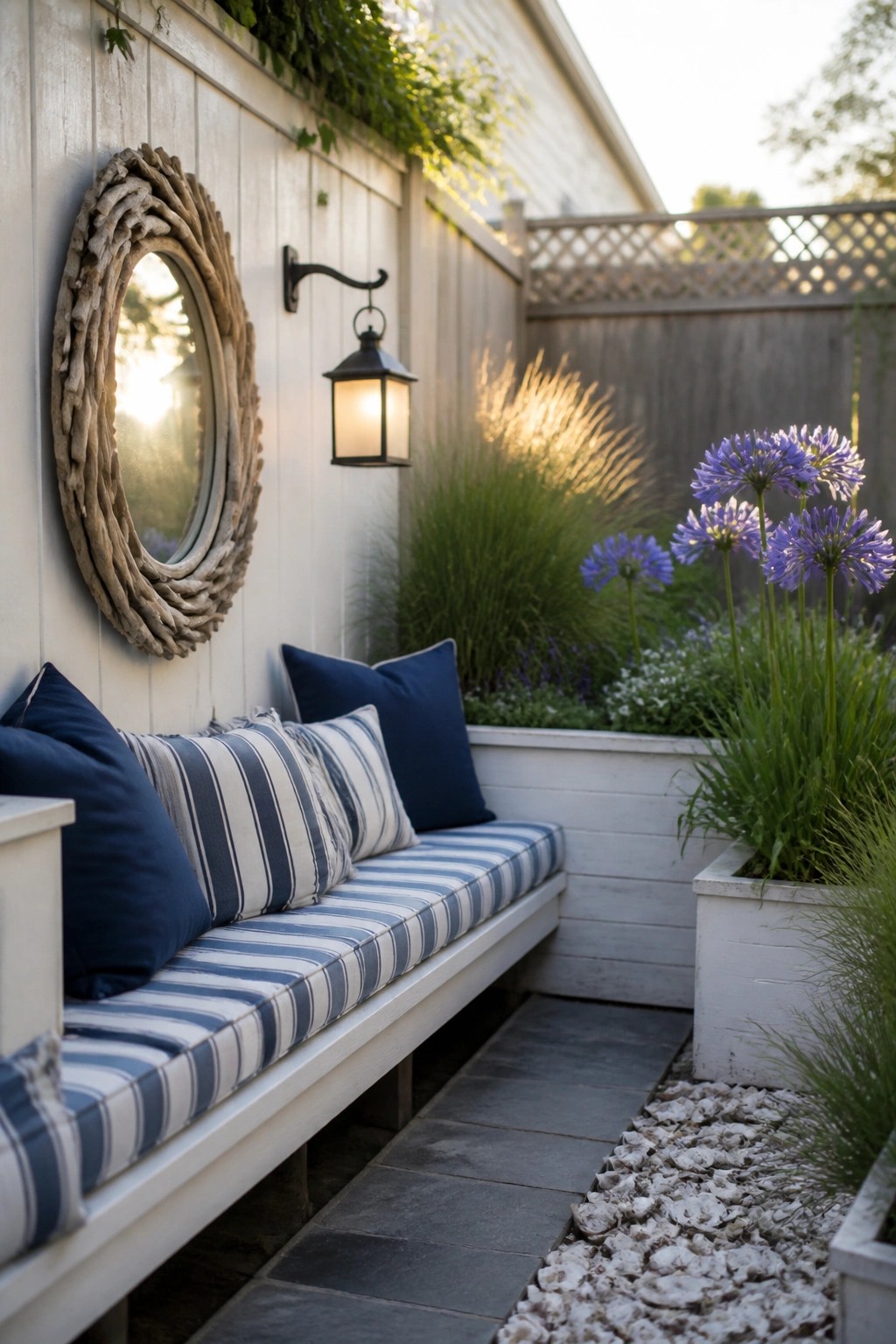
A bench placed right against the wall turns a narrow strip of patio into actual seating without eating up floor space. It works especially well in tight corners where a couple of chairs would feel cramped or block the path.
Keep the bench simple and low so it does not overwhelm the area, then add cushions for comfort. This setup suits small backyards or side yards where you want a place to sit without building a full deck or rearranging furniture every season.
Wall Planters Free Up Floor Space In Tight Corners
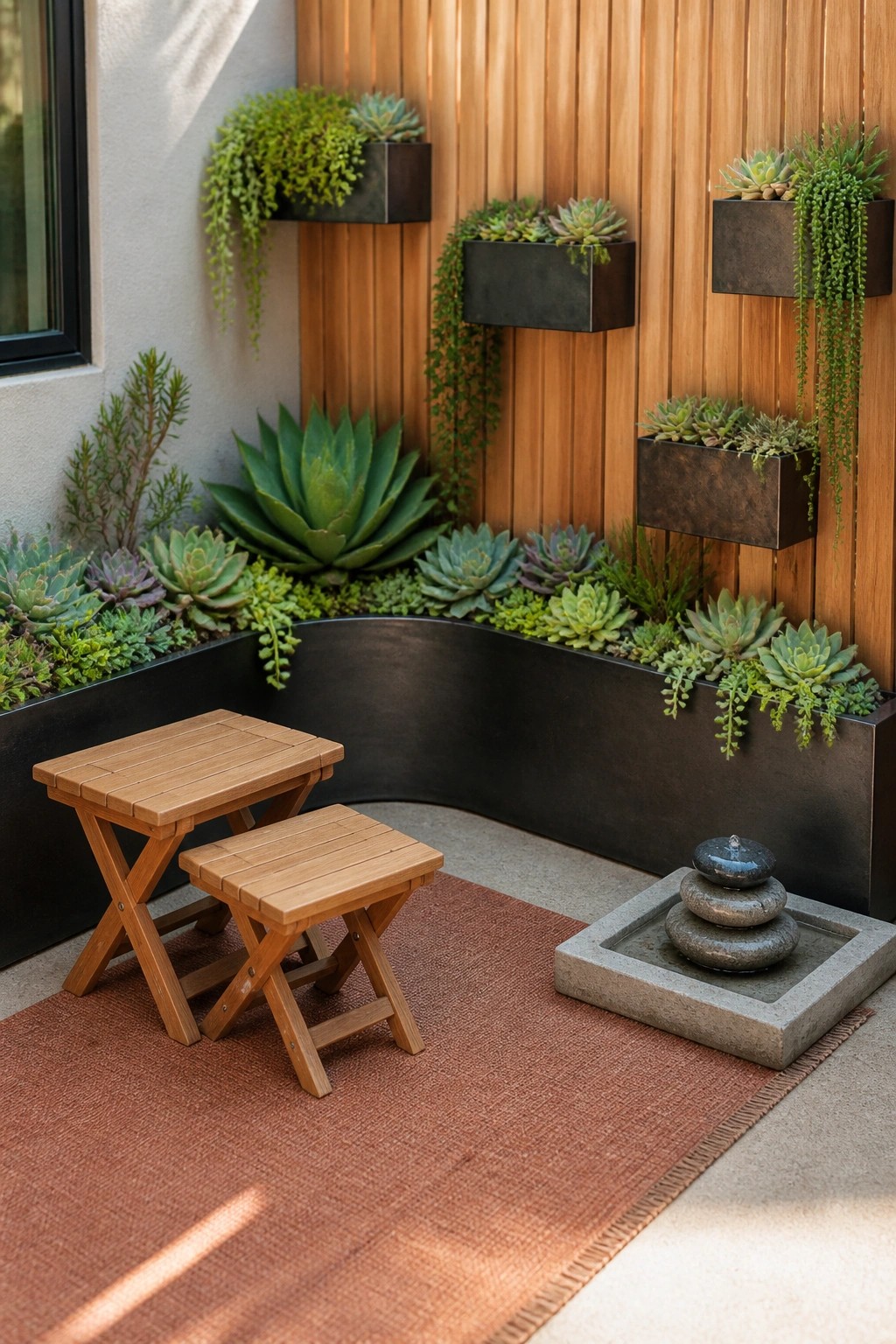
Mounting planters directly on the wall is a simple way to bring in more plants without crowding the ground. In a small patio, this keeps the floor open for a couple of chairs or a small table while still giving you a full garden look along the edges.
It works best against a solid fence or house wall where you can line up several boxes at different heights. Choose hardy plants that trail or stay compact so they do not spill over too much and block the walkway.
Built-In Bench Seating for Small Patios
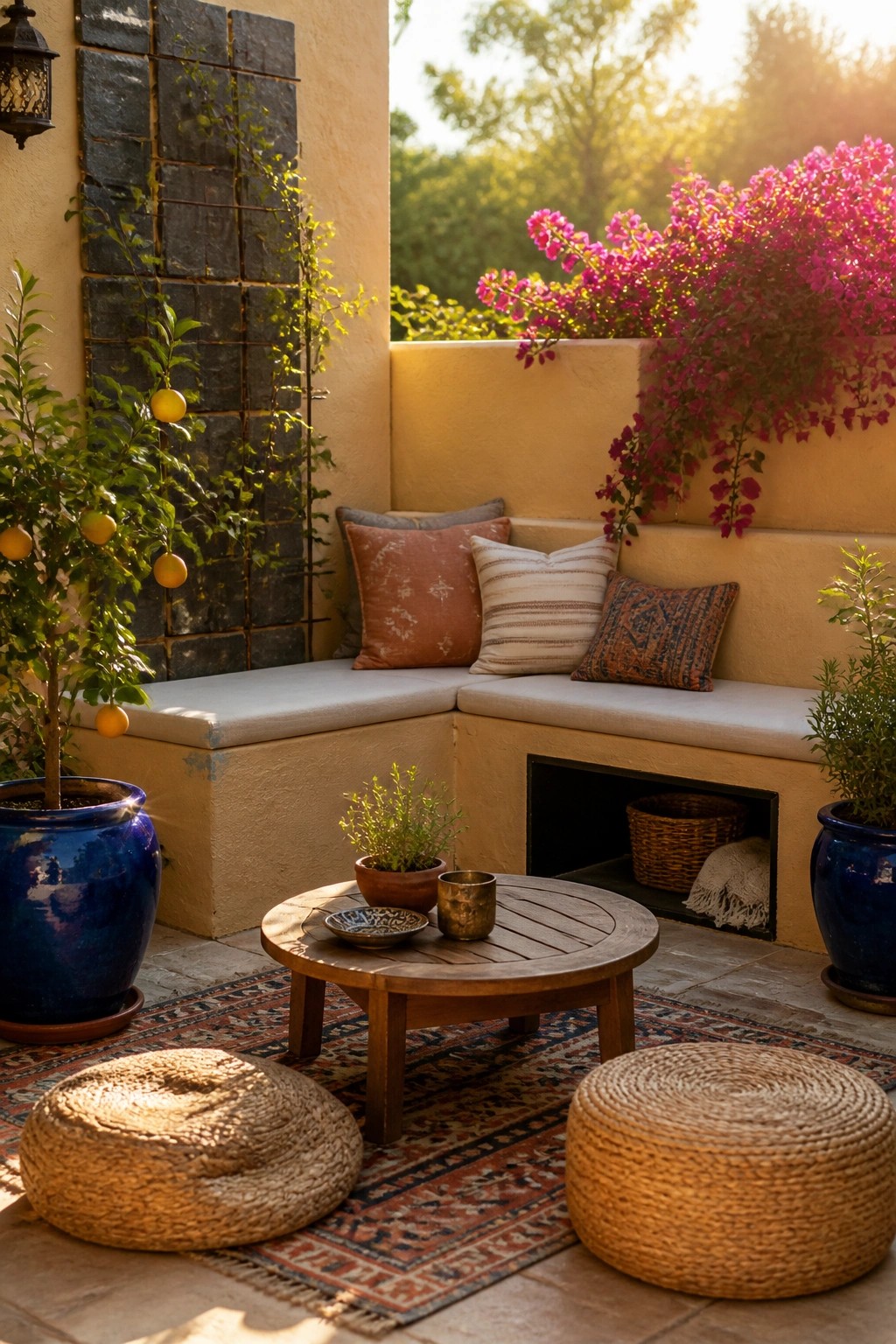
A built-in bench along the walls turns an awkward corner into usable seating without eating up floor space. It works well in tight patios because it stays fixed and leaves room for a low table and a couple of floor cushions when extra people drop by.
This setup suits homes with limited outdoor room, especially where you want permanent seating but still need flexibility. Keep the bench simple and add a few large pots nearby to soften the edges and bring in some greenery without crowding the area.
Hang a Mirror to Open Up a Small Patio
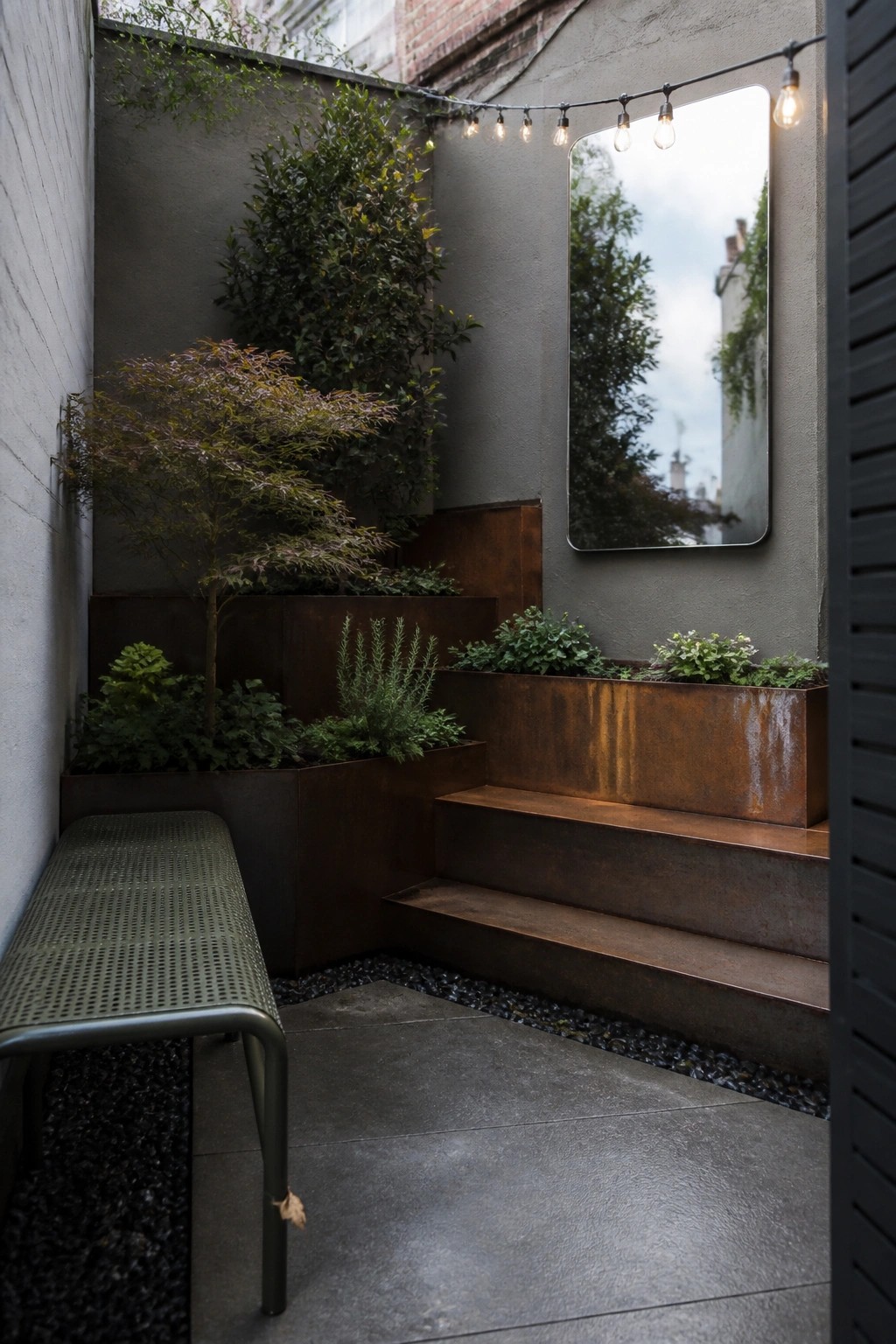
A mirror can make a tight patio corner feel much larger without adding any floor space. It reflects the plants and sky back into the area, which brings in more light and keeps the space from feeling closed off. This works especially well when walls or fences surround the spot on most sides.
Place the mirror on the main wall opposite the seating, and angle it slightly so it catches greenery rather than direct sun. Outdoor-rated glass holds up better over time, and a simple frame keeps it from looking too formal in a garden setting.
Line One Wall With a Bench for Tight Outdoor Spaces
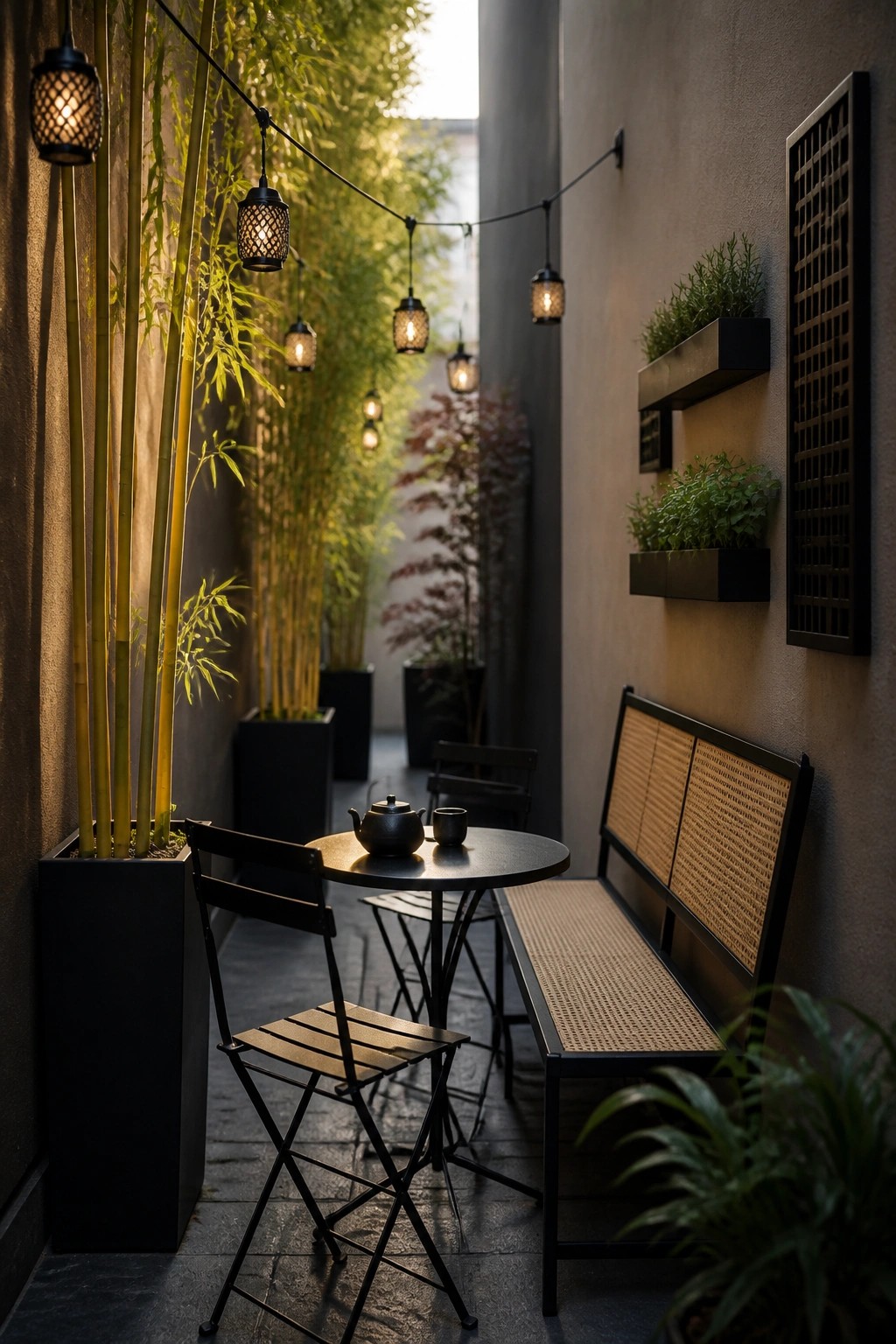
A bench along one side of a narrow patio keeps the middle open and still gives you a place to sit. It works better than trying to fit multiple chairs because the bench takes up less floor space and can seat two or three people without crowding the walkway.
This approach suits townhomes, side yards, or any compact zone where you need room to move. Pair the bench with a small table and lightweight chairs that can be tucked away when not in use. String lights overhead help the space feel inviting without adding clutter.
Fold Down Bars Make Small Patios More Useful
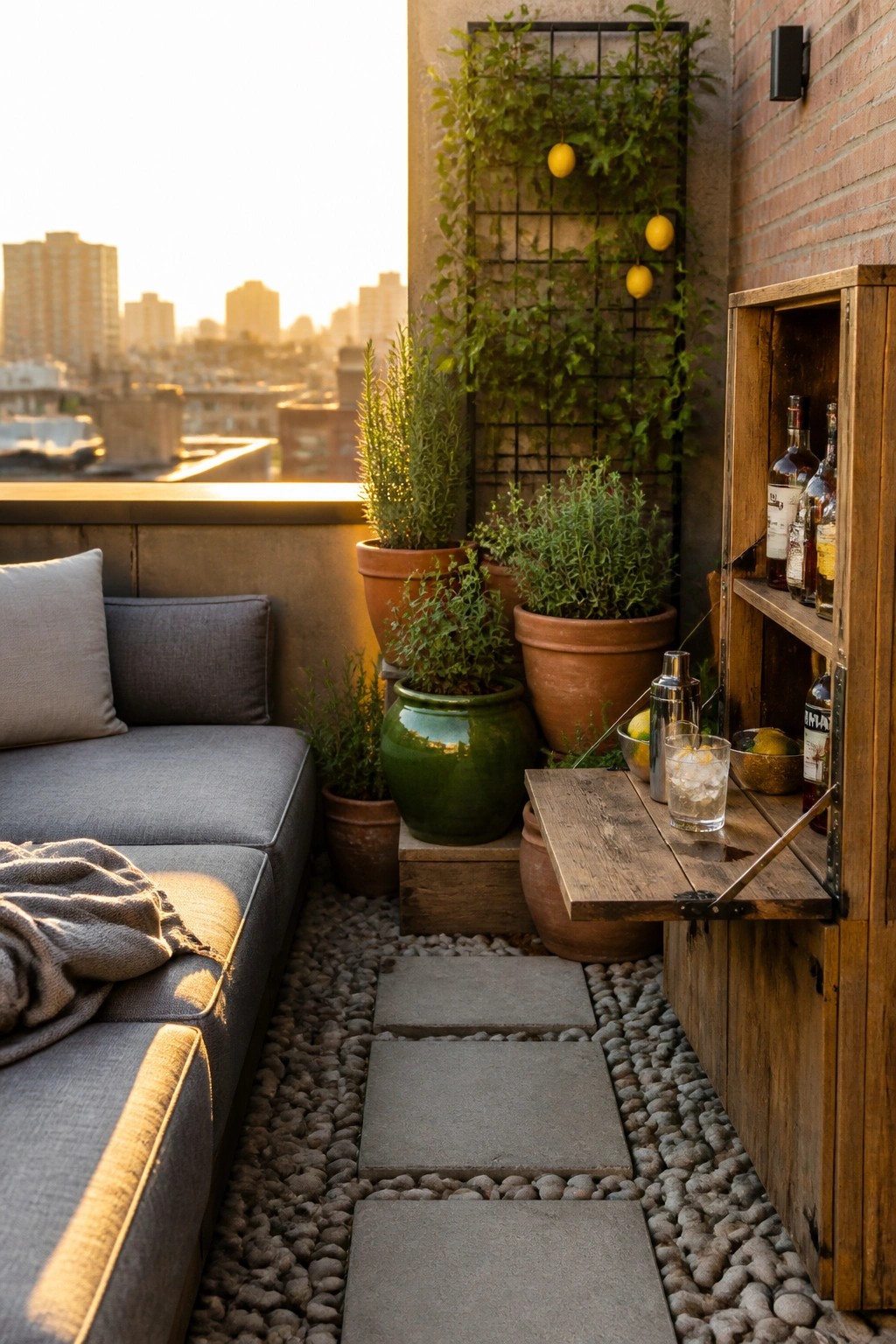
A small patio often needs every inch to work harder. A cabinet with a hinged drop down shelf gives you storage for bottles and tools while also creating a serving surface when you need it. This keeps the floor clear for seating or plants the rest of the time.
It works best on balconies or narrow terraces where a full bar would feel too big. Mount it against a wall or railing and keep the finish simple so it blends with the rest of the space. Just make sure the hinge and latch are sturdy enough for regular use.
Add Open Shelves Above The Work Surface
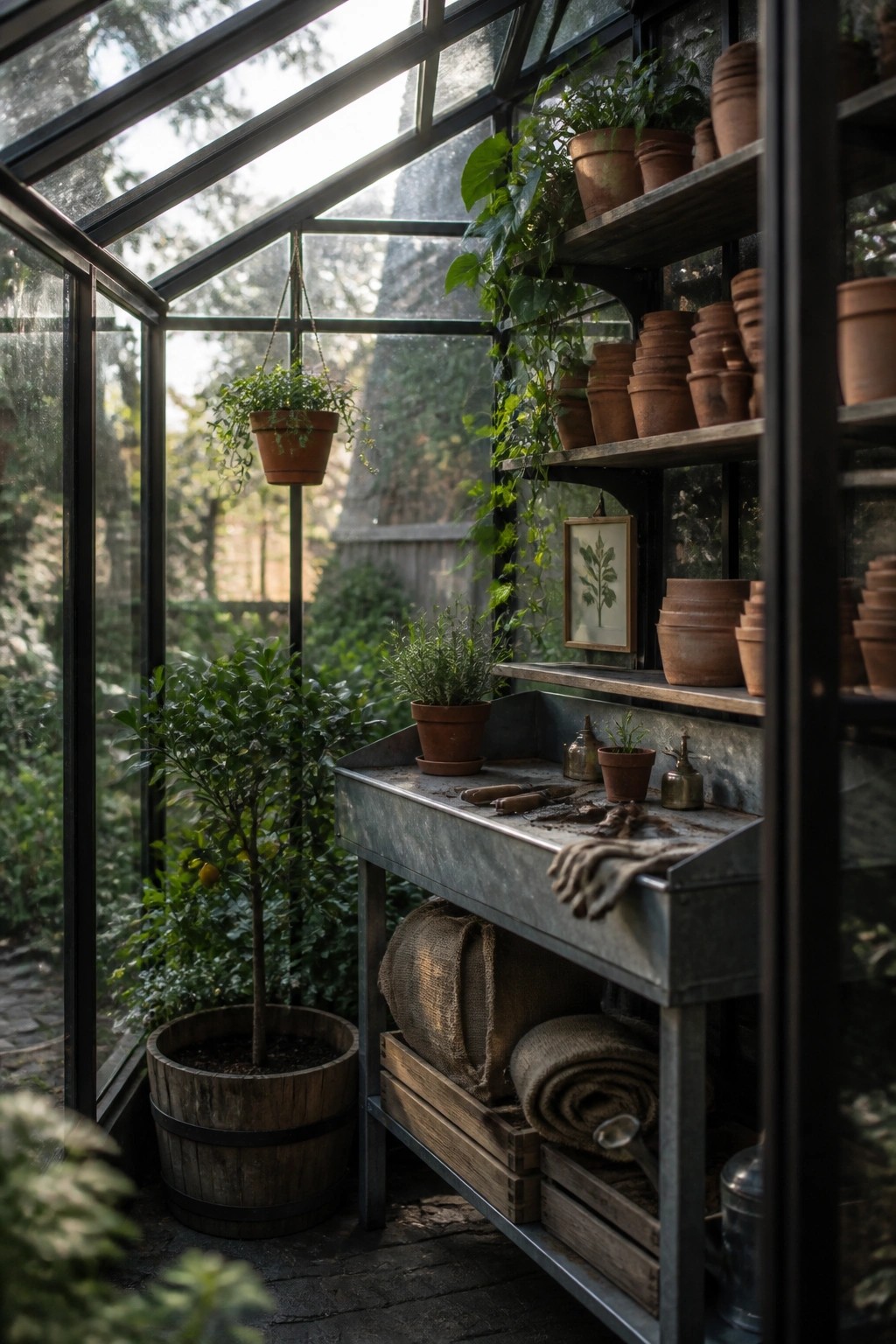
Many small greenhouses or sunroom corners feel more useful once you add open shelving right over the main work table. It keeps pots and supplies close without crowding the floor, which matters when the space is already tight.
This setup works best in attached greenhouses or lean-to structures where you want room to pot plants year round. Keep the shelves at a reachable height and use them mainly for items you grab often, like empty pots and basic tools.
Add A Low Bench Along One Wall For Simple Seating
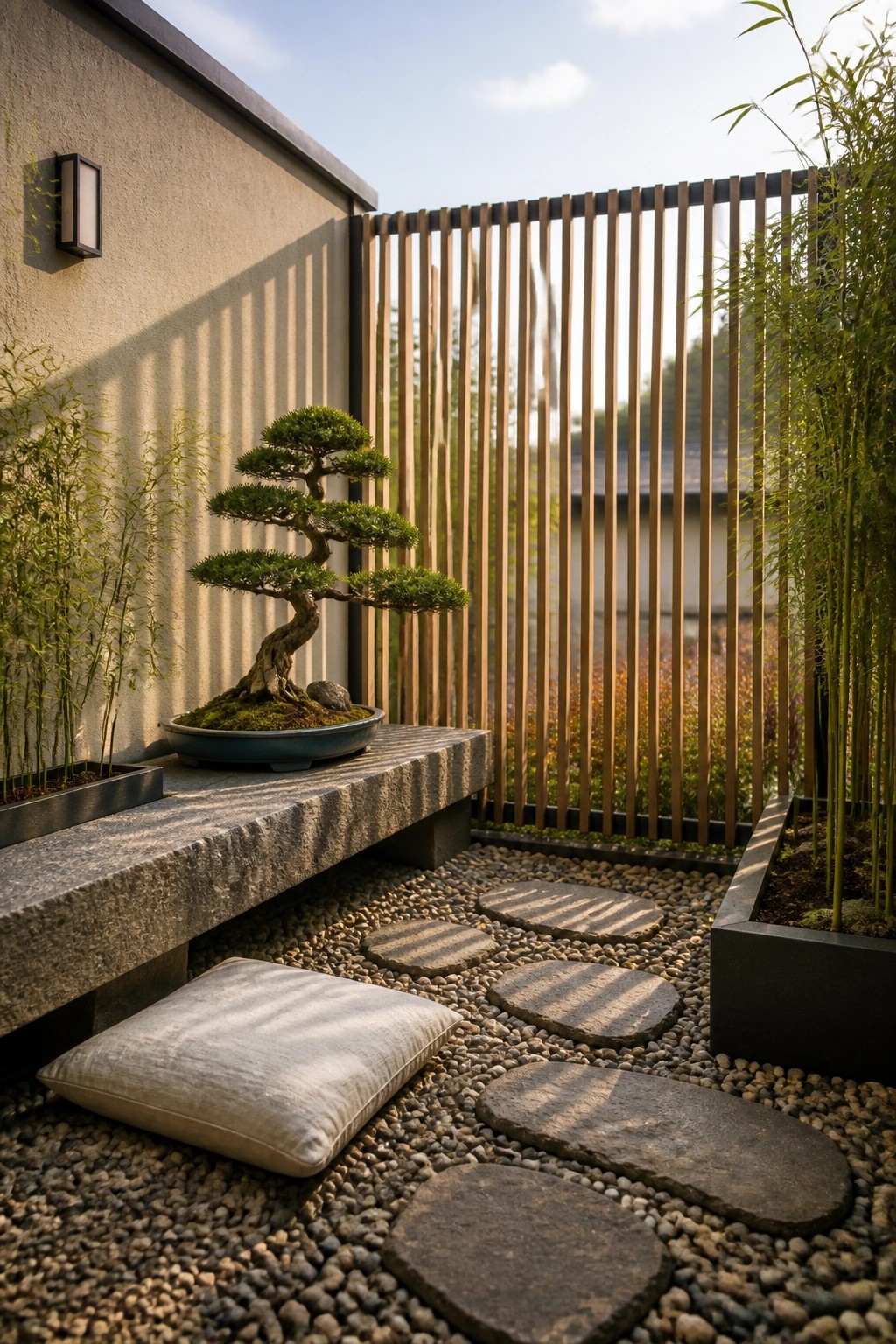
A low stone bench tucked against a wall turns a narrow strip of space into a usable seat without blocking the flow. It works because it stays low and built in, so the area still feels open even when you add a cushion or a few plants nearby.
This setup suits small side yards or corner patios where full furniture would crowd things. Keep the ground simple with gravel and a few stepping stones so the bench becomes the main feature instead of fighting for room.
Labeled Herbs Along a Brick Border
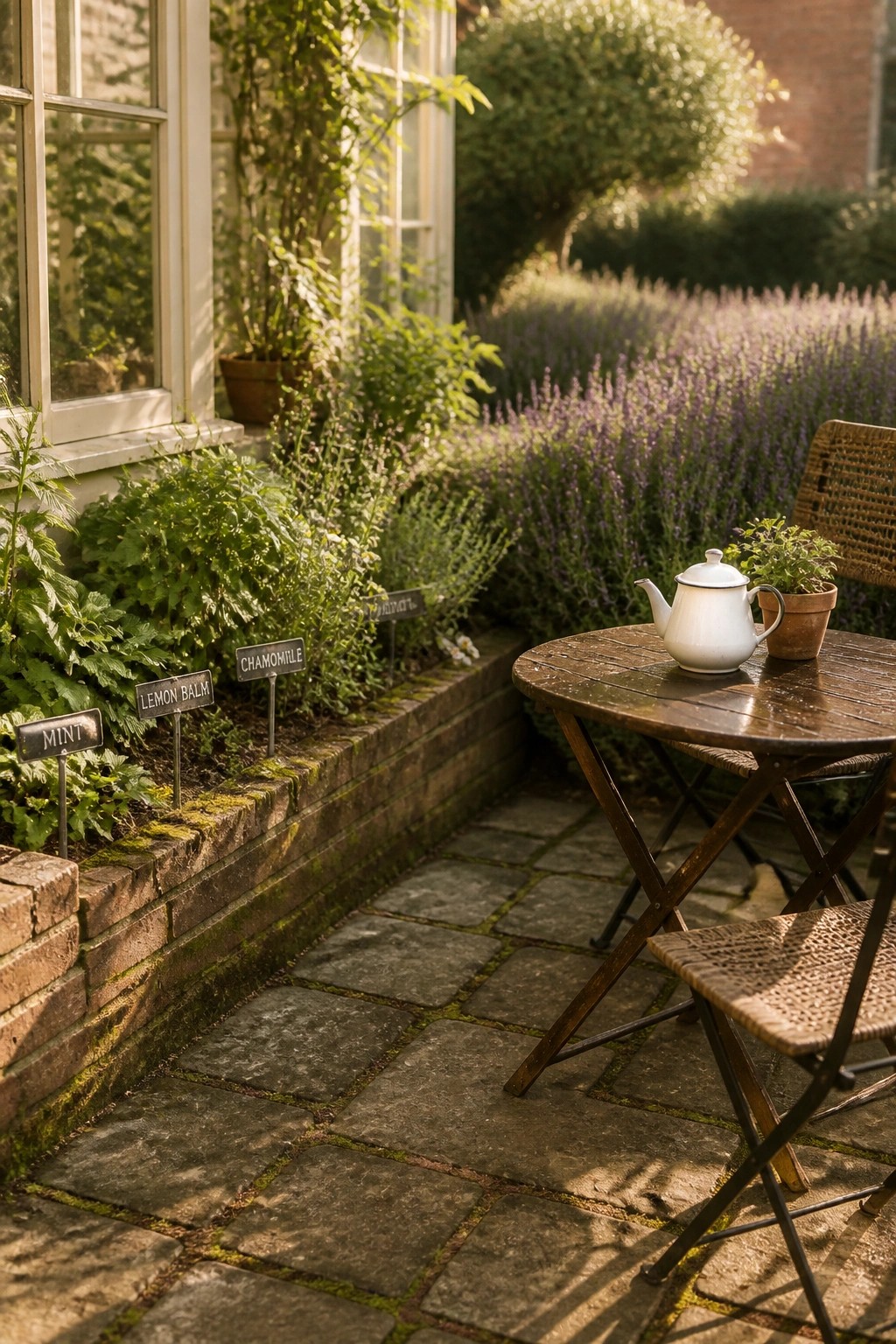
A narrow strip of garden right against the house can feel more useful when you add simple labels to the plants. It turns a basic edging into something practical, especially if you grow herbs you want to identify quickly while sitting outside.
Brick makes a good low border because it holds the soil in place without taking up much room. This works well on small patios where space is tight and you want easy access to mint, chamomile, or lemon balm without a full raised bed.
Add Wall-Mounted Planters in Narrow Spaces
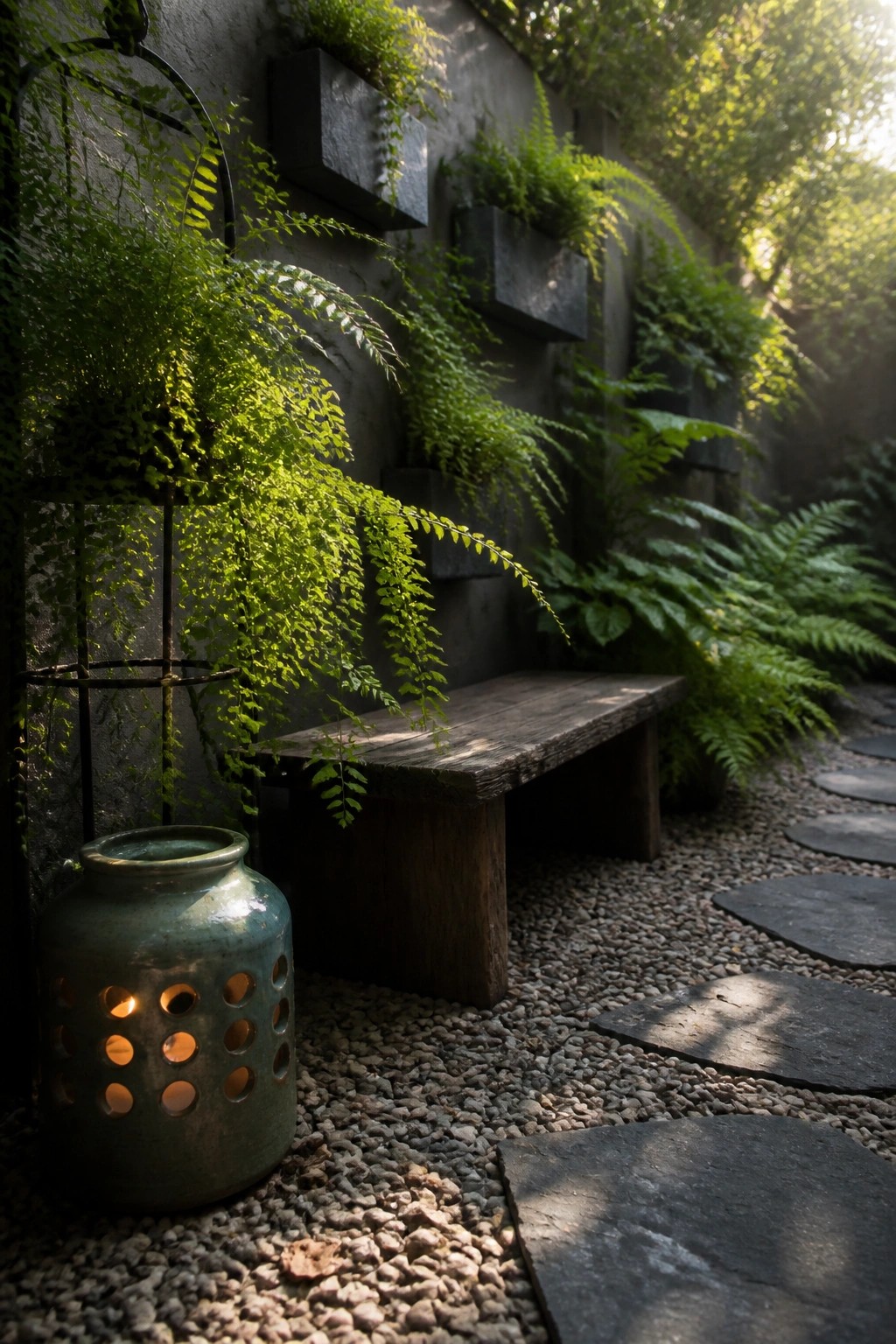
Many tight garden spots have little ground left once you add a path or bench. Mounting simple boxes on the wall lets you bring in plenty of greenery without crowding the floor.
This setup works best along side passages or back corners where the wall is plain and unused. Fill the boxes with trailing ferns so they soften the edges and make the whole area feel more like a garden than a walkway.
Frequently Asked Questions
Q: What plants stay compact without constant trimming? A: Choose varieties labeled as dwarf or patio sized. They keep their shape naturally in tight spots.
Q: How often do these small gardens need water? A: Feel the soil each day during hot spells. Water when the top inch feels dry to avoid root problems.
Q: Can I add seating without losing all the plant space? A: Tuck a slim bench against one wall and use hanging planters above it. This keeps the floor clear for both uses.
Q: What if bugs show up in my containers? A: Wipe leaves with a damp cloth once a week. Most pests stay away when you catch them early.
