


I often find that an overgrown garden loses its shape once the beds blur into the lawn and the paths become hard to follow.
When I start working on a space like that I usually begin by clearing the edges and deciding where new beds should sit so the whole layout feels more intentional.
Paths change how the area works day to day.
After a season or two the structure starts to hold and the plants settle in without everything running together.
I would probably test one new bed and a simple path first to see how the rest of the garden responds before doing more.
Add Edging To Define Garden Beds
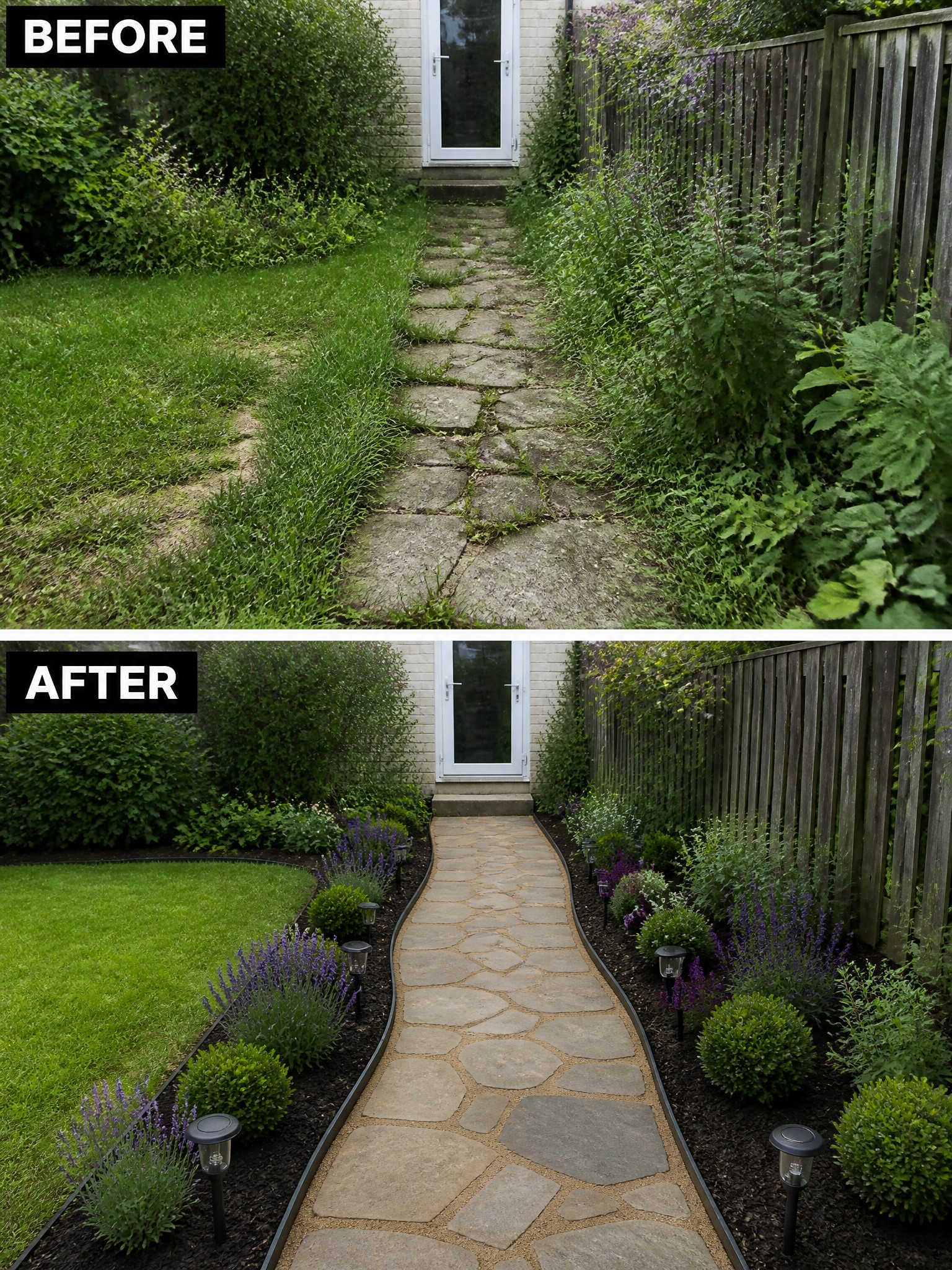
One of the simplest ways to improve an overgrown path is to add clear edging around the beds on either side. In the before photo the grass and plants spill right onto the stones, making the whole area feel messy. Once the beds are edged and mulched, the path stands out and the planting looks intentional instead of wild.
This approach works well on narrow side yards or back garden paths where you want structure without adding a lot of new hardscaping. Start by cutting a clean line along the path, then add mulch inside the beds so weeds stay down and the plants stay separate from the walkway. It keeps the space looking cared for even when you cannot spend hours weeding every week.
Add Structure To An Overgrown Front Yard
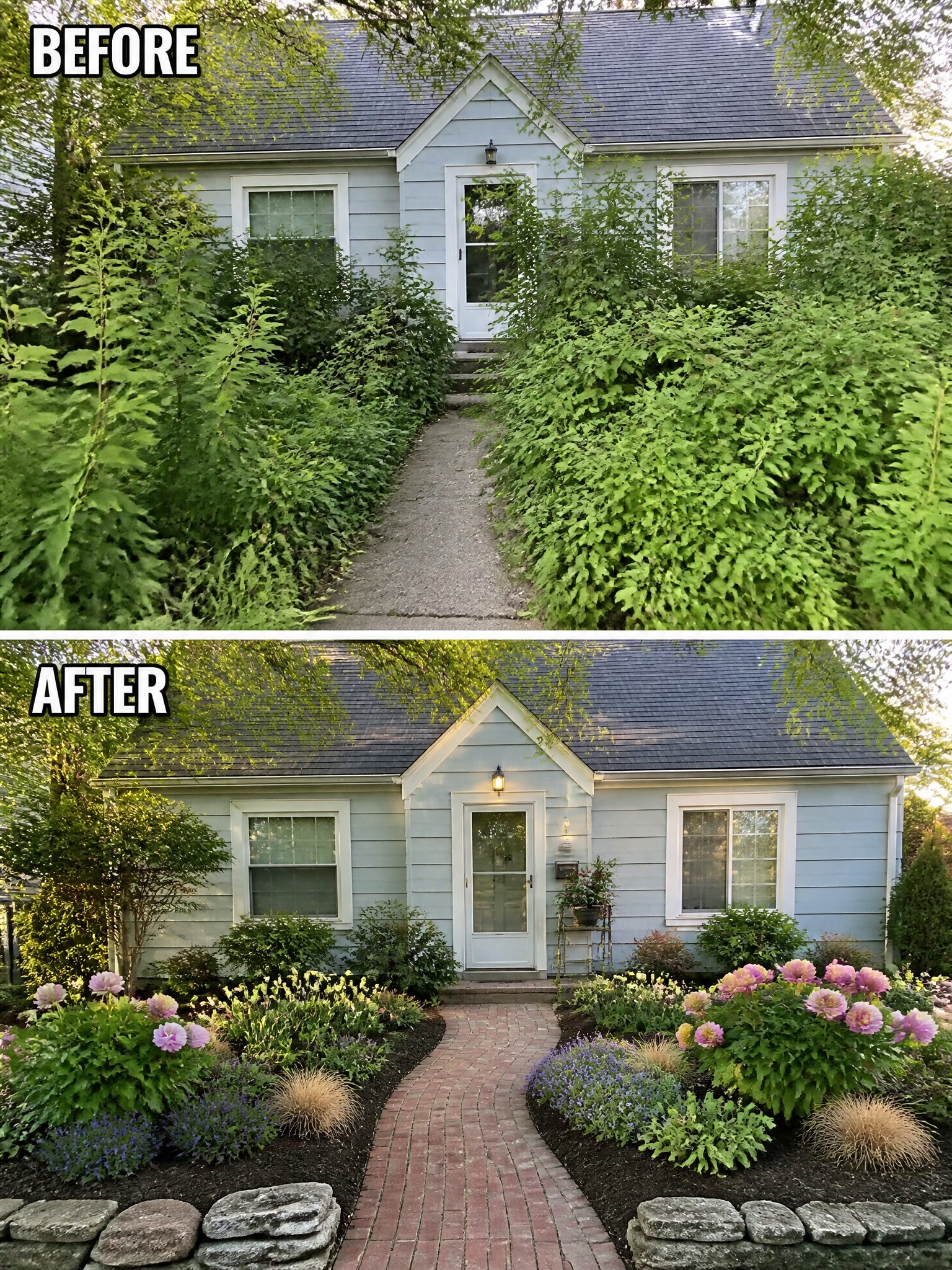
Overgrown shrubs can quickly swallow a front yard and hide the house. In this case the fix started with clearing the heavy growth along the walkway, then adding low garden beds on both sides. A new brick path replaced the old gravel one and gave the whole space a clear shape.
This approach works well on small to medium lots where the house sits close to the street. Start by removing the largest plants first so you can see the actual layout. Keep new beds narrow enough to reach from the path, and choose a mix of low perennials and a few shrubs that will stay in scale with the house.
Clear Overgrowth Before Adding Defined Garden Beds
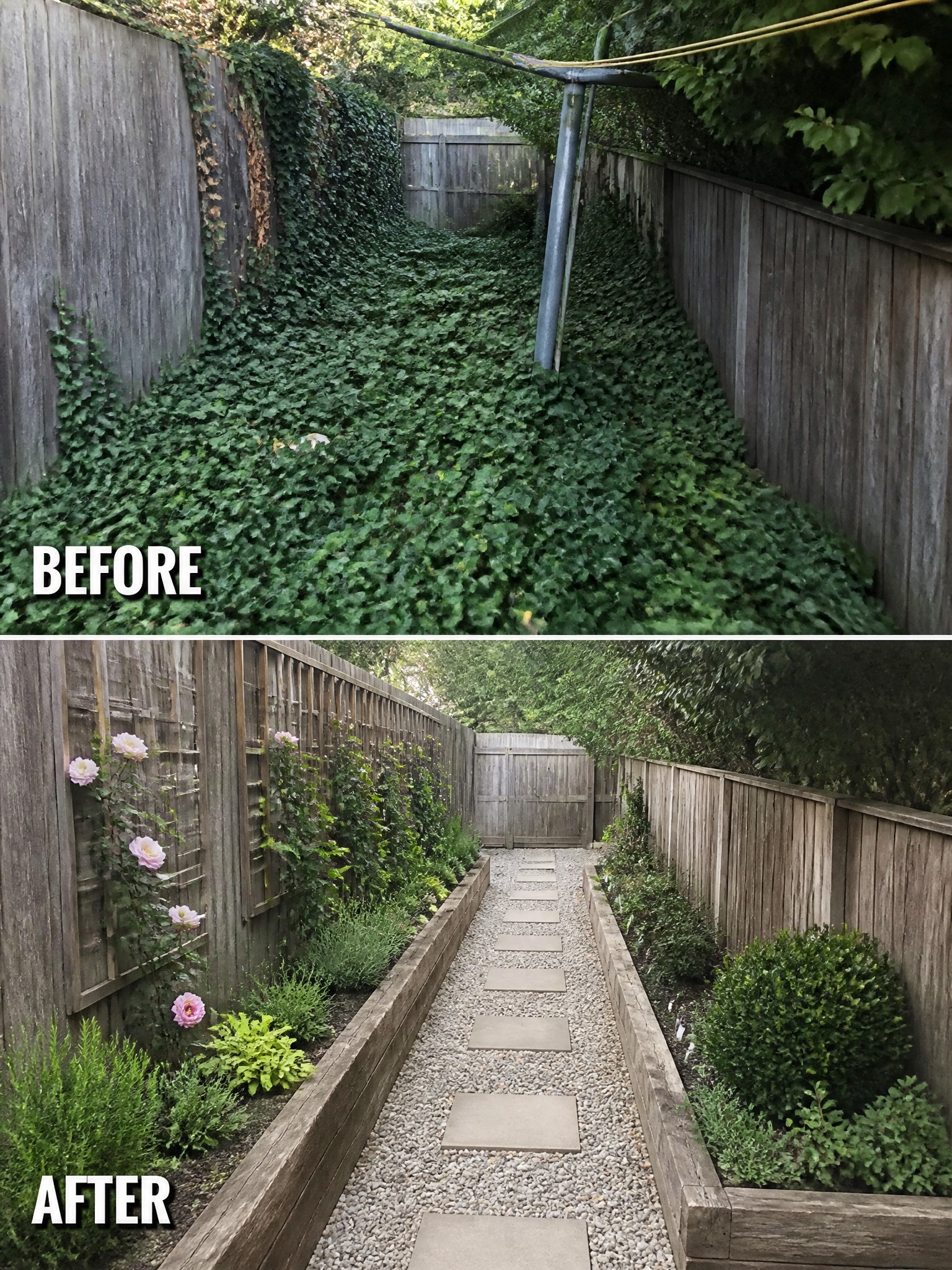
An overgrown side passage or narrow garden often stays unused because the plants take over every surface. Clearing the ivy and weeds first opens up the space, then simple raised beds and a gravel path with stepping stones give it clear shape and easy access.
This approach works well in tight yards or between fences where space feels limited. Start by removing the heavy growth, then add wooden edging to hold the beds and gravel to keep the path stable. It keeps the area practical without crowding it with too many plants at once.
Add Raised Beds And Mulch Paths To Organize An Overgrown Garden
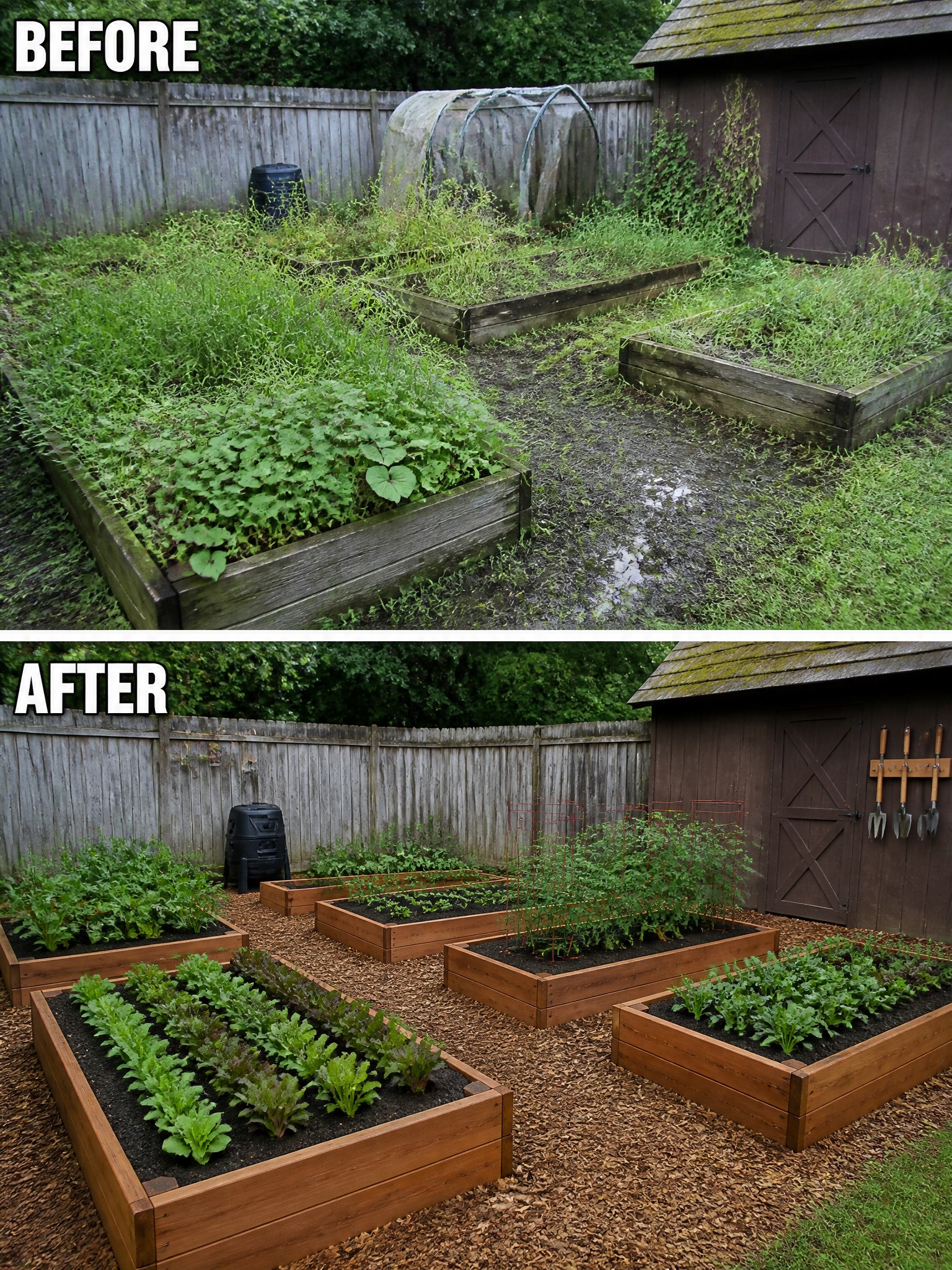
Raised beds and fresh mulch can turn a messy, weed-filled yard into something much easier to manage. The before photo shows scattered beds lost in tall grass and bare dirt, while the after shows straight rows of wooden boxes set on clean mulch that actually defines where everything belongs.
This approach works well in small backyards or side gardens where you want to grow food or flowers without constant weeding. Start by clearing the worst of the overgrowth, then lay out the beds first before adding any plants. The mulch keeps the paths usable and stops weeds from coming back as fast, so you spend more time enjoying the garden than fighting it.
Add Structure To An Overgrown Backyard
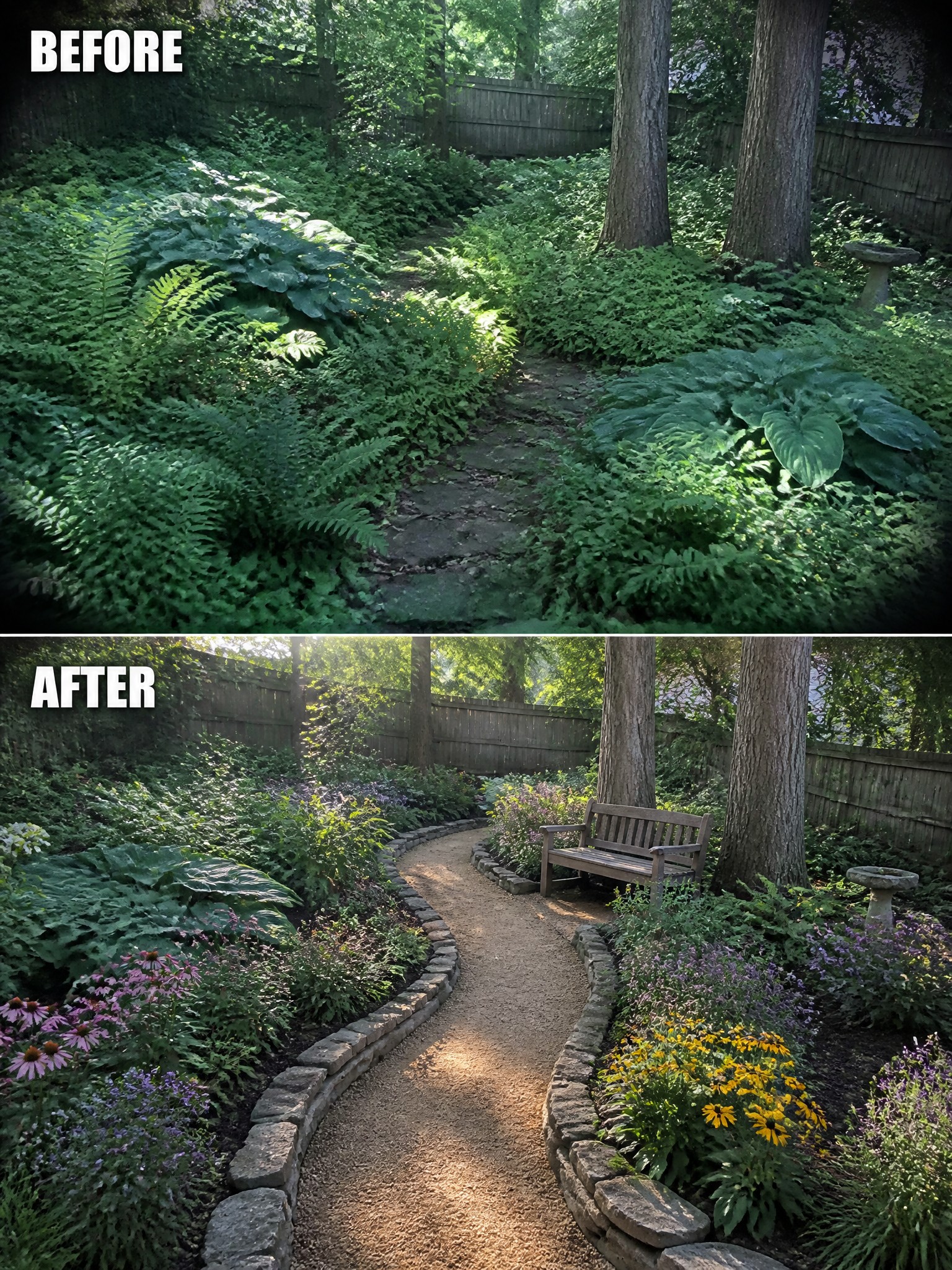
An overgrown yard often buries its paths under unchecked growth. Clearing the excess plants and adding low stone edging along the walkway gives the space a clear shape. The gravel surface then makes the path feel intentional instead of accidental.
This idea works best in older yards where the original layout has disappeared. Start by cutting back the overgrowth first, then mark the main path with edging before filling the beds. Simple borders keep the garden looking planned while still leaving room for plants to fill in naturally.
Clear Ivy And Add Raised Beds To An Overgrown Backyard
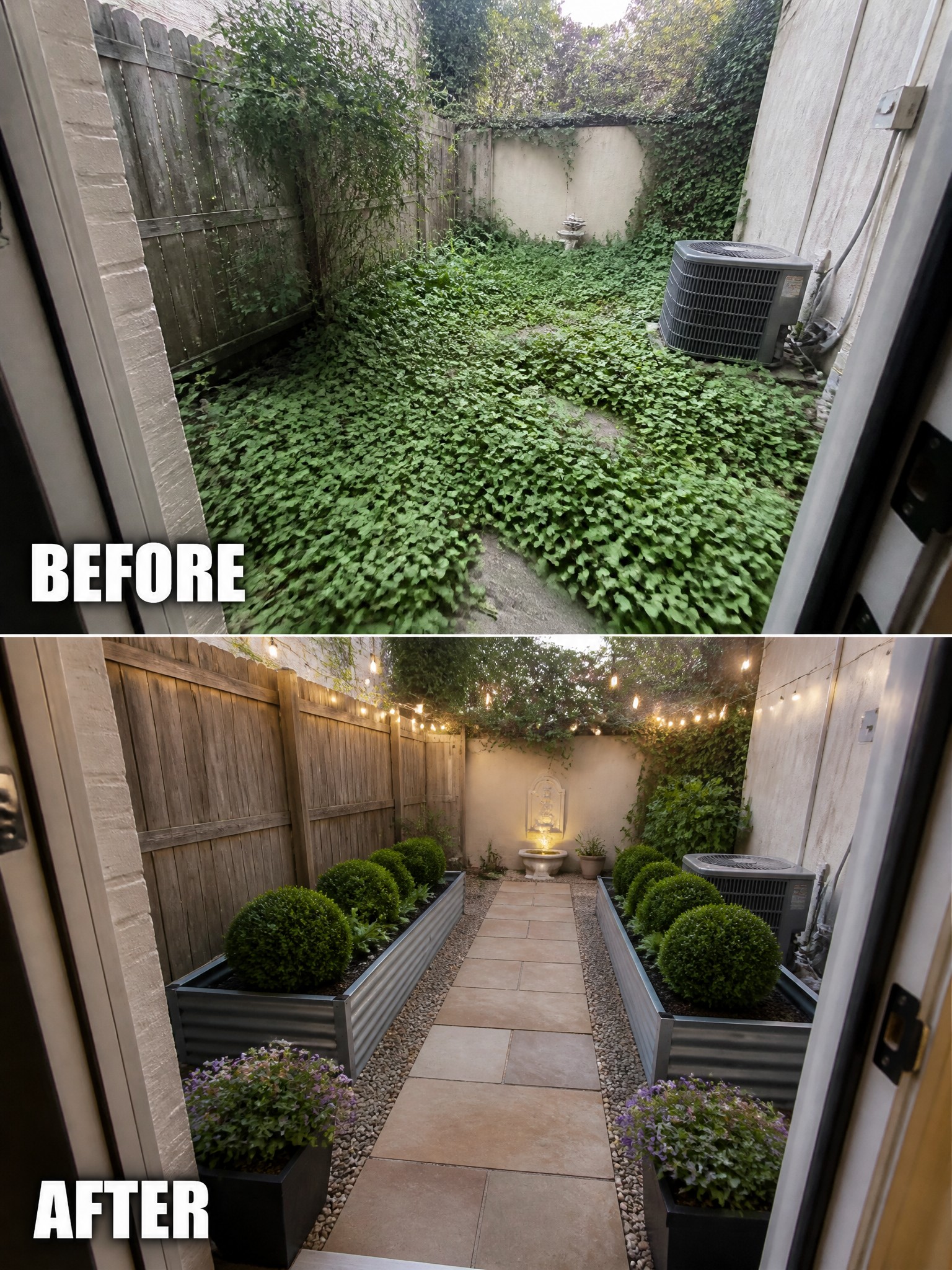
An overgrown yard quickly becomes hard to use when vines and weeds cover everything. Clearing the ivy first opens up the space, then raised beds along the sides and a paved path down the middle give it clear shape and easy access.
This works best in narrow yards or side gardens where you want order without losing all the greenery. Focus on the beds and path before adding too many plants so the layout stays readable and the space remains walkable.
Replace A Crumbling Path To Restore An Overgrown Backyard
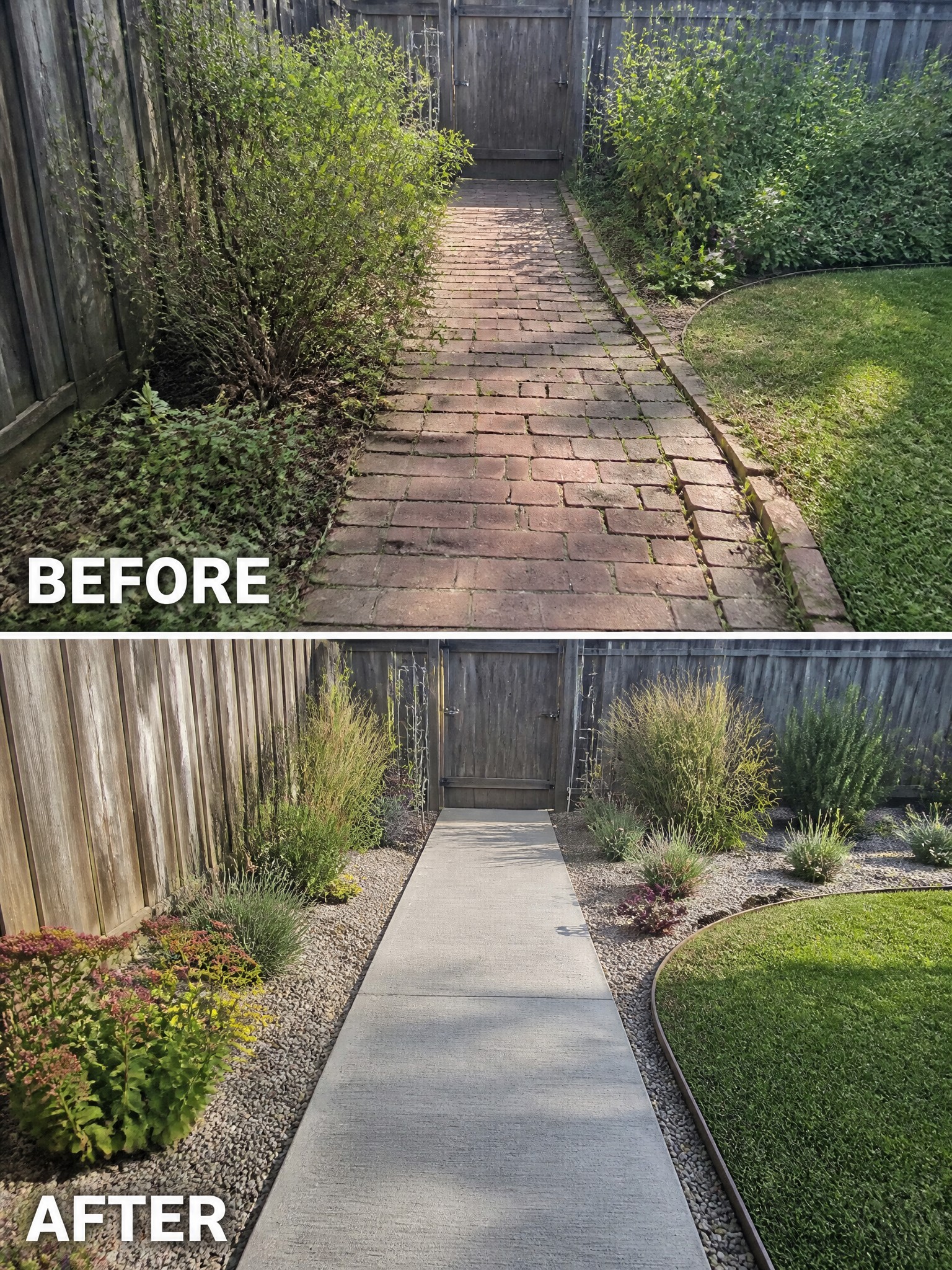
Replacing a crumbling brick path with a straight concrete walkway and switching the surrounding dirt to gravel instantly gives the space order. The old path let plants spill everywhere and made the whole area feel neglected. Once the path was updated and the beds were edged with gravel, the planting could be kept in check without constant trimming.
This approach works well in narrow side yards or back garden paths where you need a clear route but still want room for plants. Start by removing the old surface and adding a solid base so water drains properly. Keep the planting simple at first, then add a few taller shrubs along the fence for privacy. The goal is a layout that stays tidy with normal maintenance rather than constant cleanup.
Turn A Steep Overgrown Slope Into Tiered Beds
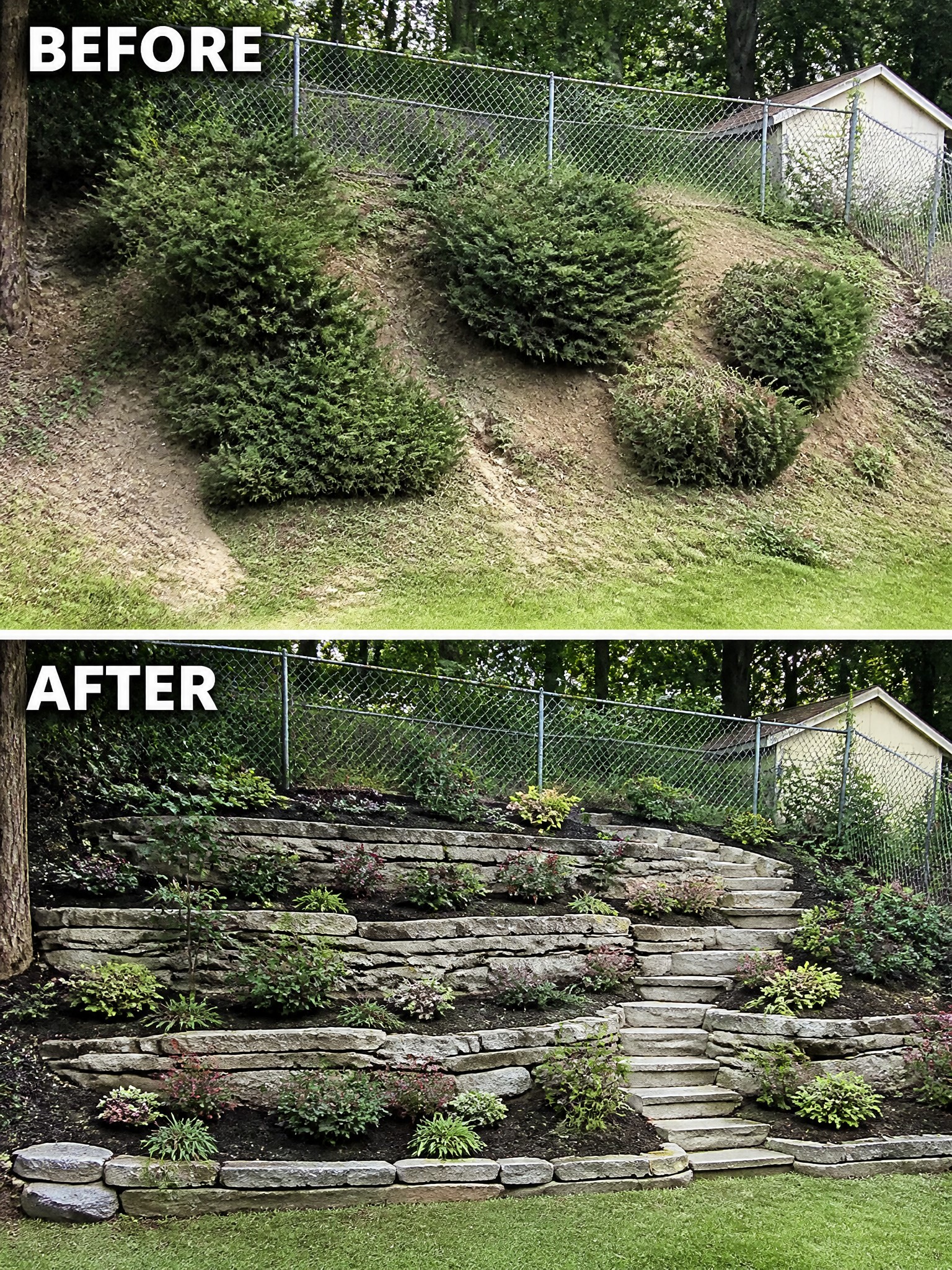
A bare, weedy hillside covered in scattered shrubs is hard to manage and looks messy. Stacking stone walls creates flat planting levels that hold soil in place and give the slope a clear structure. The steps also make the area usable instead of just a steep drop.
This idea works best on yards with a noticeable incline where grass or simple planting keeps sliding. Keep the walls low enough to build without heavy equipment, repeat the same stone across all tiers, and plant in groups rather than scattering single plants. Start with the cleanup and wall layout before choosing the final plants.
Define An Overgrown Yard With Garden Beds And A Path

One of the easiest ways to fix a neglected front yard is to give it clear garden beds and a simple path. The weedy grass and worn dirt walkway were replaced with mulched borders and stepping stones that make the whole space feel planned instead of left to grow wild.
This idea works best on small lots where you want the yard to look tidy without major construction. Outline the beds first, add a thick layer of mulch to hold the soil and cut down on weeds, then fill them with a mix of grasses and perennials that can handle the local conditions. Leave enough open grass so the yard still feels open and easy to mow.
Create A Walkable Path Through An Overgrown Backyard
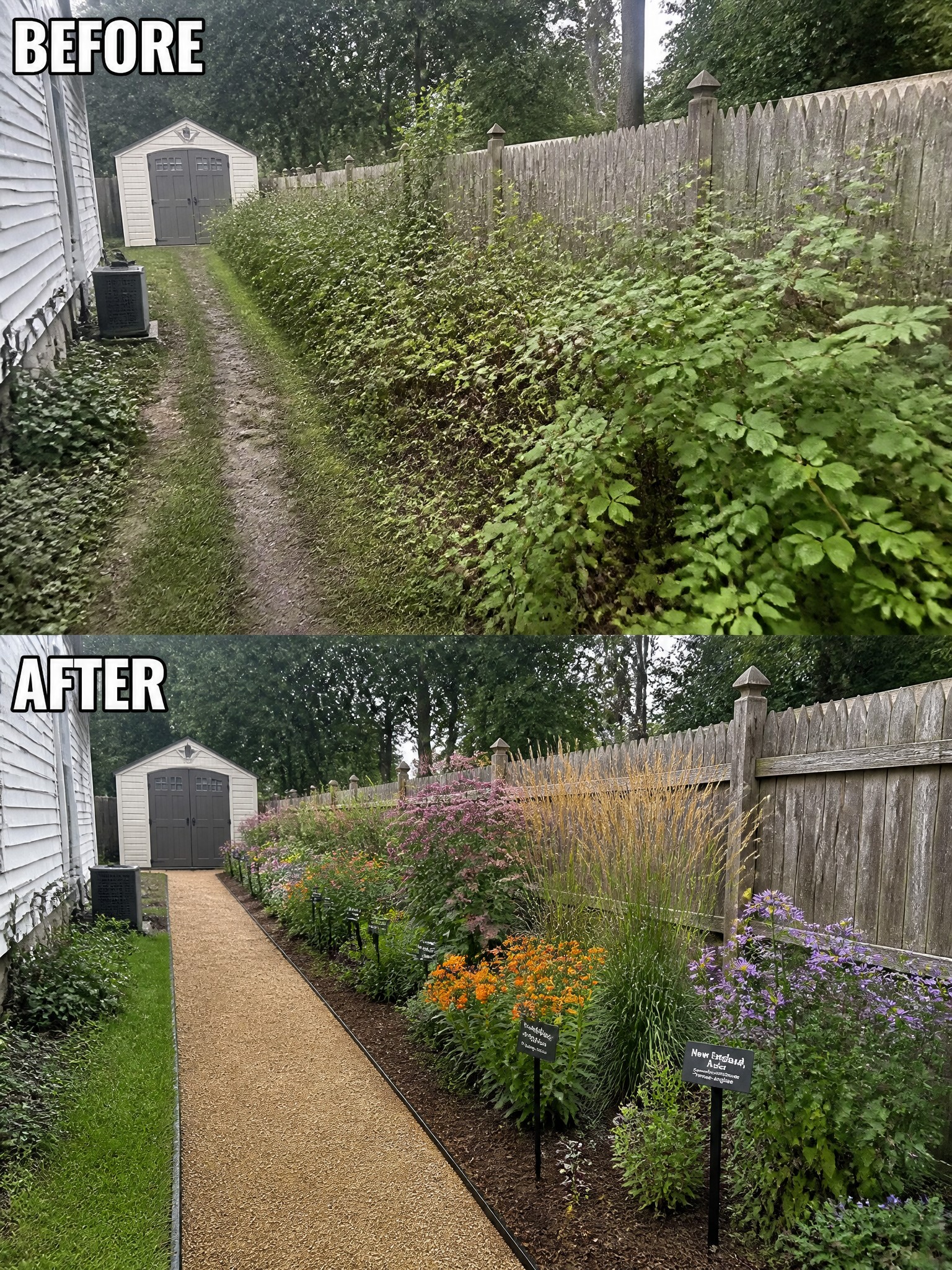
An overgrown strip along a fence or path quickly starts to feel neglected. Clearing the thick growth and replacing it with a simple gravel path and mulched beds gives the area a clear shape. The beds keep plants contained instead of spilling everywhere, and the path makes the space easy to walk through and maintain.
This idea works best in side yards or along property lines where plants have taken over. Cut back the heaviest growth first, then lay out the path and beds before adding new plants. Mulch helps control weeds while the new planting fills in.
Clear Ivy And Concrete To Create A Usable Backyard
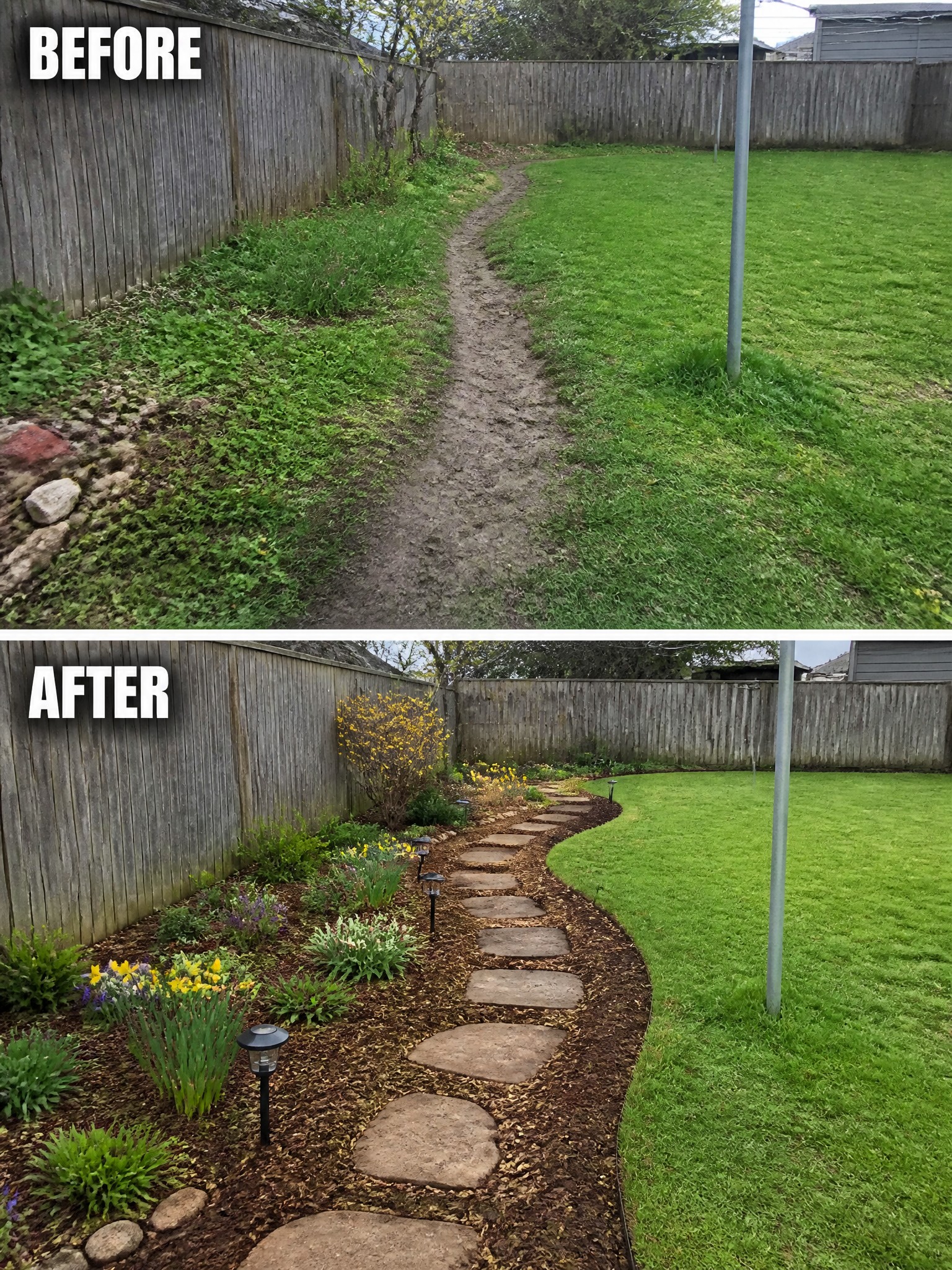
A clear path and defined beds can turn a weedy strip along a fence into something usable. The before photo shows a worn dirt track and thick weeds. After the change, stepping stones give a solid walkway while mulch and plants create neat borders on both sides.
This idea works best in narrow side yards or along property lines where grass never thrives. Clear the overgrowth first, then lay out the path before planting. Mulch keeps weeds down and makes the beds look finished even while the plants fill in.
Use Gravel Paths And Simple Edging To Organize An Overgrown Yard
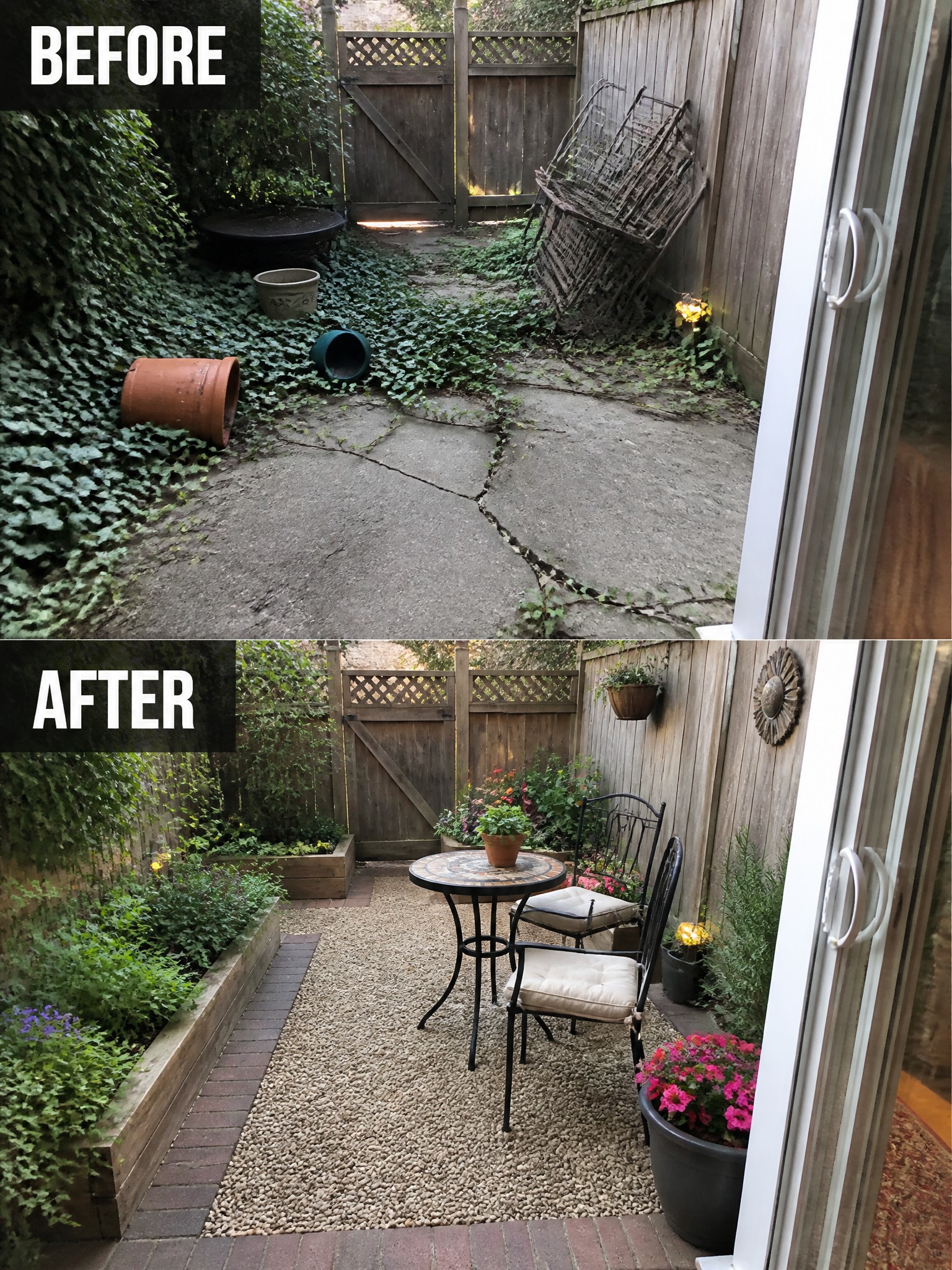
The main shift happened once the thick ivy and cracked concrete were cleared away. Raised beds along the edges and a gravel surface gave the space clean lines and turned a messy patch into a usable area with room to sit.
This idea suits small yards that have grown wild. Clear the worst growth first, then add simple beds and a path before bringing in furniture or extra plants. It keeps the layout practical and prevents the space from feeling crowded later on.
Add Structure To An Overgrown Yard
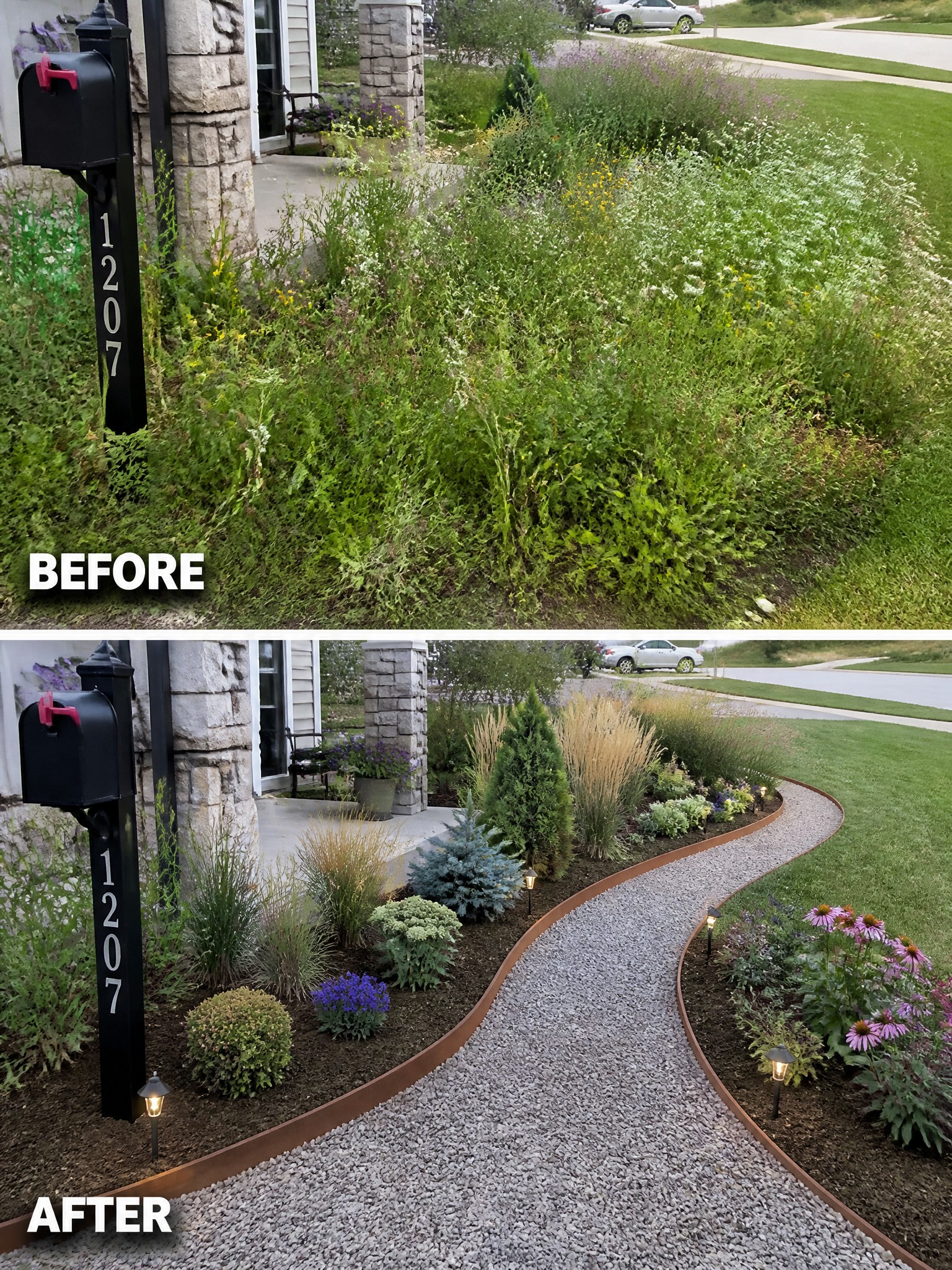
Clearing the thick overgrowth first lets you see what the space actually needs. Once the weeds and tall grasses are gone, adding simple edging and a gravel path gives the area shape and makes it feel intentional instead of neglected.
This works best along the side of a house or near the driveway where you want low maintenance. Keep the beds narrow enough to reach across, repeat a few plant types, and let the path do the work of guiding movement through the yard.
Add Structure To An Overgrown Garden
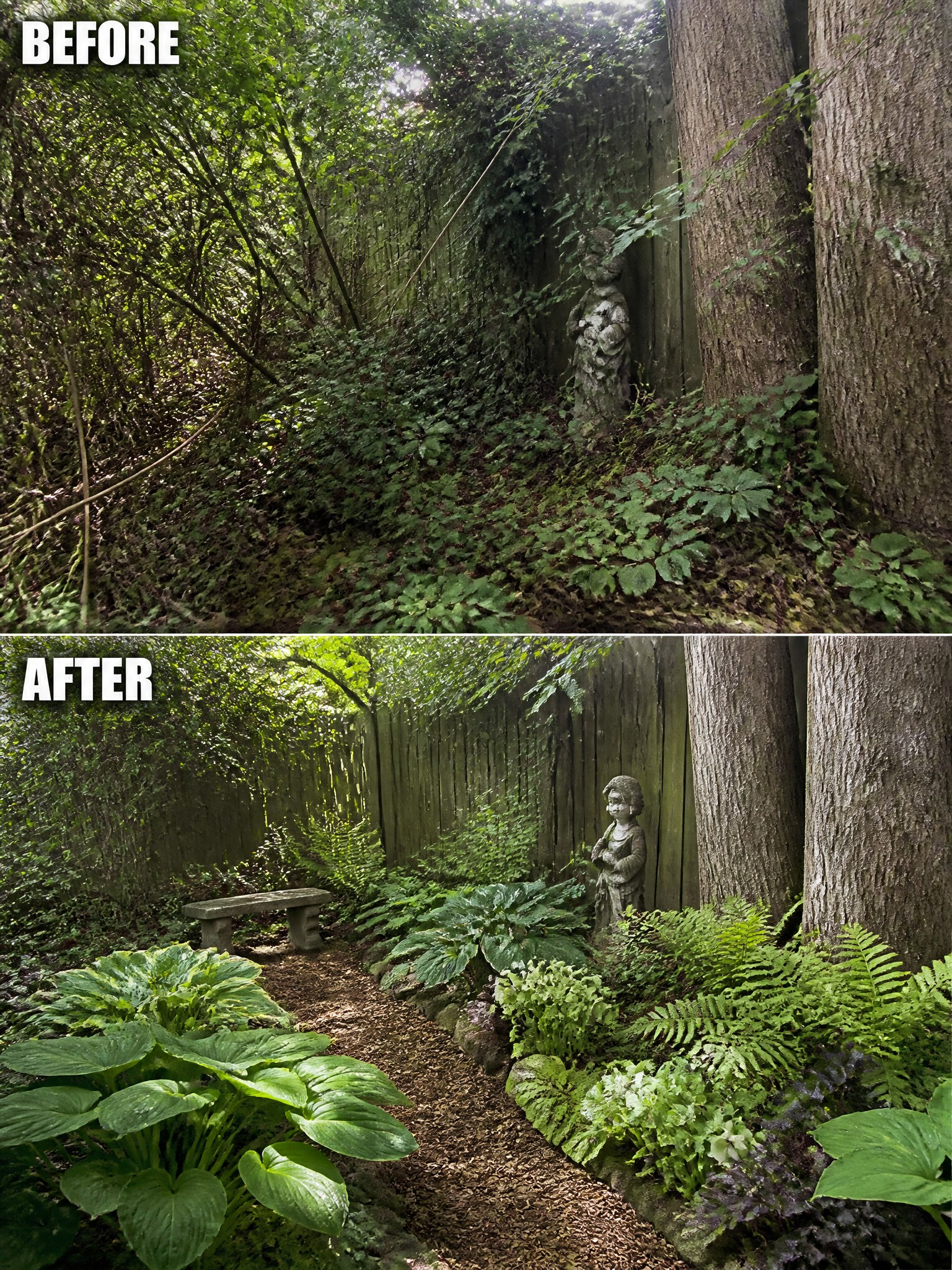
An overgrown side yard or narrow garden often feels unusable until the first step is clearing back the excess growth. Once the space is opened up, adding a simple mulch path and bordered planting areas turns the area into something you can actually walk through and enjoy. The main change here was cutting back the dense brush and laying down a defined route with planted edges on both sides.
This approach works well in tight backyards or along fence lines where plants have taken over. Start by removing the thickest growth first, then mark out a path and use edging or rocks to hold the beds in place. Mulch keeps the look neat and reduces weeds, and you can fill the beds with shade-tolerant plants that match the light conditions. The result feels planned without needing a full redesign.
Add Structure To An Overgrown Garden Path
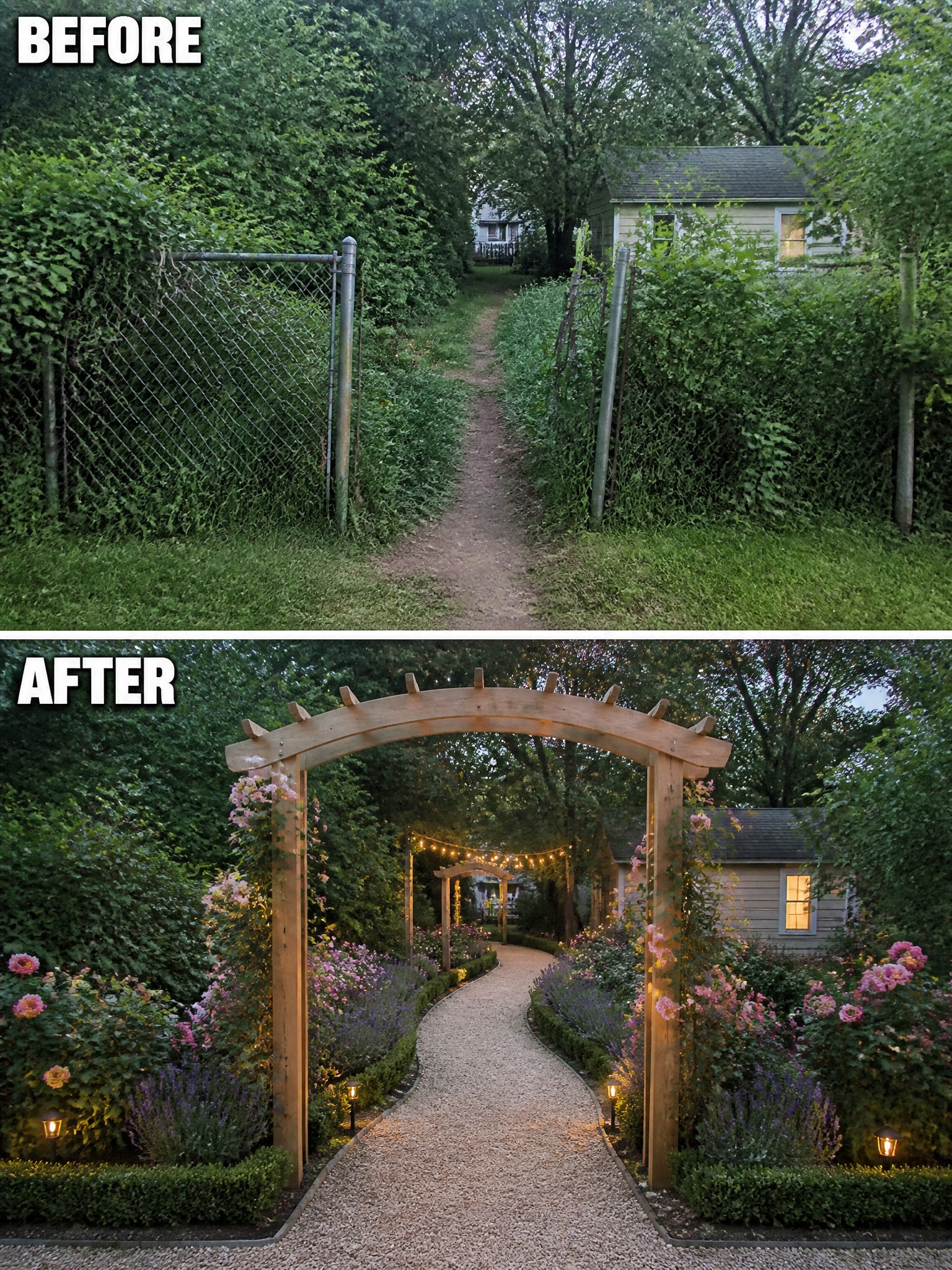
An overgrown side path often feels forgotten because it lacks any clear edges or purpose. Replacing the chain link fence and dirt trail with a gravel walkway, wooden arches, and planted borders turns the space into a guided route that feels planned rather than accidental.
This idea suits older properties where trees and shrubs have filled in over the years. Clear the sides first, lay a simple gravel or mulch path to keep feet dry, then add one or two arches and repeat a few easy plants along the edges. The result stays low maintenance while giving the garden a sense of direction.
Add Structure To An Overgrown Slope
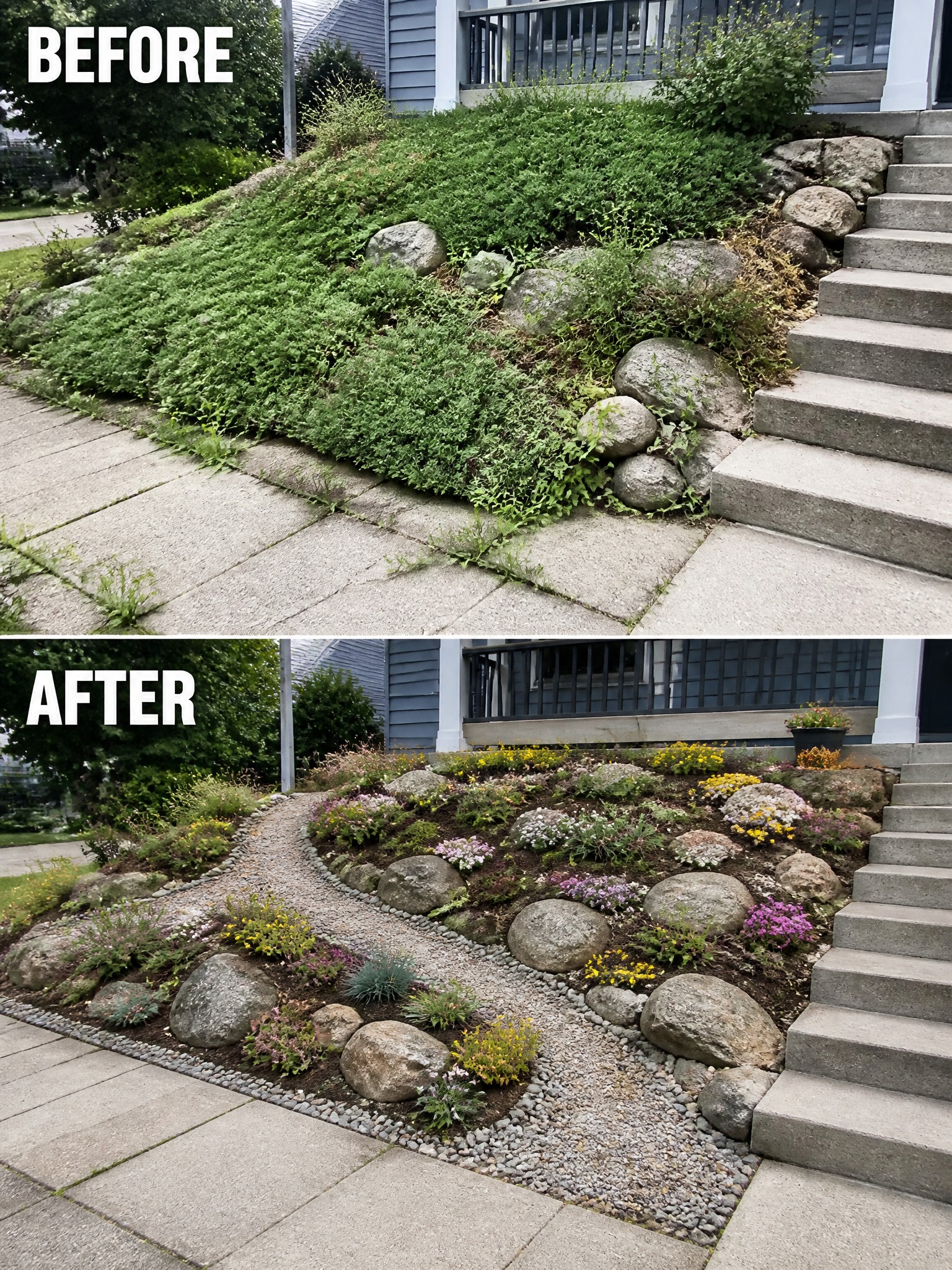
A messy slope next to a walkway often looks worse over time as plants spill out and weeds take over. Clearing the overgrowth first and then laying out defined beds with gravel borders and rocks gives the area shape without needing a full redesign.
This approach works best on sloped front yards or side areas where you still want some planting but need control over the edges. Use the gravel to create a clear line that keeps soil from washing down and makes mowing or walking easier.
Give An Overgrown Yard Structure With A Path And Beds
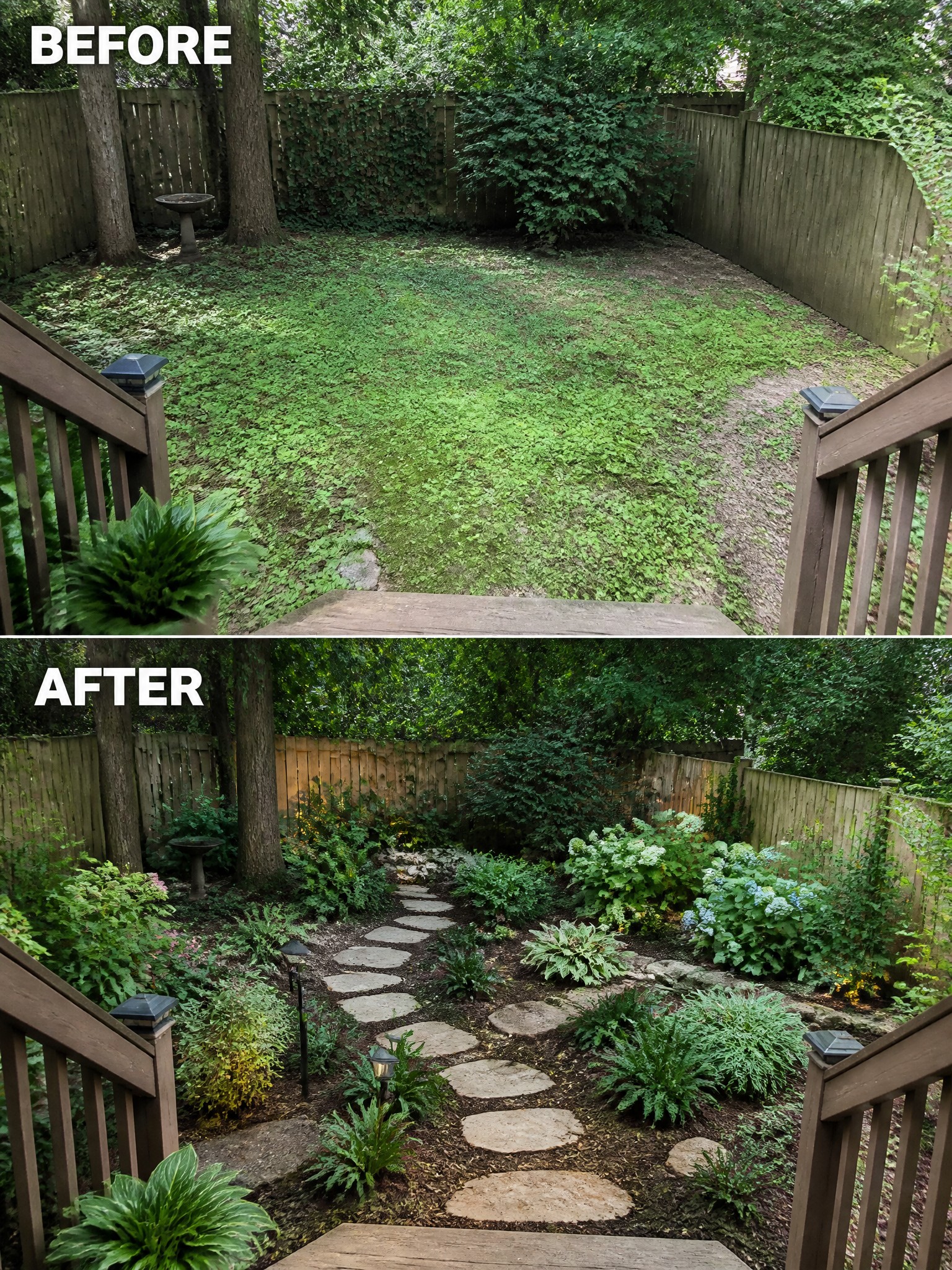
An overgrown backyard often feels like one big empty space with no clear way to use it. Adding a simple stone path through the middle and planting defined beds along the edges turns the same yard into something you can actually walk through and enjoy. The path creates flow while the beds keep plants from spilling everywhere.
This approach works well in any backyard that has decent space but lacks shape. Start by clearing the heavy growth first, then lay the path before planting so you can see how much room remains on each side. It keeps the garden feeling open rather than crowded.
Organize An Overgrown Garden With Raised Beds And Gravel Paths
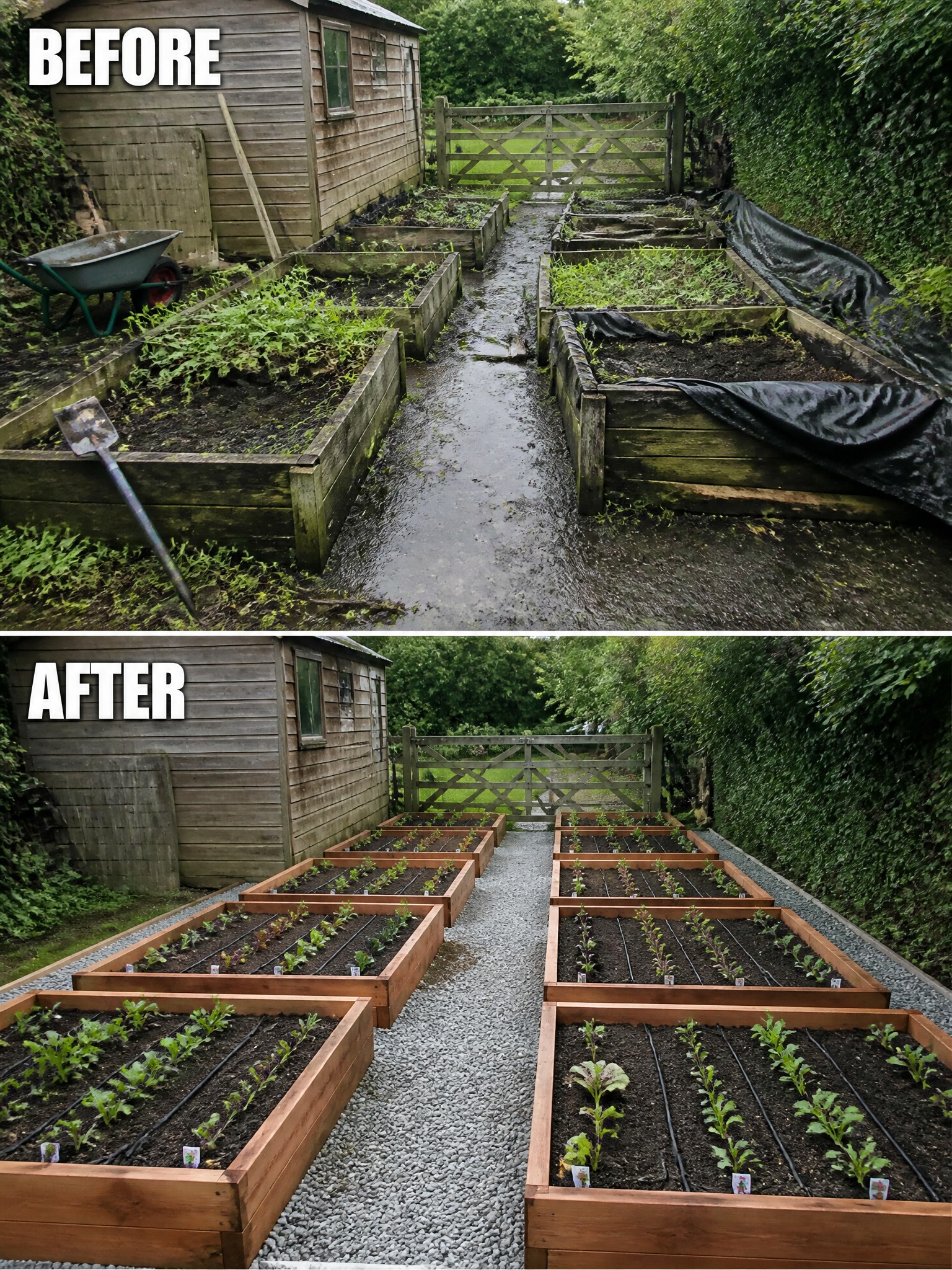
One of the most effective ways to fix a neglected garden is to add clear structure with raised beds and paths. The before photo shows scattered beds and a muddy walkway, while the after shows neat rows of wooden beds with gravel running between them. This simple change turns a messy space into something organized and easier to maintain.
This idea works best in long or narrow gardens where you need to create order before adding more plants. Lay out the beds and paths first so you know exactly where everything goes. Gravel paths keep the ground from turning to mud and make it easy to walk through without compacting the soil.
Define Paths First When Clearing An Overgrown Yard
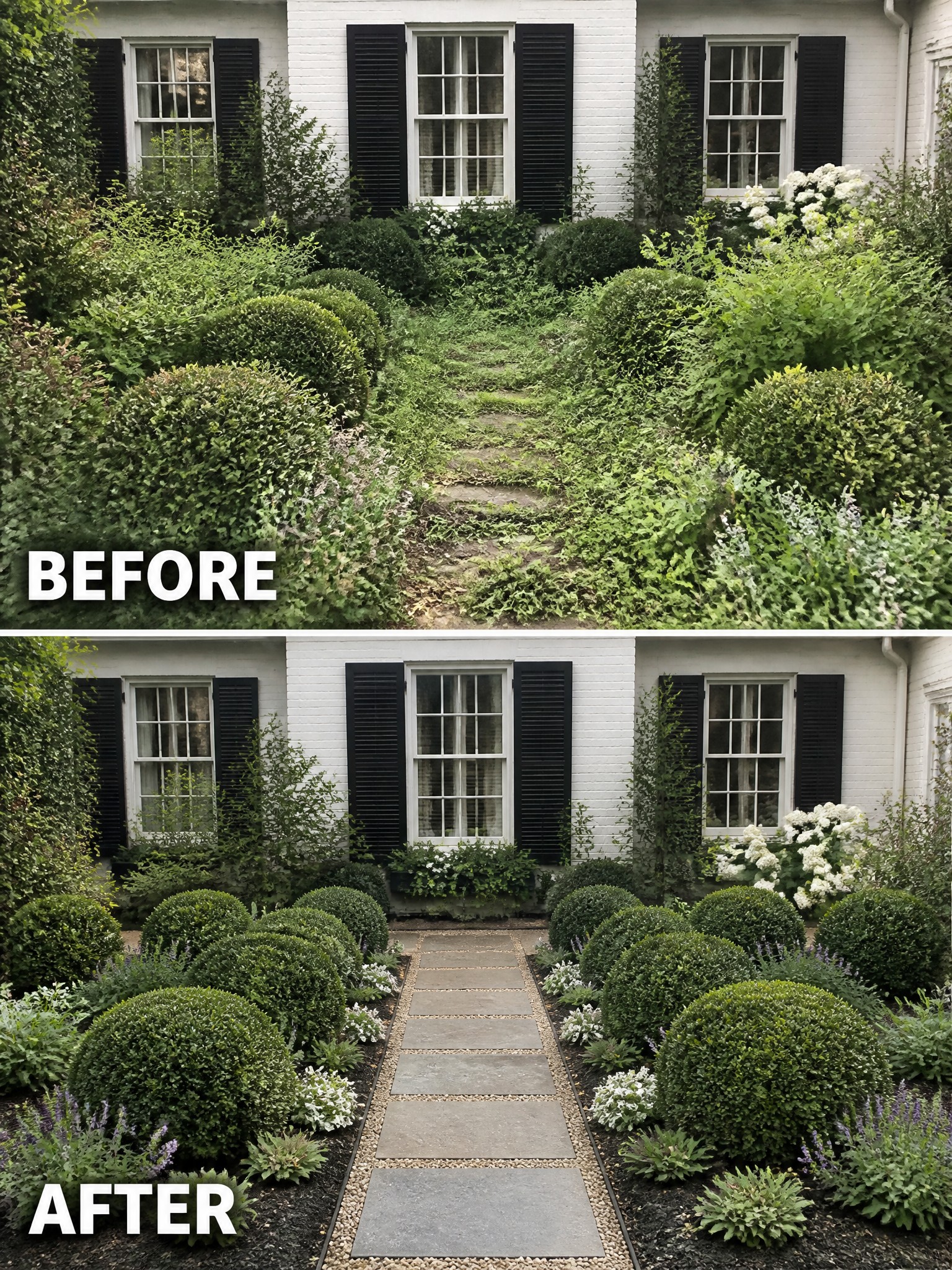
An overgrown garden often looks worse than it is once you give it a clear structure. In this case the main change was cutting back the chaos and laying a straight stone path with gravel edges. That single move turned the space from a tangle into something you can actually walk through and maintain.
The same approach works well on many older properties where plants have filled in over the years. Start by deciding where you need to walk and mark those routes before you do any new planting. Once the path is in place the beds on either side become much easier to shape and keep under control.
Define Paths With Gravel In An Overgrown Garden
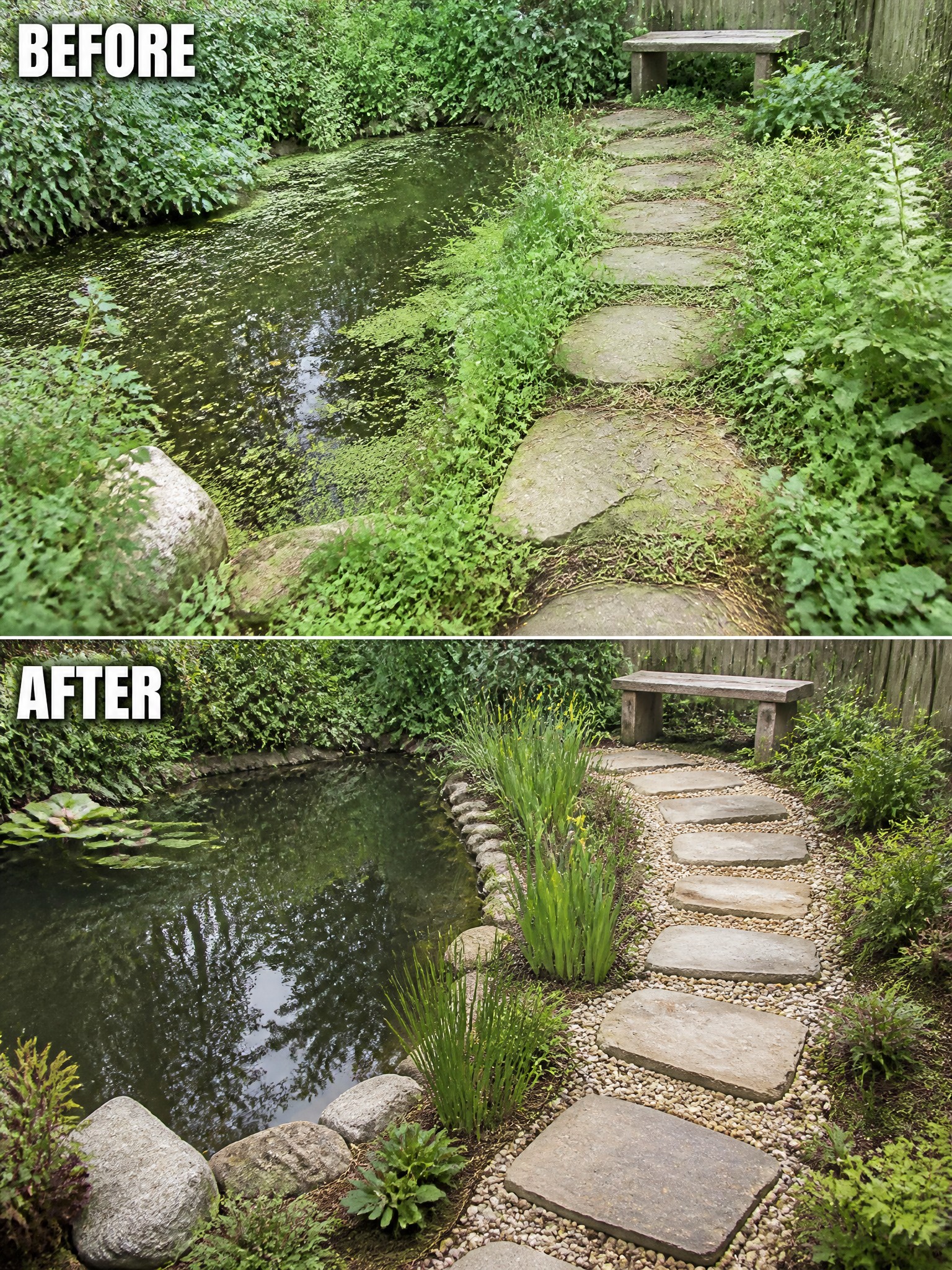
Clearing the excess growth first made the biggest difference here. The stepping stones were nearly lost under weeds and the pond edge had no clear shape, so the whole area felt neglected. Adding a gravel border and some simple stone edging gave the path a firm outline and let the pond stand out without looking messy.
This approach works well around small ponds or natural water features where plants tend to spread. Remove the worst of the overgrowth first, then lay gravel or mulch to separate the walking area from the planting. It keeps the space usable even when the surrounding garden stays a bit wild.
Turn An Overgrown Path Into A Defined Garden Walk

An overgrown side path often looks worse than it really is. Clearing the tall grass and weeds first makes room for simple planted borders on both sides. A brick path replaces the cracked concrete and gives the whole area a clear shape that feels intentional instead of neglected.
This approach works best on narrow spaces between a house and a fence or property line. Keep the beds fairly narrow so the path stays easy to walk. Use a mix of taller grasses or perennials in the back and lower flowers near the edge to soften the look without crowding the walkway.
Add A Clear Path To Organize An Overgrown Side Yard
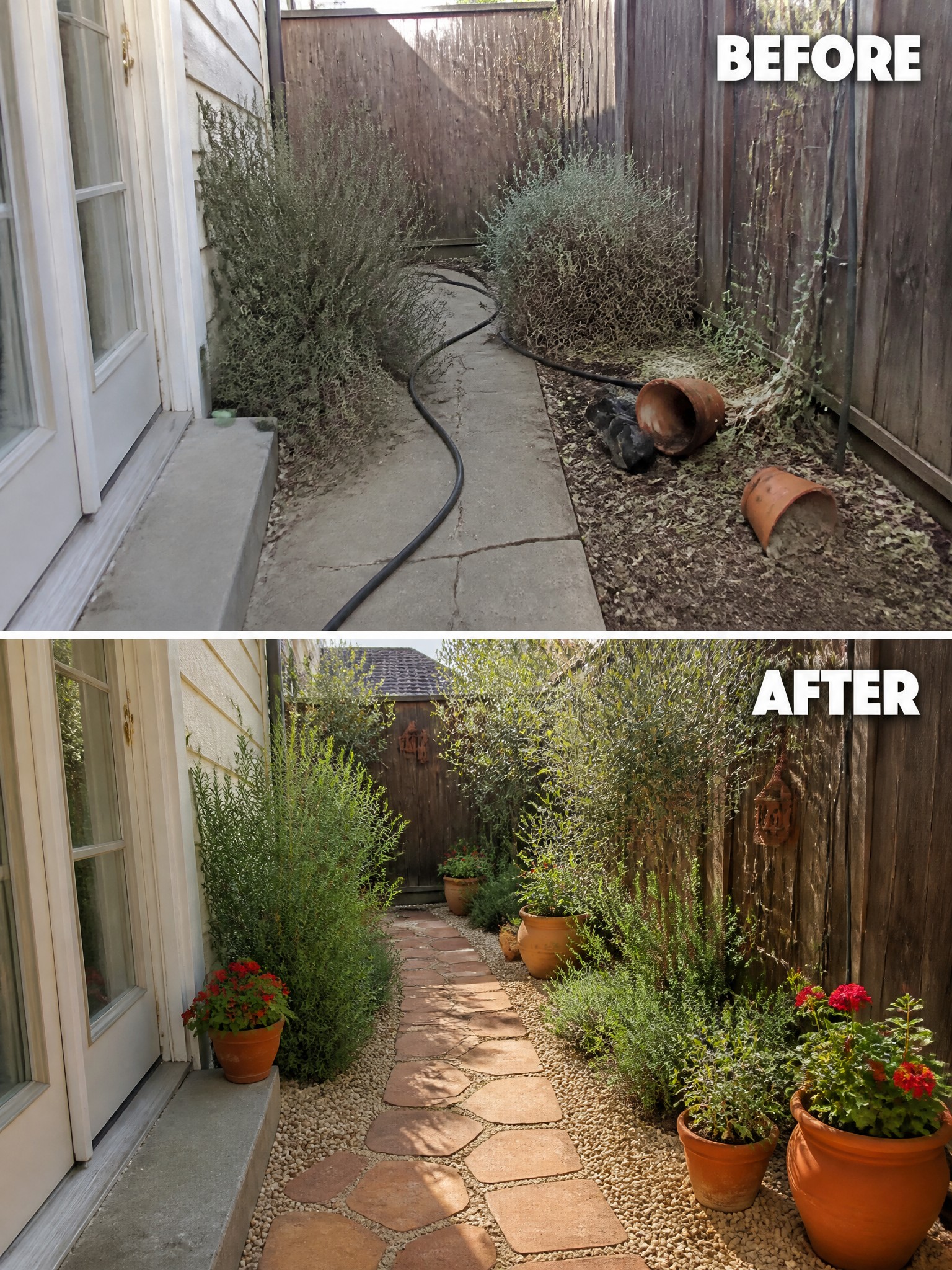
A narrow side yard often ends up as a forgotten strip of dirt and weeds. In this case the space went from a winding concrete walkway buried under messy growth to a straight path of irregular pavers set in gravel. The new path gives the eye a clear route and stops the area from feeling like leftover space.
This approach works well on any tight passage between a house and a fence. Start by clearing the overgrowth and leveling the ground, then lay pavers in a simple pattern with gravel on either side. Keep the planting to a few large pots so the path stays open and easy to walk.
Define A Narrow Side Yard With A Path And Planting Beds

A messy dirt path next to a fence often stays unused because it lacks any clear shape. Adding a simple paved walkway with garden beds along one side turns the space into something you can actually walk through and enjoy. The brick path gives structure while the planted border softens the fence and keeps weeds from taking over again.
This idea works best in tight side yards or between a building and a property line where space is limited. Start by clearing the overgrowth completely, then lay the path first so the beds can follow its edge. Keep the planting simple with a mix of taller and lower plants so the beds look full without crowding the walkway.
Frequently Asked Questions
Q: How do I mark out paths without clearing the whole garden first? A: Walk the space and lay a hose or rope where you want the paths to curve. This shows you the bed shapes right away so you can start planting without digging up everything at once.
Q: What works for keeping gravel paths from disappearing under fast spreaders? A: Edge the beds with low boards or stones right after you lay the gravel. Trim the plants back from the path line every month or so to hold that separation.
Q: Can I skip big edging materials and still make the beds look neat? A: Use old bricks or logs you already have to border the beds. They keep soil from spilling onto the paths while the plants fill in around them.
