

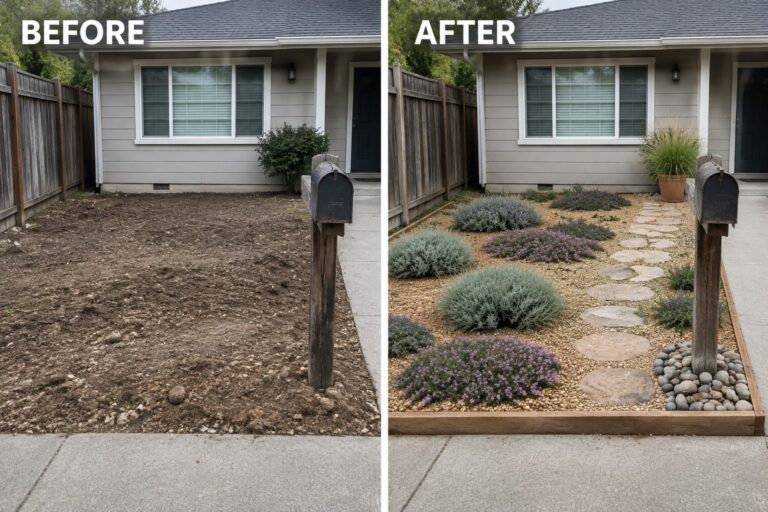
Yards covered in plain dirt often lack any real structure so water runs off unevenly and nothing seems to stay in place for long.
Gravel creates stable paths and sitting spots while ground cover fills the gaps with low plants that need little fuss.
I always check how the soil drains before laying anything down.
Over the first year those materials settle in and start to look like they belong there.
The changes build gradually but they turn an empty patch into a space that actually gets used.
Define A Bare Yard With Gravel And Ground Cover
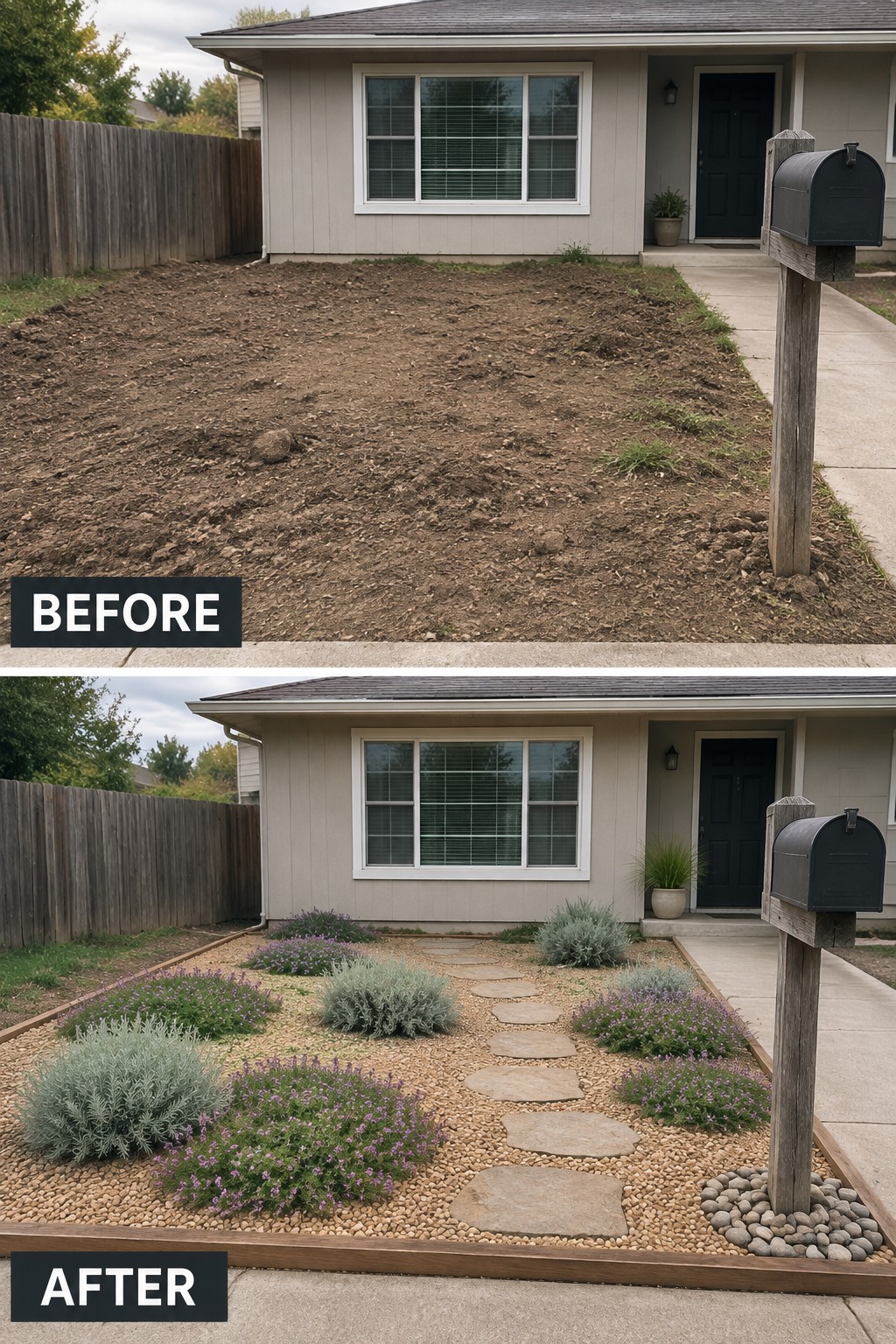
A bare dirt yard often feels unfinished because there is no clear edge or planting pattern to hold the eye. Adding a layer of gravel over the soil, then placing low ground cover plants in loose clusters, instantly gives the space shape and makes it feel intentional rather than neglected. The stepping stones through the gravel turn the area into something people can walk across instead of just look at.
This approach works well in front yards or narrow side strips where you want low maintenance but still need some structure. Start by setting a simple border or edging, then spread the gravel thick enough to suppress weeds. Choose spreading ground covers that can fill in over a season or two so the beds look fuller without extra fuss.
Add Structure To A Narrow Side Yard
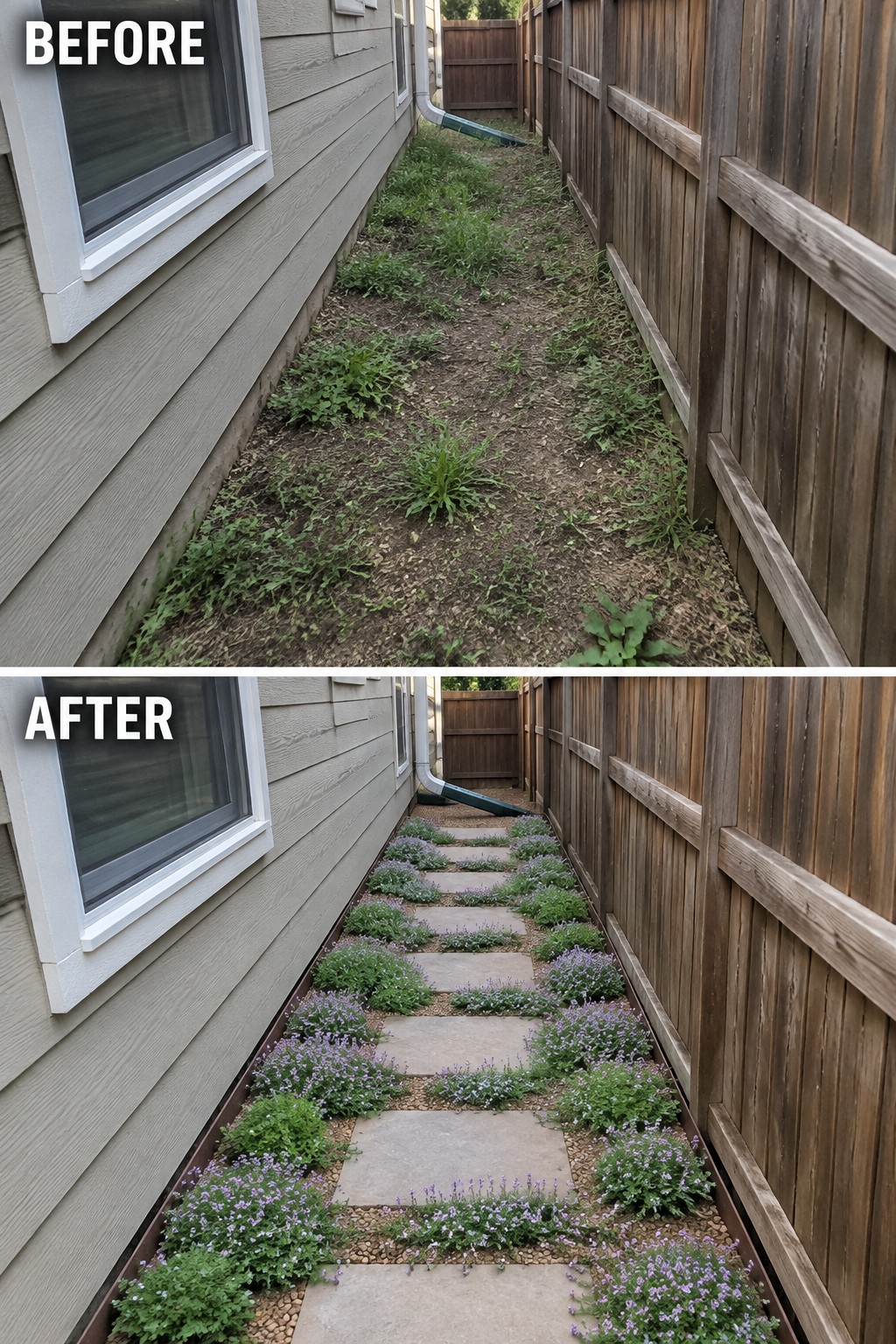
A long, narrow strip next to the house often becomes a weedy strip of dirt because it is awkward to mow and hard to keep tidy. Adding stepping stones gives the space a clear purpose while the gravel and low ground cover on either side keep the edges neat and stop weeds from taking over again.
This idea works best in side yards that need regular access but do not have room for a full patio. Start with a simple cleanup, lay the stones in a straight line, and fill between them with gravel before planting low ground cover along the edges. The plants soften the look without crowding the walkway.
Terrace A Bare Slope To Create Planting Beds
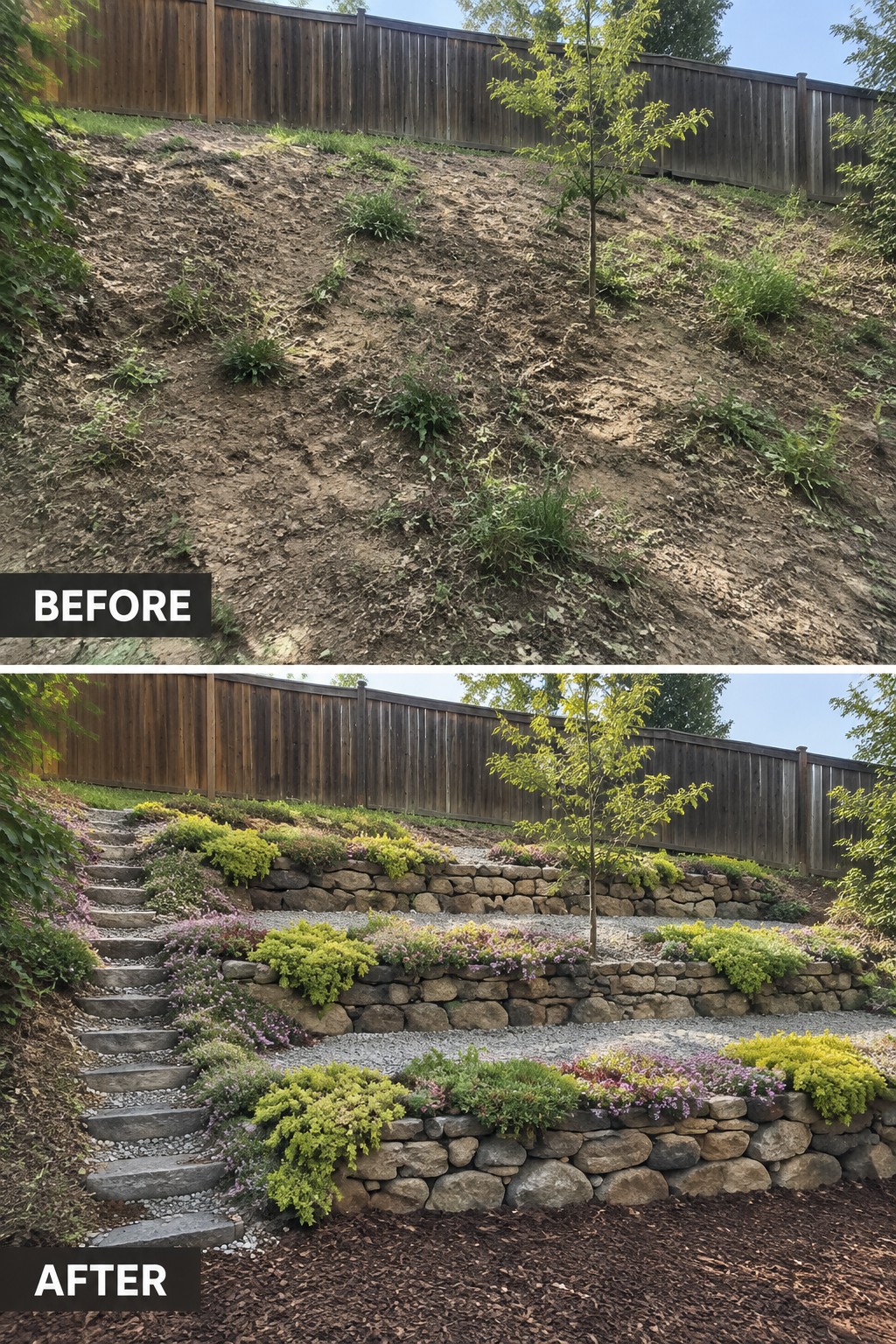
A bare dirt slope often stays empty because it erodes and feels hard to plant. Stone retaining walls change that by carving the hill into flat levels that hold soil and support shrubs and ground covers without constant washout.
This approach suits homes with noticeable grade changes where you want more garden space without major regrading. Build the walls first to set the structure, then add gravel for paths and low plants that fill in quickly and stay manageable.
Use Gravel To Create A Defined Fire Pit Area
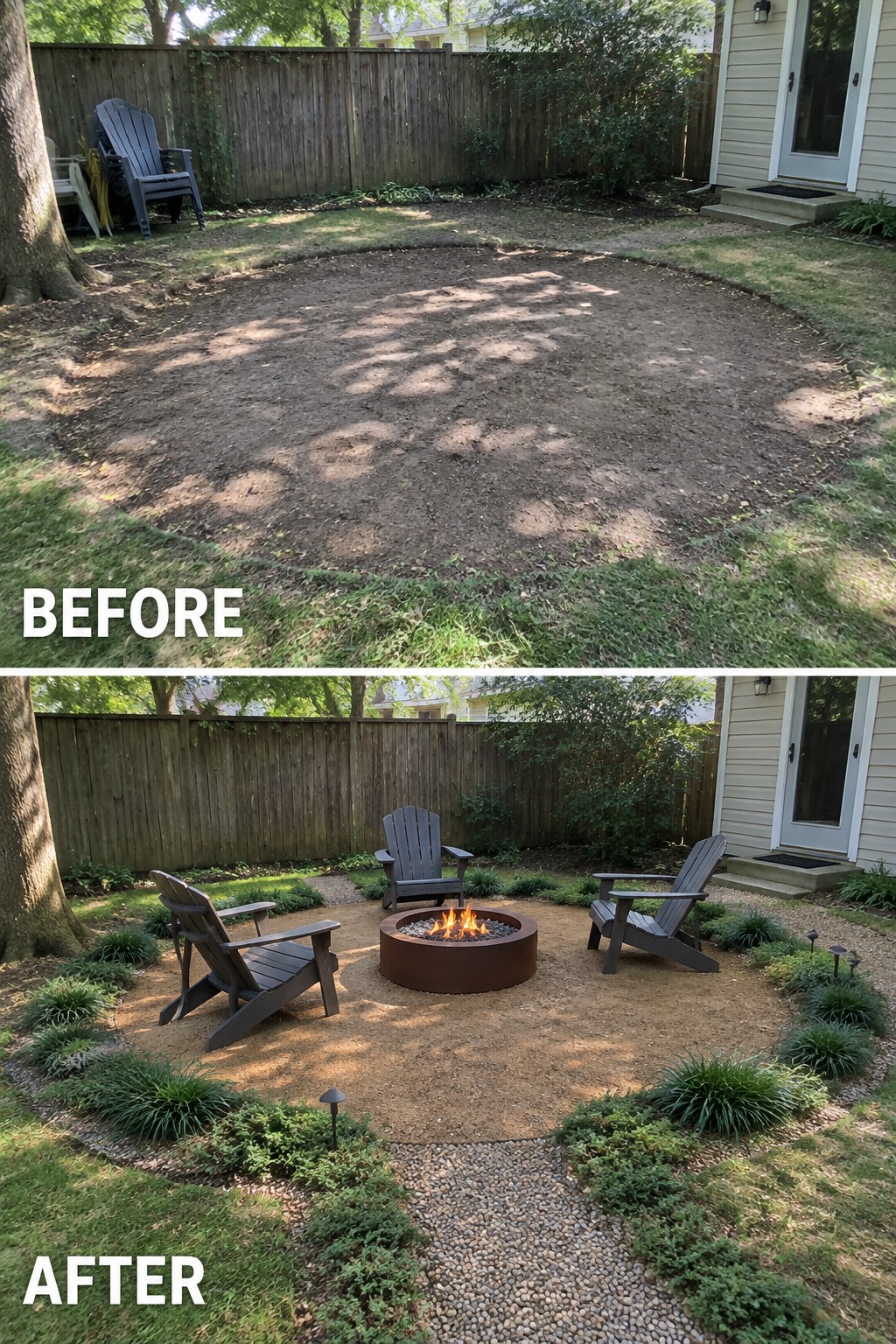
A bare dirt patch turns into a usable outdoor space once you lay down gravel and add a ring of plants around the edge. The fire pit sits in the middle with room for chairs, and a simple stone path keeps the area from feeling like an afterthought. That one material change gives the whole backyard a clear spot to gather without fighting weeds or tracking mud.
This approach works best in a small to medium backyard where you want one main seating zone rather than trying to cover everything at once. Start with the gravel base and edging first, then add plants that can handle foot traffic and sun. Keep the circle size realistic so chairs fit without crowding the fire pit or blocking the path.
Use Pavers And Gravel To Shape A Bare Entry Area
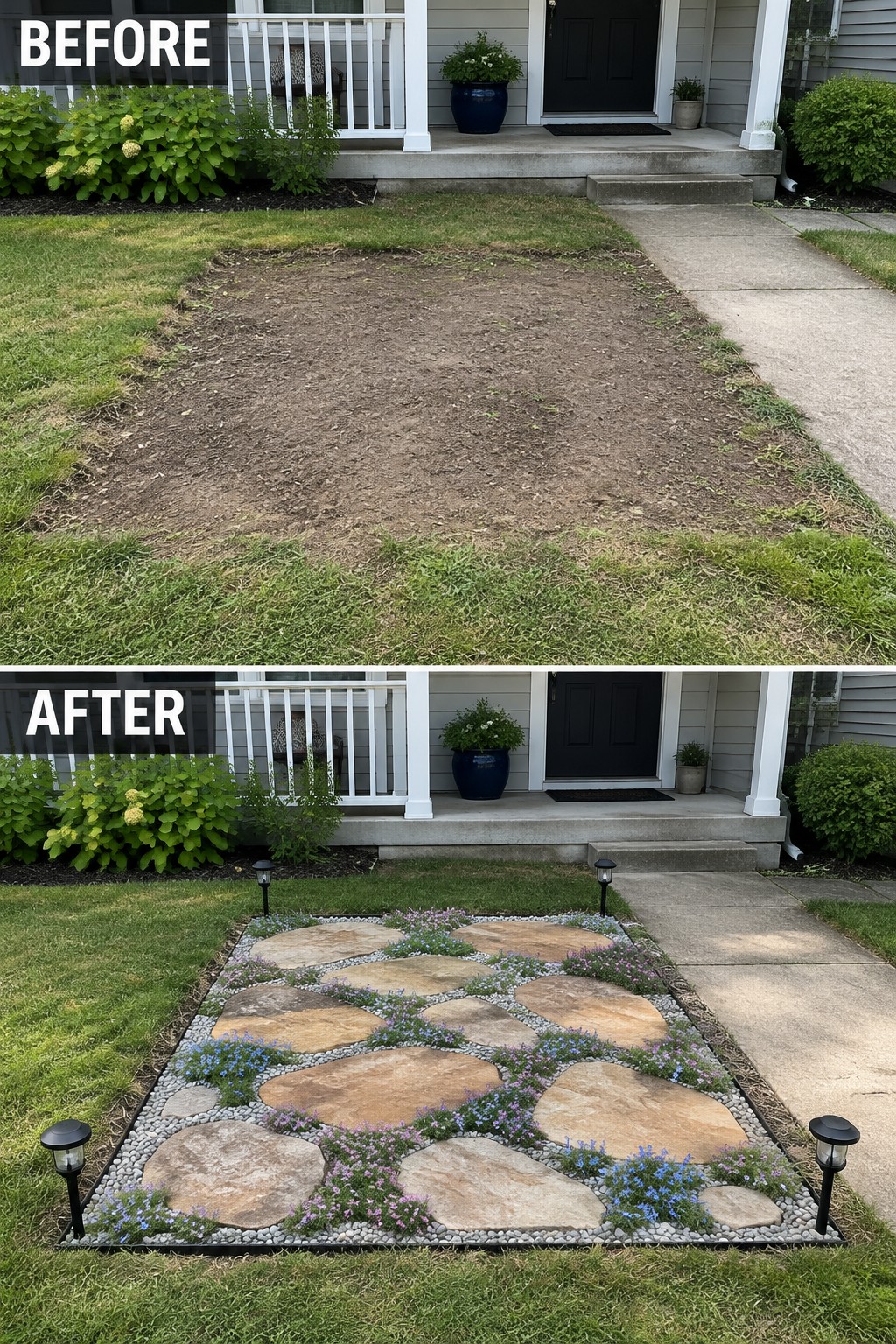
A bare dirt patch right in front of the porch steps makes the entry feel unfinished and hard to keep clean. Placing irregular flagstone pavers across the space, filling the gaps with gravel, and adding low flowering ground cover creates a clear, stable landing that looks intentional instead of neglected.
This idea works best on smaller front yards where you want to reduce mud and mowing right next to the house. Mark the area first, set the stones level with the surrounding lawn, then add the gravel base before planting. It keeps foot traffic on a dry surface and gives the entry a finished look without a big budget or complex construction.
Use Gravel And Ground Cover To Shape A Bare Yard Area
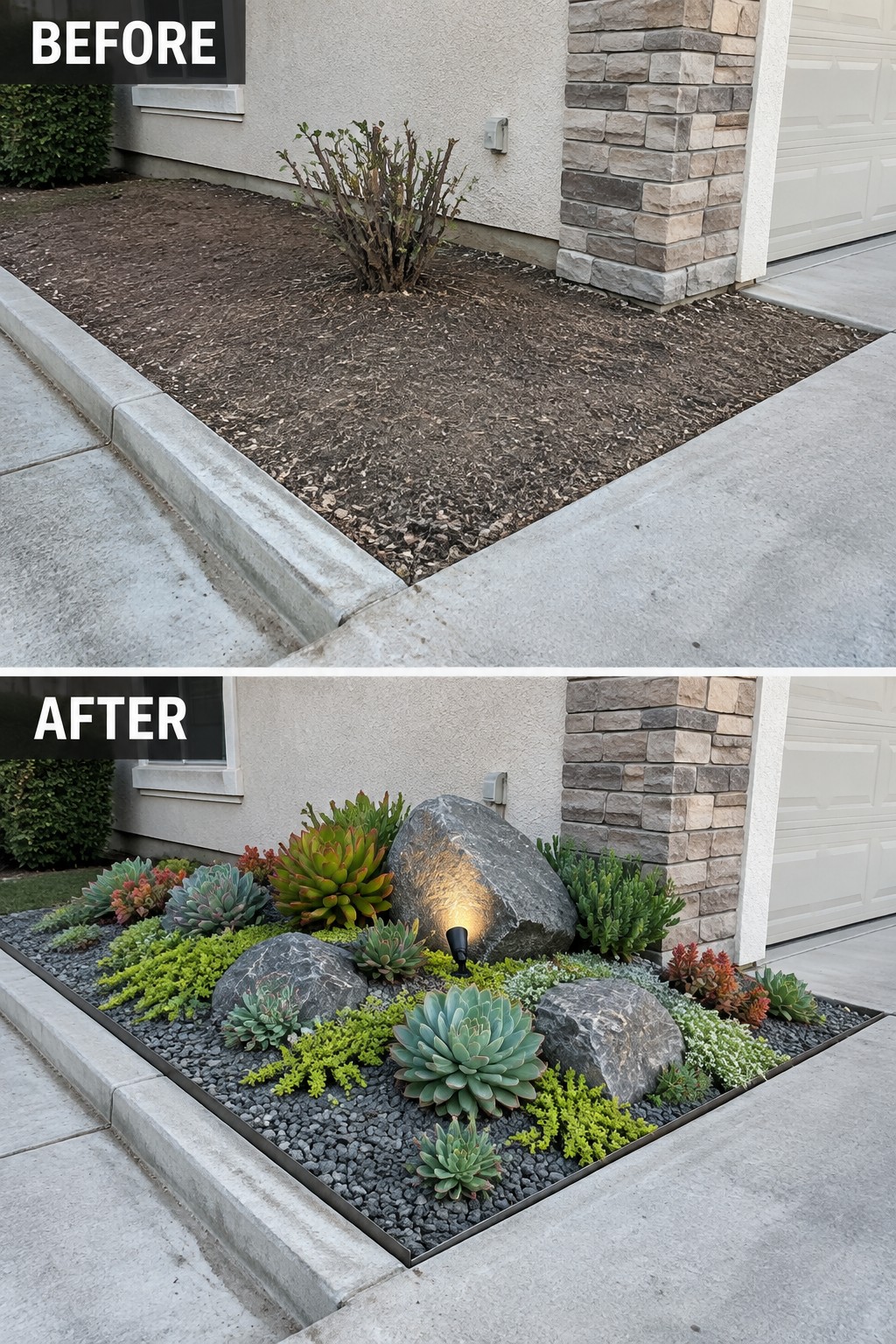
One of the easiest ways to fix a plain dirt patch is to lay down gravel and plant low ground covers in a clear shape. The before shows just bare soil with one tired shrub sitting in the middle. After the change, the same spot has defined edges, scattered rocks, and a mix of succulents that fill the space without looking crowded.
This idea works best along the side of a house or in a small front strip where you want something neat but do not want high maintenance. Start with fabric and a few inches of gravel to stop weeds, then pick plants that stay low and suit your area. It keeps the yard looking finished even when you are not ready for a full redesign.
Shape A Sloped Yard With A Gravel Dry Creek Bed
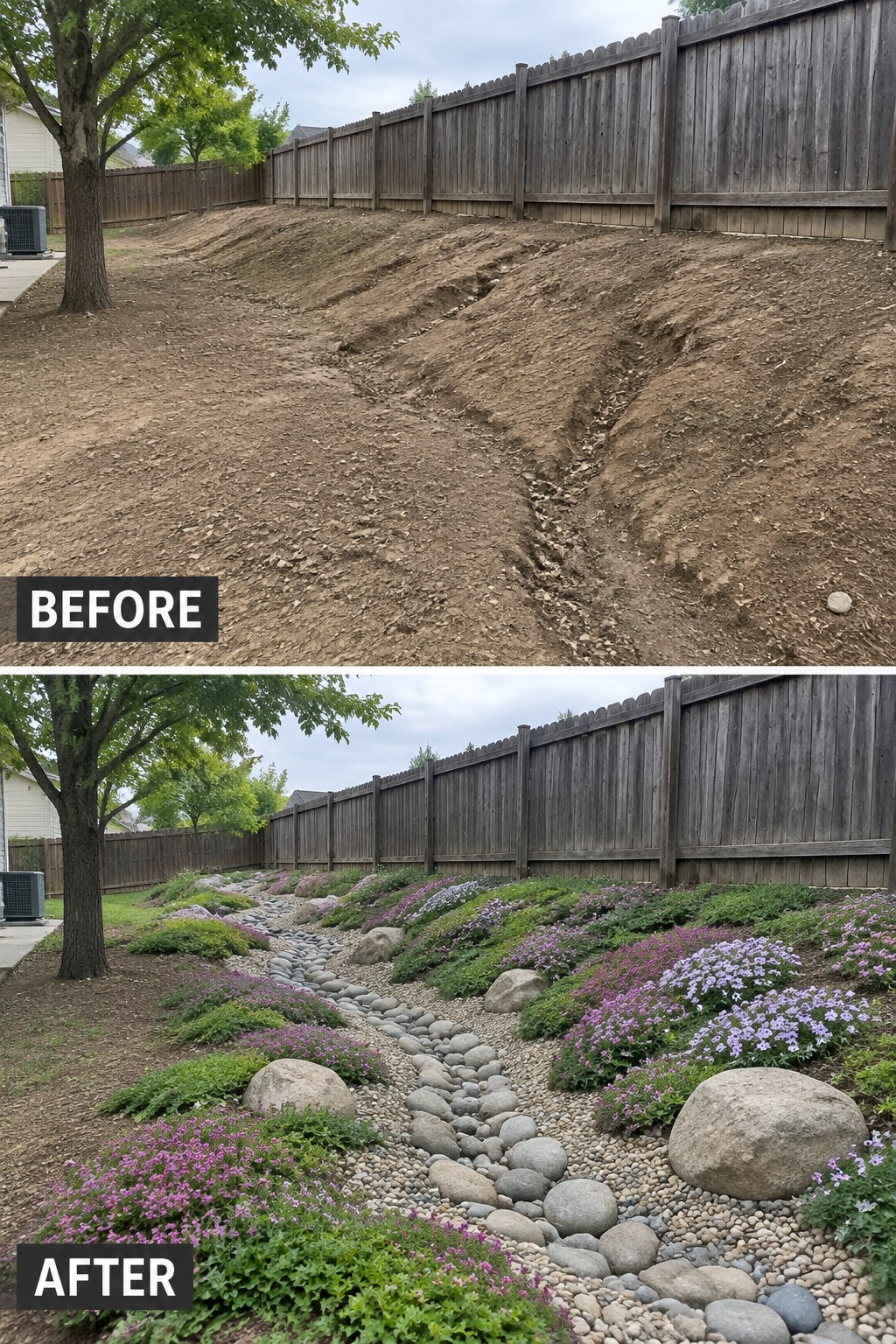
A bare dirt slope next to a fence often ends up with ruts from water runoff. Adding a gravel dry creek bed gives the slope a clear path for drainage while breaking up the flat expanse of soil. The rocks and gravel create structure, and low-growing ground cover planted along the edges holds everything in place once it fills in.
This approach works best on yards with a noticeable grade or drainage patterns you want to work with rather than fight. Start by marking the natural flow line, lay down fabric, then place larger stones along the edges and fill the center with smaller gravel. Choose tough ground covers that spread quickly so the beds look intentional instead of sparse.
Use Gravel To Give A Bare Yard A Usable Surface
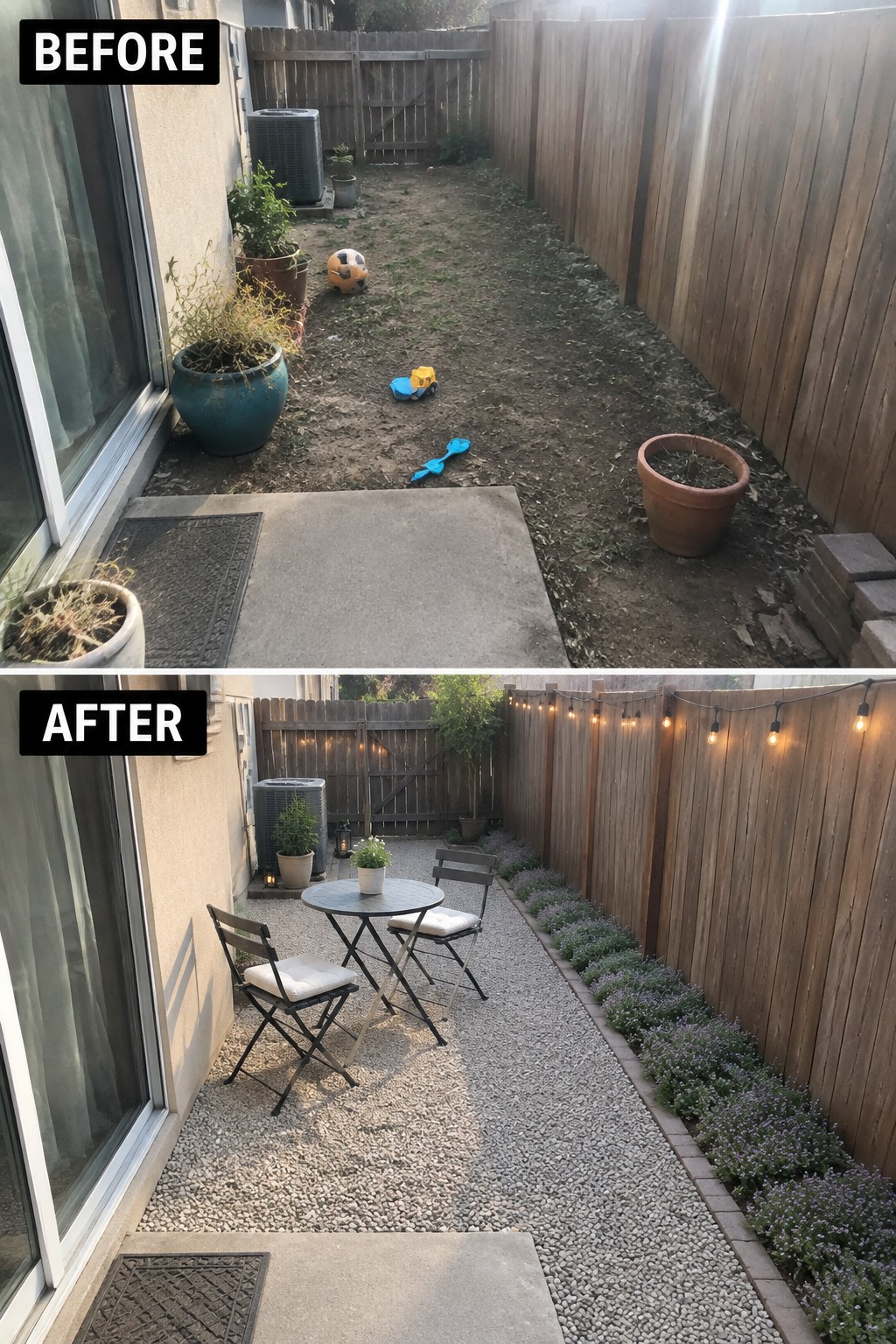
A dirt backyard stays hard to use until the ground itself feels finished. Laying gravel over the bare area creates a firm walking surface, keeps mud down after rain, and gives the whole space a cleaner outline. The narrow border of low ground cover along the fence adds a simple planted edge that softens the look without taking up much room.
This approach works well in long, narrow yards or side yards where grass is difficult to grow. Put down landscape fabric first, then spread several inches of gravel so it stays in place. Keep the planting strip narrow and choose tough ground cover that spreads on its own. The seating can stay minimal since the gravel already defines where people will walk and gather.
Define A Bare Foundation With Gravel And Ground Cover
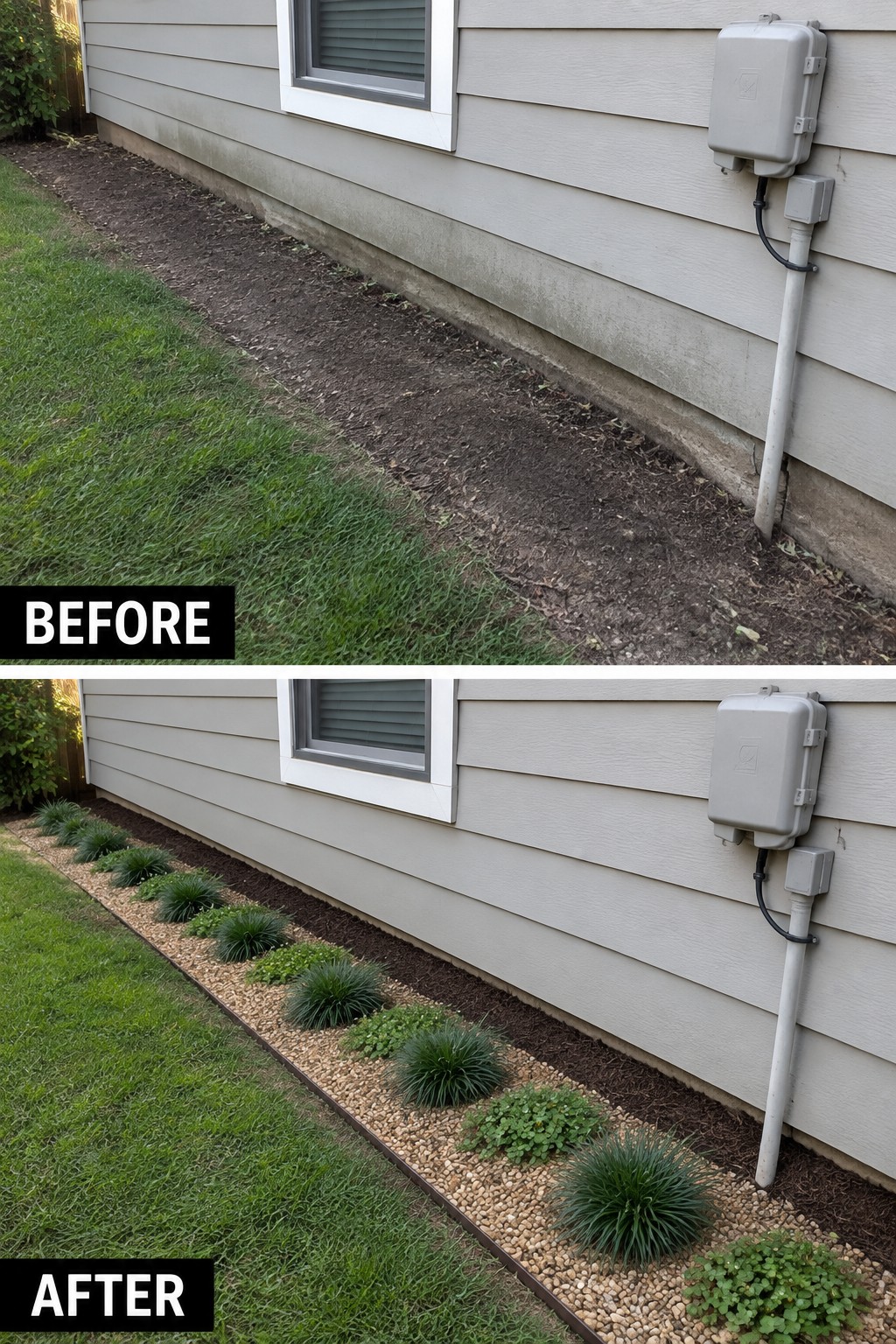
A gravel bed gives a plain dirt strip along the house a clear purpose. The main change here was adding edging, spreading gravel, and planting low clusters of grass-like plants and ground cover so the area looks planned instead of forgotten.
This idea works best on homes where the foundation sits right next to the lawn. Keep the bed narrow enough to mow around easily, and choose plants that stay under a foot tall so they do not block windows or vents. Once the gravel is down, the bed stays neat with very little extra work.
Use Gravel To Add Structure To A Bare Backyard
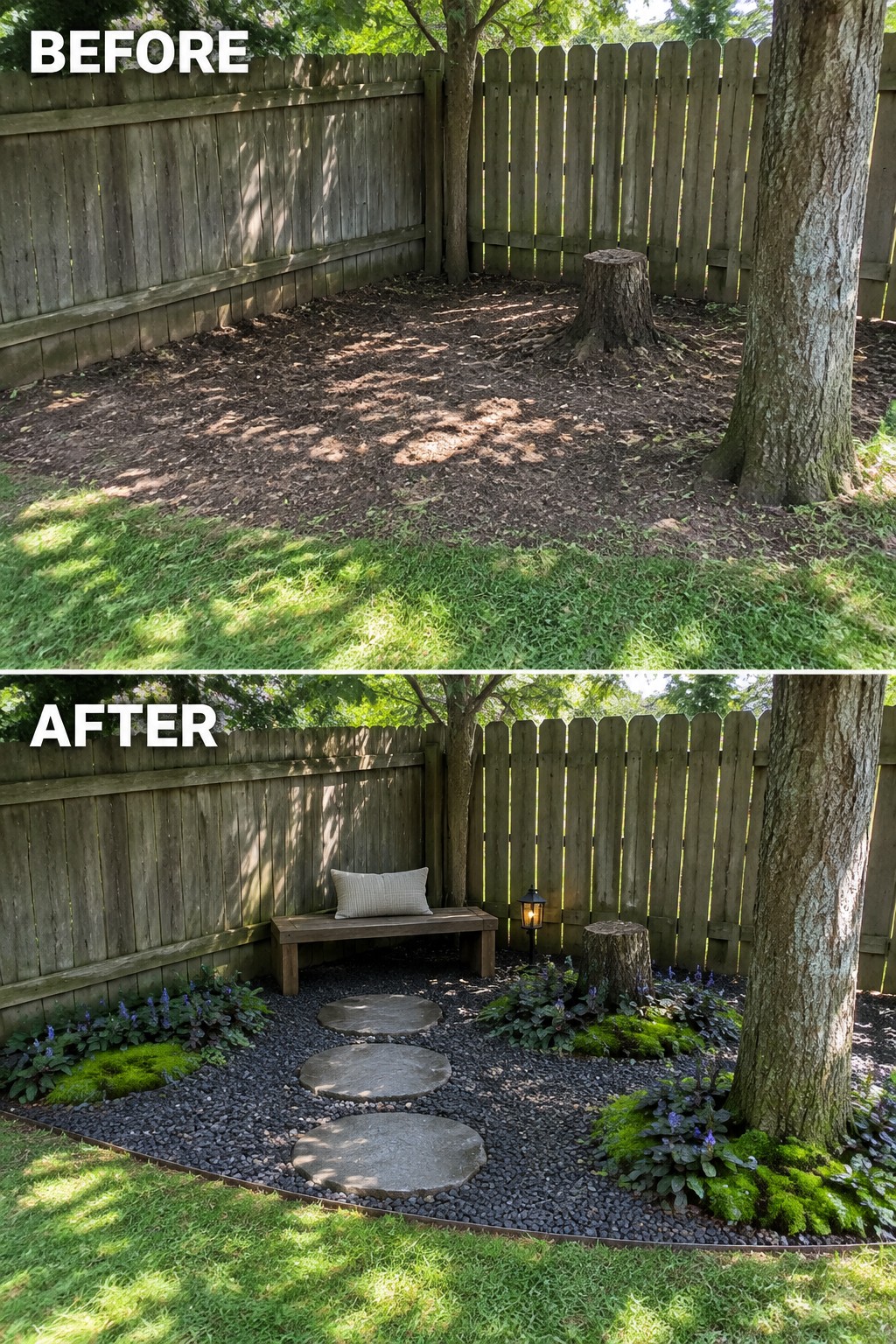
A bare dirt yard often feels unfinished because nothing defines the space or shows where to walk. Laying gravel with a few stepping stones gives the area clear shape while keeping maintenance low. The planted edges along the fence help hold everything in place without crowding the small yard.
This idea works best in back corners or side yards that get some sun but little foot traffic. Keep the gravel layer thin and consistent, then add ground cover that spreads on its own. A single bench or light is enough once the beds are set.
Turn A Bare Dirt Strip Into A Defined Bed
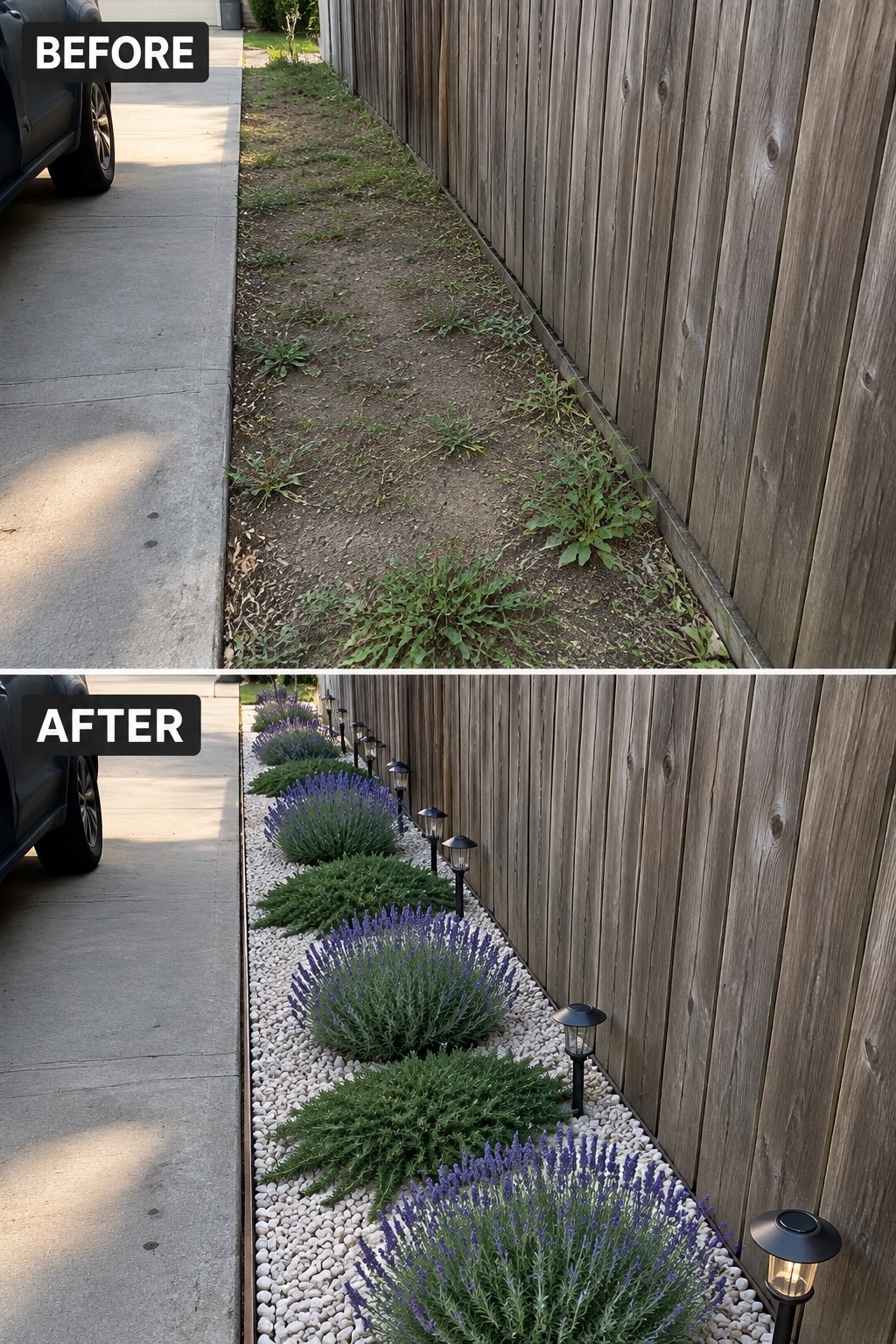
A narrow strip of dirt next to a fence often stays weedy because it has no clear edges or purpose. Adding a gravel base with repeated clumps of lavender gives the space a simple structure that stays neat without much work. The white gravel replaces the loose soil and weeds, while the plants create a steady pattern that makes the whole length feel intentional.
This approach works well along side yards, fence lines, or any long thin area where you want low maintenance. Start with a weed barrier and gravel to set the shape, then plant in groups rather than scattering single plants. It keeps the bed looking full even as the plants fill in, and the gravel makes weeding and edging much easier over time.
Use Gravel To Define Planting Areas In A Bare Yard
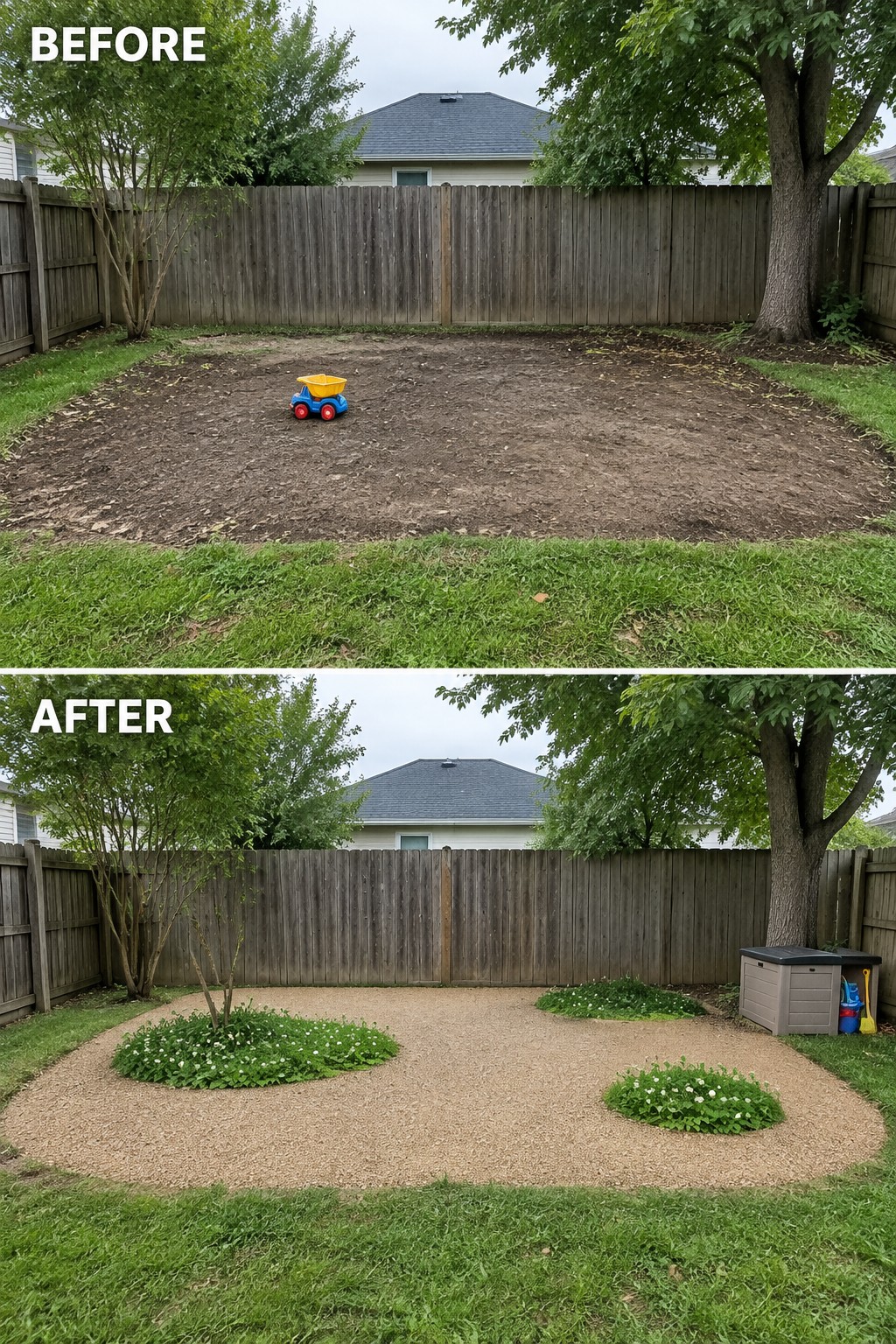
A bare dirt yard often feels unfinished and hard to keep clean. Covering the open space with gravel gives it a solid surface that stays dry and low maintenance, while adding a few oval planting beds creates clear shape without crowding the area. The result turns an empty patch into something that actually feels like part of the yard.
This approach works well in small to medium backyards where you want a simple, usable surface rather than lawn or patio. Start with the gravel layer first so the beds have a clean edge to follow, then keep the planting simple with low ground cover that can fill in over time. It suits homes that need a quick, practical fix before adding furniture or other features later.
Define A Bare Bed With Gravel And Ground Cover
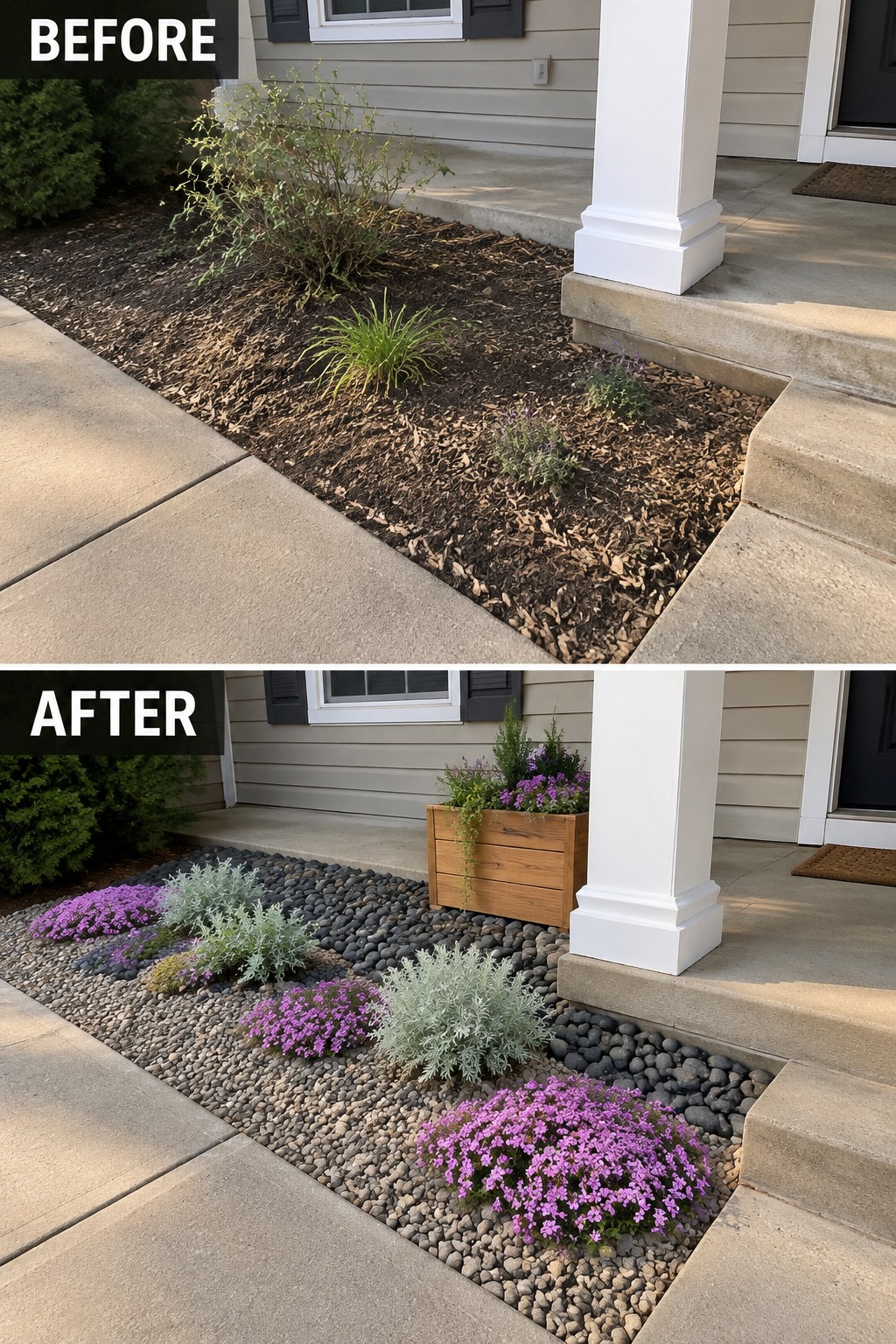
A strip of mulch along the front of the house often ends up looking flat and weedy after a season or two. Switching to gravel gives the bed clear edges and a finished surface while the low purple ground cover fills in the gaps without needing constant trimming.
This approach works well along walkways and near entries where you want something neat but not high maintenance. Start with a weed barrier, add a few inches of gravel, and plant the ground cover in small groups so it can spread on its own. The same idea can tidy up any narrow dirt strip that currently feels unfinished.
Add Gravel And Potted Plants To A Bare Dirt Yard
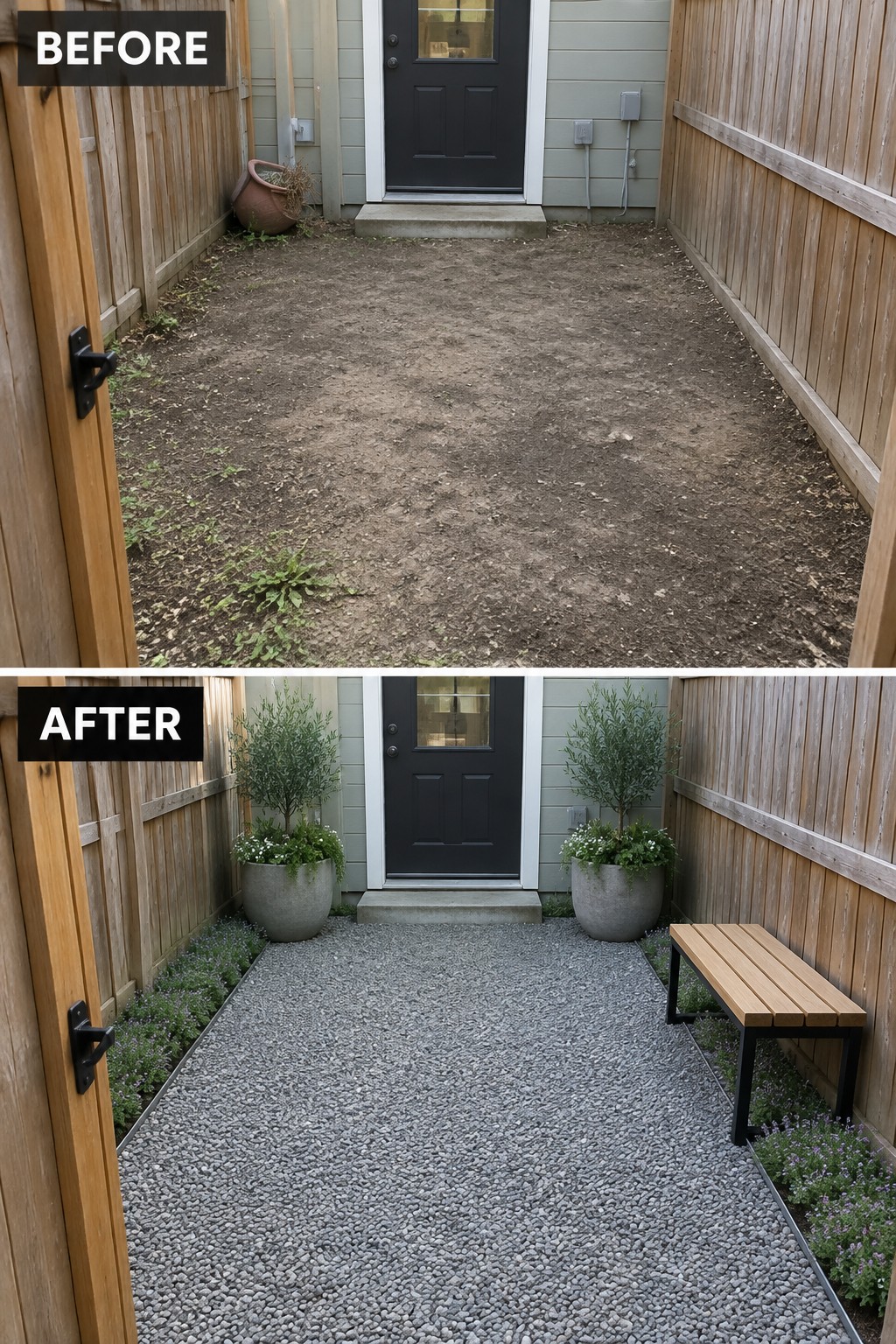
A bare dirt side yard often feels unfinished and hard to keep clean. Laying down gravel creates a solid surface that drains well and gives the space an immediate sense of order. Placing a few large pots along the edges and adding low ground cover softens the look without crowding the narrow passage.
This approach works well for homes with tight side yards or service areas that still need to look presentable. Start with a weed barrier under the gravel so maintenance stays low, and choose pots that are large enough to hold their own against the fence lines. Keep the planting simple so the path stays easy to walk through.
Add Gravel And Ground Cover To A Narrow Side Yard
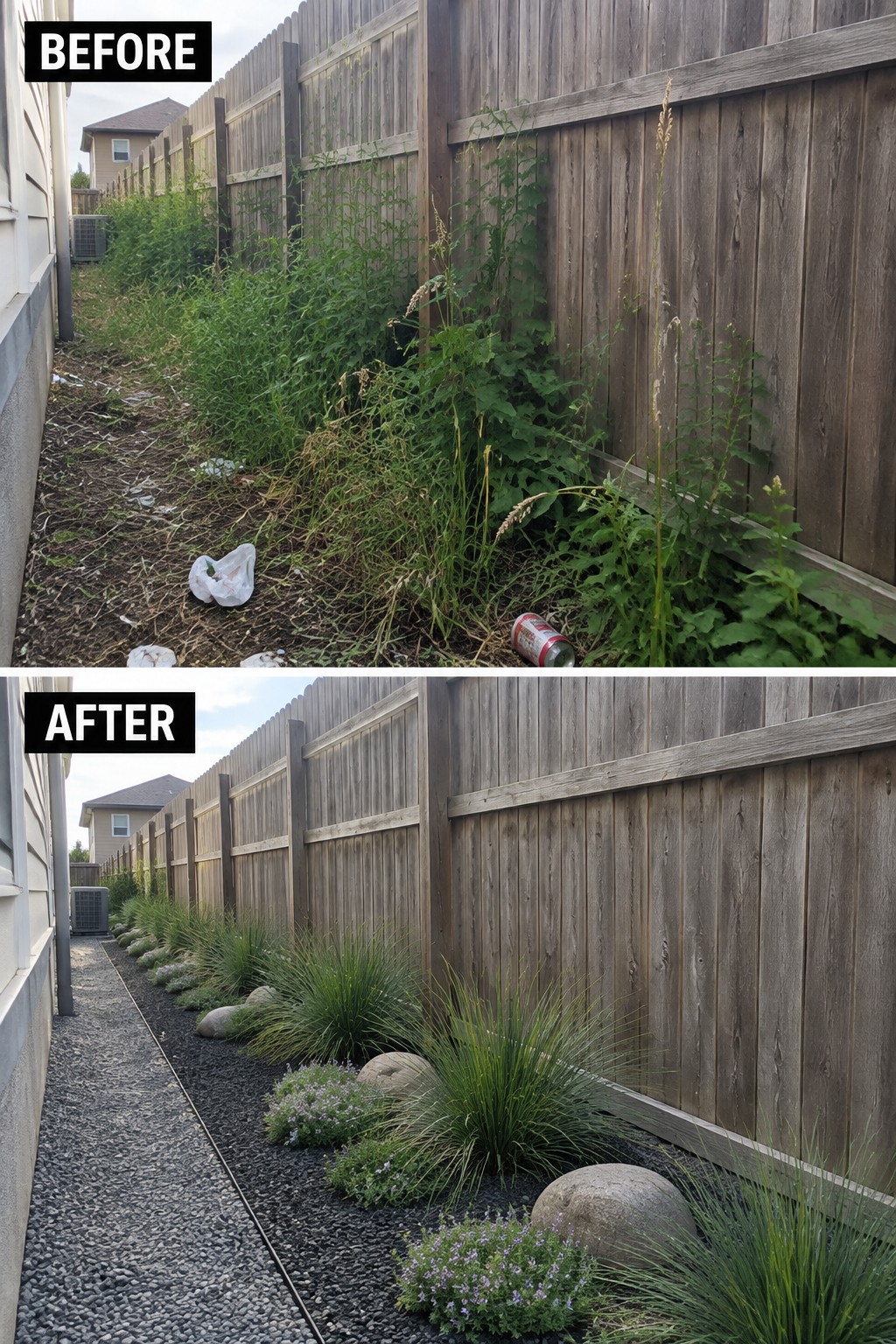
Clearing the weeds and trash first makes the biggest difference. Once the ground is clean, a layer of gravel gives the strip a defined edge and stops the dirt from looking neglected. Clumps of grasses and low flowering plants then fill in the bed without crowding the narrow space.
This works best along fence lines where grass struggles and you want something simple to maintain. The gravel handles foot traffic and drainage while the plants add height and color without much watering. Keep the planting in groups rather than scattering everything evenly so the area still feels open.
Cover Dirt With Gravel Before Adding Plants

A bare dirt yard around an air conditioner and hose reel looks messy and hard to maintain. Switching to gravel creates a solid, low-maintenance surface that keeps mud down and gives the space a finished feel. Adding a few simple plants along the edges and a straight paver path keeps the area from feeling empty while still leaving room to walk.
This approach works well in small side yards or utility areas where you need something tougher than grass. Start with a weed barrier under the gravel so it stays clean longer, then choose low-water plants that can handle the reflected heat from the rocks. Keep the planting areas narrow so the gravel remains the main surface.
Define A Bare Yard Edge With Gravel And Ground Cover
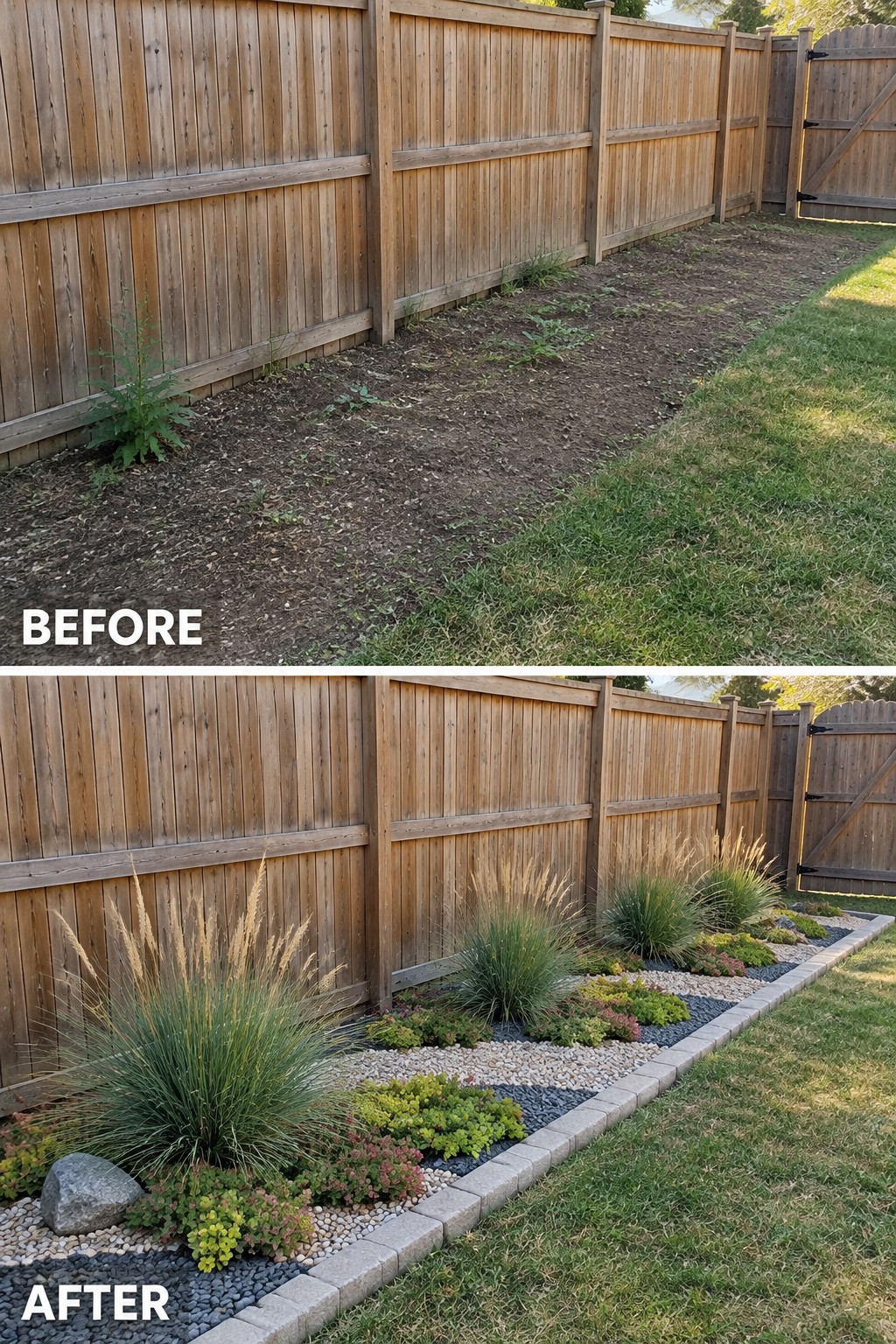
A long dirt strip along a fence usually stays weedy and looks unfinished. Adding a low border with gravel, edging, and a mix of grasses and ground cover plants gives the area a clear shape that holds up better over time.
This idea works best in narrow side yards or back fence lines where you want low maintenance without blocking the view. Lay the edging first, spread gravel or mulch to cover the soil, then plant in small groups so the beds stay simple and easy to care for.
Define Bare Dirt With Gravel And Ground Cover
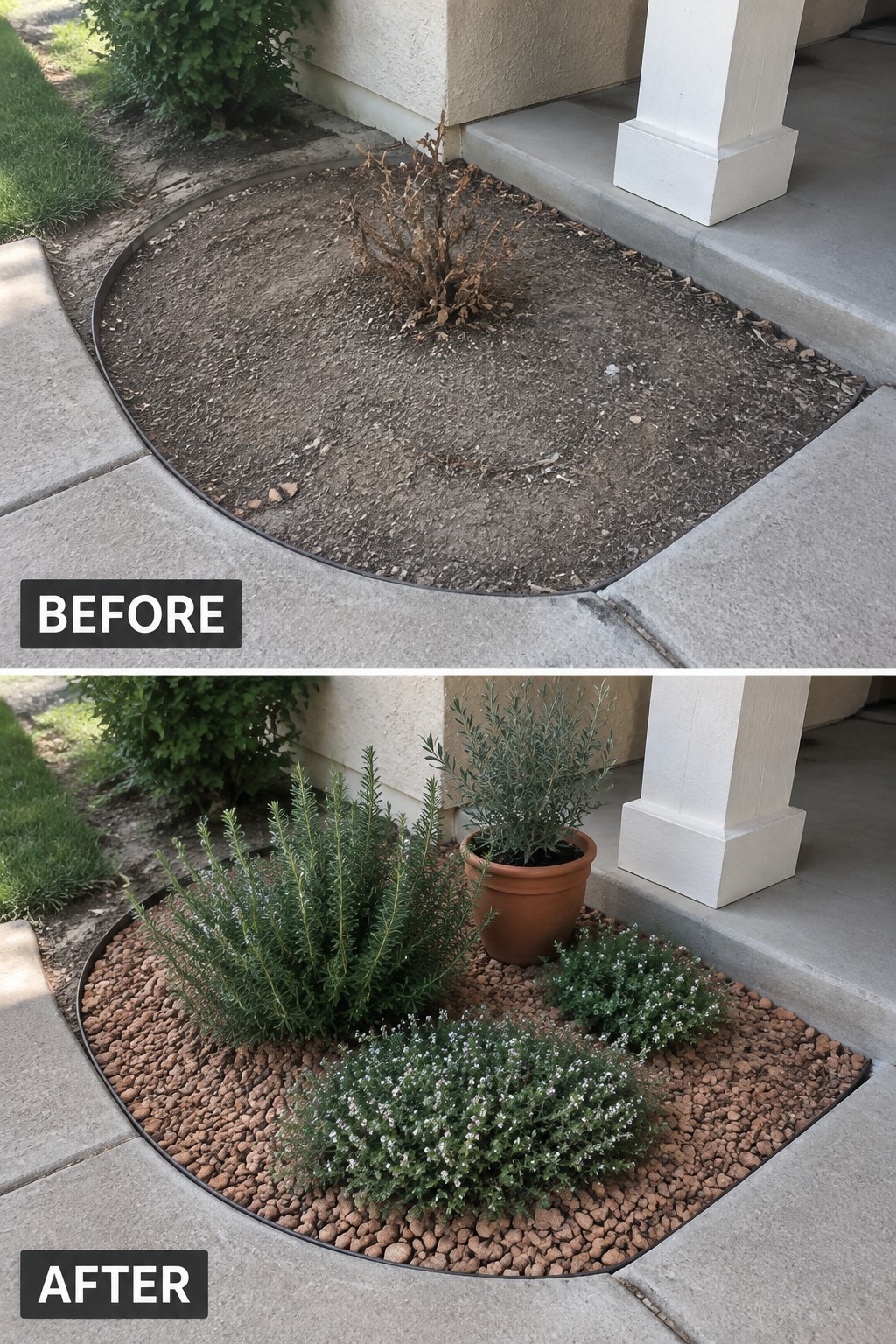
A bare dirt bed next to the house can look unfinished and messy, especially right by the entry. Adding a layer of gravel and a few simple plants turns the same spot into something that feels planned and stays neat with little effort. The change here came from covering the open soil and planting low growers that fill in quickly without taking over.
This idea suits narrow beds along foundations or walkways where you want coverage but not high maintenance. Use gravel to hold the soil in place and cut down on weeds, then pick plants that spread low like rosemary and small flowering ground covers. Keep the number of plants modest so the bed does not feel crowded, and the gravel will do most of the work keeping it looking clean.
Terrace A Steep Slope With Retaining Walls And Ground Cover
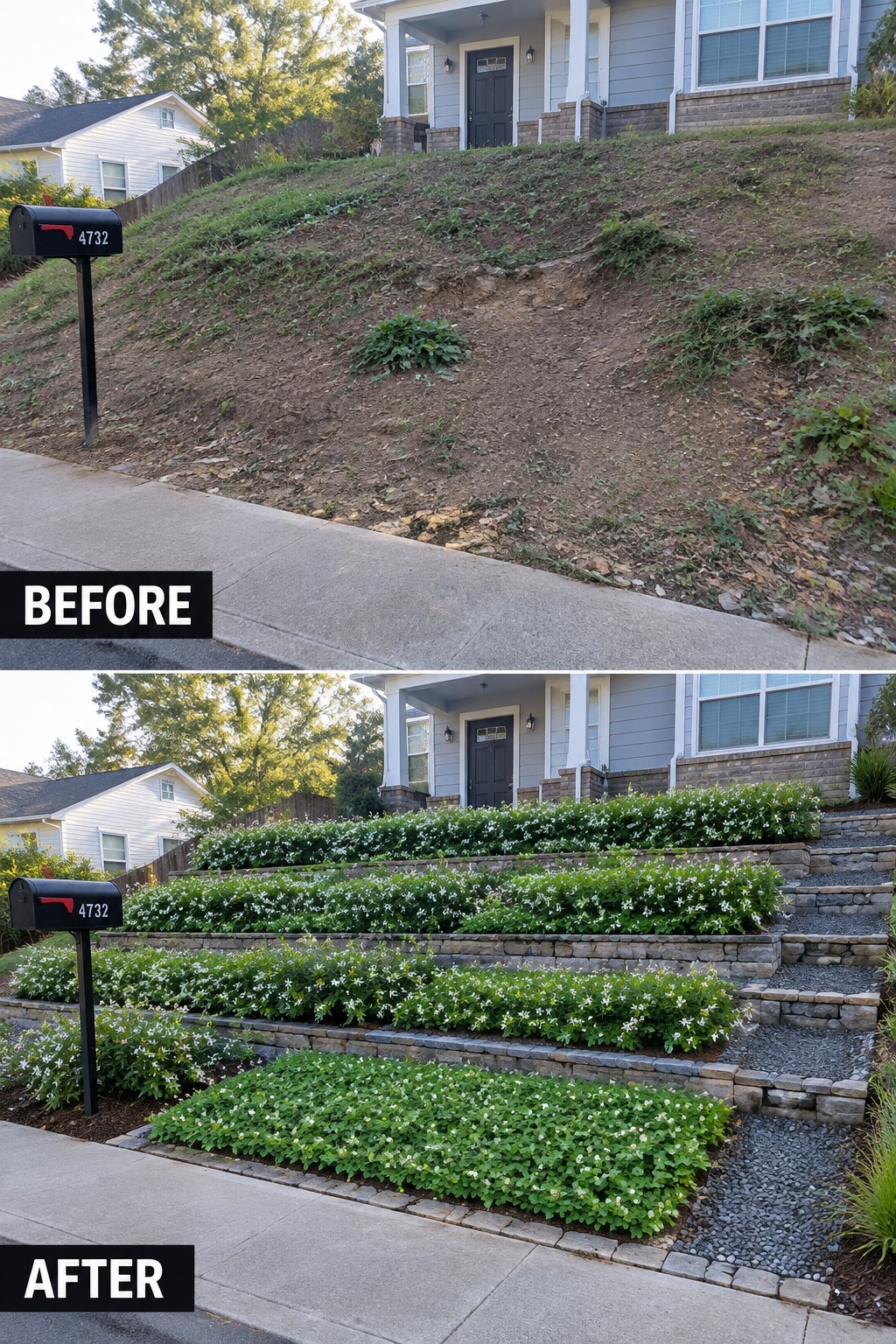
A steep bare dirt hill is hard to maintain and tends to wash out over time. Low stone retaining walls break the slope into flat sections that hold soil in place and create actual planting beds instead of a constant slide.
This works best on front or side yards where the grade makes mowing or walking difficult. Build the walls first to set the levels, then fill them with spreading ground covers that knit together quickly and cut down on weeding later.
Create A Path Through A Bare Shed Area With Gravel And Stepping Stones
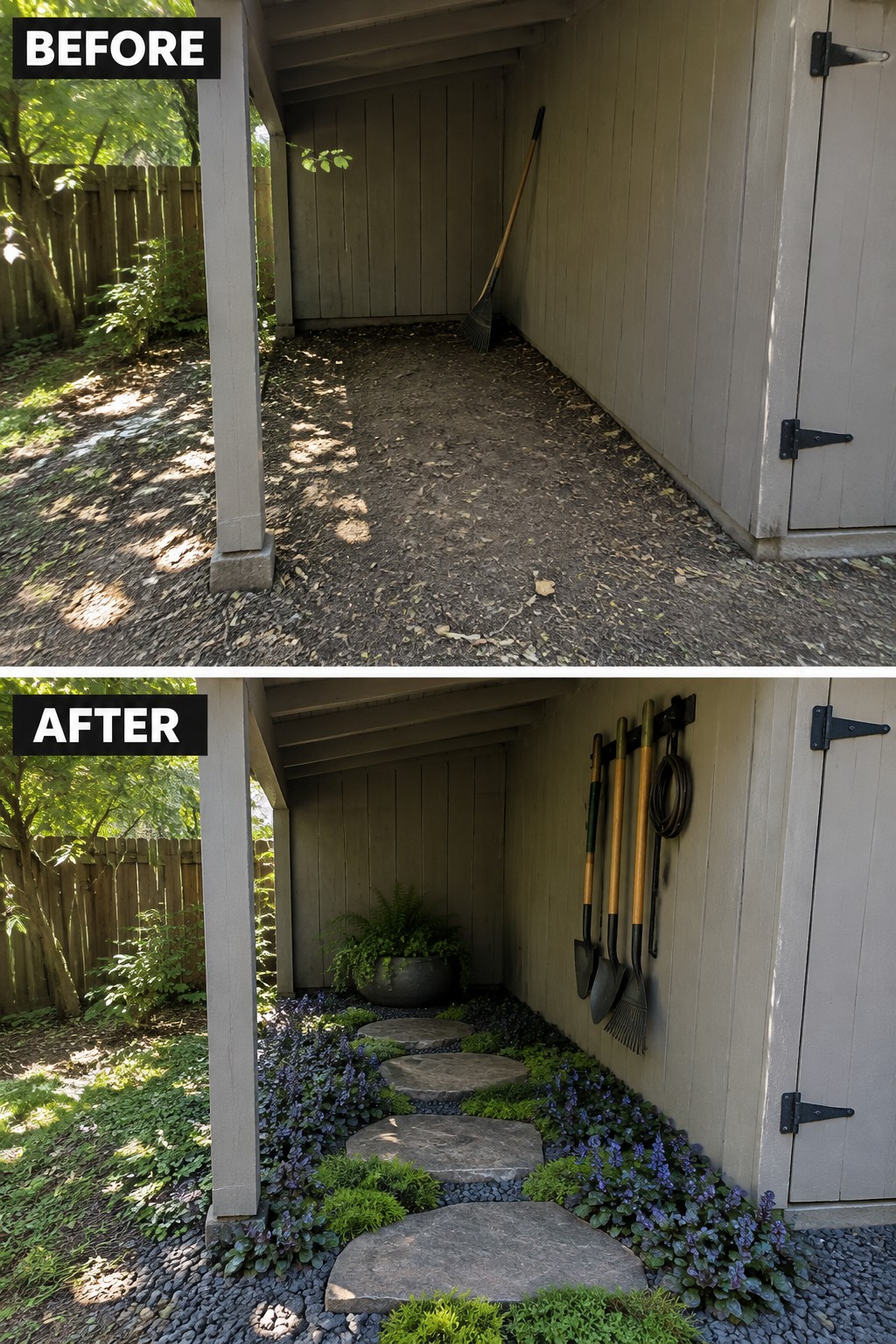
A bare dirt floor under a shed or covered overhang often stays messy because there is no clear way to walk through it. Adding gravel with a few stepping stones gives the space a simple structure so you can move around without tracking in dirt or leaves.
This idea works best in small covered areas where you store tools or garden supplies. Lay landscape fabric first, spread gravel for drainage, then set flat stones to form a basic path. Low ground cover planted along the edges helps hold the gravel in place and keeps the look tidy with minimal upkeep.
Define A Bare Patio Edge With Gravel And Ground Cover
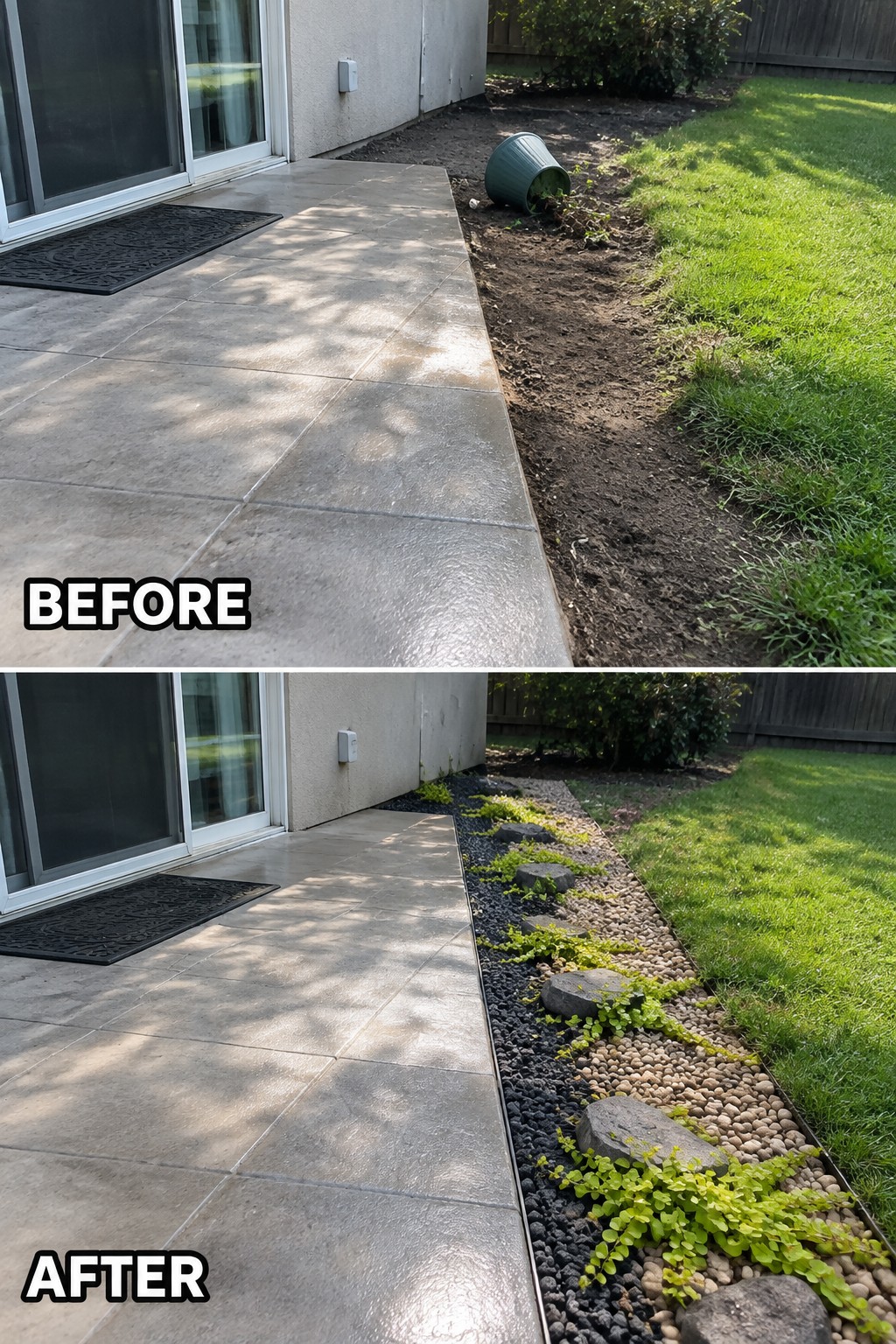
A simple gravel border with low plants can turn a strip of bare dirt next to a patio into something that looks finished. The before photo shows exposed soil that collects debris and weeds right along the concrete. The after version adds a clear edge using dark gravel, lighter pebbles, and spreading ground cover to keep the area neat without needing constant weeding.
This idea works best on homes where the patio sits right against open soil and you want low maintenance. Lay landscape fabric first, then layer the gravel and stones to create the border. Choose ground cover that spreads slowly and stays low so it does not block the patio surface or require trimming.
Shape A Circular Bed With Gravel And Ground Cover
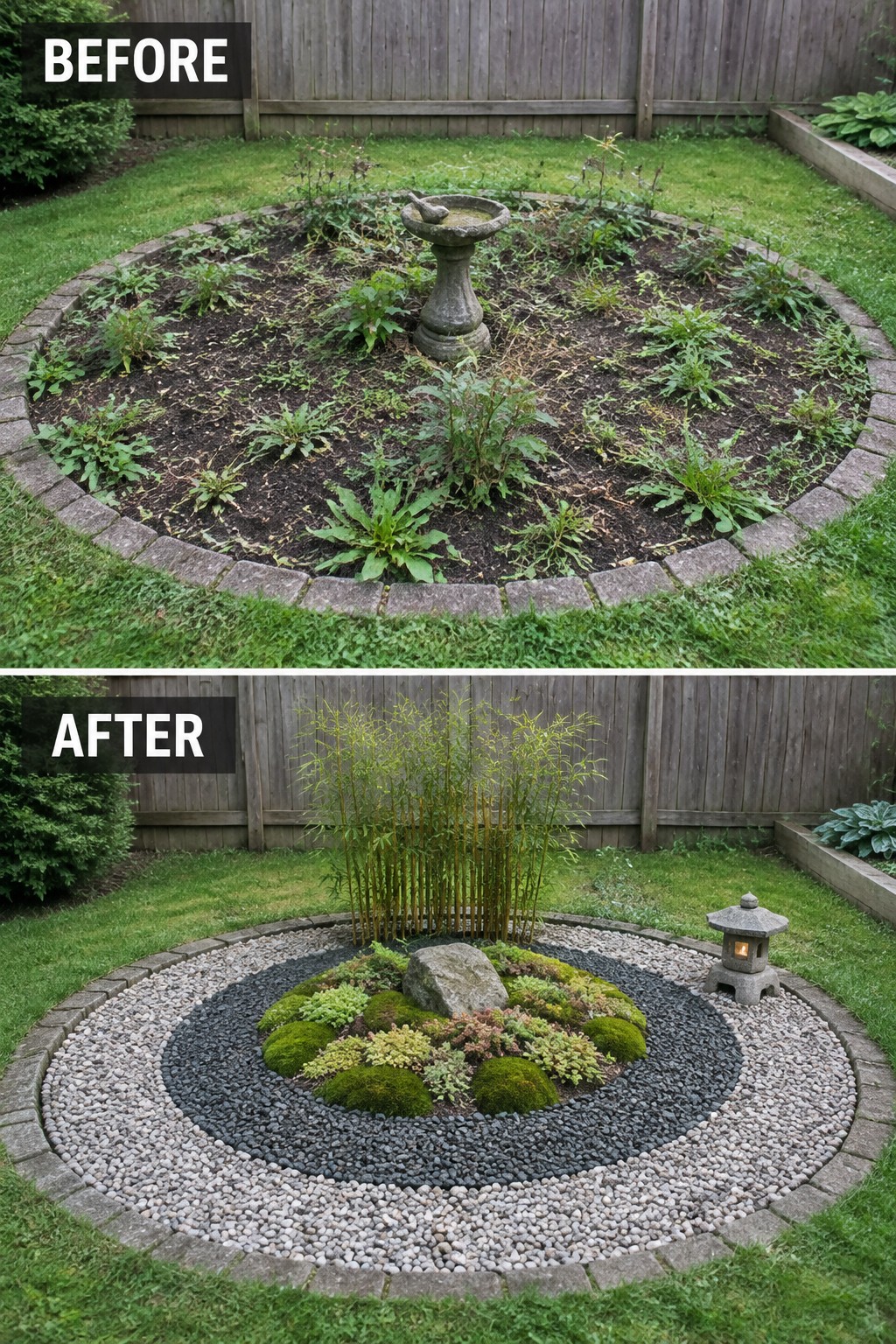
A round planting area often looks messy when left to fill in on its own. Clearing the weeds and adding two rings of gravel gives the bed clear shape while the low ground covers keep the center green without constant work. The bamboo clump and single rock now sit as simple focal points instead of getting lost in the overgrowth.
This idea suits small yards or corners where you want one tidy feature without adding much lawn. Lay the gravel in bands of different sizes so the rings stay visible, and choose ground covers that handle the light conditions in your spot. Keep the center planting low so the pattern does not disappear as the plants grow.
Define A Bare Entry With Gravel And Pavers
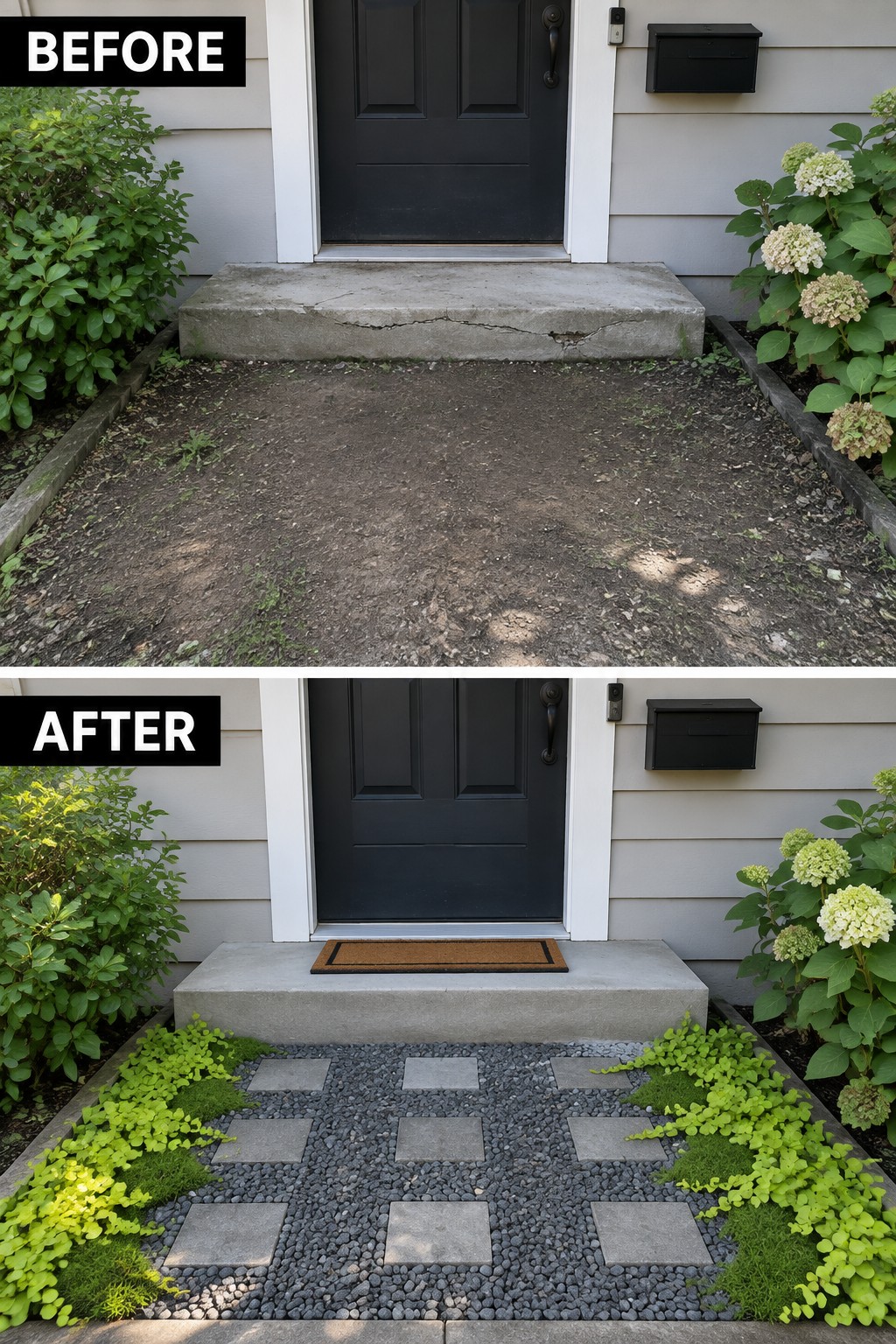
A bare dirt yard in front of the door looks unfinished and hard to keep clean. Adding a grid of pavers set into gravel gives the space a clear path and a finished surface that stays neat through the seasons. Low ground cover planted along the edges softens the look without crowding the walkway.
This idea works best on small entries or narrow side yards where you need a simple walking surface. Level the ground first, add fabric to hold back weeds, then place the pavers and fill around them with gravel. The ground cover takes over the edges and keeps the whole area looking tended with very little upkeep.
Use Gravel And Ground Cover To Define A Bare Yard
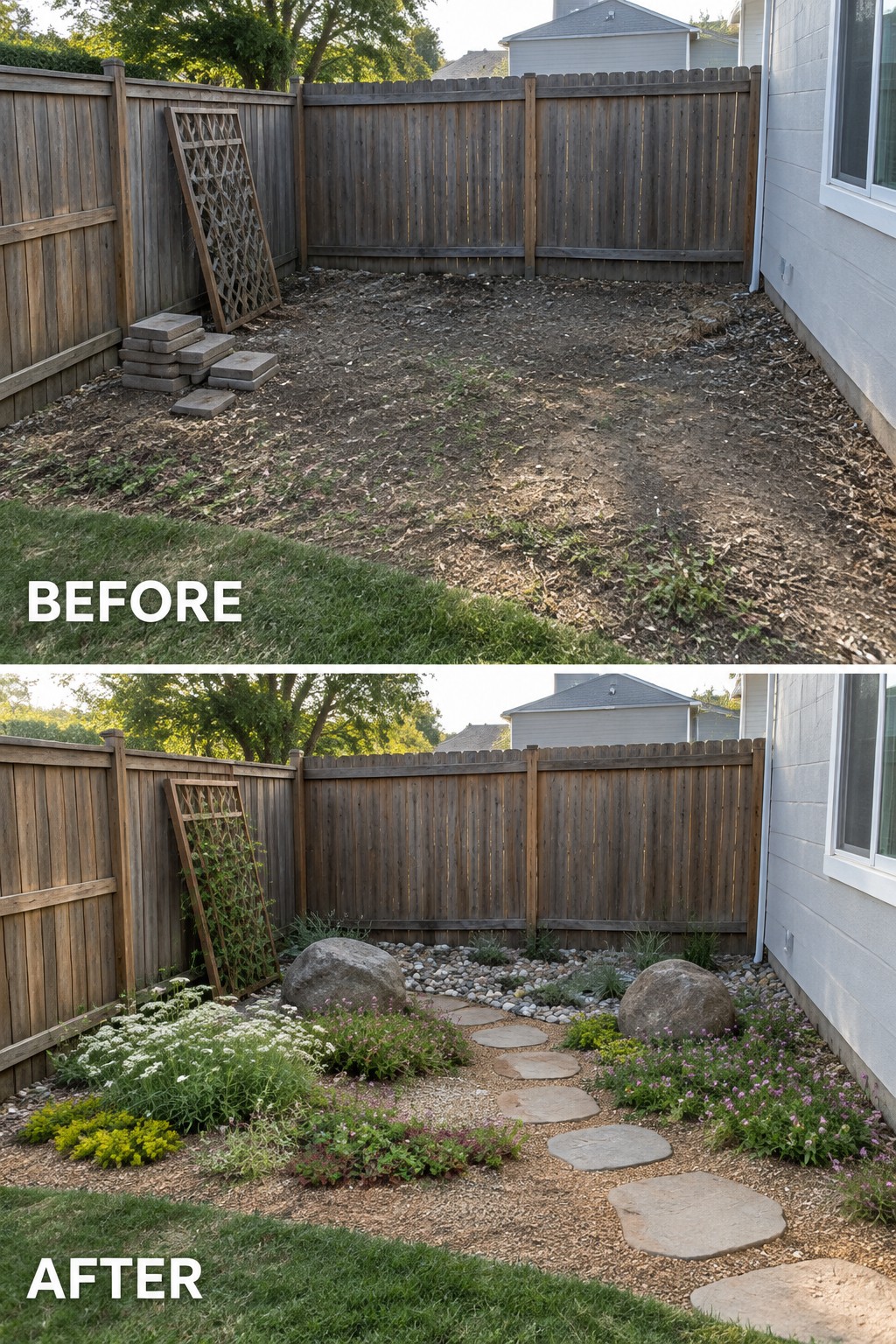
A bare dirt yard often feels unfinished and hard to use. In this case, adding a layer of gravel created a clean base, while low ground covers and a simple stepping stone path gave the space clear shape and made it feel more intentional. The result is a yard that looks cared for without needing constant mowing or heavy maintenance.
This approach works well in small backyards or side yards where grass struggles to grow. Start by laying down landscape fabric and gravel to control weeds, then plant tough ground covers in clusters rather than spreading everything out evenly. Keep the path width comfortable for walking and leave enough open gravel so the beds do not feel crowded.
Frequently Asked Questions
Q: How do I keep weeds from popping up through the gravel over time?
A: Clear the dirt down to bare soil first and roll out a solid weed barrier before pouring any gravel. Fast spreading ground covers like clover or creeping thyme then fill in the gaps and block light from reaching any stray seeds. Walk the edges once a month and yank anything that tries to sneak past.
Q: What happens if my yard slopes and the gravel starts sliding downhill?
A: Break the slope into smaller flat terraces with simple timber or stone borders before you add gravel. The ground cover roots will knit everything together once they fill in. Start at the bottom and work up so nothing shifts while you work.
Q: Can I still mow or trim around the new gravel areas without making a mess?
A: Leave a narrow strip of bare soil or low edging between the gravel and any grass you keep. That gives you room to run a mower wheel without kicking stones everywhere. Hand trim the ground cover edges every few weeks so they stay neat and contained.
