

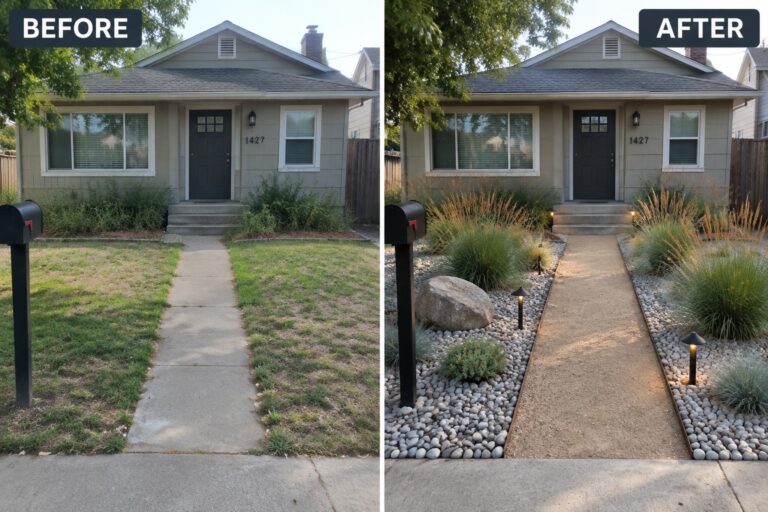
I have noticed that many front yards end up looking scattered because the planting never gets a clear plan from the start.
Choosing plants that handle dry spells and still hold a shape through the seasons can keep the space looking settled without constant upkeep.
One change I often think about trying first is tightening the lawn edges and grouping a few reliable shrubs so the whole area feels more held together.
It is surprising how much difference that kind of simple structure makes once the new growth fills in over a couple of seasons.
I would test a few of these plant pairings in a small section of my own yard before deciding what to add next.
Add Gravel Beds To Frame The Front Walk
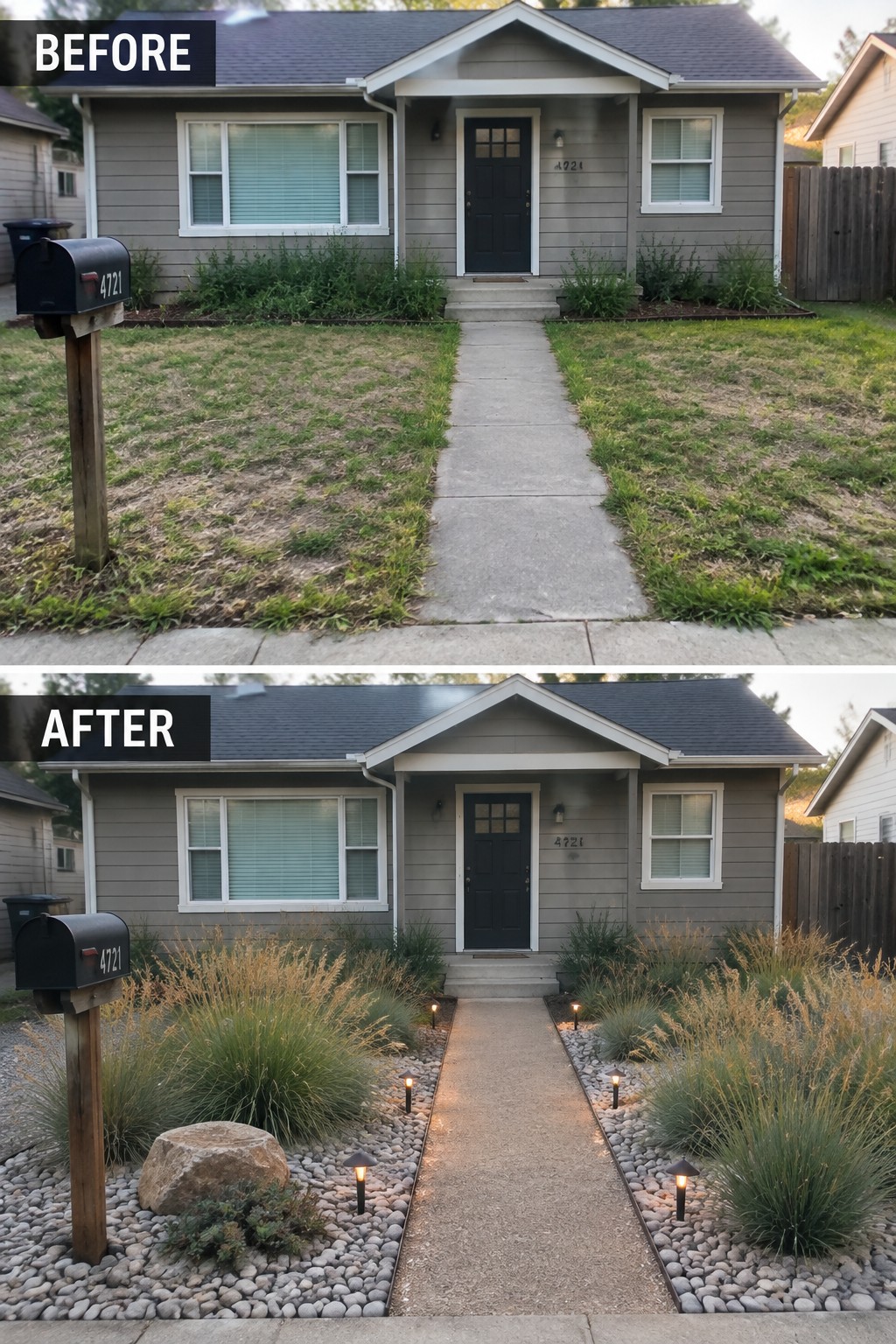
The patchy lawn running straight to the edge of the concrete path made the front yard feel unfinished and high maintenance. Adding narrow gravel beds on both sides gave the walkway clear borders and replaced the weedy grass with something much simpler to care for.
This approach works well on narrow front yards where a full lawn is hard to keep looking good. Use a consistent gravel size and repeat one or two types of ornamental grass so the beds feel intentional rather than scattered. The small lights tucked into the gravel are optional but help mark the path at night without adding clutter.
Define Your Front Path With Stepping Stones And Gravel
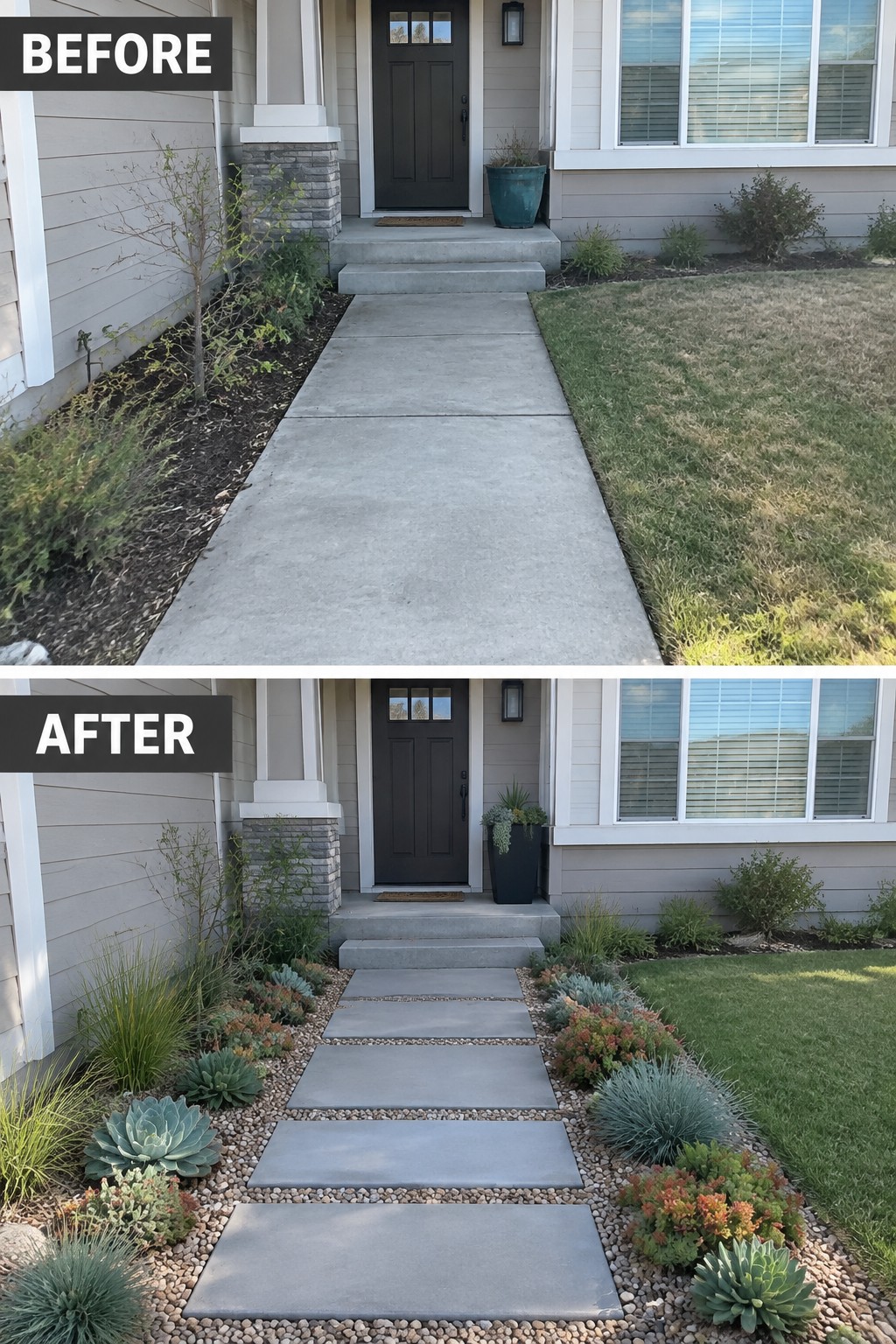
A solid concrete walkway can make the front yard feel flat and hard to work around. Switching to individual stepping stones set in gravel opens up space for planting on both sides and gives the path a lighter, more natural look. The change also makes it easier to add low-maintenance plants without fighting against a wide slab of concrete.
This approach works well on narrow front yards where you want to keep the walk functional but still leave room for beds. Start with the path layout first, then fill in with gravel and a few repeating plant types so the beds stay simple to care for. It keeps the entry clear while giving the whole front a finished, planned feel.
Replace Overgrown Shrubs With Low-Maintenance Planting Beds
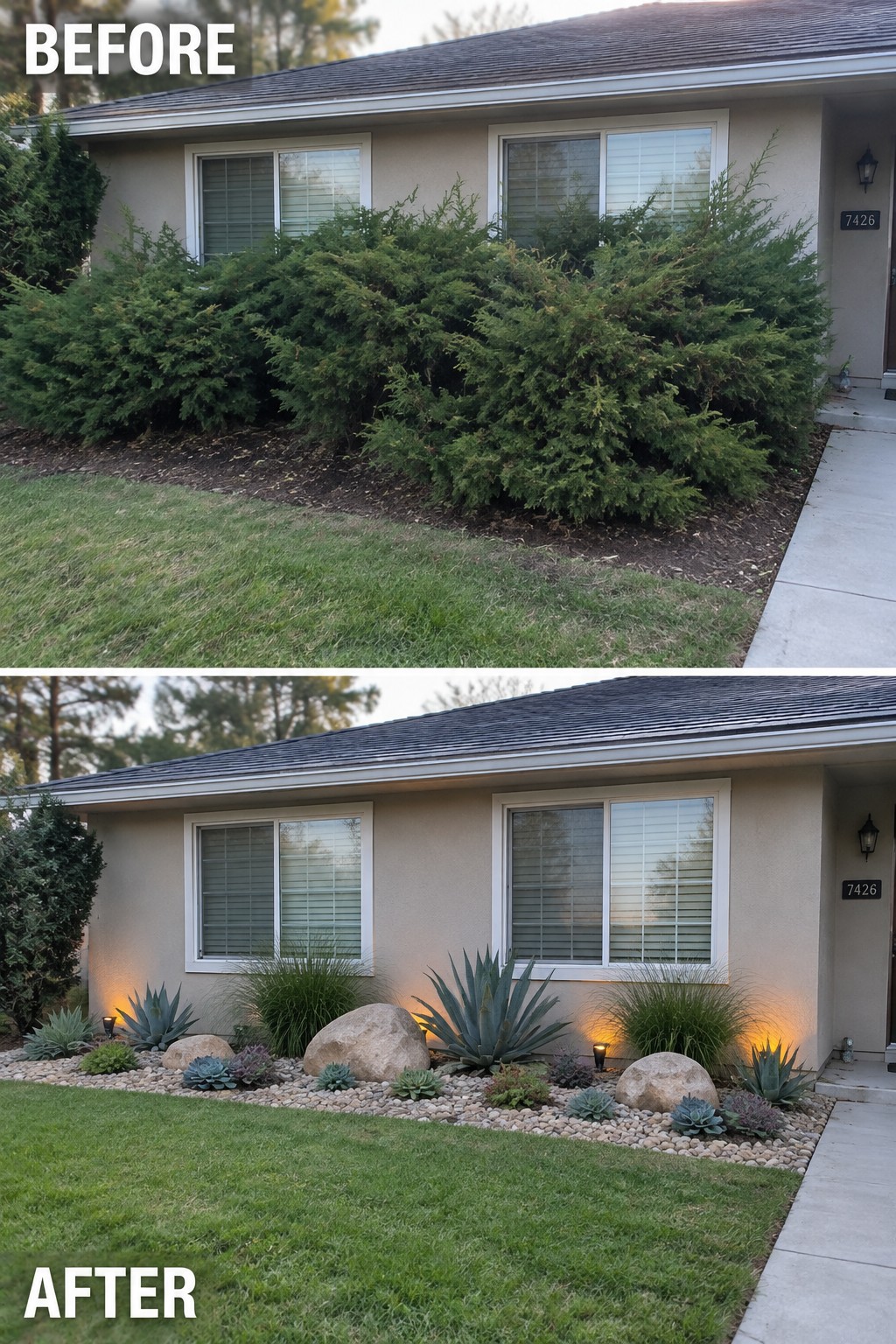
Many homes end up with foundation shrubs that grow out of control and block windows. Removing the old growth and putting in a simple bed of succulents, ornamental grasses, and a few large rocks keeps the area covered while making the front of the house look cared for instead of hidden.
This idea works best along the front of a single-story house where you want curb appeal without weekly trimming. Focus on plants that stay low, add a clean pebble border to separate the bed from the lawn, and use a few small lights if you want the area to look finished after dark. Keep the number of plant types small so the bed stays easy to maintain over time.
Add Defined Planting Beds To A Bare Yard
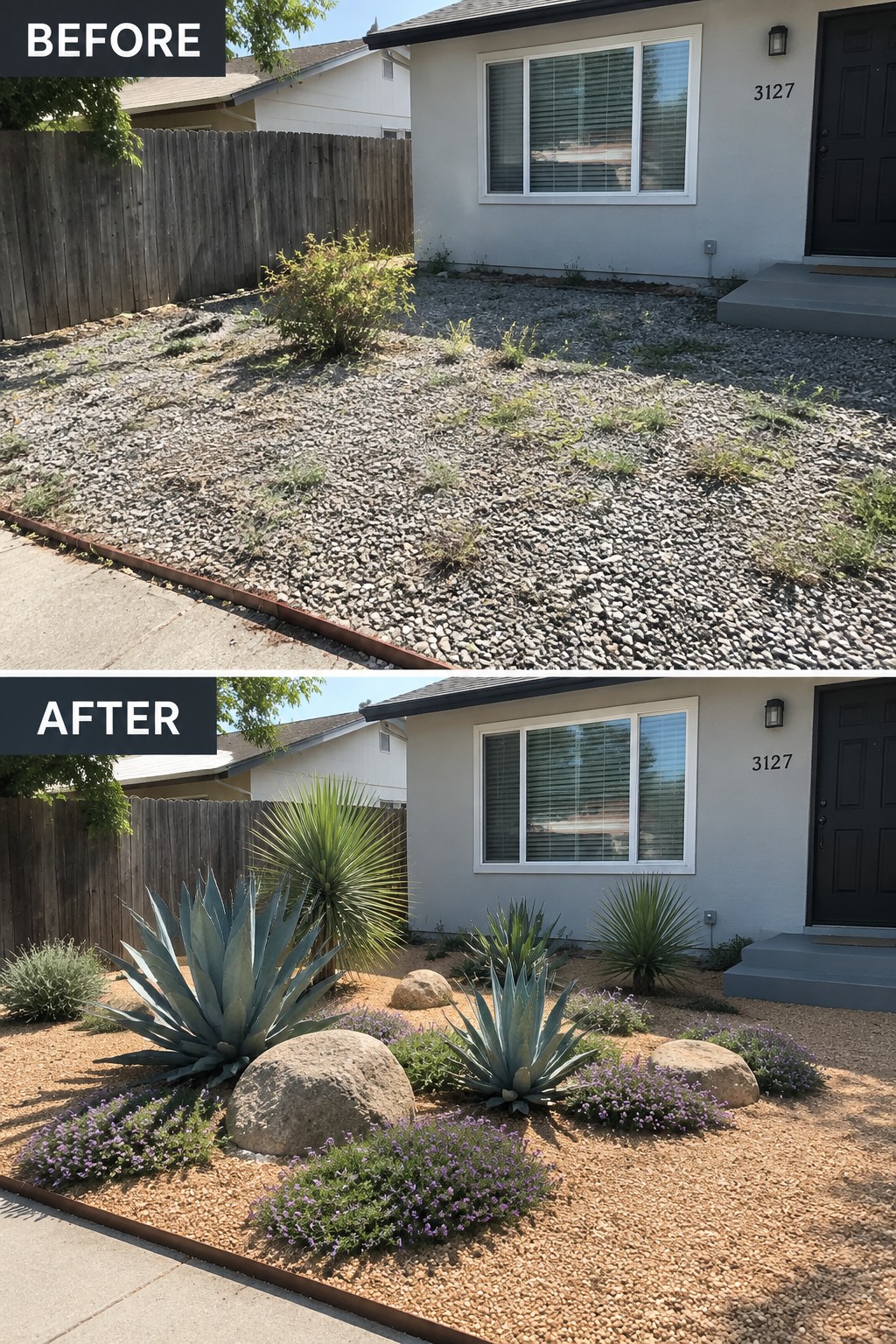
The front yard changed from a flat stretch of gravel and scattered weeds into a set of clear planting beds. Large agaves, smaller yuccas, and low purple ground cover now sit in mulched areas held by simple steel edging, with a few boulders placed for weight.
This idea works on any home where the front yard feels empty or unplanned. Mark out beds first, then fill them with tough plants that handle dry conditions. The structure makes the space look intentional without needing weekly upkeep.
Add Structure To Front Planting Beds
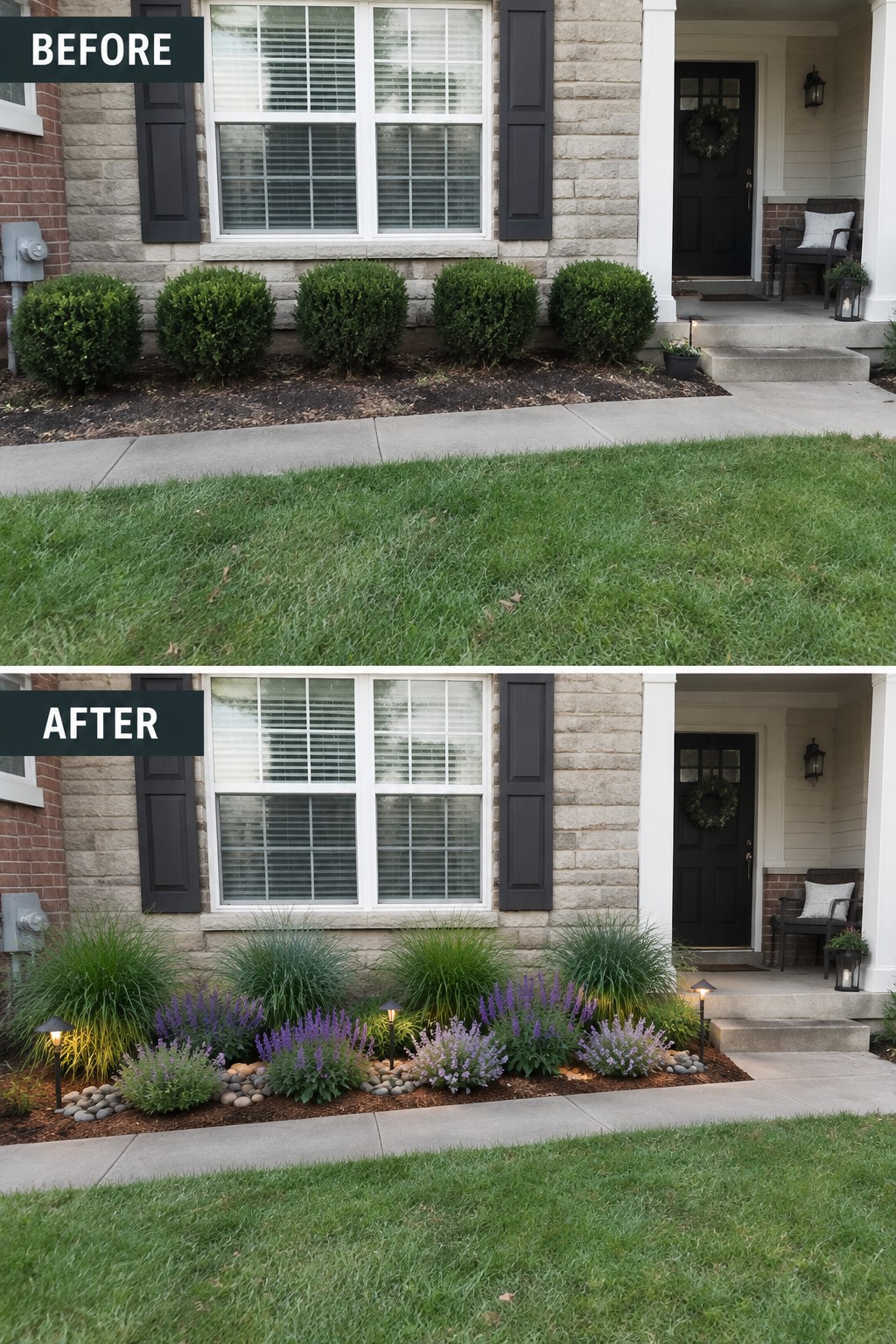
Replacing a straight line of identical shrubs with a mix of grasses and flowering plants gives the front of the house a cleaner, more finished look. The before photo shows basic round bushes sitting in mulch, while the after version uses different heights, some purple blooms, and a few lights to break up the space. The change feels simple but makes the whole border look more intentional.
This works best on homes with a long, narrow bed along the foundation. Pick a few low-maintenance varieties that suit your area, keep the planting in layers, and add a simple stone edge if you want to keep mulch in place. The lights are optional but help the bed look neat after dark without much extra effort.
Add Defined Planting Beds To A Bare Gravel Area
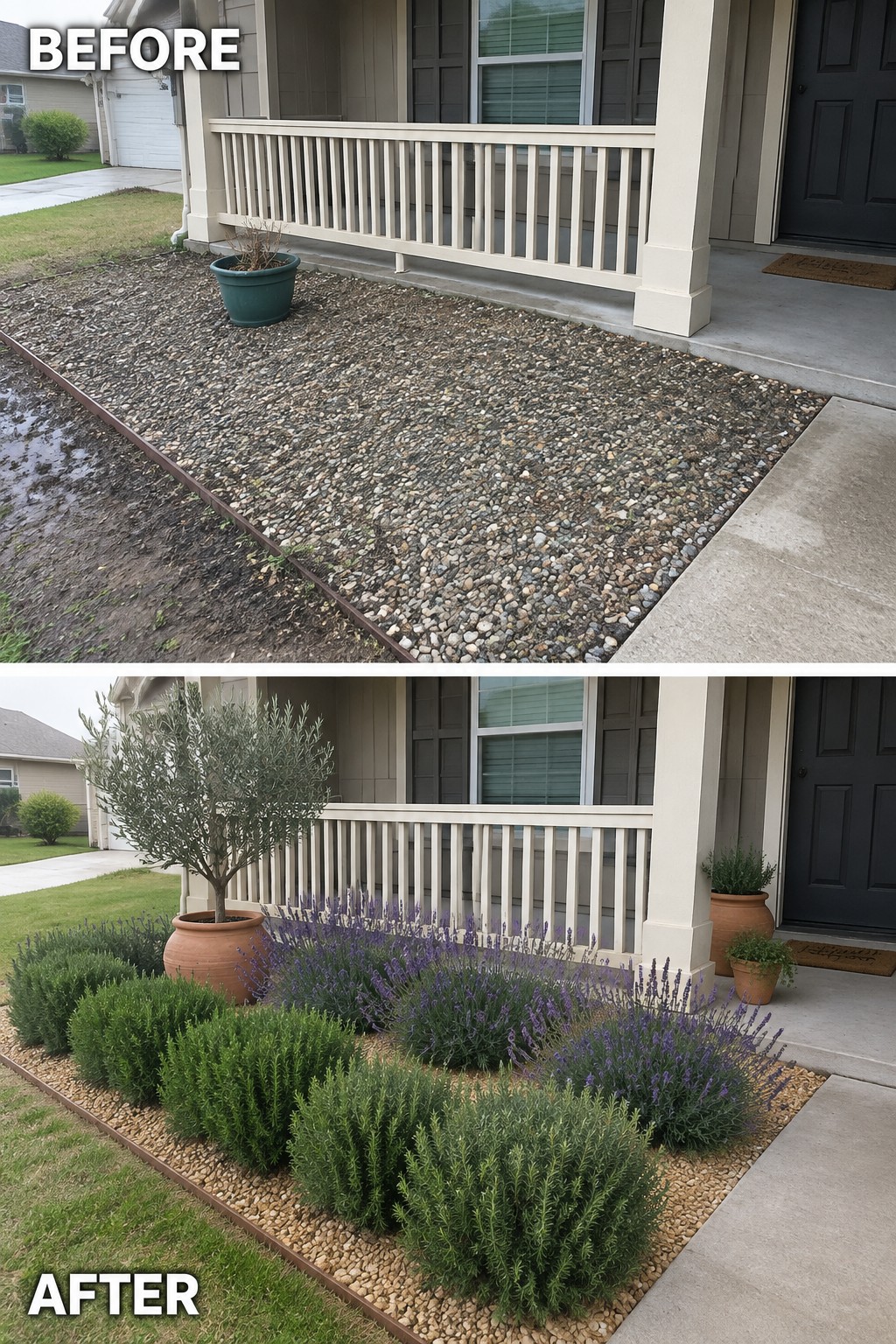
A plain gravel strip in front of the house often looks unfinished because it lacks any sense of order. Adding a simple border and filling it with a mix of evergreen shrubs and lavender creates clear beds that turn the same space into something intentional and easy to maintain. The change from scattered gravel to grouped plants gives the front yard a settled look without requiring constant work.
This approach works well on homes with existing gravel or mulch areas where you want to improve appearance without a full redesign. Start with a few larger shrubs for structure, then fill in with lower plants that repeat along the bed. Keep the layout simple so the beds stay proportional to the house and do not crowd the walkway.
Define The Lawn Edge With Simple Planting Beds

The before photo shows grass and weeds spilling right onto the concrete, which makes the whole front look neglected even though the house itself is fine. Adding a narrow strip of edging with a few layers of plants turns that messy line into something intentional. The metal border and pavers keep everything in place and give the driveway a finished look without needing a big renovation.
This approach works well on any home where the lawn meets a hard surface. Start with a straight or gently curved edge, then fill the bed with a mix of low ground cover, mid-height grasses, and one or two seasonal plants. Keep the bed narrow enough that it does not crowd the walking area, and choose plants that stay under a foot or two so they do not block the view of the house.
Define A Front Bed With Gravel And Tall Planters
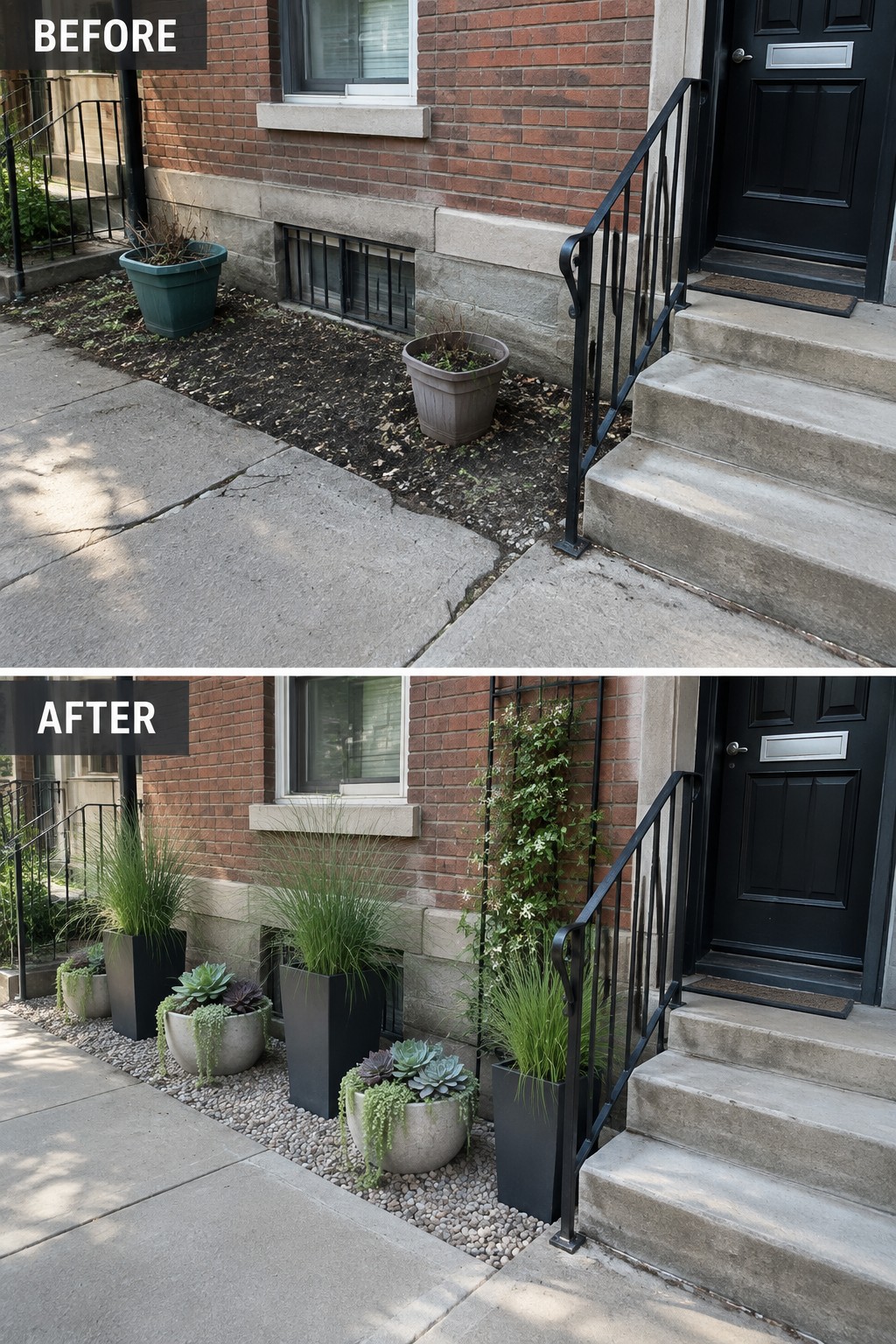
The before photo shows a front foundation area that looks unfinished, with exposed soil, scattered pots, and no clear edge. In the after, the same narrow strip gets covered in light gravel and filled with a row of matching planters in different heights. The gravel pulls everything together and makes the space look intentional instead of neglected.
This approach works well along the front of a brick house or any narrow bed next to steps. Start with the gravel to suppress weeds and create a clean base, then repeat the same planter style a few times so the eye moves smoothly along the house. It stays low maintenance as long as you choose tough grasses and succulents that do not need constant watering.
Add Defined Garden Beds To Structure A Plain Front Yard
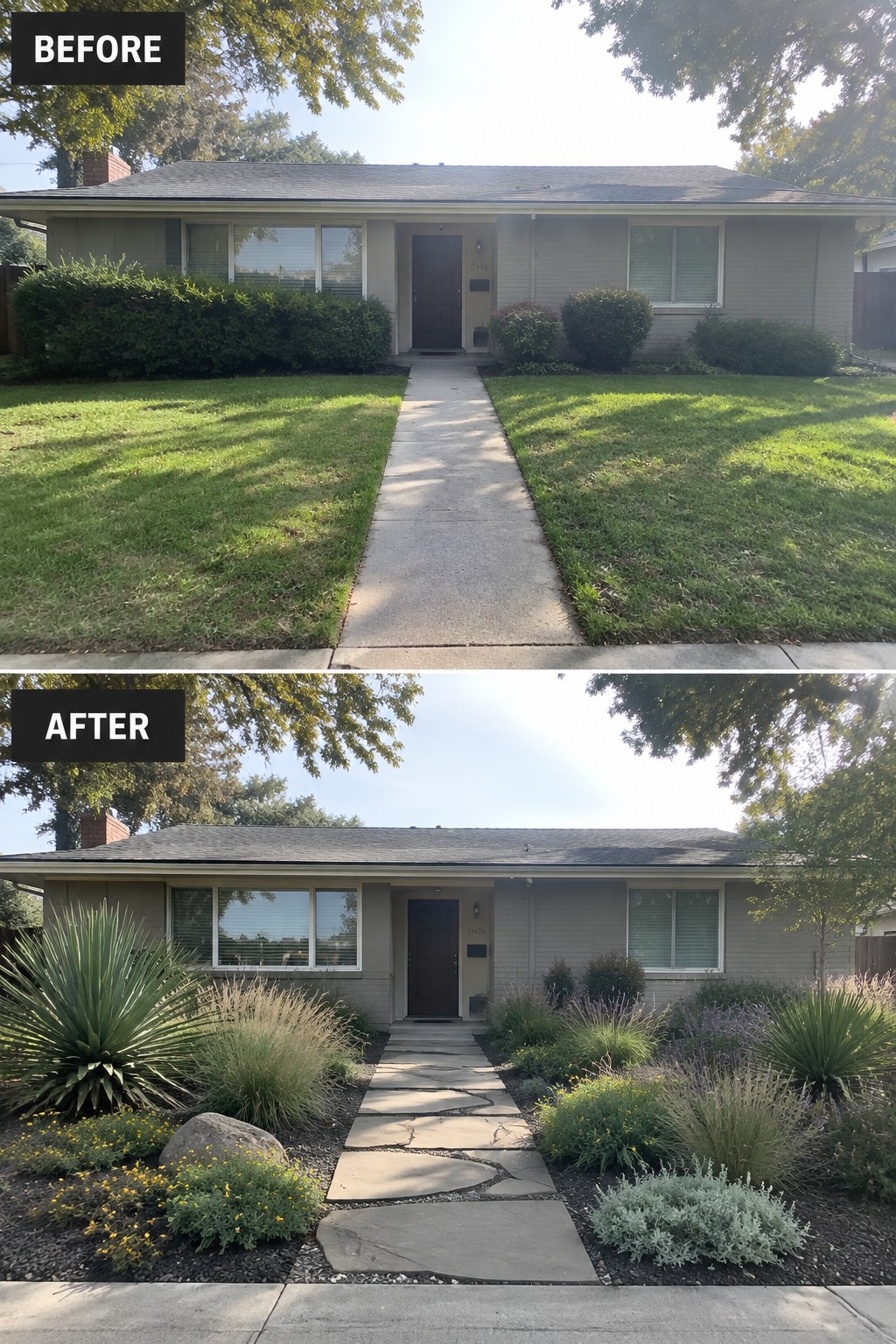
A wide lawn with a straight concrete path often feels flat and unfinished. Adding planted beds on both sides of a new stepping stone walkway breaks up the space and gives the entrance a clearer shape without crowding the yard.
This idea suits homes with simple front lawns where the main goal is better flow and lower maintenance. Outline the beds first, use mulch to keep the edges clean, and pick a mix of grasses and shrubs that stay neat with little watering. The path change is optional but helps the beds feel more connected to the house.
Replace Heavy Concrete Planters With Wood For A Cleaner Entry
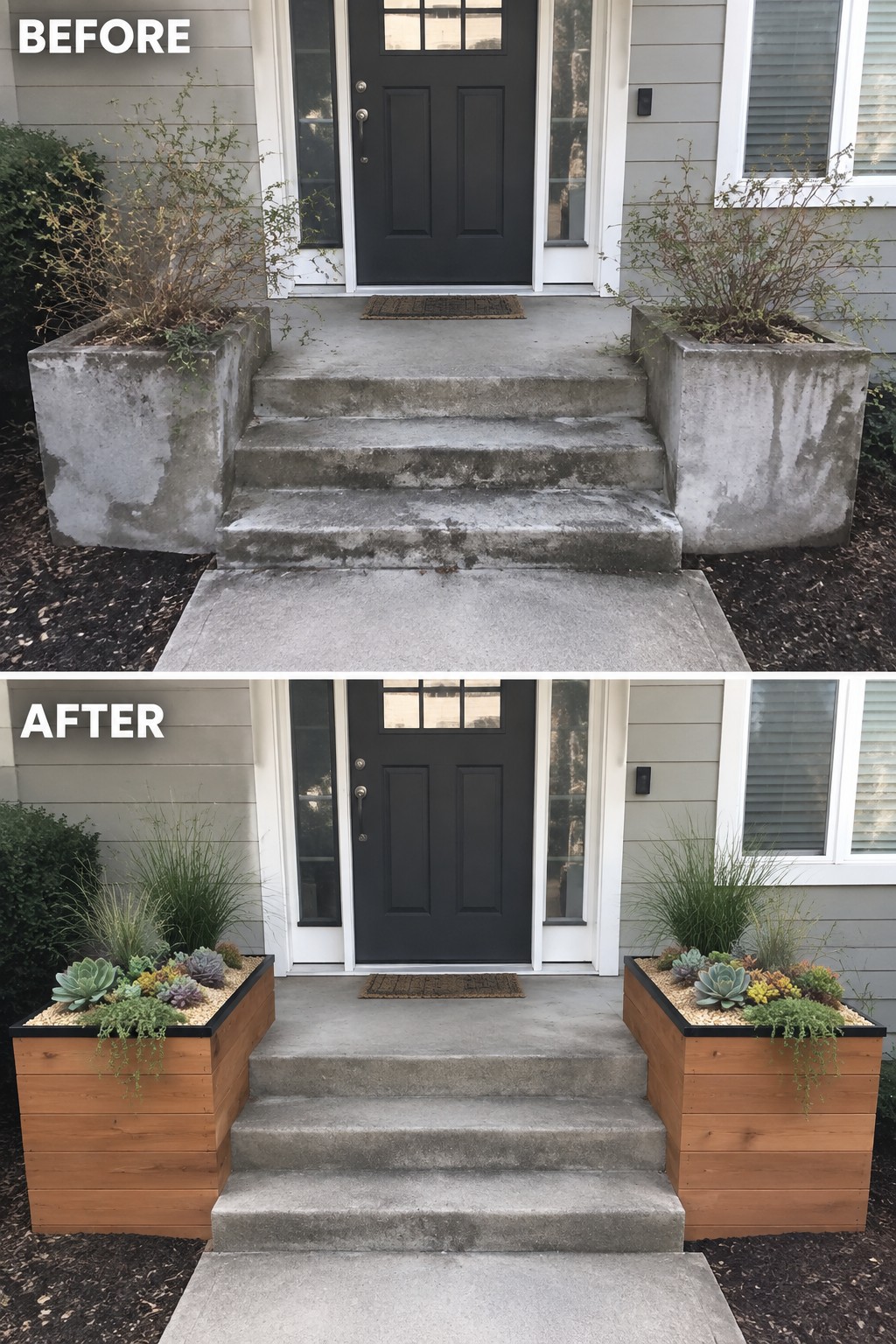
The old concrete planters sat low and bulky beside the steps and made the entry feel dated. Switching to simple cedar boxes with a dark trim and filling them with succulents and tall grasses lightened the whole front without changing the stairs or door.
This idea suits homes with plain concrete entries that need an easy refresh. Match the planter size to your steps, stick to low-water plants, and keep the plantings low so the path stays clear and welcoming.
Add Terracing To A Steep Overgrown Slope

A steep, weedy hillside is hard to maintain and looks messy fast. Terracing breaks the slope into flat beds held by retaining walls, which stops erosion and gives plants actual space to grow instead of sliding down.
This approach works well on front yards with a sharp drop from the house to the street. Start with the walls and steps first, then fill the beds with low-maintenance plants. The key is keeping the terraces wide enough to walk and weed without fighting the hill the whole time.
Create Structure In A Front Yard With Gravel And Pavers
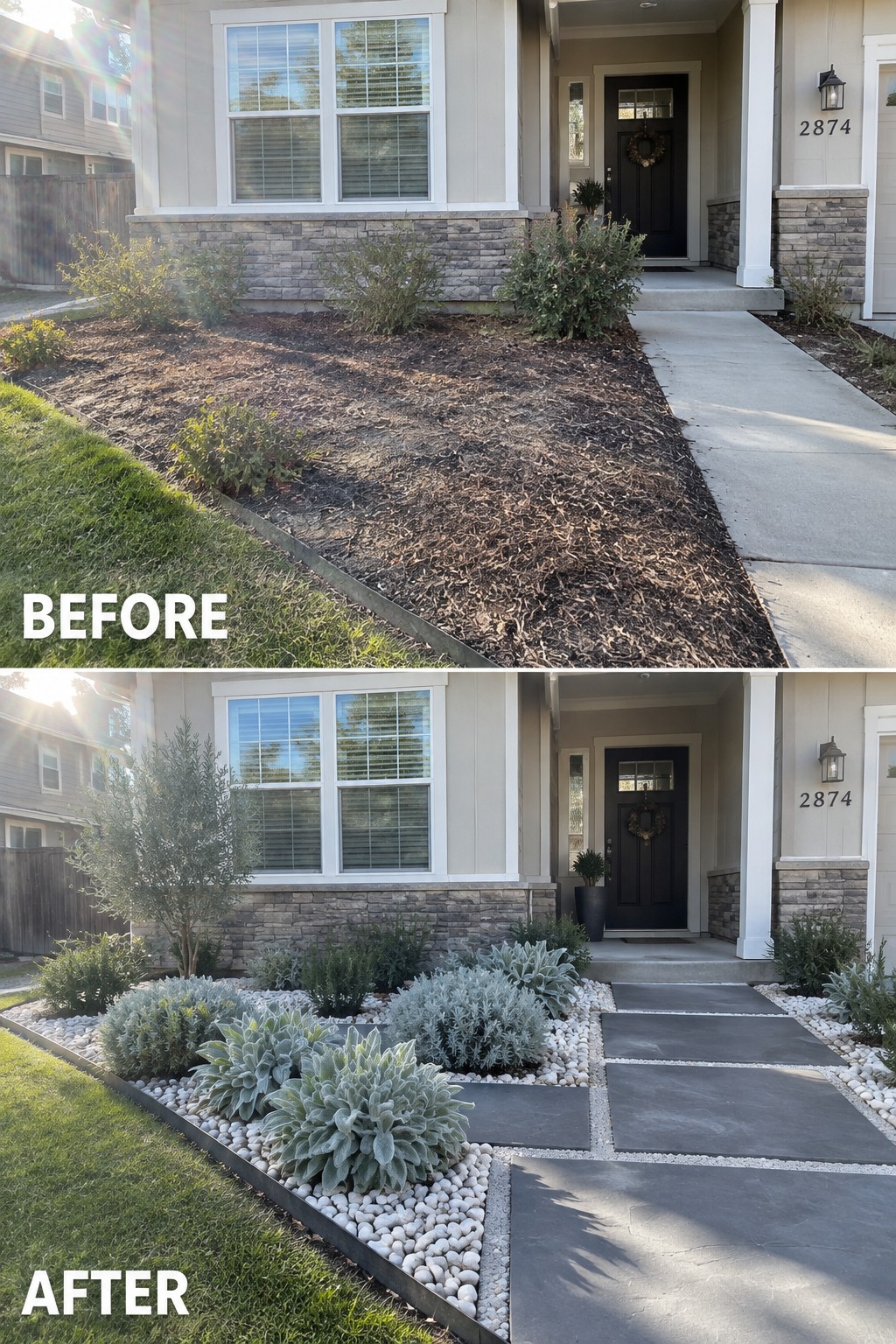
A bare stretch of mulch along the front of a house often looks unfinished because nothing holds the space together. Adding white gravel beds with a clear border and laying down a few simple pavers gives the area shape and makes the walkway feel intentional instead of just a strip of concrete.
This approach works best on smaller front yards where you want low maintenance without leaving everything open and flat. Start by cleaning up the existing mulch and weeds, then mark out the beds and paths before adding the gravel. Keep the planting simple so the gravel and pavers stay the main organizing elements.
Clear Overgrown Areas Before Adding New Planting Beds
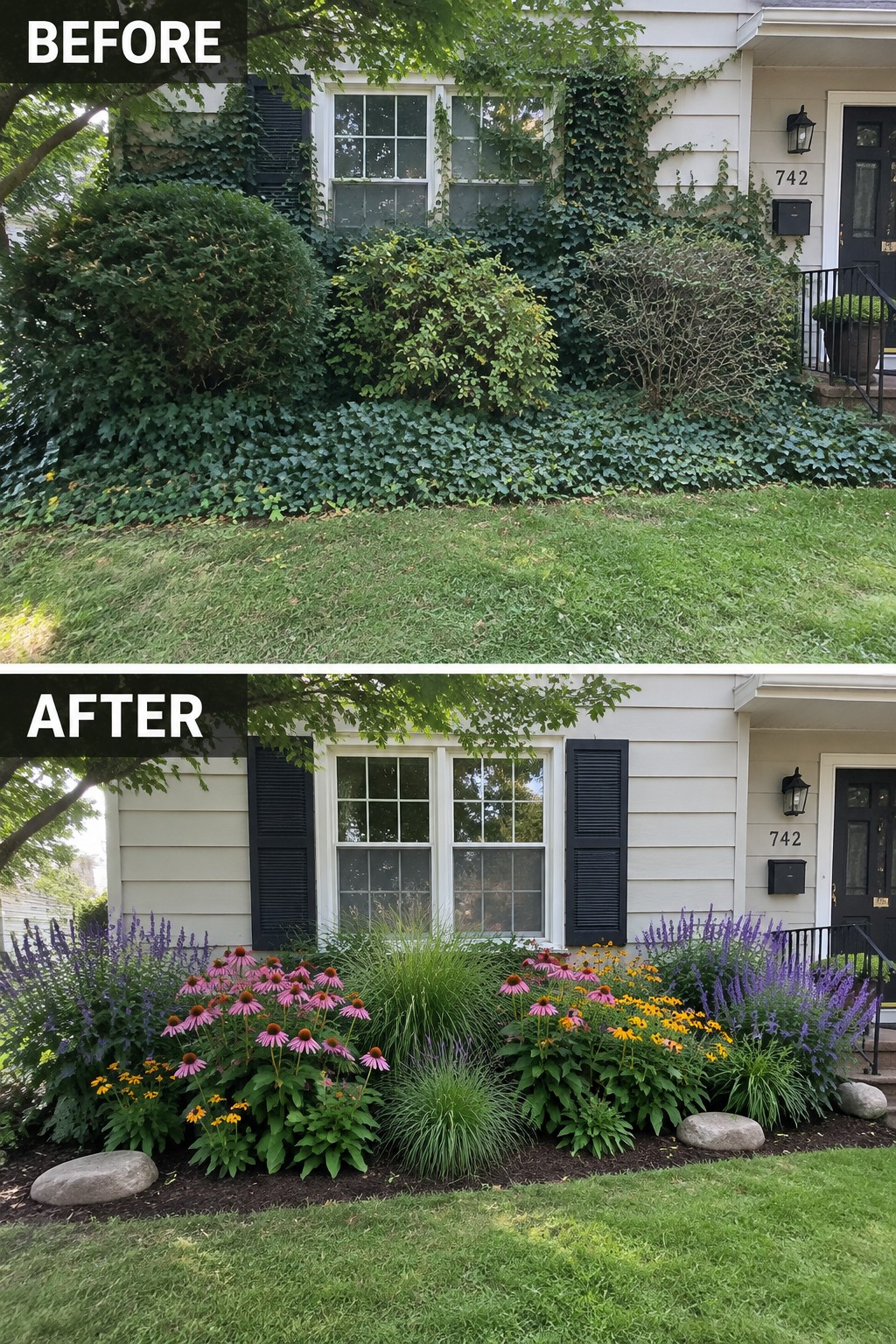
Many front yards start with a thick layer of ivy or shrubs that hide the house and make the space feel neglected. Clearing that growth first opens up the foundation and lets you see the actual shape of the yard. In this case the change shows how removing the ivy and old shrubs made room for simple garden beds filled with flowers and grasses that stay neat without constant work.
This approach works well on older homes where ground cover has taken over. Start by cutting everything back to the soil line, then add a clear edge and a few inches of mulch. Keep the planting simple with a mix of taller grasses and lower flowers so the bed looks full but stays low maintenance. The same idea works on any side of the house where you want structure without adding more hardscaping.
Add Defined Planting Beds To A Simple Front Yard
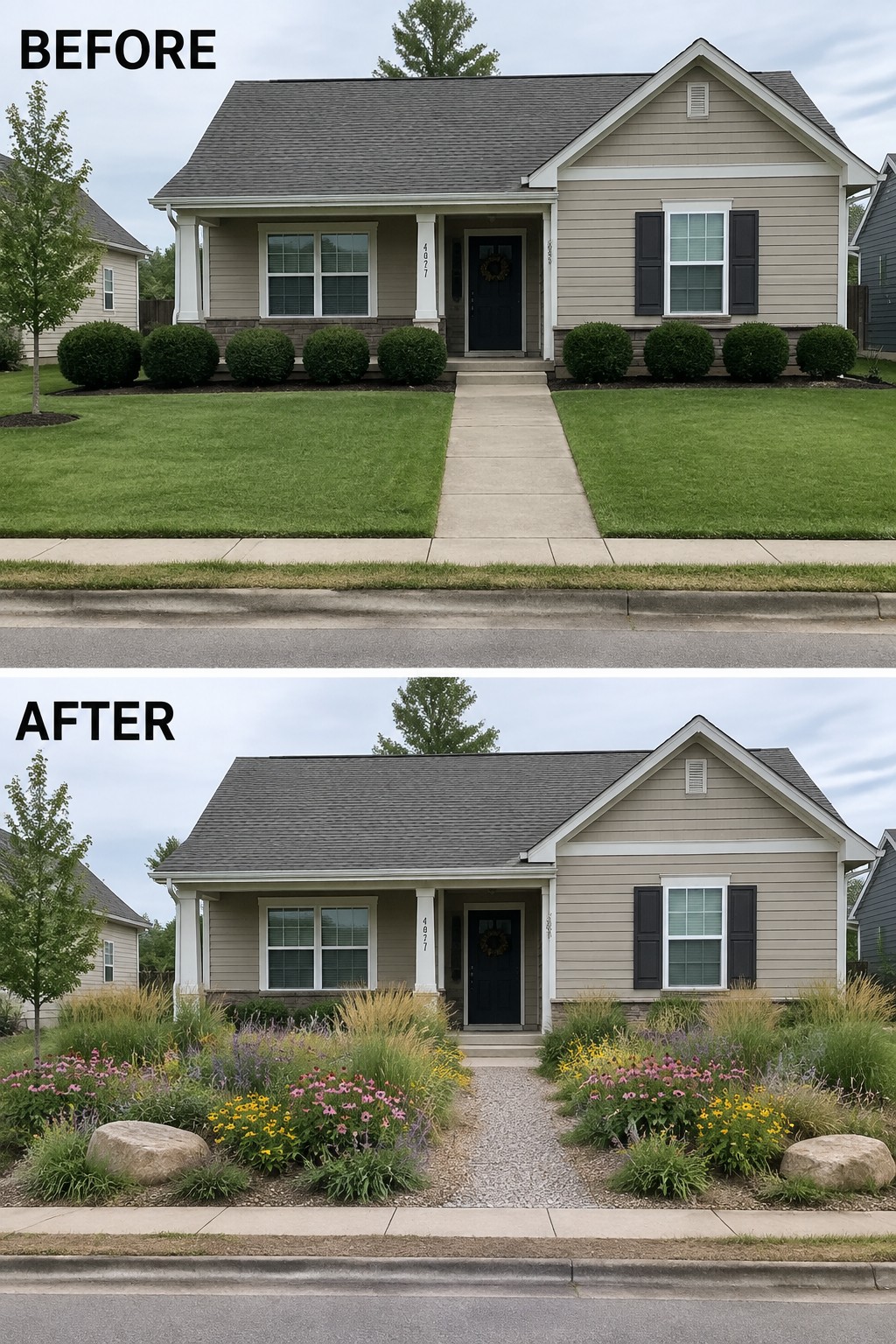
The front yard changed from a flat lawn with a plain concrete walk to one with clear planted borders on both sides. The grass was pulled back and replaced with a mix of flowers and grasses that give the space shape and color while cutting down on mowing.
This idea works best on smaller front yards where you want more interest than lawn alone. Outline the beds first so the path feels like it belongs, then choose a handful of plants that spread and fill in on their own. It keeps the yard looking neat with less weekly work.
Add Planting Pockets To A Paver Walkway

Many paver walkways start to look tired once weeds take hold in the joints. Cutting out a few rectangular sections and filling them with plants gives the path structure without tearing out the whole thing.
This idea works best on straight front walks where the hard surface feels too heavy. Use compact grasses and groundcovers that stay low and need little watering. The beds break up the stone while keeping the path easy to walk and maintain over time.
Clear Overgrowth To Create A Low-Maintenance Front Yard
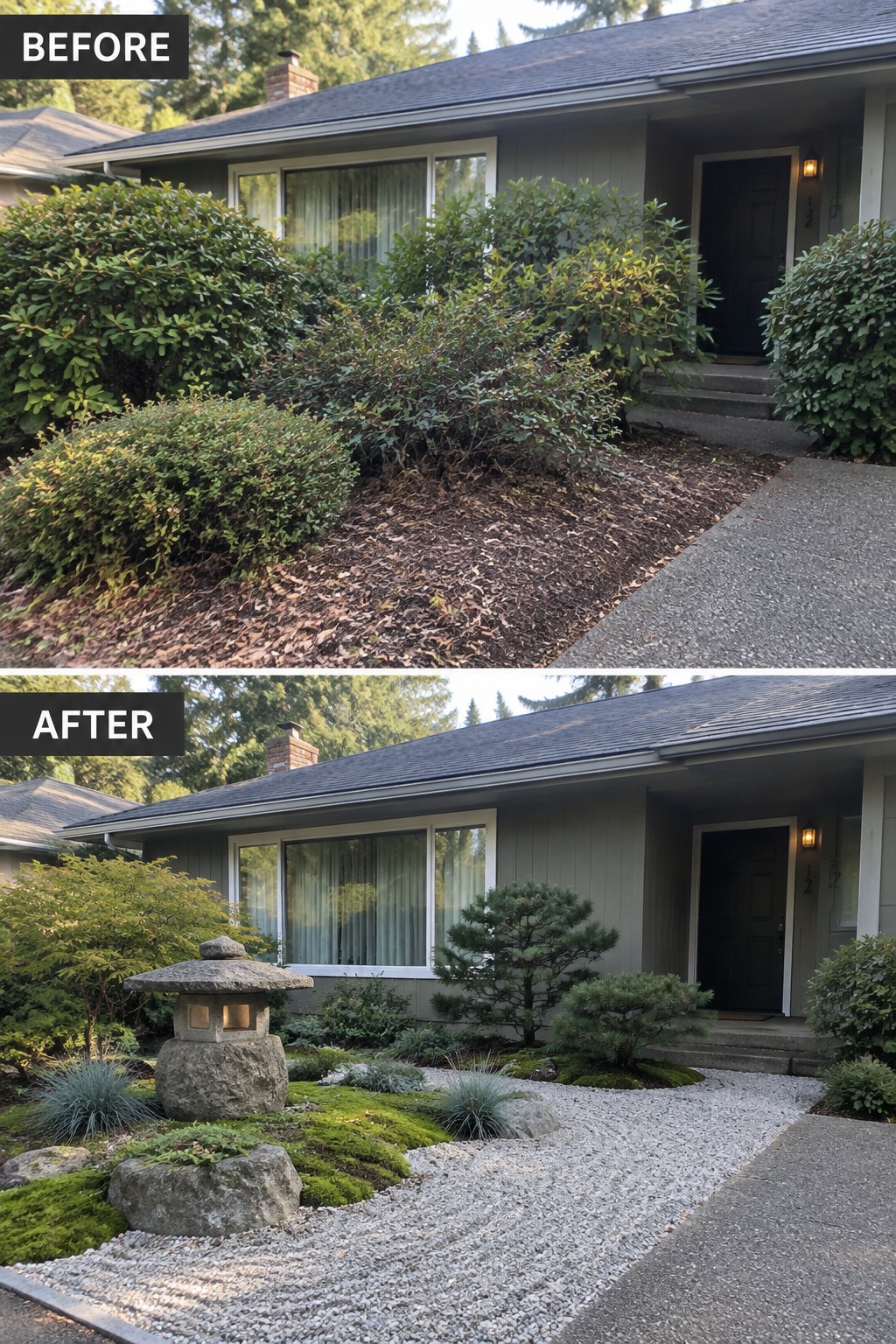
Many front yards end up with shrubs that grow together and spill onto the walkway, making the space feel neglected. Clearing the excess growth and laying gravel gives the area clean edges so the planting feels intentional rather than random.
This idea suits homes where you want low-maintenance planting without constant trimming. Keep the beds narrow, use gravel to separate the path from the plants, and add one or two simple focal points like a lantern or small evergreen. The result stays neat with minimal watering once the new plants settle in.
Add Structure To An Overgrown Front Yard
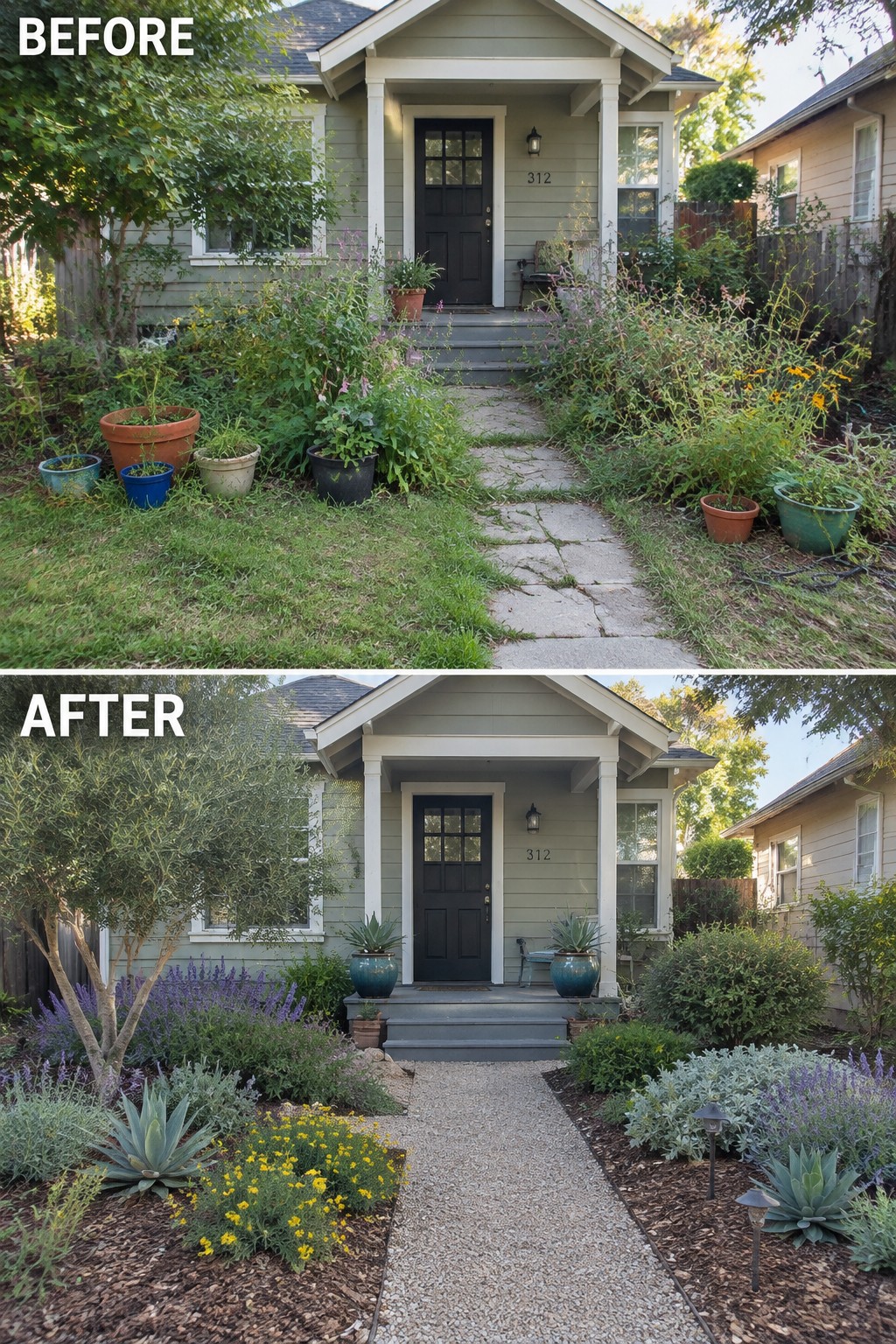
The front yard shifted from a messy mix of weeds and scattered pots to a clean layout with defined beds and a gravel path. Clearing the overgrowth first made room for mulch and gravel to give the space shape, which keeps the planting simple and easy to maintain.
This approach works best on small front yards where you want low maintenance without constant weeding. Start by removing the excess growth, then lay out beds with mulch so plants stay contained and the path stays walkable year round.
Add Structure To A Plain Front Yard With Pavers
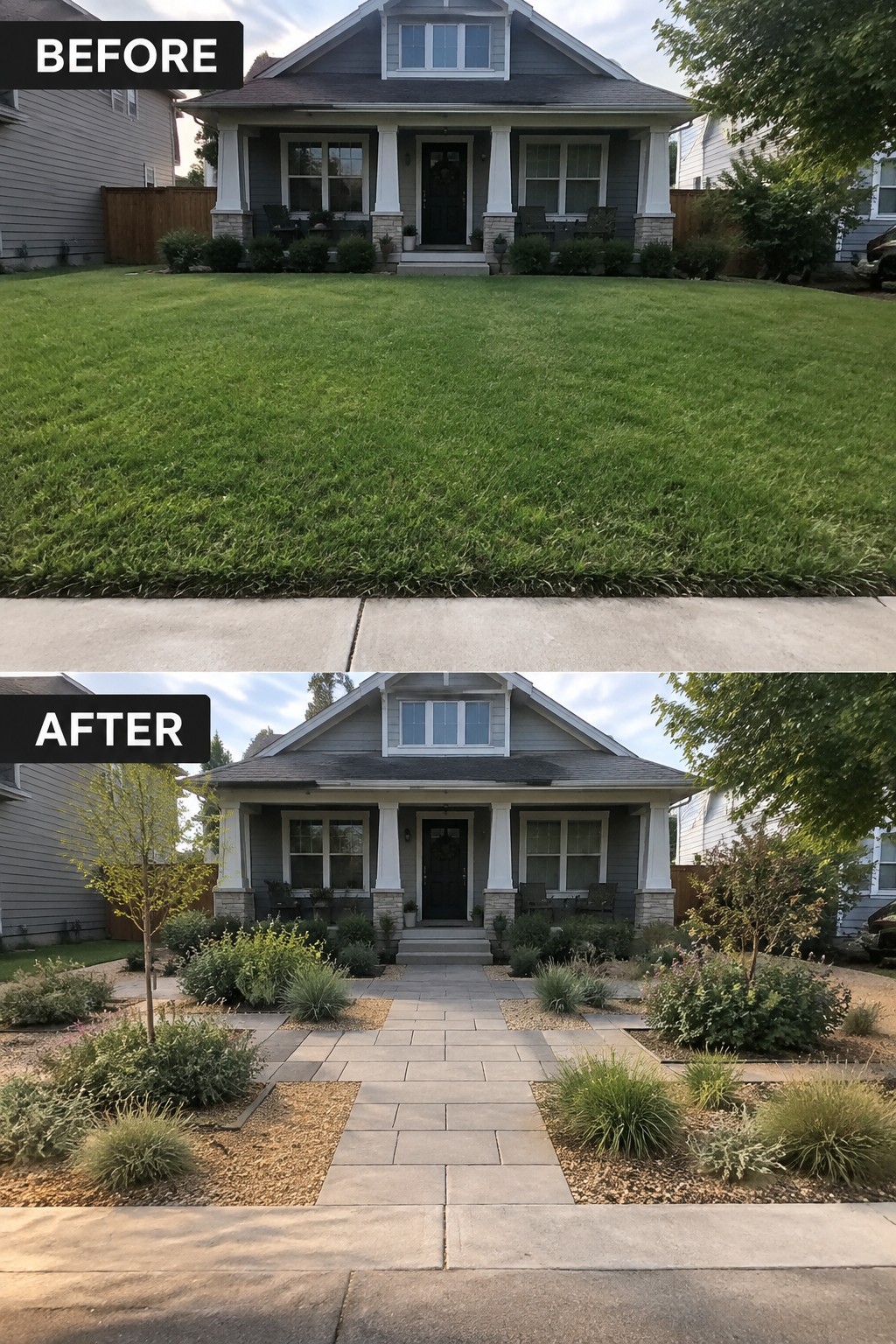
A wide empty lawn can look unfinished even when it is well kept. Adding a central stone path and mulched planting beds on either side gives the space clear shape and makes the walk to the door feel more direct.
This idea works best on homes with a broad front lawn and a fairly flat approach. Lay the main path first so it lines up with the front steps, then fill the side areas with simple shrubs and a few small trees. The result stays low maintenance as long as the beds are mulched and the plant choices stay modest in size.
Curve The Front Path With Border Beds
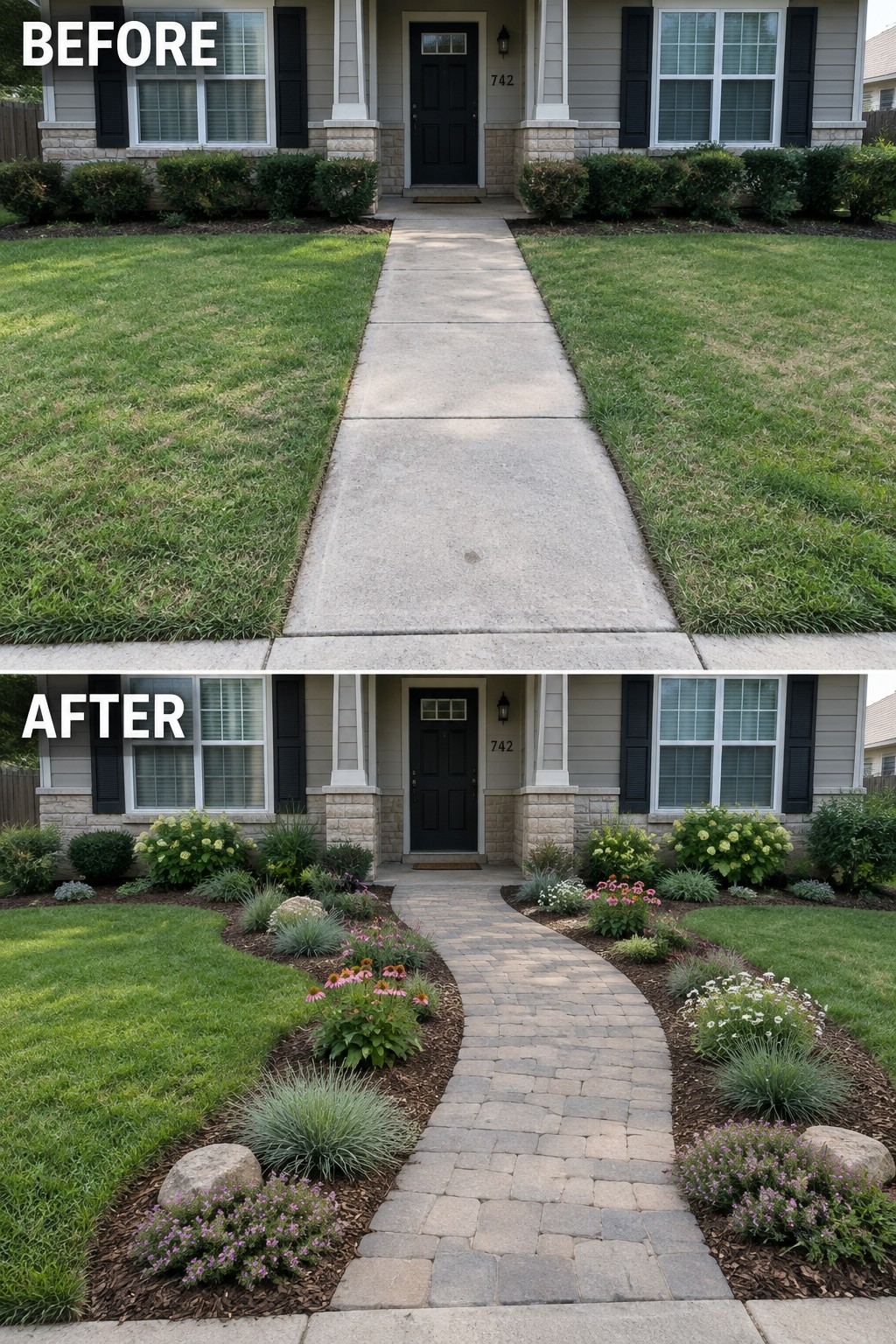
A straight concrete walkway with flat grass on both sides often feels dull and hard to maintain. Switching to a gently curved paver path and adding mulched beds on both sides gives the front yard clear shape and makes the walk feel more welcoming without adding much work.
This approach works well on modest front yards where the lawn is already in decent shape. Start by laying out the new path curve with a hose, then build simple beds that follow the line. Keep the planting simple with a mix of low shrubs, grasses, and seasonal flowers so the beds stay neat year after year.
Replace A Patchy Lawn With Structured Garden Beds
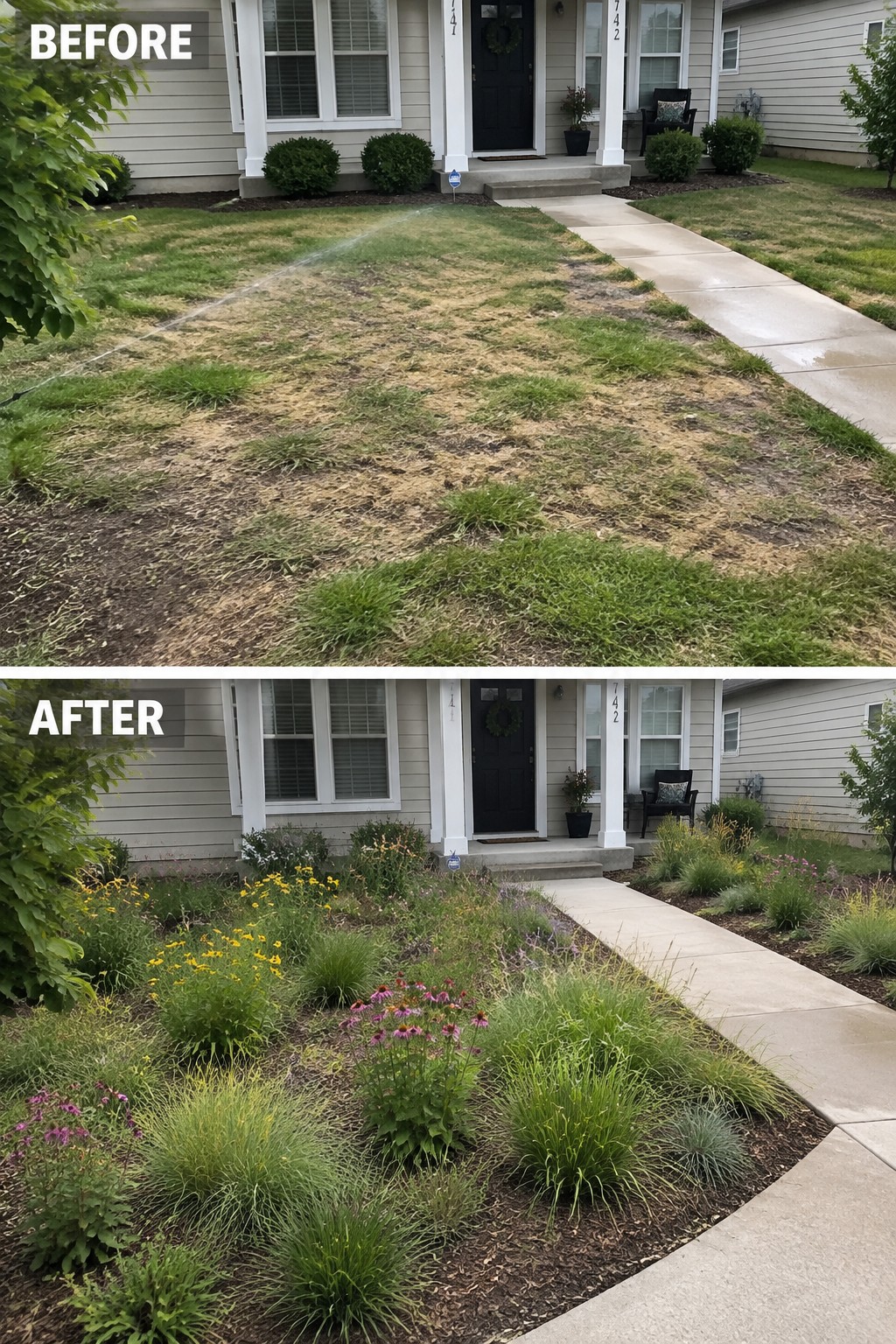
The front yard had a wide stretch of thin, uneven grass that was difficult to keep looking decent. By clearing most of the lawn and shaping defined beds along the walkway and foundation, the space gained clear lines and a much tidier appearance without needing constant mowing or watering.
This idea suits homes where the lawn struggles with shade, traffic, or poor soil. Mark out the beds first so the walkway stays open, then use mulch to keep weeds down and group plants that handle dry spells. It reduces maintenance while still giving the yard a settled, cared-for look.
Add Defined Planting Beds Along The Front
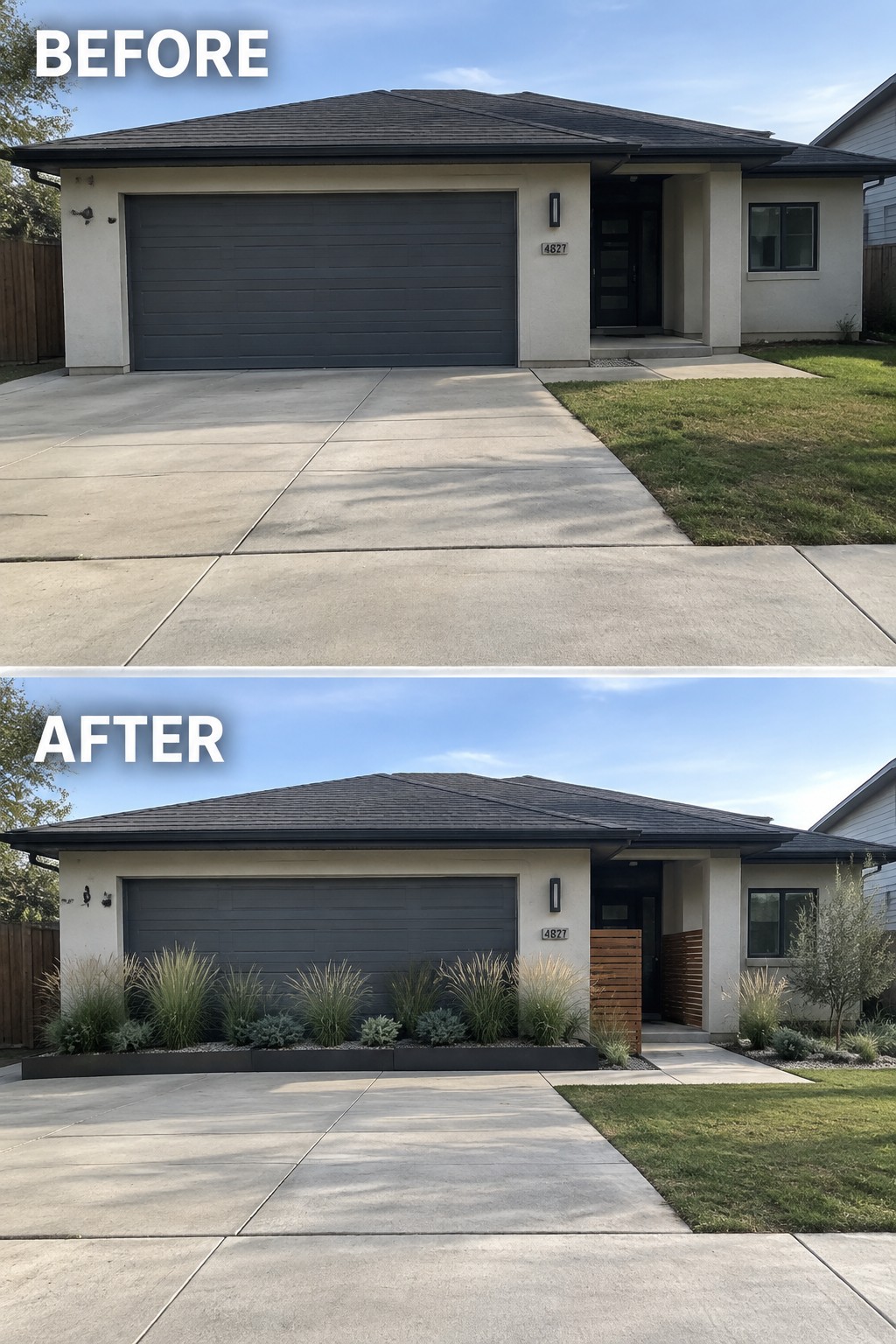
The main improvement here comes from placing a long planting bed right across the front of the garage and entry. The before photo shows just a strip of grass next to bare concrete. In the after photo that area now has a clean edge, dark planter boxes, and a row of grasses and small shrubs that give the whole front a finished look without needing constant care.
This idea works best on houses where the garage takes up most of the width. Start by marking out a simple bed line that follows the house, then fill it with plants that stay under two feet tall so they do not hide windows or the door. Use the same edging material on both sides of the walkway to keep the look consistent.
Define A Plain Front Yard With Gravel Beds And Pavers

A large stretch of grass can look unfinished when it runs straight up to the house and driveway. Adding gravel beds edged with rock gives the space clear shape and cuts down on mowing. The paver path through the middle also makes the entry feel more intentional instead of just an open lawn.
This approach works well on smaller front yards or homes that want lower maintenance. Start by marking out the beds you actually need, then fill with gravel and a few tough plants like agave or olive trees. Keep the beds simple so the walkway stays open and the whole front stays easy to care for.
Frequently Asked Questions
Q: What if my front yard gets mostly shade from trees or the house?
A: Pick shade loving plants like ferns and certain sedges that fill in fast and stay green. They cut down on weeding since they crowd out most unwanted growth on their own.
Q: Do I need to water new plants every day at first?
A: Water deeply a couple times a week for the first season. This helps roots grow strong without constant attention.
Q: How can I add a path or small seating area without creating more work?
A: Place a simple bench or chairs on a gravel pad. (The gravel keeps things neat around the edges.)
Q: Will these ideas hold up if the yard slopes a bit?
A: Terracing with low walls works well here. It prevents erosion and lets you plant in flat sections that are easier to maintain.
