

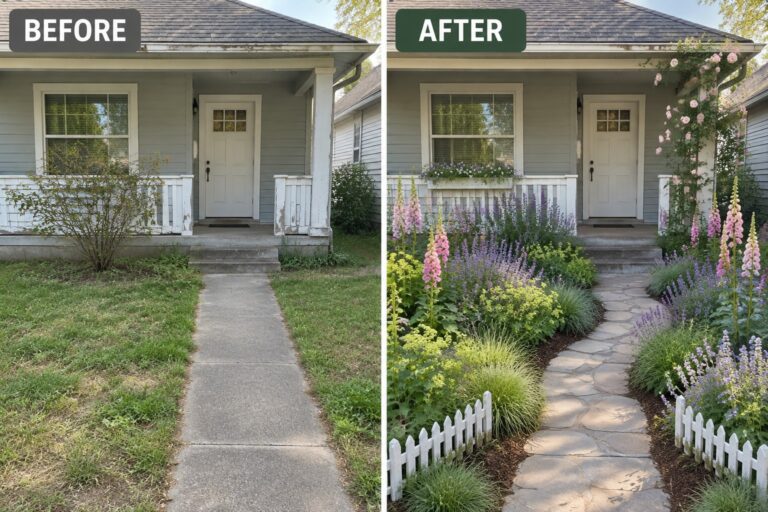
I have noticed that many yards start out looking a bit scattered with no clear edges or plant groupings to hold them together.
Once you add some simple structure through paths and clusters of plants the whole space starts to feel more settled.
Cottage style suits that approach well.
It lets things grow a little loosely without turning messy and still keeps the yard usable for everyday life.
I often find myself testing one or two of these planting ideas in my own space before committing to larger changes.
Define The Entry Path With Cottage-Style Garden Beds
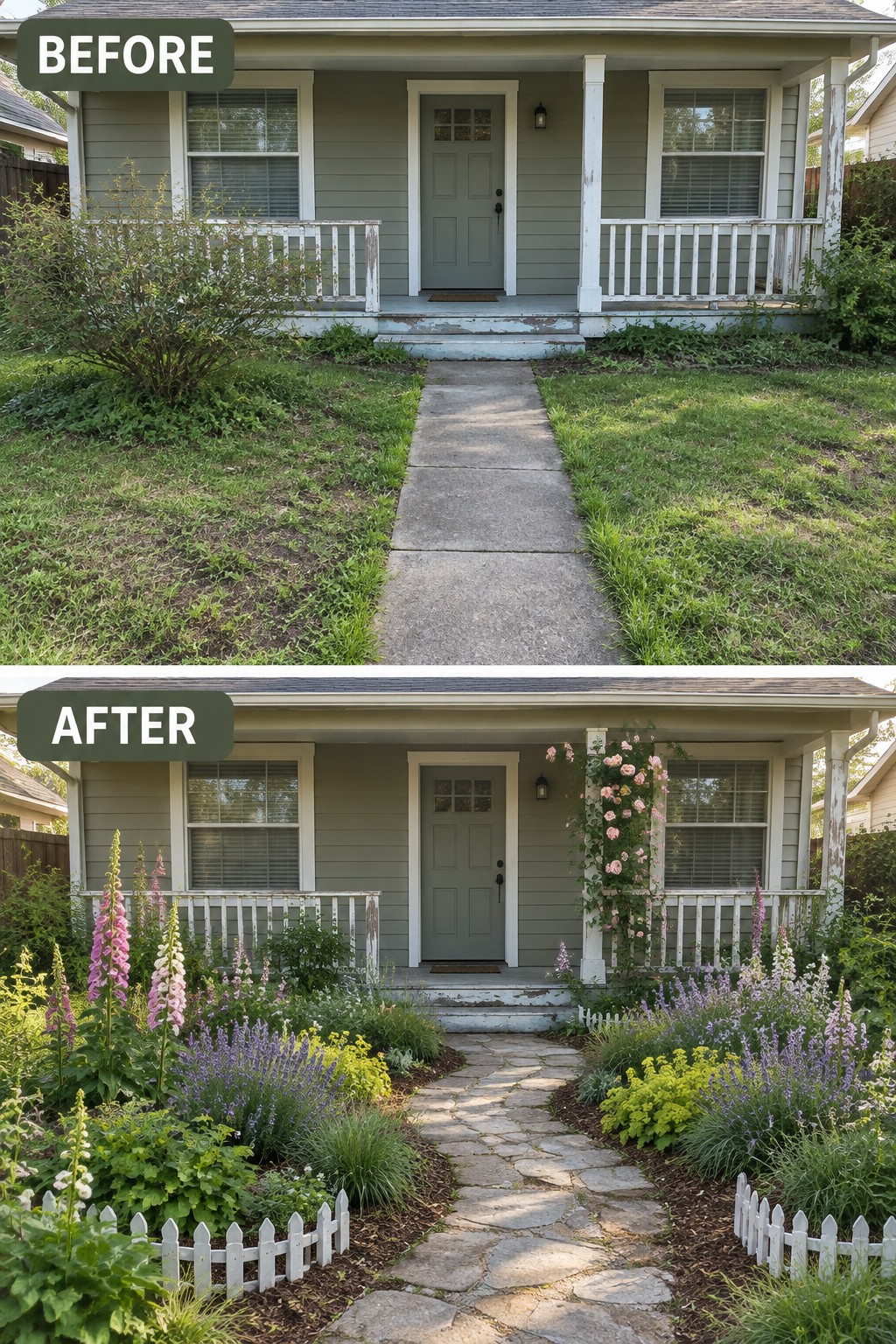
A plain concrete walkway and an empty stretch of lawn can make the front of a house feel unfinished. Replacing the concrete with irregular stone pavers and adding deep garden beds on both sides gives the path a clear purpose and draws the eye toward the door. The beds are planted with tall spiky flowers mixed with lower mounds of color, which keeps the look relaxed but still intentional.
This approach works best on small to medium front yards where you want cottage character without a full redesign. Start by marking out the beds with simple edging or low fencing, then fill them with a mix of perennials that bloom at different heights. Leave enough space between plants so they can fill in naturally over a season or two.
Add Defined Garden Beds To A Plain Backyard
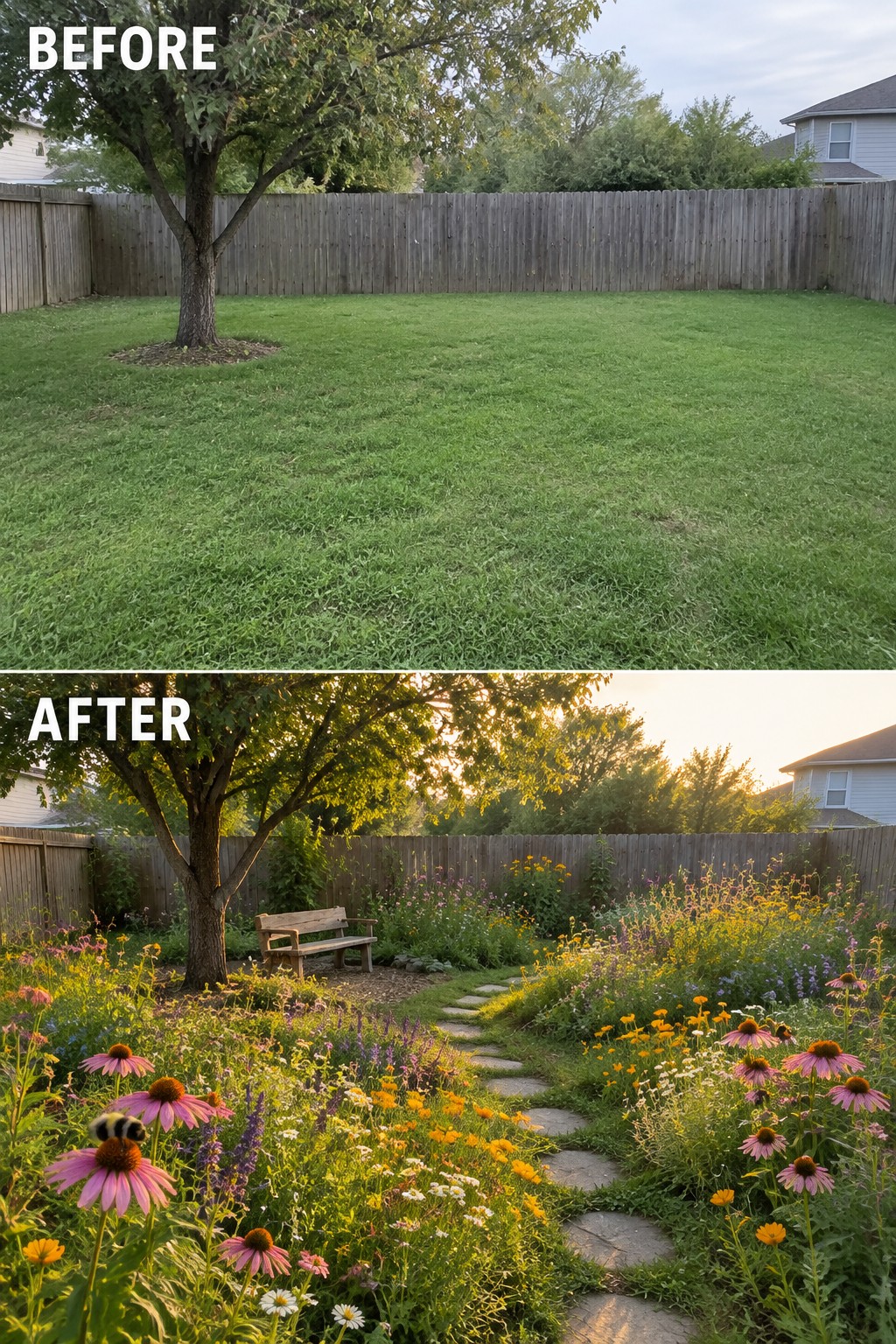
A large empty lawn often feels unfinished even when it is neat. Adding curved beds filled with informal flowers and a simple stone path gives the space shape and purpose without making it feel crowded. The before photo shows just grass and one tree, while the after shows how those same elements become the backbone of a cottage garden once the planting is added.
This approach works best in suburban yards that have room to spare but lack interest. Keep the beds at a manageable width so they are easy to maintain, and choose tough perennials that fill in quickly. A narrow path through the flowers invites people to walk through the garden instead of just looking at it from the edge.
Soften A Narrow Side Yard With Potted Plants
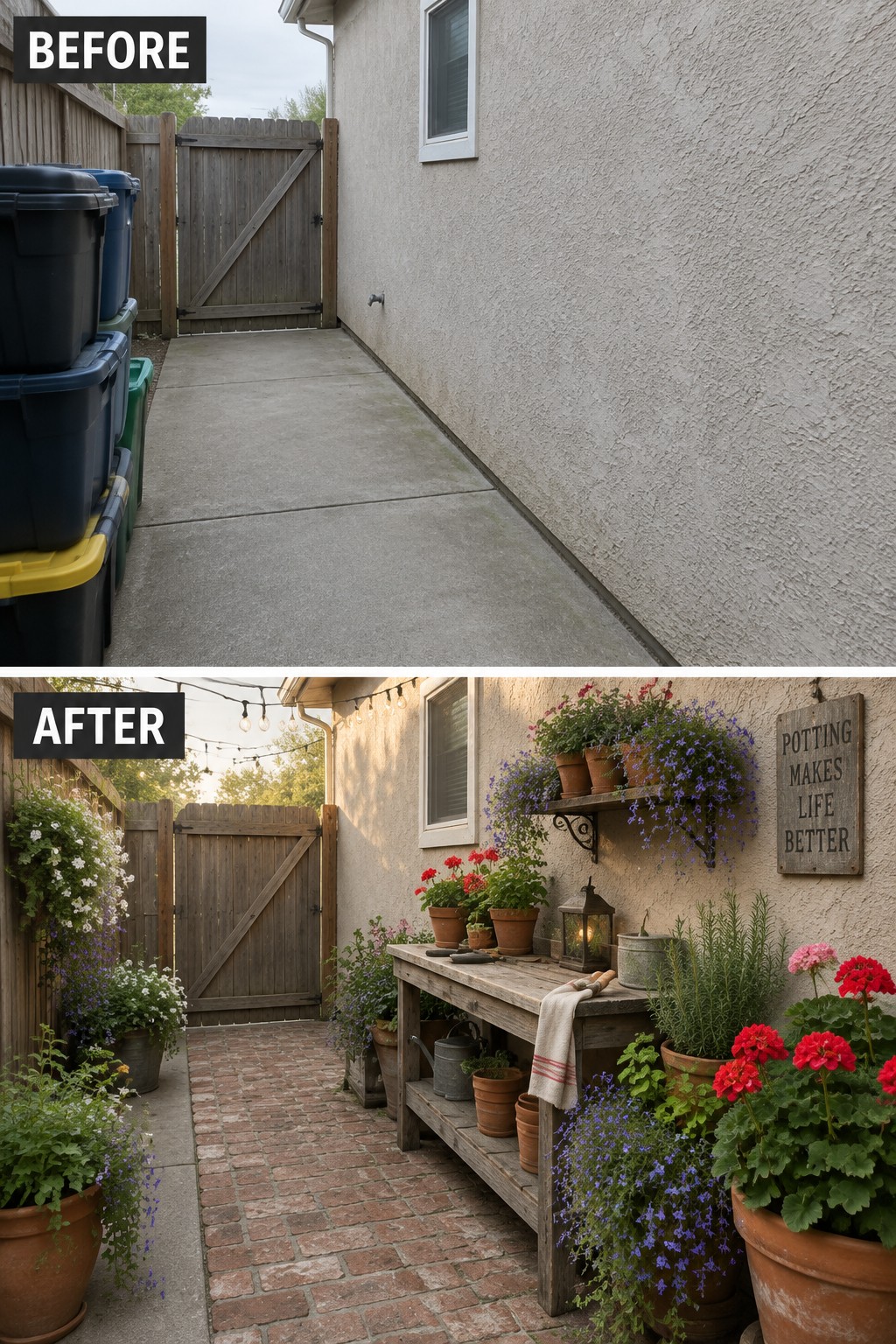
A plain concrete side path next to the house often stays bare because it feels too narrow or awkward to use. Here the space changed by swapping the concrete for brick and filling both sides with pots of different sizes, turning a simple walkway into a garden path that feels intentional.
This idea works best on small lots or homes where the side yard is the main access route. Start with a few large pots to anchor the look, then add smaller ones and a bench or two for seating. Keep the planting informal so it feels cottage-like rather than formal, and choose weatherproof pieces that can stay out year round.
Turn A Gravel Yard Into A Cottage Garden

A bare gravel yard often feels like wasted space because it lacks any clear layout or reason to linger. Adding a winding brick path and filling the edges with informal beds of flowers, grasses, and shrubs gives the area shape and makes it feel like a real garden rather than just an empty lot.
This idea works best in small to medium yards where you want to avoid a formal look. Start by laying out the path first to define the beds, then plant in loose groups rather than neat rows so the flowers can mingle and soften the edges over time.
Frame Entry Steps With Informal Pots And Flowers
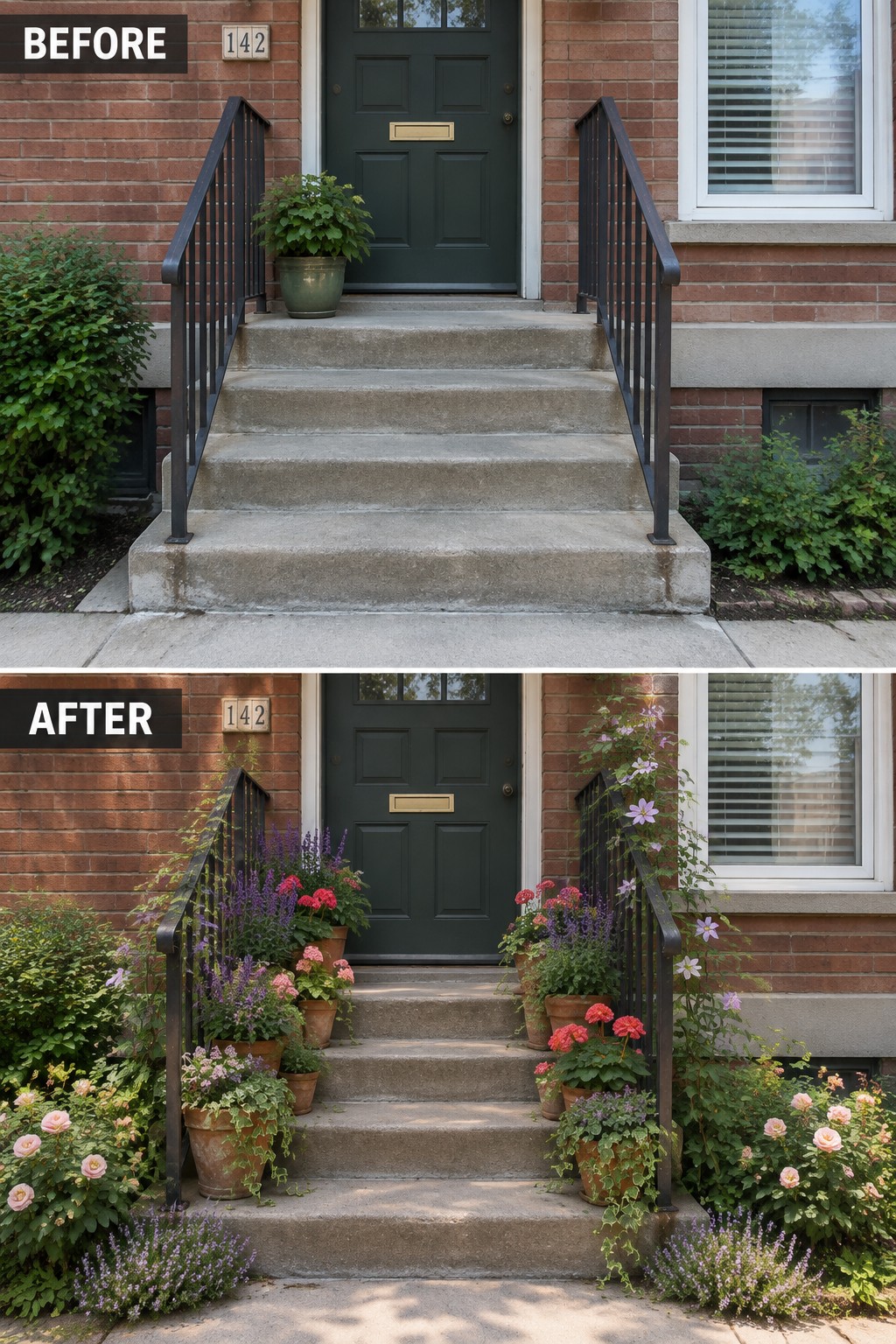
The concrete steps looked bare and a little stark before, with just one lonely pot by the door. Adding clusters of terracotta pots filled with bright annuals and trailing vines on both sides turned the same small entry into something much more welcoming without any major construction.
This approach works especially well on homes with simple brick or concrete entries that need softening. Start with a few larger pots near the base of the steps, then layer in smaller ones and let a couple of climbers weave through the railings. Keep the colors mixed but not too matchy, and leave enough clear space on the treads so people can still walk through easily.
Add Cottage-Style Planting To A Bare Yard
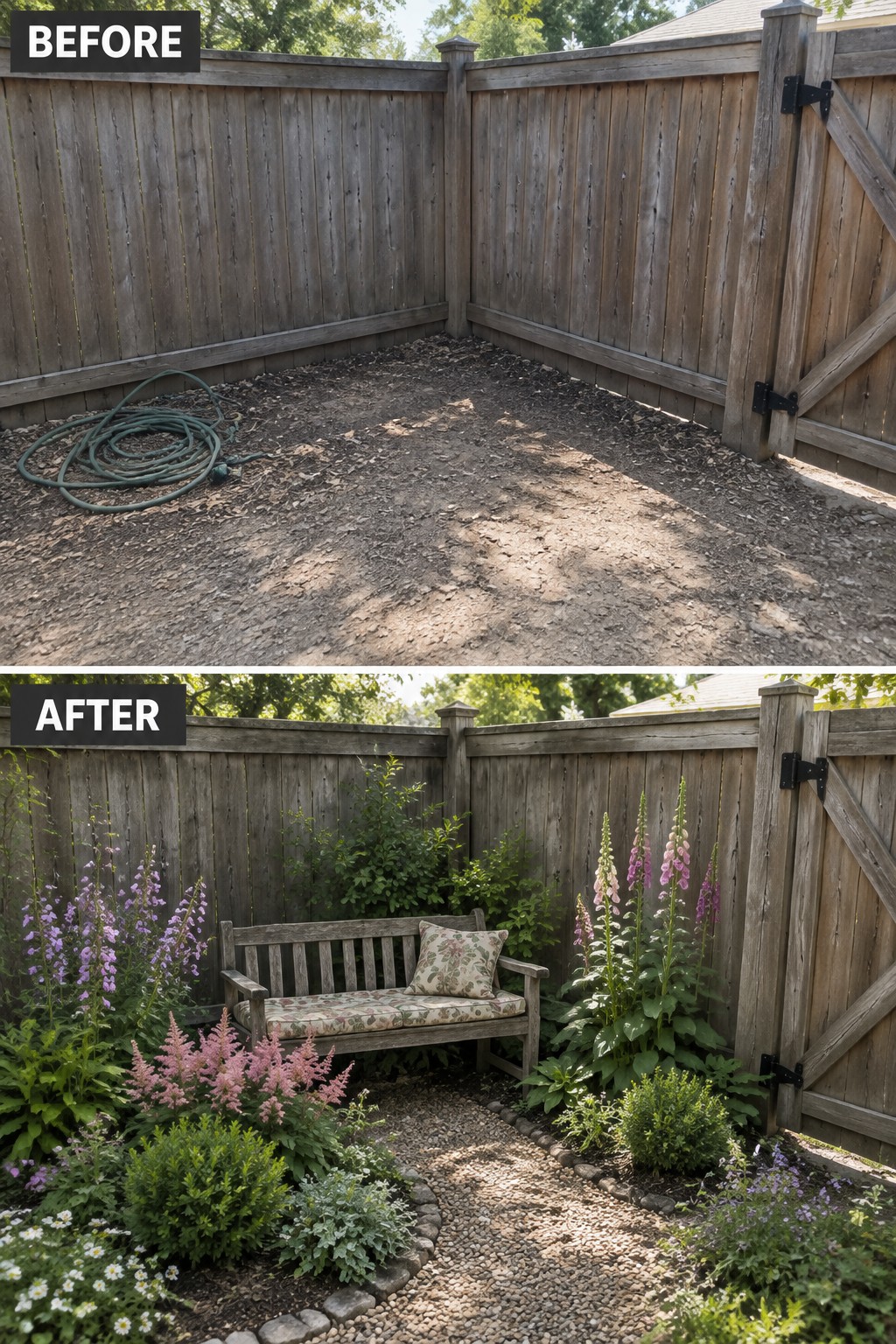
A bare dirt backyard feels unfinished and hard to use. Adding informal planting beds around a simple bench turns the space into something you actually want to spend time in. The before photo shows nothing but open ground and a hose, while the after adds layers of flowers and shrubs that give the area shape without making it look formal.
This idea works well in small yards where you want a relaxed cottage feel. Start by clearing the ground, then group plants in loose clusters rather than straight lines. A bench gives the eye a place to rest and makes the garden feel purposeful even when the planting is still filling in.
Add Informal Planting Beds Along A Stone Path
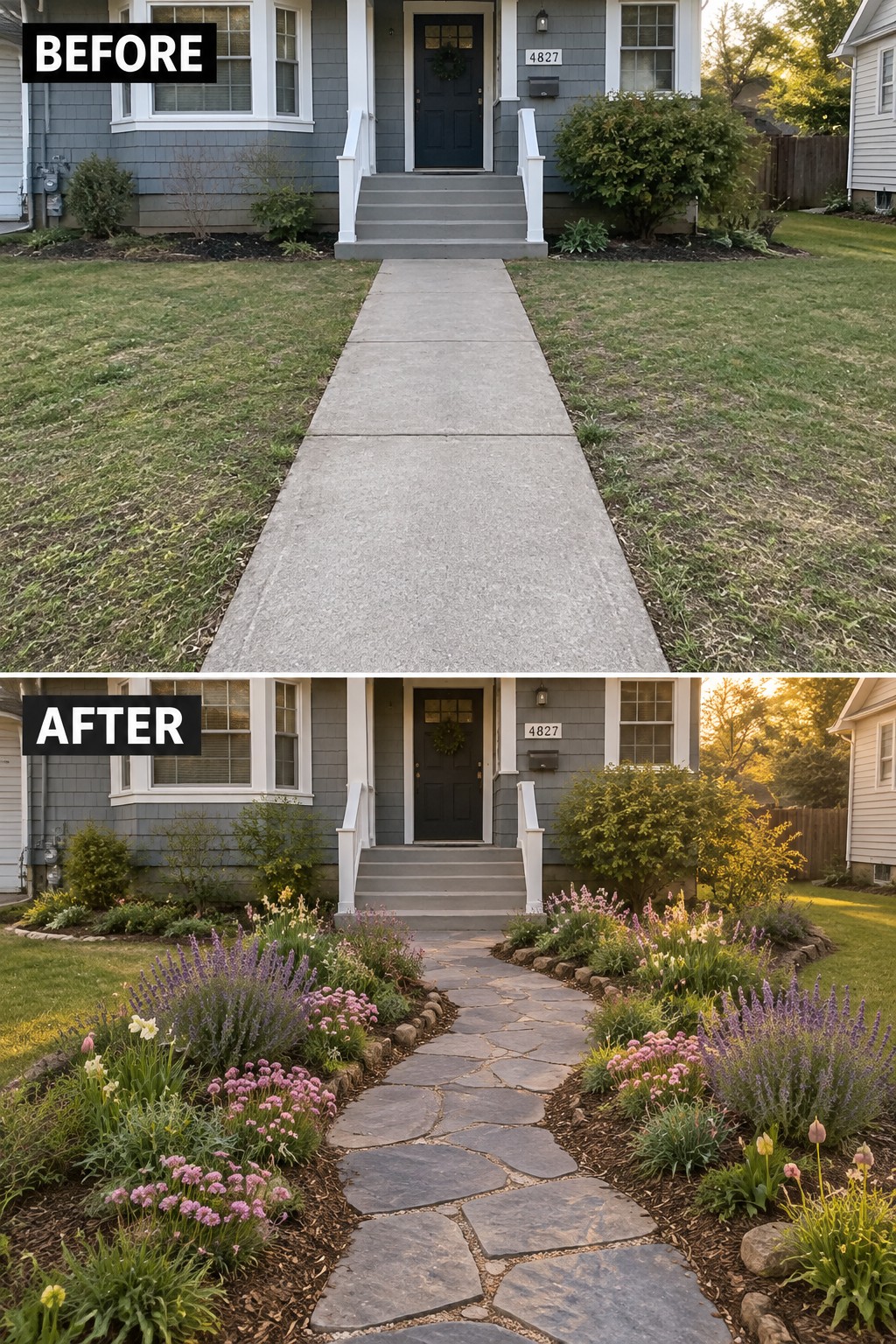
A straight concrete walkway can make a front yard feel flat and unwelcoming. Replacing it with irregular stone pavers and adding curved beds on both sides gives the entrance a softer shape and draws people toward the door. The planting stays loose and mixed, which fits the cottage look without needing perfect symmetry.
This approach works well on smaller lots where you want to keep the lawn but still add interest. Start by shaping the beds first, then choose plants that spill slightly over the edges. Keep the path width consistent so it stays easy to walk, and use mulch to hold everything in place until the plants fill in.
Add Structure To An Overgrown Fence Line

Clearing the tall weeds first made the biggest difference here. Once the mess was gone, simple wooden trellises gave the fence a purpose and let climbing roses and clematis grow upward instead of sprawling everywhere. The result feels planned without looking stiff.
This approach works well along any long fence where you want cottage character. Start by cutting back the overgrowth, then set a few trellises at eye level intervals. Fill the new bed with a mix of climbers, low shrubs, and ground cover so the planting feels full but still informal.
Turn A Bare Patio Into An Outdoor Dining Area
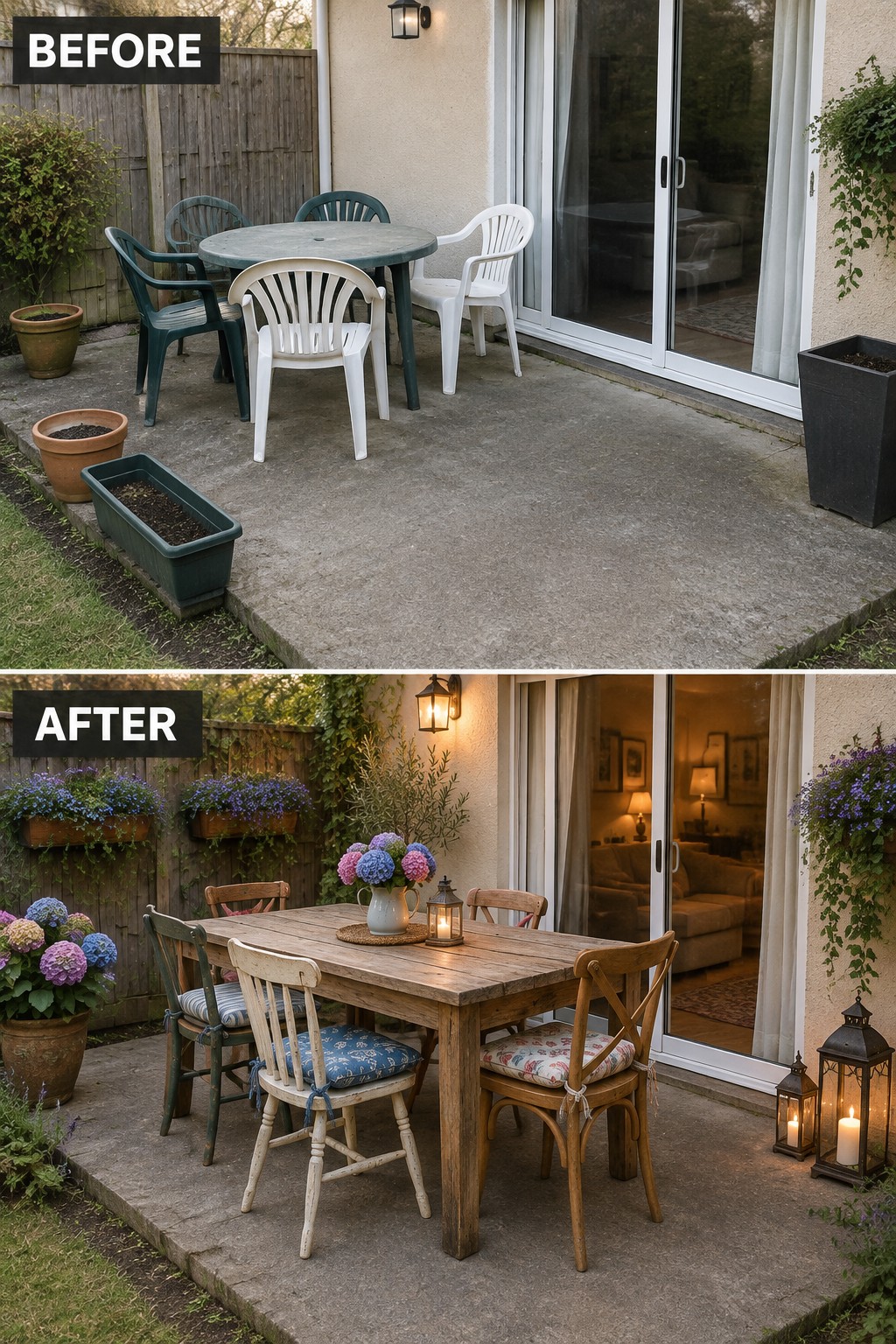
A simple wooden table with a few chairs can turn a plain concrete slab into a space that actually gets used. The before photo shows mismatched plastic chairs scattered around with no real center, while the after adds one solid table that pulls everything together and makes the patio feel like an extension of the house.
This idea works best on small or medium patios where you want a clear spot for meals without filling the whole area. Start with a table that fits the space, then mix in whatever chairs you have and add cushions so they are comfortable. Keep the extras light, like a lantern or two, so the area still feels open.
Use Retaining Walls To Structure A Sloped Yard
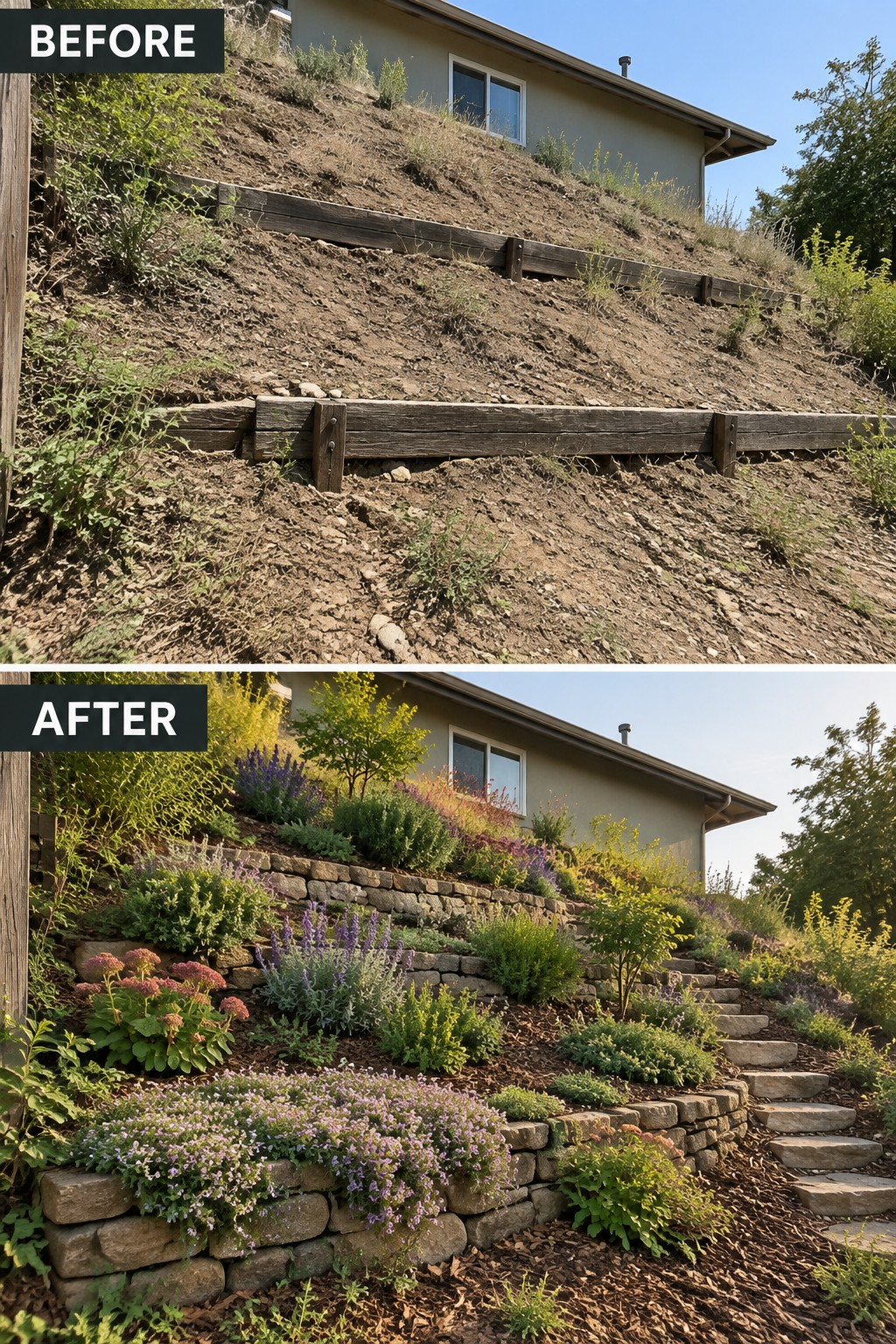
A steep hillside covered in weeds and old timber walls is hard to plant and even harder to maintain. Stacking stone to form terraces turns the slope into a series of flat beds that hold soil in place and give plants room to grow without washing away.
This idea works best on yards where the grade makes mowing or simple planting difficult. Build the walls first to create the levels, then add mulch and repeat a few plant shapes down the slope so the beds feel connected rather than scattered.
Create A Cottage-Style Garden Bed Around Your Mailbox
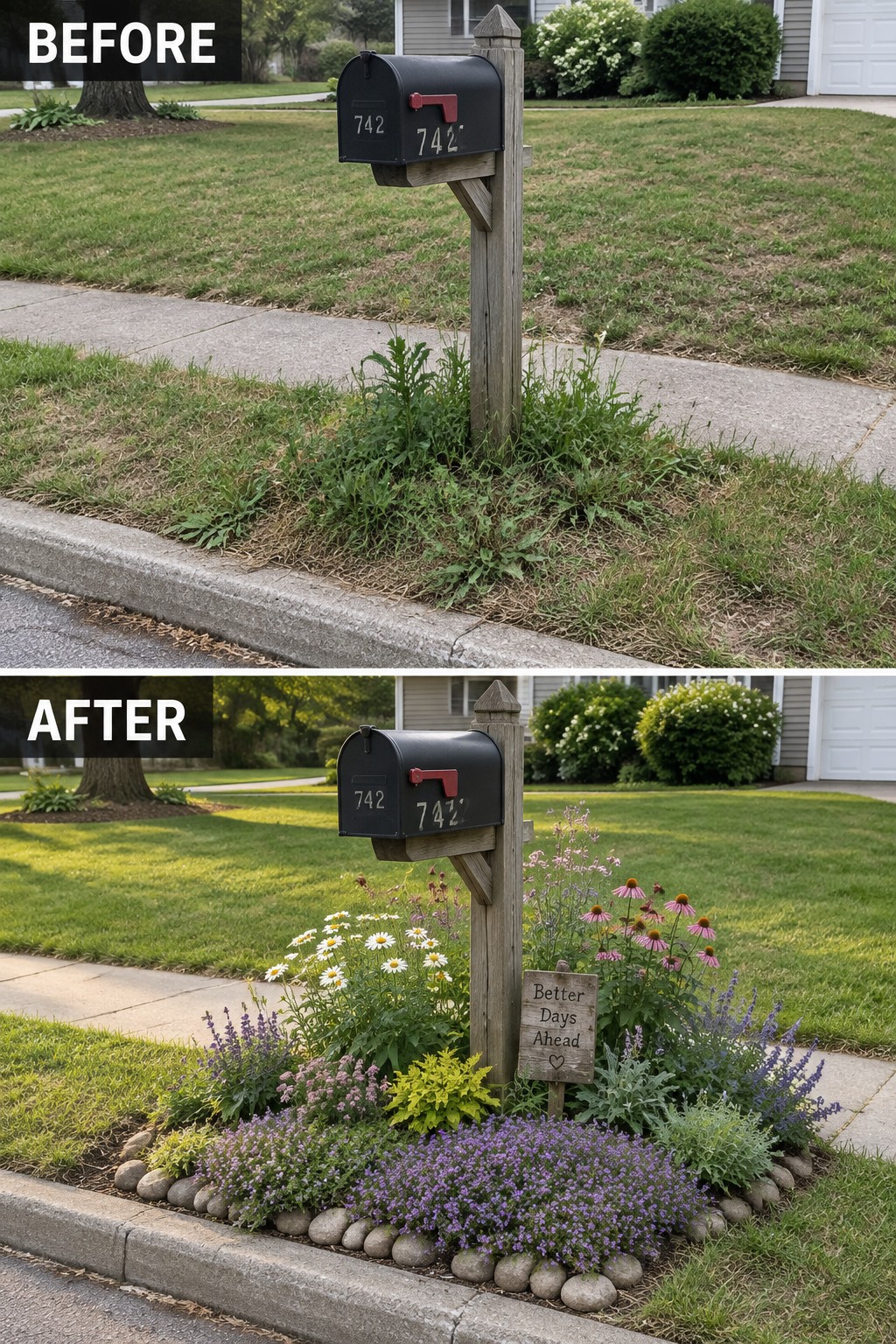
One simple way to improve a tired front yard is to turn the weedy strip around your mailbox into a defined garden bed. Clearing the overgrowth first and adding a mix of flowers with a low stone edge gives the area purpose and keeps the grass from creeping back in.
This works best on small patches where you want color without a big project. Pick a few reliable perennials, repeat a couple of colors, and keep the planting loose so it still feels natural. The same approach can tidy up other neglected spots along the curb or near the driveway.
Add Defined Garden Beds To A Plain Lawn
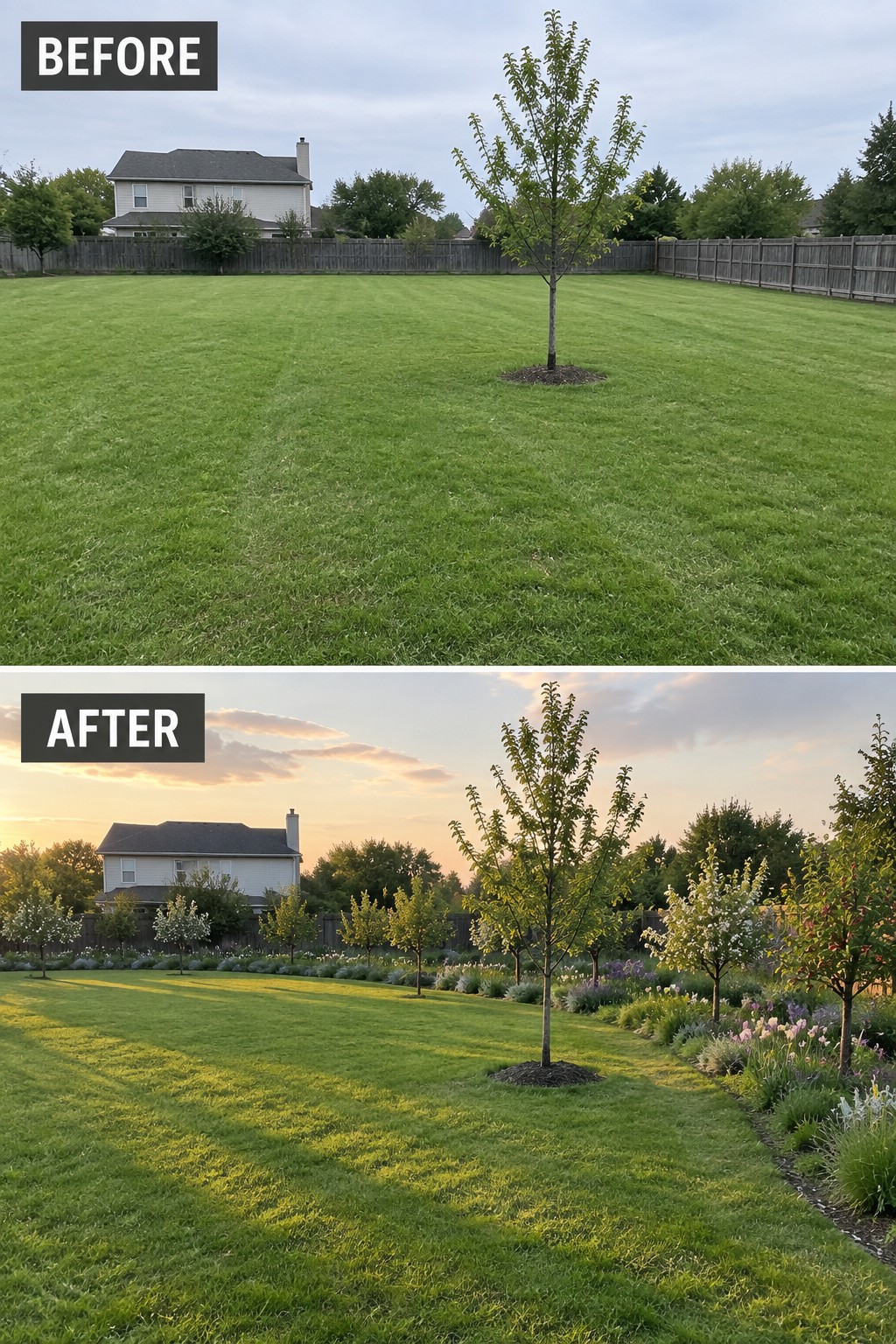
The main shift here is the addition of a planted border along the edge of the yard. A single tree in the middle of the grass became part of a larger layout once beds with shrubs, flowers, and smaller trees were added to create a clear boundary.
This idea works best in yards that already have a decent lawn but feel unfinished. Keep the beds at a manageable width, repeat a few plant types for cohesion, and leave enough open grass so the space still feels usable. Start with the beds before adding anything else, since the structure they create makes the rest of the yard feel more intentional.
Add Hanging Baskets To Soften A Plain Front Entry
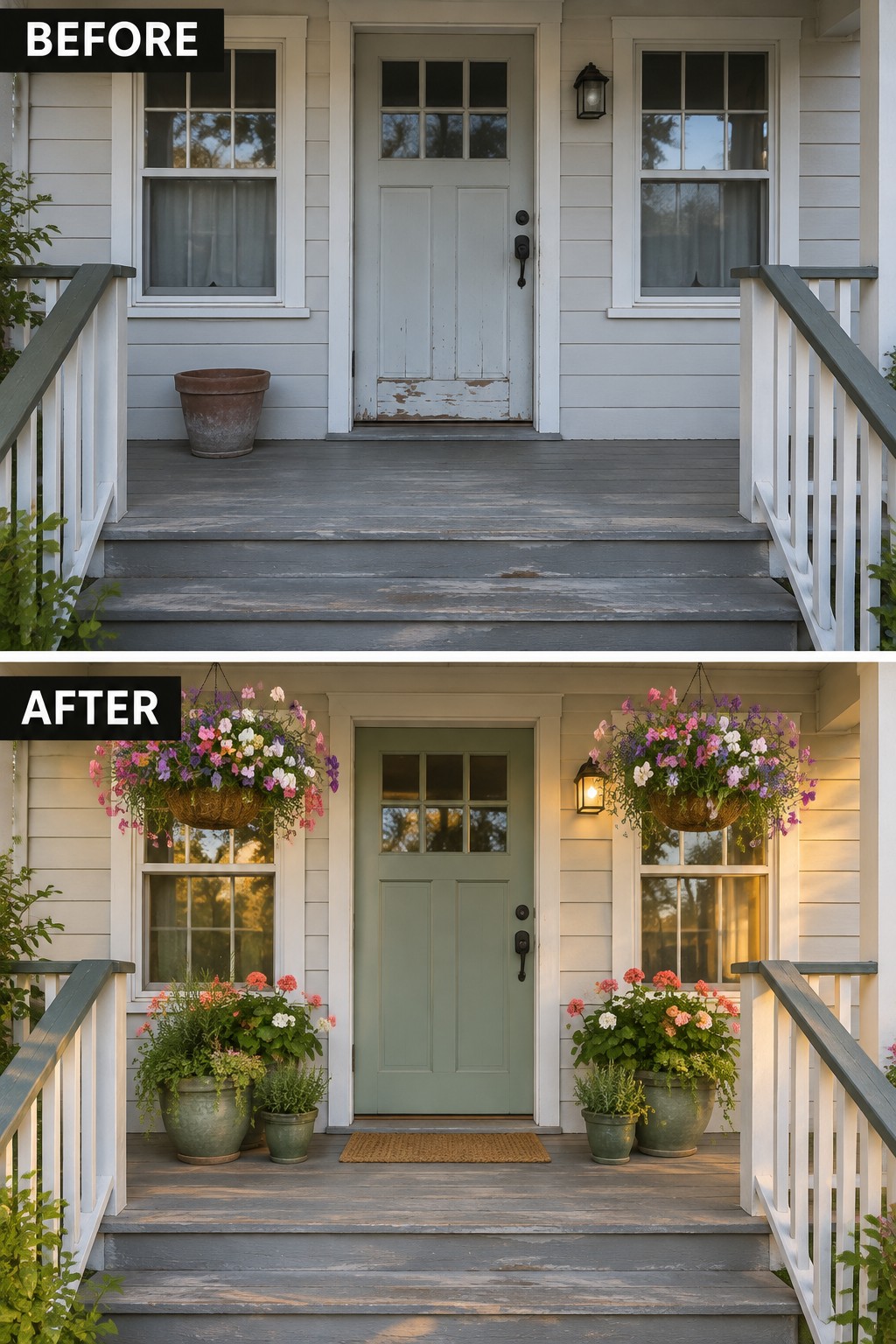
The before photo shows a basic porch with little more than one old pot and a door that needed paint. In the after version, two large hanging baskets and a few ground-level planters bring color and life right up to the door. The simple change makes the whole entry feel cared for without any major construction.
This approach works well on cottage-style homes where you want a relaxed look rather than a formal one. Start with two or three good-sized baskets hung at window height, then add a couple of pots on the deck. Choose flowers that spill over the edges and repeat a few colors so the planting feels connected rather than scattered.
Define The Driveway Edge With A Gravel Border
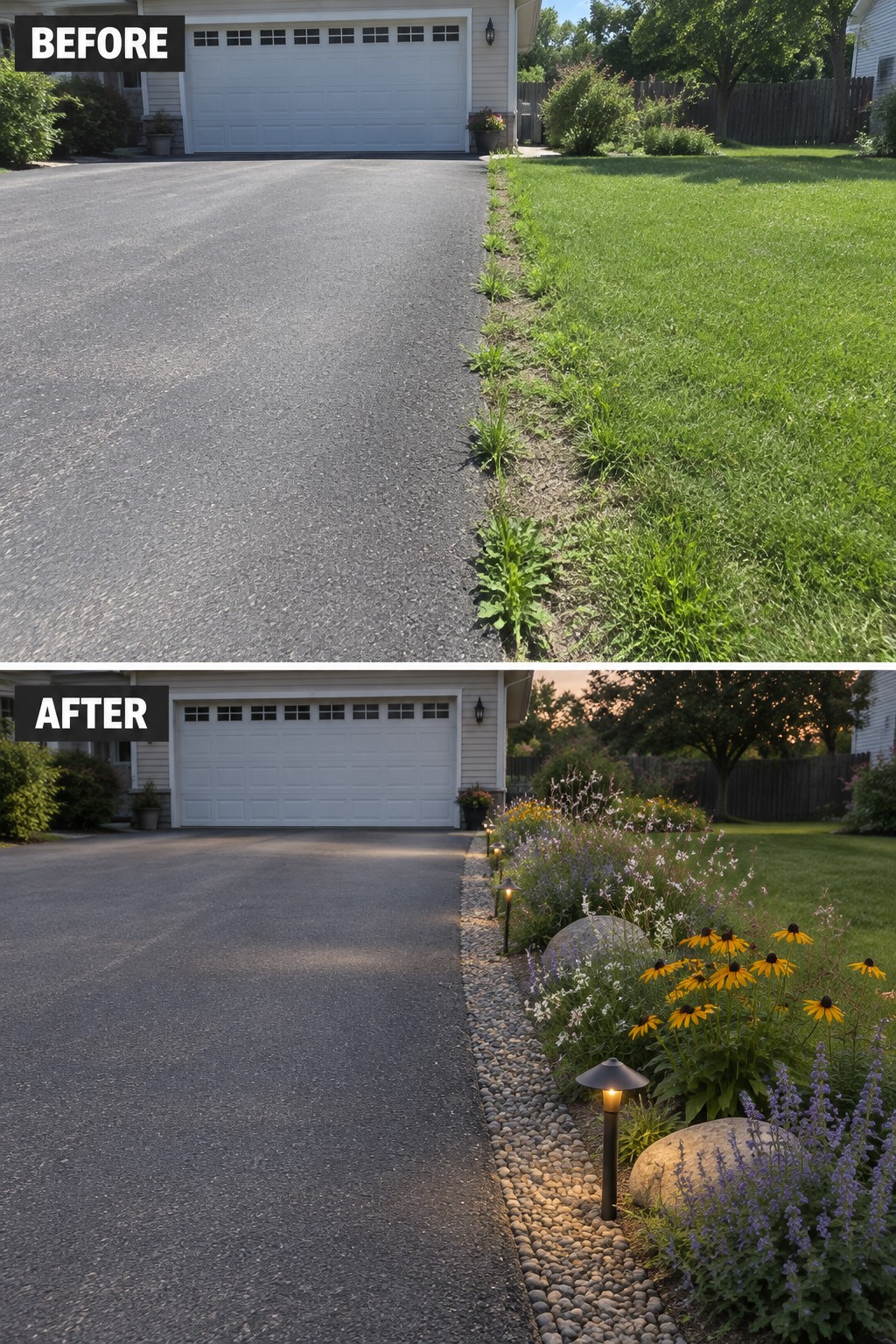
The shift from a ragged strip of weeds to a clean gravel border makes the transition between driveway and lawn feel deliberate. A narrow band of pebbles, a few rocks, and simple cottage-style planting replace the messy growth and give the side of the yard a finished look without adding much width.
This approach suits any house where the driveway runs straight along the lawn. Lay the gravel first to create a clear line, then add a loose mix of perennials and a couple of low lights. The planting can stay informal, but the border keeps everything from spilling onto the asphalt.
Train Fruit Trees Against A Fence For A Productive Border

A plain fence with nothing but dirt along the base often feels like wasted space. Training young fruit trees flat against the fence turns that narrow strip into a vertical garden that produces apples while taking up almost no width. The change from bare ground to a living screen of branches and fruit makes the whole yard feel more intentional without crowding the lawn.
This works best in yards where space is tight but you still want something productive. Start with young trees suited to your climate, attach them to horizontal wires on the fence, and prune twice a year to keep the flat shape. The same idea works along any sunny boundary where a full-size tree would block too much light or path space.
Turn A Bare Patio Into A Cozy Seating Area
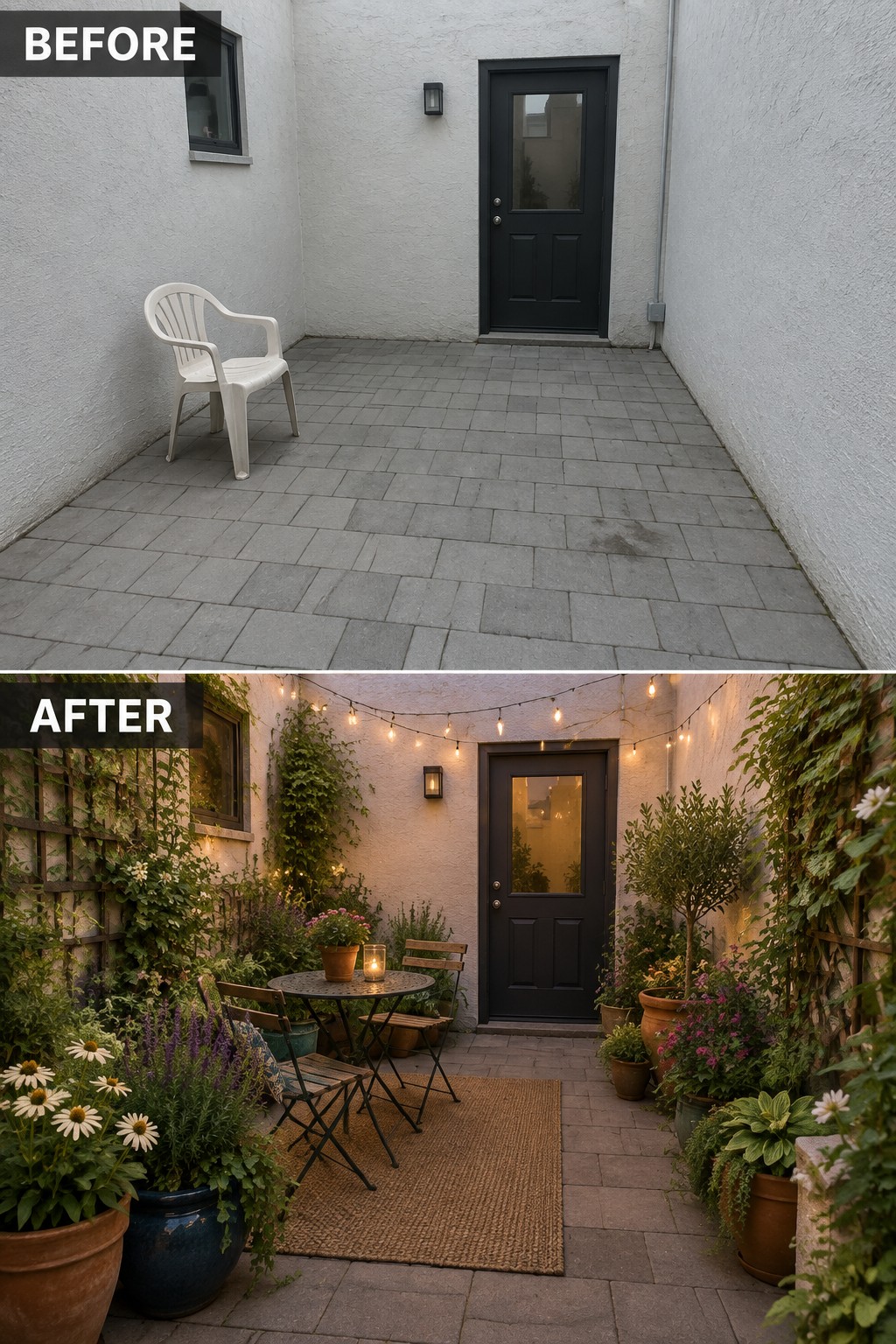
A plain concrete courtyard often sits unused because it lacks any sense of purpose or comfort. Adding a small seating set, a rug to define the floor, and string lights overhead quickly turns the same space into somewhere people actually want to sit in the evening.
This approach suits small side yards or enclosed patios where big construction is not practical. Focus first on a weatherproof table and chairs that leave room to walk around, then add the lights and rug so the zone feels intentional rather than leftover. Potted plants can fill in the edges without requiring permanent beds.
Add Planting Structure To A Narrow Side Yard
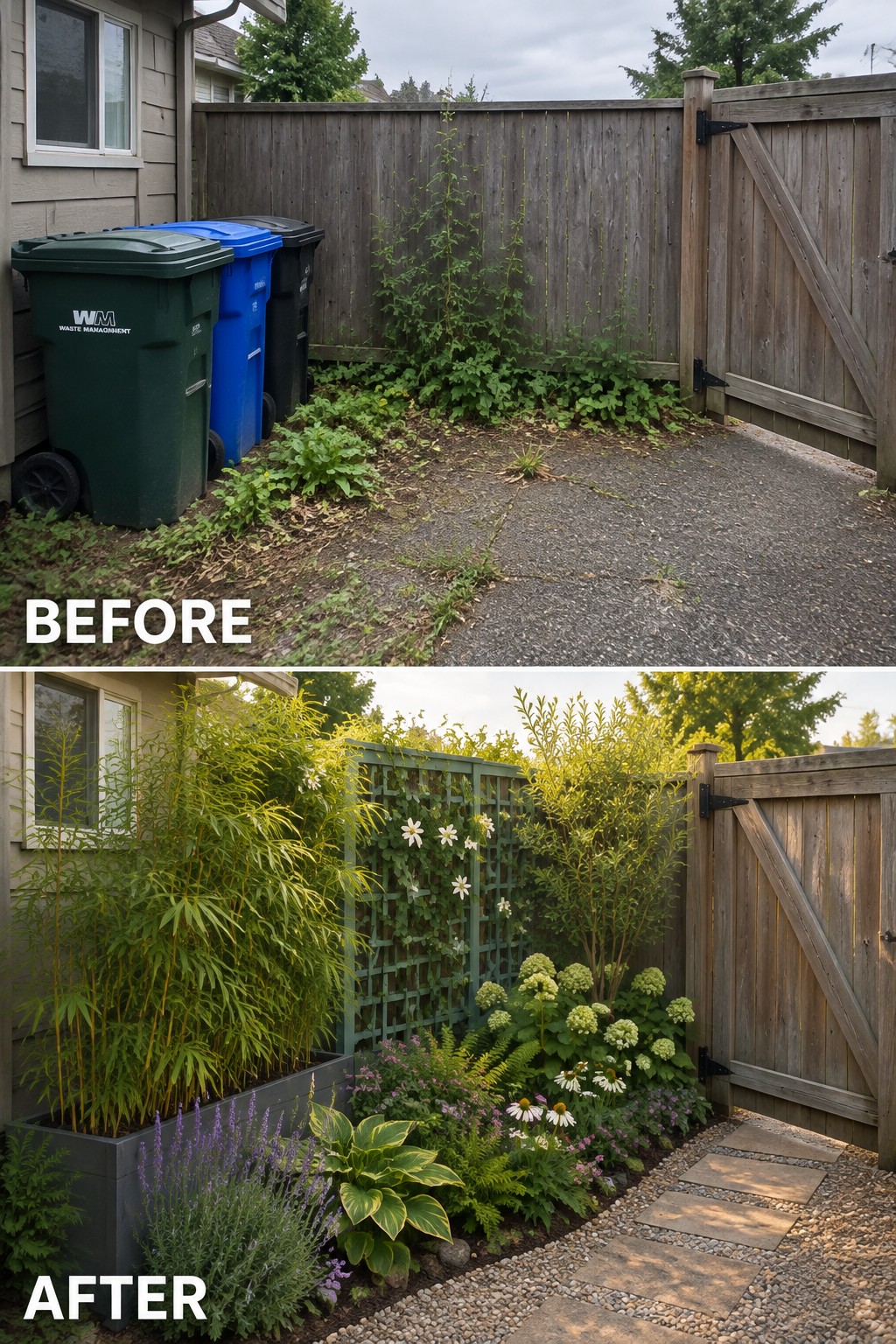
A narrow side yard often ends up as a catch-all for bins and weeds because there is no clear plan for the space. Once the overgrowth is cleared, adding a raised bed along the house and a simple path gives the area a purpose and makes it feel like part of the garden instead of leftover ground.
This idea works best in tight spots where you want cottage-style planting without crowding the walkway. Use a mix of heights and textures so the bed feels full but still informal, and keep the path material loose so it blends with the planting rather than fighting it.
Use Stone Terraces To Shape A Sloped Backyard
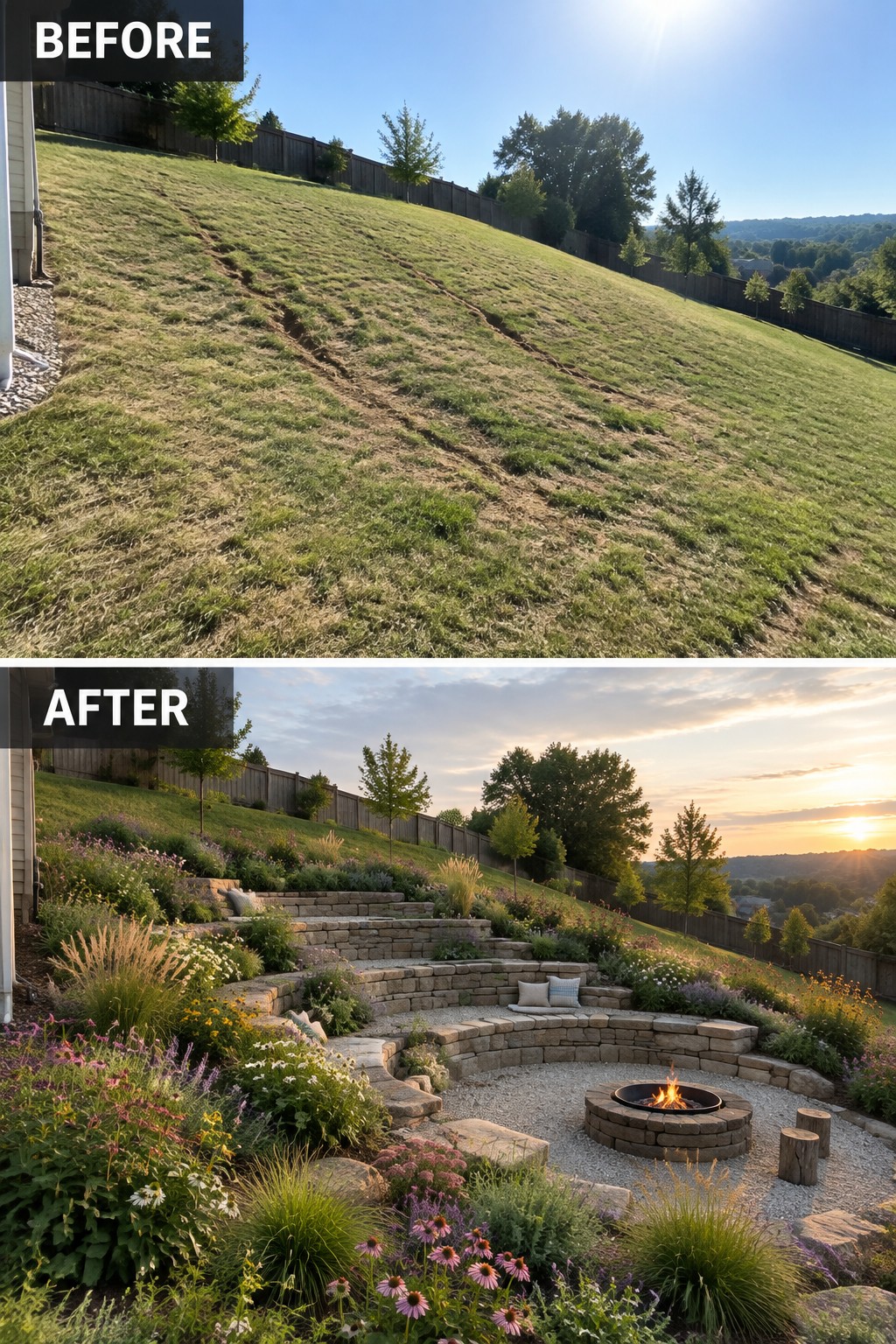
A bare, worn slope is hard to use and even harder to plant. Adding low stone retaining walls breaks the hill into level sections, which makes the space feel stable and gives you places to actually garden. The fire pit and gravel seating area at the bottom then become the natural center instead of just an empty patch of grass.
This approach works best on yards that feel too steep for regular furniture or mowing. Start with the walls to set the structure, then fill the beds with a loose mix of perennials and grasses so the planting looks full but not fussy. Keep the paths wide enough to walk through comfortably, and the whole slope starts to feel like an extension of the house rather than leftover land.
Soften Pool Edges With Informal Planting
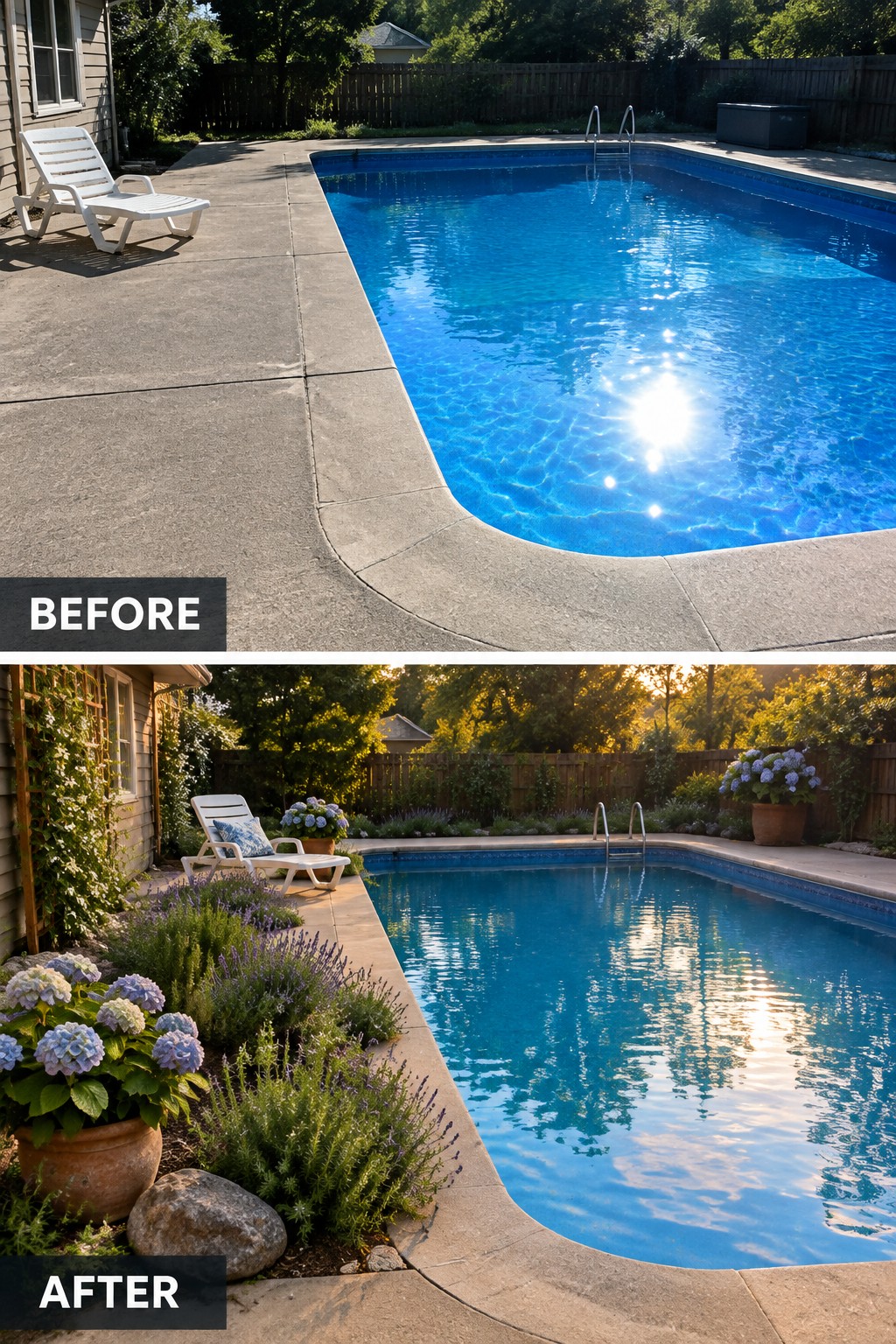
A plain concrete pool deck can feel cold and unfinished on its own. Adding a border of cottage-style planting softens the hard lines and makes the whole area feel more like part of the yard. In the after photo, simple beds filled with hydrangeas, lavender, and potted flowers bring color and texture right up to the water without crowding the space.
This approach works well on any pool that sits against a flat patio or lawn. Start with a narrow bed along the edge, choose plants that tolerate sun and occasional splash, and keep a few larger pots for height. The key is letting the planting look a little loose rather than perfectly trimmed.
Give A Weathered Deck A Fresh Coat And Cottage Seating
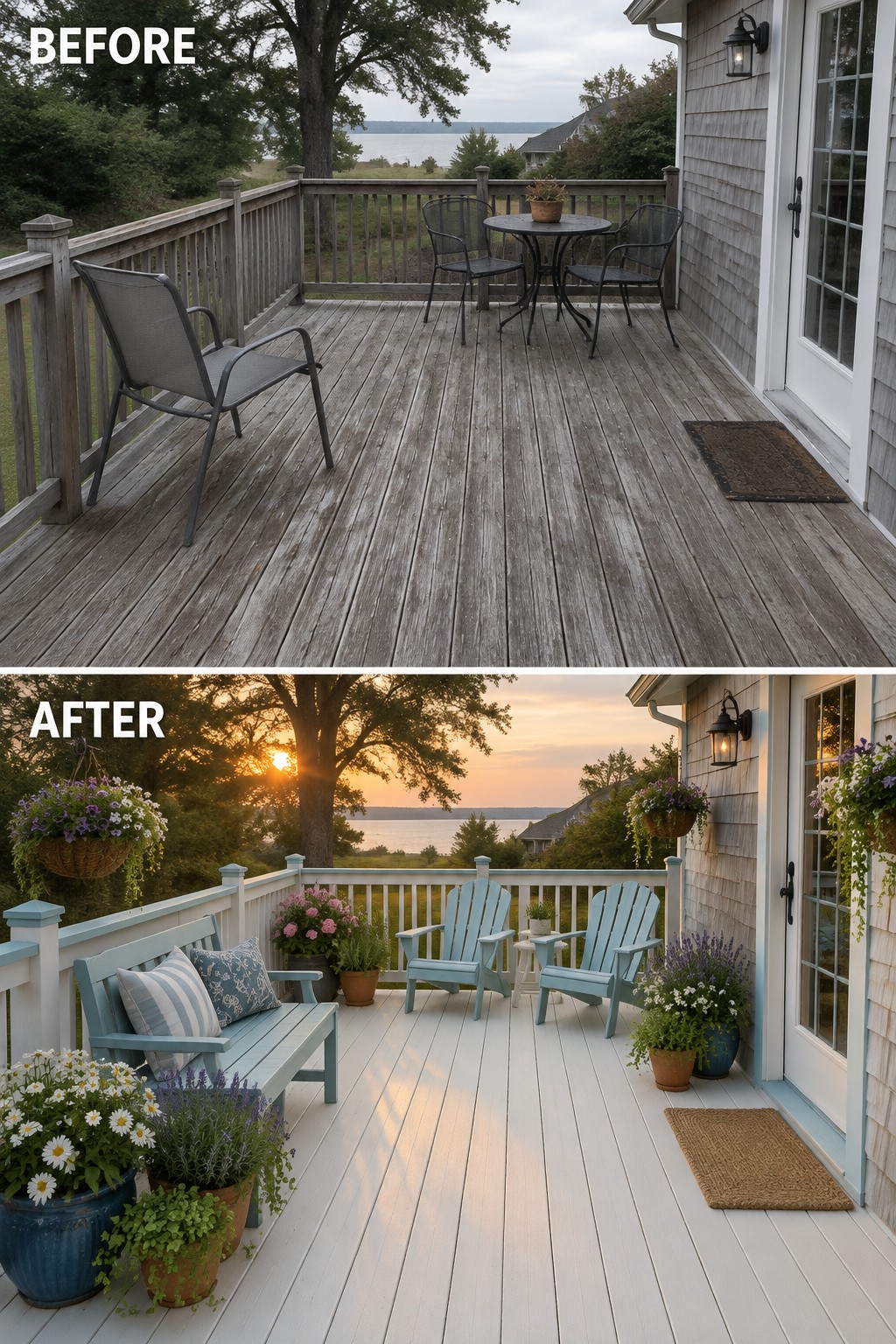
A plain gray deck often feels like wasted space once the wood starts to age. Painting the boards and railings white instantly brightens the whole area, and adding a bench plus a couple of chairs turns it into a place where people actually want to sit. The potted flowers and hanging baskets keep the look relaxed and cottage-style without needing a full garden redesign.
This approach works best on decks that still have sound structure but need visual lift. Start with a thorough cleaning and a good exterior paint, then choose a few weatherproof pieces that leave room to walk around. Keep the planting informal by mixing sizes and letting some spill over the edges.
Add Informal Flower Beds To A Plain Backyard
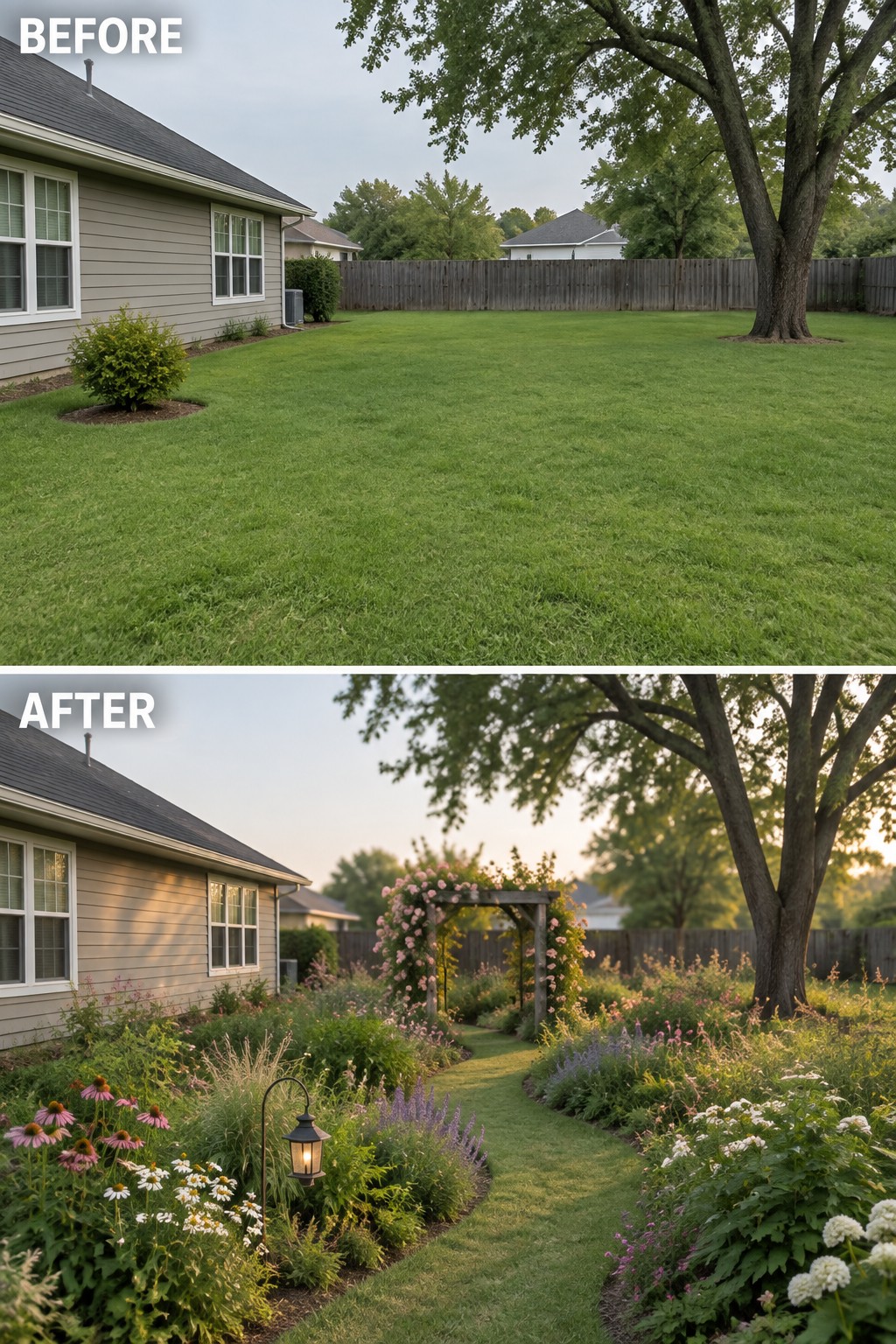
A flat lawn can feel unfinished even when it is tidy. Adding a few curved beds filled with mixed perennials and a simple path turns the same space into something you actually want to walk through. The after photo shows how the beds pull the eye forward and give the yard a clear shape without making it feel formal.
This approach works well on average-sized lots where you want some color and movement but still need room to mow. Start by laying out beds along the edges and one or two gentle curves into the lawn. Choose plants that bloom at different times and let them spill a little over the edges. Keep the center open so the yard still feels usable.
Frequently Asked Questions
Q: How do I keep the beds from looking messy while still keeping that relaxed cottage feel? A: Let plants spill over the edges a little instead of trimming them back hard. Tuck in a few self-seeding flowers like nigella so they fill gaps on their own. Water deeply once a week and pull the worst weeds by hand when they pop up.
Q: Can I try this style if my yard only gets morning sun? A: Pick shade-tolerant picks such as bleeding hearts and coral bells to create soft layers. They bloom nicely without full light and mix well with ferns for texture. Add a simple bench nearby so you can sit and enjoy the quiet spot.
Q: Do I have to tear out my whole lawn to make room for these plantings? A: Leave a strip of grass along one side and add curved beds along the other edges instead. This keeps the space easy to mow while giving the cottage look plenty of room to grow. Start small with two or three beds and expand as you see what works.
