

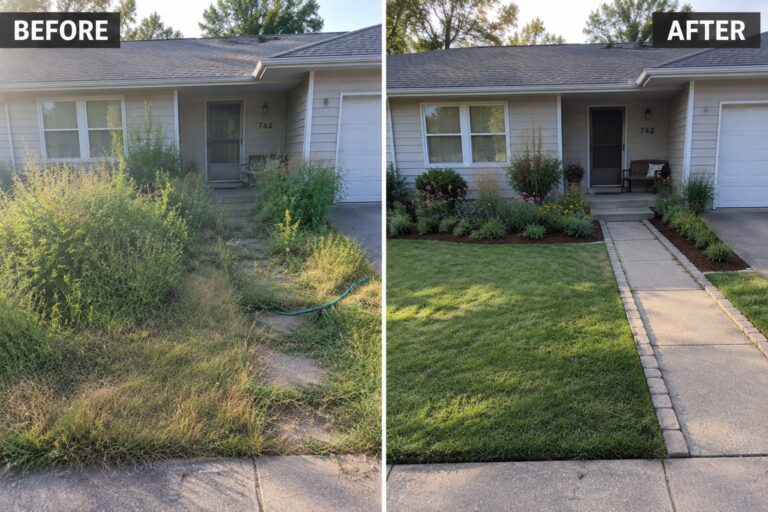
I have walked into backyards where the grass had taken over everything and the original layout was completely hidden under layers of weeds and volunteer trees.
It always surprises me how much difference a focused cleanup makes once you start removing the excess growth and redefining the edges.
Clearing space is the first step that lets the rest of the work fall into place.
From there, adding simple paths or grouping plants by height turns a forgotten area into something you actually want to spend time in.
I usually test the most basic fixes first because they show whether the yard has potential before I commit to bigger plantings.
Clear Overgrowth Before Adding Garden Beds
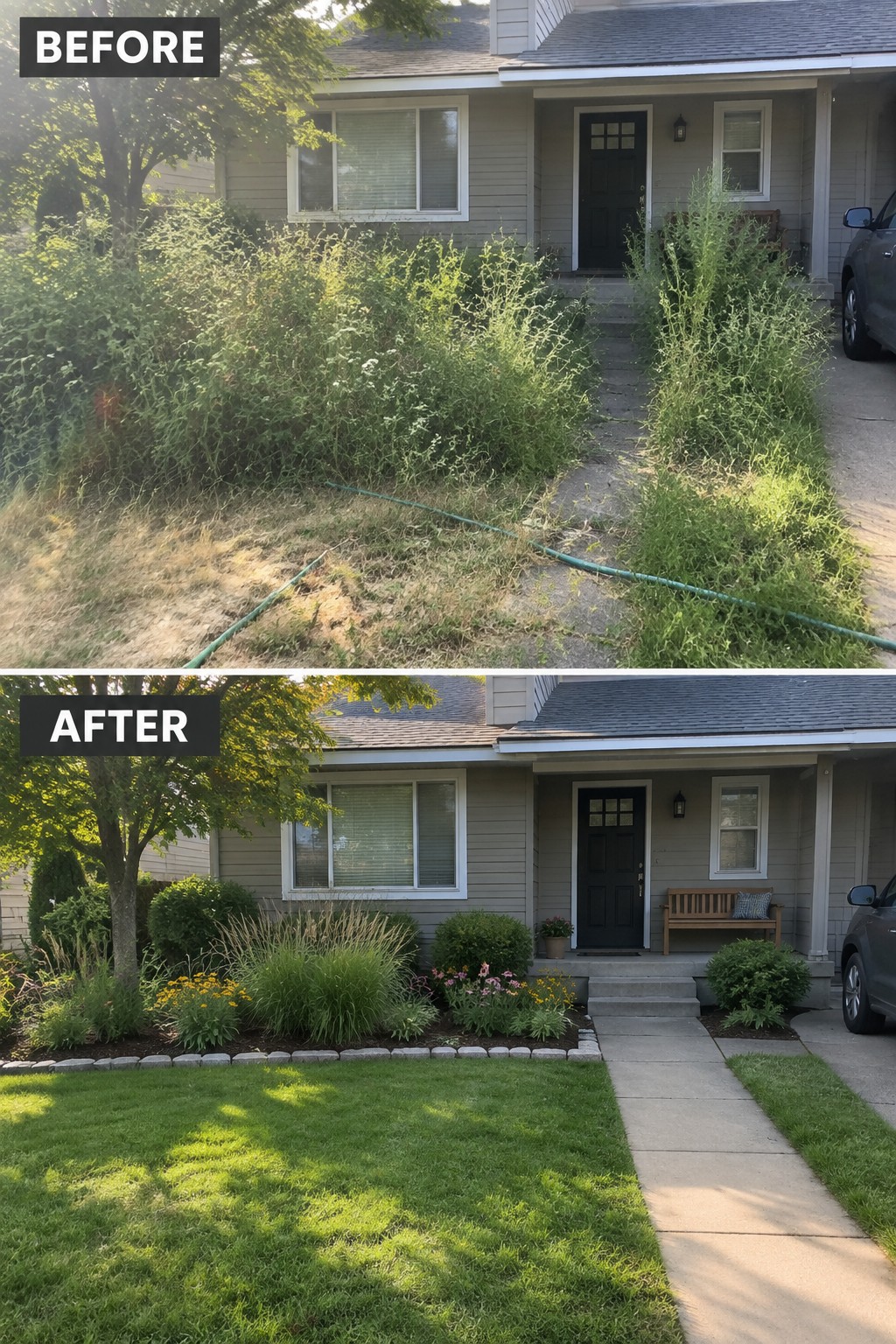
Overgrown yards often hide the shape of the space and make it hard to know where to start. Clearing the tall weeds and messy shrubs first lets you see the ground and add simple borders that hold up over time. The front yard in the after photo shows how a clean lawn edge and mulched beds can make the house feel more open without adding much new planting.
This idea works best on smaller lots where the goal is to keep things low-maintenance. Start by removing the worst growth, then lay down edging and a few shrubs or perennials in groups rather than scattering plants everywhere. It keeps the yard looking planned even if you add more later.
Clear Overgrowth Before Defining A Side Yard Path
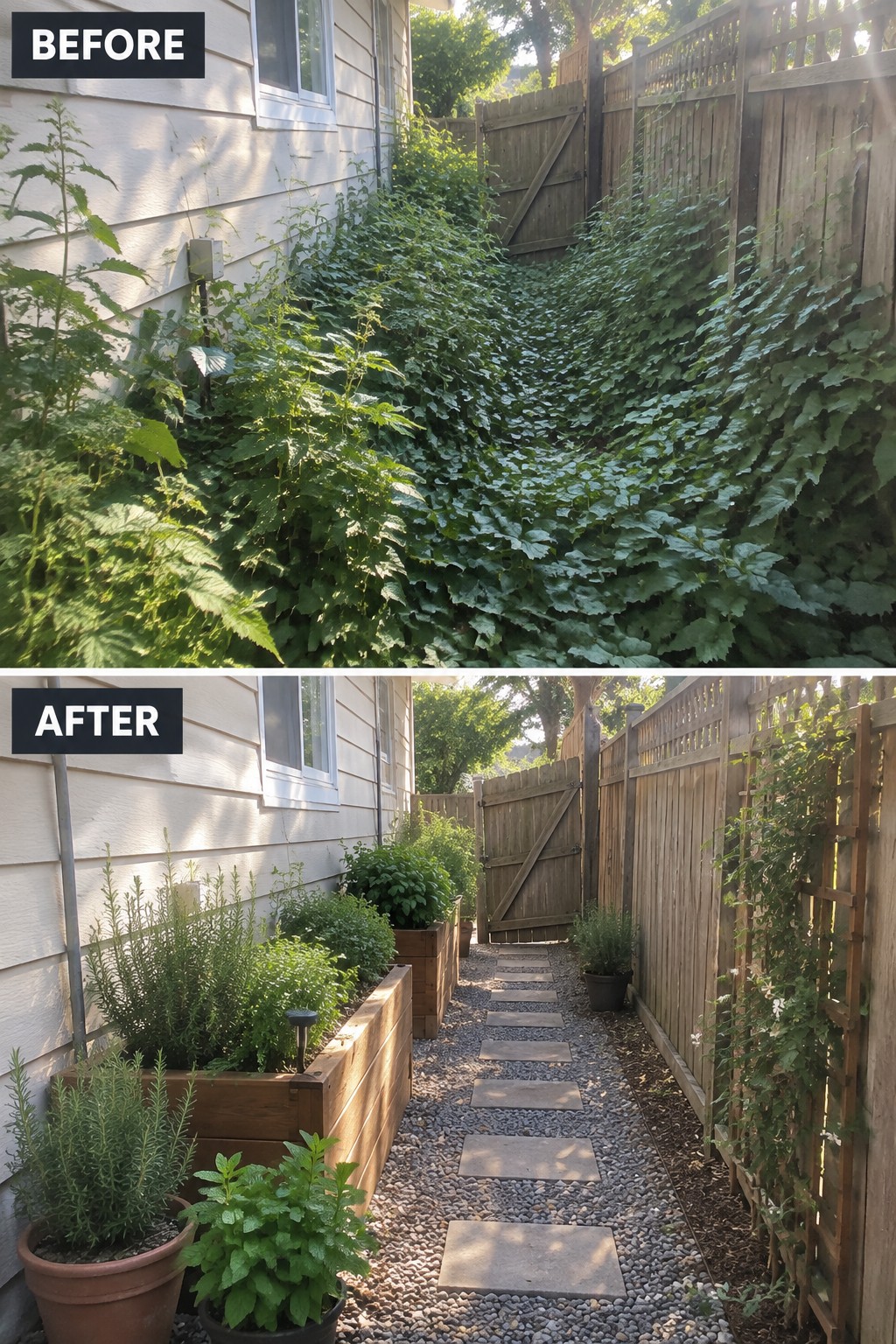
An overgrown side yard quickly becomes a lost space when vines and weeds take over the narrow strip between the house and fence. Clearing that growth first opens up the area, and adding a simple gravel base with stepping stones gives the passage a clear purpose and easy access. Raised wooden planters along one side keep plants contained while adding usable growing space without crowding the walkway.
This approach works especially well on tight lots where every foot counts. Start with a thorough cleanup, then lay gravel for drainage and weed control before adding any permanent features. Keep the path width comfortable for walking and choose planters that match the scale of the space so the area stays open rather than boxed in.
Build Raised Beds To Organize A Sloped Yard
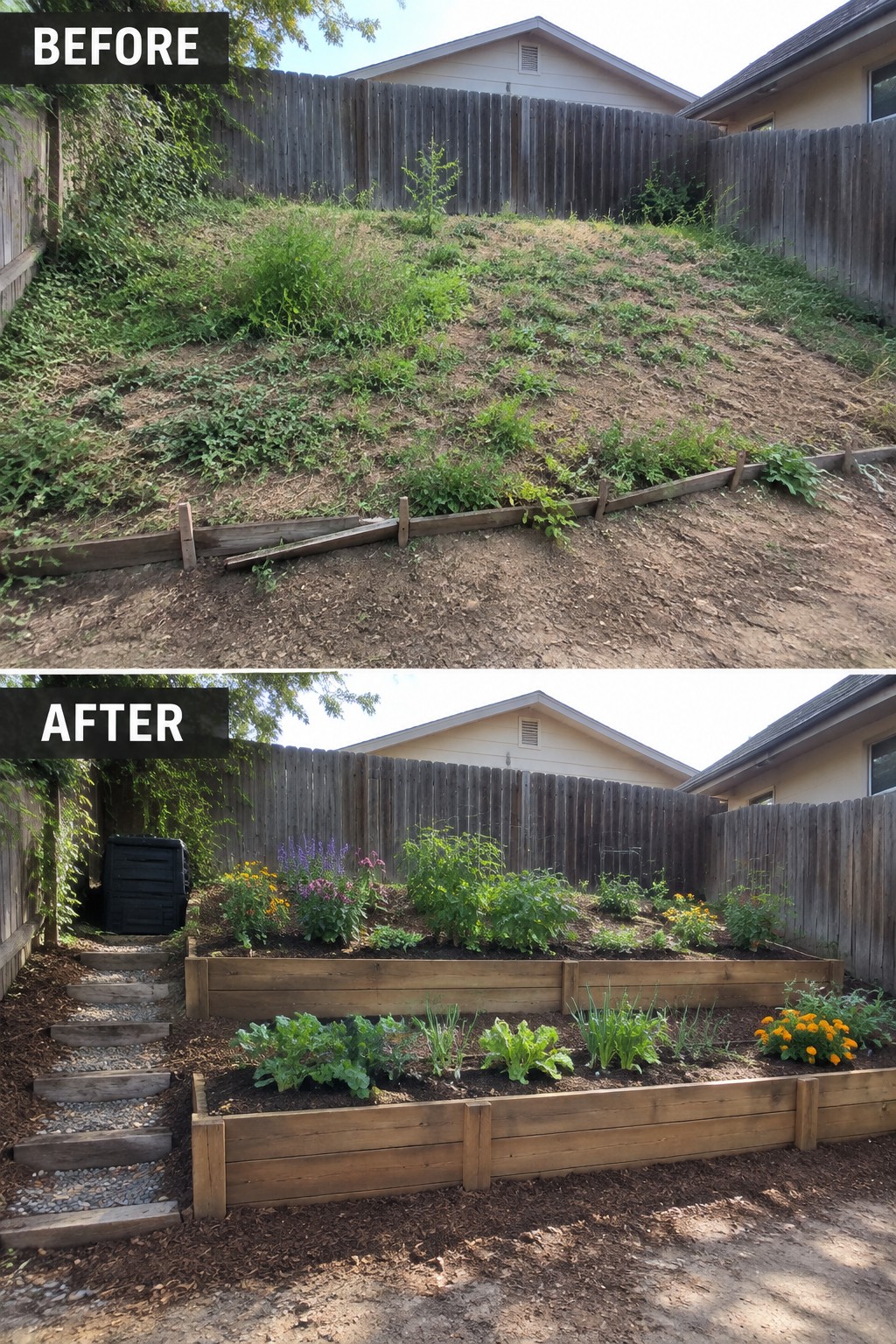
A sloped backyard often ends up as a weedy mess because regular planting has nowhere level to sit. Adding raised beds that step down the hill gives you flat growing space and turns the whole area into something you can actually use. The wooden frames hold soil in place and create clear rows instead of letting plants sprawl everywhere.
This idea works best on yards that drop away from the house or fence. Clear the overgrowth first, then build the beds to match the slope. It keeps vegetables and flowers contained, makes watering and weeding easier, and stops the soil from washing down the hill during rain.
Turn An Overgrown Patio Into A Seating Area
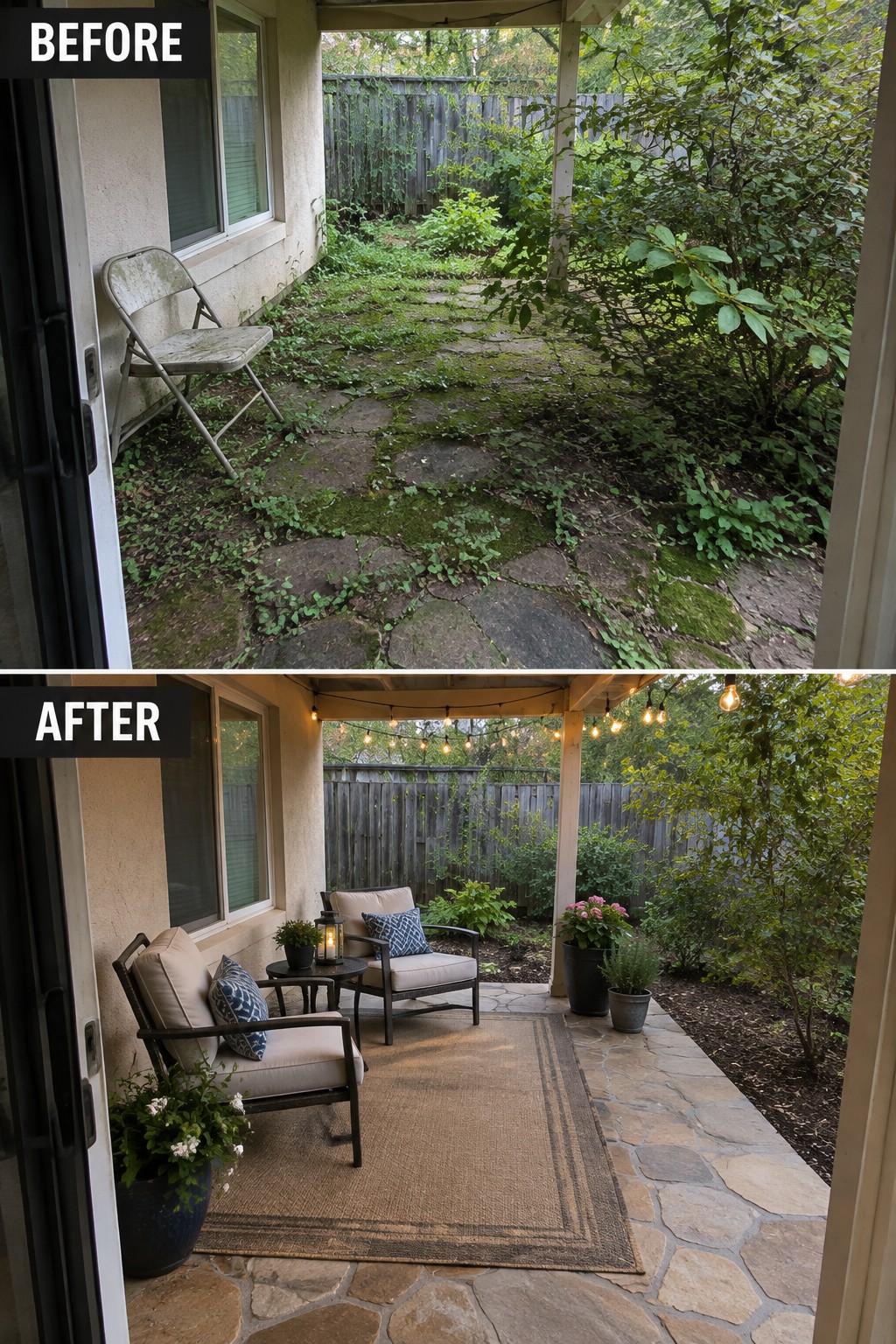
Clearing the moss and weeds from the old stone path made the space usable again. Once the overgrowth was gone, a simple rug and a few chairs turned the same area into a place where people can actually sit and spend time outside.
This idea works best on small patios or side yards that have been ignored for a while. Start with a full cleanup before adding anything else, then use one rug to mark the seating zone. Keep the furniture light so the space still feels open and easy to move through.
Add Structure To An Overgrown Backyard
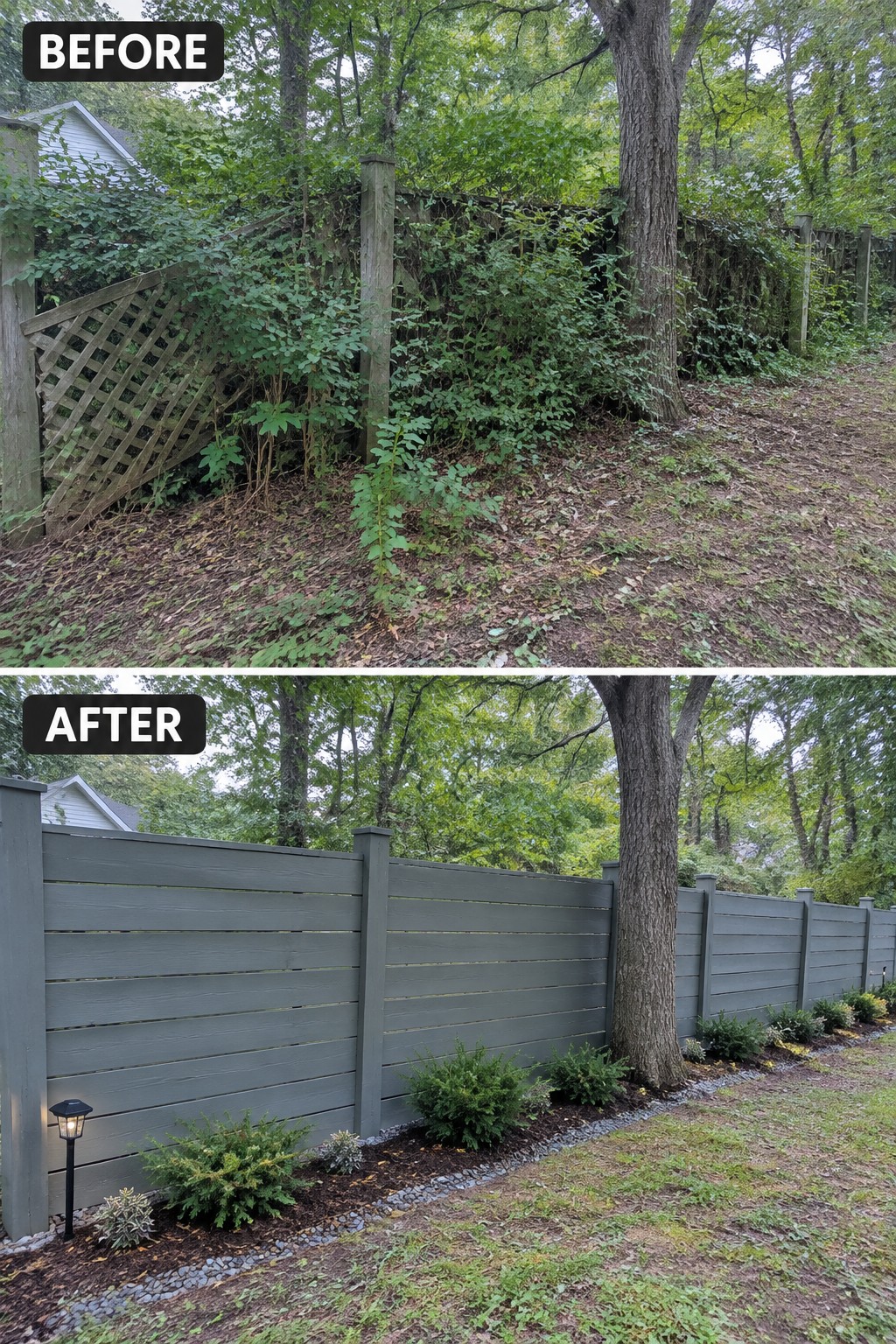
An old fence buried in vines and brush makes the whole yard feel smaller and harder to use. Putting in a straight, solid fence first gives the space a clear edge, then adding a narrow bed of mulch and low shrubs keeps the line tidy without a lot of extra work.
This approach works well along side or back property lines where you need privacy and a simple border. Start with the fence so you know exactly where the planting should stop, then choose a few repeat shrubs that stay under the fence height. The result is a yard that feels planned instead of neglected.
Add A Defined Path To A Narrow Overgrown Yard

A narrow strip of yard between the house and thick hedges often turns into a patchy mess because it gets little attention. Laying down a row of stepping stones gives the space a clear purpose and stops the grass from looking completely neglected. The stones also make it easier to walk through without trampling new growth.
This approach works best in tight side yards or front strips where you need occasional access but do not want a full walkway. Level the ground first, then choose stones that sit flat and leave enough room on either side for the lawn to fill in. Keep the planting simple so the path stays the main feature.
Create Raised Beds To Organize An Overgrown Vegetable Garden
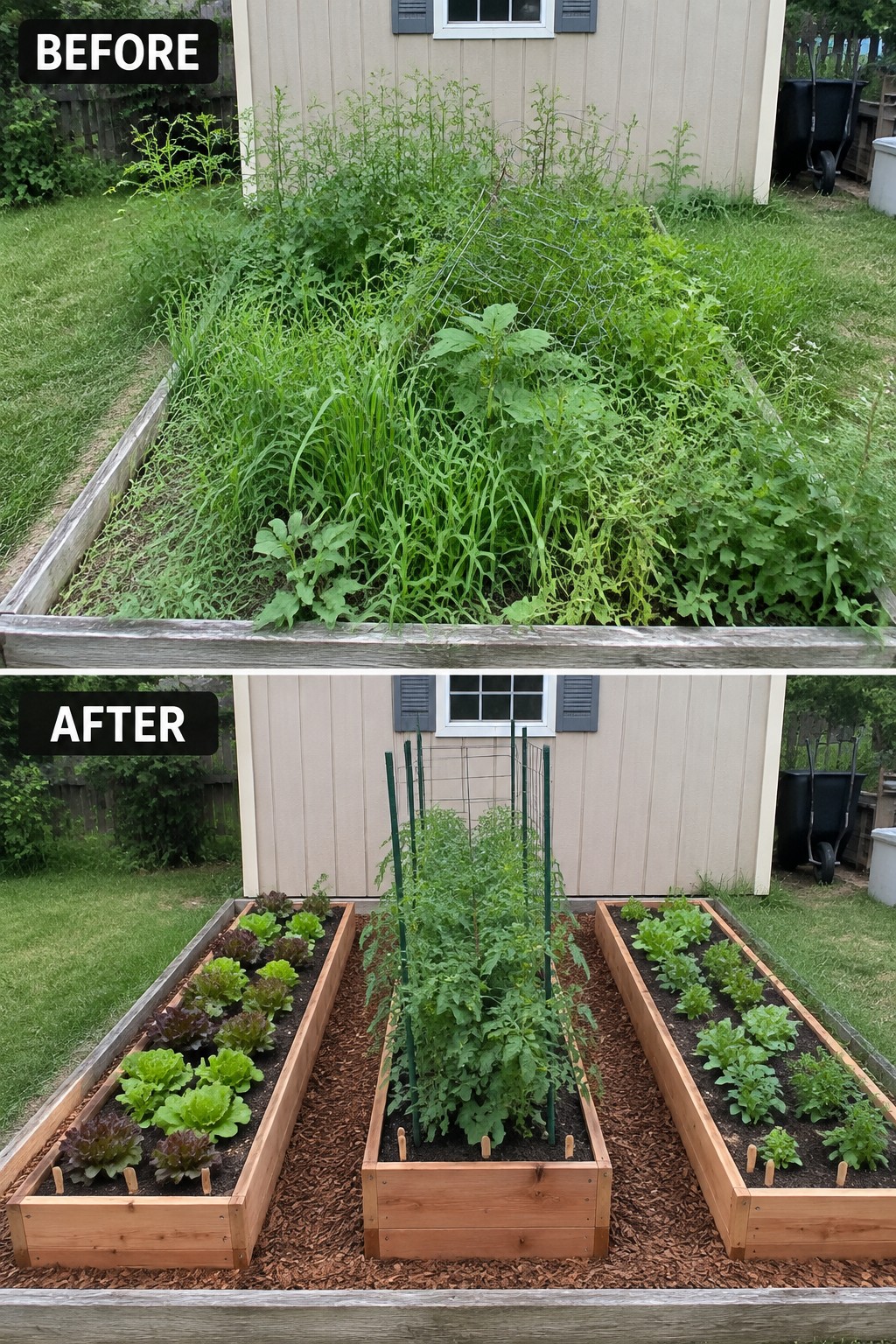
Clearing the overgrowth first makes the biggest difference when reclaiming a neglected garden space. The single messy bed filled with weeds and tall volunteer plants became three separate raised beds edged in wood, topped with fresh mulch, and planted in clear rows with simple supports for the tomatoes. That basic cleanup and division turns a spot that felt unusable into a working garden.
This idea suits small yards where you want vegetables without fighting weeds all season. Build or refresh a few beds with lumber, add a thick layer of mulch between them, and keep the planting simple so everything stays easy to reach and maintain. Start with the structure before you worry about adding more plants or features.
Clear An Overgrown Garden Path And Add Gravel
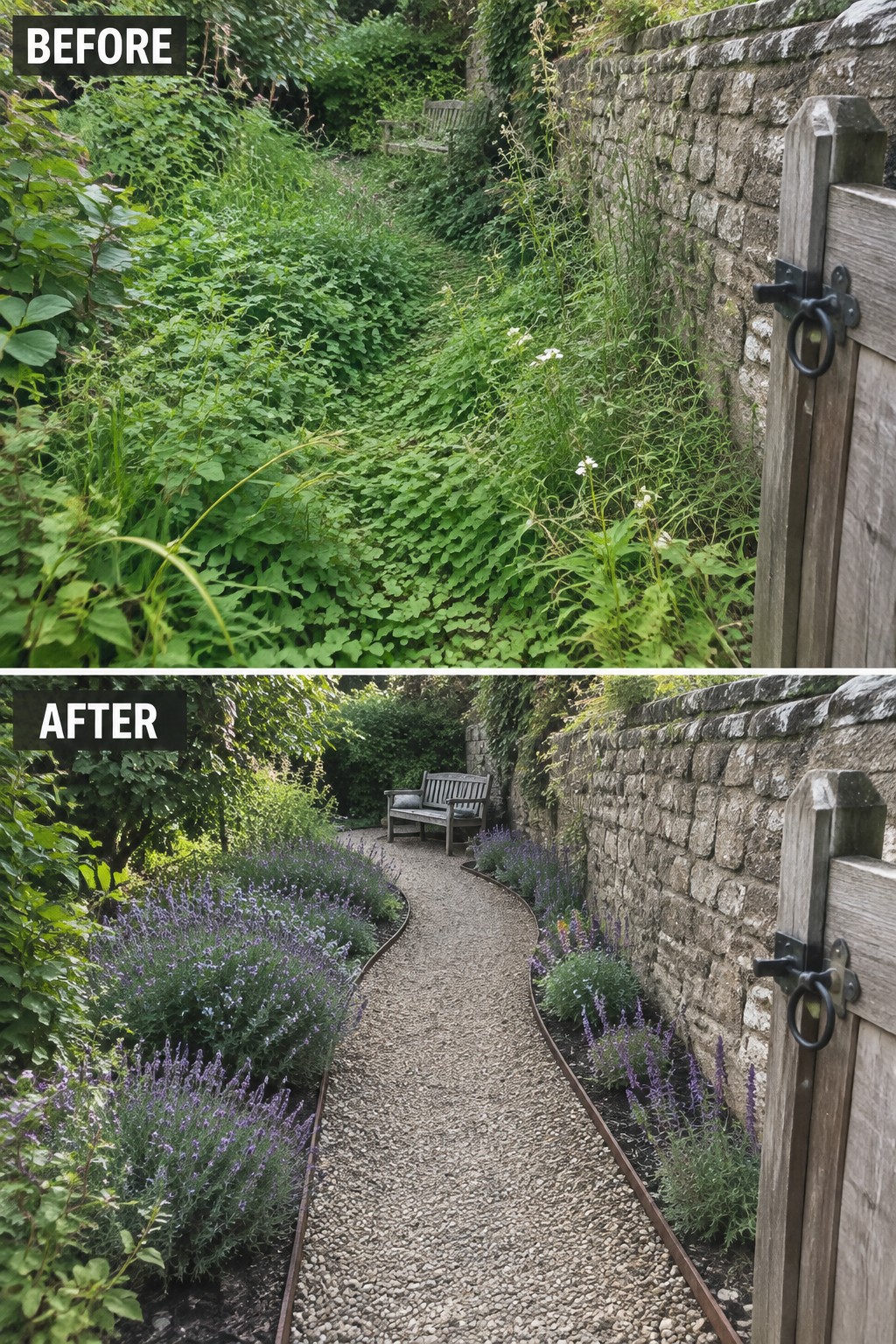
Clearing the overgrowth first makes the biggest difference in a space like this. Once the thick vines and weeds were cut back, a simple gravel path and low lavender borders turned the narrow walkway into something you could actually use instead of fighting through.
This idea works best in side yards or along walls where things quickly get out of hand. Cut everything back enough to see the shape of the space, then lay gravel for the path and add a row of easy plants along the edges. It keeps the area looking cared for without a lot of extra work later.
Refresh An Overgrown Patio With Simple Seating
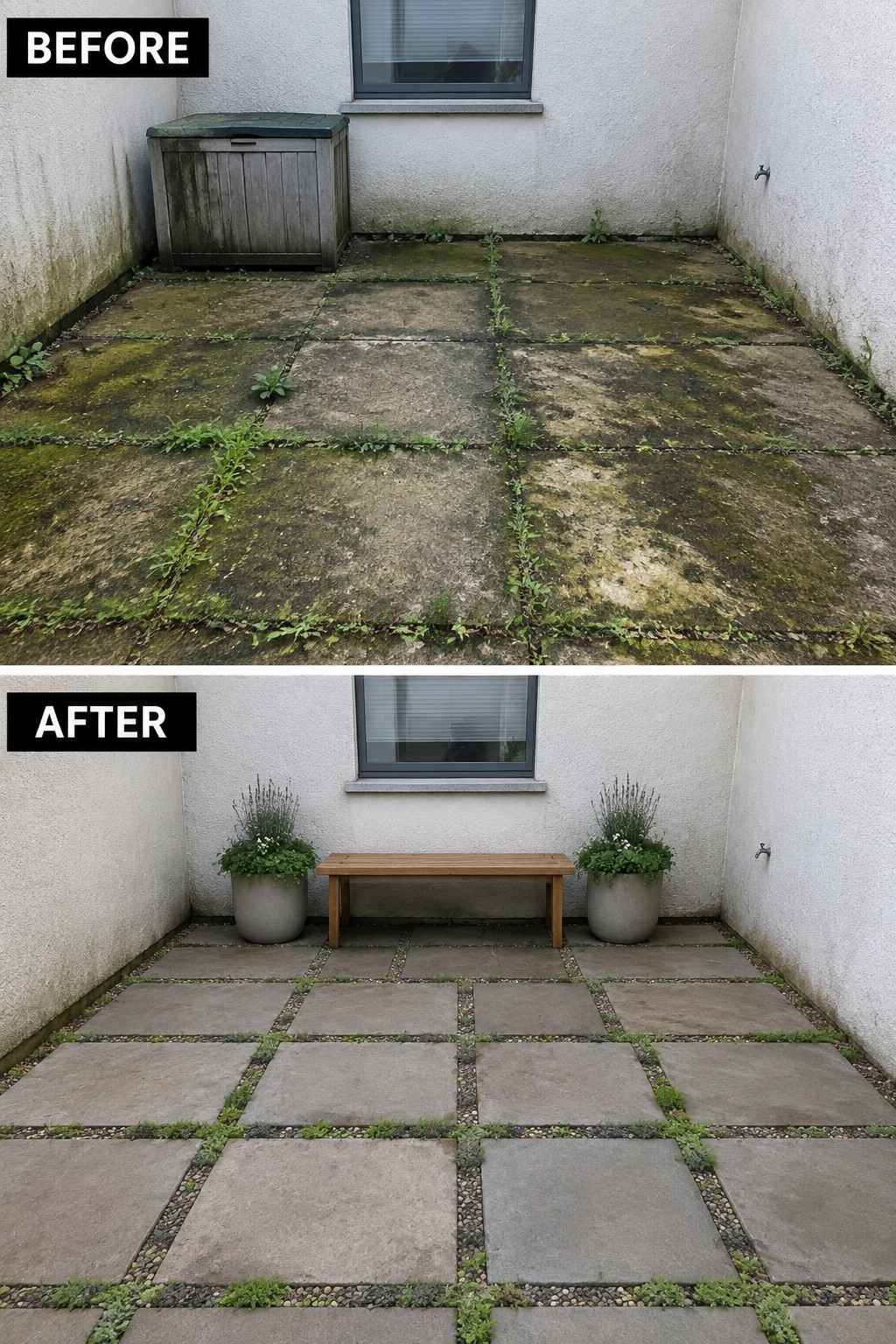
The main change here was cleaning up the moss and weeds that had taken over the paving, then placing a simple bench between two large planters. That single addition turned empty, neglected ground into a spot where someone could actually sit and enjoy the space.
This approach works best in small paved yards or side areas that already have solid ground underfoot. Focus on clearing the surface first, then keep the furniture minimal so the area still feels open rather than crowded.
Turn An Eroded Slope Into A Dry Creek Bed
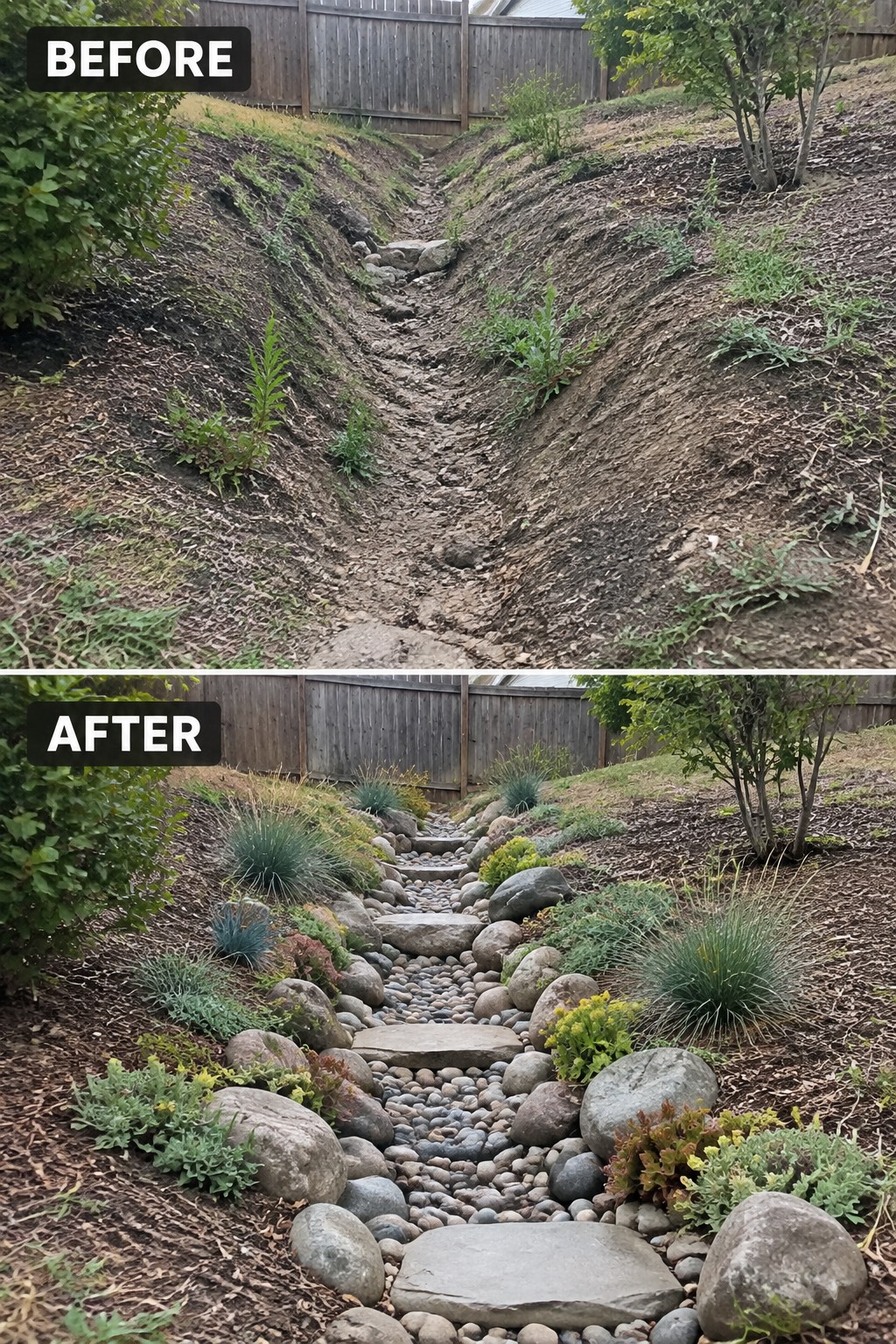
An eroded channel or awkward slope often becomes the messiest part of a yard because water keeps washing through it. Instead of trying to hide the problem with scattered plants, this approach uses rocks and gravel to give the area a clear purpose. The rocks slow water, stop further erosion, and turn the ditch into something that looks intentional rather than neglected.
This idea works well in any yard that has a natural low spot or drainage line. Start by clearing out weeds and loose soil, then lay down a mix of larger boulders and smaller river rock to create the creek shape. Planting along the edges helps hold everything in place and softens the look over time. It is a practical fix that also adds structure to the whole backyard.
Clear Overgrowth Before Adding A Seating Area
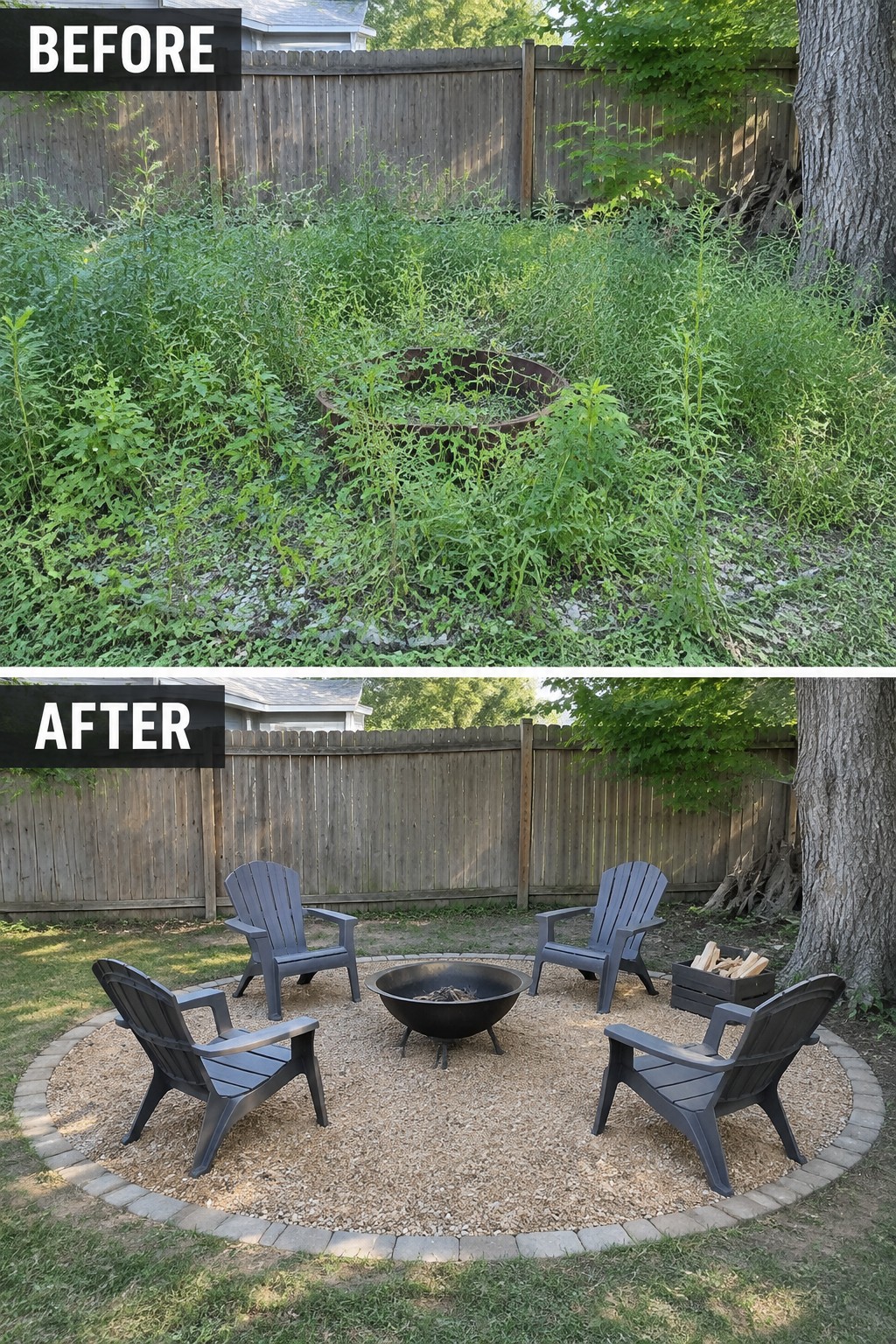
An overgrown yard often hides the real shape of the space until you cut everything back. Once the weeds and tall plants are gone, a simple gravel circle with brick edging gives the fire pit a clear spot to sit. The result feels like an actual room instead of just dirt and brush.
This idea works best in smaller backyards where you only need one main gathering place. Start with cleanup and a basic ground cover before you bring in furniture. That order keeps the project from feeling scattered and makes the seating area last longer through the seasons.
Clear Overgrown Shrubs Before Adding Entry Details
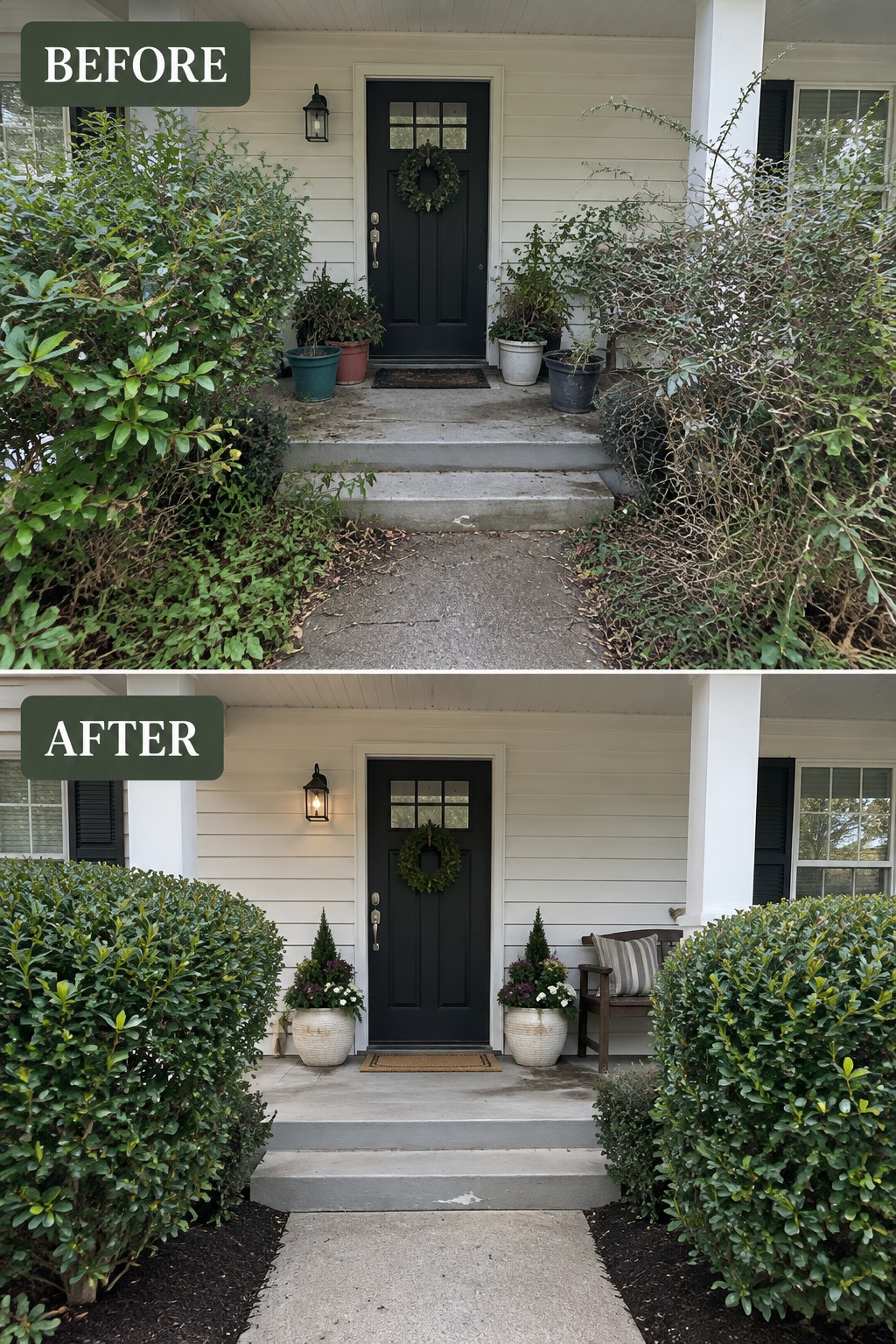
The before photo shows how quickly foundation plantings can swallow a front porch when they are left unchecked. Once the large messy shrubs were cut back and shaped, the black door and simple steps became visible again. Adding two matching planters and a small bench then gave the entry a clear purpose without crowding the space.
This approach works best on older homes where the original lines of the porch are still good but hidden. Start by removing or heavily pruning anything that blocks windows, walks, or the door itself. After the cleanup, add just a few weatherproof pieces like pots or a bench so the area feels finished rather than bare. Keep the new plants lower than the porch rail so they frame the house instead of hiding it.
Add Brick Edging To Define A Driveway Border

Overgrown weeds and grass often spill onto pavement and make the edge of a driveway look messy. A simple brick border cuts that problem off at the source and turns the strip into a proper planting bed instead of a constant battle with weeds.
This idea works on almost any home where the lawn runs right up to the driveway. Lay the bricks first to set a clean line, then add mulch and a few low plants. The edging does most of the work by keeping grass from creeping back in and making the bed easy to maintain.
Clear Overgrowth From A Pond Before Adding Plants
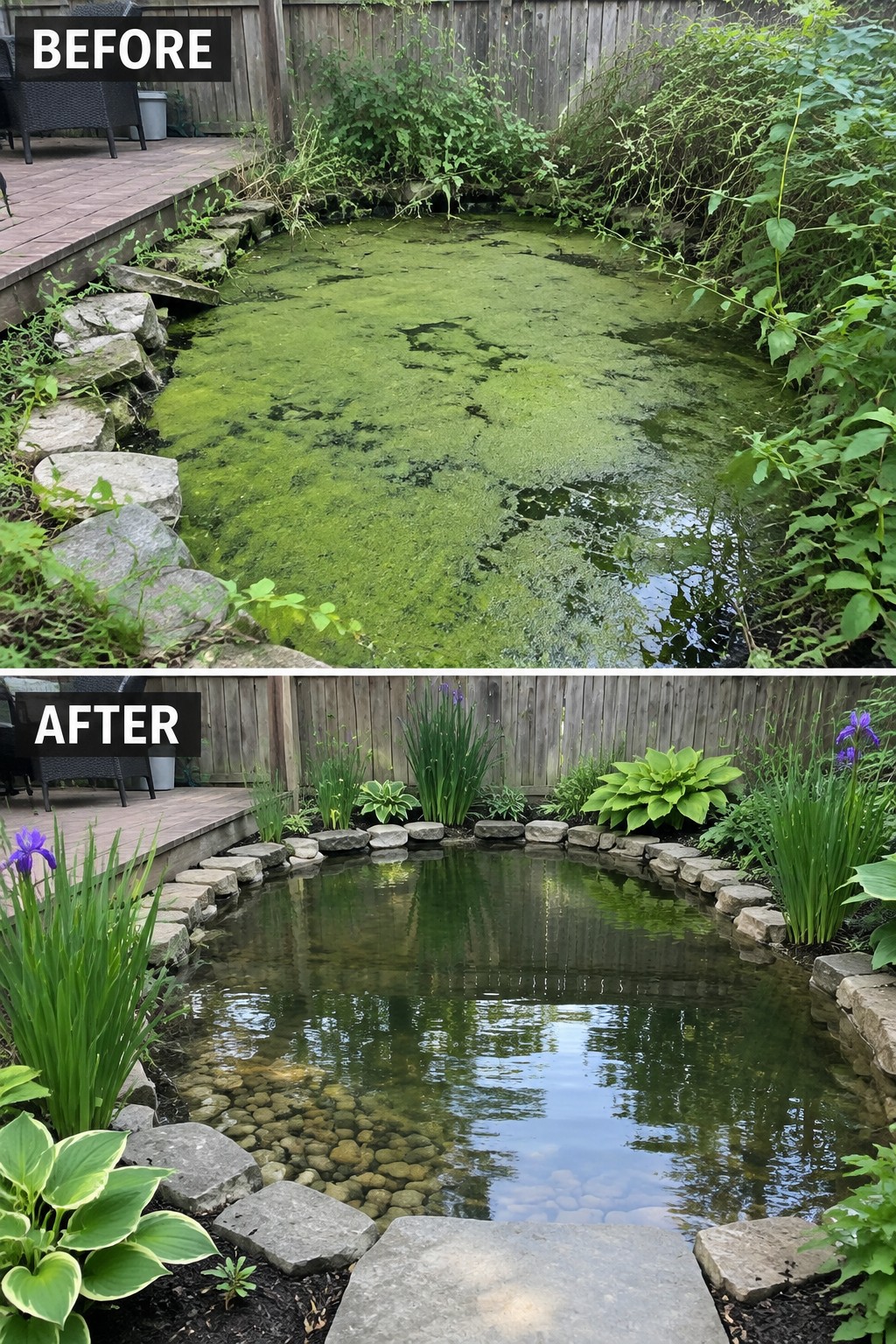
The biggest shift came from removing the thick algae and weeds that had taken over the water. Once the surface was cleared and the edges were lined with stones, the pond stopped looking like a problem area and started working as a real feature in the yard.
This approach suits small backyards that already have a water element but have fallen behind on maintenance. Focus first on skimming and cleaning so you can see what you are working with. Then add a simple stone border and a few repeats of the same plants along the edge rather than scattering different varieties everywhere.
Clear Overgrown Shrubs Before Adding New Plants
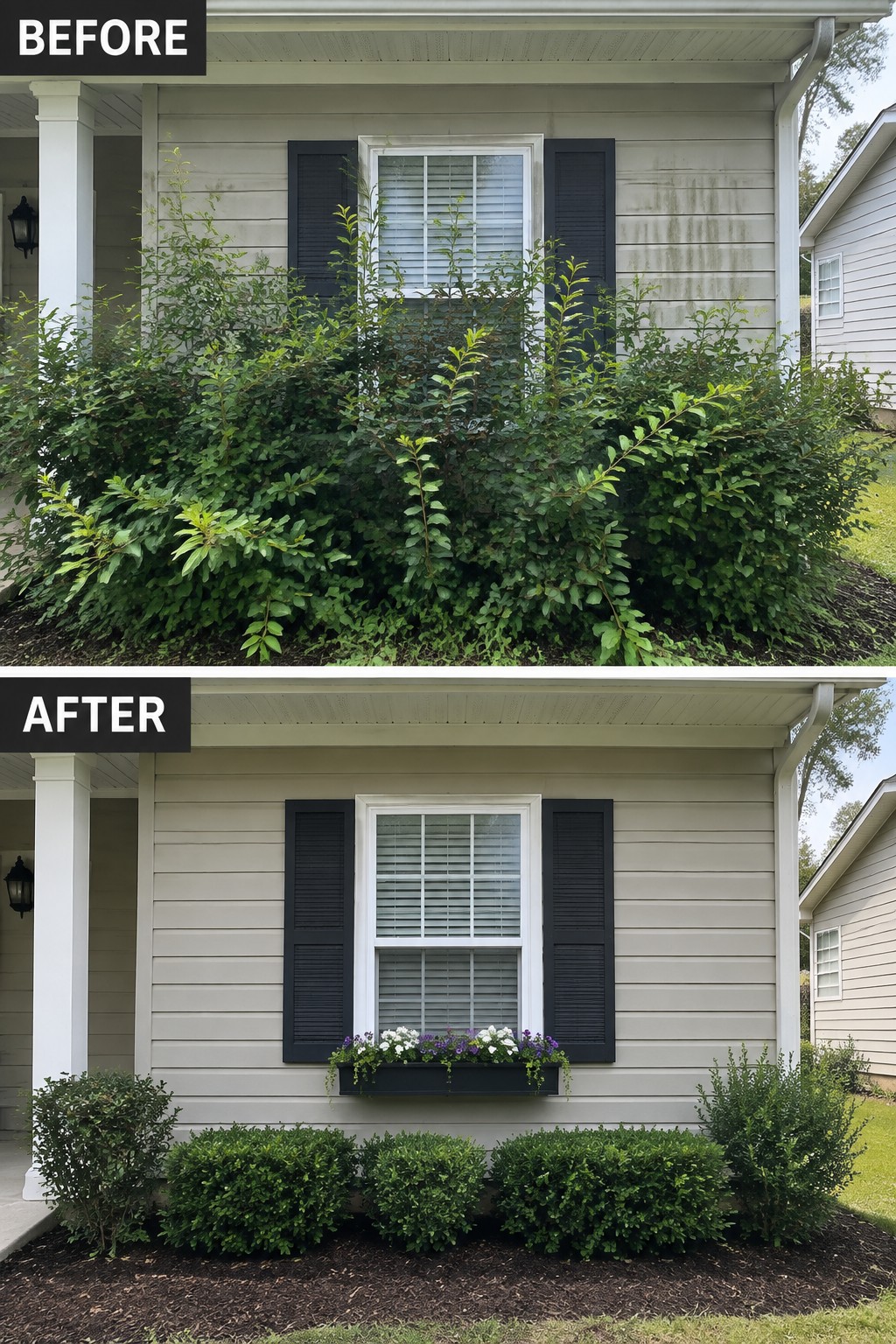
The big change here is removing the tall, wild shrubs that had completely covered the window and lower siding. Once that growth was gone, the house looked much larger and the window could actually do its job. Adding a simple window box and a row of low, shaped shrubs kept the front feeling neat without blocking anything.
This approach works best on older homes where foundation plants have been left alone for years. Start with the removal, then measure how much space you actually have before choosing new plants. Low evergreens and a single window box give structure without crowding the view or the walkway.
Clean Up The Yard Before Adding Outdoor Seating
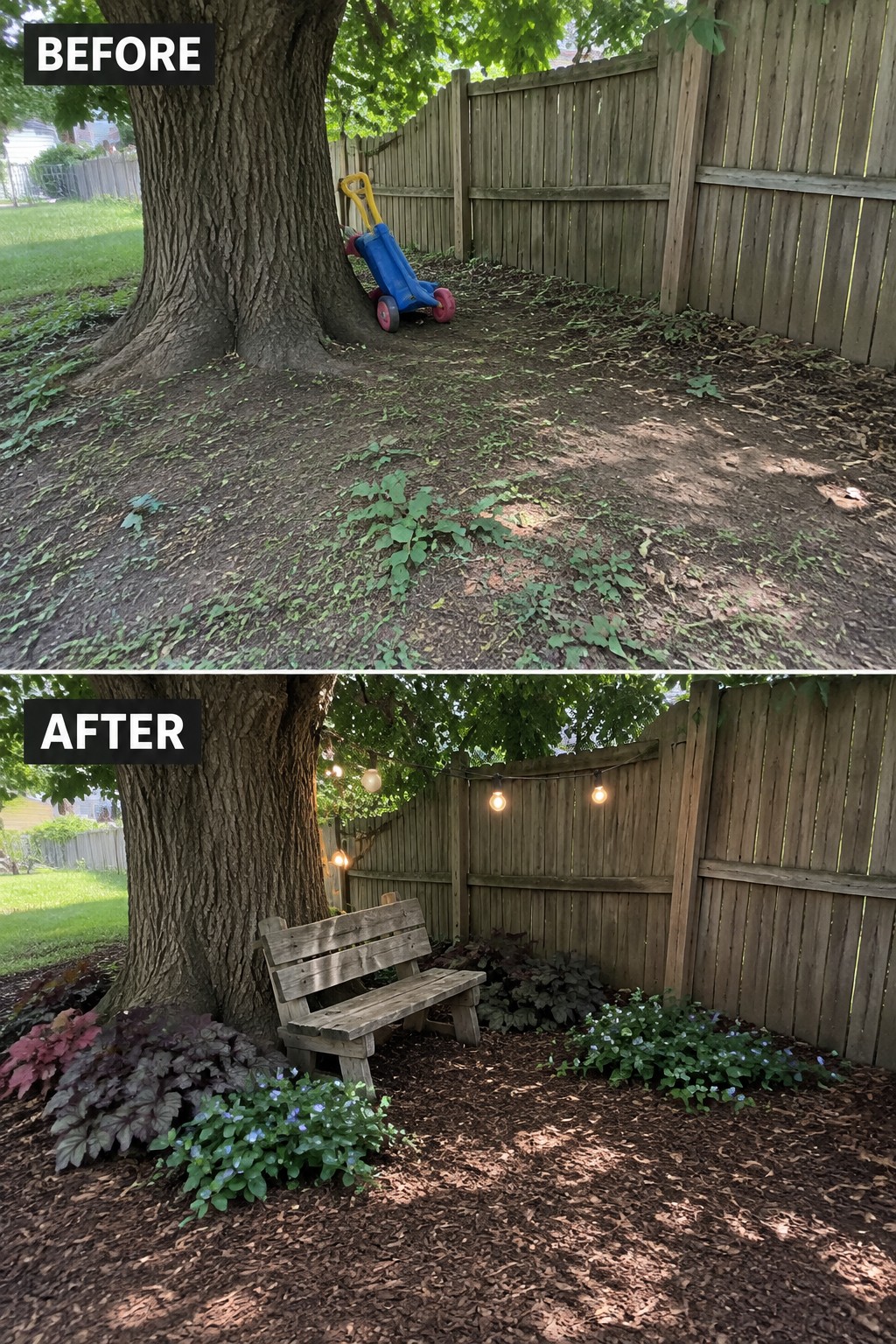
The biggest shift here came from clearing away the weeds and loose dirt first, then laying down mulch to give the space a finished base. Once that was done, a simple wooden bench and a few low plants turned the spot under the tree into an actual place to sit instead of just another neglected corner.
This approach works especially well in small yards or tight areas along a fence where there is not much room to work with. Start by removing the overgrowth and adding mulch so the ground feels intentional, then add one main piece of furniture like a bench. Keep the planting simple and low so the area stays easy to maintain and does not feel crowded.
Define The Lawn Edge With A Garden Bed
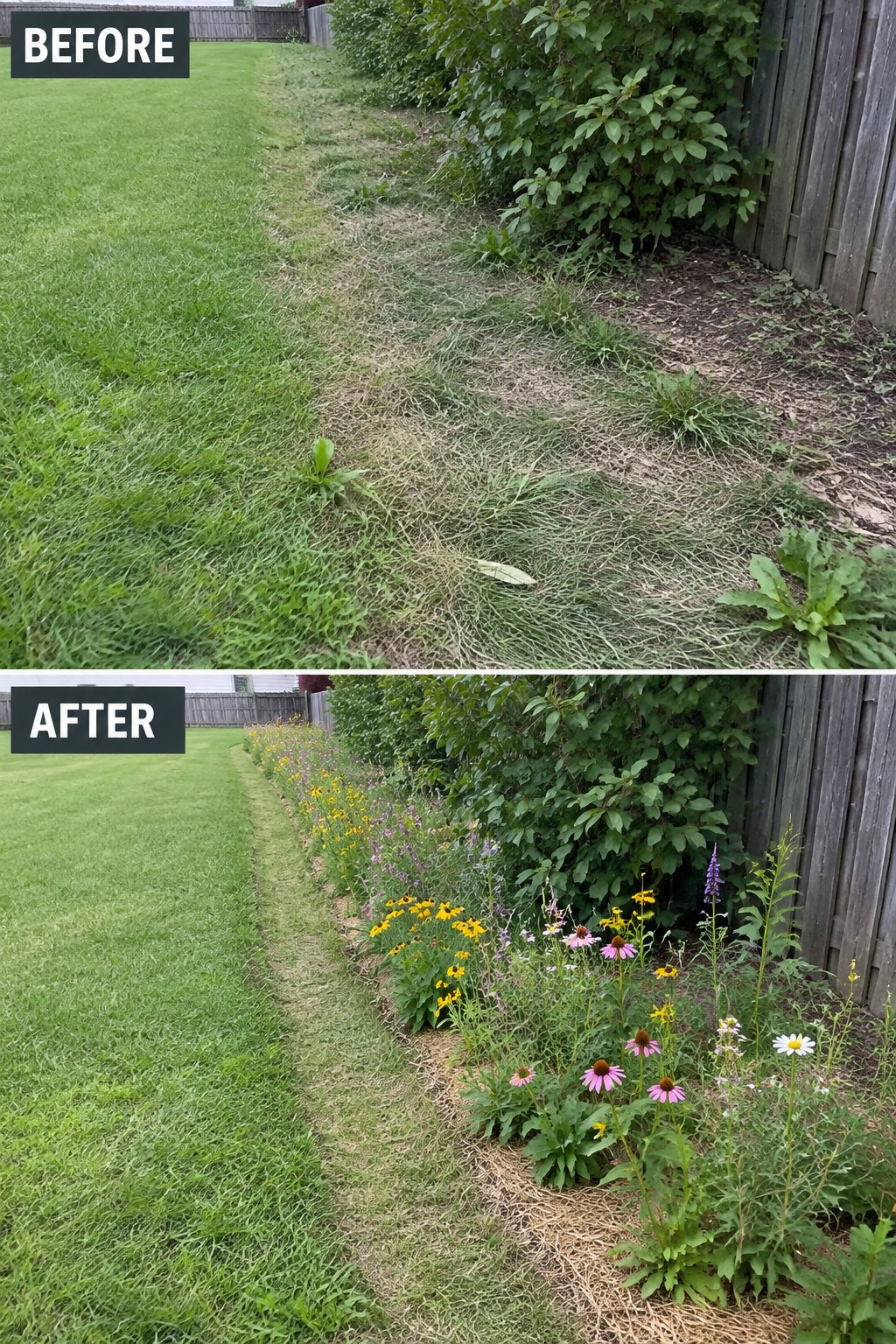
One of the simplest ways to fix a messy side yard is to stop fighting the grass and instead create a clear garden bed along the edge. The before photo shows how quickly a strip can turn into a tangle of weeds and uneven growth. Adding mulch and a row of plants gives the area a purpose and stops the wild look from spreading into the rest of the lawn.
This works best in narrow spaces between a lawn and a fence or building where mowing is awkward. Clear the overgrowth first, then lay down mulch to set the boundary. Pick a handful of sturdy perennials that suit your light conditions and you end up with a border that stays neat without constant trimming.
Add Evergreens And Raised Planters Along An Overgrown Fence
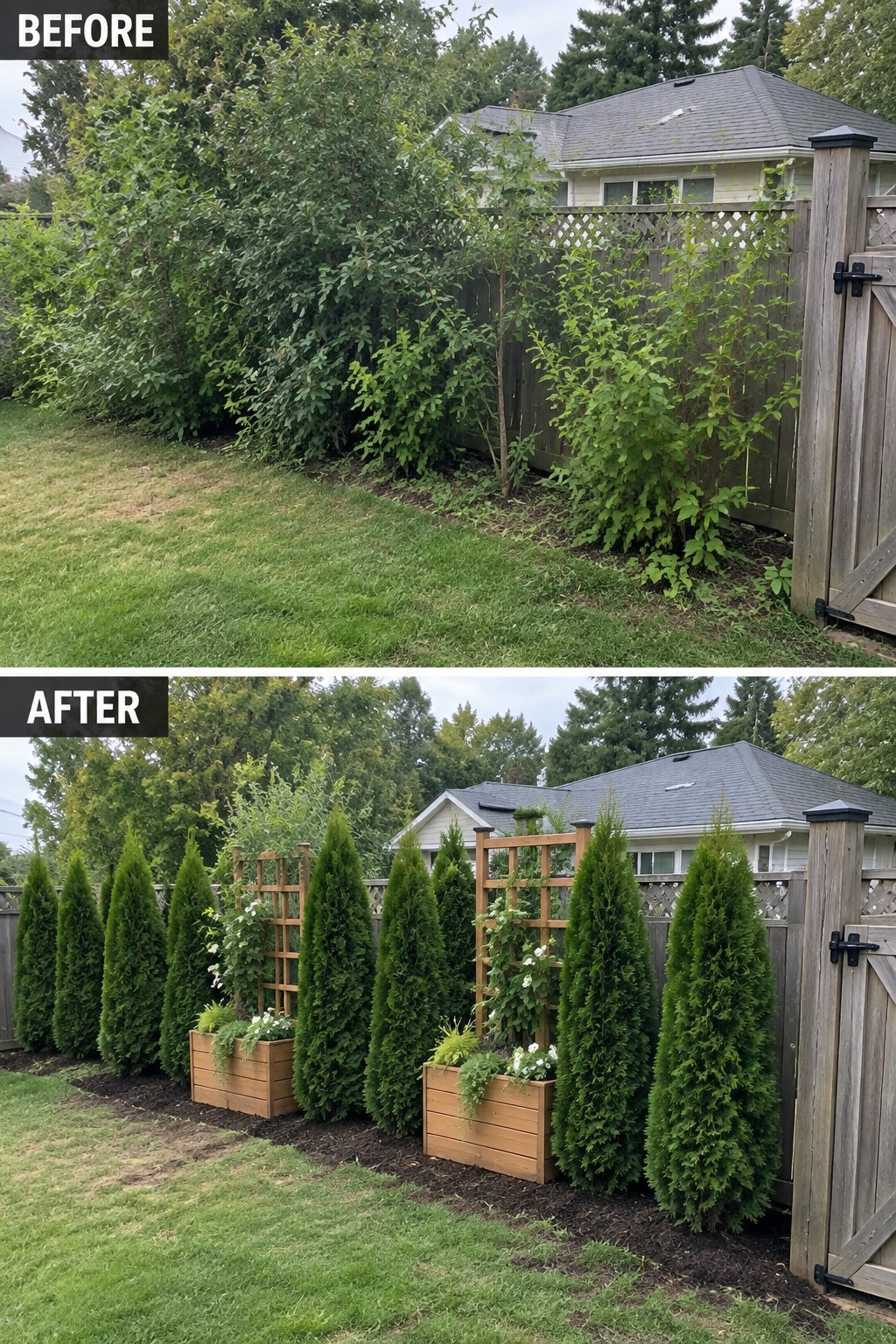
Clearing the wild growth along the fence first made the biggest difference. Once the messy shrubs were gone, a straight row of tall evergreens gave the space instant order, and two raised planters with trellises broke up the line so it did not feel like a solid wall of green.
This approach works best along side or back fences where you want privacy without losing the whole yard to one solid hedge. Plant the largest evergreens first to set the height and spacing, then add one or two raised beds in the gaps for seasonal flowers and vertical interest. Keep the mulch bed narrow enough to leave plenty of lawn space in front.
Add Structure To An Overgrown Hillside Yard
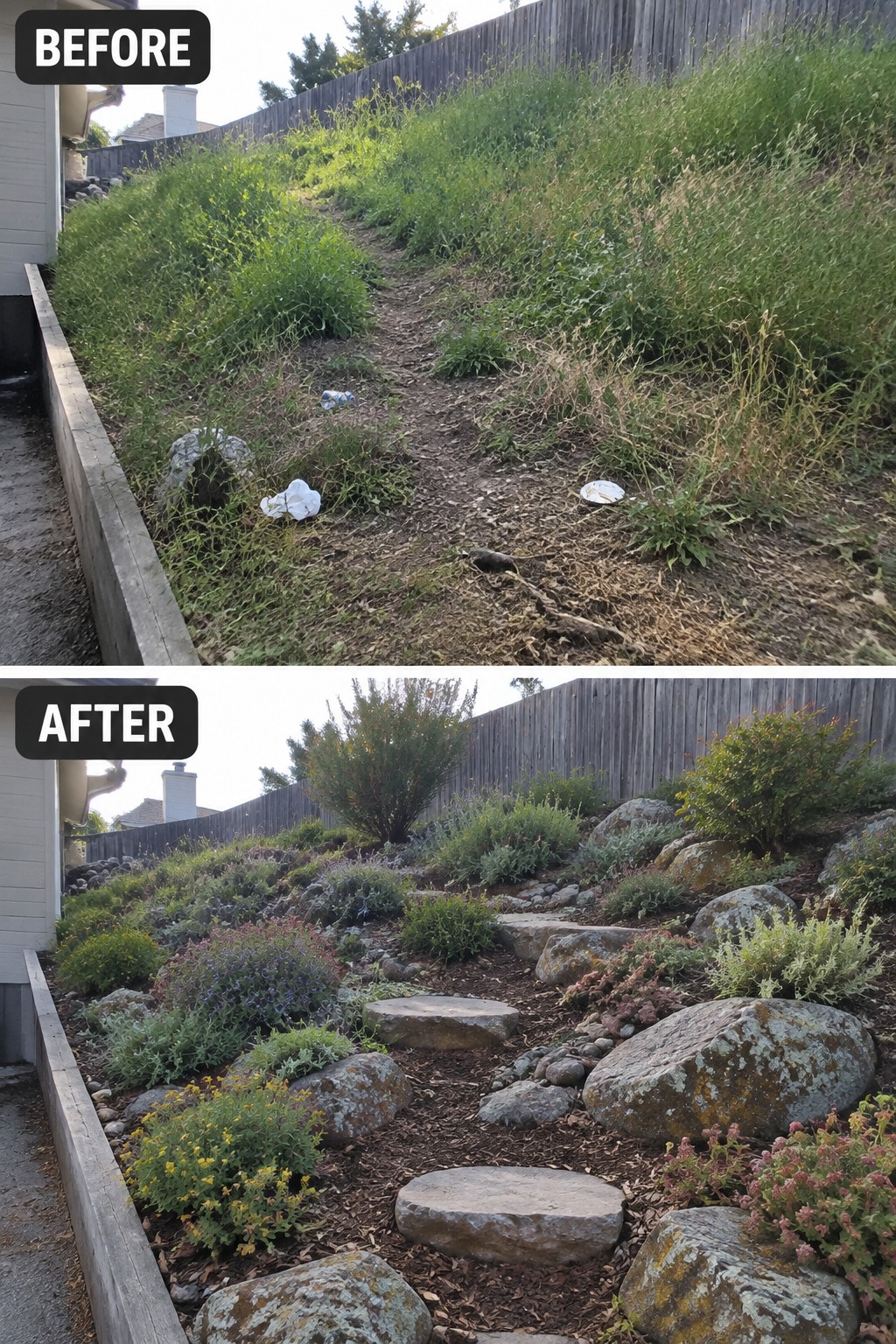
An overgrown slope often feels unusable because there is no clear way to move through it or organize the plants. In this case the fix started with clearing the weeds and debris, then laying down stepping stones to create a simple path and placing larger rocks to hold the slope in place. Mulch and grouped plantings filled in the rest, turning a messy incline into something that can actually be walked and maintained.
This approach works best on yards with a noticeable grade where people need access without fighting through brush. Start with a thorough cleanup, then decide where the main path should go before adding plants. Keep the plant groups simple and repeat a few varieties rather than scattering too many different ones. The result stays practical as long as the path stays wide enough to walk comfortably and the beds are mulched to reduce future weeding.
Frequently Asked Questions
Q: What do I do with all the cut branches and pulled weeds once I clear a section? A: Pile the debris in one corner of the yard so it does not block your work. Most towns offer free yard waste pickup or a drop site. If you have space, let the smaller stuff dry and break down for mulch later.
Q: How do I stop the cleared areas from filling back in with weeds within a month? A: Cut new shoots every two weeks while they are still small. Lay down a thick layer of mulch or cardboard covered with soil to smother anything trying to sprout underneath.
Q: Can I clear right up against the house without causing water issues later? A: Keep at least a foot of bare soil or gravel next to the foundation so rain drains away. Pull plants and roots in that strip first, then add a slight slope if the ground sits flat.
