

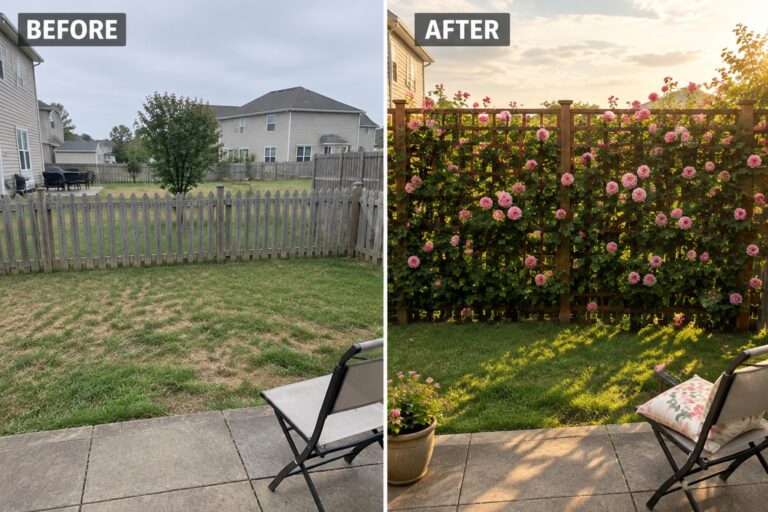
I often notice how open edges in a yard leave the whole space feeling a bit too exposed for regular use.
I have found that building privacy works better when you combine quick fixes like lattice with slower growing shrubs that fill in later.
Privacy does not happen overnight.
The real satisfaction comes from watching the space settle into something that feels more enclosed and usable for everyday life.
A few of these ideas seem worth testing based on how much sun or wind a particular yard gets.
Add Privacy With A Trellis And Climbing Plants
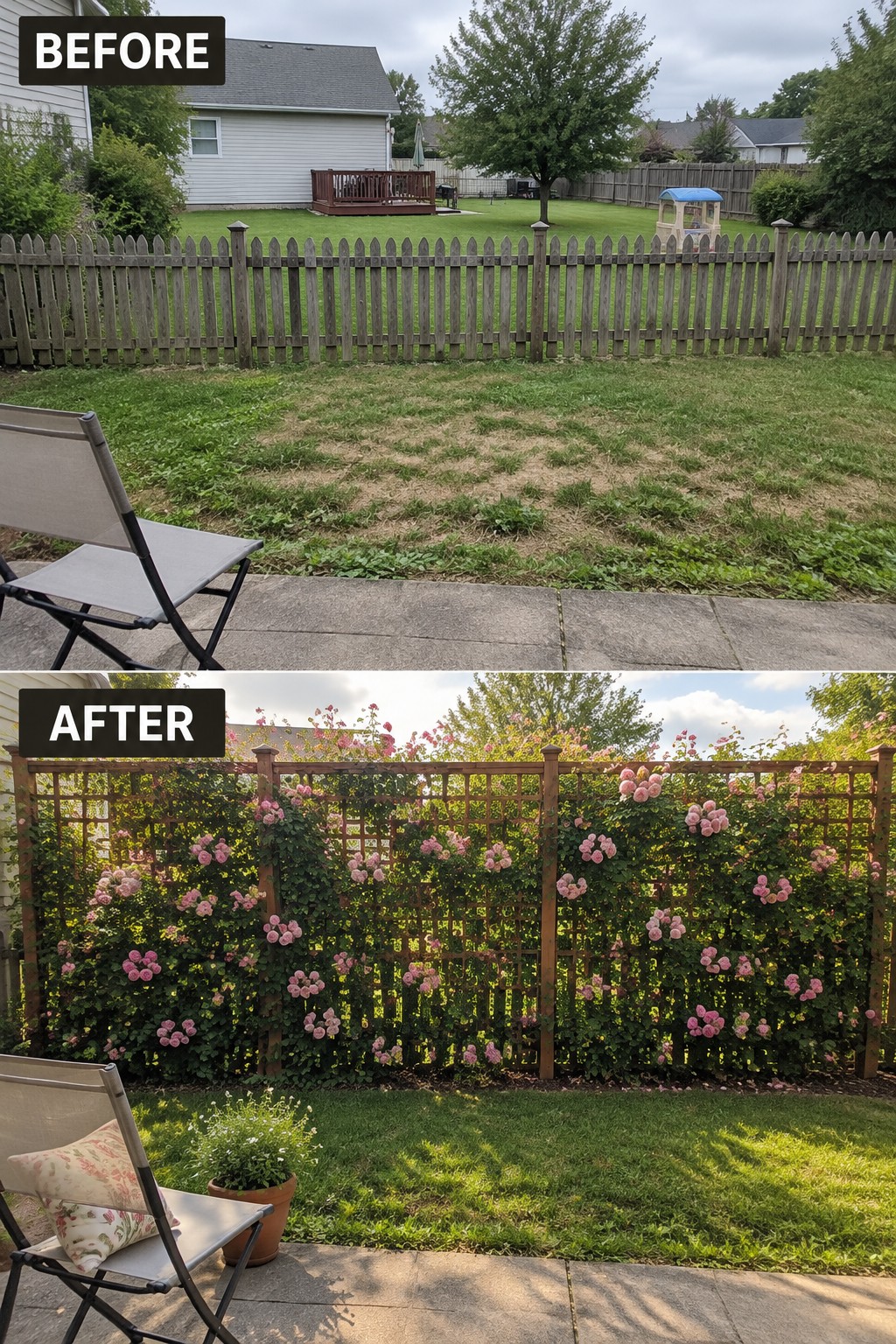
A simple wooden fence often leaves a yard feeling exposed. Replacing the open picket style with a lattice trellis and letting climbing roses fill in the gaps turns the fence into a living screen that blocks the view while still feeling light and natural.
This works best along side or back property lines where you need coverage without building a solid wall. Start with a sturdy trellis attached to the existing fence, plant the climbers at the base, and give them a season or two to grow. It suits smaller yards especially well since the open lattice keeps the space from feeling closed in.
Add Privacy With Tall Plants In Planters

A chain link fence leaves a side yard feeling exposed, but adding a row of tall plants in simple wooden planters changes that fast. The gravel path keeps the walkway practical while the planters create a living screen that blocks the view without needing to replace the fence.
This approach works well along narrow side yards or property lines where digging is limited. Choose fast-growing plants that stay narrow, set the planters in a straight line, and keep the path clear so the space still feels usable.
Screen Utility Equipment With Lattice And Climbing Plants
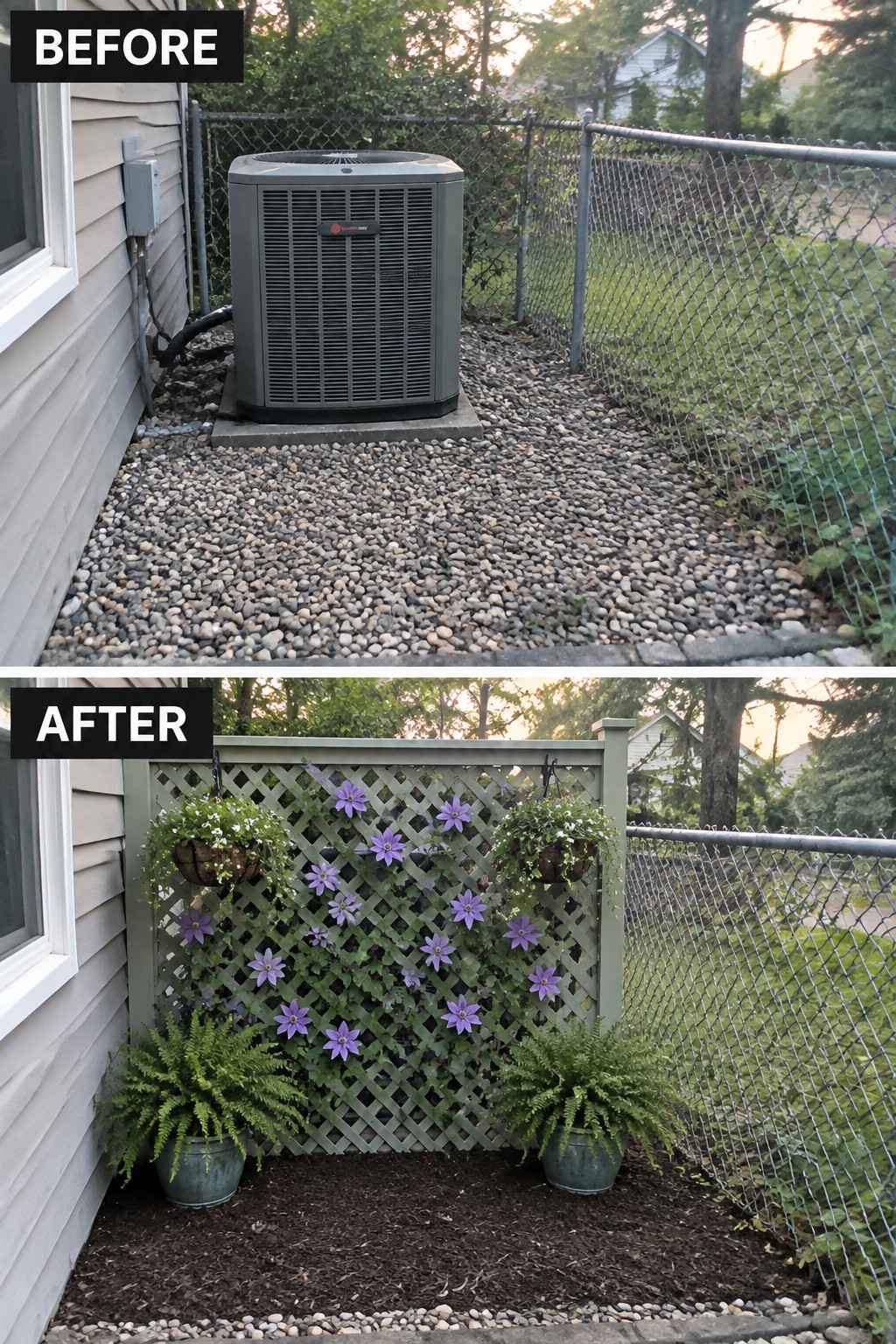
An air conditioner sitting on bare gravel next to a chain link fence is one of those eyesores most yards have. Adding a simple lattice screen in front of it changes the whole feel of the space. The lattice gives the area structure while the vines and hanging plants soften the look and block the view from the yard and neighboring properties.
This approach works well along side yards or back corners where utility units sit out in the open. Start with a sturdy screen that is tall enough to hide the equipment but still allows airflow. Then layer in a few containers at the base and let climbing plants fill in over time. It keeps the area looking intentional without blocking access for service.
Add Privacy To A Patio With Vines And Curtains
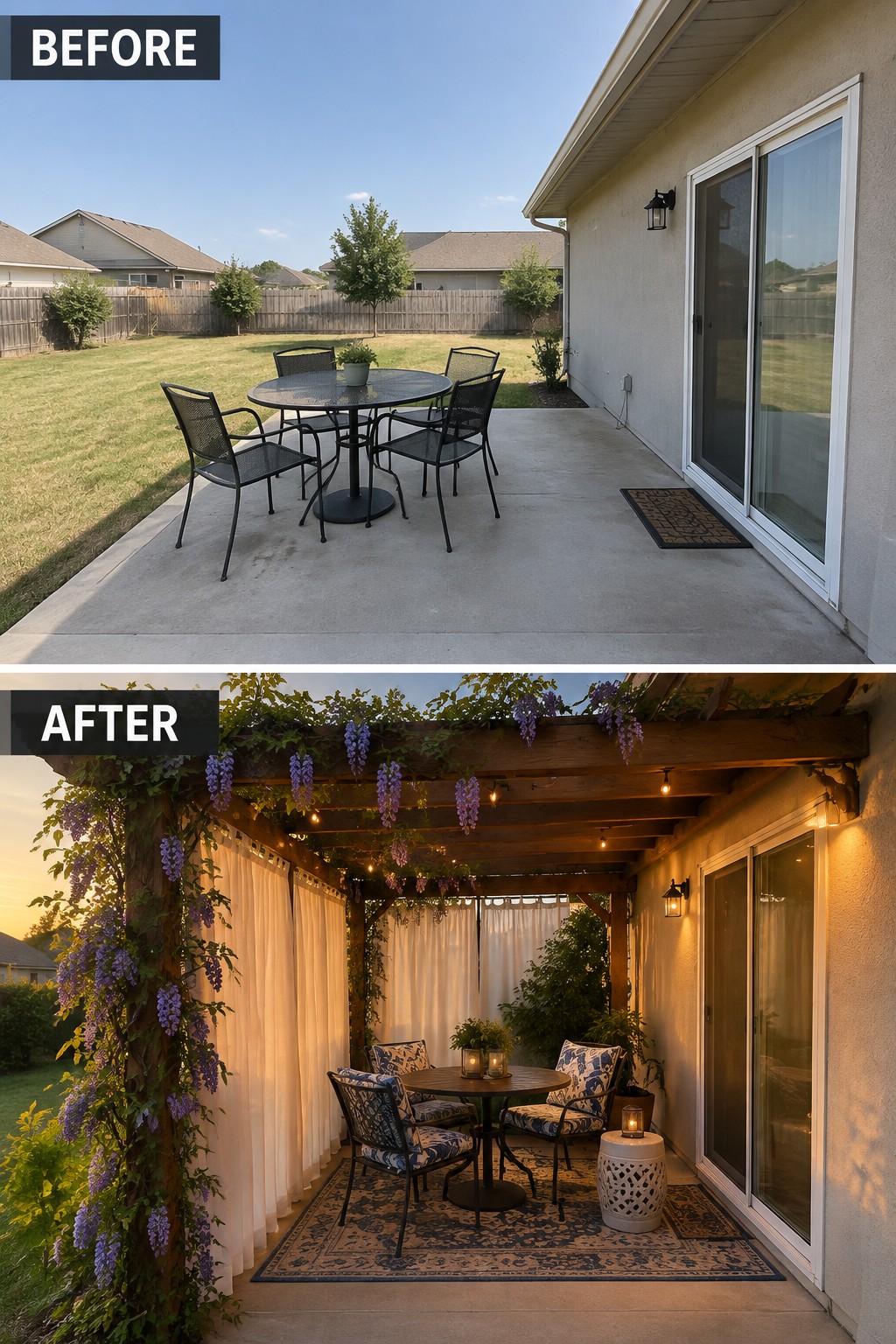
An open patio next to a yard often feels too exposed for comfortable use. A simple pergola with climbing vines and hanging curtains changes that by creating a soft boundary that blocks the view while still letting in light and air.
This idea suits homes where the patio sits close to a fence or open lawn. Build or buy a basic pergola first, choose a fast-growing vine like wisteria, and add outdoor curtains on one or two sides so you can adjust privacy as needed. Keep the furniture layout simple so the space stays easy to move around in.
Plant A Hedge For Backyard Privacy

A thick hedge along the fence line can turn an open backyard into a more private space without making it feel closed in. Here the scattered shrubs and full view of the fence were replaced by one continuous row of greenery that blocks sightlines while keeping the lawn open and usable.
This works best in yards where you already have a basic fence but want more screening. Choose evergreen shrubs that grow densely, plant them close enough to fill in over time, and leave a clear path or open grass in front so the space does not feel cramped.
Add Privacy To An Open Porch With Tall Grasses
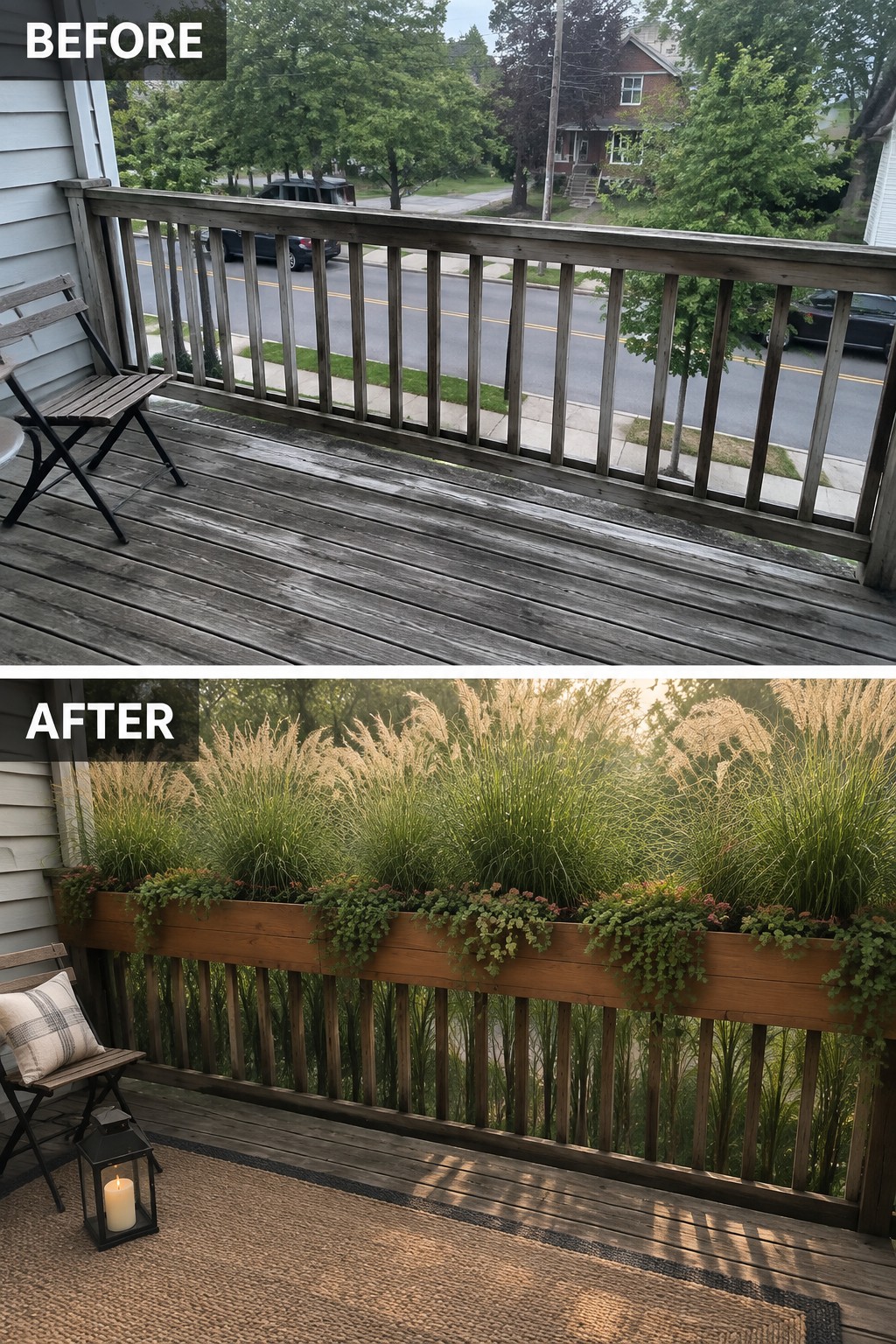
An open porch right above the street can feel too exposed for comfortable use. Tall ornamental grasses planted behind the railing create a living screen that blocks the view while still letting air and light through. A long planter box mounted along the railing adds a second layer of greenery with trailing plants that soften the edge.
This idea suits urban porches and balconies where you want privacy without building a solid wall. Choose grasses that grow four to six feet tall and a planter with drainage holes so everything stays healthy through the seasons. The result turns a bare deck into a space that feels more private and inviting.
Add Privacy To A Small Patio With Living Walls

A bare concrete patio with tall block walls often feels exposed and unused. Covering those walls with vertical planting changes the whole feel by blocking sight lines and turning the space into a private outdoor room. The shift from plain gray walls to a thick layer of greenery makes the area feel enclosed without needing a fence or screen.
This idea works best on small urban patios or balconies where you cannot plant trees or add large structures. Use pocket planters or a simple vertical system, fill it with fast-growing vines and leafy plants suited to the light, and keep the planting dense so it actually creates a screen. Add just one or two pieces of seating so the space stays usable instead of overcrowded.
Add Privacy Screens And Vines Along A Fence Line
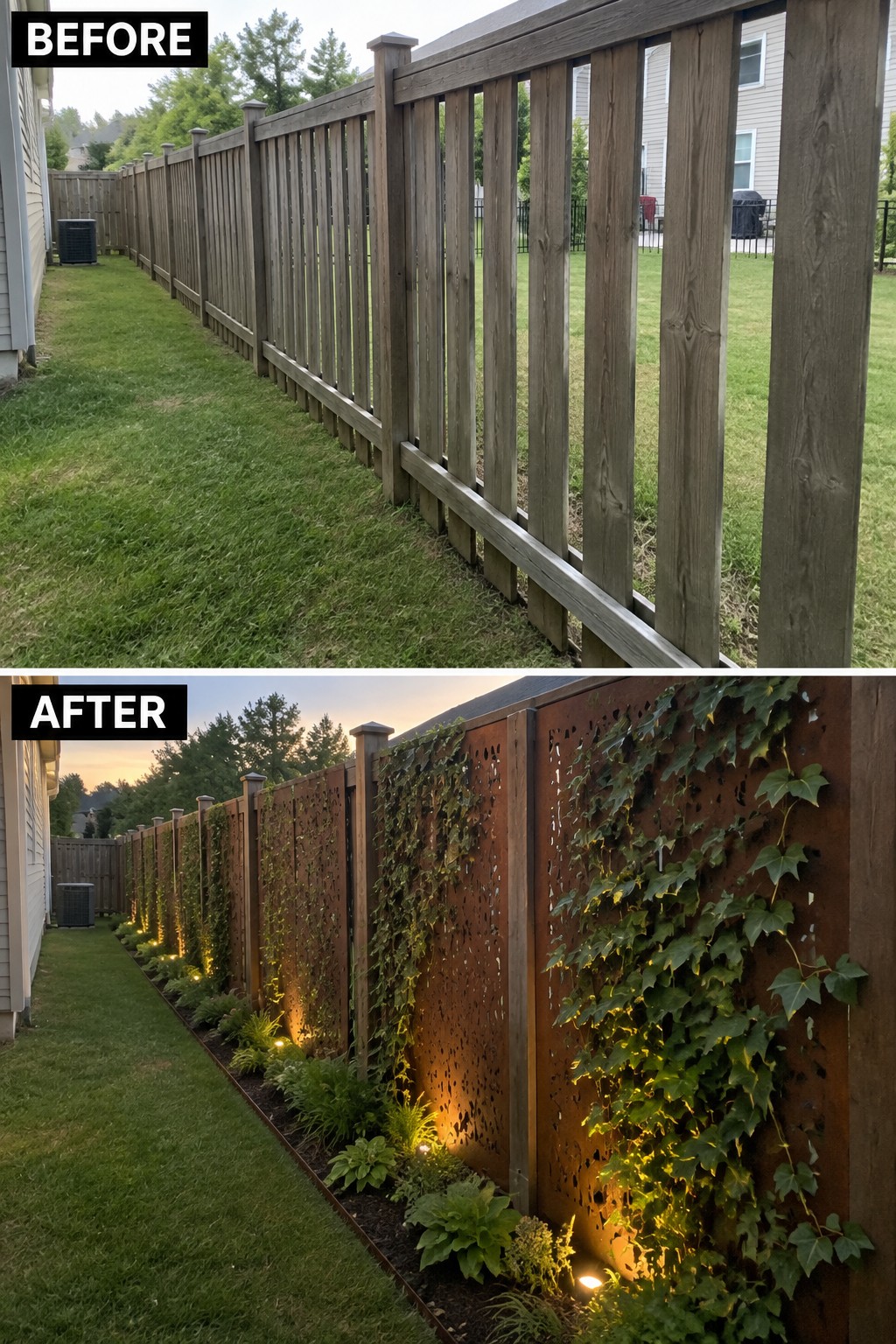
A plain wooden fence can leave a backyard feeling exposed. Replacing sections with decorative metal panels that have cutouts, then letting vines climb over them, gives the same boundary a much more private and finished look. The lighting tucked into the new planting bed at the base adds another layer that makes the whole edge feel intentional instead of just functional.
This approach works well on long, straight fence runs where you want privacy without building a solid wall. Start with the screens in the areas that matter most for screening views, let the vines fill in over a season or two, and keep the planting bed simple with a few repeating plants and low lights. It suits suburban yards that already have a fence but need more coverage without losing all the light and air that a full solid fence would block.
Add Privacy With Espaliered Trees Along A Fence

A plain fence next to an open lawn often leaves a yard feeling exposed. Adding a raised planter at the base and training fruit trees flat against the fence gives you a living screen that blocks the view without needing a taller structure. The trees fill in the fence line with branches and fruit while the planter keeps everything neat and contained.
This idea works best along a back or side fence where you want seasonal privacy and a bit of food production at the same time. Build the bed first from pressure-treated lumber, then plant young trees that respond well to espalier pruning. Keep the bed narrow enough that the trees stay easy to reach and maintain from one side.
Add Privacy To A Backyard Fence With Screening And Planters

A chain link fence often leaves a yard feeling exposed, especially when the grass along the base looks patchy and worn. Attaching a reed screen to the fence and setting wooden planters in front gives the area a solid visual barrier while adding a neat row of greenery that softens the line.
This idea works best along property edges where full fence replacement is not practical. The screen blocks the view quickly, and the planters let you control plant height and soil quality without digging up the whole border. It suits smaller yards or homes that need privacy on one side only, and it leaves room to mow or walk along the fence once everything is in place.
Create Privacy With A Vine-Covered Arbor
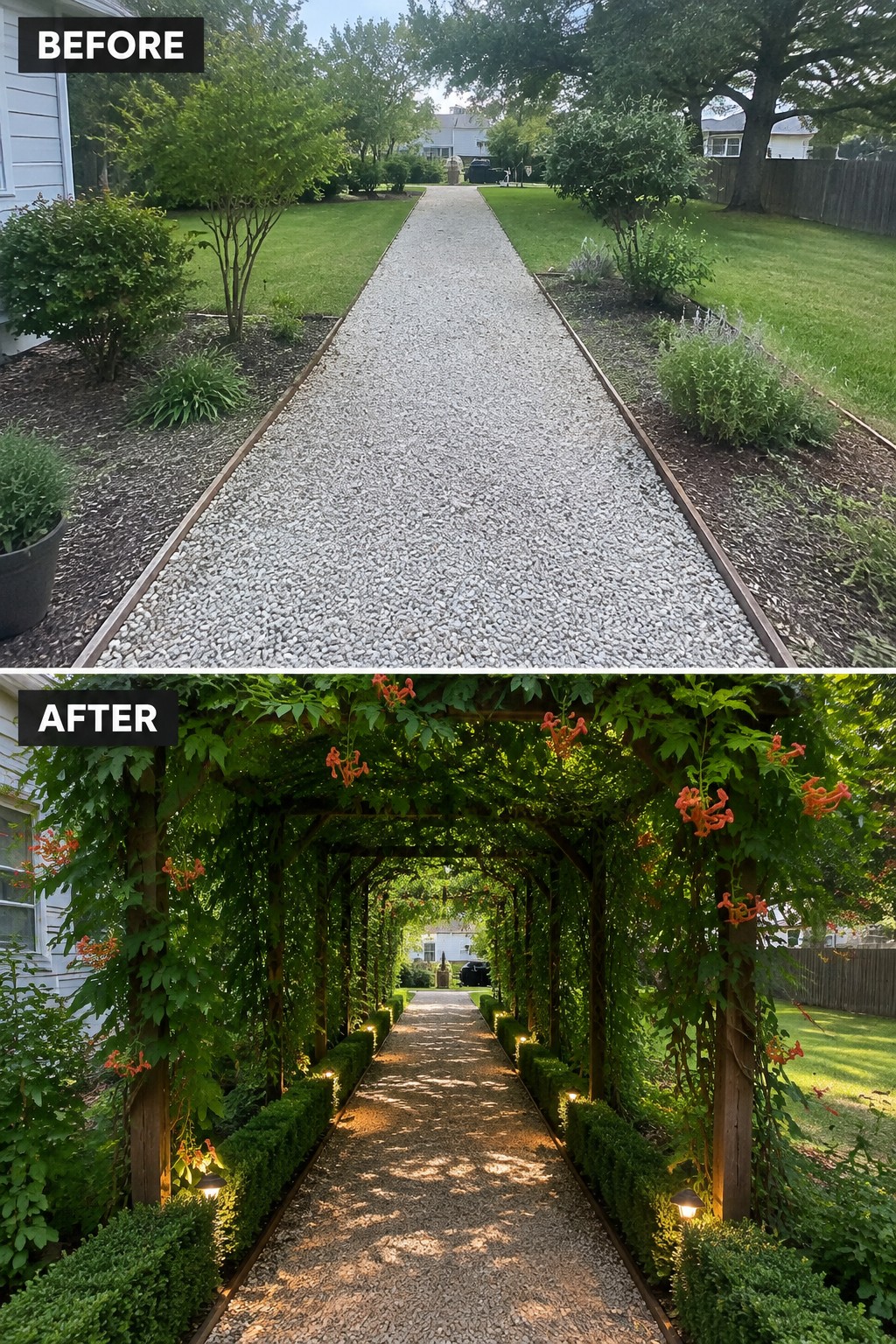
An open gravel path feels exposed when it runs straight through the yard. Adding a wooden arbor and letting vines grow over it turns the same walkway into a private, shaded tunnel. The vines fill in the sides and overhead, while low hedges along the base keep the ground level feeling more enclosed.
This idea works best on long side yards or narrow lots where you want separation without building a solid fence. A simple lumber structure is enough to start. Choose a vigorous vine that handles your climate, and give it a season or two to fill in before adding lights or extra planting.
Add Privacy With Layered Plantings Along A Fence

A bare fence line with just a few scattered bushes leaves the whole yard feeling exposed. The fix here was to plant a row of tall evergreens at the back and fill in front of them with a mix of shrubs, grasses, and flowering plants. The layered approach quickly blocks the view from neighboring yards while still looking natural.
This works best along long fence lines where you need year-round coverage. Start with the tallest evergreens spaced evenly, then add mid-height shrubs and lower plants in front so nothing looks flat. Mulch the bed to keep weeds down and give it a finished edge that ties into the lawn.
Add Privacy Screens To A Small Balcony
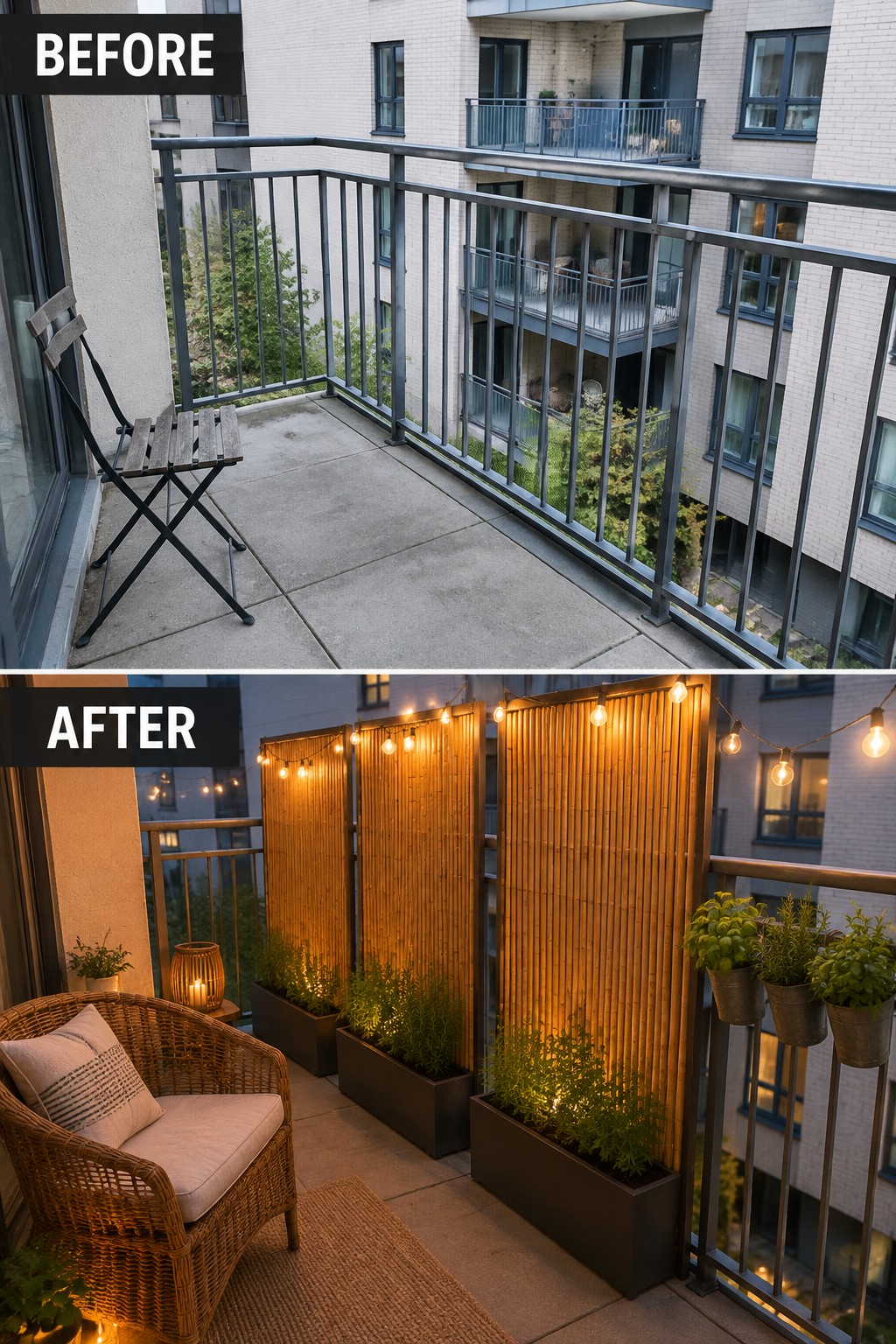
A bare balcony with only a folding chair feels open and uninviting, especially when neighbors can see right in. Tall bamboo screens placed along the railing block the view while adding warmth and structure. String lights and a few planters soften the look and make the space feel more like an outdoor room.
This approach works well on apartment balconies where space is tight. Start with the screens as the main element, then add simple lighting and greenery. Keep furniture to a minimum so the area stays easy to move around in.
Add Privacy With A Fence And Plantings

Replacing an old open fence with a solid horizontal one makes a big difference in how private a yard feels. The new fence blocks the view from behind while the row of white flowering plants softens the base and adds another layer of screening without taking up much space.
This approach works well in backyards that sit close to neighbors or alleys. Start with a fence that has tight spacing, then plant low shrubs or perennials along the bottom so the greenery fills in over a season or two. Keep the plantings simple and repeat the same type for a cleaner look.
Create Privacy With Gabion Planters And Bench Seating
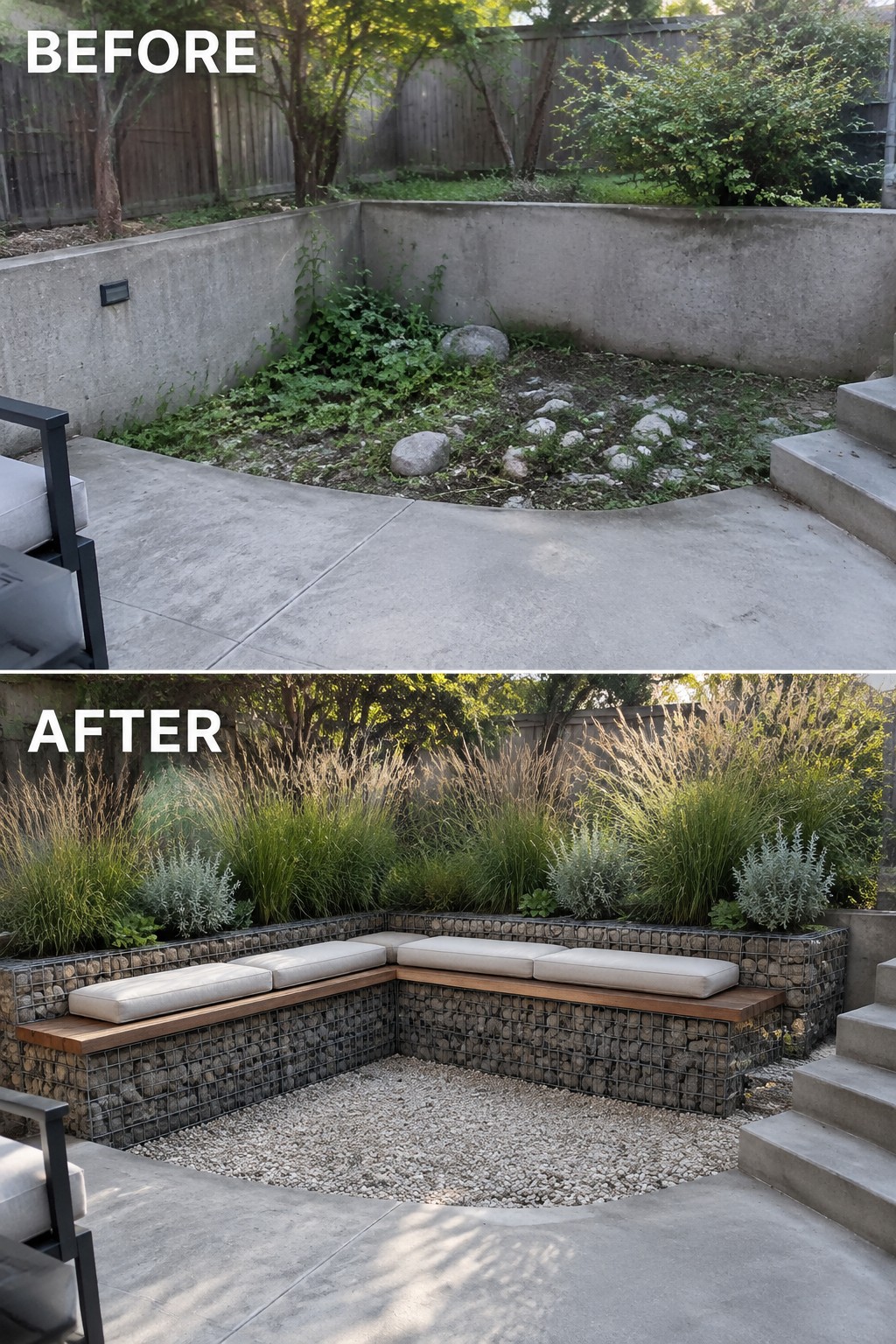
A bare concrete corner next to the house can feel exposed and unused. Adding low gabion walls filled with stone gives the space clear edges, while the same walls double as a base for cushions and a backdrop for tall grasses and shrubs. The plantings block the view from above and soften the hard lines, turning the area into a defined spot to sit without needing a full fence or screen.
This approach works well on small lots or side yards where you want seating without closing everything in. Start with the gabion structure to set the shape and height, then choose grasses and shrubs that grow tall enough to reach the top of the wall. Keep the center open with gravel so the space still feels usable and easy to maintain.
Add Privacy To A Patio With A Trellis And Tall Plants
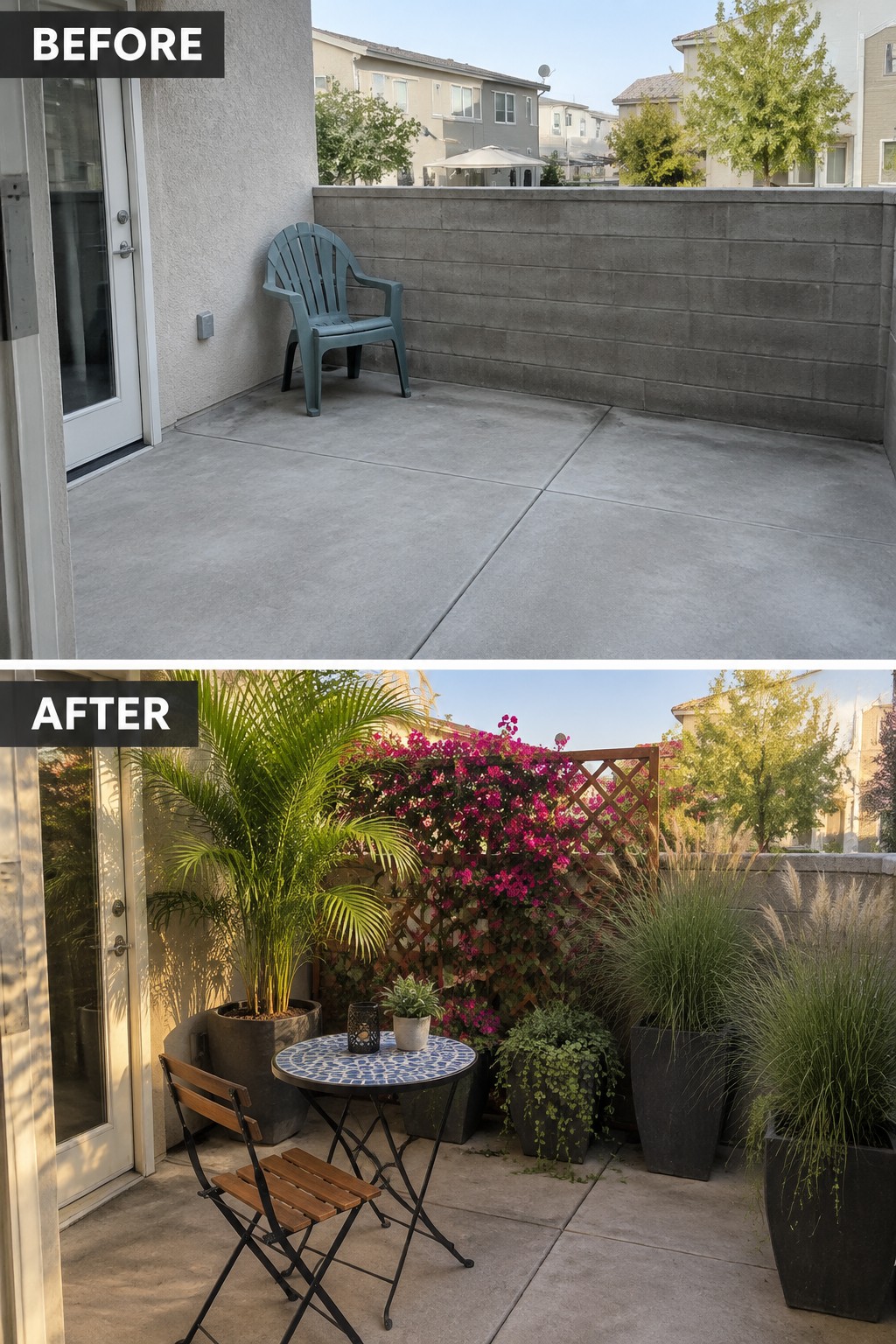
A bare concrete patio can feel exposed when the only thing behind it is a plain wall. Adding a simple wooden lattice and letting vines climb it creates a living screen that blocks the view without making the space feel closed in. Tall grasses in large pots along the sides add more height and soften the edges.
This idea works best on patios or balconies that sit close to neighbors or face an open view. Start with a basic trellis or lattice panel, then choose fast-growing vines and a few tall plants in movable pots so you can adjust as needed. Keep the rest of the space open so there is still room to walk and sit comfortably.
Use Screens And Curtains To Create Privacy On A Patio
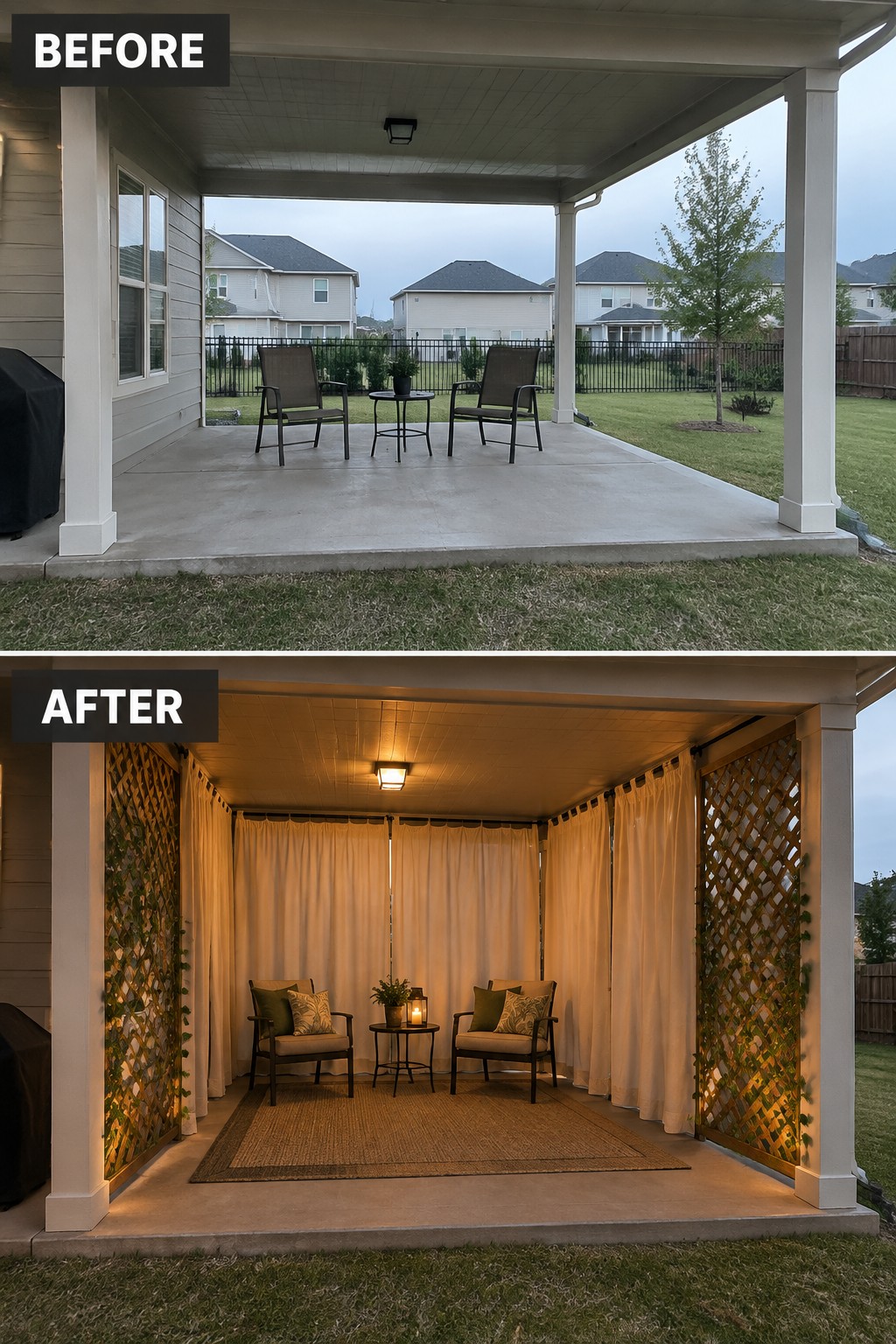
An open patio often feels exposed, especially when neighbors or the street are close by. The simple addition of lattice panels on the sides, combined with hanging curtains, turns the space into a more private and usable area without any major construction. The curtains soften the look while the lattice gives structure and a place for vines to grow.
This approach works well on covered patios or porches that already have a roof and floor but lack enclosure. Start with the screens for the main privacy layer, then add curtains if you want more softness or the option to open them on nice days. Keep the furniture simple so the space still feels open inside the new boundaries.
Train Climbing Vines On Pillars For Natural Screening

A bare stone pillar next to the sidewalk stood out as an odd leftover until climbing roses were trained up the sides. The addition of a low shrub border at the base pulled the whole spot together and gave the area a softer, more planted look. The vertical growth now blocks some of the view from the street without adding any new structure.
This approach works well on front corners, side yards, or anywhere you already have a post or pillar you want to soften. Choose a climber that can handle the sun exposure and give it a simple trellis or wires to hold onto. Keep the ground planting low so the vines stay the main feature.
Add Privacy With Tall Plantings In Planters

A bare balcony often feels exposed, especially when it sits right next to neighboring buildings. The simple fix here was adding a row of long, dark planters along the outer edge and filling them with tall grasses and dense shrubs. That single change blocks the view from outside while still keeping the city skyline visible from the seating area.
This approach works well on rooftops, upper-level terraces, and any outdoor space where you need quick screening without building a solid wall. Use planters that are deep enough for mature plants, choose a mix of heights so the screen feels full, and leave a little room in front for a chair or small table. The plants do the heavy work, but the setup stays simple enough to maintain.
Frequently Asked Questions
Q: How do I stop vines from taking over my lattice screen? A: Train the vines early by tying them to the bottom rungs. Trim back any shoots that head the wrong way once a month. This keeps the screen covered without a messy tangle.
Q: Which plants give privacy in the first season without much work? A: Go with tall ornamental grasses or potted evergreens. Set them in big containers along the property line. They grow fast and you can rearrange them as your ideas change.
Q: Is it okay to put a privacy screen right on the property line? A: Check your local rules first to avoid issues. Place it a foot or two inside your side instead. Neighbors rarely mind when it looks good from both sides.
