

I often look at a rental yard and see mostly open space that does not invite anyone to linger because there is no clear setup for sitting or gathering.
Movable elements like crates for side tables or string lights hung from temporary hooks help shape the area into something more usable without any lasting marks on the property.
Over the seasons I have learned that starting with comfortable seating and some greenery makes the biggest difference in how much time I spend out there.
It feels good when the yard stops being just a patch of grass and starts working as a real part of daily life.
Worth keeping a few of these in mind for the next place.
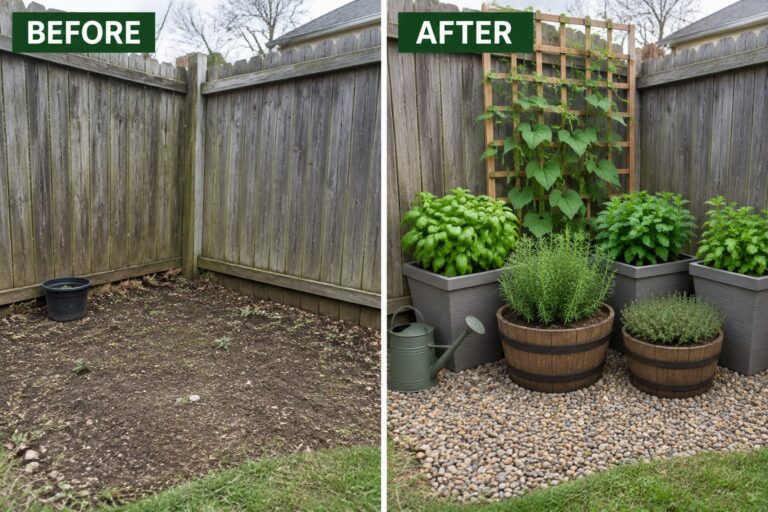
Add Planting Structure With Containers And A Trellis

A bare dirt corner next to a fence usually feels unfinished and hard to use. Placing a freestanding trellis at the back and grouping several large pots in front of it turns the same spot into a clear planting area that feels intentional.
This works especially well for rentals because nothing is fixed in place. Lay gravel first to cover the soil and keep things tidy, then arrange the pots so the tallest plants sit toward the back. The setup stays easy to rearrange or take with you when you move.
Turn A Bare Patio Into A Seating Area

A bare concrete slab often stays empty because it feels cold and unfinished. Laying deck tiles over the surface gives the area a warmer look and creates a clear spot for a table and chairs without any permanent work.
This idea works well for rentals since the tiles can be lifted later. Place a rug under the seating to define the zone, keep the furniture scale modest so the space still feels open, and add simple lighting if you use the patio after dark.
Define A Backyard Fire Pit Area With Artificial Turf
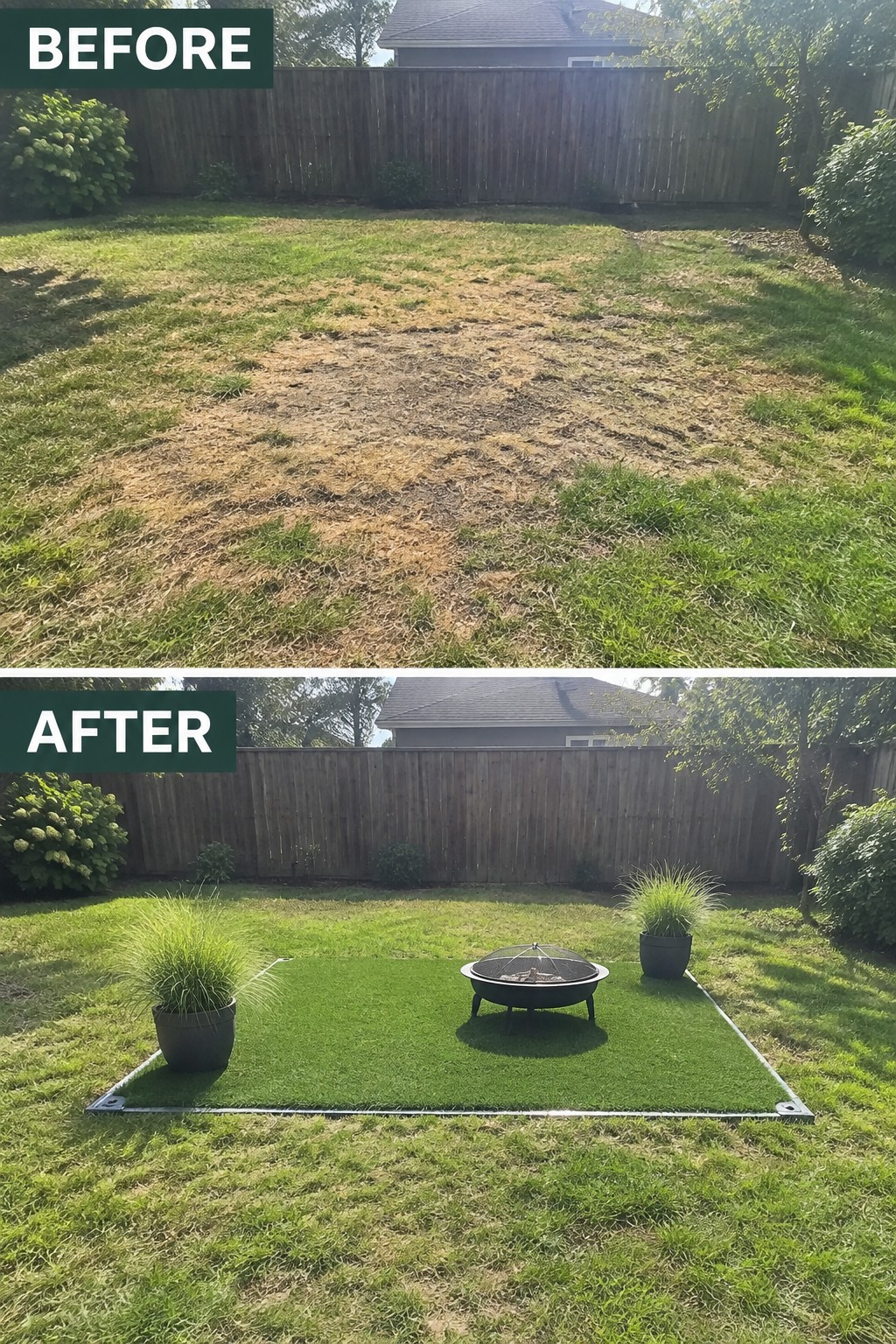
A patchy lawn often leaves the whole yard feeling unfinished. Laying down a bordered rectangle of artificial turf creates a flat, usable spot for a fire pit without reseeding or major grading.
This approach suits rentals because the turf stays removable and needs no permanent edging. Center the fire pit on the turf and add two large planters at the corners to keep the space balanced. Leave the rest of the yard in simple grass so the new zone reads as a clear gathering area rather than scattered decor.
Define A Narrow Side Yard With Gravel And Pots

A narrow side yard often turns into a muddy, overgrown strip that no one wants to walk through. Laying down gravel with simple edging creates a clear path, while a row of potted shrubs adds structure and greenery without digging into the ground. The change turns a forgotten space into something functional and easy to maintain.
This approach works especially well for rentals because everything can be removed later. Focus first on clearing weeds and leveling the ground, then add landscape fabric before the gravel so it stays in place. Potted plants let you adjust the look each season without permanent planting.
Frame A Patio Seating Area With Large Planters

Large planters filled with tall plants can quickly turn an empty concrete slab into a defined seating spot. In this case, two big containers placed on either side of a simple bench create natural boundaries and soften the fence line without any construction. The result feels more like a small outdoor room than just a leftover patch of patio.
This approach works especially well for rentals because the planters stay movable and nothing gets attached to the ground or walls. Set the containers to mark the edges of your seating zone, keep the center clear for easy movement, and add a couple of weatherproof lights if you want to use the space after dark. Stick with one or two types of plants so the look stays simple rather than crowded.
Add Color To A Plain Fence With Hanging Planters

A bare fence often leaves a yard feeling unfinished. Hanging planters filled with flowers turn that empty surface into a vertical garden without any drilling or permanent hardware. The simple fabric pots hang from chains and can be rearranged or removed whenever needed.
This approach works especially well for renters who want garden color but cannot alter the structure. Start with a few planters in a balanced layout, choose plants that match your sun exposure, and keep the arrangement from getting too crowded so the fence still feels open.
Turn A Bare Deck Into A Seating Area

A plain deck often feels like empty floor space with nowhere to sit. Adding a few large planters on wheels and a string of lights along the railing gives the area a clear purpose and makes it feel like a small outdoor room instead of just a walkway.
This setup works well for renters because everything stays movable. Roll the planters into place to mark off a seating zone, add one or two simple chairs, and run the lights only where you will actually use them at night. Leave enough open floor so the space still feels comfortable to walk through.
Add A Shade Sail To Make A Patio Usable

A patio in full sun often stays empty during the day because the heat makes it uncomfortable. Adding a shade sail over the seating area solves this quickly. The before photo shows an open space with furniture sitting directly in the sun, while the after shows a simple fabric cover stretched above the sofa and table to create usable shade.
This approach works well for rentals since the sail mounts to poles or the house with removable hardware and comes down when needed. Position it at a slight angle so water drains off, and keep the color neutral so it does not fight with your existing furniture. It is one of the easiest ways to make an outdoor seating area comfortable without any permanent construction.
Turn A Bare Balcony Into A Seating Area

An empty balcony often sits unused because it feels like just another slab of concrete. The change here comes from adding a rug to mark the floor and placing a small table with chairs so the space has a clear purpose. Everything stays portable and can come down when the lease ends.
This approach works best on small rental balconies where you want a spot to sit without building anything permanent. Keep the furniture scale modest so there is still room to walk around the table. Weather-safe pieces and a simple rug are usually enough to make the area feel finished.
Create A Defined Outdoor Seating Area With Gravel

A bare patch of grass can feel like wasted space until you give it a clear purpose. Laying down a simple gravel base turns the area into a usable spot for a fire pit and chairs. The change from open lawn to a contained circle makes the space feel intentional and ready for evenings outside without any digging or construction.
This approach works especially well in rentals because the gravel sits on top of the existing ground and can be removed later. Keep the furniture scale modest so there is still room to walk around the circle. Add a few potted plants at the edges to soften the look while keeping everything movable.
Define A Narrow Side Yard With Raised Planters
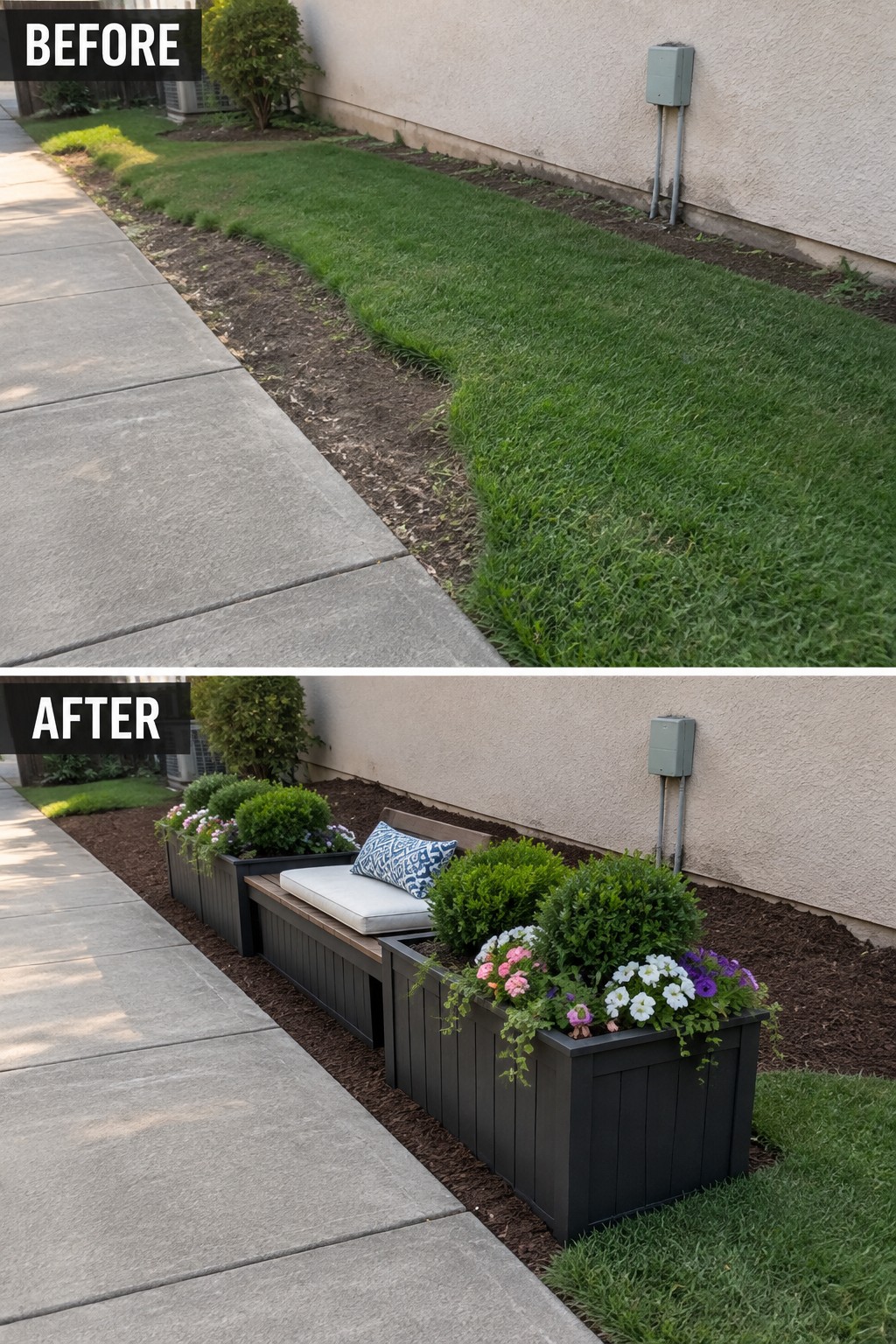
A long strip of grass next to the house often feels like wasted space because it has no clear edges or purpose. Adding a row of matching raised planters gives the area structure right away. The dark boxes create a clean border, hold the soil and plants neatly, and leave the lawn untouched.
This approach works especially well for rentals since the planters can move with you. Place them in a straight line to follow the house wall, then tuck in a simple bench between two of them if you want a place to sit. Choose sturdy plastic or composite boxes that handle weather, and keep the planting simple with a few shrubs and flowers rather than filling every inch.
Hang A Removable Panel On A Plain Fence
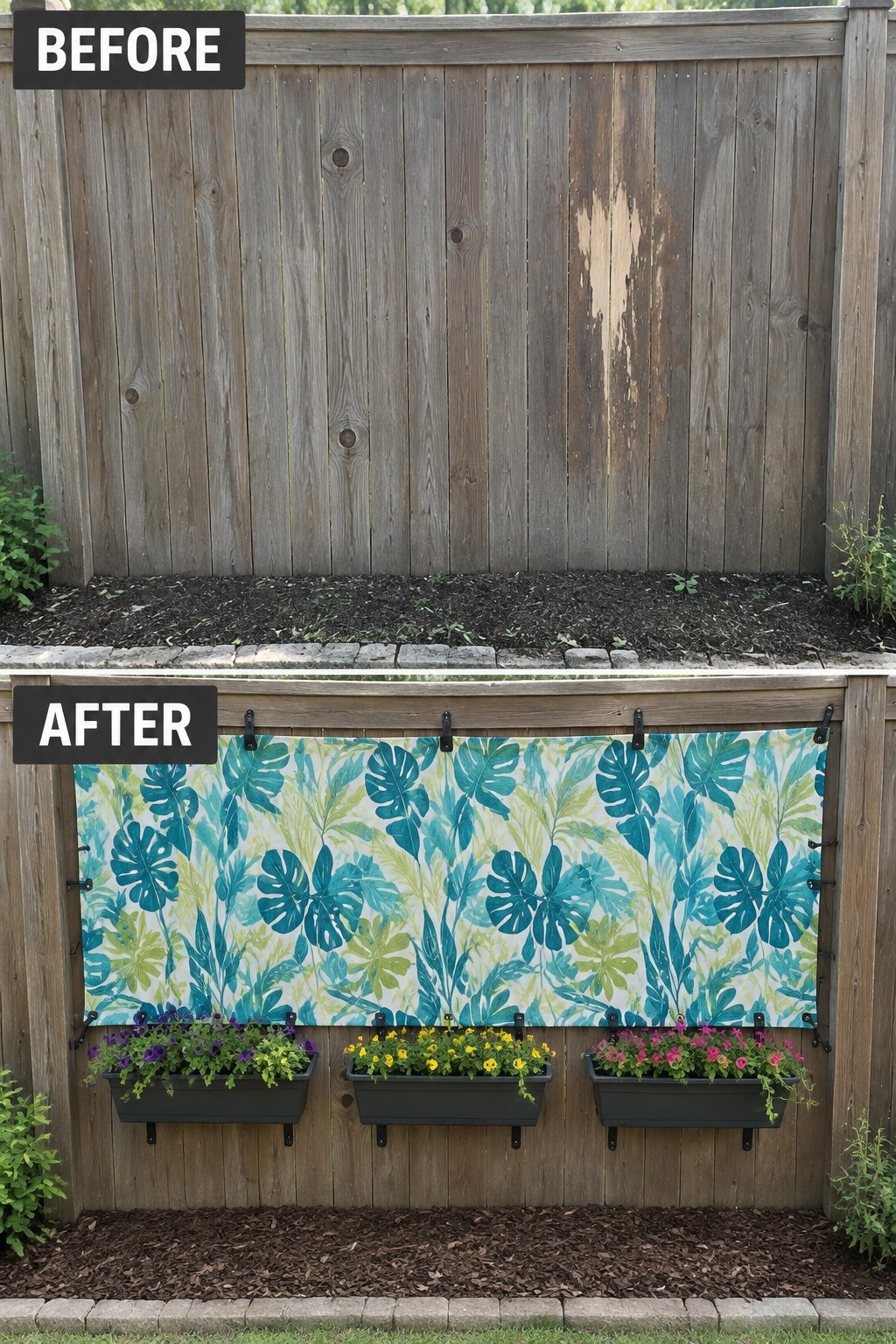
A plain fence and bare mulch strip can feel unfinished, especially in a rental where you cannot paint or build. Hanging a fabric panel across the fence and setting planters in front gives the area structure and color right away. The panel covers the weathered wood while the planters add height and flowers without digging or attaching anything permanent.
This approach works well along side yards or back fences where you want a quick focal point. Use outdoor fabric and simple clips or ties so everything comes down easily when you move. Stick to one main panel and a few matching planters rather than filling the whole fence, which keeps the look clean and the cost low.
Add A Water Feature To A Plain Patio Corner

A small water fountain can quickly turn an empty paved corner into something that feels more finished. In the before photo the space held only one lonely pot against stained pavers. Placing the fountain in the center with a few pots grouped around it and pebbles spread underneath gives the corner a clear purpose without any construction.
This idea works especially well for renters because the fountain, pots, and pebbles can all be moved when it is time to leave. Choose a fountain that runs on solar power or a simple plug so you avoid running cords across walkways. Keep the plant choices simple and repeat a few colors so the grouping stays balanced instead of crowded.
Add Planters To Frame Your Entry Steps
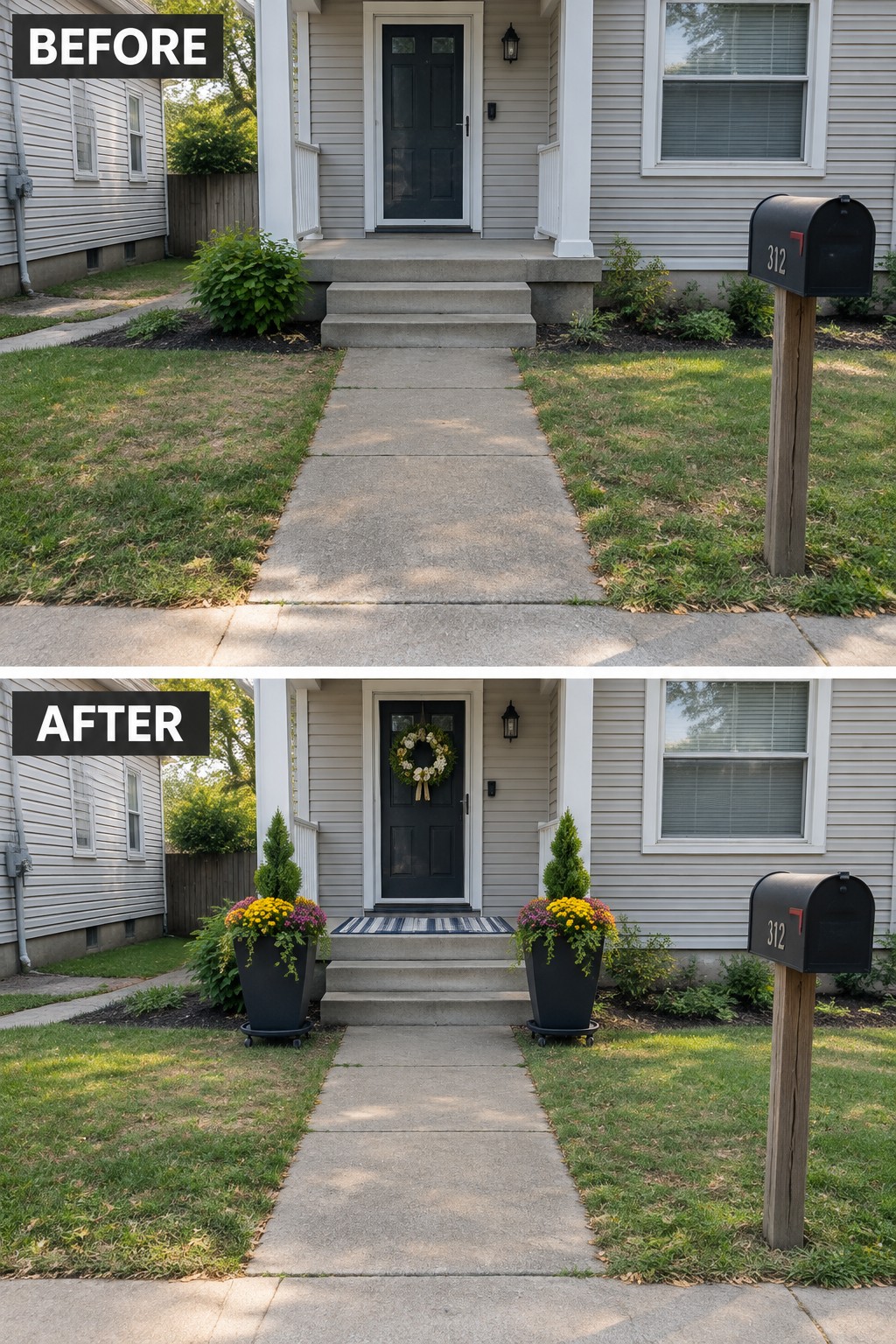
One easy way to improve a plain front entry is by placing a pair of large planters on either side of the steps. The before photo shows bare concrete with grass running right up to the walkway, which makes the house feel flat and unfinished. After the change, the planters with flowers and small shrubs create a simple border that draws the eye toward the door and makes the whole area feel more put together.
This idea works especially well for rentals since the planters stay movable and do not require digging. Keep the pots in a dark neutral color so they blend with most siding, and choose plants that stay neat without constant trimming. Two matching planters are usually enough. Anything more can start to crowd the walkway.
Add Raised Garden Beds To Organize A Plain Yard

An empty lawn often feels like it is missing something, even when the grass looks fine. Adding a few raised beds gives the space clear purpose and turns open ground into a place where plants can actually grow. In this case, the beds sit right on the lawn, which keeps things simple and avoids any digging that might not suit a rental.
This idea works well in backyards that get decent sun but lack any existing garden layout. Start with two or three beds in a size that fits your space, use untreated cedar or similar wood that holds up outdoors, and fill them with a mix of vegetables and flowers. The beds stay movable if needed, and they keep everything neat without permanent changes to the yard itself.
Turn An Empty Patio Into A Cooking And Dining Area

A bare concrete slab in front of the door does not give you much reason to spend time outside. Adding a rolling grill cart on one side and a compact folding table with chairs on the other turns the same space into two simple zones that actually get used.
This works especially well on rental patios because everything can roll or fold away when you move. Keep the cart stocked with basic tools and the table small enough that it does not block the walkway. The setup stays practical as long as you leave clear paths between the door, the grill, and the seating.
Turn An Empty Backyard Into A Seating Area
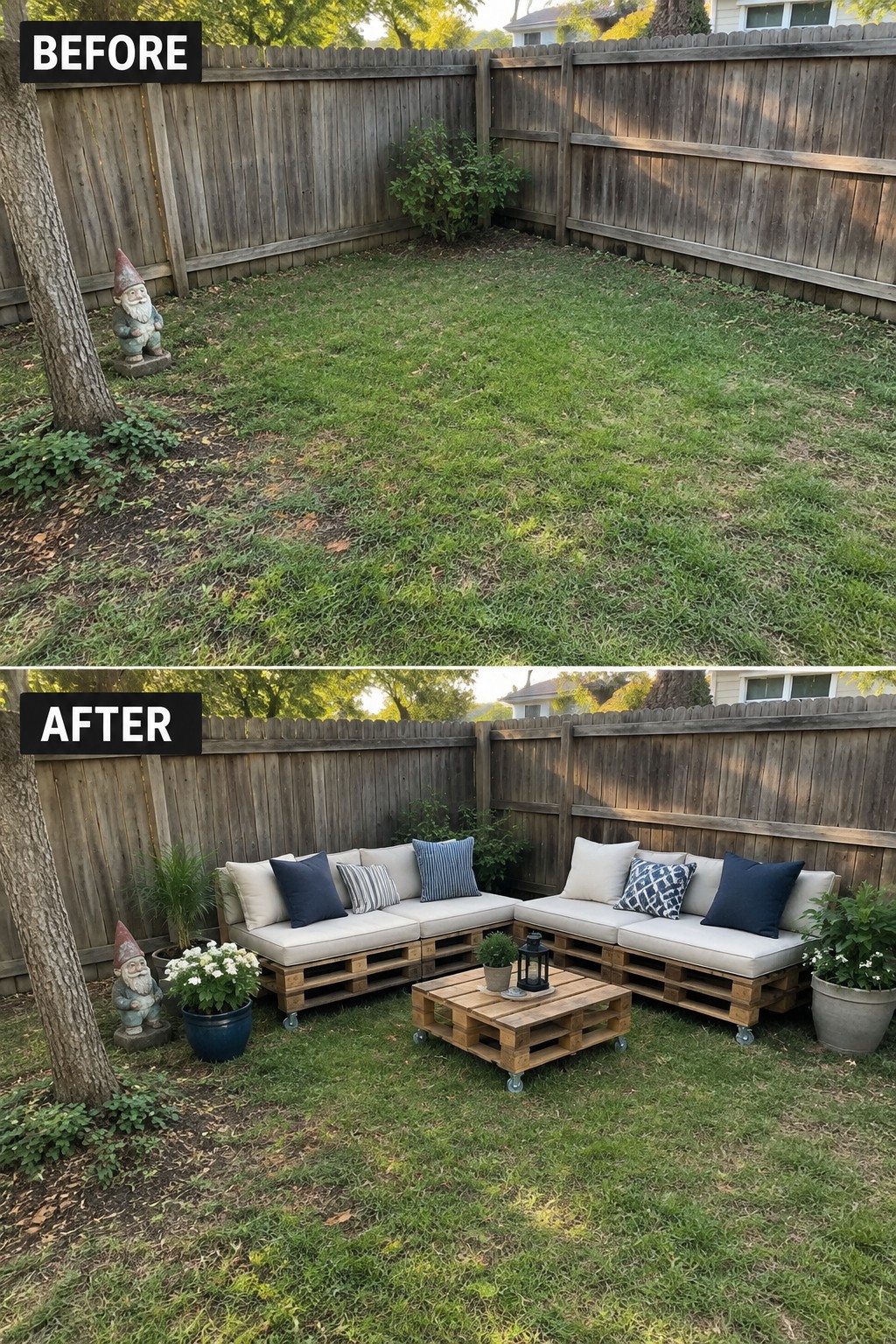
An empty stretch of grass can feel like wasted space until you give it a clear purpose. In this case, simple pallet seating arranged in an L shape instantly turned the open yard into a spot where people actually want to sit. The low furniture keeps the view open while still defining the area without any digging or building.
This approach works well in rentals because everything can roll away or come apart later. Start with a few pallets on casters, add basic cushions, and keep the layout loose enough to walk around. It suits small to medium yards where you want a place to gather without committing to a full patio.
Add Structure To An Overgrown Garden Bed
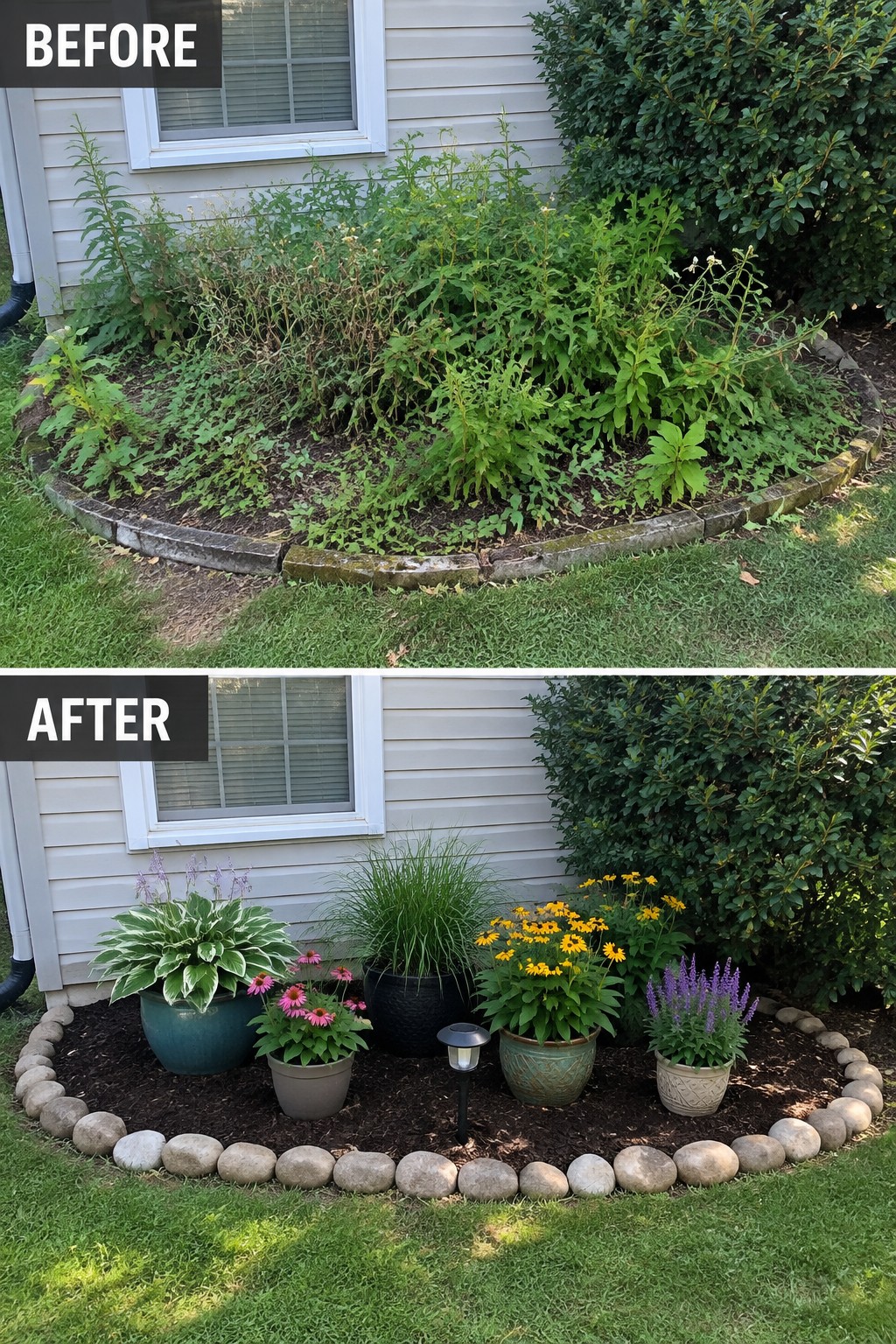
Clearing the bed first makes the biggest difference. The before photo shows a mix of tall weeds and sprawling plants with no clear shape, while the after shows the same space cleaned up with mulch, a loose stone border, and a few well-placed pots that give the area order.
This works especially well for rentals because nothing is dug in or attached. Use stones or bricks you can pick up later, group containers of different sizes, and keep the planting simple with two or three repeating colors. The result feels intentional without requiring permanent changes to the yard.
Create A Deck-Tile Patio Seating Zone

A cracked concrete slab feels like wasted space until you cover it with interlocking deck tiles and add a simple sectional. The wood surface softens the look and makes the area feel like a real room instead of a leftover corner.
This idea suits rentals or any spot where you cannot change the existing floor. Lay the tiles first to define the seating zone, then bring in weatherproof furniture sized for the space. Leave enough room to walk around the pieces so the area stays practical instead of crowded.
Add Simple Shelves To A Fence For Extra Planting Space

A plain fence often leaves a yard feeling unfinished, especially in rentals where you cannot paint or build permanent structures. Adding a few wooden shelves with basic brackets gives you a place to set pots, herbs, and small lights without touching the fence itself. The change turns an empty vertical surface into a usable garden spot that feels more intentional and cared for.
This idea works best in small yards or along side fences where ground space is limited. Use brackets that screw in lightly so you can remove everything later, and stick to one or two shelf heights to keep the look balanced. Mix a few upright pots with one trailing plant, and add a lantern or two only where you actually sit or walk at night.
Frequently Asked Questions
Q: How can I add shade without putting up a permanent structure? A: Set up a large umbrella in a heavy base that you can move around. String some shade cloth between two tall pots if you need more coverage. Take it down at the end of the season and store it away.
Q: Will my landlord notice these temporary changes? A: Use items that sit on the ground or attach with clips. Keep the space tidy and nothing will stand out.
Q: What if I want to grow vegetables but cannot dig into the soil? A: Fill some big containers with good dirt and plant right in those. Place them on a sunny part of the patio or deck. Harvest your veggies and empty the pots when you leave.
