

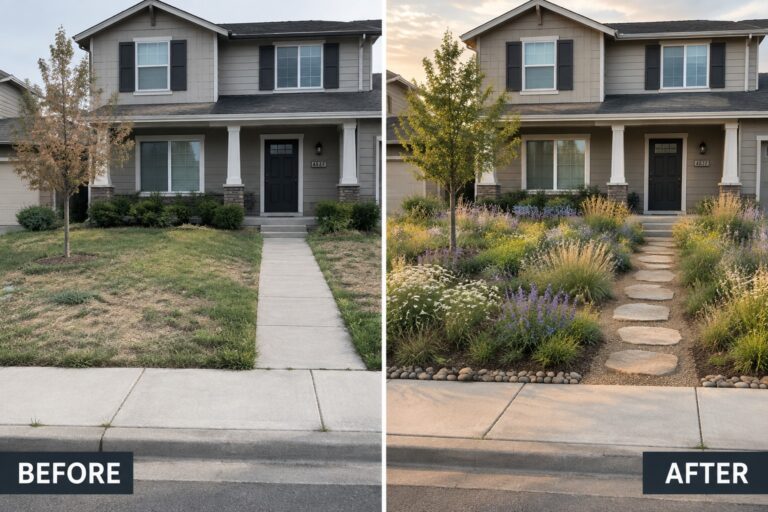
I used to spend too much time hauling hoses and replacing plants that never took hold in the dry stretches of summer.
Native species and tougher drought tolerant options often fill in with less fuss once they get established.
I like to start by clearing a small section and testing a few plants there before deciding what works across the rest of the yard.
It helps to focus on structure first.
Over a couple of seasons those choices tend to create a yard that feels more put together without constant attention.
Turn An Overgrown Lawn Into Defined Garden Beds
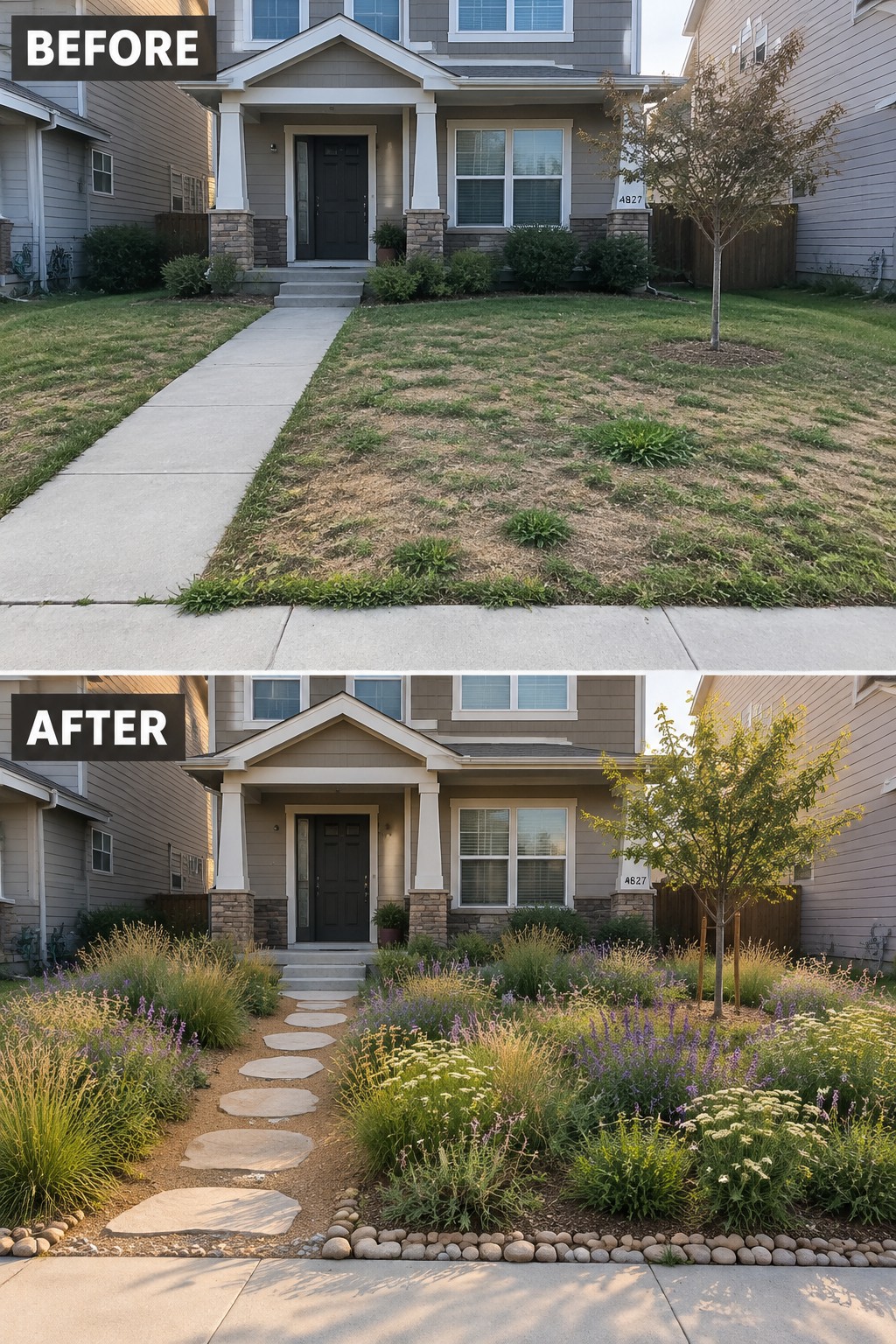
The front yard in the before photo had a tired, patchy lawn that was mostly weeds and bare dirt. The after shows how replacing that grass with mulched beds, low drought-tolerant plants, and a stepping stone path gives the space clear shape and cuts down on mowing and watering.
This approach works well on small to medium front yards where the lawn never looked great anyway. Clear the grass first, lay out a simple path with pavers or stones, then fill the beds with a mix of grasses, flowering perennials, and ground cover that handles dry conditions. Keep the beds a manageable width so you can reach everything without stepping on the plants.
Add Gravel And Container Plants To Define A Bare Yard
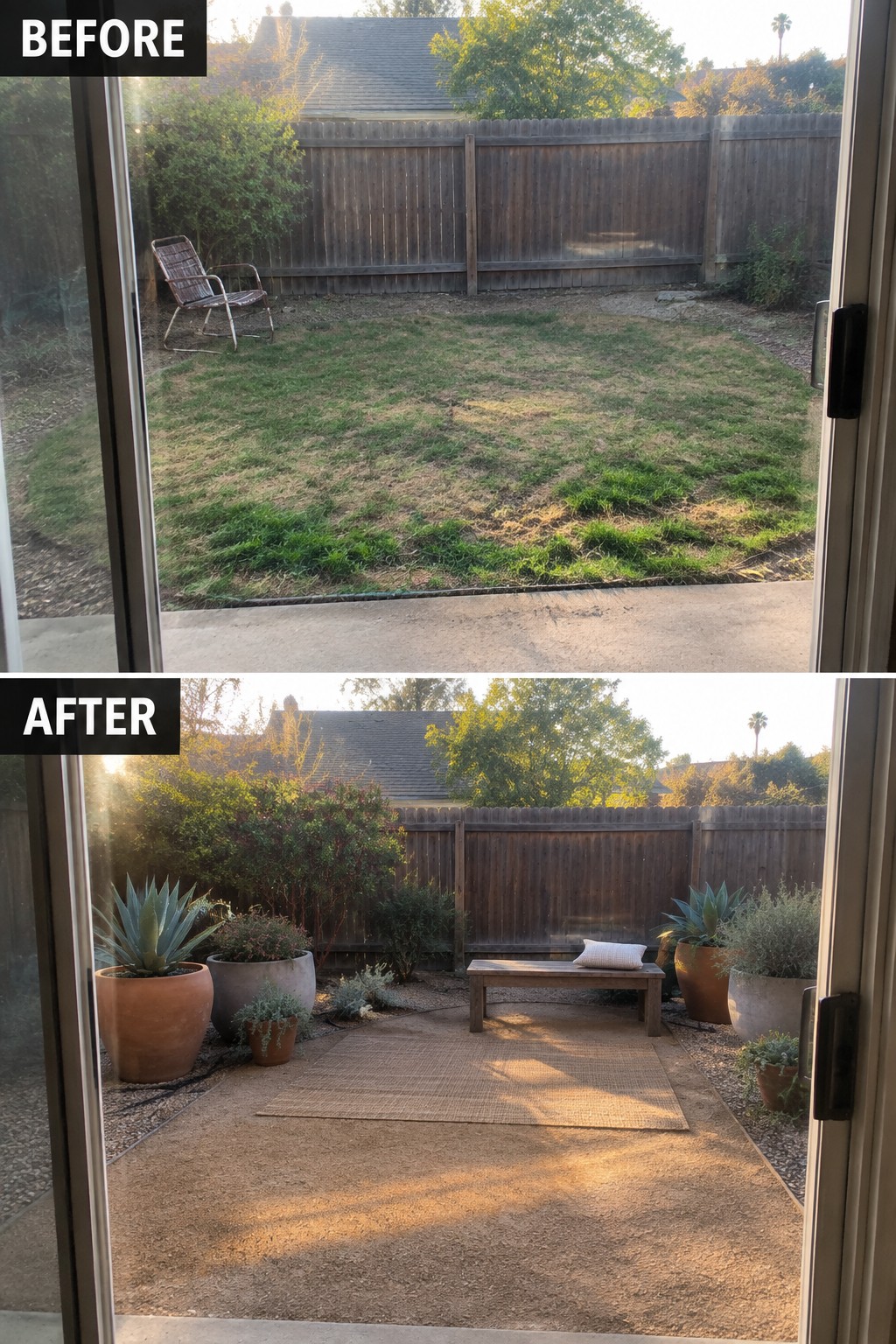
Clearing out patchy grass and putting down gravel gives the whole space a clean, usable surface right away. The pots then add height and structure without needing to dig new beds or fight with poor soil.
This approach works especially well in dry areas where keeping a lawn green takes too much water. Lay landscape fabric first, spread the gravel, and group a few large pots with drought-tolerant plants. Keep the layout simple so there is still room to walk and the area does not feel crowded.
Turn A Narrow Strip Into A Low-Maintenance Border
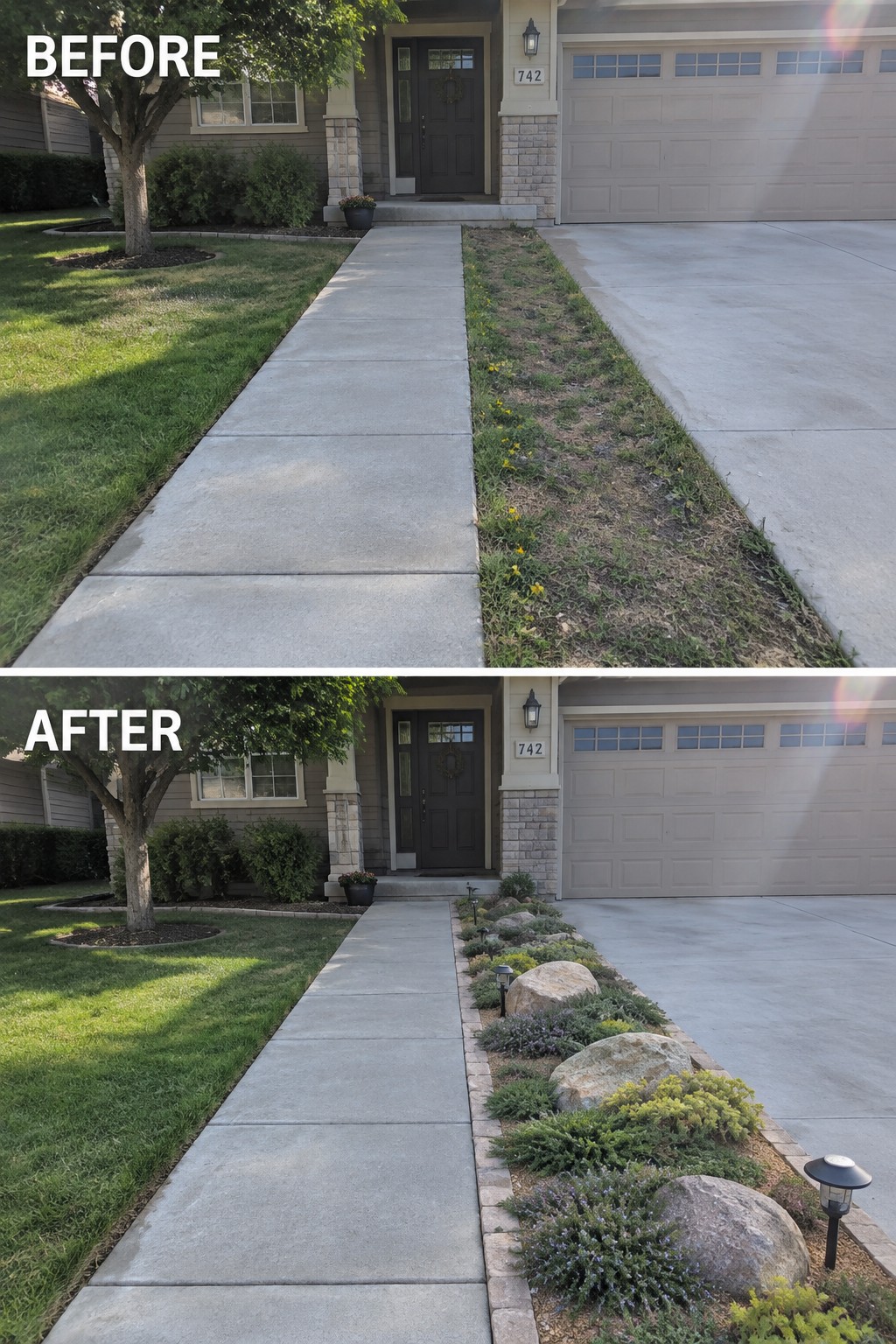
That thin strip of grass between the front walk and the driveway is usually awkward to mow and quick to turn weedy. Clearing it out and replacing it with a simple mulched bed, a few large rocks, and low shrubs gives the space a finished look without constant upkeep.
This idea suits any narrow side area where grass fights to survive. Lay a clean edge first, spread mulch to block weeds, and stick to compact plants that need little water. The rocks add weight and keep the bed from looking flat while cutting down on trimming.
Add Structure To An Overgrown Slope

An overgrown slope often stays bare because it is hard to walk across and harder to keep planted. Adding stone terraces and steps turns the same hill into a series of flat beds that hold soil and make planting simple.
This idea suits any yard with a noticeable grade where you want low maintenance. Build the terraces first so the beds stay put, then fill them with native grasses and drought-tolerant perennials that settle in without constant watering or mowing.
Turn Bare Concrete Into A Container Garden

A plain concrete slab often leaves an outdoor space feeling empty and hard. Covering the surface with gravel and filling it with large containers of drought-tolerant plants softens the area and creates a garden feel without major construction or new hardscaping.
This idea suits small patios, side yards, or rental spaces where permanent beds are not possible. Choose a mix of large and small pots in similar tones, group them by height, and use gravel to keep the ground clean and help with drainage. Focus on native or low-water plants so the space stays easy to maintain over time.
Define Foundation Beds With Layered Planting

Many homes end up with foundation shrubs that grow too large and lose their shape. Clearing the old growth and replacing it with smaller, grouped plants immediately makes the area look intentional instead of neglected. The after photo shows how a few clusters of different heights and bloom times can fill the same space without the wild sprawl.
This approach works well along any house wall where you want lower maintenance. Choose native or drought-tolerant perennials and shrubs that stay in scale with your windows, then add a simple mulch layer and a clean lawn edge. The result stays tidy with far less trimming and watering over time.
Add Defined Planting Beds To A Neglected Front Yard
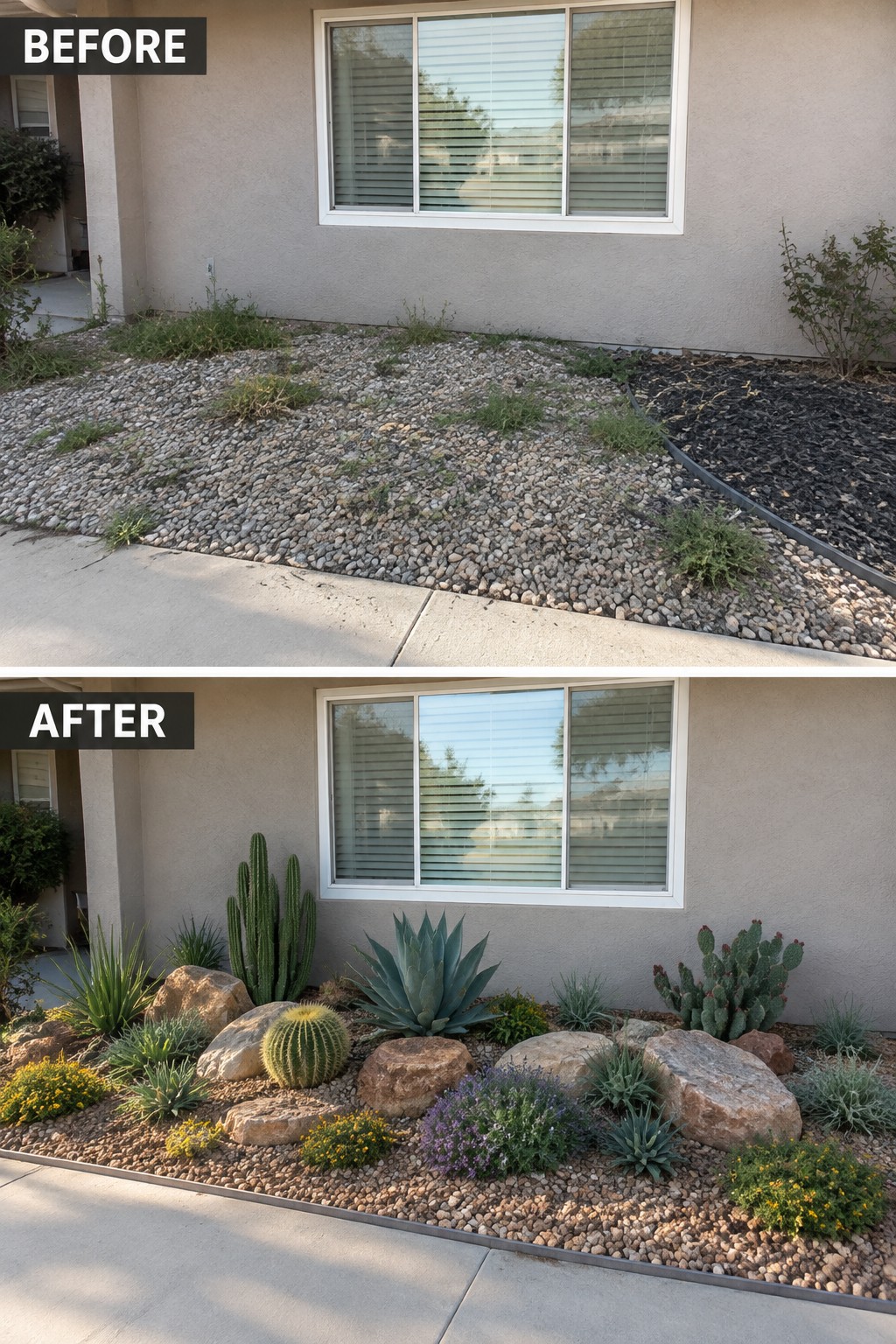
A weedy gravel strip along the front of a house often looks messy because there is no clear edge or planting plan. Adding simple garden beds with drought-tolerant plants and a few large rocks gives the space structure without a lot of ongoing work. The after photo shows how a few agaves, cacti, and low shrubs planted in clusters turn the same area into something that feels intentional.
This approach works well on sunny front yards or side strips where grass is hard to keep. Start by clearing the weeds and laying down a clean gravel base, then group plants by water needs and use rocks to hold the beds in place. It keeps maintenance low while making the house look cared for from the street.
Define Planting Beds In A Neglected Yard Area
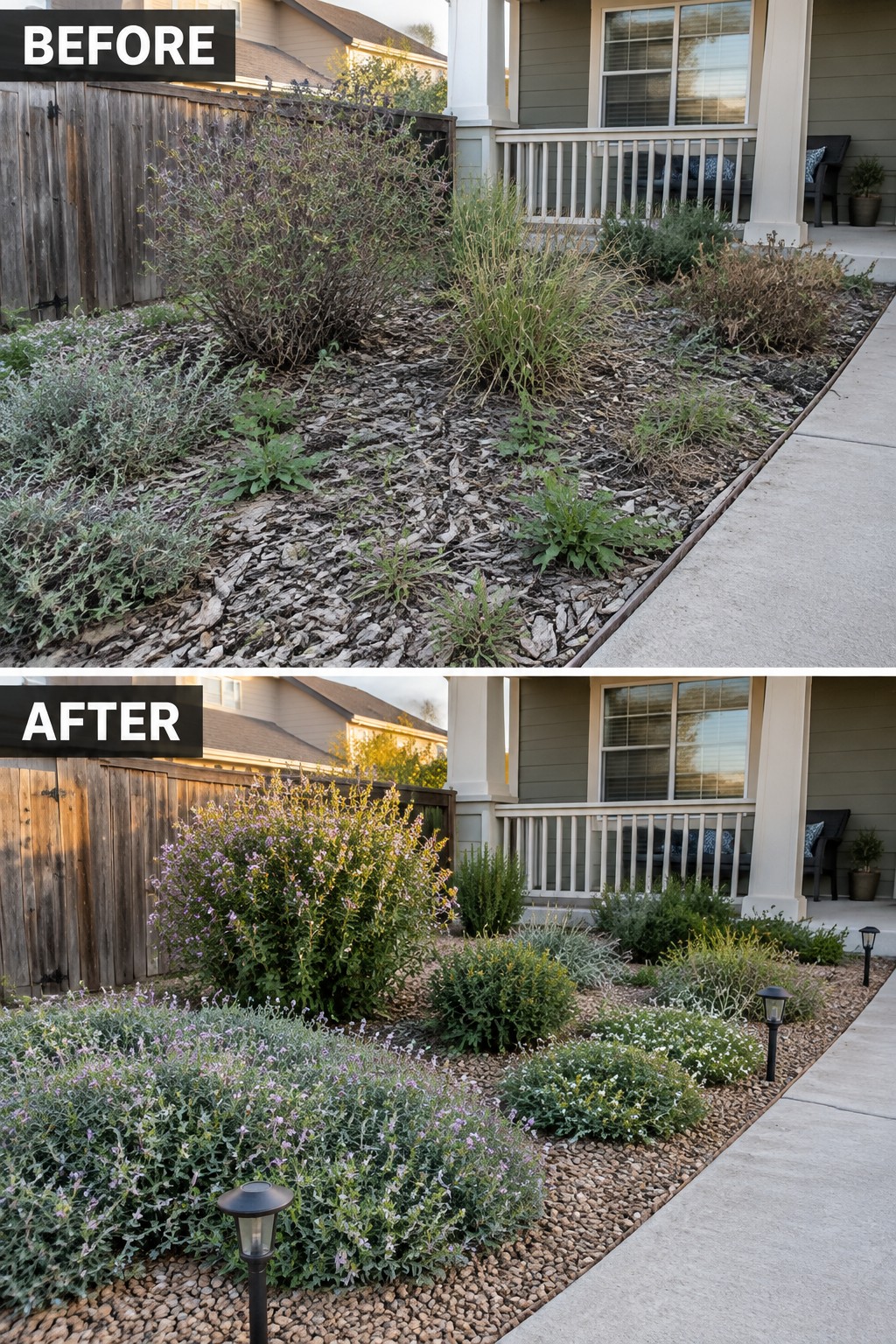
The side yard here went from a patchy mix of weeds, tall grasses, and scattered wood chips to a series of clear, low beds filled with shrubs and groundcovers. The main change was adding structure first. Once the beds were outlined and mulched, the plants could settle in without competing with everything else.
This approach works well along house foundations or fence lines where space is narrow. Start by clearing the worst of the overgrowth, then shape a few simple beds with gravel or mulch to keep edges tidy. Drought-tolerant plants handle the rest with minimal watering once established.
Define Narrow Side Strips With Gravel And Simple Planting
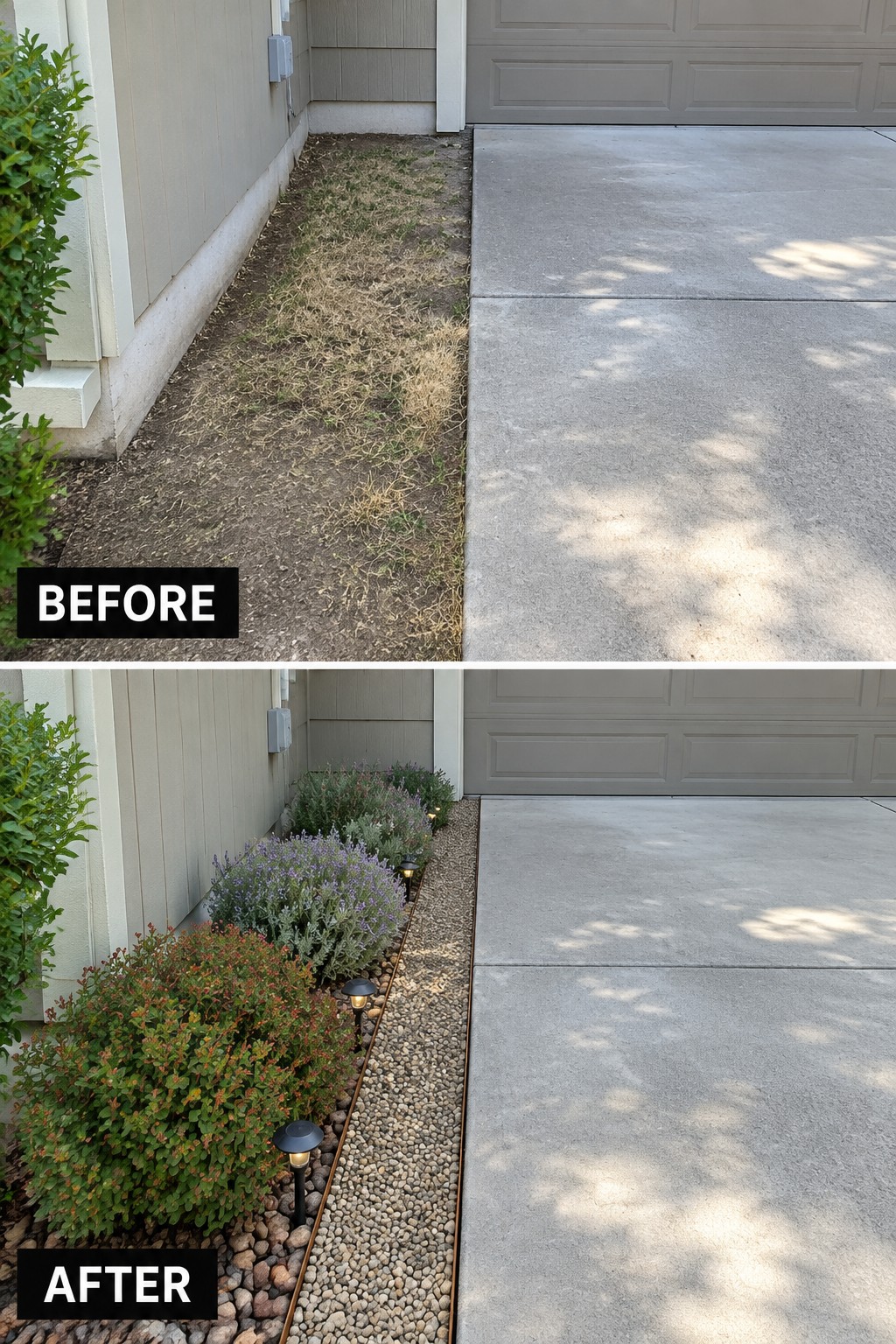
A bare dirt strip next to the house often ends up ignored because it feels too small or awkward to do much with. Adding a gravel bed with a clear edge and a few drought-tolerant plants turns that leftover space into something that looks finished and stays neat with little work.
This approach suits homes with long, narrow areas along driveways or foundations where grass is hard to maintain. Clear the weeds first, add a simple border to hold the gravel in place, and stick to low-water plants that fill in over time. The lights are optional but help mark the path at night without adding much cost.
Refresh A Front Entry With Drought-Tolerant Container Plants
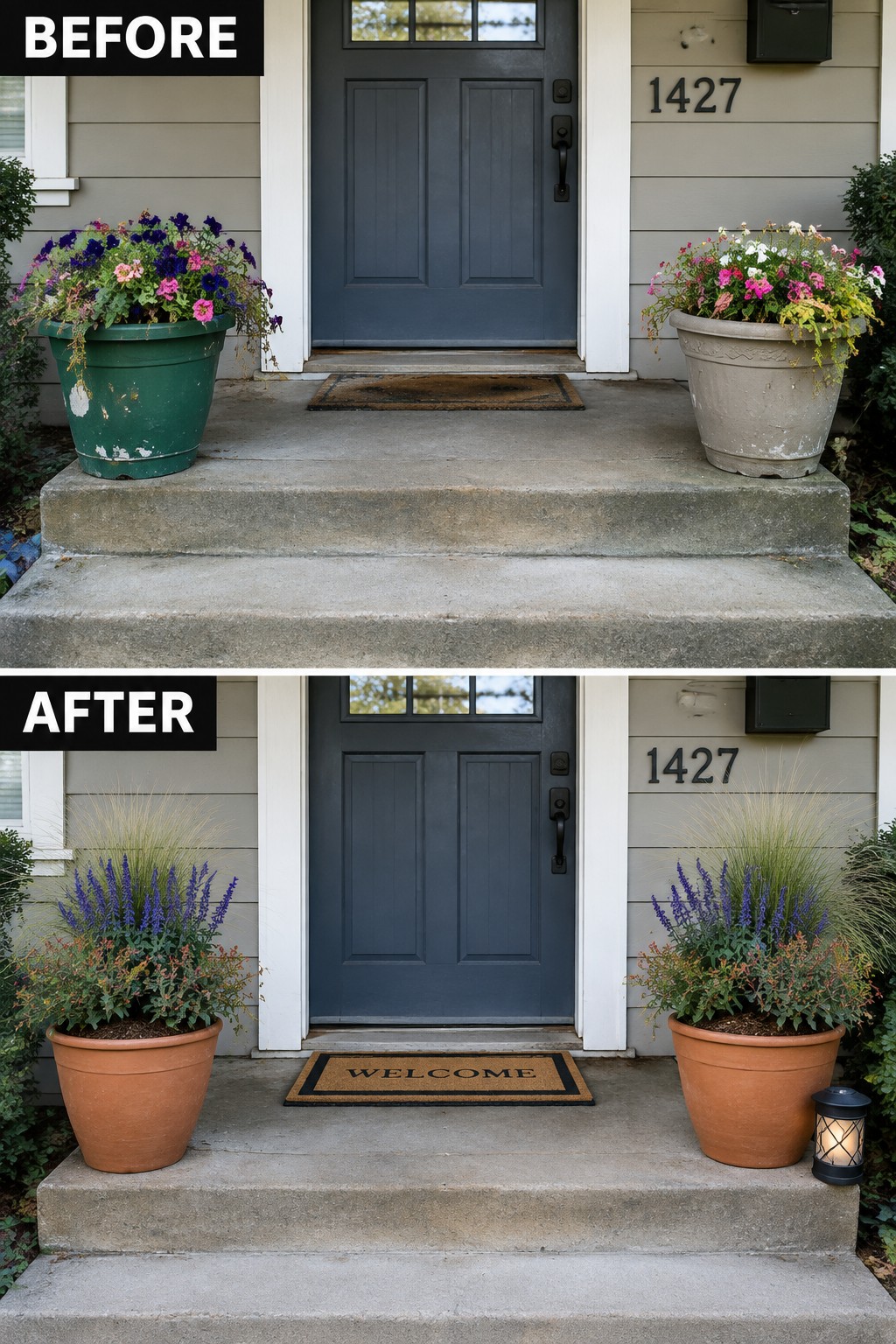
Swapping out old, faded pots for simple terracotta containers makes a noticeable difference at the front door. The new setup uses plants that stay neat with less water and fewer replacements, while the welcome mat adds a clear signal that the entry is cared for.
This approach works well on concrete steps or small porches where in-ground beds are not an option. Stick to two or three matching pots, choose plants suited to your sun exposure, and keep the color palette simple so the door remains the main focus.
Turn A Bare Lawn Into Native Plant Beds
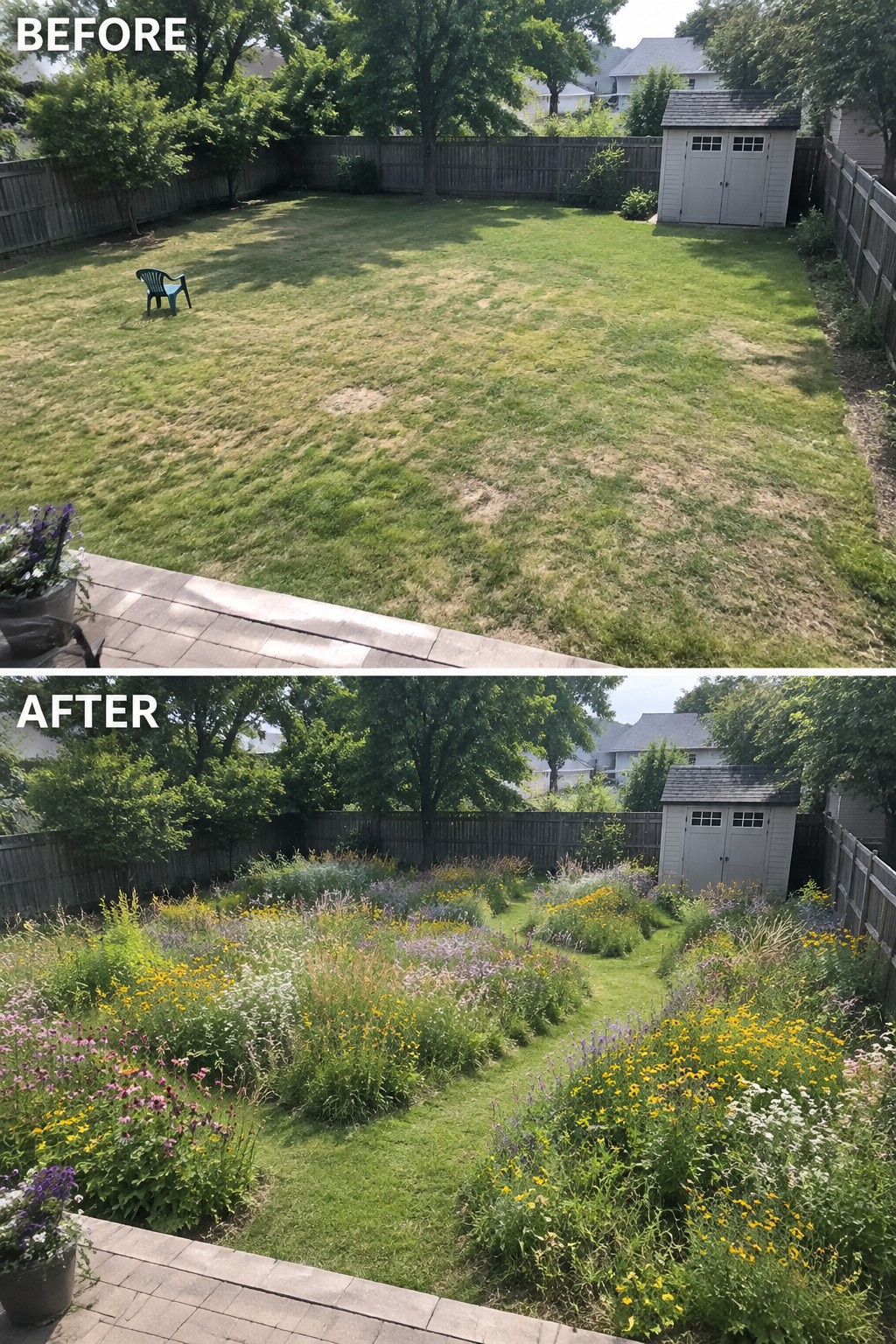
A flat, empty lawn can feel like wasted space once you realize how little it gives back. In this yard the simple step of carving out defined beds and filling them with native flowers and grasses turned the same area into something that looks full and cared for without constant mowing or watering.
The idea works best in yards that already have decent sun and soil. Start by outlining beds with gentle curves, then choose a mix of perennials that bloom at different times so the garden stays interesting with little extra work. Leave a clear path through the middle so the space still feels open and easy to walk across.
Turn A Weedy Fence Line Into A Planted Border
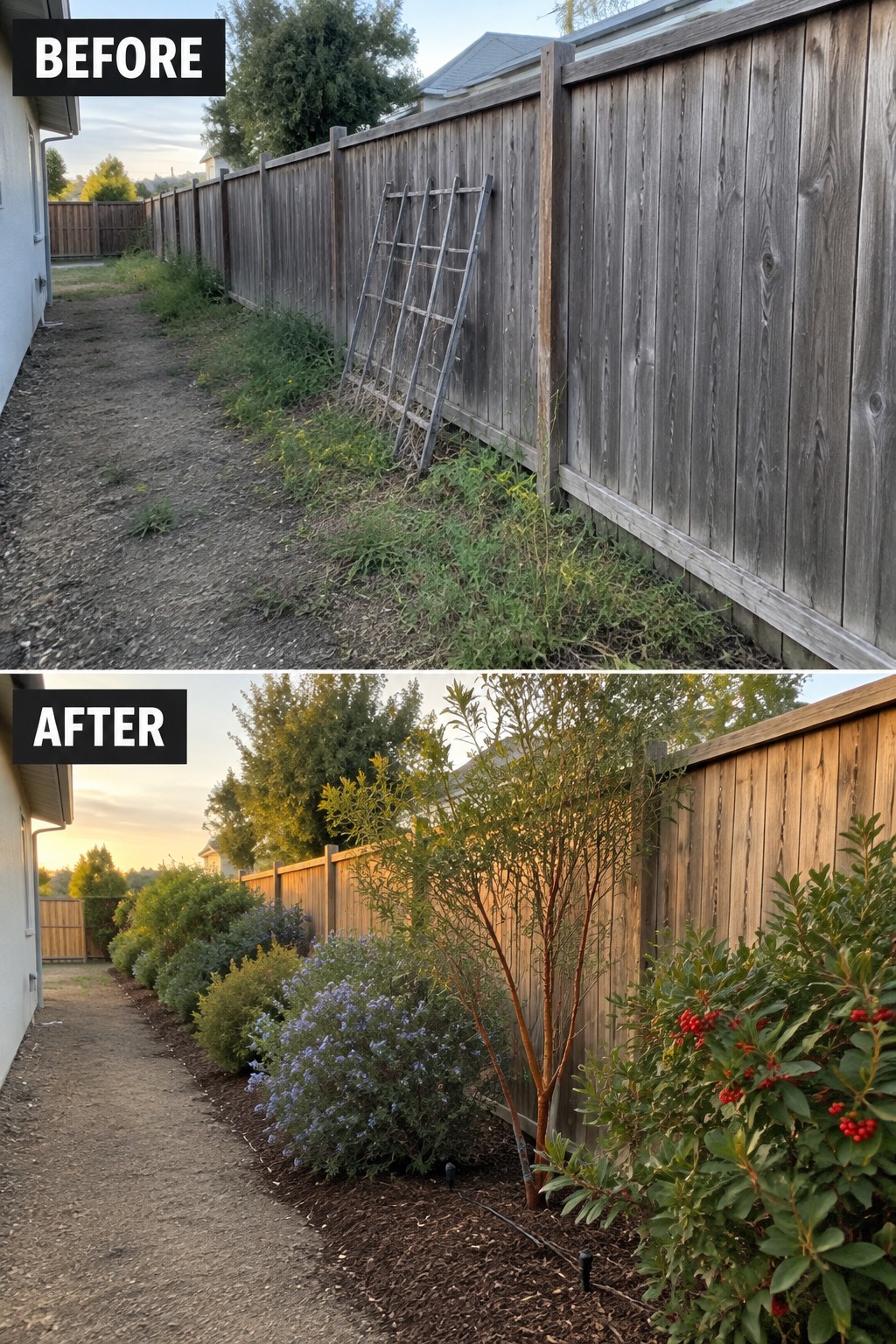
Clearing the weeds and dirt first makes the biggest difference when you want a low-maintenance border along a fence. The before image shows an empty strip that had no structure, while the after shows a simple bed edged with mulch and filled with shrubs that stay green with little water.
This idea works best in narrow side yards or along long property lines where you need something tidy but not high-maintenance. Start with a good cleanup, lay down irrigation, and choose native or drought-tolerant plants in a few heights so the bed fills in on its own over a couple of seasons.
Add Structure Along Your Patio With A Simple Planted Border
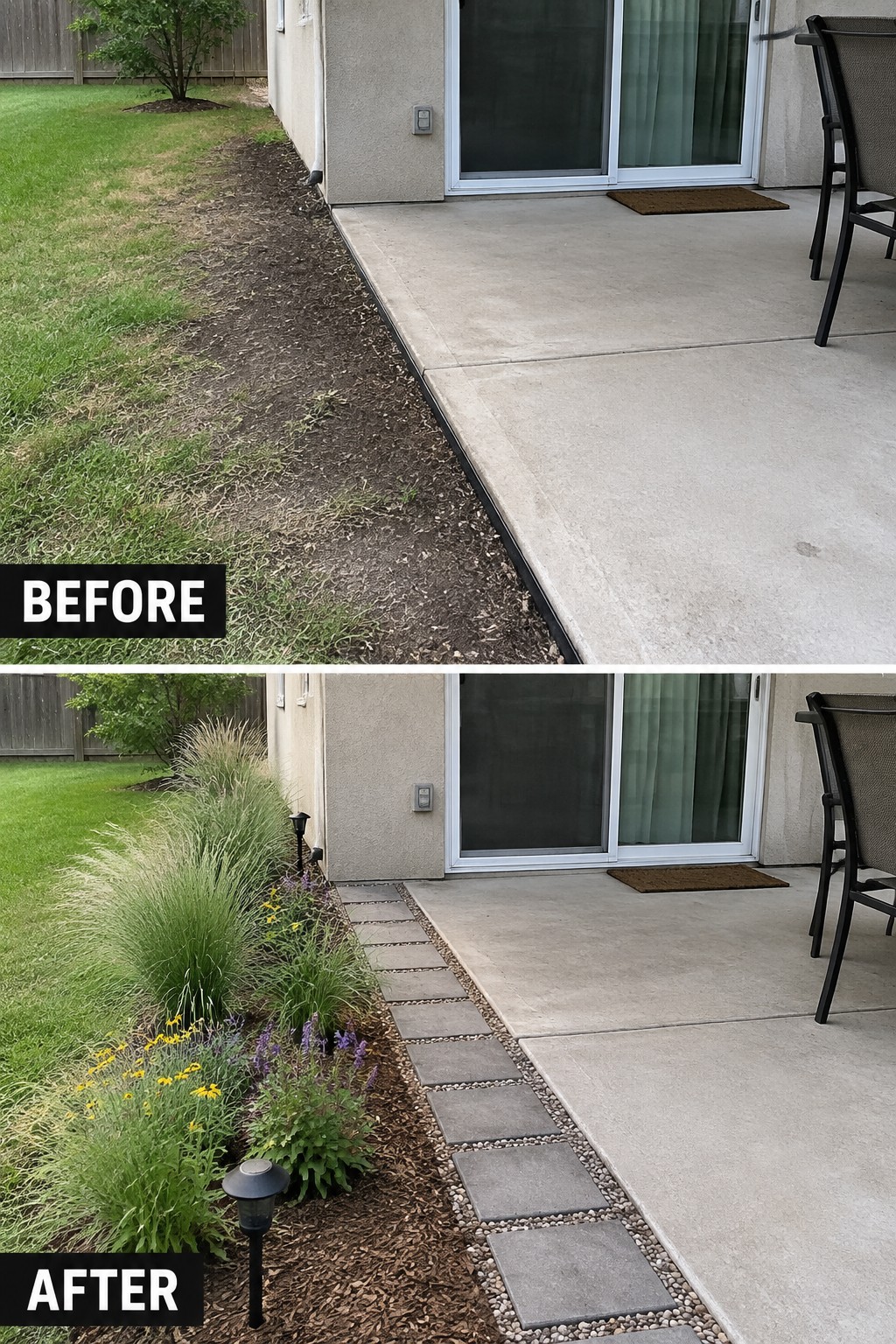
A bare dirt strip next to a concrete patio often looks messy and unfinished. Adding a line of pavers creates a clear edge, while mulch and a few plants turn the space into a defined garden bed that separates the lawn from the seating area.
This idea works best on homes where the patio runs along the house and you want low-maintenance planting without a lot of upkeep. Use stepping stones or pavers to keep the bed accessible, then fill it with native grasses and flowers that handle dry conditions once they settle in.
Define Garden Beds Along Retaining Walls
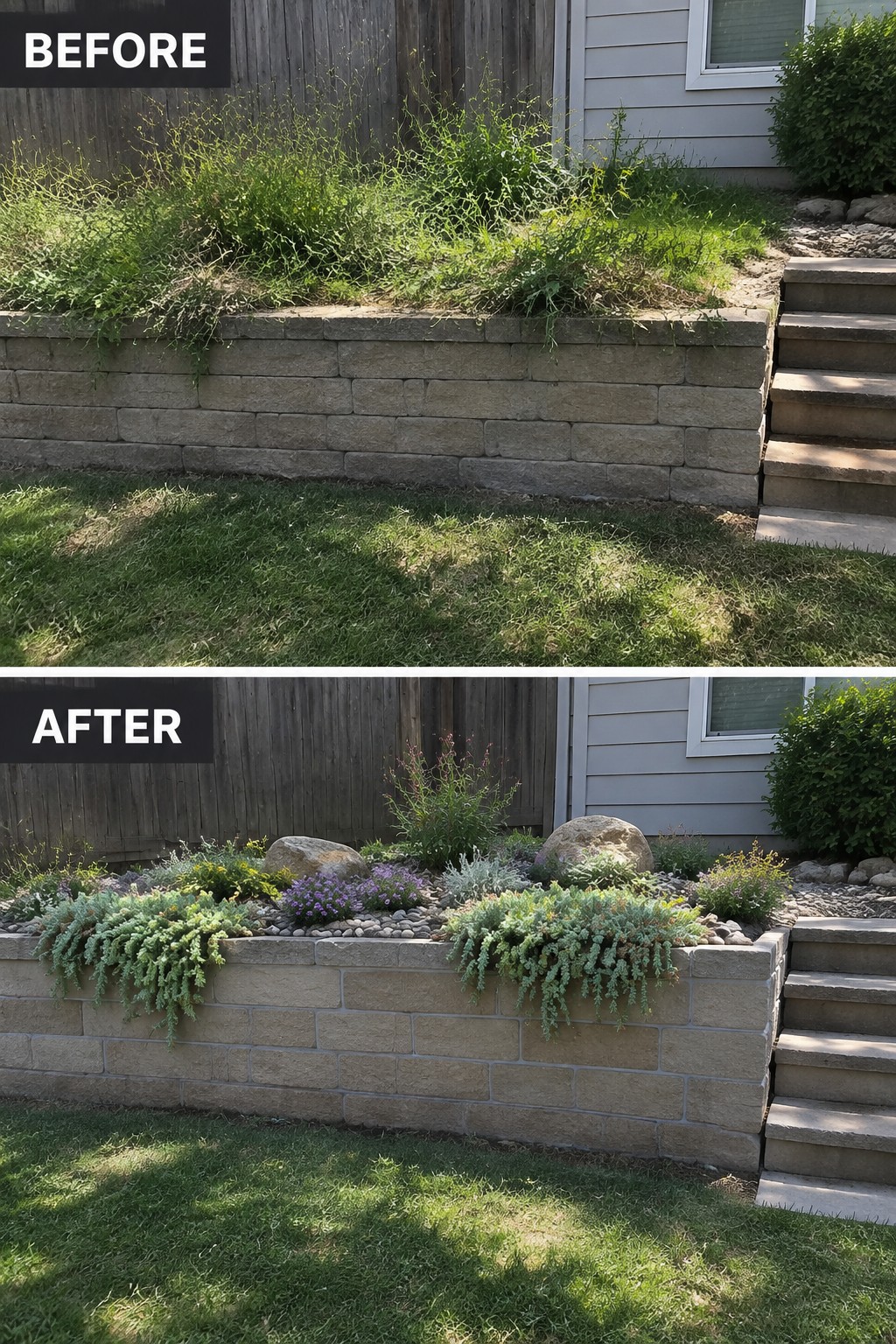
The before photo shows a retaining wall buried under tall weeds and grass that had taken over the top edge. The after shows the same wall with a clean planted bed that uses low-growing drought-tolerant plants, rocks, and gravel to create a tidy border. This change works because it replaces random overgrowth with a simple structure that stays manageable.
This approach fits homes with retaining walls or sloped yards where regular mowing is difficult. Clear the weeds first, then fill the bed with a mix of native and drought-tolerant plants that can handle the sun and dry conditions. Adding a layer of gravel or stones helps keep the area looking neat and cuts down on future weeding.
Add Structure To An Overgrown Raised Bed
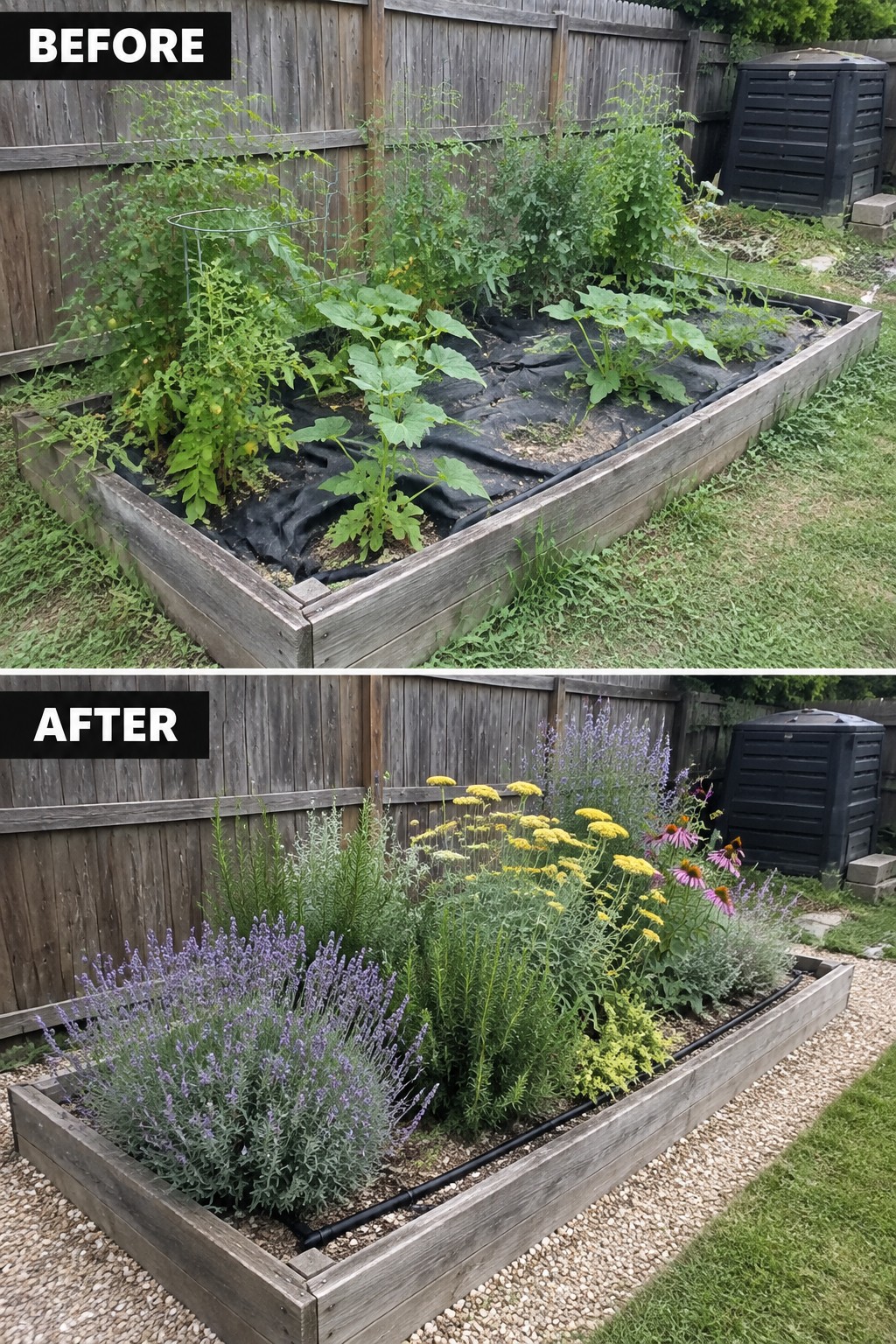
The before photo shows a raised bed that had filled in with a mix of volunteer plants, old vegetable supports, and exposed landscape fabric. Once everything was cleared and the bed was replanted in grouped sections, the same space became much easier to maintain. The new arrangement uses repeating mounds of lavender, yarrow, and coneflowers that stay neat without constant trimming.
This approach works best when you want a low-maintenance border along a fence or in a small yard. Start by removing the old growth and any damaged fabric, then choose plants that reach similar heights and bloom at different times so the bed always looks filled in. Spacing them properly at planting time prevents the need for heavy editing later.
Define Garden Beds To Refresh An Overgrown Yard
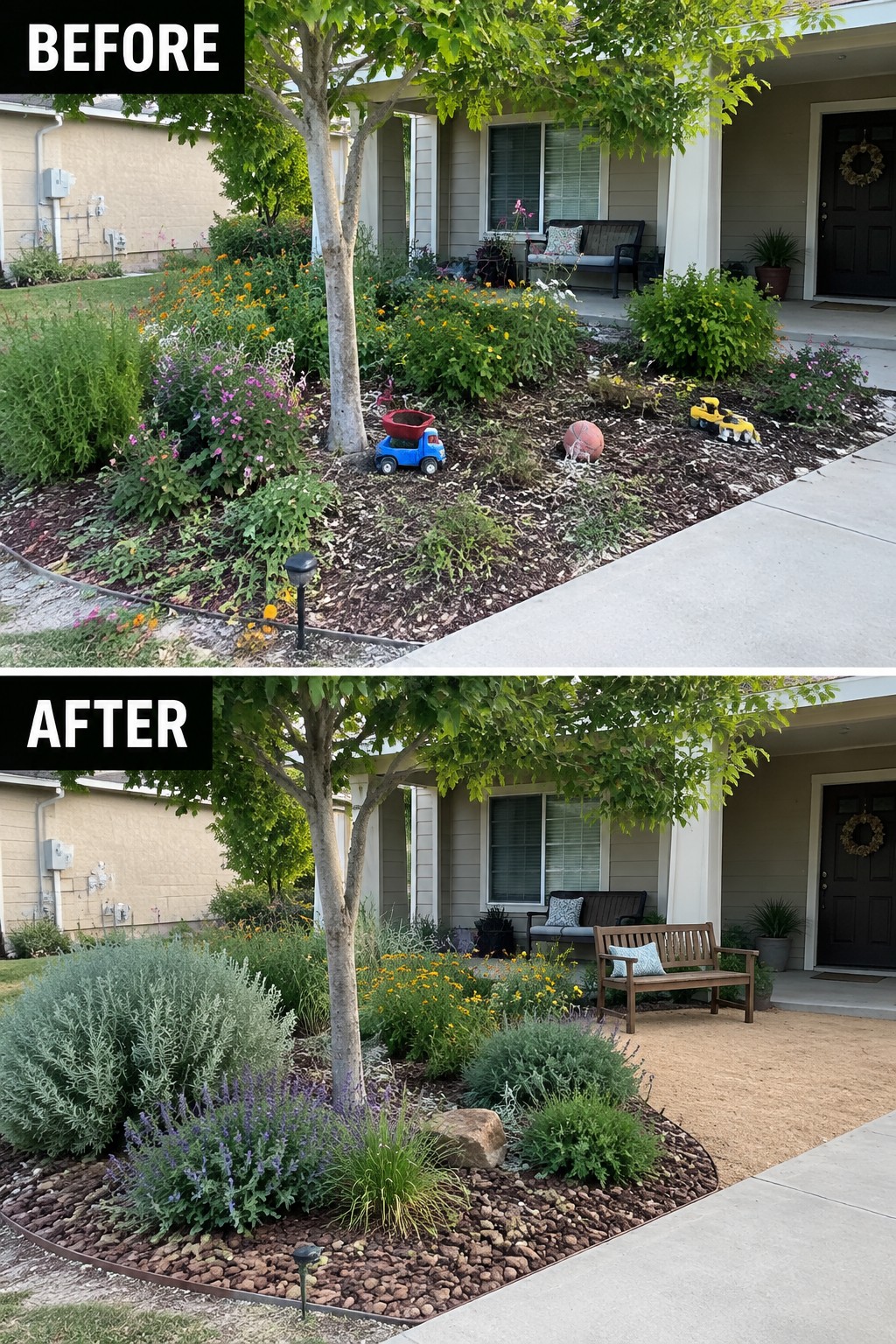
The front beds looked chaotic with scattered toys, weeds, and no clear shape. Once everything was cleared, the addition of a rock border and a few grouped drought-tolerant plants gave the space real structure without needing constant work.
This idea suits any front yard that has gotten away from you. Start by removing the mess, then set simple edges and choose a handful of native shrubs that can handle dry spells. Mulch helps keep weeds down, and the clean lines make the whole area feel intentional instead of neglected.
Add A Path To Structure An Overgrown Slope
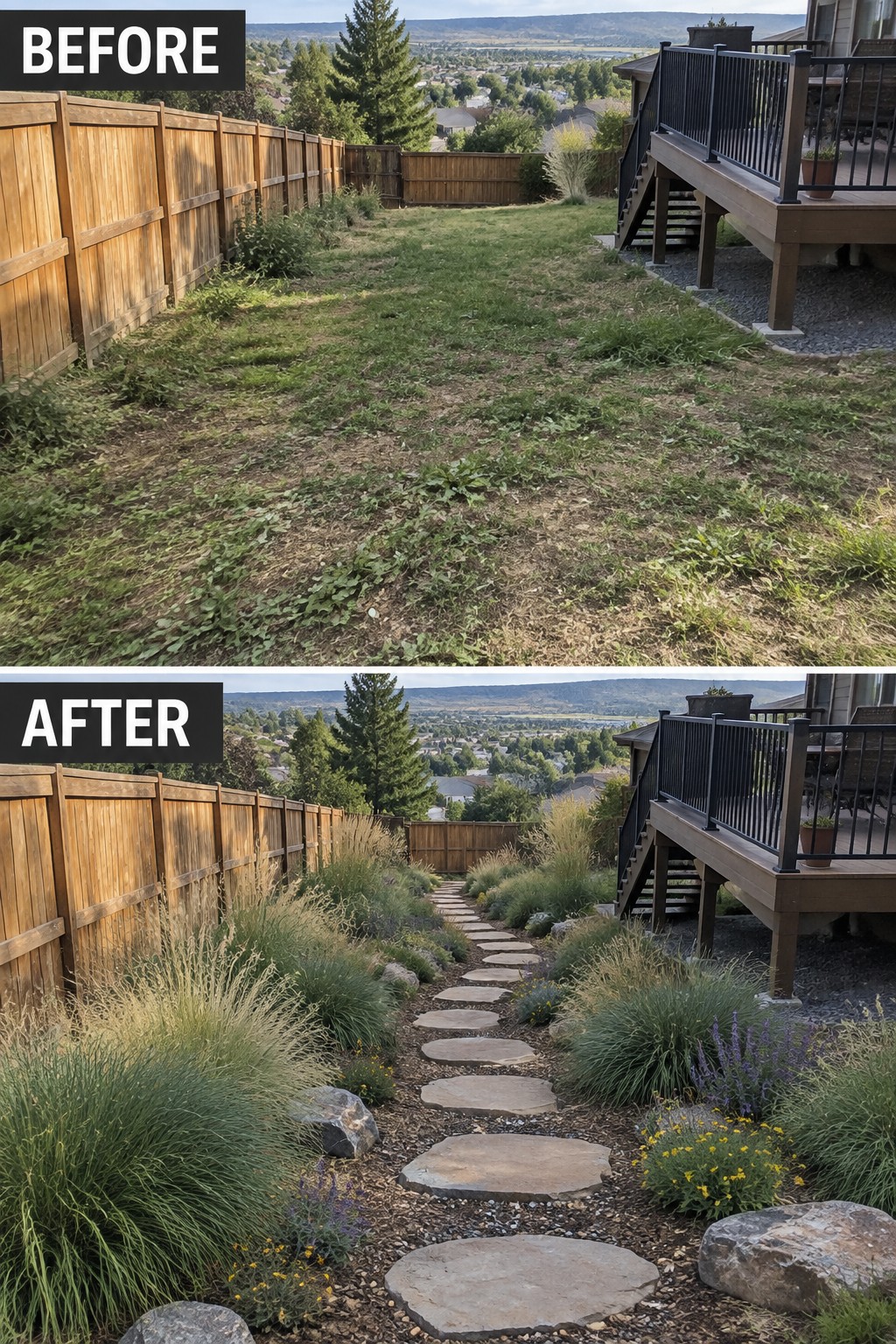
A simple stone path can turn a weedy, directionless slope into something that feels planned and easy to use. The before photo shows a backyard that was mostly bare dirt and tall weeds with no clear way through. In the after photo, the path gives the eye a route to follow while the plantings on either side keep the slope from looking chaotic.
This approach works best on sloped yards where you want to create movement without major grading. Clear the overgrowth first, then lay the path before planting so the beds feel connected to it. Native grasses and drought-tolerant flowers fill in around the stones and keep future maintenance low.
Define A Bare Front Yard With Simple Garden Beds
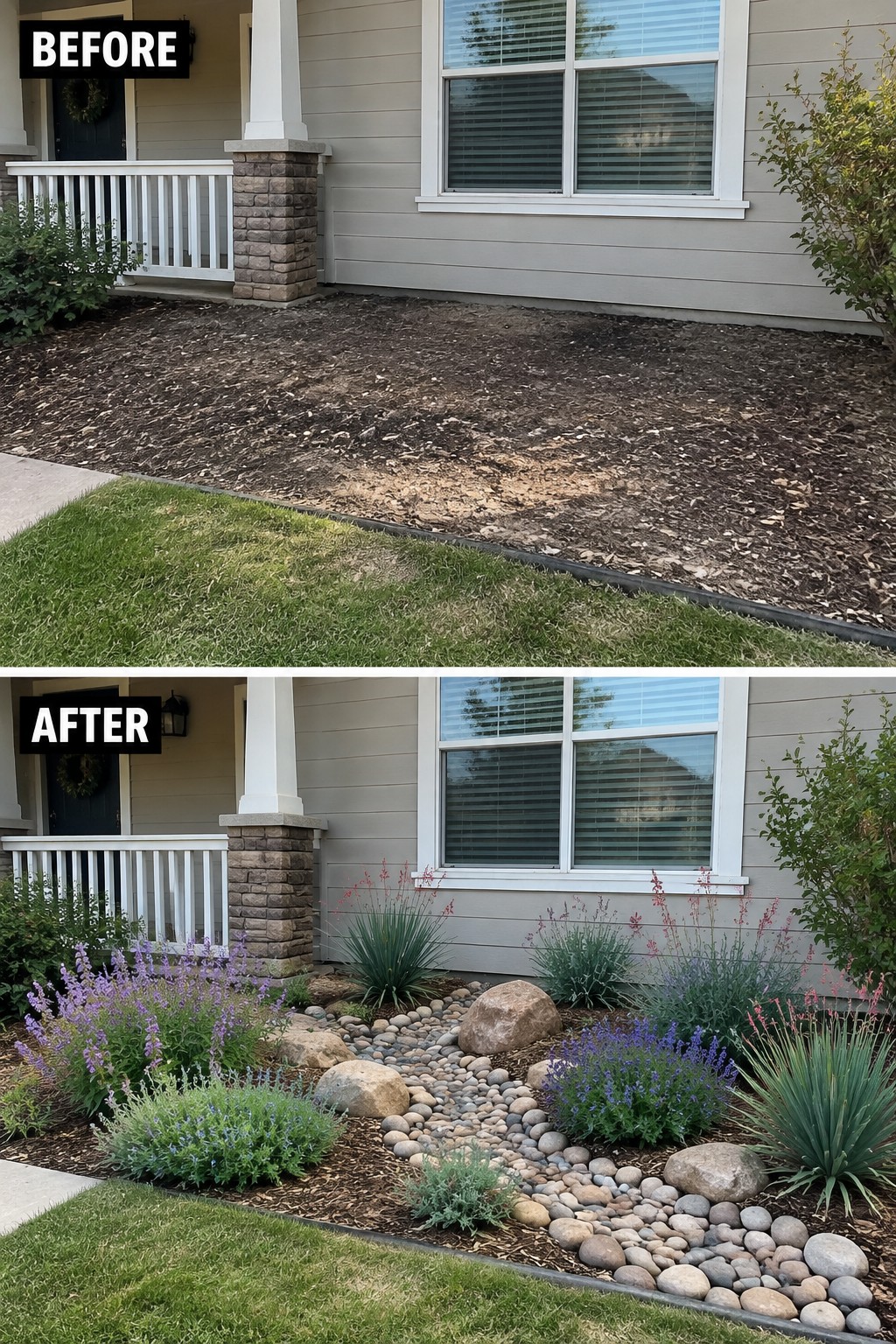
A bare strip of dirt along the front of a house often looks unfinished and hard to maintain. Adding defined beds with a mix of rocks and low-water plants gives the space shape without requiring constant work. The change here shows how moving from open dirt to grouped plantings and a simple rock feature makes the whole front look intentional.
This approach works well on narrow strips between the lawn and house where you want some interest but not a lot of upkeep. Start by laying out the beds with a clear edge, then fill them with a few types of drought-tolerant plants that bloom at different times. Keep the rock or gravel accents limited so the beds stay easy to mow around and do not crowd the walkway.
Replace Patchy Grass With Gravel And Planting Beds
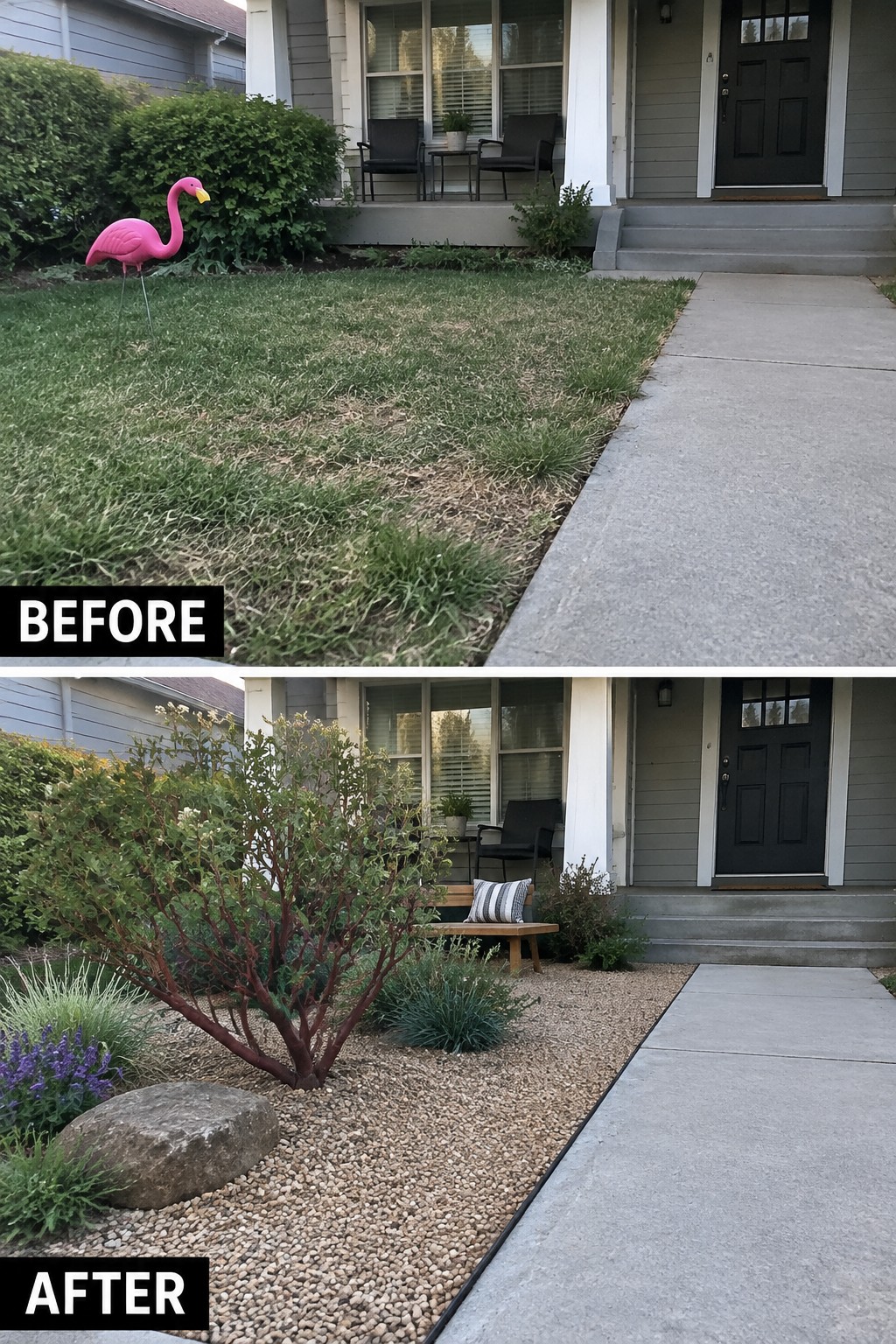
The front yard changed from an uneven lawn that was mostly brown and hard to keep neat into a gravel-covered area with clear planting zones. This shift makes the space look more intentional and cuts down on the need for constant mowing or watering.
Gravel works best in front yards that get a lot of sun or where homeowners want to reduce lawn care. Remove the grass first, add a solid base layer, and pick shrubs that stay healthy with little water. Keep the beds simple so the layout stays easy to maintain over time.
Create Low-Maintenance Beds In Narrow Side Yards
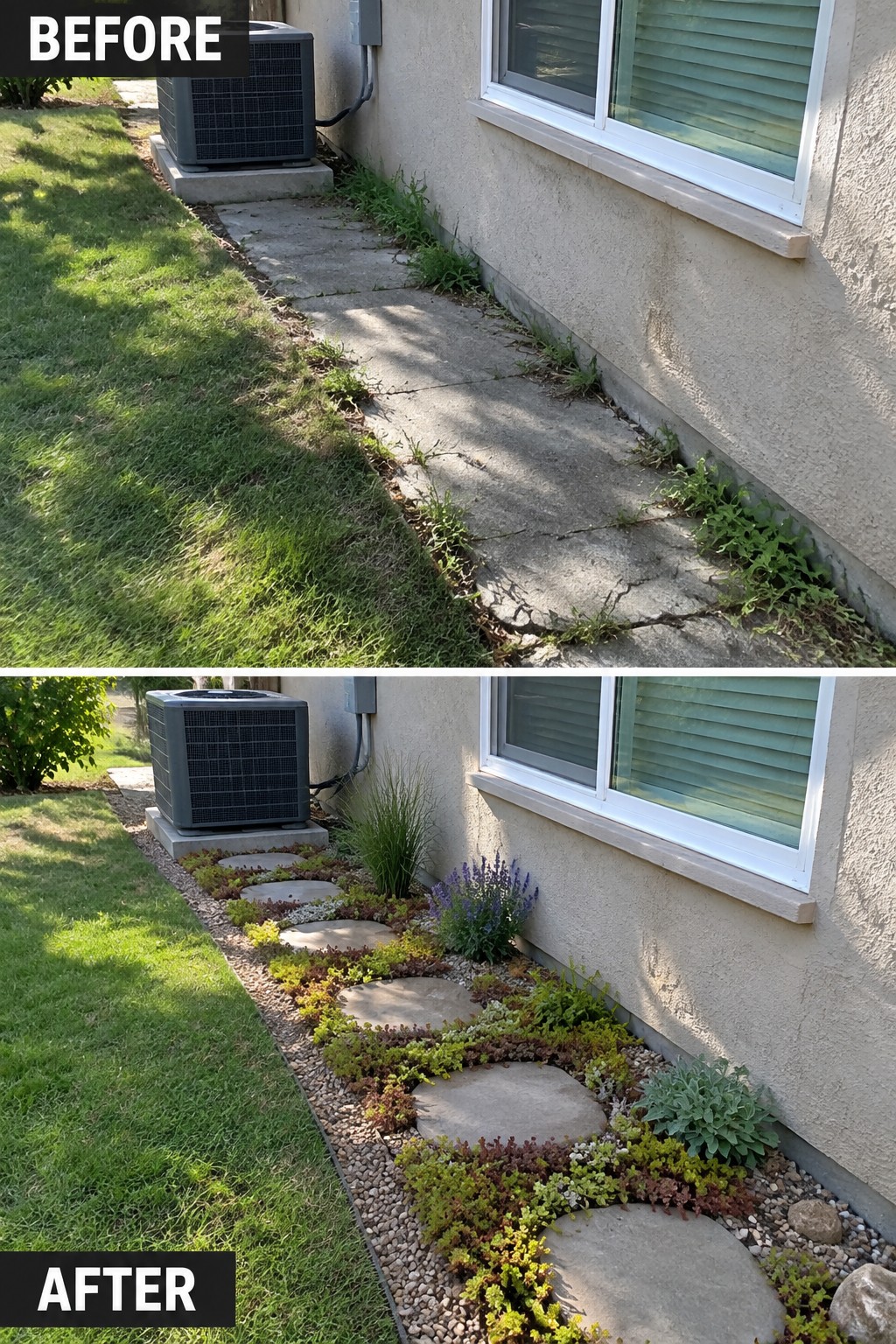
A weedy strip of grass and concrete next to the house can make the whole side of the yard feel neglected. Replacing that strip with a gravel bed and a few tough plants gives the area a finished look without much ongoing work. The stepping stones keep the path usable while the gravel stops weeds from taking over again.
This approach works well on long, narrow spaces where a full garden bed would feel too wide. Start by clearing the weeds and adding a simple gravel layer, then choose native or drought-tolerant plants that stay compact. It keeps the foundation clear, improves drainage, and cuts down on mowing right up against the house.
Replace A Large Lawn With Defined Planting Beds
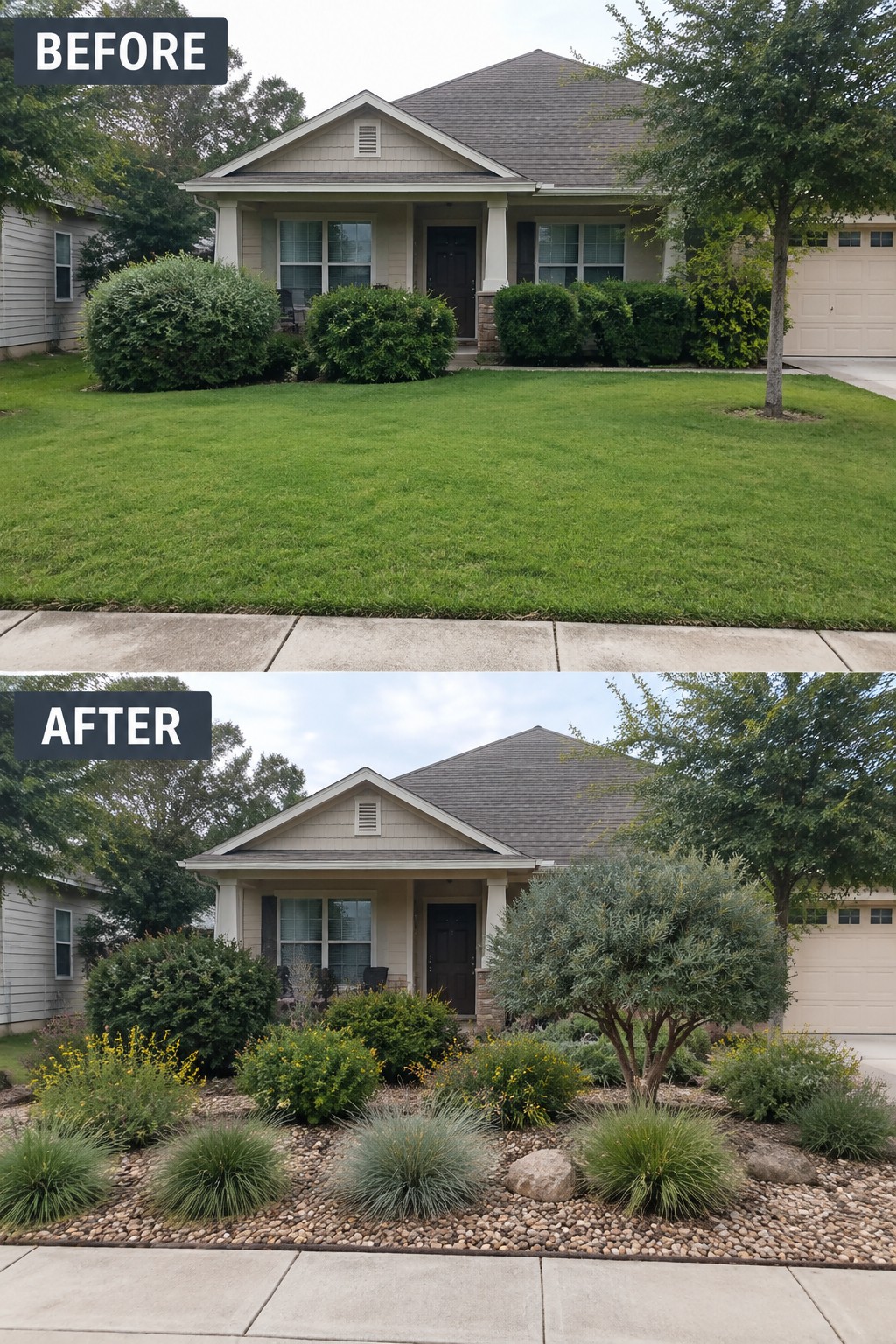
A wide lawn often means weekly mowing and regular watering just to stay presentable. Here the owners removed most of the grass and created gravel beds that hold a mix of shrubs and grasses chosen to handle dry conditions with almost no extra care.
This idea suits homes with big sunny front yards where the owner wants less upkeep. Clear the turf first, add a simple border, then fill the beds with tough plants spaced so they can grow in without crowding.
Define A Bare Yard With A Gravel Circle
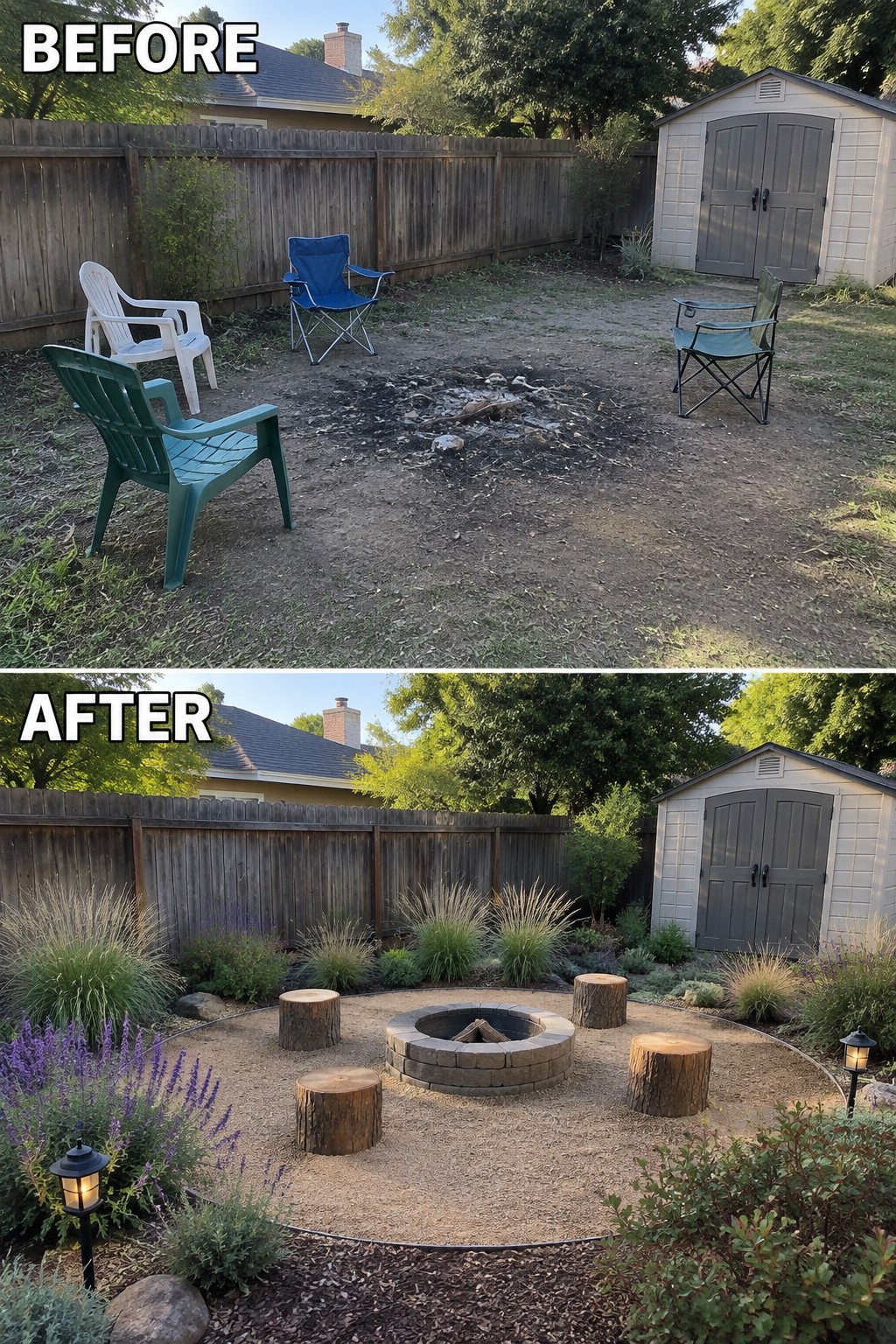
A bare patch of dirt with a few chairs scattered around does not invite much use. Adding a simple gravel circle around the fire pit gives the space a clear shape and makes it feel like an actual destination instead of leftover ground. The low border of grasses and flowering plants then softens the edge without blocking the view or requiring constant care.
This approach works well in open backyards where the ground feels flat and unfinished. Start by marking out the size you need for seating and walking room, lay down a solid base for the gravel, and choose plants that stay low and handle dry conditions. The result stays practical because everything stays visible and easy to maintain once the basic shape is in place.
Frequently Asked Questions
Q: How much watering do these plants need at the start?
A: Give them a good soak once a week during the first season. Focus on the roots so they establish deep. After that you can cut back and let rain handle it.
Q: Should I replace my whole lawn at once?
A: Start with a small section to test what works. This keeps the project manageable and shows quick results. You can expand later without overwhelming yourself.
Q: Will native plants bring in extra wildlife like bees?
A: Yes they often attract pollinators which is a bonus. Keep an eye on any that might bother you and choose accordingly. Most stay out of the way.
