

My backyard sat mostly empty for a long time because it lacked any clear spot to sit without feeling exposed or unfinished.
Budget upgrades like adding a simple gravel base under a bench or hanging a few hooks for shade cloth often turn that emptiness into something usable on ordinary evenings.
I usually start by checking which corners already get decent light before I add anything new.
Structure comes first.
Once a few practical pieces are in place the whole area stops feeling like an afterthought and starts fitting into how we actually spend time outside.
Add Structure To An Overgrown Backyard
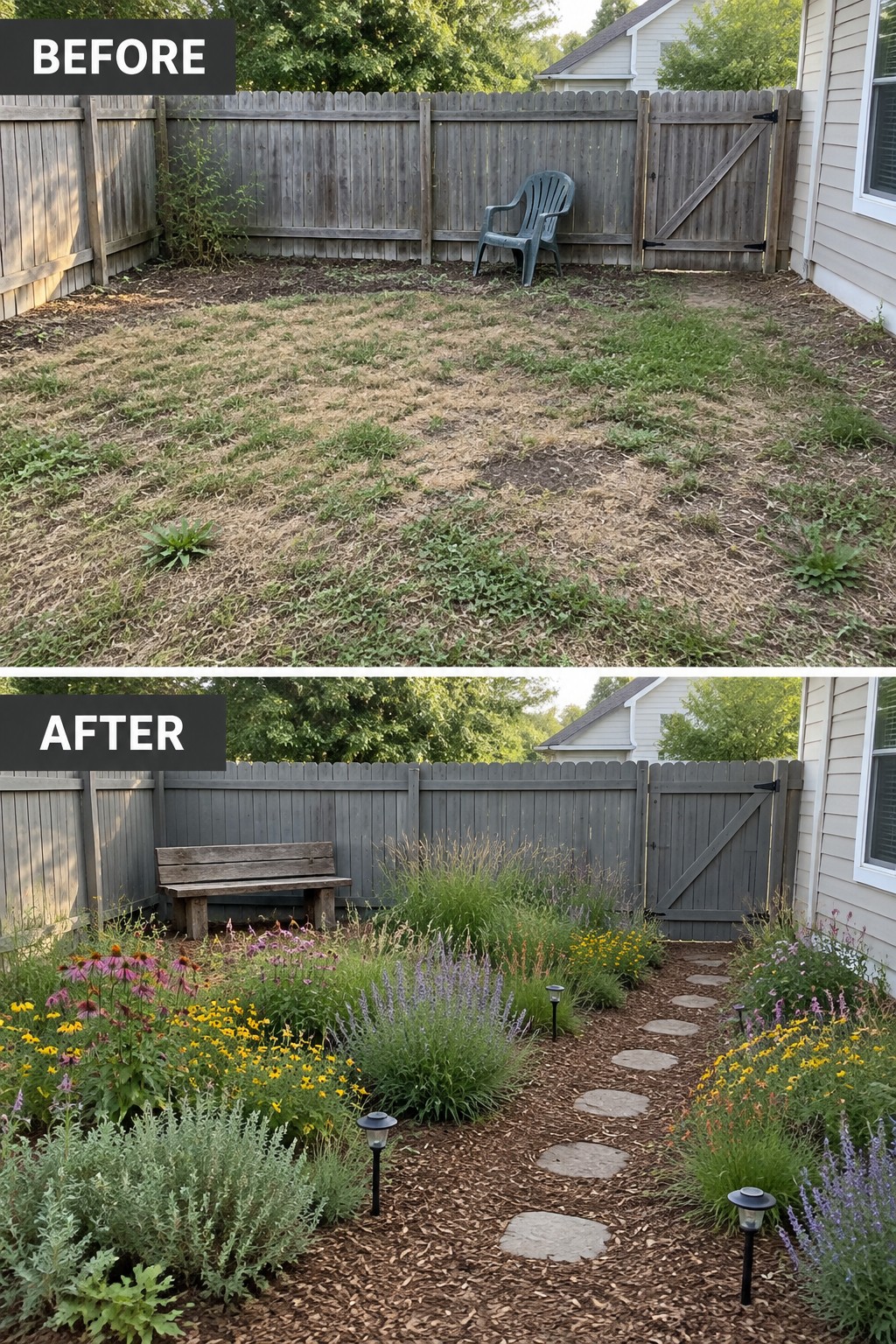
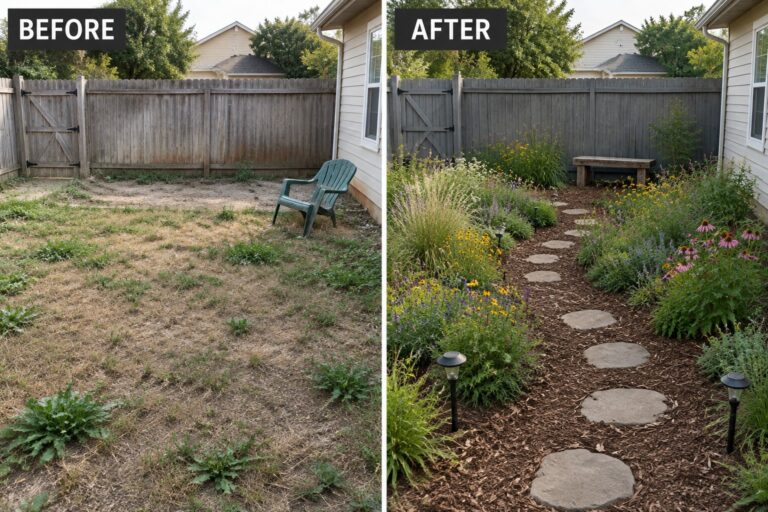
A bare, weedy yard often feels unusable because nothing defines the space. Adding mulch, a simple stone path, and planted beds turns the same area into something you can actually walk through and enjoy. The path creates a clear route while the beds keep plants contained instead of spreading everywhere.
This approach works best in smaller yards where you want order without a big budget. Start with cleanup and mulch to stop the weeds, then add a basic path before planting. Keep the beds along the edges so the center stays open for movement.
Turn An Empty Patio Into A Seating Area
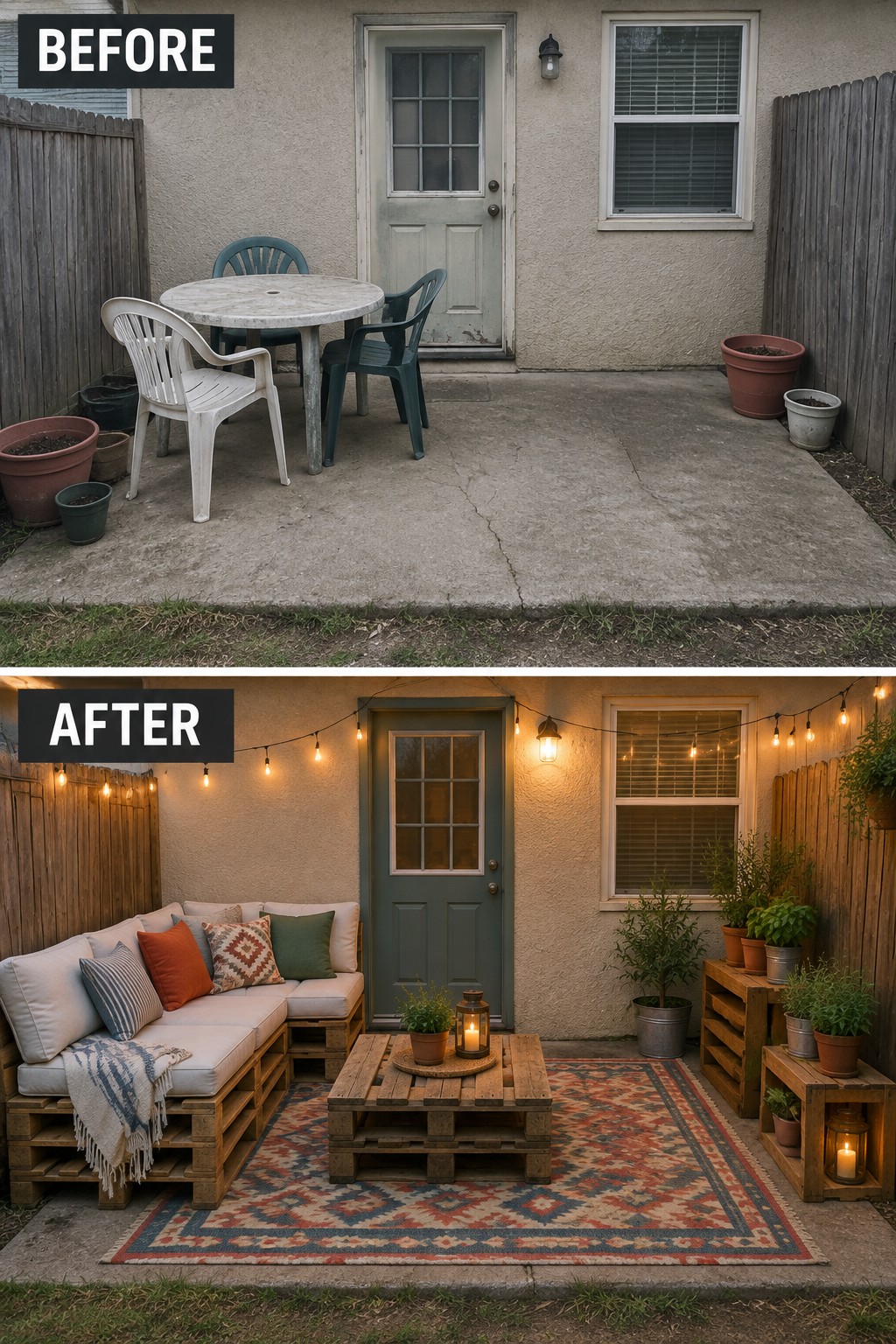
The before photo shows a plain concrete slab with just a few plastic chairs and a table scattered around. The after version adds pallet furniture, an area rug, and string lights to turn the same spot into a defined outdoor room. The change works because the new pieces give the space a clear purpose instead of leaving it as leftover concrete.
This approach suits any small backyard or side patio that feels empty. Start with a rug to mark the seating zone, then use simple pallet builds or low-cost outdoor pieces that can stay out in the weather. Keep the layout open enough to walk around and add lighting only where people will actually sit.
Add Structure To An Overgrown Backyard With Raised Beds
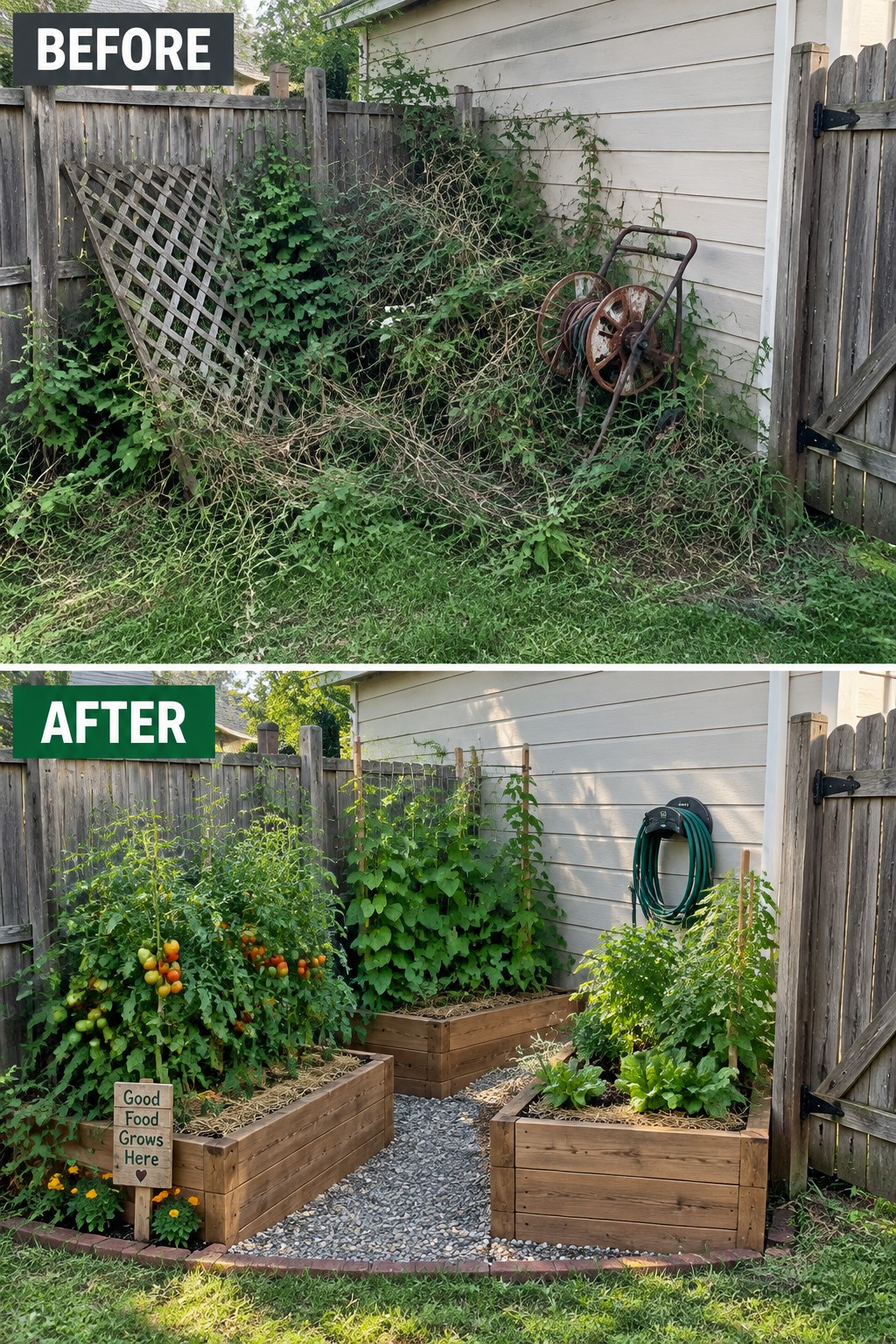
The biggest shift here came from clearing out the thick tangle of vines and weeds first. Once the ground was visible again, simple wooden raised beds gave the space clear shape and made it easy to plant in an organized way instead of fighting through the mess.
This approach works well in small side yards or back corners that have gone wild. Start with a full cleanup, then add a few raised beds in a simple layout. Gravel or mulch between them keeps things neat and stops weeds from taking over again right away.
Refresh A Plain Fence With Paint And Planters
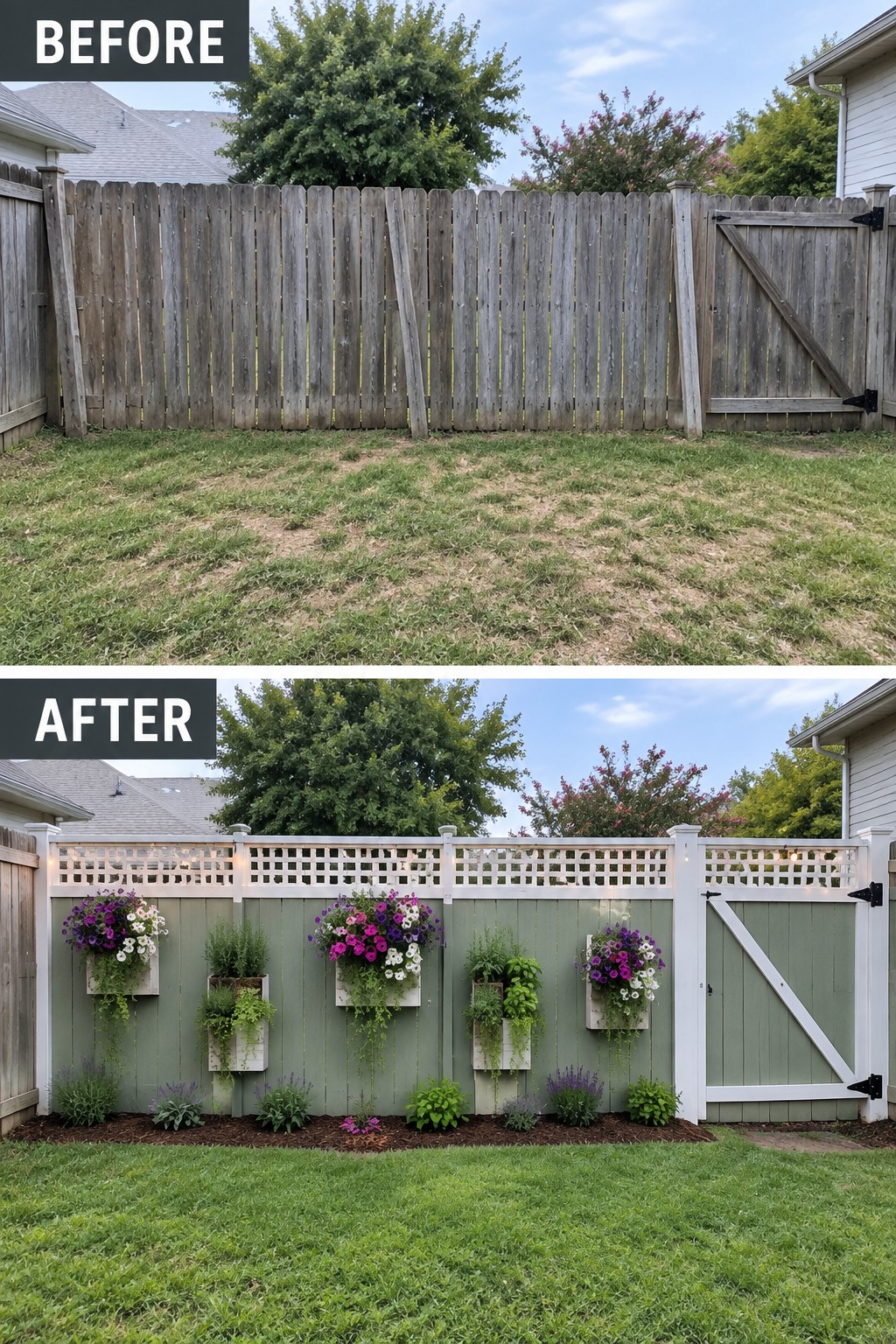
A basic wooden fence often leaves the edge of a yard feeling unfinished. Painting it a solid color, adding a lattice topper, and hanging a few planters turns the fence into a simple vertical garden that adds height and softness without taking up ground space.
This approach works best along the back or side of a smaller yard where you want more interest but limited room for beds. Start with a good cleaning and two coats of exterior paint, then choose planters that can handle weather and repeat a couple of plant colors for a calm look. String lights can be added later if the area gets used in the evening.
Create A Defined Path Through A Narrow Side Yard
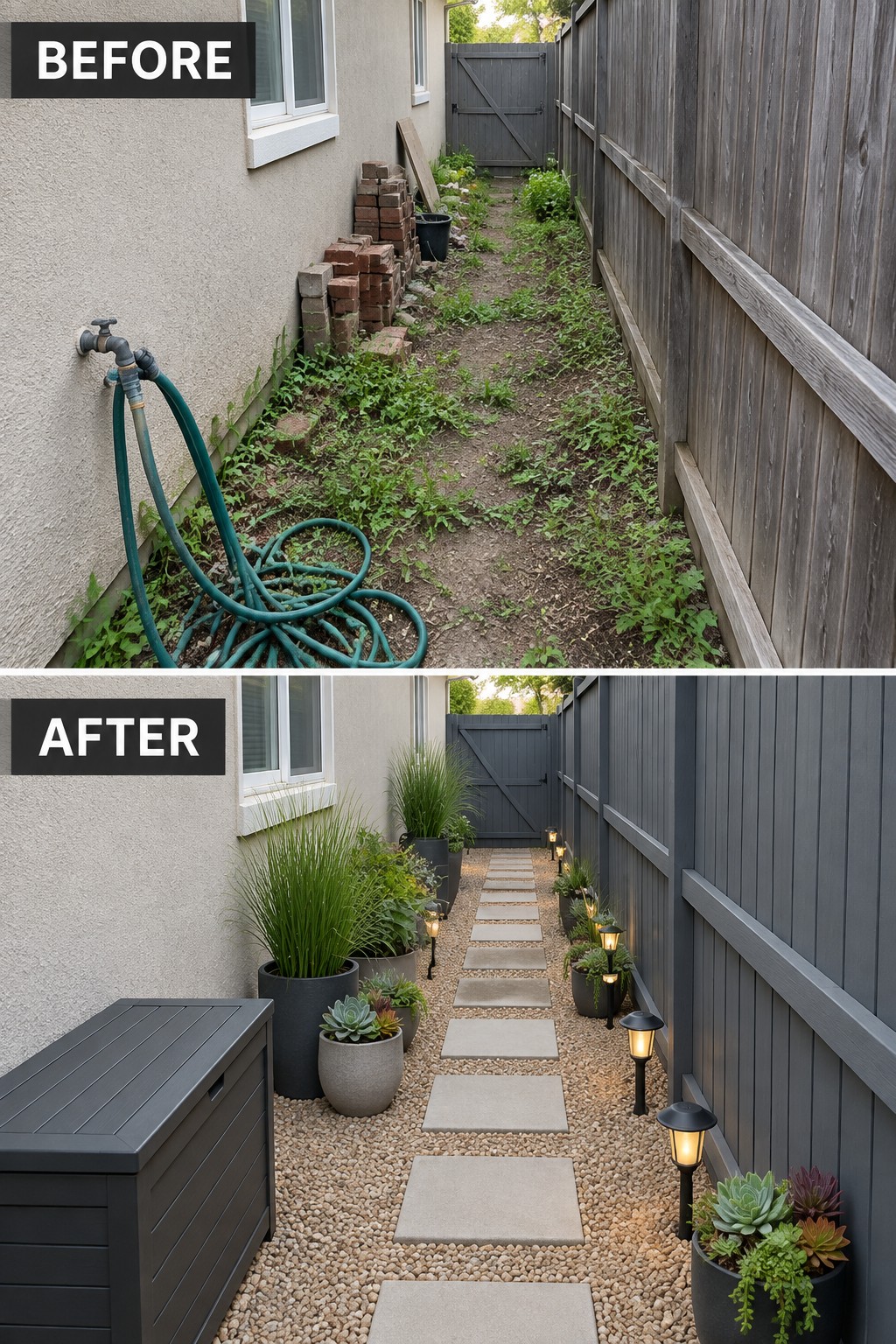
A narrow side yard often ends up as wasted space because it feels awkward and hard to maintain. Laying down a simple path of stepping stones over gravel gives the area structure and makes it easy to walk through without tracking mud or fighting weeds. The before photo shows how quickly these spots fill with clutter and overgrowth, while the after shows how a clear route turns the same space into something you can actually use.
This approach works well on homes with tight side access or long fence lines where a full patio would not fit. Start by clearing the ground and adding a gravel base for drainage, then place pavers or stones in a straight line. Low pots along the edges and a few solar lights keep the scale right without crowding the walkway.
Turn A Sloped Backyard Into Tiered Garden Beds
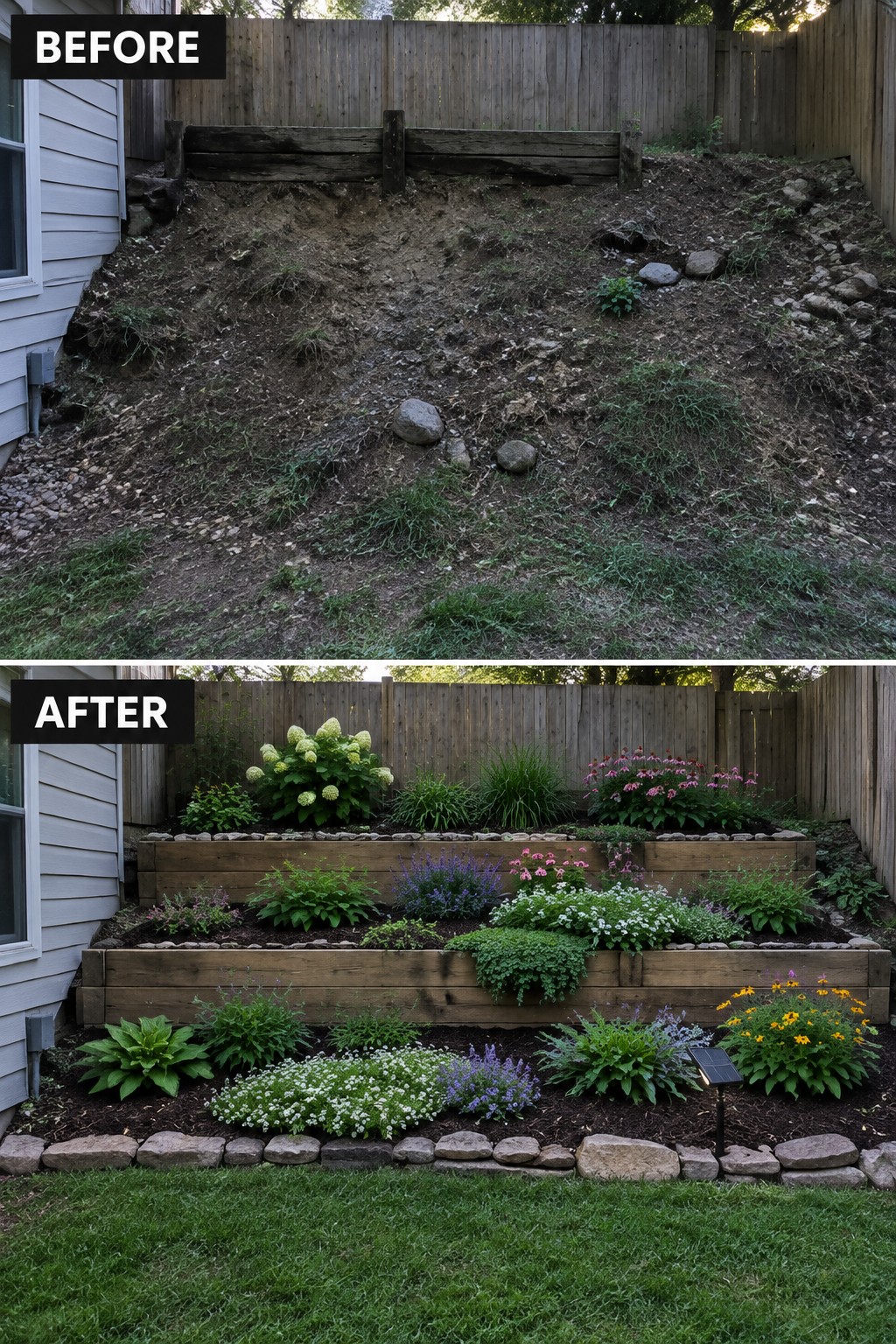
A bare dirt slope is hard to plant on because everything slides or washes away. Building simple wooden tiers creates flat planting areas that hold soil in place and give plants room to spread. The change from loose dirt and weeds to stacked beds with clear edges makes the whole yard feel more intentional and easier to maintain.
This approach works well on moderate slopes where full regrading would be too expensive. Keep each bed narrow so you can reach the middle without stepping in the soil, and use the same wood tone across all tiers for a clean look. Add a simple stone border at the bottom to separate the garden from the lawn and keep mulch from spilling out.
Paint A Worn Deck And Add Simple Furniture To Make It Usable
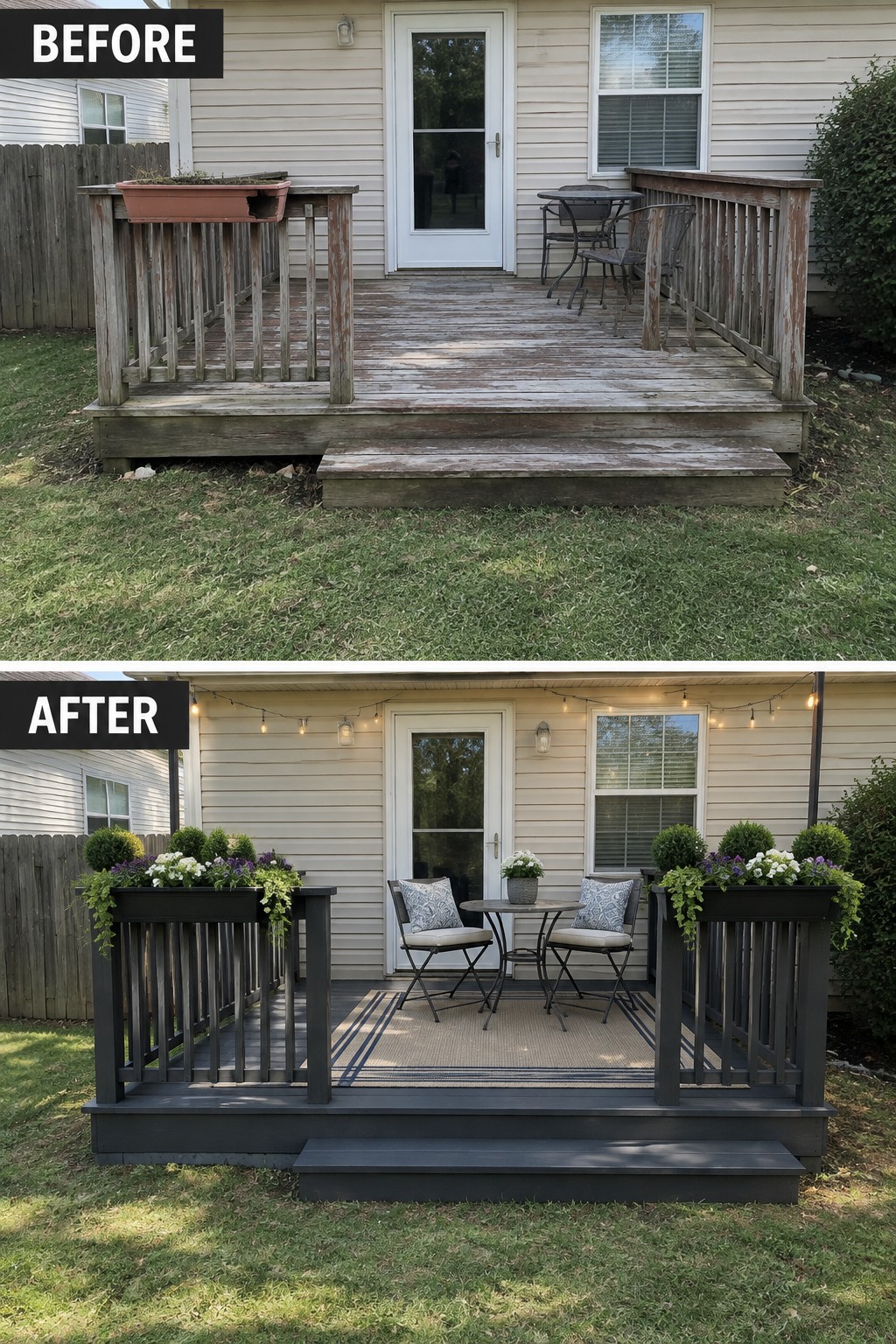
A deck that has seen better days can still become a comfortable spot once the surface is refreshed and the space gets a clear purpose. In this case the old wood was cleaned and painted a dark color, which immediately made the whole structure feel solid again. Adding a rug, a small table, and two chairs turned the empty platform into a place meant for sitting instead of just walking across.
This approach works well on decks that are still structurally sound but look neglected. Start with a thorough cleaning and a good exterior paint or stain, then keep the furniture light so the space does not feel crowded. A rug helps define where the seating area begins, and string lights add usable evening light without much cost. The same steps can refresh a small back deck or a narrow side porch as long as the pieces stay in scale with the size of the surface.
Create A Defined Fire Pit Area With Gravel And Lights
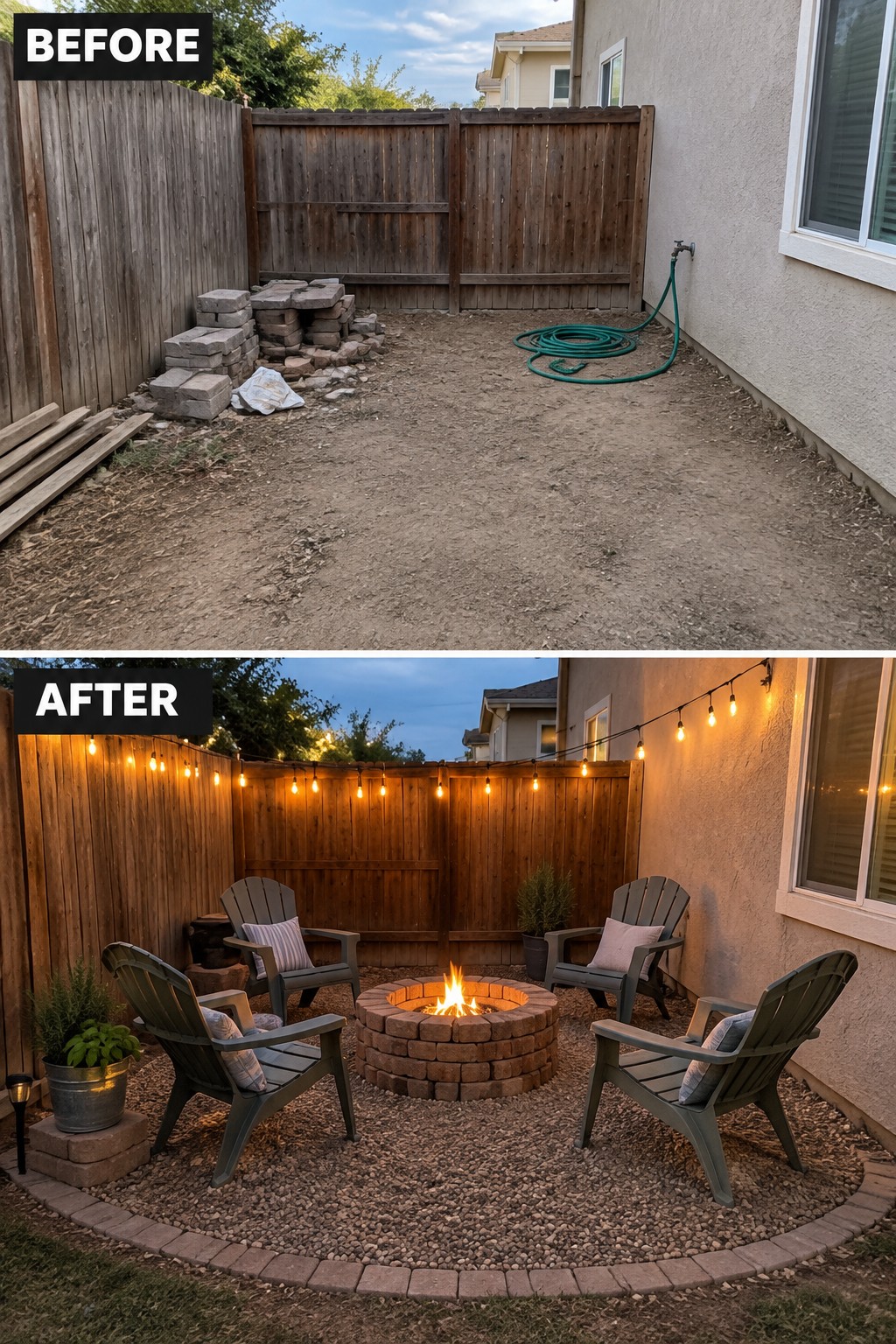
A bare dirt yard often sits unused because it lacks any clear spot to gather. Laying down a gravel circle and adding string lights overhead gives the space an obvious center, so the fire pit becomes the reason to spend time outside once the sun goes down. The change is mostly about giving the area boundaries and a reason to linger.
This idea suits small or plain backyards where you want one usable zone without major construction. Keep the gravel layer thick enough to stay put in rain, choose chairs that can handle weather, and run the lights on a timer so the area feels ready every evening. Leave enough open space around the circle for easy movement.
Turn A Bare Patio Into A Covered Outdoor Room
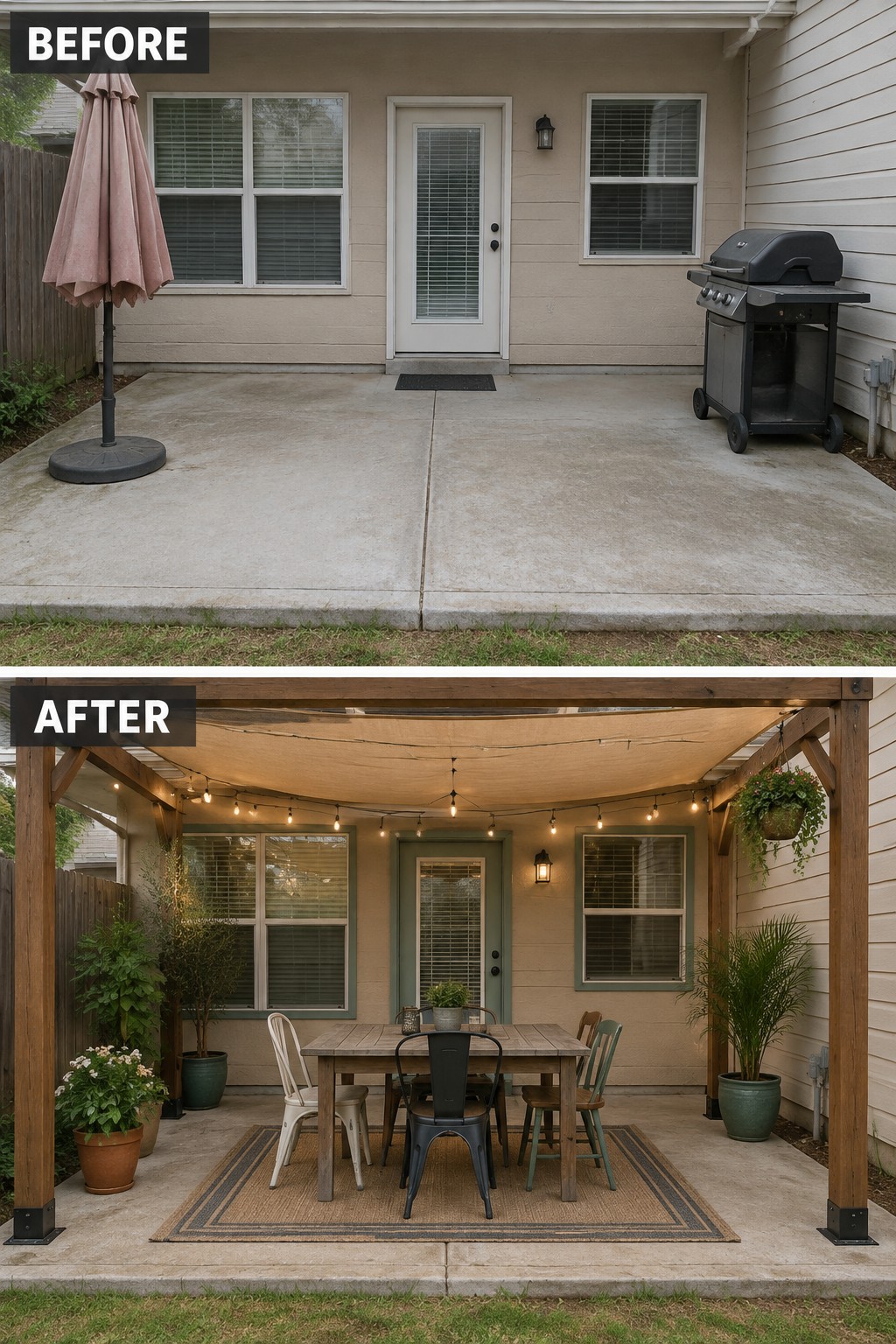
A flat concrete slab with nothing but a grill and a lone umbrella does not invite anyone to stay outside for long. Adding a simple wooden frame with a fabric shade overhead and a few strands of string lights gives the space a clear purpose. The rug and table underneath help define the area so it feels like a real room instead of leftover concrete.
This approach works best on homes where the backyard is mostly hard surface and the main issue is sun or lack of structure. Focus on the overhead cover and lighting first, then bring in weather-friendly furniture and one rug to anchor the seating zone. Keep the footprint modest so there is still room to walk around the table.
Turn A Neglected Backyard Into A Usable Outdoor Space
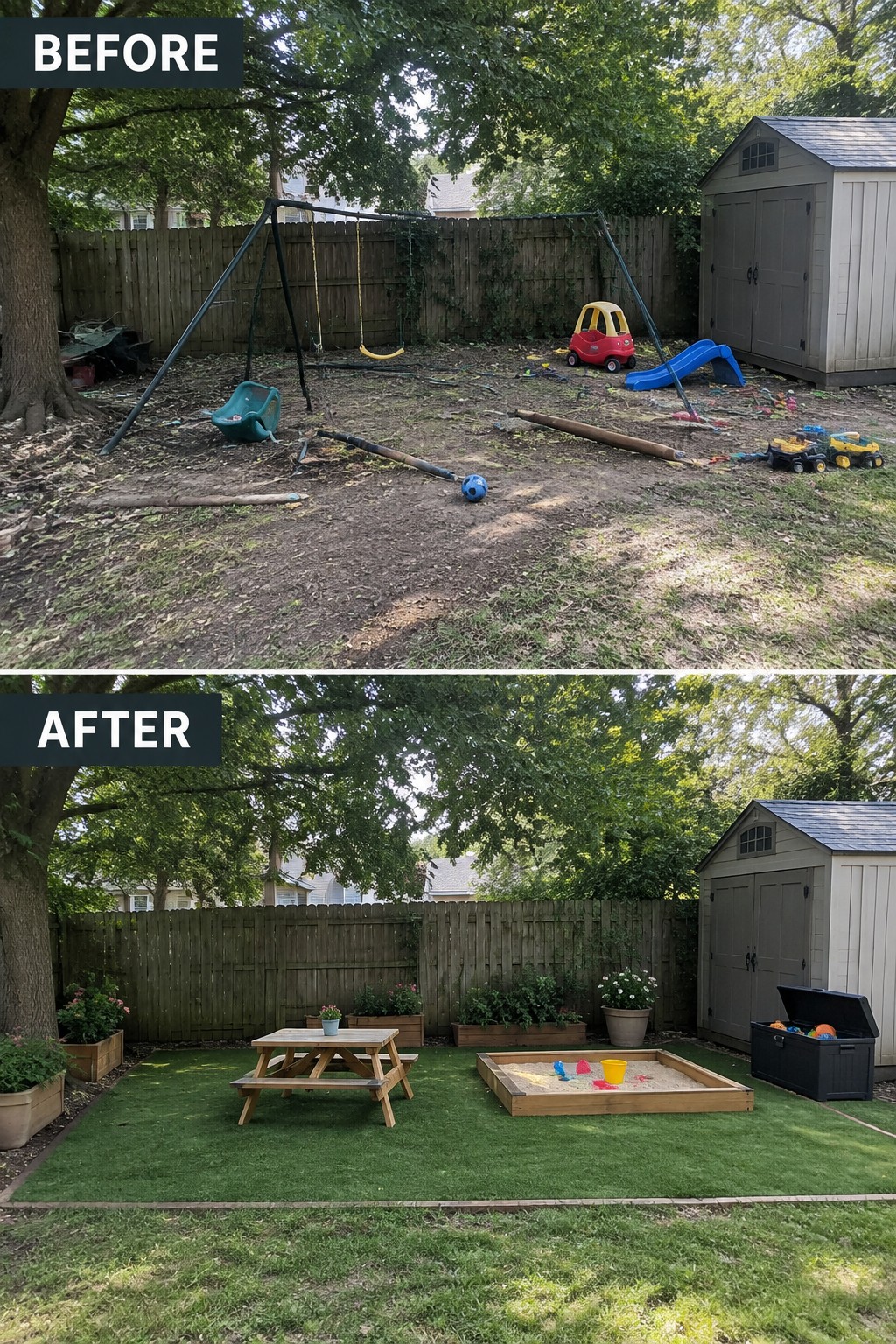
A backyard covered in bare dirt and random items often stays empty because it feels unfinished. Replacing the ground with turf created a flat, usable surface that made the whole area feel intentional. Adding a picnic table and a sandbox gave the space two clear zones without filling it up.
This idea works best in smaller yards where you need the lawn to double as a play area. Clear the clutter first, then add one or two simple pieces like seating or a contained play spot. Keep the rest open so kids and adults can actually move around.
Refresh An Old Shed With Paint And Simple Storage
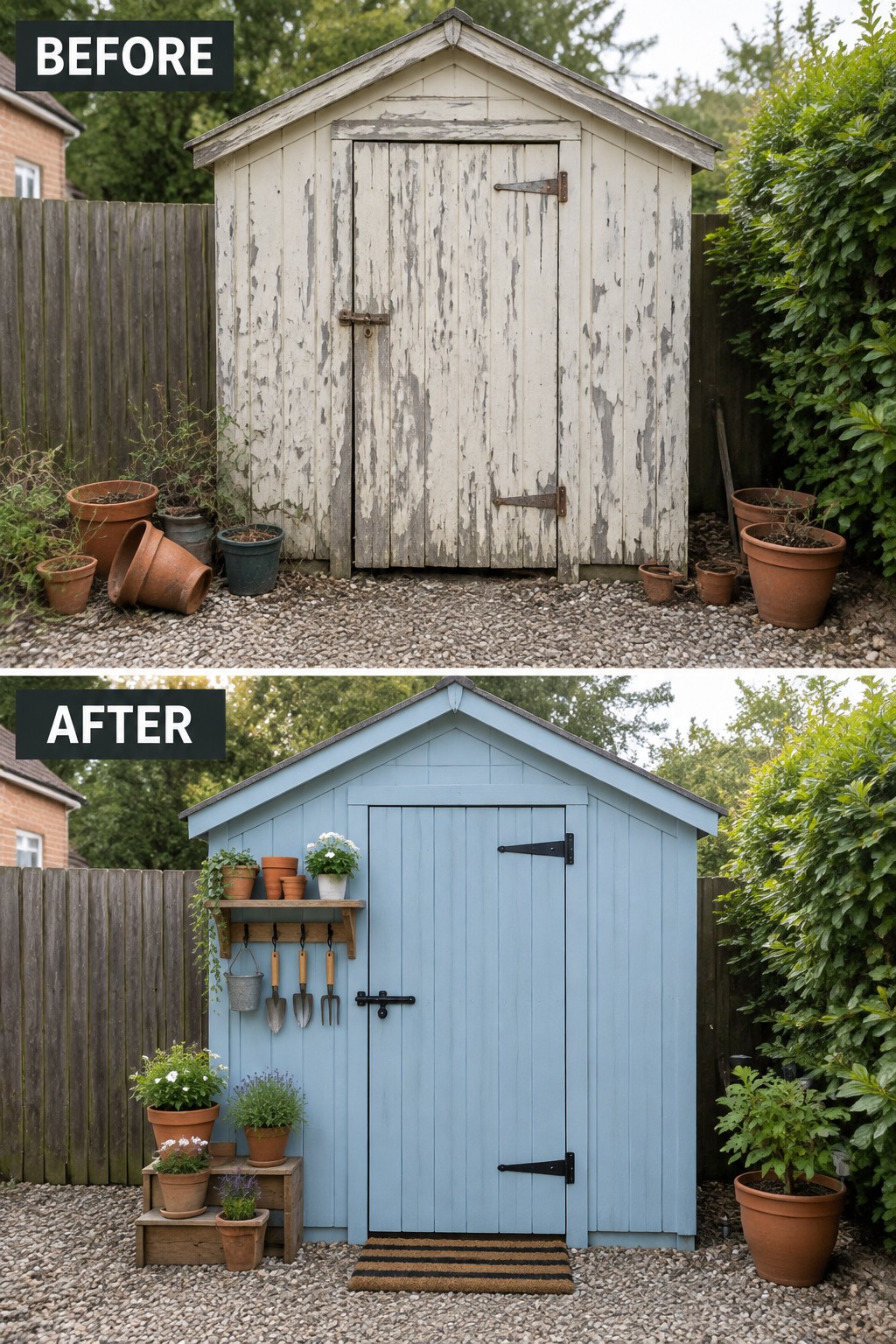
An old shed with peeling paint can drag down the whole backyard. A solid coat of color plus a basic wall shelf turns it into something useful instead of an eyesore. The gravel base stays the same, but the fresh paint and a few hanging tools make the shed feel like part of the garden instead of leftover storage.
This approach works best when the shed sits in a visible spot. Choose an exterior paint that holds up to weather, keep the shelf low enough to reach easily, and add just a few plants at the base so the area does not feel crowded. Start with the paint and one or two storage pieces before adding anything else.
Give A Bare Entry A Clear Purpose
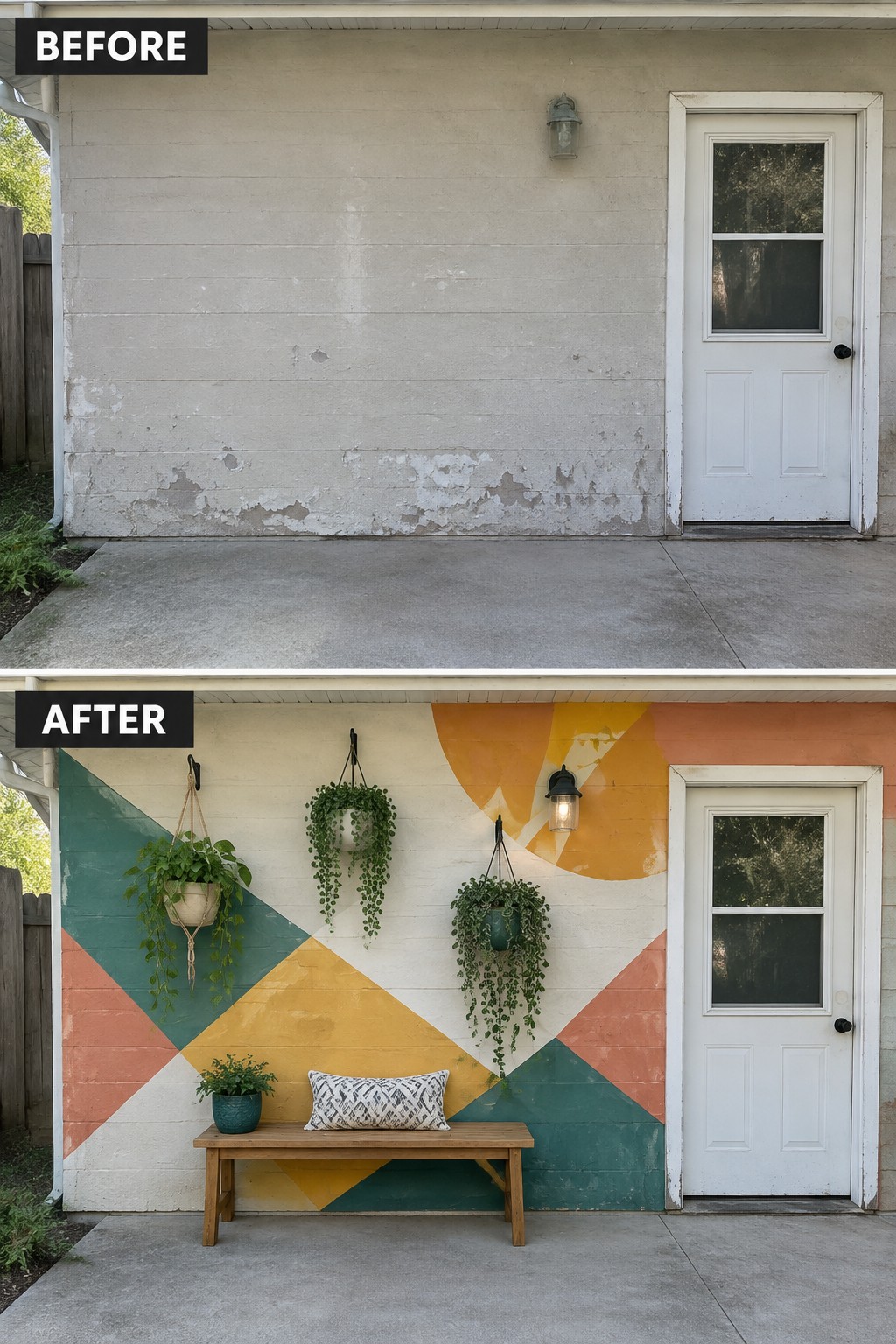
A plain exterior wall next to the door can feel like wasted space until you give it a job. In this case, a bold geometric paint pattern turned the blank siding into a focal point, while a few hanging plants, a simple bench, and one light fixture made the whole entry feel intentional instead of empty. The shift from peeling paint and bare concrete to a defined spot with seating and greenery shows how small additions can make the front of a house feel more welcoming without major construction.
This approach works best on homes with a clear entry wall or porch area that gets some shade. Start with one main color scheme on the wall so the pattern does not fight with the door or trim, then add just enough seating and plants to suggest the space is used. Keep the bench and pots in scale with the wall so people can still walk past easily.
Define A Backyard Corner With A Privacy Screen
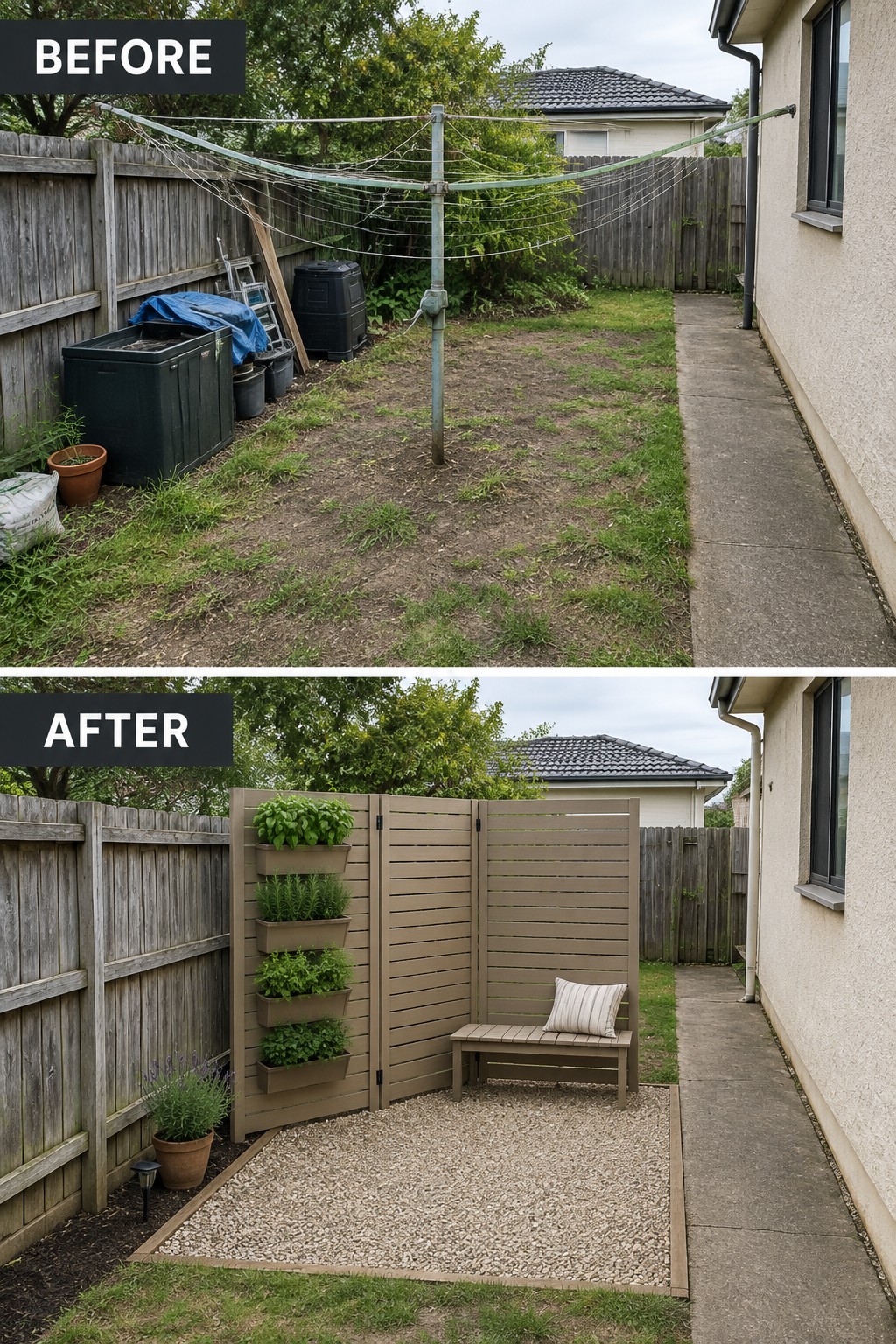
One practical way to make a small backyard more usable is to add a tall privacy screen that creates a clear seating zone. The open dirt patch with the clothesline pole became a simple gravel rectangle edged in timber, backed by a slatted screen that holds a few planters and gives the bench a sense of enclosure.
This idea works best in narrow side yards or corner spots where full privacy is not needed but some separation from the rest of the garden helps. Clear the ground first, lay gravel or pavers for a stable surface, then choose a screen that matches your fence height so the new area feels intentional rather than tacked on.
Create A Poolside Seating Area With A Rug And Simple Furniture
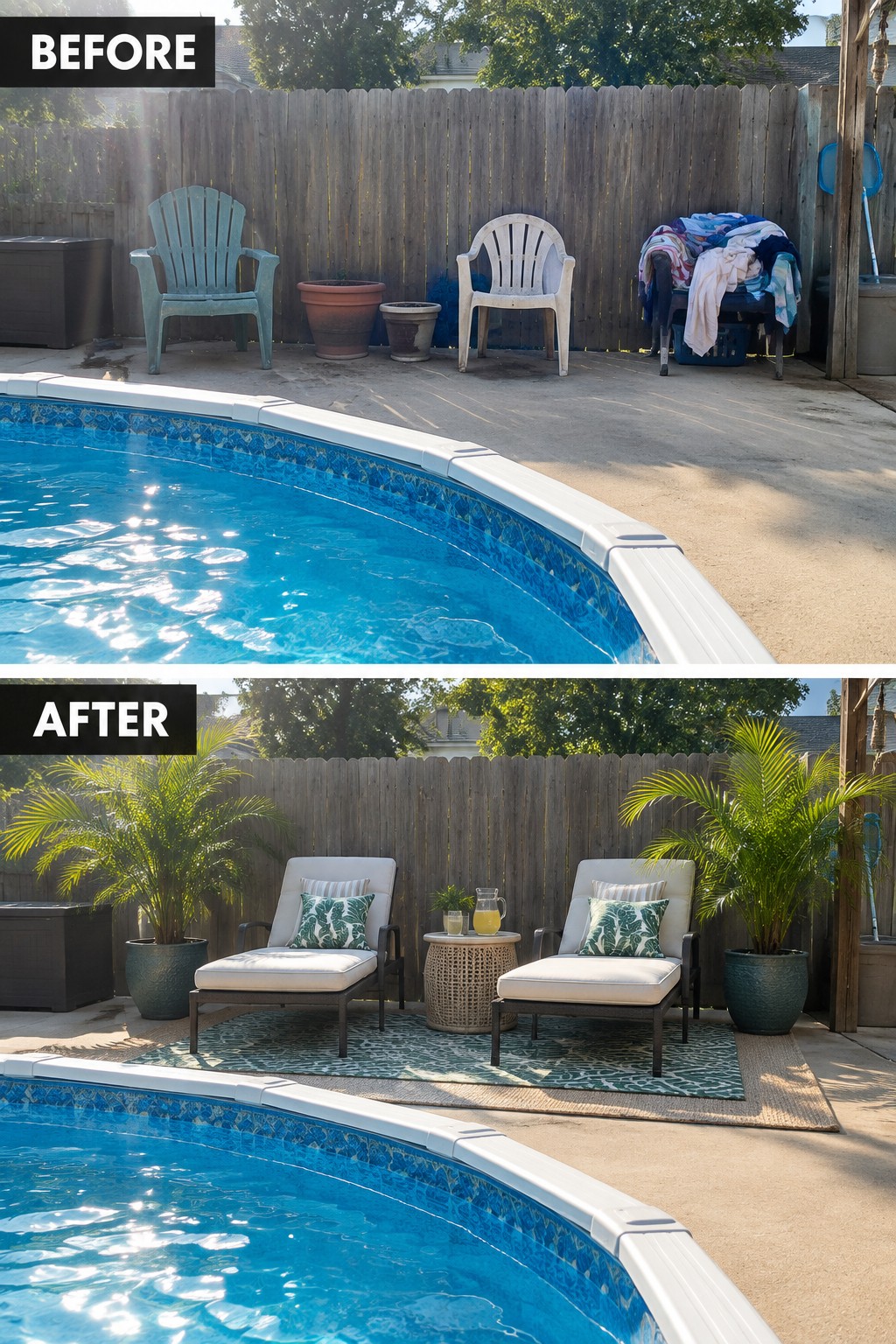
A pool deck often ends up as leftover space once the water goes in. The before photo shows how easy it is for the area to collect random chairs and clutter along the fence. Adding a rug and two matching lounge chairs gave the space a clear purpose and made it feel like part of the yard instead of just the edge of the pool.
This approach works on any concrete or deck surface next to a pool. Start with one large outdoor rug to mark the seating zone, then add a few weatherproof chairs that match in scale. Keep extra furniture and storage off the main deck so the area stays open and easy to move around.
Use String Lights To Make A Patio Feel Cozy
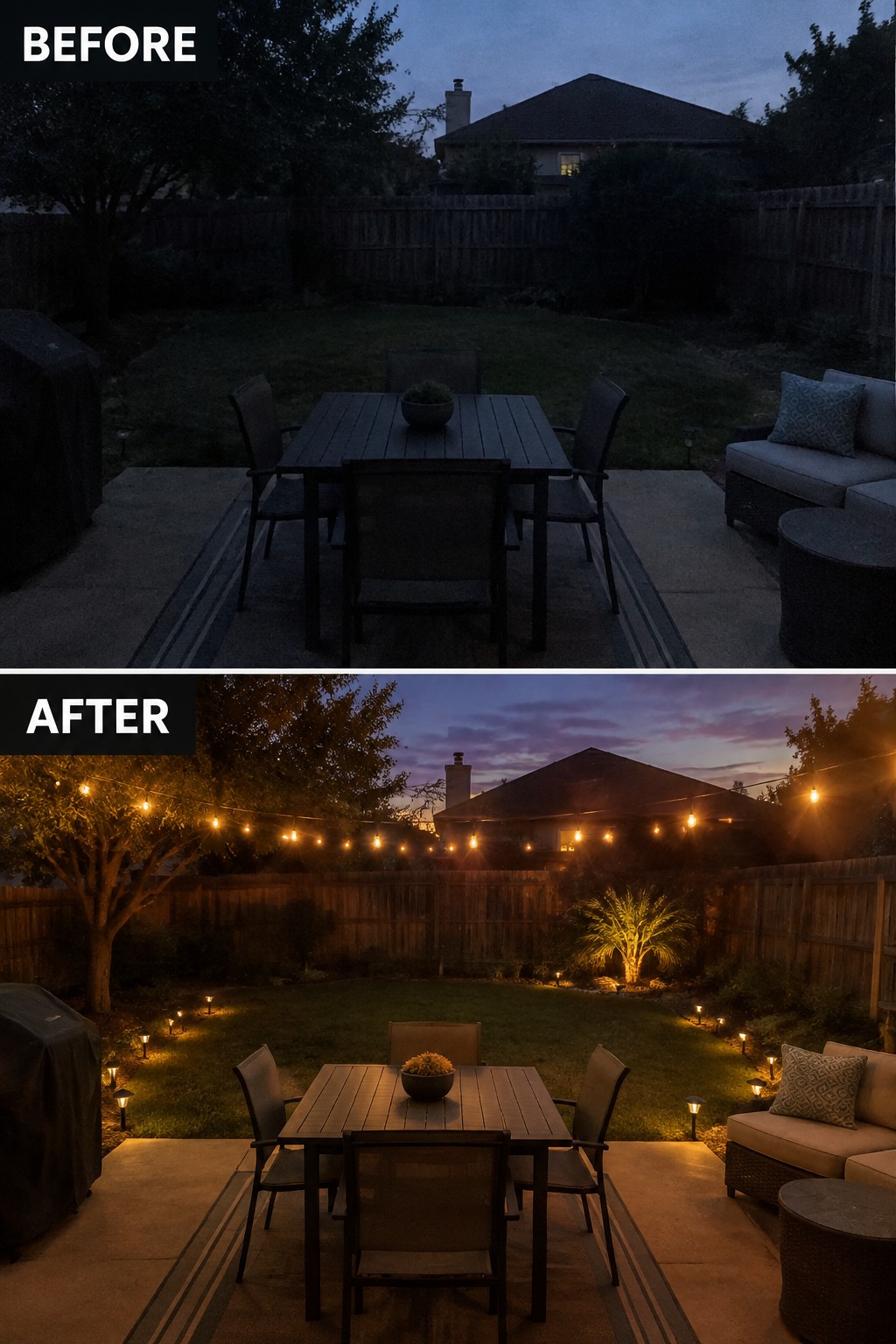
The before photo shows a basic patio with a table and chairs that sits unused once it gets dark. Adding a line of string lights overhead and a few small path lights around the edges turns the same space into a spot people actually want to sit in at night.
This idea works on most patios or decks that already have seating. Run one or two strands of lights above the main table or lounge area, then add inexpensive solar path lights along the border so people can see where they are walking. It keeps the focus on the seating zone without needing new furniture or big construction.
Add A Garden Bed Along A Fence Line
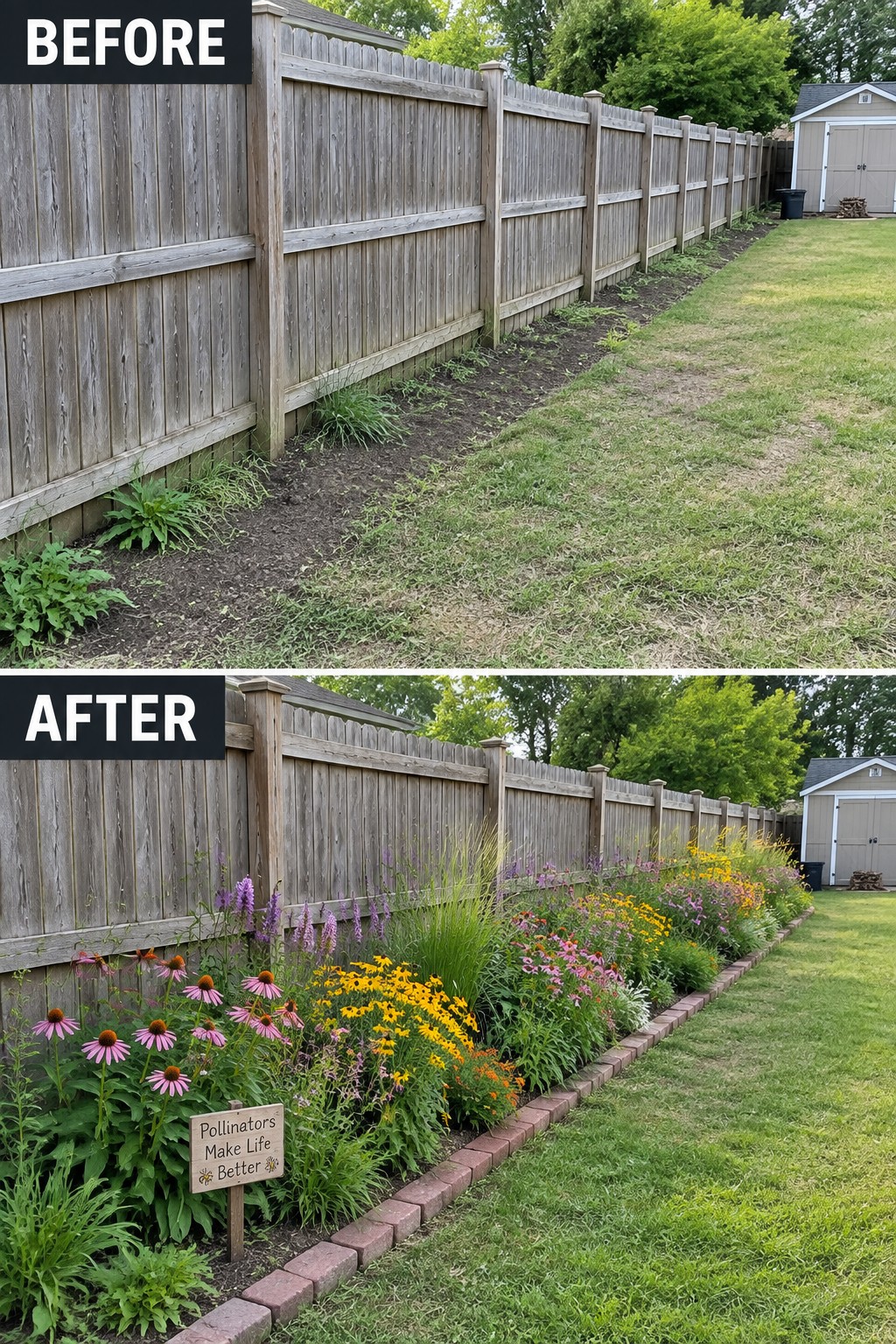
The main change here is turning a bare strip of dirt and weeds along the fence into a planted border. A simple brick edge gives the bed a clear shape, and the flowers fill the space so the fence no longer sits next to an empty patch of ground.
This idea works best in backyards where the fence runs along open lawn. Clean out the weeds first, add basic edging to hold the soil, then plant a mix of flowers that support pollinators. Keep the bed narrow enough to leave room for mowing and walking.
Turn An Overgrown Backyard Into A Simple Relaxation Spot
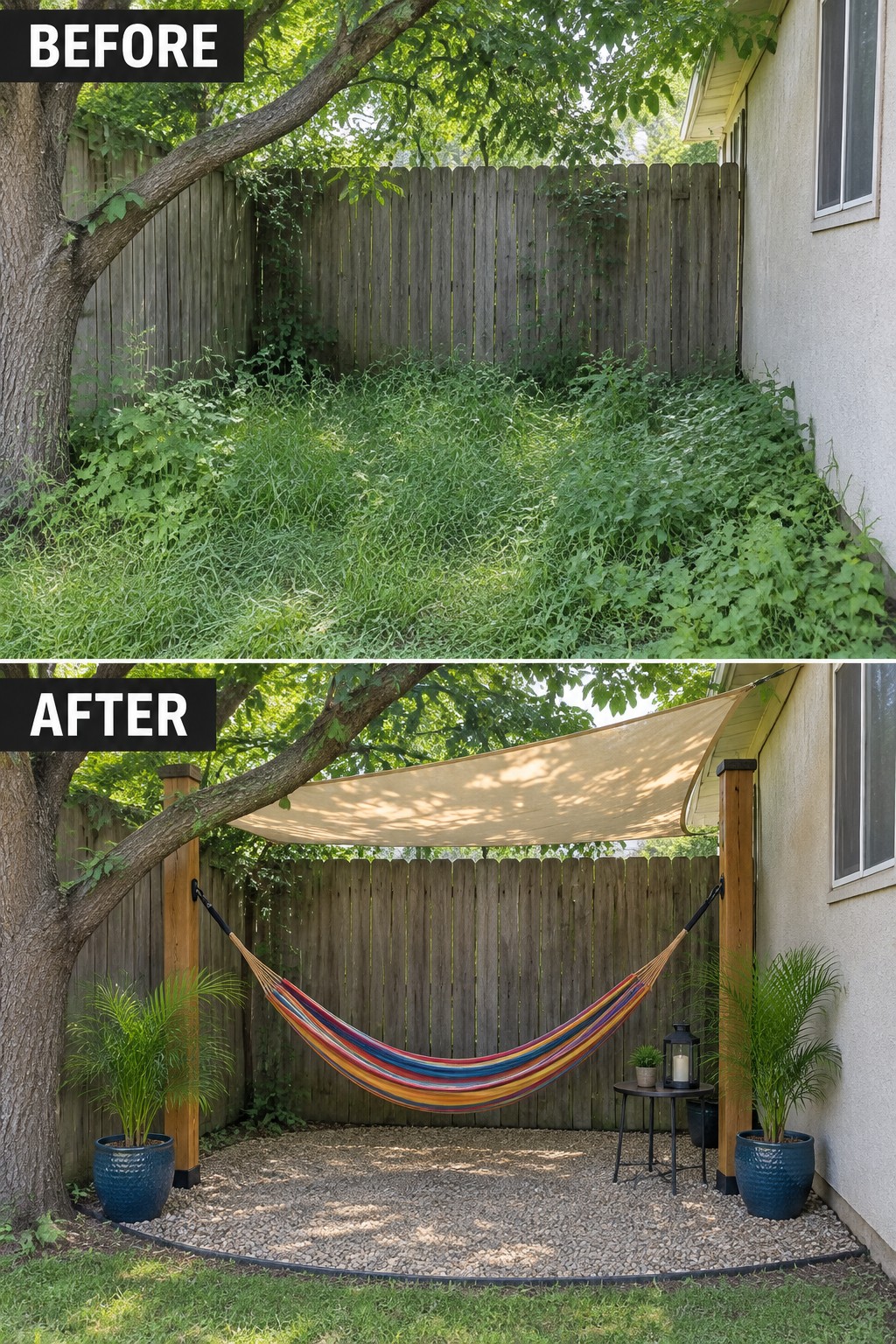
Clearing the overgrowth is often the first step that makes the rest of the space usable. Here the tall weeds and grass were removed, a gravel base was added, and a hammock was hung between two posts with a shade sail overhead. That combination turned a neglected corner into a place where someone can actually sit and relax.
This idea works best in smaller backyards where a full patio would feel too large. Start with the cleanup, keep the furniture simple, and choose pieces that can stay outside year round. A hammock and one or two large pots are often enough to give the area a purpose without crowding it.
Build Simple Counters And Storage Around Your Grill
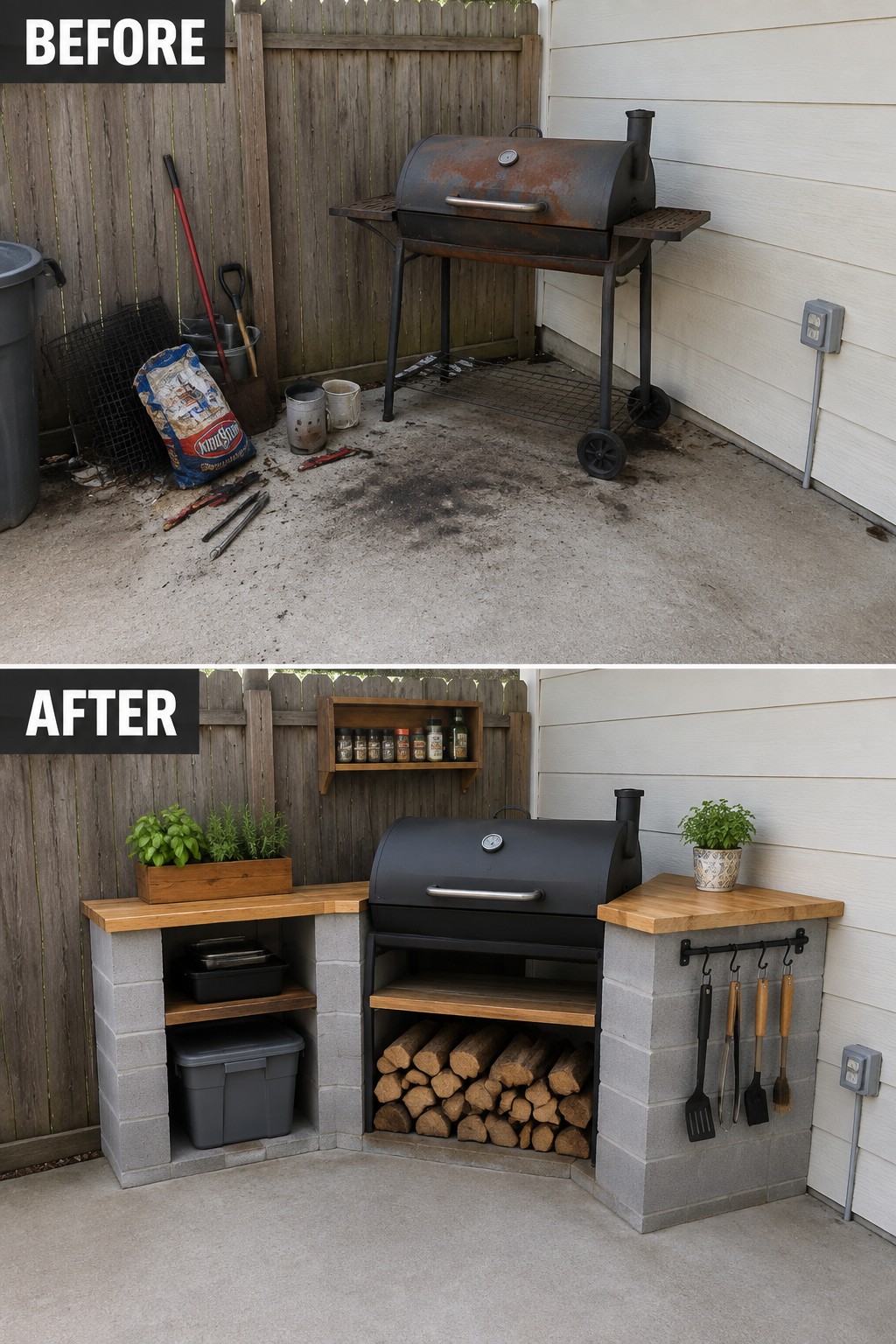
A grill left on open concrete tends to collect clutter fast. Adding low cinder block bases with wood tops on either side gives the grill a clear spot and creates usable counter space without much cost. The blocks also form open storage below for bins and firewood while hooks on one side keep tools handy.
This setup works best in a corner or along a fence where the blocks can tie into existing walls. Keep the wood sealed for weather and leave enough room to walk around the grill once everything is in place. It turns a loose corner into a single working zone instead of a scattered mess.
Add Gravel And Stepping Stones To Define A Narrow Path
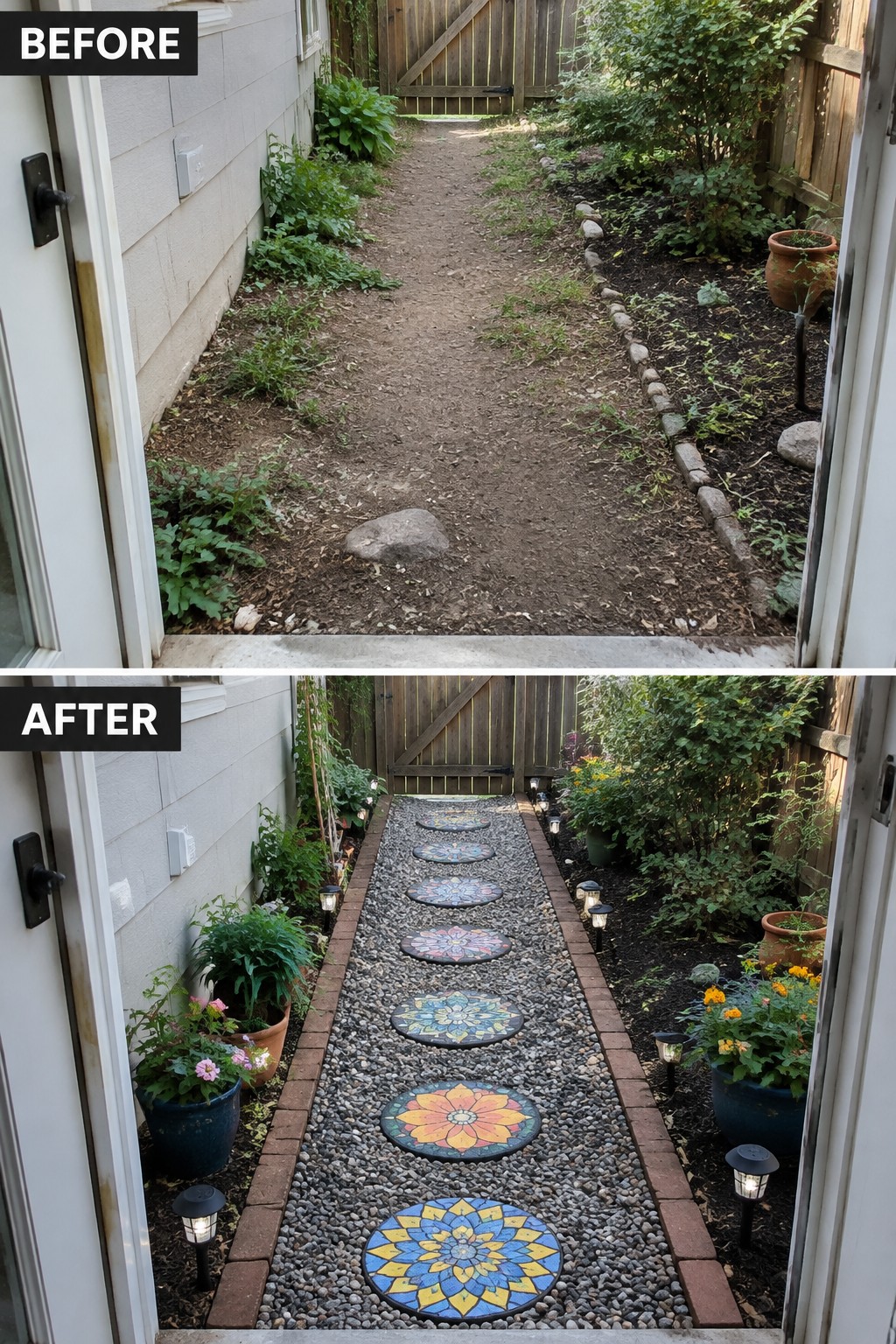
A narrow side yard often ends up as just a strip of dirt that gets muddy after rain and grows weeds fast. Laying down gravel with a few colorful stepping stones and a simple brick border turns that same space into a clear, easy-to-walk path that feels intentional instead of forgotten.
This idea works best in tight areas between houses or fences where you need a walkway but do not have room for wide paving. Clean up the overgrowth first, then add edging to hold the gravel in place so it does not spill into the beds. The same approach can help any long, skinny yard feel more organized without spending much on materials.
Turn An Empty Pergola Into An Outdoor Seating Area
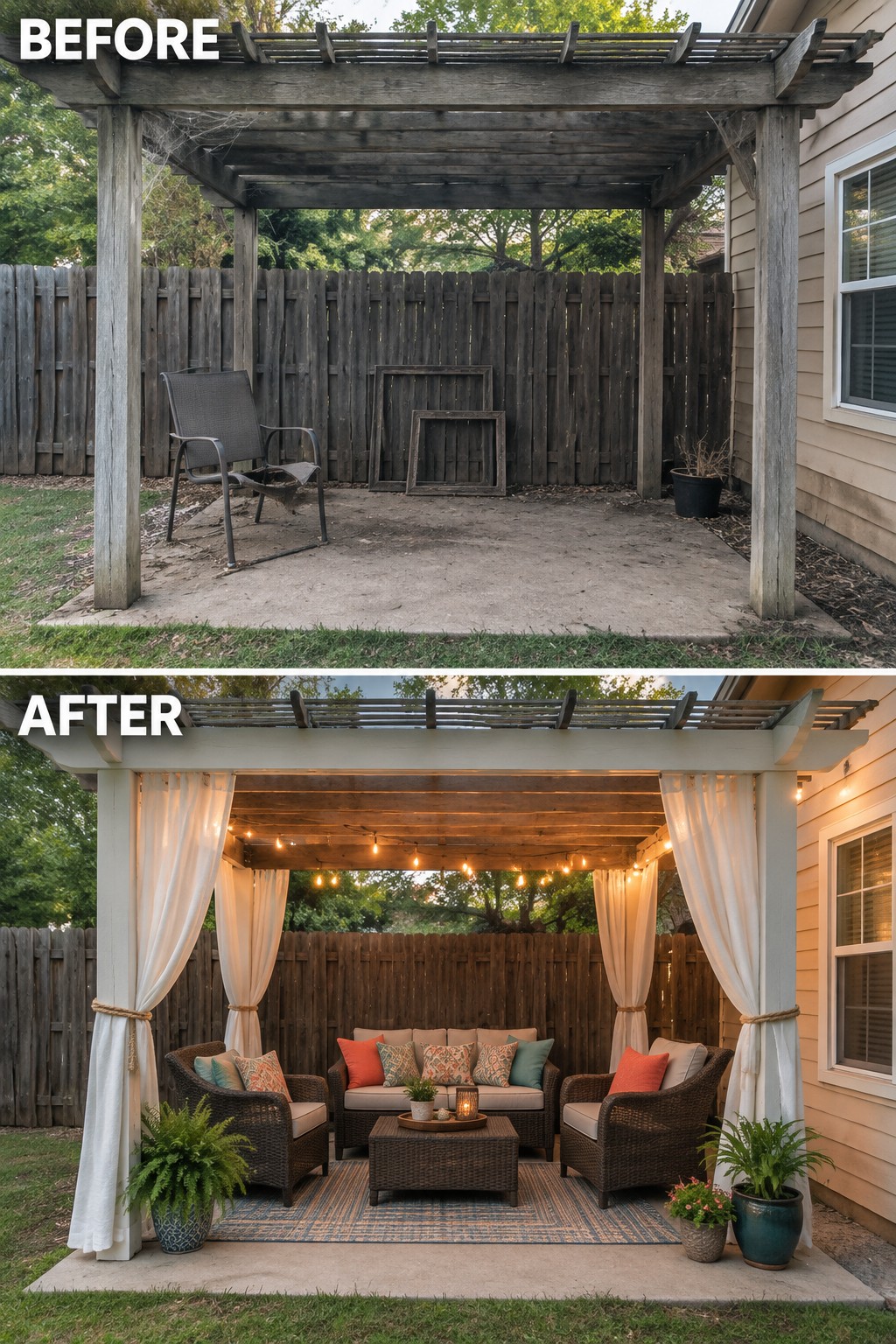
An unused pergola often feels like wasted space when it has no furniture or clear purpose. Adding a seating group, a rug to define the floor, and simple curtains at the sides turns the same structure into a room that people actually use.
This idea works best on patios or decks that already have some overhead cover. Keep the furniture scale realistic so there is still room to walk around the chairs and table. String lights and a couple of potted plants are enough to finish the look without crowding the area.
Frequently Asked Questions
Q: Where should I start if I want to try one of these upgrades this weekend? A: Grab a tape measure and walk your yard to spot the sunniest or flattest spot first. That helps you pick a quick win like adding a pallet bench or some hanging planters without guessing on size.
Q: What if my yard gets heavy rain and I worry about wood warping? A: Seal any new wood right after you build and set it on bricks or stones to lift it off the ground. This keeps moisture from pooling and lets the piece last through a couple seasons.
Q: Can I do these makeovers if I rent and cannot dig or paint permanent stuff? A: Stick to movable items like crates for seating or solar lights that stick in the dirt. You can pack them up when you leave and most landlords will not mind.
