


Yards in dry regions tend to look neglected when traditional grass and thirsty flowers keep demanding more water than the area can provide.
Mapping out zones for different levels of drought tolerance lets the design work with the natural conditions instead of against them.
Soil improvement makes the biggest difference early on.
Adding defined paths and borders helps the yard feel intentional even before the new plants fill in.
I would start by trying a couple of the suggested plant groupings in one corner to see how they handle the heat here.
Add Structure To An Overgrown Front Yard

The front yard went from a patchy, uneven lawn to a clean layout with gravel paths and planted beds edged in river rock. The change gives the space shape without adding much to water use. Large boulders and agaves now mark the beds instead of letting the grass run right up to the house.
This approach works well on small front yards where a full lawn feels like too much upkeep. Start by clearing the grass, then lay out beds with a simple border before filling them with low-water plants and gravel. It keeps the yard looking tended even when growth is minimal.
Add Gravel Paths And Planting Beds To A Bare Yard

A bare lawn often feels unfinished because there is nothing to guide the eye or create zones. Adding a simple gravel path with clusters of drought-tolerant plants on either side gives the space clear structure and turns the whole yard into something that feels intentional rather than empty. The change from flat grass to defined beds and a winding path is what makes the biggest difference here.
This approach works well in dry climates where a full lawn is hard to keep green. Start by laying out the path and beds first, then fill them with low-water grasses, perennials, and a few larger rocks or pots. It keeps maintenance low and leaves room to walk through the space without crowding it.
Add Gravel And Stepping Stones To Define A Narrow Side Yard

An overgrown strip of weeds and grass next to the house is hard to maintain and looks neglected. Replacing it with gravel, a line of stepping stones, and a narrow planted border gives the space clear shape while cutting down on watering and mowing. The hose stays accessible on a mounted reel instead of trailing across the ground.
This approach works well in tight side yards where a full lawn never thrives. Start with cleanup and a simple gravel base, then add low-water plants like rosemary and lavender along the fence. Keep the path narrow enough to leave room for walking but wide enough to feel intentional.
Clear Overgrown Beds Before Adding Gravel And Low-Water Plants

An overgrown bed full of weeds and leggy plants makes the whole front of the house look neglected. Clearing it out completely and replacing the mess with gravel gives the area structure right away. The new layout uses a few larger succulents and rocks to create shape without needing constant watering or trimming.
This approach works best along the front foundation where you want something tidy but simple. Start with a full cleanup, lay down gravel or small stones for the base, then add just a handful of drought-tolerant plants and a few larger rocks. The result stays neat with very little ongoing care.
Use Terracing To Handle A Sloped Yard

A steep, weedy slope is tough to mow and tends to wash out during rain. Adding low stone retaining walls turned the same hill into a set of flat beds that hold soil in place and make planting straightforward.
This idea suits any yard with a noticeable grade. Build the walls first to create level planting zones, then add mulch and pick drought-tolerant plants like succulents and ornamental grasses. The flat beds cut down on erosion and let you water only where plants actually grow.
Replace A Grass Border With Pavers For A Low-Water Seating Area

Swapping a strip of grass next to the pool for pavers and gravel creates a clear spot for seating without the weekly mowing and watering. The hard surface gives the area structure and keeps it usable even during dry spells.
This works well in pool yards or side yards where lawn feels like wasted space. Keep the furniture simple and pick pots that can handle sun and wind so the whole setup stays low maintenance over time.
Add Structure To Overgrown Edges With Xeriscape Beds

A narrow strip of dirt and weeds along a driveway or fence often gets neglected because it is hard to mow and awkward to plant. Clearing that strip and replacing it with a simple bed of rocks and low-water plants turns the same space into something that looks finished and stays neat with almost no watering.
This approach works best on homes where the driveway runs close to a fence or property line. Clear the weeds first, lay down a clean edge, then fill the bed with a few types of drought-tolerant plants spaced so they can fill in without crowding. The rocks help suppress new weeds and give the bed a tidy frame that does not compete with the concrete driveway.
Define Garden Beds To Replace Overgrown Front Yards

The biggest shift in this yard is replacing a patchy lawn and messy shrub border with clear planting beds edged in stone. Once the beds are defined, the same area feels purposeful instead of neglected, and the plants stay contained instead of spilling onto the sidewalk.
This idea works best on small front yards where you want lower water use and less mowing. Lay out the beds first with simple edging, add a layer of mulch, and choose a mix of shrubs and low ground covers that handle dry spells. Keep the beds a reasonable width so they stay easy to reach for occasional trimming.
Define Patio Edges With Gravel And Potted Plants

The biggest shift here came from moving the pots off the open concrete and into gravel-lined beds along the sides. This simple change gives the whole area a clearer shape and cuts down on the scattered look that made the space feel unfinished.
This approach works best on patios that already have a solid surface but need some softening. Lay down the gravel first to mark the beds, then repeat a few plant types in matching pots so the layout feels planned rather than random. It keeps water use low while still giving you color and texture right where you walk and sit.
Define A Bare Yard Area With Pavers And A Seating Wall
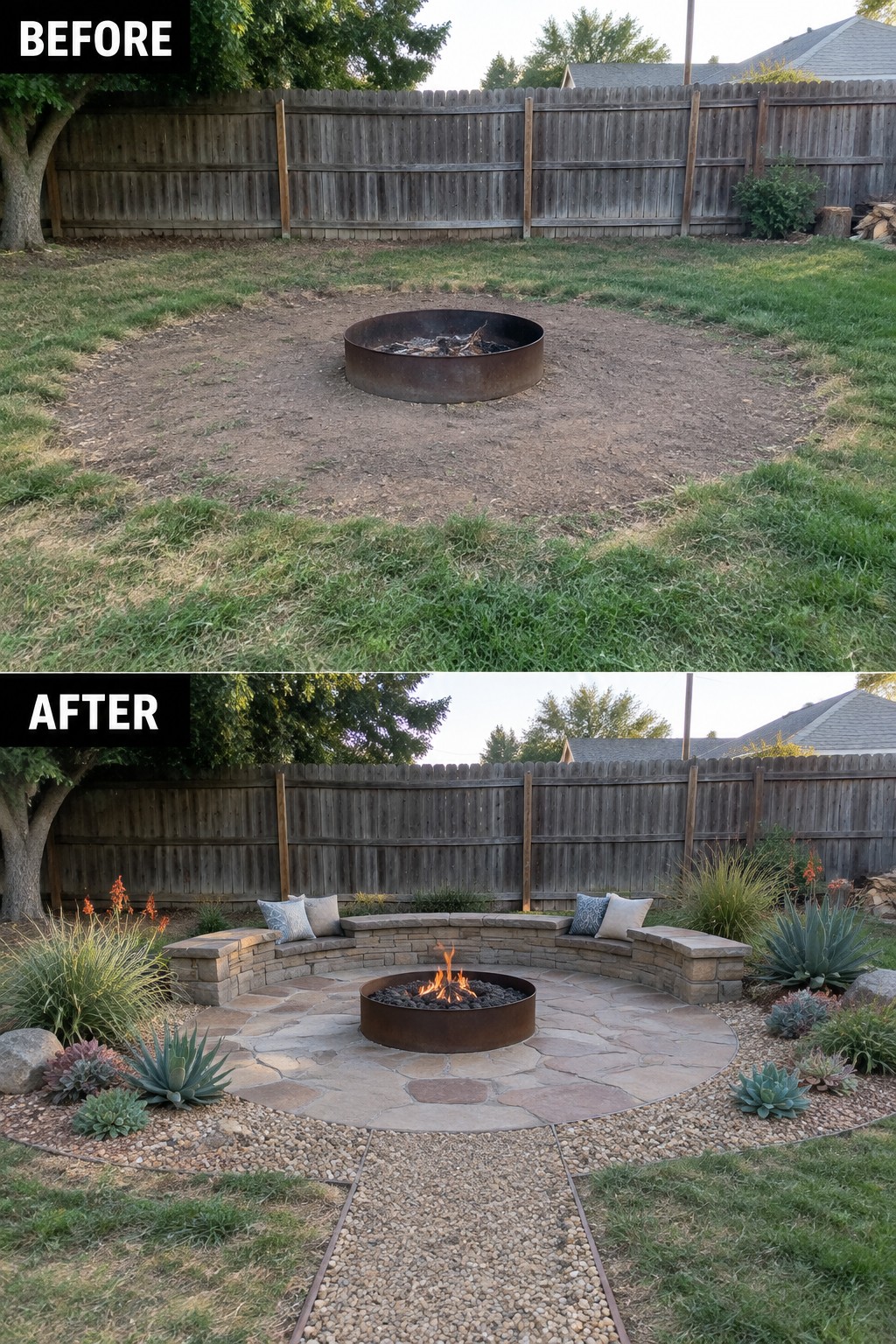
A fire pit sitting in open dirt and patchy grass often feels unfinished because nothing holds the space together. Adding a circular stone patio and a low curved bench wall gives the area clear edges and a place to sit without needing a full deck or large structure. The gravel border and simple plantings around the outside keep everything from looking scattered.
This approach works well in backyards where the lawn is already thin or uneven. Start with the hardscaping to set the shape and scale, then fill in with low-water plants along the edges. It keeps the focus on the fire pit while making the whole spot feel intentional rather than leftover.
Define Planting Beds With Gravel For A Low-Water Yard

A bare concrete yard often stays hot and unused because it has no structure or planting zones. Covering the concrete with gravel and adding a few trees in mulched beds with basic irrigation rings gives the space shape and cuts down on heat while using very little water.
This idea works best on flat lots in dry climates where you want to move away from lawn or plain concrete. Lay fabric and gravel first to control weeds and drainage, then place plants in clear beds so the yard feels intentional rather than scattered. Keep the beds modest in size so you can still walk through the space easily.
Add Gravel Beds To Frame A Simple Entry

The biggest shift here comes from replacing plain grass strips with clear gravel beds edged in stone. This gives the front walk a finished border, adds texture underfoot, and cuts down on the amount of lawn that needs regular watering and mowing. The new stone facing on the steps also ties the hardscape together so the whole entry feels more intentional.
This approach works well on any modest front yard where you want lower maintenance without losing curb appeal. Start by laying out the bed shapes with a hose, add a solid edging, then fill with gravel before you plant. Choose a few repeating plant types that can handle dry spells, and keep the number of elements small so the beds stay easy to care for over time.
Define Narrow Strips With Gravel And Planting
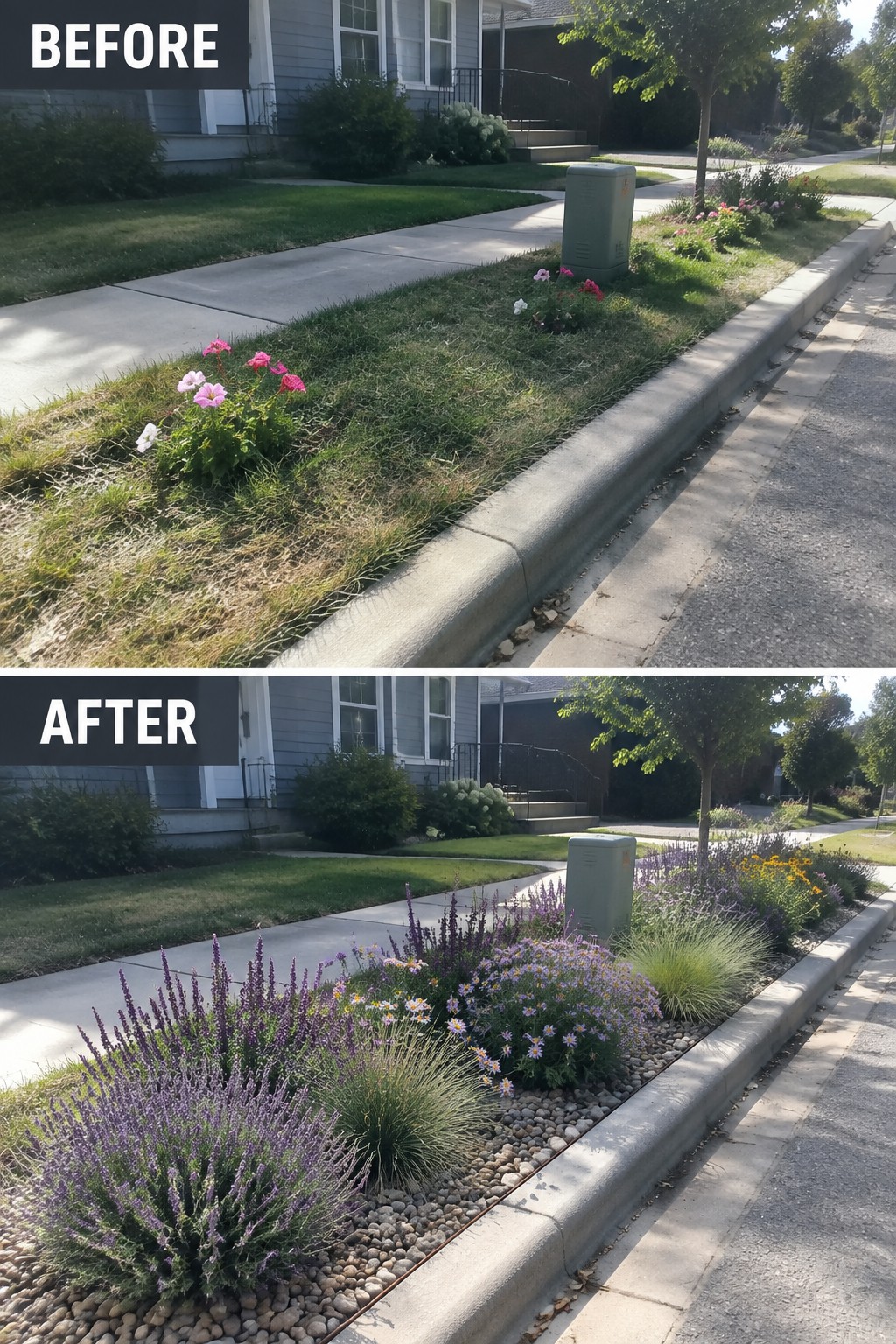
A narrow strip along the curb often ends up as patchy grass that is hard to mow and quick to look unkempt. Replacing that strip with a simple gravel bed and a few drought tolerant plants gives the space a clear shape and cuts down on regular upkeep. The change from uneven turf to a contained gravel area with mounded plants makes the whole front edge look intentional instead of leftover.
This idea suits homes with a sidewalk strip that gets little foot traffic. Clear the grass first, add a border or edging to hold the gravel, then choose low-water plants that stay compact. The result stays neat through the seasons and works especially well in drier climates where frequent watering is not practical.
Add Defined Beds Along A Fence Line

An overgrown strip along a fence often ends up looking messy because plants spread without any edge to contain them. In this case, the before view shows vines and weeds taking over the base of the fence while the lawn edge stays ragged. The after view shows the same area turned into a clear planting bed with a mix of shrubs set in mulch. That single change makes the whole side of the yard look intentional instead of neglected.
This approach works well in xeriscape yards because you can pick drought-tolerant shrubs once and let them fill in without constant watering. Keep the bed narrow enough to leave room for the lawn and add a simple metal or plastic edging to hold the mulch in place. The result is lower maintenance and a border that still feels full without looking wild.
Terracing Turns A Steep Slope Into Garden Beds

A steep, weedy slope is hard to maintain and even harder to plant. Adding low stone retaining walls breaks the hill into flat beds, which stops erosion and gives plants a place to settle. The gravel between the beds also helps with drainage and keeps the whole area looking tidy instead of patchy.
This approach works best on yards that drop sharply and get full sun. Start with the walls before you worry about the plants, and choose succulents and grasses that handle dry conditions once the structure is in place. The result is a slope that stays manageable instead of turning into a constant mowing or weeding problem.
Add Structure To An Overgrown Backyard
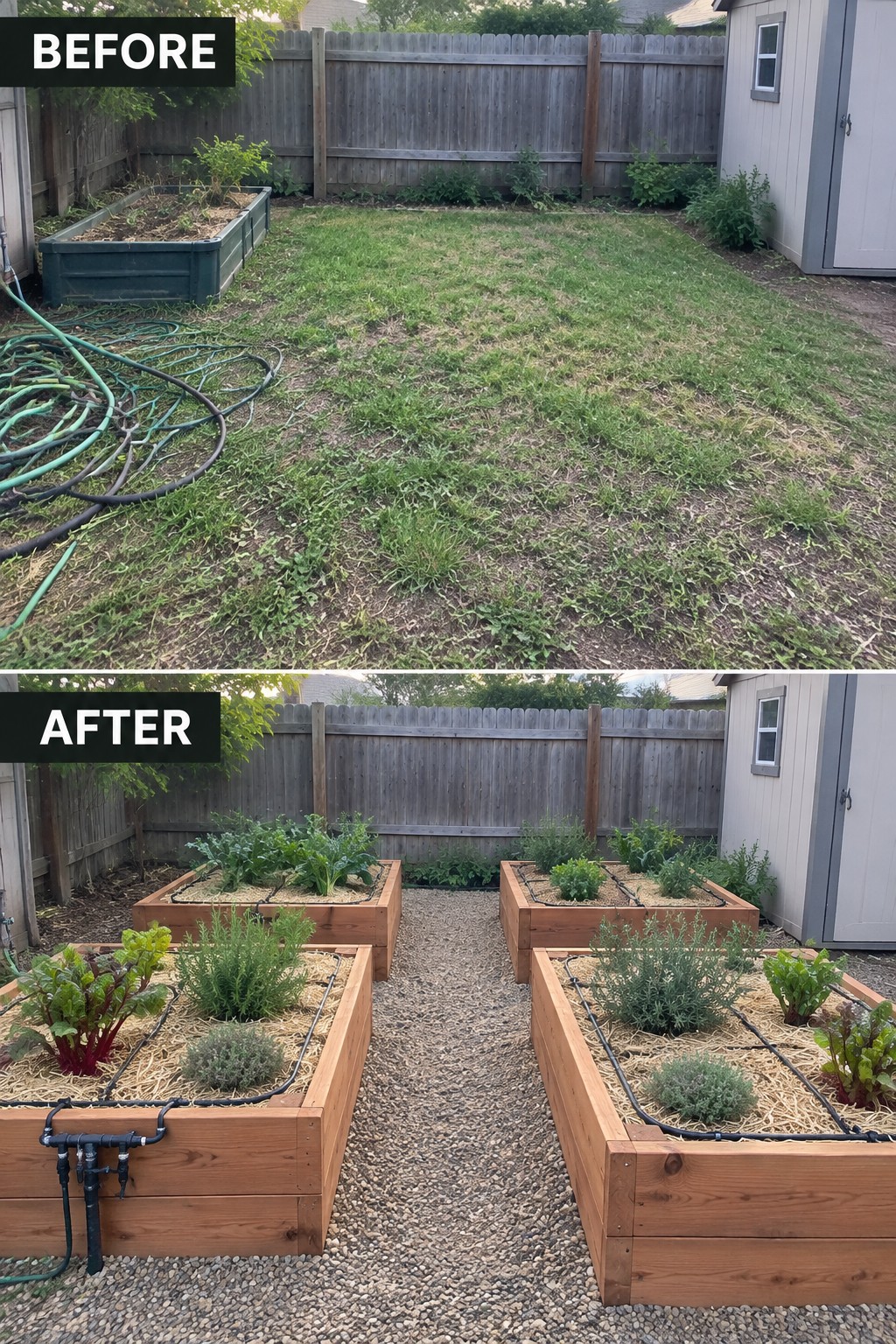
A weedy lawn with no clear layout is hard to maintain and wastes water. The change here comes from installing raised wooden beds with drip irrigation and gravel paths, which turns the space into a set of defined growing areas instead of one big patch of grass.
This idea suits small yards where you want to grow food or low-water plants without constant mowing or watering. Clear the main area first, then position the beds so paths stay wide enough to walk through and the irrigation lines stay simple to manage.
Give A Narrow Side Yard Structure With Gravel And Planting
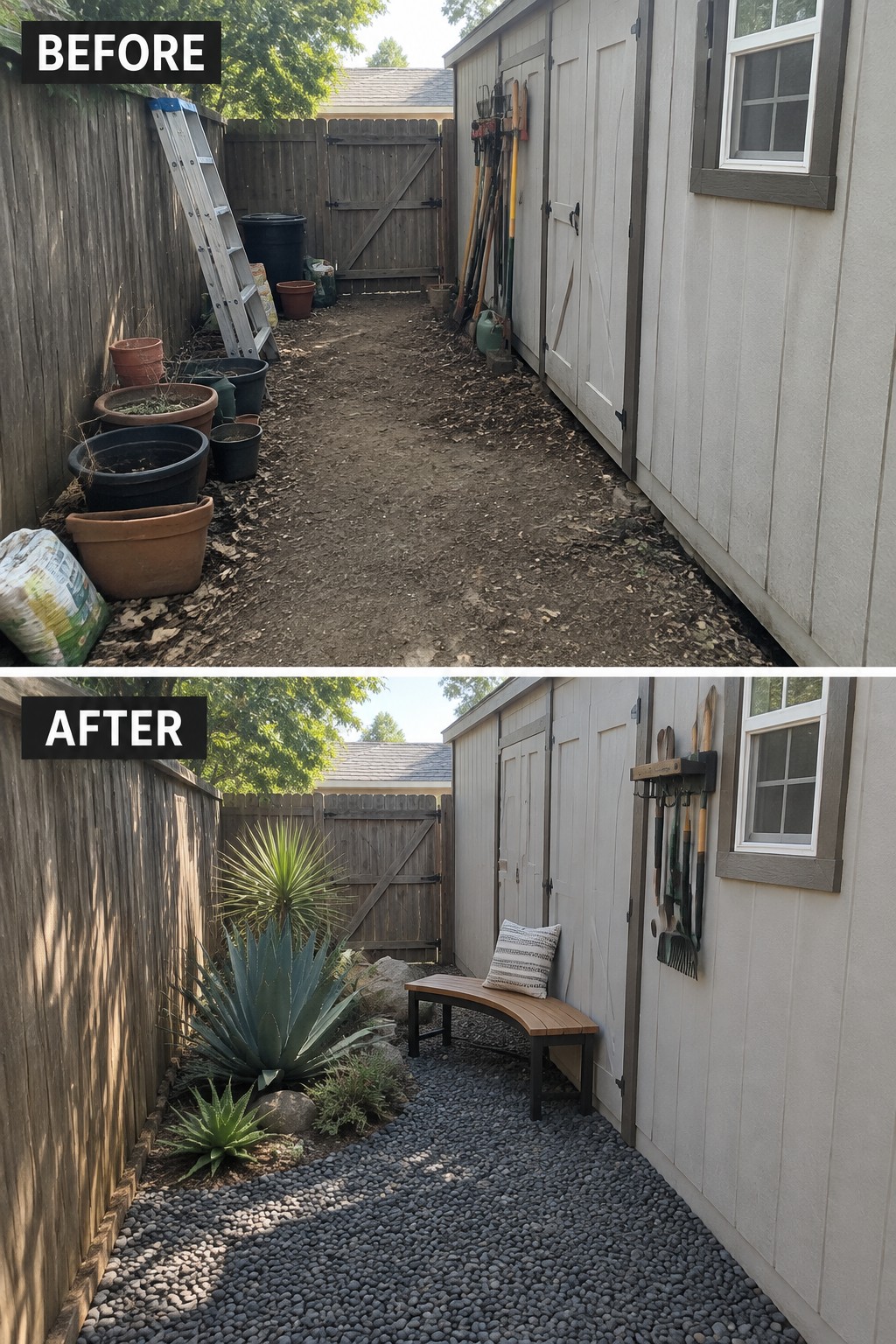
A messy dirt path lined with random pots and tools feels neglected because there is no clear layout. Switching to gravel and a defined planting bed along one side turns the space into something that looks planned and stays low maintenance.
This idea works best in tight side yards where grass will not grow well. Clear out the clutter first, then lay gravel for the walkway and group a few tough plants like agaves into simple beds edged with rocks. The result is easier to walk through and needs far less watering than a lawn.
Add Stone Edging To Define Garden Beds

The front yard looked messy because the big hosta clumps spilled right onto the path with no clear edge. Adding a simple stone border on both sides and switching to smaller, varied plants gave the whole space a much cleaner shape while cutting down on the overgrown look.
This approach works well on narrow front yards where you want structure without adding a lot of new hardscaping. Start by laying out the border first, then fill in with lower-water plants that stay in bounds. It keeps the beds from creeping onto the walkway and makes routine weeding and mulching easier over time.
Frequently Asked Questions
Q: How do I pick plants that will actually survive in my area without constant fuss? A: Start by checking what grows naturally nearby or ask at a local nursery for natives that handle dry spells. Group plants with similar water needs together so nothing gets over or under watered. This setup keeps things simple once they establish.
Q: What about weeds? Do they still show up with less grass around? A: Mulch does a solid job blocking most weeds from sprouting in the first place. Pull any that pop through early on before they spread. After a season or two the ground cover thickens and weeds drop off naturally.
Q: Will my water bill drop right away? A: But give it time before expecting big changes on the bill. The plants need a full season to root deep. After that the savings show up steadily.
Q: Can I mix in a few flowers for color without messing up the low water plan? A: Sure, choose drought tolerant perennials that bloom in your climate. Tuck them in spots where they get the right sun and they will add pops of color without extra watering.
