


Many patios end up underused when the seating does not match how people actually sit and talk outside.
A better layout can pull the whole space together without adding much new furniture.
Layout changes matter most.
I tend to start with that step myself before thinking about plants or accessories.
The ideas here show how small shifts in arrangement lead to spaces that get regular use instead of staying empty.
Turn An Empty Patio Into A Seating Area

A bare concrete slab with one bench does not invite anyone to stay outside for long. Adding a sectional sofa, a large rug to anchor it, and string lights overhead turns the same space into a place where people actually sit and spend time in the evening.
This idea works best on patios that already have some overhead cover or a wall for support. Keep the furniture scale realistic so there is still room to walk around the coffee table, and choose pieces made for outdoor use. One rug and a few solid seating pieces usually do more than filling the space with scattered chairs and small pots.
Add Built-In Seating To Create A Real Outdoor Dining Area

A patio with just a small table and two folding chairs often feels like wasted space. The biggest change here was adding a long built-in bench along the house, which instantly gave the area enough seating for a full dining table and multiple chairs without crowding the stone floor.
This approach works well on patios that sit right against the house. The bench takes up little walking room yet provides steady seating that does not shift or blow around. Keep the table size realistic for the space and leave clear paths around the edges so the area stays easy to move through.
Turn An Empty Patio Into Two Defined Seating Zones
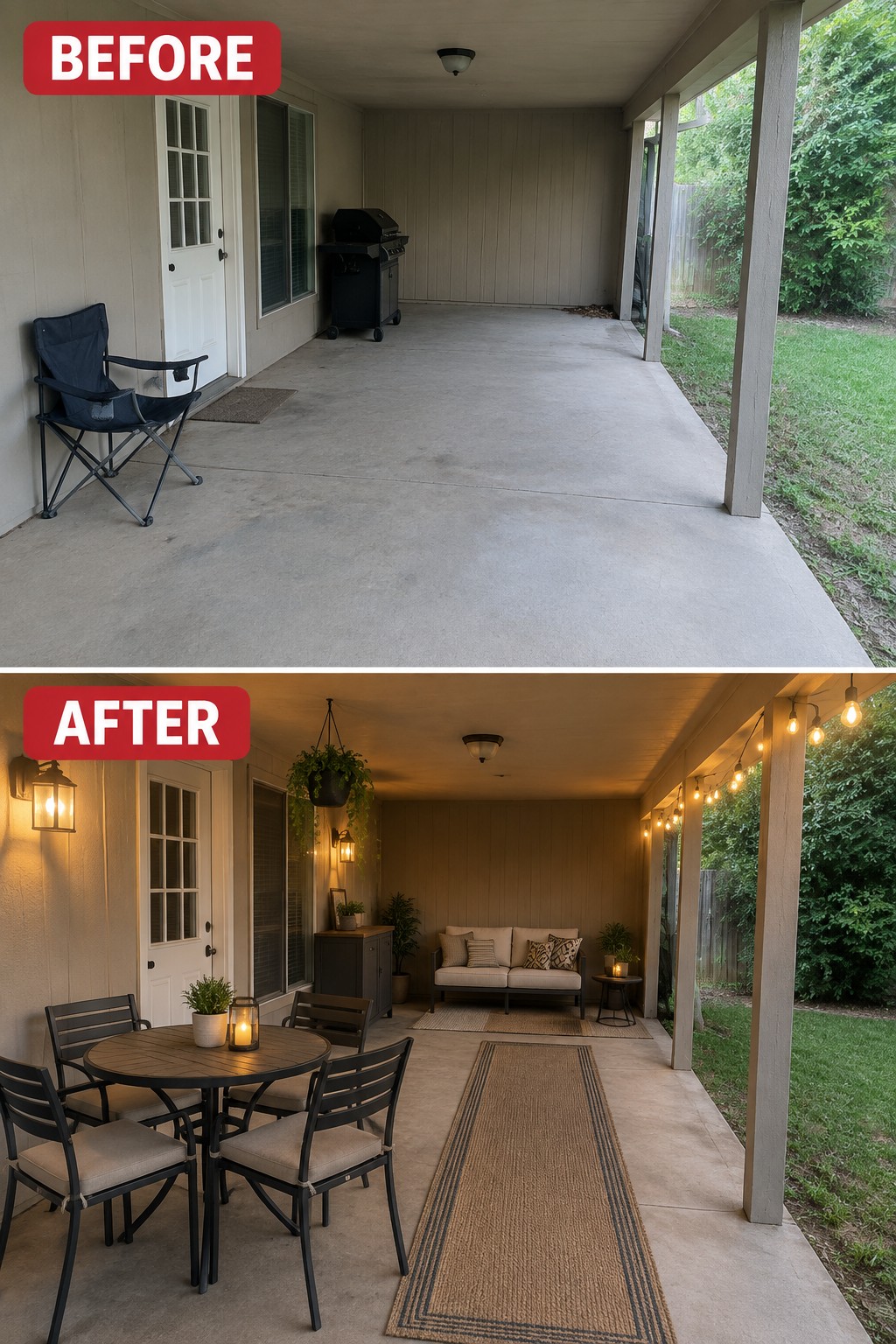
A plain concrete slab rarely gets used until it has clear spots for sitting and eating. In this case, the space went from one lone folding chair to two defined zones, one for meals and one for relaxing, which instantly made the whole patio feel intentional rather than leftover.
This idea suits any covered outdoor area that sits empty most of the year. Map out where people will actually gather first, then add a rug under the dining table and another under the sofa to mark each zone. Keep the furniture scale modest so there is still room to walk through, and use simple string lights along the edge if you want the space to work after sunset.
Create A Defined Seating Circle Around Your Fire Pit
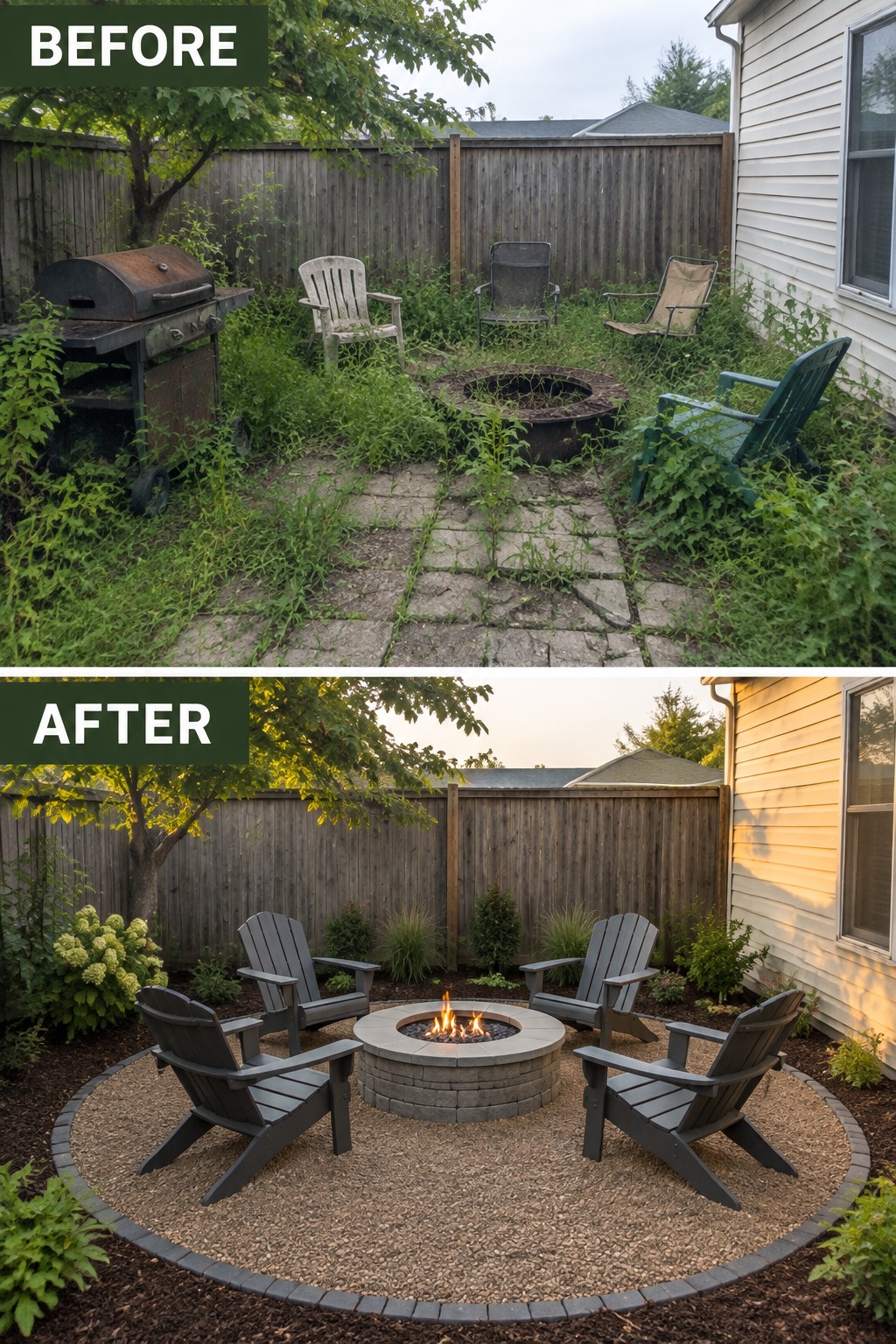
An overgrown backyard with random chairs scattered around a neglected fire pit does not invite anyone to sit down. Clearing the weeds first and then laying a simple gravel circle with a low border turns the same space into a real outdoor room. The matching chairs now face each other instead of sitting at odd angles, so the fire pit becomes the actual center of the layout rather than something you have to work around.
This approach works well in small or medium backyards where you want one main gathering spot instead of several loose areas. Start by removing the overgrowth and leveling the ground before you add any furniture. Choose chairs that can stay outside year-round, and keep the circle size just large enough for comfortable movement between seats.
Build Bench Seating Along One Wall To Make A Narrow Patio Usable

A narrow side yard often ends up as leftover space with nowhere to sit. In this case the before photo shows mostly bare concrete and a single plastic chair. Adding a long built-in bench with a thick cushion and hidden storage underneath instantly gives the area a clear purpose and enough room for several people.
This approach works well on tight patios or side yards where freestanding furniture would crowd the walkway. Keep the bench low and simple so it does not overwhelm the space, then add a compact table and a couple of stools for dining. String lights overhead help define the area at night without needing much else.
Wrap Seating Along The Deck Edge To Create An Outdoor Room

A big empty deck often stays unused because there is no clear spot to gather. Running a sectional along the railing pulls the space together and creates a real seating area with room for people to sit facing each other around a central table.
This idea works best on decks that feel too open and exposed. Keep the seating low and deep so it does not block views or walkways, and add simple string lights along the top rail to make the space usable in the evening. Start with the furniture layout before adding too many extra pieces.
Turn An Empty Patio Into A Defined Seating Area

An empty concrete patio usually stays unused because there is no clear place to sit. Laying down a large rug and placing a table and chairs on one side with a small sofa opposite creates two simple zones that make the space feel purposeful.
This approach works best on rooftops or balconies where the floor runs wall to wall. Start with the rug to mark where people will gather, keep the furniture modest in size so movement stays easy, and add a few weatherproof pieces that can stay out year round.
Turn A Bare Patio Into A Defined Seating Area

The before photo shows a plain concrete slab with a couple of folding chairs and laundry strung across the fence. The after version raises the space with a wooden deck and wraps built-in benches around the edges, which immediately gives the narrow yard a clear place to sit and gather. The change works because the deck creates a floor and the benches turn the perimeter into usable seating without crowding the middle.
This approach suits small or long, narrow patios where freestanding furniture can feel scattered. Start by deciding the main seating zone, then build the deck and benches to fit that shape. Add a small table in the center and string lights along the fence so the area feels usable after dark. Keep the planting simple in matching boxes so the focus stays on the seating layout.
Define A Seating Zone With Furniture And A Rug
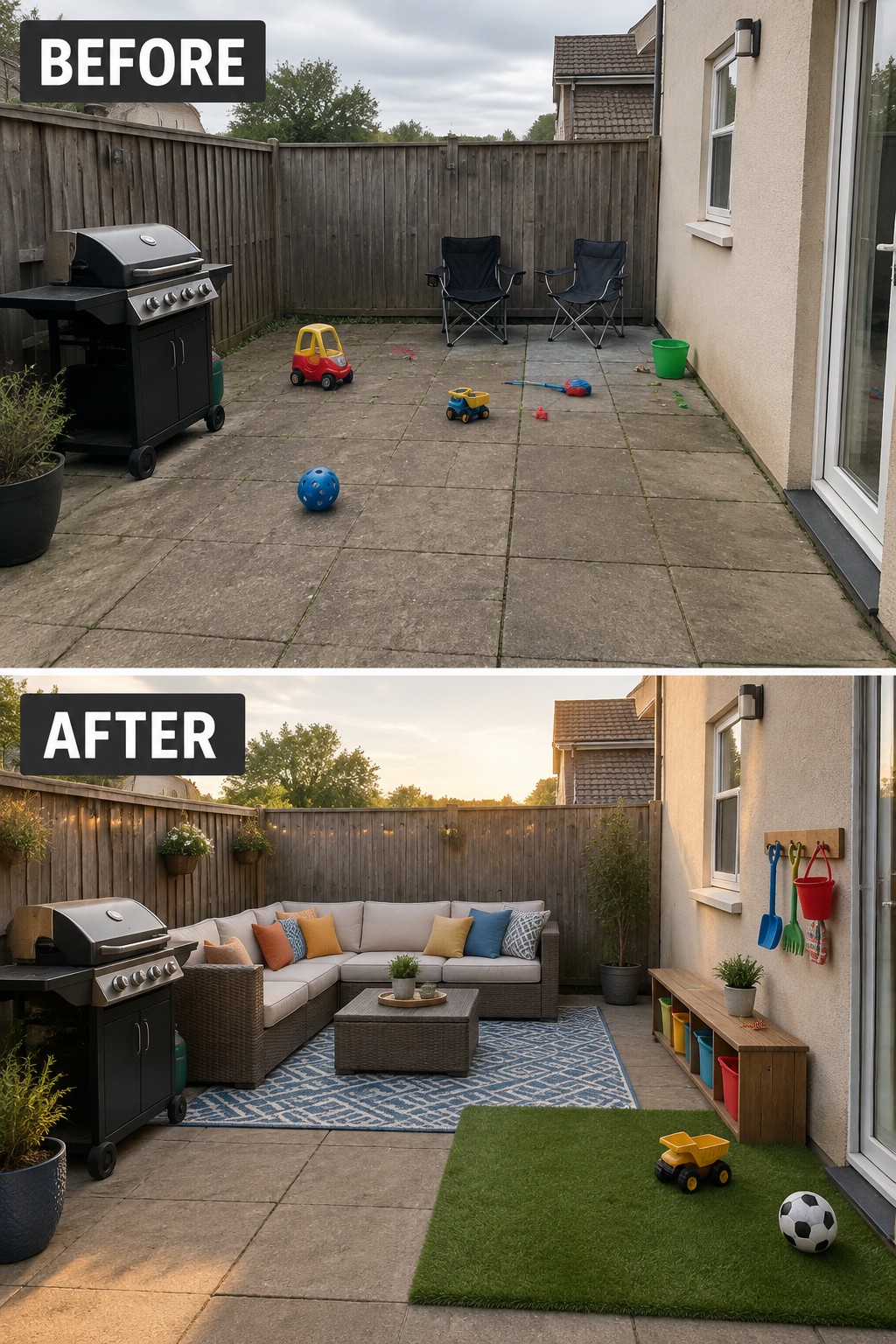
A bare concrete patio often feels like wasted space because nothing tells you where to sit or how to use it. Adding a large sectional and an outdoor rug changes that right away by creating one clear spot meant for gathering.
The same approach works on most patios. Start with the seating layout first, keep the furniture scale reasonable for the size of the slab, and let the rug mark the boundary so the area feels finished without crowding the rest of the space.
Turn A Small Patio Corner Into A Cozy Hanging Chair Area

A plain concrete corner with only a storage bin feels like wasted space. Replacing that bin with one hanging chair and a small side table gives the area a clear reason to exist and turns it into a spot where someone might actually sit.
This approach works best on small patios or side porches where a full furniture set would crowd the walkway. Keep the scale simple, use one main seat as the focal point, and add just enough accessories like a lantern or plant so the layout feels finished without overfilling the space.
Use Matching Furniture To Balance A Patio Seating Area

Many patios end up with a random mix of chairs that do not quite work together. Swapping those mismatched pieces for a matching pair creates a much clearer layout that feels intentional and easier to use. The change also frees up floor space since the new chairs sit at the same height and depth.
This approach works well on concrete pool decks or small patios where you want two comfortable seats without crowding the area. Keep the setup simple by adding one small table between the chairs and a couple of weatherproof planters on the sides. Stick to two or three colors total so the space stays calm rather than busy.
Swap A Large Patio Table For Flexible Seating
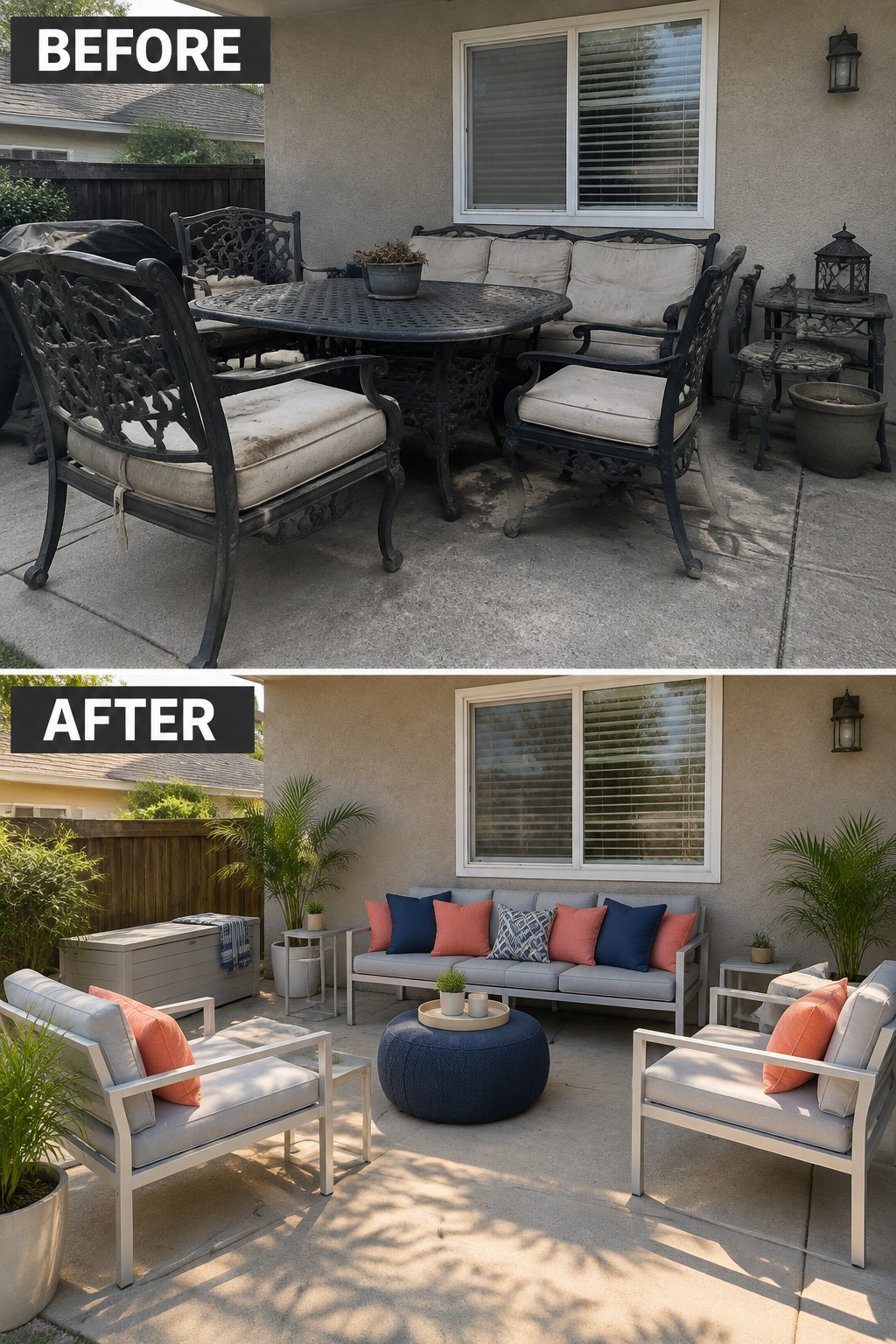
Many patios end up dominated by one big table that takes over the whole space and limits how people actually use it. In this case the old setup with the heavy metal table and mismatched chairs made the concrete feel crowded and hard to move around. Switching to a sofa, two chairs, and a low central ottoman opened up the area and gave it a clear purpose for sitting and talking.
This layout works well on medium patios where you want to encourage conversation instead of formal dining. Keep the furniture scale modest so there is still room to walk around the edges, and choose pieces that can stay outside year round. A simple round table or tray on the ottoman is enough to hold drinks without needing another large surface.
Turn A Bare Patio Into A Usable Seating Area

A small patio with just a table and two chairs often ends up feeling empty and underused. Switching to built-in benches along the walls creates a clear spot for people to sit and gather without taking over the whole space. The benches make the area feel more intentional and give you room for more seating while keeping the floor open.
This approach works well on patios that sit against the house and have limited square footage. Keep the benches simple, use outdoor cushions that can handle weather, and add one rug to mark the seating zone. It is an easy way to make the patio feel like an actual room instead of leftover concrete.
Turn A Bare Patio Into Defined Seating Zones

The biggest shift here came from adding real seating on both sides of the walkway instead of leaving one lonely bench against the wall. By placing a few chairs and a bench along the edges and anchoring them with planters, the space went from a wide empty slab to two usable spots where people can actually sit and gather.
This layout works well on narrow side patios or back courtyards that need to stay open in the middle. Keep the furniture low and weatherproof, repeat the same wood tone so it feels pulled together, and add a couple of low lights near the seating so the areas feel intentional at night.
Create A Relaxed Sectional Seating Area On An Empty Patio

A bare patio often stays unused because there is no clear spot to sit and relax. Adding a sectional sofa, a large outdoor rug, and a few low poufs instantly defines the space and makes it feel like an outdoor room instead of leftover concrete.
This approach works best on patios that already have decent privacy from a fence or wall. Keep the furniture scale reasonable so there is still room to walk around, and choose pieces that can stay outside year-round. String lights can be added later if you want the area to feel usable after dark.
Frequently Asked Questions
Q: How much space should I leave between seats so people can move around without feeling stuck?
A: Leave at least two feet between each chair and the table edges. That gap lets everyone stand up or walk past without awkward shuffling. Test the spots by sitting down and reaching for a drink yourself.
Q: What works best for a small patio that still needs room for four people to talk?
A: Pull the chairs into a loose square with a low table in the middle. Skip long benches that force everyone to face one direction. The tight circle keeps conversation easy even when the floor space is tight.
Q: Do the chairs and sofa have to match for the layout to feel right?
A: Choose one main seat height and color for the biggest pieces. Add one or two different chairs only if they sit at the same level. The flow between seats matters far more than perfect sets.
Q: How do I check if a new arrangement will work before I buy anything heavy?
A: Mark the spots with tape or old chairs for a day. Sit in each one at different times and notice the views and shade. Move anything that feels off before the real furniture arrives.
