

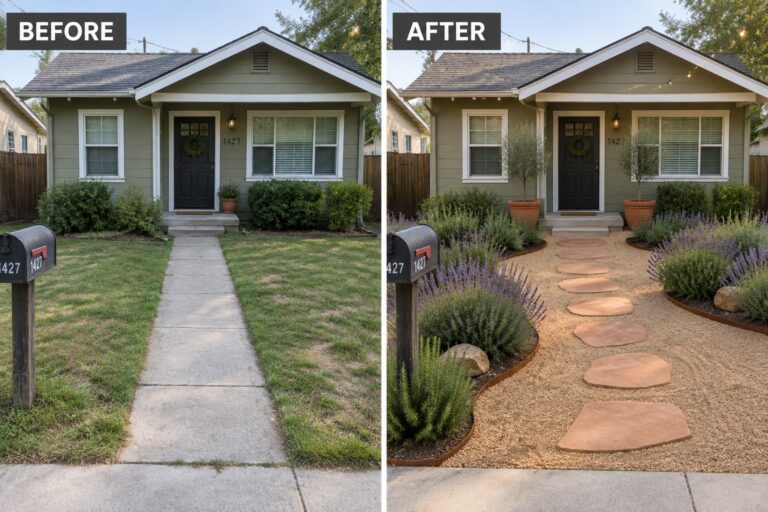
I used to look out at my yard and notice how the flat lawn never really invited much use beyond mowing every weekend.
Switching parts of it to gravel and pavers gave the space clearer paths and places to stand without tracking mud everywhere.
I usually start by marking where the planting beds should go because that single step pulls the rest of the layout together.
Over a couple of seasons the combination of hard surfaces and soil areas started to feel settled in a way the old grass never did.
It is satisfying to walk through now and see how little changes added up to something that actually fits how we use the space.
Replace a Plain Lawn With Gravel and Defined Planting Beds
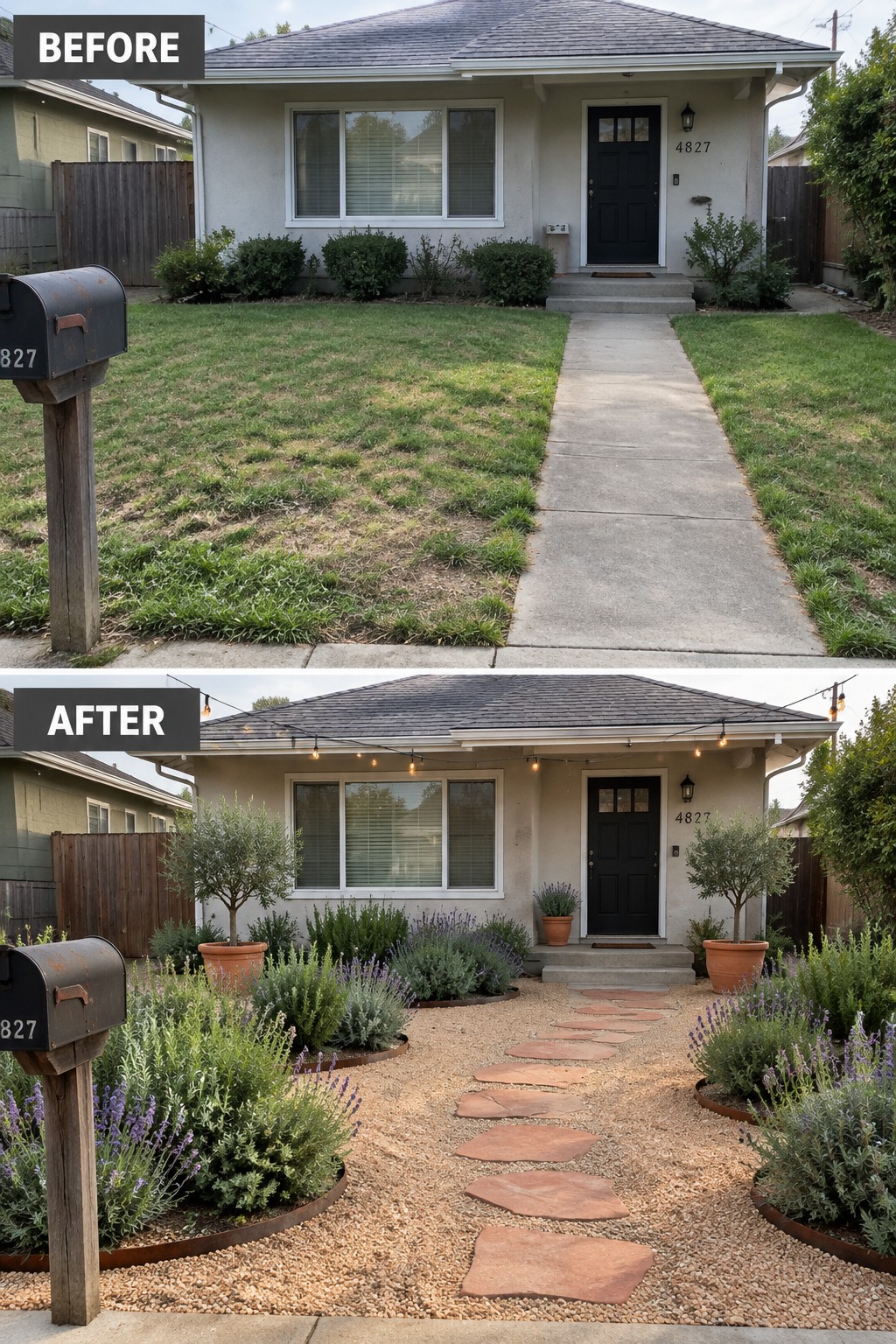
Swapping grass for gravel and adding curved planting beds gives a front yard a cleaner layout without much extra work. Here the open lawn and straight concrete walk were replaced by gravel that fills the space around the beds, with a few stepping stones set into it to keep the path practical.
This idea suits smaller yards or places where grass is tough to maintain. Mark the bed shapes first with simple edging, then fill around them with gravel so the plants stay the focus. It cuts down on mowing and still leaves room to walk through the space.
Use Gravel And Pavers To Shape A Narrow Side Yard

A narrow strip between the house and fence often turns into an awkward weedy mess that never gets used. The change here comes from laying down a gravel path edged with stepping stones, which gives the space a clear walking route and stops the plants from creeping into the middle. Simple planting beds along the fence then keep everything contained and easy to maintain.
This idea suits homes with tight side yards that get little sun. Start by clearing the overgrowth completely, then use gravel for good drainage and low upkeep. Add a few larger stones for stepping and fill the beds with shade-tolerant plants that stay neat. The result feels planned without needing much ongoing work.
Create a Clear Layout With Pavers and Gravel in an Overgrown Yard
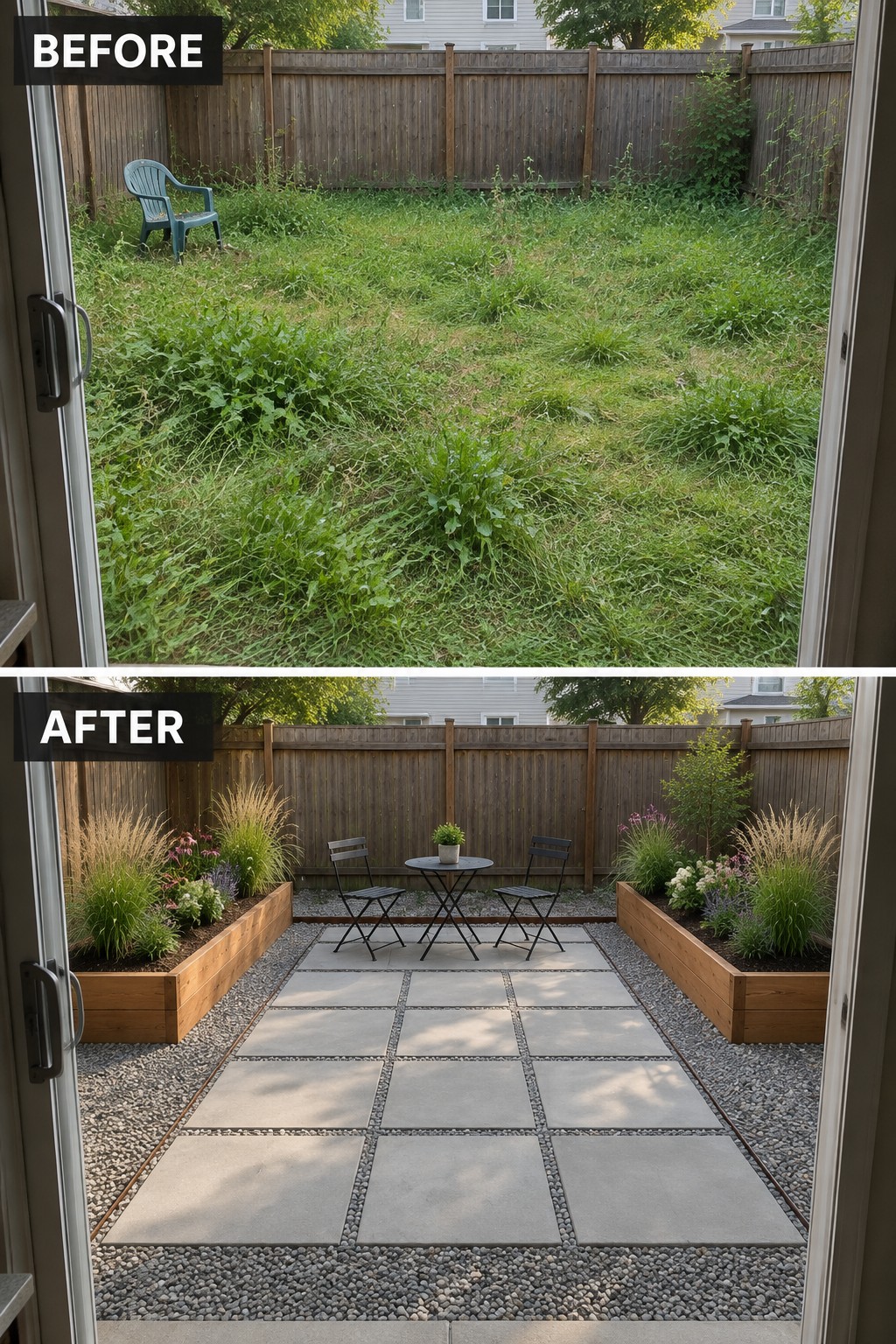
The biggest shift here comes from replacing the uneven grass with a grid of pavers set in gravel. That single change turns a space that was hard to walk through into one that feels planned and easy to use right away.
This idea suits small yards where mowing has become a chore. Lay the pavers first to mark the main area, then add raised beds along the edges so planting stays contained. The result is lower maintenance and a space that actually invites sitting outside.
Transform Patchy Grass With Gravel Beds and Stepping Stones

The front yard had a thin, patchy lawn that made the whole house look a bit neglected. Switching to gravel with simple planted beds and a few stepping stones gave the space a much clearer shape and cut down on mowing and watering.
This idea suits small front yards where grass struggles or where you want less upkeep. Keep the beds narrow so the path stays direct, use edging to hold the gravel in place, and stick with tough plants that can handle sun and dry spells.
Add Structure To A Sloped Yard With Terraces
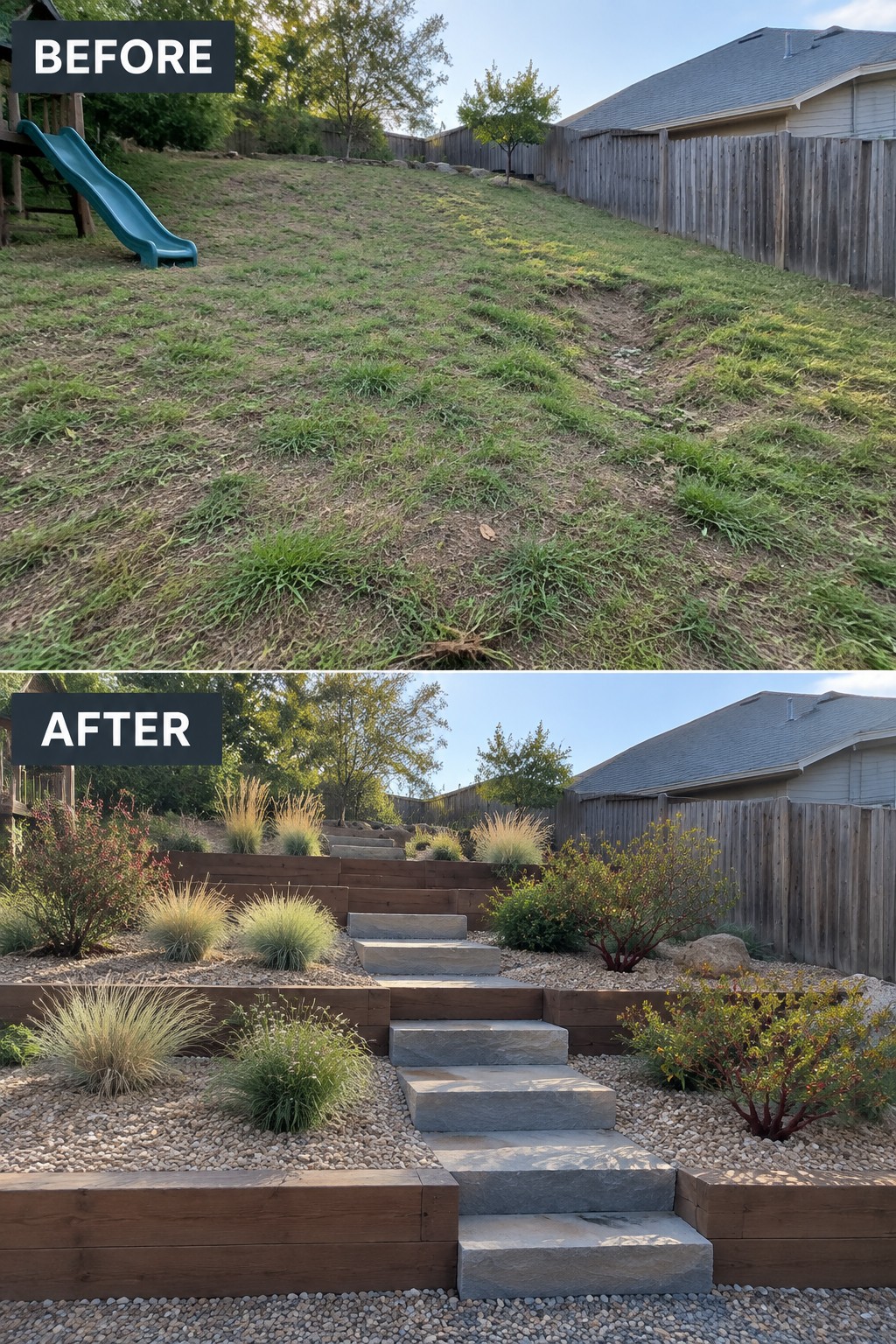
A sloped backyard often stays unused because grass grows unevenly and the ground feels hard to manage. Building low wooden retaining walls and adding stone steps creates flat garden beds that turn the hill into workable space filled with gravel and plants.
This idea suits homes with uneven lots where a simple lawn never looks tidy. Start with the retaining walls to set the levels, then fill the beds with gravel before planting. The result gives the yard clear shape without needing constant mowing or fighting erosion.
Organize an Overgrown Side Strip With Pavers and Shrubs
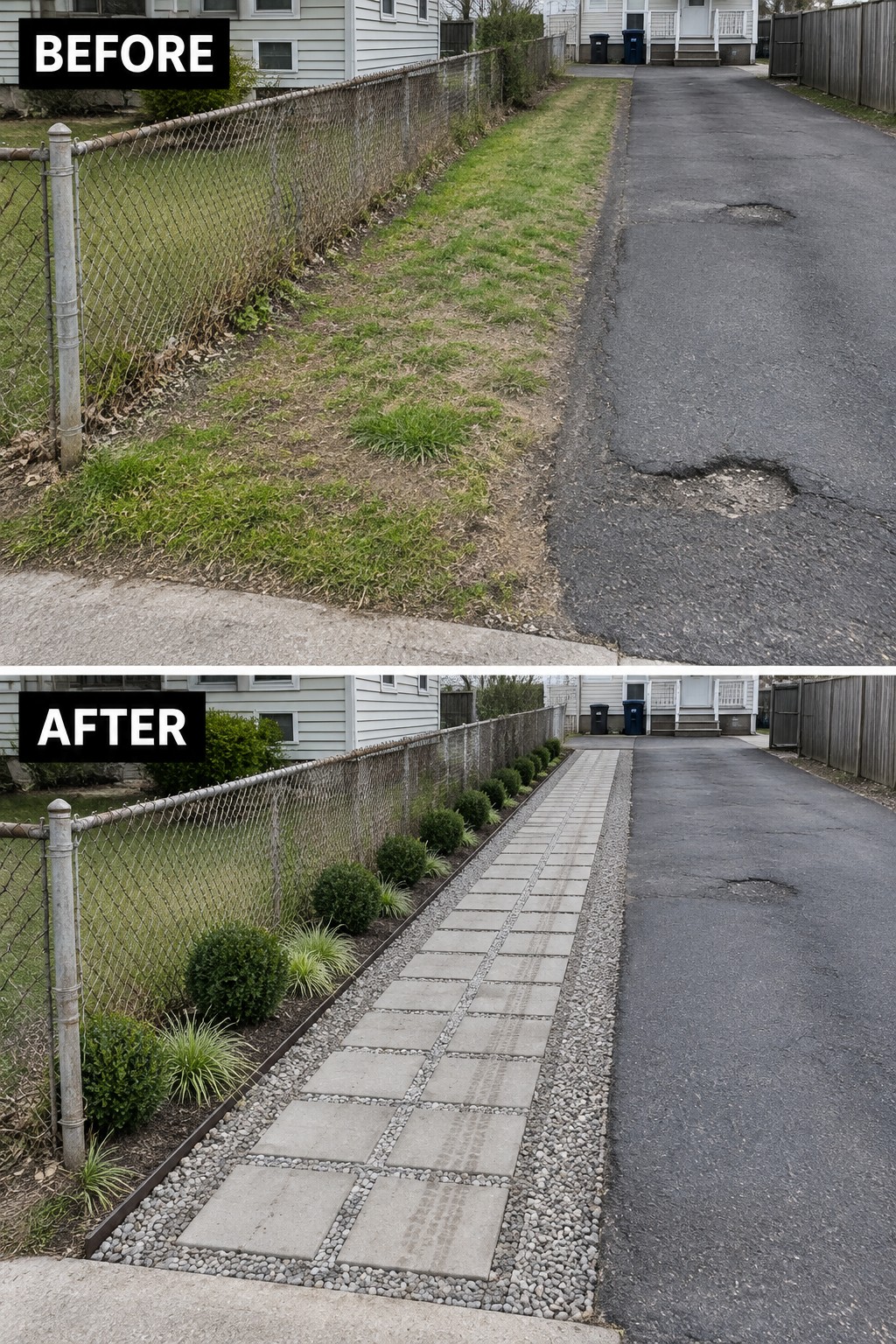
A narrow strip of grass between a fence and driveway often turns weedy and hard to mow. The change here replaces that patchy turf with a grid of pavers set in gravel and a row of low shrubs that give the space a clear, lasting shape.
This idea suits side yards or driveway edges where grass struggles. Start by clearing everything out, then lay the pavers and gravel first so the planting beds stay neat and the whole strip feels intentional instead of leftover space.
Create a Low-Maintenance Poolside Area With Pavers and Gravel
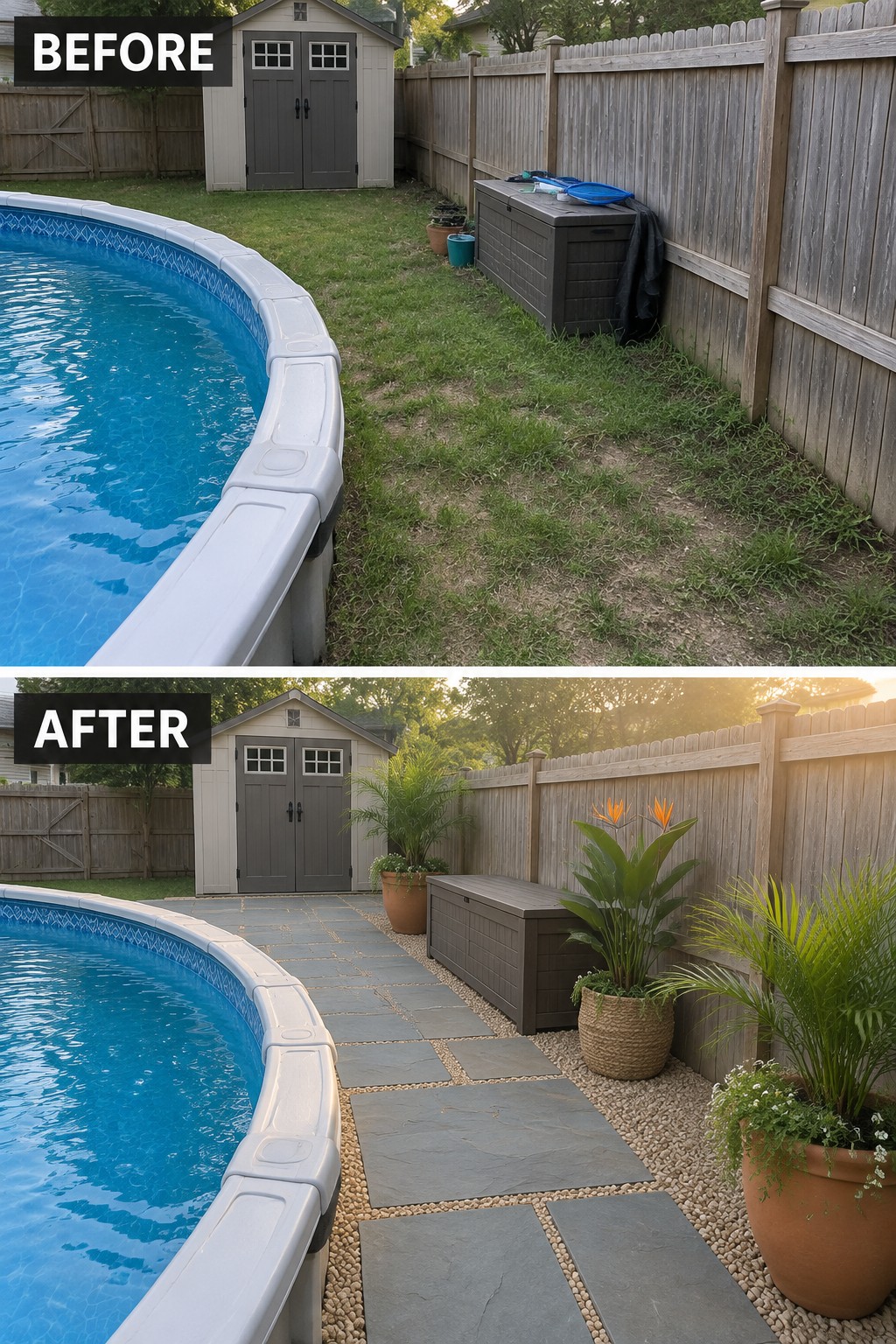
The patchy grass next to the pool was hard to mow and looked messy most of the time. Switching to a simple stone paver path with gravel borders gave the area a clean edge and made walking around the pool much easier. A few large pots along the fence added height without needing constant lawn care.
This approach works well in small backyards or pool areas where grass struggles. Start with a clear path layout first, then fill in the sides with gravel and a few sturdy plants. It keeps the space open while cutting down on weekly maintenance.
Use Pavers And Gravel To Add Structure To A Backyard
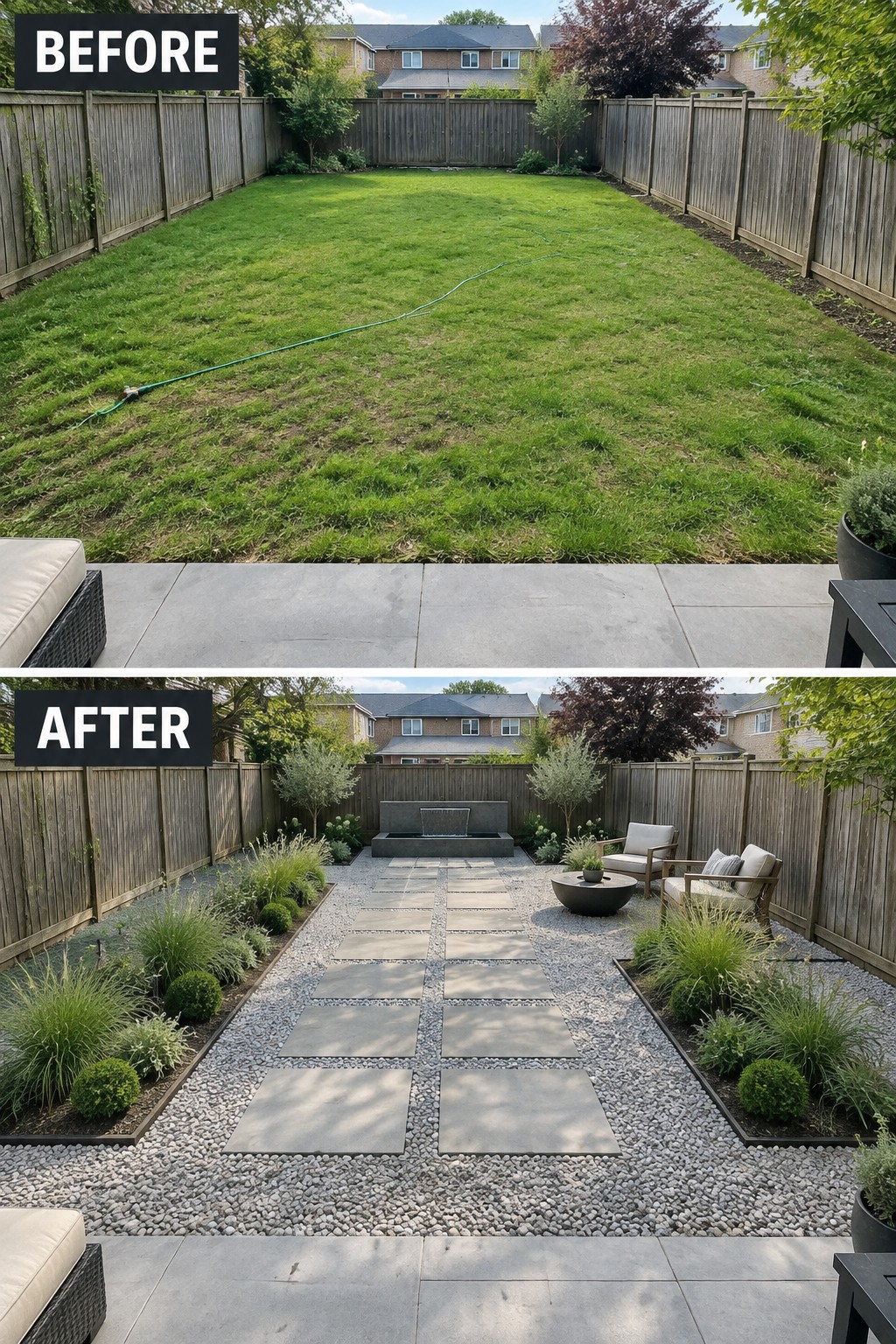
A wide open lawn can feel unfinished even when it is neat. Replacing most of the grass with a central paver path and gravel on either side gives the space clear lines and makes it feel more planned. The planting beds along the edges add softness without taking over the whole yard.
This approach works well in long or narrow backyards where a full lawn is hard to maintain. Start by marking out a simple path that leads to a focal point like seating or a water feature, then fill the sides with gravel and low borders of shrubs and grasses. Keep the beds narrow enough that they stay easy to reach for weeding and watering.
Replace a Plain Lawn With Gravel Paths and Edged Planting Beds
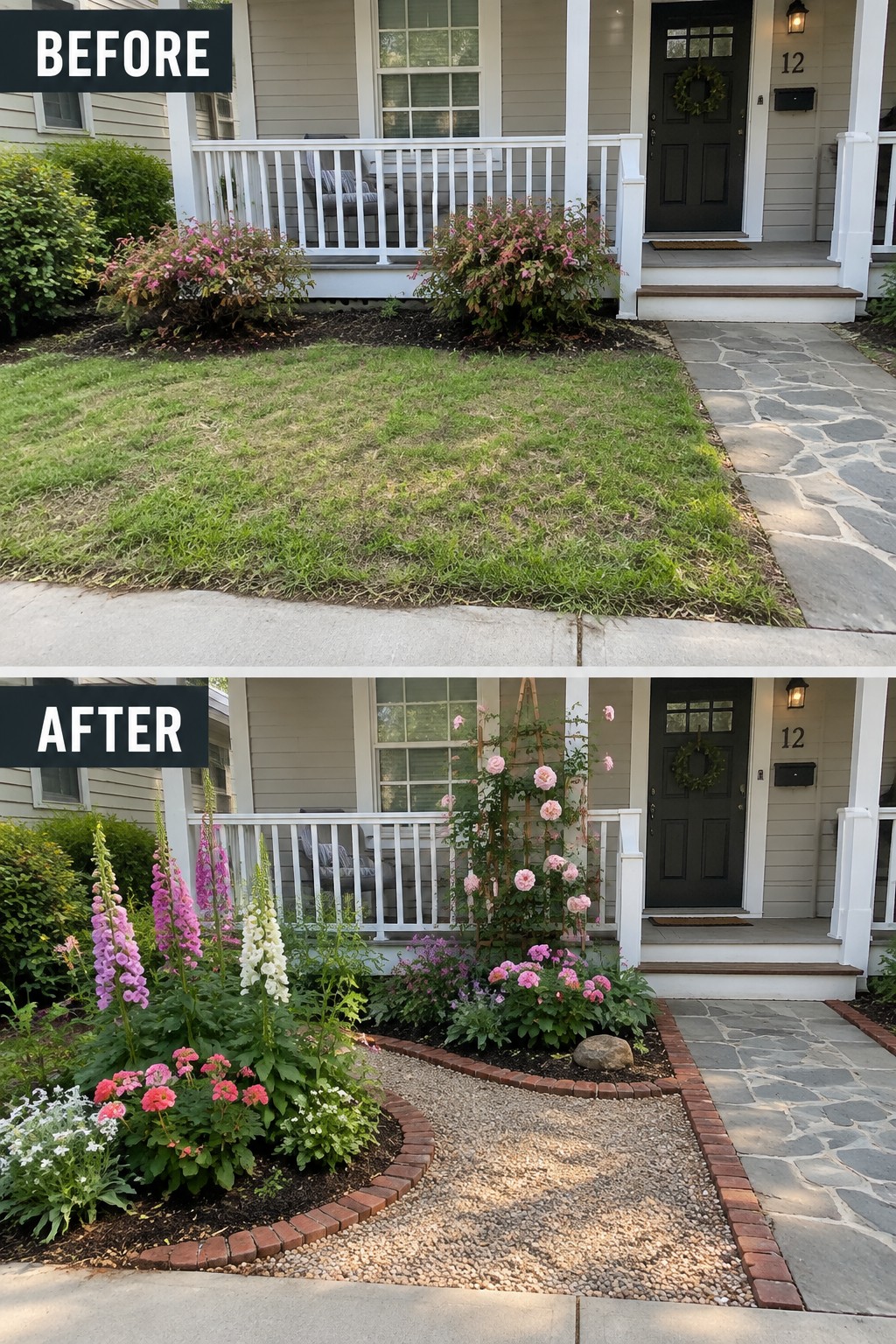
The front yard here went from a flat stretch of grass with a couple of shrubs sitting right against the house to a much clearer layout. Gravel paths and low brick borders now create separate planting areas that keep the flowers contained and give the whole space some shape. It feels more intentional without adding a lot of hard features.
This approach works well on smaller front yards where you want to cut down on mowing but still keep things green and colorful. Start by laying out the beds with a hose to get the curves right, then add the edging and gravel before you plant. It keeps foot traffic off the soil and makes the garden beds look finished even when the plants are still filling in.
Create a Seating Area With Pavers and Gravel in a Plain Backyard
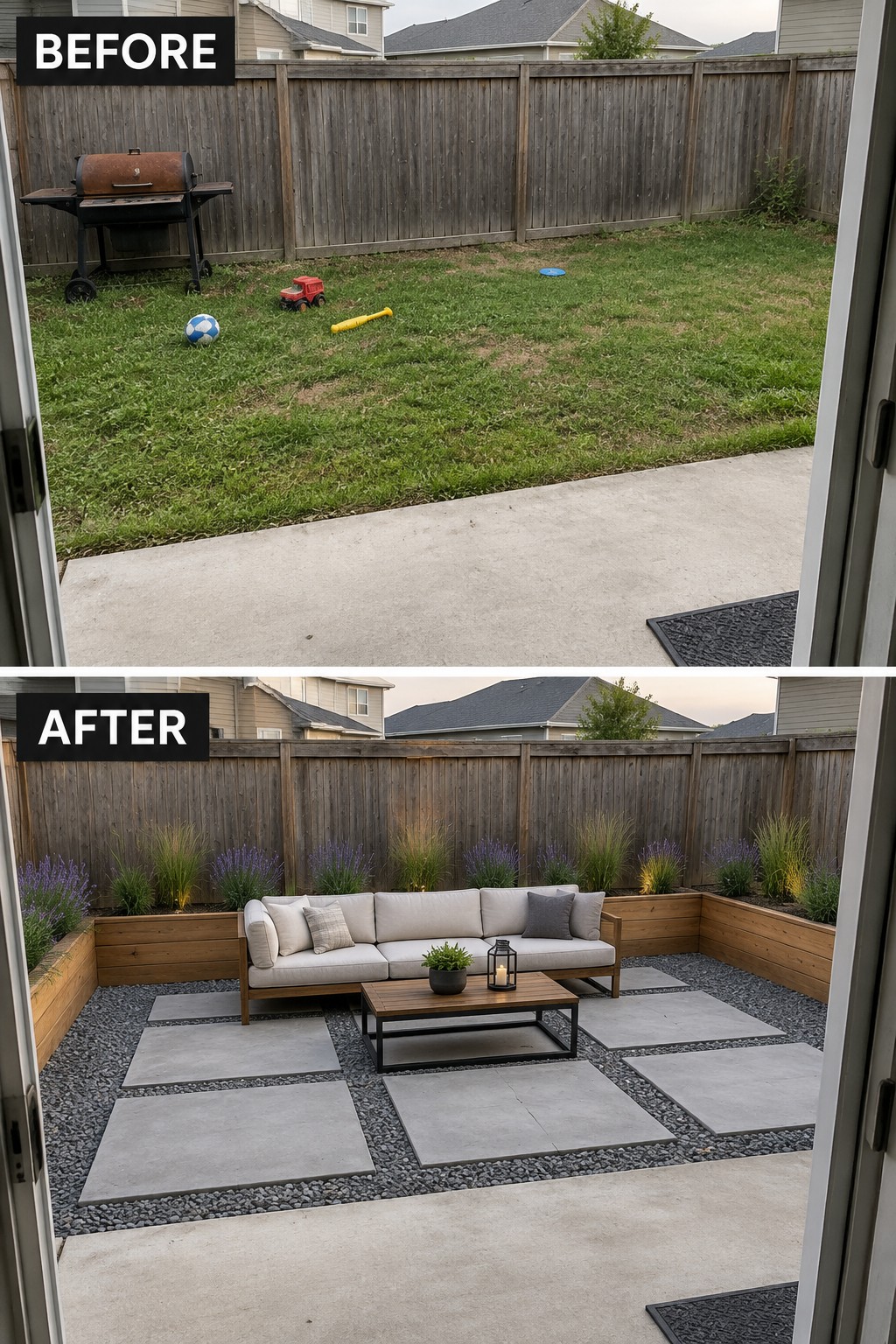
Replacing a flat lawn with a grid of concrete pavers set in gravel gives the yard clear shape and a place to sit without losing the whole space to grass. The raised beds along the fence add height and keep planting simple while framing the seating area.
This idea works best in smaller yards where you want low upkeep and a spot that feels intentional. Lay the pavers first to mark the main seating zone, then fill around them with gravel so the layout stays neat and drains well. Keep the furniture scale modest so the space still feels open.
Organize an Overgrown Backyard With Gravel, Stepping Stones, and Plants

A patchy lawn with weeds and scattered debris is hard to enjoy. Replacing it with gravel, stepping stones, and grouped plants in simple beds gives the space a clear layout and makes it feel intentional instead of neglected. The change works because it removes the constant mowing and watering problem while still keeping the yard usable.
This approach suits small backyards or side yards where a full lawn never performed well. Start by clearing everything down to bare soil, lay landscape fabric, then add gravel and a few larger rocks to hold planting areas in place. Keep the plant choices limited and drought tolerant so the beds stay low maintenance over time.
Define a Front Entry With a Gravel Path and Paver Design
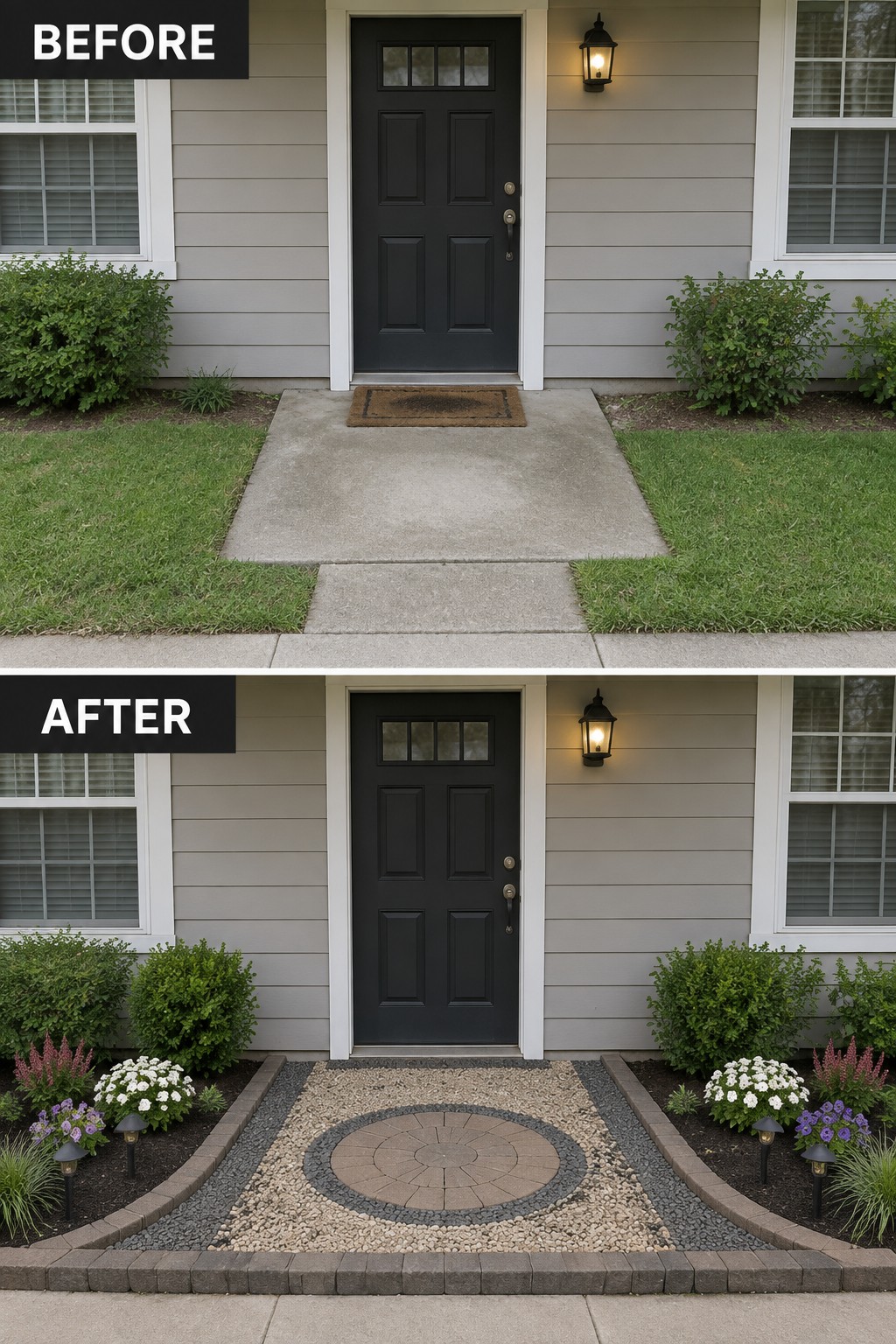
A plain concrete walkway often leaves the front of a house feeling unfinished. Replacing it with gravel and a simple paver pattern gives the entry a clear shape and makes the door feel more intentional. The change also lets you add planting beds along the edges without crowding the path.
This approach works well on small front yards where a full lawn is hard to maintain. Start with solid edging to keep the gravel in place, then add a focal paver design near the door. Keep the plantings low and repeat a few colors so the entry stays welcoming rather than busy.
Add Raised Beds And Gravel To Organize A Backyard

A patchy lawn often leaves a yard feeling unfinished and difficult to use for anything beyond basic grass. Switching to raised wooden beds with gravel between them creates clear growing zones while keeping the ground practical and low maintenance.
This layout suits smaller backyards where you want room to grow herbs or vegetables without covering the whole space in soil. Keep the beds in a simple grid, use gravel for easy drainage and walking, and add a central path so the area stays usable even after rain.
Turn An Empty Lawn Into A Fire Pit Patio

A large open yard can feel unfinished when it has no real destination. Adding a circular paver patio with a central fire pit gives the space a clear purpose and a place to gather. The before photo shows nothing but grass and a bare patch. The after shows how a simple paved ring, a few chairs, and some low planting beds turn the same area into a usable outdoor room.
This idea works best in medium to large backyards where the lawn feels too open. Start by marking a circle large enough for seating and traffic, then lay pavers on a solid base so the surface stays level and drains well. Keep the surrounding beds narrow and plant them with a mix of evergreens and grasses so the patio feels settled without crowding the open lawn.
Create a Low-Maintenance Balcony Patio With Gravel and Pavers
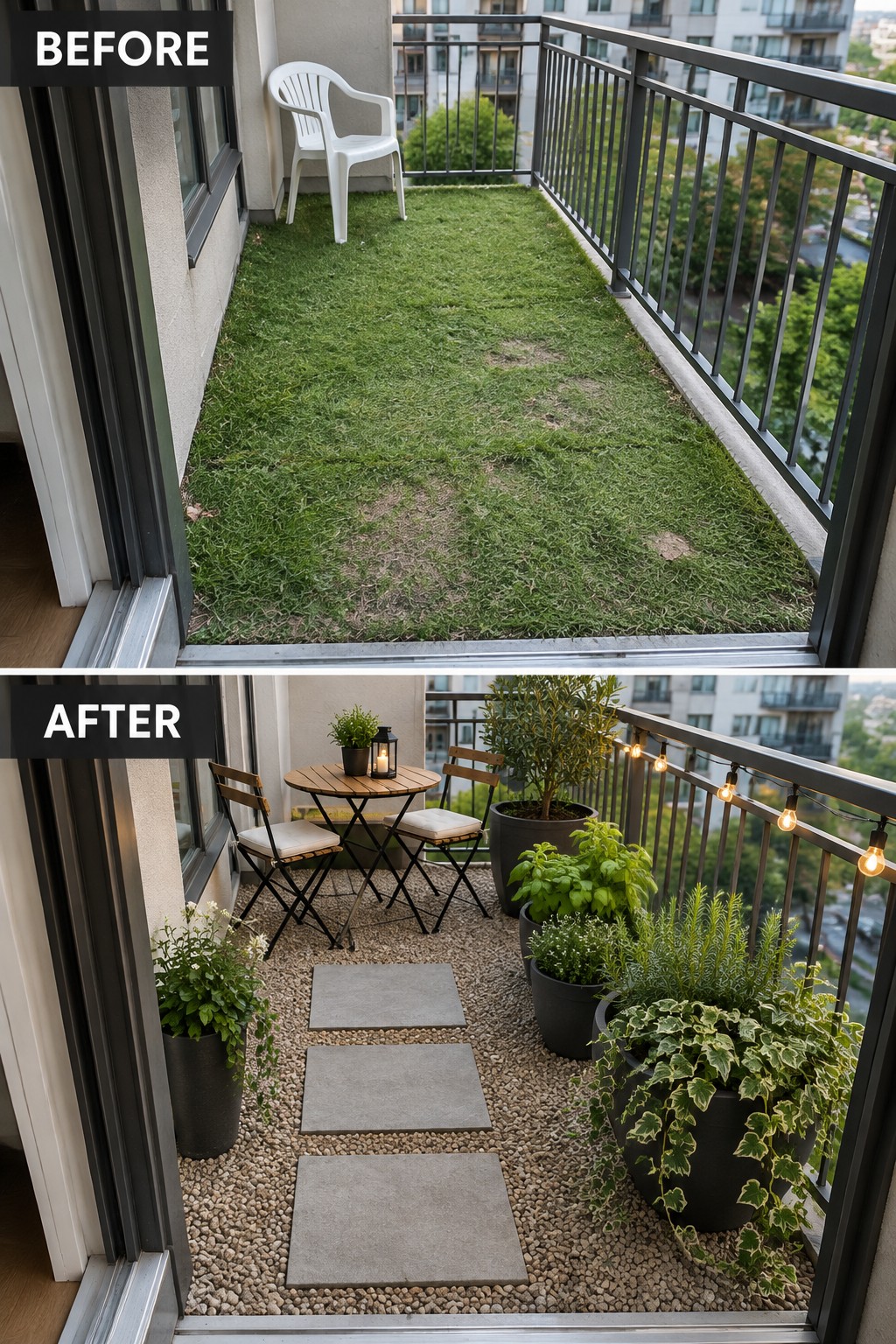
A patchy lawn on a small balcony rarely stays neat and often ends up underused. Switching to gravel with a few pavers gives the space a flat, dry surface that works for seating without constant mowing or watering. The after photo shows how a simple table and chairs now sit comfortably where the grass once looked tired.
This approach suits upper-level balconies or narrow outdoor spots where real lawn is impractical. Clear the old surface first, add a weed barrier, then spread gravel and lay pavers to mark a seating zone. Keep the rest of the area open with large pots so the space still feels roomy rather than crowded.
Turn An Eroded Slope Into A Gravel Path

A worn dirt path cutting down a slope often gets worse over time as water carves it deeper and grass struggles to hold on. The fix here replaces that bare, muddy channel with a gravel path held in place by larger stones and flat stepping stones, while simple planting beds run along both sides to keep everything in place.
This idea works best on yards where the slope already shows wear or where water tends to run. Lay landscape fabric first, add a good layer of gravel for drainage, and use bigger rocks or pavers to create a walkable surface. Keep the plantings fairly low and repeat a few varieties so the beds look settled without a lot of upkeep. It is a practical way to stop erosion while giving the yard a clear structure that does not need constant mowing.
Create a Simple Paver Path Through an Overgrown Backyard
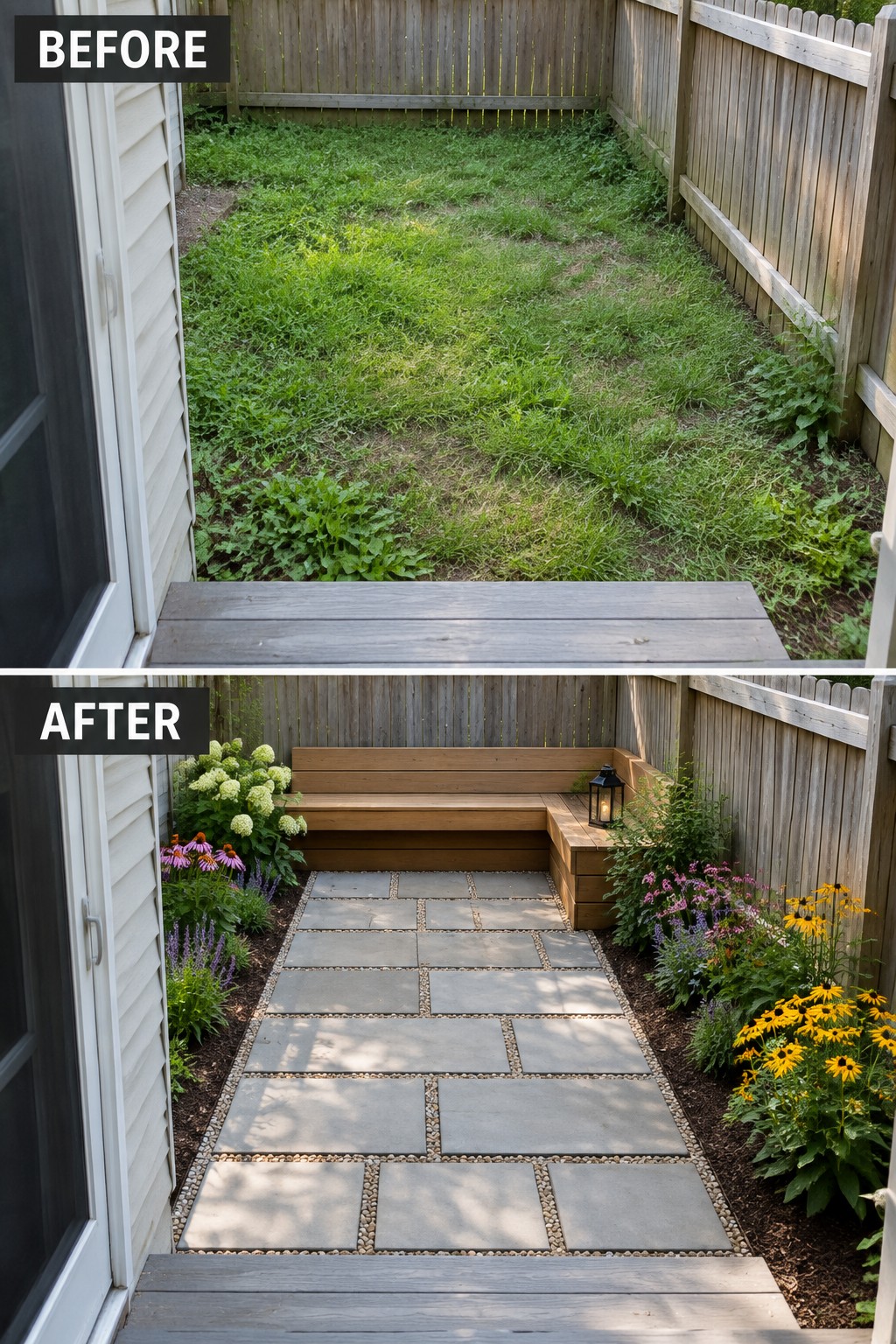
A patchy lawn often leaves a small yard feeling messy and hard to use. Switching to a paver path with gravel borders creates a clear route and a simple seating area that stays dry and easy to walk on.
This layout suits narrow side yards or back spaces where grass is hard to maintain. Clear the old turf first, set the pavers in a straightforward pattern, and add planting beds along the edges so the whole area feels planned rather than crowded.
Create a Cleaner Front Entry With Gravel Beds and Pavers
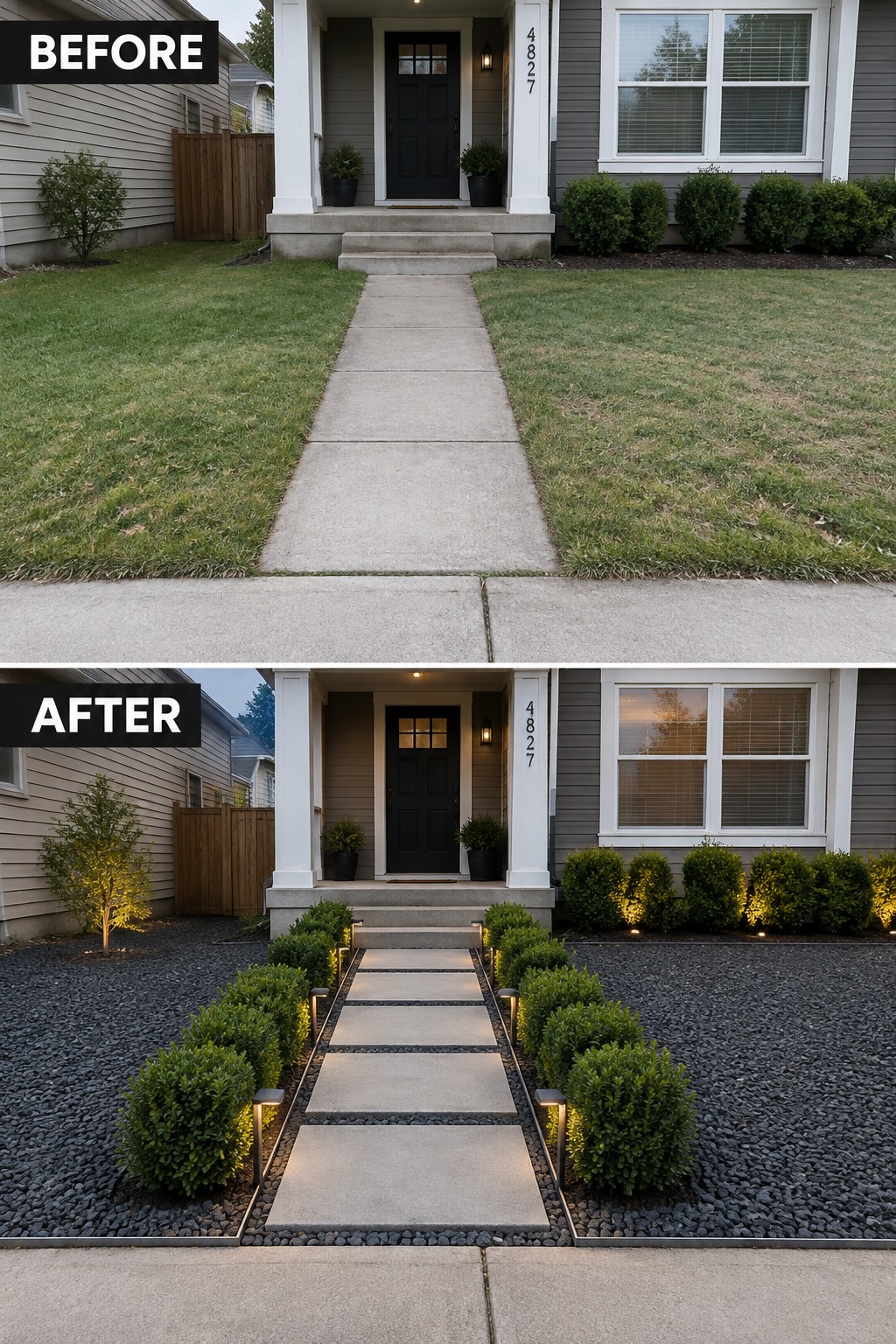
A wide strip of concrete cutting through plain grass often looks unfinished and requires constant mowing and edging. Switching to gravel beds with a paver path running through them gives the front yard clear lines and cuts down on maintenance. The new layout also lets low shrubs sit in defined beds instead of scattered along the house.
This approach works well on small front yards or homes that want less grass to care for. Start by removing the turf and laying a solid base for the gravel so it stays in place. Keep the paver path wide enough for comfortable walking and add simple lighting along the edges so the route feels safe at night.
Organize a Narrow Driveway Strip With Pavers and Planting Beds

An overgrown strip of grass next to a driveway tends to look messy and takes constant mowing and weeding. Switching to a simple paver path set in gravel with a planted bed along the fence gives the space clear edges and cuts down on upkeep.
This idea works best in narrow side yards where a lawn feels like more trouble than it is worth. Clear the old growth first, then lay the pavers and gravel to create a firm path before adding a border of easy perennials that fill in over time.
Create a Low-Maintenance Yard With Gravel, Planting Beds, and a Sandbox
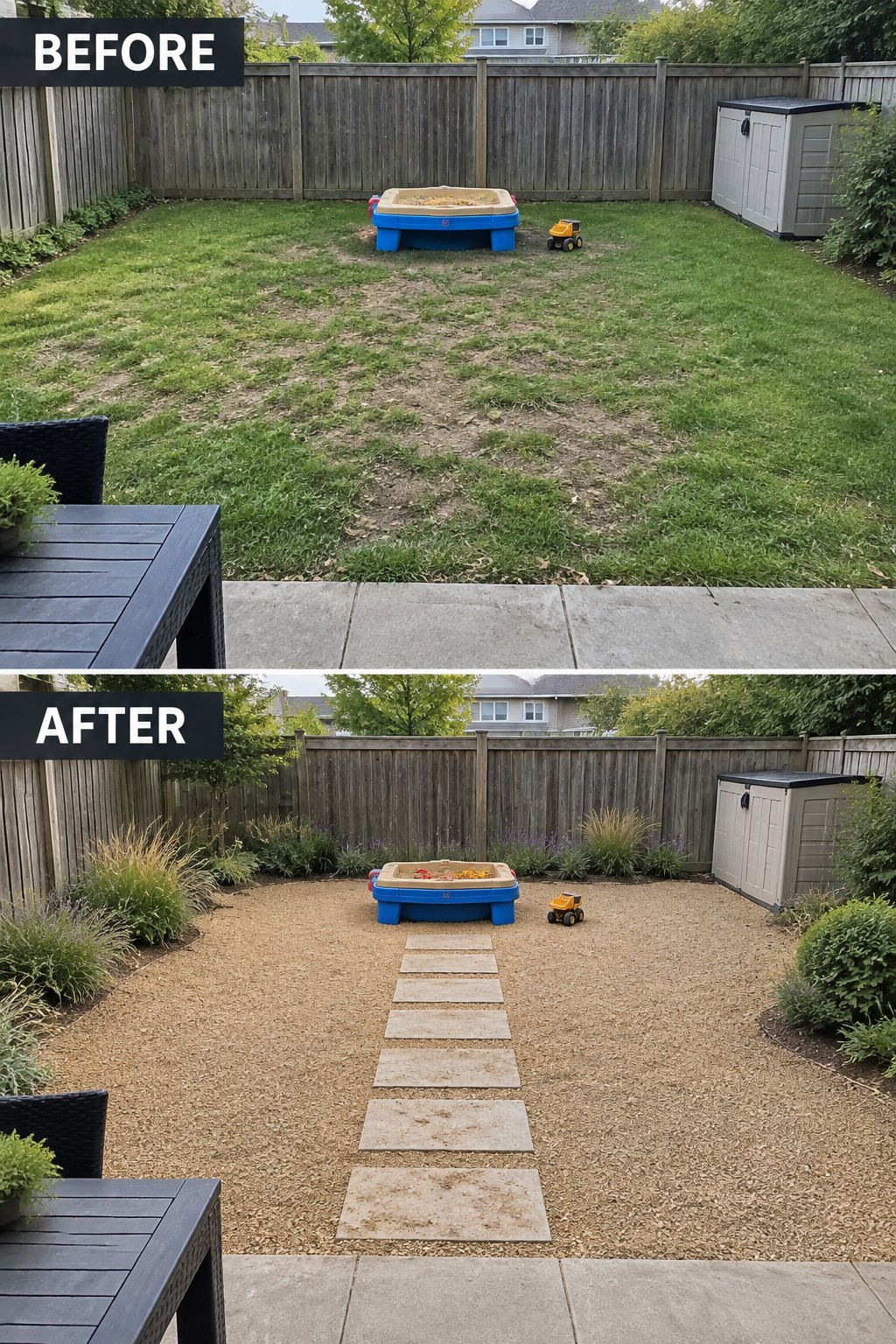
Clearing the uneven grass and laying down gravel across the yard creates a flat, low-maintenance surface that stays clean year-round. The addition of border plantings and a simple paver path gives the space clear shape without crowding the center where the sandbox sits.
This idea suits smaller backyards that see heavy use or where grass is difficult to keep healthy. Lay the gravel and path first so the layout feels intentional, then keep the plantings simple with a few varieties that can handle foot traffic and sun.
Create a Structured Gravel Yard With a Paver Walkway

A large lawn often ends up looking plain and takes regular mowing to stay neat. Here the grass was removed and replaced with gravel that covers most of the yard, plus a path of stepping stones that leads straight to the steps. Small planted areas were added near the house and along the edges so the space feels structured instead of empty.
This idea suits homes where people want less upkeep and a tidy look that still feels welcoming. Clear the lawn first, put down fabric and gravel, then place pavers to make a clear path. Keep new plants in small groups so the gravel remains the main surface and the yard stays easy to walk through.
Create a Low-Maintenance Patio With a Paver Grid and Gravel

A simple grid of pavers can turn a plain grass yard into a usable outdoor space without constant mowing or watering. In this case the before photo shows an empty lawn with nothing to define the area. The after shows how a checkerboard of concrete pavers and gravel creates clear paths and a central seating spot while planting beds along the walls add softness and structure.
This approach works well in small or narrow yards where grass is hard to maintain. Start with a simple layout that leaves room to move around the furniture. Use the same gravel in the planting beds to tie everything together and keep the look consistent. It suits homes with limited outdoor space that still want a place to sit without the upkeep of a lawn.
Create Usable Levels With Terraces and Gravel Paths

A plain sloping lawn often feels like wasted space because it is hard to walk across and even harder to maintain. Adding low retaining walls, stone steps, and gravel paths turns the slope into usable levels that connect the house to the rest of the yard.
This idea suits any backyard that drops away from the patio or deck. Focus first on the main route people will take, then build simple walls to hold the planting beds. Gravel keeps the walking areas clean and dry while the beds give you room for shrubs and flowers without fighting the slope.
Create a Cleaner Front Yard With Pavers and Gravel

A patchy lawn often looks worse the more you try to fix it. In this case, the tired grass was swapped for a simple grid of pavers set in gravel, which gave the whole front area a tidy shape and cut down on mowing and watering. The new planting beds along the edge added some softness without taking over the space.
This approach works well on small front yards or side strips where grass struggles. Start by clearing the old lawn completely, then lay the pavers in a straightforward pattern so the path still feels open. Keep the plantings low and repeat the same few varieties so the beds stay easy to maintain.
Frequently Asked Questions
Q: Will weeds take over the gravel if I don’t watch it? A: Put down a good layer of landscape fabric before the gravel goes in. Pull any sprouts by hand when you see them. That keeps things under control without much work.
Q: How do I blend the gravel sections with the planting beds? A: Run the beds right up to the gravel edges. Use the same plants along paver borders to connect the areas.
Q: What happens to these materials in freezing weather? A: Gravel and pavers hold up fine through freezes. Just make sure the pavers sit on a solid base so they don’t heave.
