

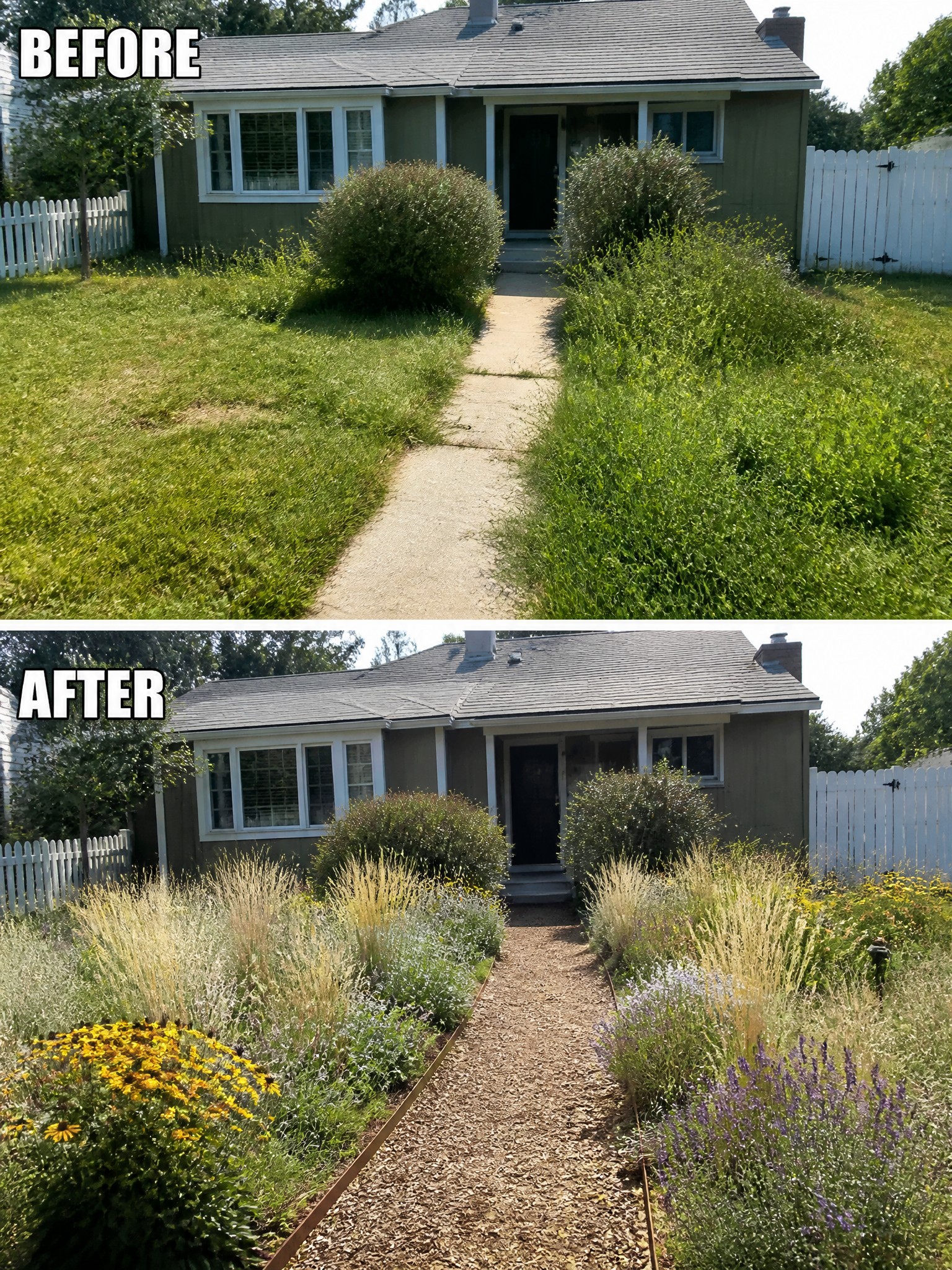
Yards that have been left alone for a season or two often lose any sense of order as grass creeps into beds and shrubs block the paths that used to feel open.
For busy households the goal is usually to cut back on weekly tasks rather than add more plants that need attention.
I usually start by clearing the overgrowth first.
Once the basic shape returns through edging and a few hardy shrubs the yard stops feeling like another chore on the list.
In my own space I noticed that keeping the lawn area smaller made the whole backyard simpler to manage without giving up the look of a cared for garden.
Define A Clear Entry Path In An Overgrown Yard
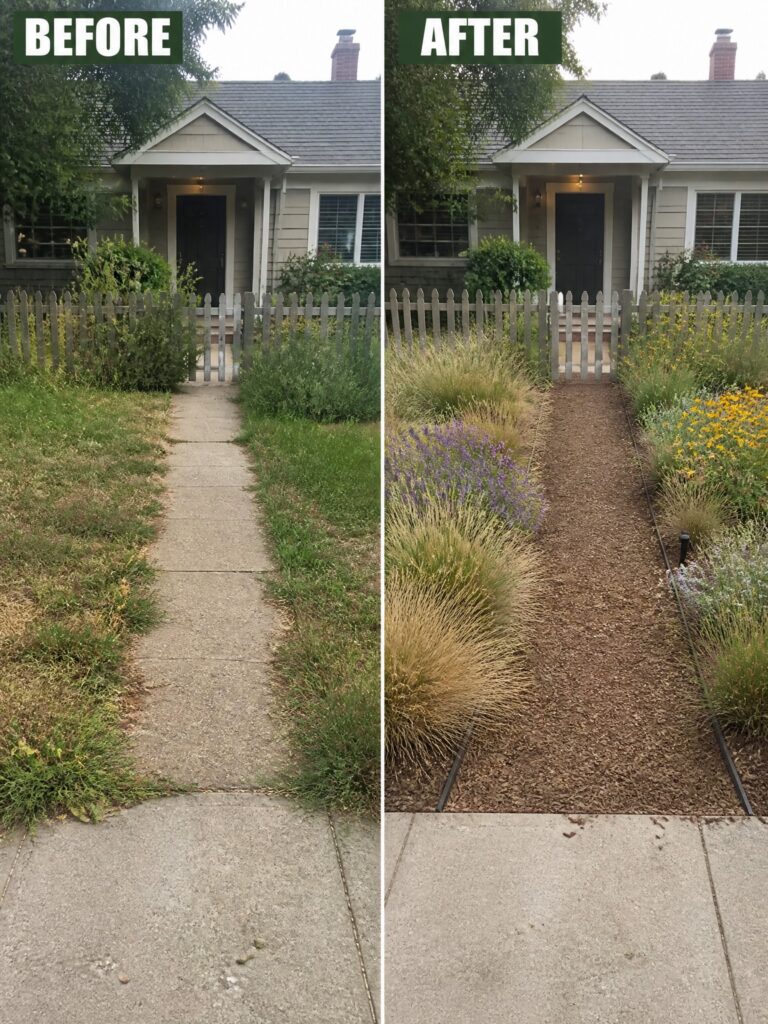
One useful approach is to clear the overgrowth first and then add defined beds along the walkway. The before view shows tall grass crowding the path, while the after view shows how gravel edges and planted borders keep everything in place and easier to maintain.
This idea works best on smaller front yards where you want a cleaner look without daily upkeep. Edge the beds, add gravel or mulch, and choose sturdy plants that fill in on their own. It helps busy homes gain curb appeal without turning the yard into another chore.
Create A Low Maintenance Layout In An Overgrown Backyard
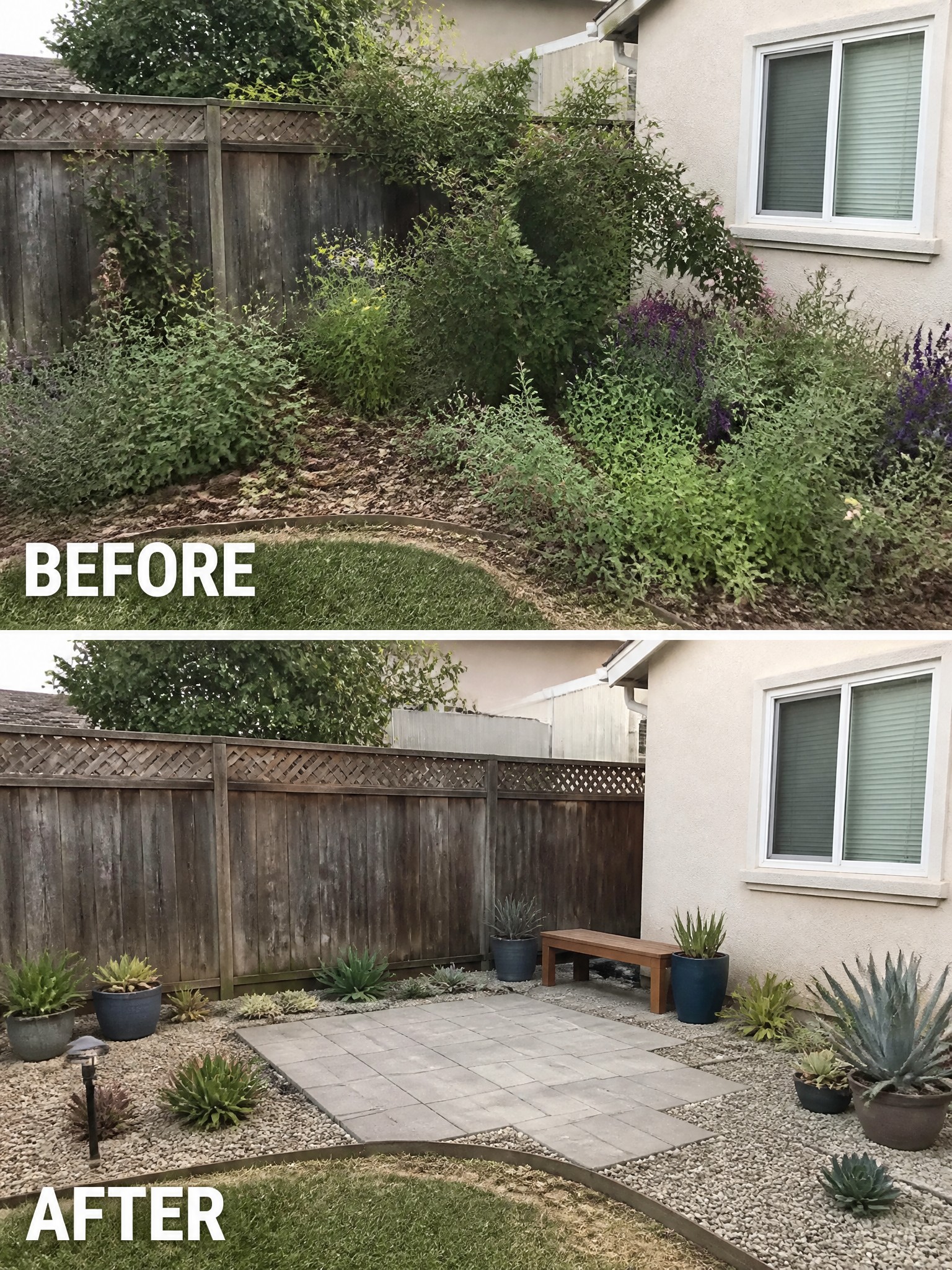
Many backyards lose their shape when plants grow unchecked and spill across the ground. Clearing the dense overgrowth first and then laying pavers with gravel borders creates clear zones that stay neat with far less work.
This idea suits busy homes that need a simple outdoor area rather than constant garden upkeep. Focus on one central paved section, keep plantings in pots, and use gravel to separate the beds from the lawn so mowing stays easy.
Define A Narrow Side Yard With Stepping Stones
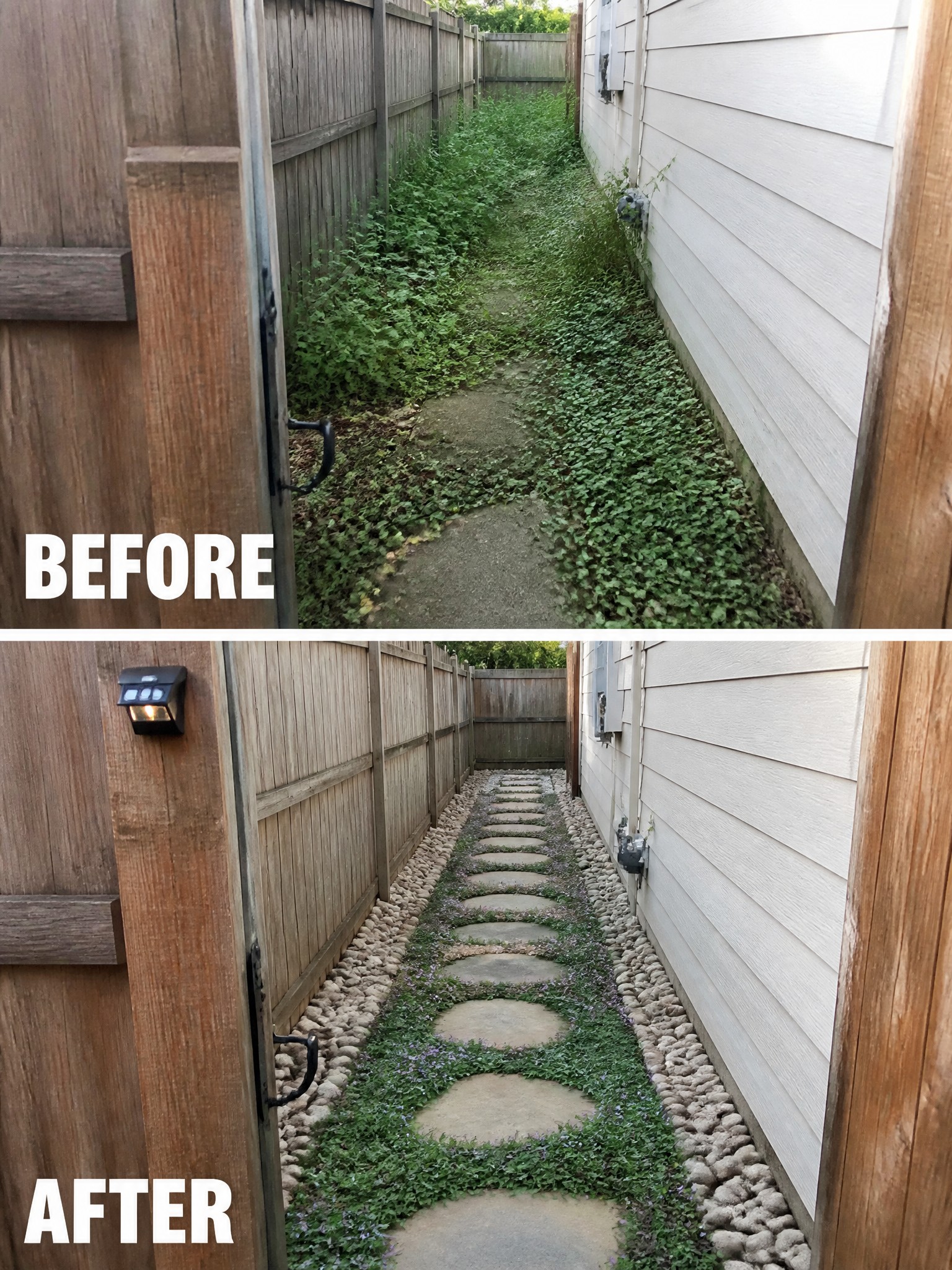
Many side yards between fences and houses turn into weedy strips that feel forgotten. Clearing the overgrowth and adding a line of stepping stones with gravel borders gives the space a clear purpose without needing constant upkeep.
This idea suits busy homes because the low ground cover stays tidy on its own and the stones keep the path usable year round. Focus on one main walkway first, then let the plants fill in around the edges rather than trying to plant everything at once.
Add Raised Beds To Bring Order To An Overgrown Fence Line

Clearing the wild growth along a fence first makes a big difference. The before photo shows a messy line of shrubs taking over the edge, while the after uses simple raised wooden beds and a gravel strip to create a clean, contained look that stays neat with far less work.
This approach works well on long fence lines where grass meets the boundary. Start by removing the heaviest overgrowth, then add a few raised beds in a matching material so the beds feel like part of the fence rather than random additions. The gravel helps with drainage and keeps the beds from looking sunken into the lawn.
Build Terraced Walls On A Steep Overgrown Slope
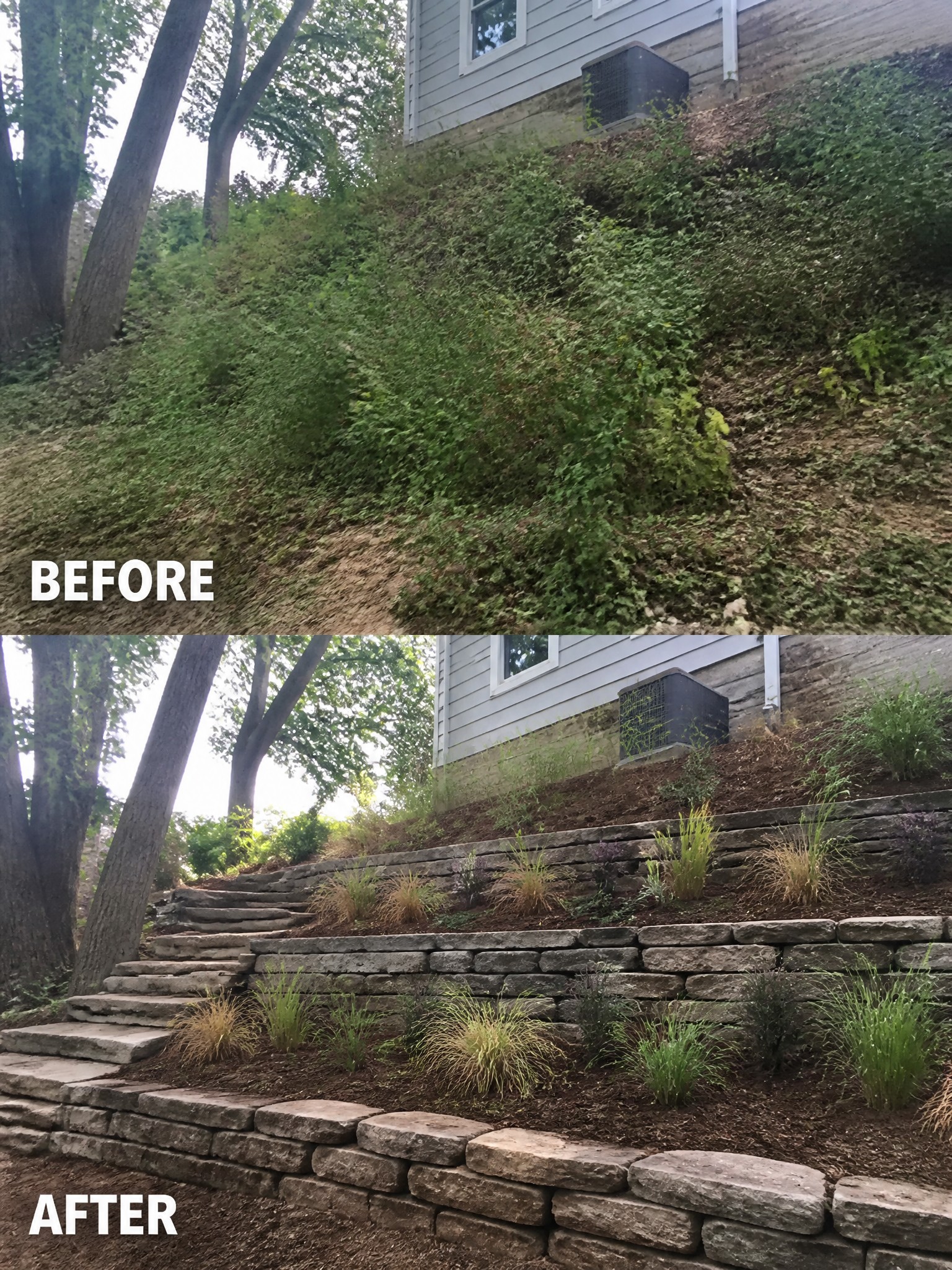
Clearing thick overgrowth on a steep slope first makes it possible to add real structure. The before photo shows a hillside that was hard to maintain, while the after shows simple stone retaining walls that turn the same slope into level planting areas with mulch.
This idea suits homes with uneven yards where regular mowing or weeding becomes difficult. Focus on a few solid walls rather than filling every level with plants right away, and choose low-maintenance grasses and shrubs that hold the soil without constant care.
Simplify An Overgrown Front Yard With Gravel Beds
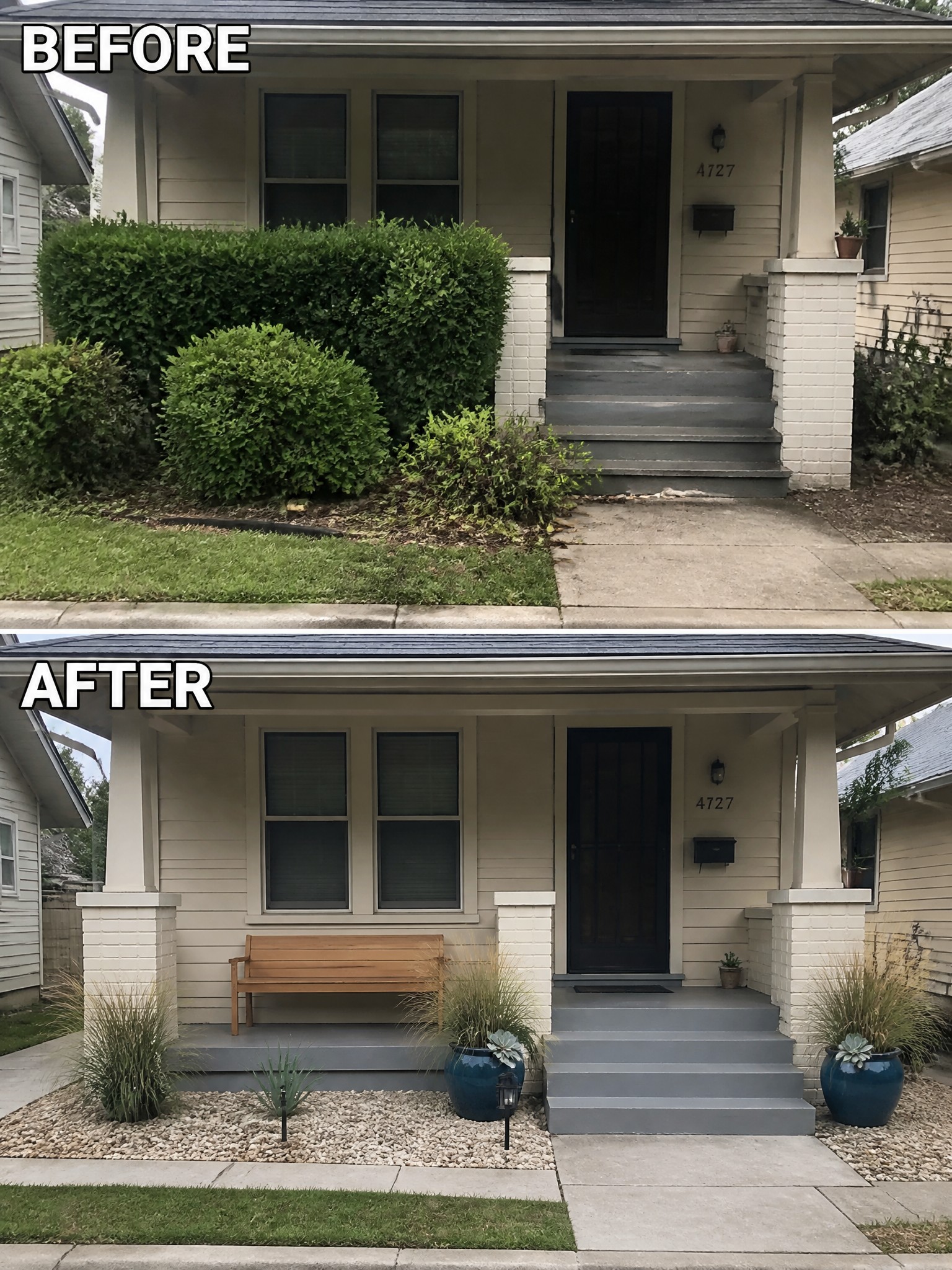
The front yard had become a thick mass of unchecked shrubs that hid the house and made the entrance feel cramped. Once those were cleared, gravel beds with tall grasses and a couple of potted plants gave the space clear lines and a much tidier look.
This approach suits busy homes because it cuts down on constant trimming. Remove the heaviest growth first, then use gravel to mark out simple beds so the yard stays neat with very little follow-up work.
Replace Patchy Grass With Artificial Turf
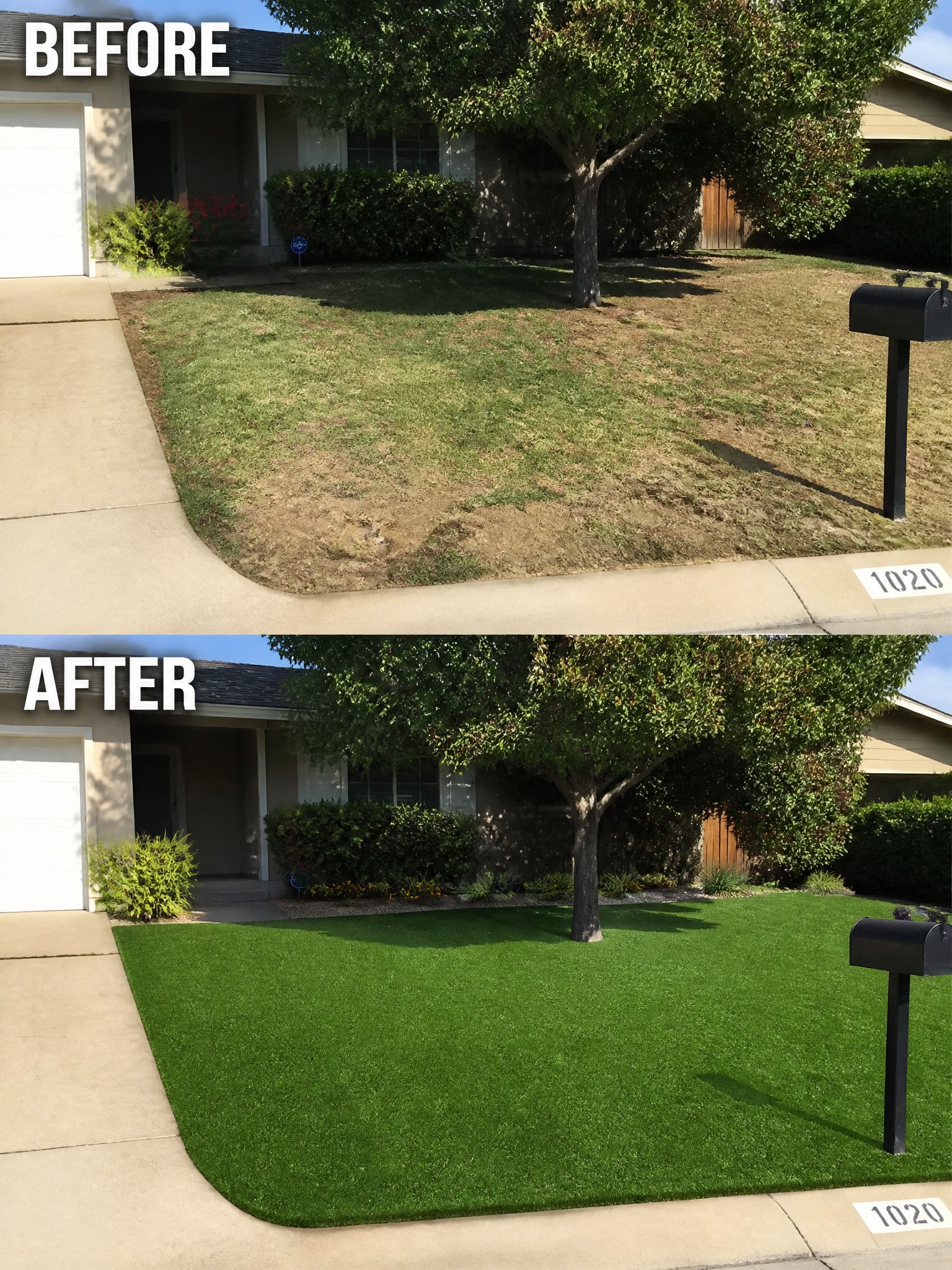
The front yard had dry, patchy grass that made the whole space look neglected. Laying down artificial turf gave it a clean, even green surface that stays full without needing constant watering or mowing.
This idea works best for busy homes where real grass struggles or where owners want less weekend yard work. Start by clearing the old lawn completely, then add simple border plants along the edges so the new surface feels finished rather than stark.
Clear Overgrowth Before Adding Garden Structure
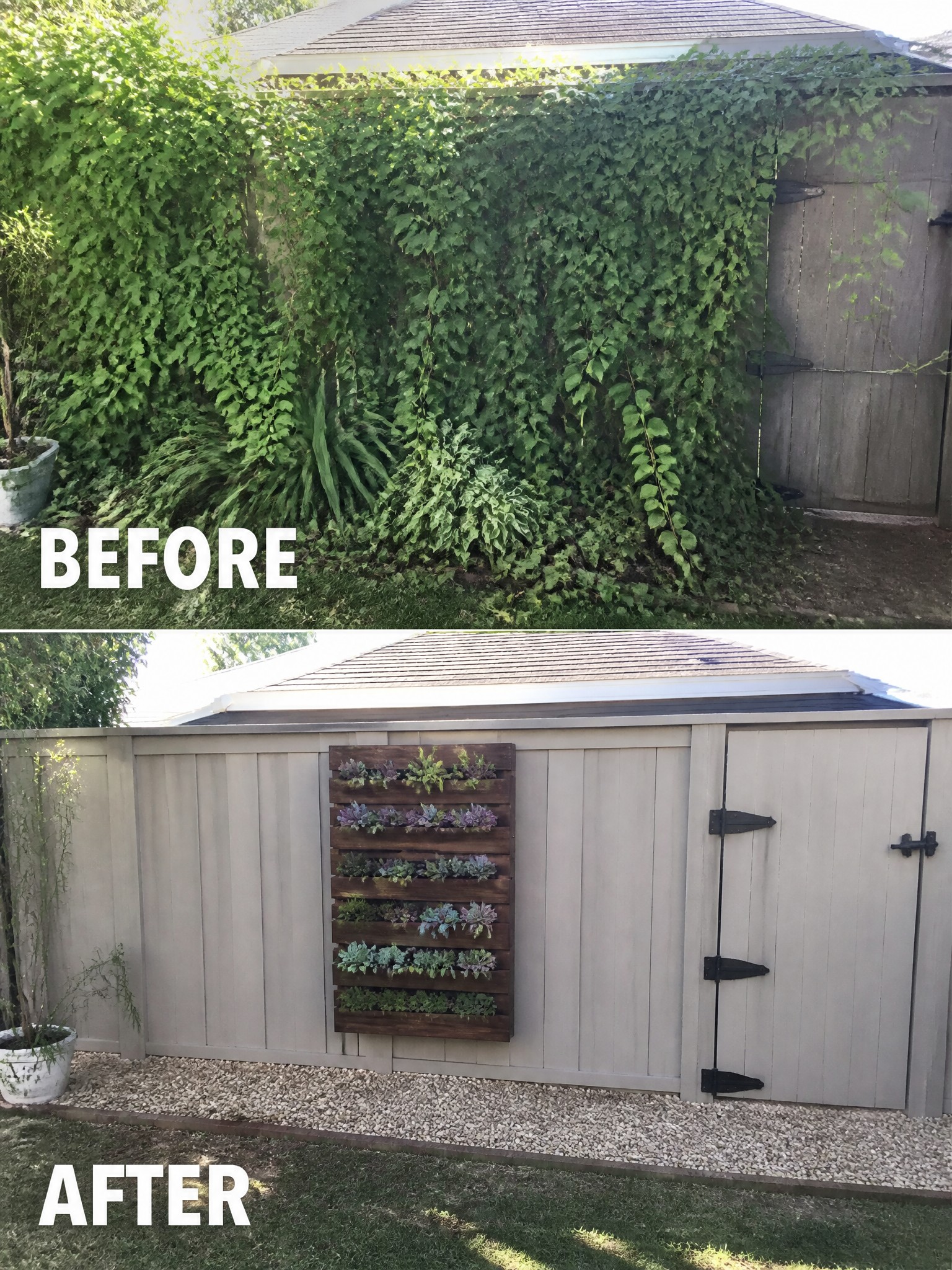
An overgrown shed wall can quickly take over the whole side of a yard. Clearing the vines and messy ground cover first made space for a simple vertical planter that now gives the area shape without adding clutter.
This approach works well on small lots or along fences where you want order but do not have room for wide beds. Start by removing the heaviest growth, then choose one focal piece like a mounted planter and fill it with low-water plants that suit your climate. The result stays easy to maintain even if you are busy.
Add Structure To An Overgrown Yard

One simple way to improve a neglected spot is to add clear borders first. Here the messy ground around the tree was cleaned up, then edged with stones and covered with mulch so the new plants could stand out instead of blending into the weeds.
This idea works best near mature trees where the soil stays shaded and weedy. Keep the beds narrow enough to reach for weeding, stick to shade-tolerant plants like ferns, and let the edging do most of the work to keep the area looking tidy without constant upkeep.
Clear Overgrowth Before Adding New Plants
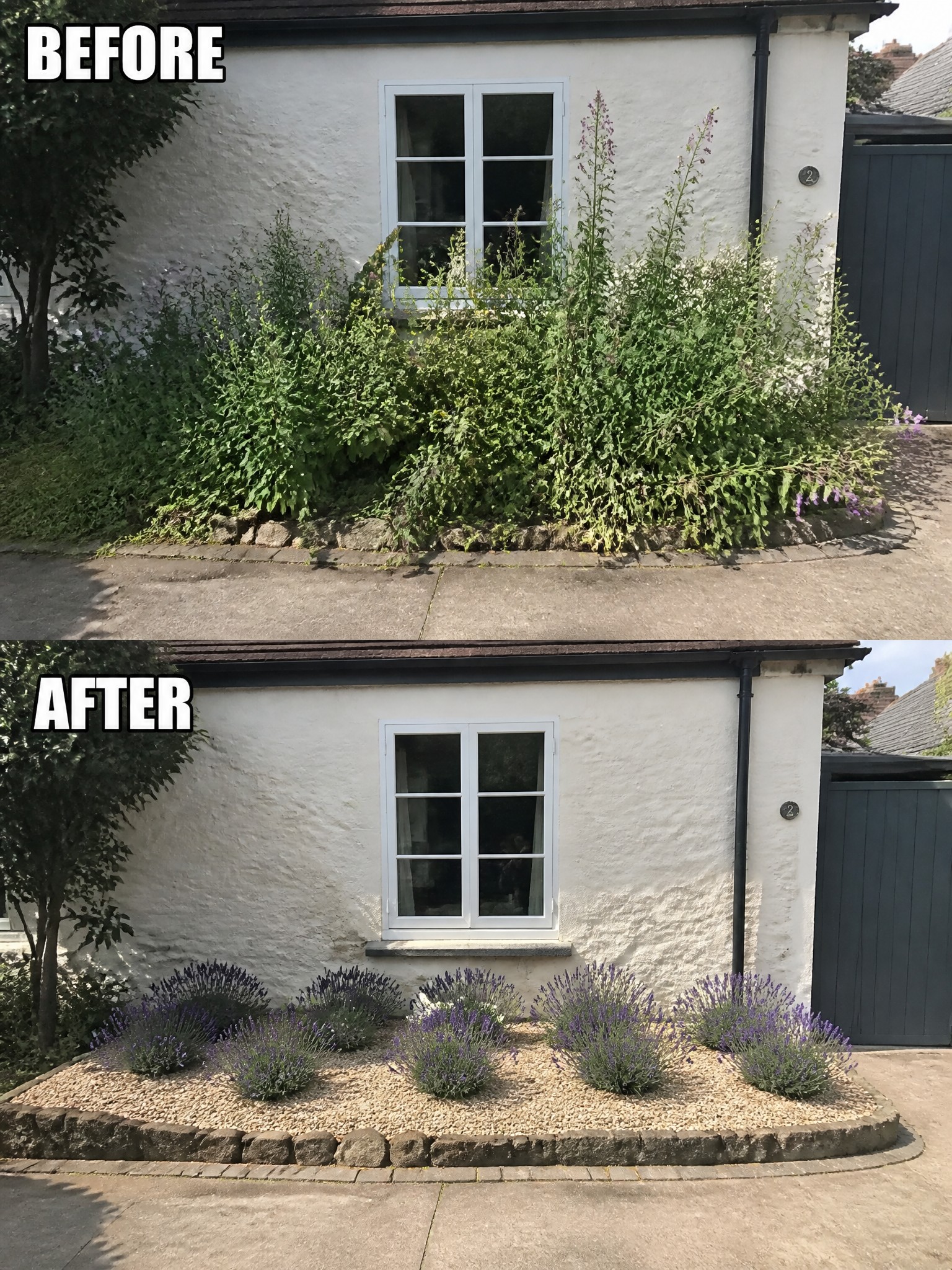
The biggest change here came from removing the tall, messy growth that had taken over the front border. Once that was gone, a simple gravel base and rows of lavender gave the space a tidy shape that stays low maintenance through the seasons.
This approach works well on small front areas where you want something neat without constant weeding. Start by cutting everything back hard, then lay landscape fabric and gravel to keep weeds down. Choose a few tough plants that can handle the conditions instead of trying to fill every inch.
Create A Simple Gravel Path Through An Overgrown Backyard
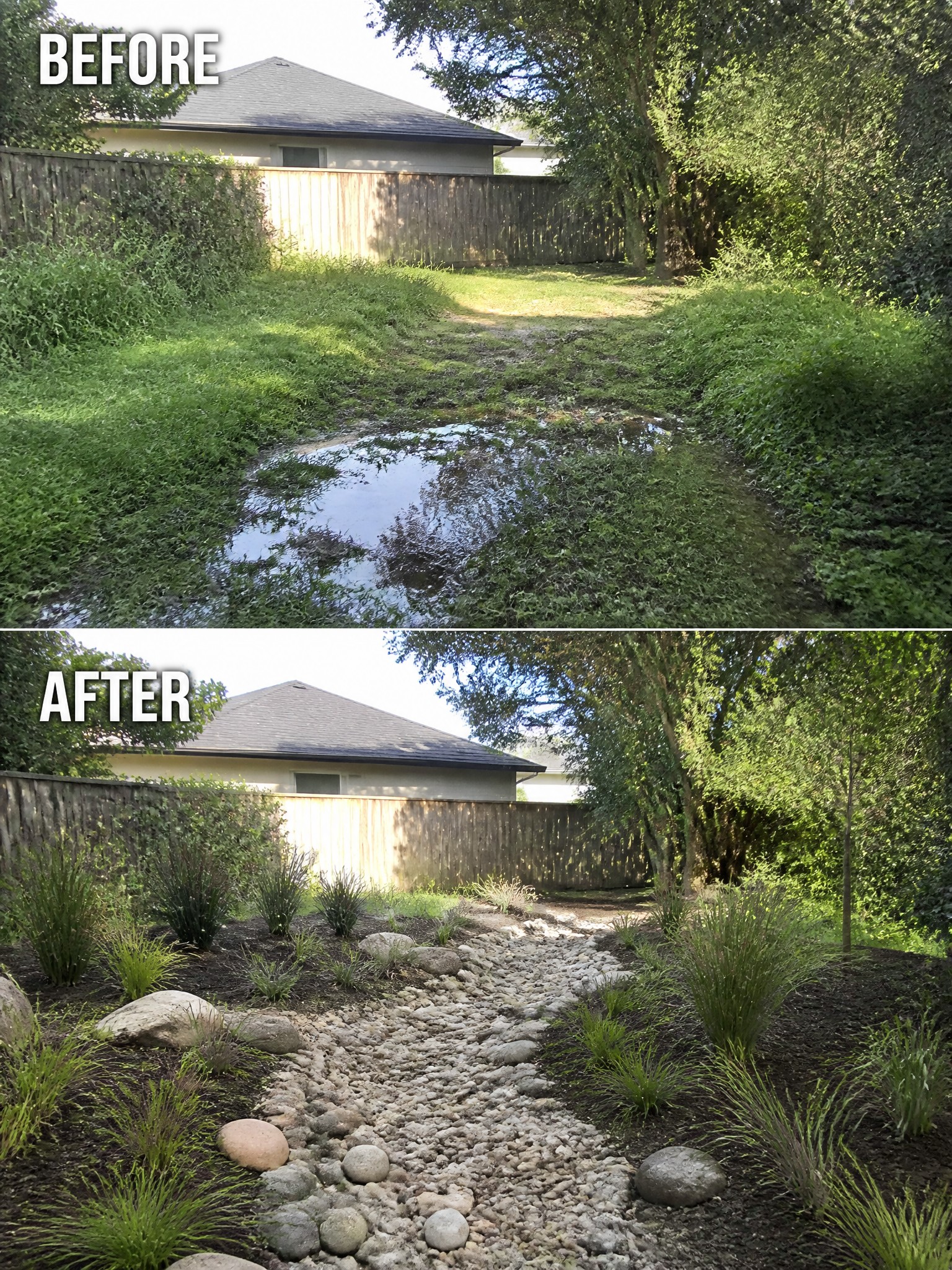
One simple way to fix a messy yard is to start with a clear path and bordered beds instead of trying to tame every inch at once. The before shows a worn dirt track through tall grass and standing water, while the after replaces it with gravel and low plantings that keep the space looking intentional.
This works best on narrow side yards or back areas that see regular foot traffic. Keep the planting simple with a few repeating types of grass and shrubs, then use mulch to hold down weeds. The path itself becomes the main feature, so the rest of the yard stays low maintenance even if it is not perfectly manicured.
Replace A Cracked Path With Gravel And Edging
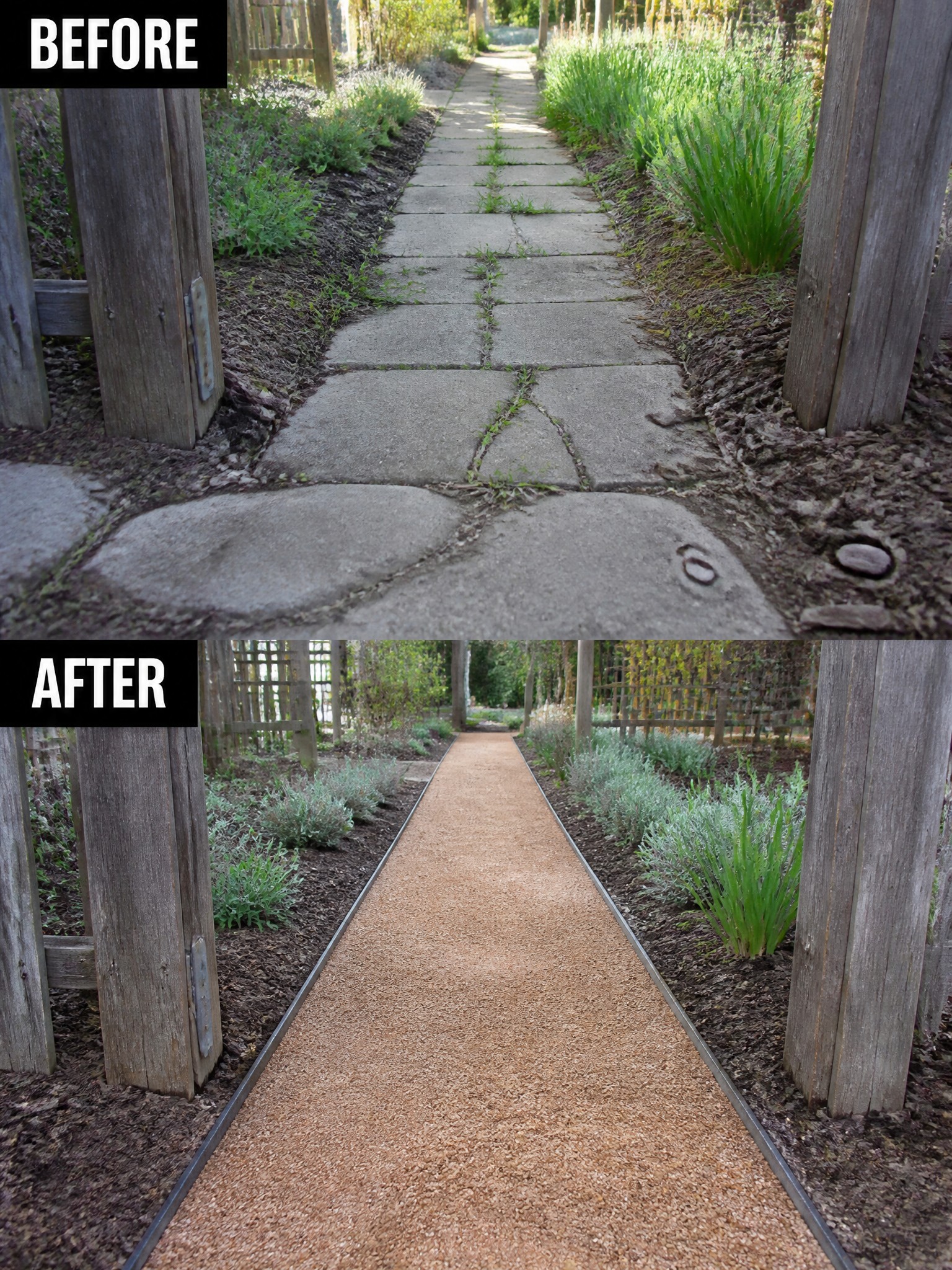
The old concrete slabs had cracked and weeds were growing right through the gaps, making the whole walkway look neglected. Switching to a gravel path held in place with metal edging gave the area a clean line and stopped the constant weed problem without needing much ongoing work.
This idea suits narrow side yards or garden routes that see regular use but do not need fancy paving. Remove the old surface first, lay down fabric, then add the gravel so it stays put and drains well.
Create A Gravel Fire Pit Area In An Overgrown Backyard
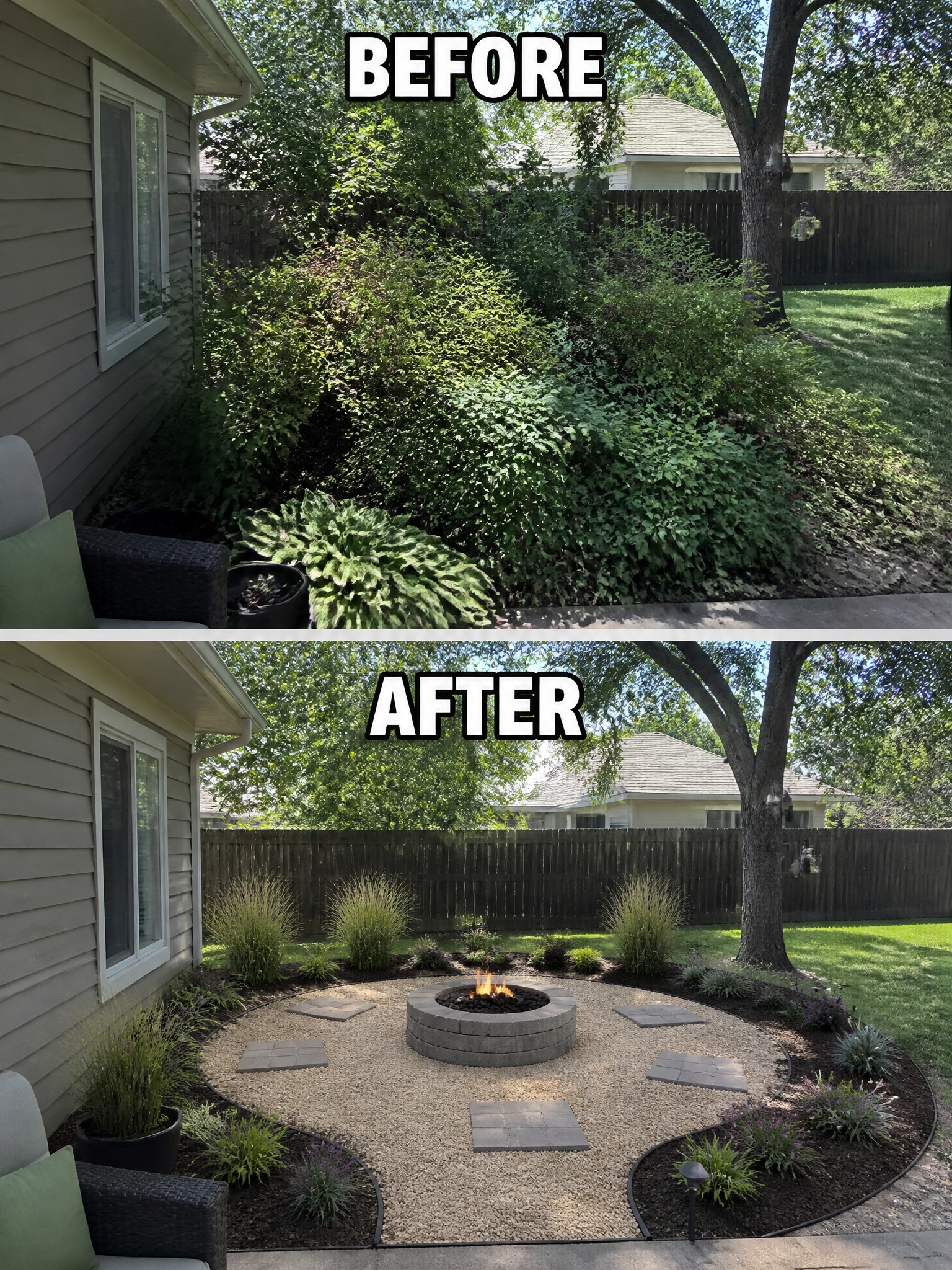
Clearing out dense growth first makes the biggest difference when a backyard feels unusable. In this case the thick bushes that crowded the space were removed, then a simple gravel circle with a fire pit and a few stepping stones gave the area a clear purpose and easy walking paths.
This approach works best in smaller or medium yards where you want one main spot for sitting without constant upkeep. Start by cutting back the overgrowth, lay down a solid base for the gravel, and keep the planting beds narrow so they stay easy to maintain over time.
Turn A Lawn Into Low Maintenance Garden Beds
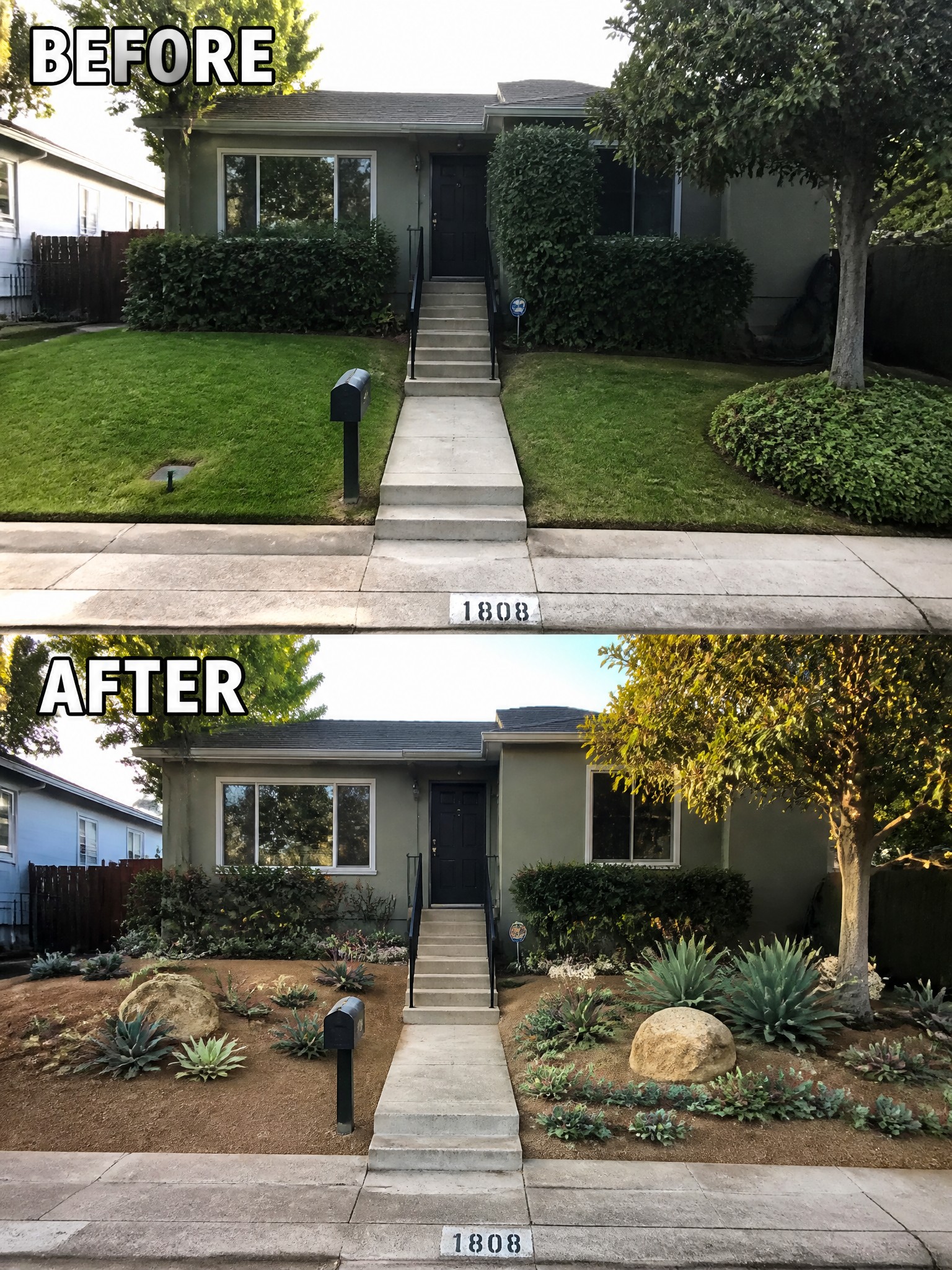
Many front yards start as simple grass that needs constant mowing and watering. Replacing most of the lawn with mulch and defined planting areas cuts down on upkeep while still keeping the space looking neat. The change from a flat green lawn to beds filled with larger plants and rocks gives the yard clear structure without adding a lot of work.
This idea works well on smaller lots or homes where people want less weekend maintenance. Start by clearing the grass in the areas you want to plant, then add a thick layer of mulch to keep weeds down. Choose tough plants that fit your climate so the beds stay looking good with only occasional trimming.
Clear Overgrowth To Create Defined Garden Borders
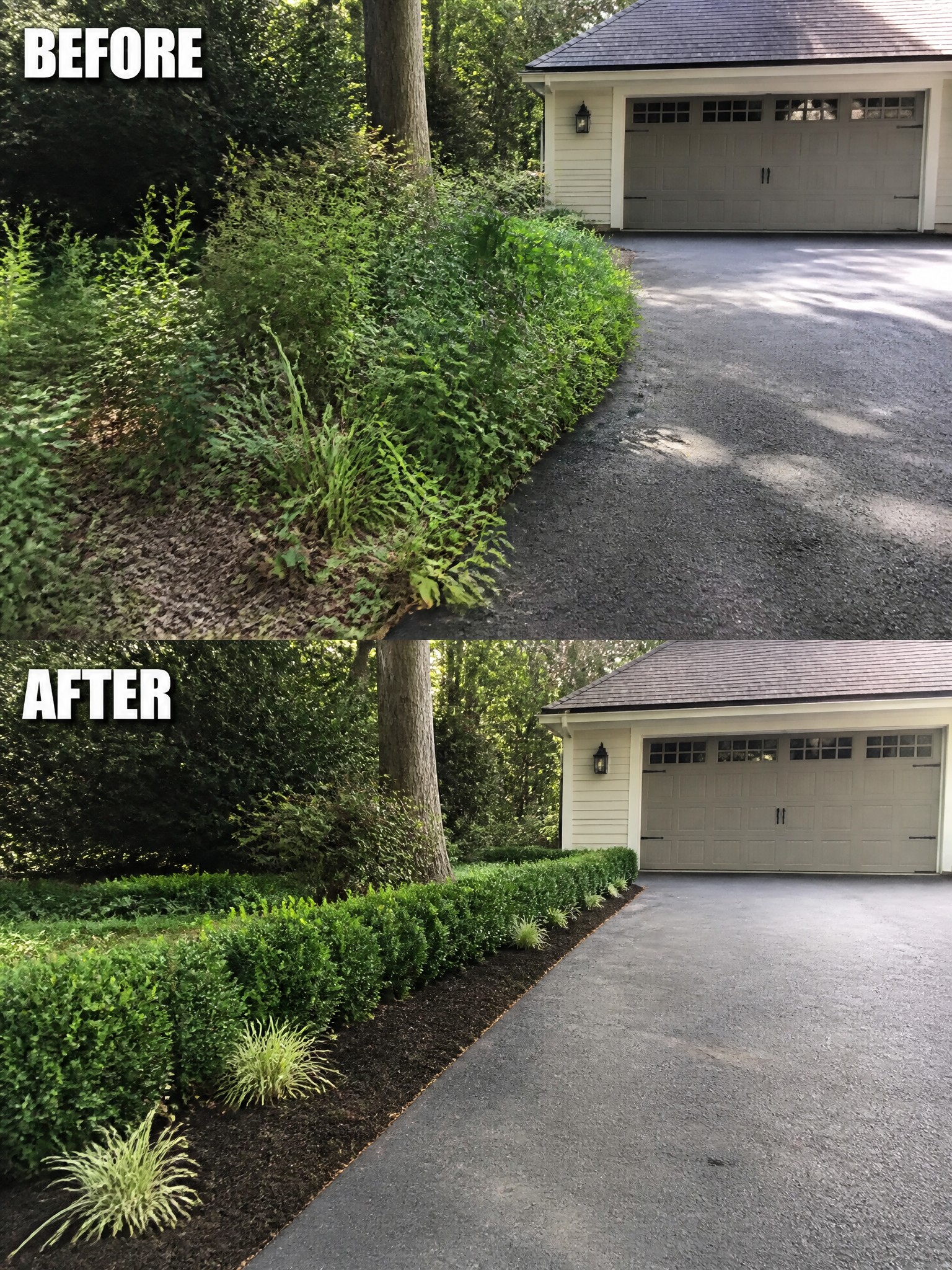
The main improvement came from cutting back the thick, messy growth along the driveway and replacing it with low trimmed hedges set in fresh mulch. This simple step turns a wild edge into something that looks planned and easy to maintain.
Begin by removing the heaviest overgrowth so the shape of the space becomes clear. Then plant a row of compact shrubs or grasses that stay low and add mulch to keep the line neat. The same idea works along driveways, walkways, or side yards where you want structure without crowding the area or creating extra work.
Clean Up Overgrowth Before Adding Defined Borders
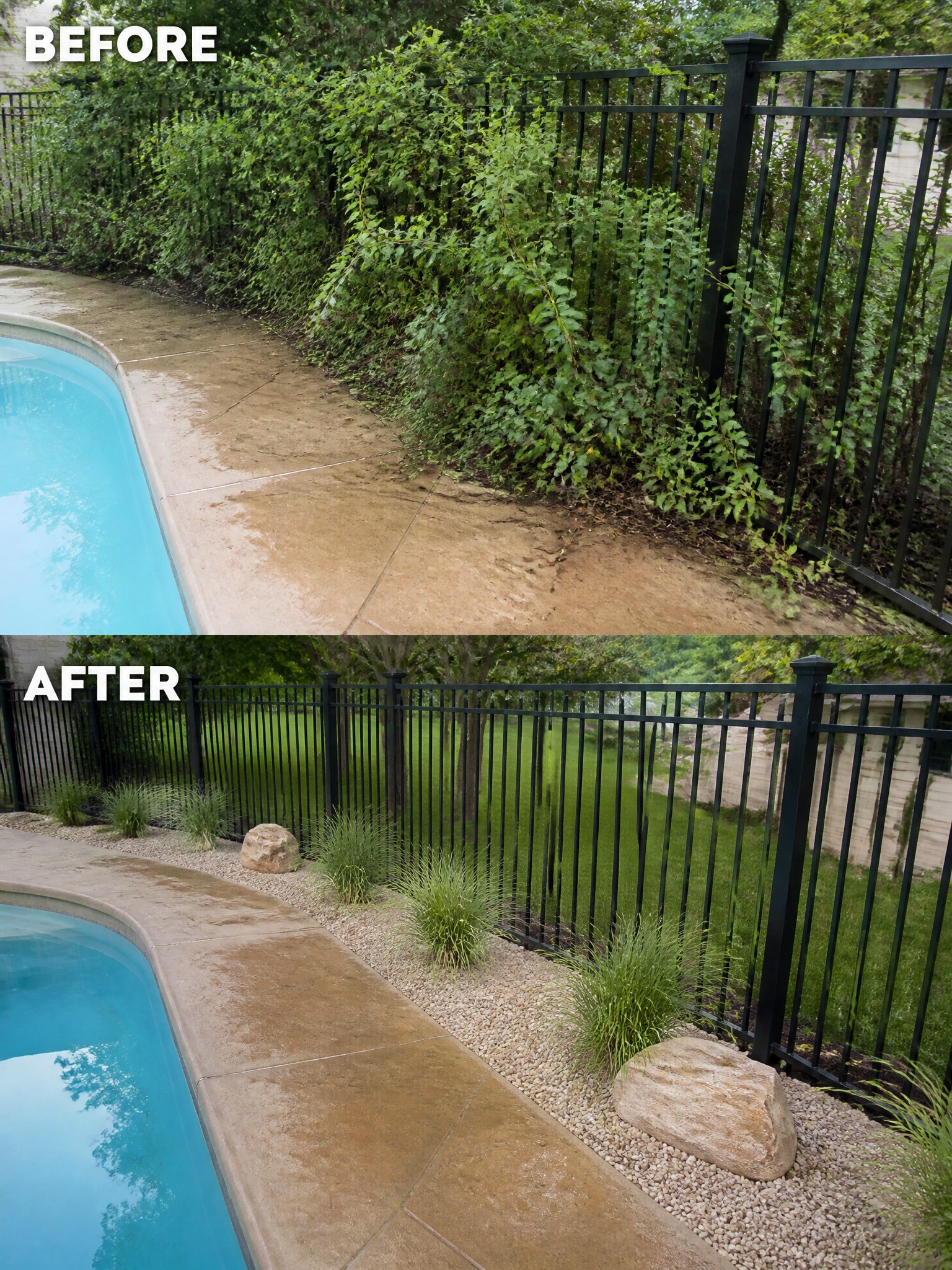
The biggest change here came from removing the thick vines and bushes that had taken over the fence line. Once those were cleared, a simple gravel strip with a few clumps of grass and a couple of rocks gave the whole pool edge a finished look without much extra work.
This approach works well along fences or pool decks where plants tend to spread fast. Start by cutting back everything that is crowding the space, then add a narrow border of gravel or mulch to keep the edge sharp. It keeps maintenance low and leaves room for the pool area to feel open.
Organize An Overgrown Backyard With Raised Beds

Raised beds give an overgrown yard clear shape and make the space much easier to manage. In this case the messy beds full of weeds were replaced with neat wooden frames, fresh mulch, and organized planting rows that keep everything contained.
This approach works best in long narrow yards or side areas where plants tend to spread. Build a few simple beds first, add mulch to cut down on weeds, and leave the rest of the ground as a simple path. It keeps maintenance low without needing a full redesign.
Create A Simple Stepping Stone Layout In An Overgrown Backyard
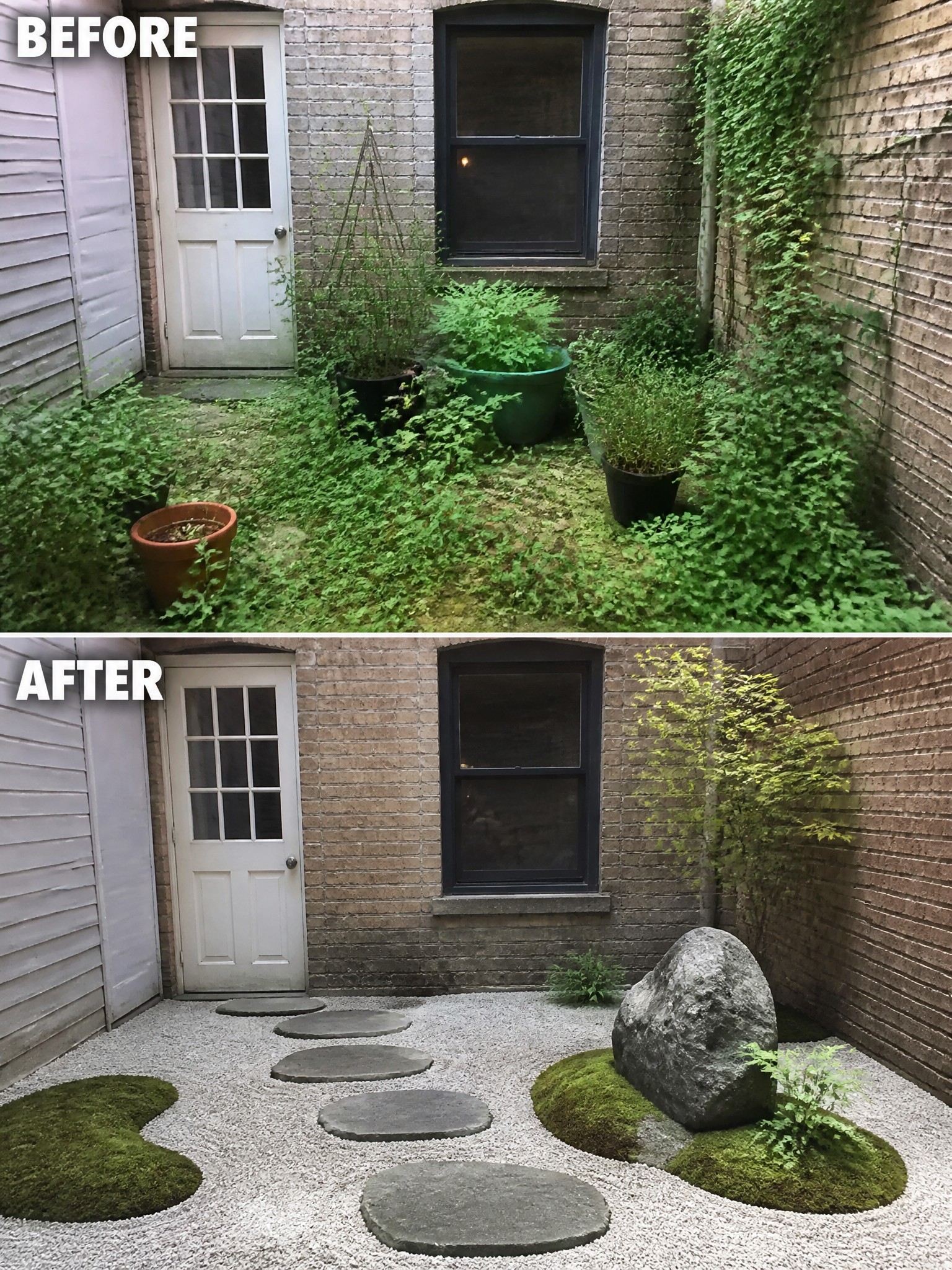
Many small yards turn into a thick tangle of weeds and stray pots when they get ignored. Clearing the overgrowth completely and laying down gravel with a line of stepping stones gives the space a clear layout and makes it feel intentional instead of neglected.
This idea works best in tight urban yards where you want something simple to maintain. Start by removing everything, then add the gravel base and stones to define a path before adding just a few planted spots or a large rock so the area stays open and easy to walk through.
Transform An Overgrown Backyard With A Simple Deck And Gravel
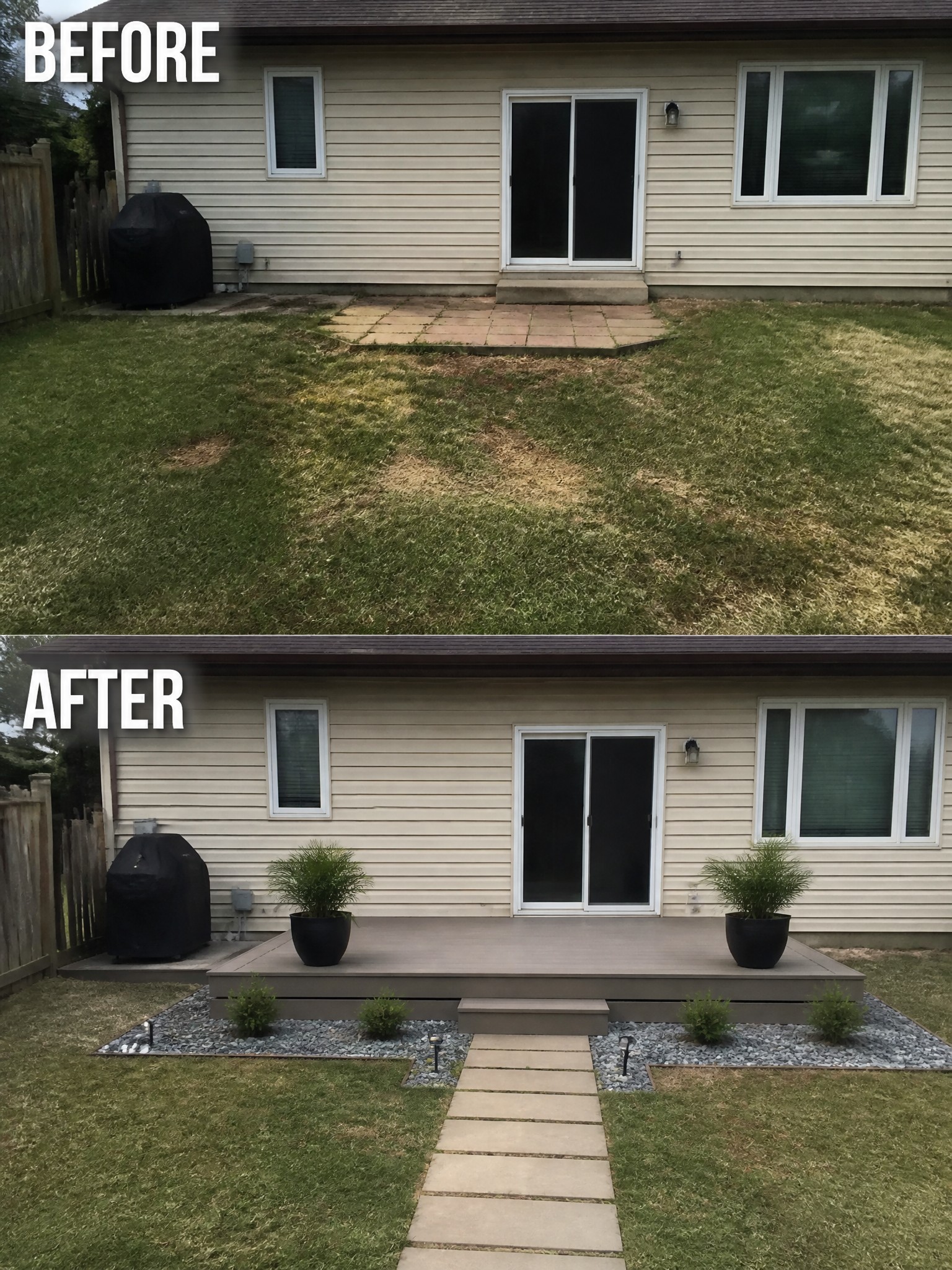
An overgrown yard often feels like wasted space until you give it clear edges and a purpose. In this case the patchy lawn and plain concrete pad were replaced with a simple deck, gravel beds, and a straight path. Those changes turned the area into something you can actually use without constant mowing or weeding.
The same idea works well on any busy property. Start by cleaning up the grass and marking out zones with hardscaping like a deck or gravel. Low plants along the edges keep the look tidy with very little upkeep, and the path makes the yard feel finished rather than neglected.
Clear Overgrowth First Before Adding New Plants
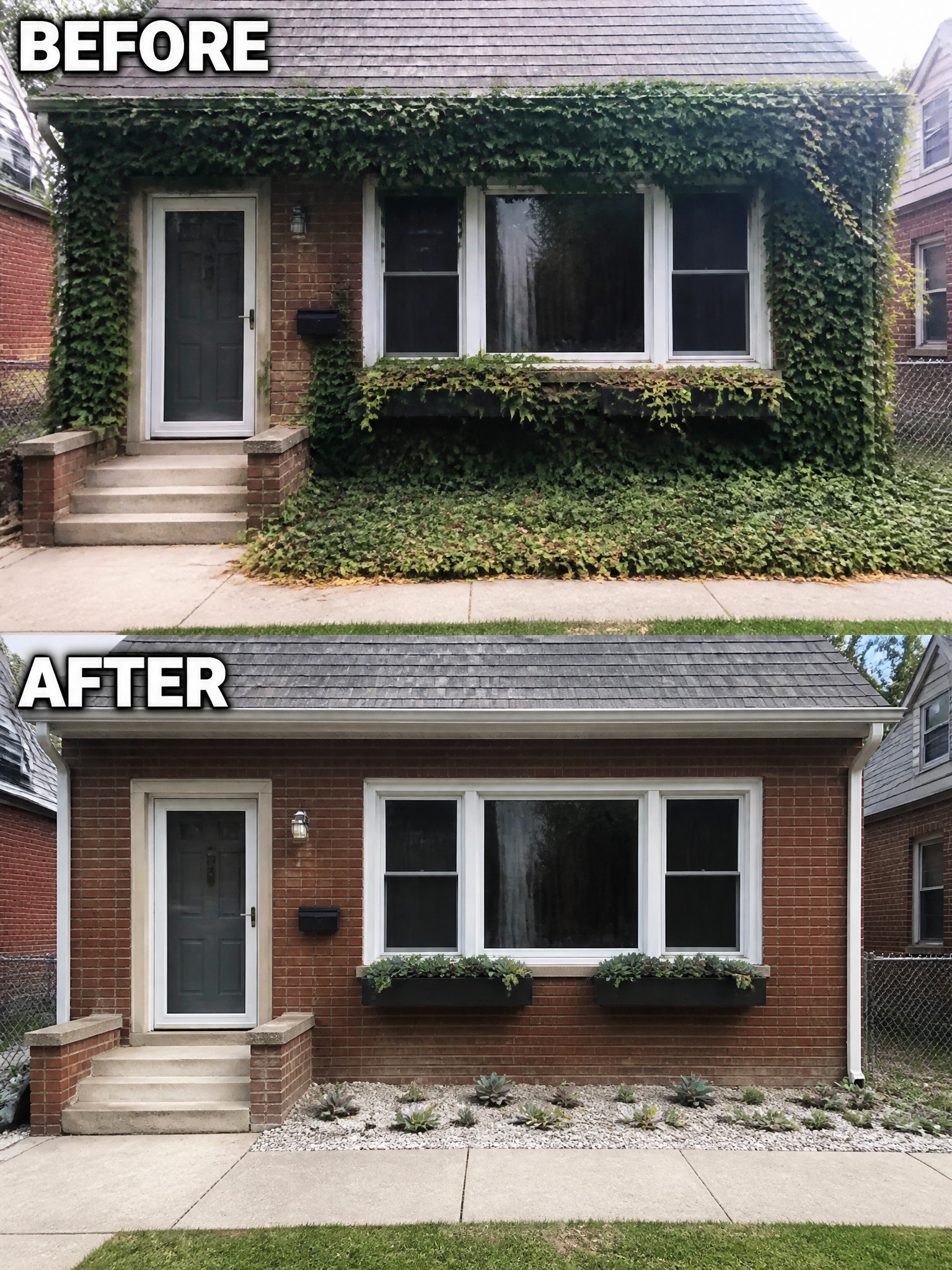
Removing the thick ivy that covered the walls and ground made the biggest difference here. Once the vines were gone, the brick showed through clearly and the front of the house looked much lighter and more open. The new gravel bed and small succulents then gave the area a simple finished look without needing constant trimming.
This approach works well on older homes where vines have taken over. Start with a full cleanup so you can see what the structure actually needs, then keep new planting low and contained. Gravel and a few window boxes are enough to add shape while staying easy to maintain.
Frequently Asked Questions
Q: How do I stop weeds from coming back after clearing the yard?
A: Pull the roots out completely when you clear the space. Lay down a thick layer of mulch to block new growth. Native plants fill in fast and crowd out the rest.
Q: What plants work best for busy yards with little time?
A: Go for hardy perennials that bloom on their own. They need water only during dry spells. Watch your local weather to time any trimming.
Q: Can these ideas work if pets use the yard every day?
A: Pick durable grasses that recover quickly from wear. Create a separate play area with gravel or stones. Your pets will enjoy the space without damaging the main plants.
Q: Where should I begin if the yard looks completely wild?
A: Start by removing the biggest overgrowth first. This gives you room to see the rest clearly.
