

Backyards often end up feeling off limits once the plants crowd in and any seating gets buried under the growth.
Clearing just enough space to set out chairs or a bench lets the area become part of how the house actually gets used.
That shift alone makes a difference.
I have found that seating works better when it sits within reach rather than behind too many layers of unchecked greenery.
A few of the setups here focus on keeping some of the wild look while still leaving room for people to stay outside comfortably.
Turn An Overgrown Backyard Into A Fire Pit Seating Area
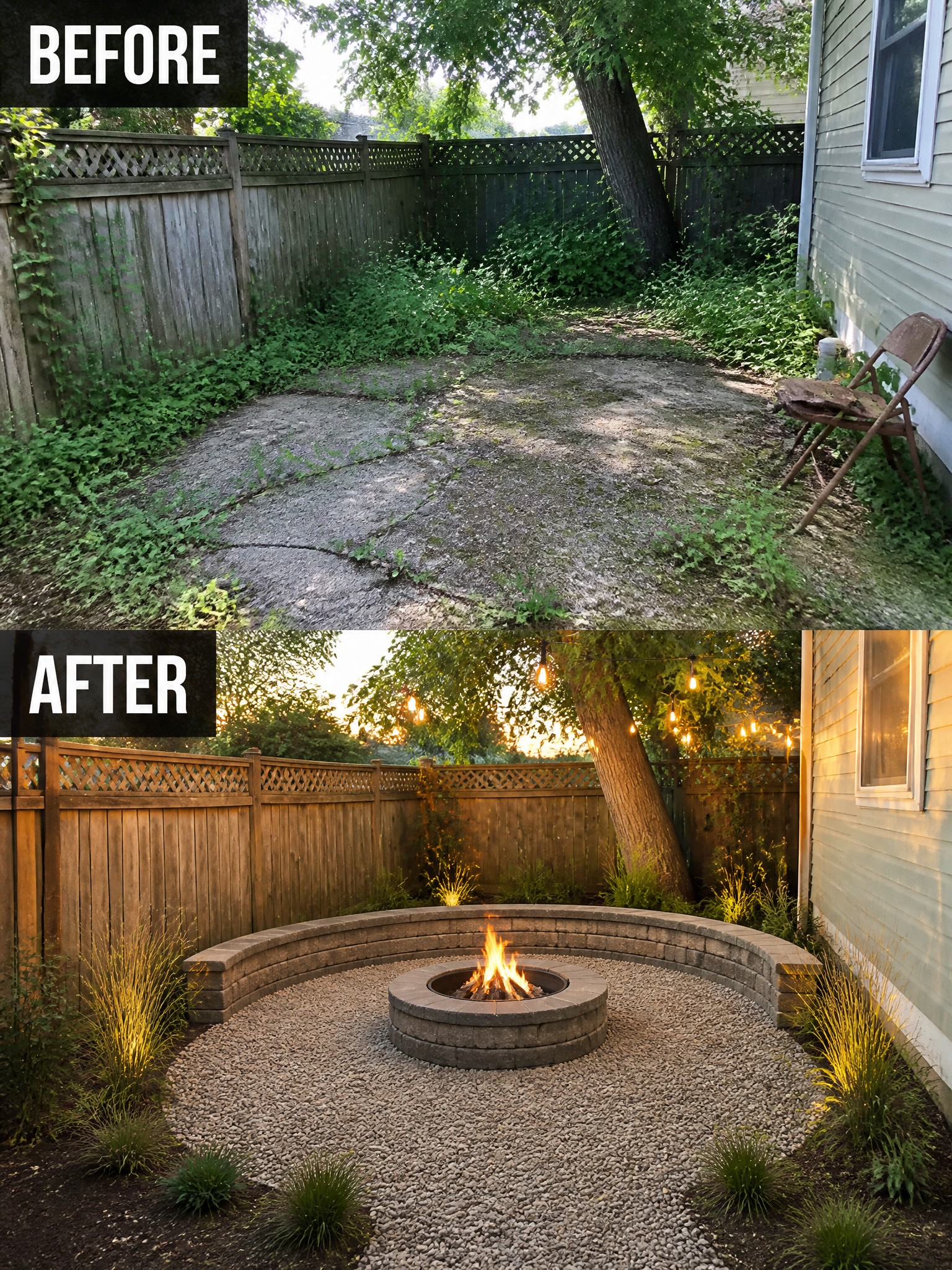
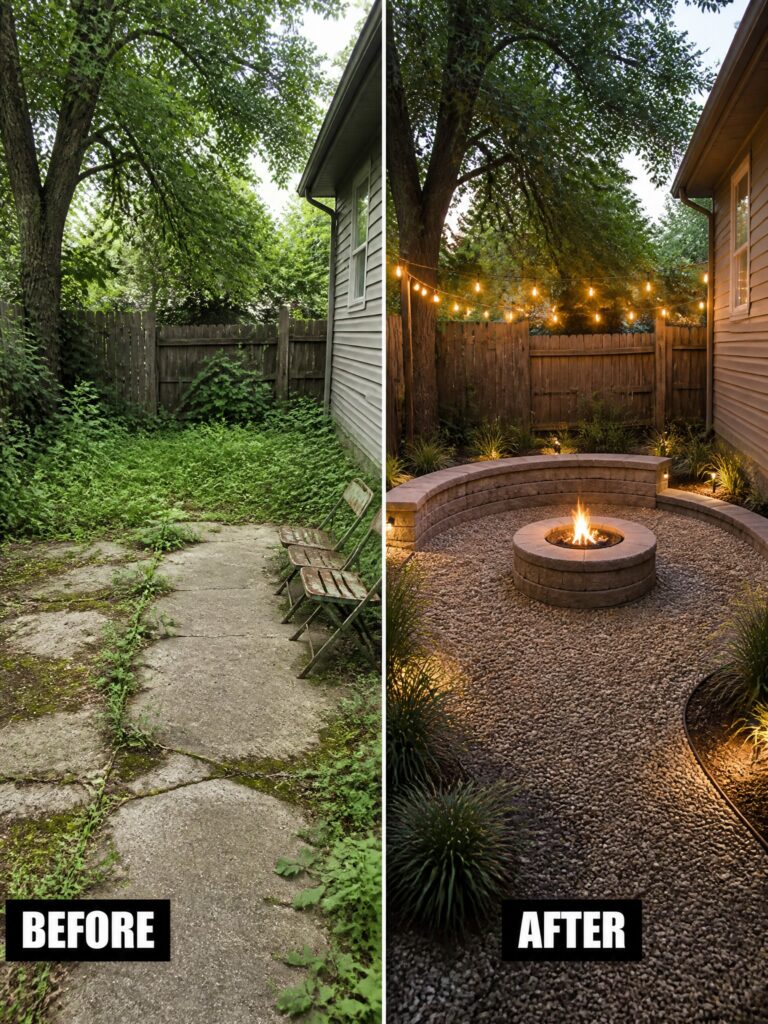
An overgrown yard with cracked concrete often sits unused because it lacks any clear purpose. Clearing the weeds and adding a circular stone fire pit with a built-in seating wall and gravel base gives the space one strong focal point that actually invites people to sit and stay.
This approach works well in smaller backyards where you want one main gathering spot instead of trying to fill the whole area. Start by removing the overgrowth and leveling the ground, then keep the rest of the planting simple with a few tall grasses around the edges so the fire pit stays the main feature.
Turn An Overgrown Backyard Into A Shaded Seating Area

Adding a pergola gives structure to a space that was mostly just a path through weeds and vines. The before shows how quickly an area can become unusable when left alone, while the after creates a clear spot for sitting by building a simple wooden frame over the existing stone path and placing a couch underneath it.
This works best in narrow side yards or corners where you already have some shade from trees. Put the pergola in first so the seating has a reason to be there, then add a few potted plants around the base. Keep the furniture scale modest so the space still feels open and you can walk through easily.
Turn A Bare Deck Into A Usable Outdoor Seating Area
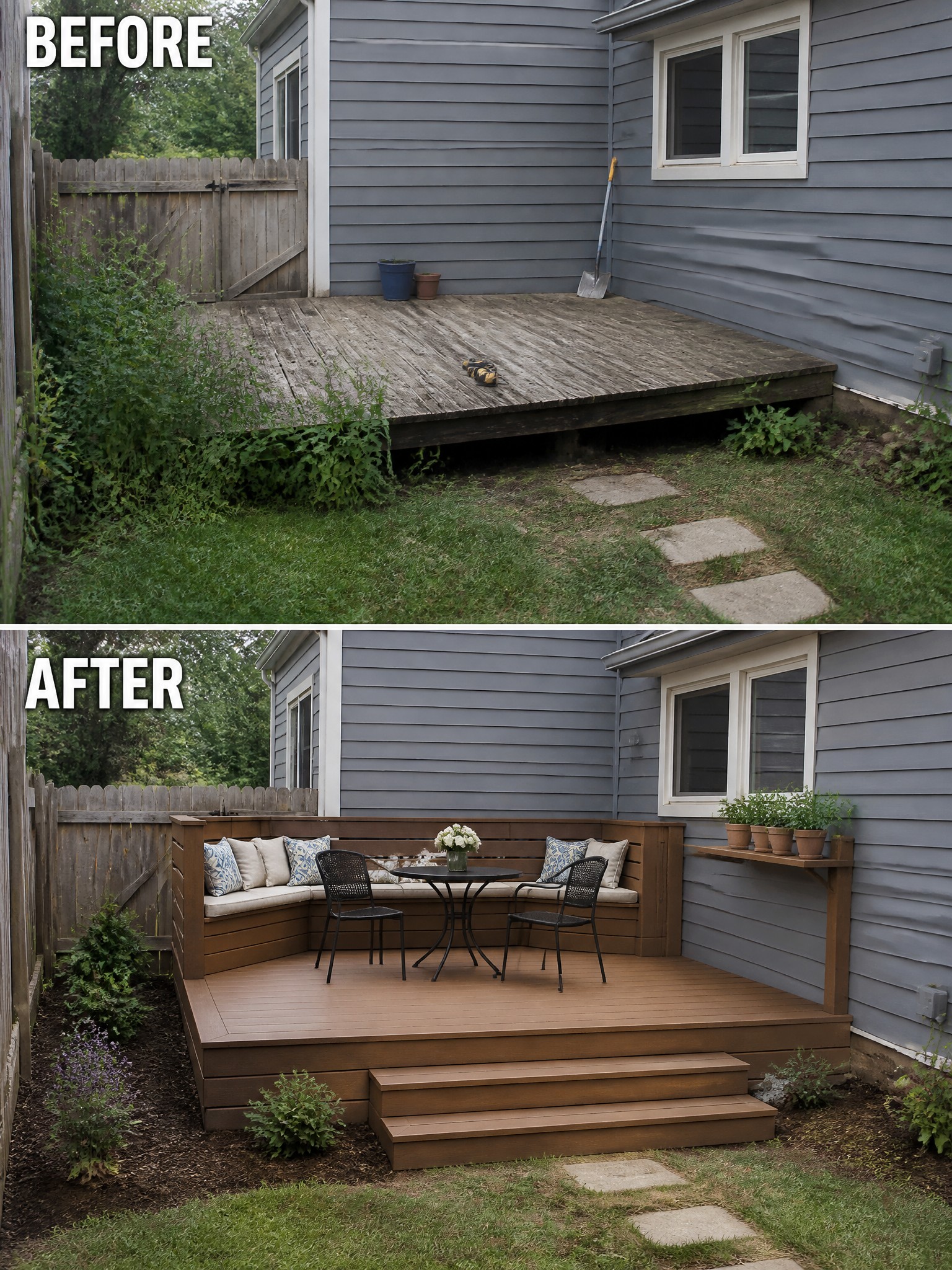
A plain deck often sits unused when it has no clear purpose or comfortable spots to sit. In this case the deck went from an empty weathered platform to a finished space with built-in benches along the edges, which immediately made the area feel like a real room outdoors.
This idea works best on decks that already have some size or a corner to work with. Keep the furniture simple, choose weather-safe cushions, and leave enough open floor space in the middle so people can move around easily.
Add Structure To An Overgrown Backyard
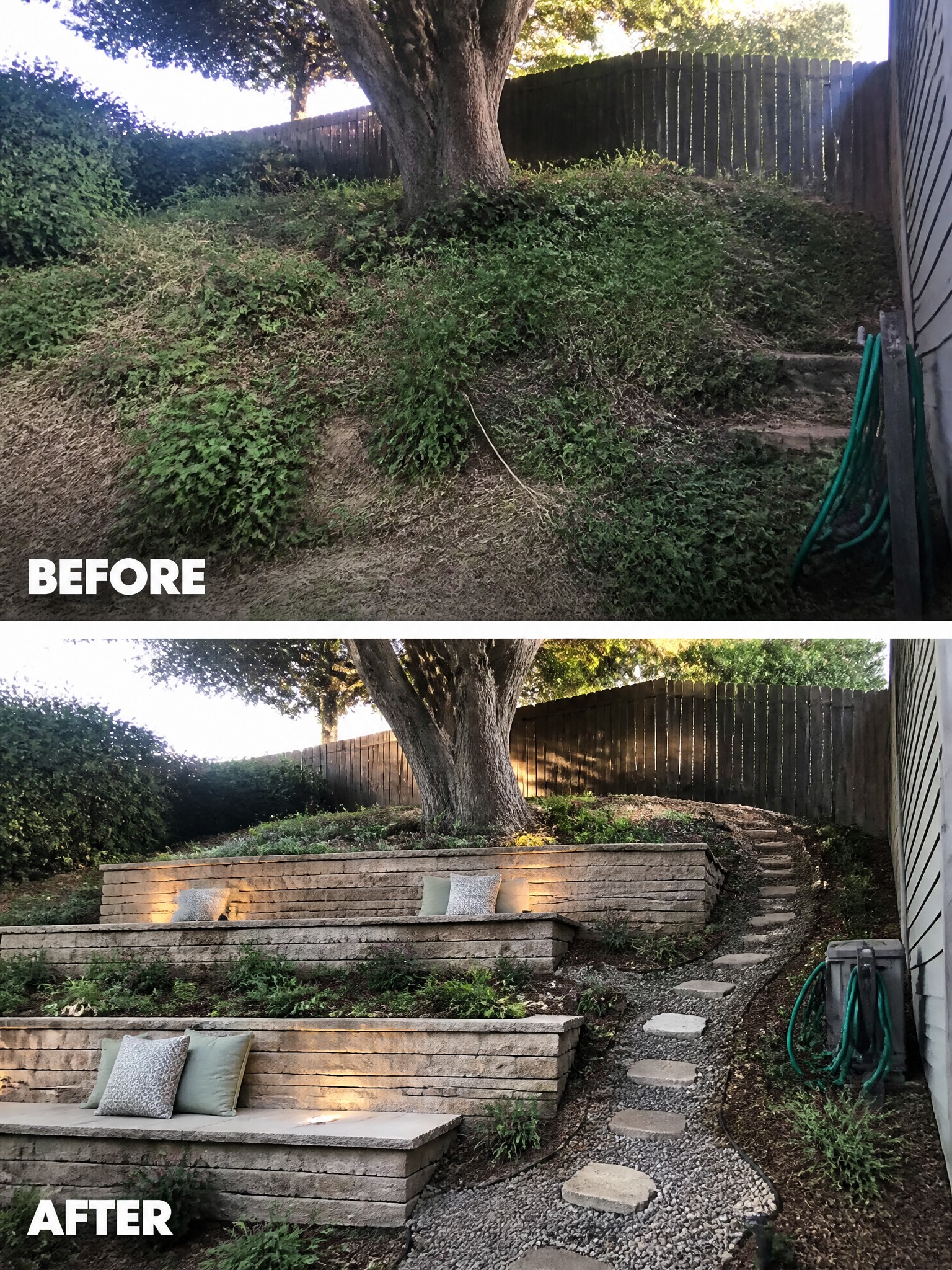
A steep, overgrown slope often leaves the backyard feeling unusable. Low retaining walls solve this by carving the hill into flat tiers that can support benches and seating areas.
This idea works best on yards with a clear drop from one end to the other. Focus first on getting the wall heights right so each level sits at a comfortable height, then add a simple path so people can move between the new seating spots without stepping on the plants.
Turn An Overgrown Backyard Into A Gravel Seating Area
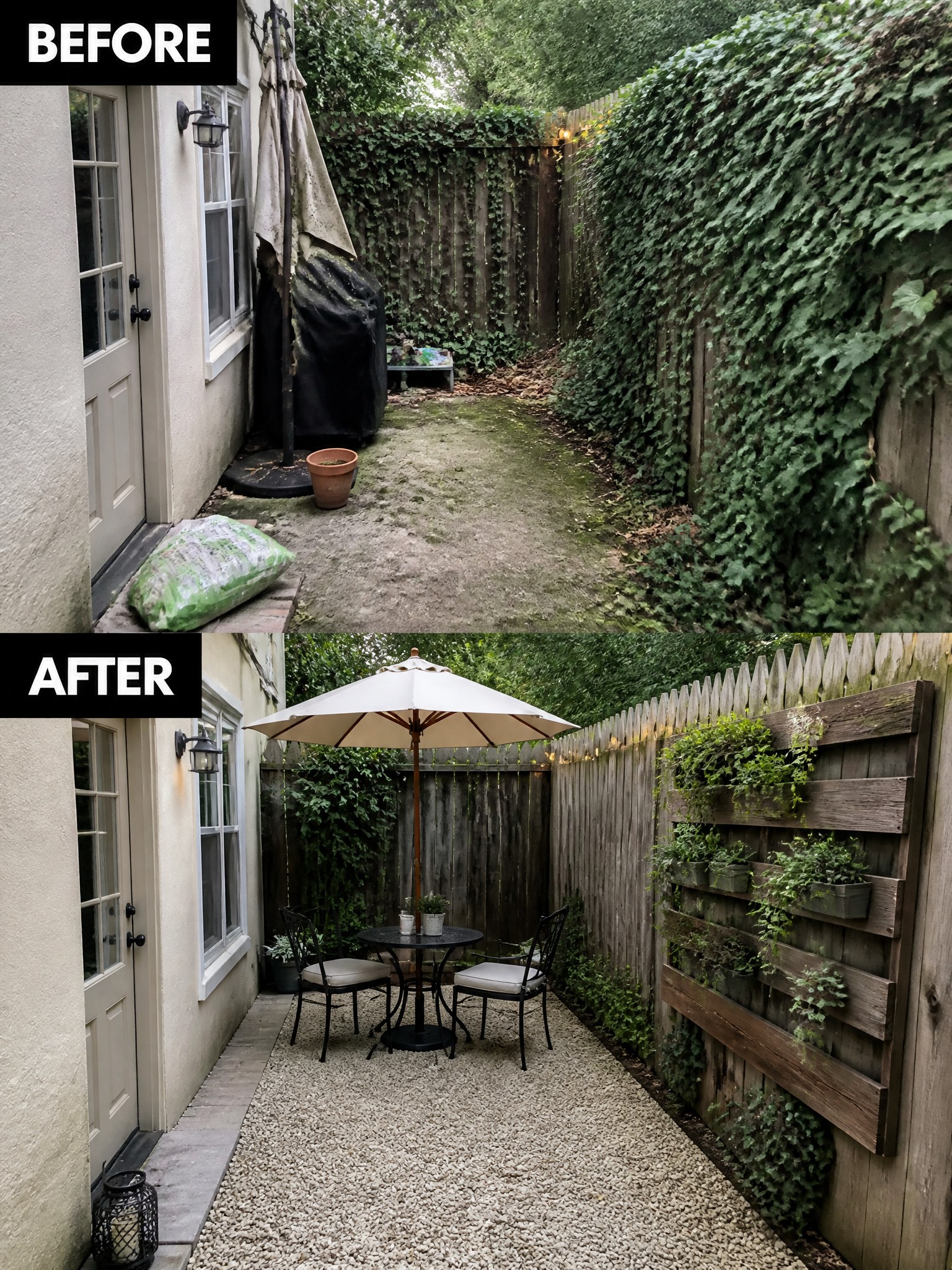
One of the easiest ways to fix a neglected side yard is to clear the ground and lay gravel so a table and chairs can actually fit. The dirt and scattered items disappear, and the space suddenly feels like a place to sit instead of just a walkway.
This idea suits narrow yards between houses where grass never grows well. Keep the furniture small, add one shade element like an umbrella, and use a vertical planter on the fence if you want greenery without losing floor space.
Turn An Overgrown Patio Into A Seating Area

Clearing the moss and weeds from the stone pavers made the biggest difference here. Adding two simple chairs with pillows and a few planters turned the space from a walkway into a spot where someone can sit and stay awhile.
This idea works best in small backyards that already have a patio surface but no real purpose. Keep the furniture to a minimum so there is still room to move around, and choose pieces that can handle weather without much upkeep.
Turn An Overgrown Backyard Into A Seating Area
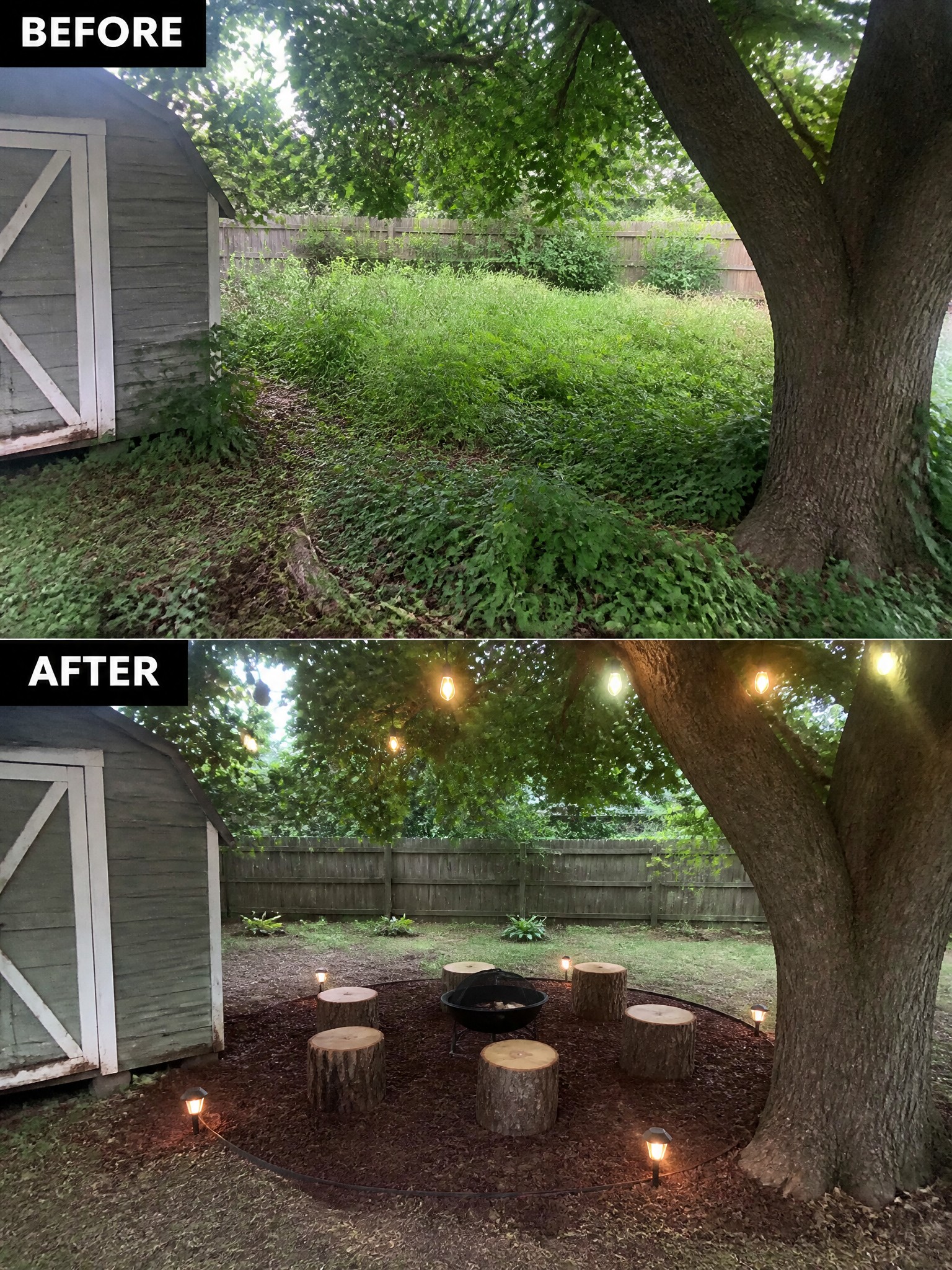
Clearing thick weeds and brush first makes room for a usable spot that feels like part of the yard instead of an afterthought. Here the space shifted from a dense wall of growth to a simple mulch circle with a fire pit at the center.
This idea works well in backyards that already have a big tree for shade. Mark out the seating zone with edging and a basic ground cover before adding seats and lights, and keep the furniture low so the area stays open and easy to move around.
Build A Bench Along The Fence To Create Outdoor Seating
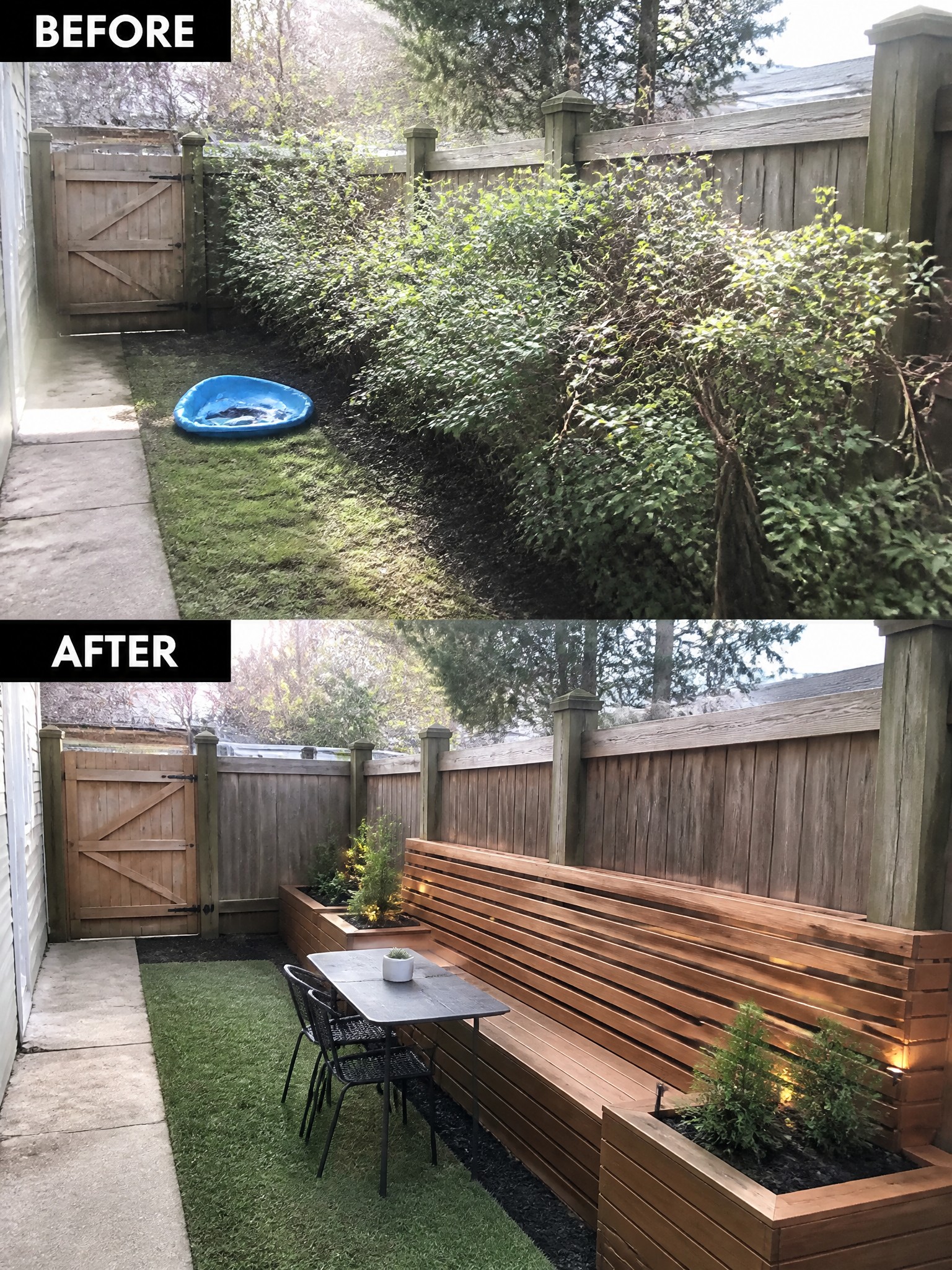
An overgrown backyard often feels unusable until you add one strong piece of structure. Clearing the thick bushes and installing a long wooden bench with built-in planters gave this narrow space a clear purpose and a place to sit. A small table and chairs fit neatly in front without crowding the remaining lawn.
This approach works best in small or narrow yards where you want seating but still need room to walk. Keep the bench simple and run it along one fence line so the rest of the yard stays open. Use the same wood tone for any planters or edging to keep the look consistent and easy to maintain.
Create A Stepping Stone Path To A Backyard Seating Area
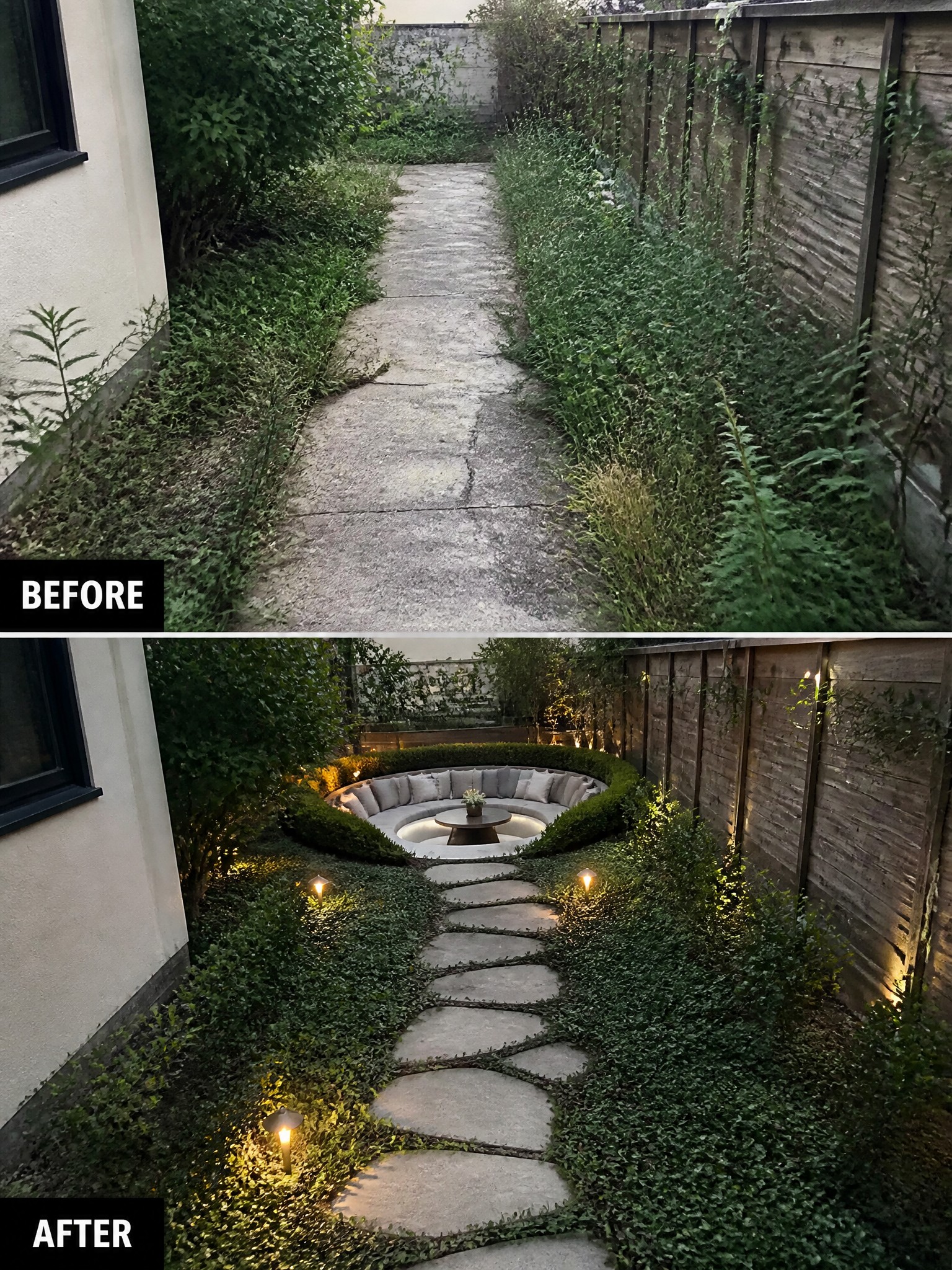
Many overgrown yards feel unusable because the plants have taken over any sense of path or place to sit. Clearing the excess growth and laying a simple stepping stone path creates a clear route through the space while leaving room for planting along the edges.
A circular seating area then sits naturally at the end of that path. This works especially well in long, narrow yards where you need both movement and a defined spot to gather without the whole area feeling crowded.
Turn An Overgrown Backyard Into A Defined Seating Area
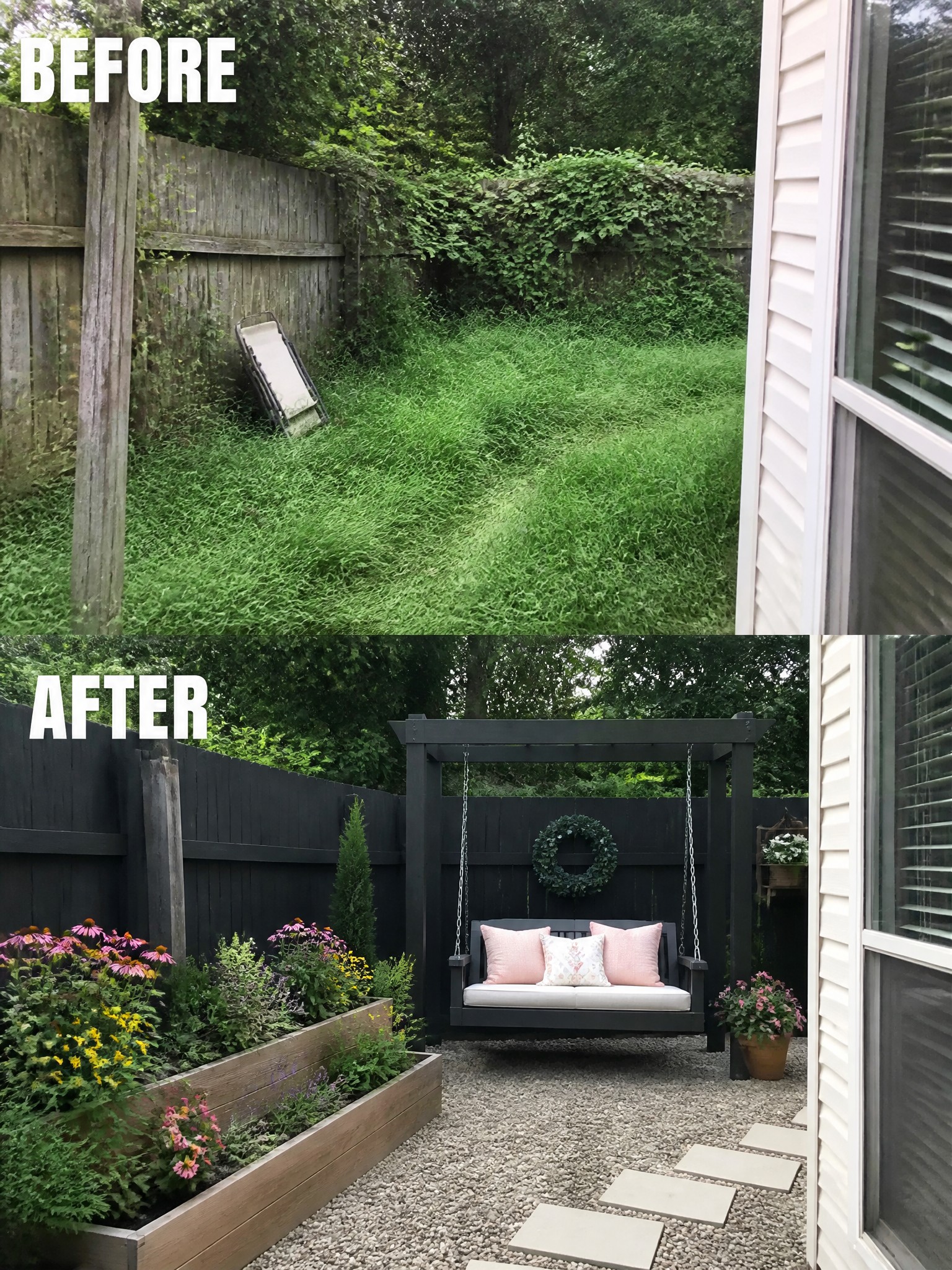
An overgrown yard often feels unusable until you clear the excess growth and give the space a clear purpose. In this case, removing the tall grass and adding a simple gravel base with a central swing structure made the area feel intentional and inviting instead of neglected. The raised beds on one side help contain the planting and keep the focus on the seating.
This approach works well in small to medium backyards where you want one main spot to relax without filling the whole space with furniture. Start with cleanup and a basic hard surface like gravel, then add one strong focal point such as a swing or bench. Keep the surrounding planting simple so the seating area stays easy to maintain.
Turn A Narrow Side Yard Into A Seating Area
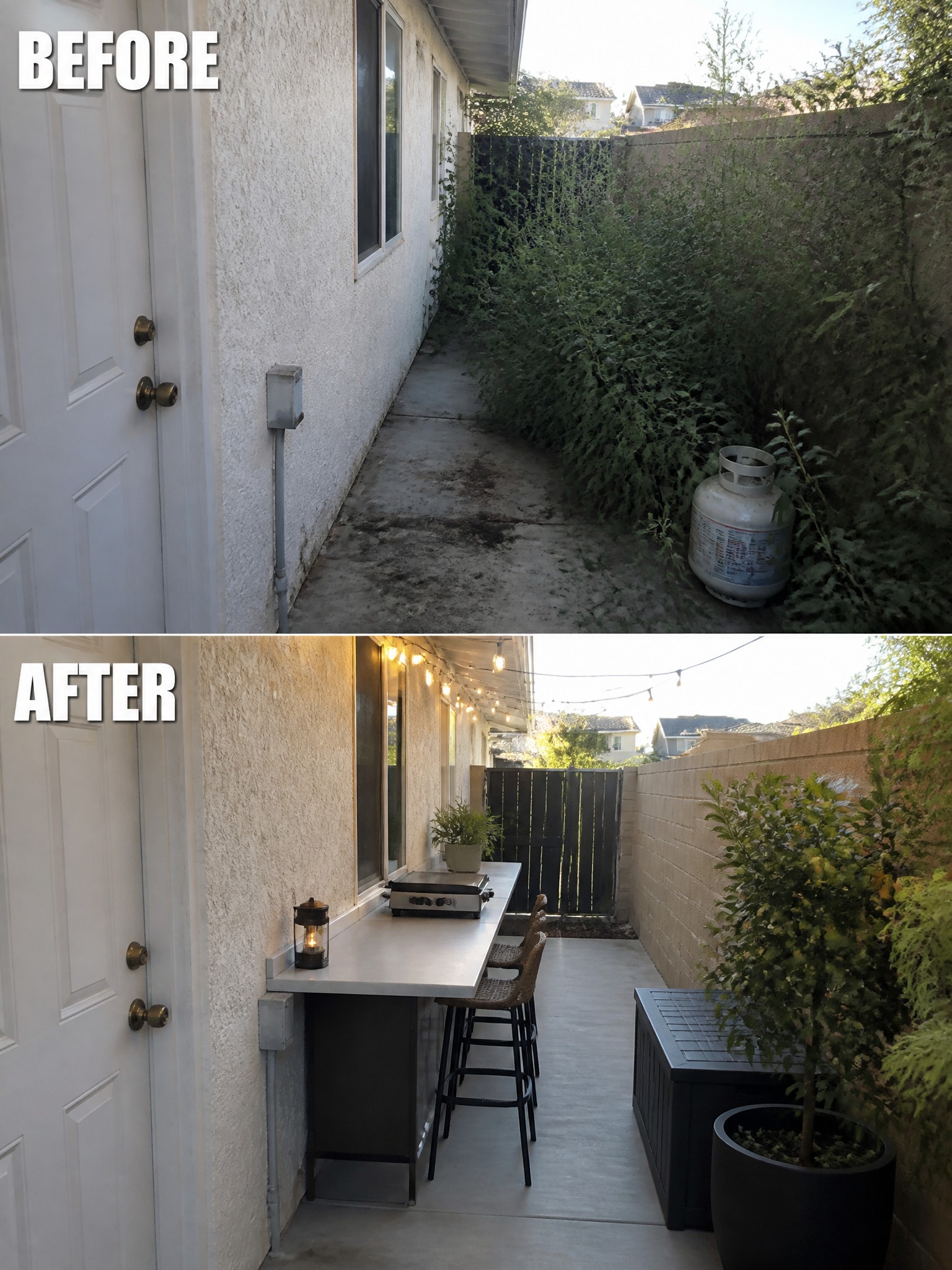
A narrow side yard often ends up as wasted space because it feels too tight and overgrown to use. Clearing the brush and adding a simple counter with stools gives the area a clear purpose so it can function as an outdoor dining or gathering spot instead of just a walkway.
This approach works best on homes where the side yard connects the front and back or sits right off the kitchen door. Keep the furniture slim and leave enough room to walk past the stools. Adding string lights overhead makes the space feel usable in the evening without crowding the ground.
Create An L-Shaped Bench Seating Area In An Overgrown Side Yard
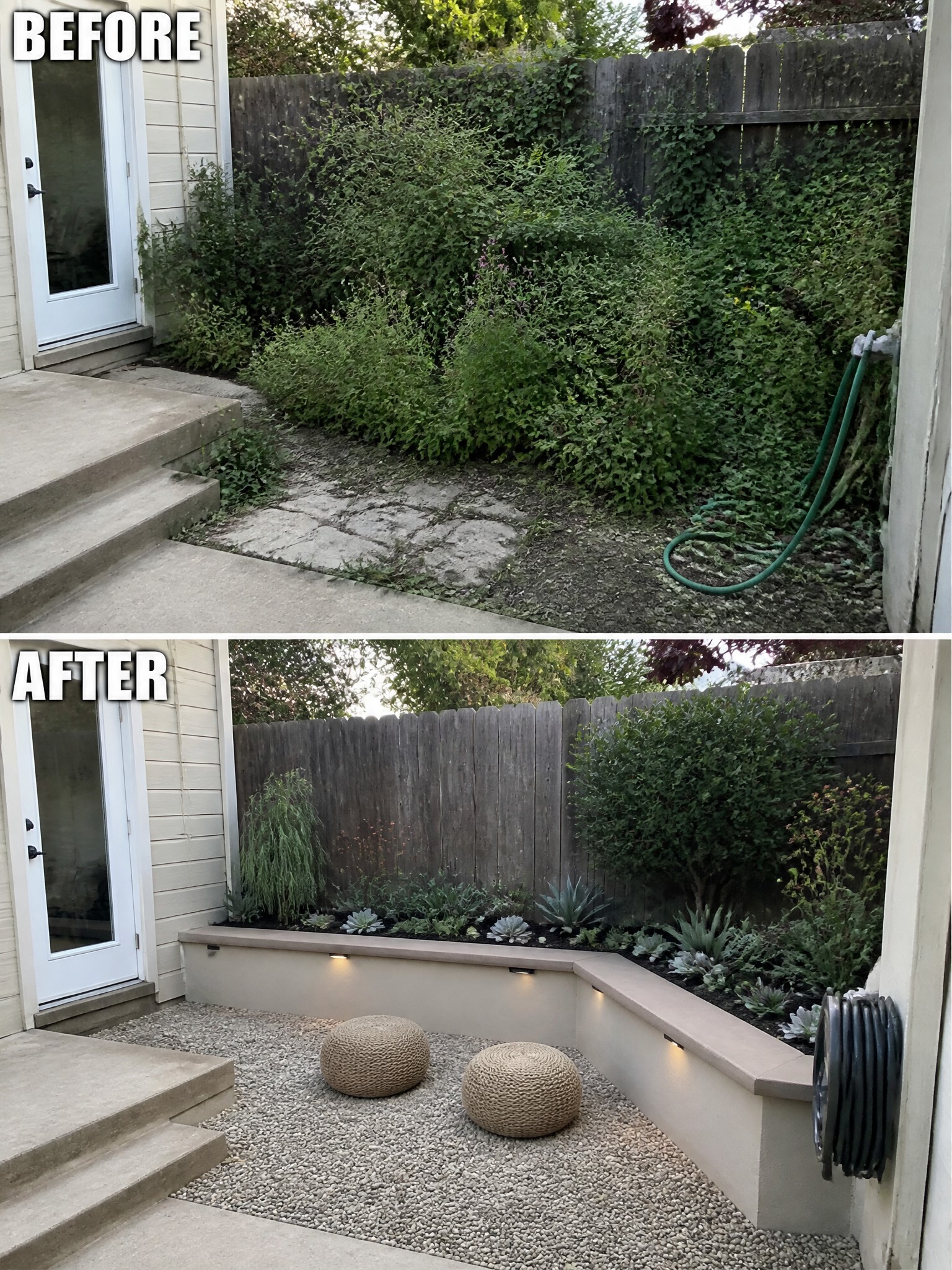
Clearing the tangled growth first makes the biggest difference here. Once the weeds and vines are gone, a simple gravel base and a low built-in bench turn the narrow side yard into a spot where people can actually sit and stay awhile. The L-shaped bench gives plenty of seating without taking up floor space, and the gravel keeps the area feeling open and easy to maintain.
This approach works well in small or awkward backyards where a full patio would feel cramped. Start with the hardscaping and bench before adding plants so the seating area stays the main focus. Keep the bench height low and add a few weatherproof cushions or poufs so the space feels finished without crowding the walkway.
Build A Bench To Turn A Neglected Corner Into Seating
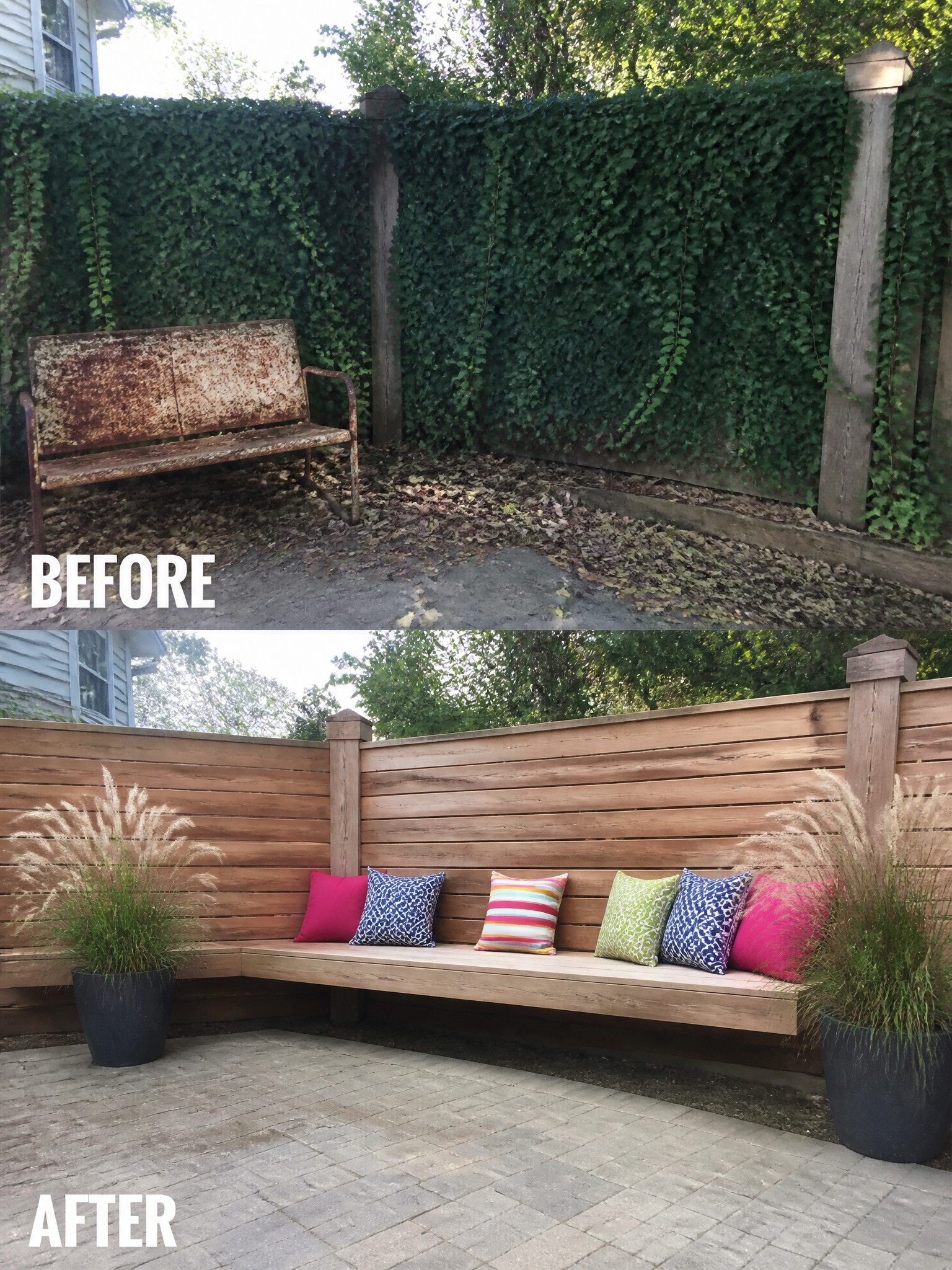
An old rusty bench sitting in an overgrown patch of ivy and leaves does not invite anyone to sit down. Replacing that spot with a simple built-in wooden bench along the fence makes the same area feel like a place meant for relaxing. The clean lines and solid surface give the space a clear purpose without needing a lot of extra pieces.
This approach works well in backyards that already have a fence or wall to build against. Keep the bench low and wide so it feels comfortable, then add a few weatherproof cushions for color. Leave enough open space in front for feet and movement, and the seating area will stay practical rather than crowded.
Turn An Overgrown Pool Area Into A Seating Spot
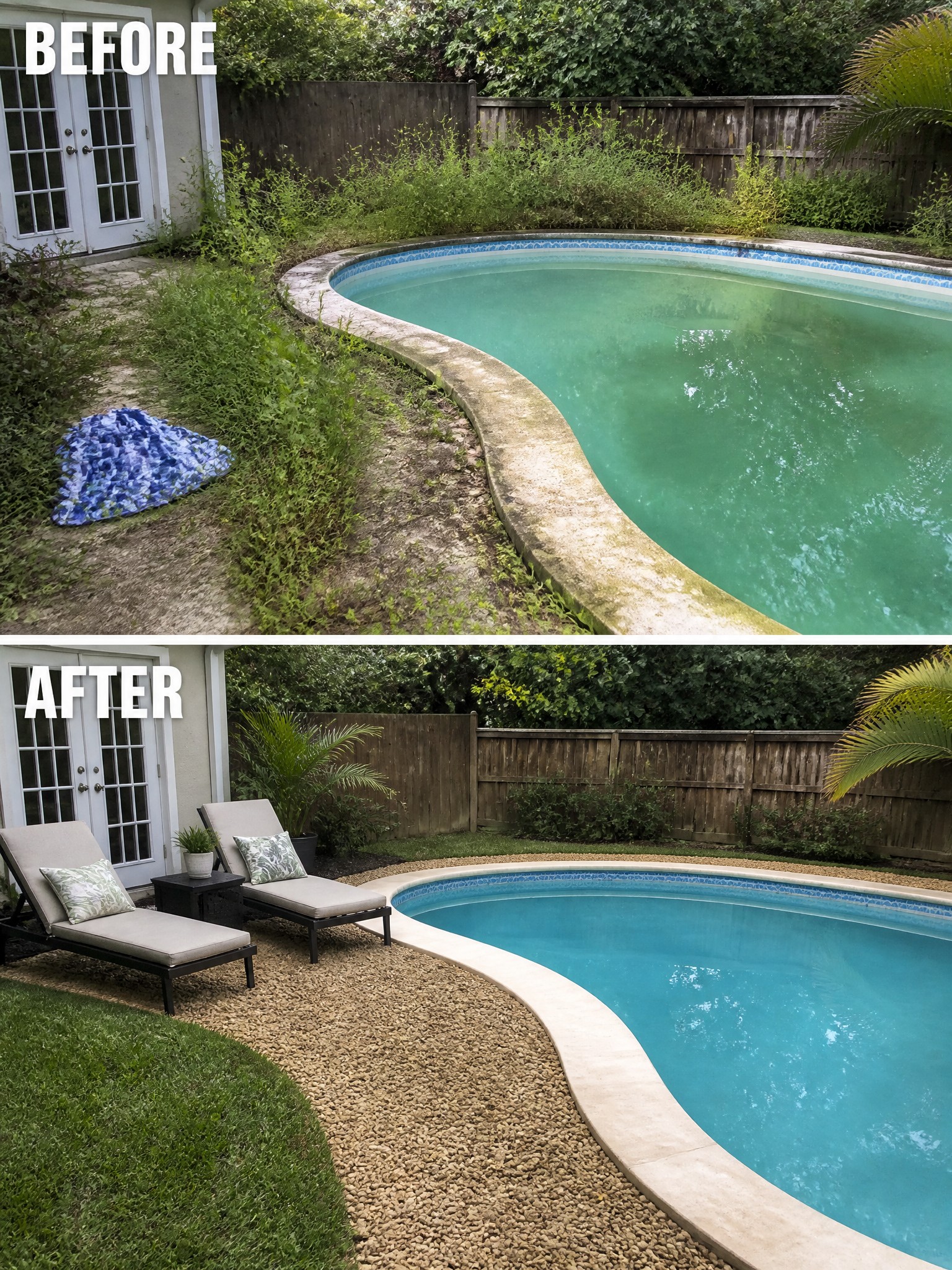
Clearing the weeds and dirt first made the biggest difference here. Once the ground was cleaned up, adding gravel created a flat, usable surface right next to the pool where lounge chairs could actually sit without sinking or looking out of place.
This approach works well in backyards where the pool already exists but the surrounding space feels neglected. Start with basic cleanup and a simple ground cover like gravel before bringing in furniture. It keeps the area low maintenance and leaves enough open space to walk around the pool without crowding it.
Add A Gazebo To Create A Backyard Seating Area
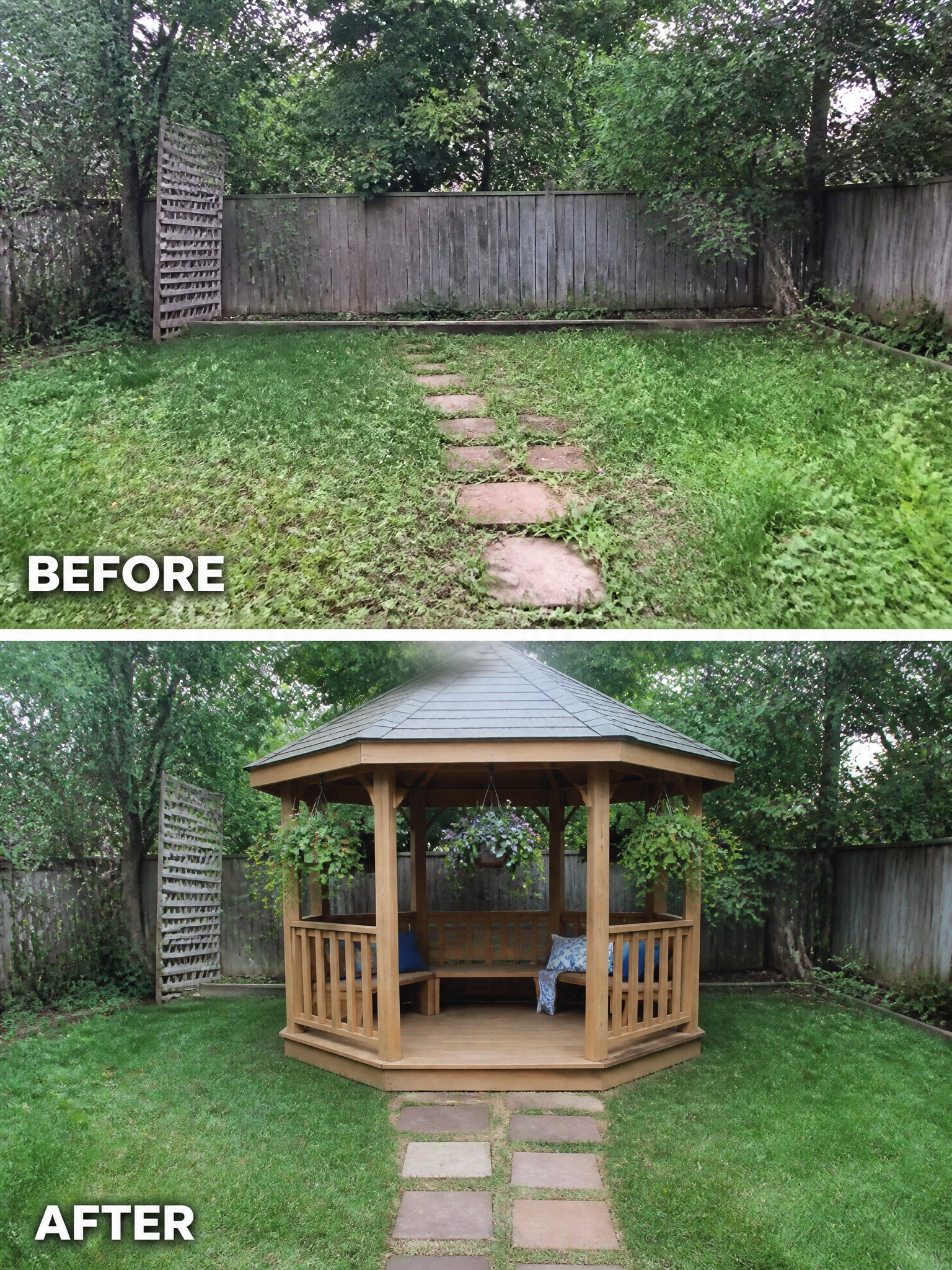
An empty stretch of grass with just a few stepping stones rarely gets used. Adding a gazebo gives the space one clear spot to sit, which instantly makes the whole yard feel more purposeful. The simple path now leads somewhere instead of fading into the lawn.
This idea works best in backyards that have decent size but lack any real structure. Place the gazebo where it can be reached easily, then keep the surrounding lawn open so the area stays practical. Start with the main build and add cushions or hanging plants later once you know how the space gets used.
Clear An Overgrown Backyard Before Adding Seating
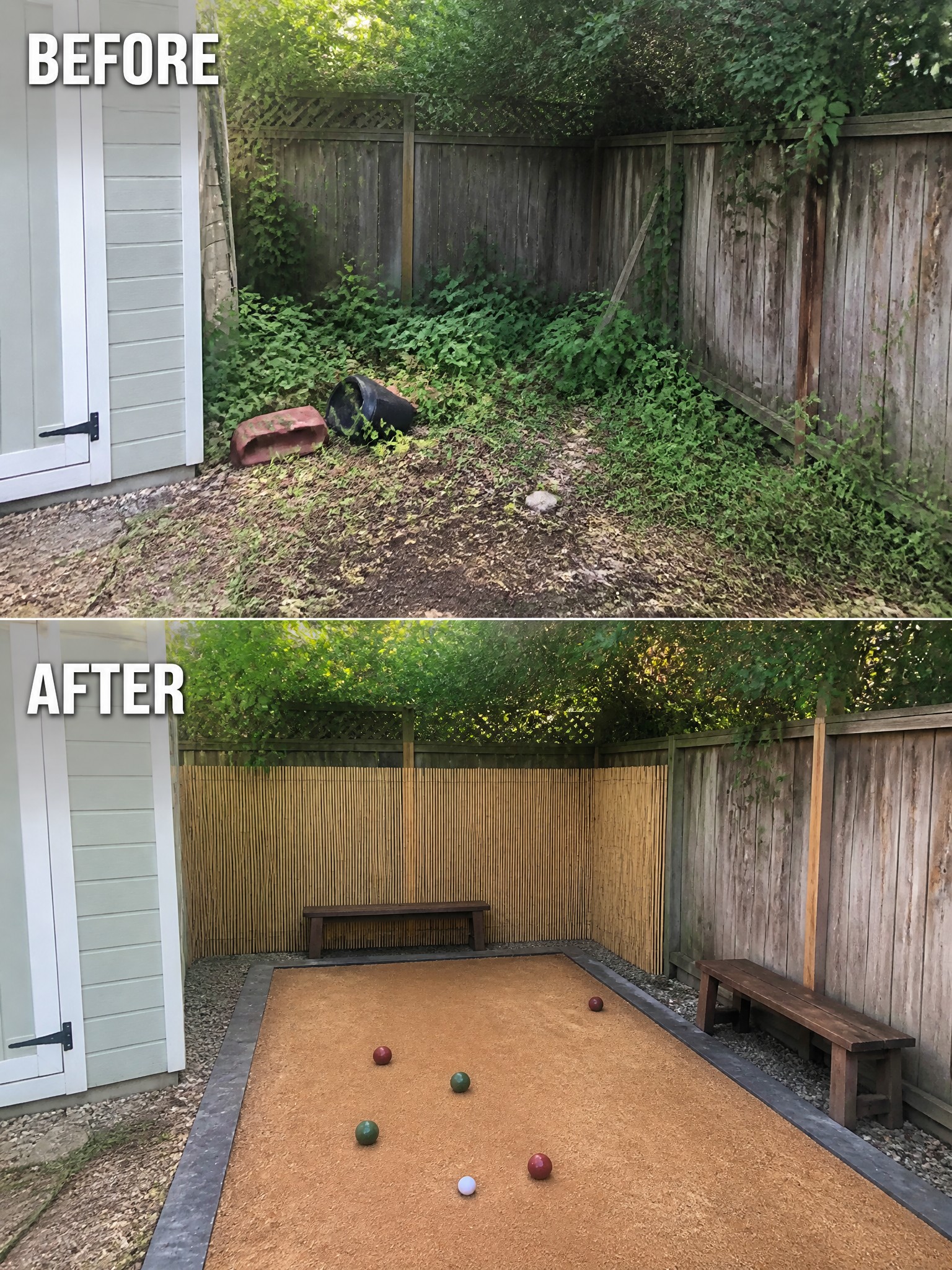
An overgrown yard often needs a full reset before any seating or activity area can work. In this case the space went from a thick tangle of vines and scattered debris to a flat, edged court with two simple benches placed along the sides. The cleanup created room for both the game surface and places to sit without feeling cramped.
This approach works best in smaller backyards where every square foot counts. Start by removing the plants and junk, then mark off one main zone with edging or gravel before bringing in furniture. The benches stay practical because they sit right next to the court, giving people a spot to rest without blocking play.
Turn An Empty Backyard Into A Defined Seating Area
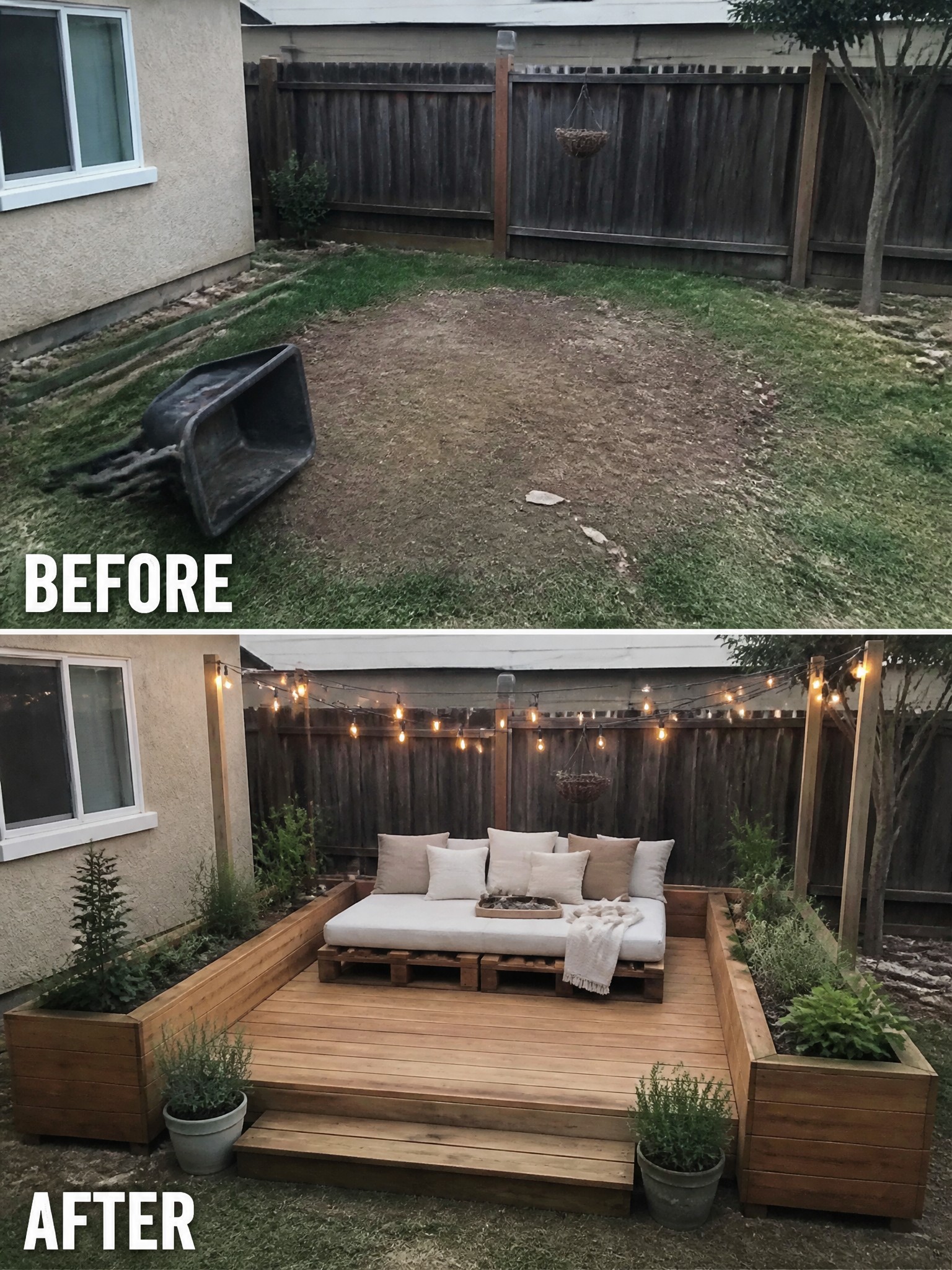
A raised deck platform can turn a flat, empty backyard into a spot that actually feels like a place to sit. Here the open dirt patch gained a simple wooden base with planter boxes built along the edges, which gave the space clear boundaries and a place to put a daybed in the center.
This idea works best in backyards that have no existing structure or focal point. Start with the deck size you can actually use, keep the planters simple, and add seating that stays in scale with the space. The result is a backyard that feels finished without needing a full redesign.
A Bamboo Screen To Define A Backyard Bench Seating Area
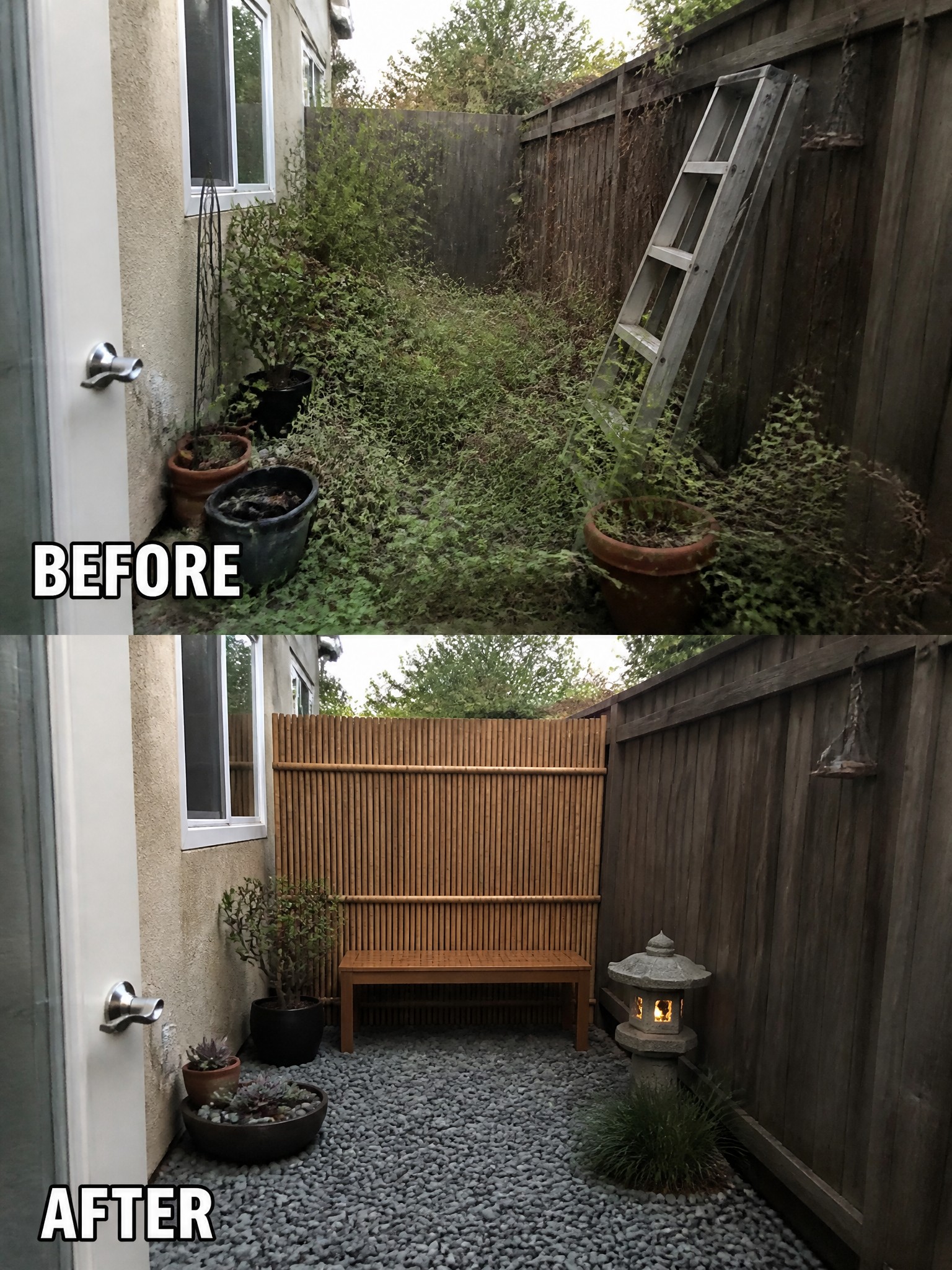
Clearing out the thick overgrowth first makes the biggest difference. Once the weeds and scattered pots are gone, adding gravel creates a flat, usable surface that feels intentional. The bamboo screen then gives the space a clear back wall, which lets the bench sit nicely without looking lost.
This approach works well in narrow side yards or small back corners where you want a simple place to sit. Start with a thorough cleanup, lay gravel for easy drainage, and add one vertical element like a screen to define the area. Keep the planting minimal so the seating stays the main feature.
Build Terraced Steps And Benches On An Overgrown Backyard Slope
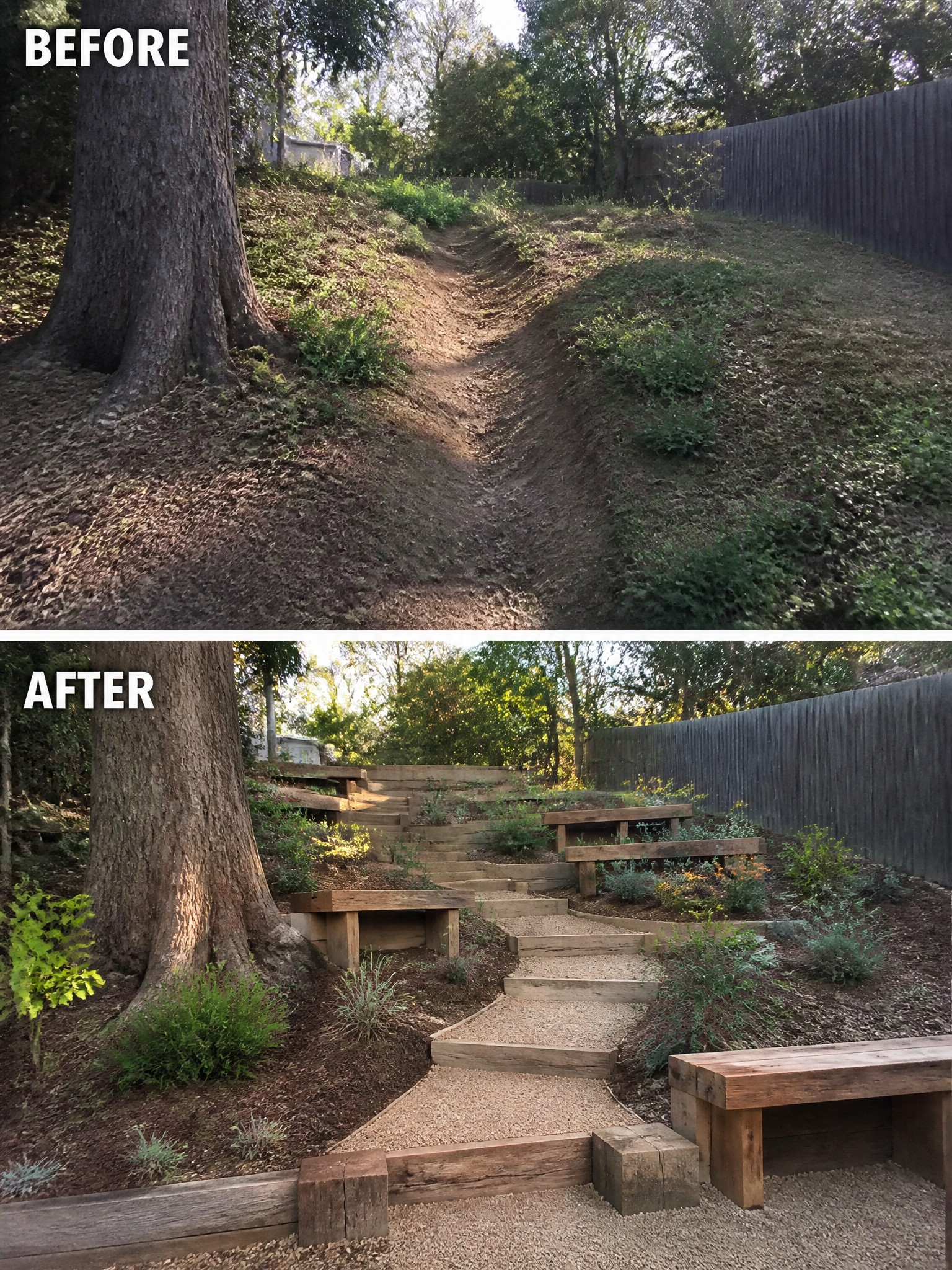
An overgrown slope with just a worn dirt path often ends up ignored because it feels hard to use. Adding terraced steps with gravel and built-in benches gives the slope clear levels so people can walk through it and actually sit down.
This idea works well on backyards with a noticeable drop where you want to keep the natural feel without losing the space. Start with the steps and seating first, then add planting around the edges so the beds stay contained. It keeps the area practical even if the rest of the yard stays fairly simple.
Create A Sectional Seating Area On A Cleared Overgrown Patio

Clearing the excess growth and scattered pots first made the biggest difference here. Once the concrete was visible again, a sectional sofa, simple coffee table, and outdoor rug could define a real seating zone without the space feeling cramped.
This approach works best in smaller backyards where you want one usable spot rather than trying to fill the whole area. Start with cleanup, choose furniture that can stay outside year round, and keep the layout open enough for easy movement.
Add Tiered Benches To Create Seating In An Overgrown Backyard
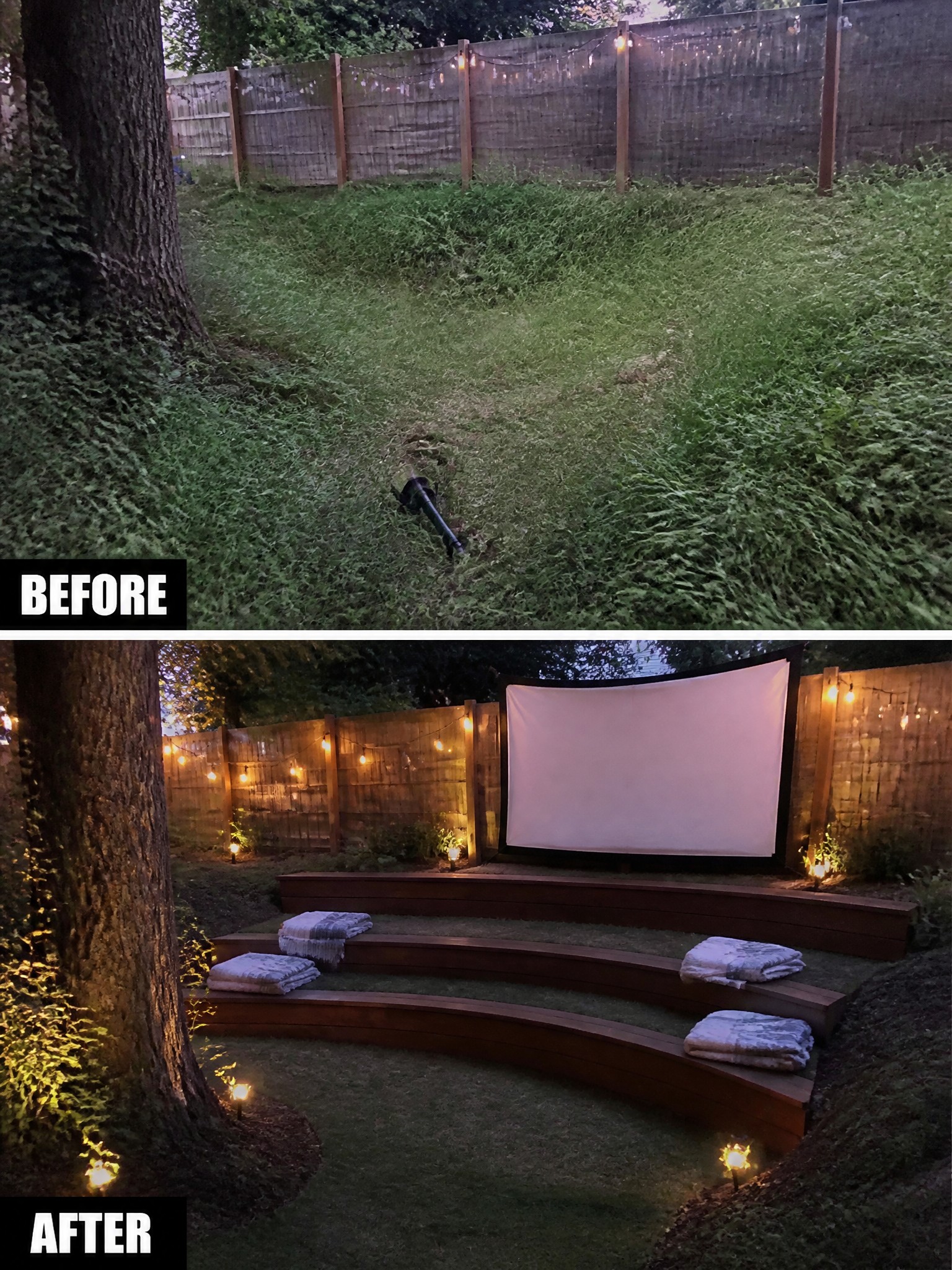
An overgrown backyard often feels like wasted space because there is no clear place to sit or gather. Adding simple tiered benches gives the yard structure and turns the empty grass into a real seating area. The screen at the back acts as a focal point so the space feels purposeful instead of just open lawn.
This idea works well in medium or large backyards where you want room for several people without crowding the grass. Start by clearing the main area first, then build the benches to follow the natural slope if your yard has one. Keep the rest of the planting simple so the seating stays the main feature.
Turn An Overgrown Backyard Into A Simple Seating Spot
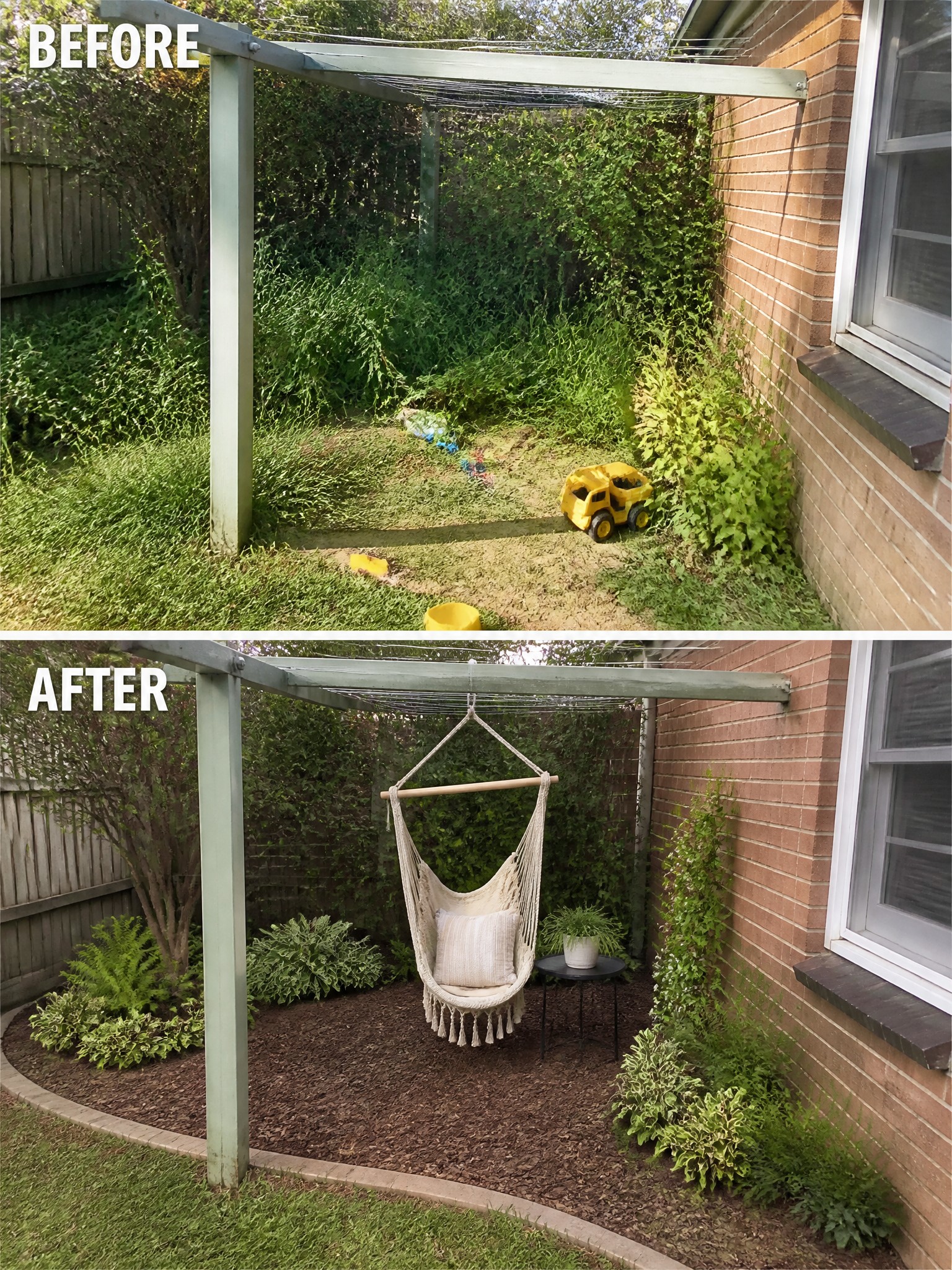
An existing pergola or overhead structure makes it easy to add seating without starting from scratch. Clearing the overgrowth first and laying down mulch creates a clean base, then hanging a hammock turns the spot into a place to actually sit and relax.
This idea suits small side yards or corners that feel too awkward for a full patio set. Keep the planting simple with low borders so the hammock stays the main feature, and make sure there is still room to walk around it.
Frequently Asked Questions
Q: How do I start without making a huge mess in the backyard?
A: Focus on small sections around where you want the seats first. Pull weeds by hand in those spots and pile the clippings in a corner for later. This keeps the project from feeling overwhelming right away.
Q: What kind of seating stays comfortable when the yard is still a little rough?
A: Simple benches with slatted seats let air flow and dry out faster after rain. Avoid anything with cushions until the overgrowth is under control.
Q: Can I leave some wild spots or does everything need to be neat around the seats?
A: Leave a few taller plants at the edges for privacy. They frame the seating area without crowding it.
