

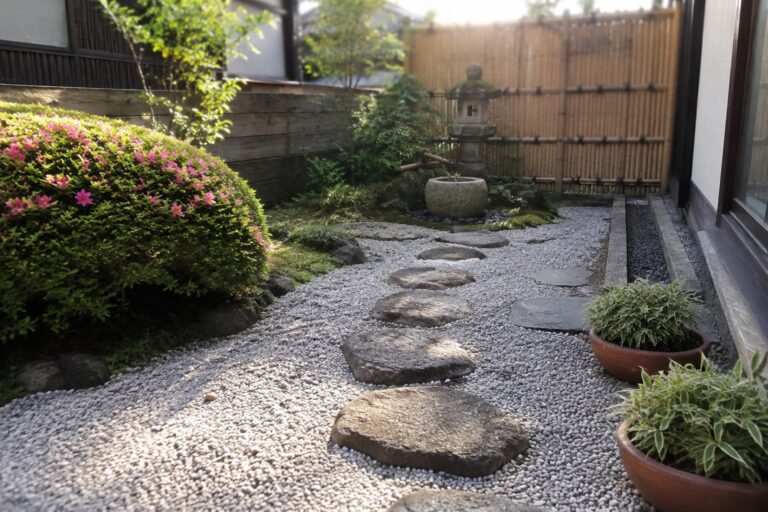
I have always noticed that the best garden layouts guide you without feeling forced.
Gravel settles into place over seasons and creates a quiet base that lets the stones stand out.
Paths matter most.
When I plan changes in my own yard I start by mapping where feet will actually land throughout the day.
Trying a few of these classic combinations has shown me how small shifts in stone placement affect the whole feel of the space.
Stepping Stones Set In Gravel
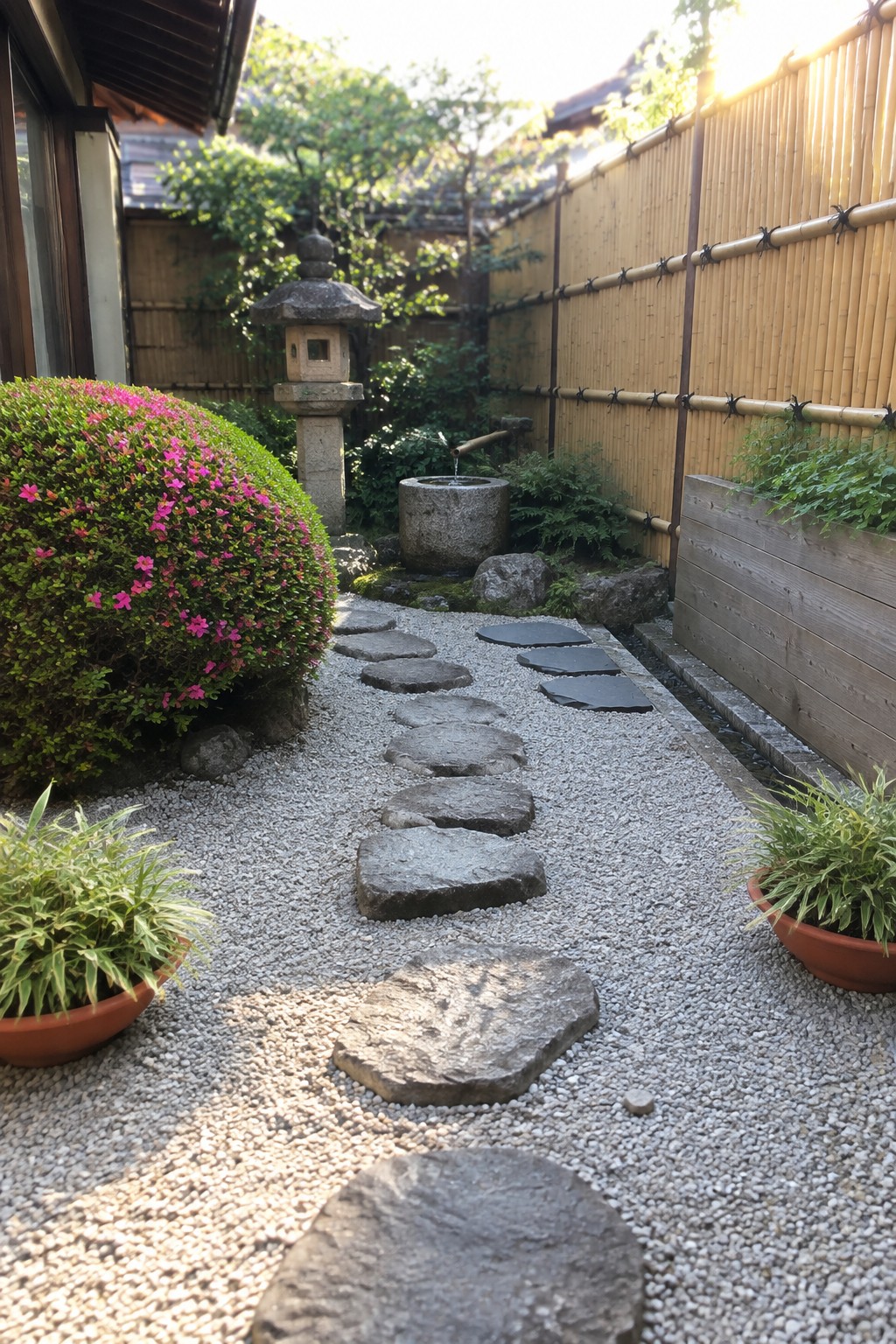
Stepping stones placed in gravel give a garden path a relaxed, natural feel without needing a lot of hard work. The stones provide solid footing while the gravel fills in the spaces and helps with drainage. Many people like this look because it feels simple and blends into the rest of the yard.
This approach works well in smaller gardens or along the side of a house where you want a clear route but do not want to pour concrete. Keep the stones slightly uneven in size and spacing so the path feels less formal. Just make sure the gravel stays contained along the edges so it does not spread into planting beds.
Stepping Stones Set In Gravel Form A Gentle Path
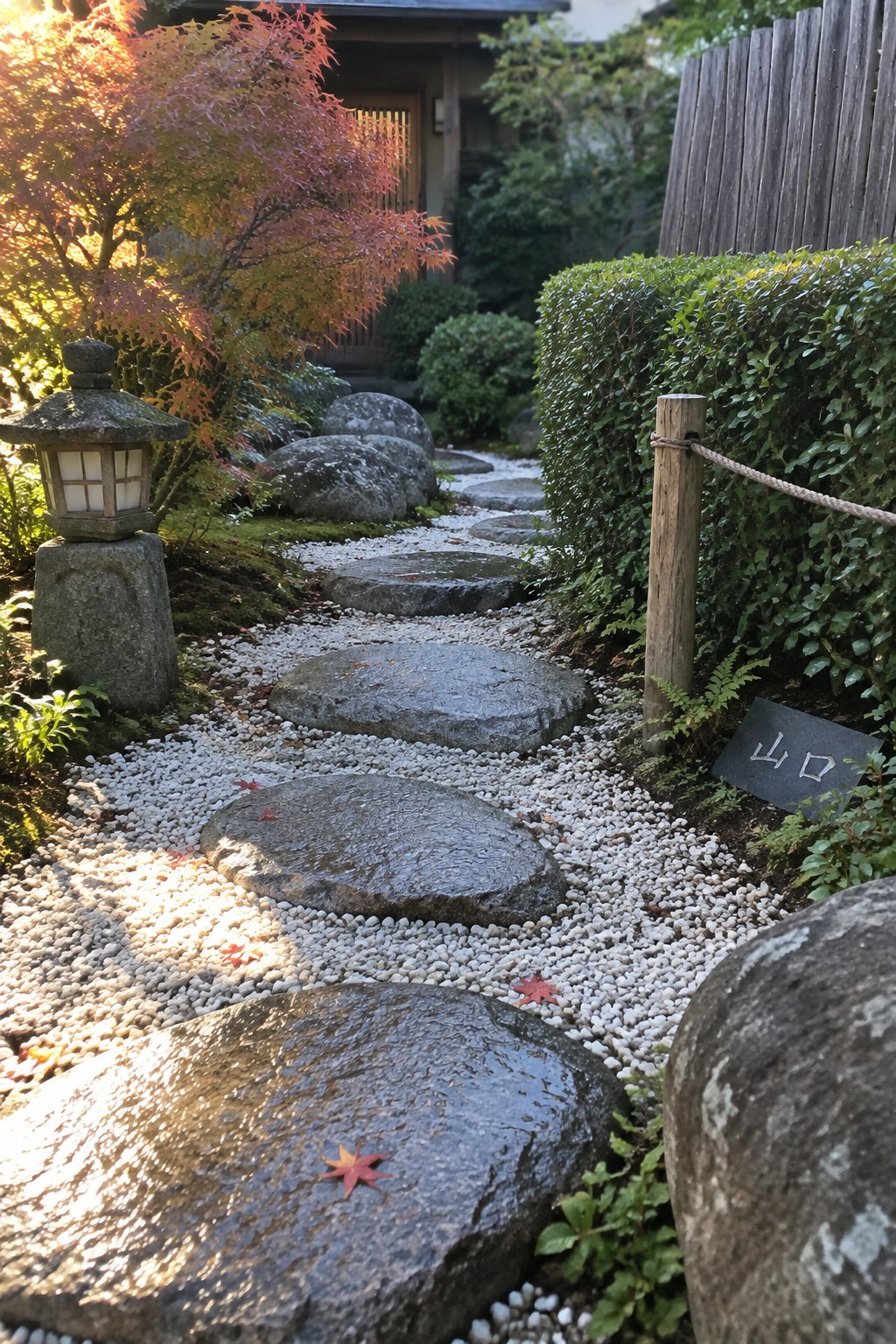
Many classic Japanese gardens rely on round stepping stones placed directly into a layer of gravel. The combination keeps the path clear while letting the gravel do the work of filling space and controlling weeds.
This approach suits narrow side yards or entries where you want a defined route without a full paved walkway. Use stones that sit mostly level with the gravel so the surface stays easy to walk on over time.
Stepping Stones In Gravel
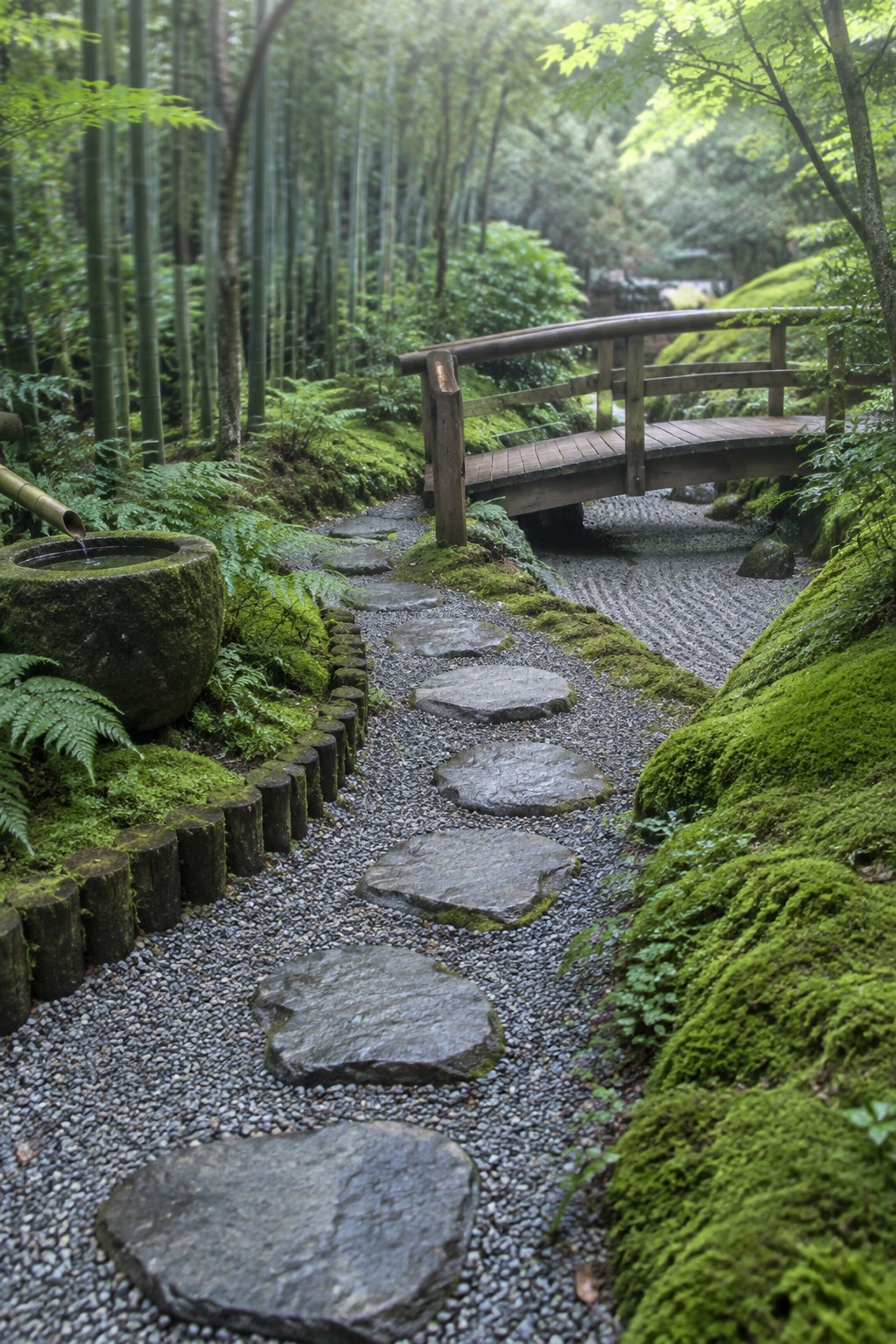
Stepping stones set into gravel make a path that feels natural and easy to follow. The stones give solid footing while the gravel fills the spaces between them, letting water drain away instead of pooling. This keeps the walkway looking clean without a lot of upkeep.
It suits smaller gardens or shaded spots where a full paved path would feel too heavy. Space the stones so each step lands comfortably, and let moss or low plants grow along the edges if the light allows.
Raked Gravel With Stepping Stones
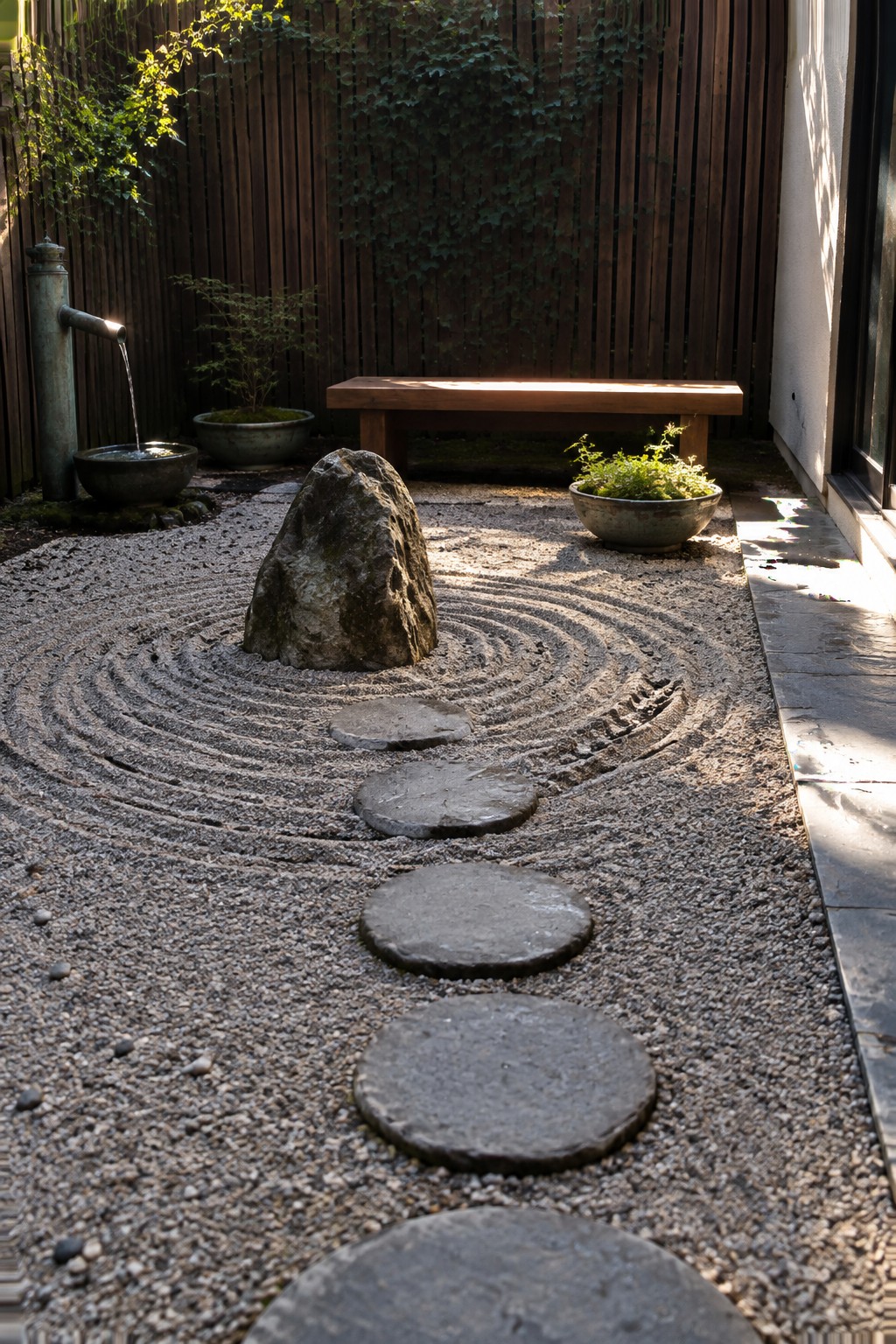
Raked gravel works well when it has a clear focal point like a large rock to shape the patterns around. The circles draw the eye inward and keep the whole area from feeling flat or empty.
This layout suits small side yards or courtyard corners where you want low upkeep but still some structure. Place the larger stones first, then rake simple rings or lines around them so the path stays easy to follow.
Stepping Stones With Gravel Paths
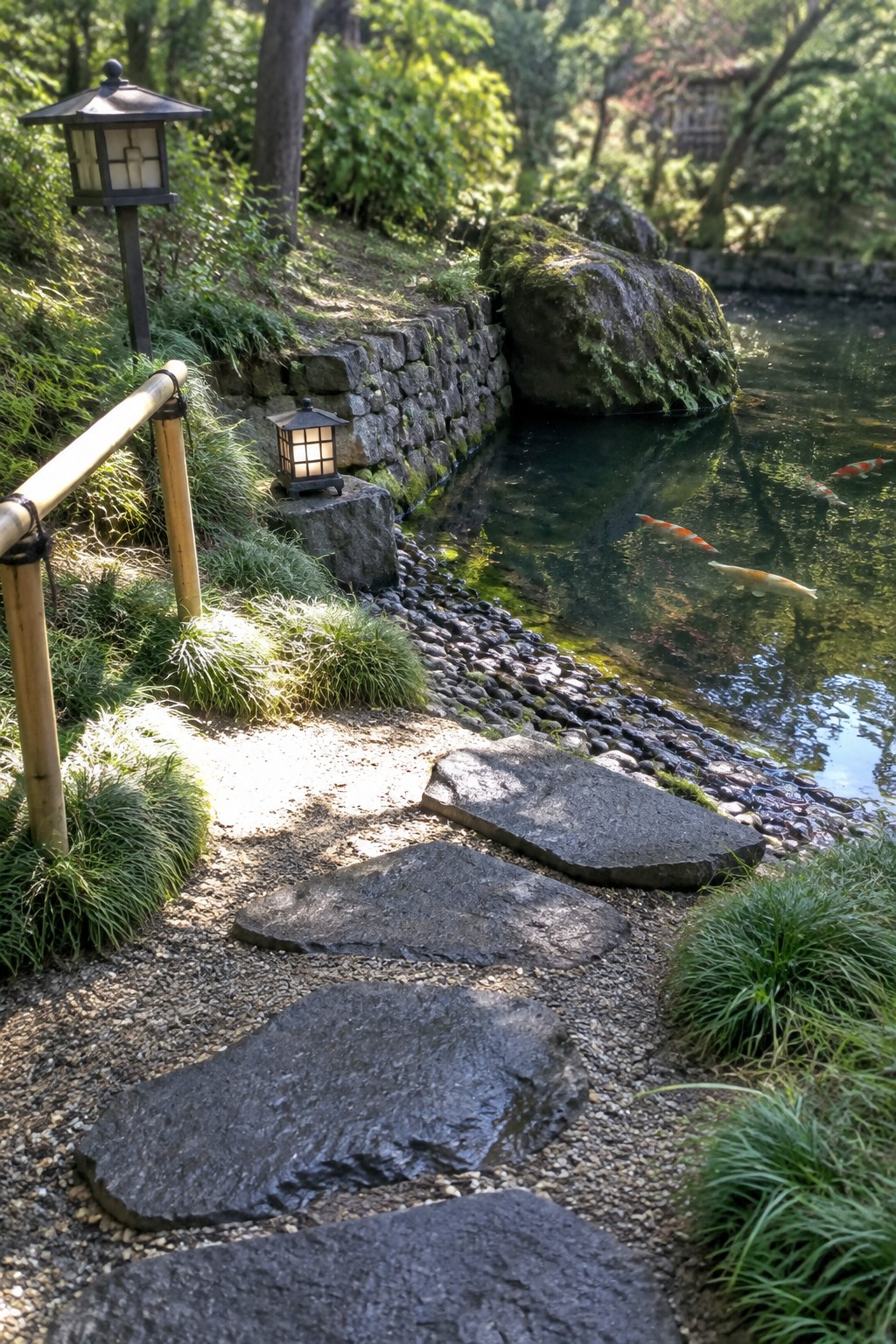
Stepping stones placed into gravel make a simple path that feels at home in a Japanese garden. The gravel holds the stones in place and lets water drain away easily, so the walkway stays usable even after rain.
This approach works best beside water features or through shaded garden beds where you want a light footprint. Keep the stones irregular in shape and space them for a comfortable stride.
Level Stepping Stones Across Gravel Beds
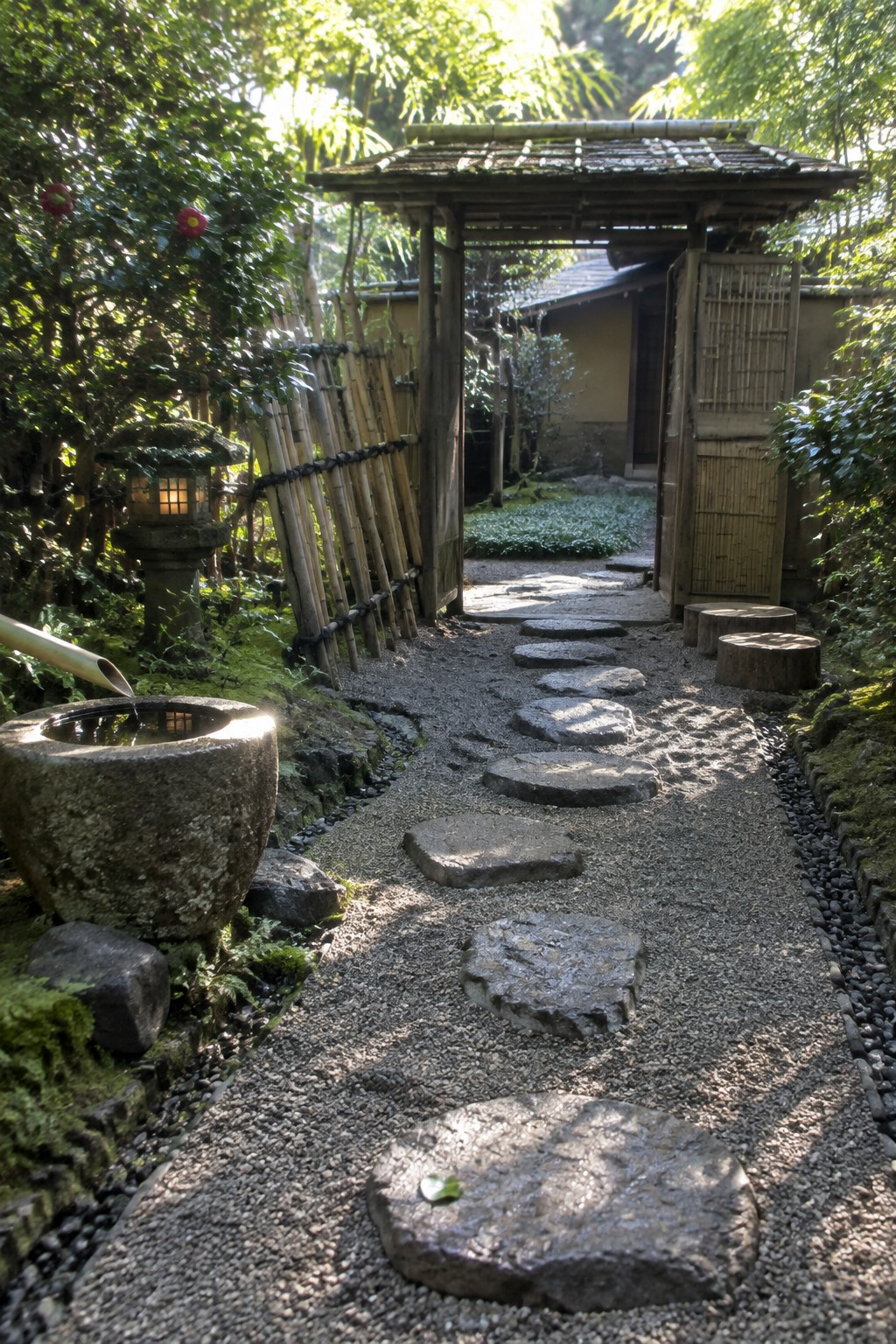
Stepping stones laid into gravel make a simple path that feels natural and easy to follow. The gravel fills the spaces between the stones so the surface stays level and drains well after rain. This approach works especially well in smaller gardens where a full paved walkway would feel too heavy.
Place the stones at a comfortable walking distance and let the gravel run right up to the edges. The look suits traditional Japanese gardens and any yard that needs a low-maintenance route between plantings or garden rooms.
Gravel Paths With Stepping Stones
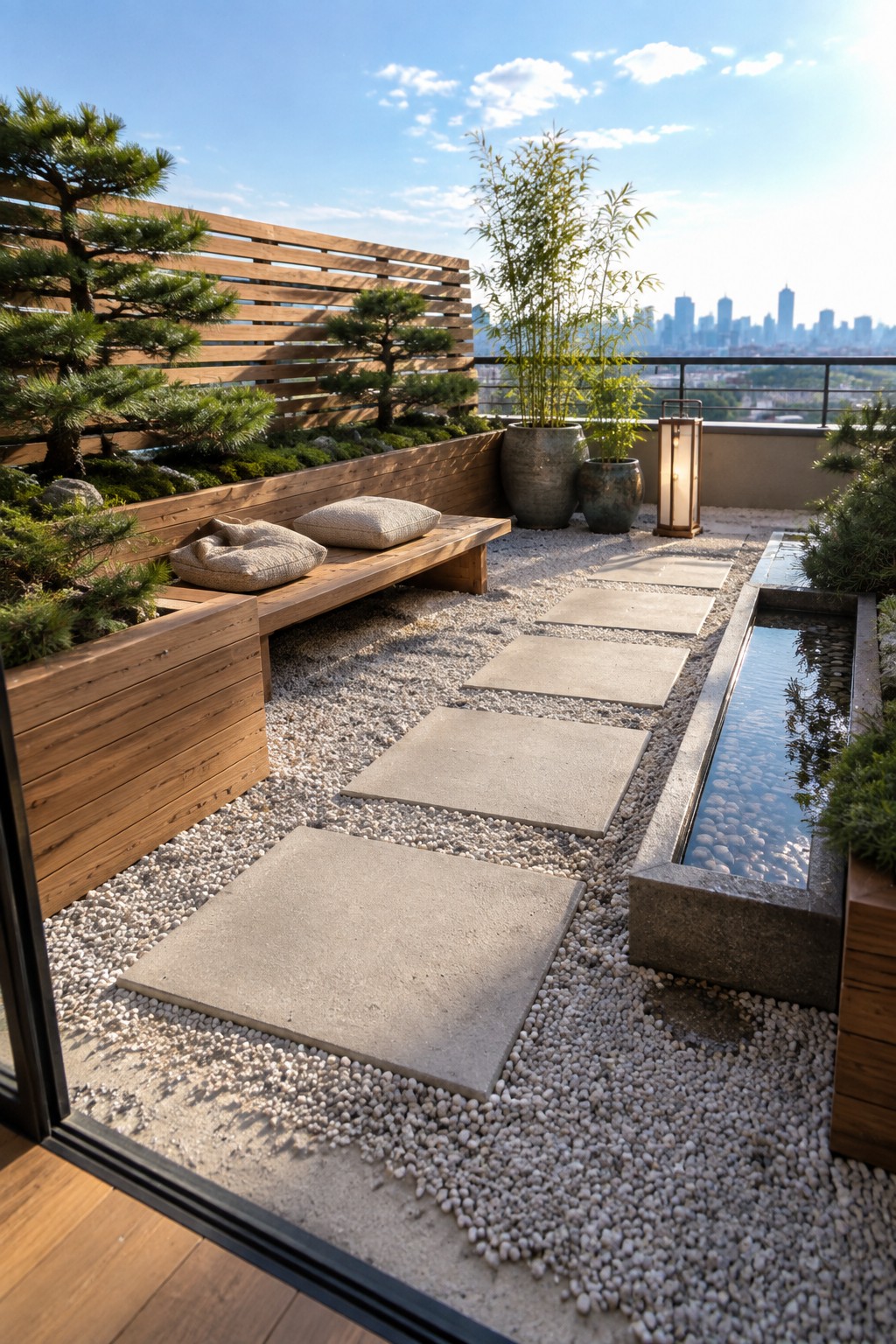
Gravel and stepping stones create a clean, low-maintenance path that guides people through a garden without making the space feel crowded. The stones sit slightly above the gravel so they stay visible and easy to follow, while the gravel fills in the rest and keeps weeds down.
This layout works best in small yards, rooftops, or side gardens where you need a simple walkway that still looks intentional. Space the stones about a comfortable step apart and choose a light gravel color to help the path stand out. Keep surrounding plants low so the stones remain the main feature.
Stepping Stones In Gravel For Garden Paths
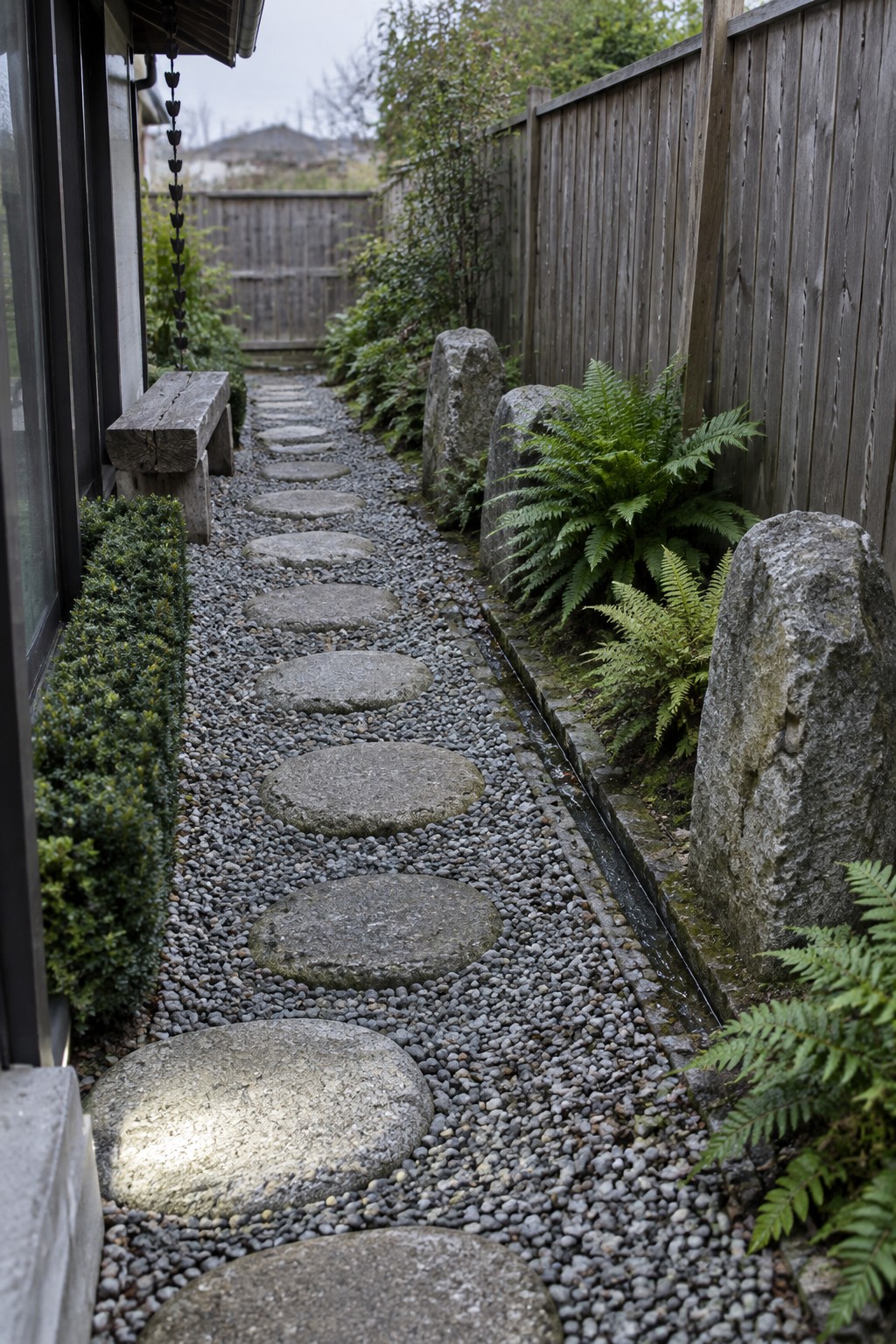
Stepping stones placed directly into gravel create a simple and classic path that feels right at home in a Japanese style garden. The round stones give a steady place to walk while the gravel fills in around them to keep the surface level and low maintenance. This setup works especially well in narrow spaces where a solid walkway would feel too heavy.
It suits side yards or areas leading from a house to a back garden. Space the stones evenly so the path feels natural to follow, and add ferns or larger rocks along the edges to help define the sides without crowding the walkway.
Flat Stepping Stones Along Raked Gravel Paths
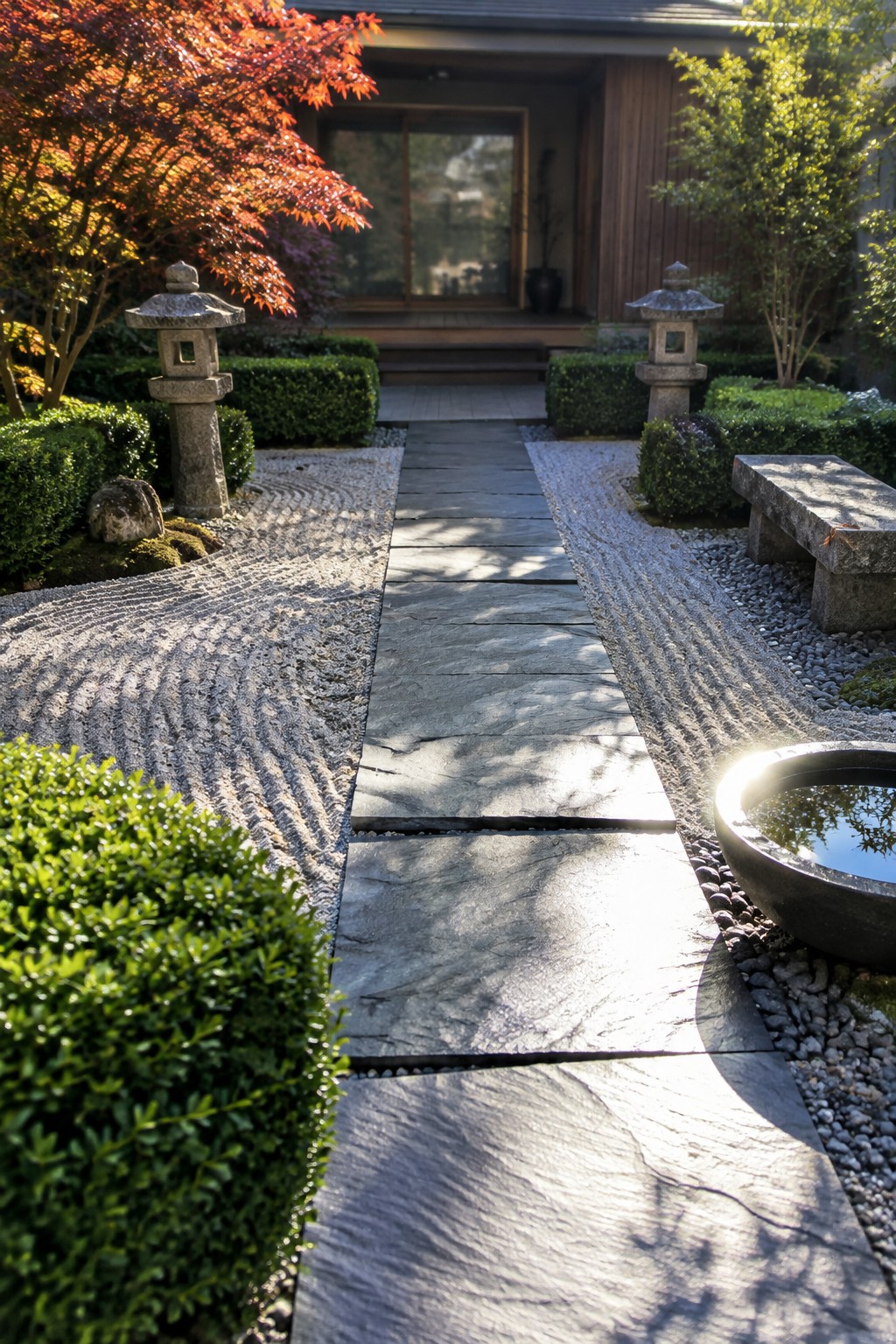
A straight path of flat stones set into raked gravel gives a garden a calm, ordered feel. The gravel adds texture while the raking creates soft patterns that shift with the light and keep the space from looking too busy.
This layout works well in smaller yards or front entries where you want a clear route without extra features. Keep the gravel edges clean and use the same material on both sides so the path feels intentional rather than scattered.
Irregular Stepping Stones For Natural Gravel Paths
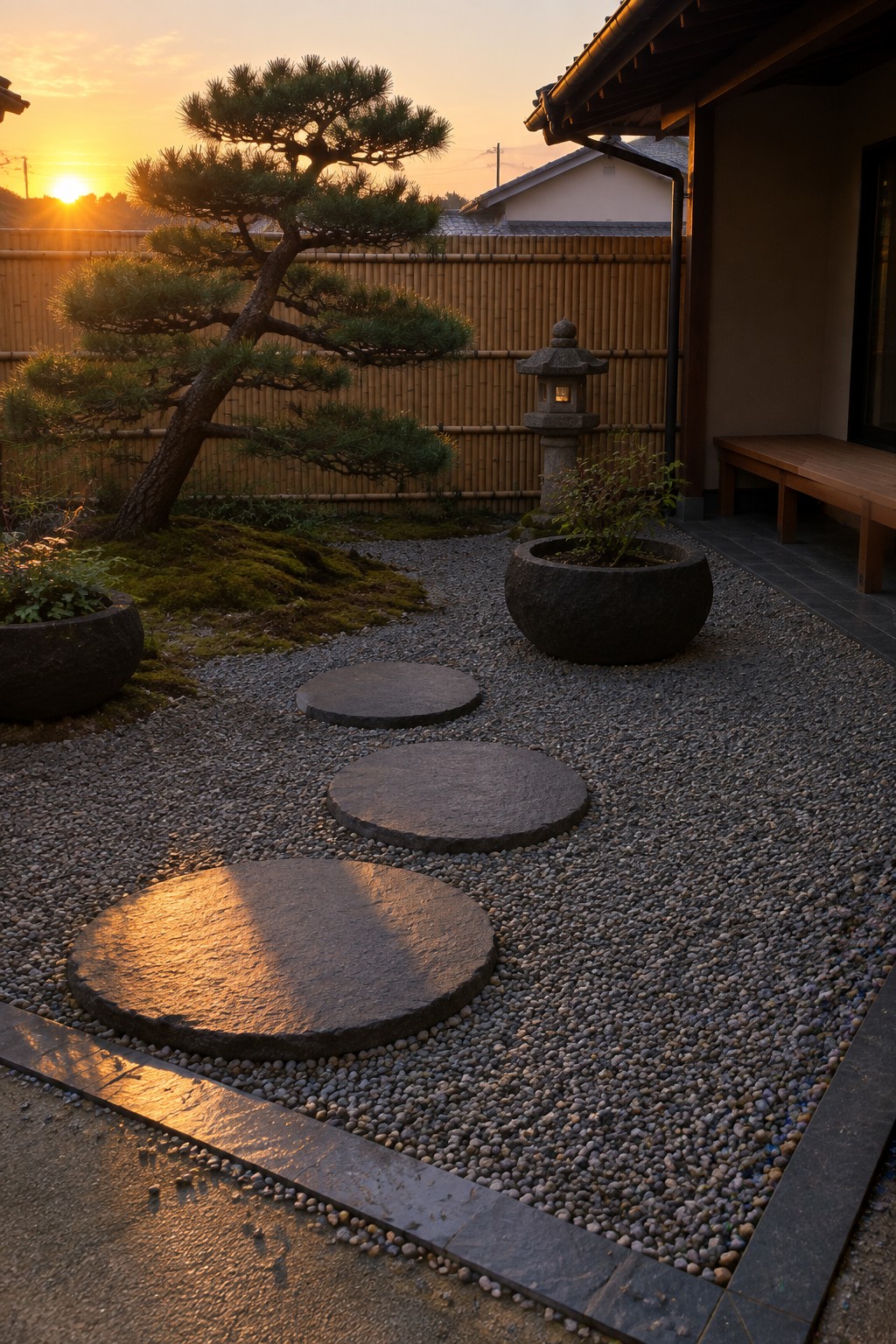
Stepping stones placed right into gravel make a quiet path that feels natural and easy to follow. The gravel fills the space between the stones so the whole area stays simple and low key, while the stones keep feet out of loose material.
This layout suits side yards or small gardens where you want a clear route without building a full walkway. Space the stones a little unevenly and keep the gravel raked smooth so the path stays practical and blends with the rest of the planting.
Simple Gravel Walkways With Stone Footing
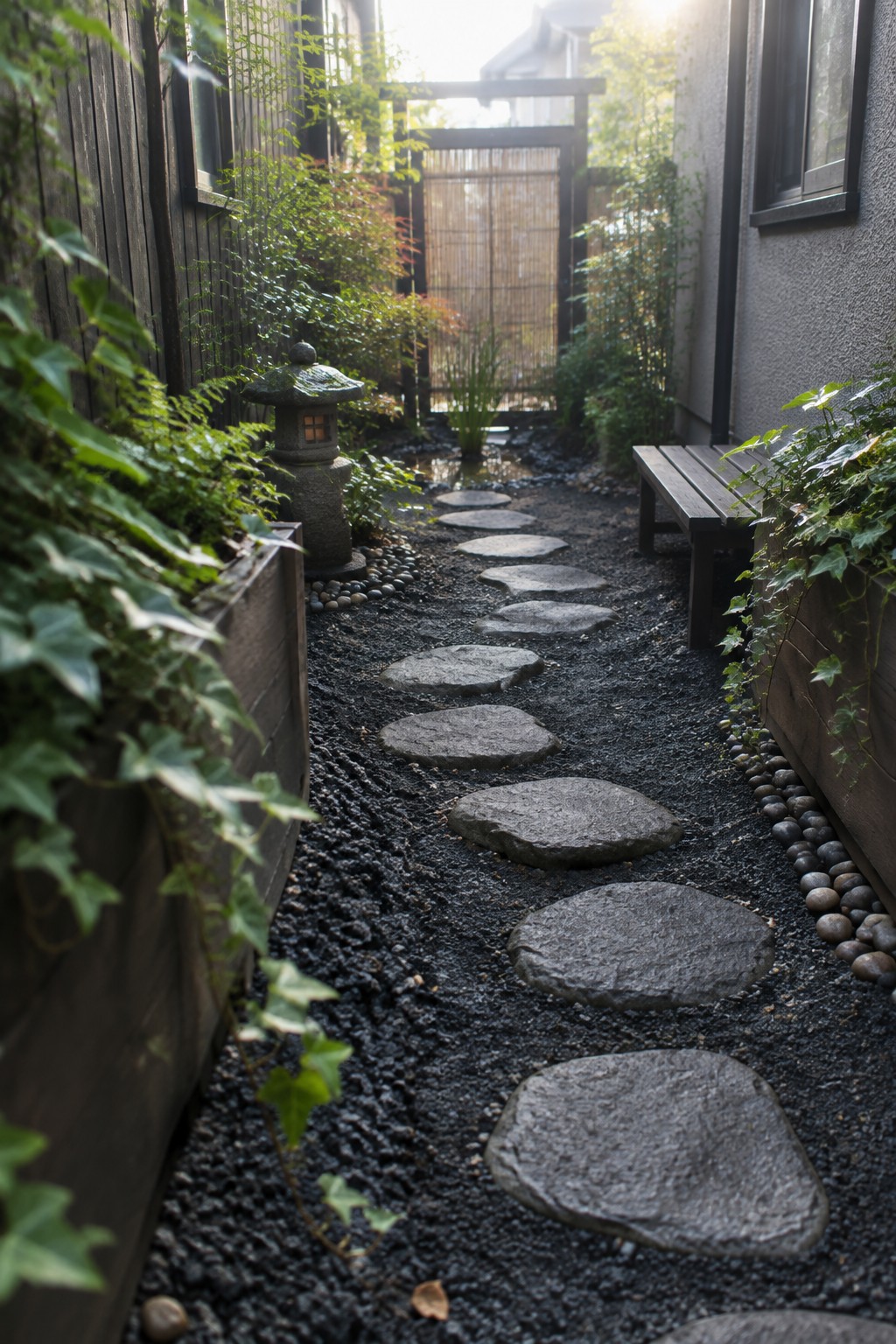
A simple gravel path lined with stepping stones keeps a garden feeling open while still giving you a clear way to walk through it. The dark gravel stays in place better than loose mulch and gives the stones a clean edge without needing any fancy borders. Many people like this look because it feels calm and does not require much upkeep once it is down.
This approach works well in narrow side yards or along the edge of a house where you want a path but do not have room for a full walkway. It suits homes that already have wood fencing or simple plantings, since the gravel and stone keep the focus on the garden rather than on hard surfaces. Just make sure the gravel layer is thick enough so it does not scatter onto nearby planting beds.
Stepping Stones Over Gravel
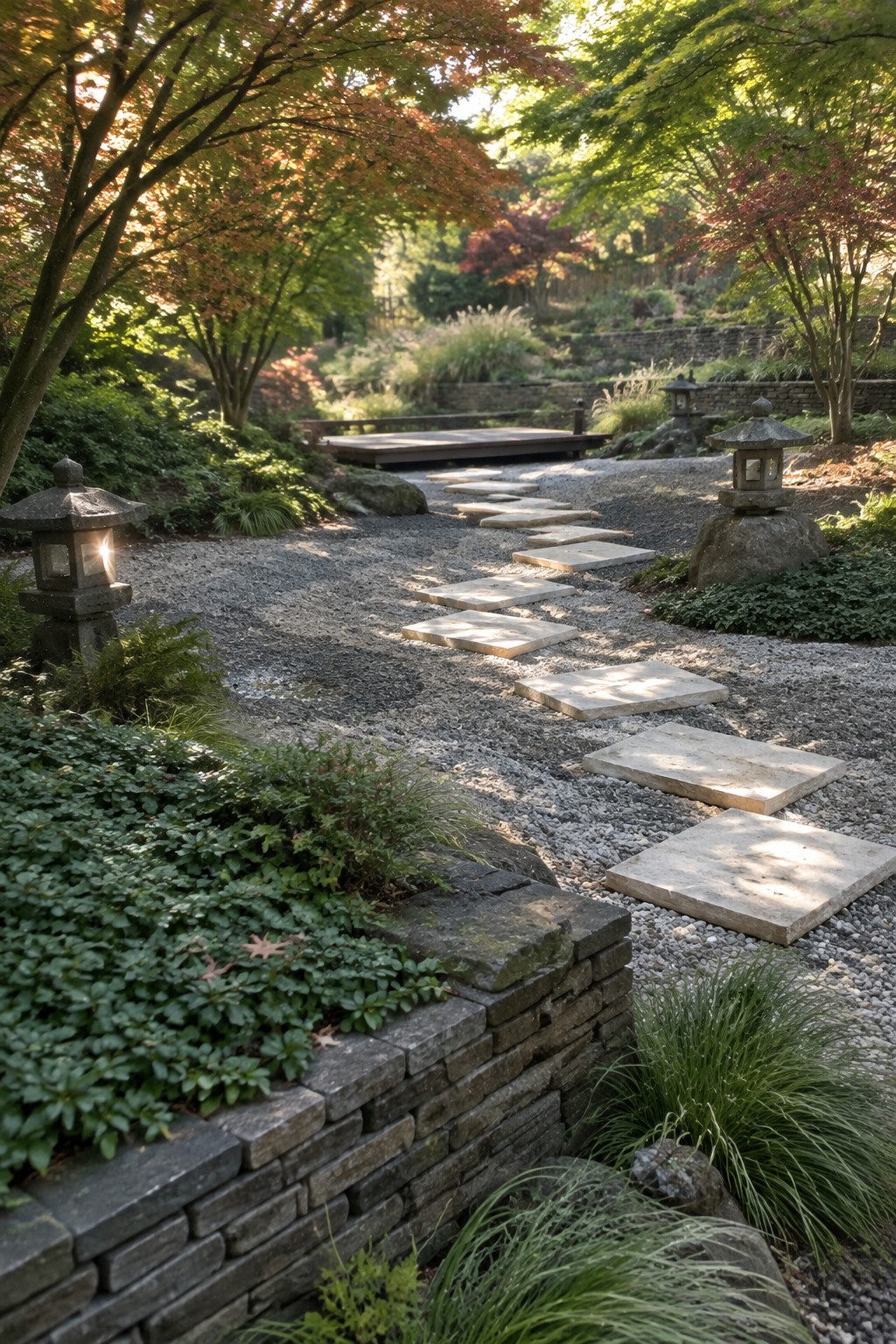
Stepping stones set into gravel make a path that feels light and simple. The gravel keeps the ground stable while the stones give you something solid to walk on, and the whole thing blends into the garden instead of standing out like a solid walkway would.
This works best in side yards or smaller gardens where you want to keep things open. Space the stones so they feel natural underfoot and add a few low lanterns along the edges if you need a bit of light at night.
Stepping Stones Through Gravel
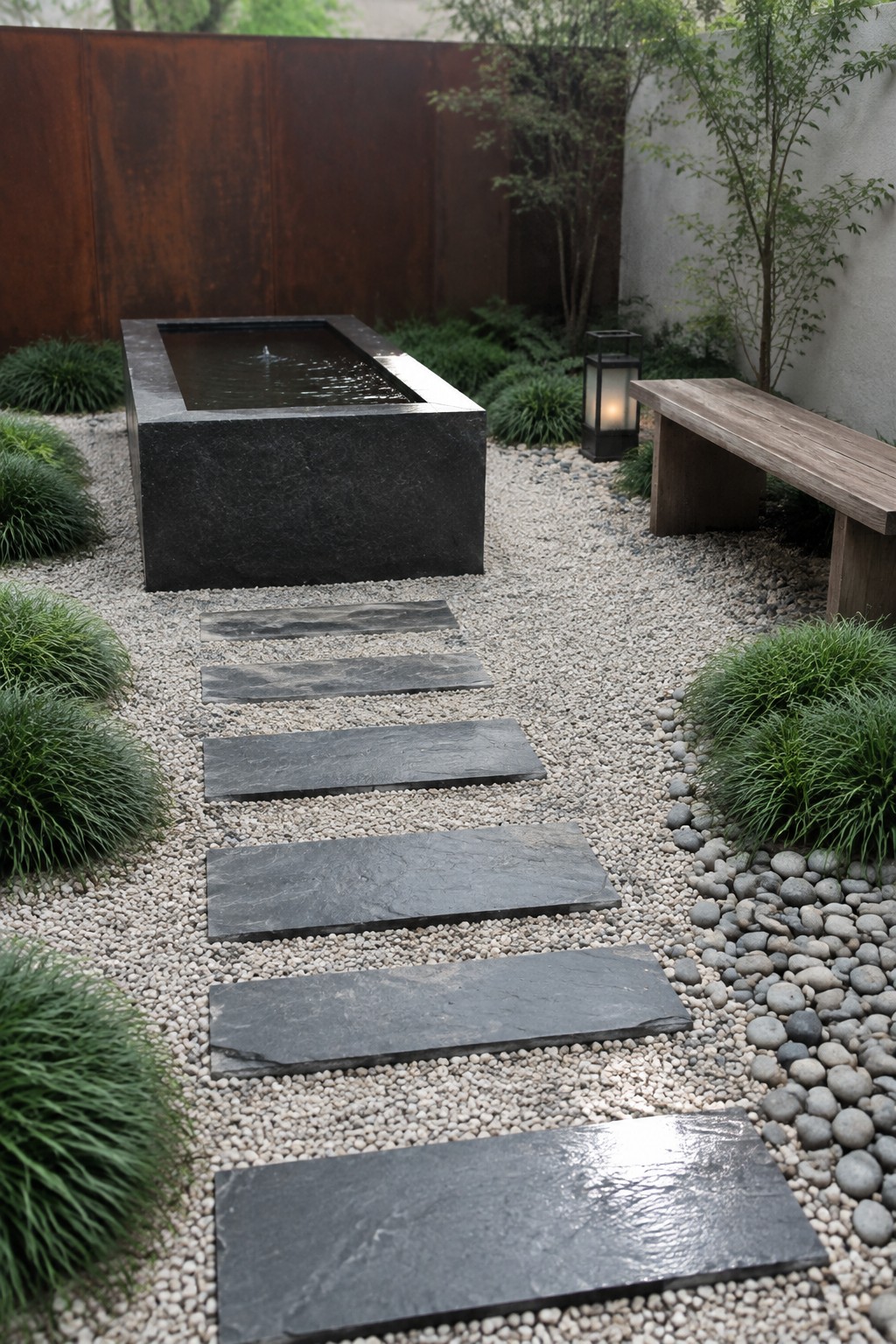
Stepping stones set into gravel make a simple path that feels calm and easy to follow. The flat stones give you solid footing while the gravel fills in the spaces and keeps the whole area looking neat without much work.
This layout works well in smaller gardens or side yards where you want a clear route but do not need a full paved walkway. Keep the stones spaced at a comfortable walking distance and use a light gravel color so the path stays visible even after rain.
Using Stepping Stones In Gravel Gardens
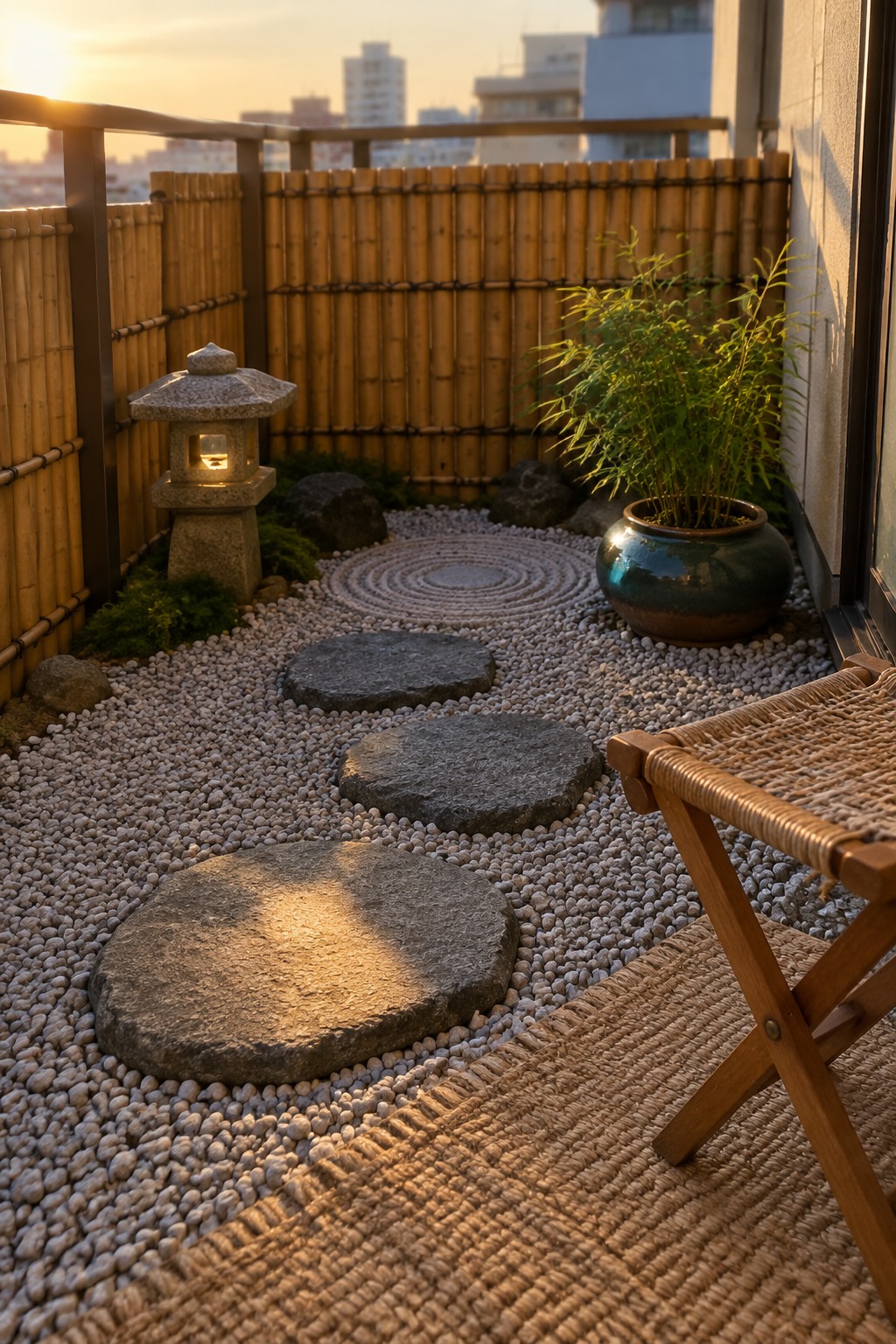
Gravel paired with stepping stones gives a clean, low-maintenance look that works well when space is tight. The stones create a simple path while the gravel fills in the rest and keeps the area feeling open instead of crowded.
This setup suits balconies, small side yards, or any spot where a full lawn is not practical. Place the stones at a comfortable walking distance and keep the gravel layer even so it stays neat over time. A bamboo screen or a single lantern can add the right touch without extra clutter.
Compact Gravel Gardens With Stepping Stones
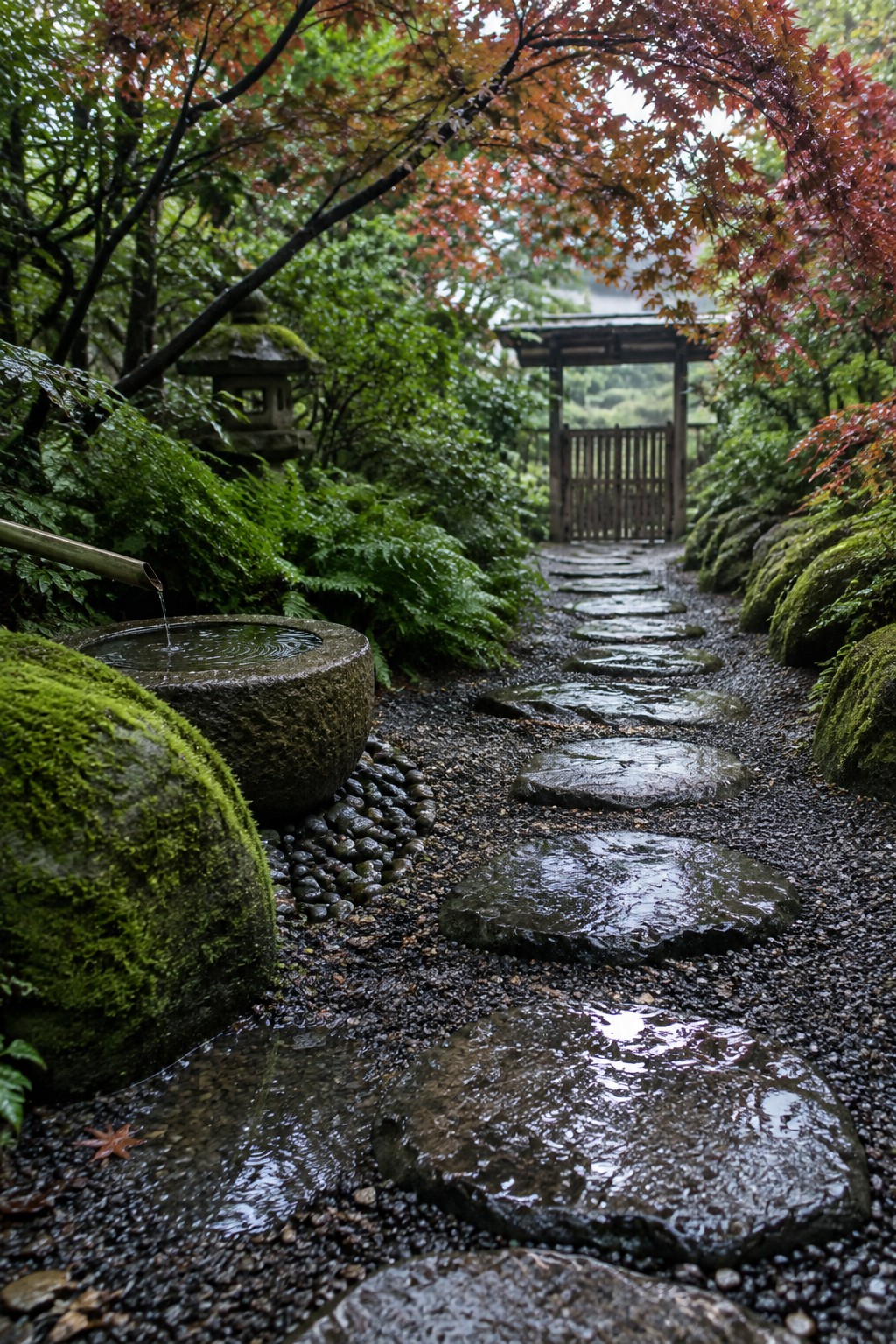
Stepping stones placed directly into gravel make a simple and practical path in a Japanese garden. The gravel handles drainage while the stones give you solid footing and a gentle rhythm as you walk.
This approach suits smaller yards or shaded spots where you want something low maintenance. Keep the stones slightly irregular in size and spacing so the path feels natural rather than too formal.
Natural Stepping Stone Paths In Gravel
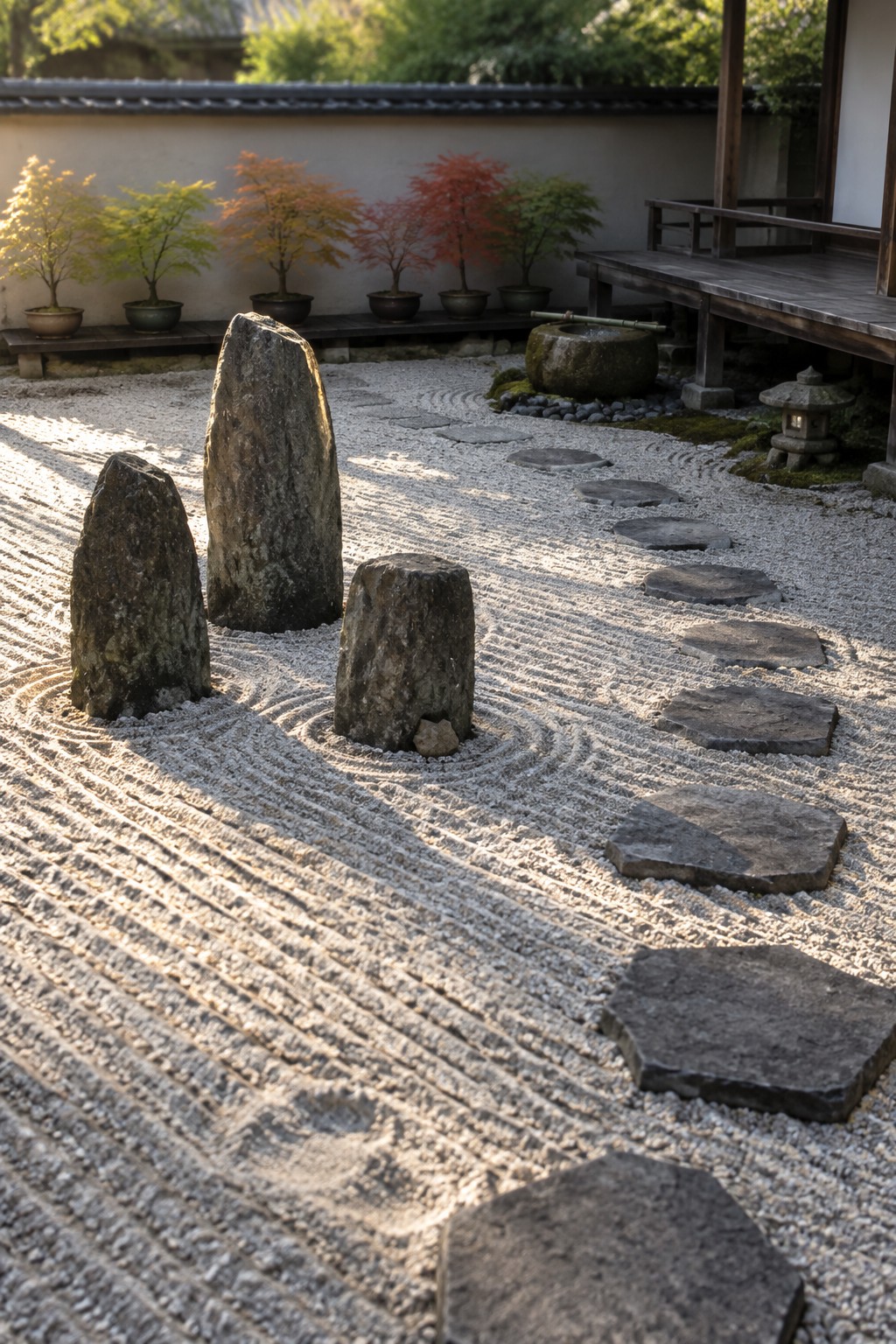
Stepping stones work well in a gravel garden because they let you cross the space without disturbing the raked patterns. The stones sit low in the gravel so the overall surface stays smooth and the lines remain easy to maintain.
This approach suits smaller gardens or narrow side areas where you still need a clear route. Place the stones at a comfortable walking distance and keep the gravel raked around them so the path feels like part of the design rather than an add-on.
Flat Stones For Easy Gravel Garden Paths
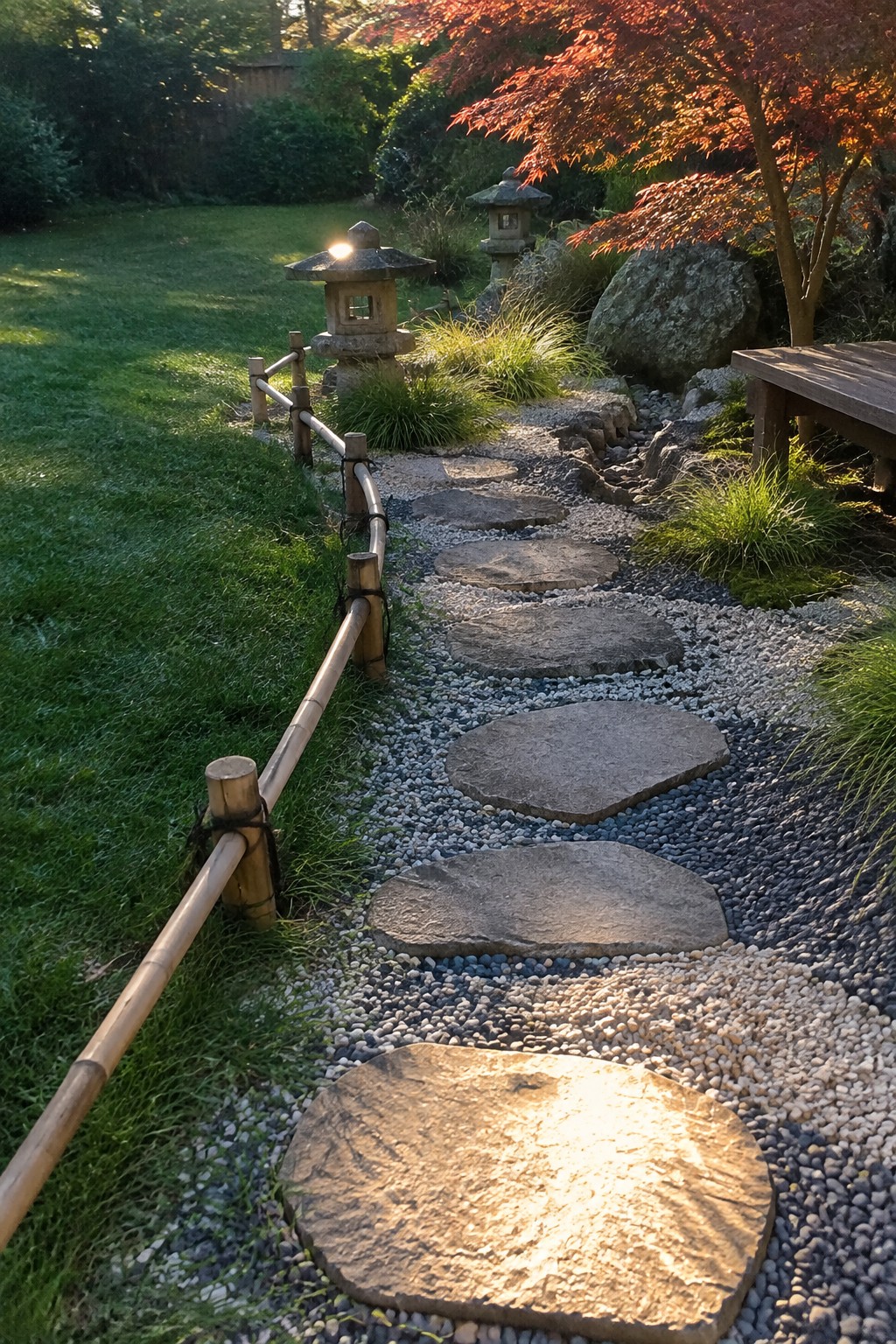
Stepping stones placed in gravel make a simple path that feels natural and easy to follow. The stones give solid footing while the gravel fills in the spaces and keeps the whole thing looking loose and relaxed.
This works well along the side of a lawn or through a shady corner where you want to guide people without adding a full walkway. Keep the stones fairly flat and space them at a comfortable stride so the path stays practical as well as quiet.
Firm Stepping Stones For Stable Gravel Paths
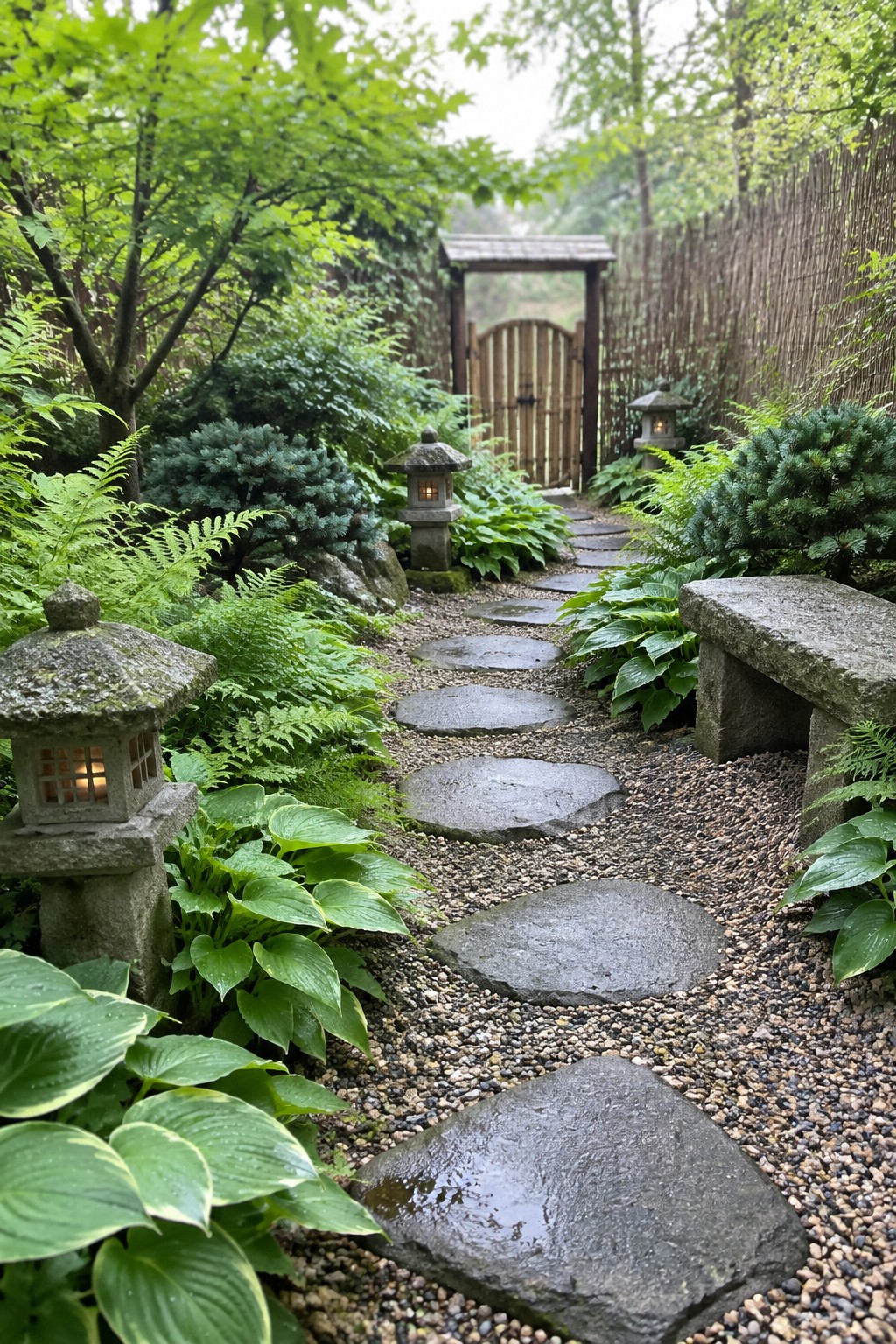
Stepping stones placed in gravel make a practical path that guides people through the garden without covering the whole area in hard paving. The loose gravel drains well and gives the path a softer edge that blends into the planting on either side.
This layout works best in smaller gardens or along side routes where you want to keep the ground feeling open. Level the stones firmly so they stay steady, and choose a gravel size that stays put when walked on.
Secure Stepping Stones Along Gravel Garden Routes
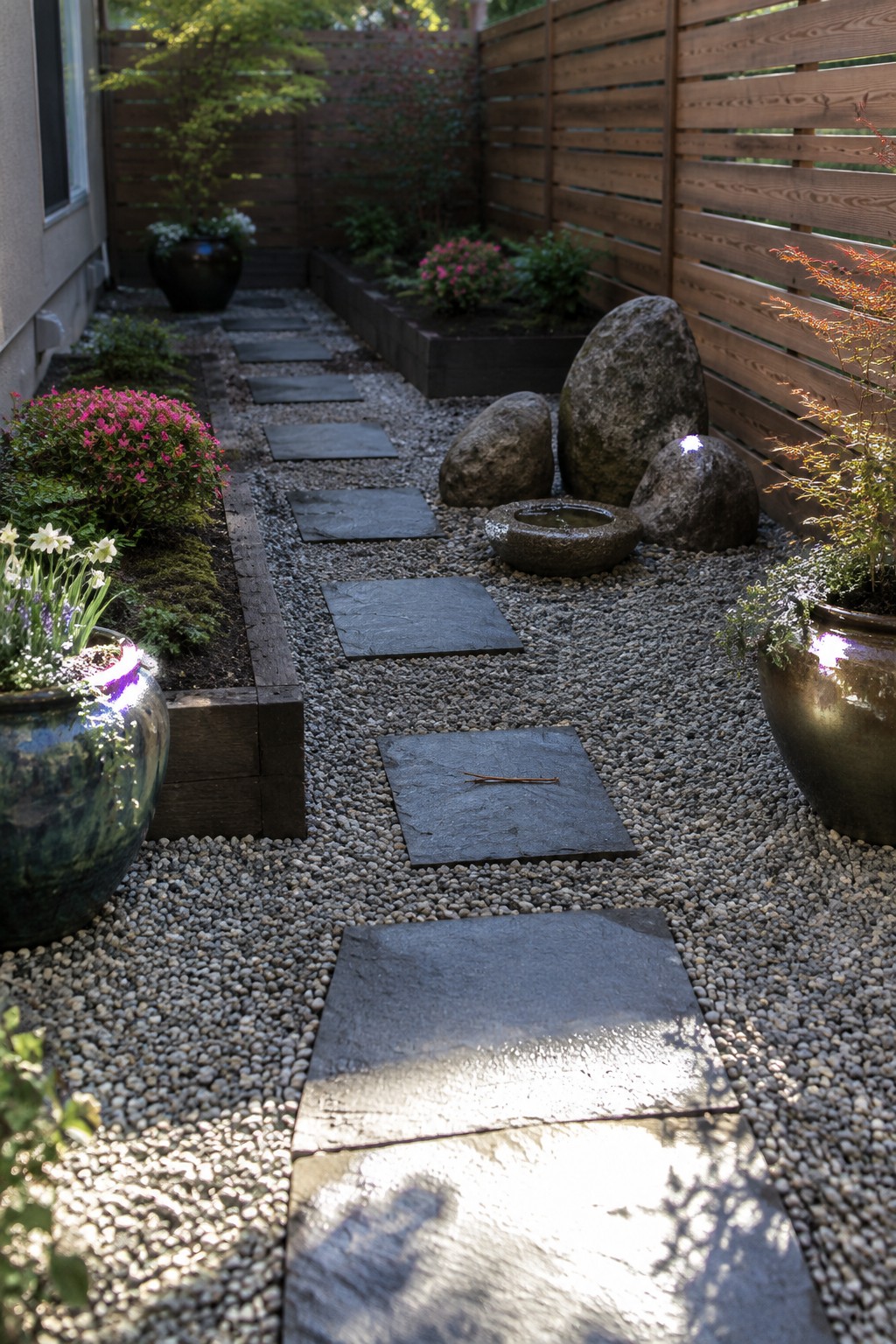
Gravel paths with stepping stones keep a garden feeling open and easy to walk through. The stones give you a clear route while the gravel softens the look and cuts down on weeding.
This setup works best in narrow side yards or smaller gardens where a solid path would feel too heavy. Space the stones at a natural stride and use a stable gravel that does not shift much underfoot.
Open Gravel Walkways With Stone Stepping Pads
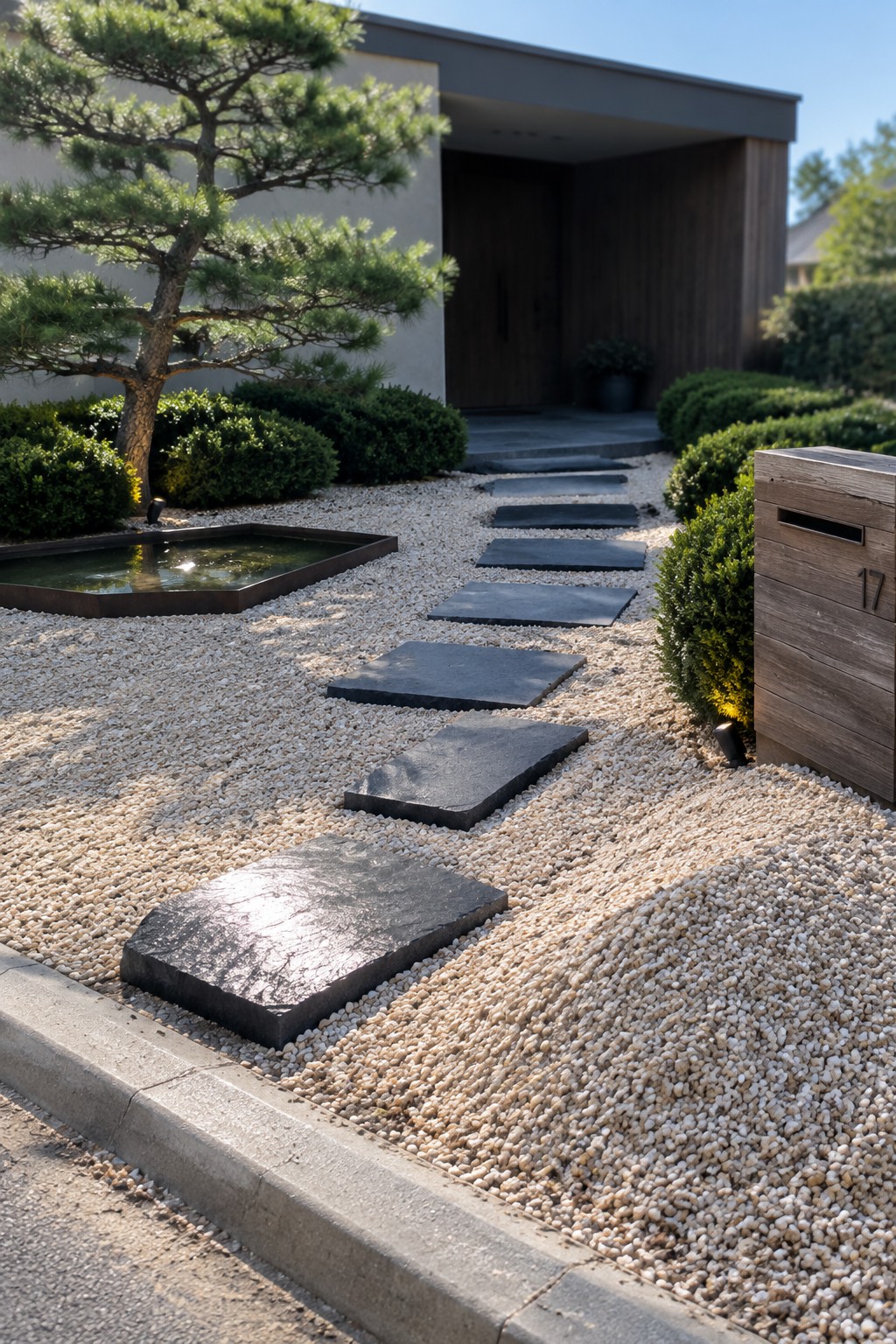
Stepping stones set into gravel give you a simple way to move through a garden without covering the whole area in hard paving. The contrast between the dark stones and light gravel keeps the path easy to follow while still letting the ground feel soft and natural underfoot.
This works well along the front of a house or in side gardens where you want a clear route but do not need a solid walkway. Place the stones a comfortable stride apart and let the gravel fill in around them so the path stays low maintenance and drains well after rain.
Stepping Stones Beside Water Features In Gravel
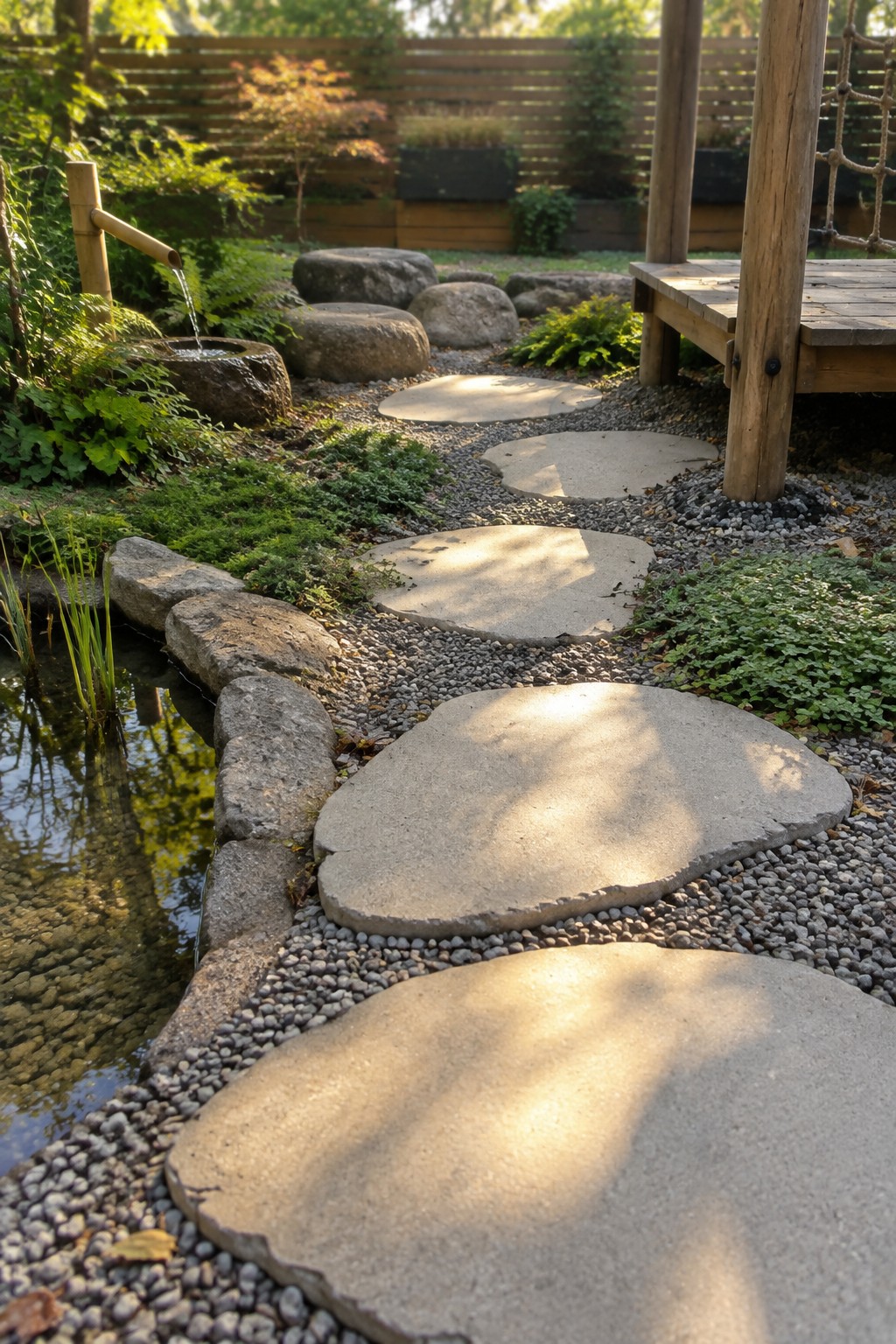
Stepping stones placed directly in gravel create a simple path that feels natural and easy to follow. The loose gravel keeps the surface from looking too formal, while the stones give just enough footing to move comfortably through the garden.
This approach works best in smaller side yards or along the edge of a water feature. Space the stones a little unevenly and keep the gravel layer shallow so it stays level without constant raking.
Frequently Asked Questions
Q: How often should I rake the gravel to keep patterns looking sharp? A: Rake lightly once a week or right after rain. Work in small sections around the stepping stones so you do not disturb the settled areas. This keeps the surface even without turning it into a big chore.
Q: What size gravel stays put best underfoot? A: Go with angular pieces about a quarter inch across. They lock together better than rounded types and cut down on shifting when you walk the path.
Q: My stones keep tilting after a season. What fixes that? A: Dig them in on a firm layer of sand mixed with a bit of gravel at the start. Check levels each spring and add a handful of base material under any that lean.
Q: How wide should the gravel run beside each stepping stone? A: Leave about six inches on either side. That gives enough room for the stones to stand out without the gravel looking sparse or overwhelming the path.
