

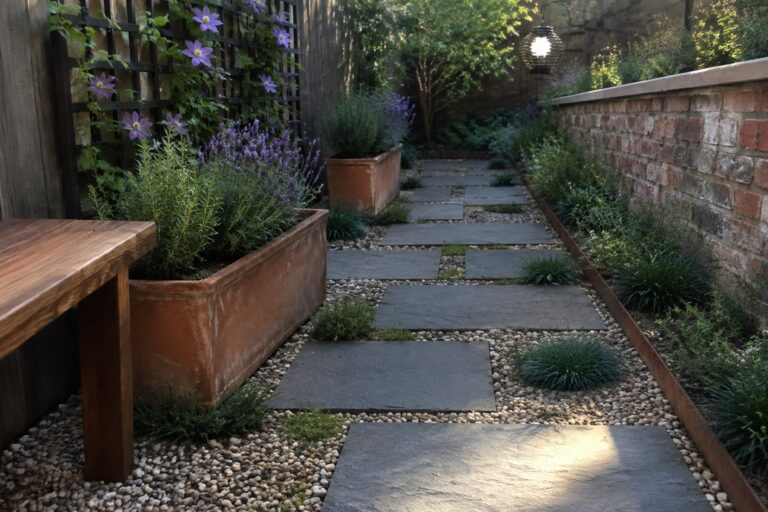
When I think about garden paths that hold up without constant mowing, the idea of pavers with plants growing between them keeps coming back as a practical option that ages well.
Those narrow strips of soil or gravel between the stones let roots settle in and create a pattern that changes slightly each year depending on what takes hold.
Small experiments often reveal the best combinations.
I have noticed that wider joints tend to support more variety in planting but they also require more weeding in the first couple of seasons.
Paying attention to how the pavers sit in relation to the surrounding beds makes the whole space feel more connected rather than like separate patches.
Pavers And Gravel For Simple Garden Paths

A path made from large rectangular pavers set into gravel works well in narrow side gardens or small yards where grass is hard to keep. The gaps between the stones let you add a few low plants or just leave the gravel exposed, which cuts down on weeding and mowing.
This setup suits homes with tight outdoor spaces or shady corners where turf struggles. Keep the pavers spaced evenly and use a simple gravel that drains well so the path stays firm underfoot.
Pavers With Planted Joints Keep Things Simple
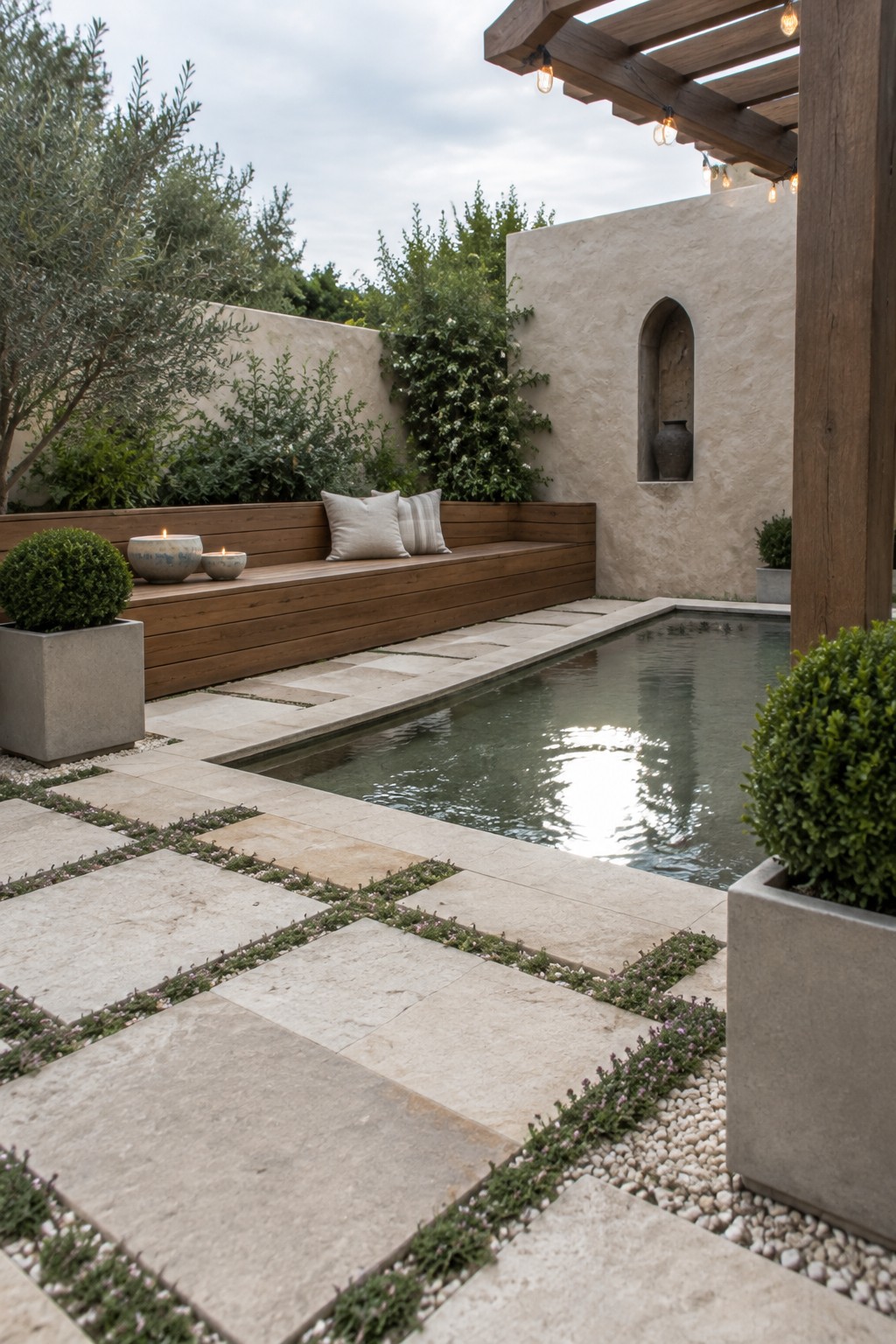
Many gardens look better when you skip the grass and use large pavers instead. The small plants tucked into the joints add just enough green while the stone handles the traffic and keeps the surface flat and easy to walk on.
This setup works well around pools or along side paths where you want low care but still like seeing some living color. Choose ground covers that stay low and can take a bit of sun and dry spells so the joints do not turn into weeds.
Pavers With Gravel Joints
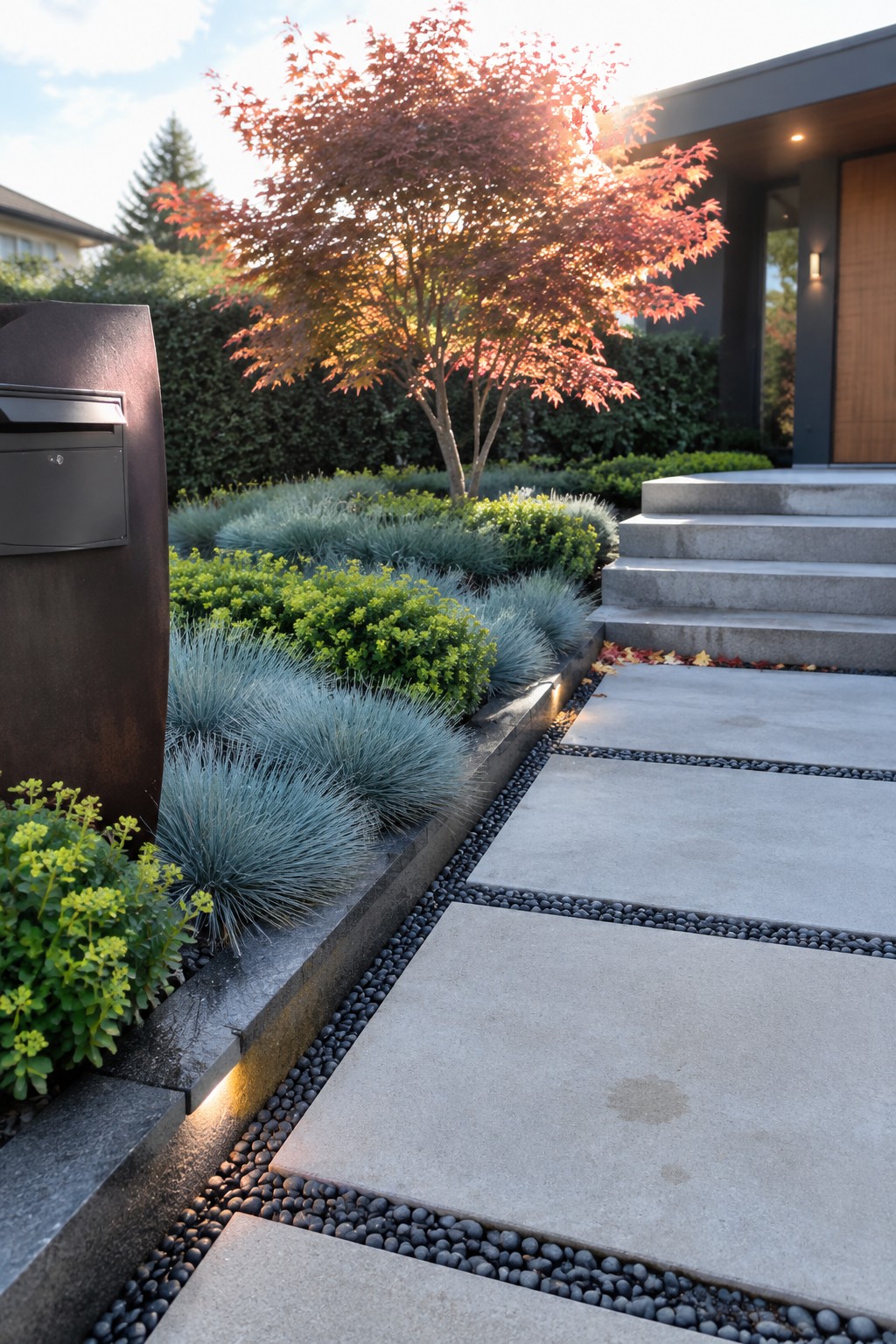
This approach keeps paths looking neat without needing lawn care. The pavers sit flat and stable while the dark gravel between them handles drainage and adds a simple contrast that works in many climates.
It suits homes that want low upkeep along side entries or front walks. Keep the gravel consistent in size and color, and let low shrubs or ground cover soften the edges so the path feels connected to the rest of the garden.
Pavers With Planted Joints For Garden Paths
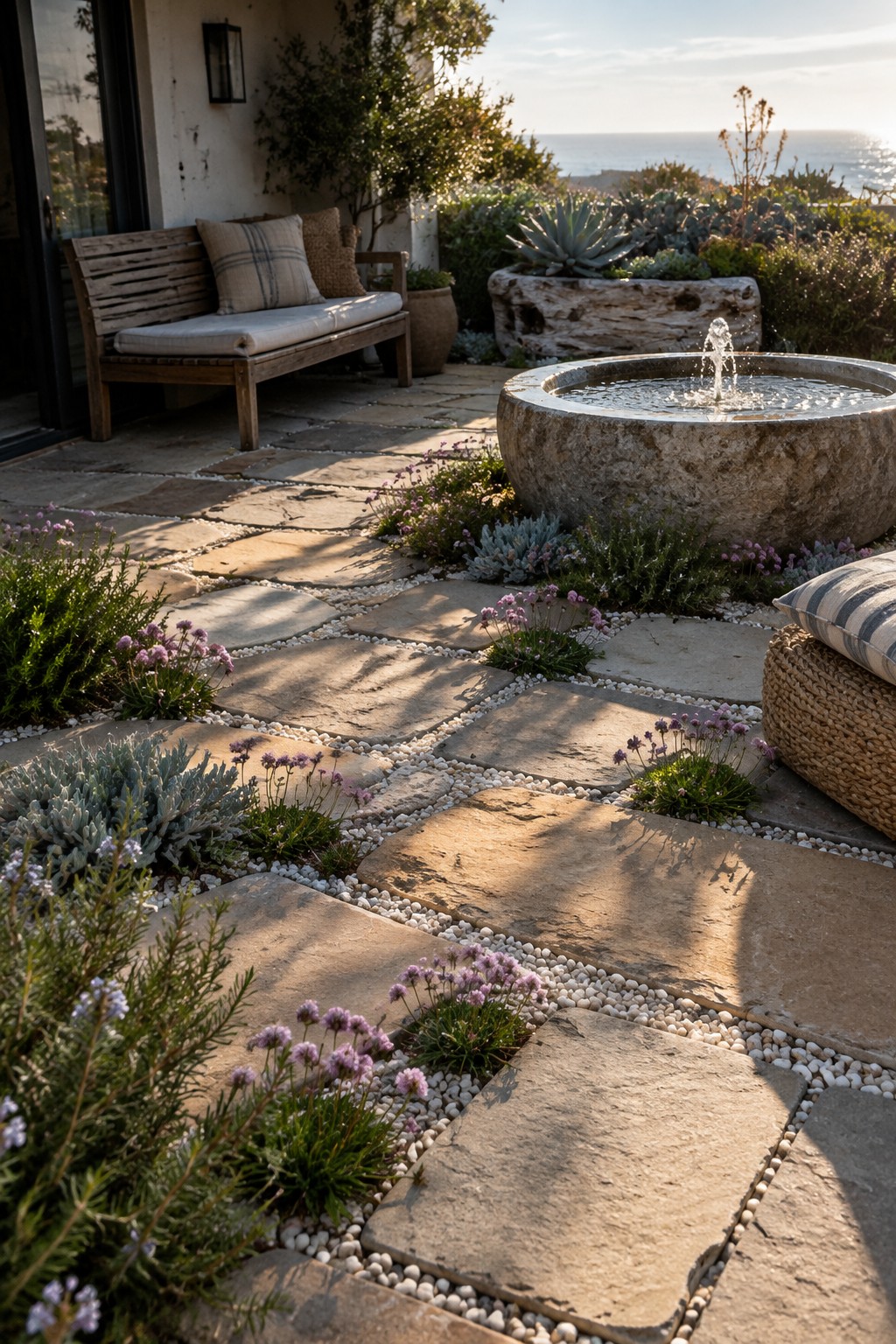
Large pavers set with gaps filled by pebbles and small plants give you a path that stays low and easy to care for. The plants break up the hard look while the pebbles keep the surface stable and help water drain through.
This works best in sunny areas where grass struggles or where you want to cut back on mowing. Keep the plants low growing so the path stays comfortable to walk on, and choose varieties that handle foot traffic without constant trimming.
Moss Between Brick Pavers
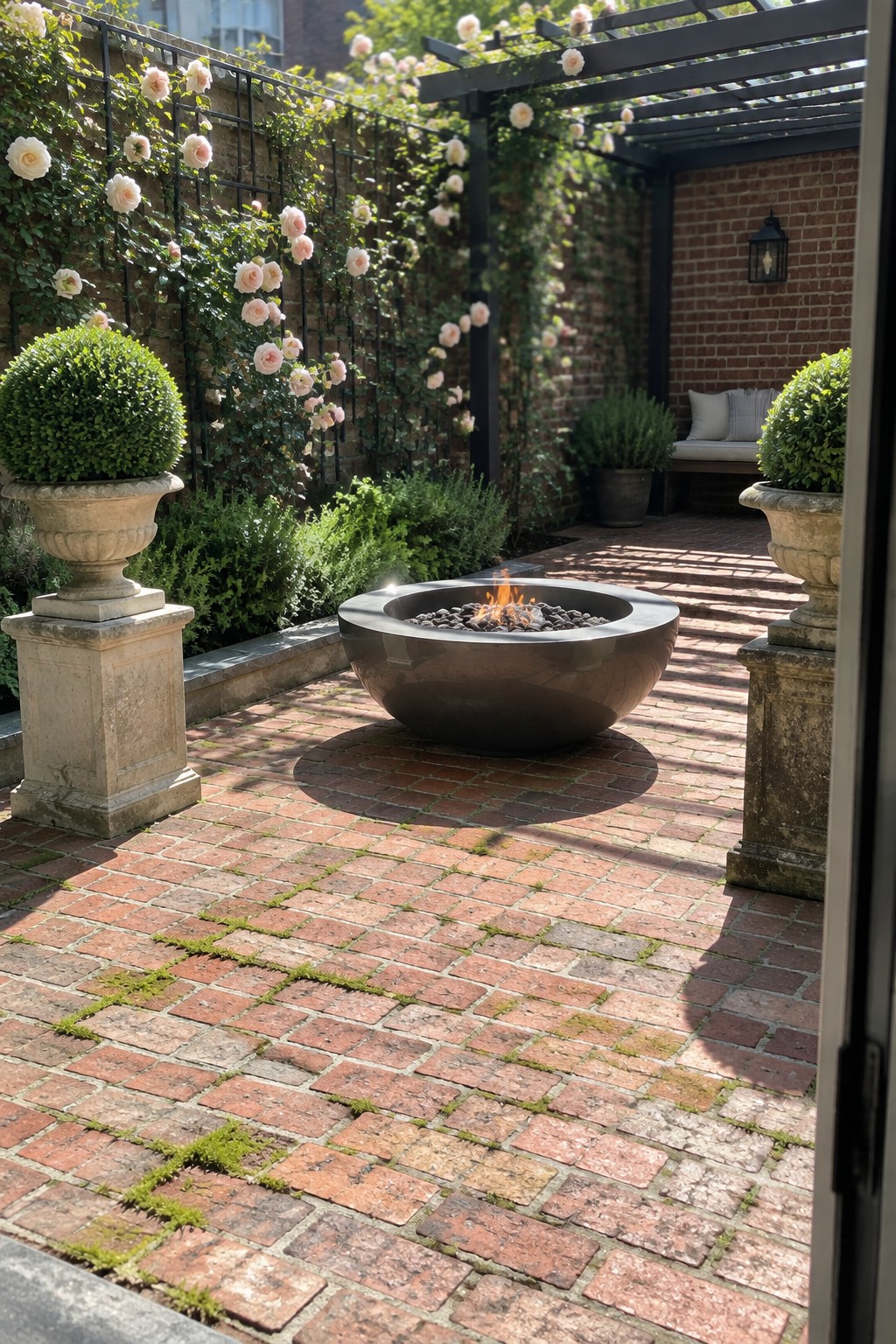
Moss growing in the joints of brick pavers gives a garden surface some softness without adding any lawn to mow. It fills the gaps naturally and keeps the whole area feeling connected to the plants around it. The look works especially well in smaller spaces where a full lawn would feel out of place.
This approach suits older homes or any spot where you want low upkeep. Make sure the base drains well so the moss does not turn slimy, and choose a shady enough corner for it to spread on its own. Once it settles in, the joints stay green with very little extra care.
Wooden Pavers With Planted Joints

Wooden pavers work well when you want a path that feels softer than solid concrete or stone. Leaving narrow gaps between the planks lets low plants grow right in the joints, which keeps the path looking connected to the rest of the garden instead of sitting on top of it.
This approach fits best in smaller yards or side gardens where grass is hard to maintain. Use pressure-treated wood for the pavers, space them evenly, and pick tough ground covers that stay low enough to walk over without constant trimming.
Pavers With Planted Joints On Terraces
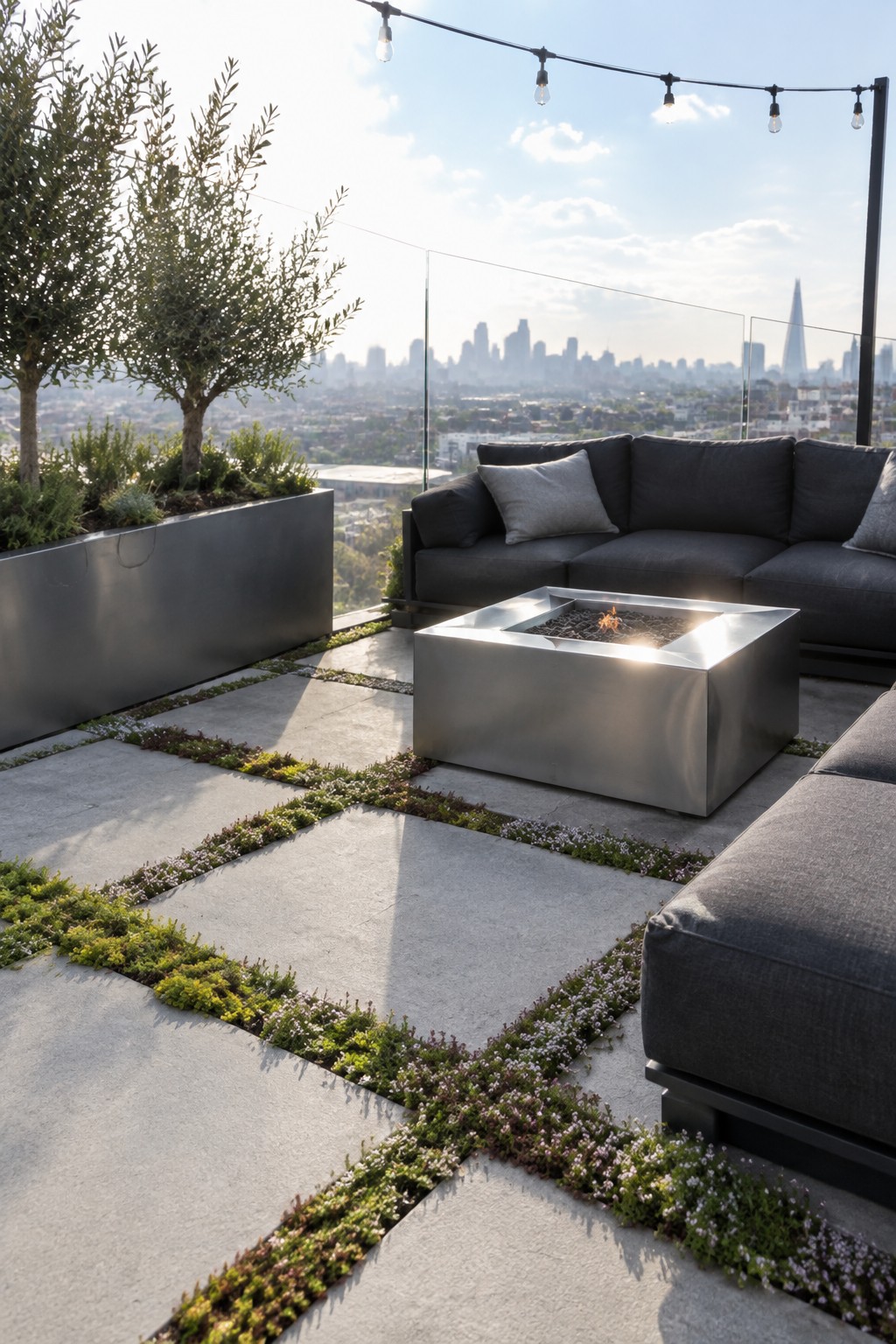
Many people like this approach because it gives a clean, solid walking surface while still letting small plants grow through the gaps. The result feels softer than a full slab of concrete or stone but stays much easier to care for than a lawn, especially in tight or elevated spots.
It works well on rooftops and balconies where soil depth is limited and weight matters. Keep the paver pattern simple, choose low-growing plants that can handle sun and foot traffic, and leave enough space around seating areas so the surface stays practical for daily use.
Paver Paths With Planted Joints
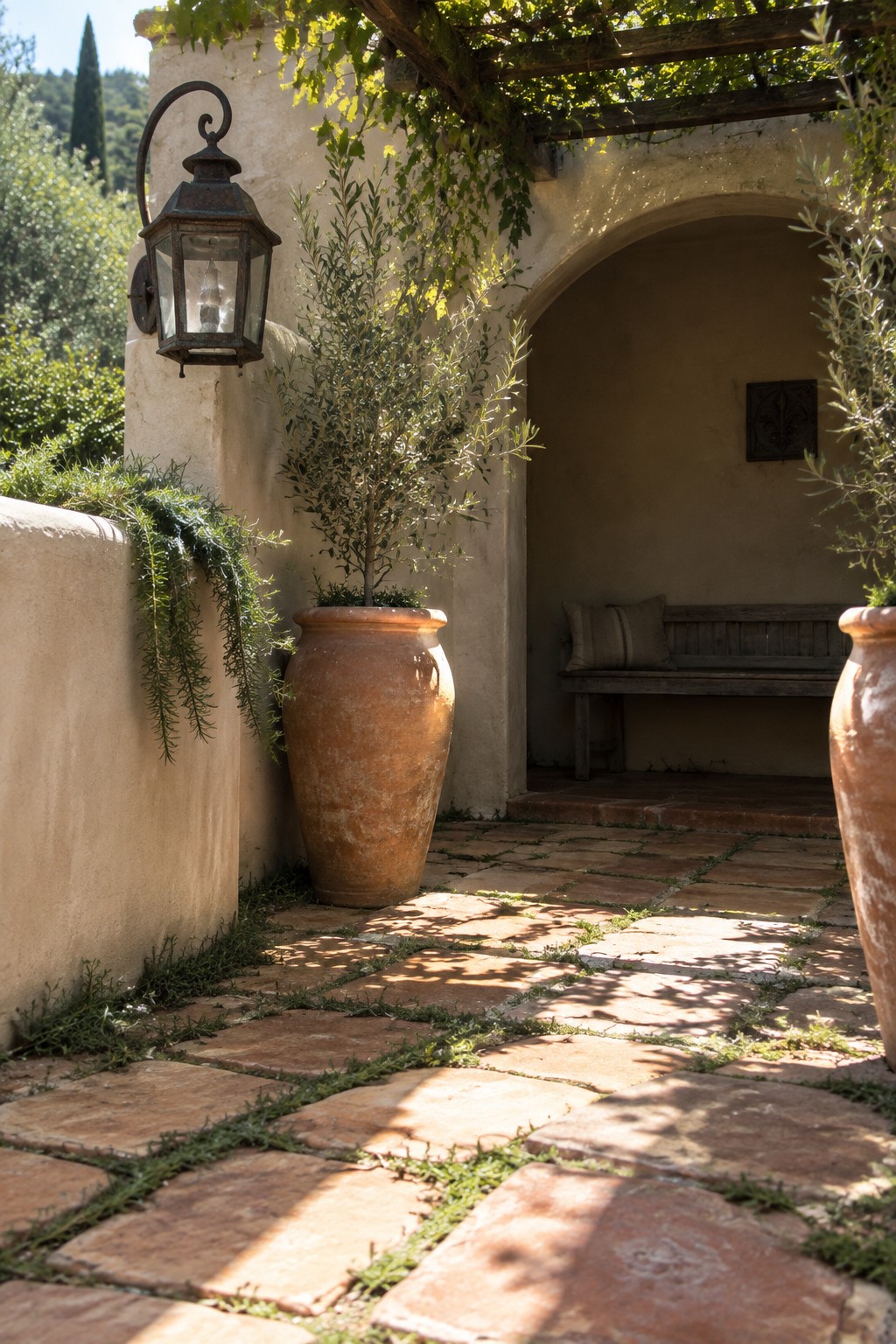
One simple way to handle paths without a full lawn is to use pavers with gaps left between them. The open joints let low plants grow in naturally and keep the surface from feeling too hard or bare.
This approach works best in sunny areas where grass would need too much water or in gardens that already use clay pots and simple structures. Just make sure the gaps are wide enough for the plants to spread and that the base stays level so the path stays comfortable to walk on.
Plant Flowers Between Patio Pavers

One simple way to cut down on grass is to let small plants fill the spaces between pavers. The joints add softness and a little color while the stones still give you a solid place to walk and set furniture.
This works best on patios that get some sun and light use. Choose tough, low growers that can handle a bit of foot traffic, and leave enough room in the joints for soil and water to reach the roots.
Paver Walkways With Low Growing Plants Between Stones

This setup works well when you want a clear walkway but do not need a full lawn. The pavers sit in a line with space left between them, and low plants fill those gaps to soften the look and reduce the amount of grass that has to be mowed or watered.
It fits best along the side of a house or in a narrow strip where regular turf would be awkward. Keep the joints at least a few inches wide so the plants have room to grow, and pick varieties that stay short and need little trimming.
Pavers With Planted Joints
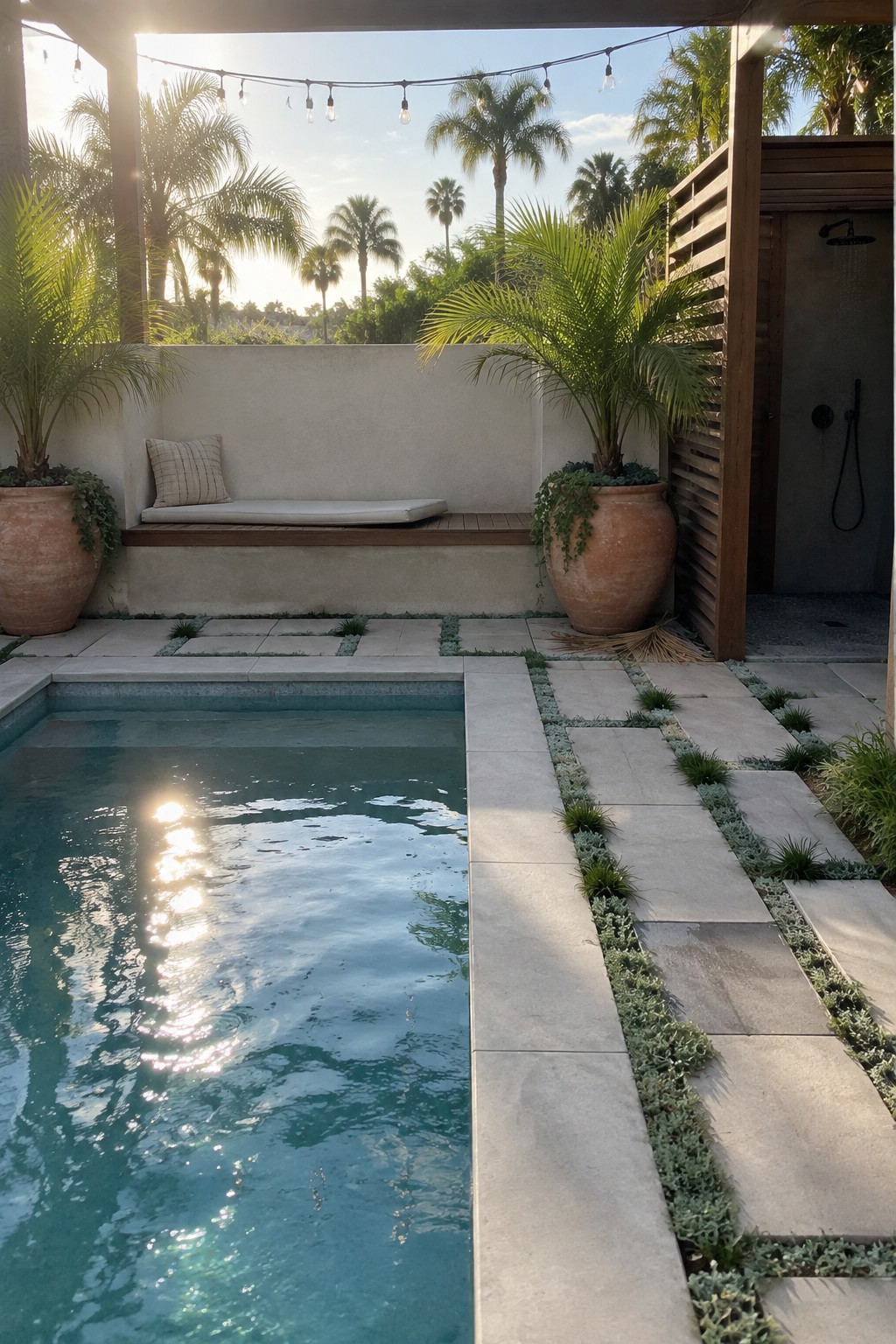
Pavers with planted joints give you a clean paved surface without needing a full lawn. The gaps let small plants fill in over time, which softens the look and cuts down on weeding and mowing.
This setup works well around pools or along walkways where you want something sturdy underfoot but still green. Keep the joints about an inch or two wide and choose low ground covers that can handle some foot traffic.
Let Plants Fill the Joints Between Pavers
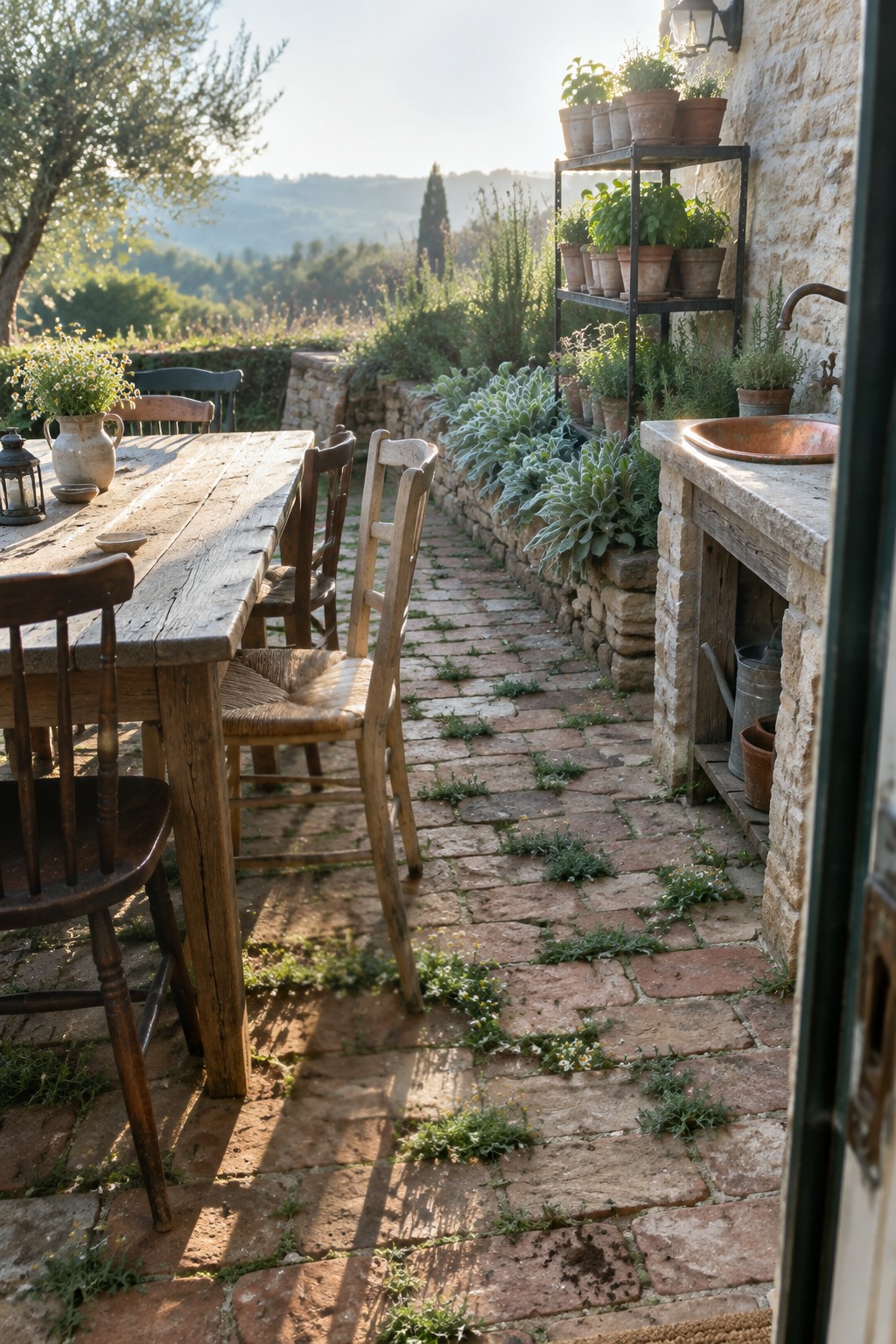
This setup shows how pavers can work without a full lawn. The gaps between the bricks allow small plants to settle in naturally, which keeps the surface practical while adding a bit of green right underfoot. It avoids the look of a solid hardscape and cuts down on weeding or mowing.
It suits older homes or garden paths where you want something durable but not too formal. Keep the joints at least a half inch wide, pick tough ground covers that handle some traffic, and let them spread on their own once established.
Pavers With Planted Joints For Low Maintenance Paths
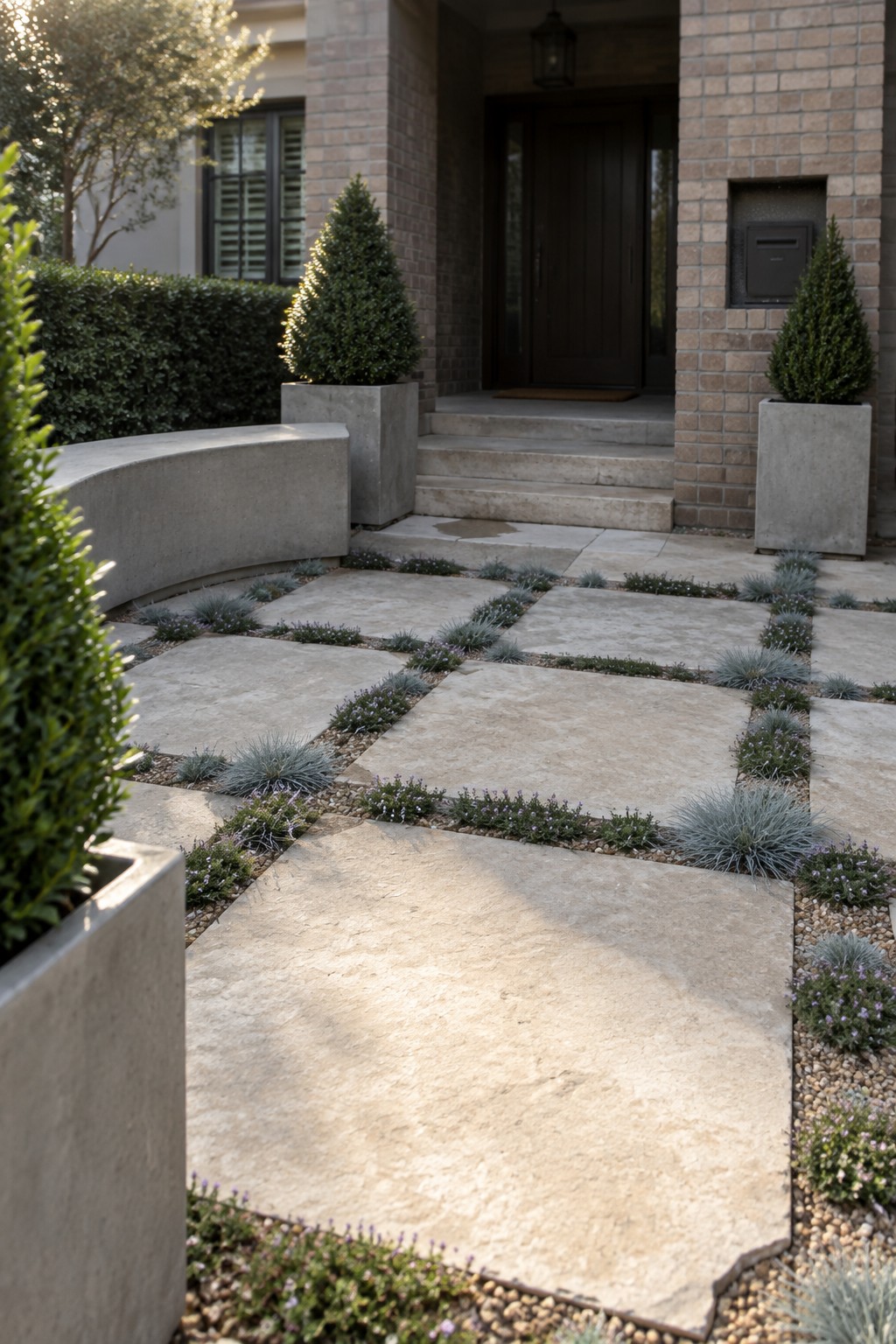
Large pavers set with small gaps let low plants fill in and create a path that stays green without a lawn. The setup cuts down on mowing while still letting water drain through instead of running off.
This works best along walkways or in front areas where grass struggles. Use tough ground covers that handle some foot traffic and they will spread on their own over a season or two.
Fill Paver Joints With Small Plants
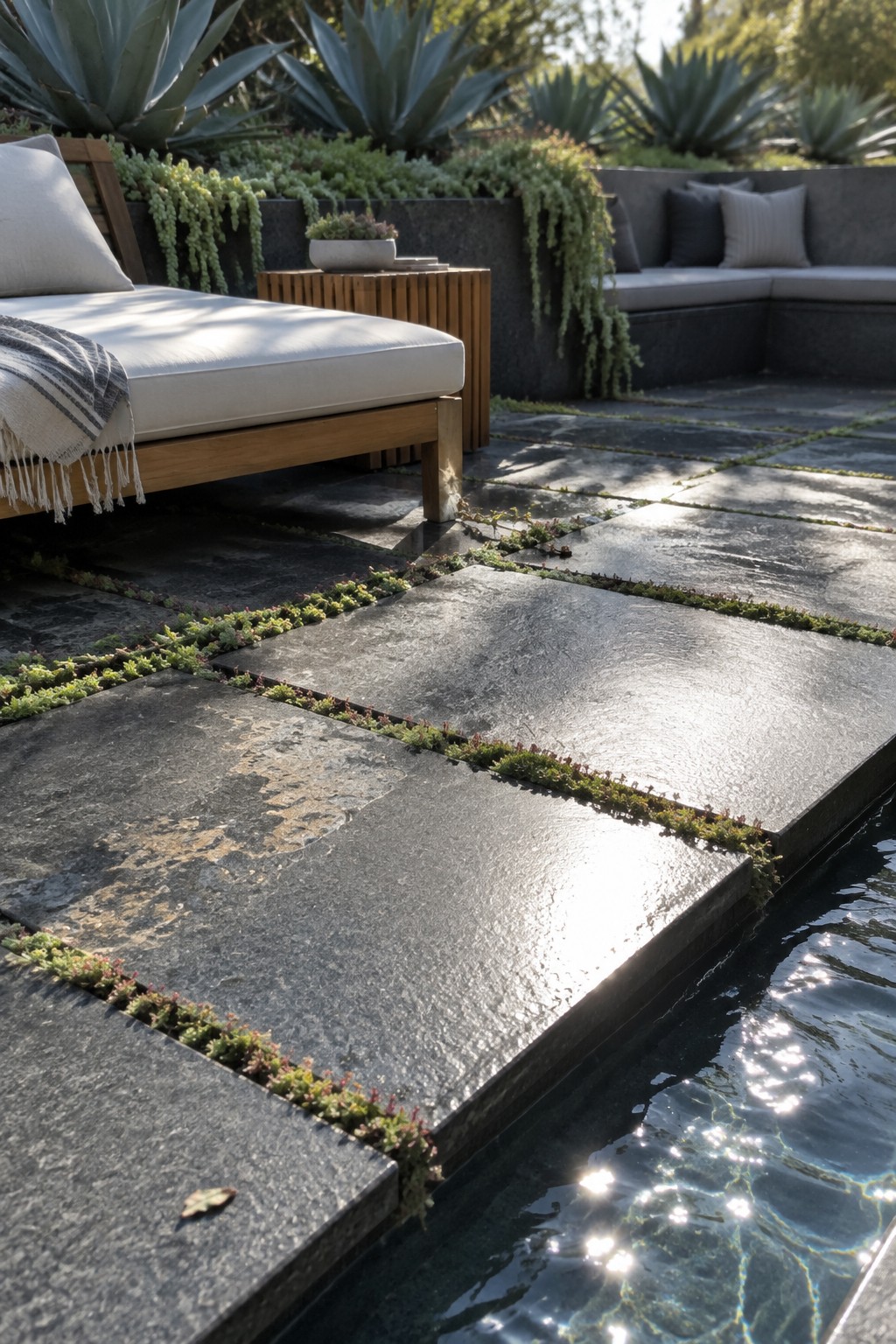
Many people skip grass altogether and let low plants take over the spaces between pavers. It gives the surface a softer look while still keeping it easy to walk on. The plants also help with drainage and add a bit of green without needing regular mowing.
This works well in sunny spots where grass struggles and in areas that stay fairly dry. Choose tough ground covers that can handle some foot traffic and fit the local climate. The stones stay the main structure, but the plants soften the edges over time.
Paver Paths With Wider Joints For Flowers And Herbs
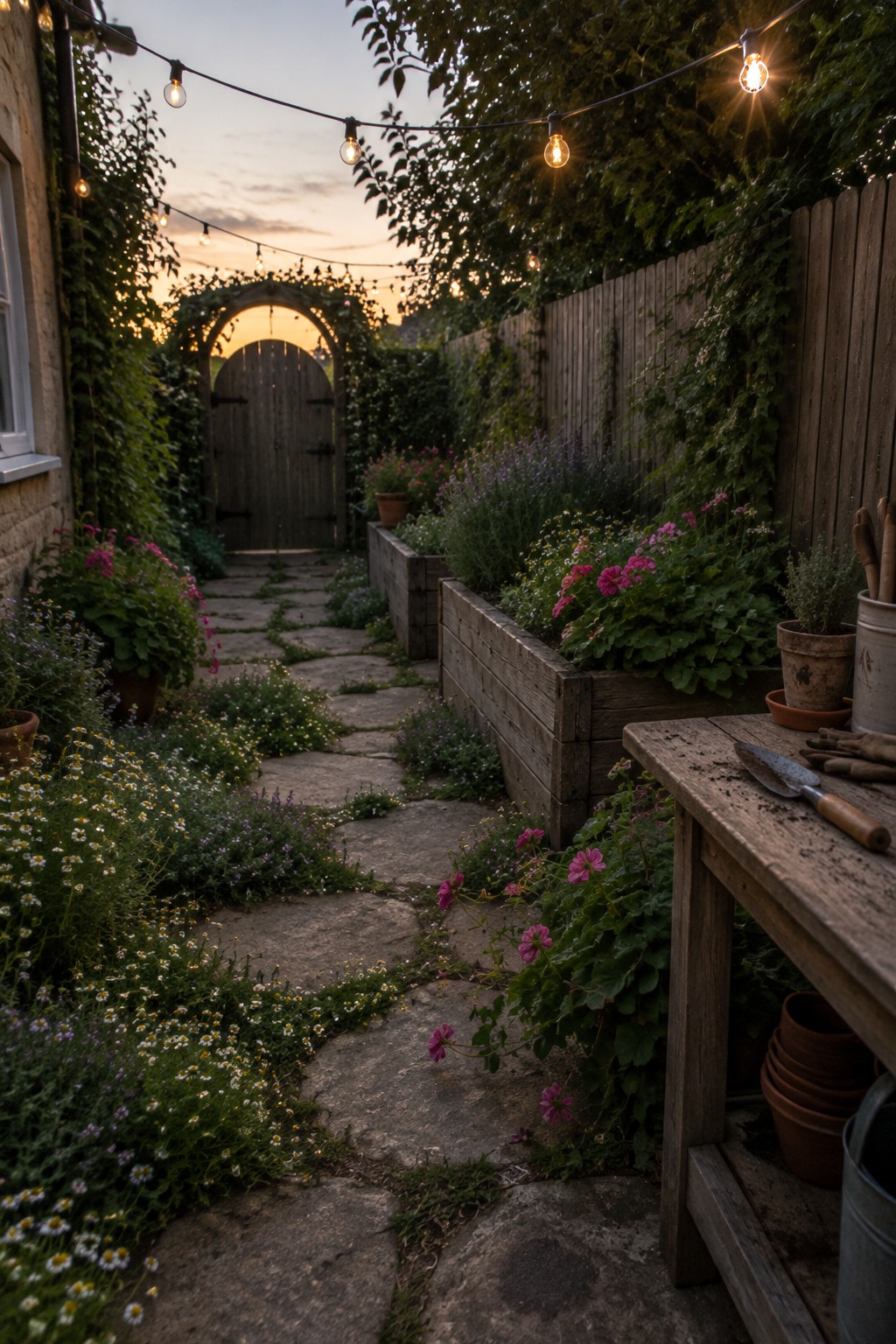
One simple way to skip grass is to lay pavers and let plants fill the spaces between them. The stones give you a firm walking surface while the planting softens the edges and keeps the whole path from feeling too hard.
This approach works best in smaller gardens or along the side of a house where a full lawn would be too much work. Use wider joints if you want more room for flowers and herbs, and choose low plants that can handle some foot traffic.
Fill Paver Joints With Ground Cover Plants
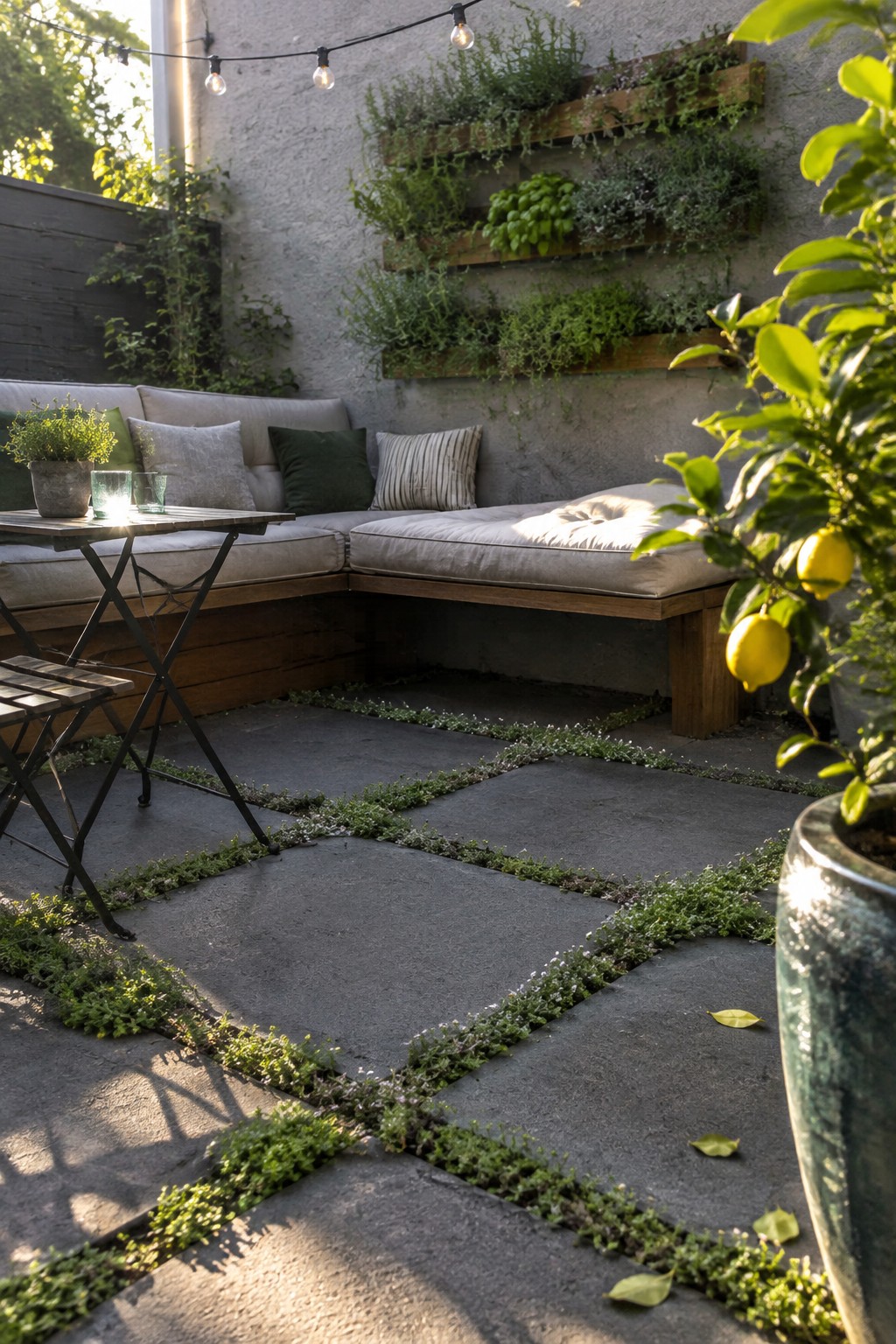
Large pavers work well when you want a solid surface but still like the look of green underfoot. Letting small plants grow in the spaces between the stones keeps the area from feeling too hard and bare. It cuts down on the need for a full lawn while still giving the space some softness.
This approach suits small patios or side yards where grass would be hard to maintain. Pick low creeping plants that can handle some stepping and choose joints wide enough for them to spread. In the photo the plants sit right in the gaps and soften the edges of each stone without taking over.
Pavers With Planted Joints For Easy Paths

One way to keep some green in a small yard is to use pavers with plants growing in the spaces between them. The path stays solid underfoot but still lets a bit of growth come through, which cuts down on the need for a full lawn.
This works well along the side of a house or in narrow areas where grass is hard to keep up. Just space the pavers so the joints are wide enough for low plants that can take some walking on.
Wooden Paver Walkways With Low Growing Ground Covers

Wooden pavers set with gaps between them let you add planting right into the walking surface. The gaps break up the hard look and keep the area feeling more like part of the garden instead of a solid deck or slab.
This setup works best in small backyards or narrow side paths where a full lawn would be hard to maintain. Use tough, low-growing plants that can take some foot traffic, and check the wood treatment so it lasts outdoors.
Fill Gaps Between Pavers With Low Plants

Many people want stone paths without the stiffness of solid grout lines. Letting small plants take hold in the joints softens the look and still leaves the surface easy to walk on.
This works best on paths that get light foot traffic and plenty of sun. Choose tough, low creepers that stay under a few inches tall so the surface stays level. Keep an eye on spreading so the plants do not push the pavers out of place over time.
Soft Garden Walkways With Ground Cover Between Pavers

Many gardens do away with grass and instead lay pavers with small plants tucked into the gaps. The result feels softer underfoot and blends better with the surrounding beds than a solid hard surface.
This approach suits narrow side yards or shaded passages where turf would struggle. Pick tough groundcovers that tolerate some foot traffic, and set the pavers on a solid base so the path stays even over the years.
Plant Groundcover Between Pavers

Many homeowners are skipping grass altogether in favor of pavers with small plants tucked into the joints. The gaps let a bit of green show through while cutting down on watering and mowing.
This setup works best in sunny spots like pool decks or side yards where traffic is light. Pick tough, low spreading plants that can handle dry periods and keep the paver layout fairly open so the groundcover has space to fill in over time.
Frequently Asked Questions
Q: How often do the plants between pavers really need water once everything settles in? A: Most ground covers used in joints take hold fast and then rely on rain. Give them a deep soak every few days for the first month. After that they handle dry spells on their own.
Q: What stops weeds from filling the gaps before the chosen plants spread? A: Pull any weeds by hand the first season while the new plants are still small. A thin layer of mulch tucked right around the paver edges slows fresh weed seeds without choking the plants you want.
Q: Do pavers stay level over time when the joints are planted instead of filled with sand? A: They do if you start with a solid base of compacted gravel and sand. The roots that grow in the joints actually help lock the pavers in place once they knit together.
Q: Can I still walk on the path every day without crushing the plants in the joints? A: Pick low, tough varieties like thyme or sedum that recover quickly from foot traffic. Space the pavers a little wider where you walk most and the plants stay full.
