

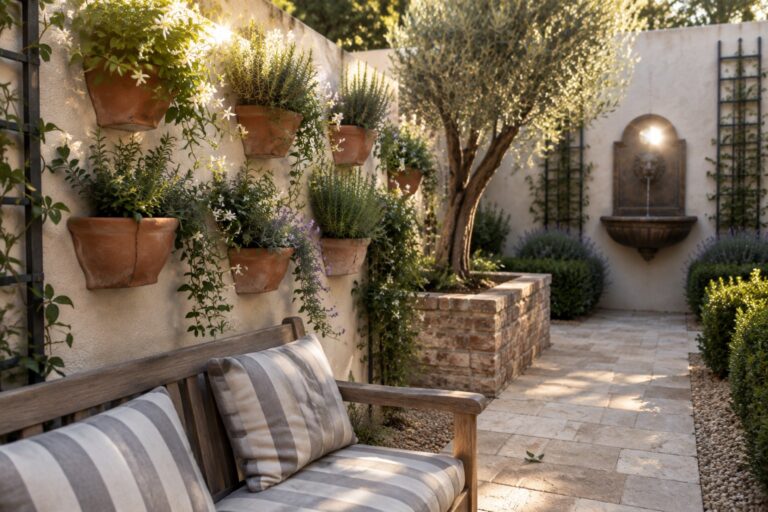
I have always found that vertical planting changes how a garden feels from the ground up because it adds layers without eating into floor space.
When I walk through my own yard I notice first how the walls guide the eye along paths and tie different beds together.
Some systems look neat on paper but start to sag after a season or two.
That is why I tend to test smaller sections first before committing to a full wall.
Over time these choices shape the whole layout more than I expected when I first started planning.
Wall-Mounted Pots For Vertical Gardens
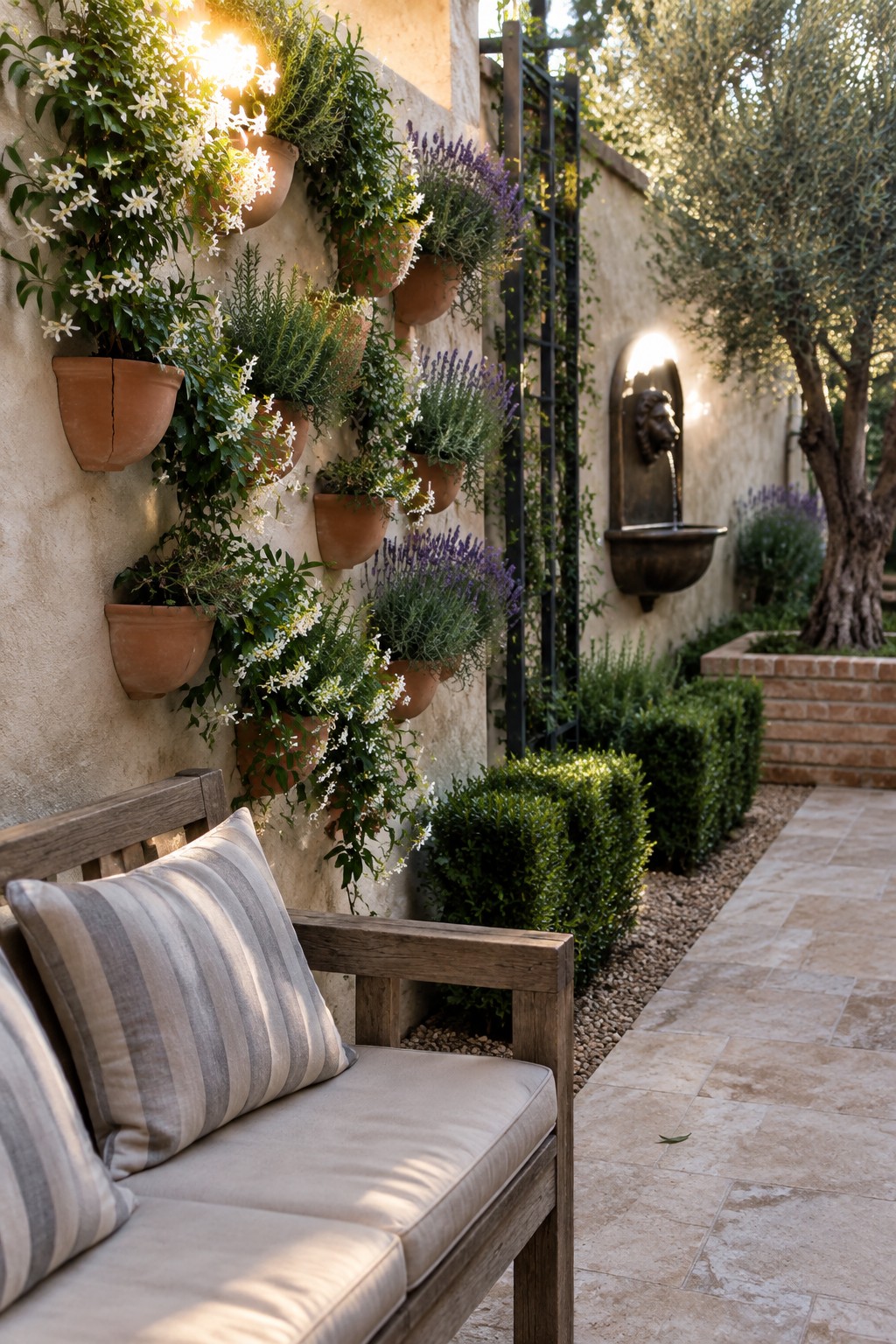
Mounting pots straight onto a wall gives you a simple way to add a lot of plants without taking up floor space. The staggered arrangement lets each plant get light and makes the whole wall feel full without looking crowded. It works especially well on plain stucco or masonry where you want softness and color.
This setup suits smaller yards or side gardens where ground beds are limited. Secure the pots with strong brackets and choose plants that handle containers well, like herbs or trailing flowers. Check the wall for drainage so water does not pool behind the pots.
Wall Mounted Boxes Turn A Fence Into A Garden
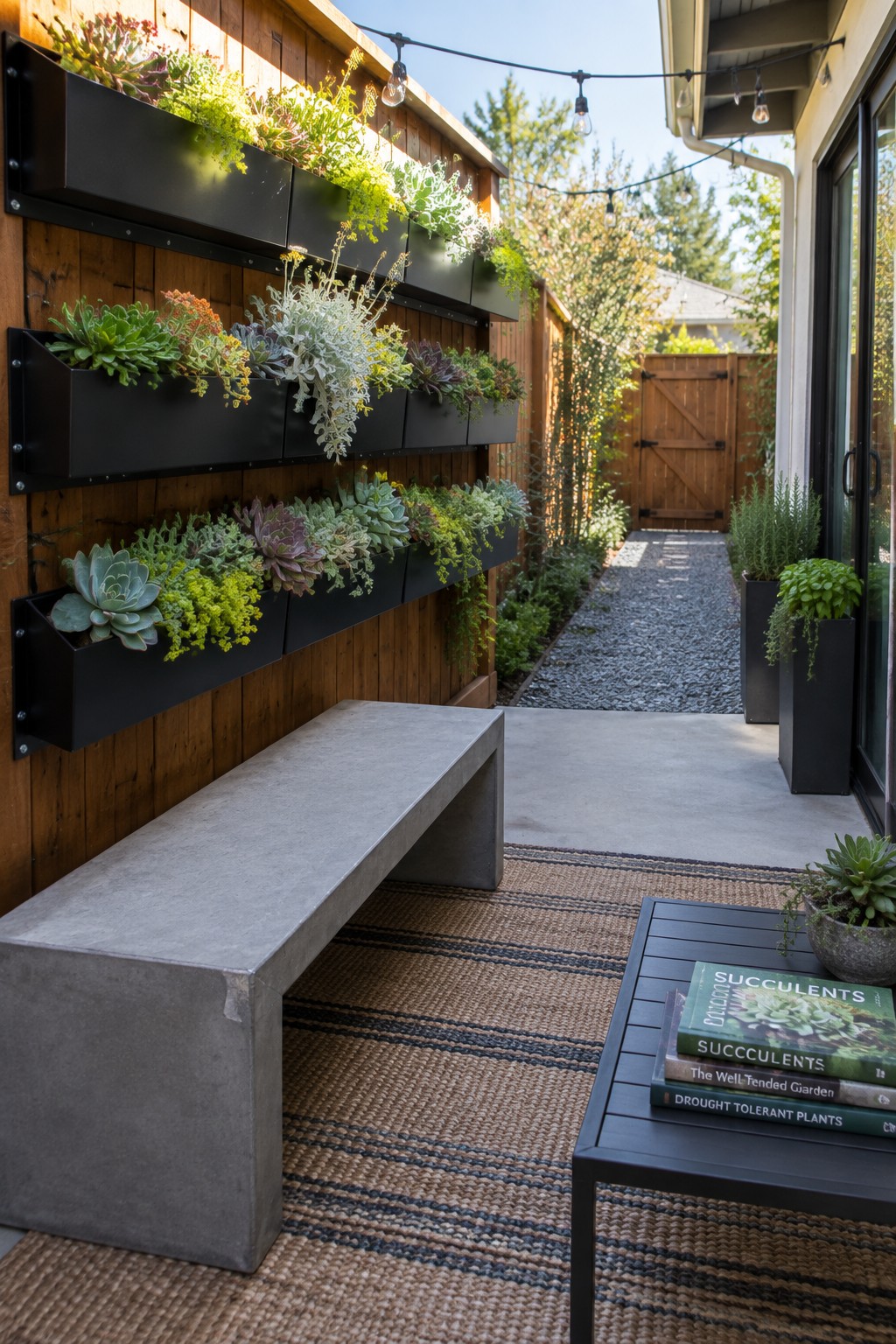
Mounting rows of simple metal boxes straight onto a fence gives you a full vertical garden without losing any ground space. This works especially well with succulents because they stay compact and do not need deep soil.
The setup fits best along a side yard or patio edge where you want greenery but have little room to spare. Just check that the fence can hold the weight and that the plants will get the light they need through the day.
Mount Pots On Brick Walls For Vertical Planting
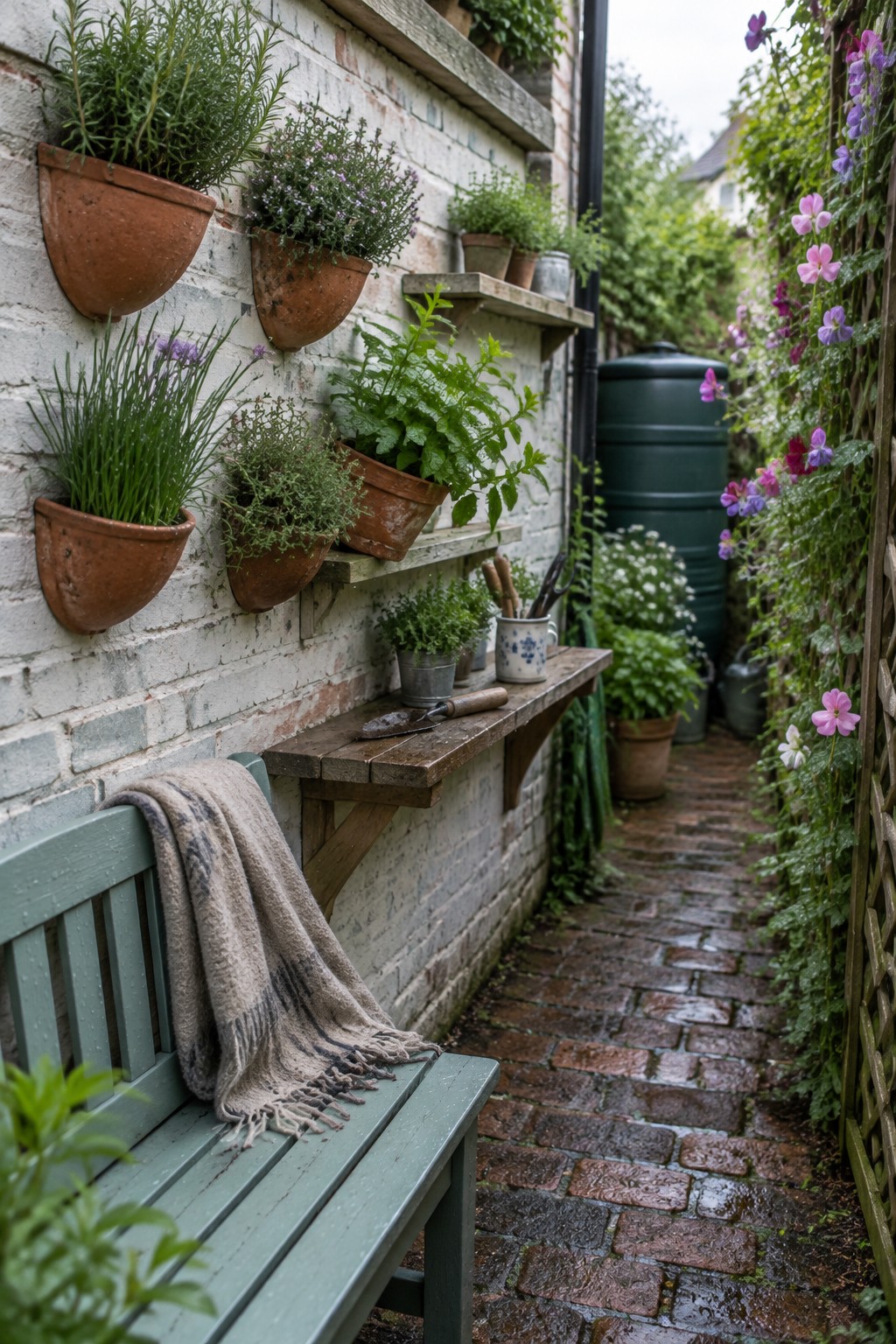
Mounting pots straight onto a brick wall gives you planting space without taking up floor room. This works especially well in narrow side yards or passages where ground beds would feel cramped. The staggered heights keep the display from looking flat and let different plants get the light they need.
Start with sturdy brackets or wall hooks rated for the weight of wet pots. Terracotta works fine on brick since it drains well and the wall absorbs some moisture. Place taller herbs or trailing plants higher up and lower ones within reach for easy picking. Check the brackets once a year and avoid overloading one section of wall.
Vertical Planting on Deck Walls
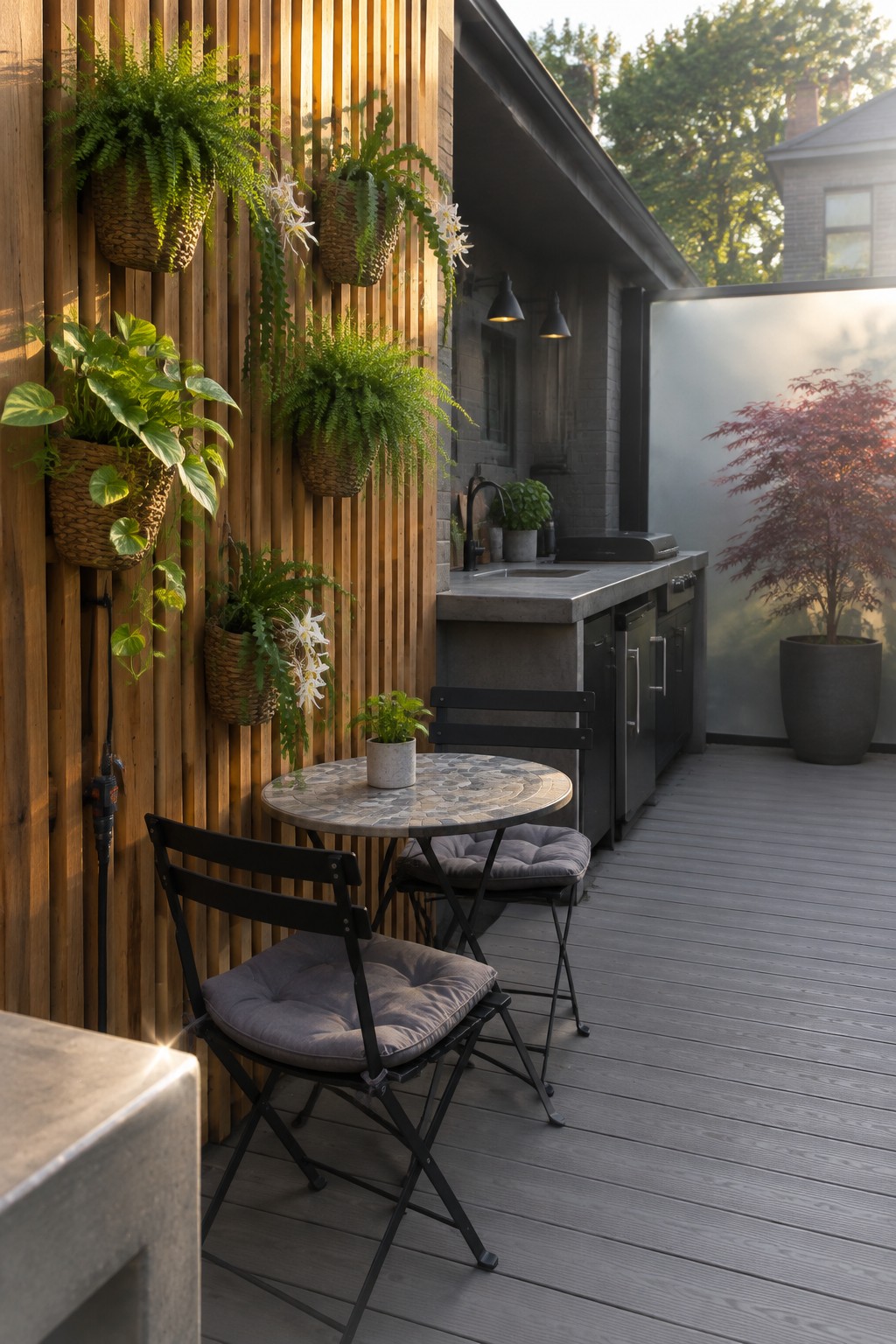
One easy way to add greenery without losing floor space on a deck is to hang plants directly on a wall or screen. Baskets with ferns and trailing plants turn a plain vertical surface into a living feature that softens the whole area.
This approach suits small patios or decks where ground space is tight. Secure the baskets well, pick plants that match the light, and keep the wall material simple so the greenery stays the focus.
Recessed Planting In Metal Garden Walls

A metal wall with built-in recesses gives you a clean way to add vertical planting without needing separate planters or trellises. The pockets keep the plants secure and create a layered look that feels more permanent than hanging pots or panels. This approach works especially well in smaller yards where floor space is limited.
It suits modern or minimalist gardens and pairs best with drought-tolerant plants that can handle the shallow soil depth. Make sure the wall material can handle moisture over time, and check that the recesses get enough sun or shade depending on what you want to grow.
Vertical Planting Systems For Garden Walls
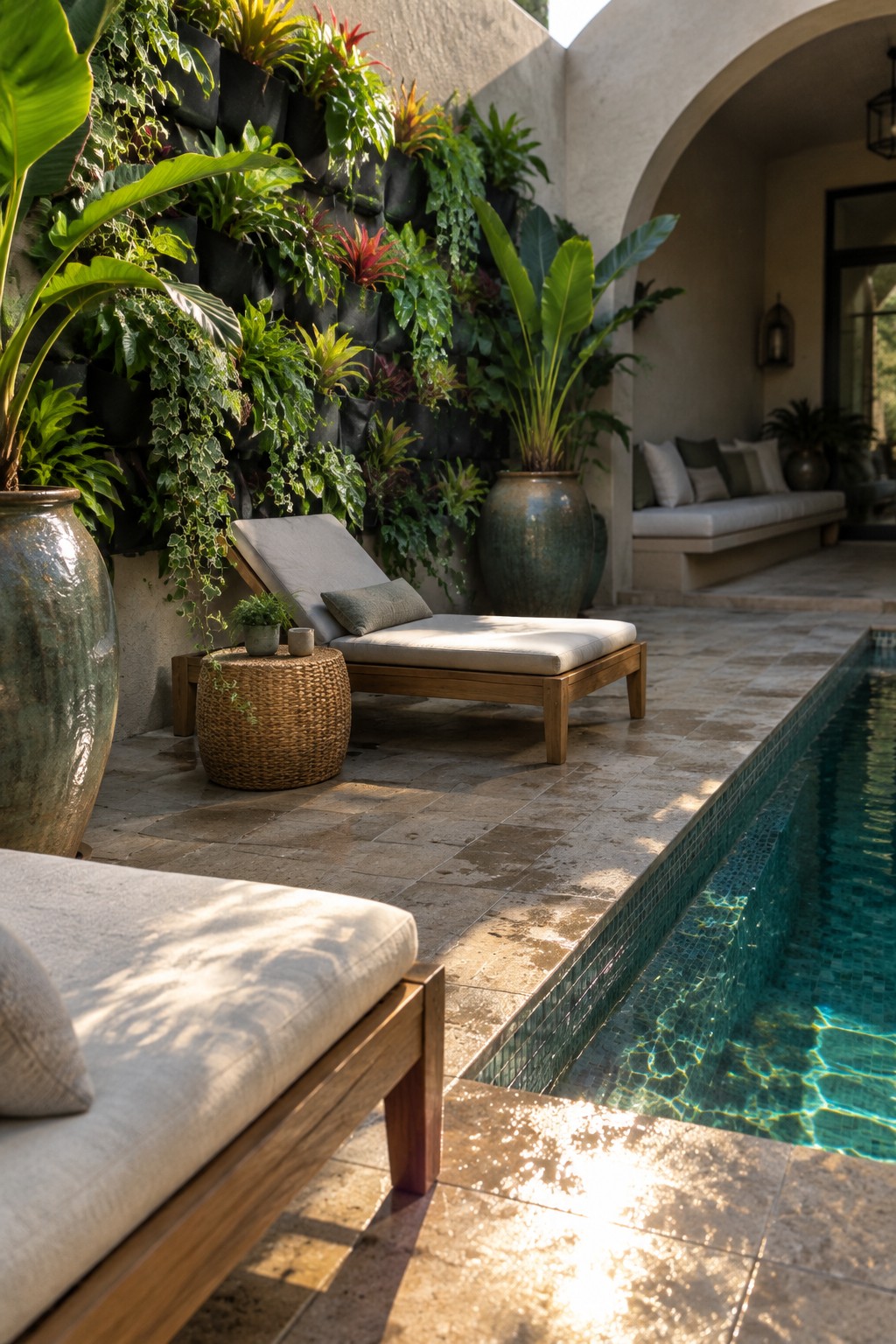
Vertical planting systems turn a plain wall into a full garden without taking up floor space. They work especially well in outdoor areas where you want more greenery but do not have room for wide beds or extra planters.
This approach suits pool decks and patios best, since the plants add softness and color right where people sit. Choose a modular system that drains well and pick plants that match the amount of sun the wall gets.
Mounting Grids On Garden Walls
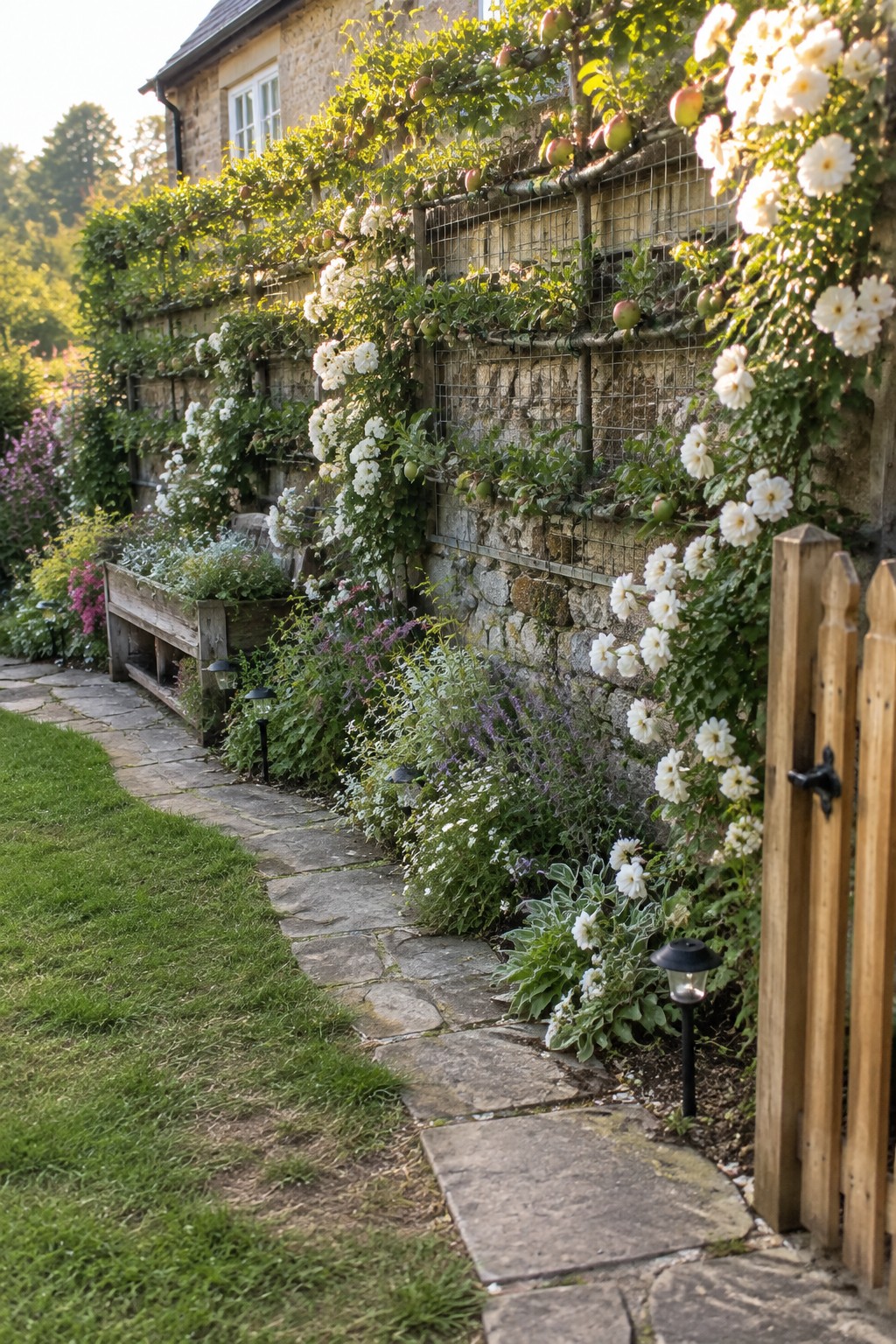
Fixing a simple wire grid to a stone wall gives climbing plants and fruit trees a place to grow upward without crowding the ground. This approach turns a plain boundary into a productive feature while keeping the planting neat and contained.
It suits older homes with solid walls that can take the weight once the plants fill in. Space the wires evenly and check the fixings every year or two so the weight does not pull them loose over time.
Wall Shelves For Vertical Planting On Balconies
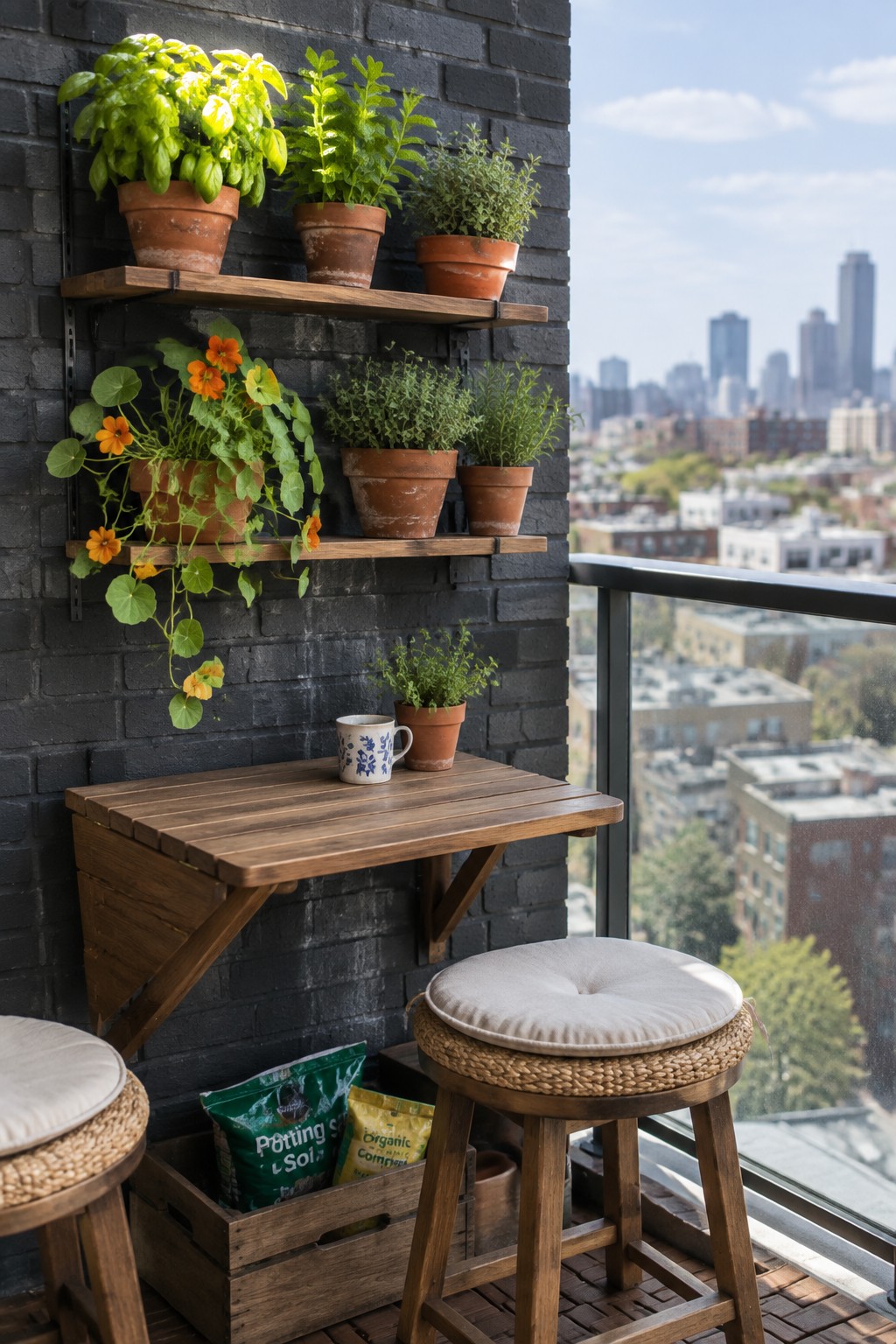
Many balconies stay small, so mounting simple wooden shelves on the wall gives you a way to add more plants without losing floor space. The shelves hold pots at different heights, which keeps everything in reach and lets the plants get decent light even in tight spots.
This setup suits apartment balconies or small patios where ground room is limited. Use strong brackets that can handle the weight of full pots, and check that the wall can support them before loading on too many.
Gabion Walls With Built-In Planters
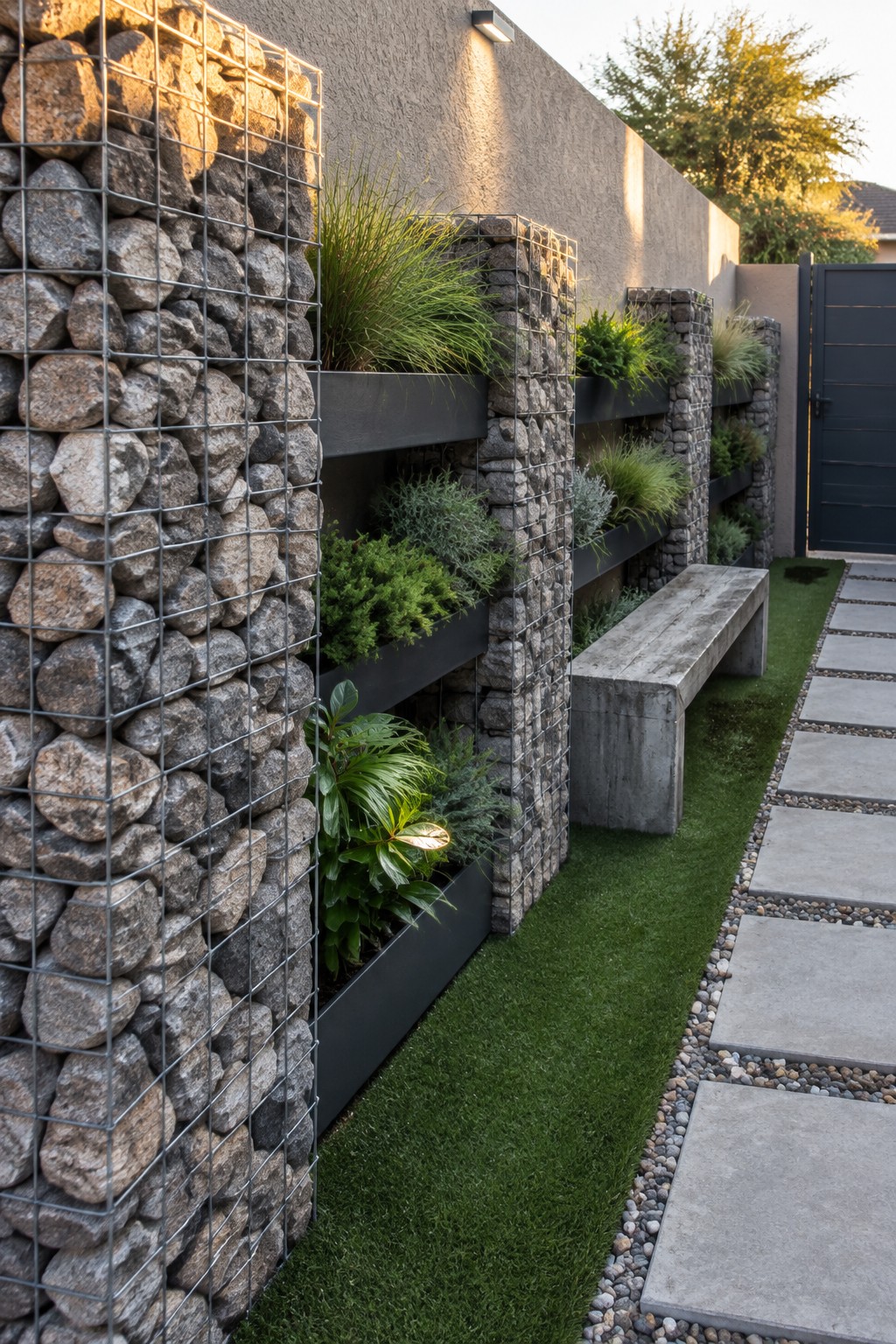
Gabion walls already give a garden a solid, lasting edge, but adding planters right into the structure turns them into a vertical garden at the same time. The metal cages hold the stone in place while the black boxes sit at different heights and let plants spill out without taking up extra ground space. It works especially well along a narrow side path or boundary where you want height but still need to keep things open.
This approach suits homes with modern or simple architecture that already use concrete or stone. Keep the plant choices varied in height and texture so the wall does not look flat, and make sure the boxes are deep enough for decent root growth. Watering can be a bit tricky at first until you settle on a routine, but once the plants fill in the look is low-maintenance and tidy.
Stacked Wood Planters for a Vertical Garden
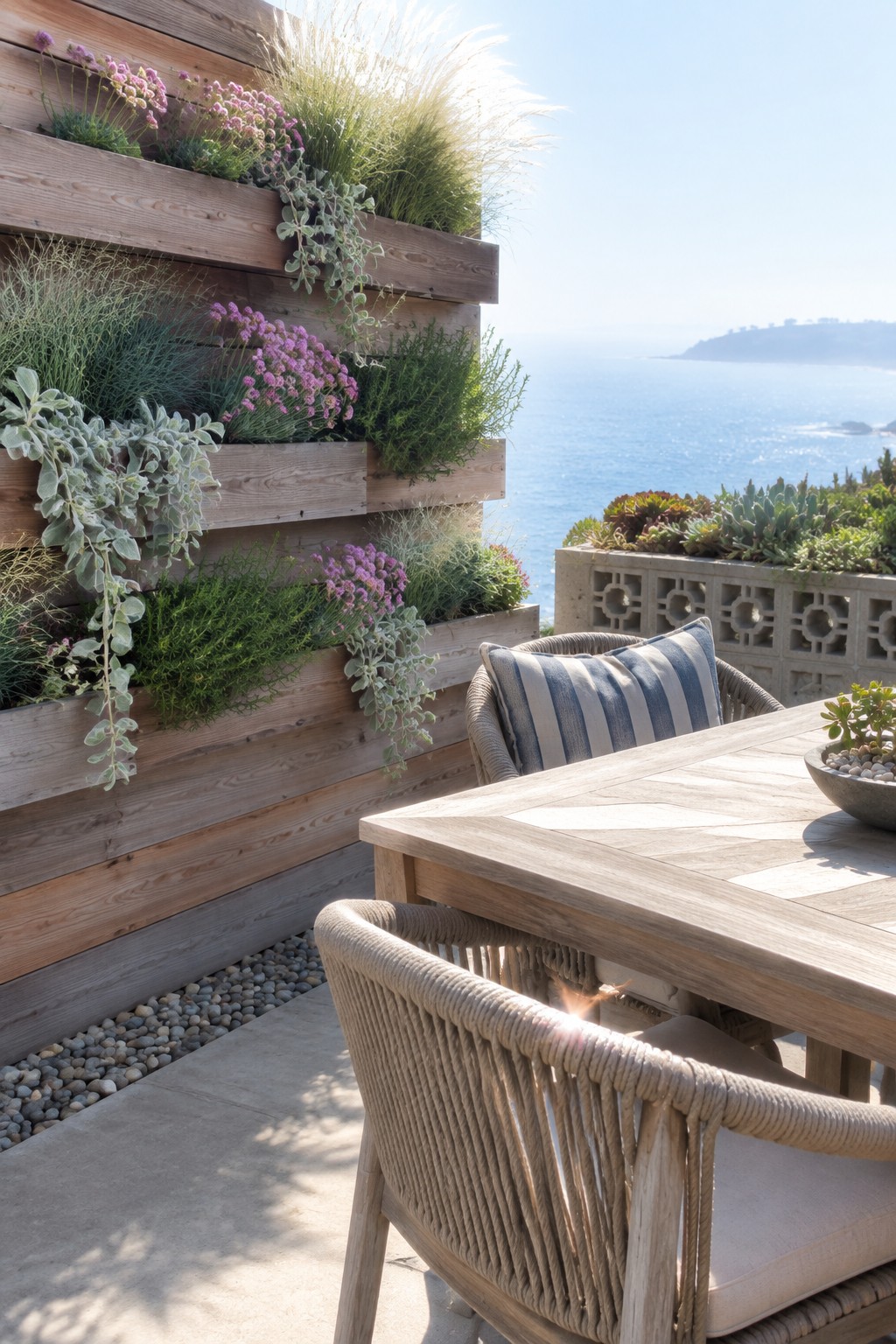
A vertical garden built with stacked wooden planters gives you a clean way to add height and greenery along a patio wall. The horizontal lines keep the look simple while letting plants spill out at different levels, which fills the space without crowding the floor.
This works best on a sunny wall that already has some structure to attach to. Use treated wood for the frames and choose a mix of trailing plants and upright ones so the wall stays full through the seasons. It suits smaller yards or decks where you want more planting without losing seating room.
Use Baskets to Build a Vertical Garden Wall
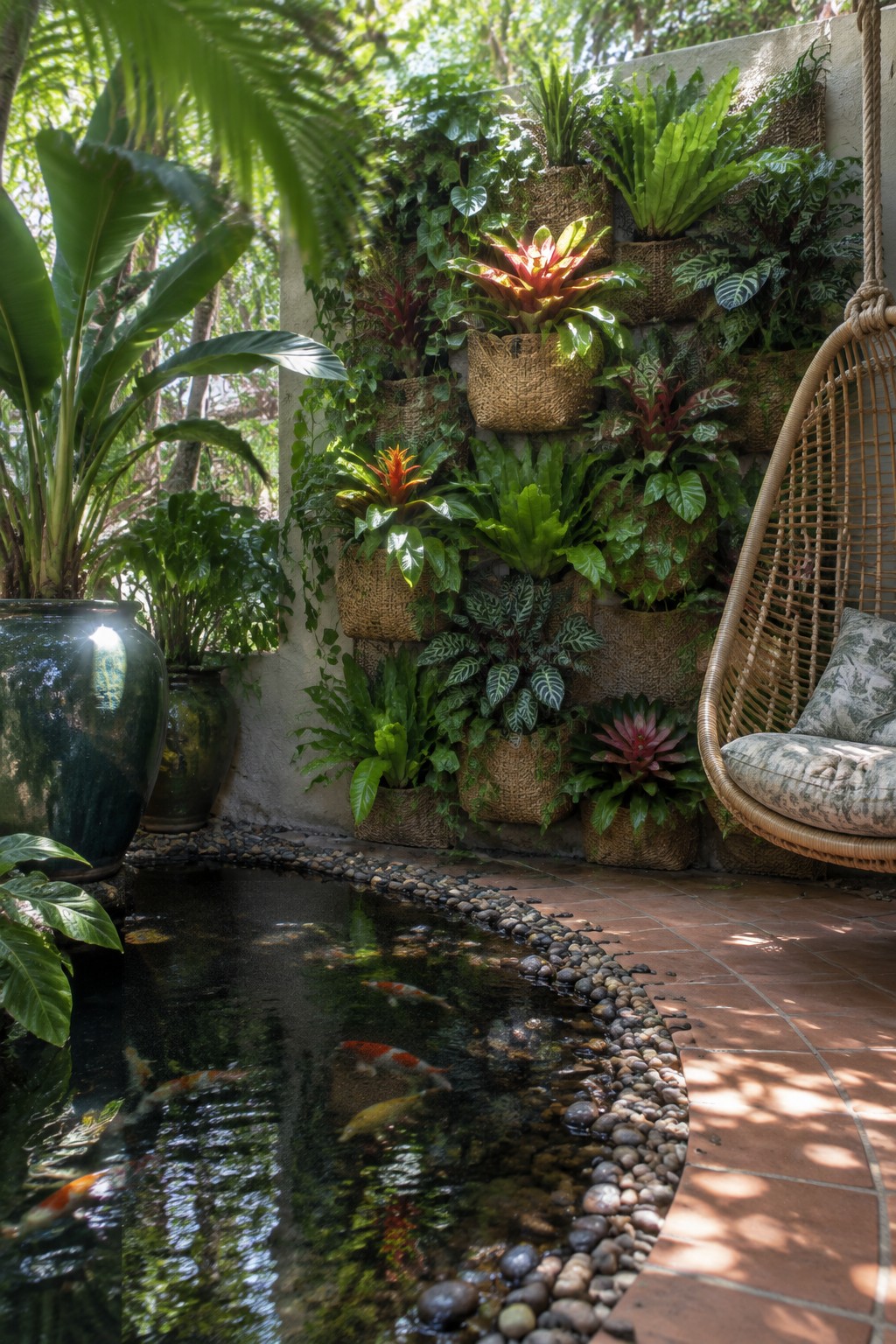
Mounting baskets on a wall gives you a simple way to add height and layers of plants without needing extra ground space. It turns a blank wall into a living feature that feels full and natural right away.
This approach works best on patios or garden edges where you already have a solid surface. Pick weatherproof baskets, space them so the plants can fill in, and choose varieties that match the light in that spot.
Attach Planters Straight to a Fence
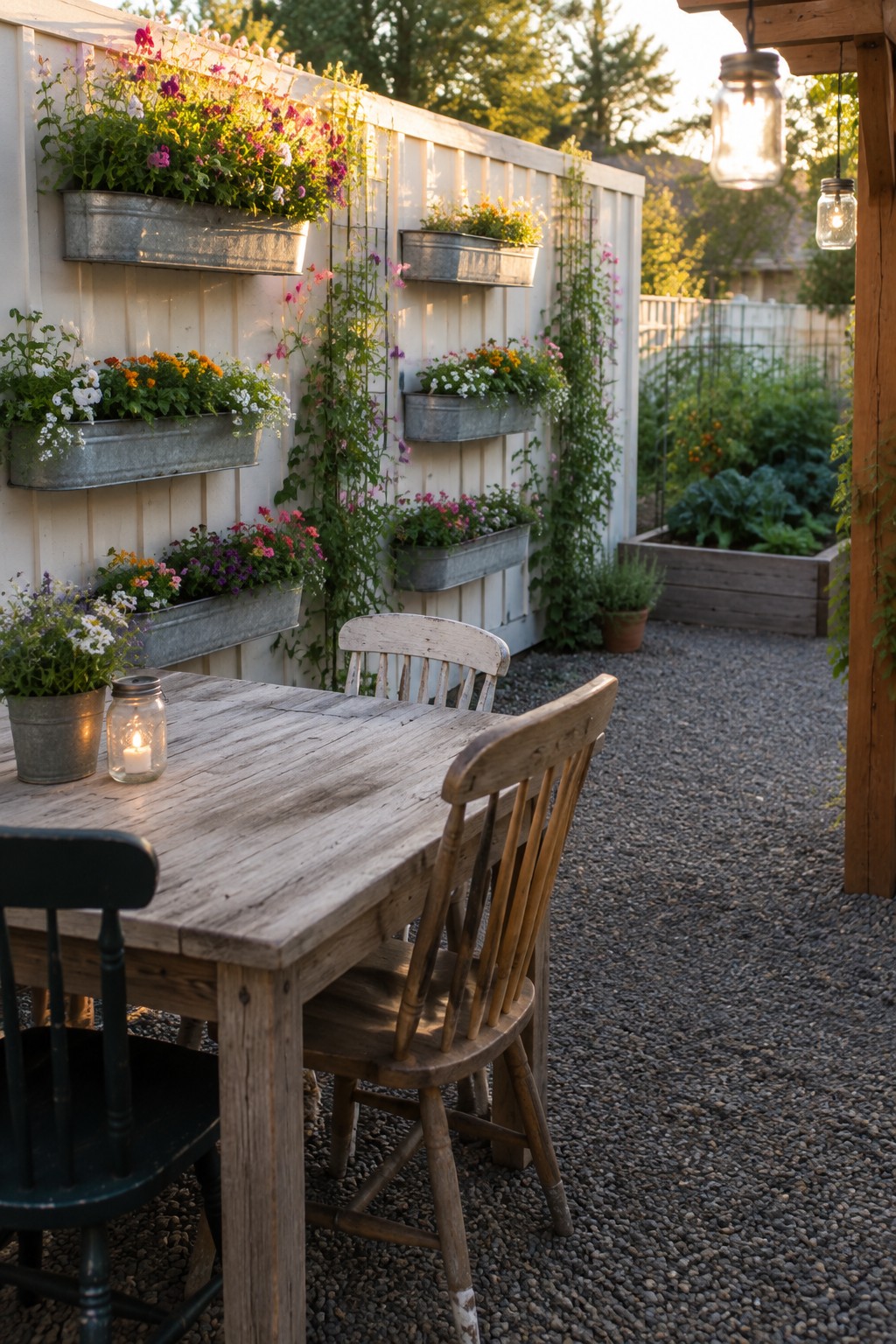
Mounting a few metal troughs right onto a fence gives you vertical color without losing ground space. The containers sit at staggered heights, which lets vines trail down while flowers fill in the gaps. It keeps the look simple and makes good use of a plain wall or boundary.
This approach works best along gravel patios or narrow yards where raised beds would crowd the area. Choose durable galvanized troughs and check that your fence can hold the weight once they are filled. Water often, since containers dry out faster than garden soil.
Vertical Planting With Recycled Pallets
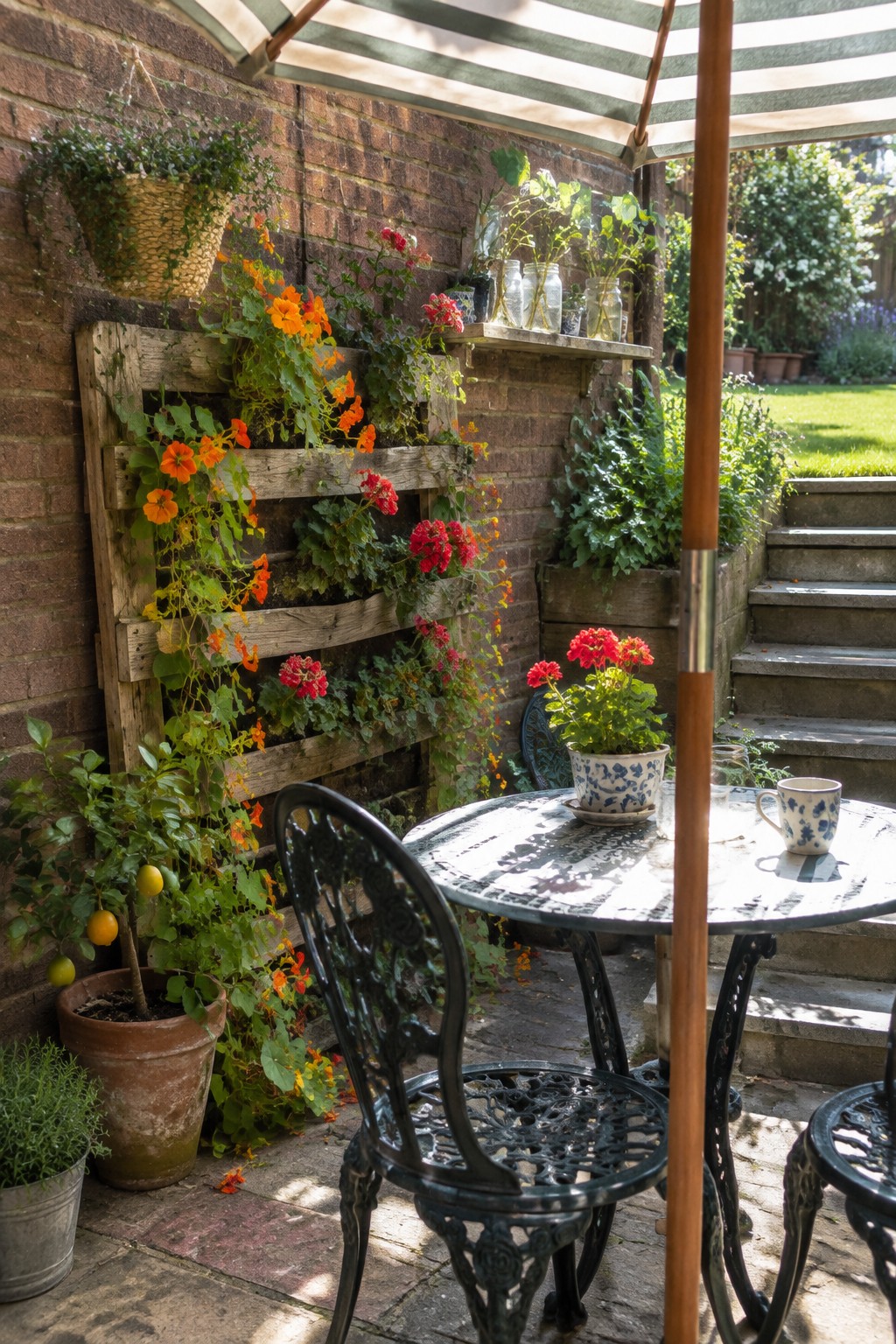
A wooden pallet mounted on a wall turns a flat surface into useful growing space. It works well on brick because the wood adds texture and the open slats let plants spill forward without crowding the ground.
This approach suits small patios or narrow side yards where floor room is limited. Secure the pallet to the wall, line the back, add soil between the slats, and choose trailing flowers or herbs that can handle the sun exposure.
Metal Walls for Vertical Planting

A perforated metal wall with attached planters gives you a clean way to add lots of greenery without losing patio space. The rusted finish blends into the background while the plants soften the hard surface and create a living screen that feels intentional rather than crowded.
This approach works best along the edge of a paved seating area or narrow side yard where floor space is limited. Keep the lower bed simple with low ground cover so the wall stays the main feature, and choose plants that handle the same light conditions as the rest of your outdoor space.
Using Wall Buckets For Vertical Planting
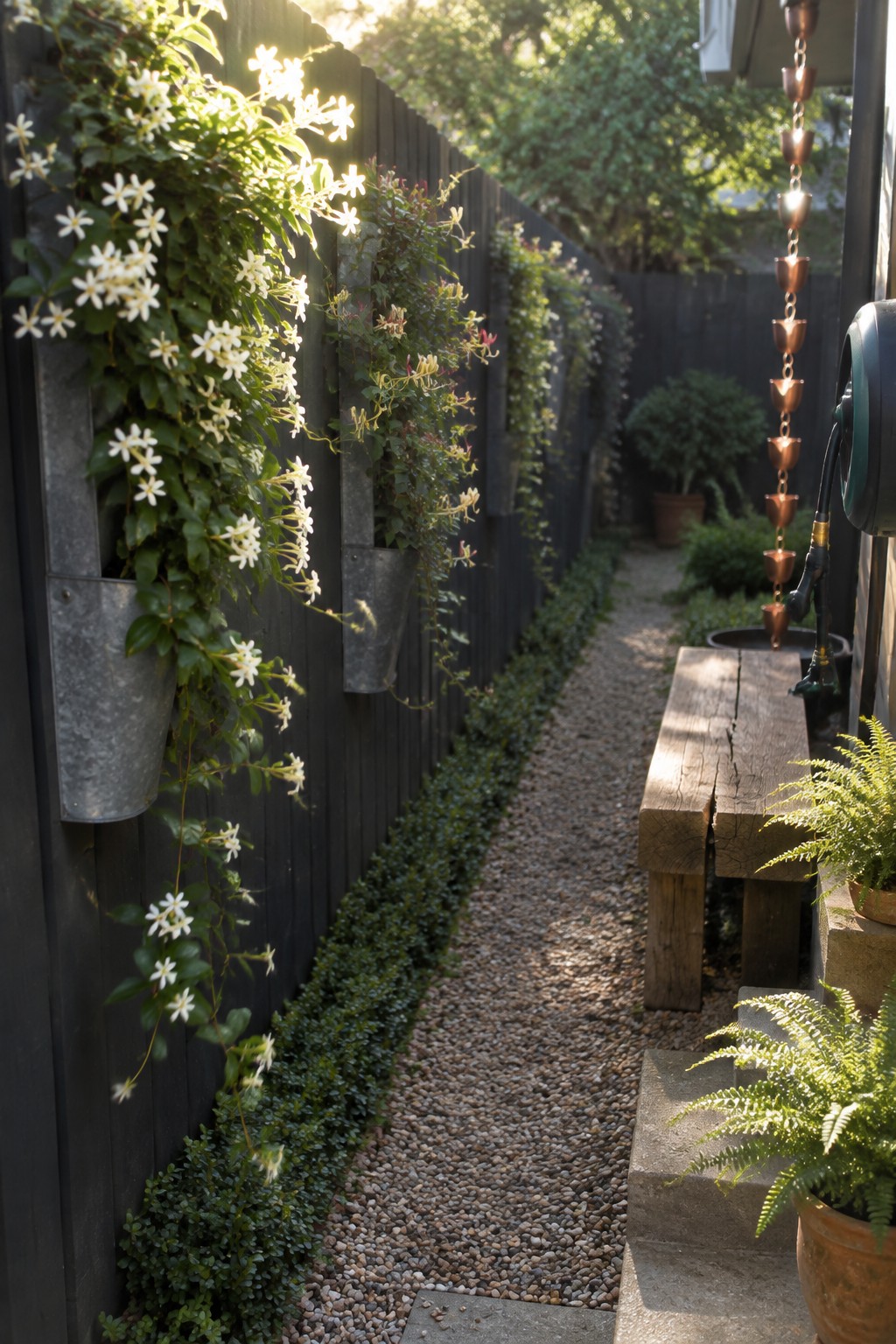
Mounting simple metal buckets on a fence gives you a quick way to add height and greenery without taking up ground space. This works especially well in narrow side yards or along paths where beds would crowd the walkway. The containers let vines trail down naturally and create a living screen that softens the fence line.
It suits homes with limited planting room and dark fences that need some contrast. Space the buckets evenly, choose trailing plants that handle sun or shade as needed, and water them regularly since the soil dries out faster than ground beds.
Vertical Planting On Brick Walls
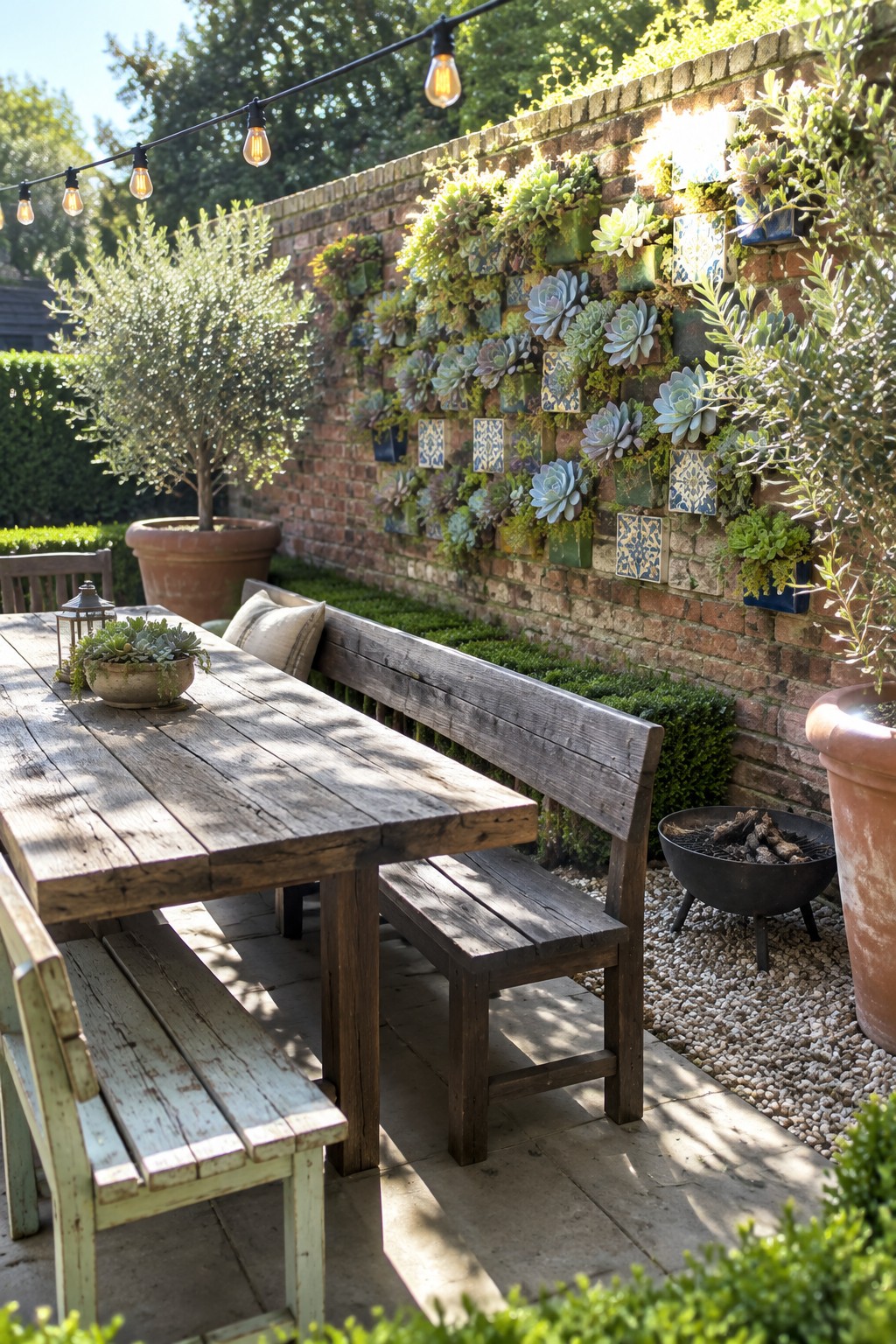
Mounting a vertical planting system straight onto a brick wall gives you a lot of greenery without losing floor space for tables or seating. It turns a flat surface into the main feature and works especially well in smaller yards or patios where every inch counts.
This setup suits homes with sunny walls and older brickwork that can handle a few fixings. Use a mix of hardy plants like succulents and check drainage so water does not run down the wall. A few decorative tiles mixed in helps break up the look if the greenery gets too dense.
Vertical Planting Systems For Green Screening
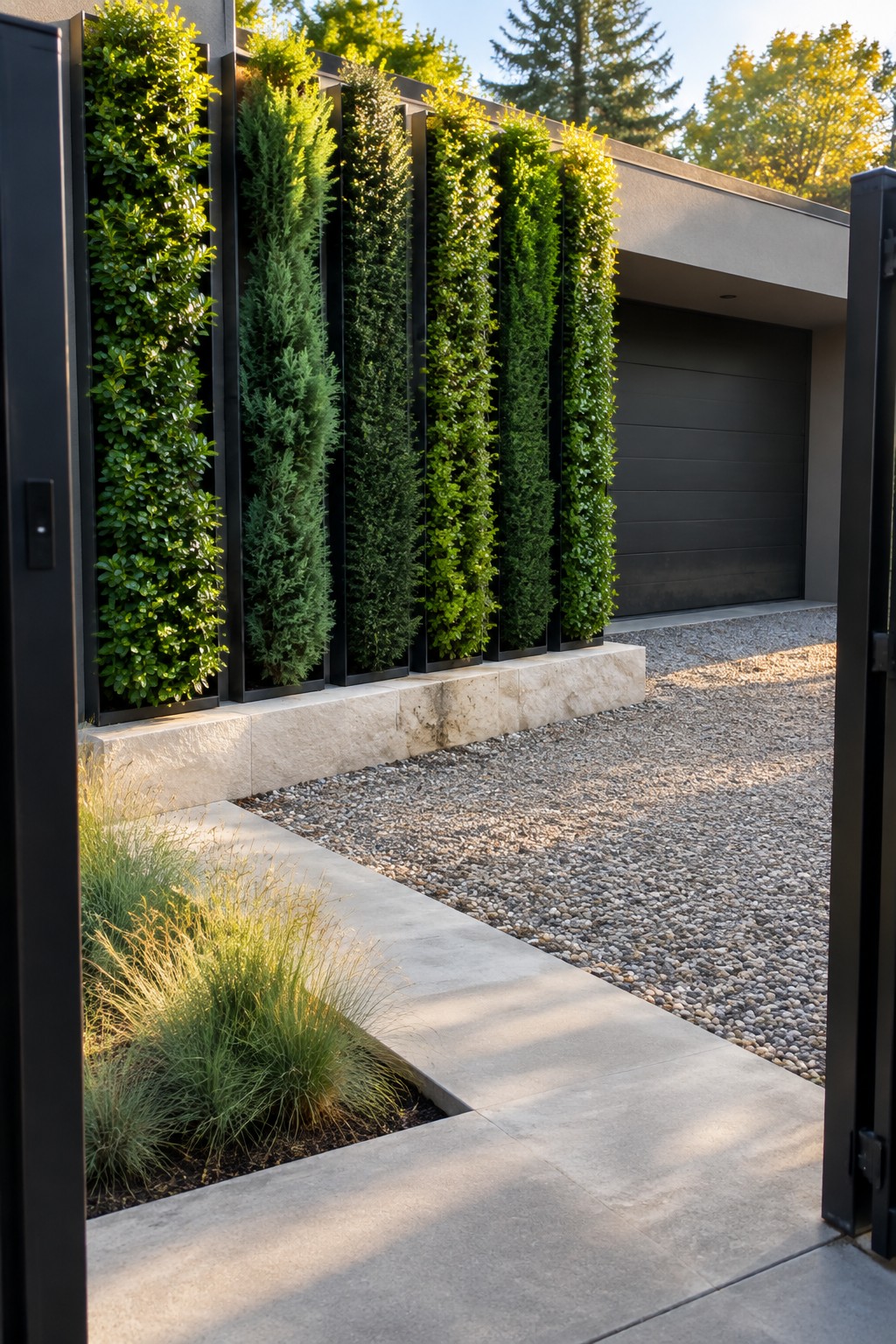
Vertical planting systems give you a way to add a full green screen without eating up ground space. The narrow framed planters let plants grow upward in a tight row, which works especially well along driveways or property edges where a regular hedge would crowd the area.
This setup suits modern homes that already have clean lines and hard surfaces. Set the planters on a low concrete base so they stay level and drain properly. Make sure the soil depth in each unit is enough for the plants you choose, or they can dry out quickly in summer.
Vertical Planting Systems For Outdoor Walls
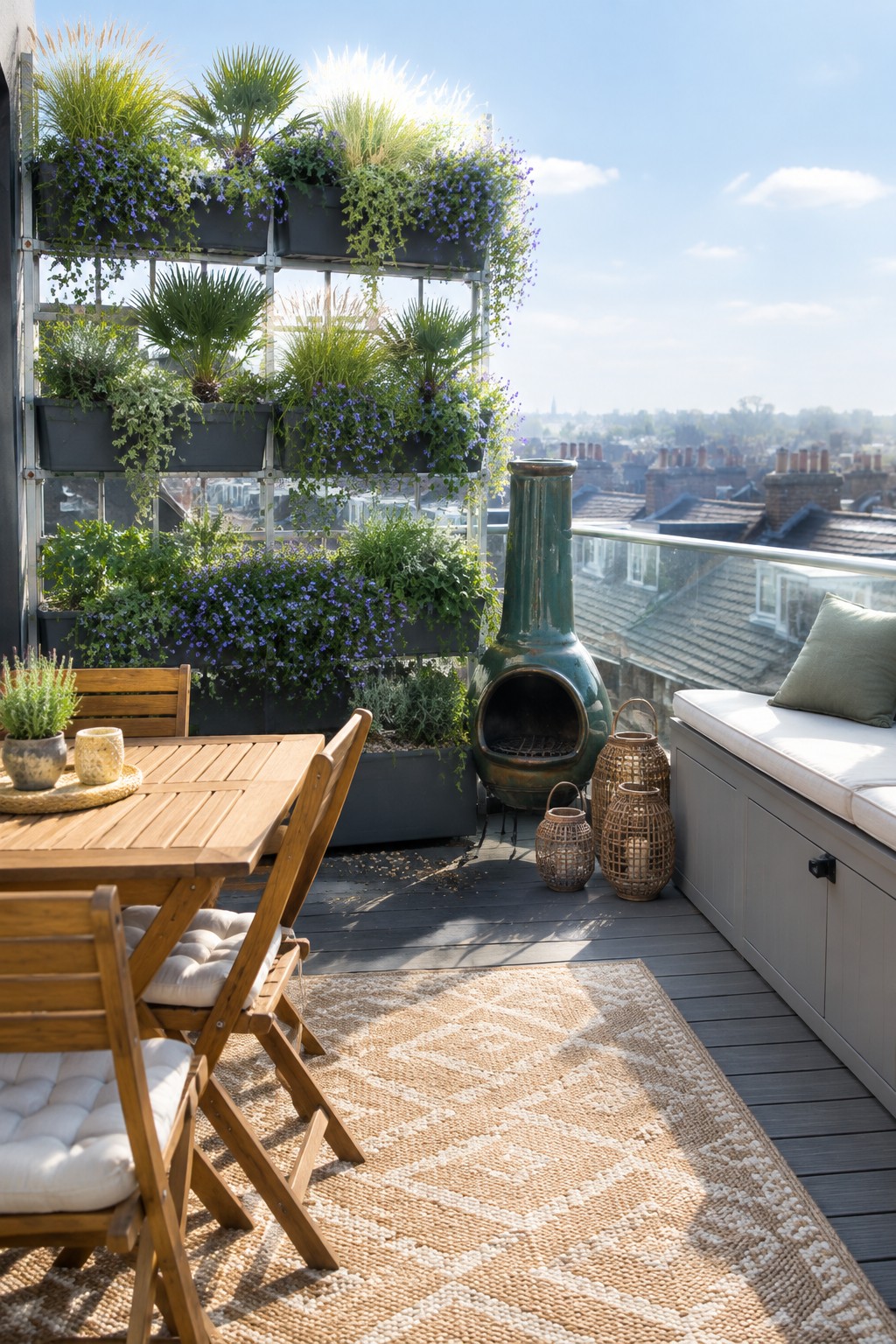
A vertical planting system like this one turns a plain wall into a living garden without using up floor space. The stacked planters hold a mix of flowers and greenery that softens the edge of the terrace while still leaving room for seating and a fire feature.
This setup works especially well on rooftops and balconies in urban homes where ground space is tight. Choose modular units that can be attached to a railing or wall, pick plants that handle sun and wind, and water regularly to keep everything thriving through the seasons.
Wall-Mounted Planters For Vertical Gardens
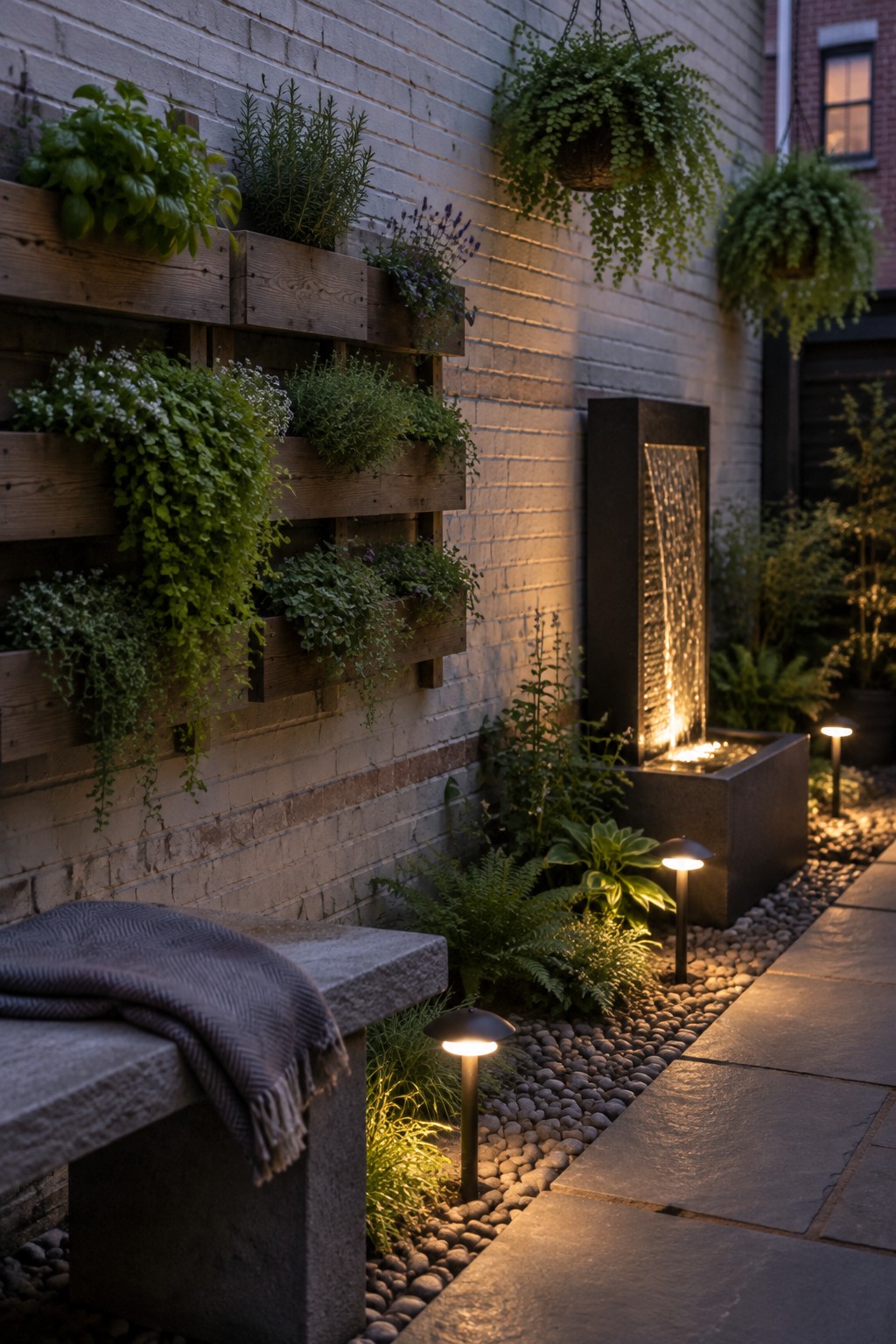
Mounting planters straight onto a wall gives you a full garden without using up ground space. This works especially well in smaller yards or along side walls where beds would crowd the area. The wooden boxes let plants spill down naturally while keeping everything off the path.
This setup suits brick or concrete walls that get decent light. Start with a few rows of boxes at different heights and fill them with herbs or trailing plants that do not need constant watering. Just check that the wall can handle the weight once the soil is in.
Lattice Trellises On Retaining Walls
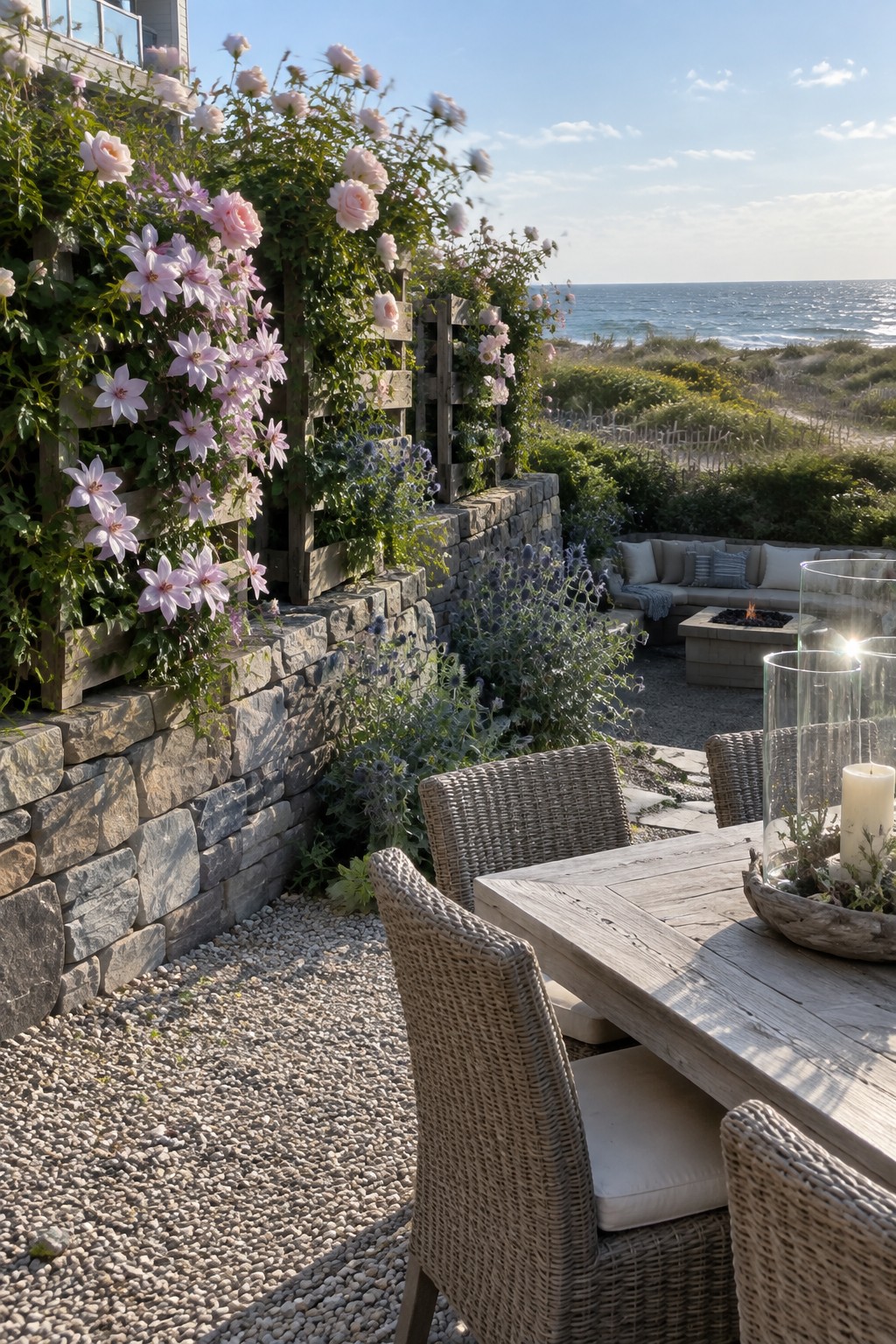
Fixing simple wooden lattice panels to a stone wall gives climbing plants a clear path upward without eating into ground space. The structure turns a basic retaining wall into a vertical garden that feels full and layered even in a narrow strip of soil.
This approach suits homes with slopes or tight yards where you need height but cannot add wide beds. Use weather-resistant wood, space the panels evenly, and pick strong climbers that suit your local conditions so the plants fill in without constant fuss.
Raised Crates For Layered Borders
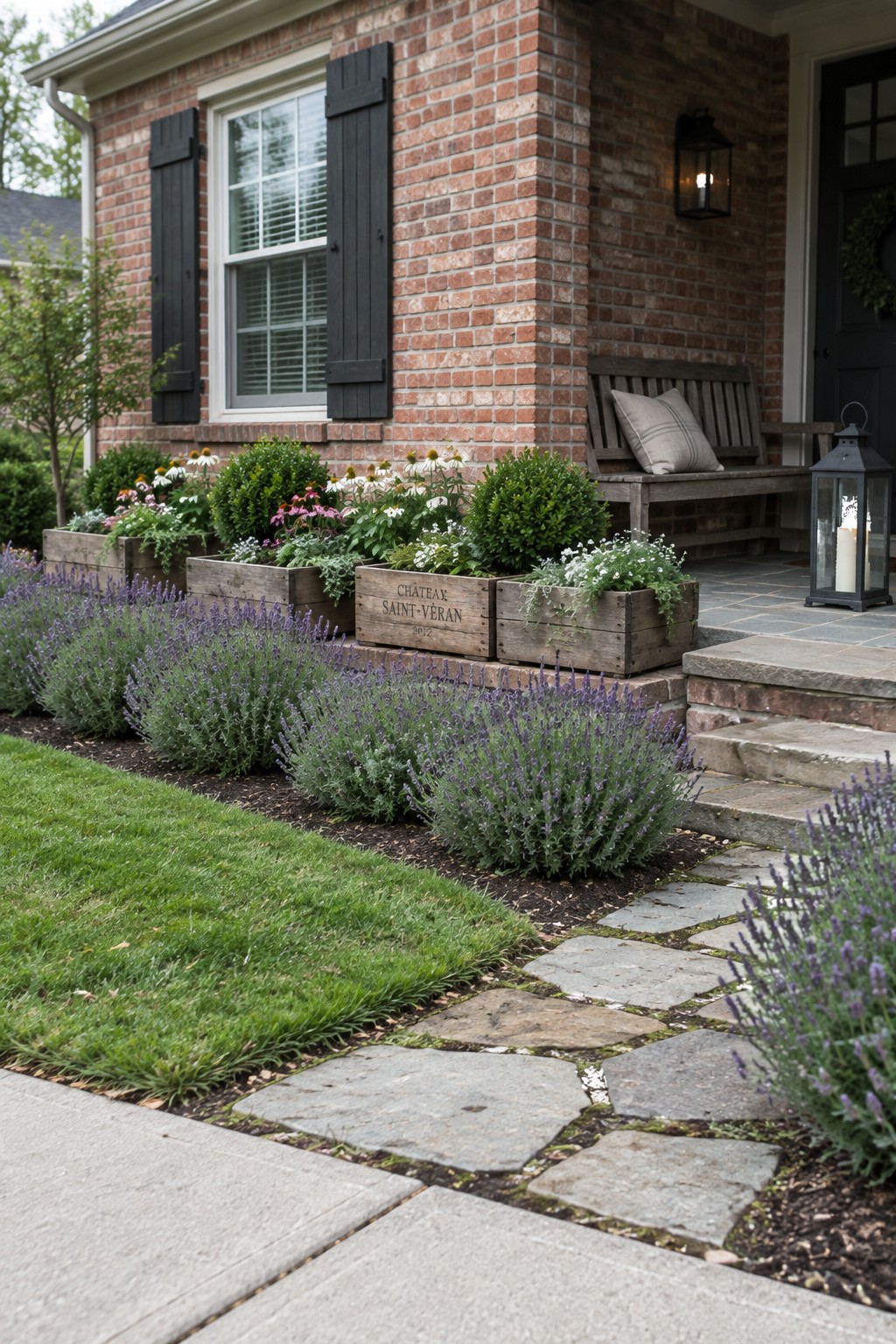
Wooden crates make an easy way to lift plants off the ground and create a bit of height along a foundation. They let you mix taller shrubs with spilling flowers without digging deep beds or adding permanent walls.
This setup works best in front yards or along house edges where the soil is thin. Place the crates in a loose row, fill them with compact plants, and keep lower growing options like lavender right in front so the whole border stays full but simple to tend.
Vertical Planting with Clay Pipes
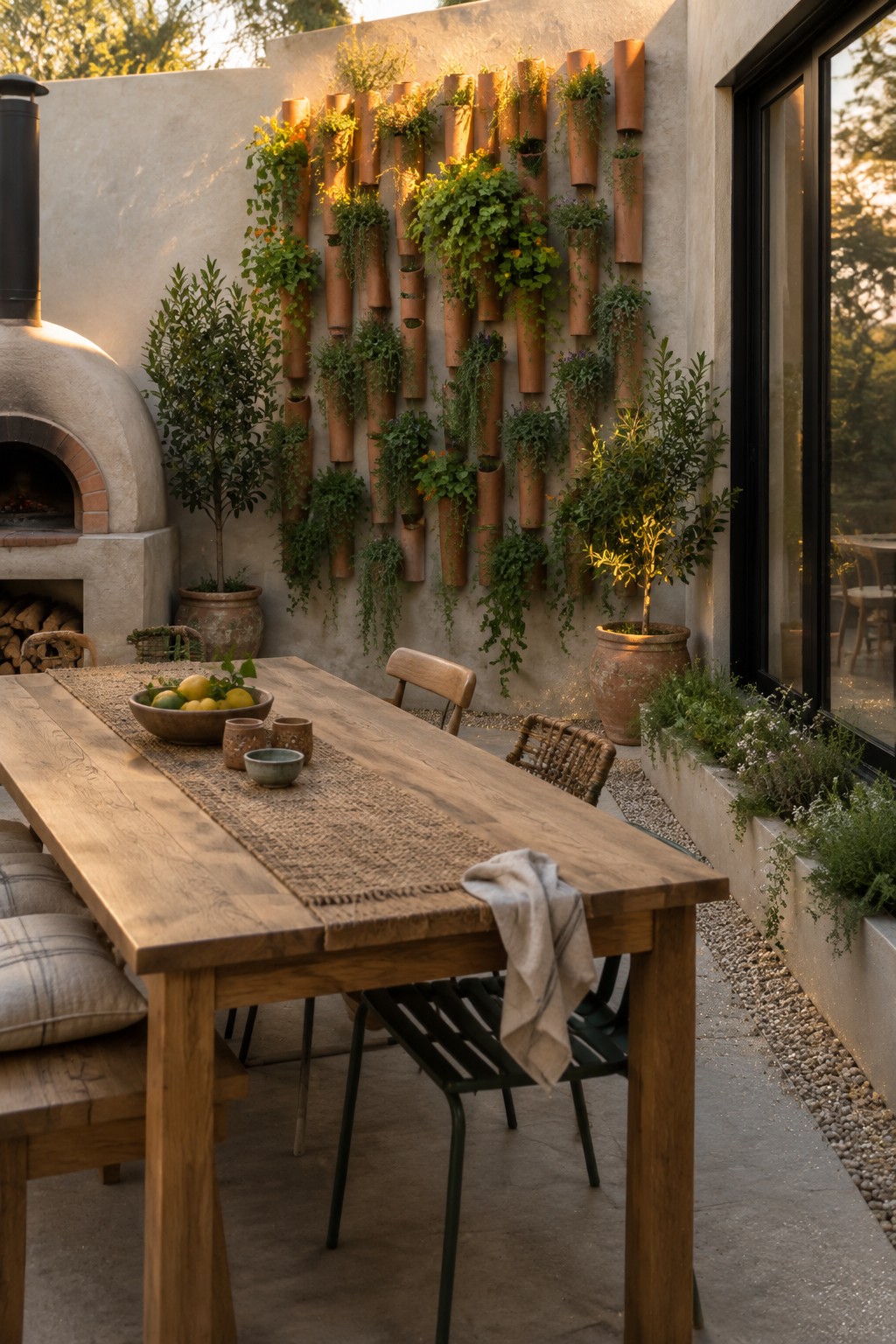
Mounting clay pipes on a wall gives you a simple way to add lots of plants without using up floor space. The pipes create pockets for soil and let vines and herbs hang down naturally, which works well on a plain wall that needs some life.
This setup suits a patio or courtyard where you want greenery close to a seating area. Group the pipes at different heights and choose plants that trail or stay compact so the wall stays full without much trimming.
Frequently Asked Questions
Q: How do I keep the plants watered without constant checking? A: Set up a simple drip line that runs along the top of the system. Run it on a timer for ten minutes each morning. This keeps the soil moist without soaking the lower rows.
Q: Which plants stay healthy in a vertical setup year after year? A: Start with tough evergreens such as ivy or small ferns. They handle the shallow soil and limited root space well. Swap in seasonal flowers only in the spots that get the most light.
Q: What happens if the wall sits in full afternoon sun? A: Pick heat-tolerant herbs or succulents for those sections. Water them a bit more often during the hottest weeks. The extra drainage in most vertical panels helps stop root rot.
Q: Can I move the system later if I change the layout? A: Build it in smaller panels that bolt together. Lift one section at a time when you want to rearrange. This keeps the plants in place without tearing everything down.
