


I have always noticed that roof gardens tend to feel more like real living spaces when the planters sit at a height that makes watering and weeding feel manageable instead of a chore.
Many setups look promising on paper yet end up awkward once you spend time up there because the soil depth and edge details were not thought through.
Raised beds change everything.
They help keep the planting contained while giving you clear spots to add chairs or a small table without crowding the walking areas.
I usually test ideas that let the planters also serve as low barriers first since those choices tend to shape how the whole roof actually gets used day to day.
Raised Planters That Zone The Terrace

Raised planters give a roof garden clear structure without closing it in. They mark off a lounge area on one side and leave room for a path and dining spot on the other, so the space feels organized instead of wide open.
Place a long planter along the back of the seating to separate it from the walkway, then keep the far end open toward the table. This works best on rooftops where you want planting to do the dividing rather than screens or railings.
Raised Planters For Roof Terraces

Large pots and raised planters make it easy to bring a real garden up onto a roof without building permanent beds. They add height, let you move things around as needed, and keep the planting simple even when the space sits on top of a house.
This setup works best on terraces that get full sun and have a solid floor. Group the pots in clusters of different sizes along the edges or steps so the plants create a natural screen and still leave room for a table and chairs.
Raised Planters That Frame A Seating Area
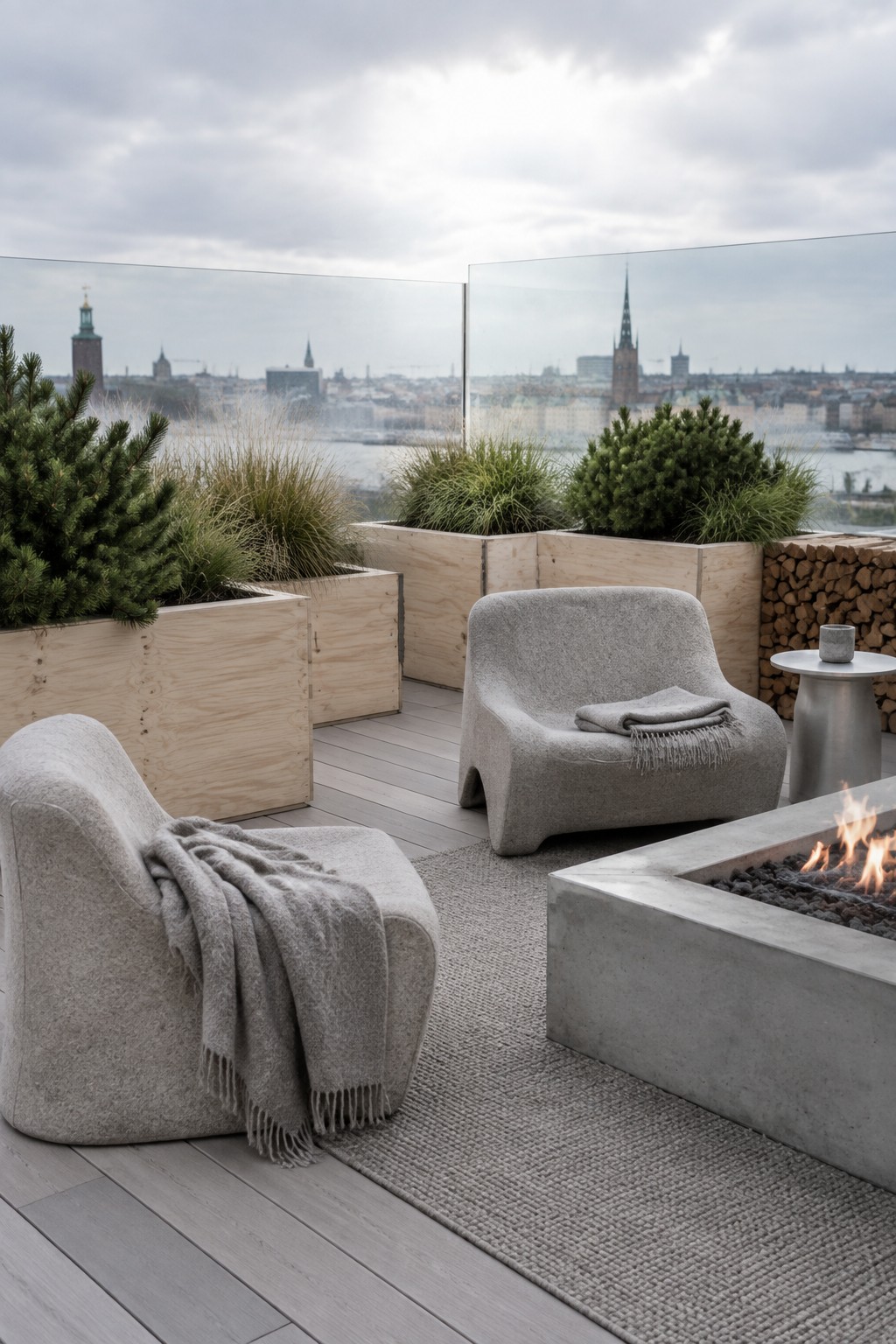
Raised planters made from simple wood boxes can turn an open roof terrace into a more defined lounge space. They hold the plants at seating height and create a soft green border that feels more enclosed without blocking the view completely.
This setup works best on rooftops where you already have a deck surface and want to add planting without building permanent beds. Keep the boxes sturdy, line them well for drainage, and choose plants that tolerate wind and sun so the whole arrangement stays low maintenance over time.
Raised Planters On Rooftop Decks

Large metal tubs work well for roof gardens because they hold plenty of soil and let you move plants around as needed. They create real height and volume without requiring built-in beds that might not suit every deck structure.
This approach suits flat rooftops or terraces where weight and drainage matter. Place them in groups to frame seating areas or line a path, and choose sturdy containers that can handle weather. Keep an eye on watering since exposed spots dry out faster than ground level beds.
Raised Planters Organize A Roof Garden
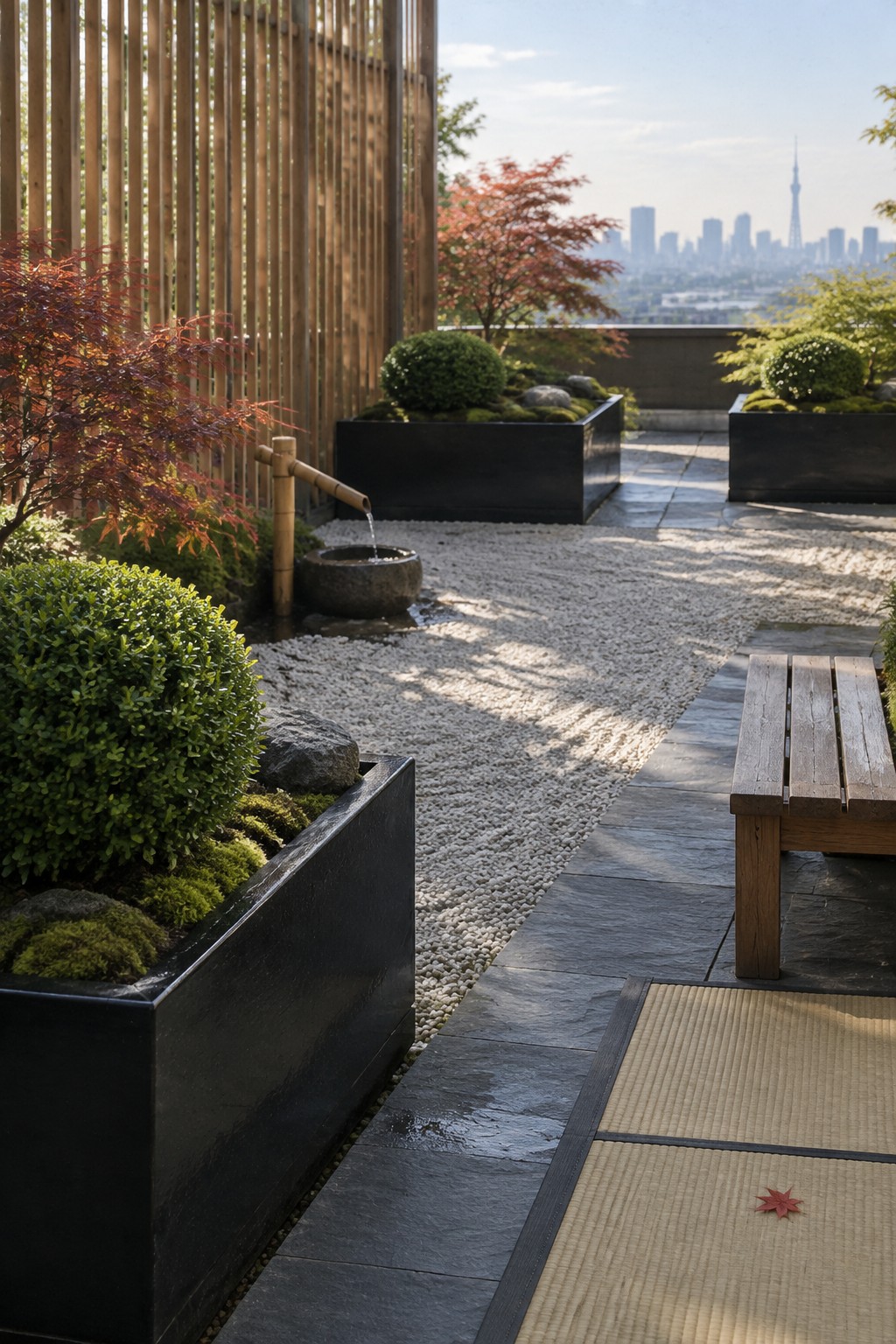
Raised planters give a roof garden a clear structure without a lot of extra building. They let you set the beds where you need them and keep the walking areas open and simple at the same time.
This setup works well on rooftops because the boxes sit directly on the surface and still look finished. Pair them with gravel paths so the whole space stays easy to walk through and does not feel crowded.
Frame Your Roof Terrace with Raised Planters
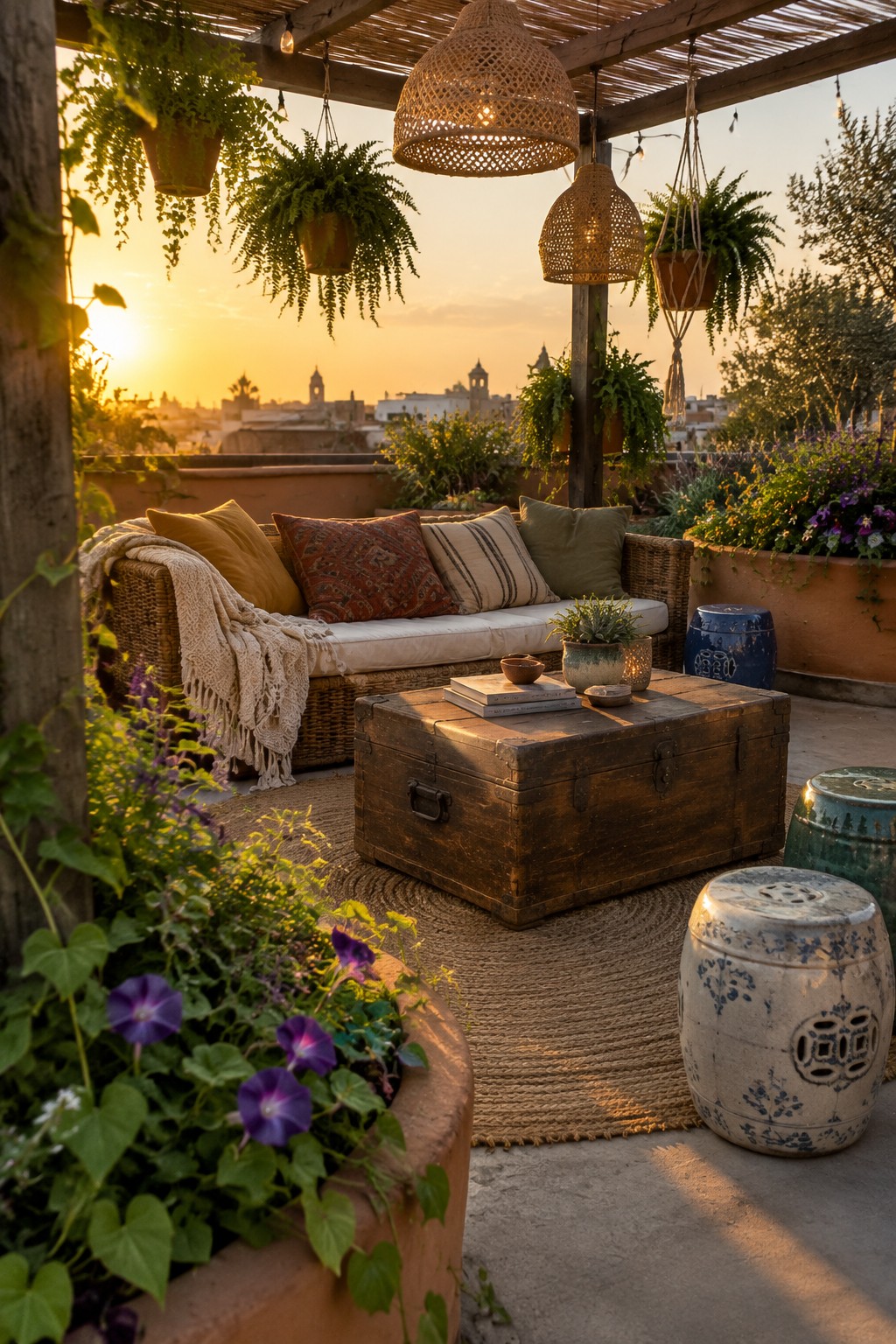
Raised planters give a roof garden a finished edge without taking up floor space for seating. They hold enough soil for bigger plants and flowers, so the terrace feels like a real garden instead of just furniture set on a hard surface.
This works best on flat roofs or wide balconies where you want greenery close to the sitting area. Keep the planters at a consistent height along the outer walls and fill them with a mix of taller shrubs and trailing plants so the space feels sheltered but still open to the view.
Raised Planters That Define the Zones

Raised planters give a rooftop terrace a clear layout without adding walls or railings that block the view. They separate the seating area from the cooking zone while keeping everything connected and open.
Place them along the edges or between different functions to create natural boundaries and bring greenery closer to where people sit. This works especially well on city rooftops where space is limited and you want the planting to feel built in rather than added later.
Raised Planters Around Patio Seating

Raised planters work well when you want to bring plants right up to the seating without losing floor space. They create a clear edge around the lounge area while keeping everything at a usable height for both sitting and gardening. The white wood boxes in this setup blend with the decking and give the space a finished look that still feels relaxed.
This approach suits roof terraces or balconies where you need structure but still want room to move around the chairs and fire pit. Keep the planters a consistent height and material so they feel like part of the furniture rather than separate garden beds.
Raised Planters Let You Add Trees to a Rooftop Deck
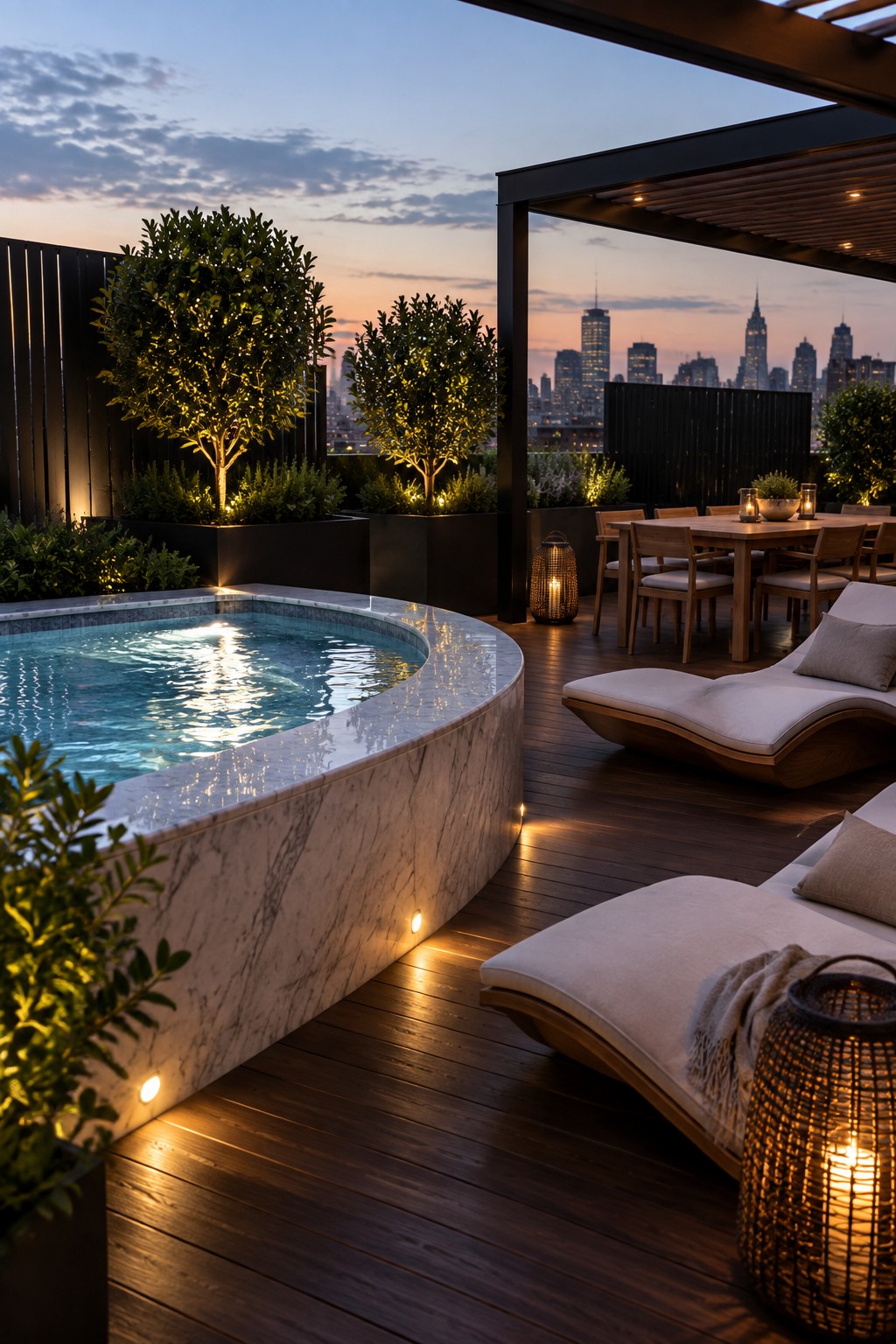
Raised planters solve a common rooftop problem by giving trees and taller shrubs a place to grow without cutting into the deck surface. They keep the planting contained while still letting you bring in real height and some softness to what would otherwise be a flat, hard area.
This works especially well on urban roofs where you want a bit of screening or shade near seating zones. Check the load capacity of the structure first and make sure the planters have solid drainage so water does not pool on the roof.
Raised Planters Keep Roof Gardens Practical

Raised planters solve a common problem on rooftops by keeping soil contained and making it easier to grow vegetables without adding too much weight in one spot. They also help protect the roof surface and let you move things around if needed.
These work well on flat roofs that already have good drainage. Line them up along the sides to leave open space in the center for a table and a couple of chairs.
Raised Planters Border the Pool

Raised planters made from light stone give a roof garden pool some clear edges and structure. They keep the planting in bounds while adding height that makes the whole terrace feel more finished. This works especially well on rooftops where open space can otherwise look flat.
Build the planters at the same height as the pool coping so everything reads as one level. Fill them with tough shrubs and evergreens that stand up to wind and full sun. The setup suits urban rooftops that need both greenery and a usable swimming area.
Raised Planters For Roof Gardens
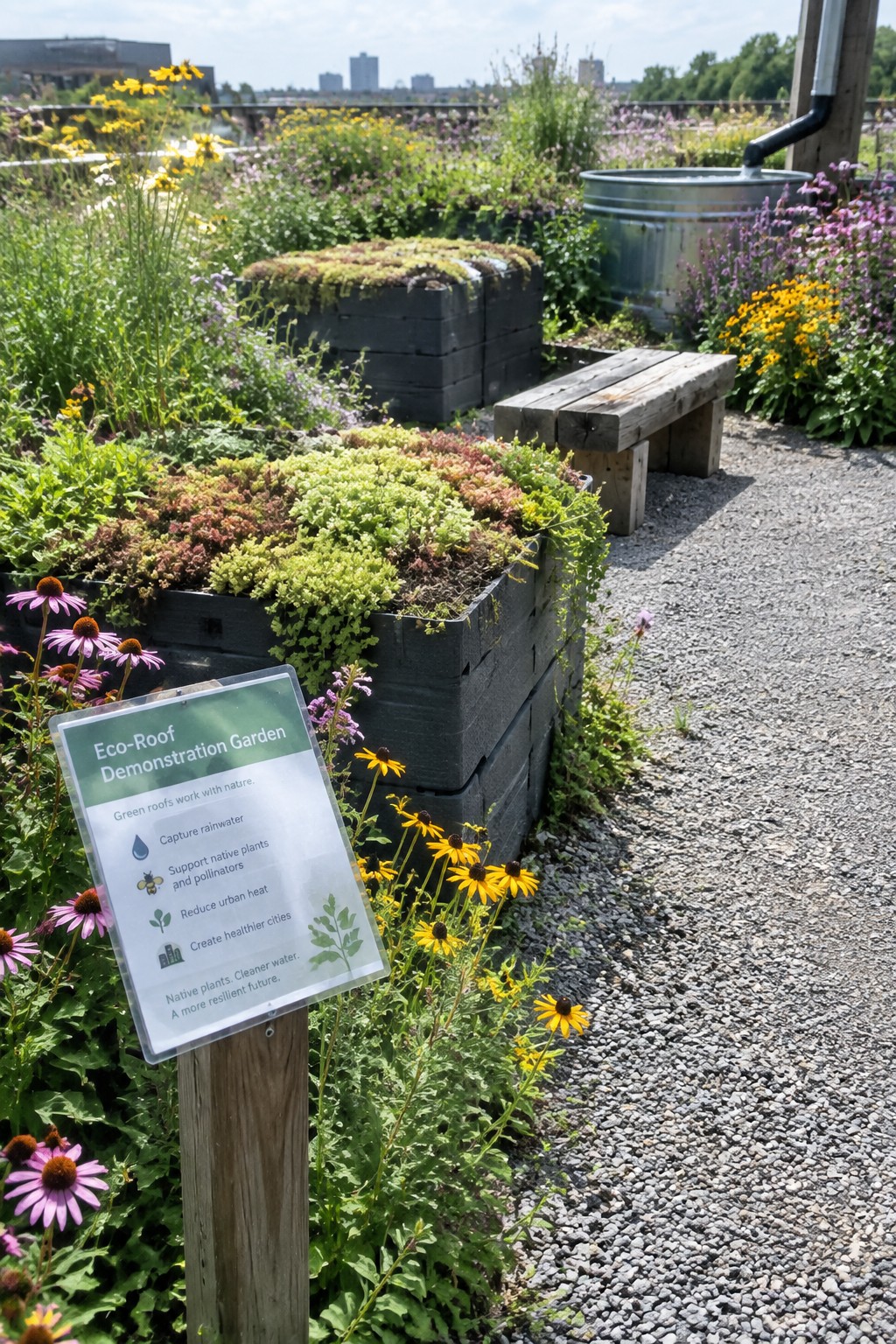
Raised planters give you a practical way to grow a garden on a roof without worrying about soil spreading or drainage issues. They also make it easier to control what grows where, especially when space is limited and you want to keep things organized.
You can build them from basic wooden crates or similar containers, which works well on flat urban roofs. Just check the weight limits first and place them where they get good sun. This approach fits homes that want some greenery without a full rooftop overhaul.
Raised Planters Around a Rooftop Hot Tub
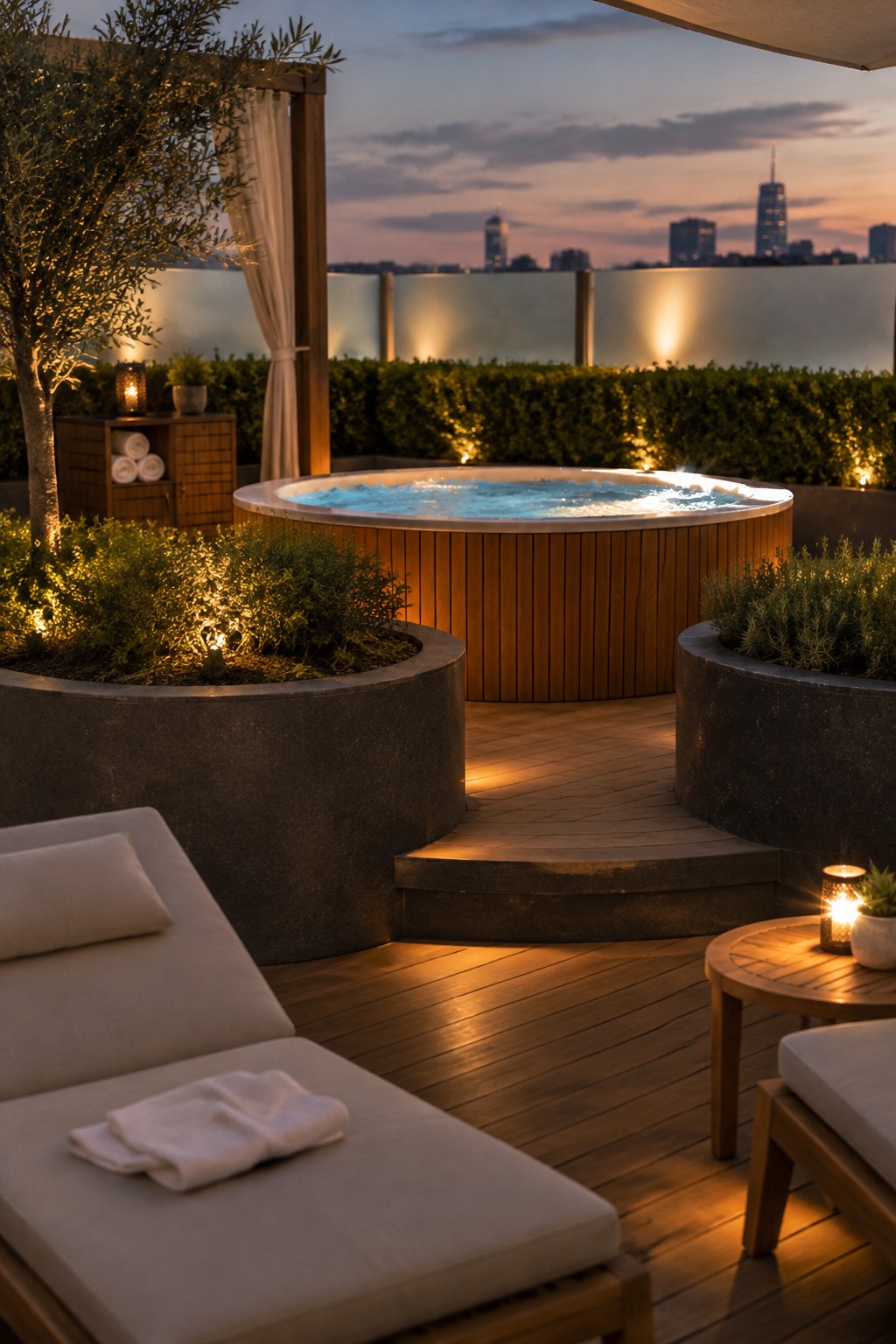
Raised planters can turn an open rooftop deck into something that feels more settled and private. Placing them close to the hot tub creates a soft border of greenery that frames the space without cutting it off from the view.
This setup works best on flat roofs where weight and drainage matter. Keep the planters large enough for shrubs or small trees, and use them to mark off the tub and seating zone so the whole area feels like a distinct garden room rather than just open decking.
Raised Planters Along the Edges
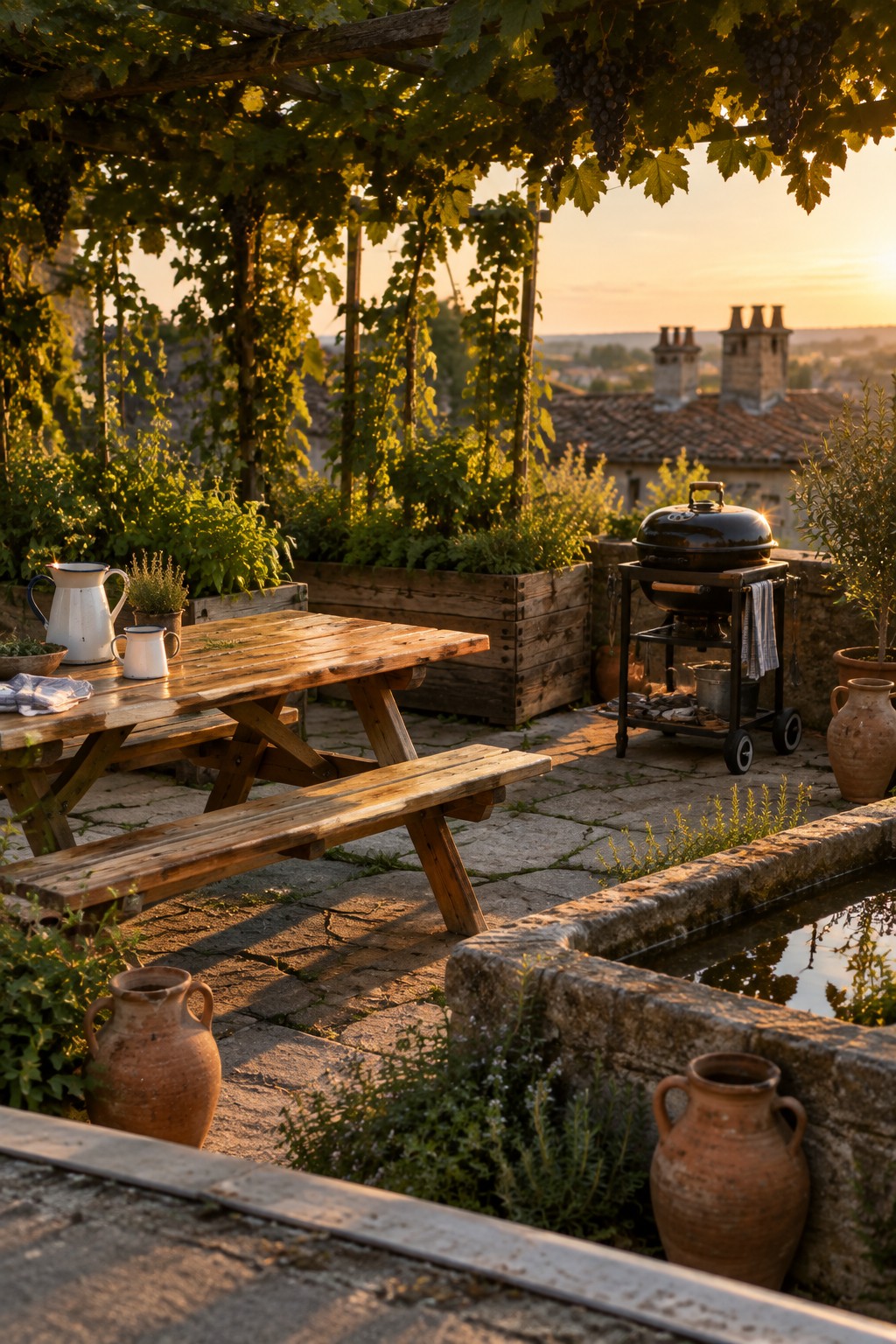
Raised planters give a roof garden clear boundaries without making the space feel boxed in. They add height for climbing plants and keep soil in one place so the rest of the terrace stays open for tables and chairs.
Wood boxes like the ones shown here work well because they are simple to build and sit right against a low wall or railing. Use them on any flat roof where you want herbs or vines close to the seating area but still need room to walk around.
Raised Planters That Shape Roof Terraces

Raised planters give a roof garden real structure without needing tall walls or heavy construction. They lift the plants up so the greenery feels more present around the seating, and they keep the planting area separate from the walking and sitting zones. The gravel and pavers then fill in the rest of the space, making it easy to move around the furniture.
This setup works well on rooftops where weight and drainage matter. Place the planters along the edges or between seating groups so they act as soft dividers. Choose simple shapes and sturdy materials that can handle weather, and keep the plantings fairly low so they do not block views or create too much wind resistance.
Raised Stone Planters Define Roof Deck Zones
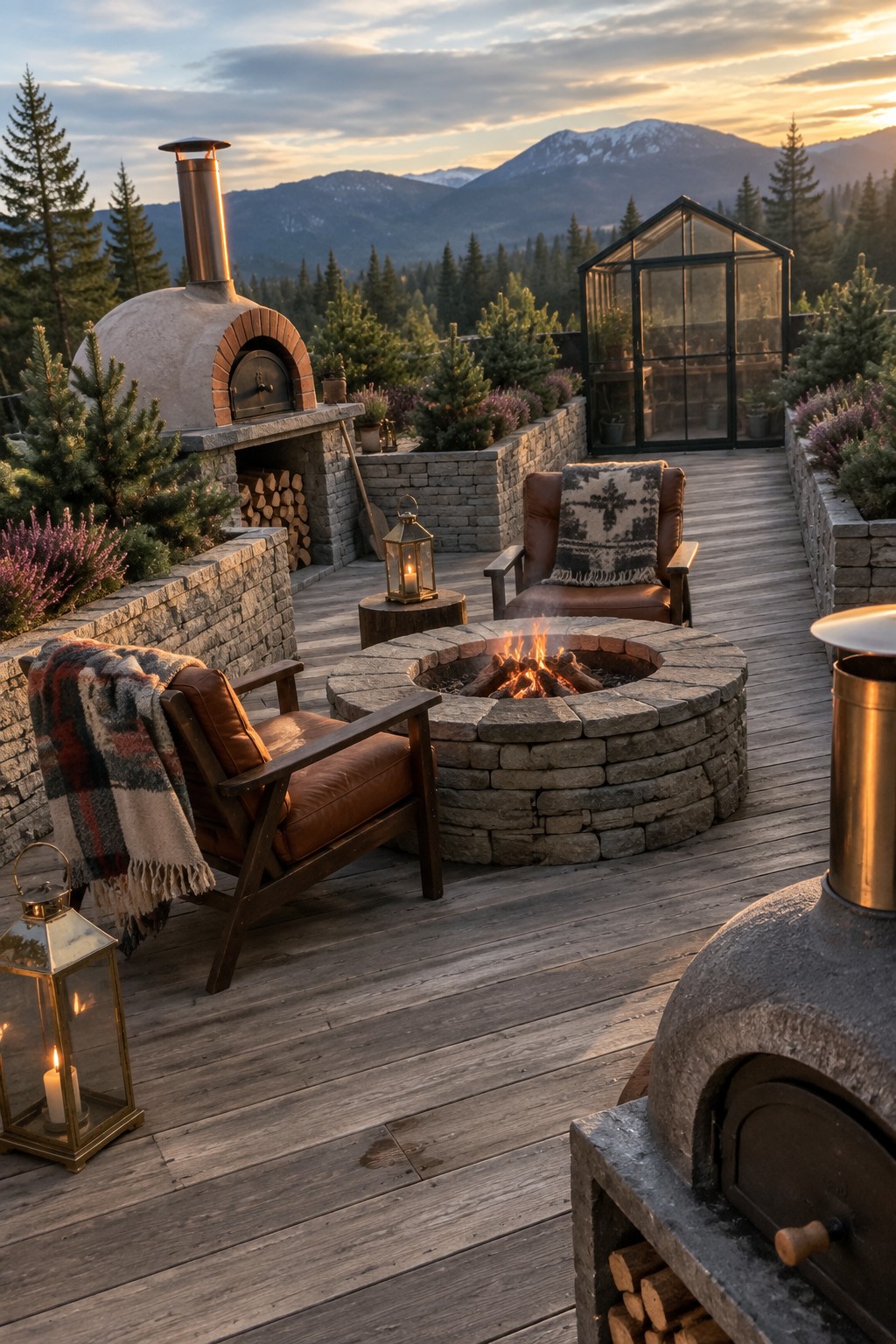
Raised stone planters give a roof deck clear edges without closing it in. They hold soil for planting while keeping the seating area contained and easy to use, which works especially well when the space sits high up.
Place the fire pit and chairs inside the lines the planters create. This layout fits homes with open views or strong winds, as long as the planters are built solid and the plants can handle the exposure.
Raised Planters That Define Play Zones

Raised planters work well on rooftops because they give structure to the space without needing permanent walls. They keep plants and soil contained while also marking off areas for other uses like play. In this setup the planters sit right beside a large raised sandbox, so the garden and activity spots stay separate but connected.
This approach suits flat roofs on townhouses or apartment buildings where families want both greenery and room for kids. Use sturdy materials that handle wind and sun, and keep the planters at a height that is easy to reach for watering. Avoid overcrowding the roof with too many large containers at once.
Circular Raised Planters for Roof Gardens
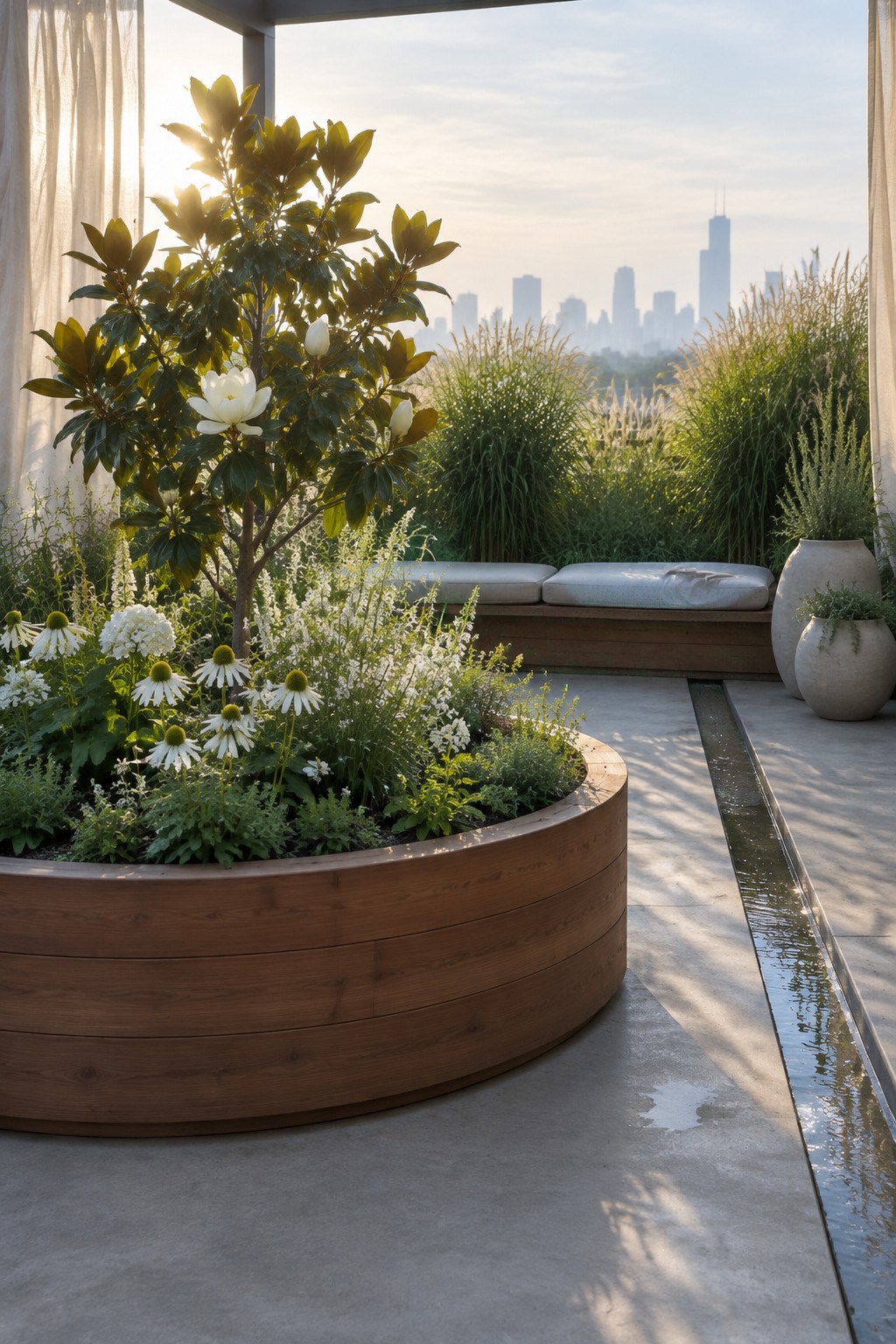
A big round planter like this gives a roof garden real structure without needing a full built bed. The wood holds up well outdoors and lets you grow larger plants or even a small tree in one contained spot, which keeps things simple when roof weight and drainage are concerns.
This works especially well on flat urban terraces where you want a clear planting zone but still need room to walk around. Keep the planter at least a foot or two deep so roots have space, and pair it with a simple water edge if you like the sound. Just check the load capacity of your roof first.
Raised Planters Keep A Roof Garden Organized
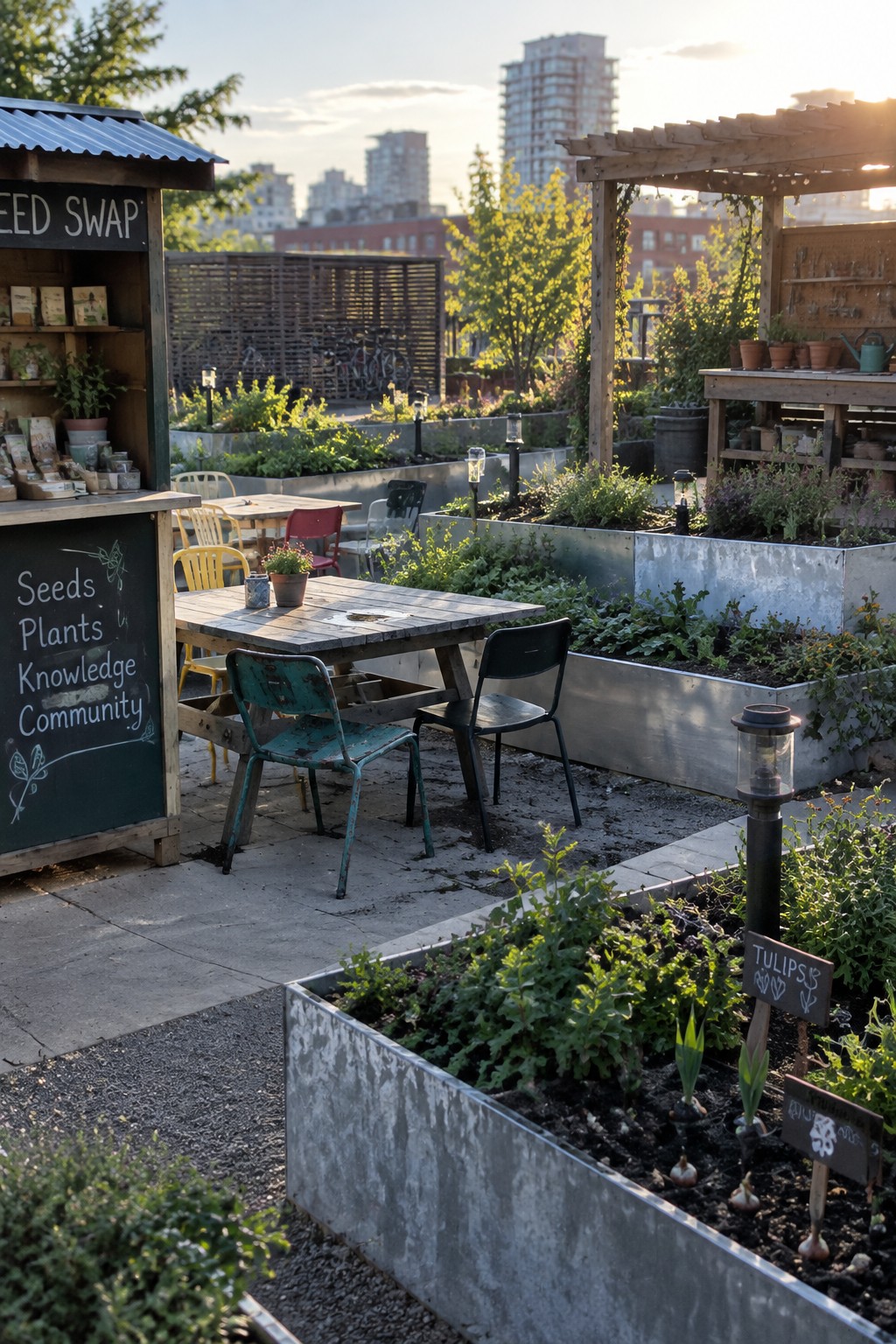
Raised planters turn a rooftop into a workable garden by giving each bed a clear edge and a set depth of soil. They keep plants from spreading where they are not wanted and make it easier to reach everything without bending too far.
Metal or concrete boxes work well in most city settings because they are sturdy and do not need much upkeep. Place them in rows or clusters, add simple labels for what is growing, and leave space between them for walking and seating. Just check that the roof can carry the extra weight before you start.
Frequently Asked Questions
Q: Will these raised planters overload my roof?
A: Talk to a contractor about your roof’s capacity before building anything. They measure the load and suggest lighter options if needed. Many people add planters safely this way.
Q: How do I stop strong winds from damaging the plants?
A: Position taller planters against walls or railings for shelter. Pick compact varieties that bend instead of breaking.
Q: Do I need special soil for roof gardens?
A: Mix in plenty of perlite or compost to keep it light and draining well. Refresh the mix each spring for healthy growth.
