

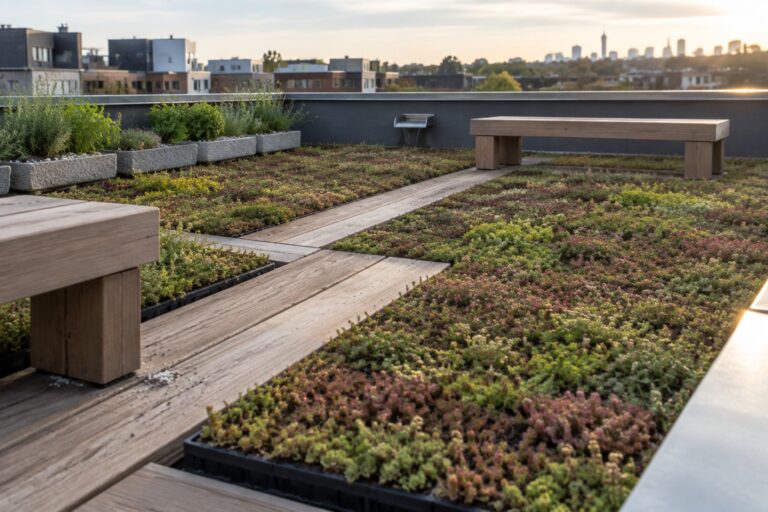
When I think about adding plants to a roof, the first thing that comes to mind is how quickly poor drainage can turn a promising setup into a problem.
Lightweight growing media helps keep the load manageable without sacrificing the soil depth plants actually need.
Drainage comes first.
I have found that testing a few media blends on a small section reveals what works before committing to the full area.
Over time these choices shape whether the space stays usable or starts to need constant repairs.
Gravel Under Pots For Roof Garden Drainage
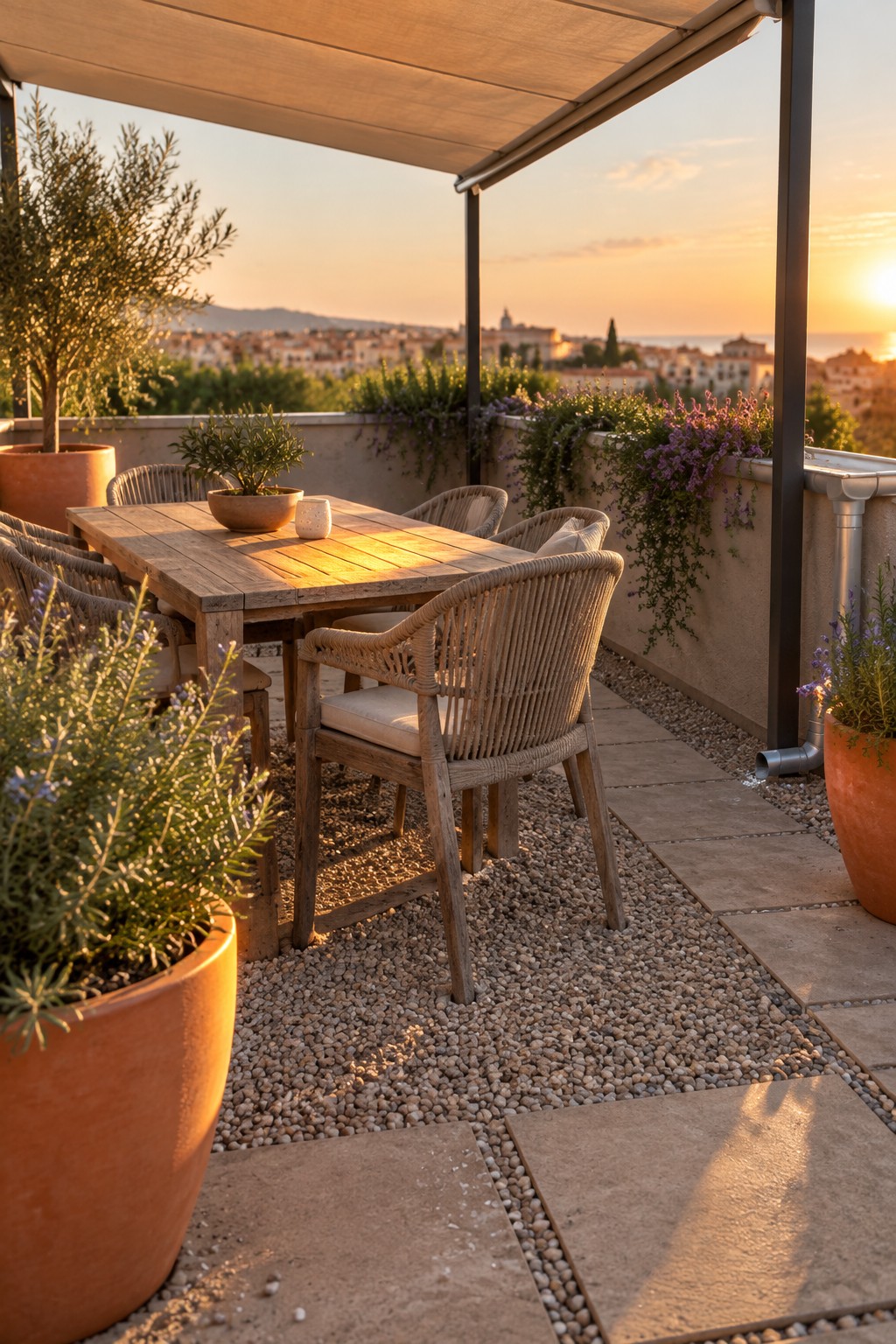
Many roof terraces use gravel as a base layer because it handles water well without adding much weight. Pots placed on top keep the soil contained and make it easy to move things around if drainage needs adjusting later.
This setup works best on flat roofs or upper balconies where you want plants without building heavy raised beds. Terracotta pots help with breathability too, but check that your structure can handle the load even with lightweight mixes inside.
Linear Drains Next To Planters Handle Rooftop Water
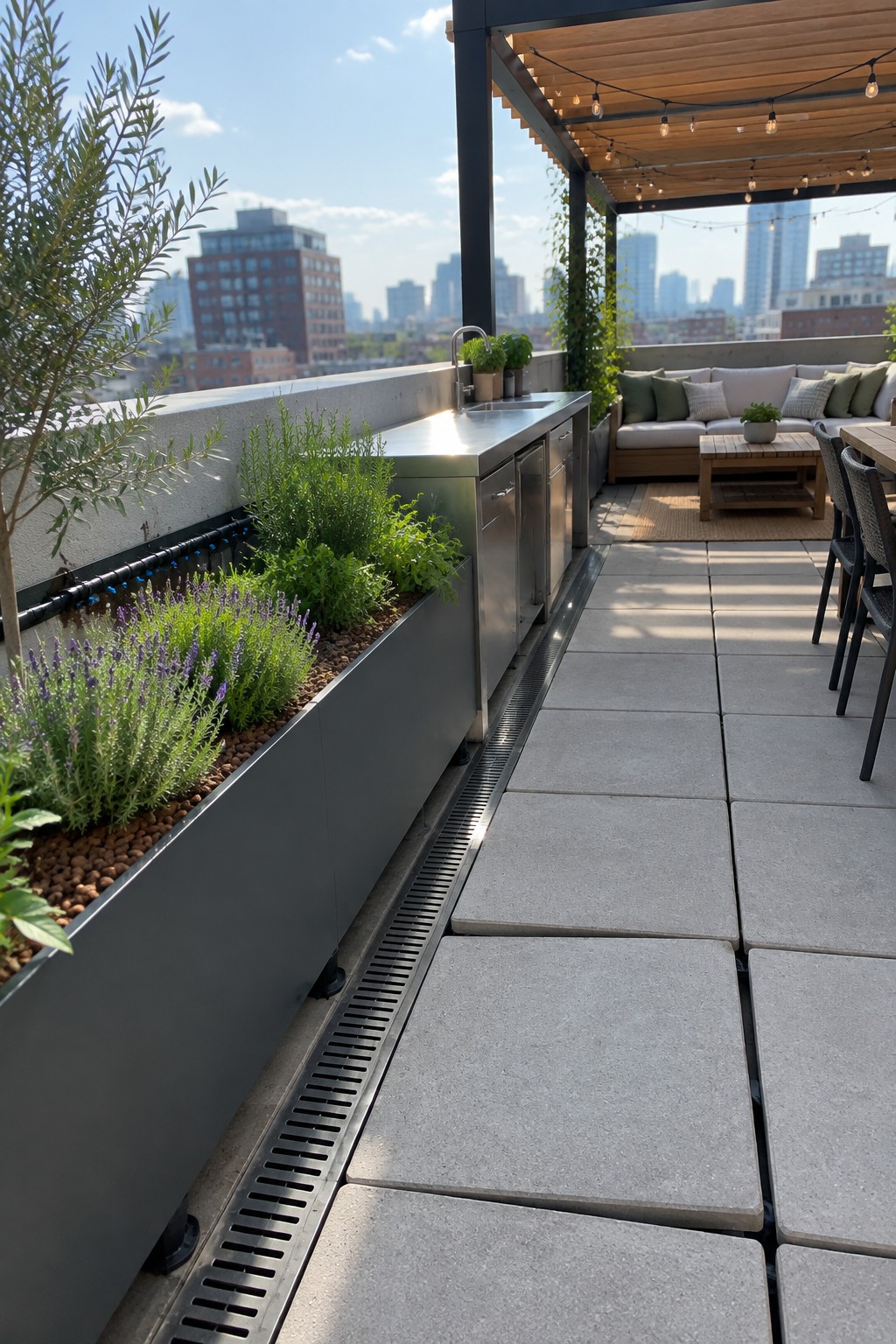
Rooftop gardens need reliable drainage to stay usable over time. A simple linear channel placed right beside the raised beds moves water away fast and keeps the surface dry for walking and seating.
This approach suits city rooftops where extra weight must stay low. Lightweight growing media in the planters plus steady drainage reduces risk to the building while still supporting herbs and flowers.
Gravel Layers For Roof Garden Drainage
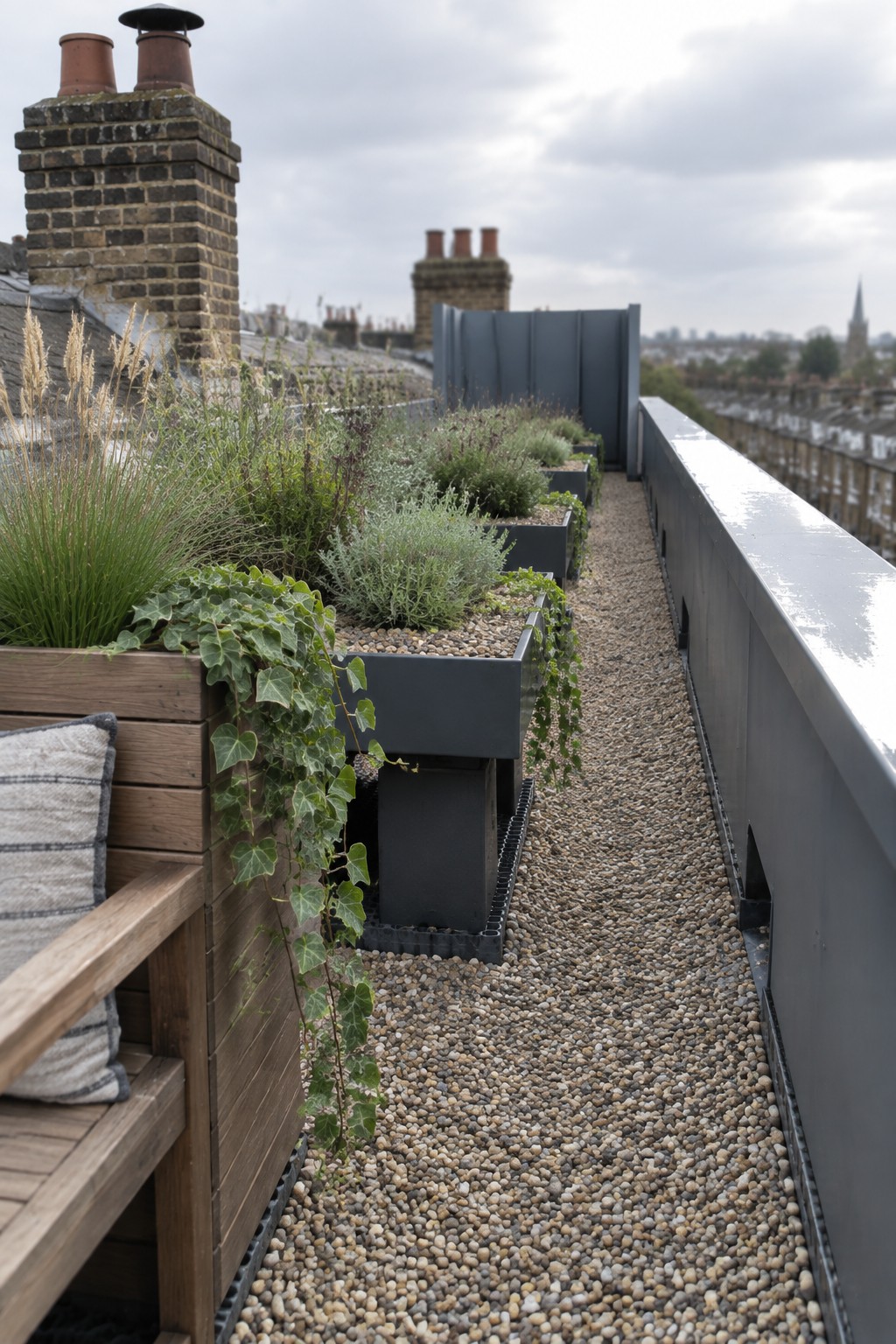
Many roof gardens rely on gravel as a simple way to handle water without adding much weight. The loose stones let excess rain drain quickly through the system while protecting the roof membrane below. This setup works especially well when planters sit directly on the gravel base rather than on solid decking.
You can copy the look by laying a few inches of lightweight aggregate first, then placing modular planters on top. It suits flat roofs on townhouses or apartment buildings where weight limits matter most. Just make sure the gravel grade allows free flow to the drains and check it once a year for any buildup.
Rooftop Terraces With Lightweight Turf
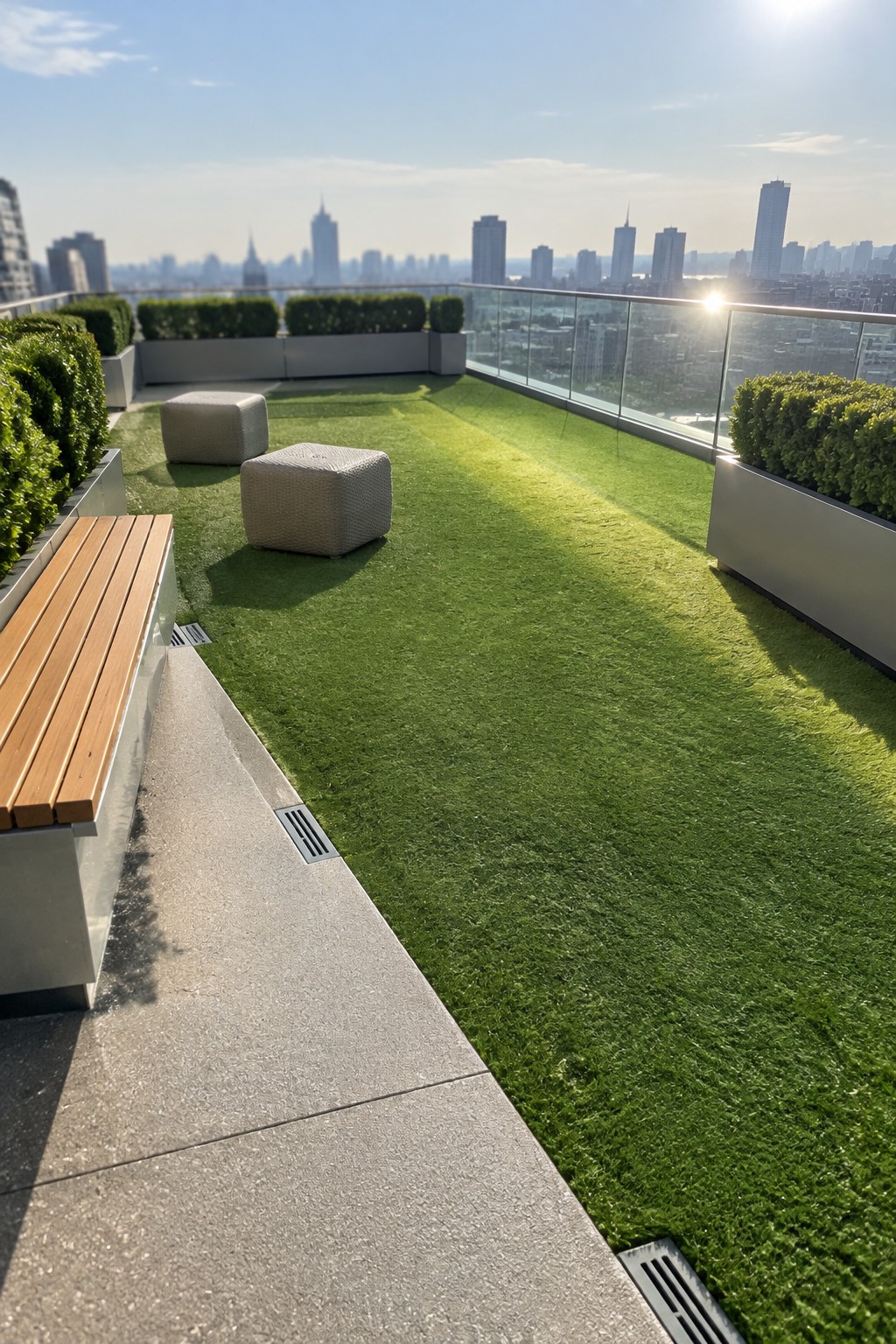
Artificial turf works well on rooftops because it stays light and lets water drain straight through to the grates below. Real grass would add too much weight and need more care up high.
It suits city buildings where you want a green surface without loading the structure. Keep the turf in the main open area and use raised planters along the edges for actual plants. This keeps the space usable and simple to clean.
Raised Metal Beds For Rooftop Drainage
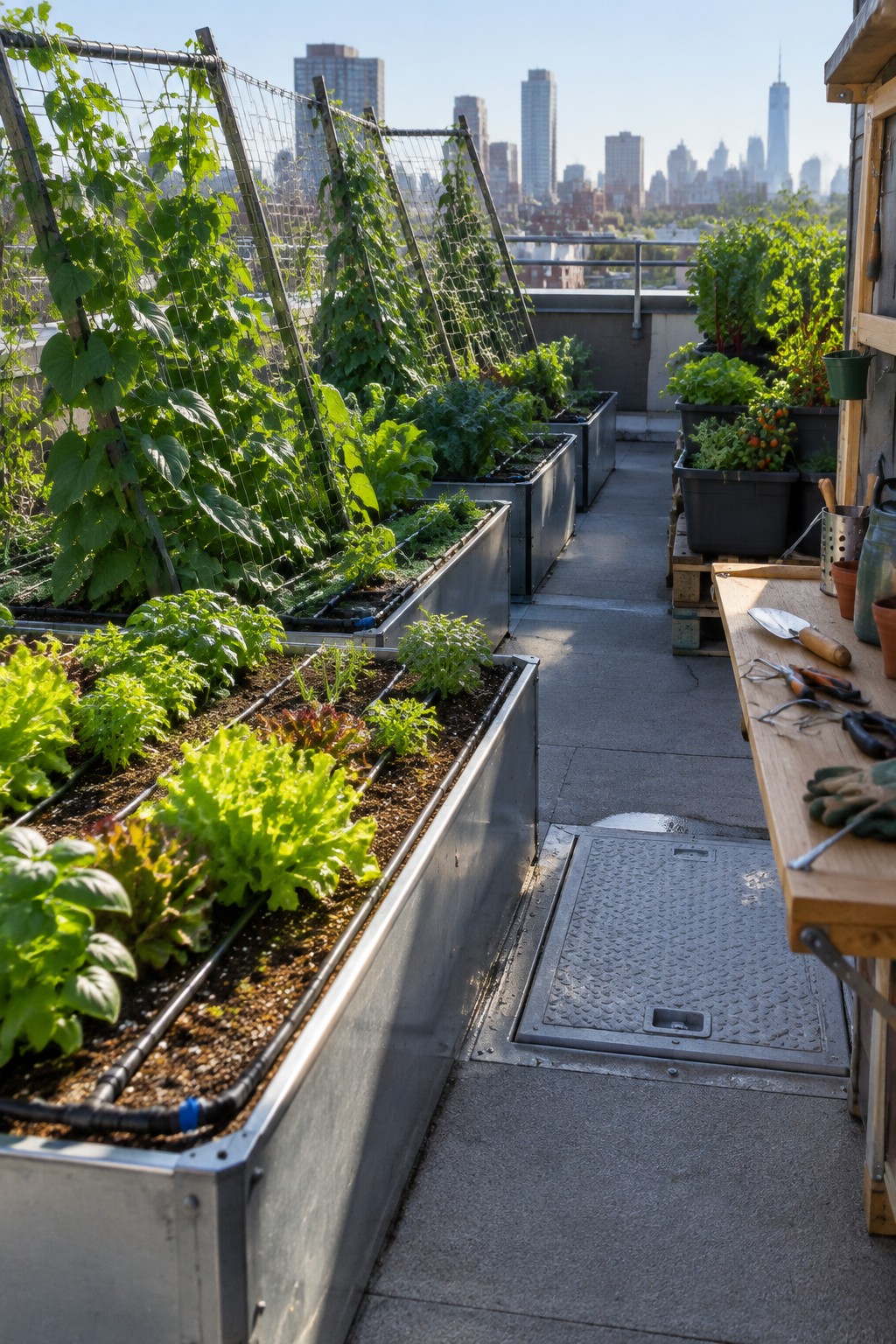
Many people choose raised metal beds for roof gardens because they keep the growing area contained while letting excess water drain away easily. The containers sit above the roof surface, which reduces weight and helps prevent pooling that can damage the building below.
These beds pair well with lightweight soil mixes and simple drip lines that deliver water right to the roots. They suit flat roofs on homes or apartment buildings where full in-ground beds are not an option, though it is always wise to check load limits first.
Lightweight Containers Work Well On Roof Terraces

Many people turn to containers when they want a roof garden without adding too much weight to the structure. These pots let you control the soil mix, keep things drained, and move plants around if needed. The setup stays practical even on upper floors where built-in beds would be too heavy.
This approach fits city rooftops or any space with weight limits. Stick with lightweight growing media and make sure water can flow away from the surface. A few well-placed pots can give you greenery without the risk of overloading the deck.
Vertical Planters With Built-In Drainage
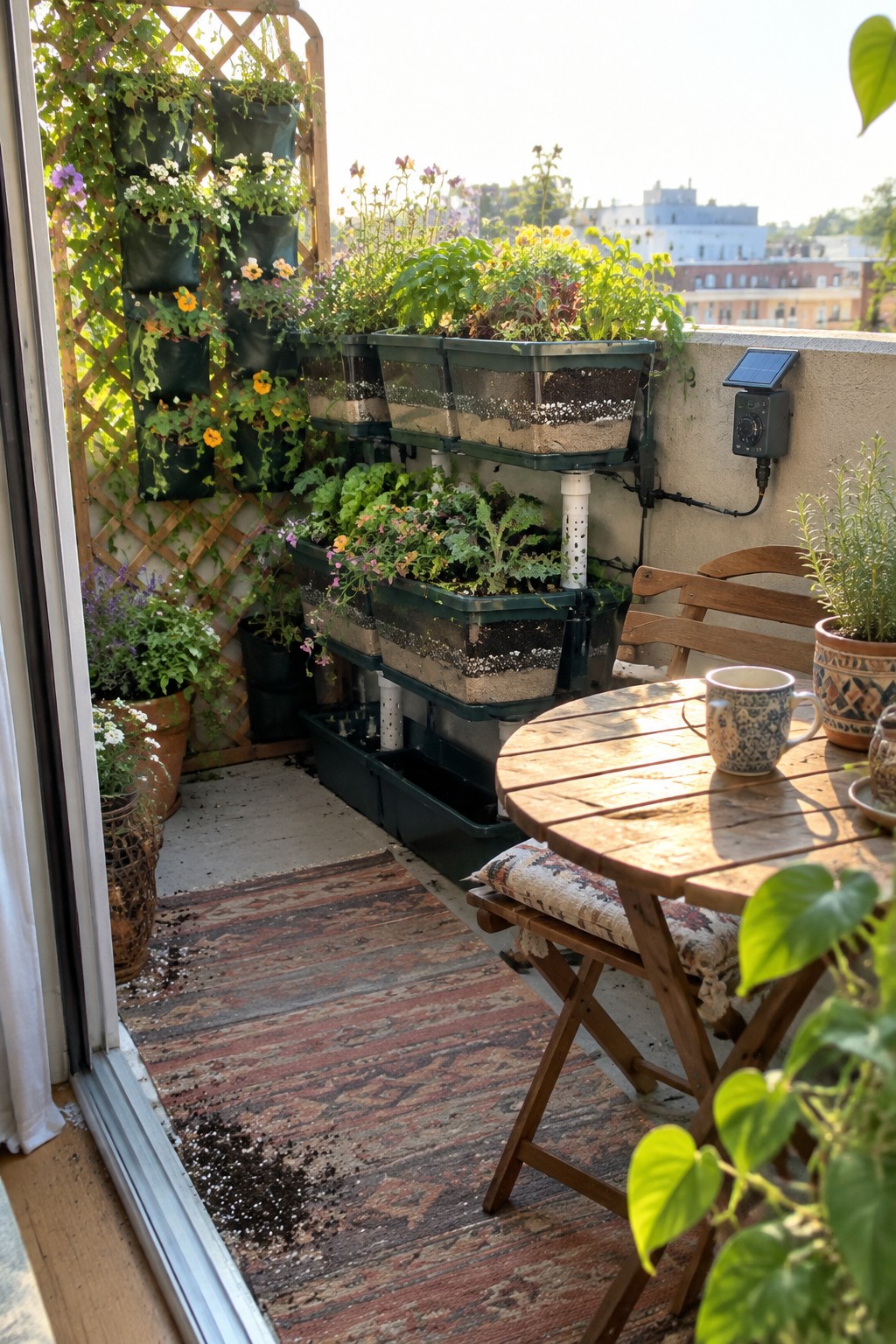
Vertical systems like these work well on balconies because they keep the growing area off the floor while letting excess water drain away through visible pipes and collection trays. The setup uses lightweight containers and hanging bags that do not add much weight to the structure, which matters on rooftops and upper levels.
This approach suits small outdoor spaces where floor room is limited. Place the vertical section against a wall or railing and leave the rest open for seating. Check that the drainage lines empty into a tray or downspout so water does not pool on the floor below.
Raised Planters Help With Roof Drainage
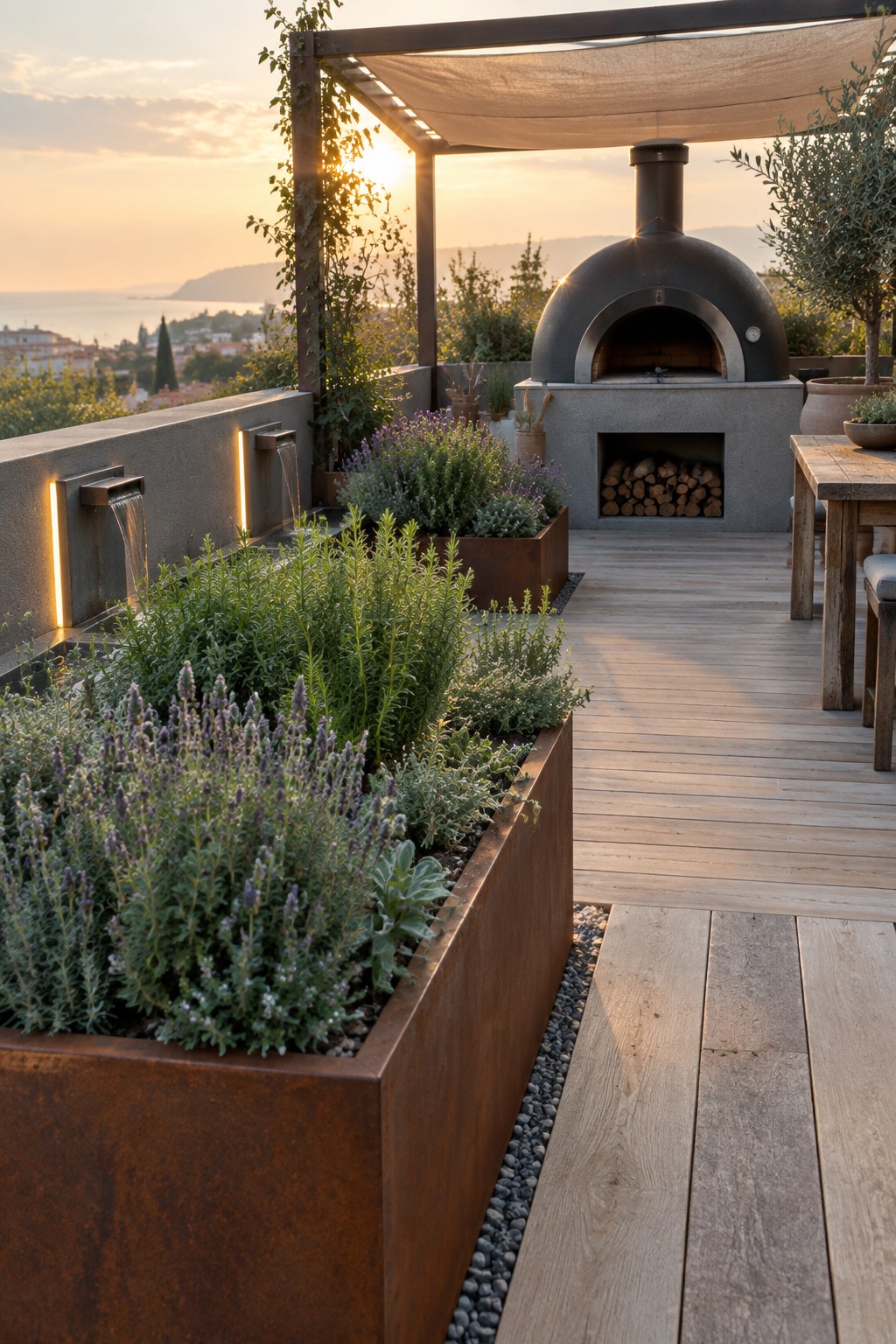
Raised planters give roof gardens a simple way to handle water and weight at the same time. The metal boxes sit above the deck surface, so excess water can drain out the bottom without pooling on the roof membrane. This setup also lets you use lighter growing mixes that stay within load limits for most buildings.
They work best on flat rooftops where you want a garden but need to keep things practical. Add a drainage layer at the base and choose a lightweight soil blend with plenty of perlite or similar material. The open design also makes it easier to move things around if you need to check the roof underneath later on.
Drainage Channels in Roof Gardens
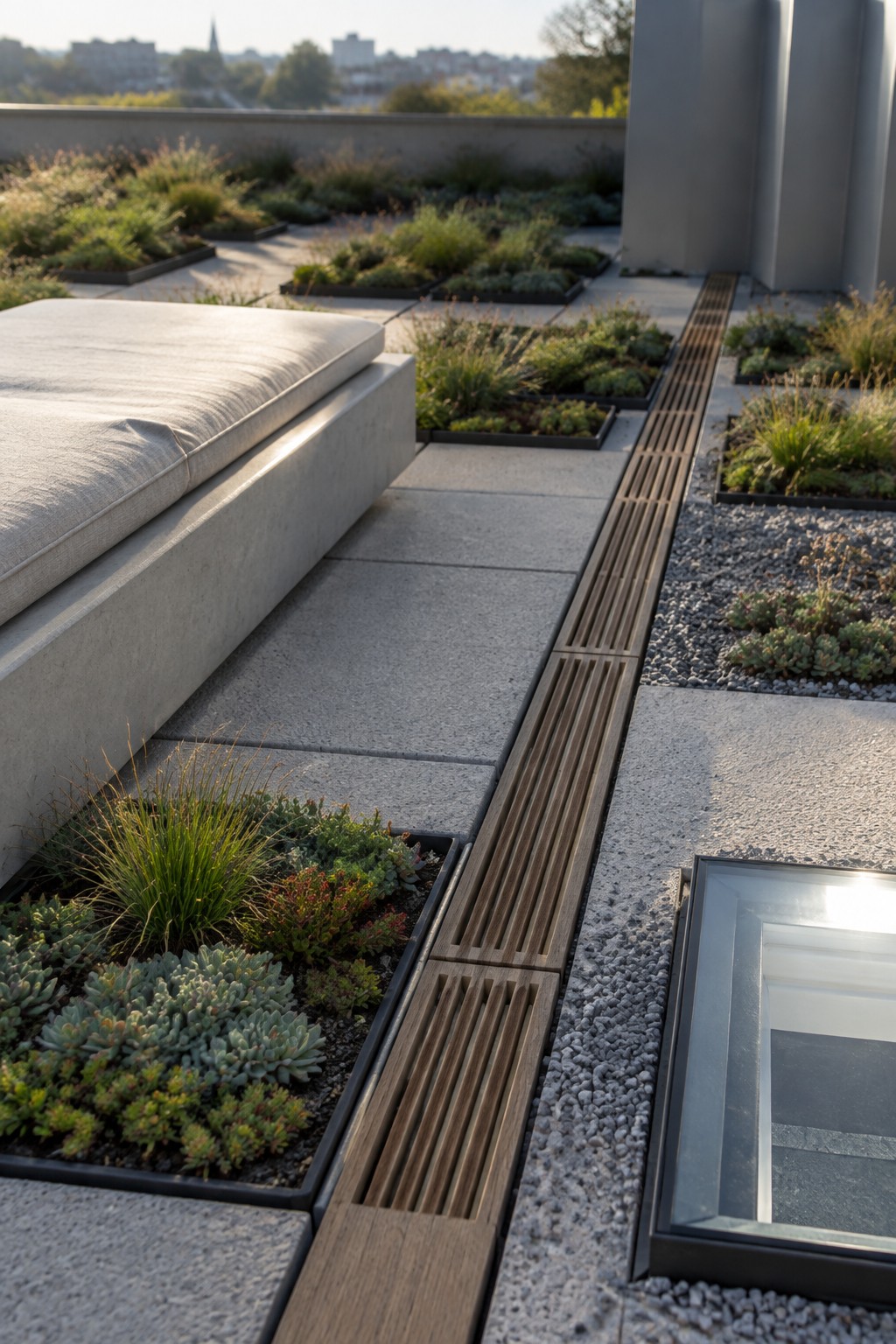
Many roof gardens stay healthier when water moves off the surface fast. Linear grates set between the planting trays give runoff a clear path while the trays themselves stay light and contained.
This works best on flat rooftops where extra weight and pooling are concerns. Keep the grates level with the walking surface and direct them toward existing drains so the system stays simple to maintain.
Floating Planters For Rooftop Pools
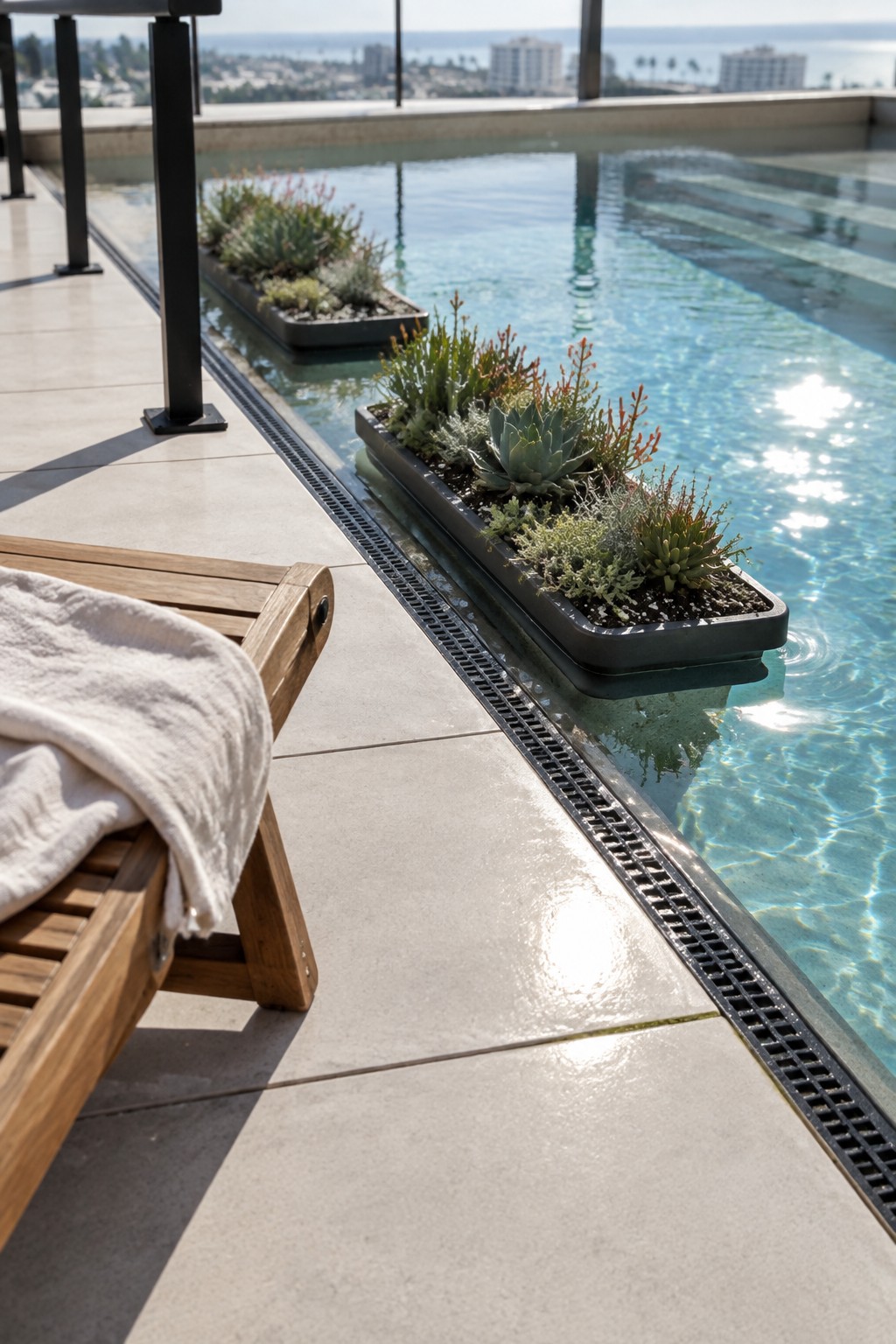
Floating planters work well on roof terraces because they keep the overall weight low while letting water move freely around the edges. The containers sit right in the pool, so excess moisture drains away without pooling in the soil or adding load to the structure below. Succulents and similar plants handle the exposure and stay light even when the media stays slightly damp.
This setup suits homes with flat roofs and existing pools where you want greenery without building heavy raised beds. Place the planters along the shallow end or near a linear drain so water flows away easily. Choose a very light growing mix and check the containers once a season to keep them stable in wind.
Raised Metal Planters Improve Drainage on Rooftops
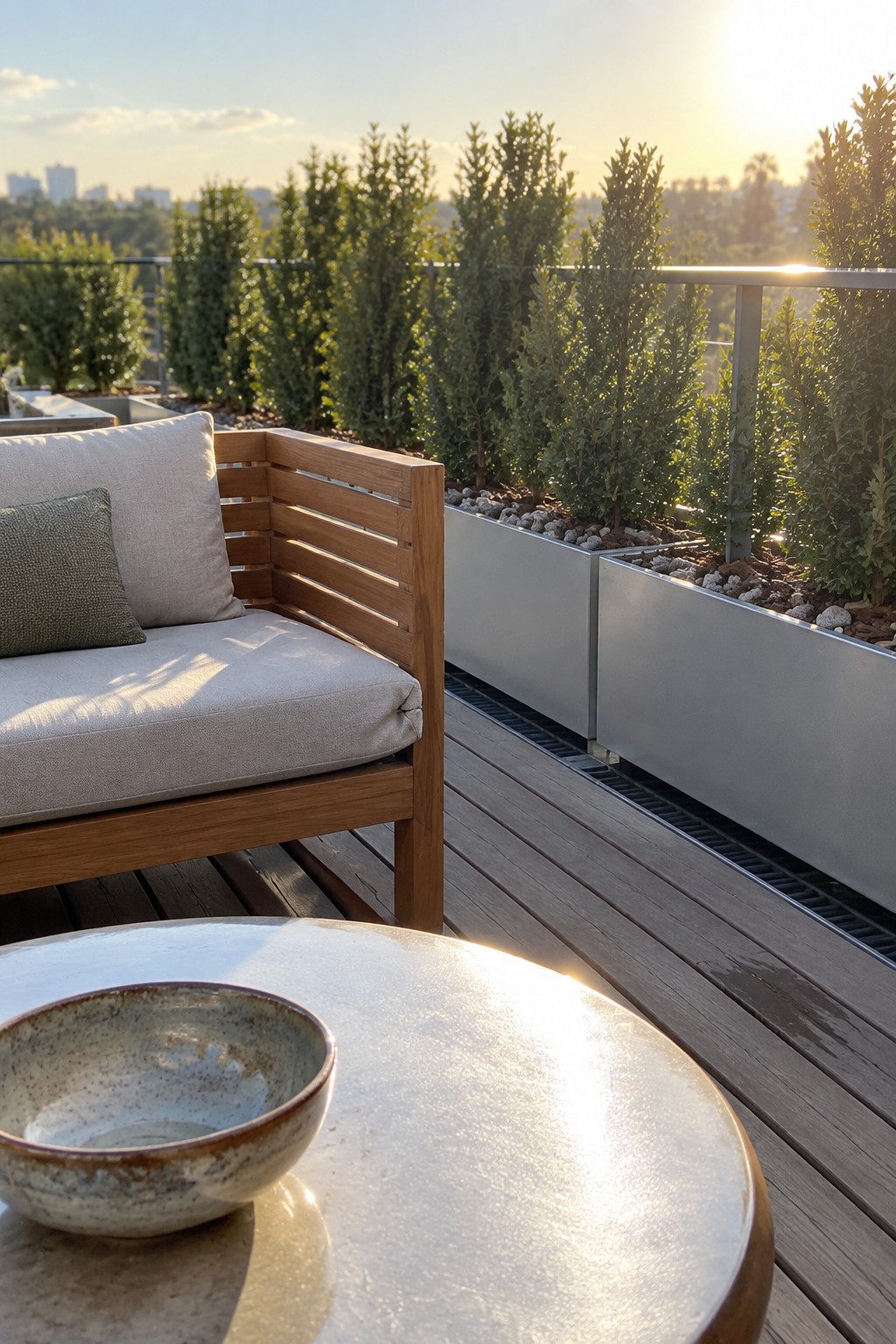
Metal planters sit well on a rooftop deck because they keep soil and water contained without adding too much weight. They also leave room underneath for drainage grates, which helps prevent pooling during heavy rain. Many people like this setup on urban roofs where every inch needs to work efficiently.
This approach suits homes with existing decking or limited structural capacity for deep soil beds. Place the planters along the edge where water can run off easily, and use a light growing mix inside. Check that the deck slope already directs water toward the drains so the whole system stays balanced.
Raised Planters That Improve Drainage
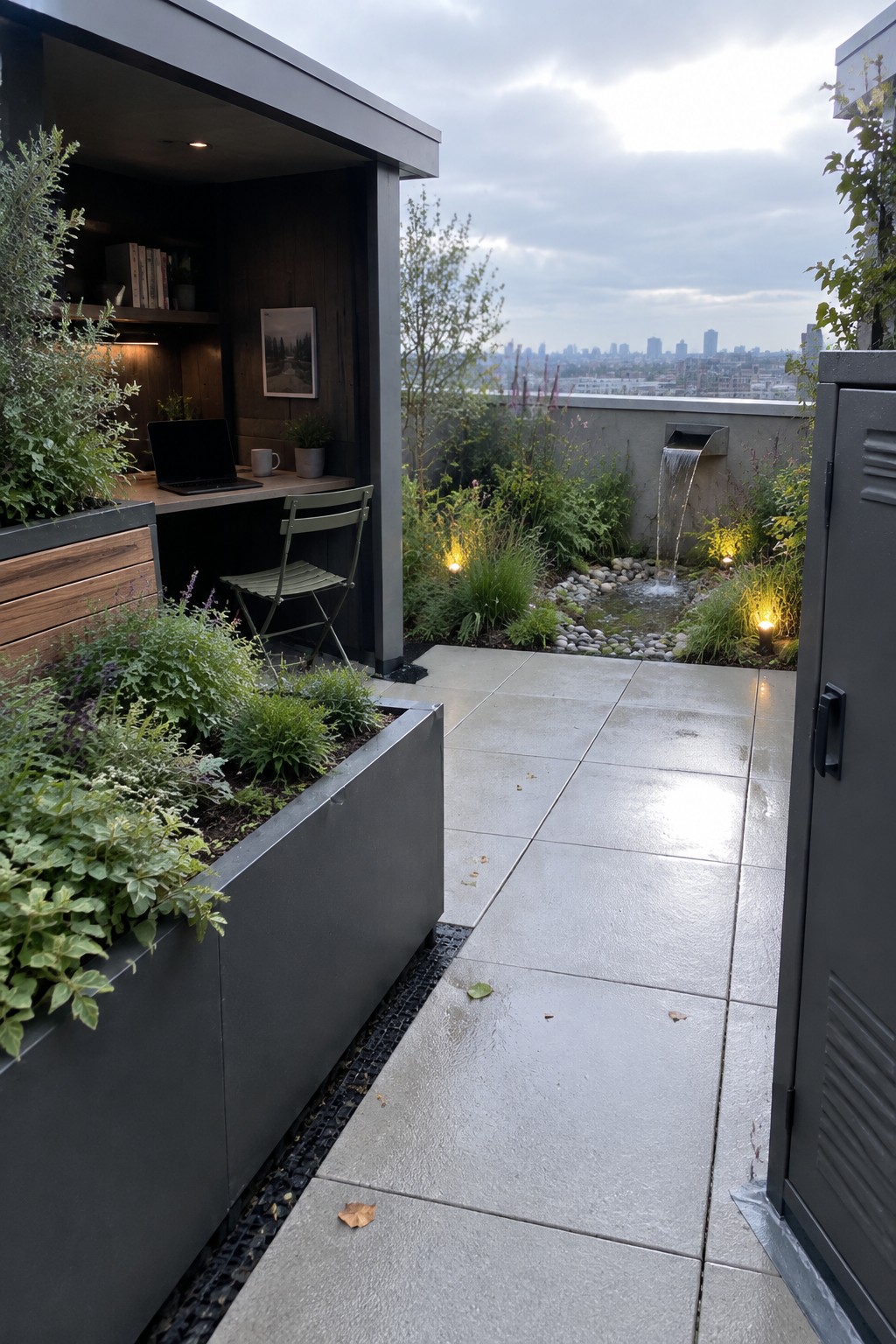
Raised metal planters work well on rooftops because they keep the growing medium light and let excess water drain away from the building. The open base and side gaps reduce weight load while still giving plants enough soil depth to grow. This setup pairs easily with a small water feature that recirculates water instead of letting it pool.
Place them along the edge of the terrace where runoff can move toward a central drain or pebble bed. They suit flat roofs on urban buildings or townhouses where weight and water management are concerns. Keep the media mix light with plenty of perlite or similar additives, and check the waterproofing layer underneath before installing.
Frequently Asked Questions
Q: How do I pick growing media that stays light but drains well?
A: Blend your compost with plenty of pumice or lava rock. These additions cut the weight while speeding up water flow. Aim for a mix that feels airy when you squeeze it.
Q: What if my roof has flat spots that might hold water?
A: Build up the media into gentle slopes toward the edges. Add a thin drainage layer underneath to move water along.
Q: Do I need special tools to maintain drainage year round?
A: Use a rake to clear leaves from drains each fall. Check for clogs after big storms.
