


I’ve noticed that roof gardens tend to lose their appeal once the sun goes down unless the lighting is planned with actual use in mind.
When I look at my own outdoor setups the ones that stay comfortable after dark always have lights that guide steps and define edges without overwhelming the space.
Low voltage choices often work best here.
They keep the installation manageable on a rooftop while still letting you shape how the area feels when people gather or move through it at night.
Over the years I’ve learned that trying a few placements in real conditions shows which setups hold up once the weather and daily routines come into play.
Use Low-Voltage Path Lights on Roof Terraces

Low-voltage path lights work well on rooftops because they define the walkway without adding much height or clutter. The small fixtures stay out of the way while still showing where to step, which matters when the space sits several stories up.
Place them along the edge of the paving where it meets gravel or planting beds. This approach fits most urban roof gardens and keeps the focus on the view rather than on heavy fixtures.
Line Brick Paths With Low Voltage Lights
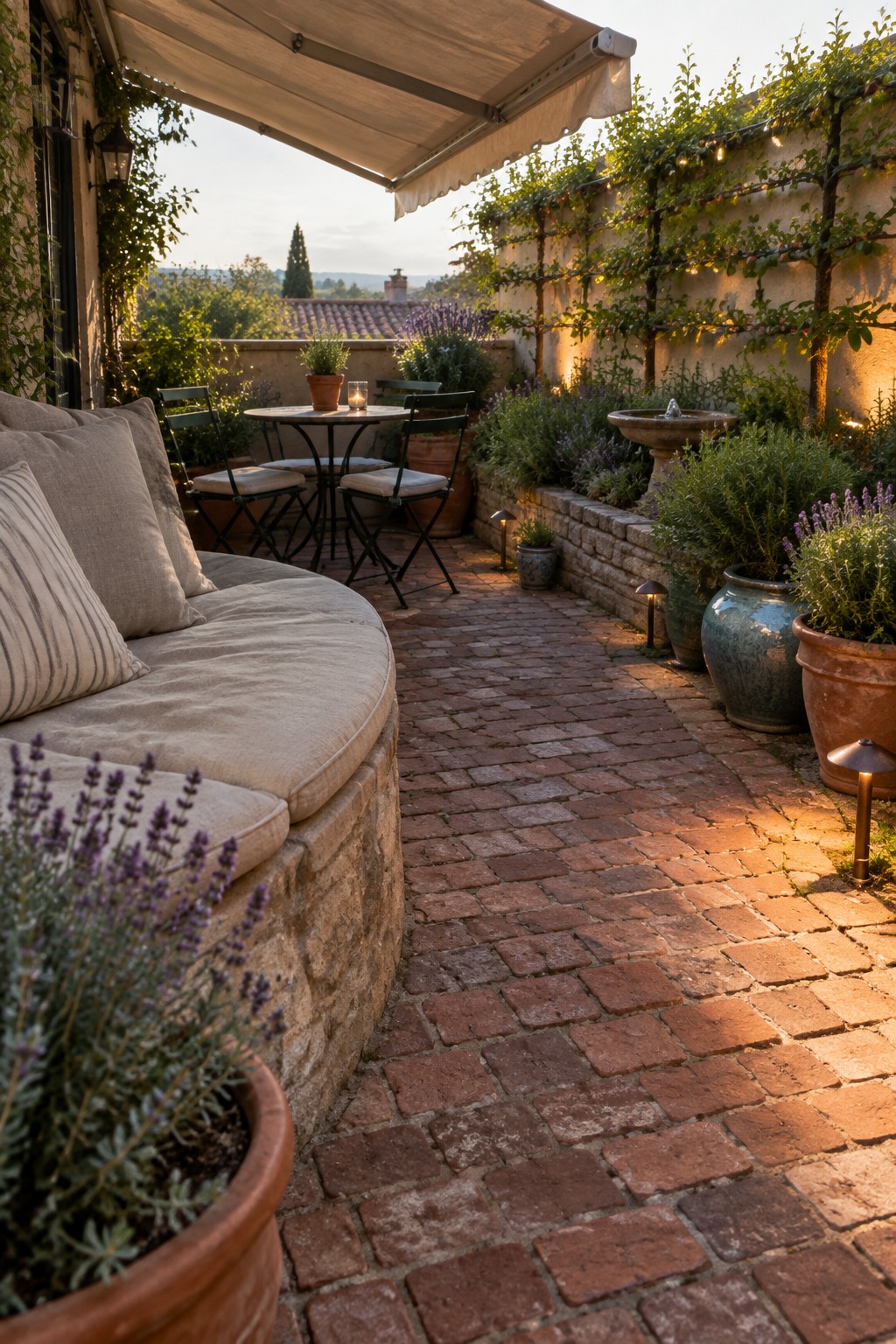
Low voltage path lights work well on a roof garden because they keep the walkway safe and visible without flooding the whole space with light. The small fixtures sit low to the ground and cast a gentle glow along the edges, which helps the area feel calm instead of bright.
This approach suits patios with potted plants and mixed paving. Place the lights every few feet near the border or between larger pots so they mark the route without blocking foot traffic. Keep the fixtures simple and bronze or dark green so they blend in during the day.
Low Voltage Path Lights Mark the Walkway
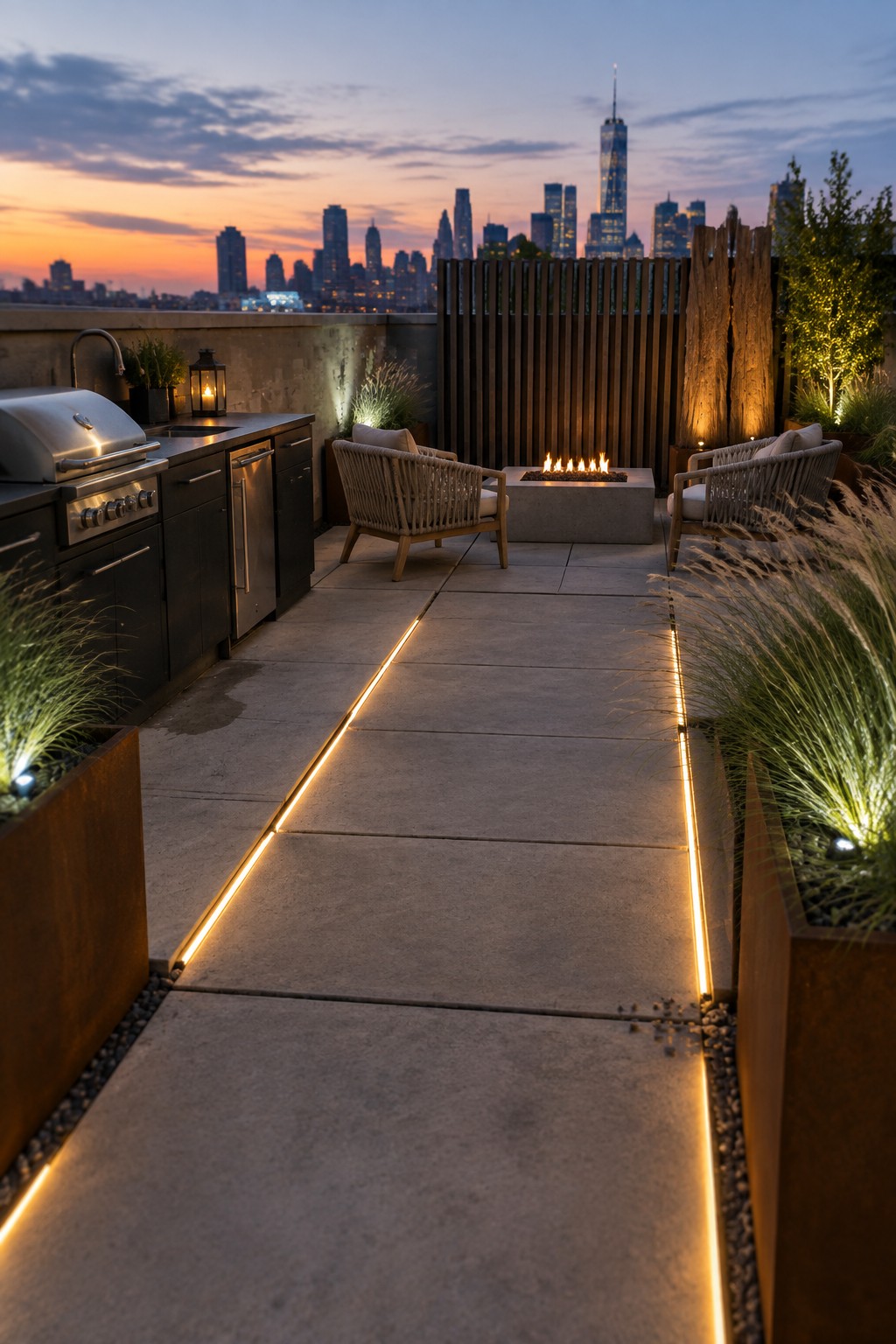
Many roof terraces get tricky to use after dark because overhead lights can feel too bright or block the view. A simple strip of low voltage lights set into the paving gives just enough glow to show the way while keeping the space calm and usable.
This setup works best on flat roof areas where you want a clear path between seating zones and the edge without adding poles or strings. Keep the lights on a dimmer so you can lower them once everyone is settled around the fire pit.
Low-Voltage Path Lights Along Garden Walks

Low-voltage path lights give a garden a gentle sense of direction once the sun goes down. They mark the route clearly without flooding the space with brightness, which keeps the surrounding plants and hardscape looking calm and natural.
These lights suit homes with winding paths that connect different garden zones or lead to a seating area. Set them low and space them evenly so the glow follows the edge of the walk rather than sitting right in the middle of it.
Add Low Voltage Lights Along The Path
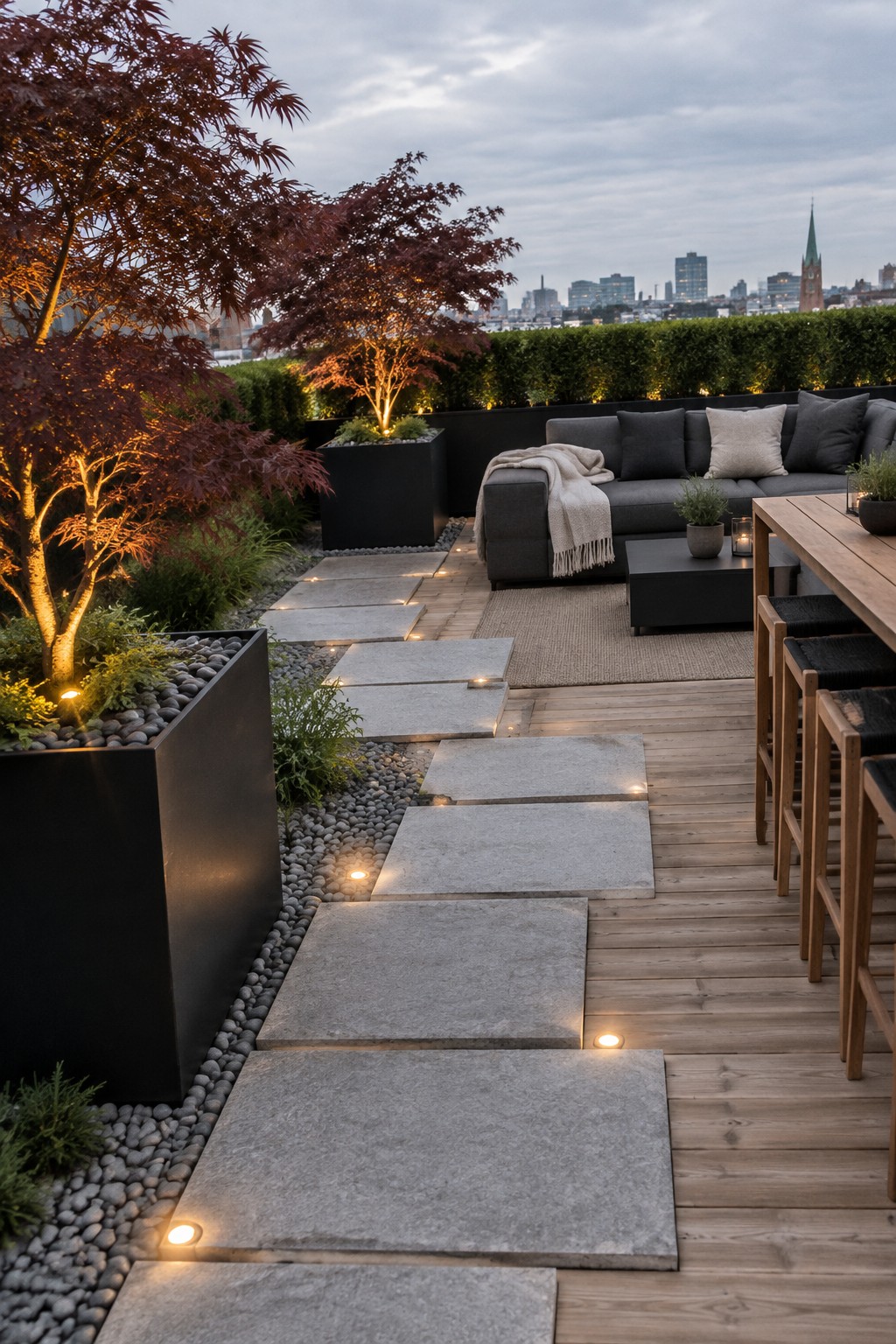
Low voltage path lights work well on roof gardens because they show the route without flooding the whole space with light. They keep the area feeling calm while still making it easy to move around after dark.
This setup suits decks and terraces that mix paving with planting beds. Place the lights close to the ground every few steps so they mark the way toward seating without drawing attention to themselves. It works best on rooftops where you want both safety and a quiet evening atmosphere.
Line a Stepping Stone Path With Low-Voltage Lights

One simple way to make an outdoor space feel more inviting after dark is to run low-voltage path lights along a stepping stone walkway. The lights stay close to the ground and give just enough glow to mark the route without flooding the area.
This approach works well on roof gardens or decks where you want a soft, natural feel. Space the fixtures evenly so each one highlights the next stone, and pick warm bulbs that keep the whole stretch looking relaxed instead of overly bright.
Line Gravel Areas With Low-Voltage Path Lights
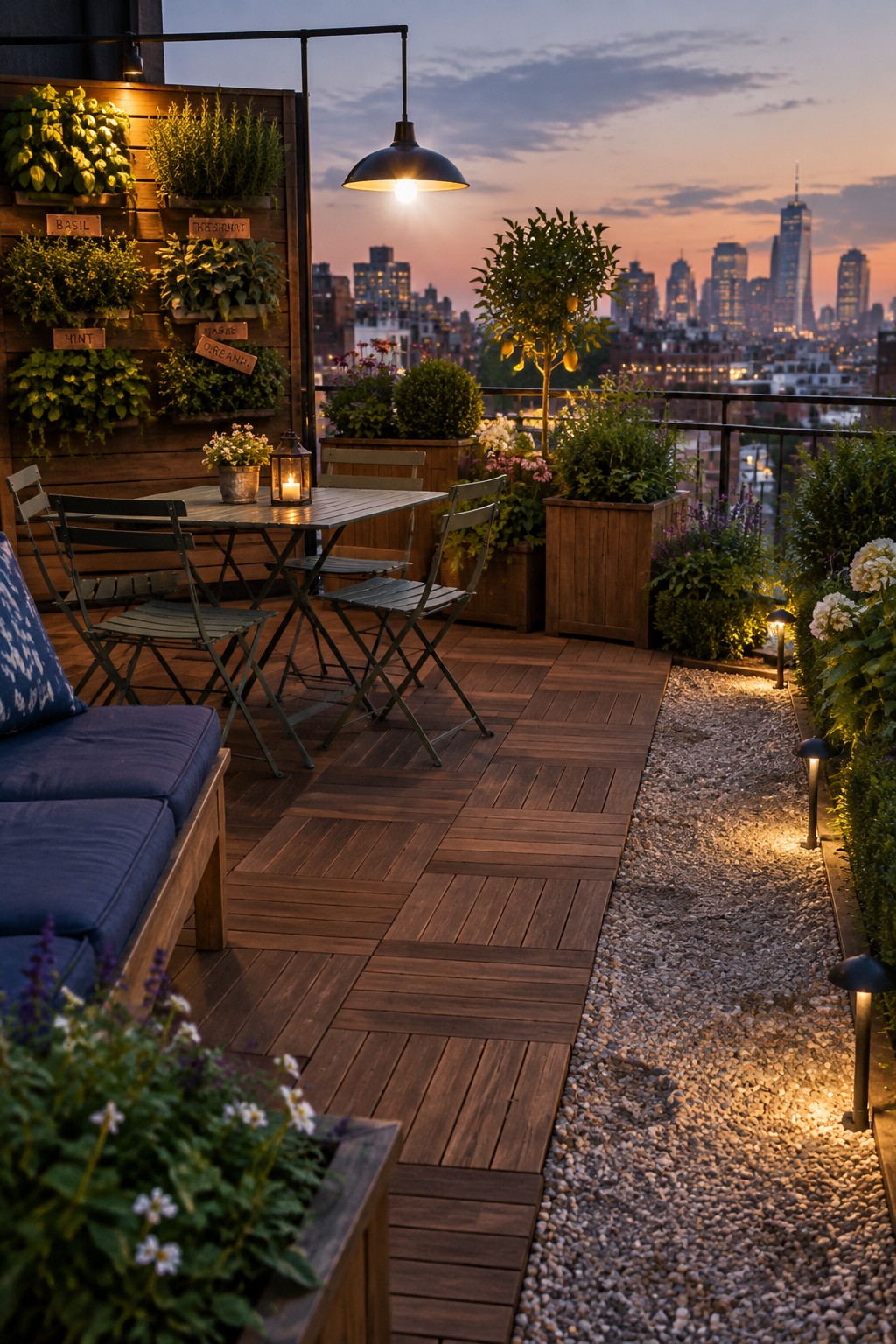
Low-voltage path lights work well along the edge of a roof deck because they stay low and give just enough light to mark the transition between the wooden floor and the planted border. The small fixtures keep the focus on the plants rather than on the lights themselves.
This setup suits rooftops and terraces where you want a clear walking edge without adding tall poles or bright fixtures. Space the lights a few feet apart and aim them slightly toward the greenery so the glow stays soft and contained.
Low-Voltage Step Lights For Outdoor Paths
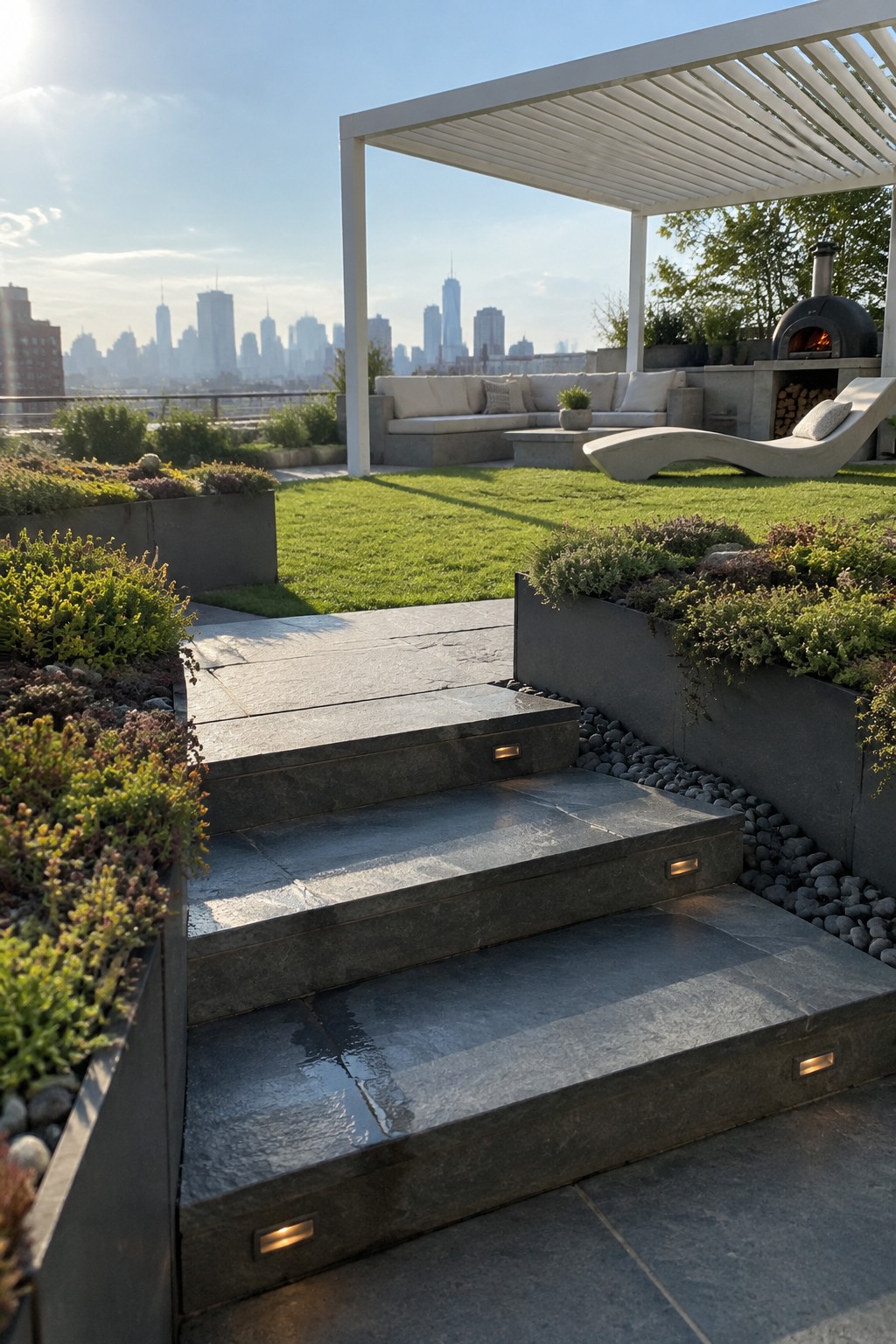
Low-voltage lights set into the front of each step give just enough light to walk safely without flooding the whole area. In a roof garden this keeps things simple and avoids tall fixtures that might block the view or feel out of place.
The same approach works on any rooftop or terrace where steps connect different levels. Place the lights low and spaced evenly so they mark the edge of each tread without creating glare. Dark stone or concrete steps take the glow especially well and keep the look clean.
Line a Path with Low-Voltage Lights

One simple way to make a roof garden feel more usable at night is to place low-voltage lights along a stepping stone path. The lights stay low and focused, so they mark the route without flooding the whole space with brightness.
This setup works best on flat roof terraces that lead from an entry point toward seating or a hammock area. Keep the fixtures spaced evenly and aimed downward so the path stays easy to follow while the surrounding plants stay softly lit.
Edge a Rooftop Deck With Low Voltage Path Lights
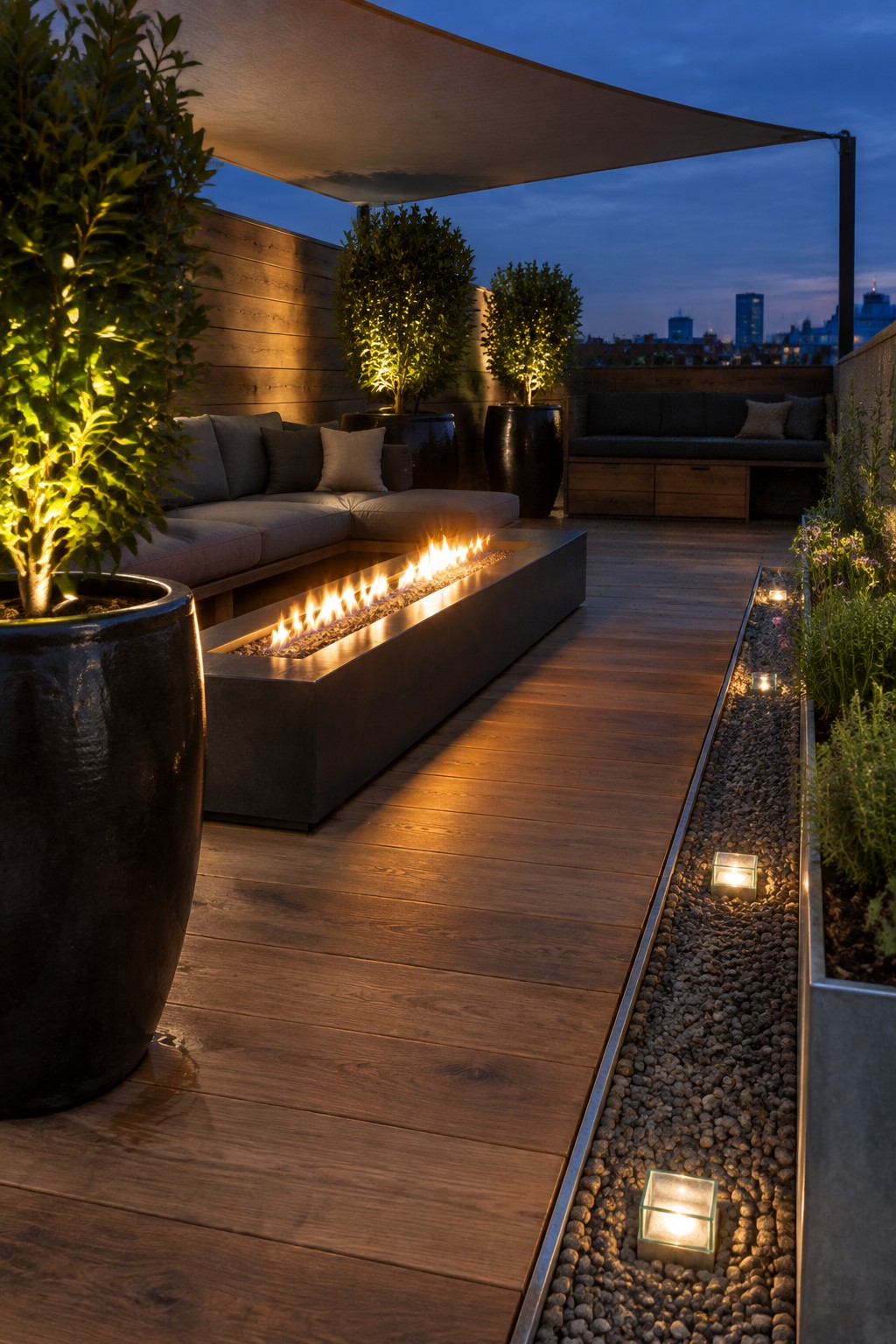
Many roof gardens stay dark along the edges once the sun goes down. Running a row of small low voltage lights through a narrow gravel strip gives just enough light to mark the boundary and keep the space feeling safe and usable after dark.
This setup works best on decks that already have a built in fire feature and seating along one side. Keep the lights evenly spaced and choose warm tones so the glow stays soft instead of turning the whole terrace into a walkway.
Line Roof Garden Paths With Low Voltage Lights
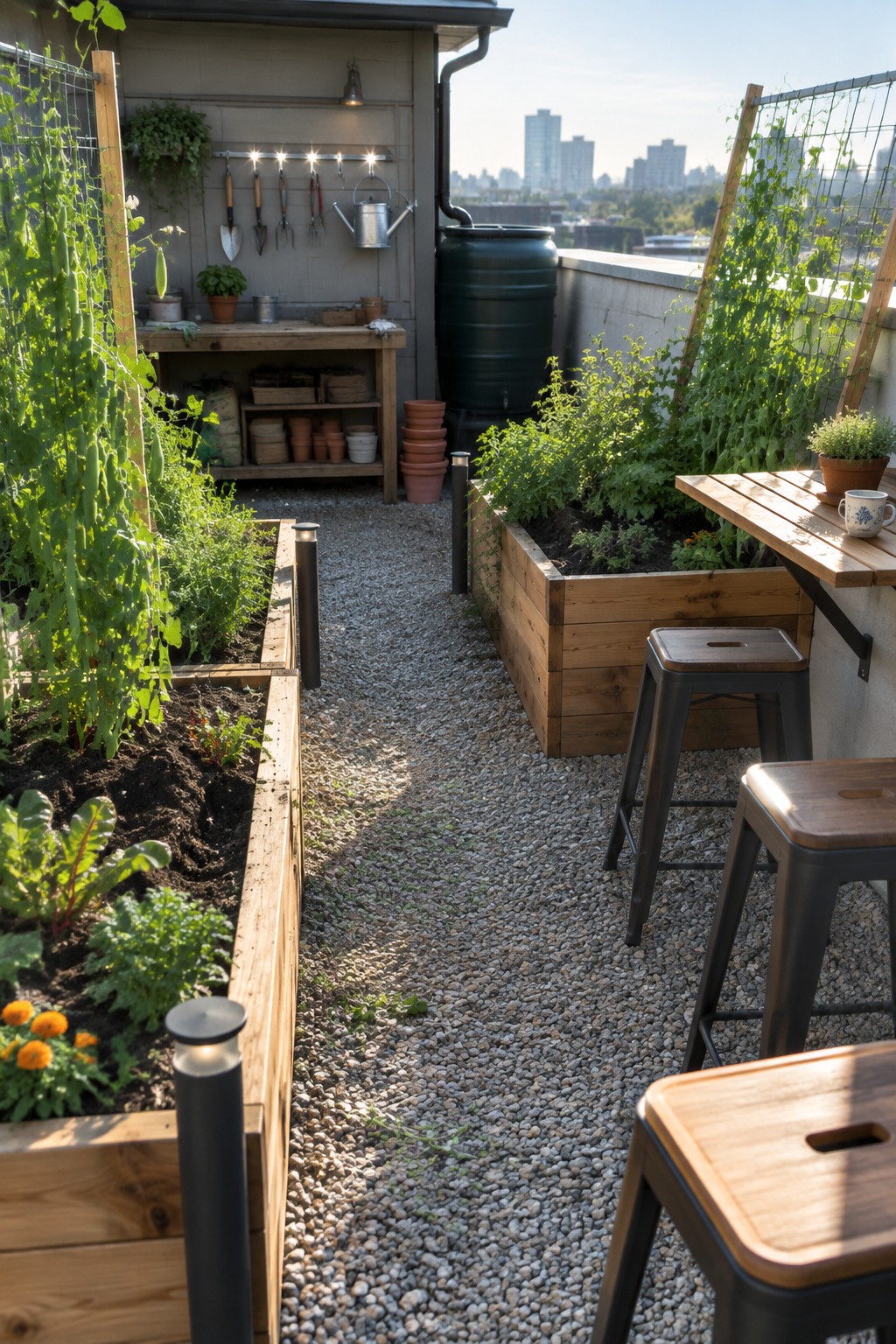
Low-voltage path lights work well in roof gardens because they mark the walkway without taking up much space. They keep the gravel path easy to follow at night while letting the plants stay the main focus.
Place them along the edges of the path so light spills gently onto the beds. This setup suits small rooftop spaces where you need clear routes between raised beds but still want a relaxed feel after dark.
Linear Edge Lights For Rooftop Paths
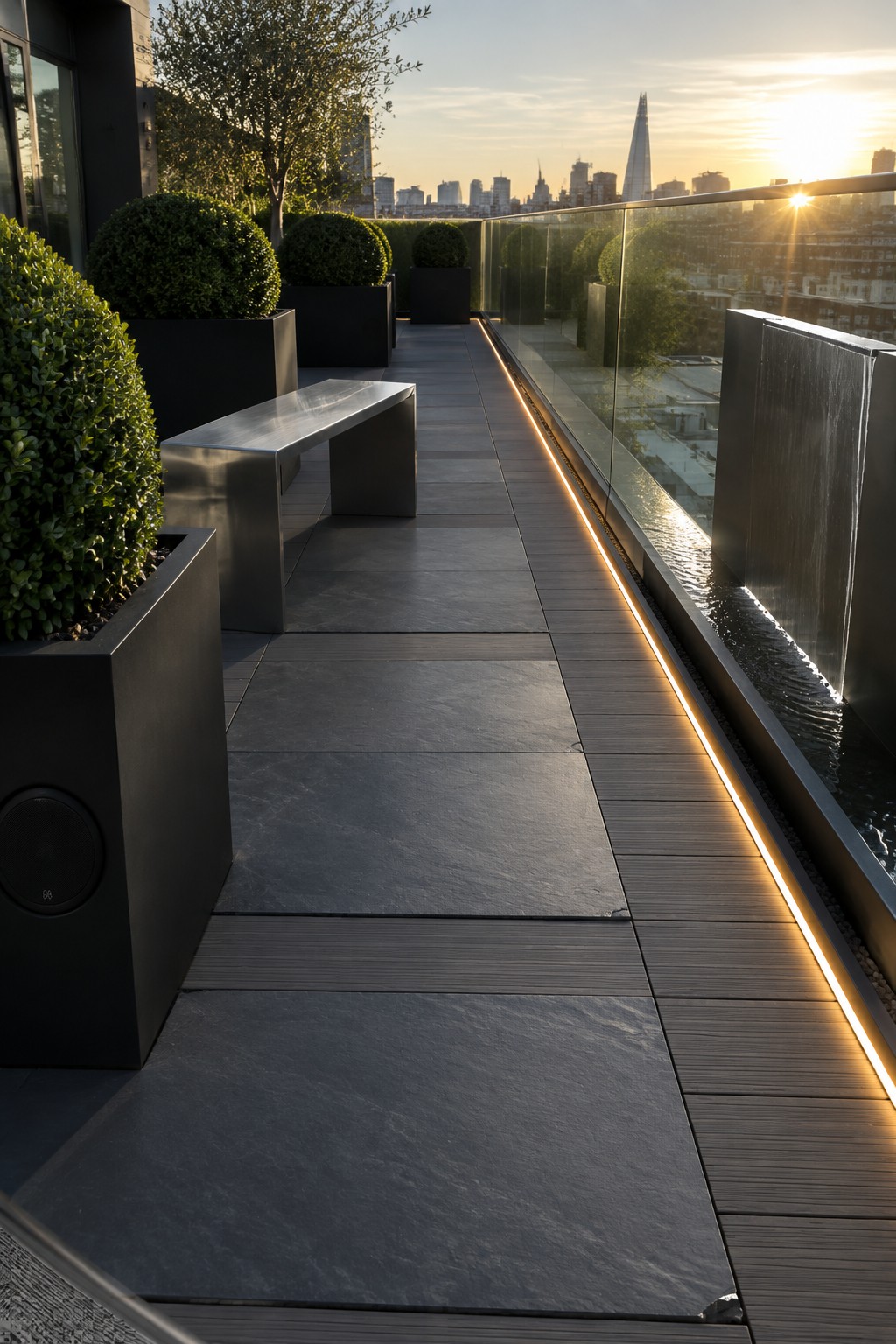
Running a low voltage strip right along the deck edge gives a roof terrace a clear walking line without cluttering the floor with extra fixtures. The light stays low and contained so it guides people safely while leaving room for seating and planters.
This works especially well on narrow rooftop spaces where you want the surface to feel open during the day. Tuck the strip behind a raised border or planter lip so the glow stays soft and does not shine upward into seating areas.
Line Your Patio Edges with Low-Voltage Path Lights
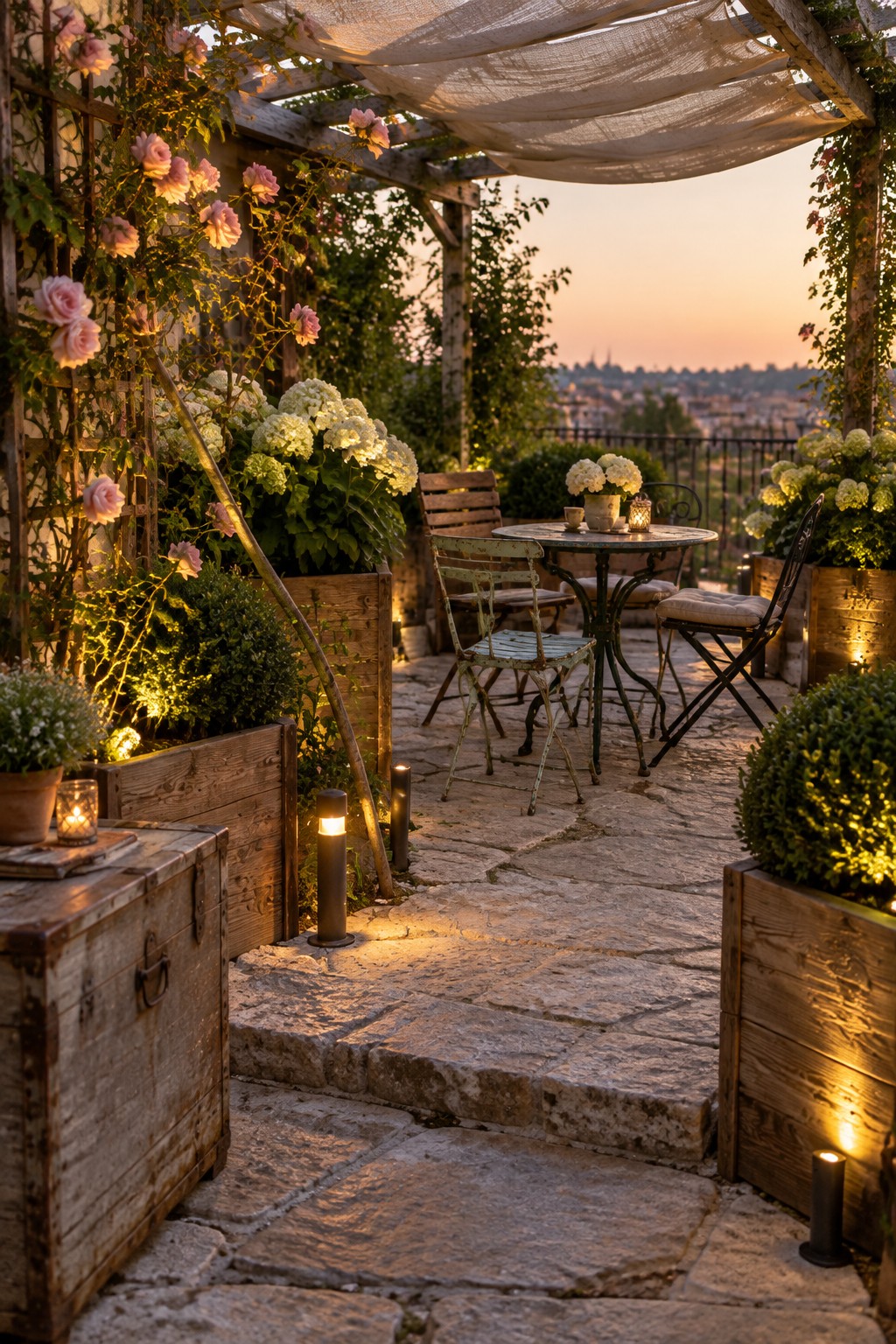
Low-voltage path lights help mark the edges of a stone patio without adding much height or clutter. They give a steady, low glow that makes it easy to move around while keeping the overall feel relaxed and simple.
Place them at even intervals along the border, close enough to the ground to highlight the path but far enough apart to avoid a busy look. This works especially well on roof gardens and terraces where you want the seating area to stay the main focus.
Low-Voltage Path Lights for Rooftop Terraces
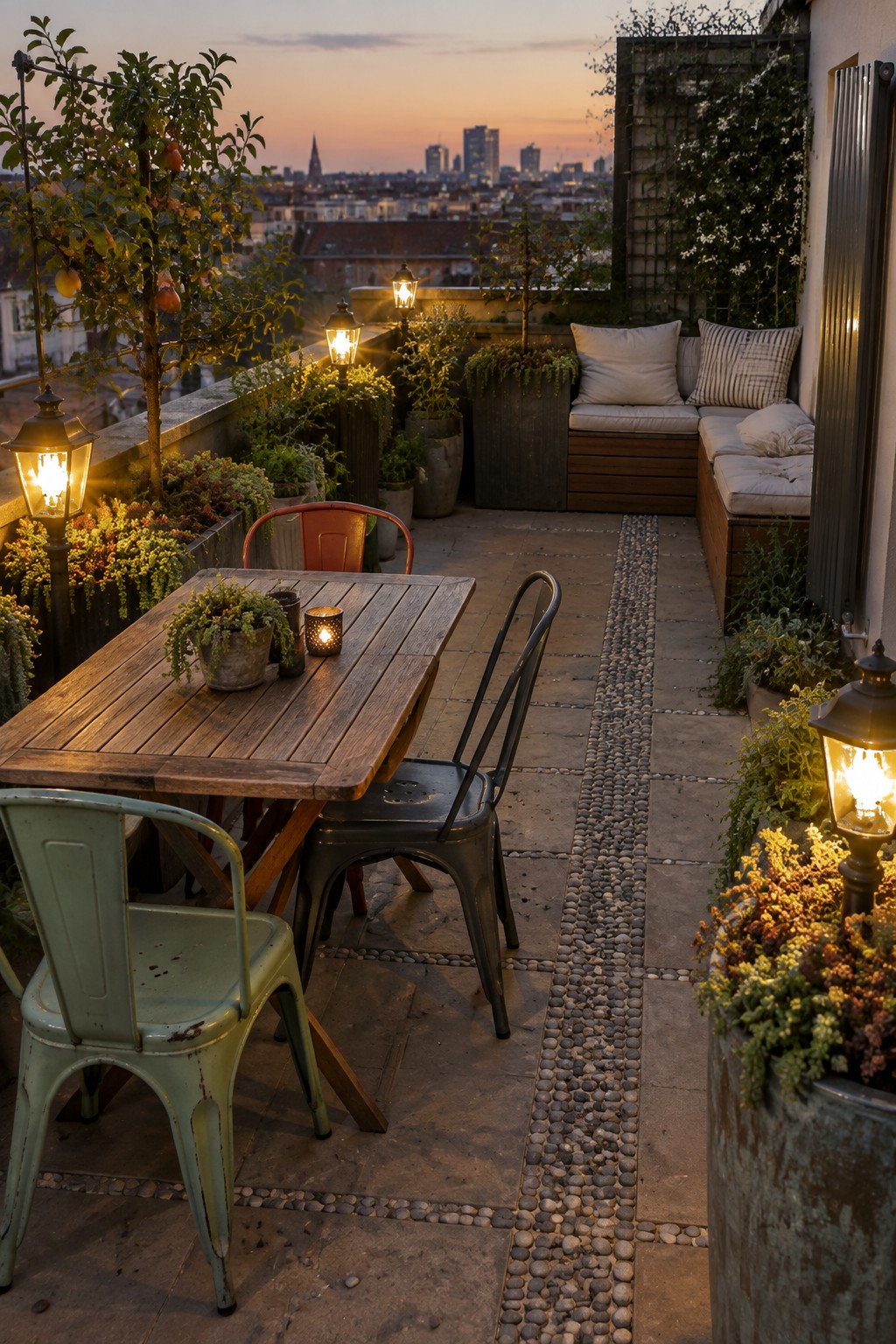
A narrow strip of pebble lights running between seating zones gives the space a gentle guide after dark. The small fixtures stay low to the ground so they do not block views or take up room on a small roof terrace.
This works best on flat roof areas where you want to mark a walkway without adding tall posts or heavy wiring. Keep the lights spaced evenly and choose warm bulbs so the path feels part of the seating area rather than a separate feature.
Run Low Voltage Path Lights Along The Edges
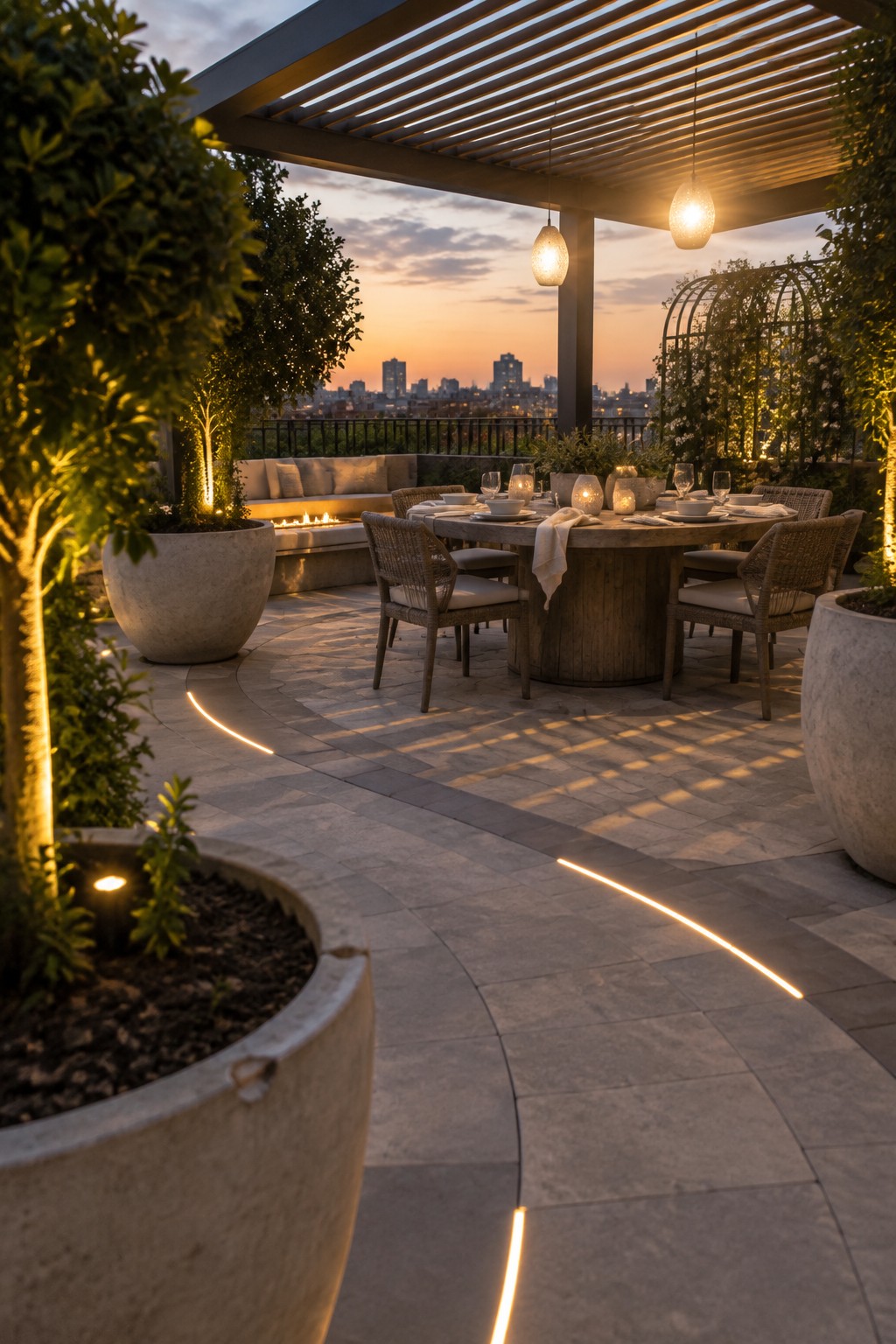
Low voltage path lights work well on roof terraces because they stay low to the ground and do not block the view. The thin glowing lines help show where people can walk and keep the space feeling open at night instead of adding tall fixtures that crowd the area.
This approach suits small or medium roof gardens where you want to keep things simple. Place the lights along the outer curve of the paving or around seating zones so they guide movement without needing extra poles or wires that show during the day. Just make sure the lights are set flush so no one trips over them.
Recessed Lights Set Into a Paver Path
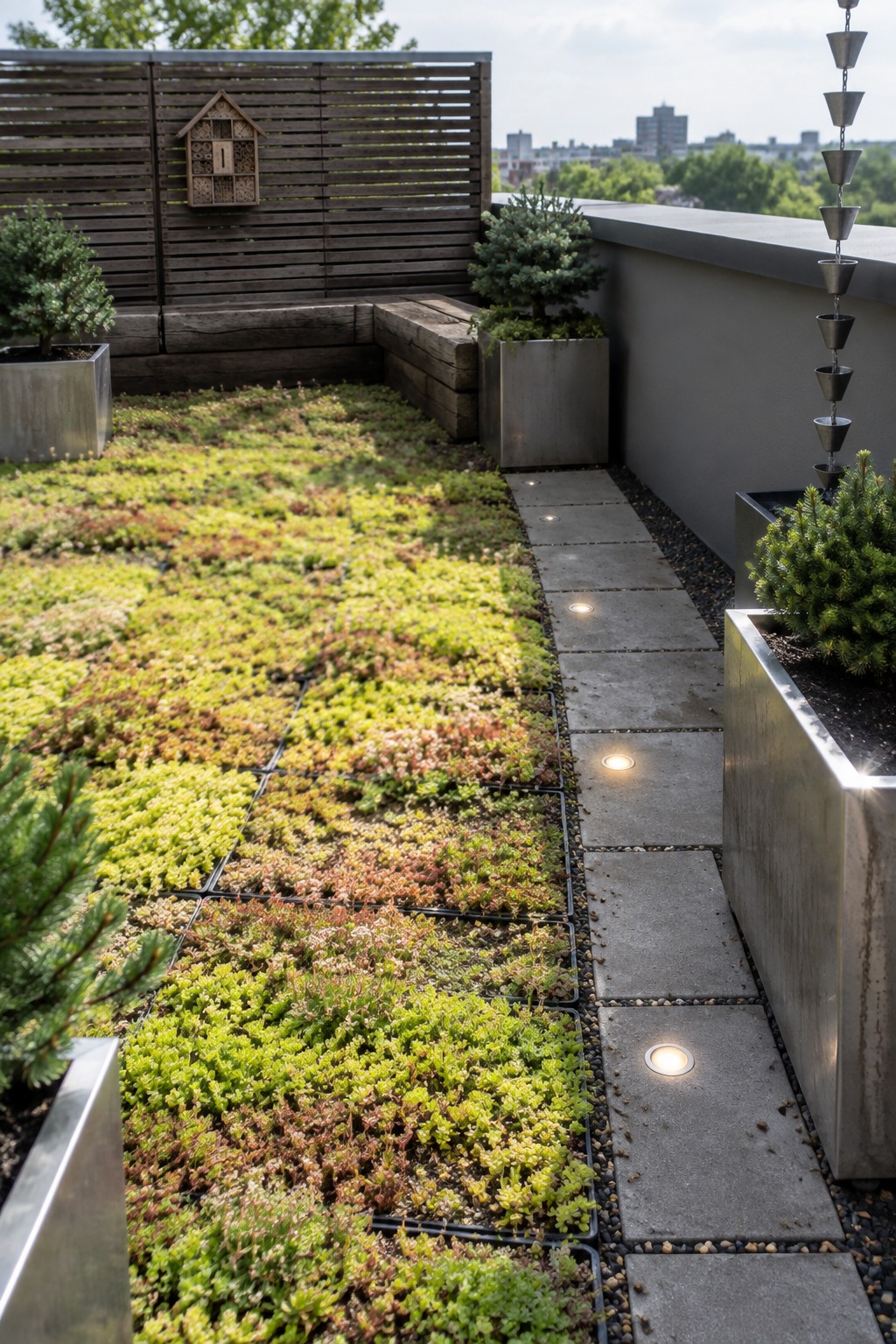
One simple way to light a roof garden walkway is to recess small low voltage fixtures directly into the pavers. The lights stay out of the way, give just enough glow to follow the path, and avoid adding extra poles or fixtures that would crowd the space.
This approach works well on rooftops where planting space is limited and you still need safe footing after dark. Place the lights at even intervals and choose warm bulbs so the path feels calm rather than stark.
Edge Lighting Along the Deck
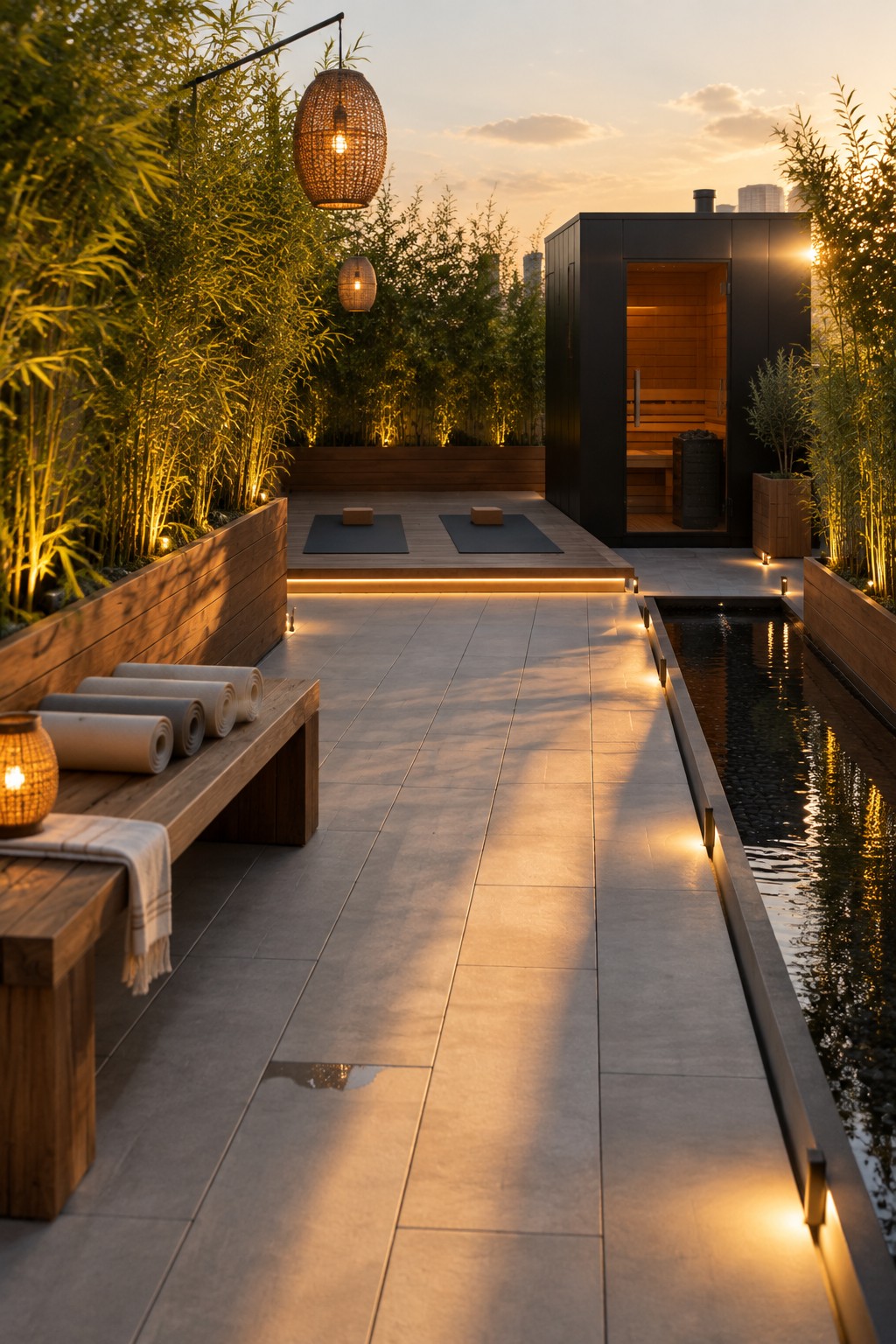
Low voltage lights tucked along the edges of a deck keep the space easy to use after dark. They mark the walking path clearly and add just enough glow to make the area feel welcoming without flooding it with light.
This works best on roof gardens where space is limited and you want to avoid tall fixtures. Run them low beside planters or water features so the light stays soft and guides people safely through the layout.
Line Planters with Low-Voltage Path Lights

One simple way to make a roof garden feel usable after dark is to run low-voltage path lights along the edges of the planters. The steady line of light marks the walkway clearly and keeps the overall space from feeling too dark or closed in.
This approach works especially well on terraces that have a bar or seating zone. Tuck the lights close to the planter walls so they stay hidden from view and only light the floor and nearby plants. It suits most roof setups where you want soft guidance without extra fixtures overhead.
Light Garden Paths With Low-Voltage Accents
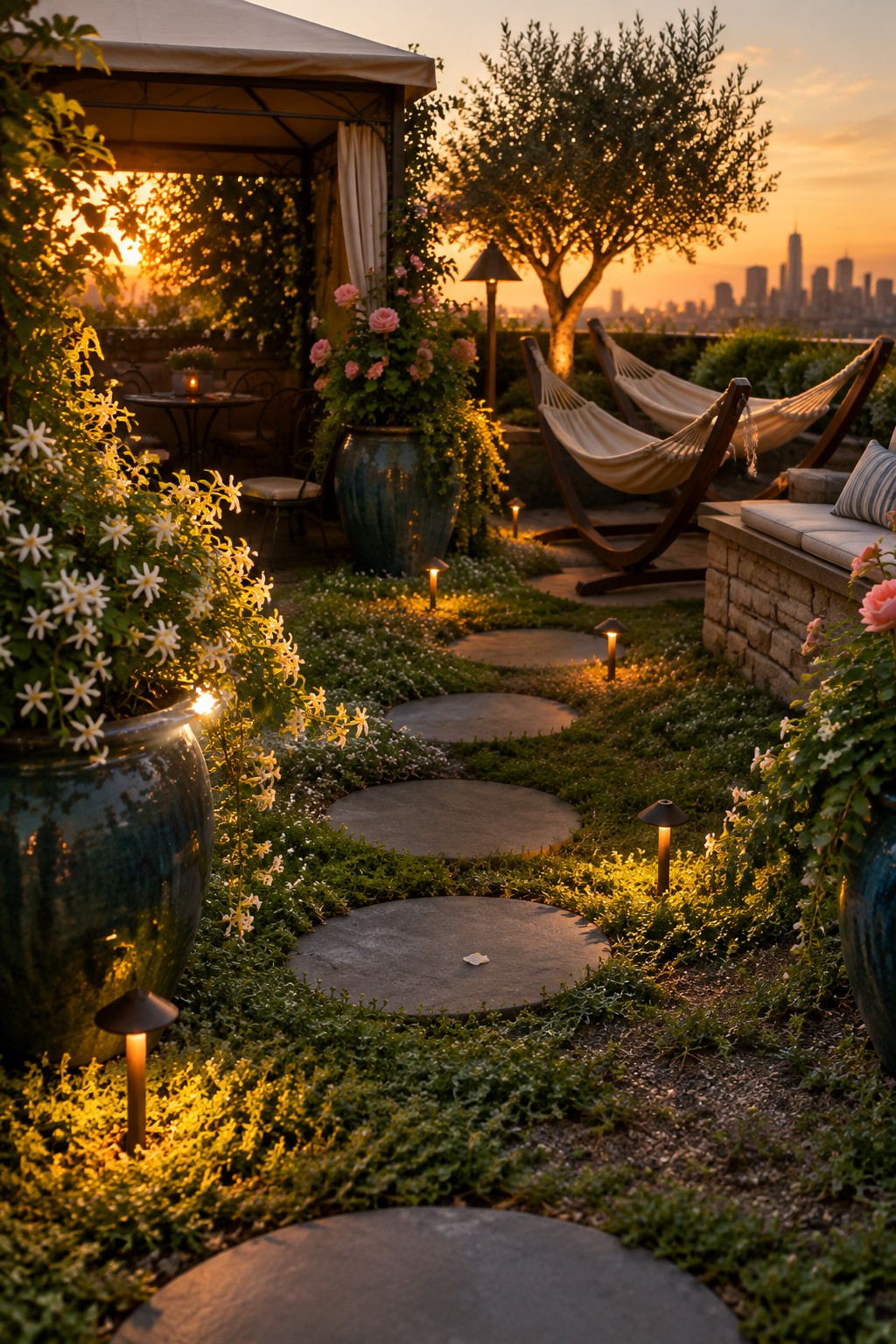
Low-voltage path lights work well along stepping stone paths because they stay low and create a gentle glow that marks the way without drawing attention to the fixtures themselves. This keeps the garden feeling calm and lets the planting stay the main feature.
Place the lights close to the stones so they guide feet safely while adding just enough warmth for evening use. They suit roof gardens and small yards where you want simple lighting that does not need heavy wiring or tall poles.
Gravel Paths With Low-Voltage Lights
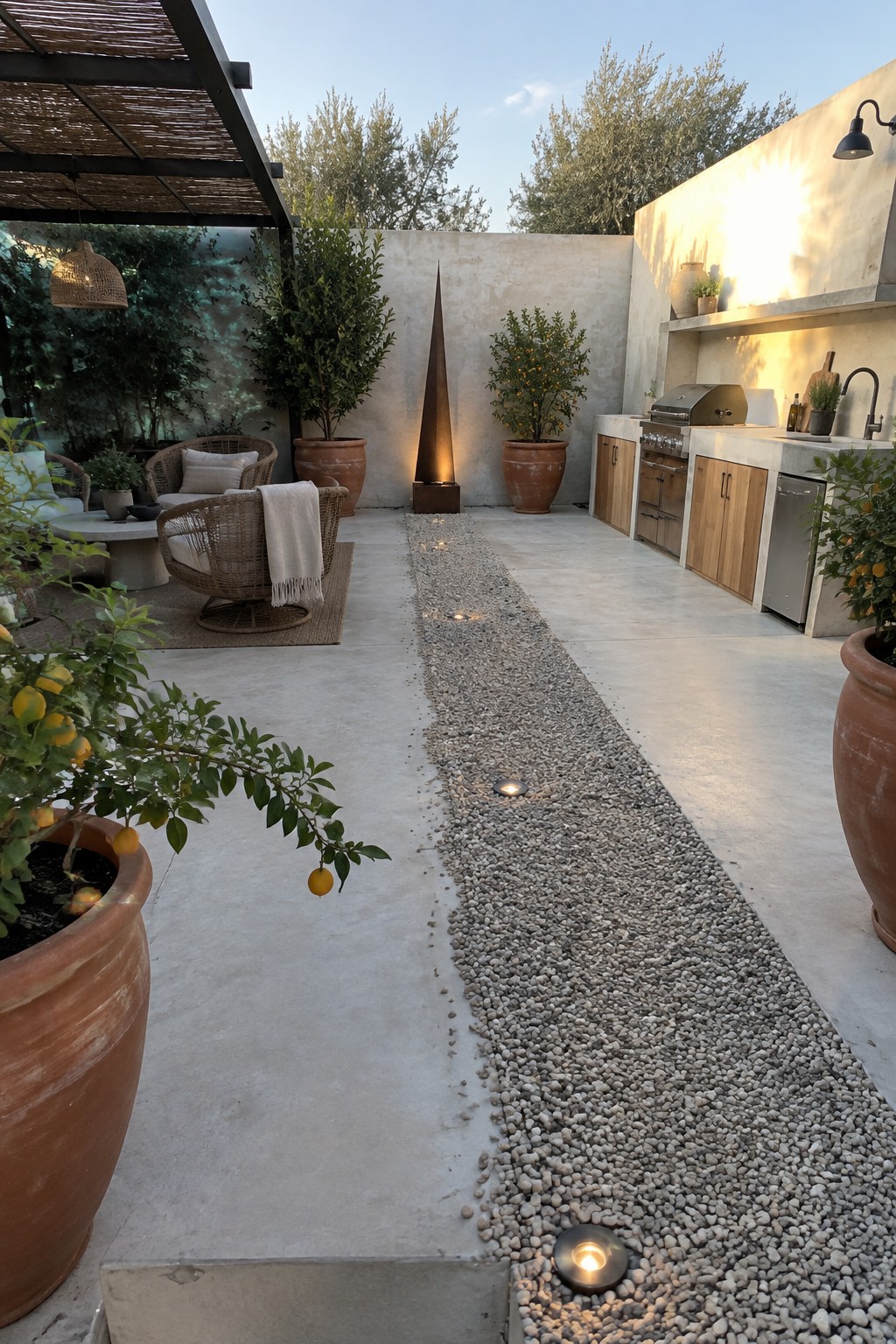
A narrow gravel strip with a few recessed lights running through it gives an outdoor space a gentle sense of direction. The lights stay low and soft, so they mark the path at night without adding extra poles or bright fixtures that can clutter the area.
This setup works well on larger patios where you want to break up wide stretches of concrete. It suits homes with outdoor kitchens or seating zones, and the gravel keeps the look simple while making the path easy to follow after dark.
Frequently Asked Questions
Q: How do I run the wires across my roof without creating a trip hazard? A: Tuck the low voltage cable under the edges of your planters or along the base of railings. This keeps the path clear while letting you adjust the lights later if needed. Q: Do the accent lights need to match the path lights in brightness? A: Keep accent lights softer so they highlight plants or seating without washing out the walkway glow. Test a few spots at night and swap bulbs until the levels feel balanced. Q: What if heavy rain hits the roof garden? A: Pick fixtures rated for wet locations and check the seals once a year. Low voltage setups handle moisture well as long as connections stay dry.
