

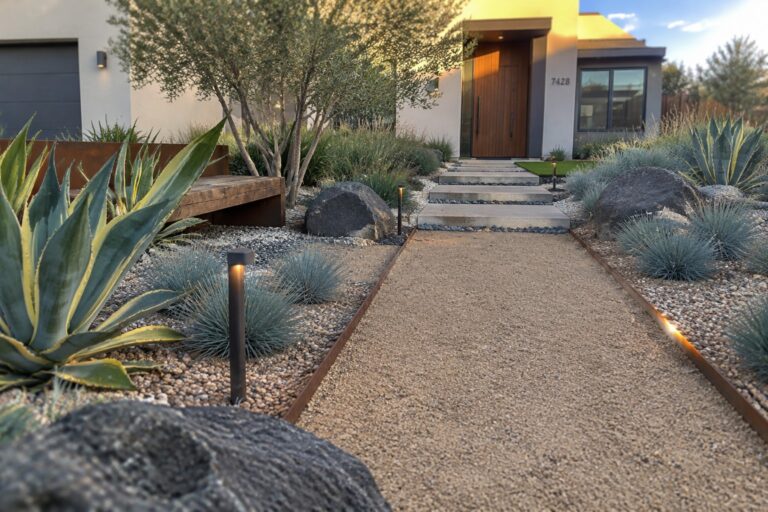
I have spent years trying to keep my front yard looking decent without spending every weekend on it.
The right plant choices and simple layout tweaks can make a big difference in how the space holds up through the seasons.
Low maintenance does not mean boring.
I would start by testing a few of these ideas near the walkway where the soil stays drier and see how they settle in over a year or two.
It is surprising how much the overall shape of the beds and the edging details affect the way the whole yard feels from the street.
Gravel Paths With Metal Edging
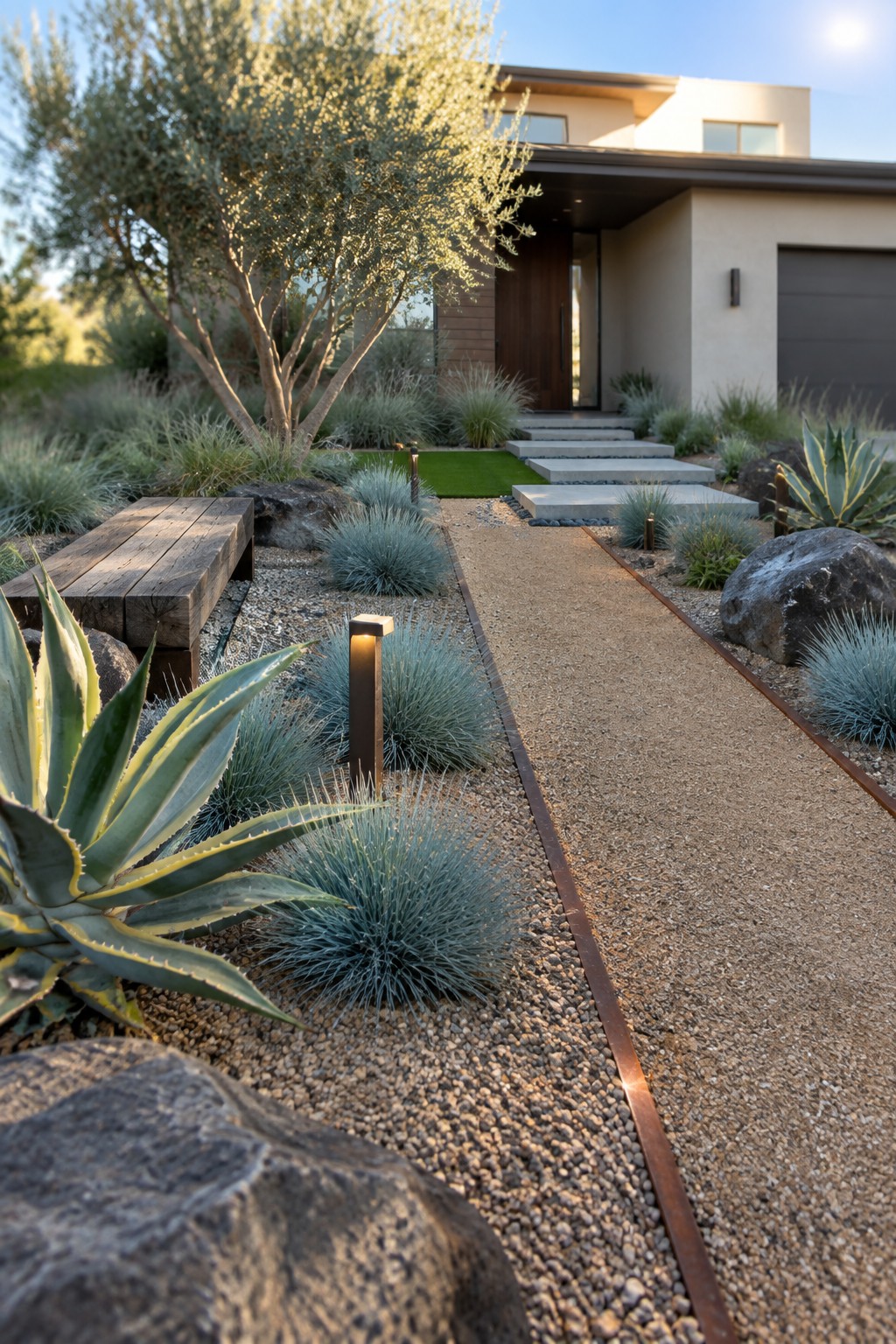
Gravel paths with metal edging give a front yard clean lines that hold up without constant work. The edging keeps the gravel in place and stops the planting beds from spreading into the walkway.
This setup suits homes in drier regions where low water use matters. Keep the path fairly narrow and let the surrounding grasses and succulents soften the edges over time.
Layer Plants Along the Path

Layering plants of different heights and spreads right next to a walkway gives steady color and coverage without constant work. Low shrubs and ground covers fill the front edge while medium perennials like lavender add height and bloom in the middle. The result is a border that looks full from spring through fall and needs only occasional trimming.
This approach suits older homes with brick or stone paths where you want the planting to feel natural rather than rigid. Choose slow spreading varieties that stay in bounds and group them by water needs so one area does not dry out faster than the next. Avoid planting too close to the stones if you want easy access for weeding later.
Add Paths Using Pavers and Low-Growing Plants

This layout keeps the front yard easy to walk through without turning the whole space into a solid slab of concrete. The gaps between the pavers let low plants spread naturally, which cuts down on weeding and gives the path a softer edge.
It suits homes where the front yard needs to handle regular foot traffic but still stay low maintenance. Choose tough ground covers that stay short, and keep the beds narrow enough that everything stays reachable without extra tools.
Put Pots on Low Walls for Added Layers

Pots placed on low ledges give you planting space without crowding the ground. This setup works well when you want height and color near the entry but still need room to walk or park. The plants stay easy to reach for watering or trimming, and you can swap them out if something stops looking good.
Choose sturdy pots that match your house materials and fill them with drought-tolerant varieties. This approach suits homes with stone or stucco walls and works best in warmer regions where regular watering is a chore. Keep the ground plantings simple so the pots remain the main feature.
Stepping Stone Paths Through Planting Beds

Stepping stones give you a simple way to move through garden beds without compacting the soil or needing extra lawn to mow. They also make it easier to reach plants for weeding or dividing when the beds grow in thick.
This works best in front yards where you want a natural, low-care look instead of wide turf areas. Set the stones level with the soil or mulch and add a clean edge along the beds so the path stays clear and the plantings stay contained.
Mix Pavers And Grass For Simple Front Walkways

Large pavers set with grass between them cut down on the amount of lawn you have to mow. The grass stays narrow and contained, so it needs only occasional trimming instead of regular full-yard care.
This layout works best in front yards where you want clean lines without high upkeep. It suits modern homes and pairs well with clipped hedges or gravel beds to keep the whole space looking neat with minimal work.
Gravel Paths With Stepping Stones

Gravel paths with stepping stones offer a simple way to handle foot traffic in a front yard without creating more lawn to mow. The loose surface drains well and stays in place with just a bit of edging, while the stones give firm footing and break up the look so it does not feel too flat.
This approach suits homes near the coast or in dry areas where water use needs to stay low. Keep the stones spaced for normal strides and let low shrubs grow along the sides to hold the gravel in place over time.
Gravel Mulch Pairs Well With Succulents
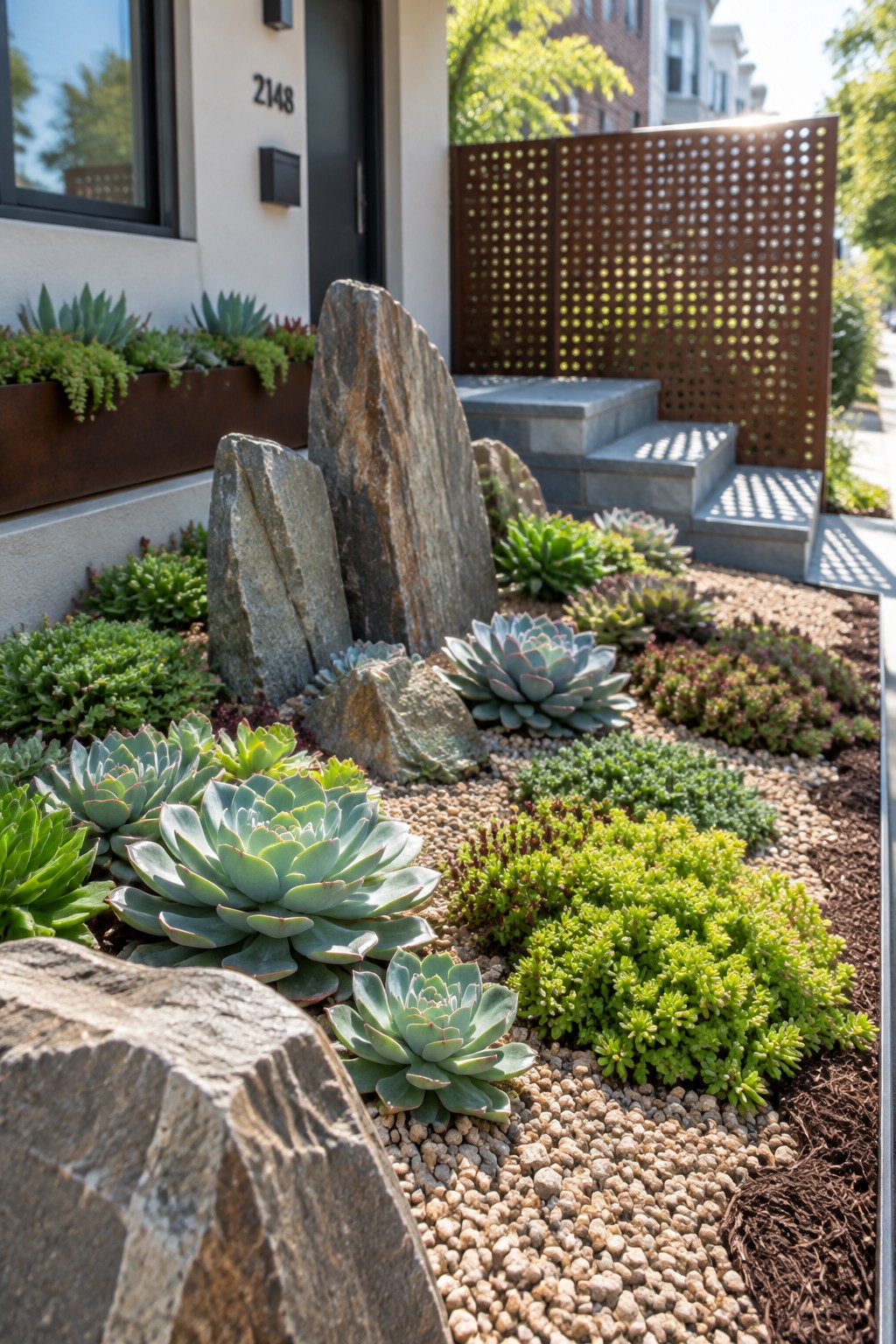
Gravel mulch pairs well with succulents because it cuts down on weeds and keeps moisture from evaporating too fast. The plants stay neat without constant fuss, and the whole bed looks finished with very little work.
This approach works best in sunny spots where the soil drains well. Keep the gravel layer a few inches deep and leave space around each plant so air can reach the roots.
Let Moss Fill Gaps In Stone Paths

Moss between stepping stones cuts down on weeding and watering while giving the path a settled look that blends into the rest of the garden. It works especially well in shaded front yards where grass struggles anyway.
Place stones with a couple inches between them and keep the joints clear of debris until moss takes hold. This approach suits older homes or wooded lots where you want something simple that does not need constant trimming or replanting.
Line Front Paths With Boxwood Hedges
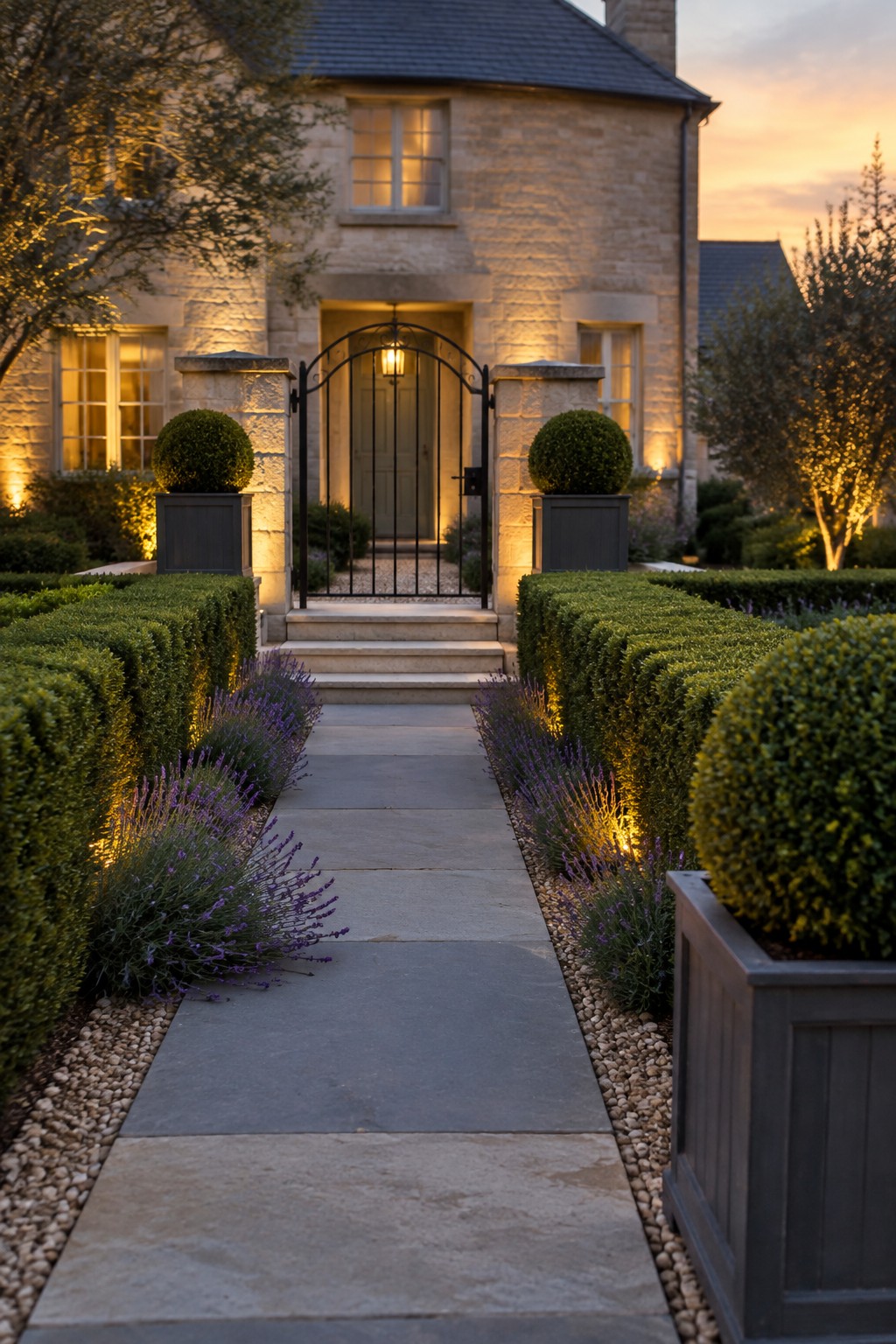
A simple row of clipped boxwood gives a front path a clean edge that stays looking neat with very little work. The rounded shapes and low lavender beside them keep the walkway feeling open while still guiding people straight to the door.
This setup works well on homes where the path runs between planting beds rather than right against the house. Use boxwood that hold their shape with one or two trims a year and pair them with lavender for soft color and scent. Just check that the plants get decent sun so they stay full instead of getting leggy.
Gravel Pads Keep Seating Simple In Planted Yards

Gravel pads give you a clean spot to set a chair without fighting weeds or needing constant mowing. They drain well after rain and stay looking tidy with very little work once the base is down.
This works best in front yards that already have loose plantings and mulch beds. Keep the pad small, edge it with stones, and let the surrounding flowers and grasses grow in around it so the whole area feels natural rather than formal.
Raised Beds Along A Stone Path

A stone path edged with raised beds gives the front yard a clean look without much fuss. The beds keep plants contained so weeds stay down and watering stays simple.
This setup works well along the side of a house or on a gentle slope. Match the stone to your house walls and fill the beds with shrubs and perennials that spread on their own.
Use Ground Covers Between Stepping Stones
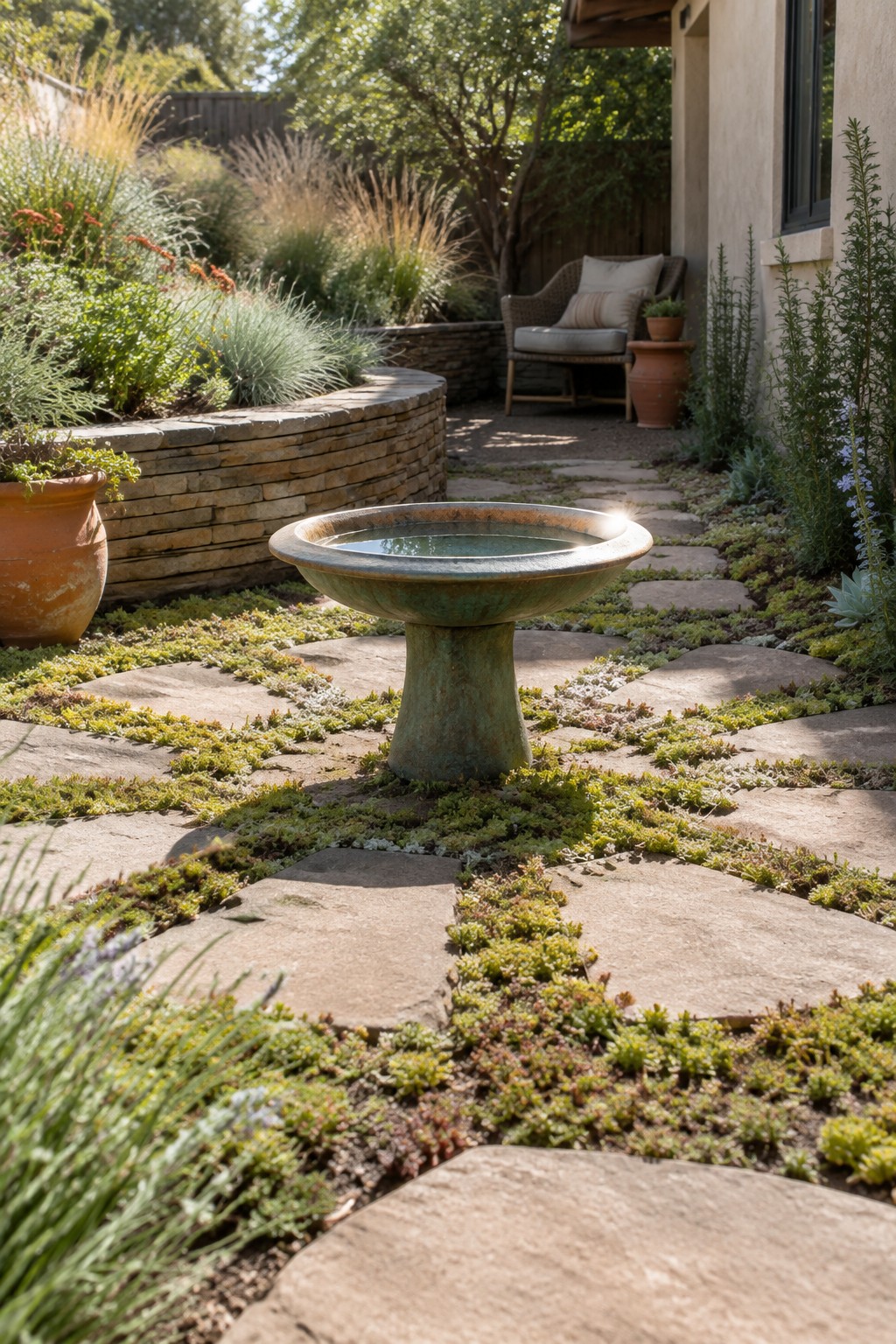
Ground covers planted between stepping stones cut down on weeding and give the path a softer look without extra work. Once the plants fill in, they hold the soil and keep the area from looking bare or patchy.
This approach suits front yards that get regular sun and need a simple path to the door or a seating spot. Pick low-growing varieties that handle light foot traffic and need little watering after the first season.
Raised Planters Along the Path

Raised wooden planters give you a simple way to keep plants contained and reduce weeding in the front yard. They hold the soil in place so you spend less time fixing edges or pulling grass out of the beds.
Place them along a walkway and add small lights at the corners for evening access. This works best on homes with a gentle curve from the street to the door and suits anyone who wants neat planting without heavy upkeep each season.
Layer Grasses Behind Compact Shrubs

This approach gives the front yard a soft, full look without constant trimming or watering. The taller grasses add height and movement while the lower shrubs fill in the base, so the beds feel complete with fewer plants overall.
It works well along a walkway or property edge on homes that want simple upkeep. Stick to drought-tolerant varieties in your area and space them so the grasses can sway without crowding the shrubs below.
Gravel Paths With Stone Edging
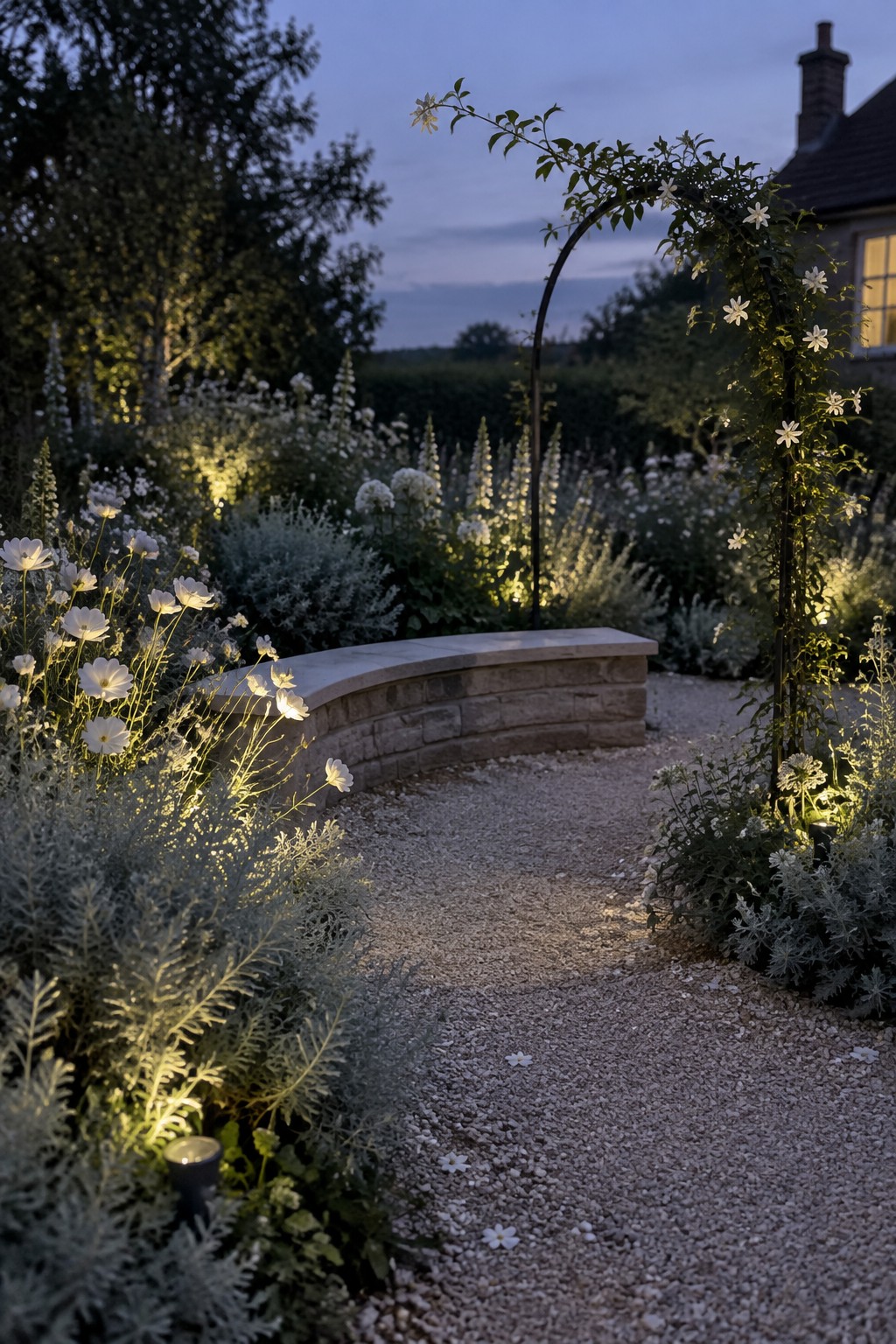
A gravel path edged with a low stone bench gives the front yard a clear shape without needing constant upkeep. The stone holds the beds in place while the gravel lets water drain and cuts down on mowing or weeding.
This works best along the side or front of a house where you want a simple walkway that still feels planted. Keep the beds layered with a mix of taller stems and lower foliage so they fill in and stay full with little extra work.
Frequently Asked Questions
Q: How often do these plants need water after the first year?
A: Water them deeply once a week during hot stretches if rain stays scarce. Established plants usually manage fine with less attention once roots spread. Check the soil with your finger and skip the hose when it feels moist a few inches down.
Q: Should I remove all the grass before adding these beds?
A: Dig out the sod only in the spots where you want new plants. This keeps grass from stealing water and nutrients from the beds. Spread mulch right after planting to hold moisture and slow weeds.
Q: What if the soil in my yard is mostly clay?
A: Work in compost when you plant to help loosen the ground. Pick tough varieties that handle heavier soil without extra fuss. They settle in quicker and need fewer fixes later.
Q: How do I keep the new plants from getting trampled near the sidewalk?
A: Add a simple row of rocks or low edging along the front. Most of these low-care choices bounce back from occasional steps anyway. Let the plants fill out so they form their own natural barrier.
